February 12 – It’s Black History Month

celebrate-picture-books-picture-book-review-opening-the-road-cover

About the Holiday

Black History Month celebrates the achievements and contributions of African Americans in United States History. Originally a week-long observance initiated by writer and educator Dr. Carter G. Woodson in1926 and occurring during the second week in February to commemorate the birthdays of Frederick Douglass and Abraham Lincoln, Black History Month was officially established in 1976 by then president Gerald Ford. The holiday is now celebrated across the country with special events in schools, churches, and community centers.

The theme for 2021 is “Black Family: Representation, Identity and Diversity.” It explores the African diaspora and the spread of Black families across the United States through multiple perspectives. For more information about Black History Month, visit the ASALH website and africanamericanhistorymonth.gov.

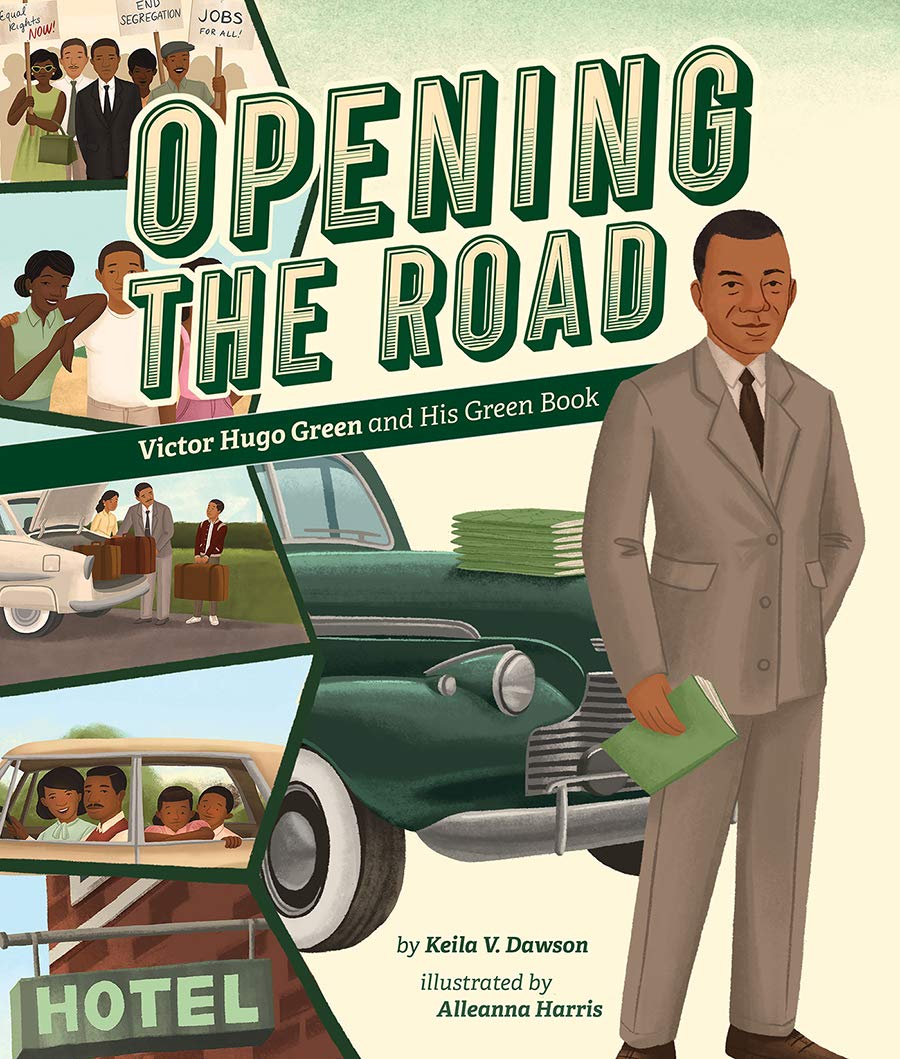
Opening the Road: Victor Hugo Green and His Green Book

Written by Keila V. Dawson | Illustrated by Alleanna Harris


When Black travelers drove the highways of the United States in the 1920s and 30s and tried to stop at restaurants or motels, they “were told: No food… No vacancy… No bathroom… for Black people.” Instead, Black American motorists had to pack their own food, sleep in their car, and bring their own toilet. “Victor Hugo Green was tired of hearing no…. When he and his wife Alma traveled from New York to Virginia to visit family, they risked getting turned away, yelled at, even hurt.”

At the time, Jim Crow laws in the same segregated Black and White Americans throughout society. Because Blacks had nowhere to stay, they often drove through the night. If Black motorists had an accident, there were no ambulances or hospitals that would help them. In northern and western “sunset towns,” Blacks were alerted to leave town before darkness fell by a siren or a White man waving them out.

celebrate-picture-books-picture-book-review-opening-the-road-cafe

Image copyright Alleanna Harris, 2021, text copyright Keila V. Dawson. Courtesy of Beaming Books.

One day Victor discovered a Jewish newspaper that published a guide about places that welcomed Jewish people and sold kosher food. “In the 1930s Jewish Americans couldn’t go everywhere they wanted to either.” Reading this guide, Victor had an idea to write a book of his own for New York. As he walked his route as a mail carrier, he began to ask Black friends and neighbors where they ate, shopped, and played safely. He worked on his book at night after work and finished his ten-page guide, The Negro Motorist Green Book in 1936; he updated it in 1937.

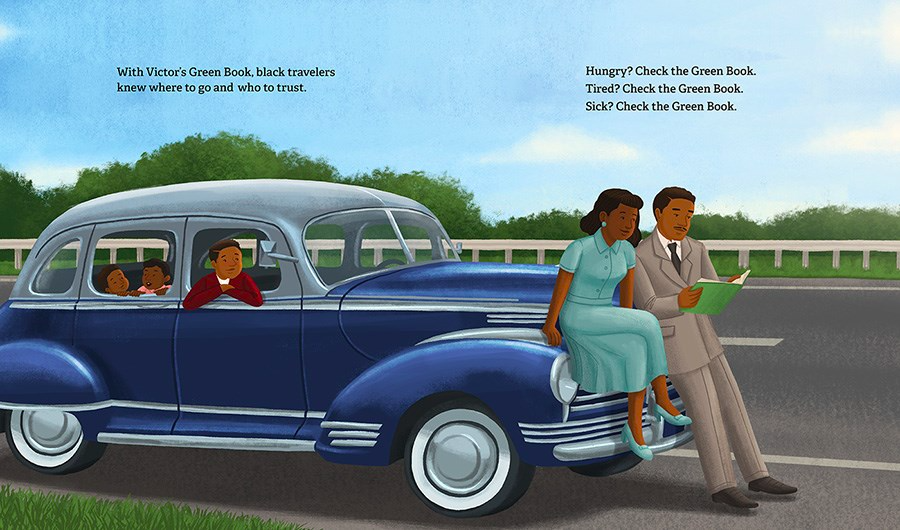
Victor began selling his book at Black churches and social clubs. Readers asked Victor to include more states in his book, so he wrote to other mail carriers all over the country asking for information. Mail carriers responded overwhelmingly. Over the next two years, Victor and Alma worked to expand the Green Book. With the Green Book in hand, “Black travelers knew where to go and who to trust.” As the popularity of the Green Book rose, Victor collected information from readers and agents Victor hired to add to revisions of his book.

celebrate-picture-books-picture-book-review-opening-the-road-road-trip

Image copyright Alleanna Harris, 2021, text copyright Keila V. Dawson. Courtesy of Beaming Books.

In 1940 the United States government named the Green Book an “‘official Negro travel guide.’” Then Esso gas stations of the Standard Oil Company began selling the book. The Green Book became a best seller. The Green Book spurred new businesses as Black women opened their homes as bed and breakfasts for travelers; it also informed readers about Black accomplishments, history, colleges that accepted Black students, and more.

With two million copies sold, the Green Book “made it possible for Black families to enjoy vacations.” Through the 1950s and 1960s as the fight against segregation and the civil rights movement took hold, the Green Book continued to keep Blacks safe. Victor dreamed of the day when, as he said, “‘we as a race will have equal opportunities and privileges in the United States.’” That day came when, in 1964, segregation was ended by law and the Green Book became less necessary. The Green Book ceased publication after the 1966-67 issue, just as Victor had hoped.

An illustrated timeline takes children along a winding highway from 1892, when Victor Hugo Green was born, to 1967 when the Green Book ceased publication, quotations by Victor Green, and a selected bibliography follow the text.

celebrate-picture-books-picture-book-review-opening-the-road-theater

Image copyright Alleanna Harris, 2021, text copyright Keila V. Dawson. Courtesy of Beaming Books.

Keila V. Dawson’s compelling book about Victor Hugo Green’s guide for Black travelers is a powerful tool for teaching children about the history of racial inequality and segregation as well as an expanded understanding of their effects on the lives of Black Americans. While children may be familiar with separate facilities for Blacks and Whites, separate seating on transportation, and school inequality, many will be shocked by travel conditions, the idea that hospitals would not help Blacks, and sunset towns where Blacks were ordered out as the sun went down. While Dawson’s unstinting text will move readers, her storytelling also reveals the resilience of the human spirit and how one man rose above the dangers and prejudice of the time to make traveling and living in America safer for Blacks. The fact that the fight for racial equality continues today makes Dawson’s book an important resource for children to learn not only the exclusion Blacks once legally faced but to make them think about incidents of discrimination that still exist and how they might help bring about a more equitable society.

Alleanna Harris faithfully depicts the times with realistic illustrations that show children how sparsely populated the highway system was, making it even more difficult for Blacks to find welcoming businesses and services. Her image of a Black man driving past a sign that reads “Whites only after dark” as a White man leans against it pointing the way out of town should affect every reader. Children are able to follow Victor Hugo Green and Alma as Victor conceives the idea of the Green Book, and they gather information, and sell the book. They’ll also see the types of businesses mentioned in the Green Book, from gas stations to general stores to movie theaters and private homes where rooms were available for travelers. Interspersed with images of Victor and his work Harris includes illustrations of other familiar ways Blacks were discriminated against.

An important resource for teachers, parents, and other adults engaged in teaching children about American history, the history of civil rights, and the experience of Blacks in America, Opening the Road: Victor Hugo Green and His Green Book is highly recommended for home, school, and public libraries.

Ages 4 – 8

Beaming Books, 2021 | ISBN 978-1506467917

You can find an Opening the Road Educators Guide to download on the Beaming Books website.

Discover more about Keila V. Dawson and her books on her website.

To learn more about Alleanna Harris, her books, and her art, visit her website.

celebrate-picture-books-picture-book-review-opening-the-road-cover

You can find Opening the Road: Victor Hugo Green and His Green Book at these booksellers

Amazon | Barnes & Noble | Books-a-Million

To support your local independent bookstore, order from

Bookshop | IndieBound

Picture Book Review
February 11 – Celebrating International Day of Women and Girls in Science with the Book Trailer Reveal for June Almeida, Virus Detective!

About the Holiday

Gender equality has always been a core issue for the United Nations. As such, on December 22, 2015 the United Nations General Assembly established an International Day to recognize the critical role women and girls play in science and technology. The outbreak of the COVID-19 pandemic has clearly demonstrated the critical role of women researchers in different stages of the fight against COVID-19, from advancing the knowledge on the virus, to developing techniques for testing, and finally to creating the vaccine against the virus.

Against this backdrop, this year’s celebration of the Day will address the themeWomen Scientists at the forefront of the fight against COVID-19” and will gather together experts working in fields related to the pandemic from different parts of the world. For more information, visit the UN website.

That this year’s International Day of Women and Girls in Science celebrates women researchers, and especially those involved in COVID-19, makes it all the more exciting to reveal the trailer for a book highlighting the achievements of the pioneer in the field.

June Almeida, Virus Detective! The Woman Who Discovered the First Human Coronavirus 

Written by Suzanne Slade | Illustrated by Elisa Paganelli


With the rise of the global COVID-19 coronavirus pandemic and its life-changing effects for everyone around the world, scientists, adults, and children began looking for information and answers on how we can defeat the virus so that life can return to normal. In June Almeida, Virus Detective! The Woman Who Discovered the First Human Coronavirus, readers learn the incredible story of the scientist who discovered, photographed, and even named the first human coronavirus.

Growing up in Glasgow, Scotland, June Almeida loved learning about science and nature. A good student, she was especially interested in biology and won the top science prize at her school. Creative and observant, June noticed details that others often missed. She dreamed of going to college but economic hardships caused her to leave school at age 16. Still, June was determined to pursue her passion for science. She was hired by a local hospital to work in its lab, using a microscope to magnify and examine cells. Her work helped doctors treat patients. June later worked in labs in London and in Toronto. Her skill in using the electron microscope to examine cells and help identify viruses earned her promotions and respect in the science community. In the late 1960s, when June was 34 years old, she discovered the first human coronavirus. Her groundbreaking work continues to help researchers today in the fight against illnesses caused by viruses, including COVID-19.

While researching and writing June Almeida, Virus Detective!, award-winning science author Suzanne Slade worked closely with June’s daughter, Joyce, to capture the personality and intelligence of this unsung hero in the fight against the coronavirus. Backmatter includes photographs of June working with various microscopes, more about her career, and a timeline.

Ages 6 – 9

Sleeping Bear Press, 2021 | ISBN 978-1534111325

celebrate-picture-books-picture-book-review-suzanne-slade-headshot

Suzanne Slade holds a B.S. degree in science and worked for many years in a STEM career. She is now the award-winning author of more than 100 books, including Out of School and Into Nature: The Anna Comstock Story. She lives in Libertyville, Illinois. Learn more about Suzanne at suzanneslade.com.

celebrate-picture-books-picture-book-review-Elisa-Paganelli-headshot
Elisa Paganelli’s work includes The Highland Falcon Thief, named a Waterstones Book of the Month. She lives in High Wycombe, United Kingdom. Learn more about Elisa at elisapaganelli.com

June Almeida, Virus Detective! is available March 15, 2021

celebrate-picture-books-picture-book-review-june-almeida-virus-detective-cover

You can preorder June Almeida, Virus Detective! at these booksellers

Anderson’s Bookshops | Amazon | Barnes & Noble | Books-a-Million 

To support your local independent bookstore, order from

Bookshop | IndieBound

Picture Book Review
January 20 – Celebrating Inauguration Day 2021

celebrate-picture-books-picture-book-review-joey-cover

About the Holiday

Today we celebrate the inauguration of Joe Biden as the 46th President of the United States. The ceremony begins around 11:30 a.m. with the national anthem and invocation. In a historic moment, Kamala Harris will then be sworn in by Supreme Court Justice Sonia Sotomayor shortly before noon. At noon, Joe Biden will be sworn in by Chief Justice John Roberts on the Capitol’s West Front, as is tradition. The day also includes a visit to Arlington National Cemetery by Biden, Harris and former Presidents Barack Obama, George W. Bush, and Bill Clinton as well as their spouses before traveling from 15th Street to the White House with a military escort. You can introduce your children to our country’s new President and Vice President, who offer hope and a new beginning, through these two excellent biographies. 

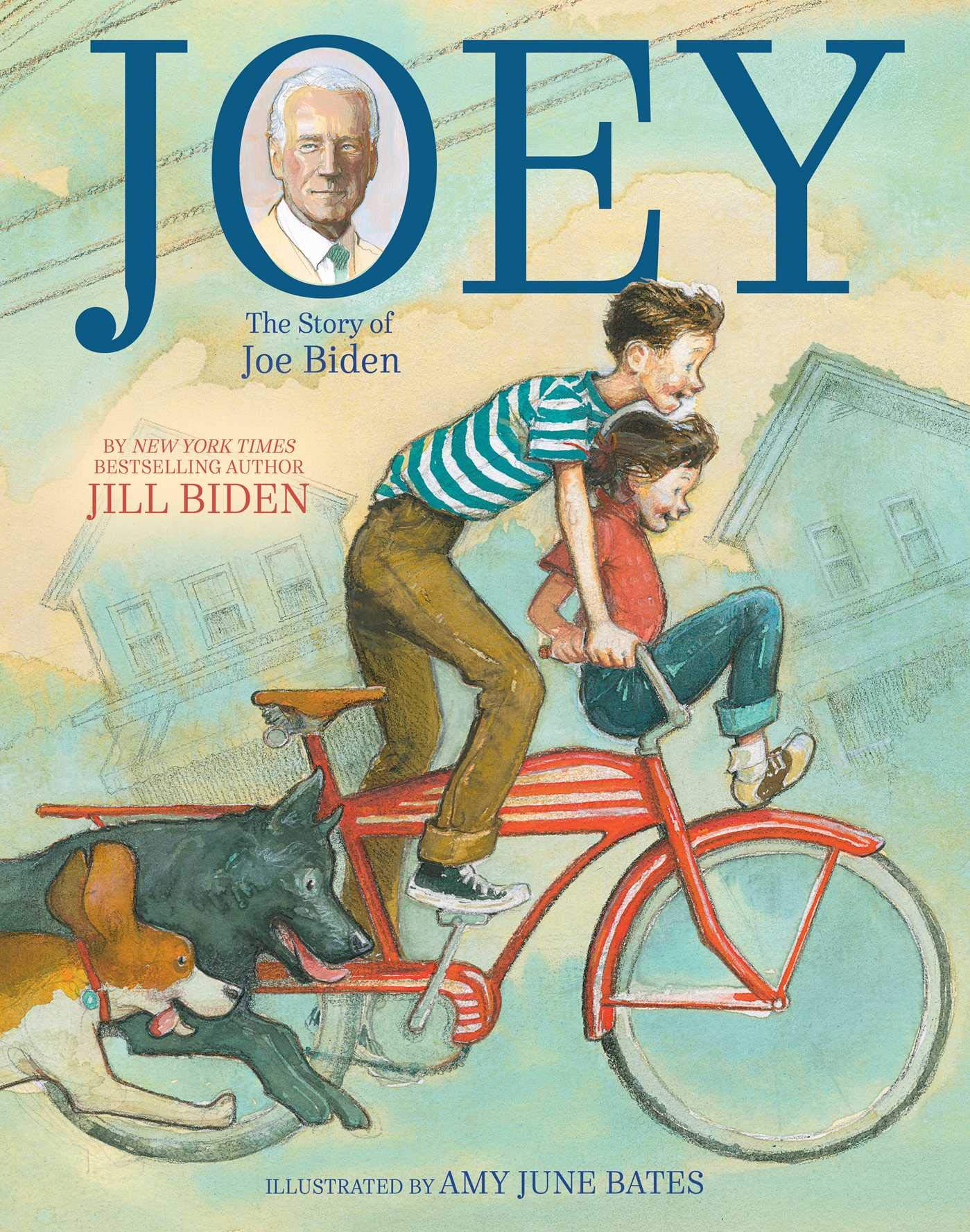
Joey: The Story of Joe Biden

Written by Dr. Jill Biden with Kathleen Krull | Illustrated by Amy June Bates


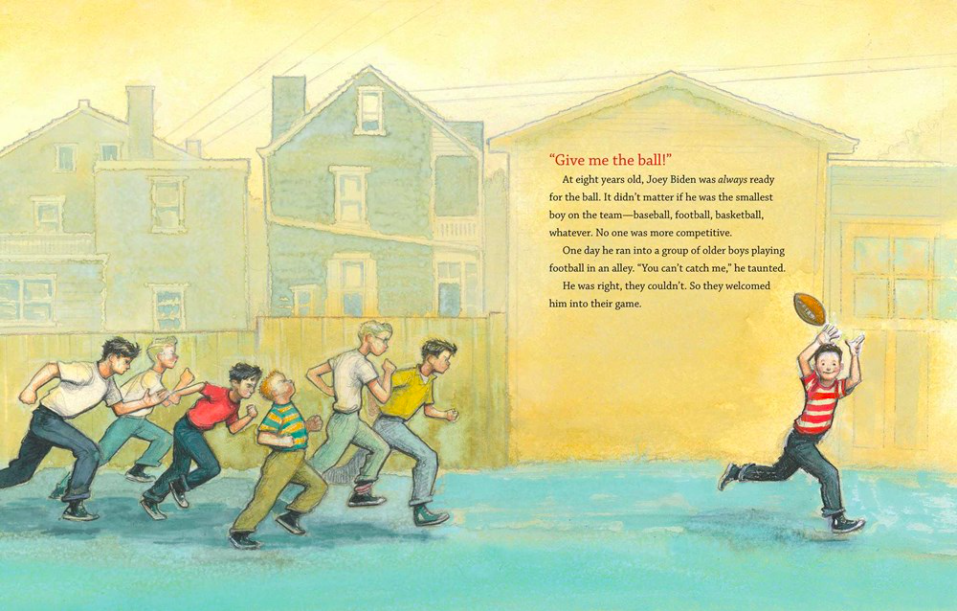
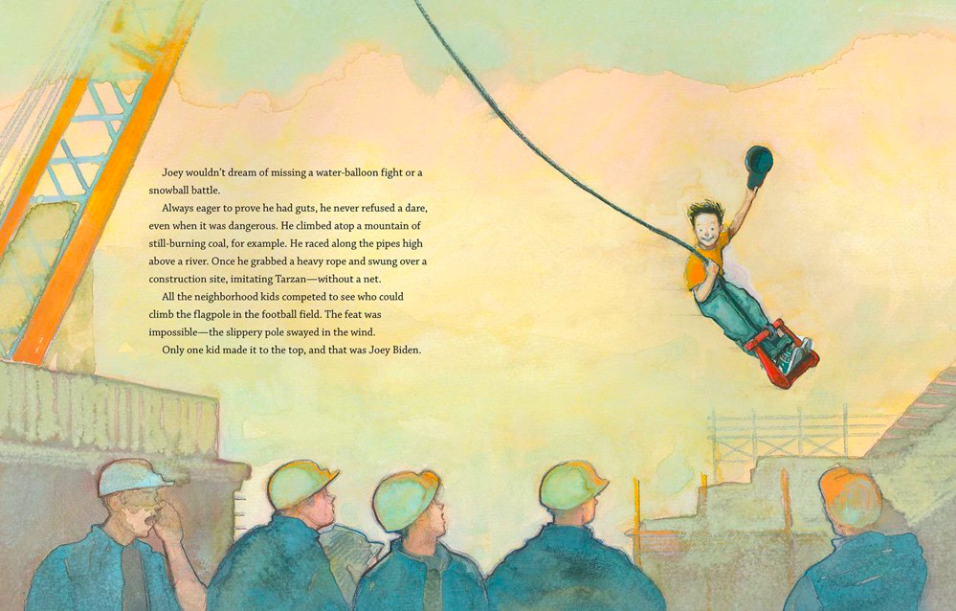
With a gift for storytelling and an ear for the kinds of details that will draw kids in, Jill Biden introduces young readers to her husband and soon-to-be President of the United States, Joe Biden, at the age of eight. Even at this young age, Joe—or Joey as he was then called—demonstrated a fun-loving competitive spirit, maturity, daring, and sense of responsibility that would take him far in life. How competitive? Despite being the smallest boy on any of his teams, “he was always ready for the ball.” How daring? Take your pick: the time he and his friends hopped “from rooftop to rooftop of the garages” in his neighborhood after seeing a Tarzan movie; the time he swung on a rope “over a construction site without a net;” or when he shimmied to the top of the slippery, swaying flag pole at the football field.”

celebrate-picture-books-picture-book-review-joey-football

Image copyright Amy June Bates, 2020, text copyright Jill Biden with Kathleen Krull, 2020. Courtesy of Simon & Schuster.

Where did he learn these qualities? From his mom who always said, “‘Bravery resides in every heart, and yours is fierce and clear.’” And from his dad who encouraged Joey to “‘Get up! Get up!’” whenever he stumbled. To find work, Joey’s family moved, but Joey always had friends in his siblings, especially his younger sister, Valerie.

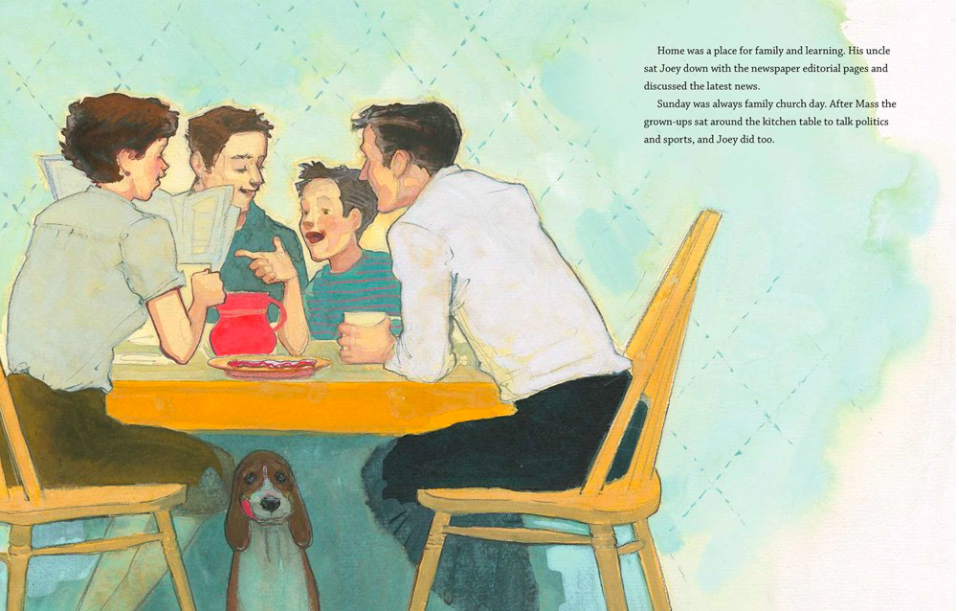
As he grew older Joey learned about world news and the rudiments of politics at the family dinner table, adding his opinions to those of the adults. At school, though bullies made fun of Joey’s stutter, that sometimes made talking difficult. Instead of taking it, Joey defended himself and others who were being bullied. He also devised ways to practice talking more smoothly. 

celebrate-picture-books-picture-book-review-joey-construction-site

Image copyright Amy June Bates, 2020, text copyright Jill Biden with Kathleen Krull, 2020. Courtesy of Simon & Schuster.

When his dreams of attending the Catholic high school seemed out of reach financially, Joey applied for a work-study program that allowed him to attend in exchange for duties such as painting the fence, pulling weeds, and washing windows. High school was also where he grew a foot taller and became the star of the basketball and football teams. Here he exchanged Joey for Joe. His sense of fairness and equality led him to stand up for his African American football teammate when the owner of the local diner would not serve him, and in a nod to his future profession, he was elected class president “during his junior and senior years.”

celebrate-picture-books-picture-book-review-joey-discussions

Image copyright Amy June Bates, 2020, text copyright Jill Biden with Kathleen Krull, 2020. Courtesy of Simon & Schuster.

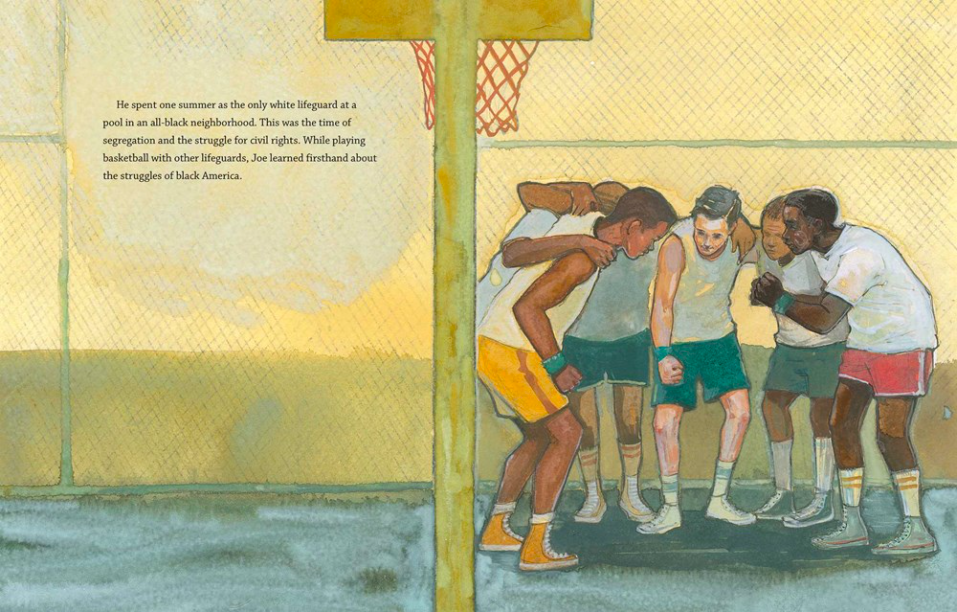
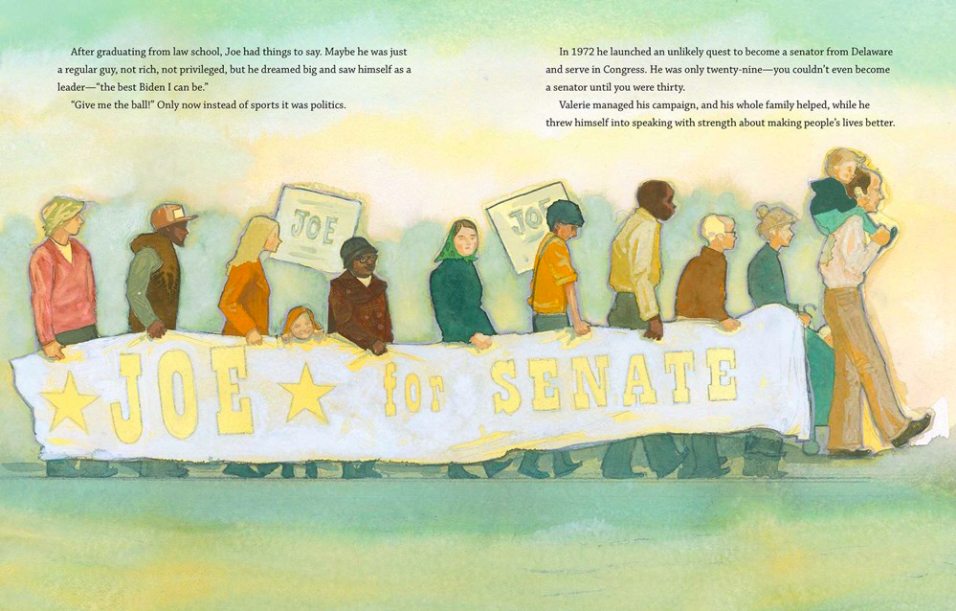
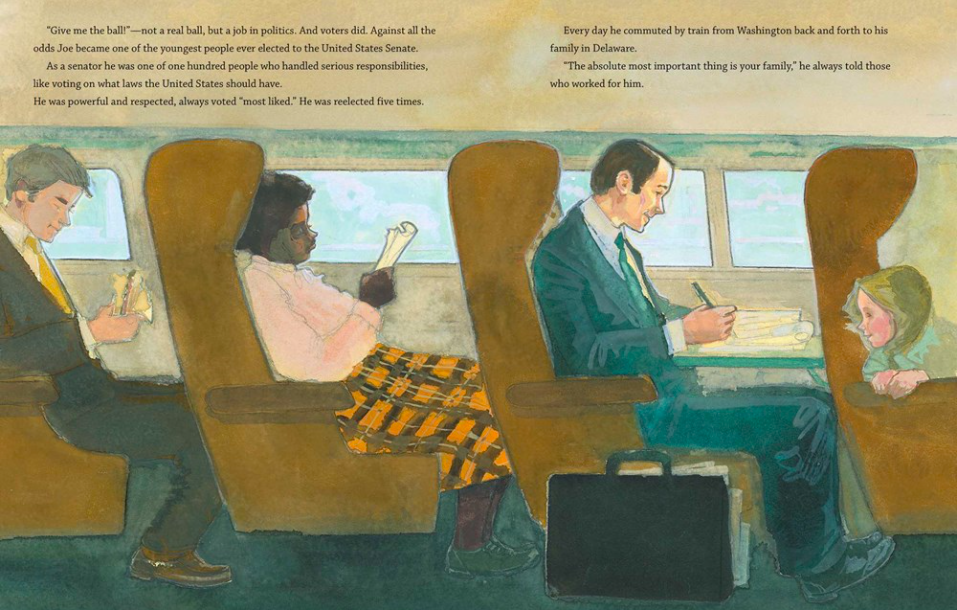
As the first in his family to go to college, Joe was “promptly elected president of his freshman class.” He learned about the struggles of blacks in America while working “as the only white lifeguard at a pool in an all-black neighborhood” during “the time of segregation and the struggle for civil rights.” Joe graduated with a law degree, and at the age of twenty-nine he “launched an unlikely quest to become a senator from Delaware”—even though the required age was thirty. “Against all the odds, Joe became one of the youngest people ever elected to the United States Senate.” Reelected five times, “he was powerful and respected.”

celebrate-picture-books-picture-book-review-joey-basketball

Image copyright Amy June Bates, 2020, text copyright Jill Biden with Kathleen Krull, 2020. Courtesy of Simon & Schuster.

Then “after more than three decades of serving his country in the Senate, he was chosen by Barak Obama to run as his vice president. They won, energizing the nation,” and after eight years of serving together, President Obama called Joe, “‘the best vice president America’s ever had.’” In 2019, Joe announced his candidacy for president of the United States, calling the election a “‘battle for the soul of America.’—and Joe Biden was ready to fight it.”

Back matter includes family photographs, an extensive timeline of Joe Biden’s life and government service, inspirational “Bidenisms, sources for the quotations used in the text, and a bibliography.

celebrate-picture-books-picture-book-review-joey-senate

Image copyright Amy June Bates, 2020, text copyright Jill Biden with Kathleen Krull, 2020. Courtesy of Simon & Schuster.

For parents, teachers, and other adults looking to introduce children to the next president of the United States with an in-depth look at his life, his influences, and his vast experience, Dr. Jill Biden’s Joey: The Story of Joe Biden shines with an intimate portrait of his astonishing life. With specific examples that will resonate with children, Biden portrays the qualities and experience that make him the right person to lead our country during these times and demonstrates his long history of concern for all Americans. Conversational and folksy, Biden’s storytelling makes this an uplifting read aloud that will captivate listeners. The book provides an excellent opportunity to spark further research into Joe Biden’ life and government service as well a conversation-starter for adults to discuss the importance of family, character, hard work, perseverance, and community.

celebrate-picture-books-picture-book-review-joey-train

Image copyright Amy June Bates, 2020, text copyright Jill Biden with Kathleen Krull, 2020. Courtesy of Simon & Schuster.

Amy June Bates’ watercolor, gouache, and pencil illustrations are stunning, taking readers from Joey’s neighborhood in Scranton, Pennsylvania—where they can see some of the feats of daring Joey was famous for and how he interacted with friends and siblings—to Delaware, the state that informed his interest in politics and sense of community service. Through Bates’ realistic images, children swing on the rope over the construction site, sit among his siblings as they watch TV, and join in at the dinner table for influential family discussions. Bates also depicts Biden’s struggles with bullies and his stutter. Kids follow him up a ladder to wash windows and to the high school gridiron to watch Joe pull away from the opposing team to score the winning touchdown. As Biden runs for and takes on responsibilities in the Senate, readers are there too. In Biden’s face and stance, Bates clearly portrays his confidence, optimism, intelligence, and pride in a lifetime of serving the American people.

A superb biography of our next president and one that will inspire a new generation of activists and public servants, Joey: The Story of Joe Biden is a must for home, school, and public library collections.

Ages 4 – 8

Simon & Schuster, Paula Wiseman Books, 2020 | ISBN 978-1534480537

You can connect with Dr. Jill Biden on Twitter.

Discover more about Kathleen Krull and her books on her website.

To learn more about Amy June Bates, her books, and her art, visit her website.

You can find Joey: The Story of Joe Biden at these booksellers

Amazon | Barnes & Noble | Books-a-Million

To support your local independent bookstore, order from 

Bookshop | IndieBound

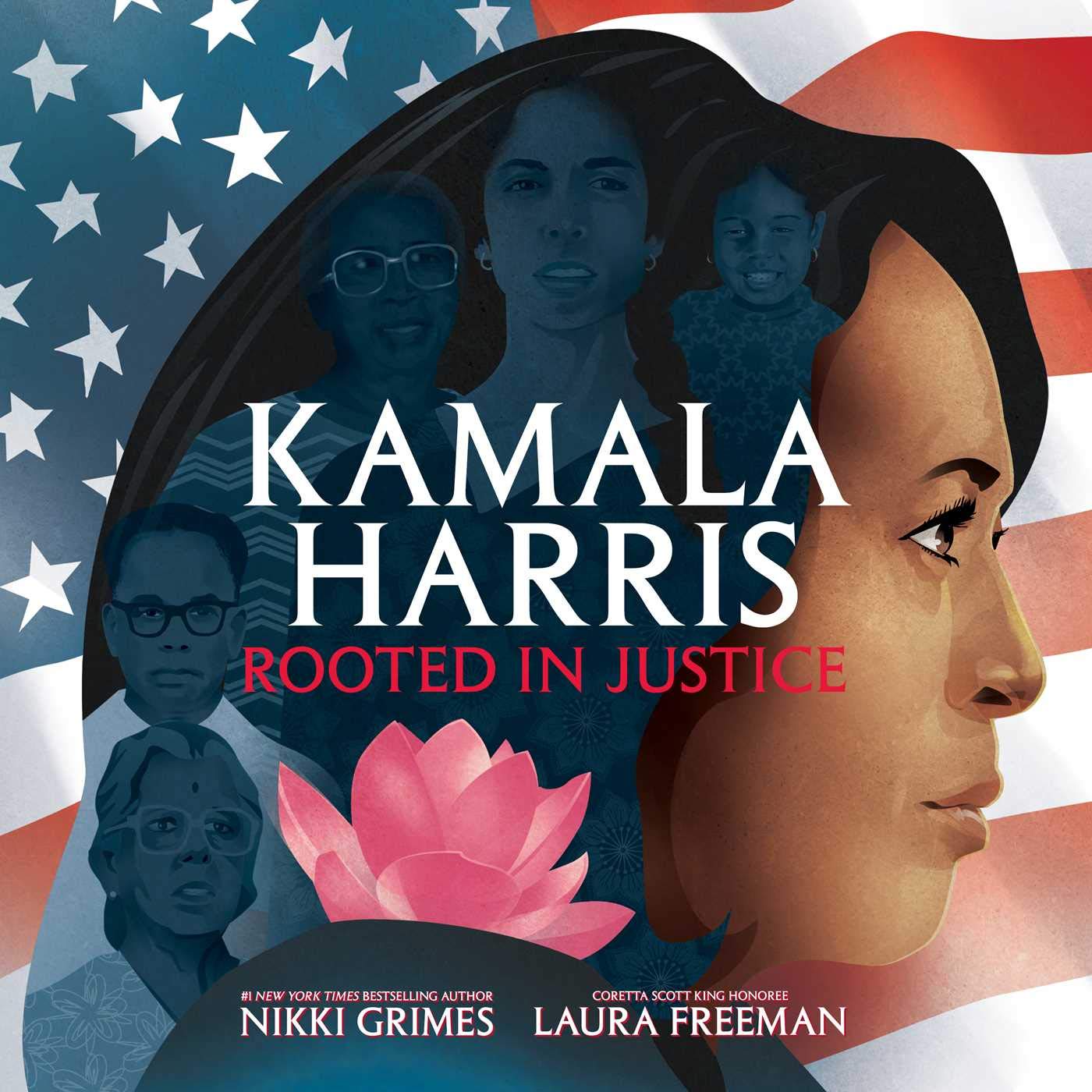
celebrate-picture-books-picture-book-review-kamala-harris-rooted-in-justice-cover

Kamala Harris: Rooted in Justice

Written by Nikki Grimes | Illustrated by Laura Freeman


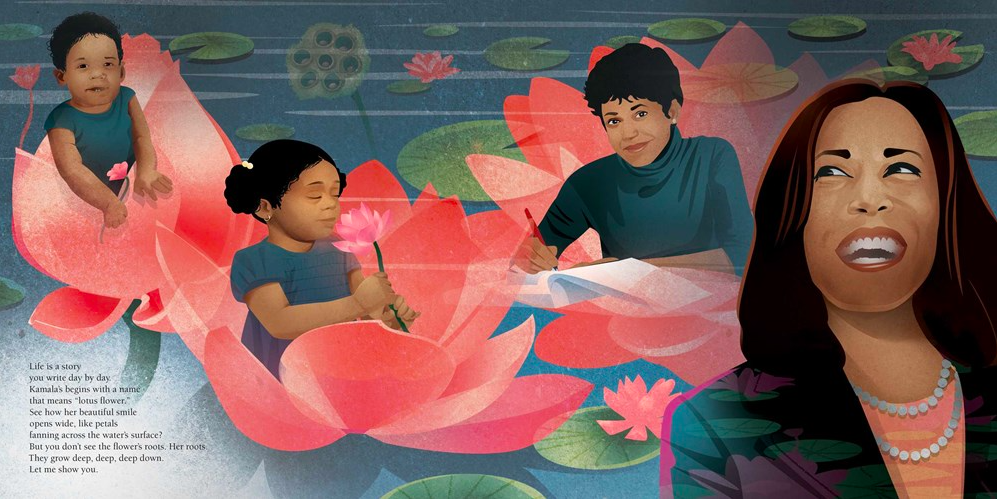
Eve, a black girl, comes home from school in Oakland, California upset because Calvin, a boy in her class, said that girls can’t be President. Her mother tells her that Calvin is wrong and shows her a newspaper article about Kamala Harris, who “lives right here in Oakland and hopes to be President one day.” Eve’s mom begins to tell her daughter Kamala’s story, which began with “a strong black-and-brown braid coiling from India, where her mother, Shyamala, was born; to Jamaica, where her father, Donald, was born;” to Berkely, California and finally to Oakland.

She goes on to reveal that even as a baby “Kamala was like clay her parents molded for action,” as they took her along on marches for civil rights and to speeches given by Martin Luther King Jr. Kamala listened and learned words like peace, justice, freedom. On a trip to Zambia to visit her grandparents, Kamala learned that “fighting for justice ran in the family.”

celebrate-picture-books-picture-book-review-kamala-harris-rooted-in-justice-lotus

Image copyright Laura Freeman, 2020, text copyright Nikki Grimes, 2020. Courtesy of Atheneum Books for Young Readers.

Then when Kamala was seven her parents divorced, and Kamala, her younger sister Maya, and their mother moved to “‘the flatlands,’ the black working-class area in Berkeley.” From here, Kamala was bussed to Thousand Oaks Elementary in the “wealthy white part of town….,” where, she met “kids who were rich and poor, black and white; kids who celebrated holidays she’d never even heard of,” and learned to “count to ten in many different languages.” Here, Eve interrupts to excitedly tell her mother that their next door neighbor Guadalupe has taught her how to count in Spanish.

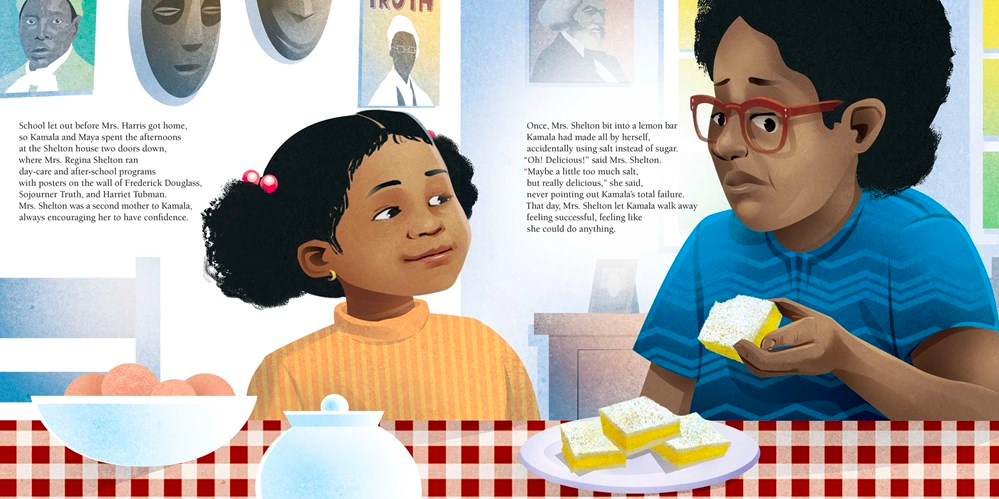
Kamala also learned from Mrs. Regina Shelton, a neighbor whom Kamala stayed with after school. Mrs. Shelton introduced her to Frederick Douglass, Sojourner Truth, and Harriet Tubman. She encouraged her pursuits and instilled confidence in her. Just as influential on young Kamala were the family’s weekly visits to the “Rainbow Sign, a cultural center celebrating black art, music, books, and film. James Baldwin spoke there, Maya Angelou read there, and Nina Simone sang there.” Nina’s song “To Be Young, Gifted and Black” particularly resonated with Kamala.

celebrate-picture-books-picture-book-review-kamala-harris-rooted-in-justice-young-kamala

Image copyright Laura Freeman, 2020, text copyright Nikki Grimes, 2020. Courtesy of Atheneum Books for Young Readers.

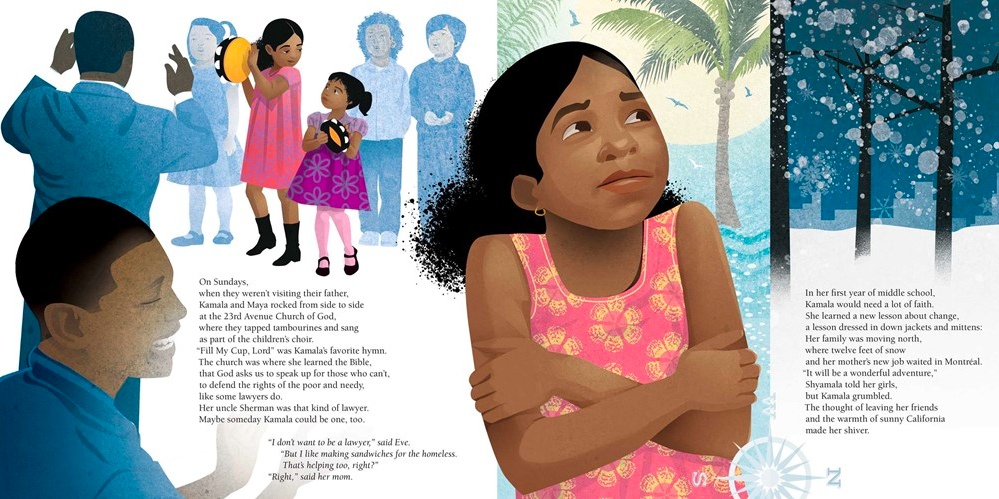
On Sundays Kamala and Maya visited their father and went to the 23rd Avenue Church of God, where, along with singing in the children’s choir, Kamala learned from the Bible “that God asks us to speak up for those who can’t, to defend the rights of the poor and needy, like some lawyers do.” Maybe, Kamala thought, she would follow in her uncle Sherman’s footsteps and be that kind of lawyer too. Eve wonders if when she makes sandwiches for the homeless she’s helping out too. Her mom tells her yes.

When Kamala’s mother accepted a job in Montréal, Canada, Kamala’s life changed again. One thing that stayed the same, however, was Kamala’s sense of justice. For example when the apartment building manager wouldn’t allow the kids to play soccer on the lawn, she and Maya picketed until he changed his mind. 

Although Kamala adjusted to life in Canada, when it came time to go to college, she returned to the United States to attend Howard University like one of her heroes, Thurgood Marshall. Kamala felt at home at Howard. She won a seat in the student government, competed on the debate team, interned at the Federal Trade Commission, did research at the National Archives, and on weekends joined protests against apartheid in South Africa.

celebrate-picture-books-picture-book-review-kamala-harris-rooted-in-justice-moving

Image copyright Laura Freeman, 2020, text copyright Nikki Grimes, 2020. Courtesy of Atheneum Books for Young Readers.

As a sophomore, Kamala spent her summer as an intern for Senator Alan Cranston “learning from someone whose footsteps echoed in the halls of power every day.” She went on to study law at Hastings College of the Law, leading the Black Law Students Association as president and working to improve the chances that black graduates would be hired by the best companies in the country.

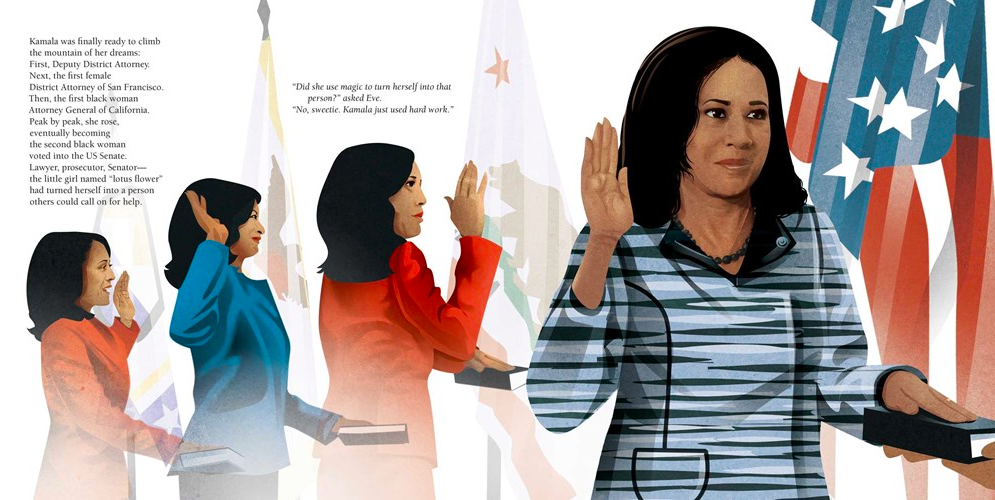
In order to practice law, Kamala had one more hurdle to overcome: the California Bar exam. Kamala failed in her first attempt, but it taught her an important lesson about digging deep and trying harder – a lesson that Eve understands. On her second try, she passed. Since then Kamala’s trajectory has been steadily upward. “First, Deputy District Attorney. Next, the first female District Attorney of San Francisco. Then, the first black woman Attorney General of California” and eventually the “second black woman voted into the US Senate.”

celebrate-picture-books-picture-book-review-kamala-harris-rooted-in-justice-oath

Image copyright Laura Freeman, 2020, text copyright Nikki Grimes, 2020. Courtesy of Atheneum Books for Young Readers.

As Senator, Kamala has fought for workers, women’s rights, and immigrant children. Then in 2019, she announced her candidacy for President of the United States. But running a presidential campaign takes a lot of money. When she and her team realized that they would not be able to sustain a campaign, she decided to give up her quest for the 2020 presidential nomination while still looking “forward to all the good work she could still do as Senator Harris.”

While the biography ends before the election and with the question, “Will she ever get to call the White House home?” the next sentence: “Kamala Harris is still writing her American story” looks forward to a future we will all be following. And what about Eve? She knows the message of Kamala’s life and dreams: “‘If at first you don’t succeed, try, try again.’” That lesson and that Calvin is wrong about a girl’s ability to become the President.

A detailed timeline of Kamala Harris’s life and a list of resources follow the text.

celebrate-picture-books-picture-book-review-kamala-harris-rooted-in-justice-senator

Image copyright Laura Freeman, 2020, text copyright Nikki Grimes, 2020. Courtesy of Atheneum Books for Young Readers.

Nikki Grimes’ compelling biography of Kamala Harris lyrically outlines the importance that ideas of justice, freedom, and inclusion play in both her personal and professional life. Children will be especially captivated by Grimes’ comprehensive and intimate look at Kamala’s childhood and the people, experiences, and places that influenced her education, character, long commitment to equality, and steady focus on achieving her dreams. Specific examples of the large and smaller issues Kamala has fought for throughout her life instill in young readers the knowledge that they too can make a difference. Framed by Eve’s disagreement with Calvin and her interjections about certain aspects of Kamala’s life, the story speaks directly to the reader, creating in them the kind of confidence and reassurance that has served Kamala well. The final lines offer encouragement and inspiration to tomorrow’s leaders.

Laura Freeman’s textured, realistic illustrations introduce Kamala Harris in the context of her family, the causes they put their hearts and voices into, and the communities that nurtured her. As a child, Kamala’s confidence and intelligence are evident as she learns about her family’s activism in Zambia, rides to school on the bus, listens to Mrs. Shelton and Nina Simone, and gets involved in activities at church, in college, and in law school. Images of Kamala as an adult depict her familiar smile, thoughtfulness, poise, and self-confidence. Freeman’s collage-style imagery of the people who have influenced Kamala are particularly powerful reminders of the legacy that parents, grandparents, teachers, mentors, and leaders in society imprint on people from childhood and throughout life.

A beautiful and inspiring biography, Kamala Harris: Rooted in Justice is an exciting introduction to our next Vice President and is sure to encourage discussion, stir dreams of greatness, and motivate girls and children of color to follow in her footsteps. The book is a must for home, school, and public library collections.

Ages 4 – 8

Simon & Schuster, Atheneum Books for Young Readers, 2020 | ISBN 978-1534462670

Discover more about Nikki Grimes, her books, and her poetry on her website.

To learn more about Laura Freeman, her books, and her art, visit her website.

You can find Kamala Harris: Rooted in Justice at these booksellers

Amazon | Barnes & Noble | Books-a-Million

To support our local independent bookstore, order from

Bookshop | IndieBound

 Picture Book Reviewcelebrate-picture-books-picture-book-review-joey-cover

January 18 – Martin Luther King Jr. Day

celebrate-picture-books-picture-book-review-martin-luther-king-jr.-cover

About the Holiday

Martin Luther King Jr. Day celebrates the life and legacy of the man who dedicated his life and work to teaching—as Coretta Scott King once stated—“the values of courage, truth, justice, compassion, dignity, humility and service” and led a non-violent Civil Rights movement to enact racial equality and justice throughout state and federal law. President Ronald Reagan signed the holiday into law in 1983, setting it on the third Monday of January to coincide with Martin Luther King Jr.’s birthday on January 15. The holiday was officially observed in all 50 states in 2000. Today, learn more about the life and work of Martin Luther King Jr. We still have a long way to go before there is justice and equality for all, but this year – even this week – gives us a new start. Look for ways you can offer help and hope.

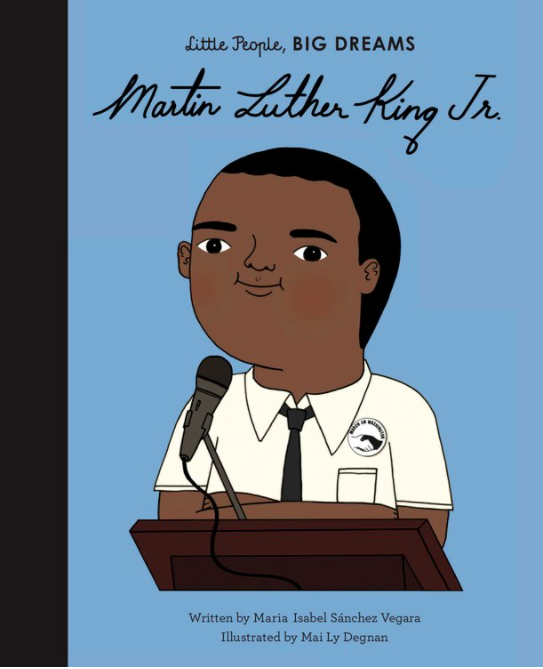
Martin Luther King Jr. (Little People BIG DREAMS)

Written by Maria Isabel Sánchez Vegara | Illustrated by Mai Ly Degnan


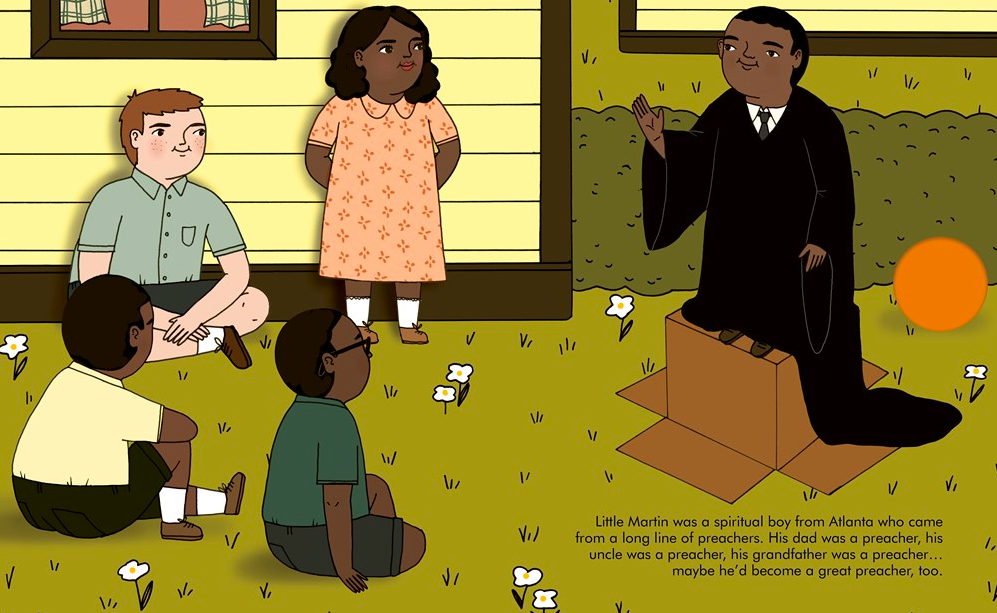
“Martin Luther was a spiritual boy from Atlanta who came from a long line of preachers.” It was thought that he might grow up to be one too. One day, a White friend invited him to his house to play, but when his mother wouldn’t let him in, Martin “realized something terrible was going on.” He discovered that Blacks weren’t welcome in the same places as Whites. Businesses, transportation, and other public places were segregated, which meant there were separate areas for Black and White people. Martin and his friend even had to go to different schools.

celebrate-picture-books-picture-book-review-martin-luther-king-jr.-kids

Image copyright Mai Ly Degnan, 2020, text copyright Maria Isabel Sánchez Vegara. Courtesy of Frances Lincoln Children’s Books.

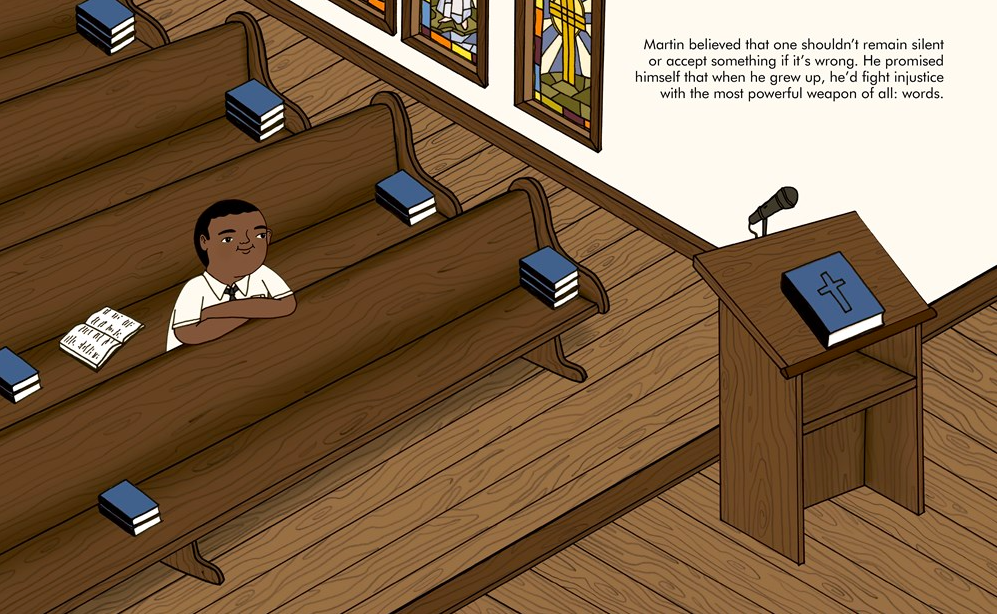
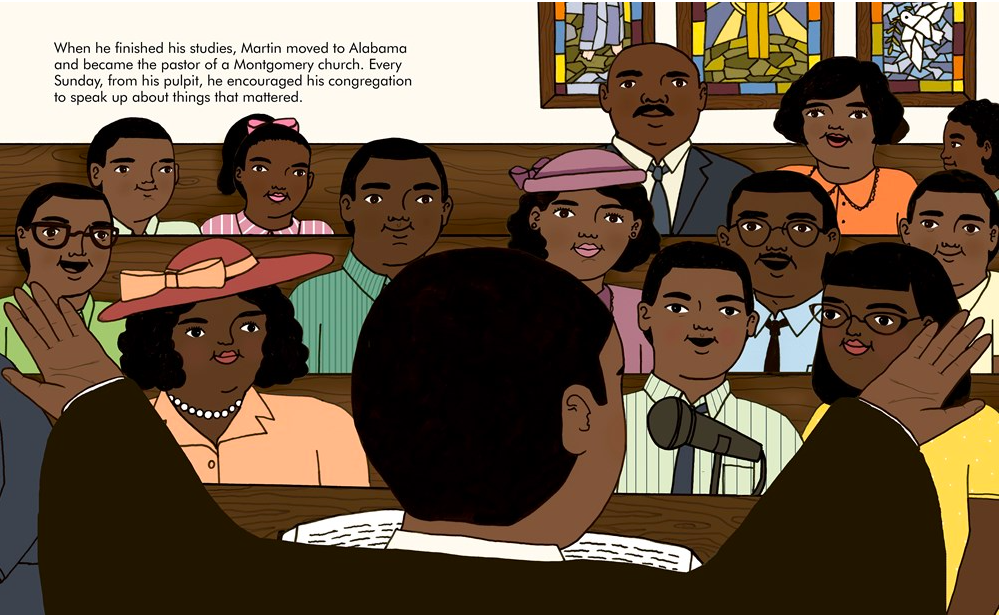
Martin believed people should speak up when something is wrong. He decided that he would “fight injustice with the most power weapon of all: words.” As he grew up and went to college, he learned about ways people could peacefully protest things they felt were wrong. After he graduated, Martin did become a preacher in Alabama. On Sundays, he encouraged his congregation to make their voices heard.

celebrate-picture-books-picture-book-review-martin-luther-king-jr.-church

Image copyright Mai Ly Degnan, 2020, text copyright Maria Isabel Sánchez Vegara. Courtesy of Frances Lincoln Children’s Books.

When Rosa Parks was arrested for refusing to give up her seat to a white man on a city bus, Martin asked people to avoid taking the bus until the law was changed, and they responded. For nearly a year people walked and the buses were empty. Finally, segregation of buses ended. This was only the beginning of peaceful protests aimed at overturning the country’s segregation laws. Despite being attacked and arrested, Martin and his followers remained peaceful. Martin “knew that hate can’t drive out hate; only love can.”

celebrate-picture-books-picture-book-review-martin-luther-king-jr.-alabama

Image copyright Mai Ly Degnan, 2020, text copyright Maria Isabel Sánchez Vegara. Courtesy of Frances Lincoln Children’s Books.

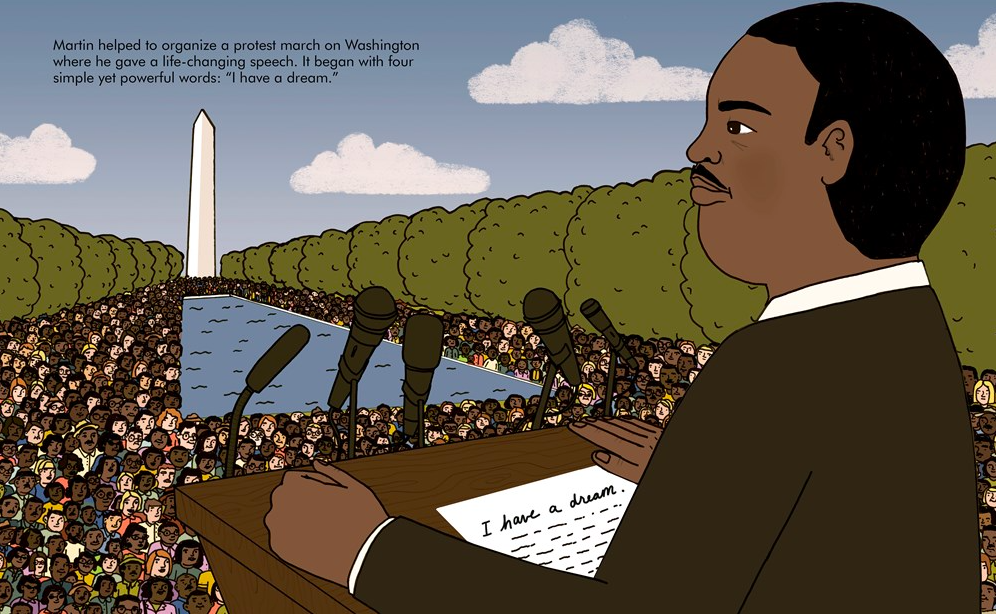
In a huge protest march on Washington DC, thousands of people assembled to hear Martin speak. His speech began with “four simple yet powerful words: ‘I have a dream.’” The next year, Martin was awarded the Nobel Peace Prize. Little Martin’s words and dream still ring in your heart, and if you listen you can help make that dream “of a world where we are judged by our character, not by the color of our skin.”

A timeline of Martin Luther King Jr.’s life, accompanied with photographs, follows the text.

celebrate-picture-books-picture-book-review-martin-luther-king-jr.-washington

Image copyright Mai Ly Degnan, 2020, text copyright Maria Isabel Sánchez Vegara. Courtesy of Frances Lincoln Children’s Books.

Maria Isabel Sánchez Vegara’s series of biographies for youngest readers are little gems that create a personal connection between the reader and the subject while presenting a clear overview of the person’s life and work. A highlight of the series is Vegara’s early focus on events in the subject’s childhood that changed their perspective and informed their later profession or influence and which will resonate with kids. Here, these include his family’s legacy, a forbidden friendship, and his discovery of the philosophy of Mahatma Gandhi.

Vegara’s storytelling is simple and straightforward, presenting the facts of formative events in language that young children will understand but which never talks down to them. She highlights times when community members were instrumental in changing the laws of segregation, showing children that they too can affect change through their actions, words, and the way they treat others. She then leaves children with words of hope and encouragement on how they can carry on Martin Luther King Jr.’s dream.

Mai Ly Degnan’s stylized and sophisticated illustrations invite children to learn about Martin Luther King Jr.’s life through images they will connect with intellectually and emotionally. Kids will enjoy seeing Martin dressed up in his father’s robe that pools around his feet as he preaches to his friends and will not need words to understand the angry face and outstretched pointing arm of his friend’s mother.

Other events, such as Rosa Park’s arrest and the bus boycott are depicted from the community’s viewpoint, allowing children to be part of the audience or crowd. Other images, such as Martin’s arrest, a peaceful protest, and the awarding of the Nobel Peace Prize, give children and adults opportunities to discuss and expand on the text. Degnan’s final spread echoes back to the day when Martin was sent away from his friend’s house – but this time with acceptance – as a Black boy stands with his arm slung over the shoulder of his White friend as they stand in a diverse crowd of people.

Empowering and informative, Martin Luther King Jr.: Little People BIG DREAMS is highly recommended for home bookshelves and is a must for school and public library collections.

The book can also be found as part of a boxed set Little People BIG DREAMS Black Voices, which includes biographies of Maya Angelou, Martin Luther King Jr., and Rosa Parks. 

Ages 4 – 7

Frances Lincoln Children’s Books, 2020 | ISBN 978-0711245679 | Little People BIG DREAMS Black Voices, 2020 | ISBN 978-0711262539

You can connect with Maria Isabel Sánchez Vegara on Twitter.

To learn more about Mai Ly Degnan, her books, and her art, visit her website.

Martin Luther King Jr. Day Activity

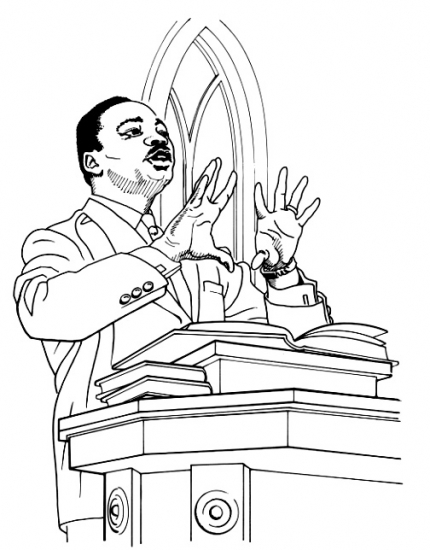
celebrate-picture-books-picture-book-review-martin-luther-king-jr-coloring-page

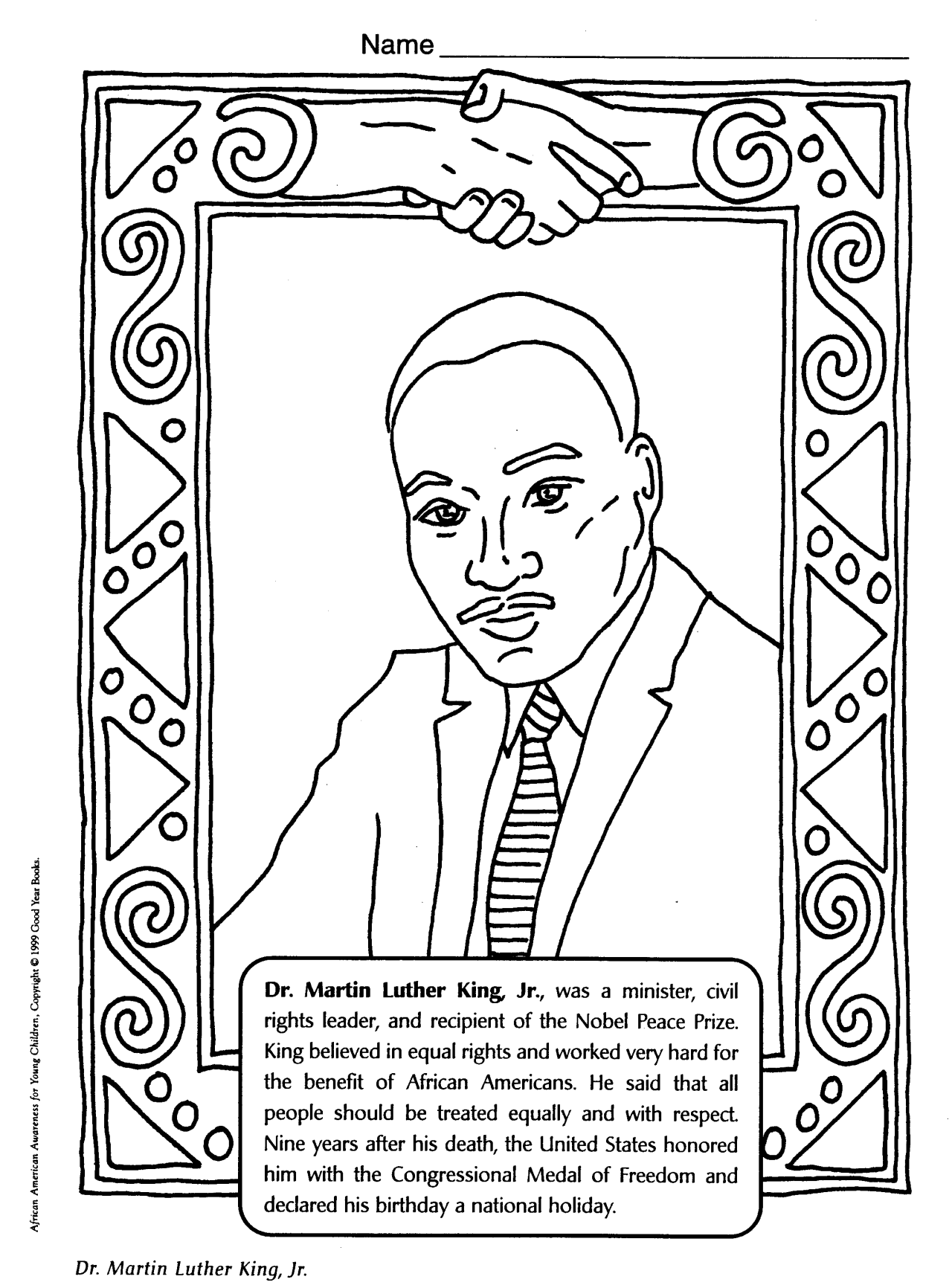
Martin Luther King Jr. Portrait


To inspire your dreams of a better future for all, c olor this printable coloring page and hang it in your room!

Martin Luther King Jr. Portrait 

celebrate-picture-books-picture-book-review-martin-luther-king-jr.-cover

You can find Martin Luther King Jr. (Little People BIG DREAMS) at these booksellers

Amazon | Barnes & Noble | Books-a-Million

To support your local independent bookstore, order from

Bookshop | IndieBound

Picture Book Review Picture Book Review 
December 29 – National Tick Tock Day

celebrate-picture-books-picture-book-review-ticktock-banneker's-clock-cover

About the Holiday

As the year winds down Tick Tock Day reminds us of the passage of time and encourages us to examine our life and find opportunities to accomplish the things we really want to. While a day only has 24 hours, a little creative scheduling, letting go of those tasks that aren’t so important, and even saying “no,” can help us achieve the things that matter.

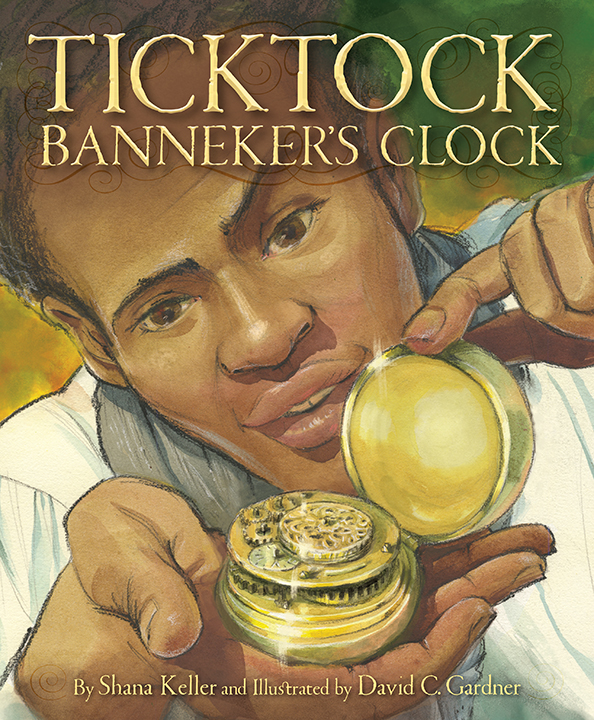
Ticktock Banneker’s Clock

Written by Shana Keller | Illustrated by David C. Gardner


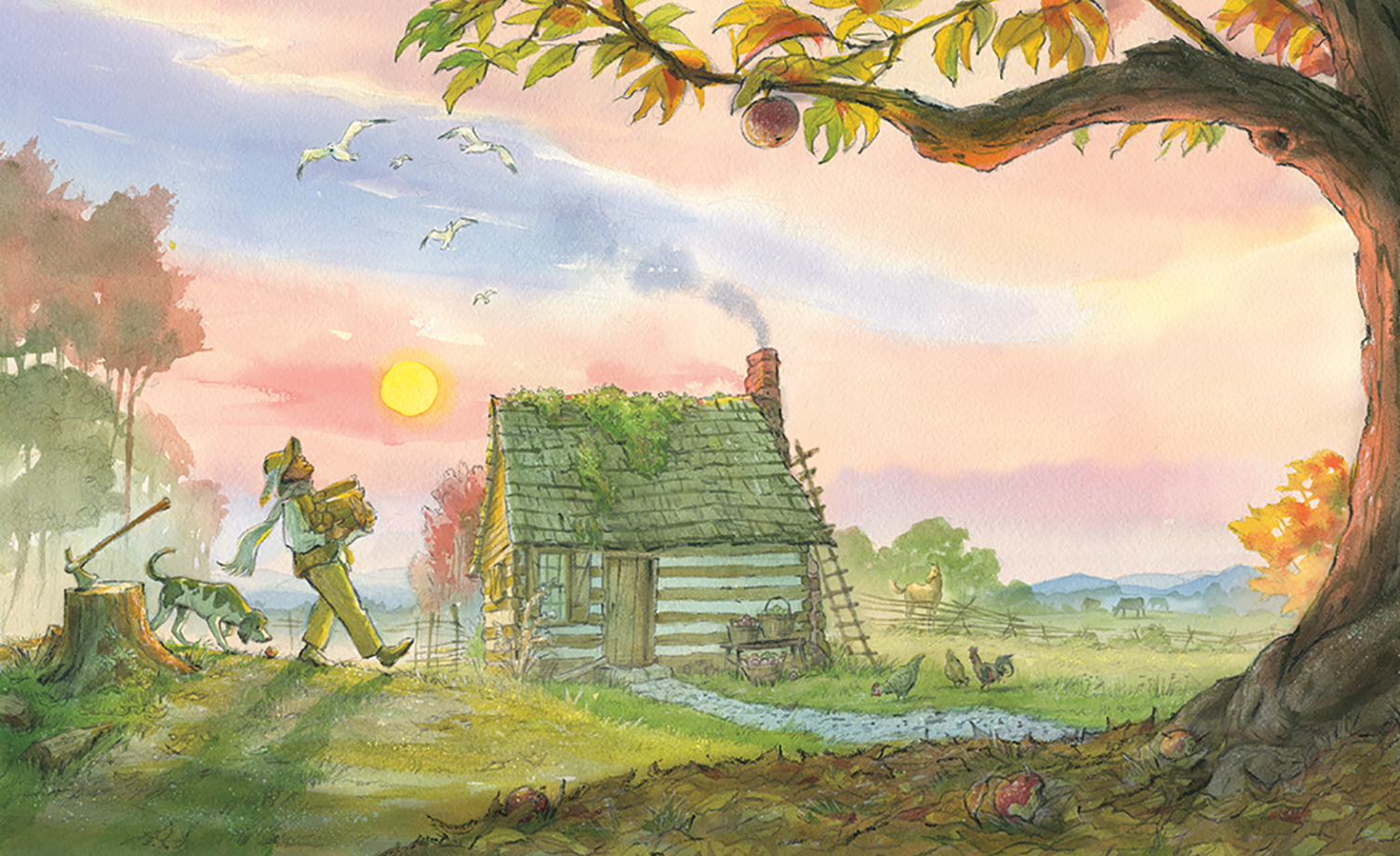
With winter approaching Benjamin Banneker has finished up his autumn chores and is looking forward to time to indulge his creative dreams. He finds his favorite spot under the chestnut tree—the place where during the summer he plays his violin and flute, “blending his soft music with the bird’s songs”—and pulls out a pocket watch he has borrowed from a gentleman. Benjamin is fascinated by the ticking and the movement of the small hands. He carefully opens the back of the watch and discovers “a world of wonderful whirls. There were gears of all shapes and sizes. Such a tiny maze!”

celebrate-picture-books-picture-book-review-ticktock-banneker's-clock-studying-pocket-watch

Image copyright David C. Gardner, courtesy of flyingdogstudio.com

The miniature timepiece is mesmerizing, but Benjamin’s mind holds a challenge—a big challenge. He envisions a large clock, one that chimes to tell the time. Remembering his math skills, Benjamin mulls over the scale needed to turn “something small into something big.” As the snow falls, Benjamin goes to work. First, he dismantles the pocket watch and draws careful diagrams of the gears and workings. Then he begins transposing these into larger drawings.

celebrate-picture-books-picture-book-review-ticktock-banneker's-clock-flute

Image copyright David C. Gardner, courtesy of flyingdogstudio.com

With the coming of spring and his drawings finished, Benjamin plans how he will build his clock. While the little pocket watch is made of metal, that material is much too expensive for a large version. As he ponders the problem under his favorite tree, Benjamin looks around him. Suddenly he knows! The answer is “right in front of him, even in his hands! The very instrument he played was made of wood!” There is a forest of trees on his farm, and this material is free.

During the summer between farm chores, Benjamin uses “every spare moment he had to find the perfect pieces of wood.” Once he has enough he begins to convert his drawings into carvings, whittling the gears and other pieces he will need. Soon, however, he becomes discouraged. The wood begins to split and come apart. Benjamin thinks about how his family cures tobacco leaves—drying them out until all the moisture evaporates. Perhaps, he thinks, he can do the same with wood to make it stronger. The process would take months, but Benjamin is patient.

celebrate-picture-books-picture-book-review-ticktock-banneker's-clock-carving

Image copyright David C. Gardner, courtesy of flyingdogstudio.com

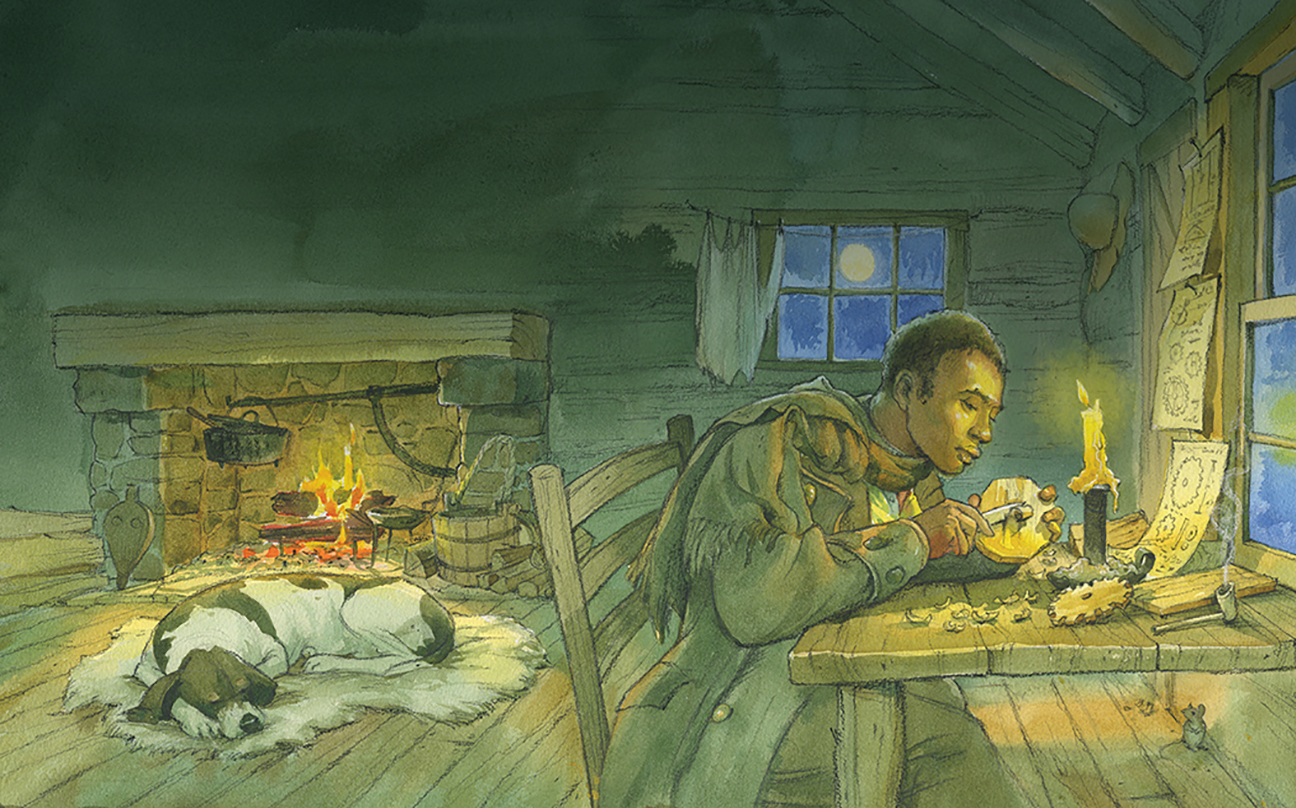
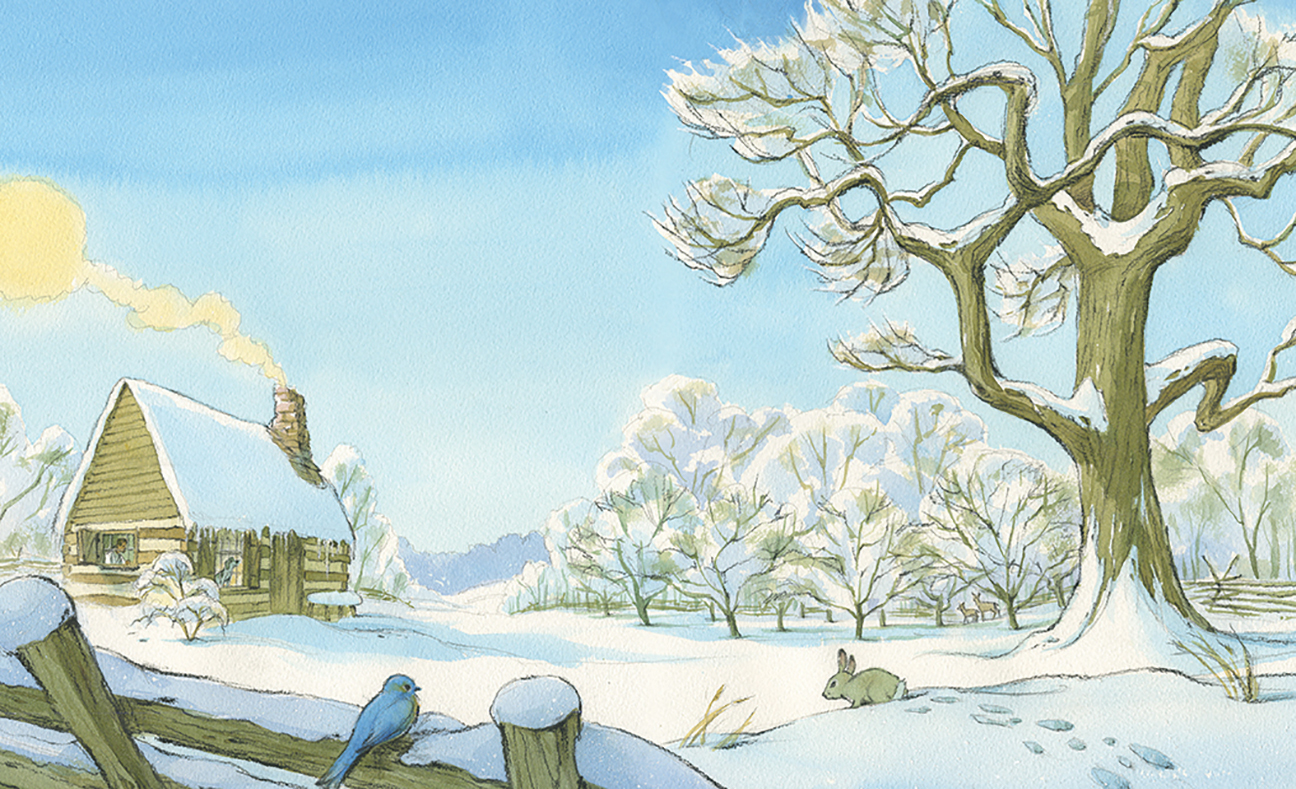
Winter has come around again, and the wood is finally ready. In his warm house Benjamin sets about carving again. During the day he carves near the sunny window, and at night he works by candlelight. At last he has all the parts he needs to build his clock. Gears, wheels, tiny pins, and the boards that will become the case are scattered across Benjamin’s work table. There is only one piece missing. A piece that cannot be made of wood—the bell!

Benjamin buys a bell from a metalsmith, and back home begins to build his clock. With his drawings to guide him, he fits the gears together and then sets the hands to “match up perfectly with the second, minute, and hour of each day. It took more than one try, but Benjamin had learned to be patient.” Using the sun to determine the correct time, Benjamin positions the hands and steps back. His clock works! “The little iron bell chimed every hour, on the dot, for the next forty years.” Benjamin becomes famous, and neighbors from near and far come “to see his amazing invention.”  

An Author’s Note expanding on Benjamin Banneker’s life and work follows the text.

celebrate-picture-books-picture-book-review-ticktock-banneker's-clock-winter

Image copyright David C. Gardner, courtesy of flyingdogstudio.com

With lyrical language that glides as smoothly as a well-oiled timepiece, Shana Keller reveals the remarkable story of Benjamin Banneker, born free during the time of slavery, who possessed exceptional math and scientific skills and used them to help his friends and neighbors and to make real his vision of a striking clock. Keller’s detailed and descriptive storytelling animates this life story, allowing readers to take the journey with Banneker as he experiences excitement, setbacks, and ultimately success. Banneker, embodying determination, persistence, and creativity, is an excellent role model for kids with big dreams of their own.

celebrate-picture-books-picture-book-review-ticktock-banneker's-clock-studying-fall-chores

Image copyright David C. Gardner, courtesy of flyingdogstudio.com

David C. Gardner’s lovely full-page and two-page-spread illustrations gloriously portray Benjamin Banneker’s farm and home as well as his dedicated commitment to building a striking clock despite—or perhaps spurred on by—the challenges he faced. Gardner’s detailed images set the biography firmly in its time period, letting children experience farm and home life in the 1750s. Banneker carries wooden buckets to feed the animals, tobacco leaves hang in a dry shed, a fire blazes in a large, open fireplace, and a candle flickers as Banneker whittles wheels and gears with his pocket knife. The realistic paintings that depict Banneker’s emotions as he imagines creating a large clock, overcomes obstacles, and studiously works on his drawings and carvings will inspire readers to attempt their own inventions—whatever they may be.

For any would-be inventors, history lovers, tinkerers, and science buffs, Ticktock Banneker’s Clock is a stirring biography that would make an inspirational addition to home, school and public libraries.

Ages 6 – 10

Sleeping Bear Press, 2016 | ISBN 978-1585369560

Learn more about Shana Keller and her work on her website!

Discover a portfolio of picture book art, fine art, animation, and videos by David C. Gardner on his website!

Tick Tock Day Activity

celebrate-picture-books-picture-book-review-cuckoo-clock-coloring-page

Cuckoo Clock Coloring Page


The chirp of a cuckoo clock keeps you on time—or at least aware of the passing of time! If you like coloring, you’ll enjoy spending time with this printable Cuckoo Clock Coloring Page!

celebrate-picture-books-picture-book-review-ticktock-banneker's-clock-cover

You can find Ticktock Banneker’s Clock at these booksellers

Amazon | Barnes & Noble | Books-a-Million

To support your local independent bookstore, order from

Bookshop | IndieBound

Picture Book Review
December 10 – National Dewey Decimal System Day

celebrate-picture-books-picture-book-review-melvil-dewey-cover

About the Holiday

Today, library lovers and readers of all kinds honor Melvil Dewey who was born on this date in 1851 and at the age of twenty-one revolutionized the way libraries organized their collections with an elegant numerical system that gave each book their own place on the shelf. Dewey went on to make more changes within libraries from whom they served to who ran them even to the amount of noise that was allowed inside—Shhh! To celebrate today, show your local librarians and library staff how much you appreciate them by sending them a thank you email or leaving an encouraging comment on their social media. To learn more about Melvil Dewey, kids will also want to check out today’s book.

The Efficient, Inventive (Often Annoying) Melvil Dewey

Written by Alexis O’Neill | Illustrated by Edwin Fotheringham


Melvil Dewey is one organized kid! He spends his free time labeling his mother’s pantry and then the basement. He records all of his pertinent personal information and balances his finances in a ledger. And when he has enough money he heads to the bookstore—on foot—ten miles away. “Melvil loves books.” What do you imagine he buys there? If you guessed Webster’s American Dictionary of the English Language—unabridged version—you’re right!

At night before going to sleep, Melvil wonders what he’ll do with his life. He wants to do something valuable, something meaningful. But what? A fire at Hungerford Collegiate Institute in Adams, New York, where Melvil goes to school, gives him a new perspective. While rescuing books, smoke inhalation causes damage to his lungs. The doctors say he won’t live a year, but he proves them wrong. Now, however, he wants to word “efficiently. He wants to make the biggest difference in the world in the least amount of time.”

celebrate-picture-books-picture-book-review-melvil-dewey-fire

Image copyright Edwin Fotheringham, 2020, text copyright Alexis O’Neill, 2020. Courtesy of Calkins Creek.

Noticing the large number of immigrants entering the country, Melvil decides he want to help them learn English and get an education as quickly as possible. Books would do that. After all, Melvil believes that steam power and electricity pale in importance to reading. First, though, Melvil needs to go to college. He chooses Amherst College and spends copious amounts of time at the library. “He even gets a job there.” But he notices that the library is woefully underused. Melvil can understand it. Instead of grouped by subject, the books—all 30,000 of them—are organized by shelf number, which requires frequent rearranging as new books are added.

Melvil loved libraries, but only rich institutions and wealthy people could afford to have them. Melvile believes in free public libraries for everyone. But as Melvil studies the problems of libraries, he discovers that no two libraries organize their books the same way. And some don’t even seem to bother with orgnainzation—they just stack the “books from floor to ceiling.” In addition to books and libraries, Melvil loves decimals. He ponders and muses, and then, suddenly, he has it! “He gets the idea of using numbers and decimals to organize library books.”

celebrate-picture-books-picture-book-review-melvil-dewey-disorganization

Image copyright Edwin Fotheringham, 2020, text copyright Alexis O’Neill, 2020. Courtesy of Calkins Creek.

After extensive research, “Melvil assigns numbers to ten broad classes of knowledge. He divides these into divisions and the divisions into sections and subclasses. When displayed on the spine of the books and the books neatly tucked away on shelves, finding what you want becomes “totally efficient!” The trustees at Columbia College in New York invite Melvil to become their head librarian. Once installed, Melvil begins to think bigger. He wants to open a whole school dedicated to training librarians, and… he thinks women would be perfect for this profession. Their qualifications in his eyes? “…clear heads, strong hands, and great hearts. (Also, they will work for less money than men.)” But Columbia College’s trustees are aghast. Women are not welcome on their campus. Melvil is not to be dissuaded.

He secretly opens his school in a storeroom across the street from Columbia with twenty students, seventeen of which are women. He rushes through his lessons for best efficiency, then back at his job tinkers with the rules of the library. He instates a strict quiet policy—even going to far as to put rubber tips on chair and table legs and rubber wheels on book carts. Librarians and staff are given slippers to wear. And, of course, there is NO talking.

celebrate-picture-books-picture-book-review-melvil-dewey-train

Image copyright Edwin Fotheringham, 2020, text copyright Alexis O’Neill, 2020. Courtesy of Calkins Creek.

Melvil’s flood of ideas, constant changes, and insistent personality upsets people, but he barrels on. He becomes the State Librarian for New York, “organizes the New York State Library Association… provides books for the blind…and launches a traveling library system.” He even helps establish the Children’s Library Association, among other work. People were still divided in their opinions of Melvil, but one thing they all could agree on was that he fulfilled the wishes he had as a boy to “make a difference in the world.”

Extensive back matter includes an Author’s Note with an honest assessment of his successes and faults that in itself can prompt discussions of the legacy people leave behind, a timeline of his life, a discussion on other reforms he championed, a quick overview of how Dewey’s classification system works, and a list of selected sources.

celebrate-picture-books-picture-book-review-melvil-dewey-dual-personality

Image copyright Edwin Fotheringham, 2020, text copyright Alexis O’Neill, 2020. Courtesy of Calkins Creek.

No fusty, dusty story of the Dewey Decimal System this! Alexis O’Neill’s present-tense storytelling sweeps readers up in a whirlwind of the ideas, dreams, quirks, and persuasive, even steamrolling personality of Melvil Dewey. (And if you wonder about that unusual spelling, the answer is here too.)  Her wry delivery masterfully straddles the divide between the numerous contributions he made to the library system and the anger his convictions and obsessions often caused. She invites kids into Dewey’s mind and actions as ideas spark, flame, and fuel innovation. The details O’Neill includes about the times, the pre-Dewey system of library organization, and Dewey’s hand in expanding the reach of libraries as well as his often abrasive personality gives adults and children plenty to unpack, discuss, and research.

Edwin Fotheringham matches O’Neill’s robust storytelling with action-packed illustrations that seem to sprint across the pages as quickly as notions raced through Melvil Dewey’s mind. Striking images—such as a speeding train hurtling into a tunnel made from an overturned book and later smashing through a mountain of books; the moment when Dewey is struck with the decimal-system answer to his problem; and a class lecture given at 180 words per minute—reveal the whirlwind pace of Dewey’s life. A two-page spread in which two profiles of Dewey—one smiling and one scowling—meet in the middle demonstrate the dual nature of this complex man and the contrasting reactions to his beliefs. Fotheringham brings the shotgun quality of Dewey’s thoughts to life with bold, emphatic typography that highlights concepts important to him while hinting at the conviction he had in his own ideas and solutions. 

The Efficient, Inventive (Often Annoying) Melvil Dewey is a compelling biography which can be read to inform children of all ages about a man who wished to make an impact on the world and succeeded in ways that nearly all people recognize. The book can also be used to stimulate important discussions about difficult and current issues with older children when used with the back matter and further research. The book will be fascinating and eye-opening for library lovers unfamiliar with the early history of libraries. It well deserves a place on school and public library shelves.

Ages 7 – 10 and up

Calkins Creek, 2020 | ISBN 978-1684371983

Discover more about Alexis O’Neill and her books on her website.

To learn more about Edwin Fotheringham, his books, and his art, visit his website.

National Dewey Decimal System Day Activity

celebrate-picture-books-picture-book-review-book-love-word-search-puzzle

Book Love! Word Search


There are all kinds of books for every reader. Find your favorite along with twenty favorite genres in this printable puzzle.

Book Love! Word Search Puzzle | Book Love! Word Search Solution

celebrate-picture-books-picture-book-review-melvil-dewey-cover

You can find he Efficient, Inventive (Often Annoying) Melvil Dewey at these booksellers

Amazon | Barnes & Noble | Books-a-Million

To support your local independent bookstore, order from

Bookshop | IndieBound

Picture Book Review
 

December 9 – Read a New Book Month

celebrate-picture-books-picture-book-review-the-polio-pioneer-cover

About the Holiday

The month of December is a gift-giver’s delight and looking at the long winter ahead there’s no better gift for everyone on your list than a book (or two or…). With so many new books hitting bookstore shelves, there really is a perfect book to fit everyone’s taste. Young children, especially, benefit from reading a wide range of picture books from laugh-out-loud or touching stories to nonfiction that introduces them to influential people, science, history, and—in a case like today’s book—to all three! Today’s reviewed book also has the distinction of being timely and inspirational. If you’re still looking for gifts to give, it’s not too late to head to your local bookstore or their online shop to find books that will make kids’ eyes light up.

Thank you to Knopf Books for Young Readers for sending me a copy of The Polio Pioneer for review consideration. All opinions about the book are my own. I’m happy to be teaming with Knopf in a giveaway of the book. See details below.
The Polio Pioneer: Jonas Salk and the Polio Vaccine

Written by Linda Elovitz Marshall | Illustrated by Lisa Anchin


Even at the tender age of four, “Jonas Salk was a kid who saw things differently.” As he watched the soldiers marching in the victory parade in New York City following World War I, instead of cheering, he was saddened by all of the injured and wounded men he saw. In his free time, instead of playing ball or games with his friends, he read book after book, and yet he was the one the other kids came to when they needed a fair and knowledgeable referee. Jonas’s family had moved to America, fleeing religious persecution of Jews in Russia and Lithuania. Money was short, yet Jonas’s parents “taught their children the importance of education, of kindness, and of doing good works. Jonas prayed that he might, someday, help make the world a better place.”

celebrate-picture-books-picture-book-review-the-polio-pioneer-parents

Image copyright Lisa Anchin, 2020, text copyright Linda Elovitz Marshall, 2020. Courtesy of Knopf Books for Young Readers.

In college Jonas became enthralled with the study of chemistry and its use in making medicines. He went on “to medical school to become a doctor and researcher.” After graduation, he joined Dr. Thomas Francis in developing a flu vaccine. They had an idea for a new kind of vaccine that could help a “person’s body ‘practice’ fighting the flu” with the hope that the person’s body would “learn to fight the flu virus… and WIN.” After much research and work, they succeeded.

But there was a disease worse than the flu that was paralyzing or killing thousands every year—“including many babies and small children.” Even future President Franklin Delano Roosevelt was affected and required a wheelchair to get around. Not fully knowing how the polio virus spread, public swimming pools and beaches were closed. “Parents kept children away from movie theaters, sleepovers, and crowds.”

celebrate-picture-books-picture-book-review-the-polio-pioneer-roosevelt

Image copyright Lisa Anchin, 2020, text copyright Linda Elovitz Marshall, 2020. Courtesy of Knopf Books for Young Readers.

Dr. Salk believed a polio vaccine could prevent the disease. He and his team of scientists worked tirelessly to develop one. When a viable vaccine was made, they tested it on children in Pittsburg, Pennsylvania. Dr. Salk gave “many of the shots himself.” The vaccine did seem to help defend the body from polio, but could it prevent it? To learn the answer to that question, a larger trial was needed. “Throughout America, almost two million children—POLIO PIONEERS!—participated.” Then on April 12, 1955 the world learned that Dr. Salk’s vaccine could indeed conquer polio.

“Within a few years, cases of polio plummeted,” and soon it was nearly eradicated from America and most areas of the world. But polio was not the only disease that Dr. Salk wanted to eliminate. He continued to work and test and dream. Then in California, Jonas Salk established the Salk Institute for Biological Studies, where “researchers question and discover, seeking cures for cancer, HIV/AIDS, diabetes, multiple sclerosis, and many other diseases.” All of this good stemmed from a little boy “who saw things differently.” Perhaps you know a child like that too.

An Author’s Note from Linda Elovitz Marshall follows the text and describes her own experiences as a young child growing up with the fear of polio as well as what inspired her biography of Jonas Salk. Images of letters children sent to Dr. Salk thanking him for his life-changing vaccine are also included.

celebrate-picture-books-picture-book-review-the-polio-pioneer-vaccine-trial

Image copyright Lisa Anchin, 2020, text copyright Linda Elovitz Marshall, 2020. Courtesy of Knopf Books for Young Readers.

Linda Elovitz Marshall’s compelling biography of Jonas Salk, begun many years before the COVID-19 pandemic, reminds young readers—many of whom may also be dreamers like Dr. Salk—that their impressions, feelings, and unique view of the world can make valuable, even indispensable, contributions to the world. Marshall’s introduction of Jonas Salk as a serious, curious, intelligent, and caring child—even very young child—will impress readers with his life-long commitment to helping others and inspire their own good works. Her straightforward storytelling reveals to children a time with fears and hopes similar to their own recent experiences—an eye-opening history that offers context and hope and demonstrates the value of science not only for today but as a glimpse into the past and a light for the future. Through excellent pacing and well-chosen details, Marshall gives readers a sense of the urgency researchers, parents, and the public felt as polio raged and intensifies the suspense as Dr. Salk and his team race to find a vaccine for this dreaded disease. 
The parallels of today’s COVID-19 pandemic to the ravages of polio make The Polio Pioneer a unique teaching tool for parents, teachers, librarians and other caregivers for discussing viruses, how epidemics and pandemics occur, the role of doctors and researchers around the world in developing vaccines to combat them, and the importance of getting vaccinated.

Children curious about their peers from the past as well as how science and new ideas in history have transformed today’s medicine will find much to marvel at in Lisa Anchin’s realistic illustrations. Readers, familiar with modern scientific technology and laboratories, may be astonished at illustrations of a lab in the 1950s, where simple bottles, plastic tubing, and stacks of test tubes were the latest tools of the trade. They’ll enjoy comparing these earlier illustrations to a later spread showing scientists currently at work at the Salk Institute. Readers will empathize with images of children restricted to their homes, and a later illustration of a diverse group of children lined up to receive an experimental vaccine as part of the country-wide trial will impress them with the knowledge that kids just like them were instrumental in conquering polio for themselves and future generations.

The Polio Pioneer: Dr. Jonas Salk and the Polio Vaccine is a superb and timely book for teachers and parents to introduce children to one of the world’s great scientific thinkers and lifesaving doctors. The story also gives adults a way to discuss the COVID-19 pandemic and how vaccines are developed and work that will resonate with kids. A superb addition to STEM curriculum that will inspire future researchers and doctors, the book is a highly recommended for home libraries and a must for school and public libraries.

Ages 4 – 9

Knopf Books for Young Readers, 2020 | ISBN 978-0525646518

Discover more about Linda Elovitz Marshall and her books on her website.

To learn more about Lisa Anchin, her books, and her art, visit her website.

Meet Linda Elovitz Marshall

4I9A0399_final2 MPL FNL small

Linda Elovitz Marshall grew up near Boston, graduated from Barnard College, and raised four children and a flock of sheep on a farm in the Hudson River Valley. The author of several picture books, Linda still lives on the farm with her husband, Bob. To learn more, visit LindaMarshall.com.


I’m thrilled to be talking with Linda Elovitz Marshall today about this year’s cornucopia of books, her personal connection with The Polio Pioneer and how the book came to be, and her love of research.

2020 has been an amazing year for you with five books published—Saving the Countryside: Beatrix Potter and Peter Rabbit, Shalom Bayit, Have You Ever Zeen a Ziz?, Anne Frank: The Girl Heard Round the World, and The Polio Pioneer! Can you talk a little about each of your books? Did you conceive of them around the same time or have some been percolating longer than others?

Thank you very much for interviewing me, Kathy. What a year this has been! Hopefully, we’ll have a vaccine widely available soon and can return to being with people we love and doing things we love to do.

Still, in this midst of it all, having all these books come out has definitely kept me busy and kept my spirits up. I’m very thankful for that. I’m thankful, too, to be part of the wonderful community of children’s writers.

About the books…

The idea for THE POLIO PIONEER: DR JONAS SALK AND THE POLIO VACCINE came because Jonas Salk, who lead the team that discovered the polio vaccine, was a hero to me and many in my generation. That, coupled with the realization that people would soon forget about the once-dreaded disease polio – inspired me to write the book.

celebrate-picture-books-picture-book-review-the-polio-pioneer-linda-elovitz-marshall-interview-salk-institute

The Salk Institute for Biological Studies, La Jolla, California

celebrate-picture-books-picture-book-review-the-polio-pioneer-linda-elovitz-marshall-headshot

My research began back in 2016 when I’d told a friend of mine—a scientist who had just moved east from California—that we were planning a trip to La Jolla. I asked him what to do there. When he mentioned the Salk Institute, I told him that Salk was one of my heroes. That conversation led to my getting a tour of the Institute. The people at the Salk Institute were so very helpful… and helped me get my research off to a wonderful beginning.

celebrate-picture-books-picture-book-review-shalom-bayit-coverSHALOM BAYIT: A PEACEFUL HOME (KarBen/Lerner 2020) was inspired by a project I did decades ago about how people live. I’ve come to believe that each home, whether small or grand, has the potential to be sacred space in its own way. A few years ago, a project that my synagogue did called the Jewish Home Project gave me the impetus to write the story. The book may have a specifically Hebrew title—the words mean “Peace in the Home”—but the concept in universal. We all need a sacred space, a place to feel safe, warm, and well-fed.

celebrate-picture-books-picture-book-review-have-you-ever-zeen-a-ziz-cover

HAVE YOU EVER ZEEN A ZIZ? – This story about a mythological Jewish bird just seemed to fly into my mind. I really don’t remember how it began. I heard the word ZIZ and chuckled…and made up a poem that later became this book. In a way, it really was magical!

celebrate-picture-books-picture-book-review-anne-frank-the-girl-heard-around-the-world-cover

ANNE FRANK: THE GIRL HEARD AROUND THE WORLD was suggested to me by my friend and editor (who was formerly) at Scholastic, Orli Zuravicky. She asked if I’d take on the challenge of writing about Anne Frank and how she became a writer. I was honored, but also frightened. Could I do it? Dare I try? That was back in 2017. I re-read Anne’s diary…and cried. I thought and thought about Anne and when, at last, I could feel Anne, I began writing.

celebrate-picture-books-picture-book-review-saving-the-countryside-cover

SAVING THE COUNTRYSIDE: THE STORY OF BEATRIX POTTER AND PETER RABBIT was inspired by a trip I took to England in 2018 with 11 other children’s writers and illustrators. As preparation, we each chose a writer or illustrator that we would become an “expert” on. As we visited the different writers’ homes, we shared our expertise. I chose Lewis Carroll but, in the end, it was Beatrix Potter whom I found so fascinating that I had to write about her. Beatrix was restrained by the many constraints of her day, and yet she broke loose and did what she wanted to do! She became a writer, an artist, a scientist, a sheep farmer, land conservationist, a helper to many in the countryside. She was AMAZING! I couldn’t stop myself from writing about her!

Three of your new books are biographies. What drew you to these particular people? What do you like best about writing biographies?

I love, love, love research. Also, I like to learn about a person so that I can feel what makes them tick. I want to identify—in some way—with that person about whom I’m writing.

Shortly after leaving my (not-completed) Ph.D. in Cultural Anthropology program, I began to interview people, tape-record the interviews, and write their as-told-to autobiographies. Following the interviews, I would personally transcribe each recording. It took hours! However, playing the tapes over and over would help me feel their voice and get a better sense of the interviewee. And when, at last, I had a good sense of them, I’d begin to write.

As for my choice of subjects… Anne came via a friend. Jonas Salk was a hero to me. Beatrix plopped herself in my lap.

What kind of research did you do for each of your biographies? What is one surprising thing you learned about each of your subjects while writing the books?

I’m a leave-no-stone-unturned researcher. I immerse myself in all things related to that person: books (non-fiction and fiction), movies, articles, everything. I try to get to know the time period, the sensibilities, issues, the problems of the time…I try to learn as much as I can so that I can feel that person and, for a while, carry that person inside me.

I learned that Beatrix Potter was a bit of a rebel but that she (somehow) did her rebelling quite graciously. If she had a pet that died, she boiled the animal, removed its skin, reassemble its bones, and studied its anatomy. She was a brilliant scientist and an amazing entrepreneur, too!

celebrate-picture-books-picture-book-review-the-polio-pioneer-linda-elovitz-marshall-interview-salk-institute

Linda Elovitz Marshall researching Jonas Salk at the Salk Institute.

I learned that, as a child, Jonas Salk thought about becoming a rabbi. Later, he decided to go into government. It was in college that he discovered chemistry…and fell in love with it! And when he and his wife were first married, he cut his own wood for the woodstove/fireplace that heated their cabin.

I also learned that Anne Frank was a lively, boisterous kid with a twinkle in her eye who loved making jokes and liked making a bit of mischief, too.

I’d like for you to talk a little more in depth about today’s reviewed book. Can you take readers on its journey from idea to publication? Why do you think it’s important for children to know about Jonas Salk?

Thank you for asking. As I mentioned earlier, Dr. Salk was a hero to me and to many of my generation. There was even a stamp issued in his honor! It was part of the Distinguished Americans series of postage stamps. When I decided to write picture book biographies in addition to my other writing, Dr. Salk—my hero—was one of the first people I chose to write about. He was someone who saw a problem, wanted to fix it, and did. He was such a hero to me and my husband that when our first son (who grew up to become a doctor) was born, my husband (also a doctor) and I named him Jonah.
When I started researching this book, years before COVID-19 came on the scene, Americans had all-but-forgotten how deadly and devastating a communicable disease could be. Sure, there was fear with recent outbreaks of diseases like Ebola, Zika, and H1N1. But with good fortune and quick action, those diseases were (temporarily, at least) brought under control and, consequently, swept off the radar. It seemed the United States had become a fairly safe place regarding communicable diseases. Then came COVID-19.

The first vaccine that Dr. Salk worked on was the flu vaccine. Worldwide, the Spanish flu had killed millions of people. More people were killed from flu than died during all of World War I. The flu vaccine that Dr. Salk and his mentor, Dr. Francis, developed is the basis of the vaccine we still use. It has saved millions of lives!

Then Dr. Salk saw another problem: polio. He wanted to solve that problem… and he did! But he didn’t stop there. After that, he opened the Salk Institute—a place to identify, study, and solve problems. As we are seeing first-hand with COVID-19, the first step is to recognize a problem. The second is to have the desire to solve them. The third is to get to work. I hope this book inspires people to do all three!

Your experiences with polio outbreaks when you were a child and today’s restrictions in response to the pandemic have direct correlations. What do you remember about those times? What would you tell children today?

I was quite young, but I remember not being allowed to go to lakes or swimming pools or even to the movies. There were many restrictions, much as there are now. Polio, however, was thought to be a disease that struck mostly young children and babies. I don’t remember not being allowed to see or hug my grandparents. On the other hand, we lived quite far from them and didn’t see them often.

What would I tell children today? Wear a mask. Wear a mask. Wear a mask. A mask helps keeps the wearer safe. It helps keep people around the wearer safe. It’s a little thing and it doesn’t hurt.

I would also like to start a public service announcement campaign about masks. Inspired by the words of former U.S. President John Fitzgerald Kennedy, “Ask not what your country can do for you; ask what you can do for your country,” this public announcement campaign would be:

MASK:

What YOU can do for your country!

Anyone want to come up with a graphic? Anyone want to help get the word out?

If we all wear masks and all work together—for our country—we can help stop this pandemic. We can each do our part. MASK: what YOU can do for your country.

And when the vaccine is ready for us to take, we need to be ready to take it…for ourselves, for our communities, for our country.

The announcement of a successful vaccine for COVID-19 has generated excitement and hope. Your descriptions of the research Jonas Salk and his team did on a flu vaccine and on the polio vaccine can inform children’s understanding of the world’s current search to develop a vaccine for COVID-19. How can adults use your biography of Jonas Salk to discuss this topic with their kids or students?

At last, we are seeing rays of sunshine, glimmers of hope. It looks like there will soon be a COVID-19 vaccine readily available. Maybe soon, COVID-19, like polio (and diphtheria, measles, pertussis, etc.), will be a preventable disease. But for that to happen, people need to take the vaccine.

This book is a wonderful teaching tool—especially with its soothing 1950’s retro look—for teaching about how a vaccine solved a problem in a previous epidemic. I’m hoping that teachers, parents, librarians, and caregivers will see the parallel and use it during COVID-19 (and, ugh, in the event that there’s yet another pandemic down the road…).

Adults can read The Polio Pioneer: Dr. Jonas Salk and the Polio Vaccine with their kids or students and talk about it. Read and talk about children around the country who took the shots. Those children, those “polio pioneers,” were heroes! By taking the vaccine, they helped save themselves—and many other people—from a devastating, communicable disease. Dr. Salk was so positive that his vaccine was safe and effective that he gave the shots to his own children!

Speaking of his children, I contacted them while I was researching this book. They’re grown up with children and grandchildren of their own. They were wonderfully helpful! If any of Dr. Salk’s children are reading this, thank you, again!

celebrate-picture-books-picture-book-review-the-polio-pioneer-linda-elovitz-marshall-interview-letter-from-child-1.  

celebrate-picture-books-picture-book-review-the-polio-pioneer-linda-elovitz-marshall-interview-letter-from-child-5

celebrate-picture-books-picture-book-review-the-polio-pioneer-linda-elovitz-marshall-interview-letter-from-child-3  

celebrate-picture-books-picture-book-review-the-polio-pioneer-linda-elovitz-marshall-interview-letter-from-child-4

Thank you letters to Dr. Salk from children who received the polio vaccine.

While you were raising your children, you lived on a farm. I’d love to hear a little more about your farm. Did the experience influence any of your books?

I raised my children on a small sheep farm in New York State’s Hudson River Valley. We had sheep, chickens, rabbits, and an occasional goat. We had dogs in the house and cats in the barn. My book, The Passover Lamb, was inspired by something that took place on our farm. The middle grade novel I’m working on is set on the farm. I also have several stories I’m working on, none of which are yet sold, that are also set on – or inspired by – the farm.

In doing a little research for this interview, I saw that you wrote a book about your father, Jerry Ellis (Gerald Elovitz), who founded Building #19—described as “New England’s laziest, messiest department store.” One joke that your dad incorporated into the store caught my eye. It was a sign at the door that read: “Wipe your feet before leaving this store.” Several of your books are based in humor. Did you inherit your sense of humor from your dad? How would you describe the humor in your books for kids?

I wish I could attribute my sense of humor to my father—he was a genius at humor and at making lemonade out of lemons. When he was completely bankrupt with three small children, a new house, and a new mortgage, he started a business that eventually became quite successful. Before that, he’d tried another business venture (selling TV’s and appliances) that failed miserably and depleted his (and the family’s) resources. When he started the new business—selling overstocked, imperfect goods, and damaged items from insurance losses—he wrote his own ads, saying he couldn’t afford to pay anyone else to write them. He even filmed his own TV commercials—using puppets because actors were too expensive! His humor helped make “America’s laziest and messiest department stores” a great success. The business eventually grew to 12 stores…and lasted almost 50 years!

Like my father, I try to add gentle humor to some of my writing. Have You Ever Zeen a Ziz? and The Mitzvah Magician are good examples of that type of humor. Sometimes, I’m serious, too. Mostly, though, I like to play with words. I also need to keep myself amused. That’s important! When I read what I wrote the day (or week or month) before and laugh out loud (assuming it was supposed to be funny), I know it’s good.

Are you working on any new projects now? Would you like to give readers a hint for what’s to come?

I’ve just put (what I hope are) the finishing touches on a picture book biography that will come out in 2022. I have another picture book bio coming out in 2023. I’ve also got another picture book coming out in 2022 or 2023. Covid-19 has changed some of the dates and the illustrators haven’t yet been selected, so I won’t say more about them yet.

I’m also working on several projects, including a middle grade novel. I’ve just completed a wonderful poetry course (taken online, of course) through Highlights. Now I have several poems brewing. I have a long list of projects as well as a list of things that are just twinkles-of-ideas, ranging from board books to adult novels. There’s no way I’ll ever finish even half of what I’m interested in doing. And the list grows longer every day!

Thanks, Linda, for this wonderful talk! Your enthusiasm for your subjects is inspiring! I wish you all the best with The Polio Pioneer and all of your books!

You can connect with Linda Elovitz Marshall on

Her website | Facebook | Twitter

The Polio Pioneer: Dr. Jonas Salk and the Polio Vaccine has been named to these “Best Books” lists!

The National Science Teaching Association Best STEM books for 2021

 The Jewish Journal Best Non-Holiday books 2020

And Kirkus calls it “An exciting, informative introduction to medical research, the work of Jonas Salk, and the man himself.”

The Polio Pioneer: Dr. Jonas Salk and the Polio Vaccine Giveaway

I’m happy to be teaming up with Knopf Books for Young Readers in a giveaway of

  • One (1) copy of The Polio Pioneer: Dr. Jonas Salk and the Polio Vaccine, written by Linda Elovitz Marshall | illustrated by Lisa Anchin

To enter:

  • Follow Celebrate Picture Books
  • Retweet a giveaway tweet
  • Reply with your hero or person you admire for an extra entry. Each reply earns one extra entry.

This giveaway is open from December 9 to December 15 and ends at 8:00 p.m. EST.

A winner will be chosen on December 16. 

Giveaway open to U.S. addresses only. | Prizing provided by Knopf Books for Young Readers

celebrate-picture-books-picture-book-review-the-polio-pioneer-cover

You can find The Polio Pioneer: Dr. Jonas Salk and the Polio Vaccine at these booksellers

Amazon | Barnes & Noble | Books-a-Million

To support your local independent bookstore, order from

Bookshop | IndieBound

Picture Book Review