November 1 – National Author’s Day

celebrate-picture-books-picture-book-review-as-edward-imagined-cover

About the Holiday

Today’s holiday was instituted in 1928 by Nellie Verne Burt McPherson, president of the Bement, Illinois Women’s Club. An avid reader, she established Author’s Day to thank writer Irving Bacheller—author of 31 novels and founder of the first modern newspaper syndicate—who sent her an autographed story in response to her fan letter. The day was officially recognized in 1949 by the United States Department of Commerce. McPherson’s granddaughter, Sue Cole, promoted the holiday after Nellie’s death in 1968. To celebrate, people are encouraged to write a note of appreciation to their favorite author.

Thank you to Knopf Books for Young Readers and Barbara Fisch of Blue Slip Press for sharing a copy of As Edward Imagined with me for review consideration. All opinions on the book are my own.

As Edward Imagined: A Story of Edward Gorey in Three Acts

Written by Matthew Burgess | Illustrated by Marc Majewski


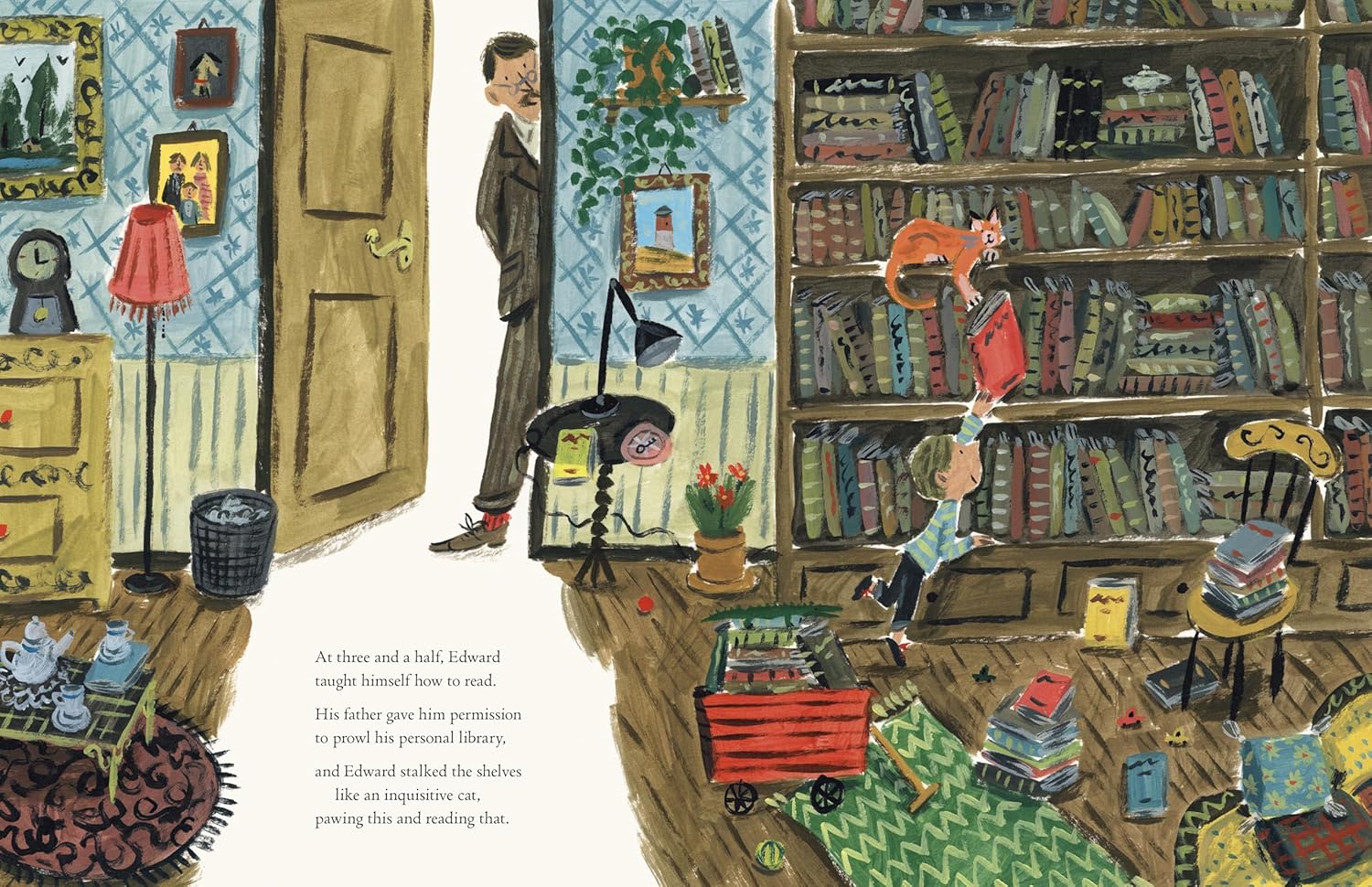
Edward Gorey’s artistic life began early—very early—and built on itself, bit-by-bit, experience-by-experience just like a play, and so it is fitting that Matthew Burgess’s biography is divided into three acts. In Act One readers meet Edward Gorey as a precocious preschooler, creating his first drawing at a year and a half and learning to read at three and a half.

As a voracious reader, he devoured books from his father’s library, including Dracula before he was six. It didn’t take long before he was writing and illustrating his own stories. One was “titled ‘Hand of Doom,’ in which a skeleton’s fingers crept from page to page.” But Edward didn’t consign his “delightfully peculiar” personality to the page, “he [dared] to live the life he imagined.”
celebrate-picture-books-picture-book-review-as-edward-imagined-fathers-library

Image copyright Marc Majewski, 2024, text copyright Matthew Burgess, 2024. Courtesy of Knopf Books for Young Readers.

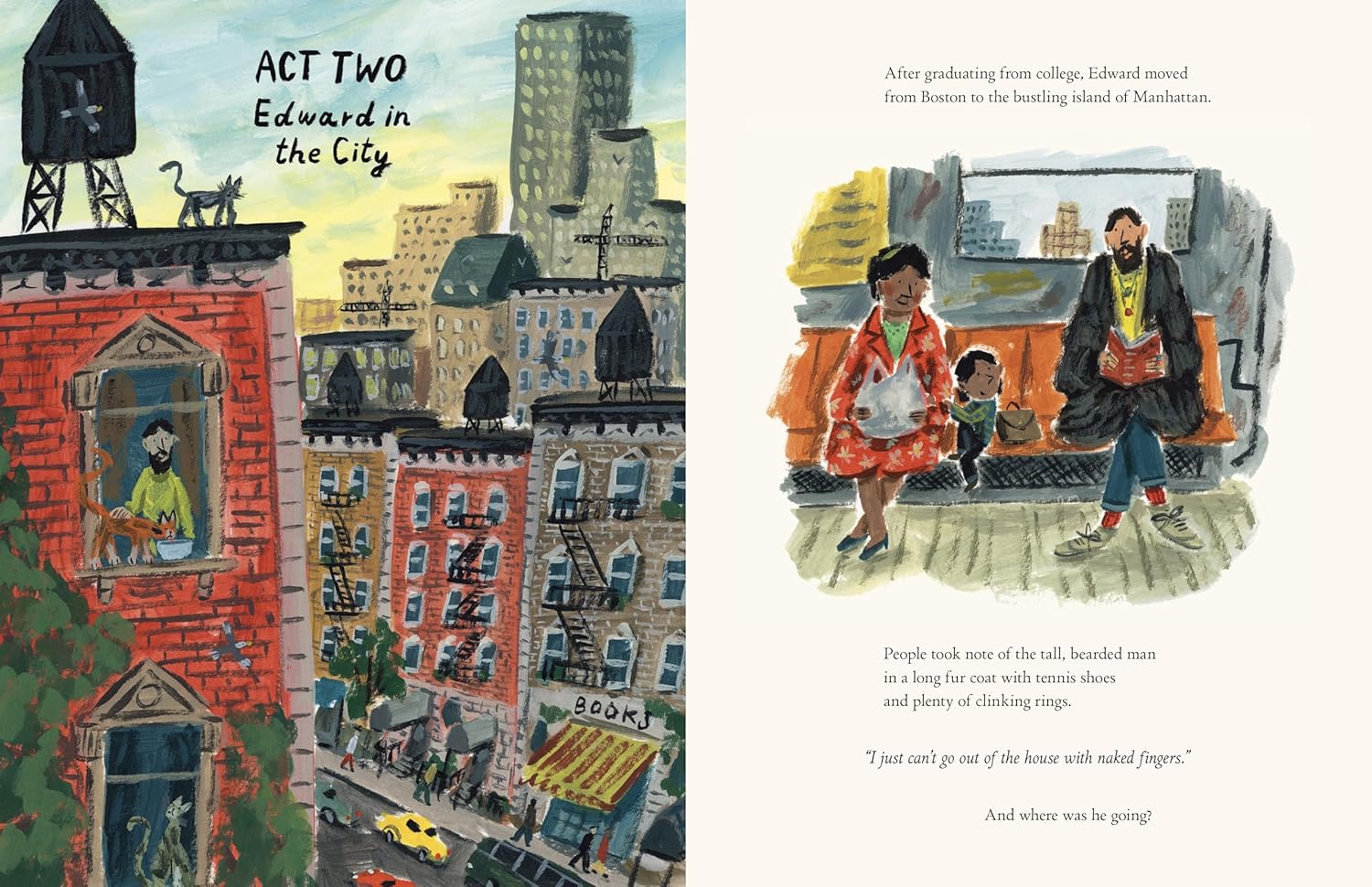
In Act Two, Edward has graduated from college and is living in New York, where he took the subway to attend nearly every performance of the New York City Ballet, dressed in his singular look: a fur coat, tennis shoes, and “plenty of clinking rings.” While working as a book illustrator, he also wrote, illustrated, and published his own stories, and little by little people began to take notice of “his stylish drawings, his outlandish poetry, and his deliciously sinister sense of humor.”

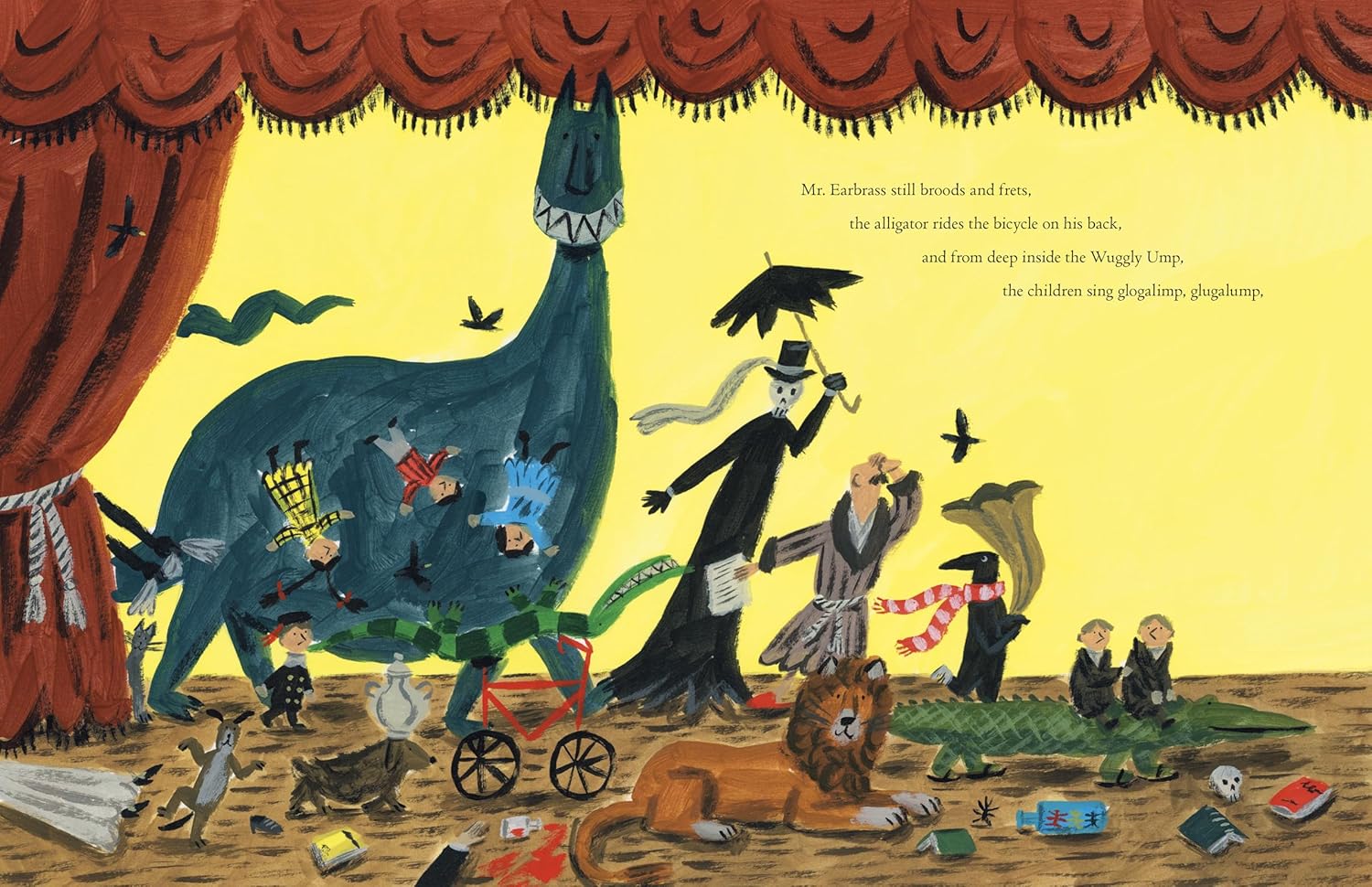
This popularity earned him an invitation to design the costumes and sets for a Broadway production of that classic he had read long ago—Dracula. The play was a smash, and Edward was nominated for Tony awards. Eschewing the limelight, however, Edward watched the ceremony and his own win from the comfort of his home and surrounded by his six beloved cats.
celebrate-picture-books-picture-book-review-as-edward-imagined-city

Image copyright Marc Majewski, 2024, text copyright Matthew Burgess, 2024. Courtesy of Knopf Books for Young Readers.

His success on Broadway brings readers to Act Three, and his purchase of an old captain’s house on Cape Cod, Massachusetts, drew, wrote, and collected. “Teddy bears, sea stones, skeletons of all sizes and shapes, and books by the thousands” became his companions and his inspirations. He also worked with local actors to bring his original plays to theaters. Here, Edward was happy living “his life precisely as he wished.” For readers today, he lives on in his one-of-a-kind characters and inimitable stories. 

Back matter includes an Author’s Note, a Bibliography, a photograph of Edward Gorey and one of his cats, and a Chronology of his life that fleshes out experiences from his childhood, during which he once owned a baby alligator, to his higher education and military service to his publishing career and animations for PBS’s Mystery! series to his time living on Cape Cod.
celebrate-picture-books-picture-book-review-as-edward-imagined-mr-earbrass

Image copyright Marc Majewski, 2024, text copyright Matthew Burgess, 2024. Courtesy of Knopf Books for Young Readers.

Matthew Burgess’s charming storytelling highlights the quirky ingenuity of Edward Gorey’s stories, plays, and illustrations. Cleverly divided into three acts, his biography emphasizes how Edward remained true to himself throughout his life, finding jobs that complimented his skills and pastimes that fed his imagination. Inspirational and celebrating the individual, Burgess’s breezy and uplifting text will engage children and encourage them to listen to and stay true to their own unique voice.

Marc Majewski’s enchanting and atmospheric illustrations will captivate readers with their combination of realism and whimsy that give them a tour through Edward Gorey’s childhood home, New York City haunts, Dracula sets, and Cape Cod comfort. Kids and adults alike will enjoy dawdling over each page to discover the themes of and influences on Edward’s life as well as his eccentric decor and characters and, of course, to point out all the cats.

A fabulous introduction to a truly unique talent and individual, As Edward Imagined: A Story of Edward Gorey in Three Acts will not only fascinate kids but also spark their creativity and an appreciation for the happiness that comes from following their own path. The book would be an often-asked-for favorite on home bookshelves and for public libraries and offers many applications for school libraries and creative arts programs. Pair with readings of Edward Gorey’s books to acquaint young readers with his endearing characters.

Ages 4 – 8

Knopf Books for Young Readers, 2024 | ISBN 978-1984893802

About the Author

Matthew Burgess is the author of Enormous Smallness: A Story of E. E. Cummings, and The Unbudgeable Curmudgeon. He has been a poet-in-residence in New York City elementary schools through the Teachers & Writers Collaborative since 2001. His work has appeared in various magazines and journals, and he recently received an award from the Fund for Poetry. He teaches creative writing and composition at Brooklyn College and lives in Brooklyn, New York. Visit Matthew at matthewjohnburgess.com.

About the Illustrator

Marc Majewski is a French author-illustrator based in Berlin. After obtaining a degree in literature and arts, he studied illustration and painting for two years. His picture books include, Does Earth Feel?, and Butterfly Child. Visit Marc at marc-majewski.com.

National Author’s Day Activity
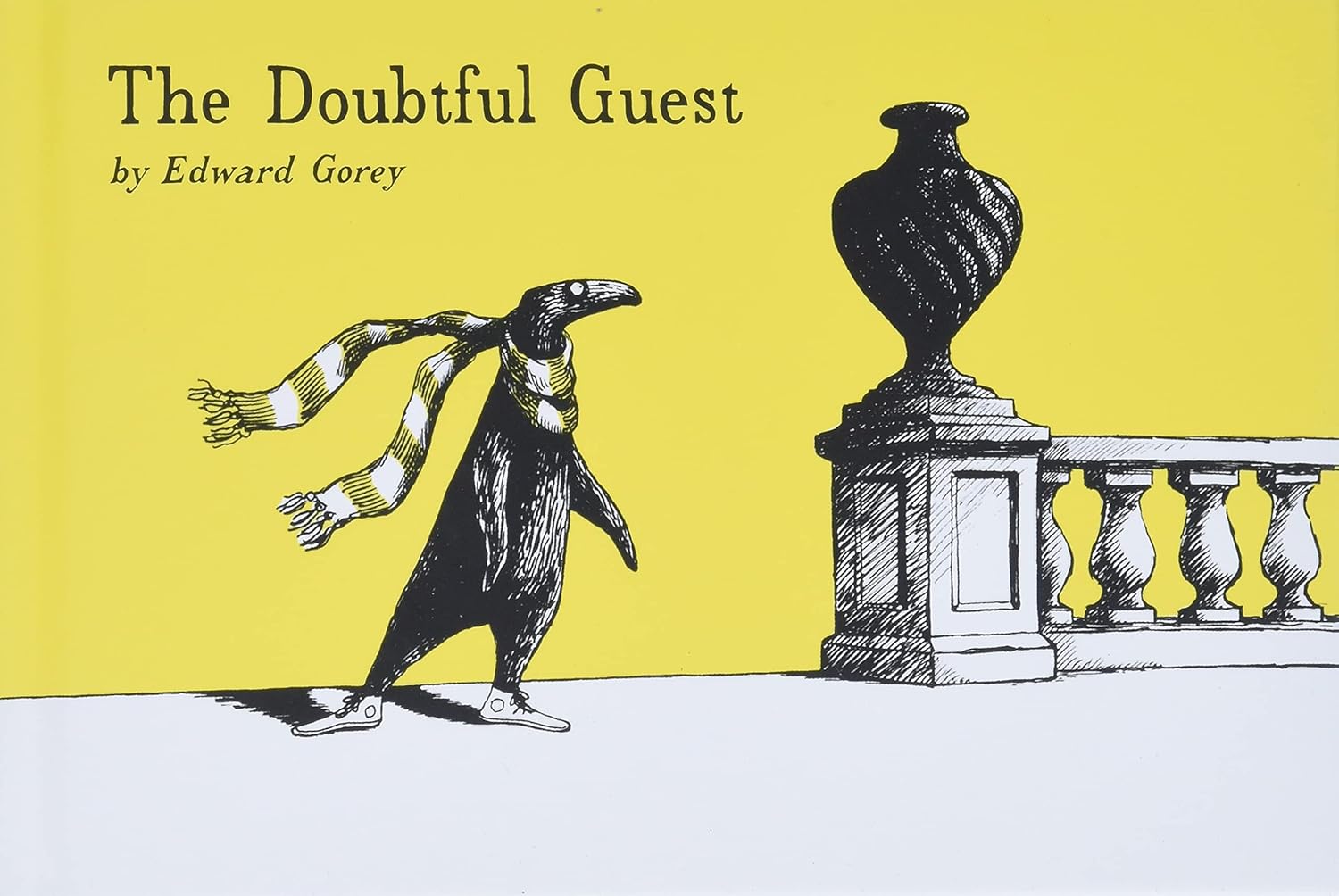
celebrate-picture-books-picture-book-review-the-doubtful-guest-cover

Watch The Doubtful Guest by Edward Gorey

To celebrate today’s holiday listen to this reading of Edward Gorey’s The Doubtful Guest, a short, eccentric and slightly eerie tale of an uninvited guest. Then check out your local library for more books by Edward Gorey. 

celebrate-picture-books-picture-book-review-as-edward-imagined-cover

You can purchase As Edward Imagined: A Story of Edward Gorey in Three Acts at these booksellers

Amazon | Barnes & Noble | Bookshop (to support your local independent bookstore)

Picture Book Review

October 7 – Random Acts of Poetry Day

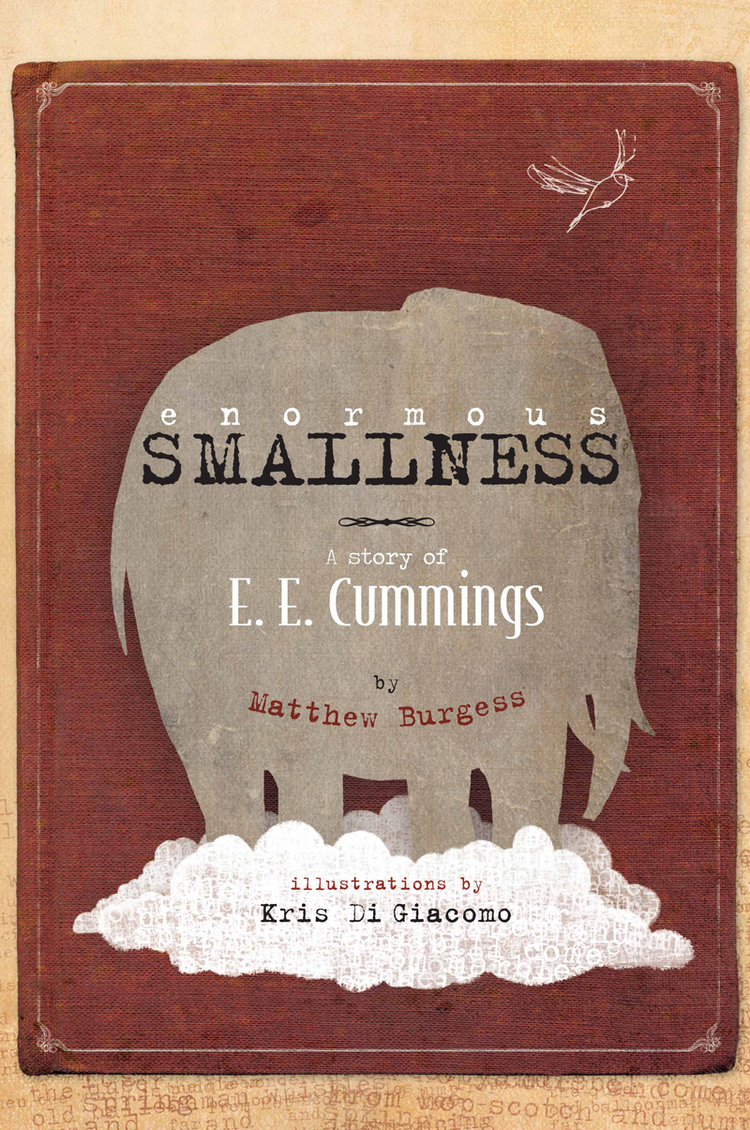
celebrate-picture-books-picture-book-review-enormous-smallness-cover

About the Holiday

Today is set aside for all of those professional and private poets to unleash their imaginations and create poetry! As the name of the holiday suggests, these poems can be random – random subjects, random format, written or spoken in a random place. If writing isn’t really your thing but reading is, take a little time to read a favorite poem or poet or discover a new one! 

enormous SMALLNESS: A Story of E. E. Cummings

Written by Matthew Burgess | Illustrated by Kris Di Giacomo


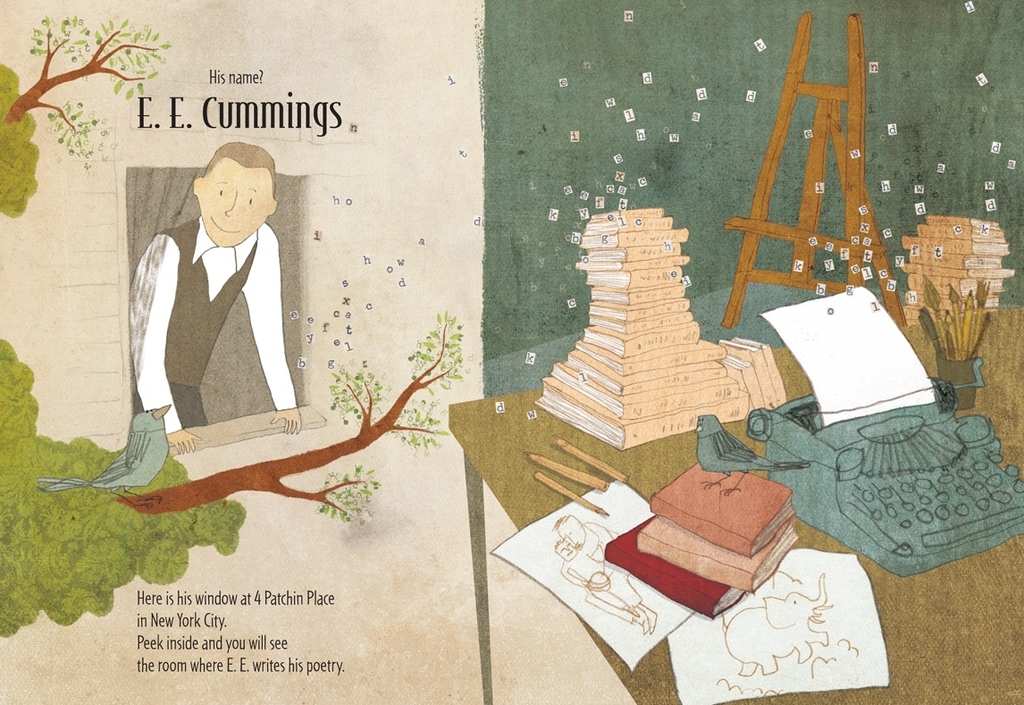
Hello! Welcome to 4 Patchin Place, the home of poet E. E. Cummings! This is where he wrote his poetry on a clackety typewriter, stopping only for tea poured out by the love of his life, Marion Moorehouse. How did he become a poet? That is an interesting story! E. E. was born Edward Estlin Cummings on October 14, 1894 in Cambridge, Massachusetts. His house was full of extended family, a handyman, a maid, and several pets. From an early age he loved to translate the things he saw into words. “His first poem flew out of his mouth when he was only three: “‘Oh, my little / birdie, Oh / with his little / toe, toe, toe!’”

celebrate-picture-books-picture-book-review-enormous-smallness-welcome

Image copyright Kris Di Giacomo, 2015, text copyright Matthew Burgess, 2015. Courtesy of Enchanted Lion Books

Estlin’s mother wrote down all the poems he told her and made a little book of them titled “‘Estlin’s Original Poems.’” When he was six, he expressed his love of nature in a poem about trees, and when his mother asked him what else he saw, he “looked around as if his eyes were on tiptoes and when his heart jumped he said another poem: ‘On the chair is sitting / Daddy with his book. / Took it from the bookcase / Beaming in his look.’”

celebrate-picture-books-picture-book-review-enormous-smallness-elephant

Image copyright Kris Di Giacomo, 2015, text copyright Matthew Burgess, 2015. Courtesy of Enchanted Lion Books

As he grew, Estlin was fascinated by the animals he saw at the circus and in the zoo. He drew pictures of them and wrote about them, using the words he loved so well—and even making up his own words. Estlin had a zest for life and for making life fun for himself and his little sister. During the summers the family traveled to Joy Farm in New Hampshire, where Estlin swam, milked the cow, rode a donkey, and wandered through the fields and forest. His father had built him a little log cabin in the woods, and in the afternoons Estlin went there to draw and write. At home he also had a special place all his own. In an enormous tree his father built a tree house, complete with stove to keep him warm on cold days.

celebrate-picture-books-picture-book-review-enormous-smallness-tree-house

Image copyright Kris Di Giacomo, 2015, text copyright Matthew Burgess, 2015. Courtesy of matthewjohnburgess.com

Estlin had support for his writing at school too. His favorite teacher encouraged him saying, “anything is possible, / as long as you are true to yourself / and never give up, even when the world / seems to say, stop!” From his Uncle George, Estlin received a guide to writing poems. Estlin followed the rules in the book, penning poems nearly every day. When Estlin was 17 he attended Harvard College and began publishing his poems in the school’s magazines. While at Harvard, Estlin realized he had to follow his heart to be happy. He wanted to be like the new artists who were shaping the world—people like Gertrude Stein, Paul Cezanne, and Igor Stravinsky, “artists who were,” he once said, “challenging the way we think and see.”

celebrate-picture-books-picture-book-review-enormous-smallness-paris

Image copyright Kris Di Giacomo, 2015, text copyright Matthew Burgess, 2015. Courtesy of Enchanted Lion Books

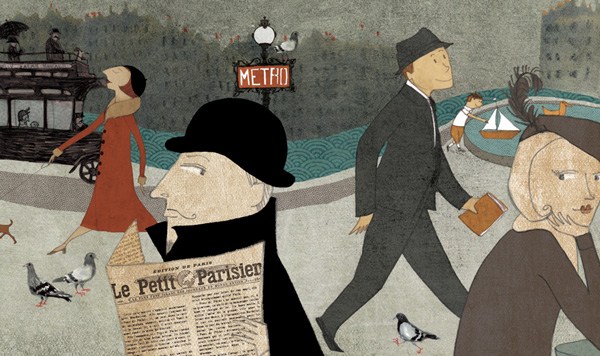
After he graduated, Estlin returned home, but when he had saved enough money he moved to New York and fell in love with the city immediately. He and his friends took in everything new the city had to offer. Soon, however, the United States entered World War II. On April 17, 1917 Estlin volunteered to be an ambulance driver in France. Before he received his assignment, though, he had time to explore Paris. He was “bowled over by the museums, the ballet, and the colorful, crowded streets.” He enjoyed the city so much he returned often during his lifetime.

During the war, Estlin was mistaken for a spy and sent to prison for several months. After the war he wrote a book about his experiences titled The Enormous Room by E. E. Cummings. “The book was published and praised! Estlin was becoming E. E.!” A year later he published his first book of poetry—Tulips & Chimneys. In his poems he experimented with punctuation and using lower case letters instead of capitals.

celebrate-picture-books-picture-book-review-enormous-smallness-yes

Image copyright Kris Di Giacomo, 2015, text copyright Matthew Burgess, 2015. Courtesy of matthewjohnburgess.com

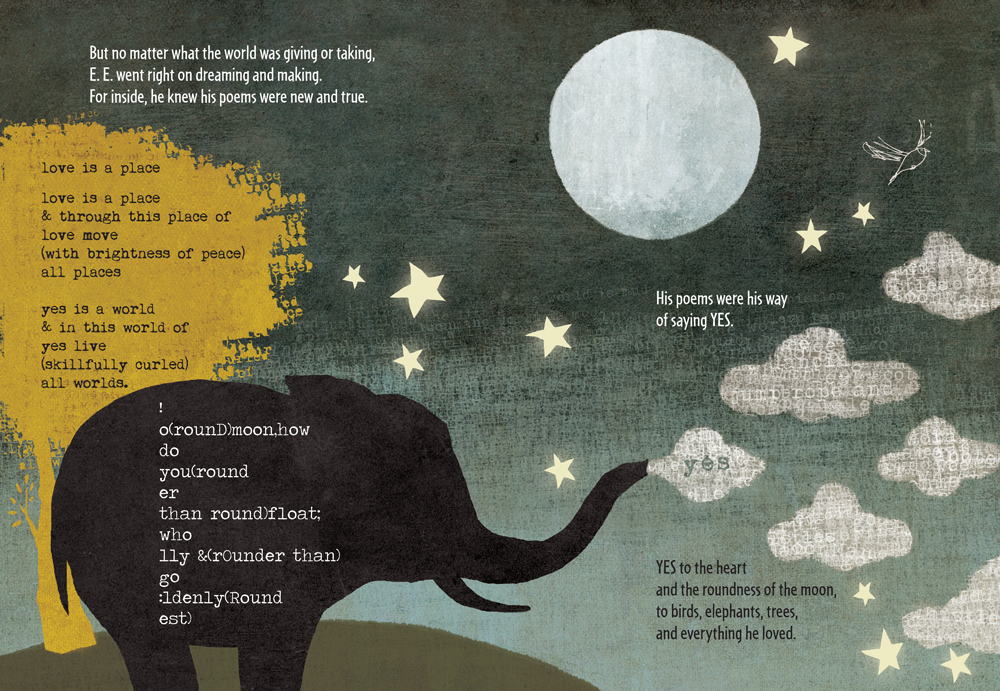
Through his fanciful typography, E. E. “wanted his reader’s eyes to be on tiptoes too, seeing and reading poetry (inaway) that was new.” But some people didn’t understand or like his poetry; it was too strange and too small, they said. But E. E. knew he had to stay true to himself. He believed that “his poems were new and true” and “were his way of saying YES” to everything he loved. As time went on more and more people began to “see the beauty of E. E.’s poetry, and he became one of the most beloved poets in America.”

E. E. Cummings lived and worked at 4 Patchin Place for almost 40 years, but in his mind he would often return to his childhood home. He “could still see himself as a boy gazing out at the sunset”—a memory that he put into words: who are you,little i / (five or six years old) / peering from some high / window;at the gold / of November sunset / (and feeling:that if day has to become night / this is a beautiful way).”

celebrate-picture-books-picture-book-review-enormous-smallness-patchin-place

Image copyright Kris Di Giacomo, 2015, text copyright Matthew Burgess, 2015. Courtesy of matthewjohnburgess.com

Simply put, Matthew Burgess’s enormous SMALLNESS: A Story of E. E. Cummings is a biography that will make you smile. Upbeat and full of the wonder and whimsy that influenced Estlin Cummings’ prodigious talent, the story encourages readers to always follow their heart. Burgess’s easy-going, conversational style invites kids along on the journey of Cumming’s life, stopping off at points that resonate with kids—early imaginary play, school, family vacations, home life, college, travel, and ultimate success. Seeing the support Cummings received throughout his life will inspire young readers just starting out on their own roads of discovery.

celebrate-picture-books-picture-book-review-enormous-smallness-typewriter

Image copyright Kris Di Giacomo, 2015, text copyright Matthew Burgess, 2015. Courtesy of Enchanted Lion Books.

Kris Di Giacomo’s enchanting illustrations will immediately capture the imagination of readers. The playful quality of Cummings’ personality and poems is mirrored in each spread as a variety of children’s drawings and  eye-catching typography are sprinkled throughout. As six-year-old Estlin composes poems for his mother, he stands on tiptoe in his nightshirt surrounded by toys; he experiences life from rooftop and treetop and gazes into the night from his tree house; New York lights up with fireworks and the lights of Broadway; and his poems spring from the pages in their own inimitable way.

A chronology of E. E. Cummings’ life, five poems, and an Author’s Note follow the text.

For children interested in writing, biographies, history, the arts, and the life of the imagination, enormous SMALLNESS: A Story of E. E. Cummings is an inspiring choice for their home bookshelves.

Ages 4 – 9

Enchanted Lion Publishing, 2015 | ISBN 978-1592701711

To learn more about Matthew Burgess, his books, and his poetry, visit his website!

View a gallery of illustration by Kris Di Giacomo on her website!

Random Acts of Poetry Day Activity

celebrate-picture-books-picture-book-review-grow-a-poem-craft

Grow a Poem


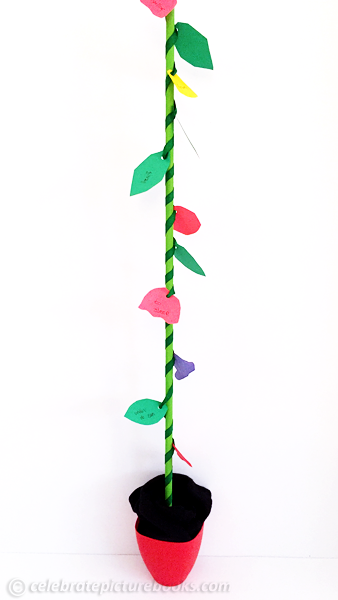
A poem often grows in your imagination like a beautiful plant—starting from the seed of an idea, breaking through your consciousness, and growing and blooming into full form. With this craft you can create a unique poem that is also an art piece!

Supplies

  • Printable Leaves Template
  • Printable Flower Template
  • Wooden dowel, 36-inch-long, ½-inch diameter, available in craft or hardware stores
  • Green ribbon, 48 inches long
  • Green craft paint
  • Green paper for printing leaves (white paper if children would like to color the leaves)
  • Colored paper for printing flowers (white paper if children would like to color the flowers)
  • Flower pot or box
  • Oasis, clay, or dirt
  • Hole punch
  • Glue
  • Markers or pens for writing words
  • Crayons or colored pencils if children are to color leaves and flowers

Directions

  1. Paint the dowel green, let dry
  2. Print the leaves and flower templates
  3. Cut out the leaves and flowers
  4. Punch a hole in the bottom of the leaves or flowers
  5. Write words, phrases, or full sentences of your poem on the leaf and flower templates
  6. String the leaves and flowers onto the green ribbon (if you want the poem to read from top to bottom string the words onto the ribbon in order from first to last)
  7. Attach the ribbon to the bottom of the pole with glue or tape
  8. Wrap the ribbon around the pole, leaving spaces between the ribbon
  9. Move the leaves and flowers so they stick out from the pole or look the way you want them to.
  10. Put oasis or clay in the flower pot or box
  11. Stick your poem pole in the pot
  12. Display your poem!

celebrate-picture-books-picture-book-review-enormous-smallness-cover

You can find enormous SMALLNESS at these booksellers

Amazon | Barnes & Noble | Books-a-Million | IndieBound

Picture Book Review

March 21 – World Poetry Day

celebrate-picture-books-picture-book-review-enormous-smallness-cover

About the Holiday

Sponsored by the United Nations Educational, Scientific, and Cultural Organization (UNESCO), World Poetry Day celebrates one of the world’s oldest and most treasured forms of linguistic expression. On this day we honor the poets who translate physical beauty into words, expose social injustice in heartrending verse, and make us laugh with quirky juxtapositions. To celebrate the holiday, attend a poetry reading, revisit poems from your favorite author or discover a new writer, or pen a poem yourself!

enormous SMALLNESS: A Story of E. E. Cummings

Written by Matthew Burgess | Illustrated by Kris Di Giacomo


Hello! Welcome to 4 Patchin Place, the home of poet E. E. Cummings! This is where he wrote his poetry on a clackety typewriter, stopping only for tea poured out by the love of his life, Marion Moorehouse. How did he become a poet? That is an interesting story! E. E. was born Edward Estlin Cummings on October 14, 1894 in Cambridge, Massachusetts. His house was full of extended family, a handyman, a maid, and several pets. From an early age he loved to translate the things he saw into words. “His first poem flew out of his mouth when he was only three: “‘Oh, my little / birdie, Oh / with his little / toe, toe, toe!’”

celebrate-picture-books-picture-book-review-enormous-smallness-welcome

Image copyright Kris Di Giacomo, text copyright Matthew Burgess. Courtesy of Enchanted Lion Books

Estlin’s mother wrote down all the poems he told her and made a little book of them, titled “‘Estlin’s Original Poems.’” When he was six, he expressed his love of nature in a poem about trees, and when his mother asked him what else he saw, he “looked around as if his eyes were on tiptoes and when his heart jumped he said another poem: “‘On the chair is sitting / Daddy with his book. / Took it from the bookcase / Beaming in his look.’”

celebrate-picture-books-picture-book-review-enormous-smallness-elephant

Image copyright Kris Di Giacomo, text copyright Matthew Burgess. Courtesy of Enchanted Lion Books

As he grew, Estlin was fascinated by the animals he saw at the circus and in the zoo. He drew pictures of them and wrote about them, using the words he loved so well—and even making up his own words. Estlin had a zest for life and for making life fun for himself and his little sister. During the summers, the family traveled to Joy Farm in New Hampshire, where Estlin swam, milked the cow, rode a donkey, and wandered through the fields and forest. His father had built him a little log cabin in the woods, and in the afternoons Estlin went there to draw and write. At home he also had a special place all his own. In an enormous tree his father built a tree house, complete with stove to keep him warm on cold days.

celebrate-picture-books-picture-book-review-enormous-smallness-tree-house

Image copyright Kris Di Giacomo, text copyright Matthew Burgess. Courtesy of matthewjohnburgess.com

Estlin had support for his writing at school too. His favorite teacher encouraged him saying, “anything is possible, / as long as you are true to yourself / and never give up, even when the world / seems to say, stop!” From his Uncle George, Estlin received a guide to writing poems. Estlin followed the rules in the book, penning poems nearly every day. When Estlin was 17 he attended Harvard College and began publishing his poems in the school’s magazines. While at Harvard, Estlin realized he had to follow his heart to be happy. He wanted to be like the new artists who were shaping the world—people like Gertrude Stein, Paul Cezanne, and Igor Stravinsky, “artists who were,” he once said, “challenging the way we think and see.”

celebrate-picture-books-picture-book-review-enormous-smallness-paris

Image copyright Kris Di Giacomo, text copyright Matthew Burgess. Courtesy of Enchanted Lion Books

After he graduated, Estlin returned home, but when he had saved enough money he moved to New York and fell in love with the city immediately. He and his friends took in everything new the city had to offer. Soon, however, the United States entered World War II. On April 17, 1917 Estlin volunteered to be an ambulance driver in France. Before he received his assignment, though, he had time to explore Paris. He was “bowled over by the museums, the ballet, and the colorful, crowded streets.” He enjoyed the city so much he returned often during his lifetime.

During the war, Estlin was mistaken for a spy and sent to prison for several months. After the war he wrote a book about his experiences titled The Enormous Room by E. E. Cummings. “The book was published and praised! Estlin was becoming E. E.!” A year later he published his first book of poetry—Tulips & Chimneys. In his poems he experimented with punctuation and using lower case letters instead of capitals.

celebrate-picture-books-picture-book-review-enormous-smallness-yes

Image copyright Kris Di Giacomo, text copyright Matthew Burgess. Courtesy of matthewjohnburgess.com

Through his fanciful typography, E. E. “wanted his reader’s eyes to be on tiptoes too, seeing and reading poetry (inaway) that was new.” But some people didn’t understand or like his poetry; it was too strange and too small, they said. But E. E. knew he had to stay true to himself. He believed that “his poems were new and true” and “were his way of saying YES” to everything he loved. As time went on more and more people began to “see the beauty of E. E.’s poetry, and he became one of the most beloved poets in America.”

E. E. Cummings lived and worked at 4 Patchin Place for almost 40 years, but in his mind he would often return to his childhood home. He “could still see himself as a boy gazing out at the sunset”—a memory that he put into words: who are you,little i / (five or six years old) / peering from some high / window;at the gold / of November sunset / (and feeling:that if day has to become night / this is a beautiful way)”

celebrate-picture-books-picture-book-review-enormous-smallness-patchin-place

Image copyright Kris Di Giacomo, text copyright Matthew Burgess. Courtesy of matthewjohnburgess.com

Simply put, Matthew Burgess’s enormous SMALLNESS: A Story of E. E. Cummings is a biography that will make you smile. Upbeat and full of the wonder and whimsy that influenced Estlin Cummings’ prodigious talent, the story encourages readers to always follow their heart. Burgess’s easy-going, conversational style invites kids along on the journey of Cumming’s life, stopping off at points that resonate with kids—early imaginary play, school, family vacations, home life, college, travel, and ultimate success. Seeing the support Cummings received throughout his life will inspire young readers just starting out on their own roads of discovery.

Kris Di Giacomo’s enchanting illustrations will immediately capture the imagination of readers. The playful quality of Cummings’ personality and poems is mirrored in each spread as a variety of children’s drawings and typography are sprinkled throughout. As six-year-old Estlin composes poems for his mother, he stands on tiptoe in his nightshirt surrounded by toys; he experiences life from rooftop and treetop and gazes into the night from his tree house; New York lights up with fireworks and the lights of Broadway; and his poems spring from the pages in their own inimitable way.

For children interested in writing, biographies, history, the arts, and the life of the imagination, enormous SMALLNESS: A Story of E. E. Cummings is a perfect choice for their home bookshelves.

A chronology of E. E. Cummings’ life, five poems, and an Author’s Note follow the text.

Ages 4 – 9

Enchanted Lion Publishing, 2015 | ISBN 978-1592701711

To learn more about Matthew Burgess, his books, and his poetry, visit his website!

View a gallery of illustration by Kris Di Giacomo on her website!

World Poetry Day Activity

celebrate-picture-books-picture-book-review-grow-a-poem-craft


Grow a Poem


A poem often grows in your imagination like a beautiful plant—starting from the seed of an idea, breaking through your consciousness, and growing and blooming into full form. With this craft you can create a unique poem that is also an art piece!

Supplies

  • Printable Leaves Template
  • Printable Flower Template
  • Wooden dowel, 36-inch-long, ½-inch diameter, available in craft or hardware stores
  • Green ribbon, 48 inches long
  • Green craft paint
  • Green paper for printing leaves (white paper if children would like to color the leaves)
  • Colored paper for printing flowers (white paper if children would like to color the flowers)
  • Flower pot or box
  • Oasis, clay, or dirt
  • Hole punch
  • Glue
  • Markers or pens for writing words
  • Crayons or colored pencils if children are to color leaves and flowers

Directions

  1. Paint the dowel green, let dry
  2. Print the leaves and flower templates
  3. Cut out the leaves and flowers
  4. Punch a hole in the bottom of the leaves or flowers
  5. Write words, phrases, or full sentences of your poem on the leaf and flower templates
  6. String the leaves and flowers onto the green ribbon (if you want the poem to read from top to bottom string the words onto the ribbon in order from first to last)
  7. Attach the ribbon to the bottom of the pole with glue or tape
  8. Wrap the ribbon around the pole, leaving spaces between the ribbon
  9. Move the leaves and flowers so they stick out from the pole or look the way you want them to.
  10. Put oasis or clay in the flower pot or box
  11. Stick your poem pole in the pot
  12. Display your poem!

Picture Book Review