August 5 – It’s National Peach Month

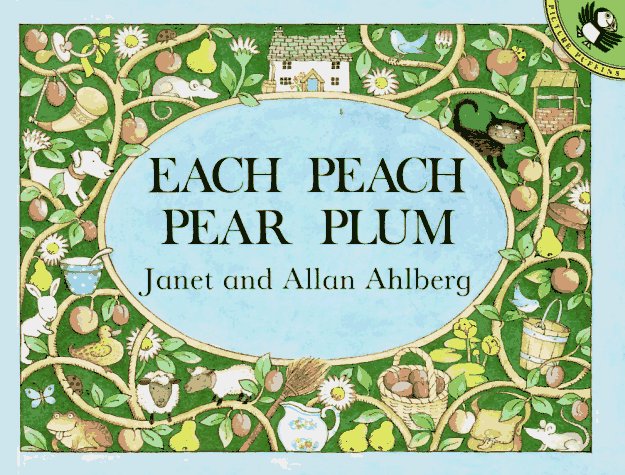
celebrate-picture-books-picture-book-review-each-peach-pear-plum-cover

About the Holiday

Is there anything as delicious as a perfectly ripe peach? Native to China and classified with the almond, the peach is peachy in pies, tarts, fruit salads, and just on its own. To celebrate today pick some peaches from a local farm, farmer’s market, or grocery store and enjoy!

Each Peach Pear Plum

By Janet and Allan Ahlberg


This perennial children’s favorite “I spy” nursery rhyme book is a perfect read any time, but especially during the summer when it can be tucked away in a travel bag or picnic basket and enjoyed on the go. After the first introduction of “Each peach pear plum / I spy Tom Thumb,” in which readers are invited to find Tom who is happily reading high in a peach tree nearly hidden by leaves and fruit, every page offers another double challenge.

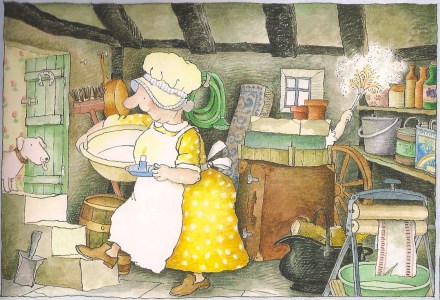
Building on the discovery in the preceding page, kids are given a hint as to the current whereabouts of the previous character and are also urged to find another nursery rhyme or literary favorite: “Tom Thumb in the cupboard / I spy Mother Hubbard” followed by “Mother Hubbard down the cellar / I spy Cinderella.”  This structure creates anticipation in even the youngest readers as they begin to recognize the pattern and wonder who is coming next.

celebrate-picture-books-picture-book-review-each-peach-pear-plum-interior-art-mother-hubbard

Copyright Janet and Allan Ahlberg, 1999, courtesy of Viking Books for Young Readers

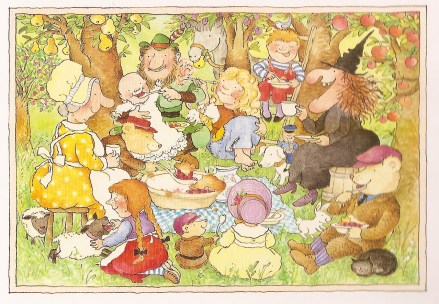
Besides Tom Thumb, Old Mother Hubbard, and Cinderella, the Three Bears, Baby Bunting, Little Bo-Peep, Jack and Jill, the Wicked Witch, Robin Hood, and a deliciously plump Plum Pie are hidden in the book. What makes Each Peach Pear Plum a classic is the Ahlberg’s artistic magic, which is on gorgeous display in every illustration. The vivid, fine-line drawings spare no details in bringing the short text fully to life.

Humor abounds, especially in the depiction of the “hidden” character or characters, whose only appearance is an arm dusting a shelf, faces at a window, feet sticking out of tall grass, a camouflaged archer, and more. And perhaps the clumsy baby bear could use a bit of assistance! Kids will love pointing out the birds and bunnies, dog, cat, and other animals that also follow from page to page.

celebrate-picture-books-picture-book-review-each-peach-pear-plum-interior-art-picnic

Copyright Janet and Allan Ahlberg, 1999, courtesy Viking Books for Young Readers

Each Peach Pear Plum is also a wonderful introduction to the literature alluded to and will entice kids to hear all the stories contained in this forever favorite. Each Peach Pear Plum makes a fantastic gift for new babies or young readers and belongs on every child’s bookshelf.

Ages Birth – 5 and up

Viking Books for Young Readers, Penguin, 1999 | ISBN 978-0670882786 (Board Book Edition)

It’s National Peach Month Activity

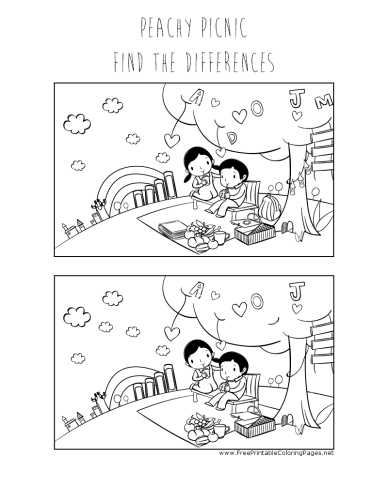
celebrate-picture-books-picture-book-review-picnic-find-the-differences

Peachy Picnic Find the Differences Puzzle


These two friends are enjoying a picnic and took two selfies. Can you spot the 12 differences between the two pictures in this printable Peachy Picnic Find the Differences Puzzle?

August 4 – Assistance Dog Day

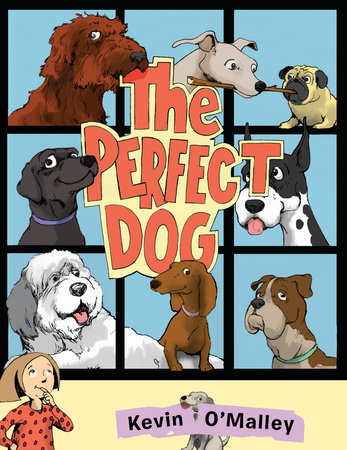
celebrate-picture-books-picture-book-review-the-perfect-dog-cover

About the Holiday

Today’s holiday comes during International Assistance Dog Week, a time to recognize the work and benefits of canine helpers of all types. Assistance dogs offer comfort, independence, and reassurance to people who have them as members of the family. Not only do dogs of various breeds help the vision and hearing challenged, but they are also trained to recognize the signs of medical emergencies, such as heart attacks, seizures, and epilepsy. Owners of these friends and helpers know that they have the perfect dog, just like the little girl in today’s book!

The Perfect Dog

By Keven O’Malley


Getting a dog is a major decision. Paramount, perhaps, is what type of dog is best, and with so many breeds, how do you break it down? When the little girl in The Perfect Dog receives permission to get a dog, she begins her list for just the right pet. “The perfect dog should be big” she says as she imagines holding a Chow Chow. Or maybe “bigger” like a German Shephard, or even “biggest” like a Saint Bernard that stands taller than she is. But a Great Dane? Maybe not that big.

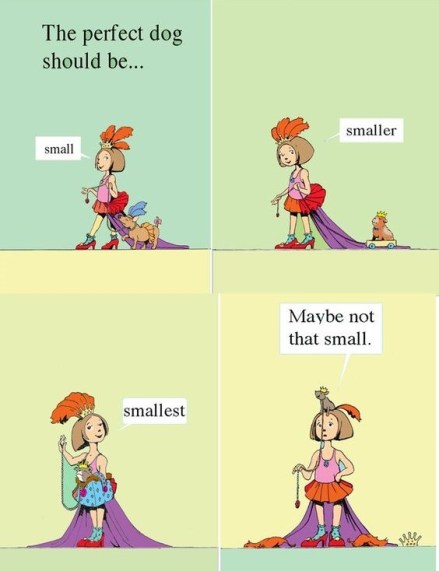
celebrate-picture-books-picture-book-review-the-perfect-dog-smaller

Image copyright Kevin O’Malley, courtesy of pinterest.com/booksbyomalley/kevin-omalley


On the other hand maybe “the perfect dog should be small”—standing around knee height—or “smaller”—mid shin height—or “smallest”—able to fit in a purse. But small enough to sit on her head? Maybe not that small. Next she considers the length of the dog’s hair. “The perfect dog should have long hair,” she believes, already assembling her grooming supplies to plump a poodle’s coif. Or the “longer” hair of a Sheep Dog might be fun to comb and cut, and the “longest” hair of an Afghan Hound would be a dream to brush. But the locks of a Komondor? Maybe not that long.

The girl knows the dog should not be too loud or too slobbery, but it should definitely be “fancy.” Speed is also a consideration. “Fast” as a Beagle? Maybe “faster,” like a Dalmatian. But “fastest,” like a Greyhound, could make walking the dog a challenge. Snuggly is nice for quiet times, but a dog so snuggly it takes over the whole chair is not what the girl has in mind. The little girl does not want a pet that is too slow or too messy either.

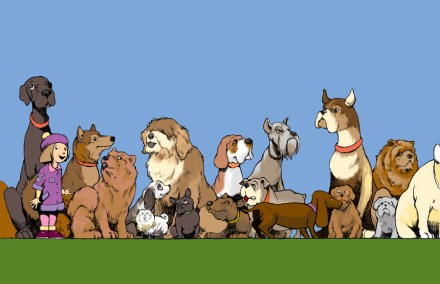
celebrate-picture-books-picture-book-review-the-perfect-dog-choosing-a-dog

Image copyright Kevin O’Malley, courtesy of pinterest.com/booksbyomalley/kevin-omalley

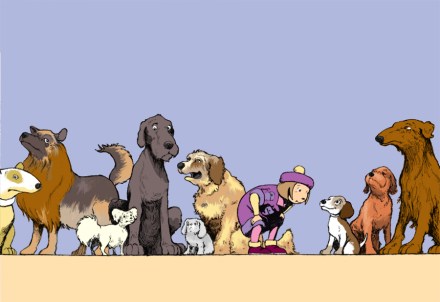
The day finally arrives for the girl and her family to pick out their new pet. There are so many to choose from! Looking into each face and taking each dog’s traits and qualities into consideration, the family decides that “the perfect dog should be happy…happier…happiest!” But there’s still one surprise waiting. Instead of the girl choosing the perfect dog, she reveals that “the perfect dog found me!” And it was a very happy ending!

Part concept book, part tribute to people’s “best friend,” Kevin O’Malley’s The Perfect Dog is a fun romp through different breeds and their unique qualities. If you’ve ever attended a dog show or watched one on TV, you know that there are as many types of canines as there are people. O’Malley applies the language concept of superlatives to describe big, bigger, biggest; long, longer, longest; and other shapes, sizes, and traits in a way that attracts kids’ attention and fosters understanding.

celebrate-picture-books-picture-book-review-the-perfect-dog-happy-dog

Image copyright Kevin O’Malley, courtesy of pinterest.com/booksbyomalley/kevin-omalley

As the little girl “tries out” various dogs, O’Malley’s bold, full-bleed illustrations proceed from funny to funnier to funniest, often to the little girl’s dismay. She gets knocked down by the biggest of biggest dogs, finds herself hidden in the longest of longest hair, and flies straight out from the end of the leash attached to the fastest of fastest dogs.

O’Malley knows, too, the real secret about choosing a new pet—one that kids will delight in, just as they do in this book. For any pet lover The Perfect Dog is…perfect!

Ages 3 – 8

Crown Books for Young Readers, Penguin, 2016 | ISBN 978-1101934418

Be sure to visit Kevin O’Malley’s website! You can learn more about his books, watch a video of one of his school visits, and even download free books!

Assistance Dog Day Activity

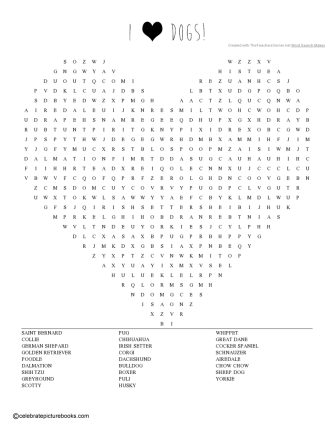
celebrate-picture-books-picture-book-review-dog-breeds-word-search

I (Heart) Dogs! Word Search


Assistance dogs come in all shapes, sizes, and breeds. Find the names of more than 25 types of dogs in this printable I (Heart) Dogs! Word Search

Picture Book Review

August 3 – Watermelon Day

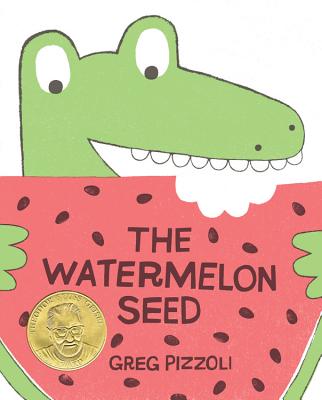
celebrate-picture-books-picture-book-review-the-watermelon-seed-cover

About the Holiday

On a steamy summer afternoon nothing refreshes like watermelon! The sweet, juicy treat is a favorite with kids and adults and makes a perfect snack, complement to any picnic, or colorful addition to fruit salad. Watermelon comes in all shapes and sizes, from the iconic large dark green barrel to small playground-ball-sized orbs to compact squares perfect for fitting on a refrigerator shelf. Whether you dig the seeds out or spit them, cut slices or use a melon baller, enjoy some watermelon today!

The Watermelon Seed

By Greg Pizzoli


“I love watermelon!” the little crocodile exclaims. It’s easy to see why. After all they have so much in common—same barrel body shape, same color, and while one has lots of teeth the other needs lots of teeth to be enjoyed! “Chomp! Chomp! Chomp!” Ever since the croc was a baby, watermelon has been its favorite treat.

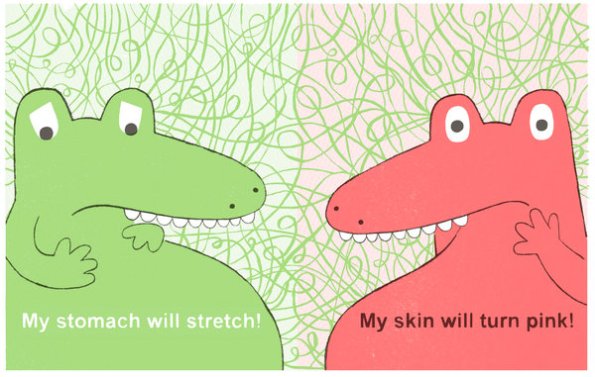
“I like it for breakfast. I like it for lunch. I like a big salty slab for dinner…and I LOVE it for dessert!” Is there anything the crocodile doesn’t like about watermelon? Well…yes. And the croc has just swallowed it. Panic sets in! “I SWALLOWED A SEED!” And horrible scenarios swirl in his brain: “It’s growing in my guts! Soon vines will come out my ears!” Poor Croc even worries that he’ll end up in a fruit salad.

celebrate-picture-books-picture-book-review-the-watermelon-seed-stomach-stretching

Image courtesy of Greg Pizzoli

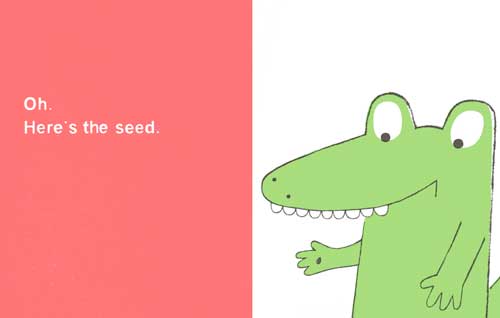
Croc starts to cry and then the worst happens! The seed starts growing! It’s expanding and something funny (peculiar not Ha Ha) is happening! Here it comes….”Buuuuuurrrrrrppp!” “Oh. Here’s the seed.” Well, even if the seed was dislodged, Crocodile thinks the whole experience was way too close and resolves to never eat watermelon again.

“Well, maybe just a teeny, tiny bite.”

celebrate-picture-books-picture-book-review-the-watermelon-seed-dislodged seed

Image copyright Greg Pizzoli

Greg Pizzoli’s watermelon-colored book sprouts laughs on every page. The cute crocodile with a watermelon obsession echoes the way kids latch onto a favorite food and need it for breakfast, lunch, and dinner. The added danger that lurks in every bite of watermelon increases the suspense and humor as the crocodile worries and frets. Kids will know that the promise to never eat watermelon again won’t last long and that “just a teeny, tiny bite” can’t hurt anything. Can it?

Pizzoli’s simple block-color illustrations of the watermelon-loving crocodile are the perfect complement to the story. Focusing on the croc’s facial expressions, from eager anticipation of that first bite to wide-eyed horror at swallowing a seed to googly eyed and wavy mouthed dread, each page gives kids lots to laugh at. And the two-page spread depicting the croc’s colossal burp that dislodges the seed invites repeated readings. In fact, The Watermelon Seed makes a delicious addition to children’s book shelves for fun story times.

Ages 3 – 7

Disney-Hyperion Books, 2013 | ISBN 978-1423171010

Enjoy a slice of The Watermelon Seed in this trailer!

Find more books and fun on Greg Pizzoli’s website!

Watermelon Day Activity

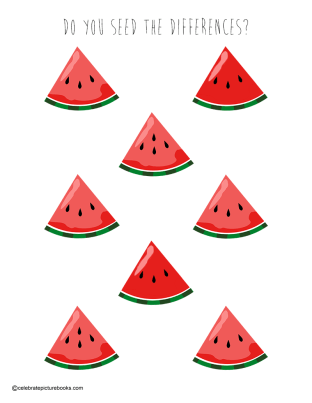
celebrate-picture-books-picture-book-review-watermelon-matching-puzzle

Do You Seed the Differences? Matching Game


The identical slices of watermelon were separated in the picnic basket! Draw a line between the matching pieces in this printable Do You Seed the Differences? puzzle to create correct servings.

August 2 – It’s Water Quality Month

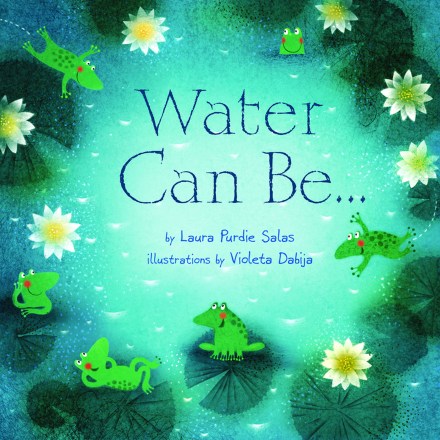
celebrate-picture-books-picture-book-review-water-can-be-cover

About the Holiday

Water Quality is a crucial world-wide issue. In fact, 2015 closed out a decade-long United Nations initiative “Water for Life” to promote awareness of the importance of water quality as it relates to sanitation, geography, human rights, urbanization, and sustainability. The Audobon Society emphasizes the interconnectedness of all water systems and urges people to be mindful of the dangers that can lurk in runoff from construction, forestry, factories, agriculture, and personal yards as it combines in rivers, lakes, or the ocean. To observe this month be conscious of what is in your water. Limit the use of anti-bacterial soaps that contain a certain pesticide harmful to marine life, don’t flush unused medications, choose nontoxic household cleaners, avoid using fertilizers and pesticides, and clean up leaks from cars and other machinery. Protecting our water sources protects us.

Water Can Be…

Written by Laura Purdie Salas | Illustrated by Violeta Dabija


“Water is water— / it’s puddle, pond, sea. / When springtime comes splashing, / the water flows free.” So begins an inventive journey through the ways that water enriches our lives. With four-word rhyming couplets Laura Purdie Salas illuminates specific moments or circumstances to reveal water’s important role from season to season. From filling ponds, lakes, oceans, and even puddles to roaring down hillsides to floating in misty fogs and forming snowflakes, water sustains us and makes the world a more beautiful place.

During spring and summer when ponds nurture new life and rain puddles reflect, “Water can be…a tadpole hatcher / Picture catcher.” In hot weather water refreshes as a “Thirst quencher / Kid drencher.” And the seas, at times calm and at others roiling, can be both “Home maker / Ship breaker.”

As the air cools in autumn, water can be found in alternate forms. It squirts from fountains for the “school drink-er” and hardens to ice for a “Bruise shrinker.” A river’s winding trail becomes a “Salmon highway / Eagle flyway.” Winter brings water in a more solid form. Whipped by wind snow swirls as a “Storm creator” or gently sticks to surfaces as a “Decorator.” Outside, both animals and people enjoy the frozen precipitation. Snow serves as a “Woodchuck warmer / Snowman former.”

On the final pages as ice sculptors carve castles and dragons, moon beams and rabbits, Laura Purdie Salas encourages readers: “Water is water— / it’s ice, snow, and sea. / Now go and discover / what else it can be.”

Fascinating facts concerning the subject of each rhyme, a glossary, and a bibliography for further reading follow the text. Laura Purdie Salas donates a portion of the royalties from Water Can Be… to WaterAid, an international non-profit organization that transforms lives by improving and providing access to safe water, hygiene, and sanitation.

Laura Purdie Salas always surprises with her selection of examples and clever rhymes leading readers to more fully appreciate the world around them. Water doesn’t just flow, it feeds, speeds, cloaks and soaks, it decorates and bejewels, fluffs and snuffs. After reading Sala’s poetic tribute, readers will never experience water the same way and will be on the lookout for how they can interpret water’s gifts.

Violeta Dabija has created gorgeous, ethereal interpretations of each two-word rhyme. The nourishing blues and aquas of the sea, gauzy whites of fog and clouds, and brilliant whites of snow and ice are subtly crosshatched giving each illustration depth and movement. While the words on each page are short, kids will want to spend a long time taking in the beauty of Dabija’s paintings.

Ages 3 – 8

Millbrook Press, Lerner Books, 2014 | ISBN 978-1467705912

Check out the book trailer for Water Can Be…. It really makes a splash!

There’s so much to see and do on Laura Purdie Salas’s website!

View more beautiful art by Violeta Dabija on her website!

Water Quality Month Activity

celebrate-picture-books-picture-book-review-angel-fish-coloring-page

Angel Fish Coloring Page


Clean water is important for all fish to survive! You can make the ocean sparkling clear by adding a bit of glitter to your printable Angel Fish Coloring Page!

August 1 – Respect for Parents Day

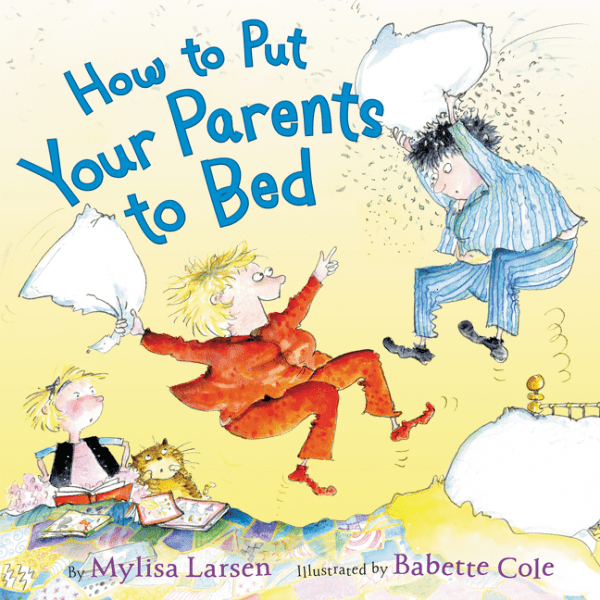
celebrate-picture-books-picture-book-review-how-to-put-your-parents-to-bed-cover

About the Holiday

Marilyn Dalrymple of Lancaster, California created Respect for Parents day to, as she said, “make our families become united and strong by recognizing the leadership roles parents have, and to reinstate the respect for parents that was evident in the past.” Former President Bill Clinton recognized Respect for Parents Day as a national observance in 1994. To celebrate thank your parents for what they have done for you, spend time with them, and tell them you love them.

How to Put Your Parents to Bed

Written by Mylisa Larsen | Illustrated by Babette Cole


So here you are—night time. Bedtime, really, but you’re not tired. You still have enough energy to “scale a tall tower,” “sail savage seas,” or “paint a masterpiece,” but think about your poor parents. Look at them! They really need to go to bed! You know parents, though—“Parents are not good at going to bed. “‘I have to put in a load of laundry,’” they say. ‘I need to do the dishes.’ ‘Just one more email.’”

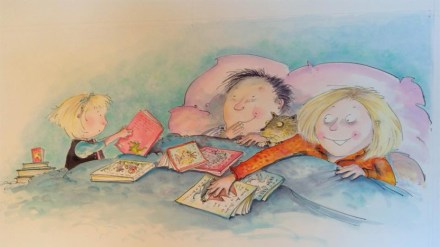
Someone needs to take charge, and the family feline—who has been a keen observer of the bedtime dynamics—thinks its pint-sized owner is just that “someone.” So the little girl, living in the midst of a chaotic night with her overscheduled, overworked parents, follows the cat’s pointed paw directions. She takes food out of her parents’ hands, closes the computer, and tells them “‘It’s time for bed.’” The first task is getting them to brush their teeth. The girl squeezes the toothpaste onto the brush and even helps her dad reach his molars.

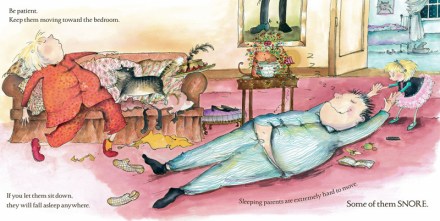
celebrate-picture-books-picture-book-review-how-to-put-your-parents-to-bed-interior-art-sleeping

Image copyright Babette Cole, courtesy of babette-cole.com

Next is making sure her parents dress in their pajamas. But Dad’s on the phone and Mom’s still watching TV. Ugh! First Mom and Dad won’t go to bed and now they’re falling asleep on the couch and floor! Their daughter keeps them moving in the right direction, though. Once they hit the bedroom, however, they get a second wind and become “unruly when faced with actually getting in bed. Tiny things upset them. They can work themselves into a state.” What to do? The girl remains calm and does not negotiate. Once Mom and Dad are tucked in, it’s story time. A tricky bit—do they only want their favorite story? How many?

At this point, the girl thinks she’s almost finished. But suddenly something unexpected comes up. Mom is missing her favorite pillow. Dad’s socks itch. And they both want to check on the dog. Oh brother! While the girl is handling these crises, her parents are starting a pillow fight! Phew! She gets them all tucked in, gives them each a kiss good night, and takes away their cell phones.

celebrate-picture-books-picture-book-review-how-to-put-your-parents-to-bed-interior-art-stories

Image copyright Babette Cole, courtesy of babette-cole.com

Finally, they are off to dream land, and the girl has some time for herself! But wait a minute. The cat suggests she’s not exactly looking her best. In fact, she looks exhausted. Maybe, the frisky feline thinks, she needs to go to bed.

Mylisa Larsen’s funny role-reversal primer will have kids giggling and adults nodding appreciatively from Page 1 until The End. Speaking directly at readers, How to Put Your Parents to Bed offers sly winks at the many bedtime distractions of today’s families. The witty conspiratorial tone to the cat’s instructions gives kids a secret feeling of clout even while they may recognize their own behavior. And parents will wish they could still act this way.

Rebecca Cole’s dynamic illustrations of the recalcitrant parents doing last-minute chores, stubbornly refusing to brush their teeth, jumping on the bed, and fooling with delaying tactics ramps up the hilarity of this bedtime how-to. Kids will want to linger over the pages to catch all the humorous details.

Ages 4 – 8

Katherine Tegen Books, HarperCollins Publishers, 2016 | ISBN 978-0062320643

Visit Mylisa Larsen’s website to learn more about How to Put Your Parents to Bed and read her blog!

Enter the world of Babette Cole—her books, artwork, and more—by visiting her website!

Get ready to laugh with the How to Put Your Parents to Bed book trailer!

Respect for Parents Day Activity

celebrate-picture-books-picture-book-review-home-shaped-maze

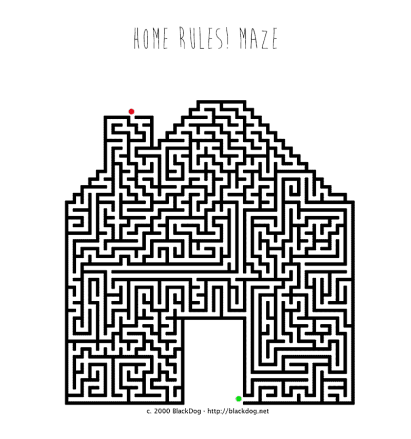
Home Rules! Maze


Look around your house and find something to thank your parents for. Then run through this printable Home Rules! Maze and have fun! 

Picture Book Review

July 31 – Uncommon Instrument Awareness Day

celebrate-picture-books-picture-book-review-ada's-violin-cover

About the Holiday

Today is the day to be musically experimental. Intriguing, inventive instruments that make a wide variety of sounds exist in every corner of the world. From Russia comes the contrabass balalaika, a triangular stringed instrument. The cimbalom, a concert hammered dulcimer, originated in Hungary. And only the Welsh could give us an instrument with no vowels: the crwth. Glass, water, and lightning are also used to make beautiful sounds, and the Holophonor—a musical instrument and hologram projector all in one—is perfect for Elvis sightings wherever he is! So, play a different instrument or research one, and read the inspiring story in today’s book!

Ada’s Violin: The Story of the Recycled Orchestra of Paraguay

Written by Susan Hood | Illustrated by Sally Wern Comport


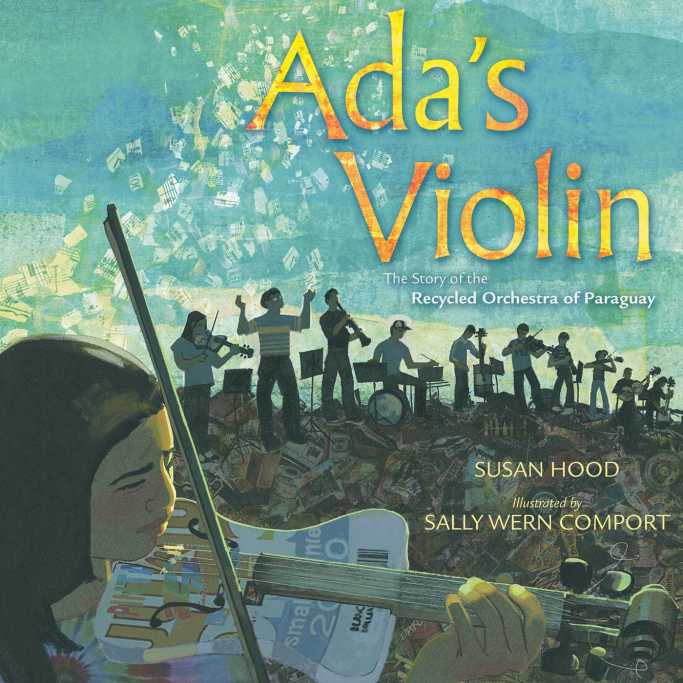
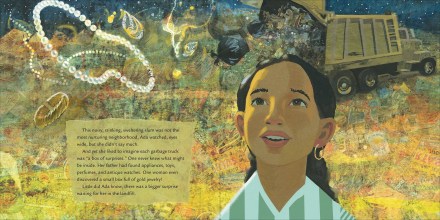
Ada Ríos is growing up in Cateura, a town built of trash as the main garbage dump for the capital city of Paraguay. Every morning the refuse trucks rumble into town to deposit their loads—1,500 tons of trash every day. The citizens of Cateura—gancheros or recyclers—go to work sifting through the mounds and tearing into bags looking for anything valuable enough to recycle or sell. Cardboard is worth 5 cents a pound, plastic 10 cents a pound.

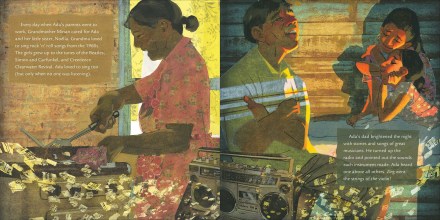
Ada knows the landfill can hold surprises—“Her father, a ganchero, had found appliances, toys, perfumes, and antique watches.”—but she can never imagine what it holds for her. When Ada and her sister were little, their grandmother watched them while their parents worked. They loved to listen to music, to sing, and to learn stories of musicians and the sounds of different instruments. Ada fell in love with the violin.
celebrate-picture-books-picture-book-review-ada's-violin-making-singing

Image copyright Sally Wern Comport, courtesy of simonandschuster.com

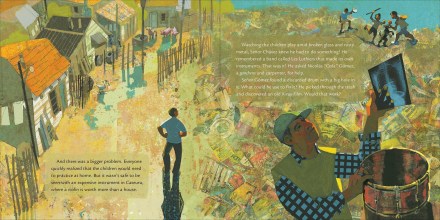
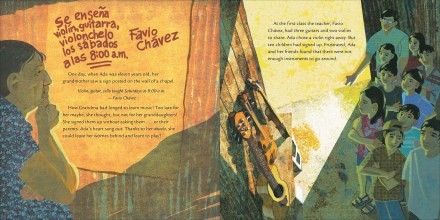
As the girls grow older and go to school, they venture farther into town, but there is little to fill their time. Many kids join gangs or get into fights. When Ada is 11 her grandmother signs her and her sister up for music lessons being offered by a new man in town named Favio Chávez. “Ada’s heart sang out” when she hears the news. On the first day ten children show up to play the five instruments available. But a bigger problem looms: the three guitars and two violins cannot be taken home for practicing as they are magnets for thieves. In Cateura a violin is worth more than a house.

But Favio Chávez has an idea. With help from Nicolás Gómez, a ganchero and carpenter, they pull bits and pieces from the landfill. An old broken drum and an X-ray film become a workable drum, water pipes become flutes, packing crates become guitars and violins, and oil drums become cellos. “Ada chose a violin made from an old paint can, an aluminum baking tray, a fork, and pieces of wooden crates. Worthless to thieves, it was invaluable to her. It was a violin of her very own.”
celebrate-picture-books-picture-book-review-ada's-violin-making-instruments

Image copyright Sally Wern Comport, courtesy of simonandschuster.com

The children practice tirelessly outside in 100-degree heat until the initial “screeches, twangs, and tweets hit all the right notes. Their class became ‘a small island’ where Chávez taught them to respect themselves and one another.” They become known as The Recycled Orchestra. Music now fills the air, adding a soundtrack of beauty to the grueling work. The orchestra is soon invited to play concerts in Cateura and the capital city of Asunción. When word spreads of their talent, they receive offers to play from other cities and even other countries.

When Ada is 16 The Recycled Orchestra is invited to tour with a world-famous rock band. As Ada takes the stage in front of 35,000 people in Bogotá, Colombia, she is afraid, but the audience cheers for them and sings along as they play. On that night the children discover a new life. “Buried in the trash was music. And buried in themselves was something to be proud of.”
celebrate-picture-books-picture-book-review-ada's-violin-lessons

Image copyright Sally Wern Comport, courtesy of simonandschuster.com

An extensive author’s note plus a photograph of The Recycled Orchestra, websites, and videos follow the text, as well as a list of sources.

Ada’s Violin is also available in a Spanish edition—El violín de Ada: La Historia de la Orquesta de Instrumentos Reciclados del Paraguay.

Susan Hood has brought to light an incredible story of perseverance, hope, and the ability of music and other arts to provide opportunities and self-confidence that change lives. Told with unstinting honesty and sensitivity, Hood’s biography of Ada Ríos, Favio Chávez, and The Recycled Orchestra will inspire all who read it. The well-paced text offers revealing details on every page and flows with a lyrical quality that enhances the effect of the story and its impact. From the first sentence to the last, both children and adults will be riveted to The Recycled Orchestra.
celebrate-picture-books-picture-book-review-ada's-violin-hope

Image copyright Sally Wern Comport, courtesy of simonandschuster.com

Sally Wern Comport’s paintings beautifully capture the human spirit that shines through and drives people to astonishing achievements even in the most adverse conditions. With intricately created collages of rich hues, Comport depicts the town of Cateura and the mountains of trash the citizens work and play on. Warm lighting illuminates faces full of dreams and love, and readers will linger over depictions of the instruments workshop and cheer along with the concert audience as the children receive recognition. The full-bleed, two-page spreads echo the expanded world music gave to the children in the orchestra and the adults who heard them as music score confetti flutters throughout.

Both school classrooms and home libraries will benefit from the stirring message of Ada’s Violin.

Ages 4 and up

Simon & Schuster Books for Young Readers, 2016 | ISBN 978-1481430951 (English edition); 978-1481466578 (Spanish edition)

Discover more about Susan Hood and her books, plus fun activities for kids and information for teachers and parents on her website!

View a gallery of Sally Wern Comport’s artwork on her website!

Uncommon Instrument Awareness Day Activity
celebrate-picture-books-picture-book-review-homemade-musical-instrument


Make Your Own Musical Instrument


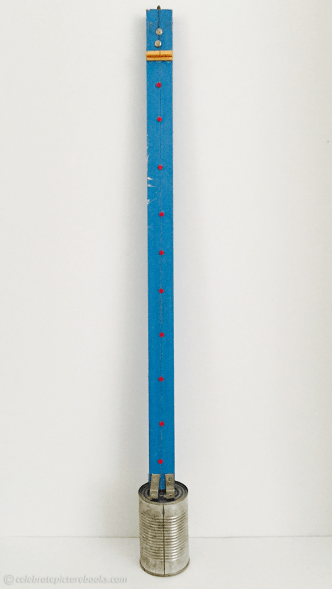
Inspiration for sound can come from almost any object! Look around your house or classroom and discover the music in boxes, cans, blocks of wood, plastic egg cartons or deli containers, and more. Add string or wire for plucking, sticks for drumming, or beans for shaking. With a little glue, tape, or hardware and some creativity, you’ll be making your own rhythms in no time!

Supplies for the instrument shown in the picture above

  • Tin can
  • Two small L brackets
  • Piece of wooden molding, 2 1/2 feet by 1 1/2 inches by 3/4 inches
  • Five small strips of wood to raise the wire off the neck of the instrument. I used long wooden fireplace matches cut into 1 1/2″ sections 
  • Thin wire
  • Small circular hook screw or regular screw
  • Two tacks
  • A nail, screw, or piece of wood that will fit horizontally in the mouth of the can
  • a small nail to make a hole in the can
  • Hammer
  • Strong Glue
  • Paint
  • Foam decorative dots

Directions

  1. Paint the wood and let dry
  2. Paint the small strips of wood and let dry
  3. Decorate the can with paint, sticker, duct tape, or paper
  4. With the hammer and small nail, make a hole in the center of the bottom of the can
  5. Wrap one end of the wire around the nail and glue so it is firmly in place
  6. Feed the other end of the wire through the hole in the bottom of the can
  7. Screw or glue two L brackets to one end of the wood molding so that the bottom of the L is flush with the bottom of the wood molding and there is space between the brackets. This makes the neck of the instrument
  8. Screw the circular or regular screw into the top, center of the wooden molding
  9. When the wooden strips are dry, glue three side by side 3 inches from the top of the molding. Glue two more matches, one on top of the other on the center strip.
  10. When the L brackets are dry, glue them (and the neck of the instrument) to the can, making sure the brackets are on either side of the hole in the can. Make sure the wire is out of the hole. 
  11. When the brackets are firmly attached to the can, pull the wire to the top of the neck. Settle it in the center of the small pieces of wood, so that the wire is not touching the neck.
  12. Wrap the wire around the screw at the top of the molding until it is firmly in place and the wire is taut. 
  13. Secure the wire to the neck with the tacks
  14. Mark the “frets” with the foam dots

Picture Book Review


July 30 – International Day of Friendship

celebrate-picture-books-picture-book-review-hector-and-hummingbird-cover

About the Holiday

First established in 2011 by the United Nations General Assembly, the International Day of Friendship asserts the idea that friendship between peoples, countries, cultures, and individuals can inspire peace efforts and build bridges between communities. The UN resolution places particular emphasis on involving young people in community activities that include different cultures and promote respect for individual diversity. On this day UN Secretary General Ban Ki-moon urges everyone, especially young people who will be our future leaders, “to resolve to cherish and cultivate as many warm relationships as possible, enriching our own lives and enhancing the future.”

The day is celebrated with special initiatives, events, and activities that promote dialogue, education, understanding, and cooperation.

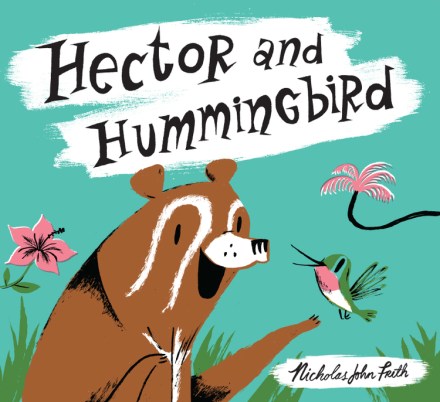
Hector and Hummingbird

By Nicholas John Frith


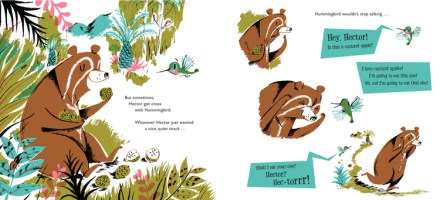
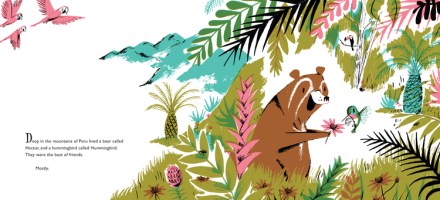
Deep in the mountains of Peru Hector and Hummingbird have forged an unbreakable friendship. “Mostly.” Hummingbird has lots of energy and loves to hover around his best bear pal. Which is ok, except sometimes Hector would just like a little quiet time, and Hummingbird won’t stop talking: “Hey, Hector! Is that a custard apple? I love custard apples! I’m going to eat this one! Oh, no! I’m going to eat that one! Shall I eat your one! Hector? Hec-torrr!” Sometimes a simple alone-time scratch would be just perfect, but Hummingbird copies him on a tree nearby: “Hey, Hector! Are you scratching? I’m going to scratch too!…” And nap time? Forget it! Hummingbird always keeps Hector awake with some story. It’s enough to make Hector cross with Hummingbird!

One day Hector can’t take it anymore—“‘Arrgh!!’” he roars. “‘Leave me alone!’”—and he takes off into the forest to find some peace. Hector’s outburst comes as a surprise to Hummingbird. He needs to find out what’s wrong, so he follows Hector into the woods, his constant hum filling the air. “‘Stop following me!’” Hector says. And Hummingbird complies—mostly. From behind leaves and tree trunks Hummingbird spies on his friend.

celebrate-picture-books-picture-book-review-hector-and-hummingbird-interior-art-bear-cross

Image copyright Nicholas John Frith, courtesy of zoetucker.co.uk

As Hector delves deeper and deeper into the woods, he feels an unfamiliar excitement and also a bit of trepidation. Perhaps he’s just hungry, Hector thinks. He picks a custard apple to quell the gnawing in his stomach. The fruit tastes delicious, but Hector also feels funny eating alone. He imagines how much Hummingbird would enjoy the apple too.

The scratchiest tree Hector has ever seen beckons to him, and he settles in for a nice, quiet scratch. But again he experiences that twinge of loneliness. As the forest becomes dark, Hector finds a branch to snooze on. The night air is full of strange noises, and Hector is a little scared. “‘I wish Hummingbird were here,’” sniffs Hector. “‘He could tell me a story.’”

That’s all Hummingbird needs to hear. “A story? Yay! You should have said! I love telling stories! Once upon a time…” This time Hector doesn’t roar or run away. He exclaims, “‘Hummingbird! You’re here! I missed you!’” Hummingbird admits that he missed Hector too, and that he was there all the time. “Here all along?” says a surprised Hector. “I thought I told you not to follow me!”

celebrate-picture-books-picture-book-review-hector-and-hummingbird-interior-art-best-friends

Image copyright Nicholas John Frith, courtesy of zoetucker.co.uk

“But why?” Hummingbird asks. This time Hector doesn’t keep his thoughts inside. “‘Because you never stop talking!’” he answers. “‘And you’re always copying me!” Hummingbird has ready reasons. He’s only being friendly, he explains. And he loves Hector’s ideas. “‘Oh,’” says Hector. “‘Really?’” Then Hector has a brain storm. He asks Hummingbird if he can copy his being really, really quiet. “Absolutely!” Hummingbird says. And he does—in his Hummingbird sort of way, which sounds like this: “Hey, Hector? This is fun, isn’t it? We’re being really, really quiet, aren’t we? I love being quiet, don’t you? Hector? Hec-torrr?”

Nicholas John Frith humorously exposes the niggling burrs of true friendship with his endearing and inspired pairing of a quiet bear and an energetic hummingbird. While best friends love to spend time together, have lots in common, and share a history, they also share moments of frustration, misunderstanding, and vexation. Through Hector and Hummingbird, Frith reveals what happens when communication breaks down and resentments build up. Readers will see that true friendship consists of both honest dialogue and accepting people for who they are.

Frith’s jungle environment, rendered in a palate of vintage aqua, pink, green, brown, and black on a white background gives the story a fresh, bold appeal while highlighting the emotional responses of the characters to maximum effect. As day turns to night, Hector—having gone off in a huff—realizes that he misses his friend and moreover misses the very things that annoyed him about Hummingbird. His expressions of sadness and loneliness, delight at seeing Hummingbird again, and then confusion as to why Hummingbird is there in the first place can lead kids into an understanding that even the best of friends have differences.

Hector and Hummingbird offers kids both amusing and teachable moments with two funny, charming characters to escort them on the journey. An animated storyteller will have kids asking for this book again and again. It’s a great addition to the family library.

Ages 4 – 8

Arthur A. Levine Books, Scholastic, 2015 | ISBN 978-0545857017

Have fun perusing Nicholas John Frith’s online portfolio of illustrations, projects, and products!

International Day of Friendship Activity

celebrate-picture-books-picture-book-review-friendship-coloring-page

Best Friends Coloring Pages


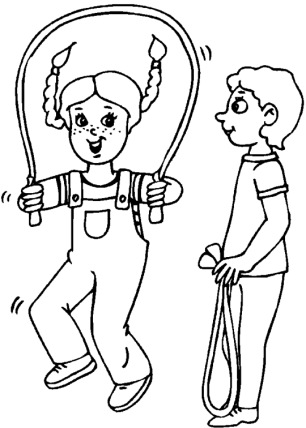
Friends like to play together and color together! Here are two printable pages for you to have fun with. Why not text a friend and color them together?

Coloring Page 1

Coloring Page 2