September 4 – National Wildlife Day

About the Holiday

National Wildlife Day was established in 2005 by author and pet lifestyle expert Colleen Paige to promote awareness of endangered species as well as preservation and conservation efforts around the world. Globally, there is increased pressure on many animals due to pollution, habitat destruction, and other environmental issues. This day (as well as February 22, in honor of renowned conservationist Steve Irwin) encourages people to learn more about the species in their area, work toward creating hospitable habitats in their own yard or community, and implement environment-friendly choices in their homes. One of the animals featured in today’s book is the pangolin, a species whose members range in endangered status from vulnerable to critically endangered.

Thank you to Scholastic for sending me a copy of this book for review!

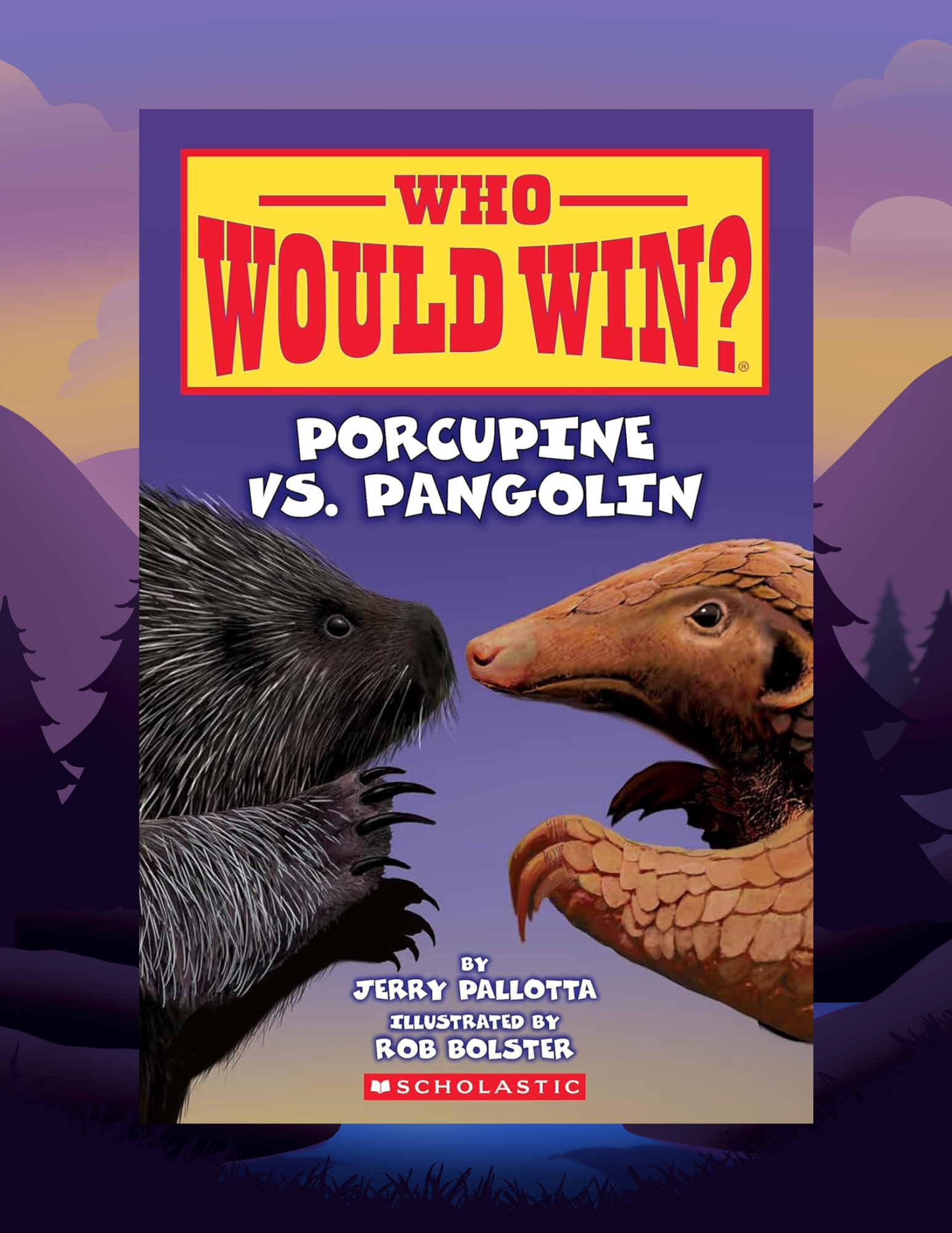
Who Would Win? Porcupine vs. Pangolin

Written by Jerry Pallotta | Illustrated by Rob Bolster


Welcome to Jerry Pallotta’s and Rob Bolster’s nocturnal showdown in the latest addition to the Who Would Win? series! On the left hand page: a porcupine; on the right: a pangolin. To help readers decide which animal would emerge victorious in a fight, Pallotta provides side-by-side dossiers that reveal pertinent facts about porcupines’ and pangolins’ bodies, skills, and defenses. 

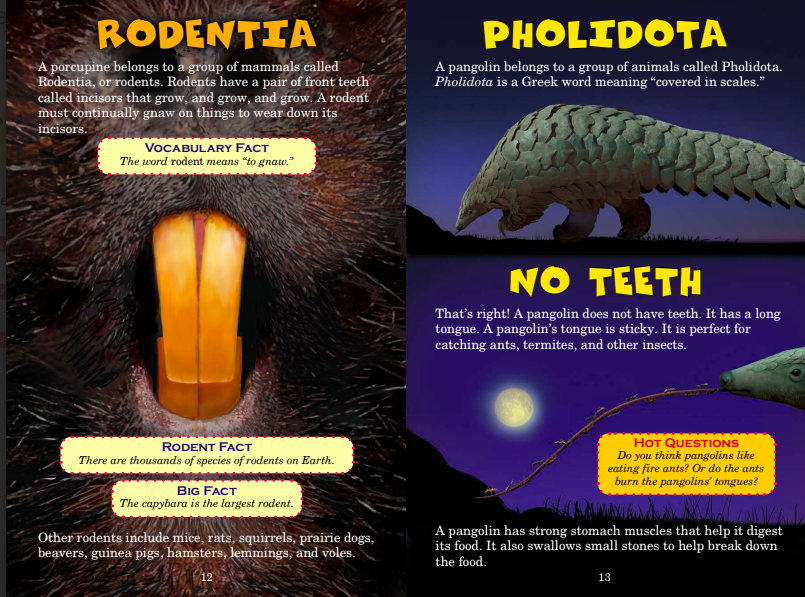
Examining these profiles, kids learn that a porcupine is “a mammal with sharp, pointed quills . . . that looks like a spiky fur ball.” They also get to know the pangolin, a mammal that resembles a reptile due to its scales that make it look like a “walking pine cone.” Pallotta—his text supported with photographs and Bolster’s realistic illustrations—presents clear and snappy descriptions of the competitor’s quills vs. scales, fur vs. hair, faces and feet, weapons and defenses, and the scientific group each animal belongs to.

Illustration © 2025 by Rob Bolster. Text © 2025 by Jerry Pallotta. Courtesy of Scholastic.

 The pages are also sprinkled with kid-pleasing visual elements that call out a wide range of facts, from “ouch facts” about quills to “hair facts” about naked mole rats and elephants to “name facts” that reveal alternate monikers for each contestant. There’s humor here too, and even a poem about a pangolin! Pallotta is also tuned into children’s boundless curiosity, revealing the various types of porcupines and pangolins; a lineup of animals with spikes as well as those that can roll into a ball like the pangolin; and a fascinating look at how other animals would fare against these two warriors.

As the sun sets, however, it’s time for the main attraction as the porcupine, searching for dinner, comes upon the pangolin slurping ants from a log. It’s time to RUMBLE! Who will win?

Illustration © 2025 by Rob Bolster. Text © 2025 by Jerry Pallotta. Courtesy of Scholastic.

If you’re a parent, librarian, teacher, or caregiver with a child or children who are familiar with the Who Will Win? series, then you know what a phenomenon these books are. Who Will Win? Porcupine vs. Pangolin is a worthy entrant into the field, providing educational and entertaining depth to the scientific study of these two unusual mammals. Children come away from reading (and excitedly rereading) this book not only with knowledge about porcupines and pangolins, but with bits about 21 other animals as well, making it an energizing spark for expanded learning. 

Information-packed and high-interest, Who Will Win? Porcupine vs. Pangolin will appeal to emergent and independent readers and makes a perfect read aloud for adults to share with their animal-loving kids. This book, as well as the rest of the series, is a must for any library collection and highly recommended for home bookshelves.

Ages 6 – 8

Scholastic, 2025 | ISBN 978-1339000961

About the Author

Jerry Pallotta is an award-winning author of children’s books, including What I Saw in the Teachers’ Lounge, Dinosaur Christmas, Who Will Guide My Sleigh Tonight?, Apple Fractions, and The Hershey’s Milk Chocolate Multiplication BookHis combination of interesting facts, detailed research, humor, and realistic illustrations has mesmerized countless children across the United States. You can visit him at jerrypallotta.com.

About the Illustrator

Rob Bolster is both a fine artist and a professional illustrator. His work has appeared in newspaper and magazine advertisements, and he has illustrated many books for young readers, including the bestselling Who Would Win? series. Rob lives and works near Boston, Massachusetts.

National Wildlife Day Activity

Pangolin and Porcupine Coloring Pages


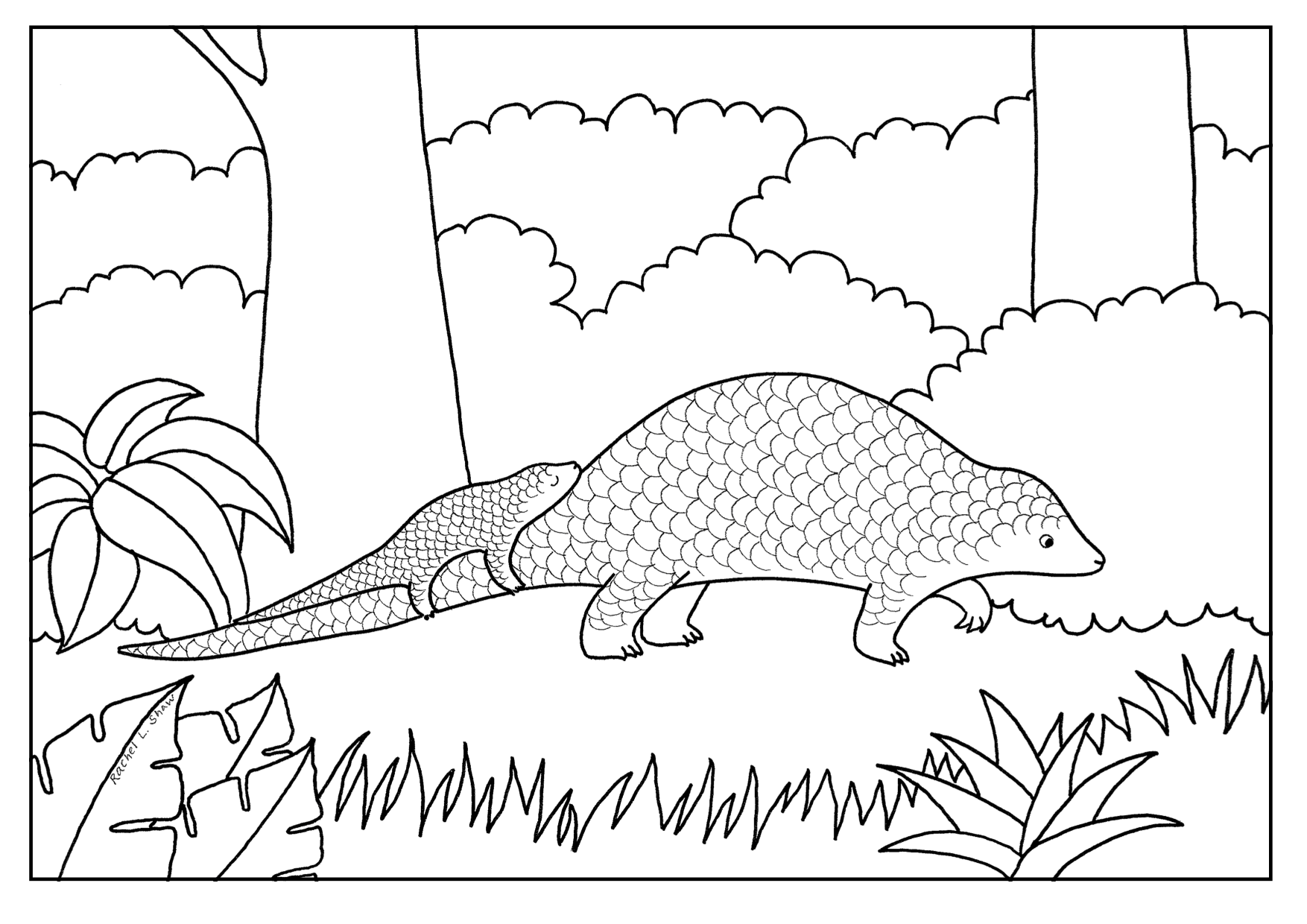
Celebrate the diversity of wildlife with these coloring pages of a pangolin and her pup and a porcupine!

Pangolin and Pup (by Rachel L Shaw) | Porcupine (courtesy of Karen Watson of The Graphics Fairy)

You can purchase Who Would Win? Porcupine vs. Pangolin from these booksellers

Amazon | Barnes & Noble | Bookshop (discounted books and support for your local independent bookstore)

Picture Book Review

April 9 – National Unicorn Day

About the Holiday

There may be no more beloved magical creature than the unicorn. Unicorns have been part of legend since ancient times, undergoing changes from an image of fierceness and power to a representation of strength and true love to today’s more glittery superstar. To celebrate today, learn more about the history of these mystical animals and check out the latest addition to the wildly popular unicorn-tastic Unicorn Diaries series!

Thank you to Scholastic for sharing a copy of The Secret of the Lost Gold with me.

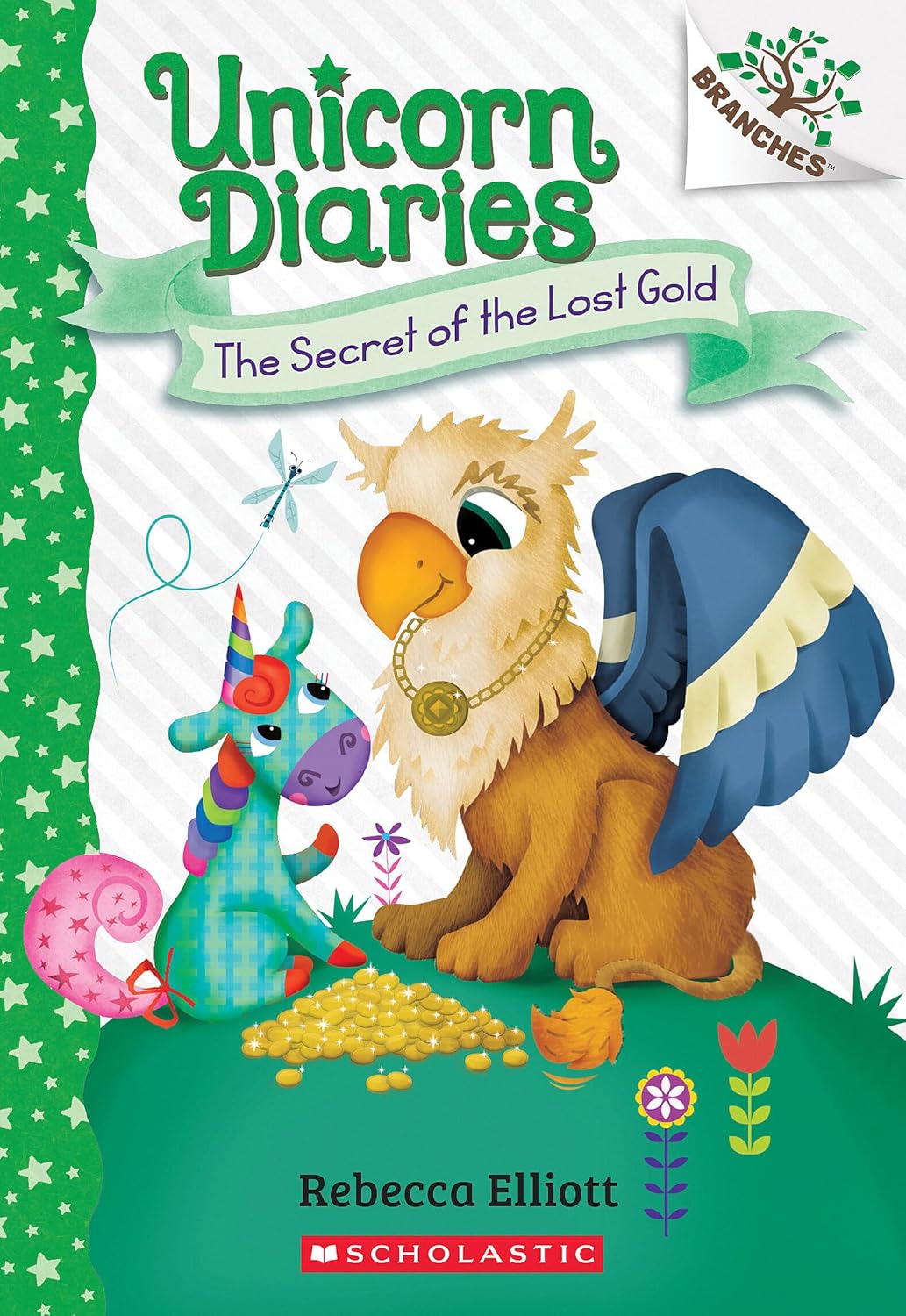
The Secret of the Lost Gold (Unicorn Diaries #11)

By Rebecca Elliott


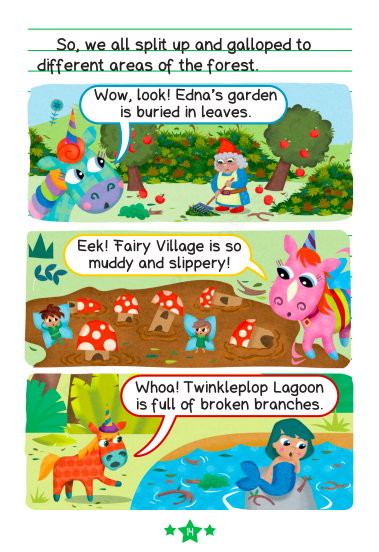
As the latest story in the Unicorn Diaries begin, Rainbow Tinseltail (Bo, for short) reveals that dark clouds and lightening foretell a storm, and over night winds, rain, and unipod-shaking thunder do sweep through Sparklegrove Forest, where the unicorns, gnomes, and other magical creatures live. In the morning, everyone wakes to find “a very big mess all across the forest.” It’s then that Mr. Rumptwinkle, the unicorn’s teacher at the Sparklegrove School for Unicorns (S.S.U.), cancels class for the day, instead sending his students out into the forest to see who needs help.

Illustration and text © 2025 by Rebecca Elliot. Courtesy of Scholastic.

They find that no one—from the fairies to the gnomes to the mermaids, dragons, and trolls—has escaped the storm unscathed. “But the great news was that no one was hurt.” The unicorns bring some friends home for hot tea and buttermoon biscuits as they all talk about how they can help rebuild. Edna Gnome remembers an “old Rebuild and Repair spell” from “long ago” that could restore the entire forest at once, but she needs “special ancient gold nuggets” to make it work. 

The next day, the unicorns head out for Queen Juniper’s castle to learn where to get the ancient gold only to discover that the castle has been damaged too. From Princess Greta, the unicorns learn that the gold has always been stored in a cave in the Dark Woods and is protected by a griffin named Edgar and from their werewolf friend Barry, they discover where the cave is: in the most dangerous part of the Dark Woods. 

Illustration and text © 2025 by Rebecca Elliot. Courtesy of Scholastic.

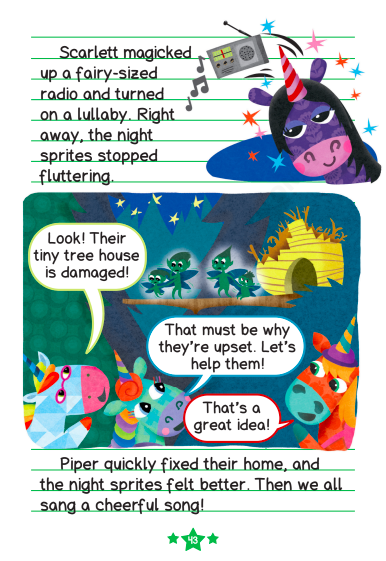
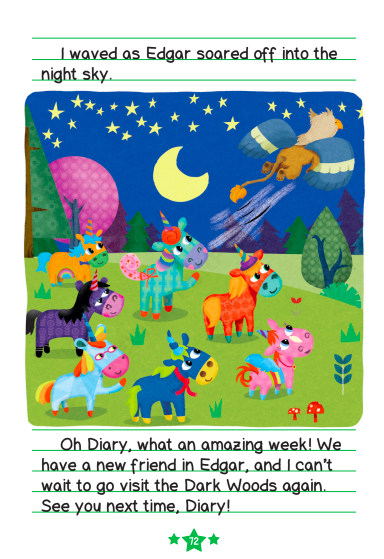
Undaunted (well, maybe a little) and brave, the unicorns continue their quest. Along the way they use their individual powers to outsmart a giant, calm upset night sprites, and cheer up “grumpy talking trees.” When they got to the cave, the unicorns were even able to befriend the griffin and retrieve the gold they needed.

Back at Queen Juniper’s castle, Edna makes the magic rainbow-colored dust and, as Bo writes, “Everyone worked together to rebuild our forest.” Queen Juniper held a royal ball with “scrumptious food, lots of desserts, and golden glitter fireworks” to celebrate. She even honored Edgar with a “majestic golden necklace as a special thank-you for protecting the forest’s gold.” And the unicorns? They earned their Treasure Hunt patches and made a new friend in Edgar!

Illustration and text © 2025 by Rebecca Elliot. Courtesy of Scholastic.

It’s easy to see why Rebecca Elliot’s Unicorn Diaries is so beloved by early and newly independent readers. Each book in the series is warm and welcoming, beginning with its first chapter, which introduces new readers to the unicorns and world of Sparklegrove Forest with an illustrated map; a fun-facts description of the book’s new featured magical being (the griffin, in this book); surprising details about unicorns (for instance, that their horn is perfect for carrying cotton candy and can be used as a flashlight and that a swish of their tail enacts their secret power); and information about their school.

The Secret of the Lost Gold, the 11th book in the series, is a perfect addition to Elliot’s unicorn lore. Full of imagination; friendship; high-stakes, yet solvable challenges; magic; and humor, the story will captivate readers with its positivity, gentle suspense, and underlying message that they have the power to be brave and to take action to give back to their communities. The diary format of the book allows Elliot to combine larger-size, easy-to-read text with colorful illustrations that provide a natural, confidence-building bridge from picture books to text-only chapter books.

Whether your child is a fan of the Unicorn Diaries series or just discovering this magical world of reading, The Secret of the Lost Gold is a book you’ll want to add to your child’s home bookshelves. For classrooms, school, and public libraries, this latest trip to Sparklegrove Forest is a must.

Ages 5 – 7

Scholastic, 2025 | ISBN 978-1546127161

About the Author/Illustrator

Rebecca Elliott has illustrated many children’s books, including Kiss, Kiss Good Night. She wrote and illustrated the New York Times bestselling Owl Diaries series, the Unicorn Diaries series, Just Because, and Zoo Girl, which was nominated for the Kate Greenaway Medal. She lives with her family in the countryside of Suffolk, England.

National Unicorn Day Activity

Unicorn Coloring Pages


Kids’ll have fun grabbing some crayons and glitter and making magical moments with these Unicorn Coloring pages! 

Happy Unicorn Coloring Page | Unicorn Leaping Over Rainbow | Unicorn Reading a Book

You can purchase The Secret of the Lost Gold from these booksellers

Amazon | Barnes & Noble | Bookshop (discounted books and support for your local independent bookstore)

Picture Book Review

April 2 – International Children’s Book Day

About the Holiday

Each year since 1967 Hans Christian Andersen’s birthday has served as the date for Children’s Book Day. The International Board on Books for Young People (IBBY), a non-profit organization founded in Zurich, sponsors the day to promote a love of reading. Seventy-five National Sections around the world alternate in hosting the event. The host for 2025 is The Netherlands, and this year’s theme is “The Freedom of Imagination.” Each year a prominent author and illustrator from the sponsoring country prepare materials used to raise awareness of books and reading. Rian Visser wrote this year’s message and the poster was designed by Janneke Ipenburg. To learn more about the initiative, download digital materials, and learn about how children can enter the international drawing competition, visit the IBBY website. Today’s story that tells the tale of a young girl writing a story is a perfect example of the eternal power and influence of children’s books.

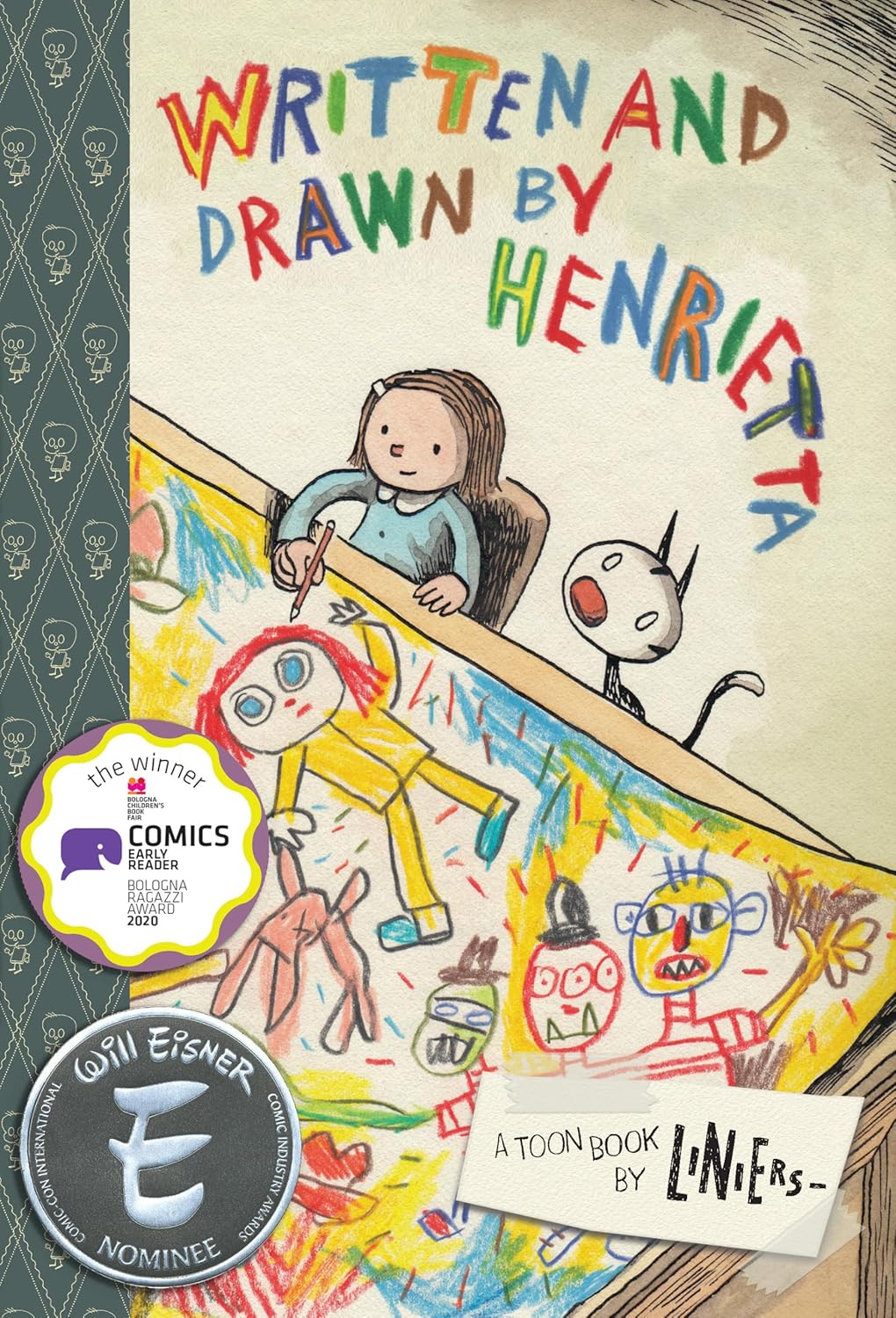
Written and Drawn by Henrietta

By Liniers


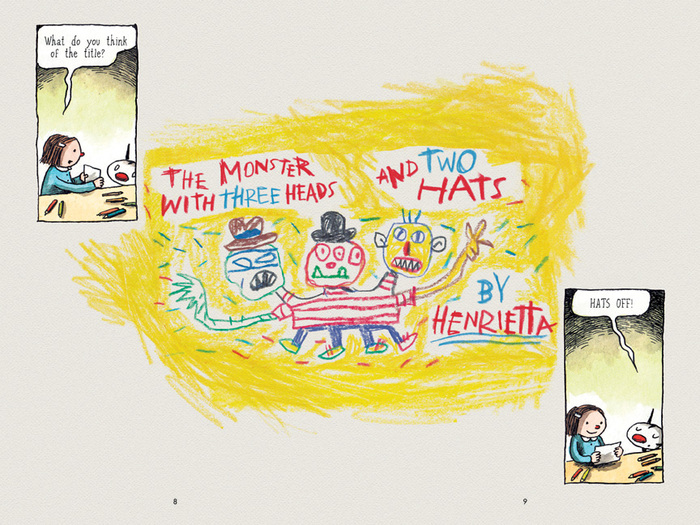
Henrietta’s mom gives her a new box of colored pencils, which Henrietta says is “as close as you can get to owning a piece of the rainbow.” She sits down to draw her own book and titles it “The Monster with Three Heads and Two Hats.” She begins with an illustration of a little girl, Emily, in bed at night. “I’m scaring myself…,” she thinks. Her thought is played out in her next page which shows Emily asking her stuffed rabbit if it will sleep with her because she’s scared of an unexplained Creak, Creak.

celebrate-picture-books-picture-book-review-written-and-drawn-by-henrietta-three-headed-monster

Copyright © 2025 by Liniers. Courtesy of TOON Books.

“Hmm…What’s that noise?” ponders the young writer. Her fears make it to the page—Creeak…Creeak…Thump…Crash…Boom. What are those noises, my favorite? Emily asks, her eyes now wide. The Noises! They’re getting closer!!

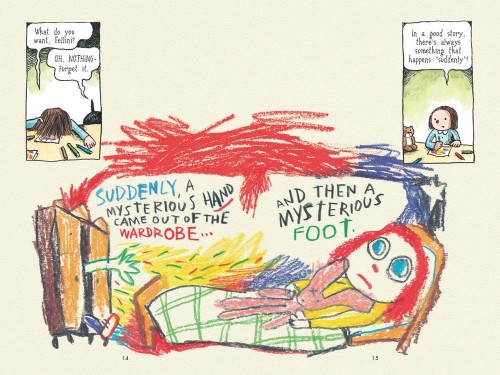
Henrietta knows that in a good story something always happens “suddenly,” and so she draws a mysterious hand and a mysterious foot emerging from Emily’s wardrobe. The plot thickens and finally the full terrifying monster with three heads pops out of the wardrobe.

celebrate-picture-books-picture-book-review-written-and-drawn-by-henrietta-in-bed

Copyright © 2025 by Liniers. Courtesy of TOON Books.

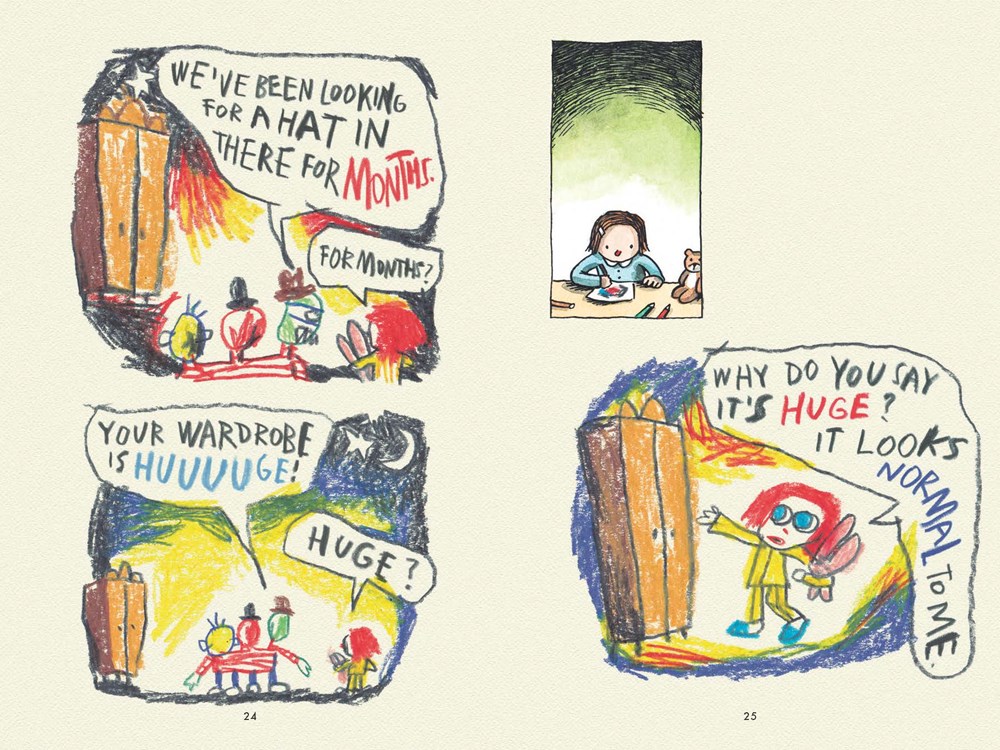
They acquire names from Henrietta’s imagination—Huey, Dewey, and Louie Bluie. . She is stuck for a bit as to how to go on, then gives Emily a question: What were you doing inside my wardrobe? The monster answers that it is looking for a hat. Emily joins them in their search, entering her wardrobe. She’s aghast to find that it is full of…clothes! (The wardrobe had been made in Narnia, the well-read Henrietta tells her cat, Fellini).

When the monster and Emily wonder which way to go, they meet a direction-giving mouse, and the story takes off—even Henrietta can’t wait to see what happens. She draws a huge pile of hats (she’s learned about “hat-o-logy” from the encyclopedia—the printed version!). The creature’s two heads with hats begs the third head to choose a hat before “the monster” shows up. Emily is terrified again—Another monster? What has Henrietta concocted this time? A monster with one head and three hats! This horrible beast suddenly appears and chases the crew through the wardrobe. Everyone is shouting Aaaaaaaaaaa—even the author.

celebrate-picture-books-picture-book-review-written-and-drawn-by-henrietta-wardrobe

Copyright © 2025 by Liniers. Courtesy of TOON Books.

Emily and the first monster lose the tremendous beast, ask the direction-giving mouse how to escape, and burst out of the wardrobe just in time. Henrietta thinks the story should have a happy ending, and before the monster with three heads and now three hats flies out the window, they give Emily a present. What could it be? Henrietta is so curious! It’s a wonderful hat, of course!

The End

“Now,” Henrietta says, “to find a publisher!”

This classic Toon Book by Liniers is a wonder as it reveals the inner-workings of children’s imaginations and the spontaneous nature of their brilliant creativity. Henrietta’s thought process as she conjures up her story is shown in neat comic-style panels with speech bubbles, while her story is depicted in colorful kid-like drawings and dialogue written in all capital letters. This interplay between the young artist/writer and her work enhances the fun, suspense, and surprise of this story-within-a-story. 

Ages 5 and up

TOON Books, an imprint of RAW Junior, LLC, 2015 | ISBN 978-1935179900

International Children’s Book Day Activity

CPB - Comic Panel

Create Your Own Story


It’s so much fun to let your imagination fly! Use this printable Comic Style Page to create a story as unique as you are!

You can purchase Written and Drawn by Henrietta from these booksellers

Amazon | Barnes & Noble | Bookshop (discounted books and support for your local independent bookstore)

Picture Book Review

January 20 – Martin Luther King, Jr. Day and Interview with Dean Robbins

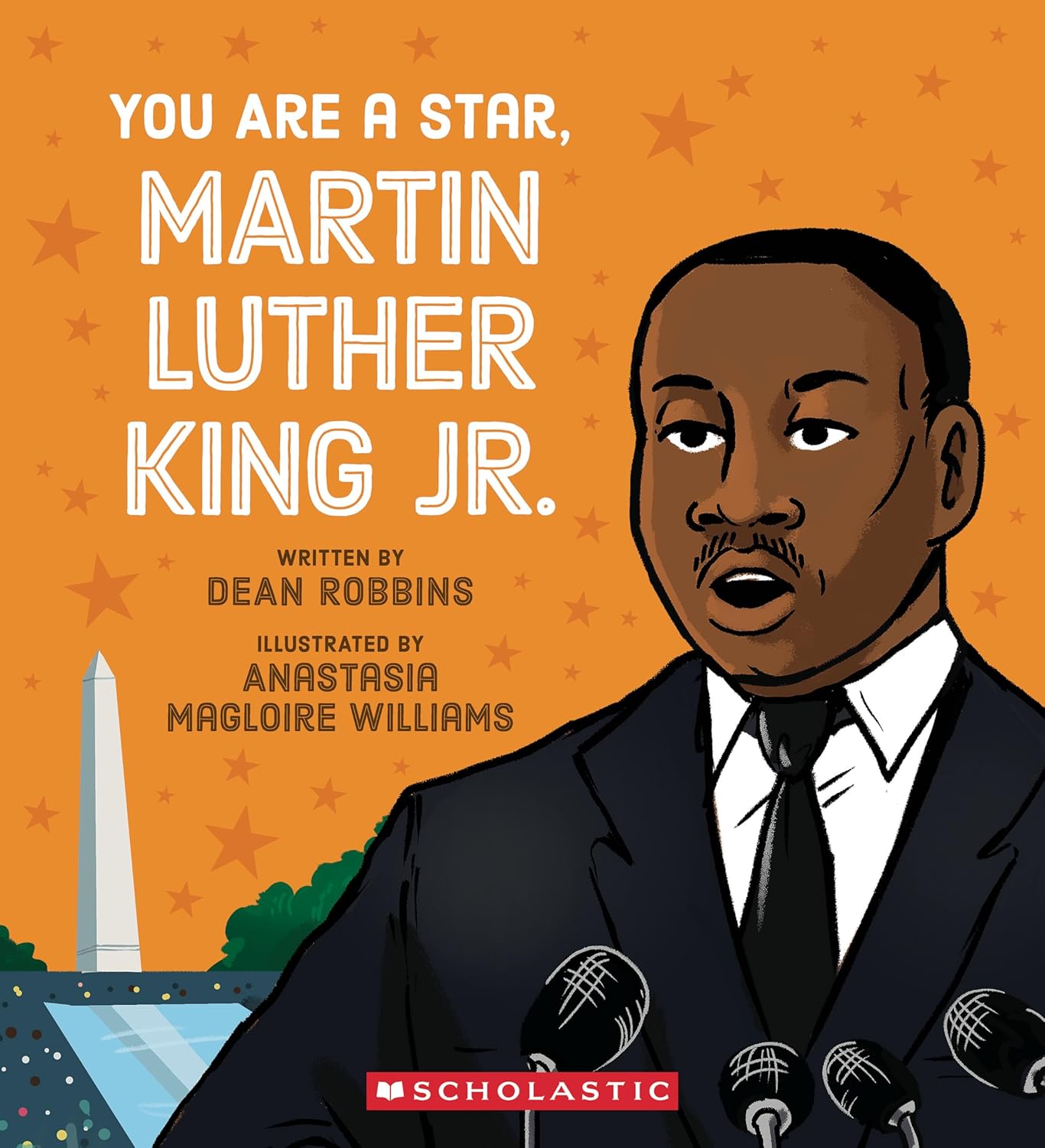
celebrate-picture-books-picture-book-review-you-are-a-star-martin-luther-king-jr-cover

About the Holiday

Martin Luther King Jr. Day celebrates the life and legacy of the man who dedicated his life and work to teaching—as Coretta Scott King once stated—“the values of courage, truth, justice, compassion, dignity, humility and service” and who led a non-violent Civil Rights movement to enact racial equality and justice through state and federal laws. President Ronald Reagan created the national holiday in 1983, setting it on the third Monday of January to coincide with Martin Luther King Jr.’s birthday on January 15. To commemorate the holiday, learn more about the life and work of Martin Luther King Jr. We still have a long way to go before there is true justice and equality for all, and it’s more important now than ever to look for ways to offer help and hope.

Thank you to Scholastic Press for sharing a copy of You Are a Star, Martin Luther King, Jr. with me. All opinions on the book are my own.

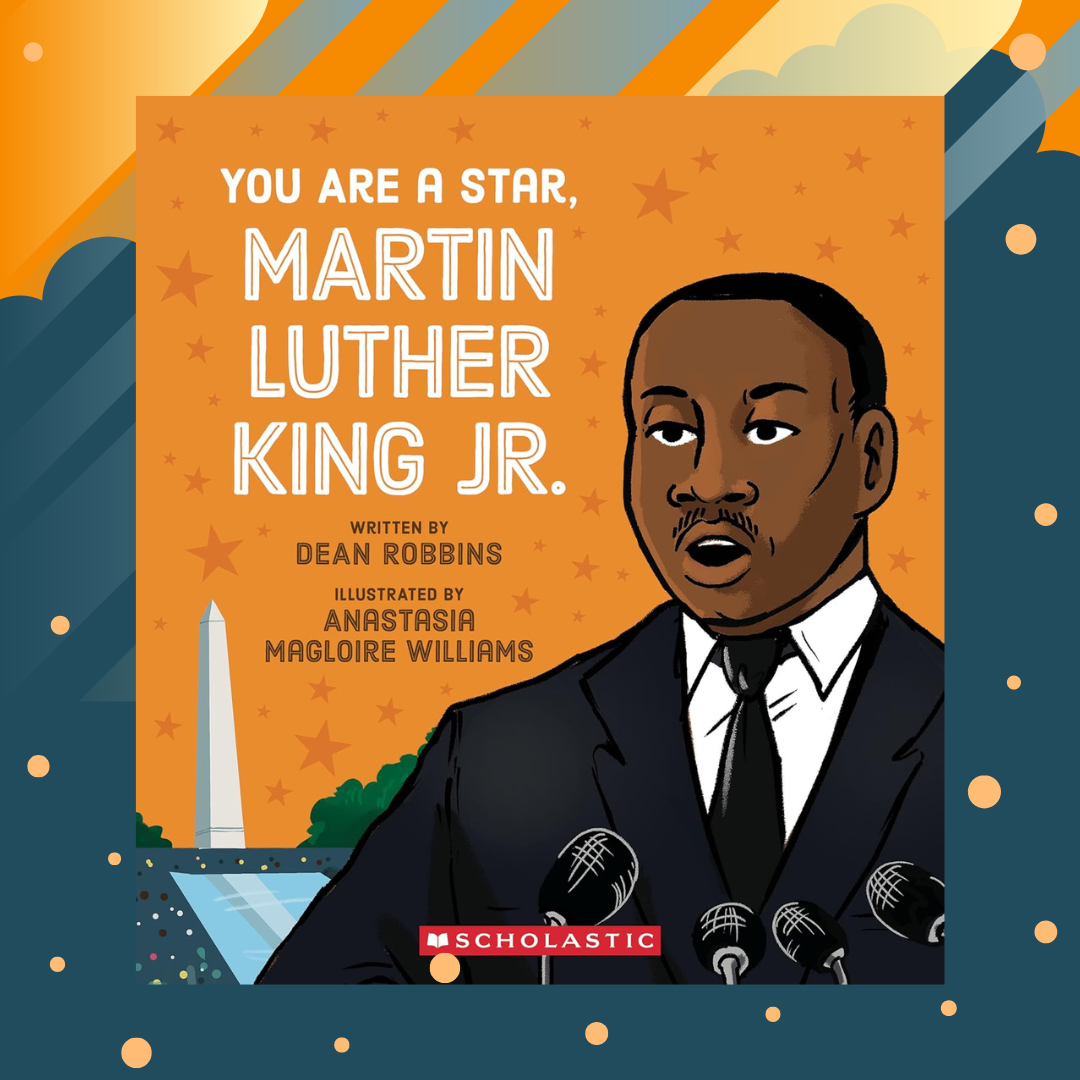
You Are a Star, Martin Luther King, Jr.

Written by Dean Robbins | Illustrated by Anastasia Magloire Williams

Opening the cover to this visually engaging biography, readers are first introduced to Martin Luther King, Jr. as he stands at a podium on August 28, 1963 ready to address the throngs of people who had joined the March on Washington and now filled the National Mall. He wonders if he’s prepared the right words to offer hope for a better future. His thoughts take him back to when he first experienced discrimination, and readers follow along, learning about segregation in schools, restaurants, recreation areas, even at drinking fountains.

Kids learn that even when Martin Luther King, Jr. was their age he was already thinking that “someone had to change these unfair rules” and deciding “Why not me?” Through the book’s first-person narration, children gain a close portrait of Martin Luther King, Jr. as a committed intellectual, believer in the foundations of America, and outspoken advocate for equal rights. They learn of his life as a minister, his work with Rosa Parks and others to end discrimination on public busses, and his adoption of nonviolent protests to affect change. 
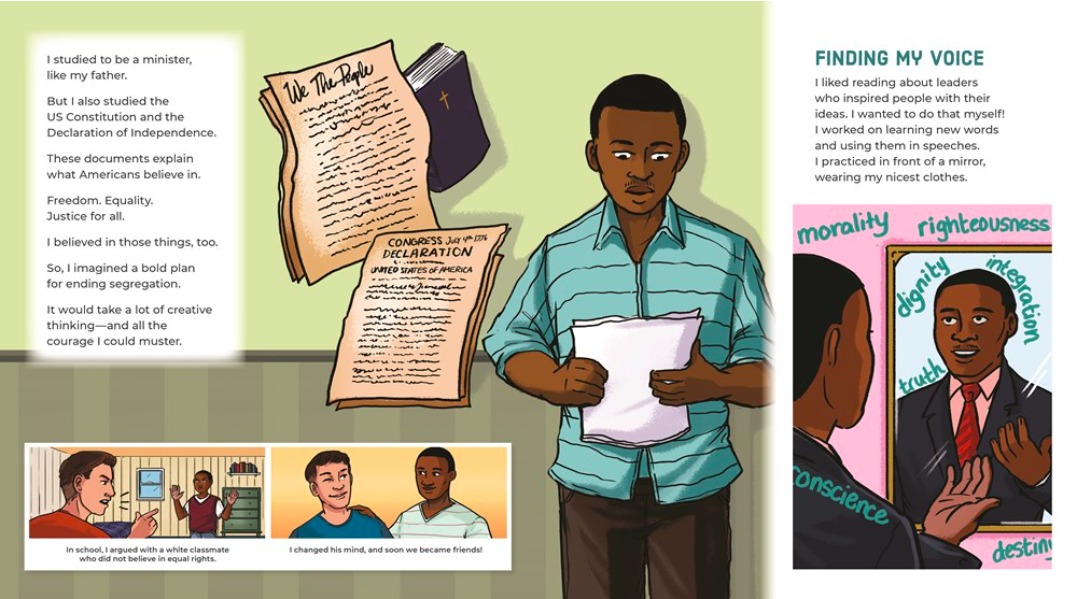
celebrate-picture-books-picture-book-review-you-are-a-star-martin-luther-king-jr-finds-voice

Image copyright Anastasia Magloire Williams, 2025, text copyright Dean Robbins, 2025. courtesy of Scholastic Press.

Readers come to understand how success in Montgomery spurred Martin Luther King, Jr. and others to work toward ending segregation in other places—like stores and restaurants—and even to “challenge American leaders to make a national law against segregation.” They learn how Martin Luther King, Jr. ended up in jail in Birmingham, Alabama, after a peaceful protest and wrote a letter to the world about oppression. Kids also hear about the Children’s March, which took place at the same time and during which more than 2,000 children were also arrested. 

Returning to the March on Washington, Dr. King decides to abandon his written speech and talk from his heart. The result is his now-famous “I have a dream” speech. Following this gathering of 250,000 people and more calls for a national law against segregation from around the country, Dr. King reveals that “In 1964, Congress passed the Civil Rights act.” But even then Dr. King says, “I knew we had more work to do. Many places still had rules to keep Black people from voting.” 
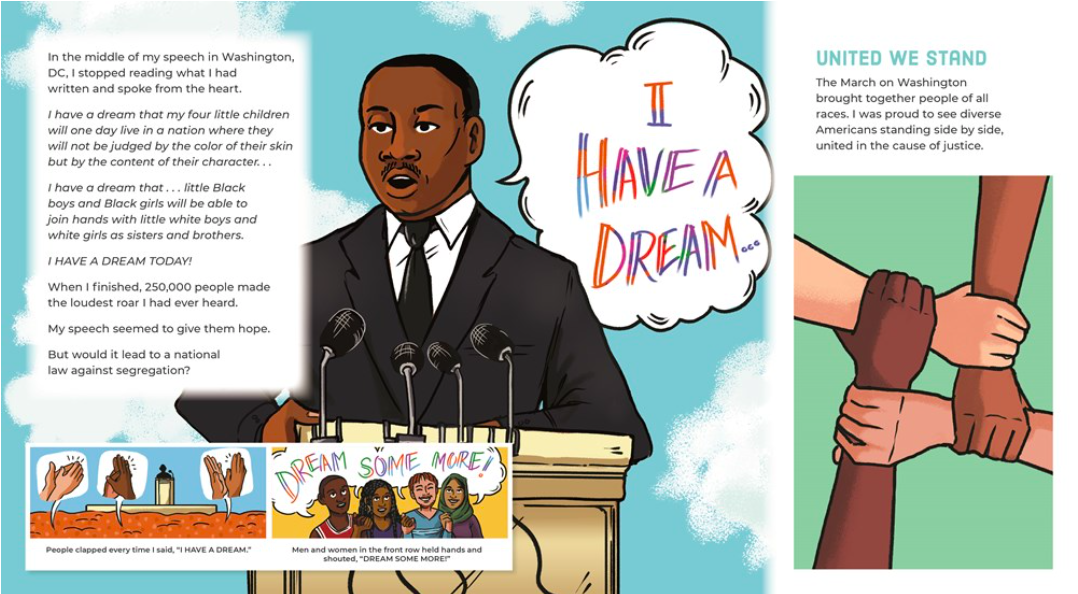
celebrate-picture-books-picture-book-review-you-are-a-star-martin-luther-king-jr-I-have-a-dream-speech

Image copyright Anastasia Magloire Williams, 2025, text copyright Dean Robbins, 2025. courtesy of Scholastic Press.

Another peaceful march was planned for Selma, Alabama, with a 50-mile march to Montgomery. This time, however, Alabama’s governor send troops to attack the marchers. The participants were not intimidated, though, and even invited more Americans to join them. Thousands answered the call. “Maids, students, and movie stars. Parents pushing baby carriages. People on canes and crutches.” Five days later, they reached Montgomery. “The Selma protest was our movement’s greatest victory,” Dr. King tells readers. “It led to a national voting rights law!”

Martin Luther King, Jr. reminds readers, though, that there’s still more to do to “see the good in one another,” “live with each other in peace,” “join together and change the world with love,” and “make my dream come true.”

Beneath the narration of Dr. King’s story, a comic-style panel highlights a single talking point, event, or fact—such as during the Montgomery bus boycott, one man “rode to work on a mule”—often with a light-hearted approach. On the righthand page, Robbins defines concepts such as nonviolent protests, boycotts, freedom of speech, protest songs, the Children’s March, polling place intimidation, and the Voting Rights Act of 1965 in easily understood language. 

Extensive back matter includes an Author’s Note, how children can “Be Like Martin,” notable quotations by Martin Luther King, Jr., four types of Nonviolent civil rights protests, a brief timeline of Dr. King’s life from his birth on January 15, 1929 to 2011, when the Martin Luther King, Jr. Memorial was dedicated in Washington, DC. Also included are a glossary of important terms and a list of resources.
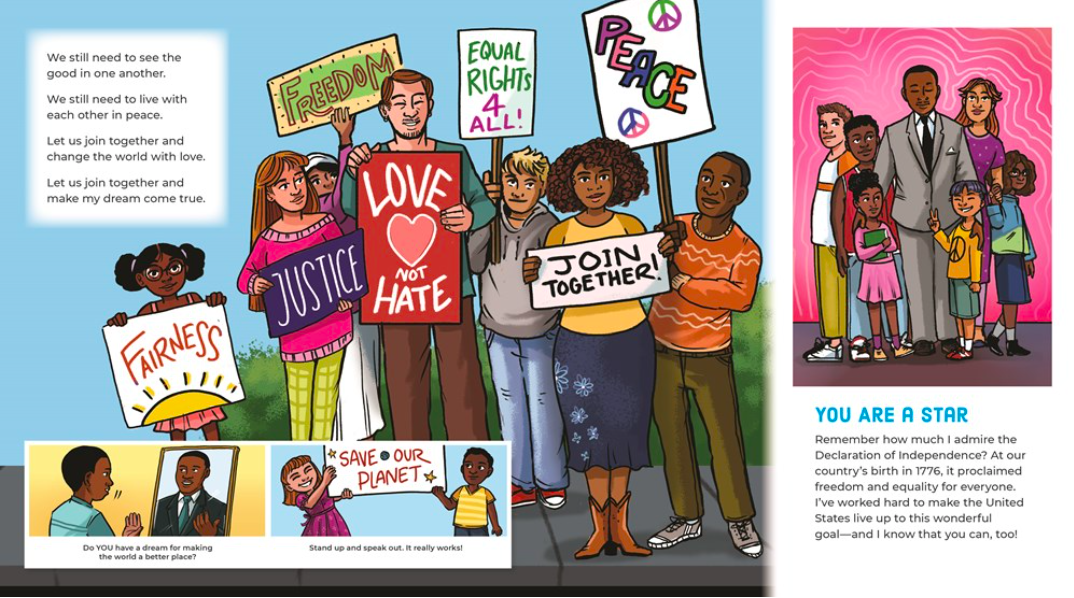
celebrate-picture-books-picture-book-review-you-are-a-star-martin-luther-king-jr-more-to-do

Image copyright Anastasia Magloire Williams, 2025, text copyright Dean Robbins, 2025. courtesy of Scholastic Press.

Dean Robbins’ immediately welcoming and dynamic first-person narration style not only draws young readers into Martin Luther King’s life and the history of the Civil Rights Movement, but makes children feel that they have a personal connection with Dr. King’s legacy. Robbin’s clear, factual writing, is presented in short, separated sentences. These make it easy for children to digest and understand King’s nonviolent approach to protest as well as the social and legal issues of the time and how, unfortunately, vigilance is still needed today. Robbins ends on a note of hope and an invitation to readers to join others and use their talents to help make Martin Luther King, Jr.’s dream come true.

Accompanying Robbins’ text are Anastasia Magloire Williams’ compelling illustrations that are at once realistic and accessible for today’s visual learners. Her stirring depiction of Martin Luther King, Jr. speaking at the 1963 March on Washington sets the tone for children to discover the impact King has had on people’s hearts, minds, and actions for more than 60 years. Through Williams’ expressive portraits, children see Martin Luther King, Jr.’s commitment to studying, practice, and rallying support as well as the effects of segregation, the determination of protestors during the Montgomery, Alabama, bus boycott, and how people from all parts of society working together created—and can still bring about—much-needed change.

With its graphic-style illustrations and well-researched content, You Are a Star, Martin Luther King, Jr. is vibrant and captivating. The book offers exhilarating learning opportunities for individuals, classrooms, and homeschoolers and may spark extended study or activism for a favorite cause. It is highly recommended for home bookshelves and a must for school and library collections.

Ages 5 – 7 and up

Scholastic Press, 2025 | ISBN 978-1338895100

Meet Dean Robbins

celebrate-picture-books-picture-book-review-dean-robbins

Photo credit David Giroux

Dean Robbins is a journalist and the author of the children’s picture books Two Friends: Susan B. Anthony and Frederick Douglass, Margaret and the Moon: How Margaret Hamilton Saved the First Lunar Landing, and Miss Paul and the President: The Creative Campaign for Women’s Right to Vote. His award-winning books have received starred reviews in Publishers Weekly and Kirkus Reviews and have been praised in the New York Times and USA Today. Dean grew up idolizing Apollo astronauts and loved working with Alan Bean on The Astronaut Who Painted the Moon. Learn more at deanrobbins.net.

Hi Dean! I’m thrilled to be talking with you today about your latest book, the impact heroes have always had on your life, and the importance of having heroes for children.

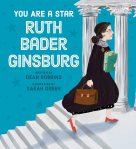
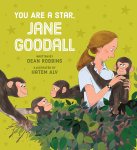
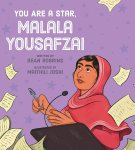
This biography about Martin Luther King, Jr. joins your You Are a Star series that began in 2022 with the story of Supreme Court Justice Ruth Bader Ginsburg. Other inspirational figures in the series are Jane Goodall and Malala Yousafzai. Can you discuss a little about how this series came to be and how you choose the subjects?

My passion is writing about my personal heroes, some of whom are relatively unknown and whose stories I can share with children for the first time. But then there are those like Jane Goodall, Ruth Bader Ginsburg, and Malala Yousafzai who are widely admired and frequently represented in children’s books. I developed the You Are a Star series with Scholastic to present such iconic figures in a new way for young readers, striving to combine emotional storytelling and humor. Each title tells an exciting life story from the subject’s point of view, including anecdotes and quirky details that don’t appear in other picture-book biographies. I hope this approach makes Jane, Ruth, and Malala feel like human beings that kids can relate to rather than like distant statues on Mount Rushmore.           

In You Are a Star, Martin Luther King, Jr., you so clearly present and connect the pivotal moments in King’s life as well as the Civil Rights Movement so children can understand and even feel as if they know Martin Luther King, Jr. How did you approach writing this biography? What kind of research did you do? What was the most meaningful part of the research and writing for you?

It’s a challenging subject to write about for elementary school students—that is, to write about both clearly and entertainingly. I tried to explain such important ideas as desegregation, free speech, and civil disobedience while also telling a page-turning story that, while concise, does justice to Dr. King’s life and work. I’m so glad you think I pulled it off! As a journalist, I love to do research, so the best part was immersing myself in the extensive literature on the civil rights movement to find material that might surprise and delight young readers.

As a library assistant in the children’s department of my local library, I see how excited kids are to read graphic novels. I love the way the format of the You Are a Star series bridges traditional picture books with that of the graphic style. Can you talk about the design of this striking series, and especially about Anastasia Magloire Williams’ dynamic illustrations in this book?

The format is what allows me to have so much fun with You Are a Star. It features a main story that flows throughout the book, supplemented by a two-panel comic and an essential-fact sidebar on each spread. The comics and sidebars offer the chance to introduce key concepts and funny details without bogging down the narrative.

As you noted, the format also provides a showcase for Anastasia’s brilliant illustrations. She artfully combines poignant and playful images, making Dr. King and his movement come alive on the page. She also has a genius for visualizing abstract ideas so that kids can understand them and feel their power. In one of the sidebars, for example, I introduce Dr. King’s comment that “the arc of the moral universe is long, but it bends toward justice.” How on earth do you illustrate such a thing? Anastasia’s creative solution was to show Black and white hands building a wall together, with bricks marked “Justice,” “Equality,” “Unity,” “Change,” “Love,” “Peace,” and “Freedom.” What a lovely way to help children grasp Dr. King’s humane vision.

You’ve talked about the wide range of heroes you had as a child, from sports stars to early social and political reformers. Some of these are represented in the books you’ve written, but could you name some others? What do you think it was about them and yourself that drew you to these specific people?

Ever since I read Superman and Wonder Woman comics as a child, I’ve been attracted to those who overcome seemingly insurmountable obstacles to make the world a better place. And how thrilling is it that our world has real-life analogues to Superman and Wonder Woman? I hope I live long enough to publish a children’s book about every heroic figure whose picture hangs on my office wall, ranging from Jackie Robinson to Emily Dickinson to Louis Armstrong. 

Why do you think it’s important for children to have heroes?

Someone has to demonstrate the best that human beings are capable of, right? Especially when we’re so often confronted with the worst. The more kids who grow up to be like Dr. King, the better our world will be. In the back matter of You Are a Star, Martin Luther King, Jr. is a list of tips titled “Be Like Martin,” which I hope will facilitate this process!

I’ve read that you relish traveling to historical sites. Which place is your favorite or made the biggest impact on you and why?

One of the most stirring places I’ve seen is Susan B. Anthony’s house in Rochester, New York. On my tour of this national historic landmark, the guide pointed out the parlor where Susan would have tea with her neighbor and fellow activist Frederick Douglass. It was news to me that Anthony and Douglass socialized in this way, and I was moved by the idea of two titanic reformers humbly sipping tea while sharing their hopes and dreams. The experience inspired me to write my Scholastic picture book Two Friends: Susan B. Anthony and Frederick Douglass.

Not only has your life included careers as a K–12 school teacher, a journalist, and an author, but you also present fascinating pieces about famous people—from Houdini to Theodore Roosevelt to Harrison Ford to a full stadium’s worth of musicians and sports stars—and their connection to Wisconsin on Public Radio. How did this collaboration come about? Could you take readers through a bit of your process in writing and recording the segments?

It’s yet another way to spread the word about my heroes, and I like doing so in a different medium—one with sound effects! I’ve included some of these pieces in a book of essays that will be published in April by the Wisconsin Historical Society Press. Wisconsin Idols: 100 Heroes Who Changed the State, the World, and Me offers my perspective on heroic figures with often surprising connections to Wisconsin, including Oprah Winfrey, Duke Ellington, and Georgia O’Keeffe. It makes the case for Wisconsin as a notably influential place: a crossroads for people who transformed the world.

What do you enjoy most about being a children’s author?

 When kids tell me that one of my heroes has now become one of their heroes. I can’t begin to describe how gratifying that is.

As a former teacher, you must love going to schools for presentations. From the photos on your website, it looks like you and the kids have a fantastic time! Could you describe what your presentations are like?

My own child has inspired much of my writing but is now 28 years old, so these days I visit schools to hang out with my favorite demographic. With their curiosity and enthusiasm, elementary school kids never fail to restore my hope for the world. The presentations are geared toward maximum interaction so we can get to know each other. I joke, read, ask questions, and give them lots of chances to clap and shout things out. I tell them about my favorite heroes, and they tell me about theirs.

What’s up next for you?   

Next year, Scholastic will publish a book about another one of my heroes: Albert Einstein. The Genius Next Door is based on a little-known true story that, I hope, will make Einstein seem relatable and math seem fun!

Thanks so much for sharing your insight and some background on your wonderful You Are a Star series. I wish you all the best with this book and am looking forward The Genius Next Door.

Look for the rest of the books in the You Are a Star series!

You can visit Dean Robbins on his website at deanrobbins.net | Instagram | X

Martin Luther King, Jr. Day Activity

Students and kids at home will enjoy spending time with these fun and thought-provoking printable activities about Martin Luther King, Jr. from A Day in Our Shoes.

Martin Luther King, Jr. Activity Pack
You can purchase You Are a Star, Martin Luther King, Jr. at these booksellers

Mystery to Me (Dean Robbins’ hometown independent bookstore)

Amazon | Barnes & Noble | Bookshop (to support your local independent bookstore)

Picture Book Review

January 9 – National Word Nerd Day

celebrate-picture-books-picture-book-review-calvin-gets-the-last-word-cover

About the Holiday

Do you love nothing more than finding new words and using them in conversation or in your own writing? Does completing a  crossword or word search puzzle make for the perfect day? Is a pun your favorite type of joke? Then you’re a word nerd! Today’s holiday highlights the importance of language and the fun of learning and expressing yourself precisely with new or uncommon words. To celebrate, why not gather friends or family and play a word-based game like Scrabble, Tapple 10, Charades, or—my favorite—Boggle! 

Calvin Gets the Last Word

Written by Margo Sorenson | Illustrated by Mike Deas


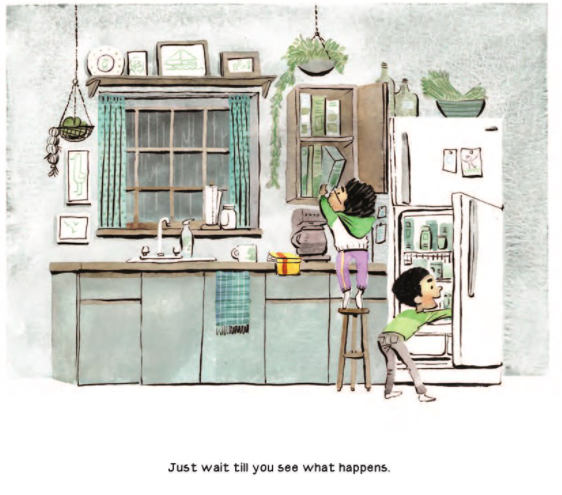
The moment Calvin wakes up, he grabs his dictionary and heads to the kitchen for breakfast. While Calvin may be well-rested, his dictionary tells readers that it is tired. “Why? Because Calvin loves words—I mean REALLY loves words,” the dictionary says. Calvin won’t rest until he’s found the perfect “word for everything—especially his rascally brother.” At breakfast, Calvin takes a big gulp of milk. It’s just the moment his brother’s been waiting for to tell his super funny joke. You can imagine what happens—and why the dictionary’s page containing the word revenge is soaked.

celebrate-picture-books-picture-book-review-calvin-gets-the-last-word-cover

Image copyright Mike Deas, 2020, text copyright Margo Sorenson, 2020. Courtesy of Tilbury House Publishers.

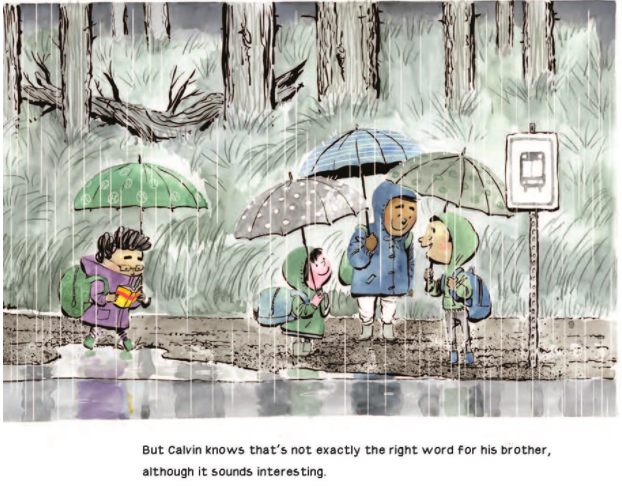
But is revenge the right word for Calvin’s brother? Not quite. On the school bus as the kids are tossing a backpack, talking, laughing, and hanging over the seats, Calvin’s dictionary describes it as mayhem, but that word doesn’t completely describe his brother either. As Calvin struggles in geography class and passes notes during library story time, his dictionary helps describe the mood, but the words it chooses don’t really apply to his brother. On the way home, though, Calvin does discover a good word for himself when he stands up to a bully and helps a kindergartener.

celebrate-picture-books-picture-book-review-calvin-gets-the-last-word-breakfast

Image copyright Mike Deas, 2020, text copyright Margo Sorenson, 2020. Courtesy of Tilbury House Publishers.

At Little League practice, the dictionary reveals that Calvin “loves to crush the ball during batting practice, sending it over the fence. That’s why the page that reads pulverize has grass stains on it.” Could pulverize be the right word for his brother? While Calvin thinks it could be fun, it’s not exactly right.

celebrate-picture-books-picture-book-review-calvin-gets-the-last-word-bus-milk

Image copyright Mike Deas, 2020, text copyright Margo Sorenson, 2020. Courtesy of Tilbury House Publishers.

That night dinner turns into a repeat of breakfast—only in broccoli green. When Calvin goes to bed, he sits for a while, thinking. Then he grabs his exhausted dictionary and a glass of water and sneaks into his brother’s room. The dictionary thinks it knows what’s going to happen and riffles through its pages to find the right word, unconcerned whether it stays dry or not. And suddenly it opens to the perfect word! But wait, that word doesn’t fit now because the brothers are laughing. The dictionary tries flipping to another page and a better word, but Calvin has it beat as he turns the pages and discovers the exact right word to describe his brother. What are all of these words? Come flip through Calvin Gets the Last Word yourself to find out!

celebrate-picture-books-picture-book-review-calvin-gets-the-last-word-bus-stop

Image copyright Mike Deas, 2020, text copyright Margo Sorenson, 2020. Courtesy of Tilbury House Publishers.

In her funny and unique mashup of sibling rivalry and vocabulary, Margo Sorenson offers kids an engaging story of the singular type of love brothers share uncovered little by little through word-building. Calvin’s dictionary makes a sincere and charming guide through high-interest words that lend panache and nuance to events throughout Calvin’s day even if they don’t quite describe his brother. Astute kids may notice that the words the dictionary chooses for Calvin’s brother proves his loyalty to his favorite reader. Calvin’s spewed milk, whispered secrets, and home run batting add up to a real kid that readers will love. The words that the dictionary finds are fun to learn and say and will spark an enthusiasm in readers to do their own flipping through the dictionary and thesaurus. Sorenson’s endearing ending rings true with a word kids are sure to embrace.

Mike Deas’ glasses-wearing and sweat suit-clad Calvin, whose dictionary is always at the ready to define his experiences, is a character readers will respond to. Images of the sprayed milk and broccoli, rockin’ school bus, library story rug, and baseball field are full of familiar details and plenty of action. As Calvin prepares to play his trick on his brother Deas gives kids a cutaway view of the house from above, letting them tiptoe through the maze of rooms with Calvin. The final scenes of the brothers checking out the dictionary together in the light of a bedside lamp is sibling devotion at its best.

A delightful family story that can stir a love of language, Calvin Gets the Last Word would be a favorite addition to home libraries. The book is highly recommended for school and classroom bookshelves to enhance language arts, writing, grammar, and vocabulary lessons and for public library collections as well.

Ages 6 – 8

Tilbury House Publishers, 2020 | ISBN 978-0884488224

Discover more about Margo Sorenson and her books on her website.

To learn more about Mike Deas, his books, and his art, visit his website.

National Word Nerd Day Activity

celebrate-picture-books-picture-book-review-big-words-vocabulary-word-search-puzzle

“Big Words” Word Search


Knowing and using a wide range of words allows you to express yourself in exact—and often—fun ways. Find the 26 “big” words—one for each letter of the alphabet—in this printable word search puzzle.

“Big Words” Word Search Puzzle |  “Big Words” Puzzle Solution!

celebrate-picture-books-picture-book-review-calvin-gets-the-last-word-cover

You can purchase Calvin Get’s the Last Word from these booksellers

Amazon | Barnes & Noble | Bookshop (to support your local independent bookstore)

Picture Book Review
January 8 – National JoyGerm Day

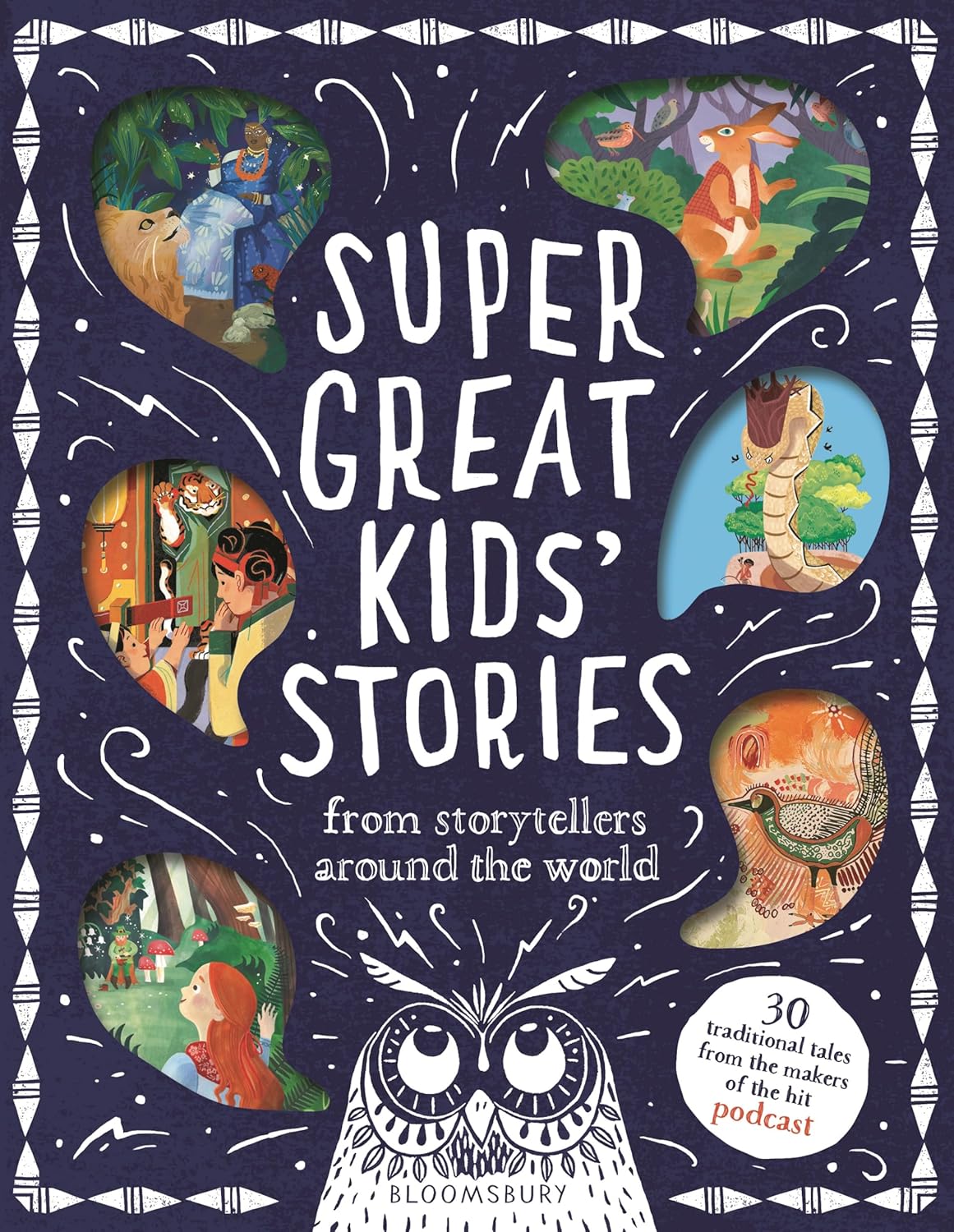
celebrate-picture-books-picture-book-review-how-to-cheer-up-a-friend-cover

About the Holiday

Believing that joy can spread from person to person on the strength of simple smiles and greetings, acts of kindness, upbeat moods, and general positivity, Joan E. White of Syracuse, New York, founded JoyGerm Day in 1981. The day officially became a national holiday in 1985, and is now celebrated around the world. The holiday inspires people to find ways today and every day to positively impact the lives around us at home, work, school, or even while shopping or going about one’s daily business.

To honor the day and the idea, find ways to start each morning with a positive attitude for the day to come. Need ideas for how to get started? Say “Hello” to those you meet, listen to and encourage others, happily help out where needed, share a special moment with your kids at home, or send a surprise letter, card, or text to a friend or family member far away. And, of course, don’t forget to treat yourself too! When you feel good, those around you will respond in kind. Happiness really is contagious!  

Thanks so much to Beach Lane Books for sharing a copy of How to Cheer Up a Friend with me for review consideration!

How to Cheer Up a Friend

Written by Stephanie Calmenson | Illustrated by Shannon McNeill


Little ones have big feelings and even bigger hearts. When they see a friend or family member feeling down, they want to help. But “What do you do / when your friend feels blue?” In her sweet book in which the protagonist attempts to cheer up their elephant friend, Stephanie Calmenson offers refreshingly practical advice on how a child (or an adult) can really approach someone experiencing sadness or anger and help them find happiness again. 

Screen Shot 2024-12-31 at 4.50.06 PM

Image copyright Shannon McNeill, 2024, text copyright Stephanie Calmenson, 2024. Courtesy of Beach Lane Books.

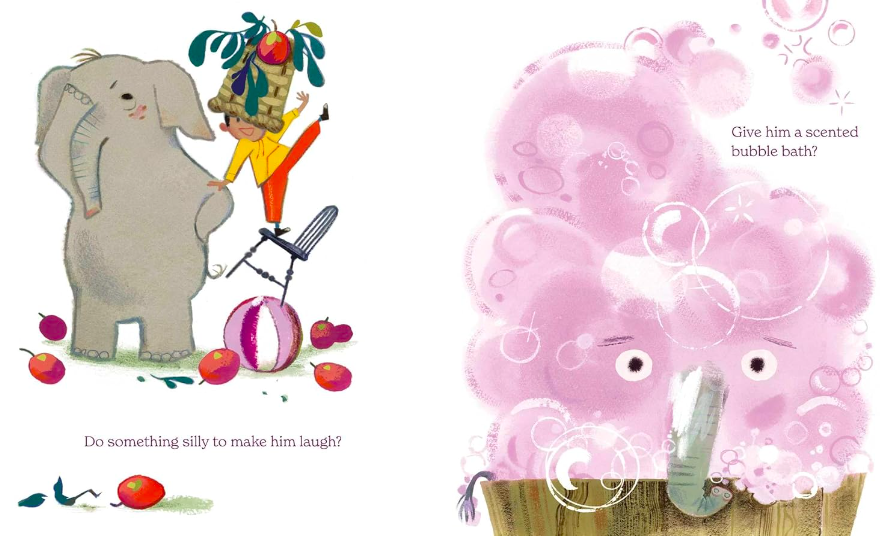
Writing in rhyming couplets, Calmenson starts out by suggesting a few ideas that will get readers giggling and invested in the story, such as “Do you tickle his trunk / to get him out of his funk?” and “Do something silly to make him laugh? / Give him a scented bubble bath?” Soon, the child opens his arms wide, offering a hug—but ready to happily accept either a “yes” or “no” answer.

Quieter ideas follow, including taking a walk or simply listening if he wants to “talk . . . and talk . . . and talk.” Then—only after all his feelings have been vented does the protagonist offer treats—or that hug, which now feels juuust right.

Screen Shot 2024-12-31 at 4.51.18 PM

Image copyright Shannon McNeill, 2024, text copyright Stephanie Calmenson, 2024. Courtesy of Beach Lane Books.

Stephanie Calmenson’s thoughtful look at the underpinnings of sadness or other strong emotions and how friends or family members can best help a loved one shines for its brevity and straightforward take on the issue. This approach will appeal to kids while giving them concrete examples of what to do and say (or not say) to elicit healing time or talk from friends, siblings, or others.

How to Cheer Up a Friend would be equally effective for adults looking for a book to help their own child through periods of sadness or anger as the story validates these emotions and provides a constructive solution for expressing them. The length of the story and its bookended format makes the book a perfect choice for parents, teachers, or other adults to reach for during those times when emotions may be running high or attention spans are short.

Screen Shot 2024-12-31 at 4.51.51 PM

Image copyright Shannon McNeill, 2024, text copyright Stephanie Calmenson, 2024. Courtesy of Beach Lane Books.

Shannon McNeill’s adorable elephant and empathetic child immediately win over readers’ hearts with their connection that is clearly based on mutual love and trust. In her soft-hued gouache, pencil, and cut paper illustrations, McNeill’s droopy, sad-eyed elephant is the picture of sadness, stubbornness, and even laugh-inducing perseverance as his friend tries various silly solutions to restore happiness. The image of the elephant hunkered down in its wash tub as it hides from a hug is an effective portrayal for children who prefer body autonomy or for the barrier some people present when experiencing strong emotions.

As the elephant begins to talk, his words and feelings fill the page as colorful shapes, and he begins to gesticulate, He cries, stomps, and flops down in a tirade to demonstrate those emotions he may not have words for. But as the storm abates, he feels better and can happily accept that big hug in a two-page spread that will delight young readers.

An endearing story that provides satisfying help with an emotion we all experience, How to Cheer Up a Friend is a valuable book for families and teachers to have on hand for those times when feelings are strong. The book is highly recommended for home, library, and classroom collections.

Ages 4 – 8

Beach Lane Books, 2024 | ISBN 978-1665910248

About the Author

Stephanie Calmenson is the acclaimed author of many popular books for young readers including Dinner at the Panda Palace; May I Pet Your Dog?; and the Ready, Set, Dogs! and Allie and Amy series written with Magic School Bus author Joanna Cole. A former early childhood teacher and children’s book editor, Stephanie feels fortunate to be able to teach, entertain, and encourage kids through her books. To read more, please visit StephanieCalmenson.com.

About the Illustrator

Shannon McNeill is a Canadian-born, San Diego-based illustrator whose books include Are We There Yet? by Dandi Daley Mackall, Wild & Wooly by Mary Jessie Parker, How to Cheer Up a Friend by Stephanie Calmenson, and her own Wheels, No Wheels. Her work is influenced by local nature, loitering in coffee shops, old books, child art, and long walks around the block. Learn more at LittleDrawings.com.

National JoyGerm Day Activity

celebrate-picture-books-picture-book-review-you're-groovy-happiness-card

Spread Happiness Cards

Kids can spread happiness to their friends, family, teachers, and other people in their lives with these cute Happiness Cards! Just print, cut, and give!

Spread Happiness Cards

celebrate-picture-books-picture-book-review-how-to-cheer-up-a-friend-cover

You can purchase How to Cheer Up a Friend at these booksellers

Amazon | Barnes & Noble | Bookshop

Picture Book Review

September 2 – It’s National Friendship Month

celebrate-picture-books-picture-book-review-aven-green-baking-machine-cover

About the Holiday

Friendship Month was instituted about ten years ago by the Oddfellows – or, as they are officially called, The Grand Order of Oddfellows Friendly Society (GUOOFS) – an international organization dedicated to philanthropy and charity believed to have established in England in the 1730s. The holiday encourages people to spend more time with their friends, get in touch with those they haven’t seen or talked to in a while, and to reach out to others who are alone or need a friend. As school gets underway, there are plenty of opportunities for kids to meet new people and form friendships – some of which may last a lifetime.

Thanks to Sterling Children’s Books for sharing a copy of Aven Green Baking Machine with me for review consideration. All opinions about the book are my own.

Aven Green Baking Machine

By Dusti Bowling | Illustrated by Gina Perry


Hot off her stint as a sleuth, Aven Green has discovered another activity to conquer—baking! When she learns of a baking competition at the county fair the next weekend, Aven determines not only to enter, but to win the blue ribbon. She’s sure she will win because one, she’s an expert baker, having made a carrot cake last week; two, she’s a supertaster; and three, she has an excellent sense of smell. Now, as a pro, she calls her friends Kayla, Emily, and Sujata to come to her house prepared to each make a recipe of their choice. They will then choose which one to enter in the contest.

celebrate-picture-books-picture-book-review-aven-green-baking-machine-mixing

Image copyright Gina Perry, 2021, courtesy of Sterling Children’s Books.

With the girls all assembled at Aven’s house, they turn their attention to whose recipe to make first and focus on the ingredients Sujata brought to make her favorite Indian dessert, milk barfi. The other girls make fun of the dessert’s name, and Sujata retreats, crying, to Aven’s room. Aven’s mom appears to find out what happened. She asks the girls some pointed questions about whether they’d ever tried milk barfi before and if they had asked Sujata “what it tastes like or why it’s important to her.” She sends them in to Aven’s room to apologize. The friends make up and return to the kitchen to whip up the recipe, which Aven says smells like “spicy heaven.”

Next, they make Aven’s mint chocolate chip pie and then Emily’s peachy fluff, which Aven renames “peachy floof.” With these desserts all in the fridge, Kayla realizes they haven’t actually baked anything yet. And while the contest rules only call for an original dessert, Kayla thinks they should bake something. Aven suggests chocolate chip cookies until she discovers that the bag she thought held chocolate chips actually holds raisins for the raisin clafouti Kayla wants to make.

Aven has an unwavering loathing for raisins and tells Kayla, “‘Yeah, we’re totally not making that.’” The other girls defend Kayla’s choice. Hearing the shouting, Mom reappears and Kayla tells her how Aven won’t let her make clafouti—“‘raisin toefooty,’” Aven says, interrupting. Aven’s mom looks at her and tells her that she’s so disappointed in her behavior. Aven doubles down on her opinion and stomps off to her room to sulk. After the clafouti is in the oven, the girls all play together until it’s time to sample the desserts.

celebrate-picture-books-picture-book-review-aven-green-baking-machine-pie

Image copyright Gina Perry, 2021, courtesy of Sterling Children’s Books.

They love the Sujata’s milk barfi, and Emily’s peachy fluff turned out to be soupy—delicious, but more of a drink. Aven’s chocolate chip mint pie was deemed too minty, and Kayla’s raisin clafouti was declared the winner. Still, Aven wouldn’t try it. After everyone left, Aven’s mom sits down with her and explains that “‘the Aven I know would try something, even if she didn’t want to, so as not to hurt her friends’ feelings…. You did not act like a good friend.’”

When Aven goes to apologize the next day at school, the other girls tell her they don’t want to enter the contest with her because she is “too difficult. ‘It’s your way or nothing,’” Emily tells her. As Aven sits alone on the playground, Ren comes over to see if she’s all right. Aven tells him about the contest and he tells her about his favorite dessert, manju—sweet bean paste steamed cakes. Aven makes a “yuck face” and Ren, sad, walks away. At home, Aven decides she’ll make something for the contest by herself and bakes a chocolate cake with mint frosting. But when the cake comes out of the oven, it is less than perfect. Aven cries because she knows she can’t win with that cake and her friends are all mad at her.

celebrate-picture-books-picture-book-review-aven-green-baking-machine-fair

Image copyright Gina Perry, 2021, courtesy of Sterling Children’s Books.

She goes to visit her great-grandmother, who gives Aven some perspective while making another unusual cake that Aven thinks she’s not going to like but ends up loving. The next day, Aven asks Ren to be her partner in the contest, telling his she wants to make manju. At first Aven is reluctant to try the steamed cakes they make, but one nibble later, she’s ready for more. She even decides that “from this moment in history until the end of time, I would forever be Aven Green, trier of new things, even the weirdest things anyone ever heard of.” The night before the contest, Aven made I’m sorry cards for Kayla, Sujata, and Emily, using all of her best stickers and glitter glue.

The day of the contest finally arrives. Aven and Ren make a fresh batch of manju and take it to the fair. Aven gives out her cards and wishes her friends good luck. They all wait to hear the judges’ decisions and… First place went to an apple caramel cake. Second prize went to a chocolate cream pie. And Third Place went to… Sujata, Emily, and Kayla for their raisin clafouti. Aven cheered and cheered for them, and when they left the stage, they offered Aven one of the yellow ribbons. She thought it would look lovely hanging on her wall, but she declined, telling her friends, “‘I didn’t win it. Not only that, but I had a bad attitude about the raisin clafouti, which did win.’”
Besides, Aven says, “‘I didn’t lose…. I won a whole new friend! And now I have my old friends back, too. Best day ever!’” Then she tasted the raisin clafouti, and even though she didn’t like it, she praised it for being an award-winner. Then the friends took in the fair and the bluegrass music, and Aven discovered another activity to conquer. “‘Watch out, world!’” she cried. “‘Here comes Aven Green, Music Machine!’”

A glossary of baking words found in the story as well as recipes for milk barfi, mint chocolate chip pie, peachy floof, raisin clafouti, tomato soup cake, and manju follow the text.

celebrate-picture-books-picture-book-review-aven-green-baking-machine-dancing

Image copyright Gina Perry, 2021, courtesy of Sterling Children’s Books.

Dusti Bowling’s second Aven Green story for young readers is infused with her protagonist’s distinct personality, infectious enthusiasm, and big heart. Realistic dialogue, situations, and emotions make it a book that will easily resonate with kids. While it’s easy to focus on the humor in Bowling’s story—which is delivered with snappy, rapid-fire dialogue and observations—the story also packs a punch in its message about the injustice of preconceived notions, the effects of thoughtless comments, ultra-competitiveness, and the true meaning of acceptance.

Just one of the joys of Bowling’s series is how Aven Green smashes wrong assumptions while being fearless and self-confident. Here, Aven discovers that while she promotes acceptance for herself, she must also extend the same appreciation to others. All of Bowling’s characters possess strong opinions, enough self-assurance to reject behavior that hurts, and the ability to recognize when they’ve been wrong and make amends. These qualities make them excellent role models for readers. As the girls separate into different teams for the baking contest and, ultimately, make a new friend, readers learn important lessons on standing up for oneself, making informed opinions instead of snap judgements, and what true friendship is all about.

Gina Perry’s engaging illustrations bring the story to life as readers see Aven cooking, eating, and creating cards for her friends with her feet as well as participating in all the other activities at school and the county fair. Her line drawings also capture the emotions of the characters as they argue, make up, and cheer each other on. Cameos by Aven’s mom and great-grandmother portray a steadying and caring influence.

Aven Green Baking Machine is a multi-layered story that will make kids think as they enjoy the humor, close relationships, and invitation to discover and bake recipes from around the world. This book is a good choice for kids and adults to read together while discussing the issues presented. Fans of the series will want to catch up on what Aven is conquering next and new readers will be happy to discover this empowering series.

Ages 6 – 8

Sterling Children’s Books, 2021 | ISBN 978-1454942207

Discover more about Dusti Bowling and her books on her website.

To learn more about Gina Perry, her books, and her art, visit her website.

celebrate-picture-books-picture-book-review-aven-green-baking-machine-cover

You can find Aven Green, Baking Machine at these booksellers

Amazon | Barnes & Noble | Books-a-Million

To support your local independent bookstore, order from

Bookshop | IndieBound

Picture Book Review