October 14 – It’s Hispanic Heritage Month

celebrate-picture-books-picture-book-review-without-separation-cover

About the Holiday

From September 15th through October 15th National Hispanic Heritage Month celebrates the contributions of those who come from or whose ancestors immigrated from Spain, Mexico, the Caribbean, Central America, and South America. Each year the holiday adopts a particular theme. This year’s theme is “Esperanza: A Celebration of Hispanic Heritage and Hope.” From business and industry to culture, sports, and entertainment, Hispanic and Latinx Americans have made an important and indelible imprint on our country. You can learn more about the holiday and find cross-curricular resources for classrooms and homeschooling, videos, exhibitions, and much more from the Smithsonian, the Library of Congress, the National Park Service, the National Gallery of Art, the Nationla Archives and more to use not only this month but throughout the year on the official Hispanic Heritage Month website.

Without Separation: Prejudice, Segregation, and the Case of Roberto Alvarez

Written by Larry Dane Brimmer | Illustrated by Maya Gonzalez

On January 5, 1931 twelve-year-old Roberto Alvarez was happy to be going back to Lemon Grove Grammar School after the Christmas vacation. But when he got there “the principal told Roberto and the other Mexican and Mexican American children that they did not belong there.” He told them to go to the new Mexican school on Olive Street, and when they arrived, their teachers and desks were already waiting for them.

This had all come about stealthily after the school district’s board of trustees received a letter from the parent-teacher association complaining that “the Mexican children didn’t understand English,” which “held back the white students.” The letter also said that the “Mexican children were unclean and endangered the health of every other student in the school.” The board decided to construct a separate school—but without telling the Mexican parents, fearing “trouble.”

But as the Olive Street school was being built, Mexican parents understood it true purpose of segregation and instructed their children not to attend, but to come home. Most of the kids, including Roberto did as their parents told them. “That January morning the Olive Street School stood almost empty, except for two teachers, three students, and many unoccupied desks.” Roberto believed he didn’t need a different school. While his parents had come from Mexico, he had been born in California and spoke English as well as any of the white students.

celebrate-picture-books-picture-book-review-without-separation-trouble

Image copyright Maya Gonzalez, 2021, text copyright Larry Dane Brimmer, 2021. Courtesy of Calkins Creek.

The Mexican parents formed the “Comité de Vecinos de Lemon Grove—the Lemon Grove Neighbors Committee”—to talk about the situation. They knew the new school had not been built to “help their students learn the English language and American customs, as the school board and newspapers claimed.” The only deciding factor of which school a child attended was the color of their skin.

The Comité de Vecinos acquired two lawyers, and on February 13, 1931 “Roberto brought the situation in Lemon Grove to the attention of the California Superior Court in San Diego” by filing a law suit against the Lemon Grove School board of trustees. His lawsuit asked that the school district stop discriminating against the Mexican students and allow them to return to the Lemon Grove School. The school board falsely stated that the students’ strike was “organized by Mexico or by groups in Mexico,” and the president told a reporter he knew that the district attorney of San Diego was on the school’s side.

In fact the San Diego district attorney represented the school board in its dealings with the court, saying that the Olive Street School was for “‘better instruction,’” a claim that was different from the minutes from the school board’s summer meetings. He then went on to say that having a school in their own neighborhood was safer since they didn’t have to cross the railroad tracks. But Roberto wanted to go to school with all of his friends—”brown and white.”

celebrate-picture-books-picture-book-review-without-separation-roberto

Image copyright Maya Gonzalez, 2021, text copyright Larry Dane Brimmer, 2021. Courtesy of Calkins Creek.

The trial began on March 10, 1931 in San Diego. The lawyers for the school board insisted that the new school was to “benefit the Mexican pupils…not to separate” them. Roberto’s lawyers countered this with the minutes from the board’s summer meetings.

The trial ended the next day, and the decision was handed over to the judge. Two days later, the judge handed down his ruling. He stated that “in the eyes of the law the Lemon Grove School District had no power to set up a separate school for Mexican children.” On April 16, 1931, the judge’s ruling became official and the school board was ordered to immediately admit Roberto Alvarez and all of the other Mexican students “‘without separation or segregation.’” Roberto knew he had to stand up for what was right, and as he and the other Mexican students returned to school, “this time all were welcomed.”

An extensive Author’s Note, complete with photographs of Roberto Alvarez, his third- and fourth-grade classmates in 1928, Roberto’s mother, Lemon Grove Grammar School and its principal, and Roberto in 1999, reveals more about this historical event, the people involved, and the political and social atmosphere in the US at the time. Larry Dane Brimmer also discusses other cases of school segregation and follows up with the consequences for Lemon Grove principal Jerome Green and the successful career enjoyed by Roberto Alvarez as an entrepreneur. Resources used in researching the book are also included.

celebrate-picture-books-picture-book-review-without-separation-school

Image copyright Maya Gonzalez, 2021, text copyright Larry Dane Brimmer, 2021. Courtesy of Calkins Creek.

Larry Dane Brimmer’s compelling history of this landmark case and biography of Roberto Alvarez and all of the students and their parents who stood up for equal access to schooling is instructive and empowering. The fact that this issue and similar others continue to roil schools, workplaces, and communities, makes Without Separation a vital resource to educate children and adults on system racism and how it spreads.

Brimmer highlights the courage, intelligence, and acceptance that children display and inspires them to lend their voices to change injustice wherever they find it. Brimmer’s clear and precise storytelling allows children to understand the actions and discussions involved in the school board meetings, neighborhood committee meetings, and the trial without losing any of the story’s emotional impact.

Maya Gonzalez’s lovely folk-art illustrations present stylized-yet-realistic depictions of the citrus groves, the school, and the courtroom. Fashions and décor set the time period while also appearing appropriate today. Another portrayal of universality is accomplished in Gonzalez’s two-page spread of the board of trustees’ meeting, in which she pictures the members sitting at a table with only their feet and upper body showing. Not only is this group representative of the 1930 school board, but of the “faceless” masses and committees that often drive policy today. Many images of the Mexican community supporting each other shows readers what can be accomplished when people work together.

An important book that will resonate with its target audience, Without Separation: Prejudice, Segregation, and the Case of Roberto Alvarez is a must-addition to any home, classroom, school, and public library.

Ages 7 – 10 and up

Calkins Creek, 2021 | ISBN 978-1684371952

Discover more about Larry Dane Brimmer and his books on his website.

To learn more about Maya Gonzalez, her books, and her art, visit her website.

celebrate-picture-books-picture-book-review-without-separation-cover

You can find Without Separation: Prejudice, Segregation, and the Case of Roberto Alvarez at these booksellers

Amazon | Barnes & Noble | Books-a-Million

To support your local independent bookstore, order from

Bookshop | IndieBound

Picture Book Review

October 13 – National Fossil Day

celebrate-picture-books-picture-book-review-chicken-frank-dinosaur-cover

About the Holiday

Did you know that some fossils date back to 4.1 BILLION years ago? Just think of that the next time you’re feeling a little bit old (or so recommends the website National Today). Today we celebrate National Fossil Day to recognize the importance (and, well, awesomeness) of paleontologists, geologists, and fossils in providing us with information on the history of our earth and those who have inhabited it before us. ​National Today provides some further information, with a timeline of fossil history, and fun facts like this one: The highest amount ever paid for a dinosaur fossil was $8.3 million (they named it “Sue”).

To celebrate National Fossil Day, check out National parks near you, learn more about fossils, do something to help protect the earth, read some books about evolution—like Chicken Frank, Dinosaur!—or visit the National Parks page for more information and resources on how to celebrate our geologic heritage.

Thanks to Albert Whitman & Company for sharing a copy of Chicken Frank, Dinosaur! with me for review consideration. All opinions on the book are my own.

Review by Dorothy Levine

Chicken Frank, Dinosaur!

Written by S.K. Wenger | Illustrated by Jojo Ensslin


If you ask Chicken Frank he’ll tell you, “I’m a dinosaur! Cluckity-roar!” But the other barnyard animals aren’t so sure. Everyone is puzzled by this evolution thing Frank keeps talking about (“Evo-what?”). Chicken Frank tries to explain, “Evolution! Change! Change happens over time so we can survive.” He takes a stick and draws lines of lineage, connecting crocodiles to plant-eating dinosaurs and eventually birds. “From a dinosaur. See?” But the other animals don’t see it: “I see a chicken who was a chicken five minutes ago,” a sheep says. “I see a chicken who’s been a chicken since he hatched,” a pig chimes in.

celebrate-picture-books-picture-book-review-chicken-frank-dinosaur-evolution

Image copyright Jojo Ensslin, 2021, text copyright S. K. Wenger, 2021. Courtesy of Albert Whitman & Company.

Chicken Frank then presents different types of evidence to try to convince the farm that birds evolved from dinosaurs. He points out his feet look like those of T. rexes, to which another chicken looks at the readers and says, “More like T. crazy.” Frank explains that feathers evolved from dinosaur scales, and that both dinos and chickens had little tails when they were embryos. Other animals start wondering if they come from dinosaurs, since they have tails too. So, in a last straw attempt, Chicken Frank returns to his mud lineage map once more.

He shows how fish, amphibians, reptiles and mammals come from different branches in the evolutionary tree. Birds, however, branch off from reptiles. Nobody is convinced, and pig, sheep, and horse turn their attention to pretending to be unicorns with carrot horns instead. But then, the results from Frank’s DNA test arrive. The data shows Chicken Frank has a reptilian cousin: Crocodile Ike.

celebrate-picture-books-picture-book-review-chicken-frank-dinosaur-timeline

Image copyright Jojo Ensslin, 2021, text copyright S. K. Wenger, 2021. Courtesy of Albert Whitman & Company.

Chicken Frank decides to send a post card to his cousin Ike inviting him to come for a family reunion, much to the dismay of everyone. A crocodile and a chicken in the same place? Seems like a recipe for disaster…and maybe some chicken franks too. And while Crocodile Ike and his mom are first tempted to gobble Frank up, they take some time and study his charts. And, to everyone’s surprise, they get it! “One of us isn’t a dinosaur… But we’re both Archosaurs! KINGS of the dinosaurs! Roar!” Ike tells Frank. Ike’s mom wonders who else they may be related to, so Frank starts a letter to an even further distant cousin—the sharks!

celebrate-picture-books-picture-book-review-chicken-frank-dinosaur-ike

Image copyright Jojo Ensslin, 2021, text copyright S. K. Wenger, 2021. Courtesy of Albert Whitman & Company.

They all decide to take a trip to the aquarium, where the pig, sheep, and horse are delighted to find “a swimming unicorn!” (a narwhal), and Crocodile Ike exclaims, “family!” Chicken Frank happily agrees and adds, “Ours is the very best.”

The story is followed by five informational sections: “What Is DNA?”, “What Is Evolution?”, “Is Chicken Frank Really Related to T. rex?” “Similarities Between Dinosaurs, Chickens, and Alligators”, and “Frank’s Glossary of Favorite Animal Groups” Each of these sections provide in-depth scientific explanations for those who want to know a bit more about how it all works. S. K. Wenger masterfully explains each of these concepts at an advanced level that is clear to read and understand for readers of a wide range of age and abilities.

celebrate-picture-books-picture-book-review-chicken-frank-dinosaur-archosaurs

Image copyright Jojo Ensslin, 2021, text copyright S. K. Wenger, 2021. Courtesy of Albert Whitman & Company.

A joyous read, with important concepts about evolution scattered in with the fun. This comic-style picture book will have kids laughing out loud at the farm animals’ speech bubble puns and jokes. S. K. Wenger (and Chicken Frank) explain concepts of evolution in easily digestible terms for readers of all ages. The story is quick-paced and intriguing, with distinct characters and a quirky humor. A must-read for all kids, especially those with a fondness for dinosaurs.

The story would not be nearly as fun or educational without Jojo Ensslin’s colorful, cartoon-like drawings. As Chicken Frank explains his evolutionary reasoning, Ensslin depicts the ideas clearly and closely juxtaposed. For example, when Frank talks about how his feet match those of a T. rex, kids see both feet on the same page. Likewise, a scaled dinosaur and an ancient bird are portrayed on the same blackboard.

Later, when Ike receives the postcard from Frank in a muddy swamp, swarming with crocodiles, and calls out, “Does anyone know a cousin named Frank?” little speech bubbles with “Nope!” scatter the swamp, prompting kids to join in. In a carved-out corner, a close-up view of Ike and his mom show their evil plans to crash the reunion with some chompers. The facial expressions of each of the animals add to their characters and the humor of the story. Many carefully placed illustrative details add to the plot in meaningful and silly ways, such as, the DNA Test Kit shown the page before the story begins and the large bone Chicken Frank stores in his coop; the illustrations and text come together to create a read-aloud that is enjoyable to all.

Creative nonfiction at its best, Chicken Frank, Dinosaur! is both a hilarious story and a highly engaging way to explain evolutionary science in a way kids will respond to and remember. Sure to spark an interest in further science learning, the book is highly recommended for home bookshelves and a must for school and public library collections.

Ages 4 – 7

Albert Whitman & Company, 2021 | ISBN 978-0807511411

Discover more about S. K. Wenger and her books on her website.

To learn more about Jojo Ensslin and view a portfolio of his illustration, animation, and woodcout work, visit his website.

National Fossil Day Activitycelebrate-picture-books-picture-book-review-chicken-frank-dinosaur-national-park-service-dinosaur-coloring-pageDinosaur Coloring Pages


Enjoy these four dinosaur coloring pages from the National Park Service’s free prehistoric coloring book in honor of National Fossil Day!

Dinosaur Coloring Pages

For more, you can download the whole coloring book from the National Park Service here.

celebrate-picture-books-picture-book-review-chicken-frank-dinosaur-cover

You can find Chicken Frank, Dinosaur! at these booksellers

Amazon | Barnes & Noble | Books-a-Million

To support your local independent bookstore, order from

Bookshop | IndieBound

Picture Book Review

October 12 – National Savings Day

celebrate-picture-books-picture-book-review-she's-on-the-money-cover

About the Holiday

National Savings Day was established by Capitol One to educate people on saving money and taking control of their finances in ways that empower them now and in the future. Simple steps such as opening a savings account, saving a portion of each paycheck, and setting short-term and long-term goals can help people feel more confident about their relationship with money. Teaching children the value of money through their allowance or while shopping can help them learn important lessons they will take with them into adulthood.

She’s on the Money (She Made History series)

Written by Andrea Hall | Illustrated by Li Zhang


If you’re looking for a fascinating and inclusive way to introduce profiles of influential women from different cultures and time periods in your classroom, homeschool, or family reading time, you’ll find lots to love in She’s on the Money. The lives, work, and impact of thirteen woman involved in politics, science, the arts, education, and activism from ancient Egypt to modern times are presented in short biographies that include interesting facts about how the women changed their country, community, or the world and why each was chosen to represent her country on its currency. The beliefs, customs, atmosphere, and conditions of the historical periods are revealed in appealing captions that are accompanied by illustrations that help readers visualize the concepts. Beautifully detailed images of each country’s currency also graces the pages.

celebrate-picture-books-picture-book-review-she's-on-the-money-cleopatra

Image copyright Li Zhang, 2021, text copyright Andrea Hall, 2021. Courtesy of Albert Whitman & Company.

Cleopatra remains as intriguing today as she was centuries ago, so it’s fitting that she appears first in this book—just as she was the first woman to appear on currency. Why was her profile there? “Cleopatra appears on currency because she put herself on it. As ruler of Egypt, she had her own coins minted, or made.” In fact, “Unlike many women who came after them, Egyptian woman of Cleopatra’s time could buy property, divorce and remarry, and serve on juries. And like Cleopatra, they could be rulers.” Children will also learn how clever, fashionable, and “modern” Cleopatra really was. They’ll also discover facts about mummification.

Another leader represented is Queen Sālote Tupou III, the first queen of Tonga, who was the first Tongan chief to unite the 172 Pacific islands that make up the country. She appears on banknotes issued from 1967 – 1974. These intricately designed two-pa’anga bills feature Queen Tupou’s portrait on the front and an image of four women making tapa cloth on the back. Readers learn about and see an example of tapa cloth as well as information on the country’s produce and clothing.

Other politicians include Indira Gandhi, the first—and so far only—female prime minister of India, who appears on a specially minted five-rupee coin that was issued in 1985 to commemorate of her birthday on November 19; and Eva Perón, the former first lady of Argentina, whose profile appears on a colorful one-hundred-peso banknote, “unveiled on the sixtieth anniversary of her death, in July of 2012.”

celebrate-picture-books-picture-book-review-she's-on-the-money-sacagawea

Image copyright Li Zhang, 2021, text copyright Andrea Hall, 2021. Courtesy of Albert Whitman & Company.

Kids will be inspired by entomologist Maria Sibylla Merian, who at a time when insects were believed to be “‘evil spirits’ because they came out of the ground, captured and studied insects in order to understand and draw them. She appears on the German “500-deutsche-mark banknote from October 27, 1992 to the end of 2001, when Germany began using he euro.”

Educators include Maria Montessori, who developed Montessori schools and is featured on Italy’s elaborate 1,000-lira note, and Helen Keller, who is featured on the Alabama state quarter first released on March 17, 2003 as part of the program begun in 1999 to honor each American state. Her quarter also includes her name in both English and braille.

celebrate-picture-books-picture-book-review-she's-on-the-money-montessori

Image copyright Li Zhang, 2021, text copyright Andrea Hall, 2021. Courtesy of Albert Whitman & Company.

Readers also learn about the crucial role Sacagawea, a member of the Lemhi Shoshone tribe, played in the success of the Lewis and Clark’s expedition to explore and map the country from the Mississippi River to the Pacific Ocean. Sacagawea appears on the dollar coin, which was issued in 2000. The coin is also distinctive for its gold color and smooth edge, which make it easier for visually impaired people to identify.

Seamstress and revolutionary Catherine Flon of Haiti, opera singer Jenny Lind from Sweden, and revolutionaries and sisters Patria, Minerva, and María Teresa Mirabal of the Dominican Republic as well as writers Ichiyō Higuchi from Japan and Kate Shepard from New Zealand are also profiled.

An Introduction reveals information on the beginnings of the monetary system’s coins and paper bills and the choices governments make on who will appear on them. Discussions of the changing images of Britannia and Lady Liberty follow the biographies as well as an Author’s Note and a Glossary of words found in the text.

celebrate-picture-books-picture-book-review-she's-on-the-money-perón

Image copyright Li Zhang, 2021, text copyright Andrea Hall, 2021. Courtesy of Albert Whitman & Company.

Andrea Hall’s engaging, conversational style gives readers a wealth of knowledge on their way to learning about the money we use every day. Her well-chosen details provide kids with plenty of sparks for further research about the women and their work, how money is minted and protected from counterfeiters, and pivotal periods in world history.

Li Zhang’s textured and realistic reproductions of world currency are visually stunning, showing kids that much of the world’s coins and paper bills qualify as art in addition to their purchasing value. Her images of stamps, cultural fashions, iconic products, and more are equally beautiful, while her snapshots of insects, jewelry, flags, coats of arms, and other symbols provide readers with tangible views that set the women in their time period and further inform children’s reading.

Absorbing for anyone interested in money, history, art, and biographies, She’s on the Money is highly recommended as an addition to home, school, and public library collections.

Ages 4 – 9

Albert Whitman & Company, 2021 | ISBN 978-0807573426

Discover more about Andrea Hall and her books on her website.

To learn more about Li Zhang, her books, and her art, visit her website.

National Savings Day Activity

celebrate-picture-books-picture-book-review-penny-matching-puzzle

Count Your Pennies! Matching Game


Counting pennies can be so much fun! Saving them can be even better! Collect enough pennies and you can buy something special or donate to your favorite cause! In this printable matching game, draw a line from the stack of pennies to the object they will buy.

Counting Your Pennies! Matching Game

celebrate-picture-books-picture-book-review-she's-on-the-money-cover

You can find She’s on the Money at these booksellers

Amazon | Barnes & Noble | Books-a-Million

To support your local independent bookstore, order from

Bookshop | IndieBound

Picture Book Review
October 11 – National Coming Out Day

celebrate-picture-books-picture-book-review-this-little-rainbow-cover

About the Holiday

The establishment of National Coming Out Day was inspired by the October 11, 1987 March on Washington for Lesbian and Gay Rights, which drew 500,000 people and generated momentum for the movement for four months after the march had ended. During this time, more than one hundred LGBTQ+ identifying individuals gathered outside of Washington, DC. Rob Eichberg, who founded a personal growth workshop and Jean O’Leary, the head of National Gay Rights Advocates, proposed a national day to celebrate coming out and it was decided to create a National Coming Out Day that would officially begin on the 1st anniversary of their historic march. The holiday is now celebrated around the world. The day offers support and encouragement to those who are struggling with telling someone about their sexuality while urging family members, friends, educators, and others to listen with an open, loving, and welcoming heart.

Thanks to Joan Holub for sending me a copy of This Little Rainbow for review consideration. All opinions on the book are my own. I’m thrilled to be teaming with Joan in an exciting giveaway of this book and more. See details below.

This Little Rainbow: A Love-is-Love Primer


Written by Joan Holub | Illustrated by Daniel Roode


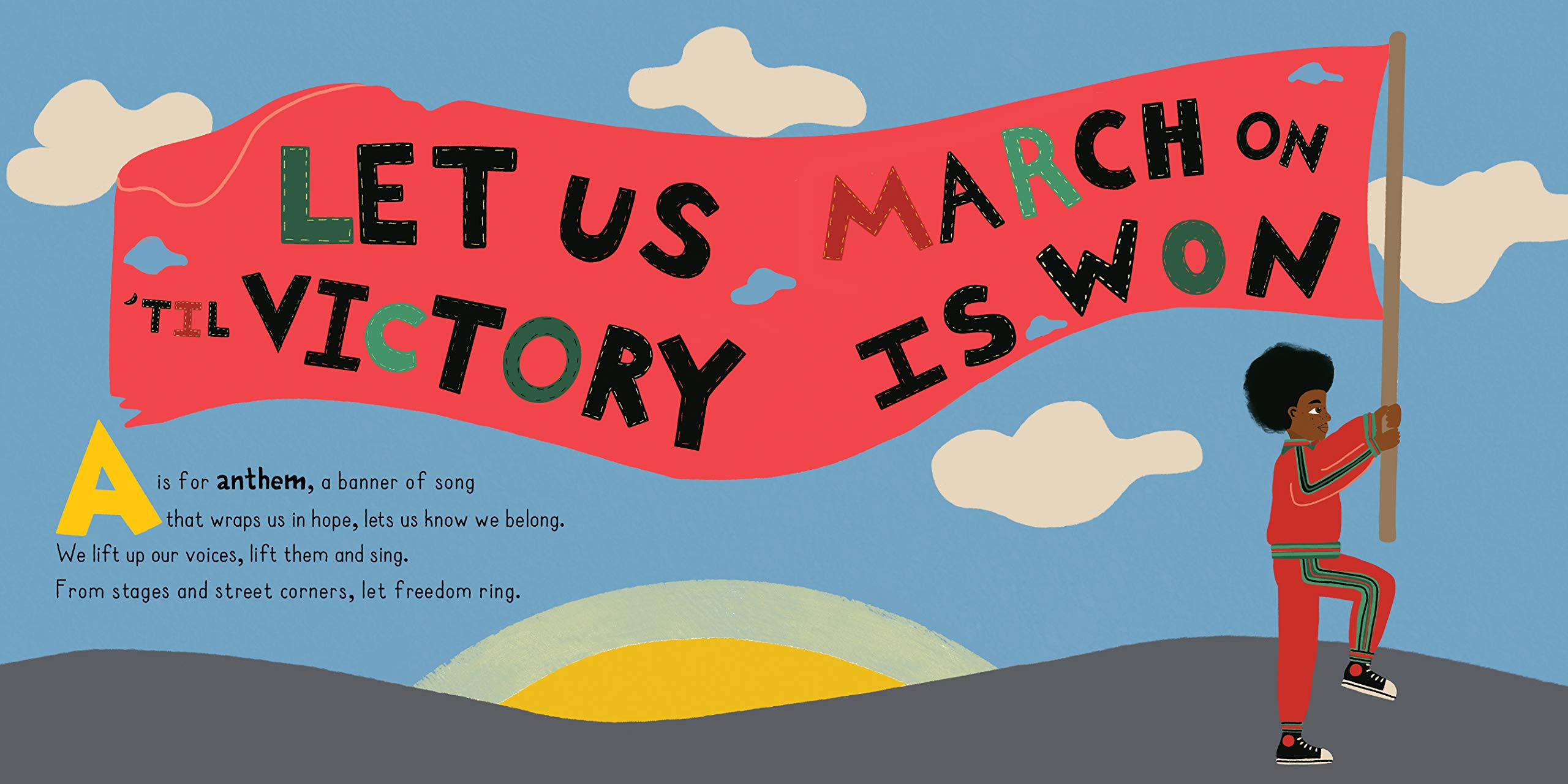
Joan Holub’s latest book in her THIS LITTLE series introduces preschoolers to eleven influential artists, scientists, sports figures, soldiers, activists, and politicians who are or were members of the LGBTQIA+ community. From the 1400s to today, these role models have been admired for their talents, opinions, and groundbreaking success in their chosen fields. Their courage has also contributed to a more open and appreciative society for all.

celebrate-picture-books-picture-book-review-this-little-rainbow-josephine-baker

Image copyright Daniel Roode, 2021, text copyright Joan Holub, 2021. Courtesy of Little Simon, Simon & Schuster.

Each featured profile is presented on a two-page spread. On the left side a rhyming couplet describes what the person is most known for, while on the right children learn a couple of facts about them in two or three short sentences. The book leads off with one of the most prominent painters, inventors, and scientists to have ever lived—Leonardo da Vinci. Readers learn: “This little rainbow / was a genius long ago. / He was a great artist / and an engineering pro.” They then discover that “Leonardo da Vinci painted the famous Mona Lisa and The Last Supper, and could paint with his left or right hand. He was also a scientist, inventor, and architect, who designed a flying machine!”

Moving on to the Jazz Age, little ones learn about Josephine Baker, “who sang and danced onstage,” refused to perform where African Americans weren’t allowed in, and spied on Nazis during World War II. Kids also meet computer scientist and code breaker Alan Turing; Harvey Milk, the first out politician “elected to public office in California. He helped pass an early rule for fairness in housing and jobs for LGBTQIA+ people.”

celebrate-picture-books-picture-book-review-this-little-rainbow-alan-turner

Image copyright Daniel Roode, 2021, text copyright Joan Holub, 2021. Courtesy of Little Simon, Simon & Schuster.

Children will also be introduced to Sally Ride: “This little rainbow / launched a satellite / as the first female astronaut / on a US space flight.” Kids then learn that “Sally Ride helped design a big robotic art and then used it to launch communications satellites from the Space Shuttle Challenger in 1983.” Marsha P. Johnson, a transgender woman who, with Sylvia Rivera, “created a group called STAR to help homeless trans people,”

Singer Freddie Mercury, Gilbert Baker and Daniel Quasar, who designed today’s rainbow flags; tennis pro Martina Navratilova; and Shane Ortega, who “was the first person to openly transition during active duty” and “now speaks out for fair rules for all people,” are also represented in these pages.

Following these profiles, a two-page spread provides portraits and information on fifteen other LGBTQIA+ leaders from around the world as well as a glossary of twelve “rainbow terms.”

celebrate-picture-books-picture-book-review-this-little-rainbow-harvey-milk

Image copyright Daniel Roode, 2021, text copyright Joan Holub, 2021. Courtesy of Little Simon, Simon & Schuster.

Joan Holub’s inclusive introduction to people in the LGBTQIA+ community gives parents, educators, and other caregivers a meaningful way to share the work and lives of people who reflect perhaps their own family or a member of their family, their neighbors, friends, teachers, celebrities, and others. In positive, uplifting language, Holub provides a short history on the struggles, recognition, progress, and contributions of those who identified or identify as part of the LGBTQIA+ community while instilling pride and hope in the future for today’s children.

Daniel Roode’s well-recognized illustrations for the THIS LITTLE series offer vibrant imagery of each person backed by a bold, easily identified setting that informs young readers about their work and personality. Each of the eleven featured portraits as well as the fifteen that follow give adults and children a great place to start learning more about these inspiring people.

This Little Rainbow, a Love-Is-Love Primer is a terrific addition to the THIS LITTLE series for all home, classroom, school, and public library collections.

Ages 3 – 5

Little Simon, 2021 | ISBN 978-1534475601

Discover more about Joan Holub and her books on her website.

You can connect with Daniel Roode on Instagram.

One Question with Joan Holub

celebrate-picture-books-picture-book-review-joan-holub-headshot

Joan Holub has authored and/or illustrated over 140 children’s books, including the Goddess Girls series, the Heroes in Training series, the New York Times bestselling picture book Mighty Dads (illustrated by James Dean), and Little Red Writing (illustrated by Melissa Sweet). She lives in North Carolina.

You can connect with Joan Holub on her Website and Twitter

Hi Joan! It’s wonderful to have this little chat with you! Your list of published books is truly incredible and inspirational for its length and breadth of topics. I can only imagine that you’ve always been an avid reader. Did you have a favorite place to read as a child? Do you still seek out a favorite comfortable place to read now?

When I was a girl, there was a willow tree in our backyard, and I loved how cozy and hidden I felt sitting beneath it, with its green canopy draped around me. It was my favorite hideout and place to read. My family had read a book called A Good Place to Hide, which featured a child hiding under a willow tree, and that fostered in me the idea of me doing the same. My favorite reading spot now is our back deck, which looks out onto trees, with a glass of iced tea beside me.

celebrate-picture-books-picture-book-review-this-little-rainbow-cover

You can find This Little Rainbow: A Love-is-Love Primer at these booksellers

Amazon | Barnes & Noble | Books-a-Million

To support your local independent bookstore, order from 

Bookshop | IndieBound

Picture Book Review


October 8 – World Octopus Day

celebrate-picture-books-picture-book-review-all-I-want-is-an-octopus-cover

About the Holiday

With fossils dating back 300 million years, the octopus is one of the world’s oldest and most fascinating creatures. It’s also one of the smartest—as it has more than 500 million neurons firing information through its brain and arms, allowing them to learn from experience and solve problems. Octopuses are adaptable and are found in all the world’s oceans. While most prefer warmer waters and living along the ocean floor, some species swim in shallower, cooler waters. Octopuses have an excellent sense of touch and sense of vision—some even see in color. They fool predators by hiding or camouflaging themselves and can escape capture by shooting an inky substance at their pursuers. To celebrate today’s holiday, plan a visit to an aquarium or other sea life center!

All I Want is an Octopus

Written by Tracy Gunaratnam | Illustrated by Valentina Fontana


Throughout the city, a little boy sees pets of all kinds going here and there with their humans. He knows kids with dogs and cats, hamsters and turtles, mice and even a horse. “But all he wants is an… octopus!” His dad tells him an octopus “‘belongs in the sea.’” His son’s response? “‘But DAAAAAAAAAAAAAAAAAAAAAD! My octopus would wash your car. / He’d paint the house and play guitar.’” His dad thinks about it and is pretty impressed. As he sprinkles food into their fish tank, he says he’ll leave it up to Mom.

celebrate-picture-books-picture-book-review-all-I-want-is-an-octopus-bus

Image copyright Tracy Gunaratnam, 2021, text copyright Valentina Fontana, 2021. Courtesy of Maverick Arts Publishing.

But when the boy asks his mom, she tells him the idea is silly and to get ready for bed. Her son’s response? “‘But MOOOOOOOOOOOOOOOOOOOOOOOOOOOOOOOOOOOOM!’” Then he tells her how helpful the octopus would be, and she’s just as impressed as Dad had been. She tells him to go ask his Gran. Gran doesn’t need any convincing at all. In fact, she thinks an octopus will “‘roller skate and jump in puddles… /…Play mini golf and give wonderful cuddles.’”

The boy is star struck—even he didn’t think of these. But while his Gran thinks having an octopus would be a great bet, she’s already invited another pet. Who could it be? Ding Dong! Open the door and you will see!

celebrate-picture-books-picture-book-review-all-I-want-is-an-octopus-swimming

Image copyright Tracy Gunaratnam, 2021, text copyright Valentina Fontana, 2021. Courtesy of Maverick Arts Publishing.

Silly in the best way and with dialogue kids are going to love to chime in on, Tracy Gunaratnam’s funny rhyming story is perfect for lively family, classroom, or library story times. All I Want is an Octopus would make a captivating lead-in and prompt for classroom writer’s workshops on pets and family negotiations. At home, kids would have fun imagining what other jobs around the house an octopus could do as well as talking about an unusual pet they’d like to have.

Valentina Fontana’s adorable guitar-playing, hair-styling, mini golf-playing pink octopus will have kids wanting one of their own. Her fresh, vibrant illustrations, rendered in a lovely color palette, also hold clues that kids will have fun deciphering as to why each of the various other pets are a perfect match for its owner. The book Gran is reading also hints at the surprise ending, and the final spread will bring a smile to all kids with big dreams.

A light-hearted read aloud that kids and adults will enjoy sharing at story time or bedtime, All I Want is an Octopus makes a terrific gift and sure favorite on home, school, and library bookshelves.

Ages 4 – 9

Maverick Arts, 2021 | ISBN 978-1848867796

You can connect with Valentina Fontana on Instagram.

World Octopus Day Activity

celebrate-picture-books-picture-book-review-sock-octopus-craft

Cute Sock Octopus Craft


Who wouldn’t like to have a cute octopus for a pet? With this fast and easy craft you can make your own little cephalopod to hang out on your bed, your shelves, or on your desk!

Supplies

  • Child’s medium or large size sock, in any color
  • Polyfill, available at craft and sewing stores
  • Ribbon
  • 2 Small buttons
  • Scissors
  • Hot glue or strong glue

Directions

  1. Fill the toe of the sock with a handful of polyfiber fill
  2. Tie the ribbon tightly around the sock underneath the fiber fill to separate the head from the legs
  3. Tie the ribbon into a bow tie
  4. With the scissor cut up both sides of the sock almost to the ribbon
  5. Cut these two sections in half almost to the ribbon
  6. Cut the four sections in half almost to the ribbon
  7. Glue the eyes to the lower part of the head
  8. To display, set the octopus down and arrange the legs in a circle around the head

celebrate-picture-books-picture-book-review-all-I-want-is-an-octopus-cover

You can find All I Want is an Octopus at these booksellers

Amazon | Books-a-Million

To support your local independent bookstore, order from

Bookshop | IndieBound

Picture Book Review
October 7 – It’s National Book Month

celebrate-picture-books-picture-book-review-who-is-a-scientist-cover

About the Holiday

This month-long holiday was established to get families excited about reading. As the weather turns cooler and activities turn indoors, reading together is a wonderful way to spend time laughing, learning, and making memories. Small children love being read to—and so do older kids! Sharing board books, picture books, and chapter books with younger readers opens up new worlds of imagination, feelings, and discovery. Taking the journey of a novel, graphic novel, or biography together with tweens and teens can provide inspiring, emotional, funny, and bonding moments that last a lifetime.

Thanks to Millbrook Press and Barbara Fisch at Blue Slip Media for sharing a copy of Who Is a Scientist? for review consideration. All opinions on the book are my own.

Who Is a Scientist?

By Laura Gehl


Do you love science and think that maybe you’d like to be a scientist when you grow up? But do you also love to dance or surf to paint or bake? Maybe you like to play soccer or ride a motorcycle or you’re considering getting a tattoo like your mom or dad and you think that none of those are things a scientist would do. Maybe you think of scientists as a little bit stuffy with their white coats and endless graphs. Well, think again!

In Who Is a Scientist? Laura Gehl introduces you to fourteen scientists who smash those ideas. And what’s more they’re involved in some pretty fascinating and life-changing sciences and projects that you may never have heard about before but that may inspire you. For example, you’ll meet Isha M. Renata López who works as a meteorologist but “also loves to dance, play volleyball, and eat chocolate.” What’s great about her job? She alerts people to changes in the weather, and when a big storm, blizzard, hurricane, or tornado is coming, she works with emergency crews, the media, and the local government to make sure everyone knows so they can stay safe.

celebrate-picture-books-picture-book-review-who-is-a-scientist-meteorologist

“Jagmeet Kanwal studies bats and zebrafish to help figure out how the human brain makes decisions.” He’s also working to discover “how our brains allow us to hear different types of sounds.” He’s hoping to be able to “help people with depression, Parkinson’s disease, and memory loss.” What else does Jagmeet like to do? He’s also a painter and nature photographer.

If you like math, you may want to become a mathematician like Mark Lewis, who studies operations research during work hours and enjoys playing basketball in his off time. This kind of science “uses math to help business make good decisions” that affect consumer, such as how long people wait in line, how much items cost, and how transportation can move faster.

celebrate-picture-books-picture-book-review-who-is-a-scientist-environmental-scientist

Perhaps you’re interested in health and medical research like Tishina Okegbe whose work makes sure that mothers, babies, and children in Africa and Asia “have access to high-quality health-care services. In her free time, Tishina likes “visiting new places, belly dancing, and eating pizza and ice cream.”

Whether you’re interested in food systems and farming, how the brain works, the environment, space, dinosaurs, or computers, the scientists will inspire you to enjoy all of your passions. In fact, the extracurricular activities you enjoy the most may just lead you to a career you’ll love. The definition of who and what a scientist is broad and exciting as you’ll see when you meet these men and women who are changing the world while being themselves.

Back matter includes a QR code that readers can scan to view a video in which each profiled scientist introduces themselves. There’s also a flow chart that can lead kids to the type of scientist they might want to be or at least research further based on their interests.

celebrate-picture-books-picture-book-review-who-is-a-scientist-environmental-engineer

Laura Gehl’s engaging and inspiring look at a variety of scientists and their disciplines will get all kids excited about the wide range of work going on around them and the people who make it happen. Her profiles of these thinkers, activists, and active members of their communities show kids that they don’t need to be defined only by their career and that scientists—who are needed now more than ever—are a diverse group and welcoming to all. Each profile is accompanied by photographs of the scientist in their lab or other work environment as well as action shots of them enjoying their off time in their favorite pursuits.

A smart, inviting, and educational introduction to the people who are helping to make the world a better place through science and other STEM-related fields, Who Is a Scientist? is sure to inform readers on the wide-range of specialized work that falls under the umbrella of science and spark their interest in learning where they may fit in. The book is highly recommended for home bookshelves and is a must for classroom, school, and public libraries.

Ages 4 – 9

Millbrook Press, 2021 | ISBN 978-1728441085

Meet the scientists in this Who Is a Scientist? Book Trailer!

One Question with Laura Gehl

celebrate-picture-books-picture-book-review-laura-gehl-headshot

Laura Gehl is the author of more than a dozen books for children, including One Big Pair of Underwear, Except When They Don’t, the Peep and Egg series, and the Baby Scientist and Brilliant Baby board books. In addition to being an author, Dr. Gehl has a PhD in neuroscience and is the mother of four children. She lives with her family in Maryland. 

You can connect with Laura on her Website | Facebook | Instagram | Twitter

Hi Laura! I loved reading your book and getting to know some of the scientists working today. I also enjoyed seeing how some of their other interests are reflected in their work while others are great ways to relax and play—definitely something kids can relate to!

I was wondering if or how a previous job (or jobs) has influenced your writing and the kinds of books you write. 

I used to work in a neurobiology lab, and I also used to teach science. Both of those jobs made me want to write books about science and scientists! When I taught science, I realized that very few kids had met a real scientist or had read about any scientists more recent than Albert Einstein or Marie Curie. Flash forward twenty years and my new photo-illustrated picture book Who Is a Scientist? features fourteen real scientists working today in different fields from astronomy to entomology to paleontology. While the book talks about the fascinating work these scientists are doing, it also talks about the other things the scientists love…like dancing, soccer, junk food, watching movies, and playing with their pets. I hope this book helps kids realize that scientists are just like them—curious people with lots of different passions who like to ask and answer interesting questions.

Thanks, Laura! Through your books you’ve found a perfect way to share your love and knowledge of science with kids! I wish you all the best with Who Is a Scientist?!

You can find a Teacher’s Guide to Who Is a Scientist? and her other books on Laura Gehl’s website here.

National Book Month Activity

celebrate-picture-books-picture-book-review-silly-balloons

Static Electricity Experiment!


We all know that cooler weather means shock season will soon be here. But you don’t have to wait until the fuzzy socks and fleecy blankets come out to have some fun exploring the science of static electricity. Using a blown-up balloon can be a dramatic way to show kids what’s going on with the electrons that are at the center of this phenomenon.

Babies and young children should be supervised by an adult while playing with balloons.

How does it work? Static electricity is generated when there is an excess of electrons on one object giving it an electric charge. These electrons are attracted to an object with fewer electrons and will jump to it when placed close by.

How do you produce static electricity? Just rub the blown-up balloon on your shirt, on your hair, on a blanket or other surface. Then try these experiments!

CRAZY HAIR

Generate static electricity on a blown-up balloon then hold it near your hair and watch it go a little crazy!

HANG A BALLOON

Generate static electricity on a blown-up balloon and gently place it on the wall and watch it hang all by itself.

BEND WATER

This bit of balloon magic will amaze you! Generate static electricity on a blown-up balloon. Turn on a faucet to a thin stream of water. Hold the balloon near the stream of water and watch it bend toward the balloon. 

celebrate-picture-books-picture-book-review-who-is-a-scientist-cover

You can find Who Is a Scientist? at these booksellers. Due to shipping delays, preorders are now being taken.

Amazon | Books-a-Million | IndieBound

Picture Book Review
 

October 6 – Get Ready for Halloween

celebrate-picture-books-picture-book-review-if-you-ever-meet-a-skeleton-cover

About the Holiday

October may have just begun, but kids are already thinking of the thrills and chills of Halloween. Witches and jack-o-lanterns, ghosts and skeletons take center stage all month long with fun Halloween-themed books like this one. So get shivering and giggling with the kids and skeleton in today’s book! 

Thanks go to Page Street Kids for sharing a copy of If You Ever Meet a Skeleton for review consideration. All opinions on the book are my own. 

Review by Dorothy Levine
If You Ever Meet a Skeleton

Written by Rebecca Evans | Illustrated by Katrin Dreiling


Have you ever met a skeleton? No? Phew. Well, if you ever do, there’s no need to be spooked! If You Ever Meet a Skeleton teaches that creepy crawly bones that emerge on Halloween are not as scary as you may think.

On Halloween night, a skeleton claws its way out of the earth, and the trick-or-treating children are frightened. They run away as the bones follow, stumbling over hills and fallen candy. When the skeleton catches up, the kids realize that it may not be as fearsome as they first thought. When they all try to play, the kids find out skeletons have no guts, no muscles, no brains: Because they have no muscle, they can’t win races, and with no brain to count with they play hide-and-seek. “Skeletons have no guts, so they can’t be brave like you. They’re scared of nighttime shadows and owls that say ‘whoooo’”— just like these kids, or maybe me, or you!

celebrate-picture-books-picture-book-review-if-you-ever-meet-a-skeleton-graveyard

Image copy Katrin Dreiling, 2021, text copyright Rebecca Evans, 2021. Courtesy of Page Street Kids.

Skeletons have no nose to smell the stinky boots of kids. But most of all, “Skeletons have no friends,” and “they’d like to find a few: some kids with stinky feet and little brothers too.” When a child loses his shoe the skeleton returns it to him, and the group of friends invite the skeleton up to their treehouse fort.

celebrate-picture-books-picture-book-review-if-you-ever-meet-a-skeleton-running

Image copy Katrin Dreiling, 2021, text copyright Rebecca Evans, 2021. Courtesy of Page Street Kids.

They find that “Skeletons like to smile at stories in the dark…” and “they’ll trick-or-treat with you then share their chocolate bar just like buddies do.” And when one friend’s mother brings drinks out to the fort, they love to hear her “SHRIEK!” They dance and play and draw a trio of other skeletons hoping to join their joyous, Halloween romp.

celebrate-picture-books-picture-book-review-if-you-ever-meet-a-skeleton-boots

Image copy Katrin Dreiling, 2021, text copyright Rebecca Evans, 2021. Courtesy of Page Street Kids.

While skeletons seem spooky to the kids at first, Rebecca Evan’s lyrical rhyming prose about skeletons’ parts helps readers to realize they’re not so scary after all. The story contains an underlying message encouraging readers to not be scared of making friends that may seem different at first glance. The story of friendship is simple, sweet and a delight to read. It’s a perfect bedtime story for anyone who may be frightened of (or excited by) spooky Halloween creatures. Treat yourself by getting into the Halloween spirit with this quirky read!  

Katrin Dreiling is well known for her spooky, yet adorable drawings. She says, “the spooky is a fascinating genre to work with because you need to create a certain atmosphere in a spooky illustration. Also, it is very challenging to achieve a balance so that the finished work is neither too scary nor too bland.” Her multi-medium illustrations in If You Ever Meet a Skeleton accomplish this exactly. The skeletons and children mirror each other with the same cute and spooked expressions. With spreads that are fully black and white, adding to the late-night Halloween scene, pops of red, gold and green draw attention to the diverse cast of children and glorious candy details of the story.

A creative tale of friendship and festivities on Halloween night, If You Ever Meet a Skeleton combines spooky and sweet framed by the tradition of trick-or-treating. The story can also provide a fun way to introduce anatomy to young readers throughout the year.

Ages 4 – 8

Page Street Kids, 2021 | ISBN 978-1645672159

Discover more about Rebecca Evans, her books, and her art on her website.

To learn more about Katrin Dreiling, her books, and her art, visit her website.

Get Ready for Halloween Activity

A Little Artsy A Little Craftsy Q-tip Skeleton Image 2

Q-tip Skeleton from A Little Artsy A Little Crafty (littleartsylittlecraftsy.blogspot.com)


Create Your Own Q-tip Skeleton Friend


You can make a skeleton just in time for Halloween with this easy craft by A Little Artsy A Little Craftsy. Will your skeleton be dancing, walking, scaring—or maybe trick-or-treating? You can find the directions for this craft as well as other fun crafts and delicious recipes on A Little Artsy A Little Craftsy.

You Will Need

  • Q-tips
  • Glue
  • 1 piece of black or other dark colored construction paper
  • 1 piece of white paper or white foam sheet
A Little Artsy A Little Craftsy Q-tip Skeleton Image 1

Q-tip Skeleton from A Little Artsy A Little Crafty (littleartsylittlecraftsy.blogspot.com)


What to Do

To Make the Bones

  1. Draw and cut out a skull from the white paper or foam sheet
  2. Cut eyes, a nose, and a mouth in the skull
  3. Cut 2 Q-tips in half for the legs
  4. Cut 2 Q-tips shorter than the leg parts for the arms
  5. Use 4 Q-tips to create the ribs (the top two sets will be slightly shorter than the bottom two)
  6. Cut 1 short piece from the end of one Q-tip to make the neck
  7. Cut 2 short pieces from the ends of one Q-tip to make the feet
  8. Use the stick part of one Q-tip to make the spine
  9. Use the stick part of one Q-tip to cut small pieces for the fingers

To Assemble the Skeleton

  1. Decide how you will pose your skeleton
  2. To make elbow, knee, and ankle joints, glue the “bones” to the construction paper tip-to-tip, end-to-end, or tip-to-end by following the example in the picture.
  3. Follow the picture to place the ribs, neck, and fingers

celebrate-picture-books-picture-book-review-if-you-ever-meet-a-skeleton-cover

You can find If You Ever Meet a Skeleton at these booksellers

Amazon | Barnes & Noble | Books-a-Million

To support your local independent bookstore, order from

Bookshop | IndieBound

Picture Book Review