August 23 – It’s Back to School Month

celebrate-picture-books-picture-book-review-the-day-I-became-a-bird-cover

About the Holiday

A lot can happen over the summer.  Going on vacation can give new perspectives; a growth spurt means new clothes and shoes; and a little more maturity can cause unfamiliar feelings. It’s all enough to make a student’s heart race when crossing the classroom threshold on that first day. Sometimes, though, when looking around at all of the known and new faces, that little flutter of the heart can be…love.

The Day I Became a Bird

Written by Ingrid Chabbert | Illustrated by Raúl Nieto Guridi


On the first day of school a little boy sees Sylvia and falls instantly in love. At home he draws picture after picture of her. Although the boy only has eyes for Sylvia, she doesn’t see him. Instead, the boy says, “Sylvia is a bird lover. She can’t bear to see them living in cages. She quietly observes them in the wild and gently cares for them when they are injured.”

celebrate-picture-books-picture-book-review-the-day-I-became-a-bird-boy-costume-being-built

Image copyright Raúl Nieto Guridi, 2016, text copyright Ingrid Chabbert, 2016. Courtesy of Kids Can Press

Everything she does and wears is somehow associated with birds. Even “her voice sounds like birdsong.” The boy has lost all interest in his toys, the sports he plays, and all of his old pursuits. He thinks differently about birds now, too. One day he decides “to dress as a bird.” He constructs a costume with glistening feathers “like the ones you see in the forest in summer.” When he puts it on he feels handsome. In the costume he dreams of flying with Sylvia to the top of the Rocky Mountains or a pyramid.

In school he doesn’t care if the other kids stare and giggle. And even though it’s hard to walk, play soccer, and climb trees, he doesn’t want to remove his costume. He is a bird. One afternoon, the boy says, “I come face to face with Sylvia. And finally our eyes meet.” Sylvia approaches and takes off the boy’s costume. “My heart is beating a hundred miles an hour,” he relates. “In the sky, I see a flock of birds take flight.” Sylvia gives him a long hug.

Standing completely still, the boy doesn’t know how to react. He knows he’s not a bird anymore, but still, he feels as if he’s flying.

celebrate-picture-books-picture-book-review-the-day-I-became-a-bird-boy-in-class

Image copyright Raúl Nieto Guridi, 2016, text copyright Ingrid Chabbert, 2016. Courtesy of Kids Can Press

Ingrid Chabbert’s enchanting revelation of first love encompasses in its spare text all the obsessive but ultimately freeing power of this universal emotion. While in the midst of his “normal” life, the boy’s world is suddenly transformed when he spies Sylvia. Leaving his toys behind, he chooses Sylvia’s bird’s eye view. Likewise, when Sylvia sees the narrator, she allows her birds to take wing and considers boys—or at least one boy—in a whole new light. Chabbert’s use of first-person narration reinforces the intimate nature of love and the idea that when love is right, being “captured” is a most liberating experience.

celebrate-picture-books-picture-book-review-the-day-I-became-a-bird-boy-in-costume

Image copyright Raúl Nieto Guridi, 2016, courtesy of Kids Can Press

The themes of Chabbert’s story are so movingly rendered by Raúl Nieto Guridi’s simple, monochromatic line drawings. Although the boy states that “one morning” he decided to dress as a bird, from the first day when the boy falls in love with Sylvia—gazing at her wistfully while her eyes are instead trained at the sky or cast down at her chalk drawings—his costume begins to take shape. As it comes together, its wire skeleton resembles a bird cage, suggesting so many ways in which we may feel trapped by our emotions, our things, even changes in life.

When the boy dons the costume and begins to navigate the world in an unfamiliar way, readers will understand that he is no longer the boy he was, but neither is he a real bird. It is this unique creature that Sylvia responds to when, through holes in the costume where feathers are missing, she sees not the bird, but the boy. So it is that into everyone’s life there come people—or perhaps one particular person—with whom all costumes and cages are discarded, and we soar.

The Day I Became a Bird is a quiet beauty that gets to the core of what it means to give your heart to someone else. It would make a wonderful and touching addition to home libraries.

Ages 4 – 7

Kids Can Press, 2016 | ISBN 978-1771386210

Watch this The Day I Became a Bird book trailer!

Back to School Month Activity

celebrate-picture-books-picture-book-review-studying-together


Let’s Study Together! Coloring Page


Going back to school means getting back with friends! Grab your colored pencils, markers, or crayons and enjoy this Let’s Study Together! Coloring Page!

Picture Book Review

August 22 – Eat a Peach Day

celebrate-picture-books-picture-book-review-each-peach-pear-plum-cover

About the Holiday

Is there anything as delicious as a perfectly ripe peach? Native to China and classified with the almond, the peach is peachy in pies, tarts, fruit salads, and just on its own. To celebrate today pick some peaches from a local farm, farmer’s market, or grocery store and enjoy!

Each Peach Pear Plum

By Janet and Allan Ahlberg


This perennial children’s favorite “I spy” nursery rhyme book is a perfect read any time, but especially during the summer when it can be tucked away in a travel bag or picnic basket and enjoyed on the go. After the first introduction of “Each peach pear plum / I spy Tom Thumb,” in which readers are invited to find Tom who is happily reading high in a peach tree nearly hidden by leaves and fruit, every page offers another double challenge.

Building on the discovery in the preceding page, kids are given a hint as to the current whereabouts of the previous character and are also urged to find another nursery rhyme or literary favorite: “Tom Thumb in the cupboard / I spy Mother Hubbard” followed by “Mother Hubbard down the cellar / I spy Cinderella.”  This structure creates anticipation in even the youngest readers as they begin to recognize the pattern and wonder who is coming next.

celebrate-picture-books-picture-book-review-each-peach-pear-plum-interior-art-mother-hubbard

Copyright Janet and Allan Ahlberg, 1999, courtesy of Viking Books for Young Readers

Besides Tom Thumb, Old Mother Hubbard, and Cinderella, the Three Bears, Baby Bunting, Little Bo-Peep, Jack and Jill, the Wicked Witch, Robin Hood, and a deliciously plump Plum Pie are hidden in the book. What makes Each Peach Pear Plum a classic is the Ahlberg’s artistic magic, which is on gorgeous display in every illustration. The vivid, fine-line drawings spare no details in bringing the short text fully to life.

Humor abounds, especially in the depiction of the “hidden” character or characters, whose only appearance is an arm dusting a shelf, faces at a window, feet sticking out of tall grass, a camouflaged archer, and more. And perhaps the clumsy baby bear could use a bit of assistance! Kids will love pointing out the birds and bunnies, dog, cat, and other animals that also follow from page to page.

celebrate-picture-books-picture-book-review-each-peach-pear-plum-interior-art-picnic

Copyright Janet and Allan Ahlberg, 1999, courtesy Viking Books for Young Readers

Each Peach Pear Plum is also a wonderful introduction to the literature alluded to and will entice kids to hear all the stories contained in this forever favorite. Each Peach Pear Plum makes a fantastic gift for new babies or young readers and belongs on every child’s bookshelf.

Ages Birth – 5 

Viking Books for Young Readers, Penguin, 1999 | ISBN 978-0670882786 (Board Book Edition)

Eat a Peach Day Activity

celebrate-picture-books-picture-book-review-picnic-find-the-differences

Peachy Picnic Find the Differences Puzzle


These two friends are enjoying a picnic and took two pictures. Can you spot the 12 differences between the two pictures in this printable Peachy Picnic Find the Differences Puzzle?

August 21 – Poet’s Day

celebrate-picture-books-picture-book-review-a-river-of-words-cover

About the Holiday

Today we celebrate poets—both those who are professionally published and those who compose poetry in their secret hearts. Poets bring clarity and new perspectives to life—like a little pinprick of light in a dark room. Whether you like long, epic poems, short, evocative verse, humorous poetry, or poetry set to music, take the opportunity today to enjoy some poetry—or write a bit of your own.

A River of Words: The Story of William Carlos Williams

Written by Jen Bryant | Illustrated by Melissa Sweet


Willie Williams was just like the other boys in his neighborhood—well, almost. When the other boys went home after a day of playing, Willie took off for the woods and fields behind his house. “As he walked through the high grasses and along the soft dirt paths, Willie watched everything.” He liked to sit next to the Passaic River and listen to the rhythm of the water as it “went slipping and sliding over the smooth rocks, then poured in a torrent over the falls, then quieted again below.”

celebrate-picture-books-picture-book-review-a-river-of-words-high-school

Image copyright Melissa Sweet, 2008, courtesy of Eerdmans Books for Young Readers.

But as Willie grew older, he didn’t have time for these leisurely pursuits. In high school, he was on the track team, attended lots of classes, and had even more homework. His was a rushed and hurried life. Except for in English class. There, when his teacher read poetry, he was taken back to the flow of the river. Each line created pictures in Willie’s mind.

One night, Willie began writing his own poems. He copied the English poets he had learned about in school, using structured beats and rhyming endings. But soon these rules began to frustrate Willie; they didn’t give him the freedom to fully express his thoughts. He wanted to write about what he saw nearby, the things he was familiar with. Things, he said, like “plums, wheelbarrows, and weeds, / fire engines, children, and trees— / things I see when I walk down my street / or look out my window.”

celebrate-picture-books-picture-book-review-a-river-of-words-sparrows

Image copyright Melissa Sweet, 2008, courtesy of Eerdmans Books for Young Readers.

Willie began writing poems the way they came to him, with their own shape and sound. Writing this way made Willie feel free, and he filled notebook after notebook with poems. While Willie wished he could make a living as a poet, writing did not pay much, and he needed to be self-sufficient. Willie’s uncle had been a doctor, and Willie liked the idea of healing people. He wondered, though, if he could be a doctor and still write poetry.

When Willie graduated from high school, he went off to the university to study medicine. There he met the writers Ezra Pound and Hilda Doolittle and the artist Charles Demuth. Spending time with his new friends made his difficult studying easier. After college, Willie returned to his home town of Rutherford and opened his practice. He had so many patients that some people said he was “the busiest man in town.”

celebrate-picture-books-picture-book-review-a-river-of-words-attic-room

Image copyright Melissa Sweet, 2008, courtesy of Eerdmans Books for Young Readers.

No matter how busy he was, however, he found time to write. Sometimes he jotted lines and ideas on his prescription pads. Then, after his long days at work, Willie climbed to his attic room where he studied the notes he’d made and wrote poems late into the night.

A Timeline, Author’s Note, and Illustrators Note about William Carlos Williams follow the text. The endpapers present a selection of Williams’ poetry.

A River of Words is an inspirational book for children who have creative ideas of their own and would make an excellent addition to classroom and home libraries.

From the title through to the end of her lyrical biography, Jen Bryant captures the flow of William Carlos Williams’ creative and scientific life, which was as purposeful and free as the river that inspired him. Young readers and would-be writers will find much encouragement and insight in Bryant’s story, which reveals that talent and day-to-day life not only can co-exist but can enrich each other. By showing how Williams broke free from the structures of the poetry he copied, Bryant also motivates children to find their own voice.

celebrate-picture-books-picture-book-review-a-river-of-words-plums

Image copyright Melissa Sweet, 2008, courtesy of Eerdmans Books for Young Readers.

Melissa Sweet lends her distinctive collage style of illustration to this story, bringing to life the lines of and natural world reflected in Williams’ poetry. The busy-ness and business of Williams’ days are depicted in vibrant images of winding streets, classrooms, offices, and the outside world where he composed his uniquely revealing poems.

Ages 6 and up

Eerdmans Books for Young Readers, 2008 | ISBN 978-0802853028

Learn more about Jen Bryant and her books on her website!

Discover more about Melissa Sweet, her books, and her art on her website!

Poet’s Day Activity

celebrate-picture-books-picture-book-review-grow-a-poem-craft

Grow Your Own Poem


A poem often grows in your imagination like a beautiful plant—starting from the seed of an idea, breaking through your consciousness, and growing and blooming into full form. With this craft you can create a unique poem that is also a piece of art!

Supplies

  • Printable Leaves Template
  • Printable Flower Template
  • Wooden dowel, 36-inch-long, ½-inch diameter, available in craft or hardware stores
  • Green ribbon, 48 inches long
  • Green craft paint
  • Green paper for printing leaves (white paper if children would like to color the leaves)
  • Colored paper for printing flowers (white paper if children would like to color the flowers)
  • Flower pot or box
  • Oasis, clay, or dirt
  • Hole punch
  • Glue
  • Markers or pens for writing words
  • Crayons or colored pencils if children are to color leaves and flowers

Directions

  1. Paint the dowel green, let dry
  2. Print the leaves and flower templates
  3. Cut out the leaves and flowers
  4. Punch a hole in the bottom of the leaves or flowers
  5. Write words, phrases, or full sentences of your poem on the leaf and flower templates
  6. String the leaves and flowers onto the green ribbon (if you want the poem to read from top to bottom string the words onto the ribbon in order from first to last)
  7. Attach the ribbon to the bottom of the pole with glue or tape
  8. Wrap the ribbon around the pole, leaving spaces between the ribbon
  9. Move the leaves and flowers so they stick out from the pole or look the way you want them to.
  10. Put oasis or clay in the flower pot or box
  11. Stick your poem pole in the pot
  12. Display your poem!

Picture Book Review

August 20 – World Mosquito Day

celebrate-picture-books-picture-book-review-why-mosquitoes-buzz-in-people's-ears-cover

About the Holiday

World Mosquito Day dates back to 1897 when Sir Ronald Ross discovered the connection between these biting insects and malaria. The purpose for the holiday is to raise awareness about the causes of malaria and prevention methods. It is also marked by fundraisers to provide more resources for both research and preventative measures for people and communities that need them.

Why Mosquitoes Buzz in People’s Ears: A West African Tale

Retold by Verna Aardema | Illustrated by Leo and Diane Dillon


One day a mosquito has a secret for Iguana. The iguana bit at this enticing invitation, but when Mosquito told him that he had seen a farmer harvesting mosquito-sized yams, Iguana said, “‘What’s a mosquito compared to a yam?’” Iguana was so angry at this tall tale that he put sticks in his ears and went on his way. A little later, Iguana happened to pass Python, who greeted him with a cheery “Good Morning.” Because of the sticks in his ears, however, Iguana didn’t hear it and just continued walking.

celebrate-picture-books-picture-book-review-why-mosquitoes-buzz-in-people's-ears-mosquito-talks-to-iguana

Image copyright Leo and Diane Dillon, 1975. Courtesy of Dial Books for Young Readers.

This snub caused Python to think something nefarious was up. He looked for the first place to hide—which was a rabbit hole. Seeing the large python invading her space, the rabbit high tailed it out the back way and hurried across the field. Crow spied “the rabbit running for her life. He flew into the forest crying kaa, kaa, kaa! It was his duty to spread the alarm in case of danger.” Monkey began screeching and leaping through the tree tops, also on a mission to alert others.

celebrate-picture-books-picture-book-review-why-mosquitoes-buzz-in-people's-ears-monkey

Image copyright Leo and Diane Dillon, 1975, text copyright Verna Aardema, 1975. Courtesy of Dial Books for Young Readers.

In his rush, Monkey happened to step on a dead limb, which fell onto a baby owlet in a nest below, killing it. When Mother Owl returned from her hunting and found her little owlet, she was so sad that she could not hoot to wake up the sun. “The night grew longer and longer.” The animals thought the sun might never rise again. Finally, King Lion called a meeting. Owl explained that Monkey had killed one of her babies and that she could not “bear to wake the sun.”

celebrate-picture-books-picture-book-review-why-mosquitoes-buzz-in-people's-ears-sun-comes-up

Image copyright Leo and Diane Dillon, 1975, text copyright Verna Aardema, 1975. Courtesy of Dial Books for Young Readers.

The lion called for the monkey to explain himself. He said that it was the crow’s fault. Because of the crow’s warning, he was also trying to help. He told about the branch and how it fell on the baby owl. King Lion next summoned the crow. He said that it was the rabbit’s fault. If he had not seen her running pell-mell through the field, none of this would have happened. “The king nodded his head and said to the council: ‘So, it was the rabbit / who startled the crow, / who alarmed the monkey, / who killed the owlet— / and now Mother Owl won’t wake the sun / so that the day can come.’”

celebrate-picture-books-picture-book-review-why-mosquitoes-buzz-in-people's-ears-monkey-tells-council

Image copyright Leo and Diane Dillon, 1975, text copyright Verna Aardema, 1975. Courtesy of Dial Books for Young Readers.

The rabbit was called to speak next. The lion asked her why she had broken a rule of nature by running during daytime. The rabbit related how Python had invaded her home. Next, Python was asked to tell his side of the story. He slithered to the front of the group and cried, “‘it was the iguana’s fault! He wouldn’t speak to me. And I thought he was plotting some mischief against me.’”

Of course, Iguana hadn’t heard about the meeting, so “the antelope was sent to fetch him.” The other animals laughed when they saw the sticks in Iguana’s ears. King Lion pulled them out and demanded to know what he had planned for Python. Iguana didn’t know anything about it. “Python is my friend!” he said. “‘Then why wouldn’t you say good morning to me?’” Python asked. Iguana said he hadn’t heard him. He explained about the “big lie” mosquito had told him and the sticks in his ears.

celebrate-picture-books-picture-book-review-why-mosquitoes-buzz-in-people's-ears-iguana's-story

Image copyright Leo and Diane Dillon, 1975, text copyright Verna Aardema, 1975. Courtesy of Dial Books for Young Readers.

All the animals cried that Mosquito should be punished. This idea satisfied Mother Owl, and she hooted toward the sun, waking it. The mosquito was tricky, though. She had listened to the council meeting from nearby. When she heard she was to be punished, she hid and was never found. From that day on, however, Mosquito has had a guilty conscience. “To this day she goes about whining in people’s ears: ‘Zeee! Is everyone still angry at me?’” And when people hear this question, you know swat the answer is!

celebrate-picture-books-picture-book-review-why-mosquitoes-buzz-in-people's-ears-sun-comes-up

Image copyright Leo and Diane Dillon, 1975, text copyright Verna Aardema, 1975. Courtesy of Dial Books for Young Readers.

Verna Aardema’s classic retelling of this West African tale is suspenseful, engaging, and inviting. Aardema’s animals mek, krik, wasawusu, kaa, and pem with evocative onomatopoetic actions as they react to mosquitoe’s influence. Their pass-the-buck testimony leads into lyrical and fun-to-say repetitive phrases that build on each other and allow children to read along and become one of the forest group. The ending is both humorous and appropriate while also providing an opportunity to delve into deeper ideas of responsibility,quick judgments, and guilt.

Leo and Diane Dillon won the Caldecott Medal in 1976 for this stunning book that encompasses airbrushed watercolors, pastels rubbed on by hand, india ink, and die-cut shapes made of velum. This combination of styles creates pages of modern folkart that seem to be in motion as the animals slither, scurry, run, and bound away from some perceived but indistinct danger. The colors are magnificent, and as each animal takes its turn in front of the council, the black nighttime gives way to a bit of daylight. The animals may be in the dark, but enlightenment is on its way. The final pages in which the mosquito tickles the ear of an innocent bystander may make children cringe a little even as they look forward to what they know, from experience, is coming.

Ages 5 and up

Puffin Books/Dial Books for Young Readers, 2004 (Paperback edition) | ISBN 978-0140549058

World Mosquito Day Activity

celebrate-picture-books-picture-book-review-mosquito-coloring-page

Mosquito Facts Page


Mosquitoes are an unavoidable part of summer. You can learn a few interesting things about them from this printable Mosquito Facts Coloring Page.

Picture Book Review
August 19 – World Honey Bee Day

celebrate-picture-books-picture-book-review-bee-a-peek-through-picture-book-cover

About the Holiday

Established in 1990 by American beekeepers and once known as Honey Bee Awareness Day, this holiday has grown to world-wide stature. The importance of honey bees to sustainable farming cannot be overstated. In recent years the mysterious depletion of bee colonies has threatened not only the population of these beneficial insects but also the industries that rely on them. There are many ways to celebrate! If you have a yard or garden, plant bee-attracting plants such as lavender or marjoram, have a cup of tea—with honey, of course, or consider donating to the preservation of bees.

Bee: A Peek-Through Picture Book

By Britta Teckentrup


As the sun comes up over the meadow of poppies, a bee gets ready for her day. She flits through the forest, blending her quiet buzz with the songs of the birds in the trees. “As she travels here and there, / A gentle humming fills the air.” With no map to guide her, the bee knows exactly what route to take to visit each colorful flower. “Gathering nectar as she goes, / From every foxglove, every rose, / Dusty with pollen, the little bee / Buzzes, buzzes, busily.”

celebrate-picture-books-picture-book-review-bee-a-peek-through-picture-book-dawn

Copyright Britta Teckentrup, 2017, courtesy of Random House Books for Young Readers

The flowers attract the little bee with their sweet perfume, and with the sun as her compass, she finds them all. As she flies from flower to flower, tree to tree, she picks up and leaves bits of pollen that will create more blossoms.  But when she looks out over the field, the bee sees more flowers than she could ever hope to visit. The bee hurries back to her hive to tell the others about the smorgasbord waiting for them.

celebrate-picture-books-picture-book-review-bee-a-peek-through-picture-book-stream

Copyright Britta Teckentrup, 2017, courtesy of Random House Books for Young Readers

In droves they leave the hive, gliding over a pond, navigating an orchard, and continuing on. “The bees pass over a woodland stream. / Droplets sparkle and pebbles gleam. / Water trickles, bubbles, and weaves. / A weeping willow trails its leaves.” As the bees stop here and there along the way, they give life to new flowers and plants, expanding the wildflower meadow that is home to so many creatures.

celebrate-picture-books-picture-book-review-bee-a-peek-through-picture-book-nectar

Copyright Britta Teckentrup, 2017, courtesy of Random House Books for Young Readers

Readers can see that Britta Teckentrup’s beautiful tribute to bees is something special before they even open the book. On the cover, a sunset-hued flower stretches into the blue sky. Through its die-cut center, children can see the complexity of the flower and, in its very middle, a honey bee harvesting nectar. Teckentrup’s lyrical story of a bee’s day is complemented by gorgeous illustrations of the vibrant wildflowers that call to the little bee. Each page is rendered in a breathtaking palette that surrounds young readers with the mysteries of the natural world—and in the center is the bee, going about her job as squirrels scamper, deer silently look on, and butterflies flutter nearby.

Children will adore following the bee—and later, more and more bees—through open windows to the final two-page spread of a meadow in full bloom. All along the journey, the bee has made friends with woodland, pond, and orchard creatures, and young readers will delight in finding each of them hidden in this glorious field.

Ages 3 – 7

Doubleday Books for Young Readers, 2017 | ISBN 978-1524715267

Discover more about Britta Techentrup, her books, and artwork on her website!

World Honey Bee Day Activity

CPB---Busy-Buzzy-Bee-Maze

Busy Buzzy Bee Maze


Can you help the little bee find her way through this printable Busy Buzzy Bee Maze? Here’s the Solution!

Picture Book Review
August 18 – National Men’s Grooming Day

celebrate-picture-books-picture-book-review-beard-in-a-box-cover

About the Holiday

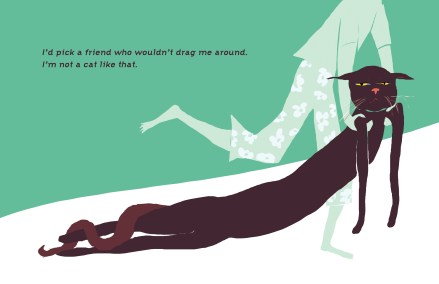
If men need a special day to be reminded of this, I’m glad it’s on the calendar!

Beard in a Box

By Bill Cotter


A little boy is so proud of his dad. He thinks his dad is “the coolest…the tallest, the fastest, the strongest. The awesomest!” The boy has done a little research and can boil all this greatness down into one quality: his dad’s beard. In fact, he’s found that the length of a beard has a direct connection to the awesomeness factor. Knowing this, the little boy wants to grow a beard of his own.

He tries everything. He scribbles one on with markers, attaches hairy patches from his pet cat to his cheeks with glue, and smudges on chocolate syrup (but that disappears with a few licks by the cat). Then he hears “an amazing offer” on TV. “SCAM-O! Makers of the Talking Toupee and the Baby Barber Kit” have created “Beard in a Box.”

celebrate-picture-books-picture-book-review-beard-in-a-box-shaving

Copyright Bill Cotter, 2016, courtesy of cotterillustration.squarespace.com.

This great kit promises that in just 5 easy steps anyone can “grow a beard (almost) instantly” With such a fabulous face of hair, in no time you’ll have the life of a lumberjack, a pirate, or a rock star. What’s in the box? Glad you asked! Each kit comes complete with “beard seeds, mirror, step-by-step instruction manual, style guide, comb, trimming scissors, and  mustache mousse.”

The boy rushes to the phone and orders one. Every day he sits by the mailbox waiting for his kit to come in. Finally, “6 – 8 weeks later” it arrives. The boy opens the package and starts his treatment. First up, is choosing a style. There are so many to pick from! Does he want the hippie look? The wizard? Maybe, the hipster, the tycoon, or the beatnik. The Octopus may be a little too tentacle, the King Tut a little too ancient, and the Double-Beard a little too…two.

celebrate-picture-books-picture-book-review-beard-in-a-box-water-seeds

Copyright Bill Cotter, 2016, courtesy of cotterillustration.squarespace.com.

But that can all be decided later. The boy slathers on the seeds, waters them, does the prescribed facial exercises, and repeats “steps 1 – 4 for 10 – 15 years.” Wait? What?! The boy is incensed. “AHHHHHH!!! Stupid Beard in a Box!…Who would have thought SCAM-O would be a dishonest company?” Dad comes on the scene just then and wonders what all the fuss is about.

His son begins to tell him, but…wait a second…something’s different. What is it? His dad has shaved his beard! Well, this is the last straw! How will the boy be awesome like his dad now? But Dad puts his arm around his son and tells him, “Awesomeness doesn’t have anything to do with beards. It’s about the kind of person you are.” And then he shows his boy what he means. They play basketball together, ride bikes together, and jam together. And as they head out to the fishing hole, what’s the cat up to? “Beep, boop, beep.” He’s ordering “SCAM-O’s new Fur-Ever Spray-On Fur.”

celebrate-picture-books-picture-book-review-beard-in-a-box-different-beards

Copyright Bill Cotter, 2016, courtesy of cotterillustration.squarespace.com.

Bill Cotter’s unique, multi-level story revels in visual humor that will get kids laughing and thinking about issues of growing up. Through SCAM-O’s Beard-in-a-Box come-on, Cotter addresses the consumerism that tells kids and adults that outer appearances are more important than what’s inside. With gentle understanding and active participation, the boy’s father demonstrates the kinds of qualities that makes a thoughtful and caring person. Cotter knows how much children look to their parents and other adults in developing their own personalities and behavior. By juxtaposing the two influences in the boy’s life, Cotter nudges young readers to recognize and reject the artificial.

Cotter’s little boy, enthusiastic to be like his awesome dad, will charm children. Young readers will also have fun choosing their favorites from among the suggested beards in SCAM-O’s kit. The boy’s pet cat makes a funny sidekick, and the final scene of the loving dad and son heading out on another adventure is heartwarming.

Ages 4 – 8

Alfred A. Knopf Books for Young Readers, 2016 | ISBN 978-0553508352

To discover more about Bill Cotter, his picture books, chapter books, and art, visit his website!

National Men’s Grooming Day Activity

celebrate-picture-books-picture-book-review-moustache-template

Marvelous Moustaches


Moustaches can look distinguished or madcap! Here are some printable Marvelous Moustaches that you can use to make yourself look whacky, wild, and wonderful! Just color them, glue or tape each to a thin wooden craft stick and hold them to your face for fun!

Picture Book Review
August 17 – It’s National Catfish Month

celebrate-picture-books-picture-book-review-a-catfish-tale

About the Holiday

National Catfish Month honors the hard work and innovations of America’s catfish farmers, many of whose families have been farmers for two or three generations. This delicious fish has many nutritional benefits. It is found mostly in Mississippi, Arkansas, Alabama, Texas, and Louisiana and is one of the most sustainable species of fish. Fried or blackened with spicy Cajun or other spices, catfish makes for a scrumptious meal! Try some this month!

A Catfish Tale: A Bayou Story of the Fisherman and His Wife

Written by Whitney Stewart | Illustrated by Gerald Guerlais


Down in the bayou, so the story goes, there lived two young sweethearts named Jacques and Jolie. Jacques liked to “pole his skiff through cypress knees to his favorite fishing hole,” and Jolie cooked up peppery hot gumbo and sang “so true even the cicadas hushed up to listen.” One day Jacques hooked a big one, and when he pulled up his line a catfish sprang from the water. But this was no ordinary catfish. The wily fellow explained that he was a magic catfish and not at all a catch for supper. Jacques was so frightened that he freed the “jabbering critter” and took off for home.

celebrate-picture-books-picture-book-review-a-catfish-tale-crocodile

Image copyright Gerald Guerlais, 2014, text copyright Whitney Stewart, 2014. Courtesy of Albert Whitman & Company

When Jolie learned Jacques had given up their chance for a wish that could replace their shack with “a proper house where she could sing for a crowd,” she was steamed. Jacques thought everything was all right the way things were, but he hightailed it back to the swamp and asked that catfish for a house. The catfish was obliging and with a grin said, “‘Ah, tooloulou—if that ain’t the easiest thing to do.’”

In her big, beautiful house, Jolie entertained loads of friends and decided to take her show to all the cities down the river. All she needed, she said, was a paddle wheel boat. The catfish smiled when he heard Jacques’ request and said, “‘Ah, tooloulou—if that ain’t the easiest thing to do.’” Every night Jolie sang from the bow of her grand paddle wheeler. Her fans called her the Queen of the Mississippi, and she ate it up.

celebrate-picture-books-picture-book-review-a-catfish-tale-catfish

Image copyright Gerald Guerlais, 2014, text copyright Whitney Stewart, 2014. Courtesy of Albert Whitman & Company

Jacques was miserable stuck in his stateroom with a pounding headache and no fishing pole, so he returned to the bayou to find his catfish friend. Meanwhile, Jolie took the New Orleans nightclubs by storm. With Mardi Gras approaching, Jolie had one more little favor to ask of the catfish, and with a “tooloulou” Jolie became Queen of Mardi Gras. She wore a diamond crown and a white satin gown. Even though things were a little rocky—the cheering crowds couldn’t hear her sing, and the Mardi Gras beads she tossed to her fans got tangled in her crown—she loved being queen.

Jolie wrote to Jacques and asked to become Queen of the Bayou. The catfish said his magic words and in no time Jolie was crowned Queen amid blaring musicians and applauding fans. Jolie smiled and began to sing. Suddenly, a fierce hurricane blew up, “snakes, alligators, and swamp creatures slithered up the riverbank. Ghosts, and goblins flew from the cemeteries and pirate skeletons escaped watery graves to dance in the streets.” And Jolie? She was swept up and unceremoniously dropped in a tree. From among the branches she called to a passing pelican, “‘Tell my husband to ask that catfish for one more little thing!’”

Jacques “paddled faster than an alligator could swish its tale” and asked that catfish for one last wish…, and what do you think he said? Well, he just slipped back beneath the water ‘cause he knew “Jolie didn’t need nothin’ more.”

celebrate-picture-books-picture-book-review-a-catfish-tale-riverboat

Image copyright Gerald Guerlais, 2014, text copyright Whitney Stewart, 2014. Courtesy of Albert Whitman & Company

A Catfish Tale includes a Bayou Glossary as well as a recipe for Seafood Gumbo by New Orleans native Hans Andersson.

Whitney Stewart’s tall tale of a magic catfish, the woman who learns enough is often enough, and the man who loves her will capture kids’ fancy. Jolie’s overreaching ambition and the catfish’s ready spell give children plenty of opportunity to join in with repeated phrases, and the well-paced suspense will keep kids engrossed in the action. The unique bayou setting and colloquial lilt sets A Catfish Tale apart as a rollicking story-time romp with a bit of Cajun caution and a whole lot of magic.

Gerald Guerlais brings the mystery and flavor of the deep south to A Catfish Tale with moss greens and shadowy blues that well depict the bayou’s natural environment. Twisty Cypress trees dip their roots in still, lily pad-filled waters, shimmering lights glow in the nighttime swamp, and spooky critters teem in the stormy sky. The magic catfish wears an ever-present, easy-going grin, and a crusty, good-ol’-boy alligator spins the tall tale just the way he’s heard it. Children will love the scenes of the paddle wheeler and the festive atmosphere of Mardi Gras.

Whitney Stewart’s  A Catfish Tale, a deft retelling of  Grimm’s A Fisherman and His Wife, is a fantastic introduction to the distinctive qualities of the southern Mississippi region, one which kids may want to explore further.

Ages 4 – 8

Albert Whitman & Company, 2014 | ISBN 978-0807510988

To learn more about Whitney Stewart and her work as well as to discover activities for children and teachers, visit her website!

View a gallery of illustrations by Gerald Guerlais on his website!
National Catfish Month Activity

celebrate-picture-books-picture-book-review-bayou-coloring-page

Catfish Coloring Page


The catfish is a most unusual creature! Add your own swamp or river setting to this Printable Catfish Coloring Page!