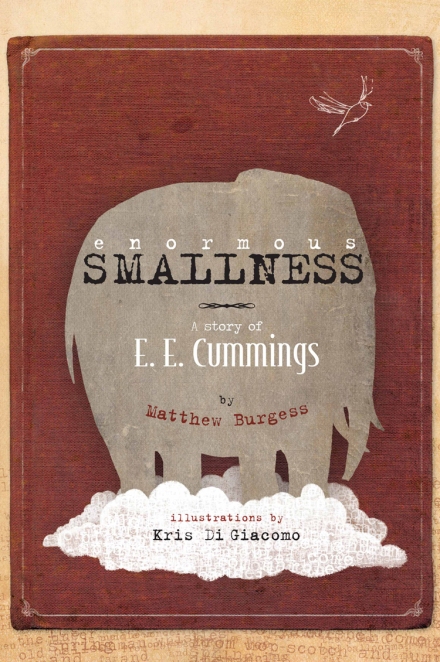
March 21 – World Poetry Day

celebrate-picture-books-picture-book-review-enormous-smallness-cover

About the Holiday

Sponsored by the United Nations Educational, Scientific, and Cultural Organization (UNESCO), World Poetry Day celebrates one of the world’s oldest and most treasured forms of linguistic expression. On this day we honor the poets who translate physical beauty into words, expose social injustice in heartrending verse, and make us laugh with quirky juxtapositions. To celebrate the holiday, attend a poetry reading, revisit poems from your favorite author or discover a new writer, or pen a poem yourself!

enormous SMALLNESS: A Story of E. E. Cummings

Written by Matthew Burgess | Illustrated by Kris Di Giacomo


Hello! Welcome to 4 Patchin Place, the home of poet E. E. Cummings! This is where he wrote his poetry on a clackety typewriter, stopping only for tea poured out by the love of his life, Marion Moorehouse. How did he become a poet? That is an interesting story! E. E. was born Edward Estlin Cummings on October 14, 1894 in Cambridge, Massachusetts. His house was full of extended family, a handyman, a maid, and several pets. From an early age he loved to translate the things he saw into words. “His first poem flew out of his mouth when he was only three: “‘Oh, my little / birdie, Oh / with his little / toe, toe, toe!’”
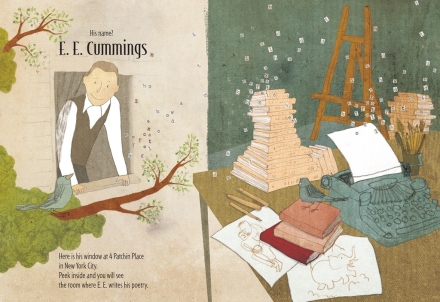
celebrate-picture-books-picture-book-review-enormous-smallness-welcome

Image copyright Kris Di Giacomo, text copyright Matthew Burgess. Courtesy of Enchanted Lion Books

Estlin’s mother wrote down all the poems he told her and made a little book of them, titled “‘Estlin’s Original Poems.’” When he was six, he expressed his love of nature in a poem about trees, and when his mother asked him what else he saw, he “looked around as if his eyes were on tiptoes and when his heart jumped he said another poem: “‘On the chair is sitting / Daddy with his book. / Took it from the bookcase / Beaming in his look.’”
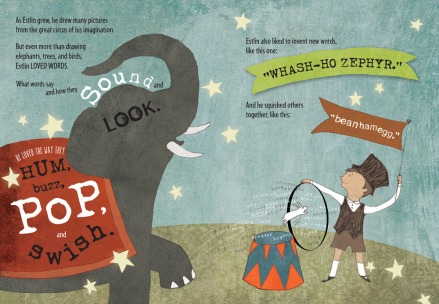
celebrate-picture-books-picture-book-review-enormous-smallness-elephant

Image copyright Kris Di Giacomo, text copyright Matthew Burgess. Courtesy of Enchanted Lion Books

As he grew, Estlin was fascinated by the animals he saw at the circus and in the zoo. He drew pictures of them and wrote about them, using the words he loved so well—and even making up his own words. Estlin had a zest for life and for making life fun for himself and his little sister. During the summers, the family traveled to Joy Farm in New Hampshire, where Estlin swam, milked the cow, rode a donkey, and wandered through the fields and forest. His father had built him a little log cabin in the woods, and in the afternoons Estlin went there to draw and write. At home he also had a special place all his own. In an enormous tree his father built a tree house, complete with stove to keep him warm on cold days.
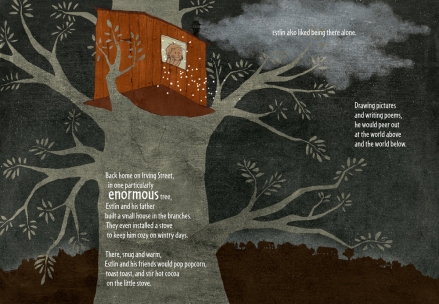
celebrate-picture-books-picture-book-review-enormous-smallness-tree-house

Image copyright Kris Di Giacomo, text copyright Matthew Burgess. Courtesy of matthewjohnburgess.com

Estlin had support for his writing at school too. His favorite teacher encouraged him saying, “anything is possible, / as long as you are true to yourself / and never give up, even when the world / seems to say, stop!” From his Uncle George, Estlin received a guide to writing poems. Estlin followed the rules in the book, penning poems nearly every day. When Estlin was 17 he attended Harvard College and began publishing his poems in the school’s magazines. While at Harvard, Estlin realized he had to follow his heart to be happy. He wanted to be like the new artists who were shaping the world—people like Gertrude Stein, Paul Cezanne, and Igor Stravinsky, “artists who were,” he once said, “challenging the way we think and see.”
celebrate-picture-books-picture-book-review-enormous-smallness-paris

Image copyright Kris Di Giacomo, text copyright Matthew Burgess. Courtesy of Enchanted Lion Books

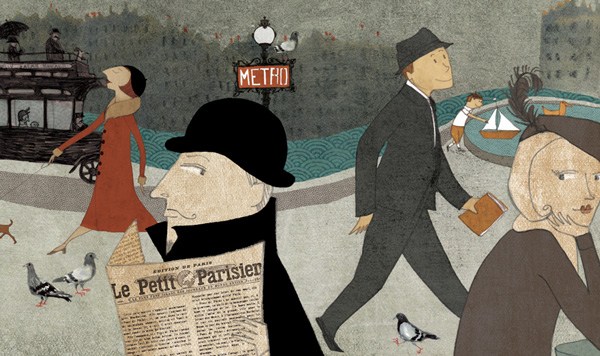
After he graduated, Estlin returned home, but when he had saved enough money he moved to New York and fell in love with the city immediately. He and his friends took in everything new the city had to offer. Soon, however, the United States entered World War II. On April 17, 1917 Estlin volunteered to be an ambulance driver in France. Before he received his assignment, though, he had time to explore Paris. He was “bowled over by the museums, the ballet, and the colorful, crowded streets.” He enjoyed the city so much he returned often during his lifetime.

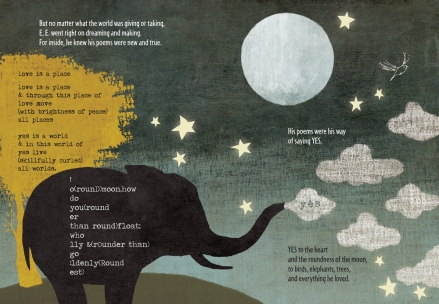
During the war, Estlin was mistaken for a spy and sent to prison for several months. After the war he wrote a book about his experiences titled The Enormous Room by E. E. Cummings. “The book was published and praised! Estlin was becoming E. E.!” A year later he published his first book of poetry—Tulips & Chimneys. In his poems he experimented with punctuation and using lower case letters instead of capitals.
celebrate-picture-books-picture-book-review-enormous-smallness-yes

Image copyright Kris Di Giacomo, text copyright Matthew Burgess. Courtesy of matthewjohnburgess.com

Through his fanciful typography, E. E. “wanted his reader’s eyes to be on tiptoes too, seeing and reading poetry (inaway) that was new.” But some people didn’t understand or like his poetry; it was too strange and too small, they said. But E. E. knew he had to stay true to himself. He believed that “his poems were new and true” and “were his way of saying YES” to everything he loved. As time went on more and more people began to “see the beauty of E. E.’s poetry, and he became one of the most beloved poets in America.”

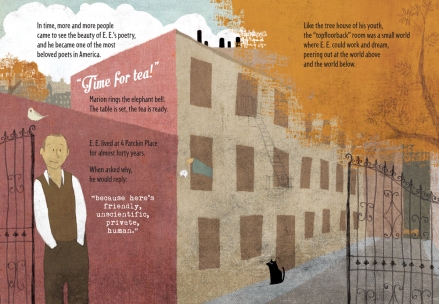
E. E. Cummings lived and worked at 4 Patchin Place for almost 40 years, but in his mind he would often return to his childhood home. He “could still see himself as a boy gazing out at the sunset”—a memory that he put into words: who are you,little i / (five or six years old) / peering from some high / window;at the gold / of November sunset / (and feeling:that if day has to become night / this is a beautiful way)”
celebrate-picture-books-picture-book-review-enormous-smallness-patchin-place

Image copyright Kris Di Giacomo, text copyright Matthew Burgess. Courtesy of matthewjohnburgess.com

Simply put, Matthew Burgess’s enormous SMALLNESS: A Story of E. E. Cummings is a biography that will make you smile. Upbeat and full of the wonder and whimsy that influenced Estlin Cummings’ prodigious talent, the story encourages readers to always follow their heart. Burgess’s easy-going, conversational style invites kids along on the journey of Cumming’s life, stopping off at points that resonate with kids—early imaginary play, school, family vacations, home life, college, travel, and ultimate success. Seeing the support Cummings received throughout his life will inspire young readers just starting out on their own roads of discovery.

Kris Di Giacomo’s enchanting illustrations will immediately capture the imagination of readers. The playful quality of Cummings’ personality and poems is mirrored in each spread as a variety of children’s drawings and typography are sprinkled throughout. As six-year-old Estlin composes poems for his mother, he stands on tiptoe in his nightshirt surrounded by toys; he experiences life from rooftop and treetop and gazes into the night from his tree house; New York lights up with fireworks and the lights of Broadway; and his poems spring from the pages in their own inimitable way.

For children interested in writing, biographies, history, the arts, and the life of the imagination, enormous SMALLNESS: A Story of E. E. Cummings is a perfect choice for their home bookshelves.

A chronology of E. E. Cummings’ life, five poems, and an Author’s Note follow the text.

Ages 4 – 9

Enchanted Lion Publishing, 2015 | ISBN 978-1592701711

To learn more about Matthew Burgess, his books, and his poetry, visit his website!

View a gallery of illustration by Kris Di Giacomo on her website!

World Poetry Day Activity
celebrate-picture-books-picture-book-review-grow-a-poem-craft


Grow a Poem


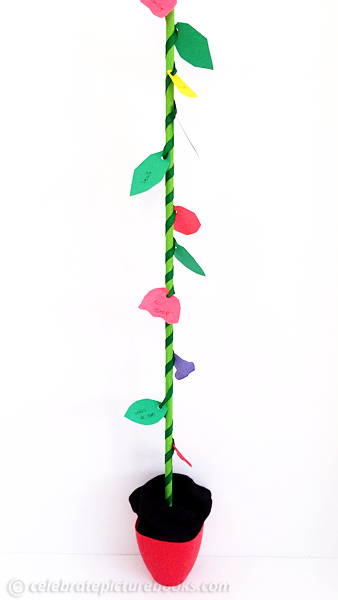
A poem often grows in your imagination like a beautiful plant—starting from the seed of an idea, breaking through your consciousness, and growing and blooming into full form. With this craft you can create a unique poem that is also an art piece!

Supplies

  • Printable Leaves Template
  • Printable Flower Template
  • Wooden dowel, 36-inch-long, ½-inch diameter, available in craft or hardware stores
  • Green ribbon, 48 inches long
  • Green craft paint
  • Green paper for printing leaves (white paper if children would like to color the leaves)
  • Colored paper for printing flowers (white paper if children would like to color the flowers)
  • Flower pot or box
  • Oasis, clay, or dirt
  • Hole punch
  • Glue
  • Markers or pens for writing words
  • Crayons or colored pencils if children are to color leaves and flowers

Directions

  1. Paint the dowel green, let dry
  2. Print the leaves and flower templates
  3. Cut out the leaves and flowers
  4. Punch a hole in the bottom of the leaves or flowers
  5. Write words, phrases, or full sentences of your poem on the leaf and flower templates
  6. String the leaves and flowers onto the green ribbon (if you want the poem to read from top to bottom string the words onto the ribbon in order from first to last)
  7. Attach the ribbon to the bottom of the pole with glue or tape
  8. Wrap the ribbon around the pole, leaving spaces between the ribbon
  9. Move the leaves and flowers so they stick out from the pole or look the way you want them to.
  10. Put oasis or clay in the flower pot or box
  11. Stick your poem pole in the pot
  12. Display your poem!

Picture Book Review

March 20 – World Storytelling Day

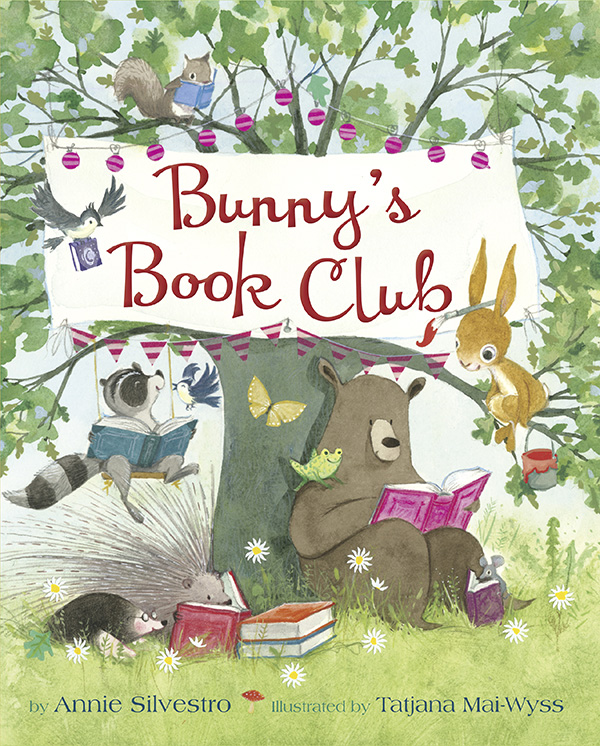
celebrate-picture-books-picture-book-review-bunny's-book-club-cover

About the Holiday

Today’s holiday was first held in Sweden in 1991. Established to celebrate the art of oral storytelling, the day invites people around the globe to tell and listen to stories both old and new. To participate attend a special storytelling event in your area or relate some family stories at home. Of course reading terrific books out loud is also a fun way to honor the day!

Bunny’s Book Club

Written by Annie Silvestro | Illustrated by Tatjana Mai-Wyss


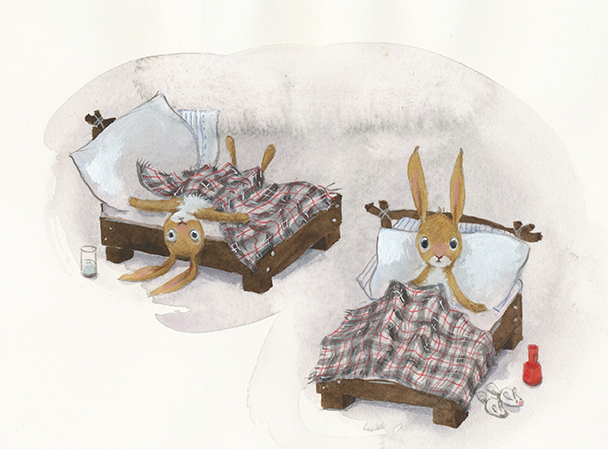
Bunny would do just about anything to hear a story. “He’d loved them ever since he first heard the lady with the red glasses reading aloud outside the library.” All summer long he listened to stories that took him to thrilling and magical places. But when the weather turned cooler and story time moved indoors, bunny knew he had to do something—“he couldn’t live without books.”

Bunny was afraid that animals weren’t allowed in the library. Finally, after several sleepless nights Bunny “tiptoed through the dark” to the library. But when he got there the door was locked, the windows were bolted, and there were no holes in the building to be found—“until finally he noticed…the book return!” Bunny hopped as high as he could, grabbed the handle, and slipped inside. “Bunny’s eyes sparkled at the sight of the shelves bursting with books.”

celebrate-picture-books-picture-book-review-bunny's-book-club-bunny-cant't-sleep

Image copyright Tatjana Mai-Wyss, courtesy of tatjanamaiwyss.com

Bunny hopped here and there through the adventure section, where he found books about “swashbucklers, sharks, and superheroes.” He grabbed as many as he could carry and pushed them through the slot. Back home he read and read, and every night he returned to the library for more books. Pretty soon his house was filled top to bottom with books.

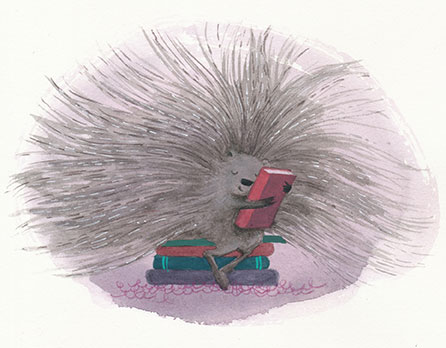
One night while reading, Bunny heard a knock on the door. It was Porcupine, wondering where Bunny has been. When Porcupine found out, he couldn’t believe it. What was so special about reading? The next night Bunny took Porcupine to the library. “‘Whoa,’ said Porcupine.” He immediately wondered if there was a book about balloons. He also found stories “on deserts and dunes, on caterpillars and cocoons” and even one on hedgehogs that made him so happy he hugged it with all his might. Back at Bunny’s and cuddled up with tea and carrot muffins, the two friends read into the night.

celebrate-picture-books-picture-book-review-bunny's-book-club-porcupine and-bunny-read

Image copyright Tatjana Mai-Wyss, courtesy of tatjanamaiwyss.com

It wasn’t too long before Bear showed up at Bunny’s wondering about why the light burned so late so often. Bunny handed him a book, and Bear squeezed onto the couch and began reading. Soon, all of Bunny’s friends began dropping by asking for books about space, volcanoes, and mysteries. One night Bunny took them all on a trek to the library. They were so engrossed in their books that they didn’t hear a key turn in the lock, “the clack, clacking of footsteps,” or the light flick on.

It was the librarian! All the animals gasped—they’d been caught! “‘All libraries have rules,’ said the librarian sternly” as she asked the animals to follow her. At the desk, the librarian in the red glasses crouched down and gave each animal their own library card. Bunny was thrilled to know they were welcome at the library. He found the perfect book and “proudly checked out the very first official selection for Bunny’s Book Club.”

celebrate-picture-books-picture-book-review-bunny's-book-club-porcupine-hugs-book

Image copyright Tatjana Mai-Wyss, courtesy of tatjanamaiwyss.com

Annie Silvestro’s sweet story about the lure of stories and the lengths to which a true book lover will go to hear or read one, will enchant young children. The gentle suspense will keep little ones riveted to the story as clever Bunny finds a way into the library, Porcupine and Bear have a few sticky moments, and the librarian catches the crew unawares. Little ones will recognize their own delight in books as Bunny shares his discover with his friends and they form a most cozy book club.

Tatjana Mai-Wyss’s adorable Bunny, Porcupine, Bear and other animals make perfect book club friends for little readers. Mai-Wyss’s soft-hued watercolor illustrations of the tidy library and Bunny’s book-filled home invite children in to poke around and become one of the group. They’ll love following Bunny’s footprints through the library stacks and discovering the cozy comforts of Bunny’s home. The final tw0-page illustration of the friends snuggled together in the warmth of a roaring fire and surrounded by snacks and books is definitely “awwww” inspiring.

Bunny’s Book Club may inspire families to take a special nighttime trip to the library and young readers to create a book club of their own. It would be welcome on any child’s bookshelf.

Learn more about Annie Silvestro and her books on her website!

Discover more about Tatjana Mai-Wyss and review a portfolio of her illustration on her website!

Ages 3 – 7

Doubleday Books for Young Readers, 2017 | ISNB 978-0553537581

World Storytelling Day Activity

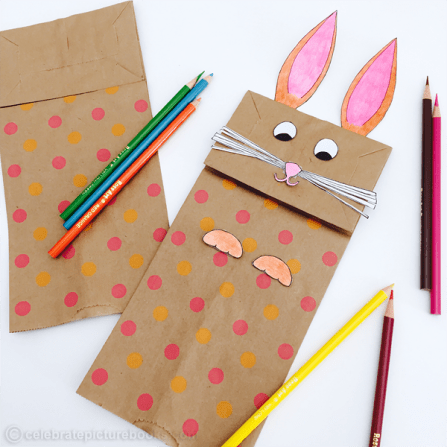
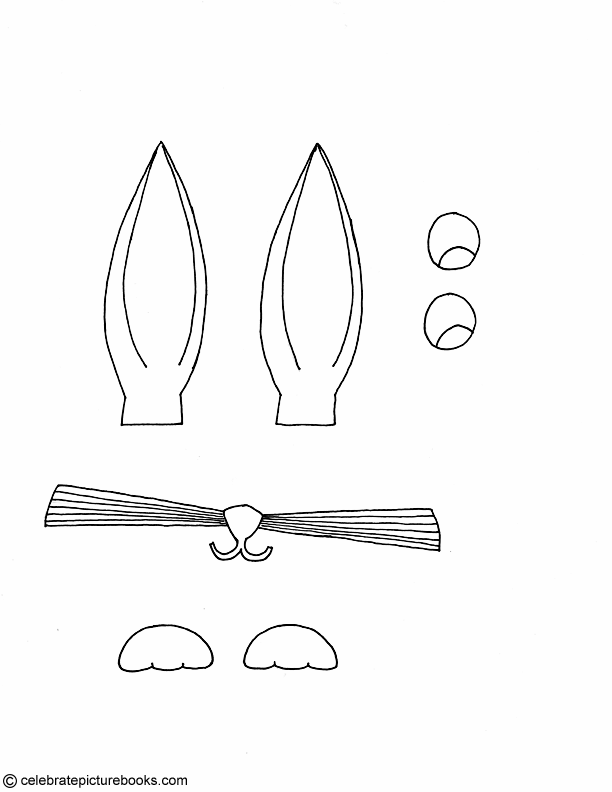
celebrate-picture-books-picture-book-review-bunny-puppet

Story Buddy Puppet


Hop to it! Have fun telling your favorite stories with this bunny puppet!

Supplies

  • Printable Bunny Template
  • Paper sandwich bag
  • Colored pencils, crayons, or markers
  • Scissors
  • Glue

Directions

  1. Print out the Bunny Template
  2. Color the Bunny Template
  3. Cut out the bunny’s features
  4. Clue the bunny’s features to the sandwich bag

Picture Book Review
March 9 – It’s Read Aloud Month

celebrate-picture-books-picture-book-review-rosa's-very-big-job-cover

About the Holiday

From the moment babies are born, they are learning. Talking and reading aloud to babies from the very beginning are crucial parts of helping their developing brain learn language and improves literacy in the years to come. Reading aloud to babies and older children for only 15 minutes a day makes a tremendous and beneficial difference to their future. Make reading time a special time with your kids, and with so many wonderful books available—like today’s book—you’ll have as much fun as they do!

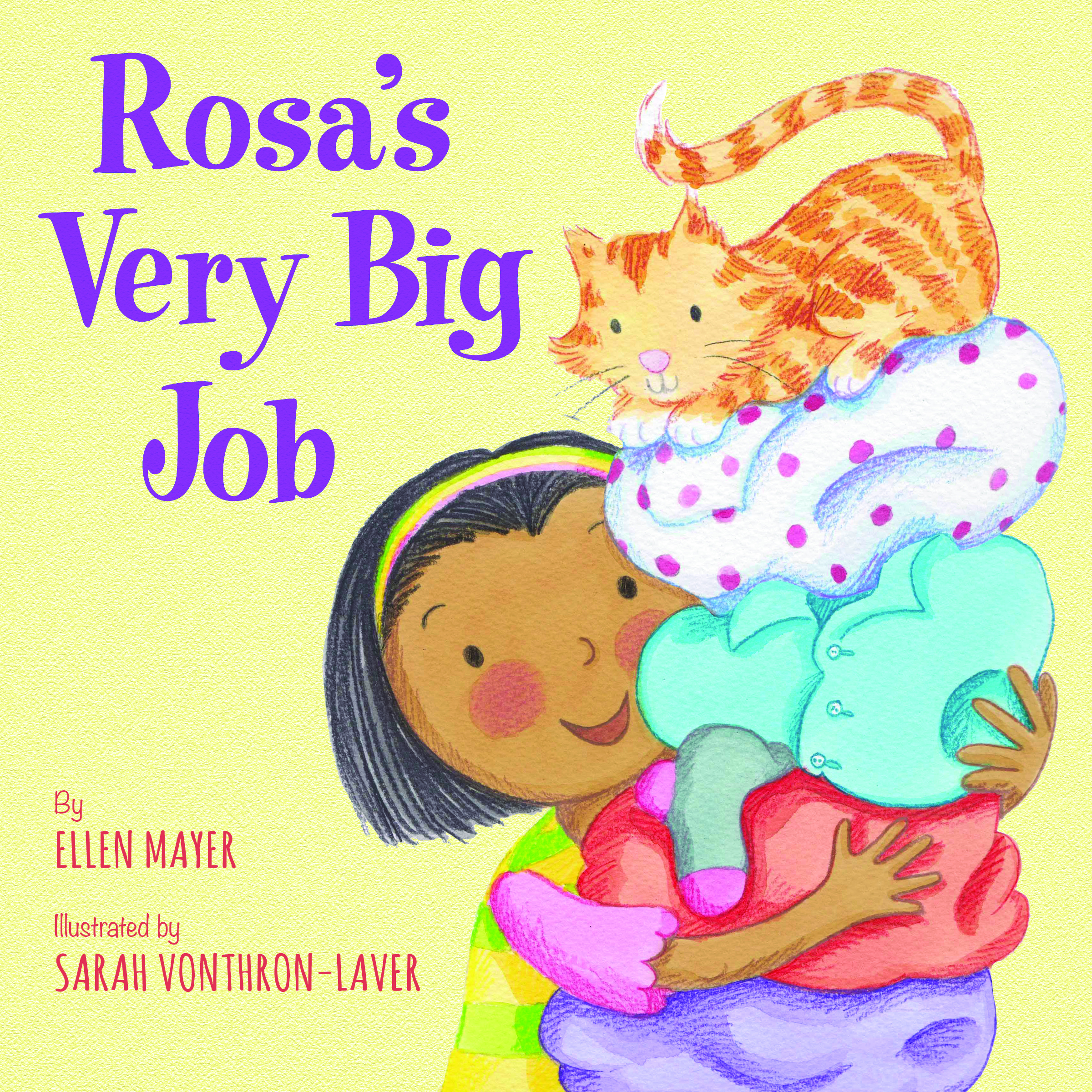
Rosa’s Very Big Job

Written by Ellen Mayer | Illustrated by Sarah Vonthron-Laver

Rosa may be little, but she has big ideas about how to help. While Mama is out shopping for groceries for that night’s dinner, Rosa decides to surprise her by folding and putting away the laundry. The basket is piled high with fluffy dry clothes, sheets, and towels. Rosa watches her grandpa reading the newspaper. “‘Please help me, Grandpa!’” she says. She tugs on her grandpa’s hands, trying to pull him out of his chair. “‘Come on, Grandpa! Get up.”

celebrate-picture-books-picture-book-review-rosa's-very-big-job-rosa-likes-to-help

Image copyright Sarah Vonthron-Laver, text copyright Ellen Mayer, courtesy of Star Bright Books, starbrightbooks.com

Grandpa seems to have a little trouble managing: “‘It’s difficult to carry these enormous piles,’” he sighs. But Rosa knows that smaller armloads work better. Grandpa’s clothes come unfolded as he puts them in the drawer. “‘Be neat. Like me,” Rosa says, showing him her tidy stack. Poor Grandpa! He has to keep hanging up the same jacket over and over. “‘It’s difficult to keep this jacket from sliding off the hanger,” he says. Rosa has the answer: “‘Zip it up,’” she explains. “‘Then it stays on.’”

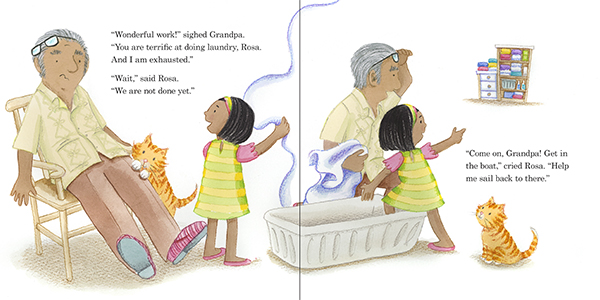
Grandpa sinks back into his chair. “‘You are terrific at doing laundry, Rosa. And I am exhausted,’” he says. But this is no time to quit—Rosa has big plans. As she steps into the now empty laundry basket, she exclaims, “‘Come on, Grandpa! Get in the boat. Help me sail back to there.’” Rosa points to the linen closet.

celebrate-picture-books-picture-book-review-rosa's-very-big-job-rosa-uses-basket-as-boat

Image copyright Sarah Vonthron-Laver, text copyright Ellen Mayer, courtesy of Star Bright Books, starbrightbooks.com

Suddenly, the floor swells with ocean waves teeming with fish. Grandpa channels his inner sailor as he holds aloft a sheet as a sail. As the wind billows and they come perilously close to the kitchen table, he says, “‘It’s difficult to sail around this enormous rock!’” Contemplating the rising sea, he exclaims, “‘It’s difficult to sail over this enormous wave!’”

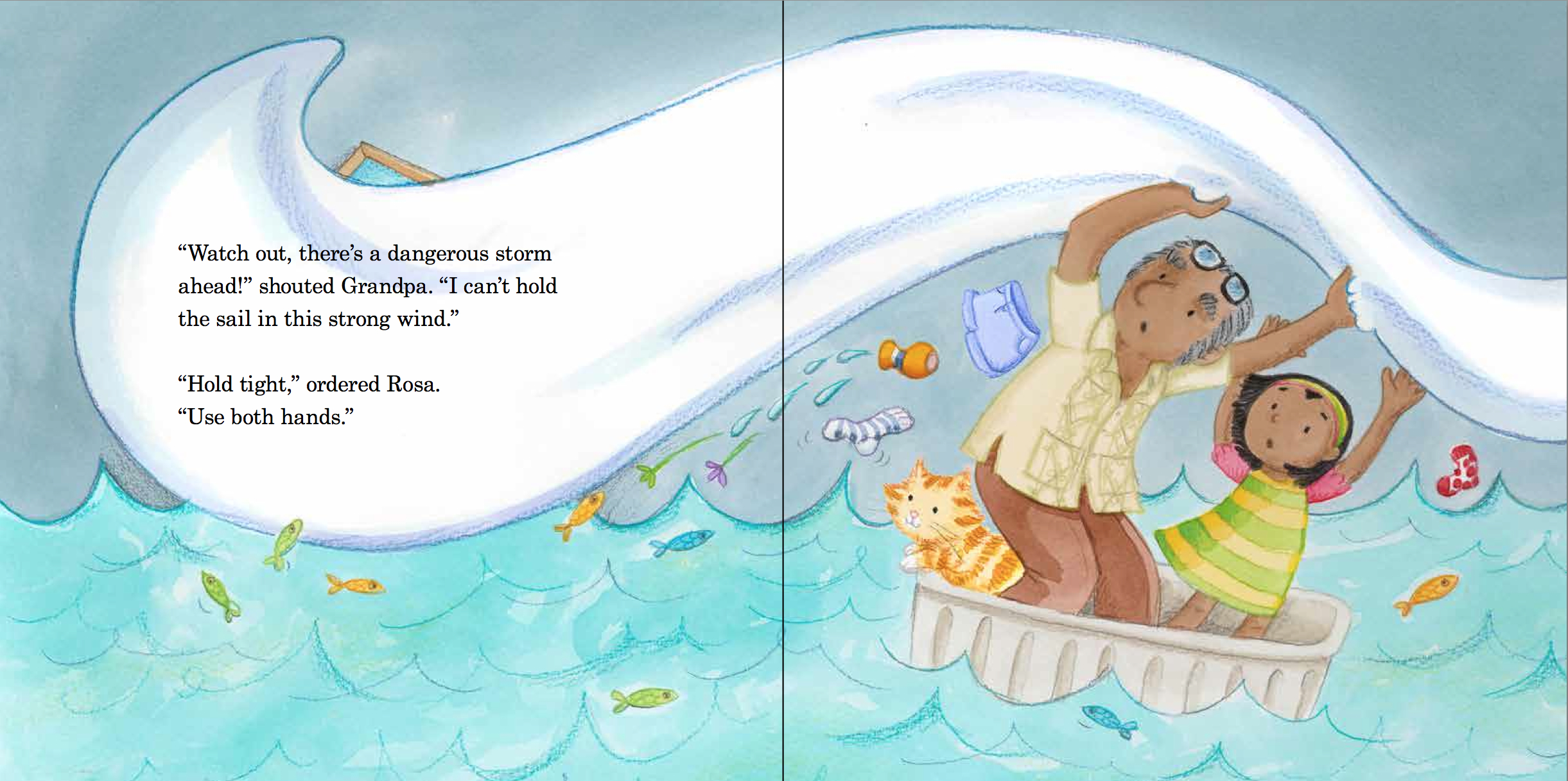
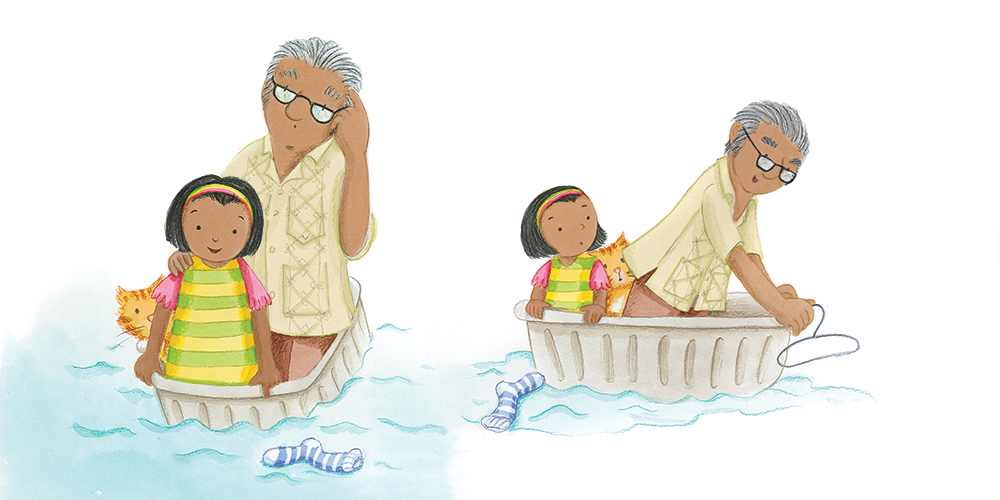
There’s a dangerous storm ahead, warns Grandpa, “‘I can’t hold the sail in this strong wind.’” Rosa is there to help and grabs one side of the sheet. “‘Hold tight,’” she orders. “‘Use both hands.’” At last the seas die down and Grandpa is ready to steer the laundry basket back to port, but Rosa has a more entertaining thought. Spying a sock on the floor, Rosa wants to catch the “enormous fish.” Grandpa obliges and picks up a hangar for a fishing pole. He holds Rosa as she stretches out over the edge of the laundry basket to land her fish.

celebrate-picture-books-picture-book-review-rosa's-very-big-job-sailing-with-sheet

Image copyright Sarah Vonthron-Laver, text copyright Ellen Mayer, courtesy of Star Bright Books, starbrightbooks.com

Just as Rosa nabs the fish, Mama comes home with her bags of groceries. She’s surprised to see that the laundry is not in the basket. Rosa runs to her and proudly explains, “‘We put all the laundry away. It was a very big job. We carried enormous piles. Grandpa dropped things. And I picked them up. It was very difficult for Grandpa. He got exhausted. But not me. I am terrific at laundry!’” Mama agrees that Rosa is a terrific helper. Then Rosa leads her mother to see the most surprising thing of all—the fish she has caught for dinner!

celebrate-picture-books-picture-book-review-rosas-very-big-job-rosa-and-grandpa-fishing

In her series of Small Talk Books® Ellen Mayer presents exciting stories for preschoolers full of imagination and rich language learning. Rosa’s Very Big Job introduces Rosa, a sweet girl bubbling with enthusiasm and the desire to help. The close relationships between Rosa, her mother, and her grandpa promote cooperation as well as effective modeling of speech patterns and a way to introduce larger words in an organic manner through play and common chores. Rosa’s inventive idea to turn the laundry basket into a boat is delightfully enhanced by her grandpa’s willingness to share in the story and expand on it. Humor, cheerful banter, and the easy camaraderie between Rosa and Grandpa invite young readers to join in the fun as they build confidence in their language learning.

Sarah Vonthron-Laver depicts Rosa’s afternoon with her Grandpa with joy and the spirited energy young children bring to everything they do. Grandpa is happy to spend time with his granddaughter, yet shows honest feelings of tiredness and frustration that spur on the plot. The transition from doing laundry to using the basket as a boat is as seamless as a child’s imagination, and the way Rosa and her grandpa use household items to create “sails,” “rocks,” “fish,” and “fishing poles” will give readers great ideas for post-reading play. Bright colors, an adorable kitten, and familiar surroundings welcome young children into the world of reading and expanded vocabulary.

Rosa’s Very Big Job would be a welcome addition to a young child’s bookshelf, not only for its fun story that kids will want to hear again and again, but for its leap into imagination that kids will want to replicate.

Dr. Betty Bardige, an expert on young children’s language and literacy development, provides tips for parents, grandparents, and caregivers following the text.

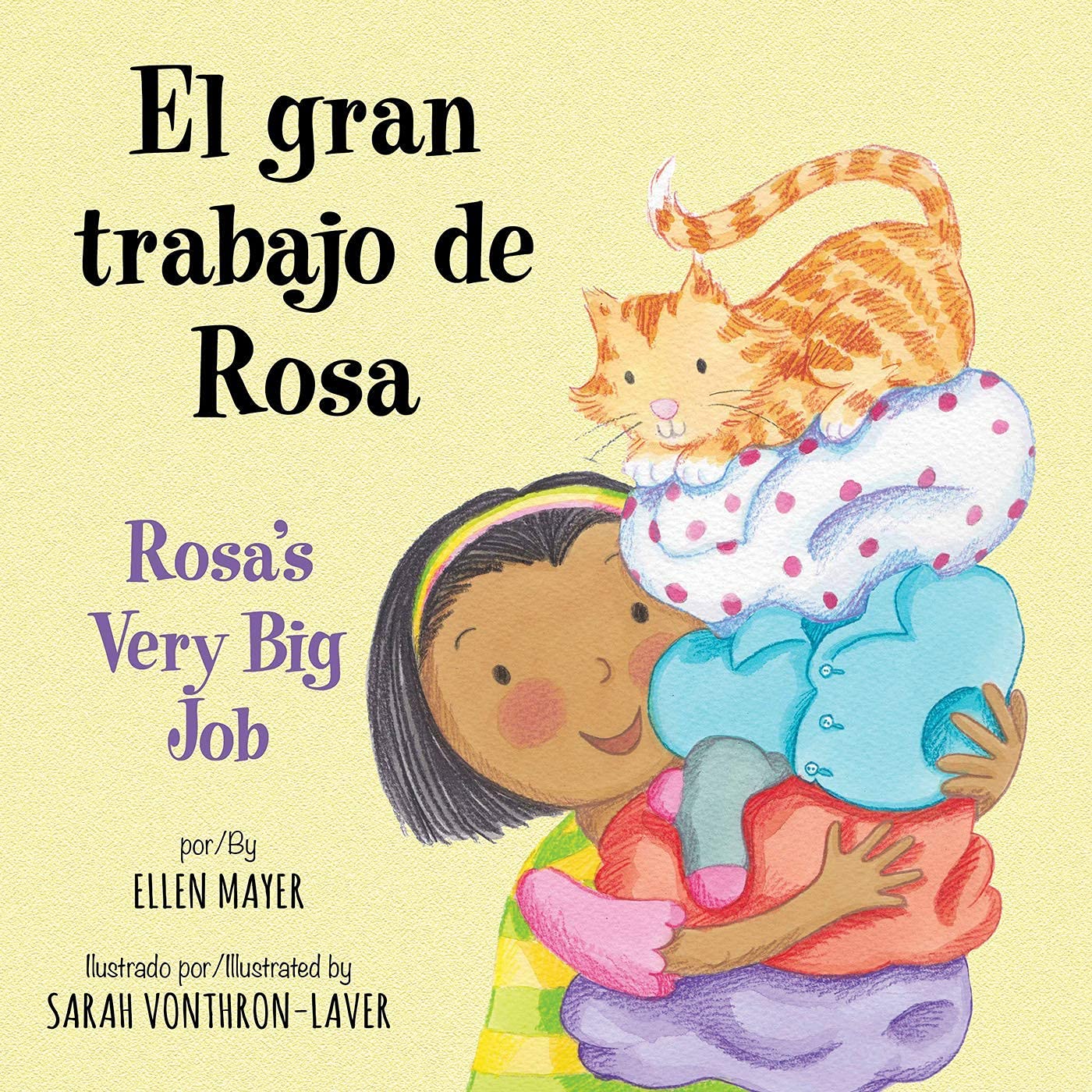
celebrate-picture-books-picture-book-review-rosa's-very-big-job-spanish-cover

A bilingual Spanish/English edition is also available from Star Bright Books!

Ages 2 – 6

Star Bright Books, 2016 | ISBN 978-1595727497 (English edition) | ISBN 978-1595728500 (Spanish/English bilingual edition)

Discover more about Ellen Mayer and her books as well as book-related activities and literacy initiatives she’s involved with on her website!

To read an interview with Ellen Mayer about her books and her work, click here!

Find Sarah Vonthron-Laver on Facebook!

Read Aloud Month Activity

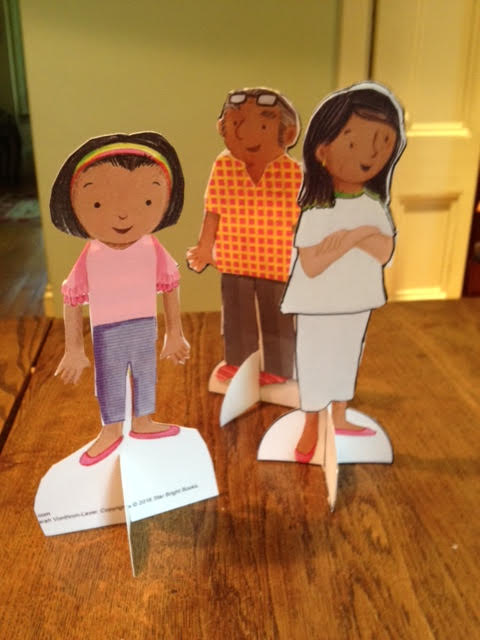
celebrate-picture-books-picture-book-review-rosa's-big-job-paper-dolls-made

Original illustrations by Saran Vonthron-Laver, Copyrights © 2016 Star Bright Books. Paper dolls created by AislingArt and Celebrate Picture Books, copyrights © 2016

Rosa’s Very Big Job Paper Dolls

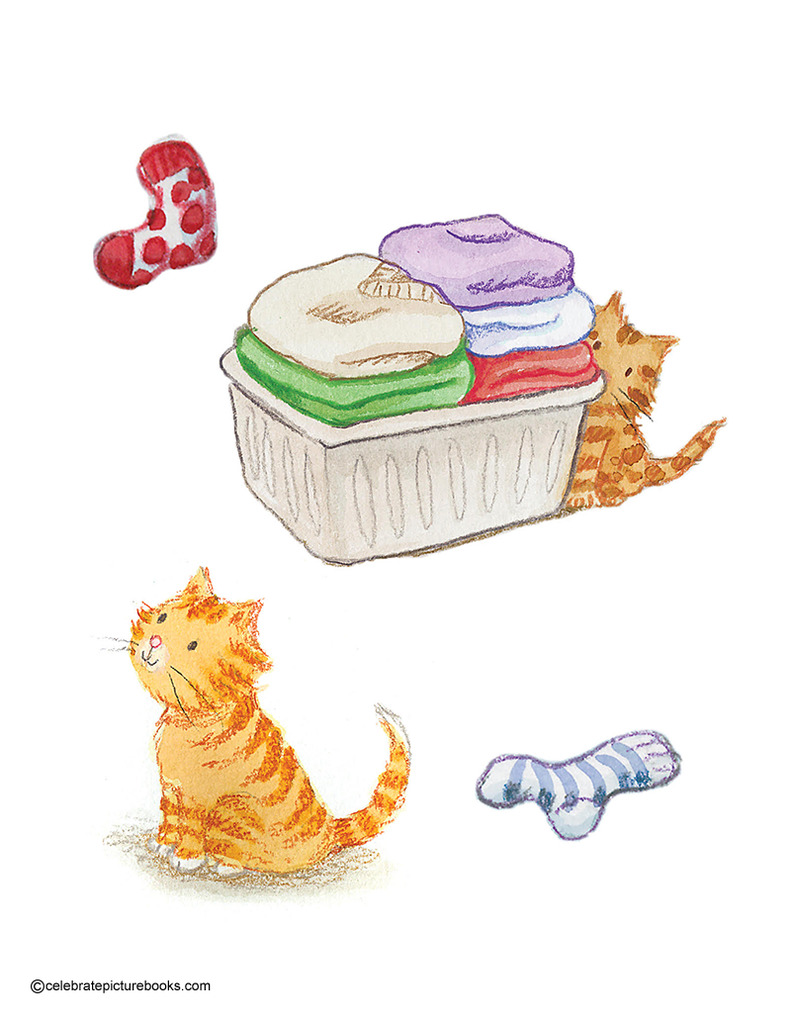
After you read the story, you can continue the fun with these Rosa and family paper dolls! Rosa loves helping out at home. She’s terrific at doing laundry – folding and putting away the family’s clothes, socks, and linens. You are terrific at helping too! Can you help Rosa, Mama, and Grandpa get dressed and ready for the day with these printable paper dolls? You’ll even find a laundry basket, socks, and Rosa’s sweet kitty to play with! 

Supplies

Printable Paper Dolls, Clothes, and Extras

  • Card stock paper and/or poster board
  • Scissors
  • Glue

Directions

  1. Print dolls on regular paper or card stock paper. Dolls printed on card stock paper may stand on their own with the supplied stand cross piece. For dolls printed on regular paper, you can cut the supplied stand templates from poster board or card stock and glue the dolls to the backing.
  2. Rosa’s kitty and the laundry basket can also be attached to the supplied template if needed
  3. Print clothes for each figure
  4. Color the blank clothes templates any way you’d like
  5. Cut out clothes and extra items
  6. Fit outfits onto dolls
  7. Make up your own stories about Rosa, Mama, and Grandpa!

celebrate-picture-books-picture-book-review-rosa's-very-big-job-cover

YOU CAN FIND ROSA’S VERY BIG JOB AT THESE BOOKSELLERS

Amazon | Barnes & Noble | Books-a-Million

To support your local independent bookstore, order from

Bookshop | IndieBound

celebrate-picture-books-picture-book-review-rosa's-very-big-job-spanish-cover

You can find El gran trabajo de Rosa at Amazon 

Picture Book Review

February 14 – International Book Giving Day

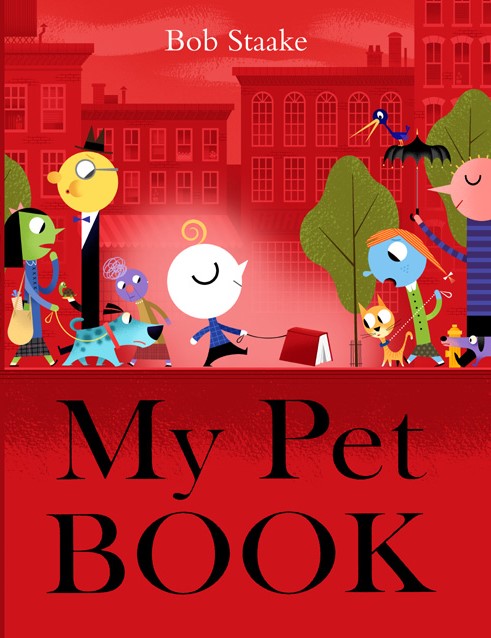
celebrate-picture-books-picture-book-review-my-pet-book-cover

About the Holiday

International Book Giving Day can be celebrated in so many ways. Do you know an adult or child who would love a new book? Why not surprise them with a special gift? Or perhaps you have books you’re ready to pass on to others. There are many organizations ready to give those books new life with new owners. Check whether you have a chapter of Reach Out and Read or another literacy organization in your community and donate what you can to this very worthy cause. Your local library can help too!

My Pet Book

By Bob Staake


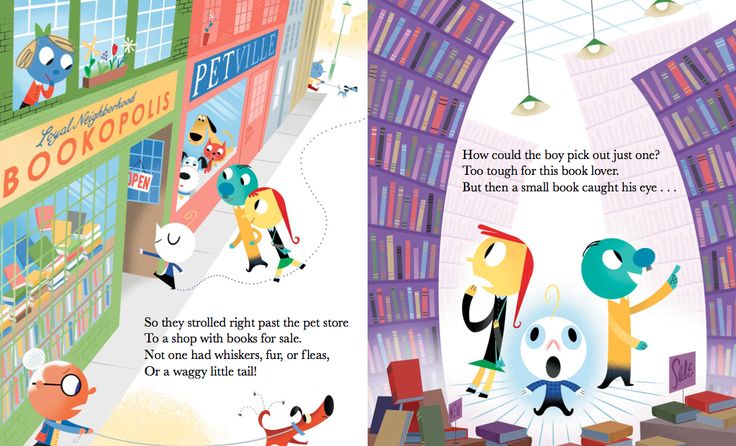
In a town named Smartytown a little boy has a most unusual pet—a book! Not one for puppies and allergic to kittens, he wants a pet that’s “easy.” His mom and dad suggest a book, and the family heads to the bookstore to adopt one. The shelves are so full of appealing potential pets that it’s hard to choose. But then the little boy spies a small “frisky red hardcover,” and it’s love at first sight.

celebrate-picture-books-picture-book-review-my-pet-book-choosing-pet

Copyright Bob Staake, courtesy of Random House Books for Young Readers.

The tiny book turns out to be the perfect pet—it doesn’t need food or water, its cover never sheds or hides fleas, it never needs a bath, and best of all there’s no housebreaking required. The boy takes his pet for walks in the evening, finding it superior to dogs that yap and run away and cats that constantly purr and lick their fur.

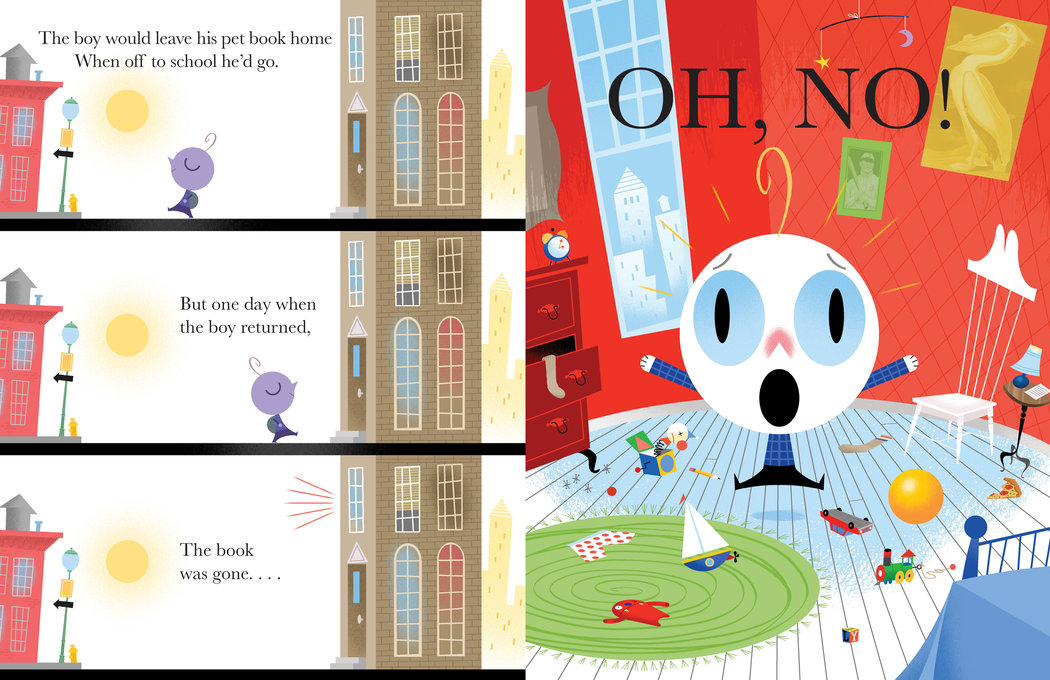
With his new pet, the boy’s days are full of adventure, fun, and excitement. He can’t wait to get home from school and spend time with the little book. But one day when he walks into his house, the boy discovers that his best friend is gone. “‘He ran away! He ran away!’ / The boy began to bleat. / ‘How could a pet book run away / Without a pair of feet?’”

celebrate-picture-books-picture-book-review-my-pet-book-book-gone

Copyright Bob Staake, courtesy of Random House Books for Young Readers.

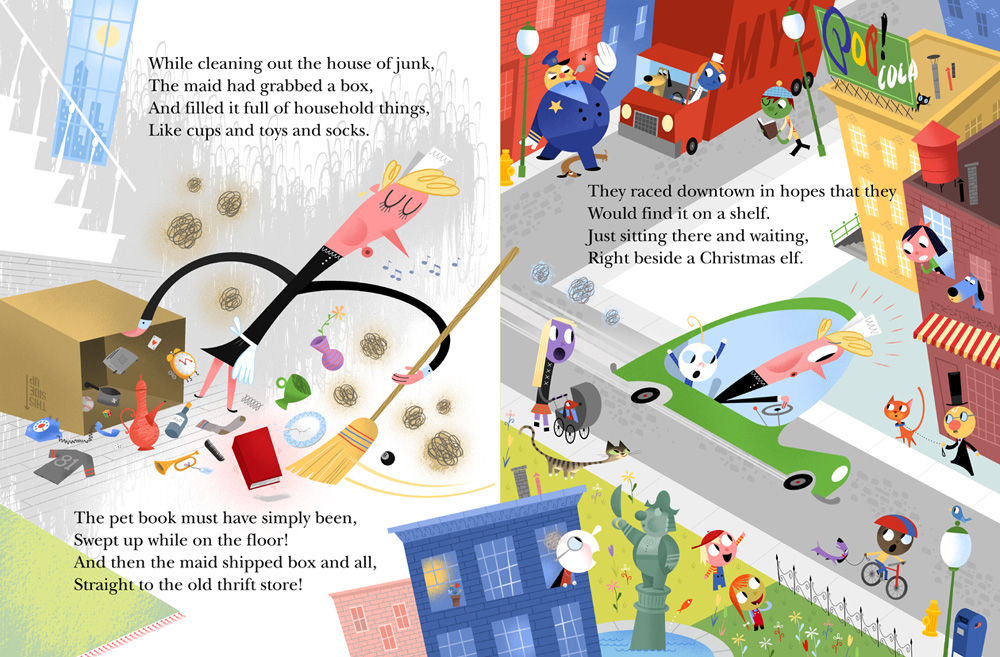
Soon the answer comes: “The maid could hear the crying boy. / (That sound was such a rarity.) / ‘I think I know what happened…’ (gulp) / ‘I gave your book to…charity.’” The boy and the maid race downtown to the thrift store, hoping to find the beloved book. They search through clothes, and furniture, through toys and shelves of books, but the little pet is nowhere to be found. There is only one conclusion—the book has just been sold!

The boy and maid sit down to cry, but then the maid has an idea. Maybe their pet is only hiding, Suddenly the boy remembers something that caught his eye in the dog-and-cat-stuff aisle. They race over to where a lone dog house sits. The boy says, “‘If I were just a scared pet book, / I’d likely sneak in here. / Perhaps the dark would help me hide, / And make me disappear!’”

celebrate-picture-books-picture-book-review-my-pet-book-searching-for-book

Copyright Bob Staake, courtesy of Random House Books for Young Readers.

He reaches in and discovers his pet book just waiting for him. The boy checks his pet over carefully and finds him well from cover to cover. The boy and the maid drive home relieved. Although they are tired, this crazy day has a happy ending, and now the boy and his pet have their own special story to share.

Perhaps Bob Staake is onto something in this humorous page-turner. Don’t we love our favorite books just like pets? And when they’re mysteriously missing, don’t we search and search for them? Through fast-paced and cleverly worded verses, Staake leads his readers on a jaunt of book love that includes love, excitement, companionship, suspense, and a happy ending. What more can you ask for from a book—or a pet?

Staake’s vibrant and whimsical illustrations create a world all its own yet rooted in the here and now. A bit surreal, a bit silly, the action-packed scenes will have kids giggling and searching for every detail.

For book lovers, pet lovers, and those who love a good story, My Pet Book is perfect for snuggling up with.

Ages 3 – 7

Random House Books for Young Readers, 2014 | ISBN 978-0385373128

To learn more about Bob Staake and his writing as well as to view some pretty fantastic art, visit his website!

International Book Giving Day Activity

celebrate-picture-books-picture-book-review-dog-bookmark-craft


Peppy Puppy Bookmark


This printable Peppy Puppy Bookmark is happy to hold your place while you’re away from your book! Grab some crayons or colored pencils and make your puppy your own. To let your puppy hang onto the page, cut around the toes of the top paws, leaving the top of the paws attached.

Picture Book Review
February 9 – It’s Library Lovers Month

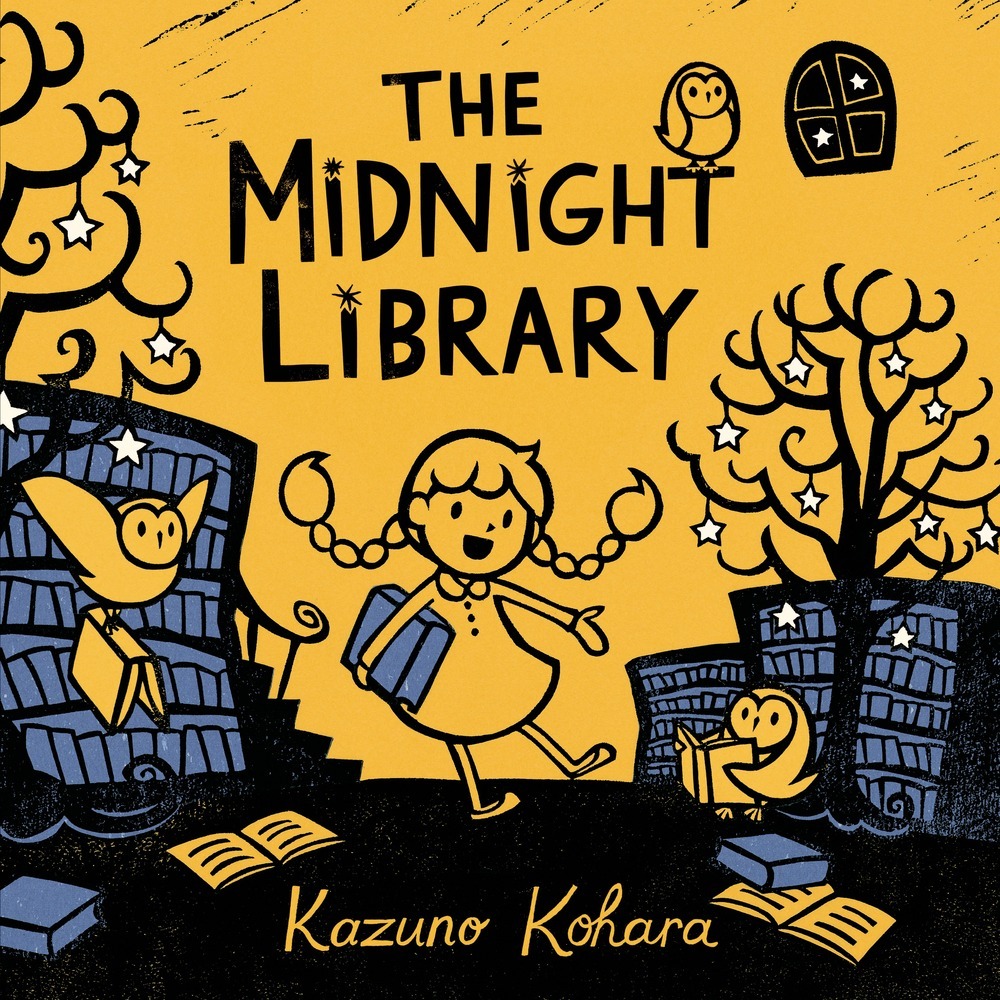
The Midnight Library by Kazuno Kohara Picture Book Review
About the Holiday

For bibliophiles, this may be the best month of the year! Not only does your local library have shelves stacked with books, magazines, movies, and tapes of every kind, it offers comfy chairs, fascinating lectures, kids programs, and more! This month be sure to take part in some of the activities librarians have planned for you!

The Midnight Library

By Kazuno Kohara


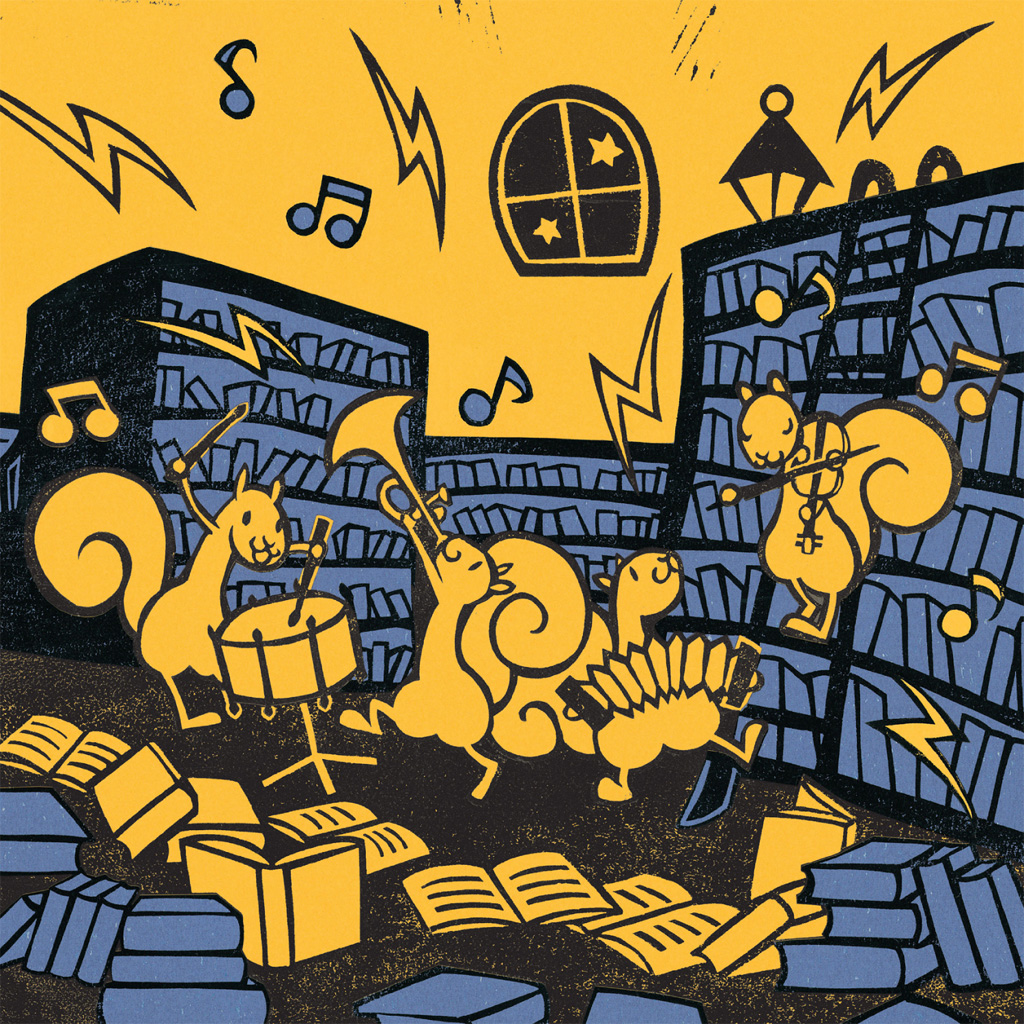
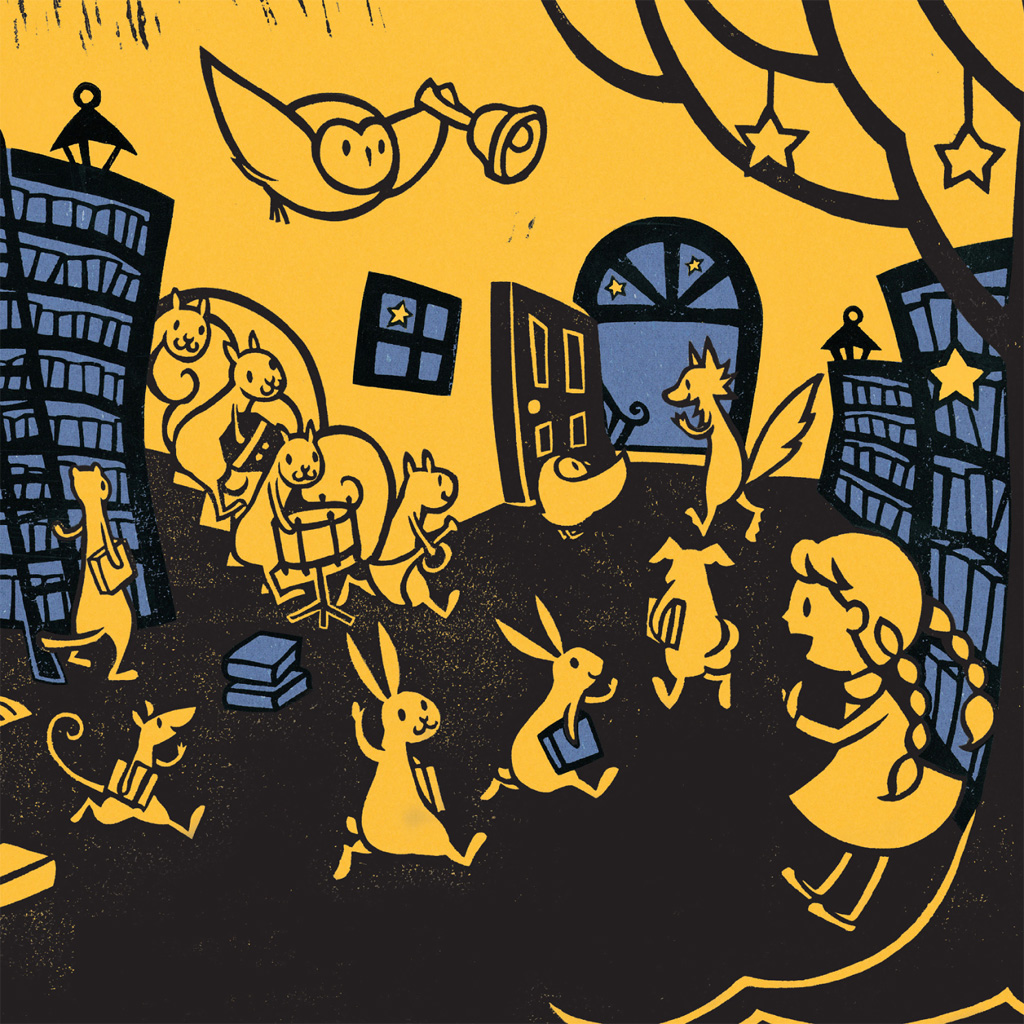
A little librarian opens the doors to her library only as the sun goes down. Working with her three assistant owls, she helps the forest animals find the perfect book. The animals read quietly and the library is peaceful until one night when a band of squirrels begins playing their instruments in the reading room. The little librarian shushes the squirrels and they apologize, saying they’re just working on a new song. The librarian has the perfect solution! She shows the band to the upstairs activity room, and peace reigns once more in the library.

celebrate-picture-books-picture-book-review-the-midnight-library-squirrels-play-music

Image copyright Kozuno Kohara, courtesy of us.macmillan.com

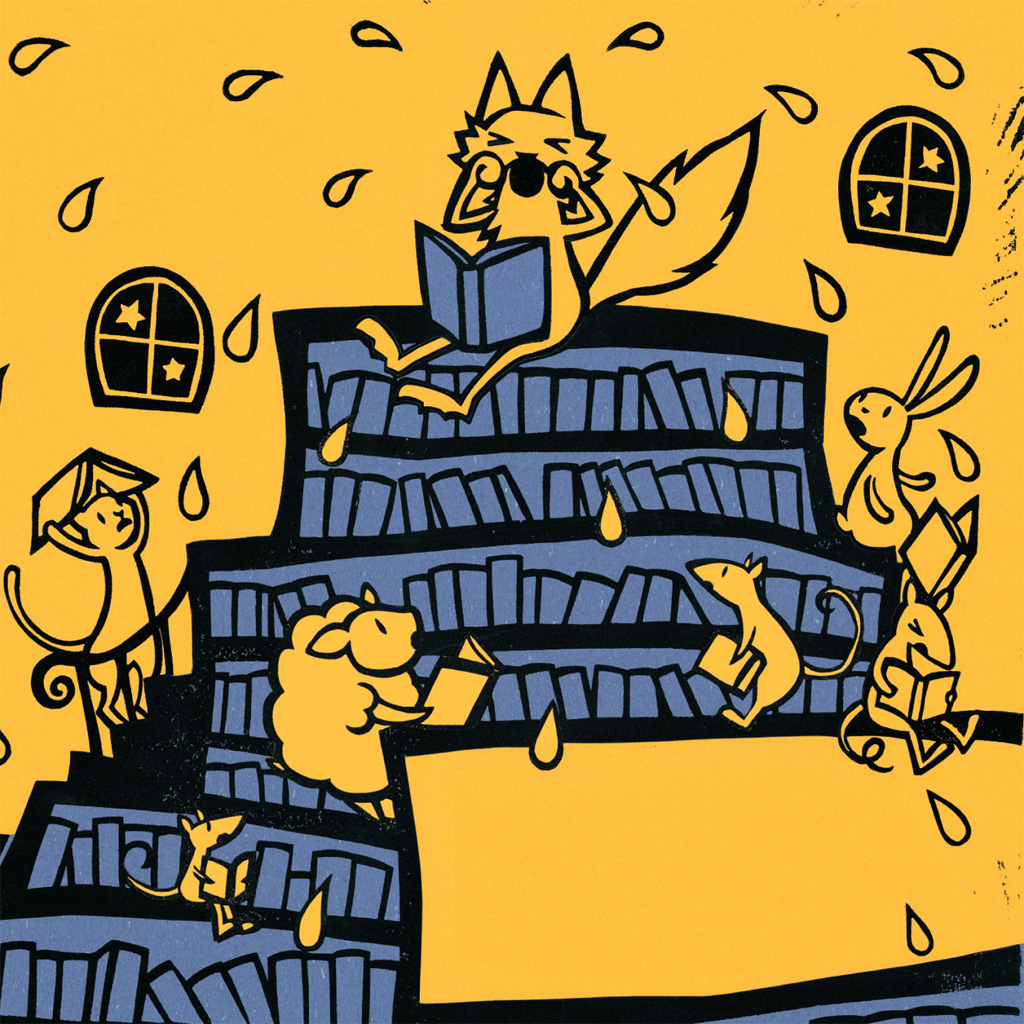
Later that night it begins to rain—inside! The little librarian climbs the ladder to look at the roof, but instead of a leak she finds a wolf sobbing away. Her book is so sad, the wolf says, that she can’t read on. Gently, the librarian takes her to the storytelling corner where she, the owls, and Miss Wolf read the story together. The wolf discovers the book has a happy ending, something the library workers knew all along.

celebrate-picture-books-picture-book-review-the-midnight-library-wolf-cries

Image copyright Kozuno Kohara, courtesy of us.macmillan.com

All too soon the sun peeks over the horizon, and it’s time for the library to close. The patrons file out one by one, but who is left leisurely reading his book in the corner? It’s a tortoise who says he is not leaving until he finishes his book—only 500 pages to go! Once again the little librarian has the answer! She gives the tortoise a library card and reveals that he can take the book home with him and finish it there. The tortoise heads home feeling happy and lucky with the book strapped to his shell.

celebrate-picture-books-picture-book-review-the-midnight-library-saying-goodbye

Image copyright Kozuno Kohara, courtesy of us.macmillan.com

With the library to themselves, the owls and librarian tidy up the shelves and snuggle in with one last book—bedtime stories for the sleepy owls.

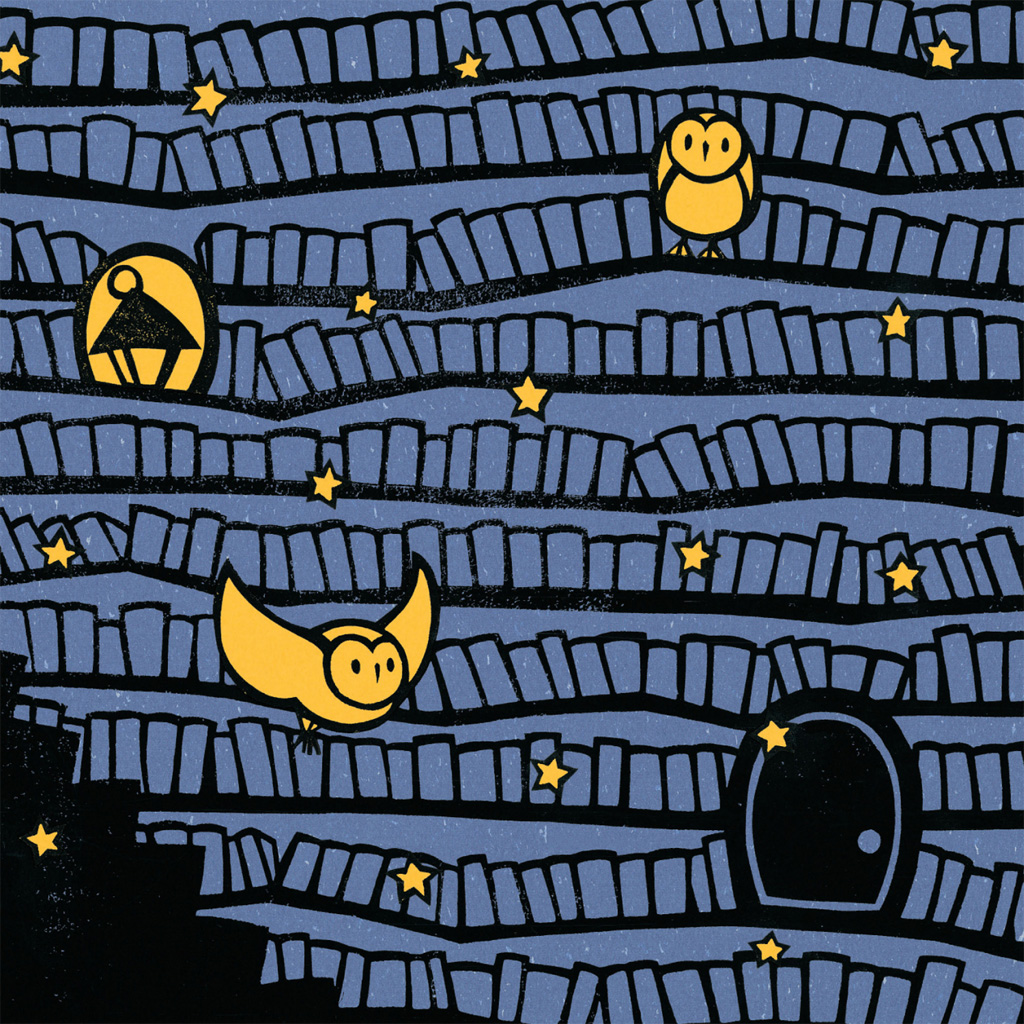
The Midnight Library is a perfect bedtime—or daytime—book for budding bibliophiles and library lovers. With its dreamy quality, Kazuno Kohara’s story is as inviting and comforting as a favorite reading nook, and the little librarian of this nighttime treasure trove is sweetly reassuring as she quickly and calmly resolves the issues that arise in her domain. 

celebrate-picture-books-picture-book-review-the-midnight-library-at-night

Image copyright Kozuno Kohara, courtesy of us.macmillan.com

Kohara’s characters are adorable, smiling with pleasure at gathering in their favorite place. An image of the owls holding Miss Wolf’s hands as they read her book together is particularly touching. Kids will love the tricolor pages that masterfully capture both the mystery and radiance of this welcoming after dark meeting place. As readers reach the end of the story, they will look forward to the next night when they can visit The Midnight Library again.

Ages 3 – 6

Roaring Brook Press, 2014 | ISBN 978-1596439856

Library Lover’s Month Activity

CPB - Librarian Thank You card

Design a Thank You Card


During this month make a card to tell your librarians why you love them and what you like best about the programs they create for you! Print the Thank You! card and then draw a picture and/or write a message and sign your name. Then fold it and give it to your favorite librarian. Get the Thank You! card here.

Picture Book Review
November 29 – It’s National Family Literacy Month

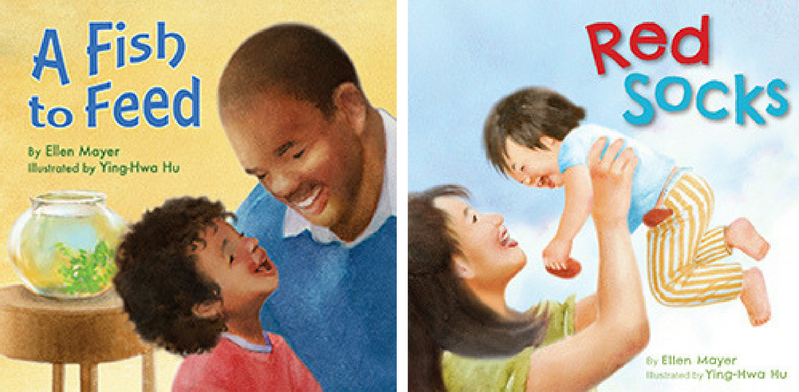
celebrate-picture-books-picture-book-review-a-fish-to-feed-red-socks-covers-image

About the Holiday

Today’s observance was established in 1994 to promote family and community involvement in teaching and supporting children to read more. Family members can make reading a priority at home by sitting down together every day with a wide range of books and other reading material. By taking trips to the library and bookstores, children will also naturally pick up a love of reading. But families can’t do it alone. Kids acquire a drive to read when they see connections between books and their wider world. Fun book-related activities at schools, libraries, science centers, museums, and other places capture children’s attention and make them curious about reading more. Whether children are attracted by fiction or nonfiction, picture books or chapter books, novels or graphic novels, they should be encouraged to read. Universal literacy is a goal that can be accomplished.

About Small Talk Books®

Ellen Mayer’s Small Talk Books® feature young children and adults conversing (or adults speaking to children who are not talking yet) while they have fun, do chores, shop, and bake together. Their conversations demonstrate the kind of excitement and close relationships that encourage learning and language advancement. Each Small Talk Book® includes an accompanying note from Dr. Betty Bardige, an expert on young children’s language and literacy development and the author of Talk to Me, Baby! How You Can Support Young Children’s Language Development. The introduction discusses how children connect actions, words, and meaning as adults speak to them while doing particular jobs or actions.

Other titles in the Small Talk Books® series include Cake Day and Rosa’s Very Big Job. Each book makes a wonderful gift for baby showers, new parents, or anyone with young children in the family. They would be a welcome addition to any young child’s bookshelf as well as libraries and preschool classrooms.

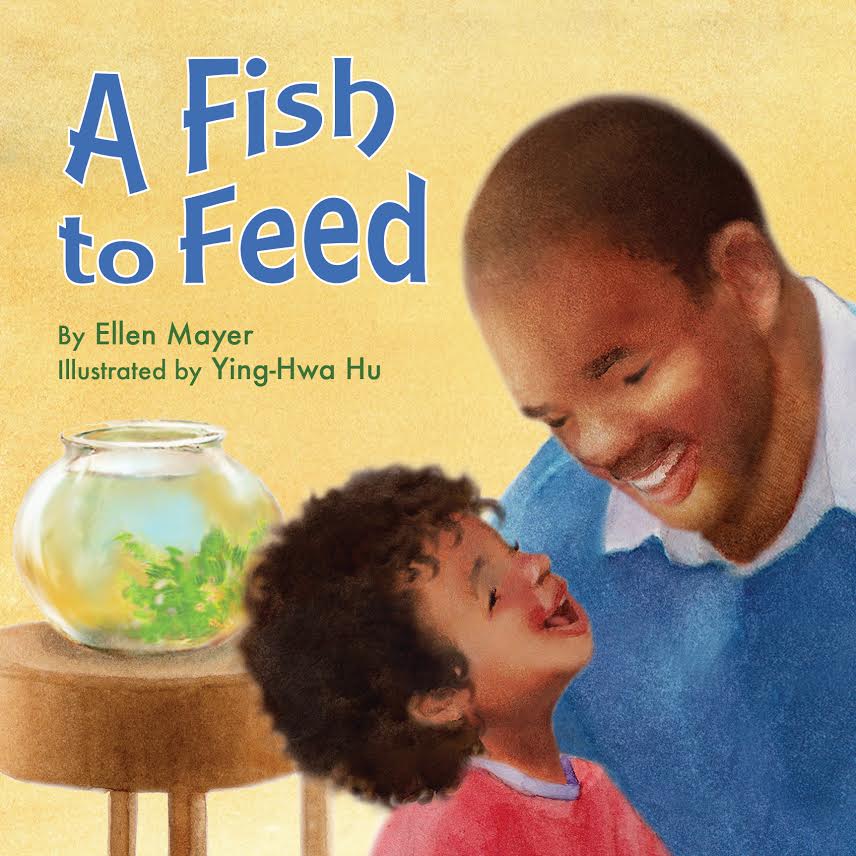
celebrate-picture-books-picture-book-review-a-fish-to-feed-coverA Fish to Feed

Written by Ellen Mayer | Illustrated by Ying-Hwa Hu


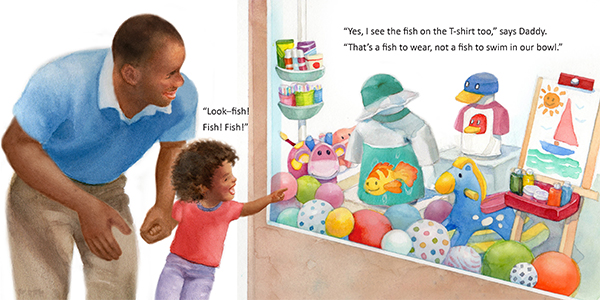
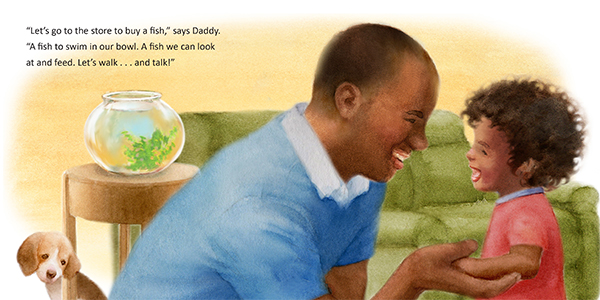
Dad plans a fun trip into town with his young child to buy a pet fish. He says, we will get “a fish to swim in our bowl. A fish we can look at and feed.” The pair are excited to go together and have time to “walk…and talk.” The two head out and soon pass a store. In the window the child sees a T-shirt with the picture of a fish on it and points. “Look—fish! Fish! Fish!” Dad reinforces the observation—“Yes, I see the fish on the T-shirt too.”—and further explains: “That’s a fish to wear, not a fish to swim in our bowl.”

celebrate-picture-books-picture-book-review-a-fish-to-feed-t-shirt

Image copyright Ying-Hwa Hu, text copyright Ellen Mayer. Courtesy of starbrightbooks.com

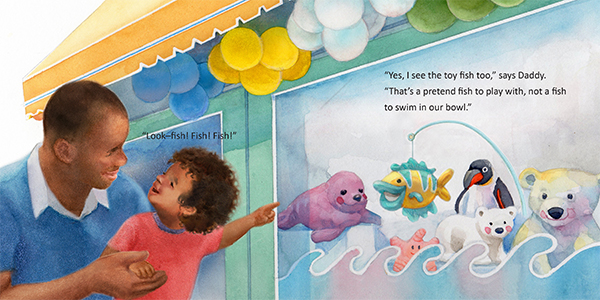
Going into the store, Dad and his youngster find another item with a fish on it. On a shelf is a backpack with a picture of a gold-and-yellow fish on the front pocket. This is a “fish to wear on your back,” Dad says, before going in search of a “fish to feed.” Next, the two come to a toy store. The child points to another fish—a fish on a mobile. “Look—fish! Fish! Fish!” the toddler exclaims. Dad affirms his child’s remark and expands on it using complete sentences that model conversation and increase vocabulary. They linger in the shop, finding other examples of fish.

celebrate-picture-books-picture-book-review-a-fish-to-feed-mobile

Image copyright Ying-Hwa Hu, text copyright Ellen Mayer. Courtesy of starbrightbooks.com

“‘Now let’s go find a fish to feed,’ says Daddy.” They head out of the store and continue down the street. As they come to the Pet Shop, the little one shouts, “‘Look—fish! Fish swim!” Daddy echoes the excitement while praising his child. “‘You found a fish that swims!’” They take the goldfish home, where it swims happily in their bowl—a pet they “can love and feed.”

A Fish to Feed contains die-cut holes in the pages that kids will love peering through as they shop along on this adventure to find a special pet.

celebrate-picture-books-picture-book-review-a-fish-to-feed-dad-and-child

Image copyright Ying-Hwa Hu, text copyright Ellen Mayer. Courtesy of starbrightbooks.com

Ellen Mayer’s story of a dad and his child out for an afternoon together as they look for a pet to love offers adults and children such a sweet way to spend time with one another. The story, set in the familiar environments of home and stores and revolving around a close parent-child relationship, will engage even the youngest readers. The back-and-forth conversation between Dad and his child as they shop models ways in which adults can follow a child’s lead while providing language and literacy development. The abscence of gender-specific pronouns makes this a universal story.

Ying-Hwa Hu’s illustrations are vibrant and joyful. When Dad bends down to be at eye-level with his toddler as they talk, the close bond between them is obvious in their smiling and laughing faces. The shops are full of colorful toys, clothes, backpacks, and other items that will capture kids’ attention. Spending time looking at each page allows adults and children to point at the various items, name them, and talk about them.

Ages Birth – 5

Star Bright Books, 2015 | ISBN 978-1595727077

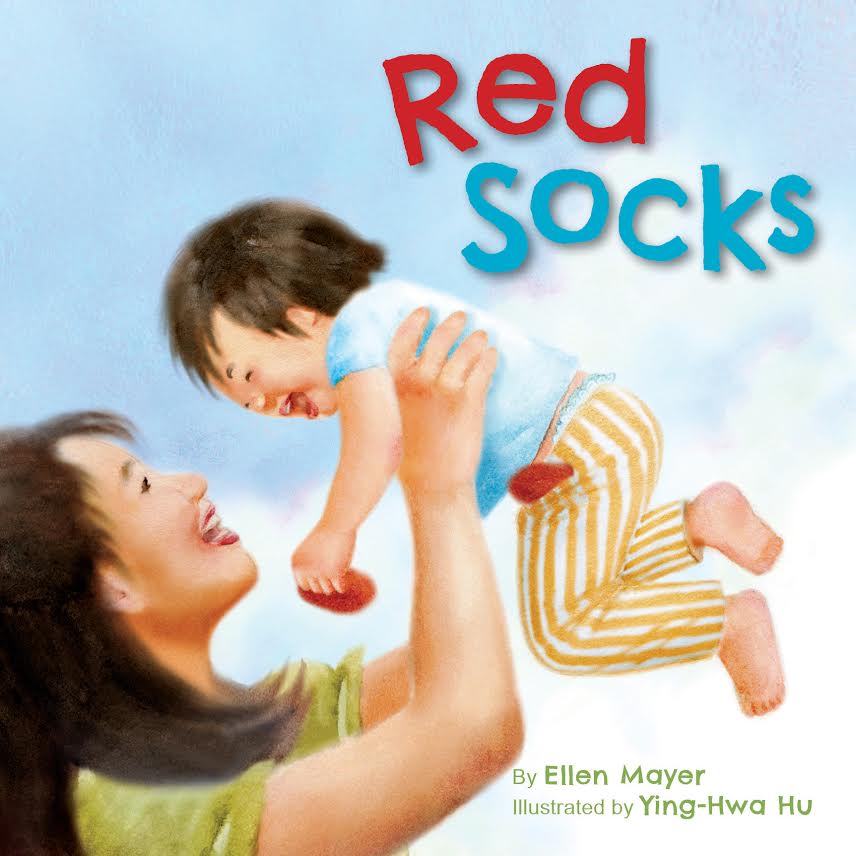
celebrate-picture-books-picture-book-review-red-socks-coverRed Socks

Written by Ellen Mayer | Illustrated by Ying-Hwa Hu


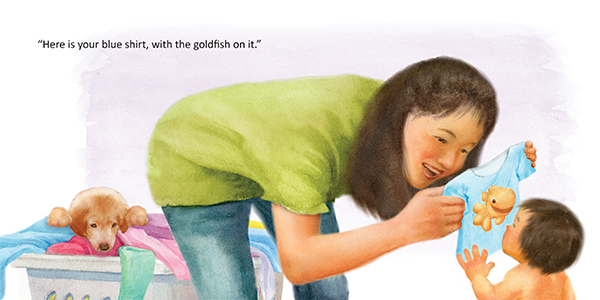
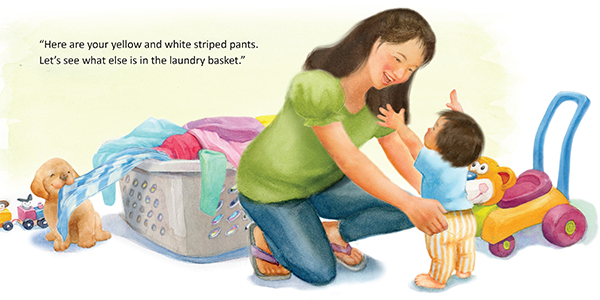
It’s laundry day and the clothes are all dried and soft and ready to wear. “‘Here is your blue shirt, with the goldfish on it,’” Mama says, pulling the top out of the basket and bending down to eye level to show it to her baby. Next, Mama describes the “yellow and white striped pants” she puts on her child. “‘Let’s see what else is in the laundry basket,’” she says.

celebrate-picture-books-picture-book-review-red-socks-shirt

Image copyright Ying-Hwa Hu, text copyright Ellen Mayer. Courtesy of starbrightbooks.com

Mama pulls a tiny red sock from the basket, but—“UH-OH!—where is the other red sock?’” Now it’s the baby’s turn to help. With a look down, the toddler shows Mama where the sock is. “‘You found the other red sock. Yay!’” she says, giving words to the baby’s action. She continues explaining while pointing to the sock poking out of the baby’s pocket: “‘It was hiding in your pants pocket!” Once the laundry is folded, Mama tells her child exactly what they will do next while she playfully slips the other red sock on the baby’s wiggling feet. “‘Let’s put that other sock on your foot. Then we can go play outside.’” As the baby flies in the swing outside, the red socks are brilliant dots against the blue sky.

celebrate-picture-books-picture-book-review-red-socks-pants

Image copyright Ying-Hwa Hu, text copyright Ellen Mayer. Courtesy of starbrightbooks.com

Ellen Mayer’s simple and charming story of a particular moment in a mother and child’s day will immediately appeal to even the youngest reader. Familiar words coupled with clear, vivid illustrations will engage toddlers who are pre-talking and just learning language and concept development. The mother’s use of complete sentences as well as step-by-step descriptions of the activities the child sees and is involved in demonstrates how adults can converse with their babies and young children to encourage strong language and literacy skills. Free of gender-specific pronouns, Red Socks is a universal story.

Ying-Hwa Hu’s illustrations show a mother and child interacting on a typical day while they complete common chores and go outside to play. The mother and child portray a range of emotions and gestures, giving further depth to the understanding of the ideas and conversation presented. Kids will giggle at the adorable puppy who causes a bit of mischief on each page.

Ages Birth – 5

Star Bright Books, 2015 | ISBN 978-1595727060

To learn more about Ellen Mayer and her Small Talk Books® (including other titles: Cake Day and Rosa’s Very Big Job) as well as to find activities to accompany each book, visit her website!

Discover more about Ying-Hwa Hu and view a portfolio of her illustration work on her website!

Red Socks and Too Small to Fail

Red Socks was chosen by Too Small to Fail, an early literacy initiative of The Clinton Foundation to feature in their Wash Time is Talk Time project. Wash Time is Talk Time serves underserved communities and provides resources to turn time spent at the laundromat into an opportunity for families to talk together, read together, and learn together. Language-rich literacy resources will be delivered to more than 5,000 laundromats across the country.

Here’s a video from one fun afternoon with families,  Ellen Mayer, and Ying-Hwa Hu during wash time!

National Family Literacy Month Activity

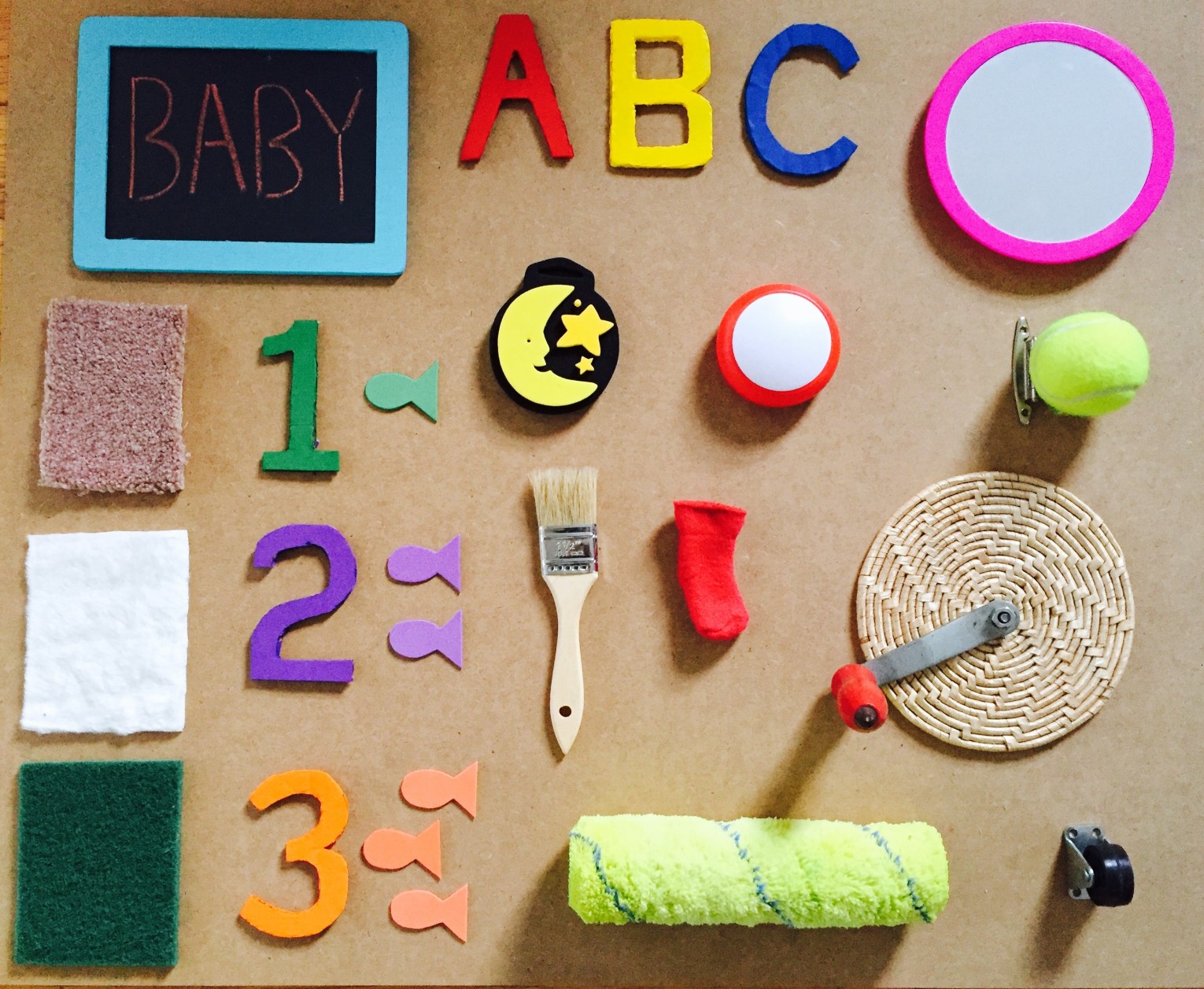
celebrate-picture-books-picture-book-review-sensory-board

Child’s Sensory Board


Toys or objects that provide many opportunities for sensory experimentation and observation stimulate a baby and young child to learn while having fun. You can make a sensory board for your own child using household items and that have a variety of textures, sizes, shapes, and movement. When you create your own sensory board, you can personalize it for your child by adding their name, pictures of family members, and other special items. While you play with your child, take time to talk about all of the objects on the board, what they do, and how they work. Count the objects. If you include words or your child’s name, spell them outloud and say them. There are so many ways to use a sensory board. Even if children can’t yet talk, they are listening and soaking in the rich language learning you are providing!

**When making your board always ensure that you use items that are not a choking hazard or can catch tiny fingers. Make sure that items are firmly attached to the board. Never leave a baby unattended while playing.**

Supplies

  • A board large enough to hold the items you want to attach. Boards that can be used include: those found at hardware stores or craft stores; large cutting boards; shelves; old table tops; etc.

Sample items for your sensory board can be age appropriate and include:

  • Large swatches of various textured material. (I used fur, a scrubbing sheet, and a piece of carpeting)
  • Wooden or thick cardboard letters and numbers, painted in a variety of colors. Letters can be used to add a child’s name to the board.
  • Figures cut from sheets of foam or wooden figures found at craft stores in a variety of numbers that you can count with your child (I used sets of 1, 2, and 3 fish cut from foam to go along with the numbers 1, 2, and 3)
  • Mirror
  • Push button light
  • Chalk board to write on
  • Castor or other wheel
  • Door latches
  • Door knockers
  • Mop heads
  • Paint rollers
  • Cranks
  • Drawer handles
  • Hinges (I attached a tennis ball to a hinge that children can push back and forth)
  • Pulleys
  • Paint in various bright colors
  • Paint brushes
  • Scissors
  • Screws
  • Nuts and bolts
  • Velcro
  • Super glue

Directions

  1. Assemble your items
  2. Paint wooden or cardboard items
  3. Arrange item on the board so that your baby or child can easily reach or manipulate each one
  4. Attach items with screws, nuts and bolts, or super glue
  5. Push button lights or other objects that take batteries can be attached with strong Velcro. Ensure items attached with Velcro are large and not a choking hazard.
  6. Set up board where you and your baby or child can enjoy playing with it together

Picture Book Review
November 22 – It’s Picture Book Month

celebrate-picture-books-picture-book-review-the-whisper

About the Holiday

Picture Book Month is an international literacy inititive put together by a group of authors and illustrators to raise awareness of the importance of print picture books. Througout the world libraries, schools, booksellers, authors, illustrators, and those who love picture books celebrate the wonder of this art form enjoyed by children and adults. The complexity of picture books is astounding. They contain some of the most beautiful art and compelling stories being created today. To learn more about the importance of the picture book visit Picture Book Month: A Celebration! to find daily posts by authors, illustrators, and experts in the field as well as fun activities!

The Whisper

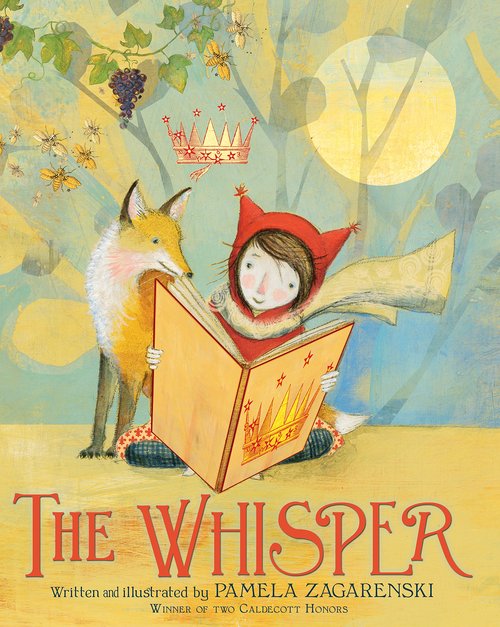
By Pamela Zagarenski


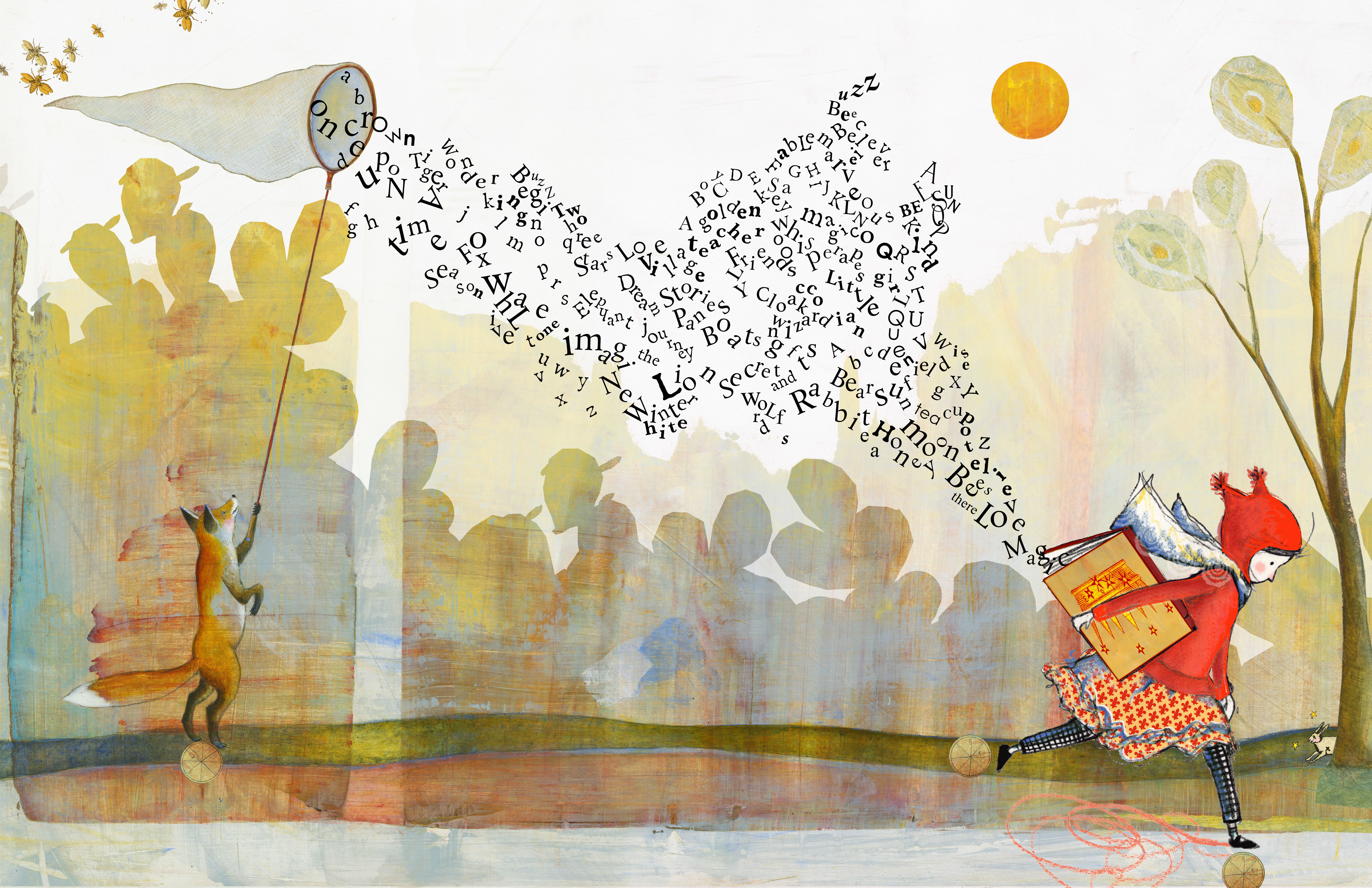
A little girl loves stories and the magical realms they can take her to. One day while waiting for school to be dismissed, she spies a book on a shelf. Her teacher allows her to take it home with her, and the little girl happily runs off with it when the clock strikes 3:00. On the way home, she doesn’t notice that all the letters are escaping from the book or that a wily fox is catching them in a net.

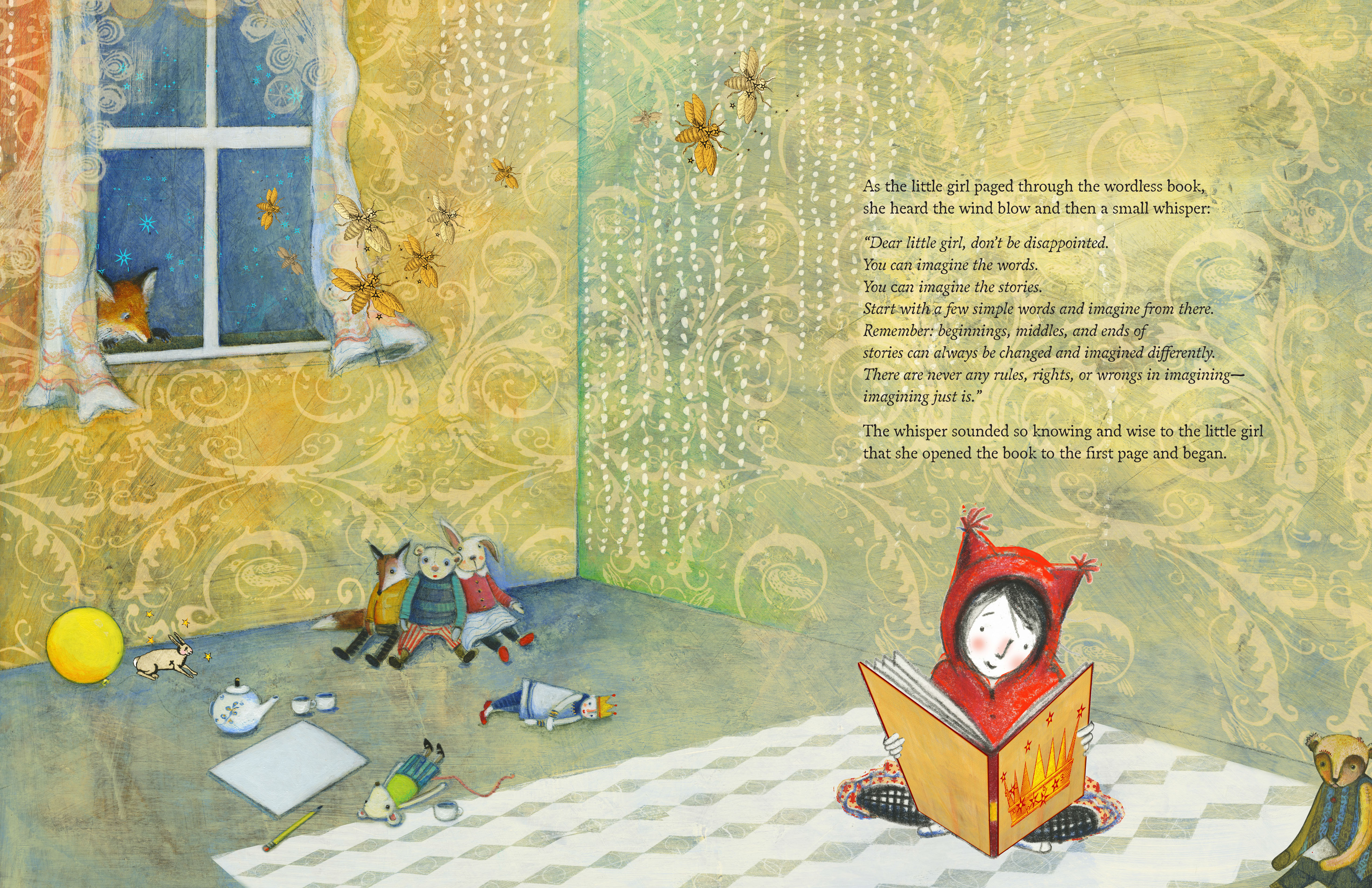
At home she secludes herself in her room, excited to read the mysterious book. She turns the pages, awed by the beautiful pictures. But by the time she has finished, she has tears in her eyes. “Where were the words? Where were the stories?” The girl flips through the book again, but this time she hears a small whisper: “Dear little girl, don’t be disappointed. You can imagine the words. You can imagine the stories.”

celebrate-picture-books-picture-book-review-words-escape-the-book

Copyright Pamela Zagarenski, courtesy of Houghton Mifflin Harcourt

The whisper seems so knowing that the girl does at it suggests. She turns to the first page where a blue bear followed by a beekeeper walks under a honeycomb sun toward a brown bear. The girl stares at the picture and thinks of a title: Blue Bear’s Visit. Her story begins: “Blue Bear arrived on the first day of spring. He promised…”

Warming to the idea of creating stories, the girl examines the second picture. She notices the same white rabbit that was in the first picture. In the foreground a “magnificent ox” is listening to a man whispering into its large, soft ear. The Secret, the little girl titles this story, which starts: “Mr. Ox, you must please promise not to tell anyone, but we need your help. Last week…”

celebrate-picture-books-picture-book-review-no-words-in-book

Copyright Pamela Zagarenski, courtesy of Houghton Mifflin Harcourt

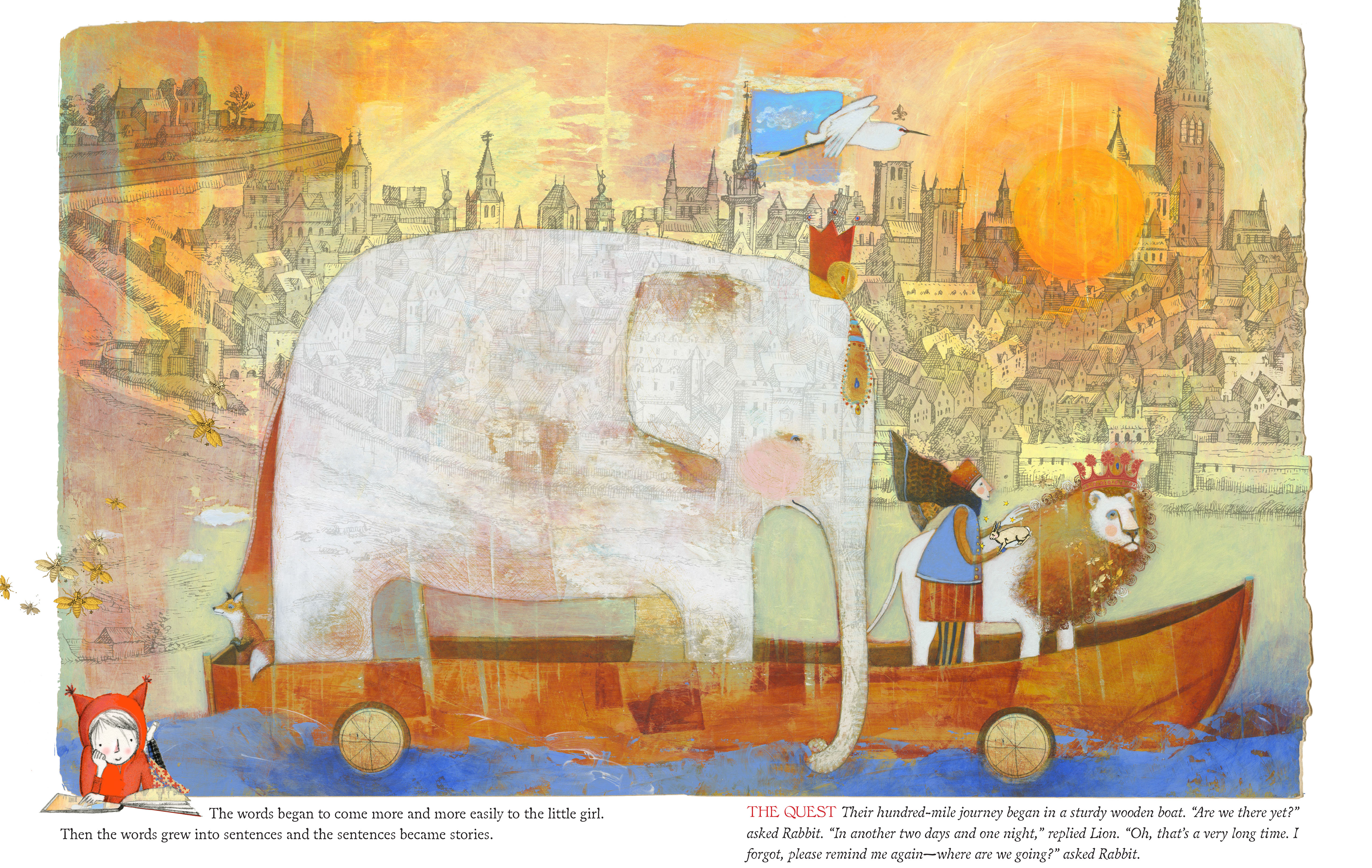
With the third picture the words tumble out more easily, forming sentences that give life to the massive white elephant, regal lion, and that rabbit again who are traveling the sea in a long, open boat. The Quest, she calls it. In Tigers Prayer, preparations are being made: tea is brewing, a clown with a pointed hat plays his accordion, a windhorse jumps through hoops, and the rabbit rides a golden ring as a lion hears what Tiger has to say. A Birthday Party comes next, and it seems Pan has planned a very secret party. An owl perches in the crook of a tree asking for the password with a “Hoo, Who?” which is answered quickly because the vanilla cake with raspberry filling and vanilla cream frosting holding 6 candles must be delivered.

celebrate-picture-books-picture-book-review-the-whisper-elephant

Copyright Pamela Zagarenski, courtesy of Houghton Mifflin Harcourt

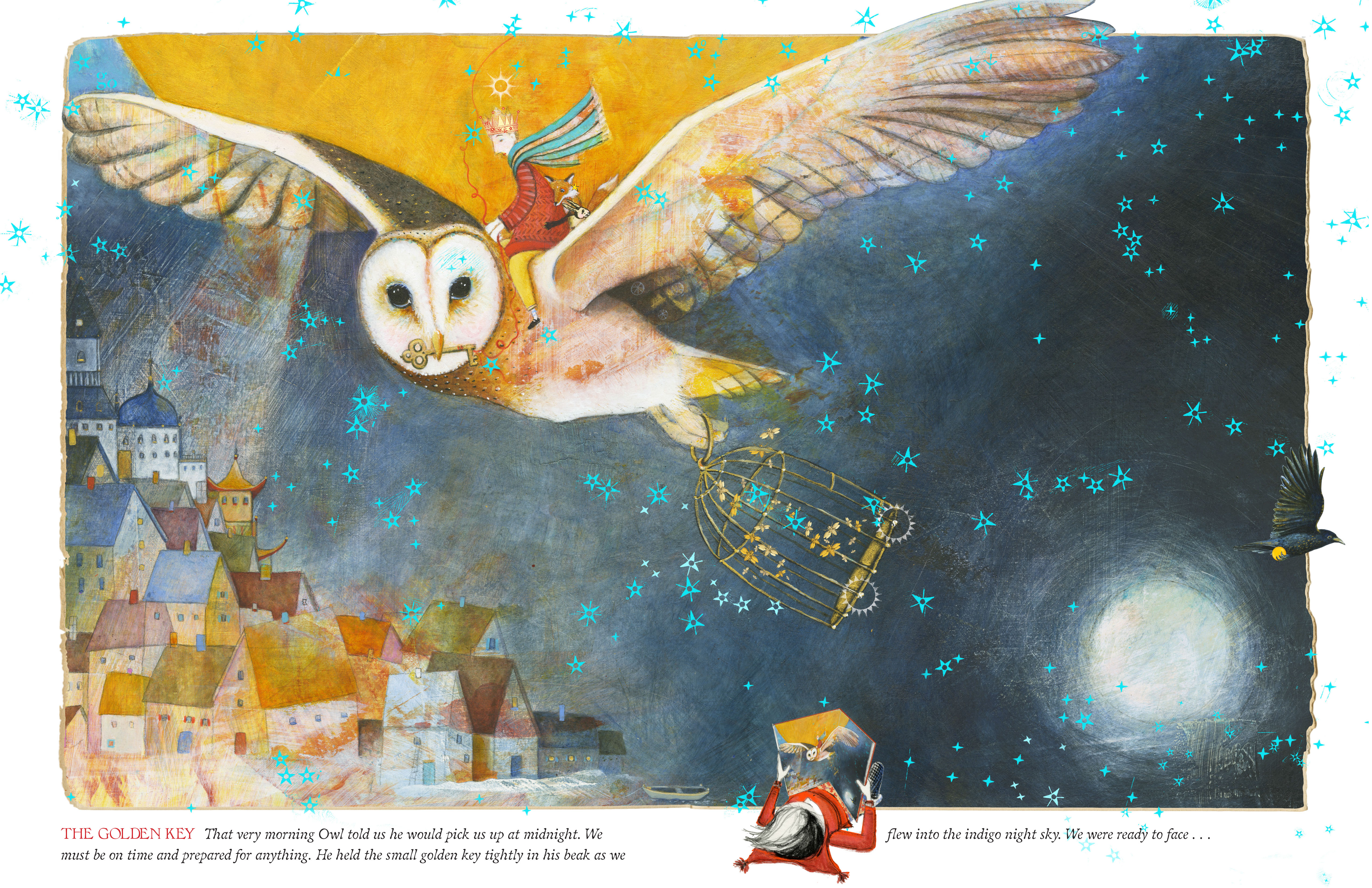
The Magical Cloak sees the little girl’s imagination truly take flight as she decides the man in the “elaborate coat” is a wizard or magician whose bubbles come to life once released from the blower. Enormous whales now fill the harbor. They are beautiful, but something must be done….Next, hurry to meet the owl! He is picking up passengers at midnight. But what does the golden key in his beak open? Only the story The Golden Key locked in the little girl’s mind will tell.

Hours go by as the little girl creates tales for each picture in the book. As the night grows late, she sleeps, carried into slumber on dreams woven from the pictures and stories she imagined. When she wakes up, the girl wishes to spend more time with her new friends, but it’s time for school so she gathers up the book and hurries away.

On the path to school she meets a fox who is carrying a bag. “Excuse me, little girl,” says the fox. “I believe I have the words to your book.” The fox then explains how he caught the words as they spilled from the pages the day before. The fox gives her his parcel, but asks for a favor. The girl is happy to oblige and lets the fox stand on her shoulders to reach a bunch of grapes dangling from a nearby vine.
celebrate-picture-books-picture-book-review-the-whisper-owl

Copyright Pamela Zagarenski, courtesy of Houghton Mifflin Harcourt

The girl rushes into school and apologizes for being late. She relates the story of the fox and the words and the magical night she has spent making up tales for the pictures in the book. “I have so many stories to tell you,” says the girl to her teacher. “‘I can’t want to hear,’” the teacher replies with a smile.”

Opening a book by Pamela Zagarenski is to fall into an alternate realm of such beauty and imagination that you forget the real world exists.  Her paintings are composed of rich, regal hues swirling with images and designs that overlap and float to create the kind of experience only the deepest, most complex dreams allow. The characters and details follow page to page uniting the pictures and, subtly, the stories the little girl discovers in them: The teapot, once introduced, waits under a tree on the next page and rides the waves of the whale-filled sea in the next. The bees and the rabbit are constant companions on each spread, and the animals will fill the reader with awe.

The little girl’s imagined stories are tantalizing with just the right mix of the mysterious and the tangible to entice readers to add more. The frame of the Aesop Fable The Fox and the Grapes is inspired and could lead to a conversation about how “life is what you make it.”

The Whisper is a book readers will want to linger over and dip into again and again, and would be especially fun on those days when there’s “nothing” to do. It makes a beautiful gift for any occasion and would be a welcome addition to any home library.

Ages 4 – 9 (this book would also appeal to adults)

Houghton Mifflin Harcourt, 2015 | ISBN 978-0544416864

Picture Book Month Activity

celebrate-picture-books-picture-book-review-I-have-the-reading-bug-bookplate

I Have the Reading Bug Book Plate


Do you want to let everyone know which books are yours? Or just declare your love of books? Then display this printable I Have the Reading Bug Book Plate in your books. on your wall, or in your locker!

Picture Book Review