November 19 – Family Stories Month

About the Holiday

Familiar stories are part of the glue that keep families together. The months of November and December, when homes can be full of family and friends for the holidays, are perfect for sharing those stories with the youngest members as a way to pass down traditions, funny or poignant memories, and even historical touchstones. Telling these stories can be especially meaningful for children experiencing the loss of a beloved family member and the activities they shared. Today’s book speaks to such loss, recovery, and rediscovering happiness. 

Thank you to Astra Young Readers for sending me a copy of this book for review!

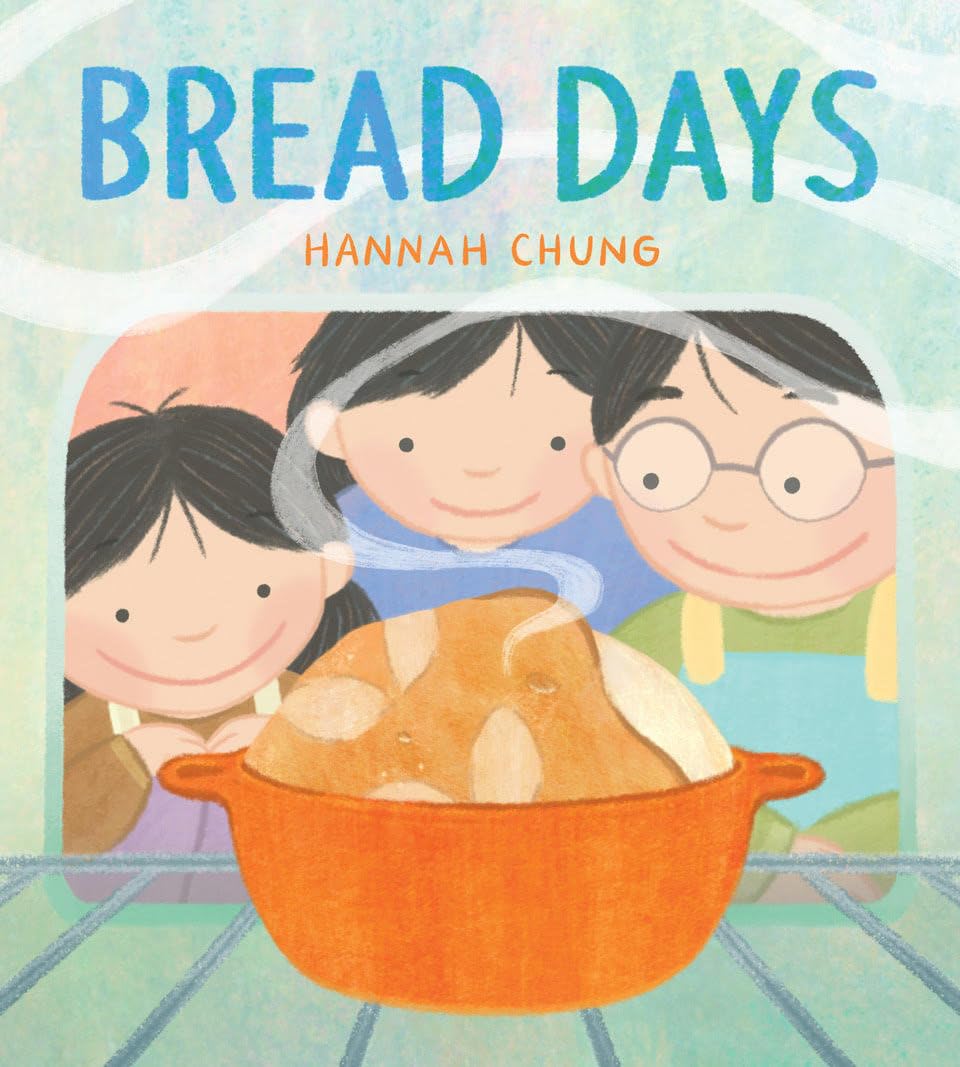
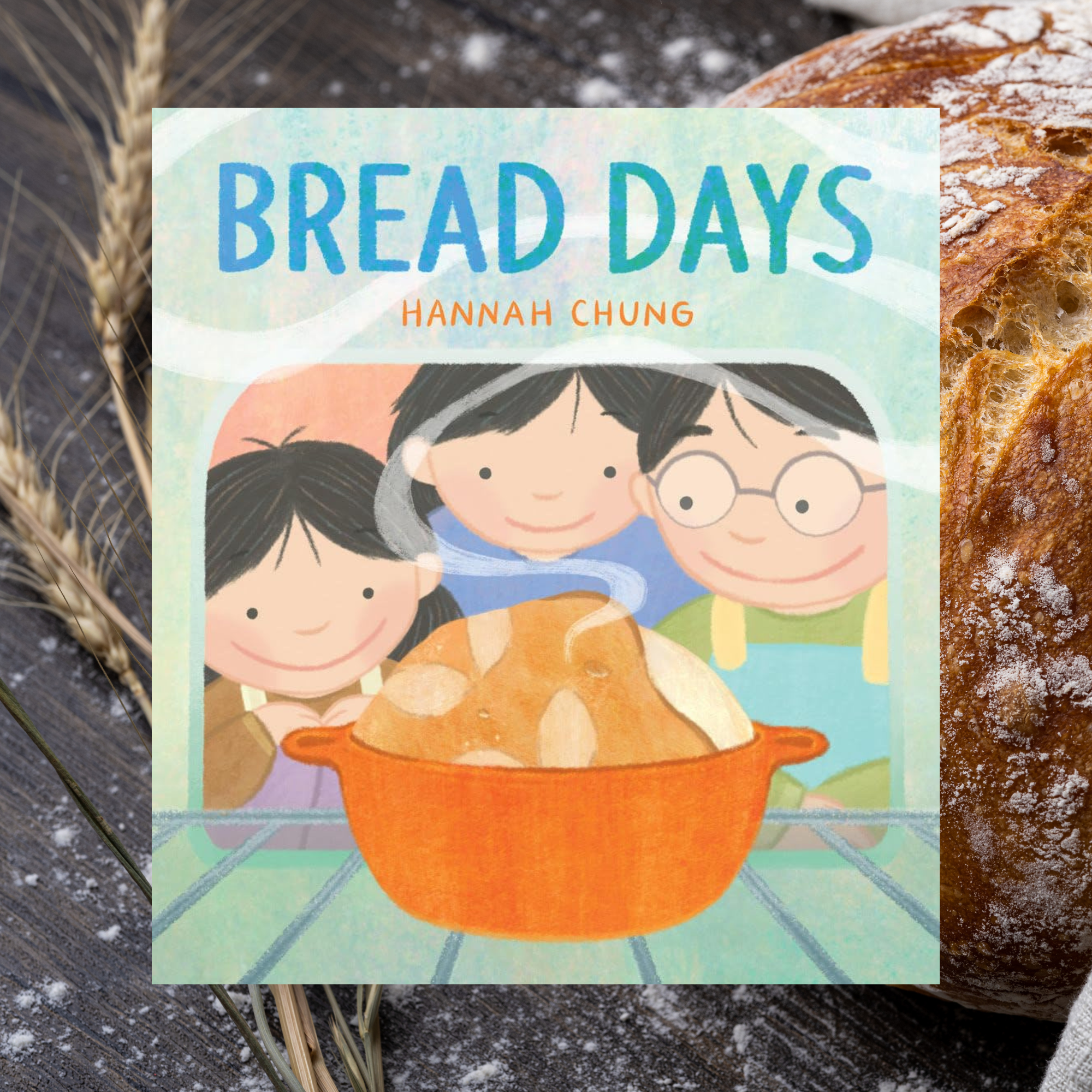
Bread Days

By Hannah Chung


For Nara, Bread Days with her father were special. She would wake up early, greet Papa—who was already in the kitchen—and then say “‘Good morning!'” to Paolo, their sourdough starter, before feeding it with flour and water. “One bubble. Two bubbles. Soon, Paolo filled his jar with bubbles.” Nara and Papa loved spending the whole day together, mixing the dough, shaping it into a round loaf, watching it rise, and scoring the top with a design Nara had drawn. Then they sat together and watched the bread bake in the oven.
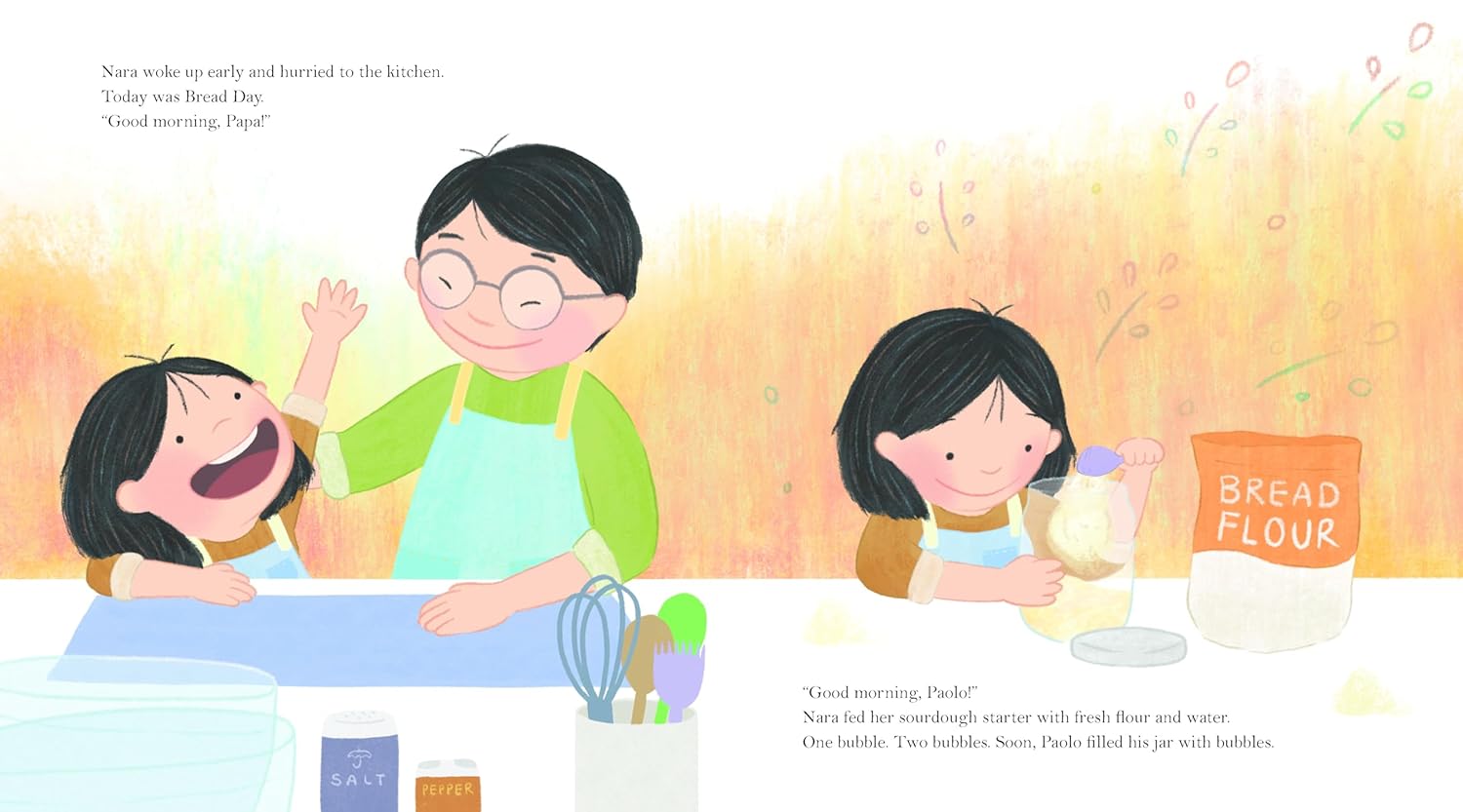
Text and illustration © 2025 by Hannah Chung. Courtesy of Astra Young Readers.

“On Bread Days, the kitchen was warm and cozy,” and Nara’s heart felt light as she and Mama and Papa enjoyed the “crunchy crust and pillowy bites.” She couldn’t wait for the next Bread Day. But one week when that day came around, Mama told her that Papa couldn’t do it. Disappointed, Nara put Paolo in the refrigerator to wait for the next time. She waited and waited, but there were no more Bread Days. “Papa was gone.” Soon, even the way Papa kept the kitchen began to change.  Nara “missed Papa more than ever.”
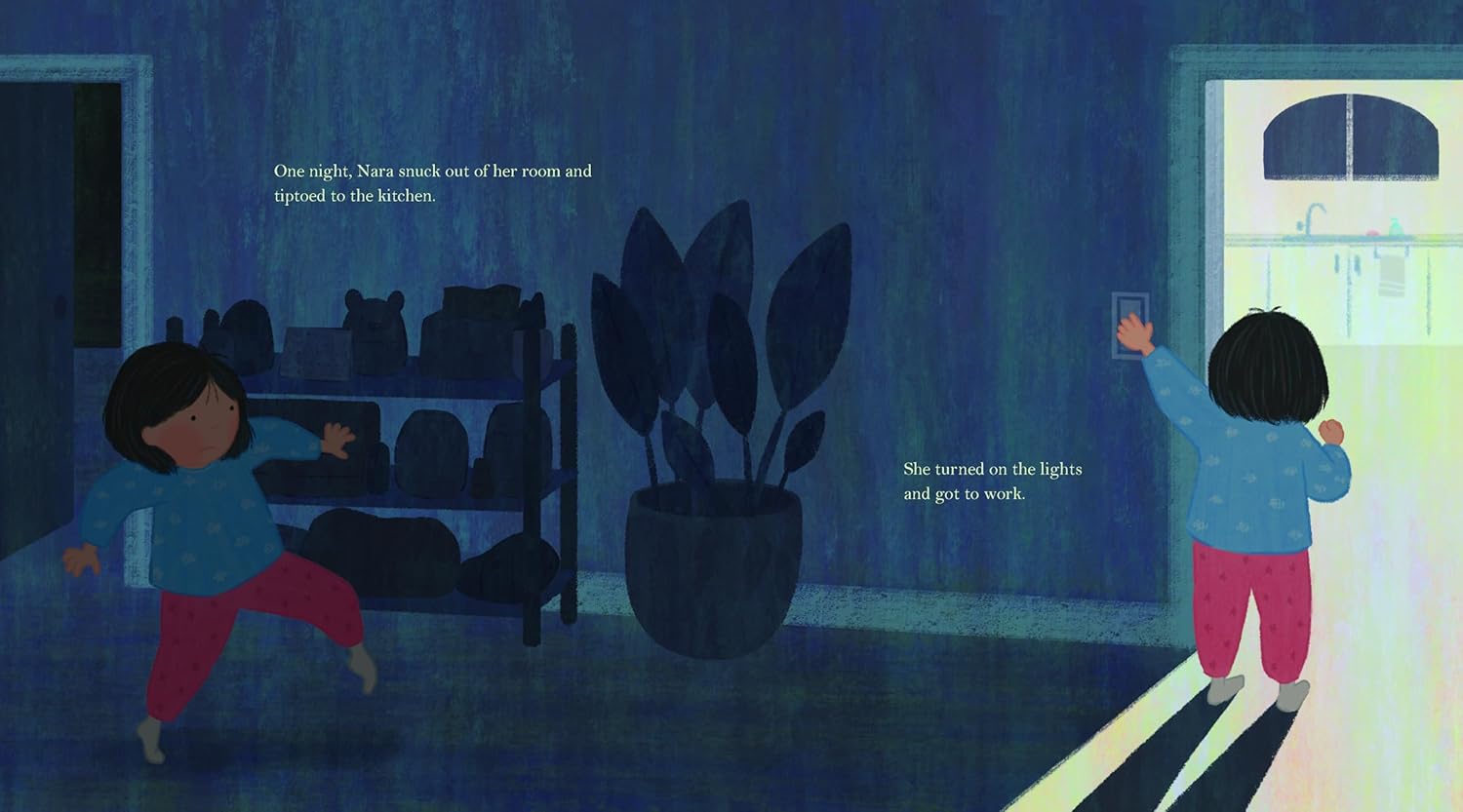
Text and illustration © 2025 by Hannah Chung. Courtesy of Astra Young Readers.

One night, while Mama was sleeping, Nara crept into the kitchen, put up all of Papa’s bread-making notes, got out the equipment, and opened the refrigerator to get Paolo. But Paolo didn’t look right. He was sticky, and floating on top was a brown liquid. Nara was crushed. She thought Paolo was gone too, that Bread Days were over. But Mama was up, and she reassured Nara that Paolo would be fine. As Mama worked with Paolo, the bubbles returned. “Paolo was back,” and for Nara it felt like Papa was there with them too.
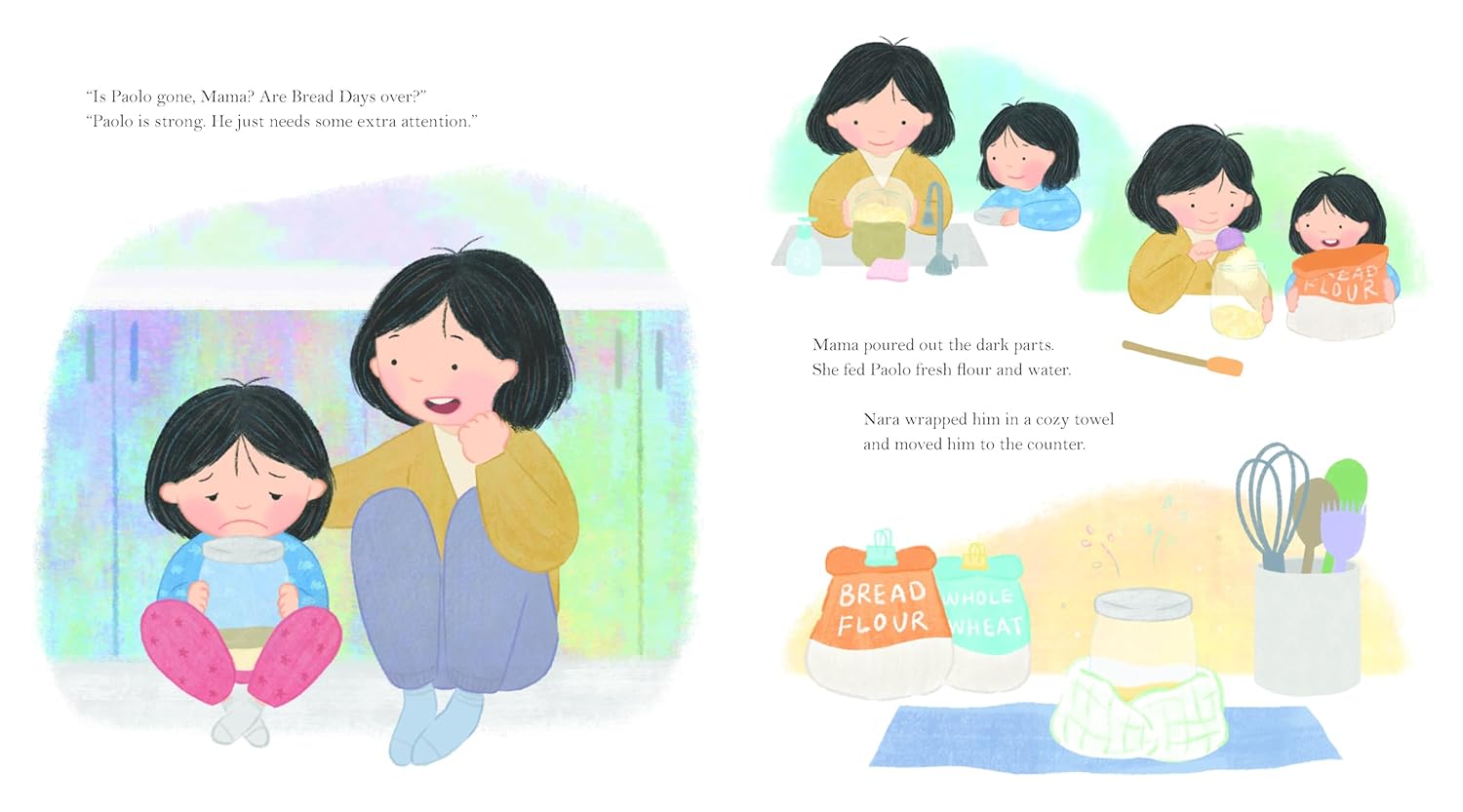
Text and illustration © 2025 by Hannah Chung. Courtesy of Astra Young Readers.

Now Nara and Mama held Bread Days, and although the loaves looked different than the ones Nara had made with Papa, they were just as tasty. Bread Days were still the best days!

Following the story, Hannah Chung includes an Author’s Note about her father, who turned hobby baking into a weekly ritual for the whole family, and how she has continued his tradition after he passed away
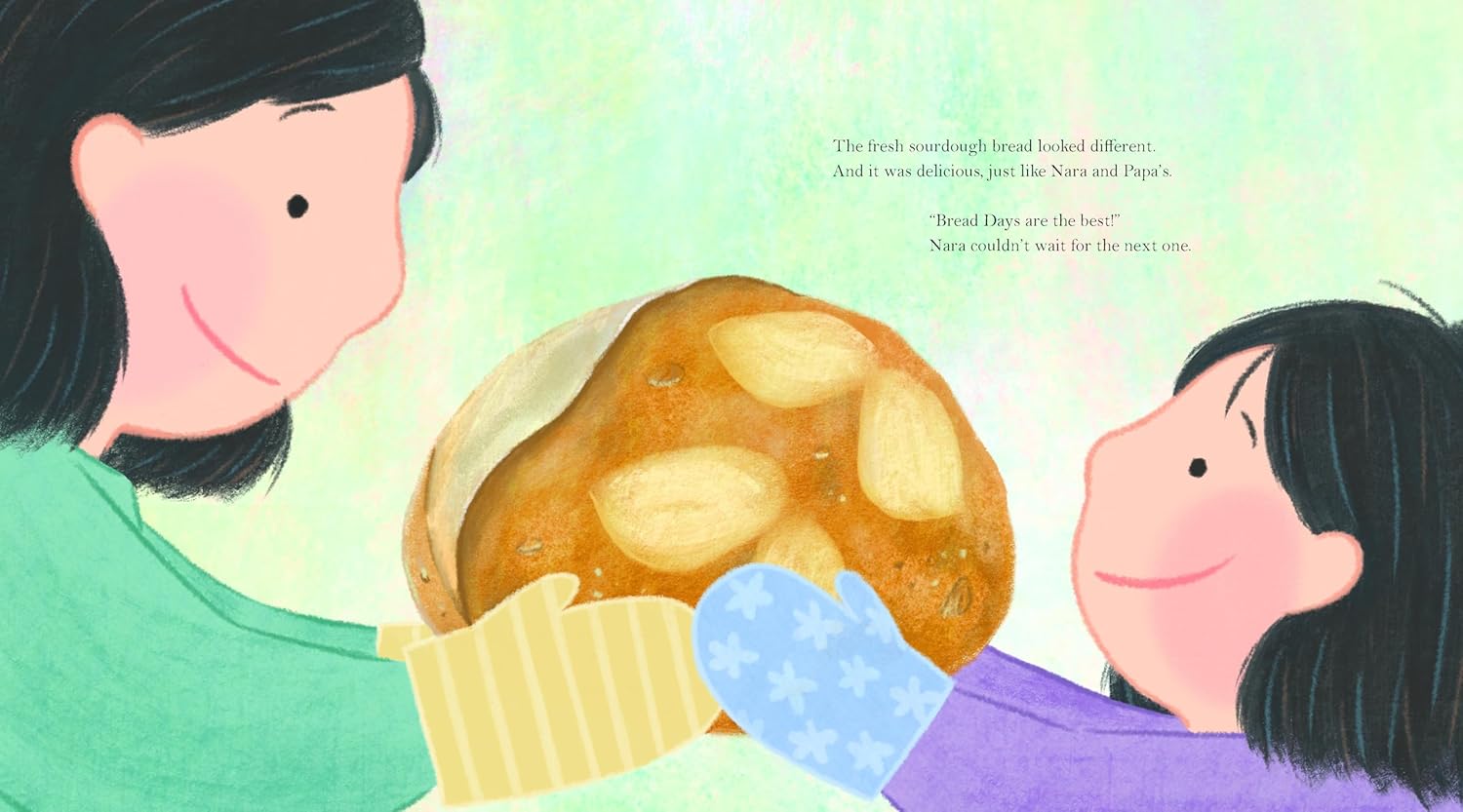
Text and illustration © 2025 by Hannah Chung. Courtesy of Astra Young Readers.

In her moving tribute to her own father, Hannah Chung draws a sweet story of the love between a father and daughter. As Nara feeds the sourdough starter and Paolo bubbles, Nara and Papa shape and score the loaf, and they watch the loaf bake together, the bread symbolizes their love and bonding over this weekly tradition. Papa’s passing may seem sudden to young readers and may need explanation by an adult, but such life-changing events can often feel abrupt and confusing to children.

With changes in the kitchen and Paolo’s development of an unfamiliar layer of hooch, Chung touches on Nara’s sadness and fear that this important connection with her father is gone too. But as Nara and her mother recreate Bread Days and Nara feels the spirit of her father there, Chung reassures readers that, as she says, “love endures in memory, rituals hold us steady, and starting anew takes quiet courage.” 

A touching story about loss and resilience, Bread Days offers comfort to any child grieving the loss of a beloved family member and affirms that their memories and continued traditions provide happiness as life continues on. 

Ages 4 – 8

Astra Young Readers, 2025 | ISBN 978-1662621017

Hannah Chung is an award-winning designer and entrepreneur in health care design for young patients. She is a frequent guest lecturer at universities and has presented at numerous conferences including TEDx and SXSW. She is the also the author/illustrator of The Most Perfect Persimmon. Hannah spends her time both in Providence, Rhode Island, and Seoul, South Korea. Visit her at hannahchung.com.

Family Stories Month Activity
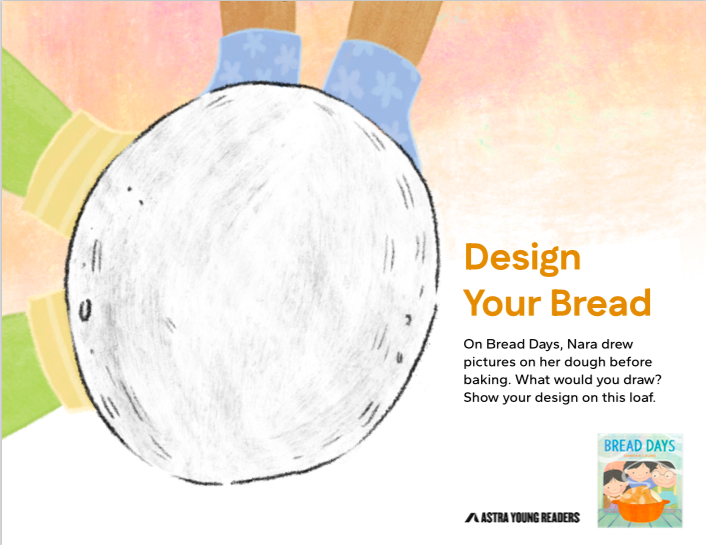
Text and illustration © 2025 by Hannah Chung. Courtesy of Astra Young Readers.

Bread Days Activity Kit from Astra Young Readers


With this Bread Days Activity Kit from Astra Young Readers, kids can enjoy their own Bread Day! Five activities, including drawing their own bread design, a crossword puzzle, pages for writing about a special day they had and what makes them happy, and a puzzle prompting them to put the steps of bread making in order. You can download it here!
You can purchase Bread Days from these booksellers

Amazon | Barnes & Noble | Bookshop (discounted books and support for your local independent bookstore)

Picture Book Review

March 4 – It’s National Reading Month

About the Holiday

National Reading Month was designed to  encourage children and adults to read every day and celebrates the joys and benefits that reading together can bring. Reading with your child can be fun and frivolous, but it can also offer ways for children to share their feelings about serious or poignant topics and begin discussions that can lead to understanding or healing.  As the month progresses, look for books to share for all the aspects of your life. 

I’d like to thank Kokila Books/Penguin Random House for sharing a digital copy of Our Lake with me to review. 

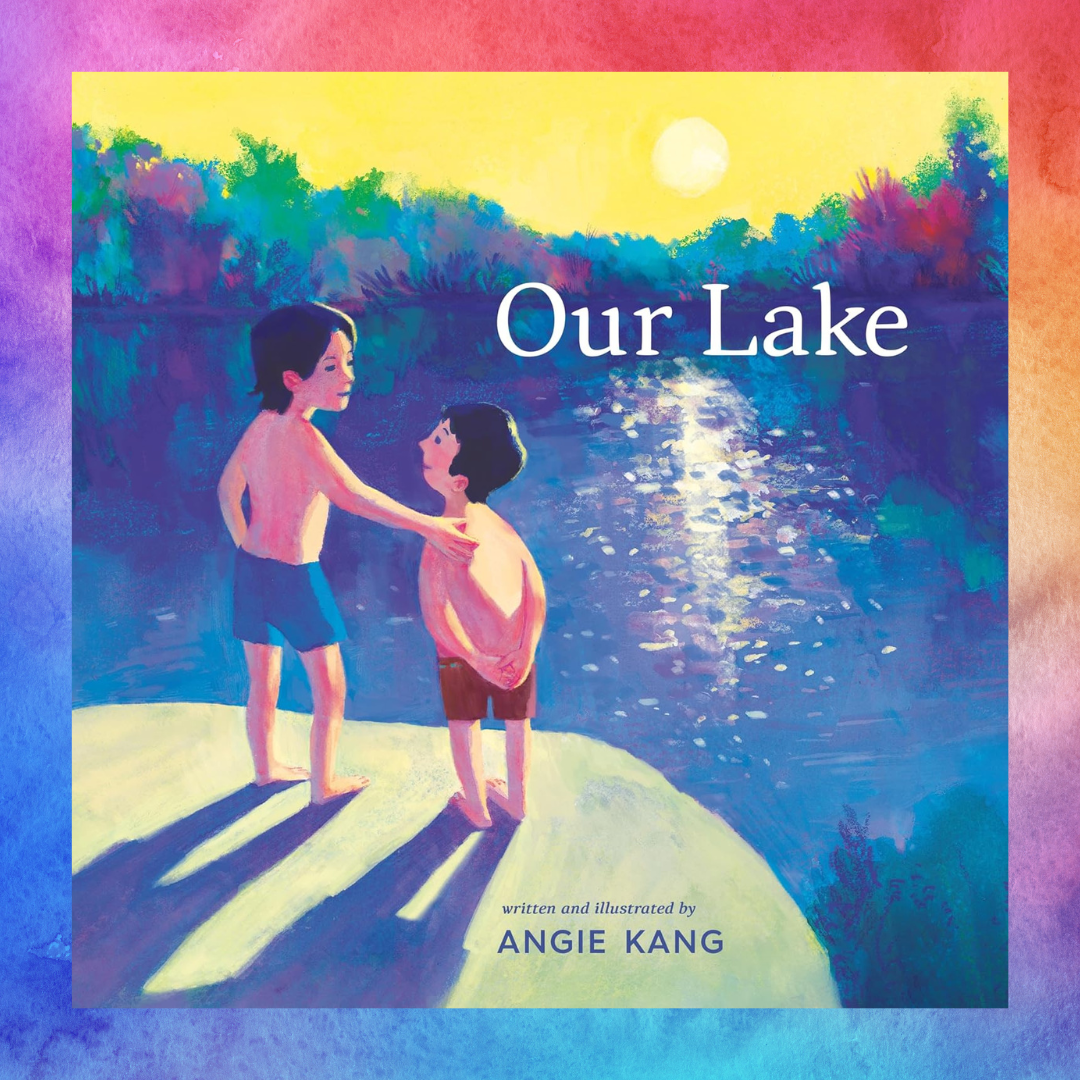
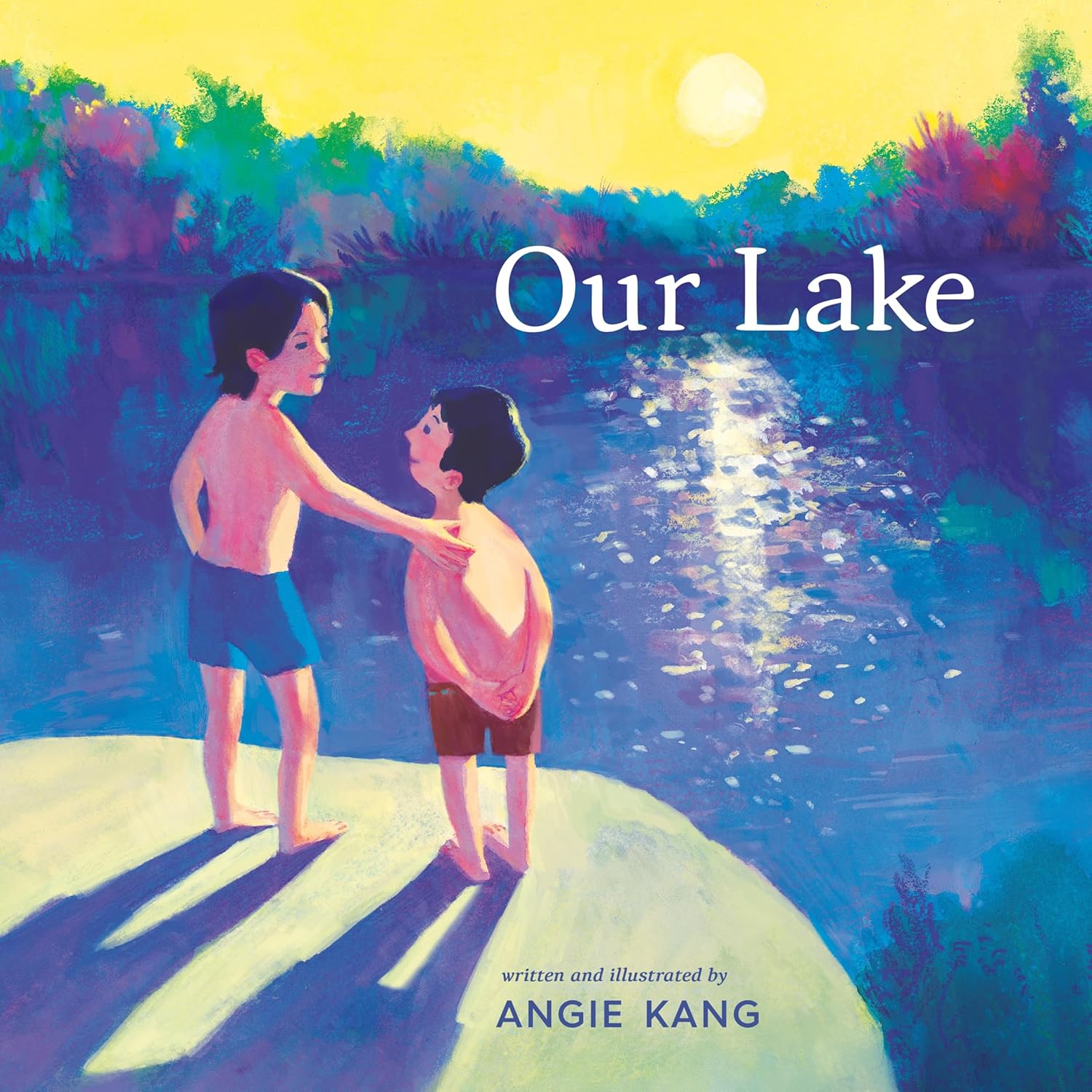
Our Lake

By Angie Kang


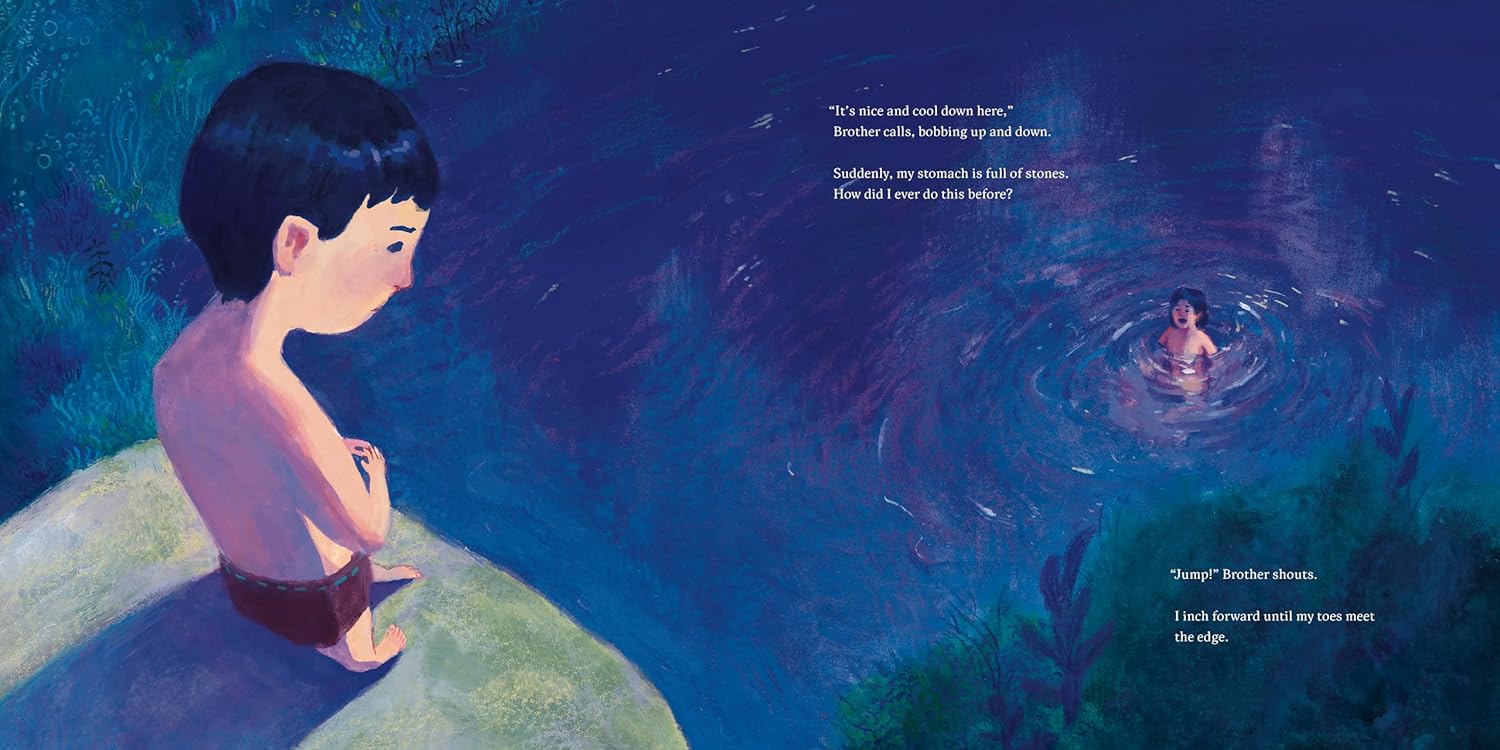
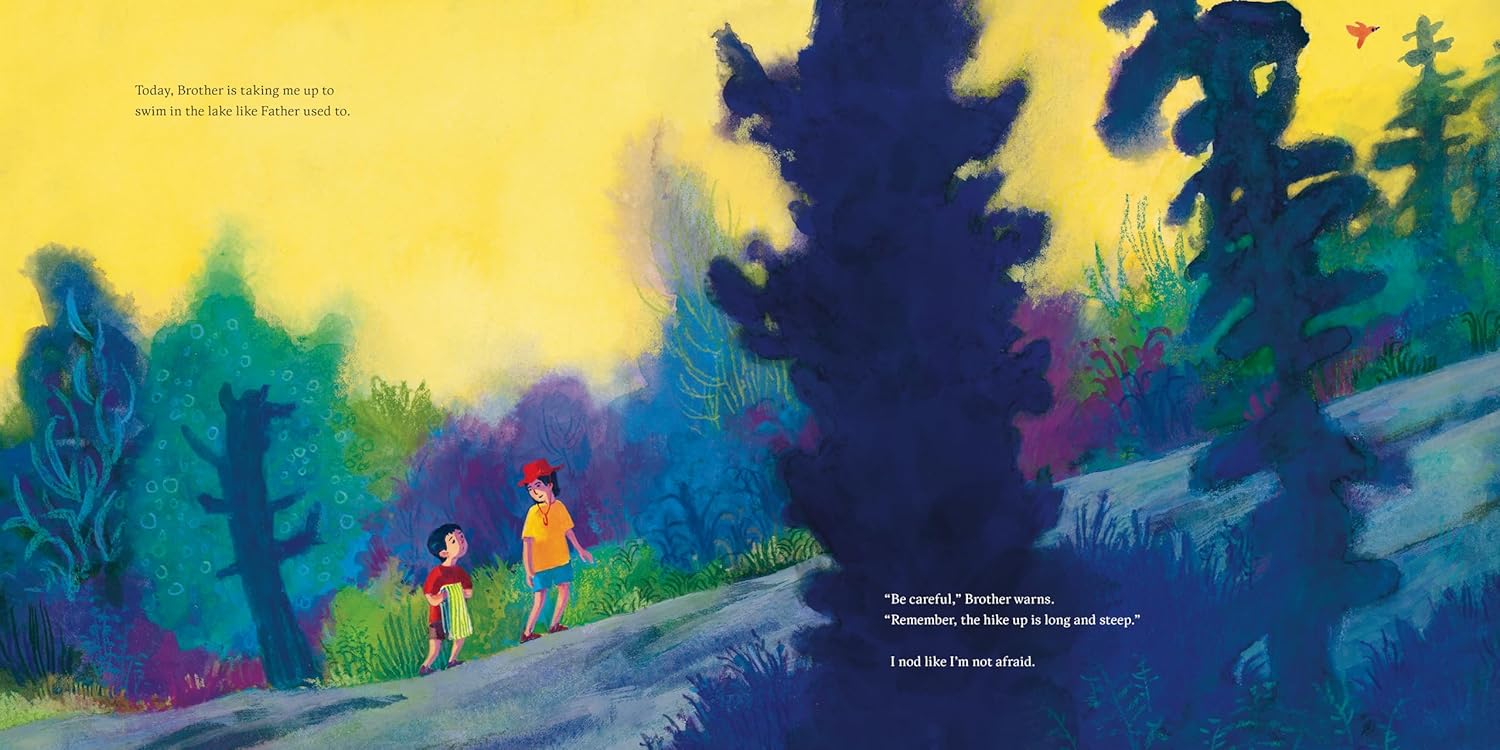
A young boy follows his older brother up a “long and steep” hill to the tip of a boulder overlooking a glistening lake, where their father, now gone, used to take them swimming. He mimics his brother, who has taken on the mantel of responsibility, in their old traditions—taking off his shirt, stretching. But while his brother approaches the lip of the rock, he hangs back, watching him “press his arms tight to his head and slip neatly into the lake.” The water ripples, and then his brother shoots upward, “triumphant.”

Illustration and text © 2025 by Angie Kang. Courtesy of Kokila/Penguin Random House.

His brother calls for him to jump, but his nerves overtake him and he closes his eyes. “On the insides of my eyelids,” he says, “I see Father.” He recalls their routine, the way his father soared before splashing down, and the sound of his laugh as he beckoned his sons to follow.

“When I open my eyes, he joy is still there, humming in my limbs,” the boy says. He hears his brother call to him again and shakes off his fear. As he nears the water, he sees his father meet him, arms outstretched. His brother cheers as he splashes in. They embrace, both feeling the presence of the father they miss.

Illustration and text © 2025 by Angie Kang. Courtesy of Kokila/Penguin Random House.

Angie Kang’s lyrical storytelling soars on the openhearted voice of her young narrator and the caring guidance of his big brother. The boys’ uplifting memories of their father and their joyful embrace of returning to one of their favorite places are moving and comforting, and ultimately inspire reassurance that the spirit of loved ones lives on within the heart. 

Kang’s gloriously rich gouache, crayon, and colored pencil illustrations illuminate the close relationship between the brothers and, individually, with their father, as exemplified by a red hat the older brother is wearing as the story begins. Later, readers learn—in a symbolic image—that this hat belonged to the boys’ father. Each boy’s facial expressions and stances also carry the story forward. Kang’s saturated paintings also offer metaphorical undertones that resonate with the truth of life’s sometimes difficult climbs as well as the wonders of shaking off fear and diving into it headfirst.

A beautiful and poignant story to help any child affected by grief or loss to find peace and joy again, Our Lake is highly recommended for families and is a must for school and public library collections.

Ages 4 – 8

Kokila/Penguin Random House, 2025 | ISBN 978-0593698235

About the Author/Illustrator

Angie Kang is a Chinese American writer and illustrator living in LA. Her work has appeared in The New YorkerNarrativeThe Believer, and elsewhere, and has been generously supported by MacDowell and other organizations. Angie graduated from the Brown-RISD Dual Degree Program with a BFA in Illustration from the Rhode Island School of Design and a BA in Literary Arts from Brown University. She enjoys painting places she remembers and places she would like to go. Learn more about Angie’s writing and art at AngieKang.net and @anqiekanq on Instagram.

You can purchase Our Lake at these booksellers

Amazon | Barnes & Noble | Bookshop (to support your local independent bookstore)

Picture Book Review
February 6 – Children’s Mental Health Week

About the Holiday


February 3rd-9th marks the United Kingdom’s 11th National Children’s Mental Health week, sponsored by the children’s mental health charity Place2Be. While the US has its own Children’s Mental Health Awareness week in May, it’s always good to share resources and support around mental health for children. This February’s theme is Know Yourself Grow Yourself, with an emphasis on building resilience and coping skills through self-understanding. To honor Children’s Mental Health week, adults and kids alike can engage in mood journaling, verbal processing of emotions, and reading books that explore just what to do to get through hard times.

Review by Dorothy Levine

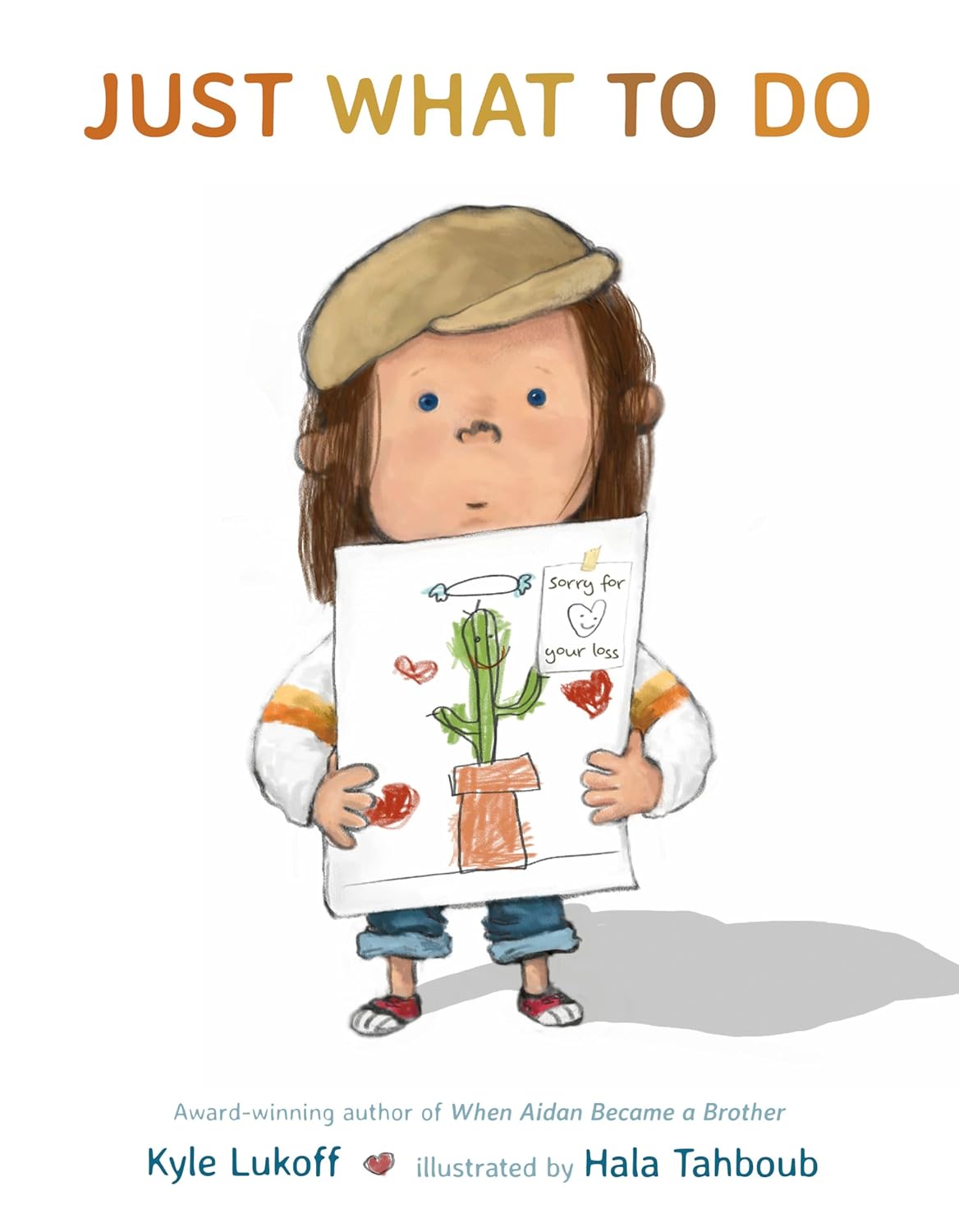
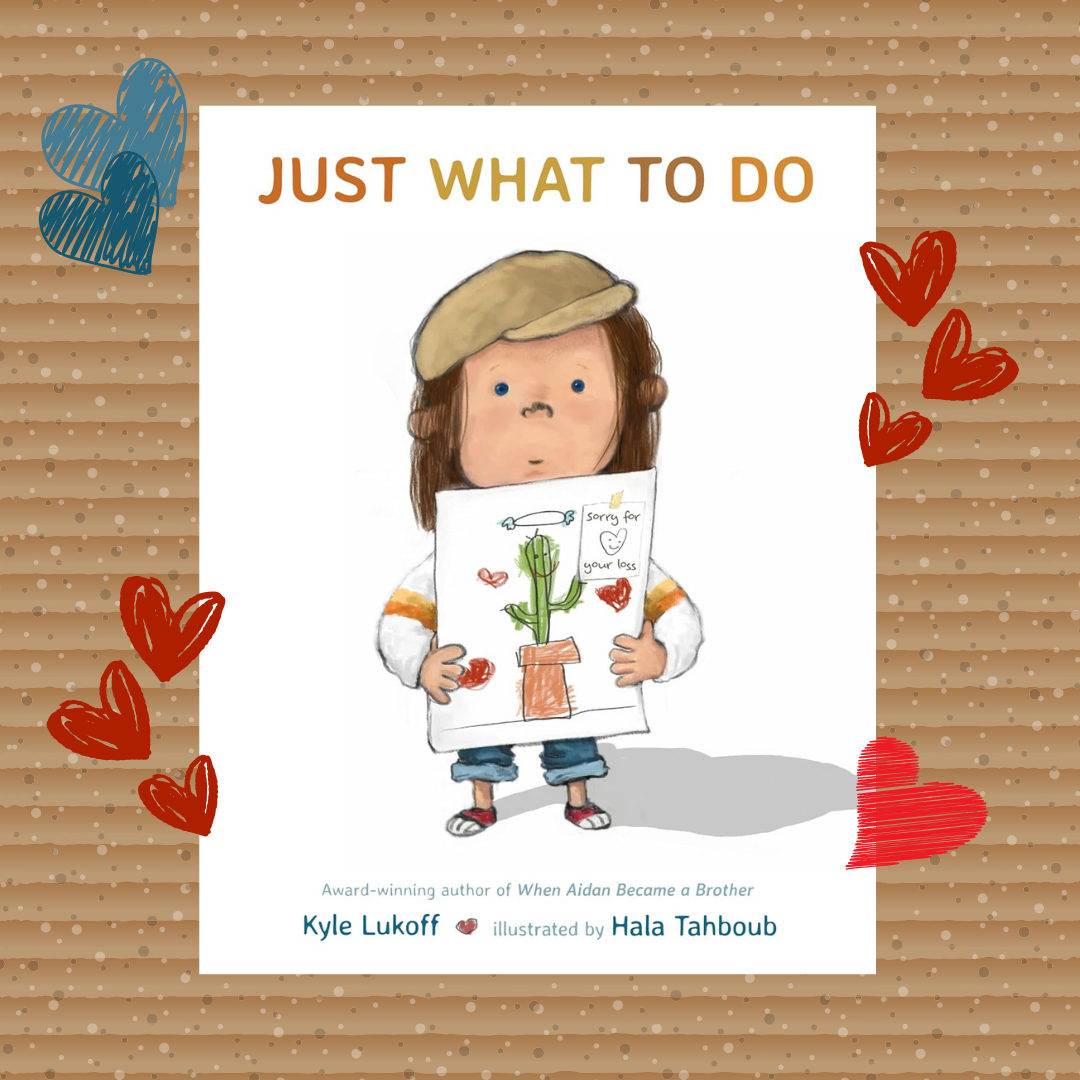
Just What to Do

By Kyle Lukoff | Illustrated by Hala Tahboub


When a loved one is experiencing a loss, it can be hard to know how best to help. Just What to Do is a gentle story that walks readers through exactly that—just what to do. The key? Figuring out how each person best likes to be comforted.

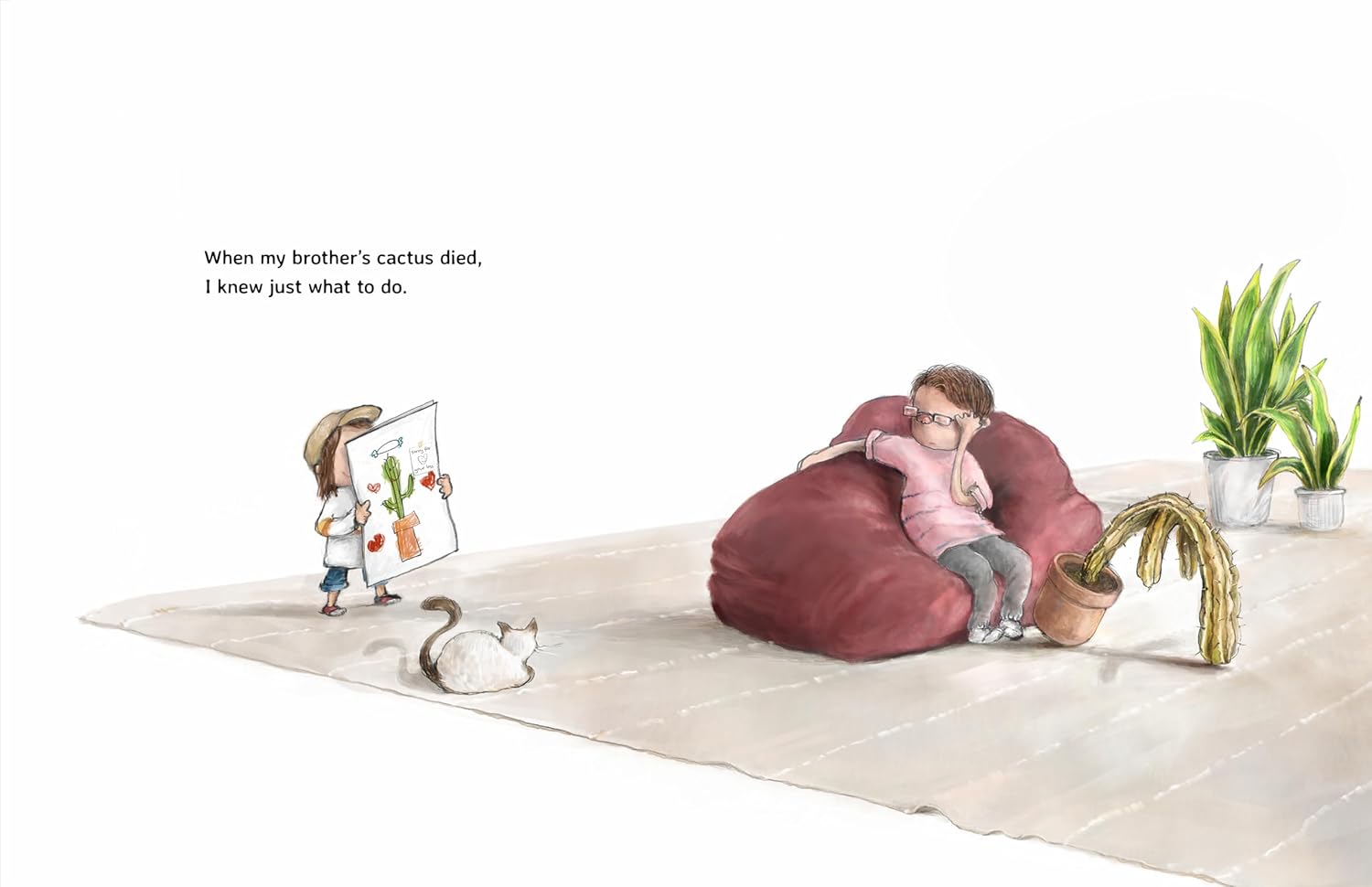
The book begins with a narrator confidently clutching a handmade condolence card with a smiling cactus angel featured on the front. “When my brother’s cactus died,” they say, “I knew just what to do.” As the narrator discovers, however, a card is not how the brother would like to receive support. “Could you tell me a joke instead? I really want to laugh.” he says.

Image copyright Hala Tahboub, 2024, text copyright Kyle Lukoff, 2024. Courtesy of Dial Books.

So, naturally, when the protagonist’s cousin’s goldfish dies, they know exactly what to do; at the library they nab a book of jokes in preparation for a visit. But instead, the cousin asks for a hug.

The pattern continues with the narrator learning a new method of supporting a loved one with each instance of grief. And learning that the same technique does not feel good to the next person in need of their comfort.

Image copyright Hala Tahboub, 2024, text copyright Kyle Lukoff, 2024. Courtesy of Dial Books.

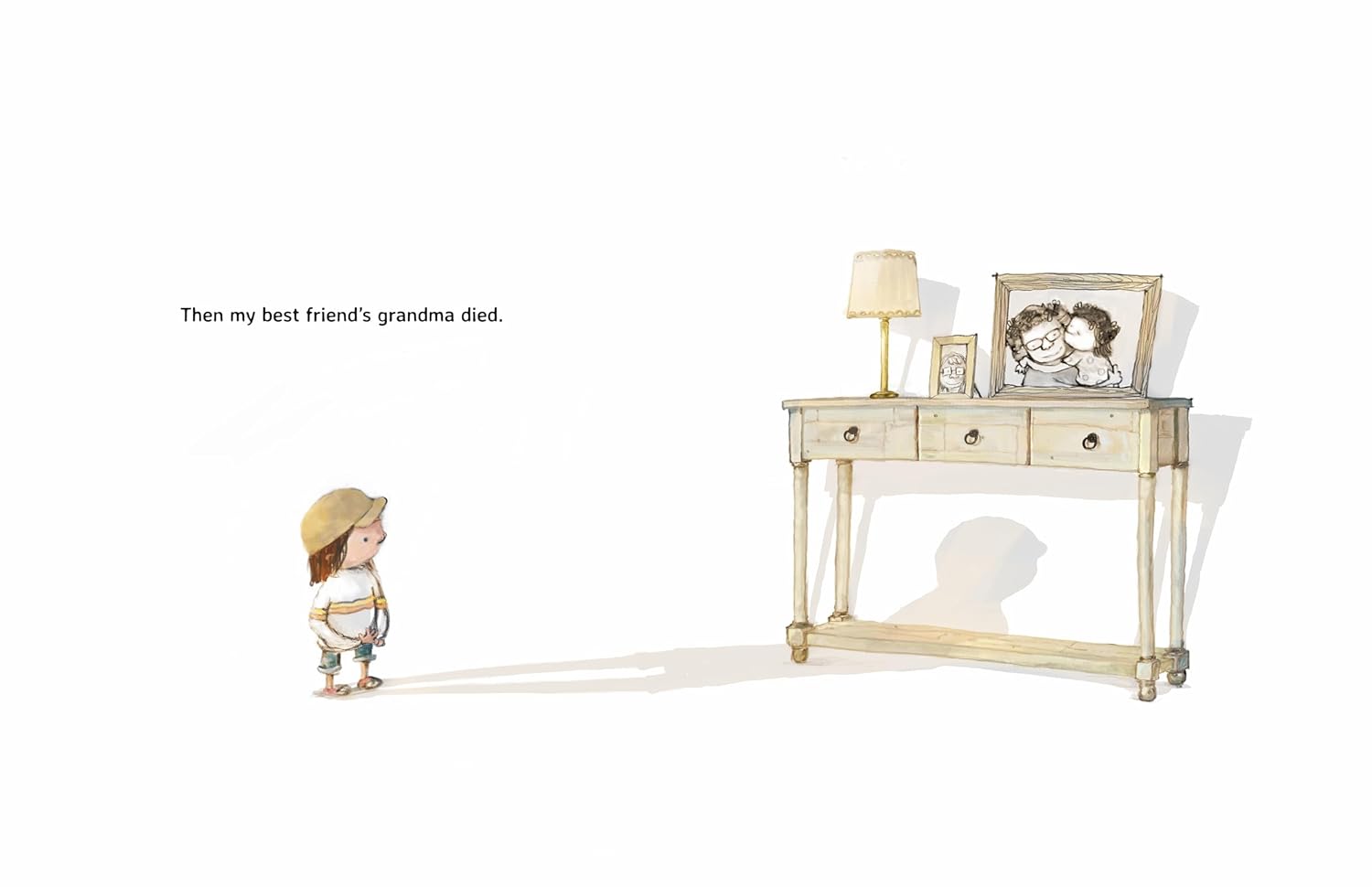
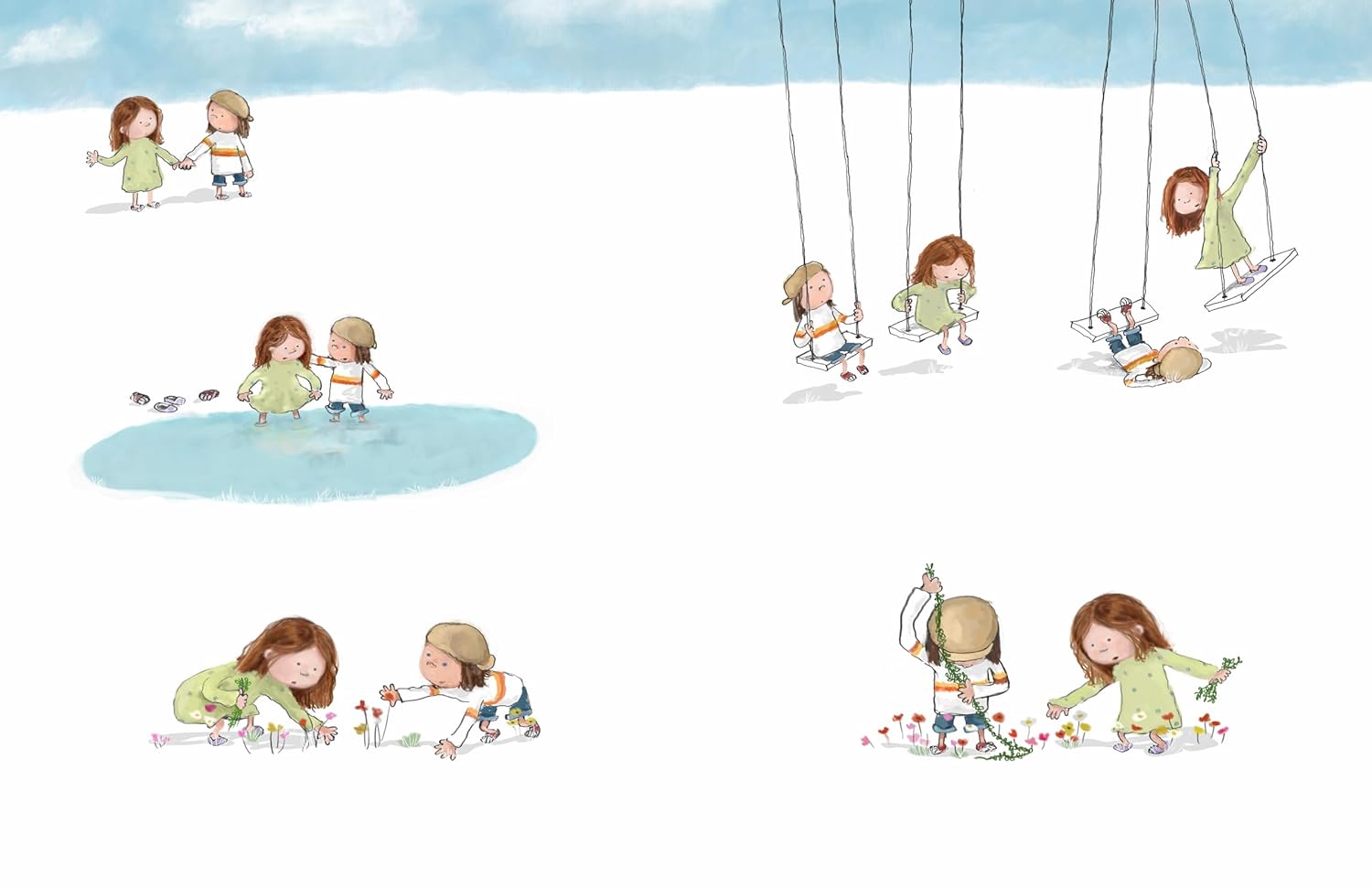
When the narrator’s best friend’s grandmother dies, they are unsure what to do. Would she want a card, a snack, a hug? How could they know? Finally, they decide the best way to find out is simply to ask: “Can you tell me what to do? I don’t know how to help.” While the friend is at first unsure how to answer this question, the narrator and friend find ways to seek out comfort and connection by spending time together. The story ends with a wordless spread of them swinging, talking, picking flowers and a spread with the word “together” in which they share a flower crown.

Image copyright Hala Tahboub, 2024, text copyright Kyle Lukoff, 2024. Courtesy of Dial Books.

Just What to Do tackles a tough but topical topic for children, what to do with grief and how to support others through it, something that even adults struggle with. Oftentimes, people make the mistake of thinking there is a cookie cutter “one size fits all” fix for working through grief, but, as Lukoff poignantly shows, this simply is not the case. Readers will learn and grow with the protagonist as they explore new ways of helping and providing care for a diverse cast of family and friends.

Hala Tahboub creates simple sketches featuring an androgynous-appearing elementary-school-aged narrator. Wordless spreads of characters connecting are interspersed in the story and are contrasted with more bare pages focused solely on the narrator when they reach emotionally salient moments. There is a clarity in the images and an intricacy in the facial expressions that allows the audience to focus on the main character’s internal struggles. The words of the story are expanded on in the images, with different characters expressing their grief in unique ways (a babysitter commemorating her dog with dog toys, the cousin holding her goldfish’s tank under a large shady tree with a bouquet of flowers, etc.)

Just What to Do is an essential addition to library and home collections, as well as counseling centers. The book lovingly guides readers through a difficult subject with an appropriate amount of levity and learning to make for a perfect read aloud.

Ages 3 – 7

Dial Books for Young Readers, 2024 | ISBN 978-0593462942

About the Author

Kyle Lukoff is the author of many books for young readers. His debut middle-grade novel, Too Bright To See, received a Newbery honor, the Stonewall award, and was a National Book Award finalist. His picture book When Aidan Became A Brother also won the Stonewall. He has forthcoming books about mermaids, babies, apologies, and lots of other topics. While becoming a writer he worked as a bookseller for ten years, and then nine more years as a school librarian. Visit him at kylelukoff.com.

About the Illustrator

Hala Tahboub is a children’s book writer and illustrator. She started her creative journey as an architect and interior designer. She won the SCBWI Canada East chapter’s Storyteller Award for Illustration in 2019, and she was the SCBWI’s December Featured Illustrator in 2020. Hala believes in kindness, coffee, chocolate, and in the immense power of stories. She lives in Montreal. Visit her at halatahboub.com.

National Children’s Mental Health Week Activities

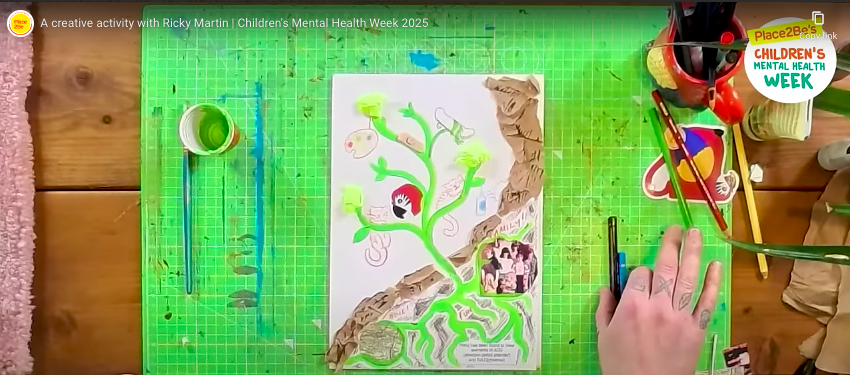
Place2be Activity with Ricky Martin


Art Room Activity

Watch the Art Room’s video on this self-awareness art activity and create your own identity plant.

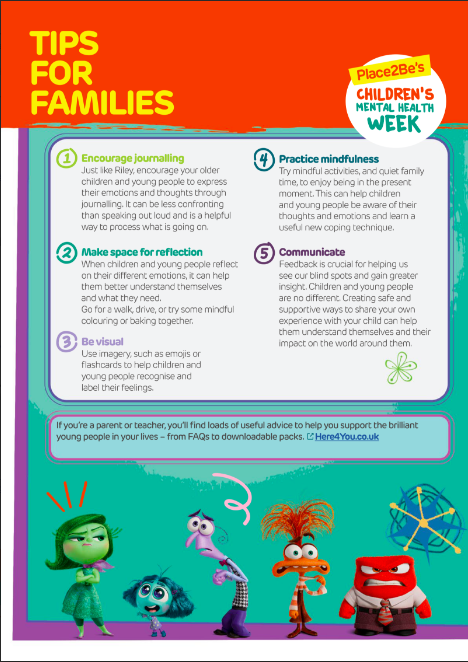
Exploring Emotions Tip Sheet for Families

Download this Exploring Emotions Tip Sheet for families on how to encourage children to explore and express their emotions.

You can purchase Just What to Do at these booksellers

Amazon | Barnes & Noble | Bookshop (to support your local independent bookstore)

Picture Book Review
September 27 – It’s Read a New Book Month

celebrate-picture-books-picture-book-review-gracie-brings-back-bubbe's-smile-cover

About the Holiday

Even though we’re saying goodbye to Read a New Book Month, families don’t have to stop seeking out new books at their local bookstore or library. In fact, fall and the lead-in to the holidays is one of the busiest times of the year for publishers as they release wonderful books that share traditions and take readers through the winter in thoughtful, funny, and always surprising ways. Maybe that’s why December is also tagged as Read a New Book Month! Really, there’s never a time when you don’t want to celebrate new books—like today’s!

Thanks go to Albert Whitman & Company for sharing a digital copy of Gracie Brings Back Bubbe’s Smile with me for review consideration. All opinions on the book are my own.

Gracie Brings Back Bubbe’s Smile

Written by Jane Sutton | Illustrated by Debby Rahmalia


Gracie always loves when Bubbe comes to visit, but this time Bubbe was too sad to do the things she and Gracie usually did together because her husband had died. She didn’t feel like doing yoga or making jokes. “She hardly even smiled.” Gracie missed all the things she used to do with Zayde too—talks about science and sharing inside jokes.

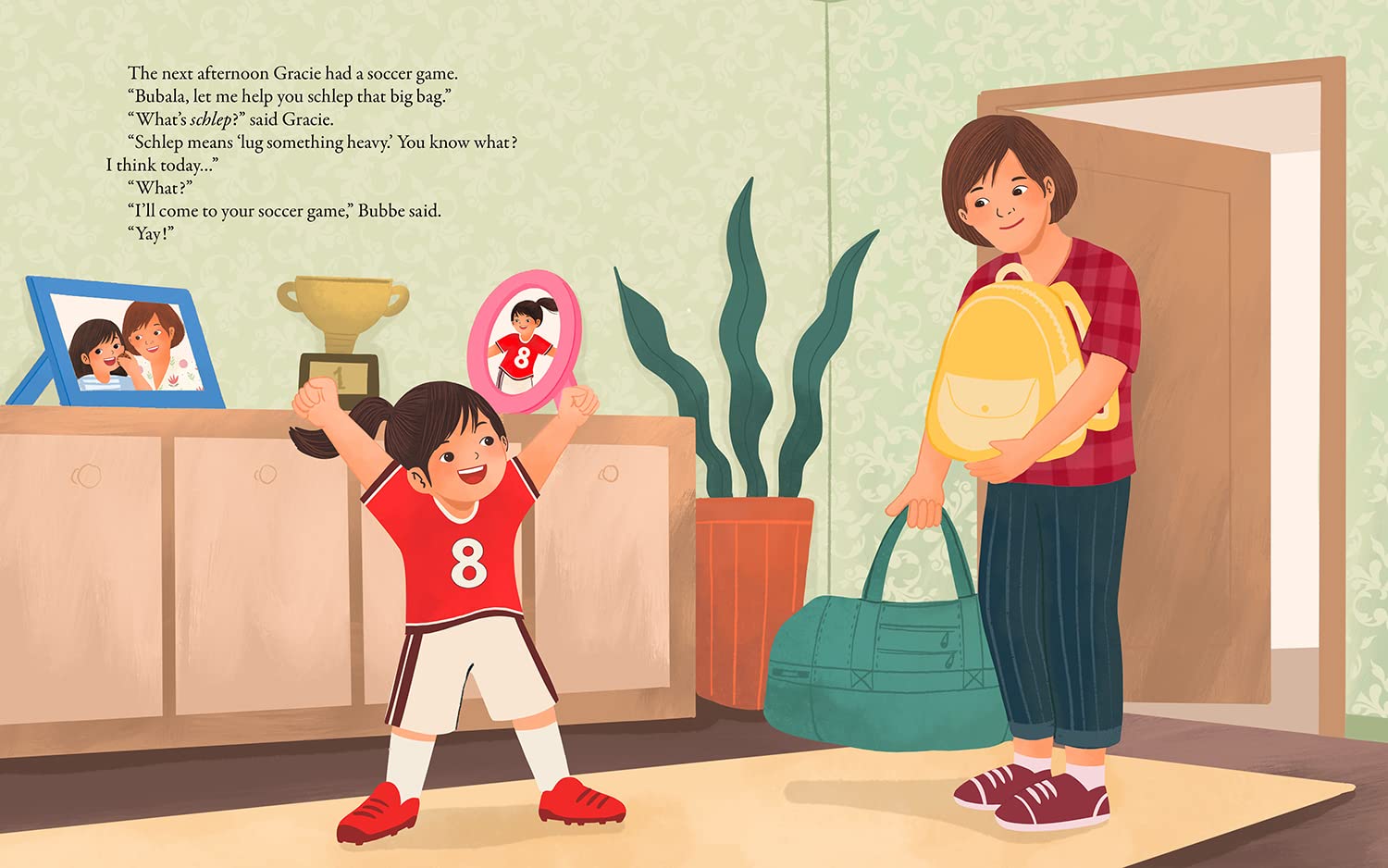
Gracie tried different things to make Bubbe happy again. She asked if she’d like to sing while Gracie played the guitar, if she’d like to come to her soccer game, or help her draw a picture. But each time, Bubbe just said “‘No thank you, Bubala.'” This answer got Gracie thinking. “She knew bubbe meant ‘grandma’ in Yiddish. And zayde meant ‘grandpa.'” But she didn’t know what bubala meant. When Gracie asked Bubbe, she explained that “‘it means “little grandmother. …But you call someone you love “bubala.”‘”

celebrate-picture-books-picture-book-review-gracie-brings-back-bubbe's-smile-running

Image copyright Debby Rahmalia, 2022, text copyright Jane Sutton, 2022. Courtesy of Albert Whitman & Company.

Then Bubbe sighed and told Gracie how much she and Zayde “‘loved using Yiddish words together.'” Gracie wanted to learn Yiddish words too, and asked Bubbe to teach her. They went into the kitchen, and while Bubbe cut up an apple, she taught Gracie the word nosh. “‘It means “eat a snack.”‘” As Gracie noshed on her apple, she thought she saw Bubbe smile just a little.

That night Bubbe taught Gracie how to say “good night” in Yiddish, and the next day when Gracie came home from school she wanted to walk around the neighborhood like they used to, but Bubbe said she didn’t feel like it. Gracie persisted, pulling on her hand and telling her how beautiful it was outside. Bubbe had to admit that it was sheyn. Gracie was excited to understand this Yiddish word for “beautiful” because Zayde often called her sheyna meidala or “pretty girl.” Bubbe conceded and put on her sneakers.

celebrate-picture-books-picture-book-review-gracie-brings-back-bubbe's-smile-soccer

Image copyright Debby Rahmalia, 2022, text copyright Jane Sutton, 2022. Courtesy of Albert Whitman & Company.

Once outside, Bubbe even started jogging a little and taught Gracie another Yiddish word when Gracie asked her to slow down. As the week went on, Gracie and Bubbe began talking about their memories of Zayde. Bubbe even decided to go to Gracie’s next soccer game. At the game Bubbe smiled and even cheered when Gracie scored a goal, and back home they laughed together when Bubbe told Gracie her socks were “‘… so farshtunken, my nose might explode!'”

“‘Bubbe! You’re laughing!'” Gracie cried. And Bubbe had to agree and told Gracie it was for a very special reason. “‘Because you give me naches. That means ‘joy.'”

Back matter includes a short Author’s Note about the Yiddish language as well as a glossary of Yiddish words that includes and expands on the words found in the story, their meaning in English, and a pronunciation for each of them.

celebrate-picture-books-picture-book-review-gracie-brings-back-bubbe's-smile-laughing

Image copyright Debby Rahmalia, 2022, text copyright Jane Sutton, 2022. Courtesy of Albert Whitman & Company.

Jane Sutton’s poignant story will touch readers’ hearts on many levels, from a child and grandmother overcoming grief to the passing on of family heritage to the way children bring a healing kind of joy through their exuberance, empathy, and love. Sutton’s storytelling hits all the right notes as she depicts Bubbe’s transition from mourning to joy over superbly paced scenes and seamlessly introduces Yiddish words through Gracie and Bubbe’s authentic conversations while also demonstrating the family’s strong bond of love and trust. Dialogue rich, the story makes a perfect read aloud that will excite kids about learning the Yiddish words along with Gracie and prompt families to talk about their own history.

In her vibrant illustrations, Debby Rahmalia lets young readers see through Gracie’s viewpoint how Bubbe’s sadness affects her and how much she wants to help her grandmother find happiness again. As Gracie does yoga while Bubbe stands by and shares a silent dinner with her usually talkative grandmother, Gracie’s expressions register concern and disappointment. In Gracie’s attempts to enlist Bubbe in doing their usual activities, Rahmalia portrays not only Gracie’s strong connection with Bubbe, but also a realistic look at how loss can affect emotions and physical energy. When Gracie hits on learning Yiddish as a way to interact with Bubbe, Rahmalia effectively shows how Bubbe’s smile, enthusiasm, and laughter return as she and Gracie share the language and memories of Zayde.

Touching, reassuring, and joyful, Gracie Brings Back Bubbe’s Smile comforts and restores while celebrating family love and generational ties. The book would be a meaningful addition to home bookshelves for all families and one school and public librarians will want in their picture book or family issues collection.

Ages 4 – 7

Albert Whitman & Company, 2022 | ISBN 978-0807510230

You can discover more about Jane Sutton and her books on her website and connect with her on Instagram.

You can view a portfolio of work by Debby Rahmalia here and connect with her on Instagram and Twitter.

Read a New Book Month Activity

celebrate-picture-books-picture-book-review-gracie-brings-back-bubbe's-smile-matching-puzzle

Gracie Brings Back Bubbe’s Smile Matching Puzzle


Gracie loved learning Yiddish words from Bubbe! With this puzzle you can learn the Yiddish words from the book too. Just print the puzzle and match each word with its definition to get started using these words yourself!

Gracie Brings Back Bubbe’s Smile Matching Puzzle

celebrate-picture-books-picture-book-review-gracie-brings-back-bubbe's-smile-cover

You can find Gracie Brings Back Bubbe’s Smile at these booksellers

Amazon | Barnes & Noble | Books-a-Million

To support your local independent bookstore, order from

Bookshop | IndieBound

Picture Book Review

May 23 – World Turtle Day

celebrate-picture-books-picture-book-review-memoirs-of-a-tortoise-cover

About the Holiday

Susan Tellem and Marshall Thompson, who founded American Tortoise Rescue in 1990, established World Turtle Day to raise awareness and respect for turtles and tortoises and to promote conservation to help them survive. Celebrations take many forms, from fun activities where participants dress as turtles to educational programs that teach about this fascinating creature and how people can help turtles in danger. To learn more about World Turtle Day and American Tortoise Rescue – and to meet some of their adorable residents – visit worldturtleday.org.

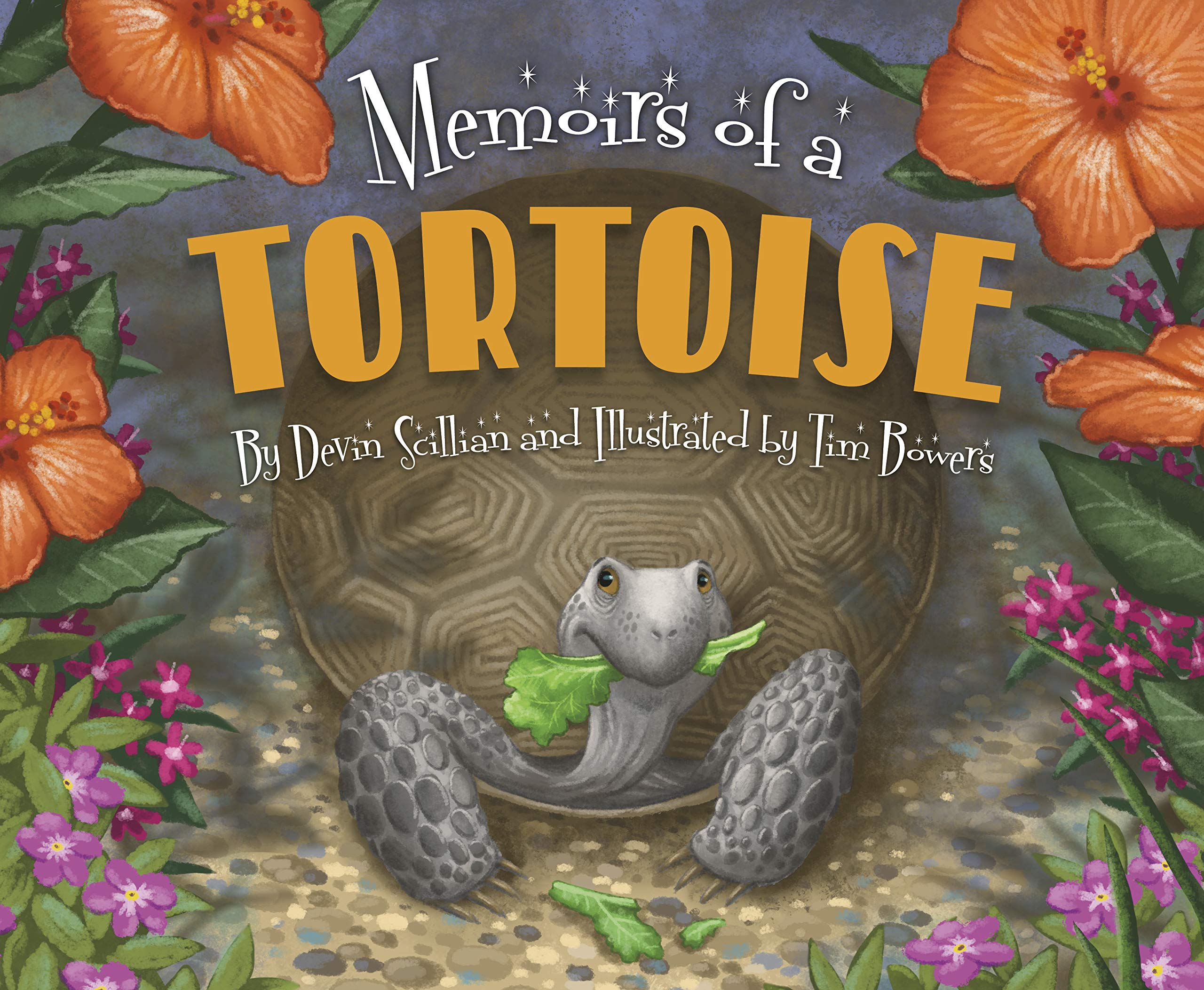
Memoirs of a Tortoise

Written by Devin Scillian | Illustrated by Tim Bowers


It’s April and Oliver the tortoise is in his garden with his pet, Ike. Ike has brought him “a plate of lettuce and dandelions and a bright, crunchy apple.” Oliver loves Ike and he can tell that Ike loves him too by the way he runs his hand over his shell. “This, this is life and it’s beautiful,” Oliver thinks. In May, Ike throws a stick that Oliver will never fetch, and they laugh over this old, favorite joke. Oliver thinks, “Eighty times I’ve watched spring arrive in the garden, and it’s always perfect.” He spies a bit of red on the other side of the garden and ambles off to investigate.

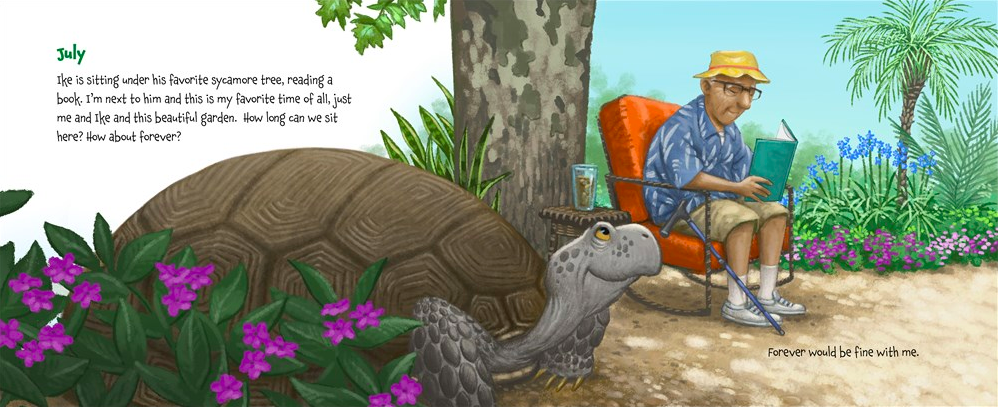
It’s June by the time he reaches the hibiscus grove. Oliver enjoys taking things slow—just like Ike does. July and August pass with special moments of companionship and fun. As September comes, life begins slowing down. “The days are getting shorter” and Ike is “taking lots of naps in the garden.” Oliver enjoys having Ike nearby and decides that “the next time he throws the stick, I’m going to fetch it.”

celebrate-picture-books-picture-book-review-memoirs-of-a-tortoise-april

Image copyright Tim Bowers, 2020, text copyright Devin Scillian, 2020. Courtesy of Sleeping Bear Press.

October arrives, but the regular routine of the garden has been broken. Oliver hasn’t seen Ike or been fed in several days. Oliver makes due with pumpkin from the garden, but he misses Ike. By November, Oliver is “afraid Ike is gone.” The idea makes him sad. After all, he thinks, Ike was still so young. He was 80 years old.” Oliver had thought they would grow old together and wonders where Ike is. In December, Oliver decides to go talk to someone who has more experience than he does—his mother, who is 137 years old.

It takes Oliver until February to cross the ten gardens between Ike’s house and where his mother lives. When Oliver’s mother sees her son, “she smiles wide and her eyes sparkle.” Oliver tells his mother that Ike is gone. She understands his sadness and tells him how much Ike loved him. But Oliver wonders why Ike couldn’t stay with him.

Oliver’s mother explains “we only get to have pets in our lives for a little while.” Then she offers words of comfort: “And when they’re gone, we count all those beautiful days we were lucky enough to have them with us. We’re so lucky.”

Oliver has enjoyed his visit with his mother, but in March he’s on his way back home. When he arrives in his own garden, the door of the house opens. Oliver turns instinctively expecting to see Ike, but it’s Ted, Ike’s son. He brings Oliver “a tray of lettuce and dandelions and a bright, crunchy apple.” He rubs Oliver’s shell just like Ike used to do and tells Oliver he’s glad he came home. Ted tosses a stick and the two laugh. “This, for me and Ted, this is life,” Oliver thinks. And he knows his mother was right when she said they were so lucky.

celebrate-picture-books-picture-book-review-memoirs-of-a-tortoise-july

Image copyright Tim Bowers, 2020, text copyright Devin Scillian, 2020. Courtesy of Sleeping Bear Press.

Devin Scillian’s Memoirs of a Tortoise has it all—humor, poignancy, and a life lesson about the precious moments we share with loved ones. Using the longevity of tortoises, Scillian flips the script on the pet and human relationship with tender and emotional effect. When Ike passes away and Oliver is confused and sad, he confidently sets out to find answers and comfort from someone he can trust—his mother. The ten gardens between their homes may not seem far to us, but to Ike and his mom it’s the equivalent of towns, states, or even countries for us.

This seamless blending of the tortoises’ experience and that of readers’ is both the charm and genius of Scillian’s story. Oliver’s straightforward comments and questions about loss echo those of children and will resonate with them. As Oliver’s mother reminds him to enjoy every day and be thankful for the time he spends with his pets and as Ted enters his life, readers will understand that her advice to embrace all the parts of life applies to them as well.

Tim Bowers’ endearing Oliver is a sweet companion on this journey through a formative experience. As Oliver spends time and enjoys inside jokes with kindly Ike, readers will recognize not only the pet and owner bond but the relationship between children and grandparents. Bowers’ lush depictions of Ike’s garden where he and Oliver play or sit quietly side by side portray the beauty of life that Oliver’s mother so wisely recognizes. Ike’s slowing down and passing away are drawn with sensitivity and through images that allow adults and children to discuss facts and feelings about death, mourning, acceptance, and the cycles of life.

Uplifting and full of wisdom, Memoirs of a Tortoise, is highly recommended for home bookshelves and a must for school and public library collections.

Ages 6 – 9 

Sleeping Bear Press, 2020 | ISBN 978-1534110199

Discover more about Devin Scillian, his books, journalism, music, and more on his website.

To learn more about Tim Bowers, his books, and his art, visit his website.

We Love Memoirs Day Activity

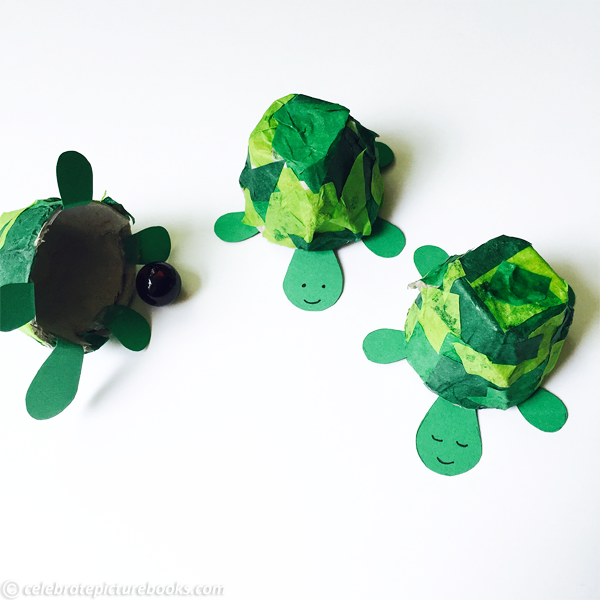
celebrate-picture-books-picture-book-turtle-shell-game

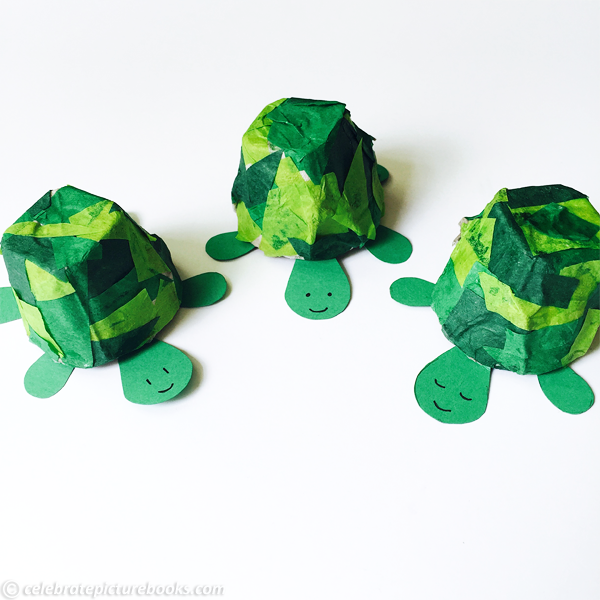
Follow the Turtles! Game


You can make this fun game from recycled materials and a little creativity! When you’re finished making the turtle shells, have fun guessing where the marble, bead or bean is hiding!

Supplies

  • Cardboard egg carton
  • Green tissue paper in different hues
  • Green construction or craft paper
  • A marble, bead, or bean
  • Glue
  • Scissors

celebrate-picture-books-picture-book-turtle-game

Directions

  1. Cut the egg carton apart into individual cups. You will need 3 cups for each game made.
  2. Cut the rims of the cups so they sit flat on a table.
  3. If the cups have open sides, fit two cups inside one another to fill the gaps
  4. Cut the tissue paper into small shapes
  5. Brush glue on a cup (I used a paper towel to apply glue)
  6. Cover the egg cup with pieces of tissue paper. Repeat with other cups.
  7. Let dry
  8. Cut a head and feet from the green craft paper
  9. Tape or glue the edges of head and feet to the inside of the cups
  10. Add a face to the head

To play the game:

  1. Line up the cups on a table
  2. Put a bead, bean, or marble under one of the cups
  3. Show the other player which cup the object is under
  4. Quickly move the cups around each other several times
  5. Ask the other player which cup they think the object is under
  6. Take turns playing

Extra Game: Make three more and play turtle tic-tac-toe! 

celebrate-picture-books-picture-book-review-memoirs-of-a-tortoise-cover

You can find Memoirs of a Tortoise at these booksellers

Amazon | Barnes & Noble | Books-a-Million

To support your local independent bookseller, order from

Bookshop | IndieBound

Picture Book Review
November 19 – Children’s Grief Awareness Day

celebrate-picture-books-picture-book-review-the-boy-and-the-gorilla-cover

About the Holiday

Created in 2008 by the Highmark Caring Place, A Center for Grieving Children, Adolescents and Their Families in Pennsylvania, Children’s Grief Awareness Day is now recognized by organizations around the world. The day seeks to raise awareness of the painful impact that the death of a loved one has on a child and the fact that receiving support can make all the difference in their life as they grieve. It also provides an opportunity to make sure that these children receive the support they need.

The statistics are sobering. Before graduating from high school, one child out of every 20 children will experience the death of a parent. That number does not include those who experience the death of a sibling, a grandparent, an aunt, uncle or cousin, or a friend.

To learn more information on the needs of grieving children and find available resources, visit the Children’s Grief Awareness Day website.

Thanks to Candlewick Press for sending me a copy of The Boy and the Gorilla for review consideration. All opinions about the book are my own. I’m happy to be teaming with Candlewick in a giveaway of the book. See details below.

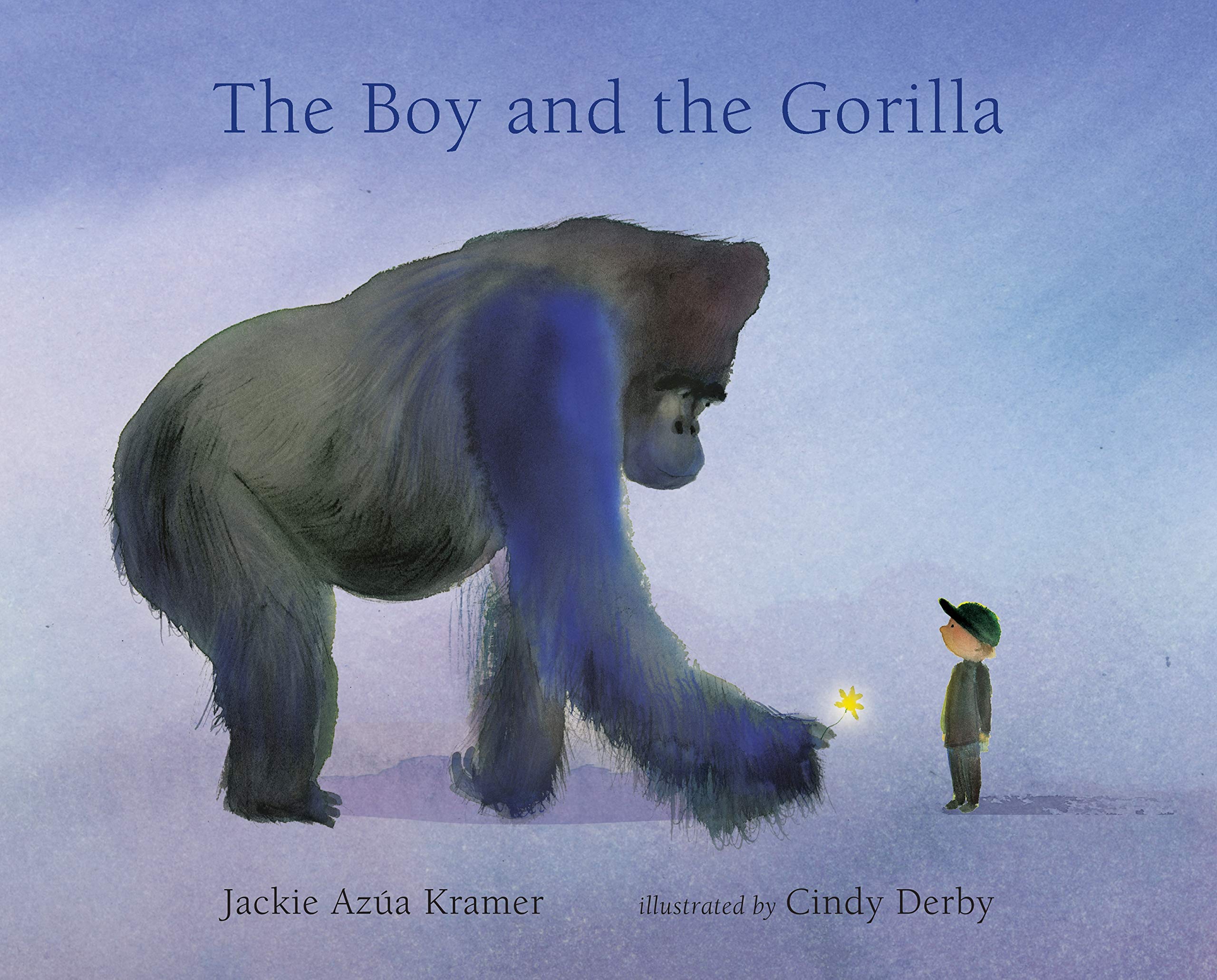
The Boy and the Gorilla

Written by Jackie Azúa Kramer | Illustrated by Cindy Derby


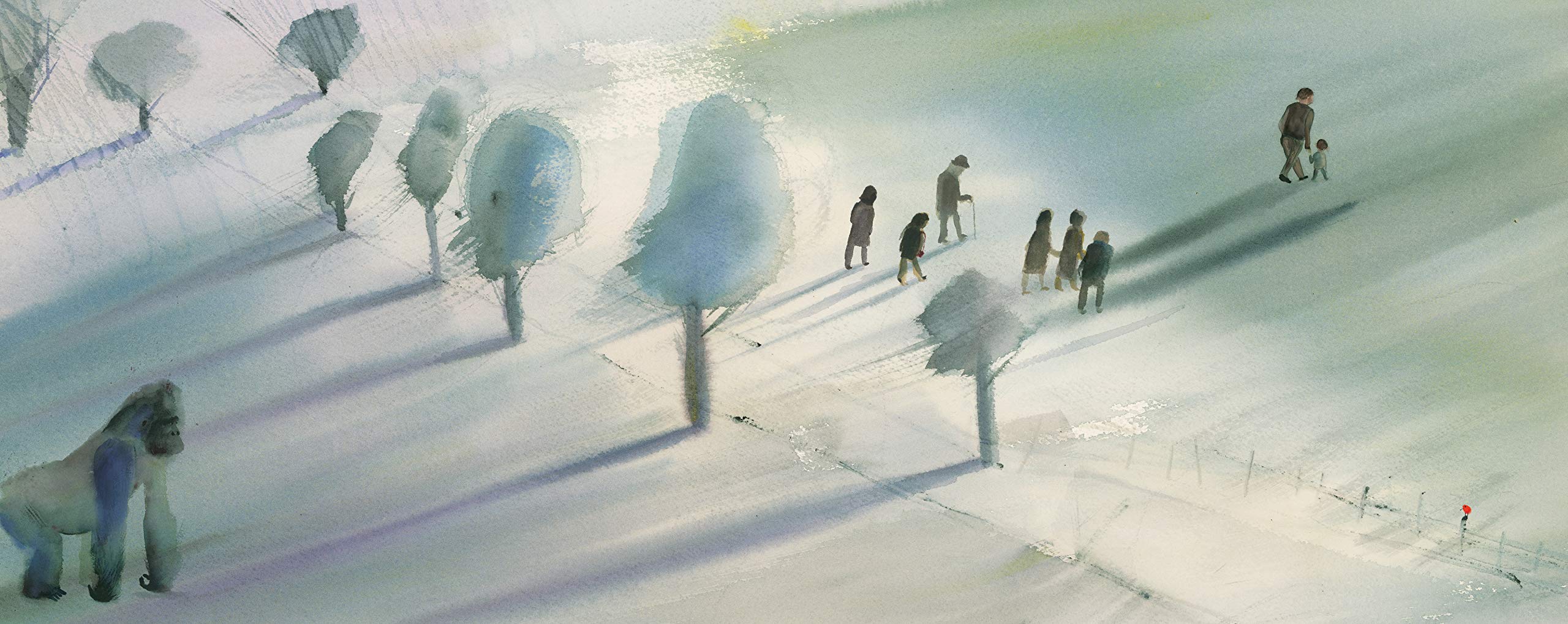
The sun casts long shadows as a little boy, his father, and a few mourners walk away from the cemetery. In the background a gorilla, strong and watchful, knows he’s needed. At home, the boy and his father sit on the sofa, aware of the family and friends gathered, but separated by grief. The gorilla waits silently nearby, filling some of the empty space. Escaping into the backyard, the boy kneels in his mother’s garden to pick a tomato. Now that he is alone, the boy acknowledges the gorilla, who asks if he can help. “Okay,” the boy says.

celebrate-picture-books-picture-book-review-the-boy-and-the-gorilla-cemetery

Image copyright Cindy Derby, 2020, text copyright Jackie Azúa Kramer, 2020. Courtesy of Candlewick Press.

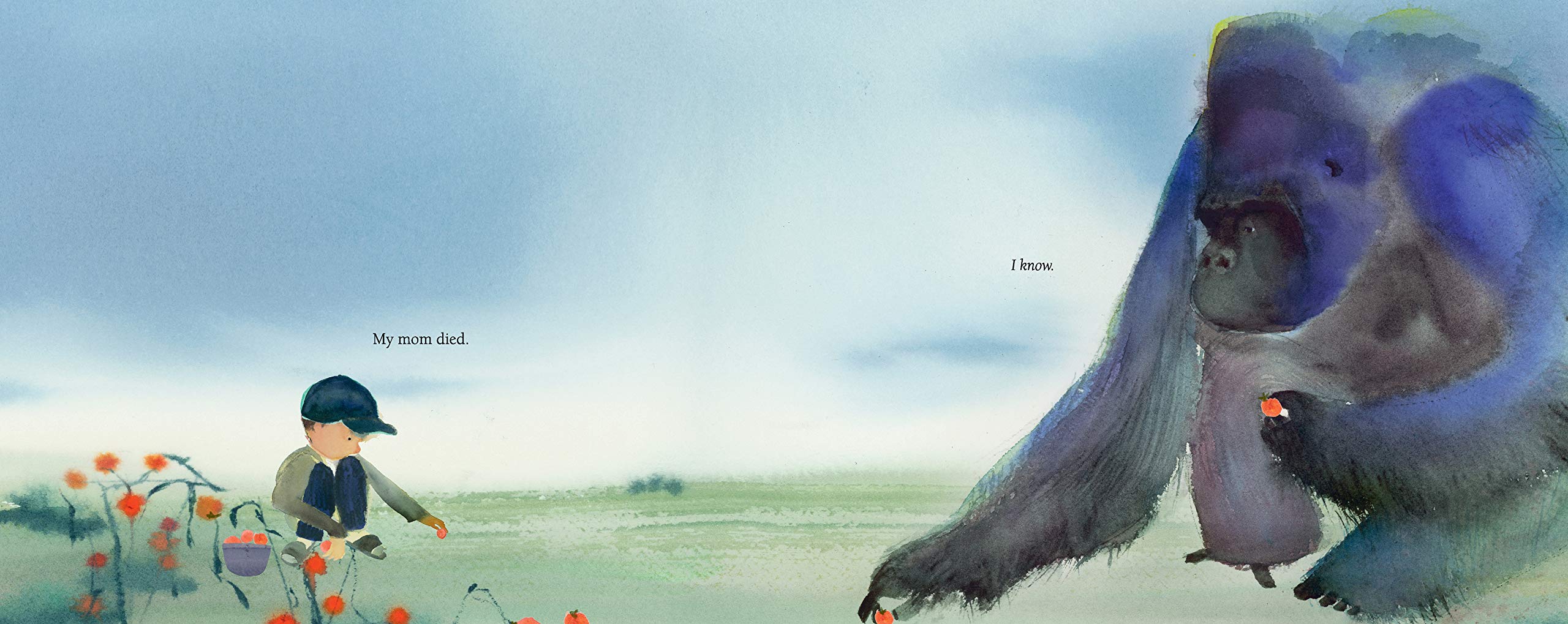
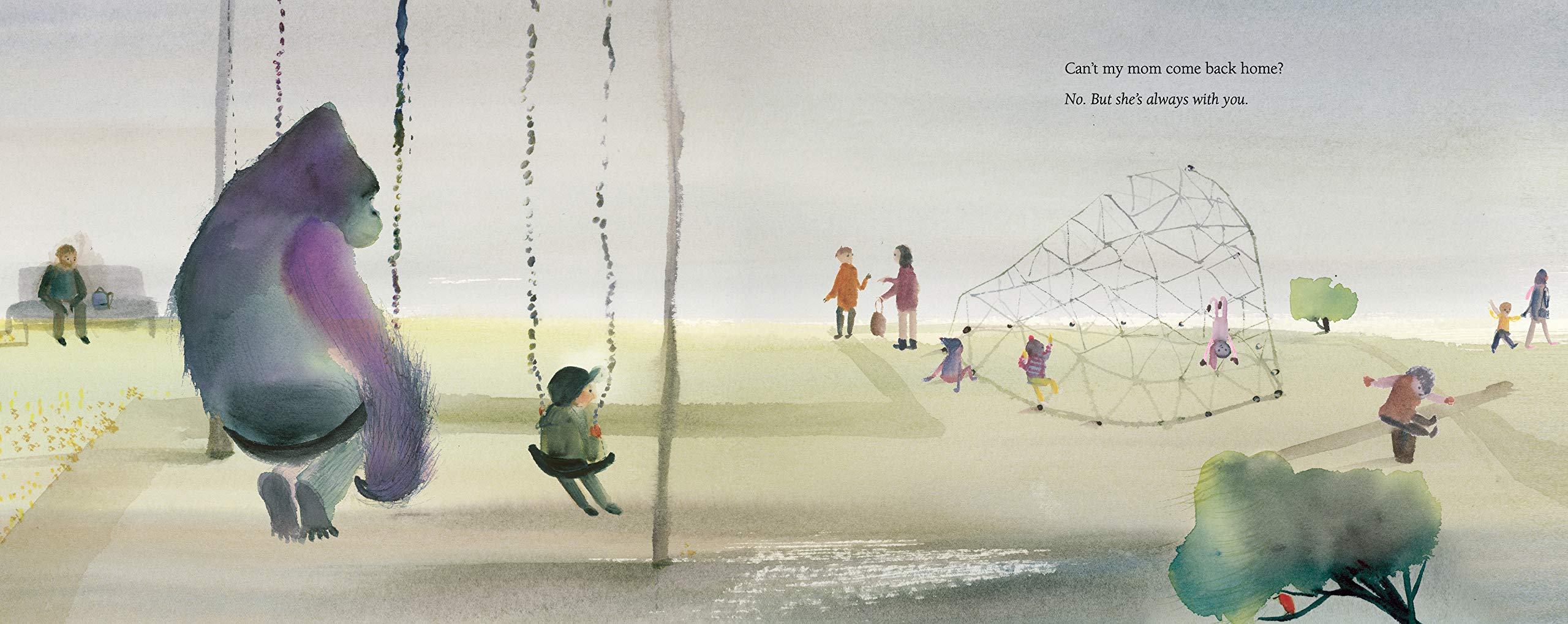
Here, to this friend of his heart, the boy can express his deep sadness as well as the questions he has about death. “My mom died,” he says. Gently holding one and picking up another tomato, the gorilla answers, “I know.” As some of the routines of life return, the boy and his dad are separated by their individual thoughts and the tasks that need to be done. But the boy works through his questions about whether all people die, where his mom went, and if she can “come back home” with the gorilla. To each question, the gorilla offers honest answers as well as comfort. His mom won’t come home, the gorilla explains, “But she’s always with you.”

When the boy misses the things he and his mom did together, the gorilla quietly suggests that his dad might do them too. The gorilla reassures the boy when he needs to be alone or look for his mother in out of the way places. Finally, the boy asks the question that tugs at his mind: “Why did she have to die?” The gorilla acknowledges his pain, saying “It hurts not to be able to be with someone we love.” When the boy wonders when he’ll feel better, the wise gorilla says, “When you know she’s still with you.”

celebrate-picture-books-picture-book-review-the-boy-and-the-gorilla-strawberries

Image copyright Cindy Derby, 2020, text copyright Jackie Azúa Kramer, 2020. Courtesy of Candlewick Press.

The boy is ready to see his mom in their shared activities, like baseball, baking, and gardening. Each of these are gifts from his mother that will stay with him forever, the gorilla reminds him. That day, the boy goes to find his father and tell him the feeling he’s been carrying: “I miss Mom.” His dad takes him in his arms and they share their grief. The gorilla embraces them with love and understanding. The boy and his dad sit together looking at photographs and talking about Mom. The gorilla watches them from across the room. Later, they plant new flowers together, and then as the sun sets and the gorilla ambles away across empty fields, the boy and his dad walk back to the house, hand in hand.

celebrate-picture-books-picture-book-review-the-boy-and-the-gorilla-swings

Image copyright Cindy Derby, 2020, text copyright Jackie Azúa Kramer, 2020. Courtesy of Candlewick Press.

In her emotionally resonant story, Jackie Azúa Kramer gives adults a poignant way to talk with children—and readers of any age—about the feelings of sadness, confusion, and loss that fill their hearts and days after someone they love passes away. Beginning with general questions that children have about death, Azúa Kramer offers honest answers or acknowledgements that “no one knows” the answers.

She then leads readers to ways they can accept a loved-one’s death and find comfort in memories, discover the constancy of their love in shared activities, and reach out to others. Told entirely in dialogue between the boy and the gorilla and, later, between the boy and his father, the story feels as personal as an embrace, allowing a grieving child to identify with it without any distancing. Beautifully paced, the story ends with a sense of acceptance, hope, and renewal.

Cindy Derby’s watercolor and mixed media illustrations will stir readers’ hearts with her touching depictions of the little boy and his father, both struggling in the wake of the loss of their mother and wife. The gorilla, painted in shades of purple and gray, is a hulking, yet soft, presence, a representation of the magnitude of the boy’s sadness but his capacity to understand too. Derby incorporates fragility and strength into her images that reinforce the boy and father’s changing awareness: On the day of his mother’s funeral, the boy goes into the garden to pick tomatoes. The gentle care the gorilla takes in helping hold these tender fruit reflects his mindfulness of the boy’s vulnerability. At the park, the chains on the swing set, where the boy and gorilla come to terms with the fact that his mother will not come back, as well as the climber appear precariously brittle, yet they are both capable of holding great weight. And a single branch, no thicker than a twig, supports them as they talk about why the boy’s mother died.

Derby also evocatively portrays how the boy and his father are each processing their feelings independently as two-page spreads allow for the boy to appear on one page while his father is on the other. They gradually grow closer—appearing on the same page, but in different places or rooms. When the little boy courageously approaches his dad, their reunion is moving, and to see them sitting next to each other after the page turn is uplifting and affirming. Derby’s use of color, especially touches of red, adds metaphorical depth to the story, and children will want to watch for the little red bird that seems to watch over this family from page to page, until the boy and his father reconnect and move forward.

For any child who has suffered a loss or knows a friend who has, or for families looking for a way to discuss death and the process of grieving, The Boy and the Gorilla is a must. The book also belongs in every school and public library collection.

Ages 4 – 8

Candlewick Press, 2020 | ISBN 978-0763698324

Discover more about Jackie Azúa Kramer and her books on her website.

To learn more about Cindy Derby, her books, and her art, visit her website.

The Boy and the Gorilla Giveaway


I’m thrilled to be teaming up with Candlewick Press in a giveaway of

  • One (1) copy of The Boy and the Gorilla, written by Jackie Azúa Kramer| illustrated by Cindy Derby

To enter:

This giveaway is open from November 19 to November 25 and ends at 8:00 p.m. EST.

A winner will be chosen on November 26. 

Giveaway open to U.S. addresses only. | Prizing provided by Candlewick Press

celebrate-picture-books-picture-book-review-the-boy-and-the-gorilla-cover

You can find The Boy and the Gorilla at these booksellers

Amazon | Barnes & Noble | Books-a-Million

To support your local independent bookstore, order from

Bookshop | IndieBound

Picture Book Review

November 7 – National Bison Day

celebrate-picture-books-picture-book-review-my-bison-cover

About the Holiday

Beginning in 2012, a movement grew to name the bison as America’s national mammal and declare the first Saturday of November as National Bison Day to bring together bison supporters, including Native Americans, bison producers, conservationists, sportsmen, and educators to celebrate the significance of Bison. On May 9, 2016, President Barak Obama signed into law the proclamation naming the bison our national mammal.
The bison, also known as the American buffalo are considered a historical symbol of the United States and were integrally linked with the economic and spiritual lives of many Native American tribes through trade and sacred ceremonies. Bison also play an important role in improving soil and creating beneficial habitat whilst holding significant economic value for private producers and rural communities. Hunted to near extinction, bison now reside in all 50 states in national parks, refuges, tribal, and private lands.

My Bison

By Gaya Wisniewski


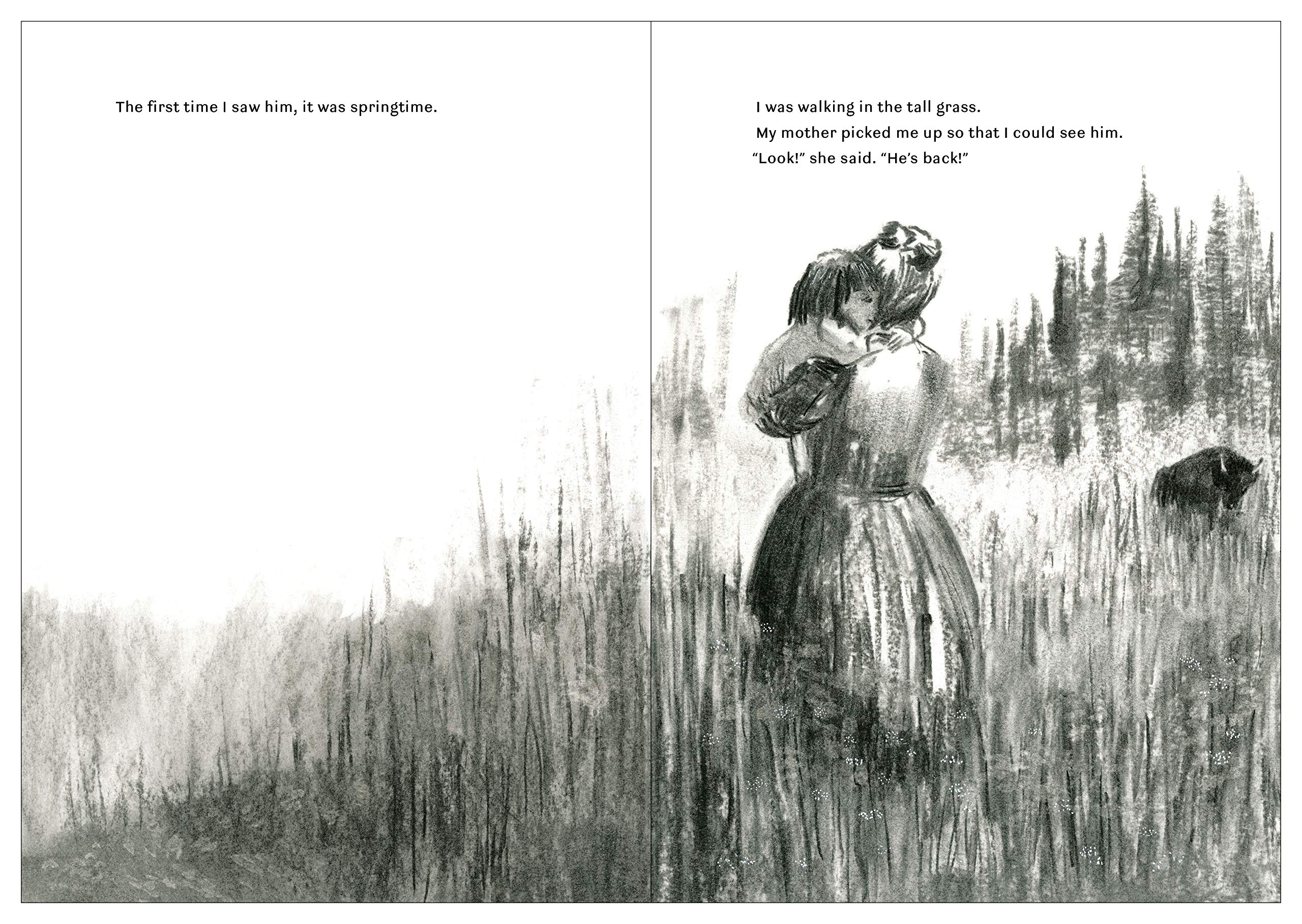
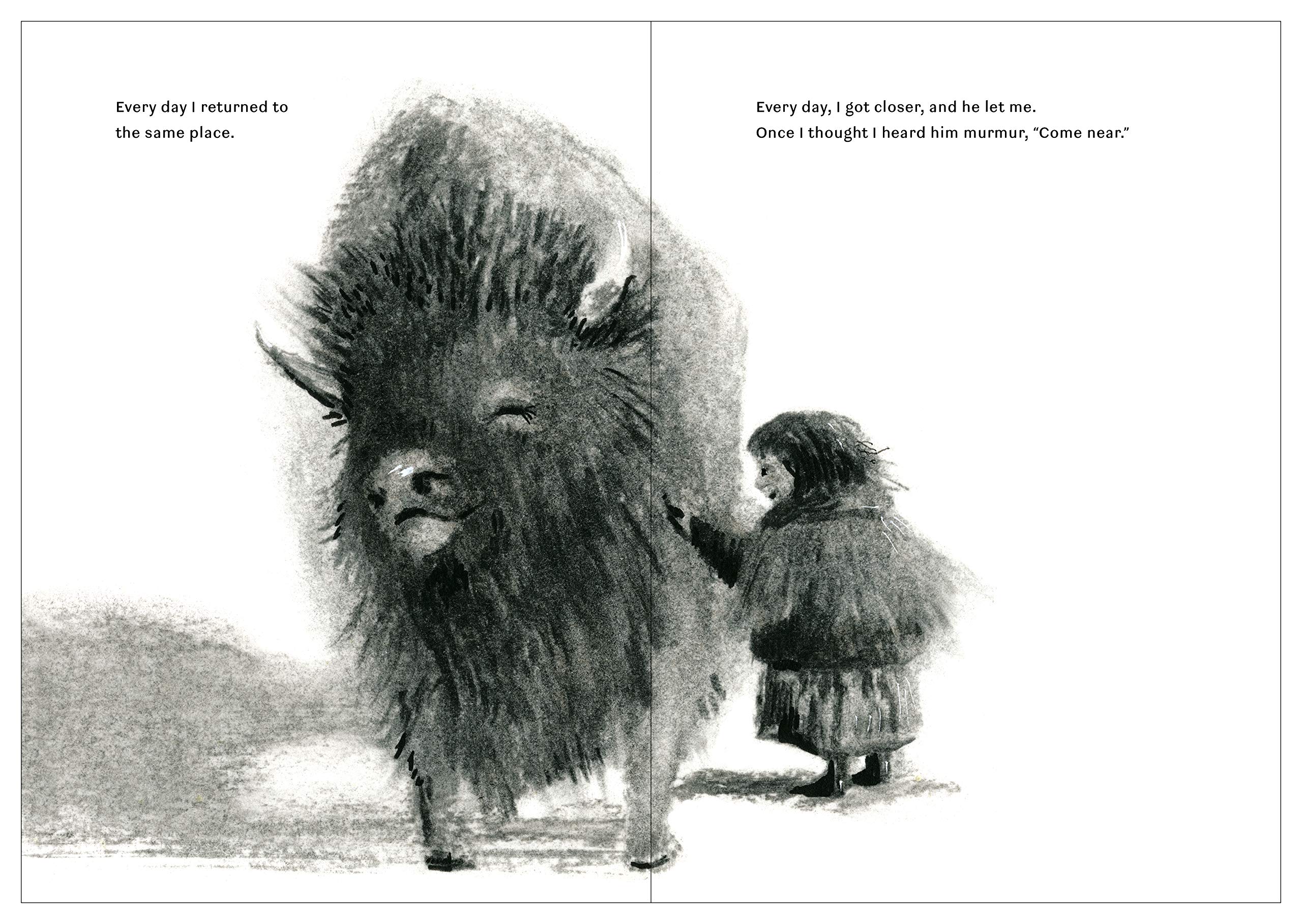
The first time a little girl meets the bison she was walking with her mother through a field of tall grass. “‘Look!’” her mother said. “‘He’s back!’” Every day after that the girl went out into the field to see the bison, coming a little closer each time until she was able to pet him. Once, she even thought she heard him whisper an invitation to come closer.

celebrate-picture-books-picture-book-review-my-bison-first-time

Image copyright Gaya Wisniewski, 2020, courtesy of Princeton Architectural Press.

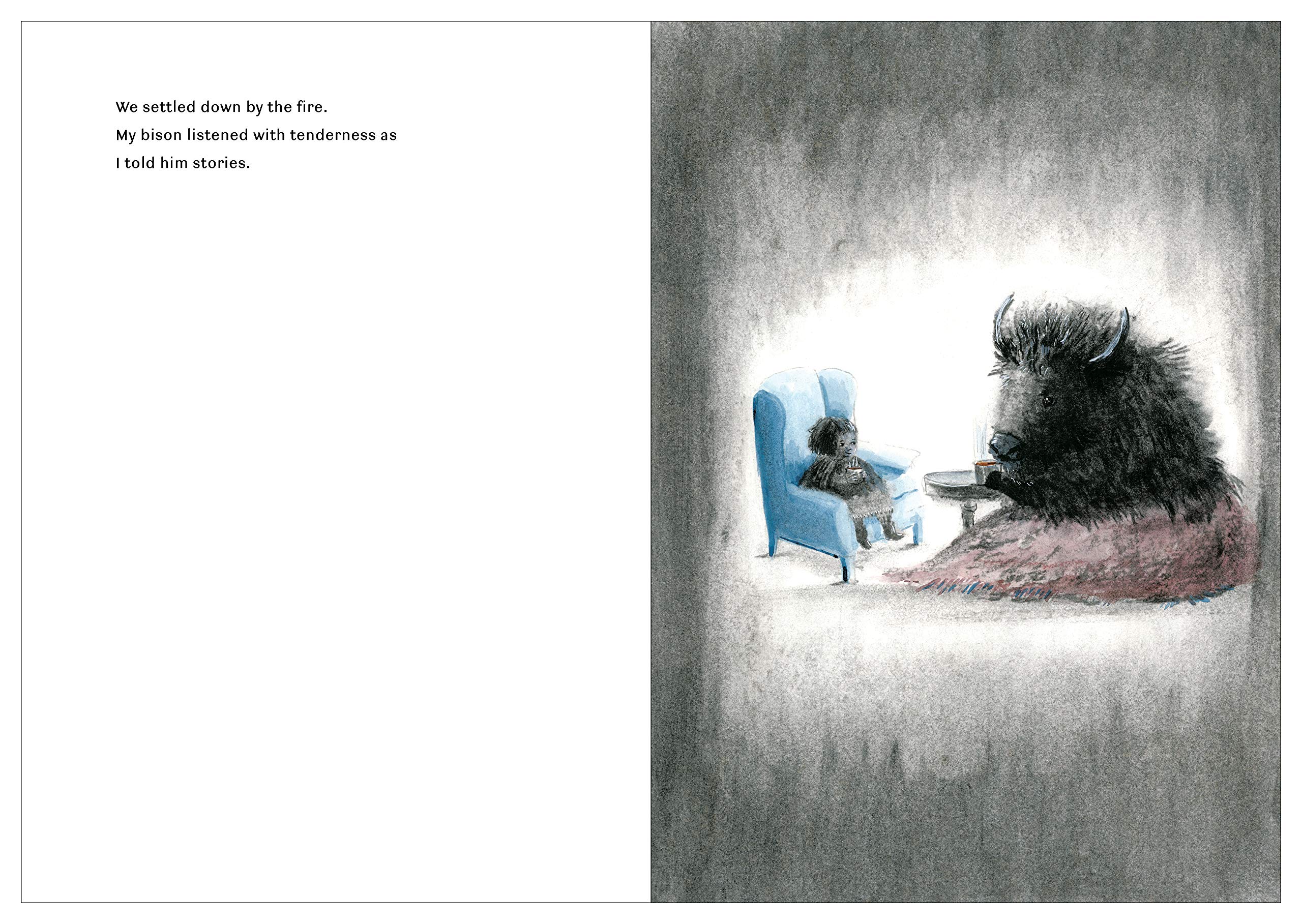
The little girl began to feed him food she’d made herself. Sometimes he didn’t like it, but he always tried it and that made her happy. One day it was time for him to move on with the rest of the herd. The girl walked with him as far as she could. When she said goodbye, the bison gave her a long look and she “knew he’d be back when snow covered the ground again.” The girl was lonely without him, but when winter returned she knew he had too without even seeing him. Now, seated together near the fire, the girl told him stories about the forest and what she’d done over the year while he, silent, “listened with tenderness.” She loved everything about him and loved him with her whole heart.

celebrate-picture-books-picture-book-review-my-bison-come-near

Image copyright Gaya Wisniewski, 2020, courtesy of Princeton Architectural Press.

The girl and the bison grew old together, winter to winter, never feeling the cold of the snow. Once, they talked all night about their mothers. The girl remembering the first time her mother had shown her the bison, how she had comforted her and taught her the lessons of nature. She missed her mother so much, she told him, and imagined he missed his mother too.

celebrate-picture-books-picture-book-review-my-bison-tea

Image copyright Gaya Wisniewski, 2020, courtesy of Princeton Architectural Press.

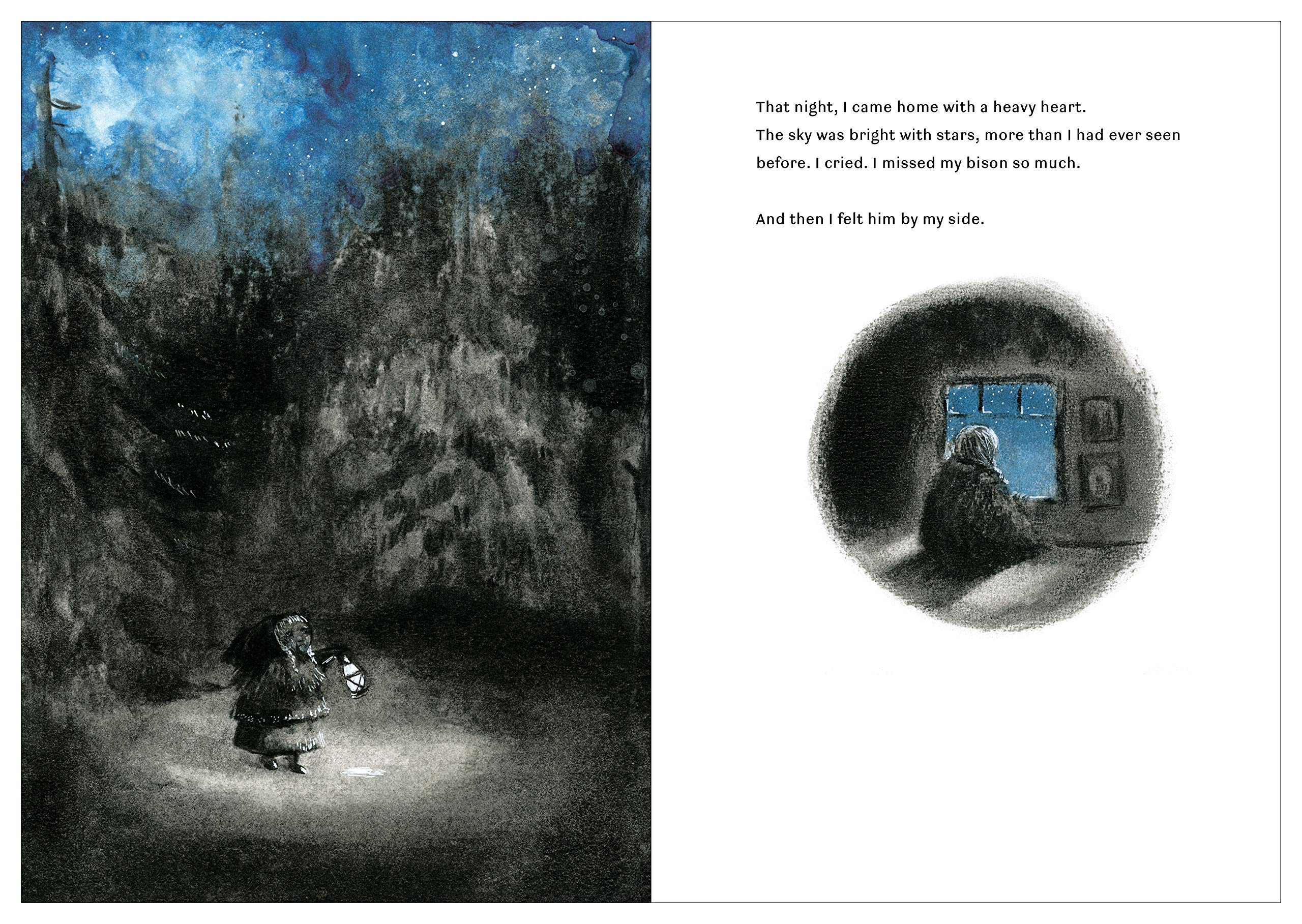
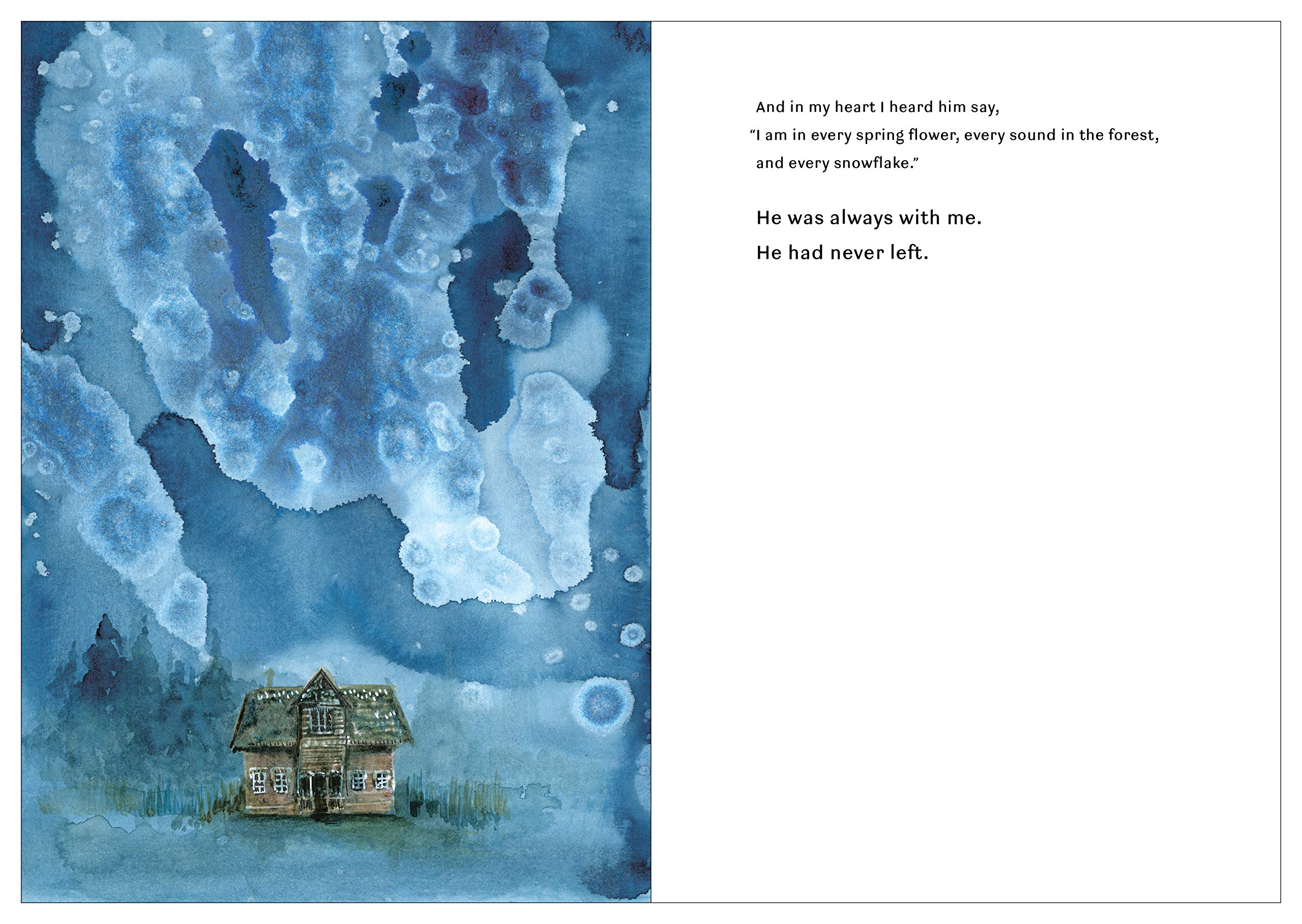
One winter the bison didn’t return and no amount of looking could find him. The girl, now an old woman, went home. She cried with missing him. And then just as in those winters so long ago when she felt his presence without seeing him, she knew he was with her. In her heart she “heard him say, ‘I am in every spring flower, every sound in the forest, and every snowflake.’” And she knew he was with her always.

celebrate-picture-books-picture-book-review-my-bison-night

Image copyright Gaya Wisniewski, 2020, courtesy of Princeton Architectural Press.

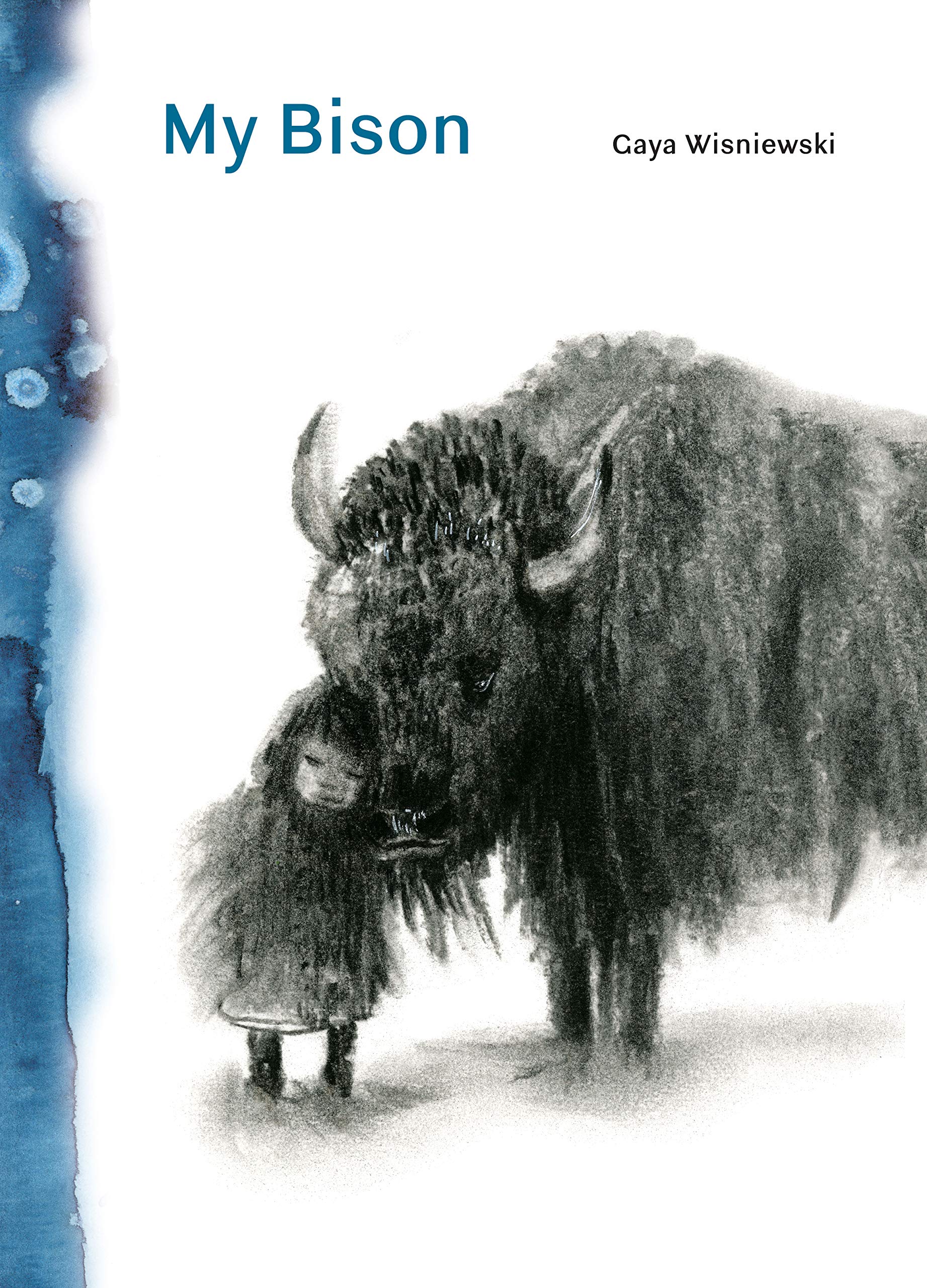
Gaya Wisniewski’s stunning and gorgeous story about a friendship between a little girl and a bison is deeply moving, it’s straightforward and metaphorical meanings blending in harmony to settle in a reader’s heart. The girl’s and bison’s relationship is one of mutual respect and trust, and they are in many ways alike. With her shaggy coat and tousled hair, the girl looks like a miniature bison, while the bison is perfectly comfortable sitting at the table near the fire sipping hot chocolate or snoozing in the cozy built-in bed  in the girl’s home. The girl loves the bison the way children love their pets, and the way she takes care of him replicates a mother’s tender affection and attention.

Here the text and images take on deeper meanings as the little girl offers the bison homemade food, holding her long-handled spoon to his mouth the way mothers the world over do for their babies. She walks with him to the edge of the clearing as he leaves in the spring, waving goodbye but with the promise of his return like a mother taking her child to the bus stop, seeing them off to college, or watching them move away.

celebrate-picture-books-picture-book-review-my-bison-sky

Image copyright Gaya Wisniewski, 2020, courtesy of Princeton Architectural Press.

At other times the bison seems to take on the role of the mother. In the endearing illustration of the bison and the girl talking over cups of hot chocolate, the girl relates how the bison would listen to her stories. Later, readers learn that her mother made her hot chocolate when she couldn’t sleep, letting them imagine how the little girl might have told her mother about her day, about the things keeping her awake. The china cup also holds the bison’s memory of cuddling with his mother, their fur smudged and merging with the steam rising from the hot drink. This blending of roles subtly demonstrates the cycles of life and the reciprocal nature of love.

Readers don’t know when the girl lost her mother; but a snapshot of the girl playing Ring around the Rosie with her and her teddy bear, in which only the mother’s arms are visible at the side of the page and the circle of light highlighting this scene is surrounded by darkness, hints at the loss. As the bison and the girl grow old together and there comes the winter when the bison does not return readers discover that any great love is always with them.

Wisniewski’s charcoal and ink illustrations, punctuated with blue create a mystical, dreamlike atmosphere where the forest and the mountains, the girl and the bison reach out to embrace the reader and invite them into this world of a love like no other.

A tender story to share all types of unending love with children, My Bison would be a poignant addition to home, school, and public library collections.

Ages 4 – 7

Princeton Architectural Press, 2020 | ISBN 978-1616898861

To learn more about Gaya Wisniewski, her books, and her art, visit her website.

National Bison Day Activity

celebrate-picture-books-picture-book-review-bison-coloring-page

Bison Coloring Page


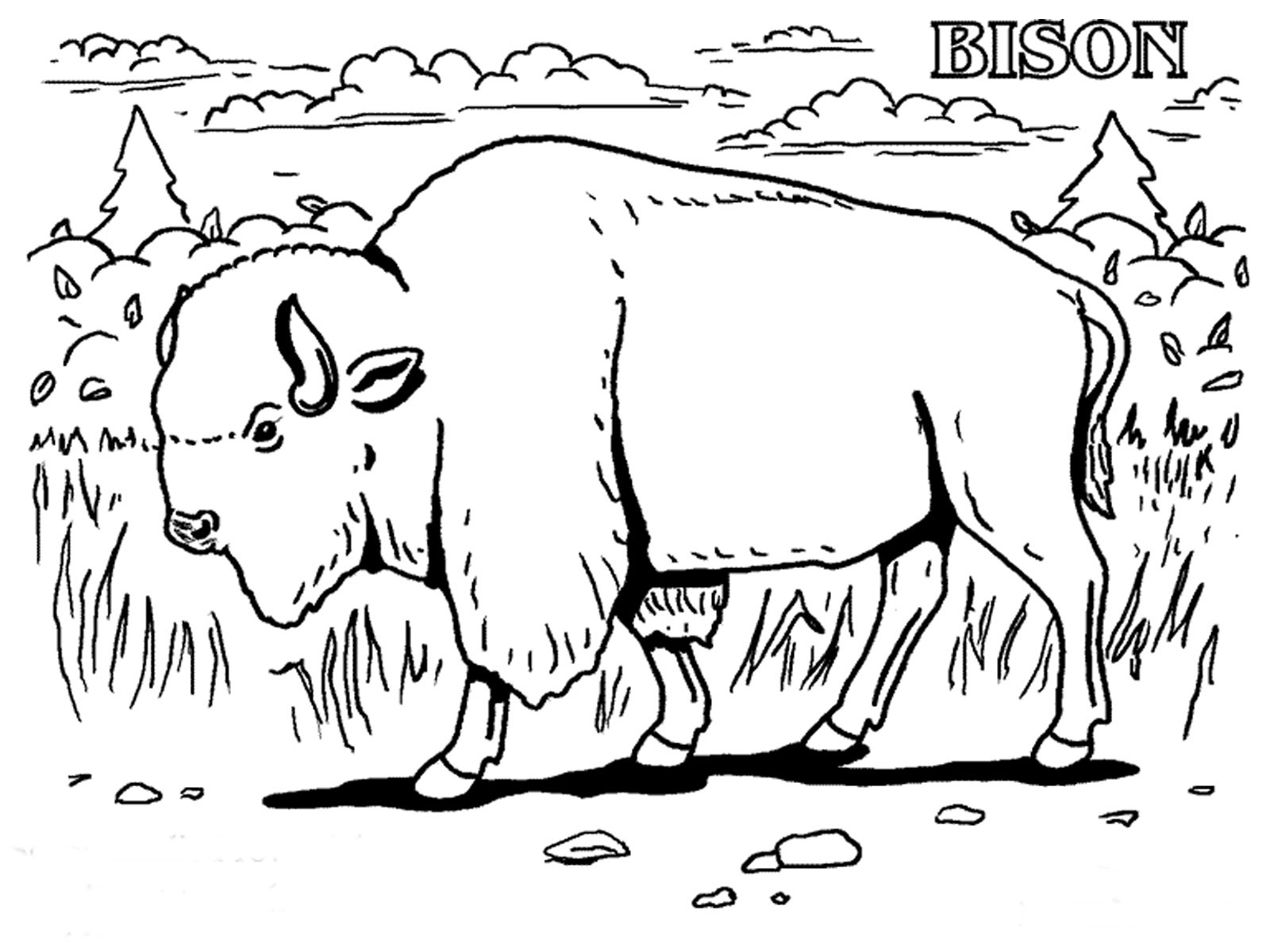
Bison are majestic creatures. Enjoy this coloring page of a bison roaming Yellowstone National Park.

Bison Coloring Page

celebrate-picture-books-picture-book-review-my-bison-cover

You can find My Bison at these booksellers

Amazon | Barnes & Noble | Books-a-Million

To support your local independent bookstore, order from

Bookshop | IndieBound

Picture Book Review