October 11 – Ada Lovelace Day

celebrate-picture-books-picture-book-review-ada-byron-lovelace-and-the-thinking-machine-cover

About the Holiday

Today we remember the woman who is regarded as “the first computer programmer.” A mathematician, inventor, and scientific pioneer, Ada Lovelace wrote and was the first to publish an algorithm to generate Bernoulli numbers. Her notes published in Taylor’s Scientific Memoirs in 1842 inspired Alan Turing to design the first modern computers 100 years later. Today’s holiday celebrates all women in the science, technology, mathematics, and engineering fields. To learn more about Ada Lovelace Day visit findingada.com.

Ada Byron Lovelace and the Thinking Machine

Written by Laurie Wallmark | Illustrated by April Chu


Ada was the daughter of two very distinguished—and distinct—parents. Her mother loved geometry and was known as “‘The Princess of Parallelograms.’” Her father was a world-renowned poet, “beloved for his Romanic poems.” When Ada was still a baby, however, her mother left Lord Byron and his “scandalous behavior” behind, and “Ada never saw her father again.”
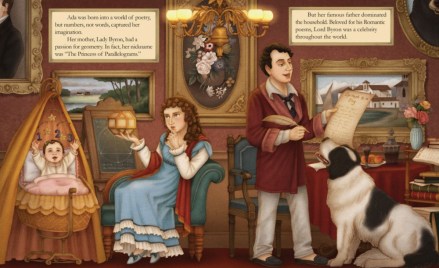
celebrate-picture-books-picture-book-review-ada-byron-lovelace-and-the-thinking-machine-ada's-parents

Image copyright April Chu, text copyright Laurie Wallmark. Courtesy of crestonbooks.com

As was common in Ada’s time she was often left on her own while her mother traveled. Ada filled the hours and days writing, sketching, and inventing in her journal. When she was still a little girl, she built a set of wings for a flying machine she had imagined. To discover if her wings could actually fly, “Ada needed to compute the wings’ power. She broke the problem into steps—surface area and weight, wind speed and angles.” She had to multiply and divide again and again, and while she loved calculating numbers, Ada wondered if there wasn’t an easier way to find the answers.

As she sat at her desk one day a storm blew up, sending the curtains around her open window flapping. They reminded Ada of sails and she suddenly realized that sails were like wings. She grabbed her toy sailboat and headed out to a nearby pond to test her theories. She launched her boat over and over, and “each time she adjusted the sails and studied the effect on the little boat’s speed. A storm of numbers and calculations whirled in her mind and spilled onto her pages.” She stayed by the pond until dark, and “returned home muddy, dripping wet, and triumphant.” Her nanny was not pleased. She didn’t agree with Ada’s mother, instead believing that girls “should not waste their time with math and science and experiments and other such nonsense.”
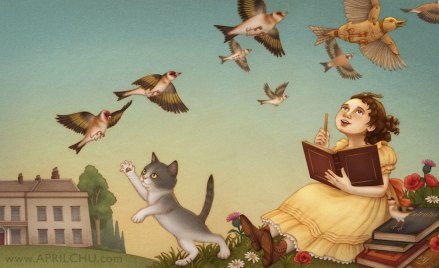
celebrate-picture-books-picture-book-review-ada-byron-lovelace-and-the-thinking-machine-imagining-a-flying-machine

Image copyright April Chu, courtesy of aprilchu.com

Overnight, Ada developed a high fever, and the doctor diagnosed measles. Ada’s mother was sent for. She hurried home and spent the days and nights at Ada’s bedside reading to her. Ada’s “fever finally broke, but the measles left her paralyzed and blind. To keep Ada’s mind sharp, Mama quizzed her on math problems,” asking her harder and harder questions. The numbers kept her company, and in her imagination Ada used her flying machine to travel to London.

While Ada regained her sight in a few weeks, it was three years before she could walk again. During this time Ada’s mother hired tutors to teach her higher and higher level math. One of her tutors was Mary Fairfax Somerville, a famous scientist and mathematician. Somerville invited Ada and her mother to a gathering of other influential scientists, mathematicians, and inventors. There Ada met Charles Babbage. Babbage, a mathematician and inventor, was impressed by 17-year-old Ada’s knowledge and understanding and invited her to visit his laboratory.
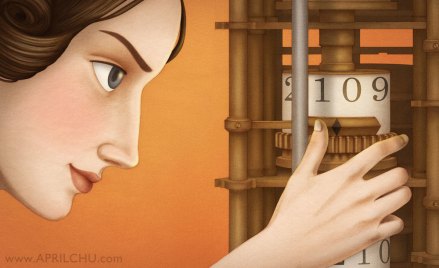
celebrate-picture-books-picture-book-review-ada-byron-lovelace-and-the-thinking-machine-difference-engine

Image copyright April Chu, courtesy of aprilchu.com

Ada brought her journal and shared with Charles Babbage her own work. He didn’t treat Ada as a child but as a fellow scientist and engineer. Babbage showed Ada a mechanical calculator he had designed. With the turn of a handle cylinders of numbers on the three columns of his Difference Engine spun toward the answer to a math problem Ada posed: what is 15 x 12? The machine gave the right answer: 180!

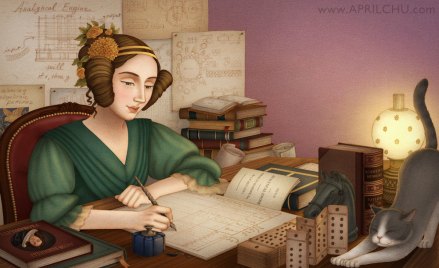
Babbage also had an idea for a mechanical computer—and Analytical Engine—that “would solve harder problems by working through them step by step.” It was an amazing concept, but Babbage hadn’t built it yet. He gave Ada his notebooks and she studied Babbage’s descriptions of how the machine might work. She realized that the Analytical Engine could work if numbers told it how.
celebrate-picture-books-picture-book-review-ada-byron-lovelace-and-the-thinking-machine-calculating

Image copyright April Chu, courtesy of aprilchu.com

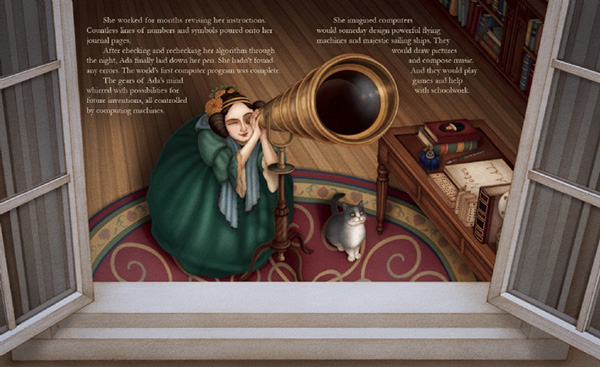
Over several months Ada created an algorithm—a set of mathematical instructions. Her journal was filled with lines and lines of numbers and symbols. At last she checked her work for errors and found none. Ada had developed the world’s first computer program! With her creative imagination she could see that someday computers would “design powerful flying machines and majestic sailing ships. They would draw pictures and compose music. And they would play games and help with schoolwork.”

Unfortunately, Charles Babbage never finished building his Analytical Machine, and Ada never saw her program in action. But future generations remembered her and her contributions to computer programming. There is even a computer program named for her. We can imagine that the little girl who wanted to fly would be very pleased to know that Ada helps guide modern flying machines.

An extensive Author’s Note, a timeline of Ada’s life as well as a partial bibliography and resources follow the text.
celebrate-picture-books-picture-book-review-ada-byron-lovelace-and-the-thinking-machine-looking-at-stars

Image copyright April Chu, text copyright Laurie Wallmark. Courtesy of crestonbooks.com

Laurie Wallmark’s compelling biography of Ada Lovelace is perfectly aimed at her young audience, highlighting Ada’s childhood dreams, obstacles, and events that led her to become an influential mathematician and inventor. Wallmark’s fast-paced text, which beautifully merges lyrical and technical language to tell Ada’s story, is uplifting in its revelation that from even a young age, Ada was respected and acknowledged for her intelligence and mathematical gifts. Illuminating Ada’s predictions for future uses of the computer forms a bridge between her foresight and the experience of today’s children, bringing history alive for readers.

Gorgeous, detailed illustrations set Ada Byron Lovelace and the Thinking Machine firmly in its 19th-century time period. Lush greens, reds, and golds welcome readers into Ada’s home, where her wooden and paper wings lay among blueprints for other inventions as Ada sits at her desk jotting notes in her journal. A mural in her home cleverly depicts Ada’s imaginings while she recovered from the measles, and the gathering that Ada and her mother attend is a stimulating portrait of the scientists and new inventions of the day. Kids will be amazed to see one of the first “calculators” as built by Charles Babbage. Included on the pages are images of an early loom and punch cards that influenced the development of our computers. It is fitting that the last page shows how far we have come—and how forward thinking Ada was—with an illustration of Space technology in action.

Ada Byron Lovelace and the Thinking Machine is an important biography that should be included in every public and school library. For children interested in history, biographies, and the science and math fields, Laurie Wallmark’s and April Chu’s book would make a beautiful gift and addition to home bookshelves as well.

Ages 5 – 10

Creston Books, LLC, 2015 | ISBN 978-1939547200

Discover more about Laurie Wallmark and download curriculum and activity guides on her website!

View a portfolio of artwork and learn more about April Chu’s books on her website

This is one book trailer that really computes!

Ada Lovelace Day Activity

celebrate-picture-books-picture-book-review-computer-coloring-page

Love Your Computer! Coloring Page


What would we do without our computers? Here’s a fun printable Love Your Computer! coloring page for you to enjoy!

Picture Book Review

August 15 – National Relaxation Day

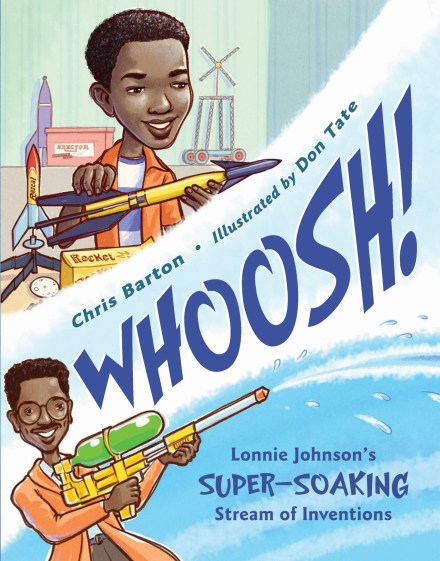
celebrate-picture-books-picture-book-review-whoosh!-lonnie-johnson's-super-soaking-stream-of-inventions-cover

About the Holiday

Relaxation Day was founded in 1985 by then fourth-grader Sean Moeller, who already knew a thing or two about balance in life when he suggested that “cleaning and real work are not part of relaxation.” Today’s holiday gives you permission to kick back and enjoy yourself. The subject of today’s book invented a great way to take advantage of a day off—and also demonstrates that sometimes work and relaxation go hand-in-hand!

WHOOSH! Lonnie Johnson’s Super-Soaking Stream of Inventions

Written by Chris Barton | Illustrated by Don Tate


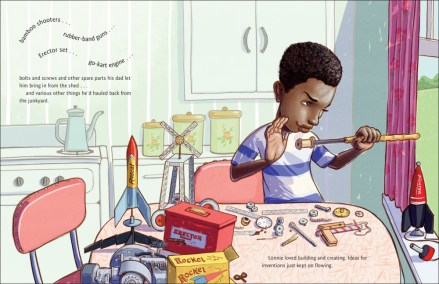
Lonnie Johnson had a way with stuff. In his hands bolts and screws, gears and springs, spools, clothespins, “spare parts his dad let him bring in from the shed, and various other things he’d hauled back from the junkyard” fueled Lonnie’s ideas for inventions and rocket ships. The kids at school loved to watch him launch the rockets he’d devised on the playground. Lonnie wanted to have a career as an engineer. Getting there took a lot of determination and courage. Once, the results of a standardized test said that he would not make a good engineer. Lonnie felt discouraged, but he knew that the person who had graded his test didn’t know him—or Linex.

celebrate-picture-books-picture-book-review-whoosh!-lonnie-johnson's-super-soaking-stream-of-inventions-young-lonnie-inventing

Image copyright Don Tate, courtesy of charlesbridge.com

Linex was the robot Lonnie had built from scrap metal. “Compressed –air cylinders and valves allowed Linex’s body to turn and its arms to move. The switches came from an old, broken jukebox. Lonnie used a tape recorder to program Linex, and as a bonus the reels looked like eyes.” Lonnie’s goal was to enter Linex in a science fair, but first he wanted to be able to program it. It took several years before he discovered how. Using his little sister’s walkie-talkie, Lonnie took Linex to the “1968 science fair at the University of Alabama—where only five years earlier, African American students hadn’t even been allowed.” Lonnie’s team won first place.

Lonnie went to college at Tuskegee Institute, where he realized his dream of becoming an engineer. His career “took him beyond Alabama—way beyond.”  He went to work for NASA. Before the orbiter Galileo could be sent to Jupiter, Lonnie developed a system that would ensure the craft would have a constant supply of power for its computer memory in case the main power was lost. Some fellow scientists doubted his idea would work, but it did. “As it photographed Jupiter and its moons, Galileo was supported by the power package that Lonnie designed.”

celebrate-picture-books-picture-book-review-whoosh!-lonnie-johnson's-super-soaking-stream-of-inventions-linex

Image copyright Don Tate, courtesy of charlesbridge.com

Even though Lonnie worked for NASA, he continued tinkering with his own ideas—in his own workshop. One problem he was trying to solve involved the need for the world’s refrigerators and air conditioners to have a cooling system that didn’t use the damaging chemical R-12. “He had an idea for using water and air pressure instead.” He built a prototype and experimented with it in his bathroom sink. When he turned his pump and nozzle on, a stream of water blasted across the room.

Suddenly, Lonnie saw another use for his invention—as a water gun. He created a design small enough for children’s hands, and tested it at a picnic, where it was a hit. Lonnie took his idea to a toy company…and another…and another. Finally one company agreed to make his water gun. Spurred on by this success, Lonnie found investors to help him build other original inventions: “a water-propelled toy airplane, two kinds of engines, and his cooling system” that had led to the water gun. He even quit his day job to devote his time to inventing.

But things don’t always work out. Each project fell through—even the water gun. It was a scary time as he and his family had to move out of their house and into an apartment. But Lonnie believed in himself. He took his water gun to another toy company. In 1989 he found a toy company willing to take a look. Lonnie made the trip to Philadelphia and wowed the executives with his invention.

celebrate-picture-books-picture-book-review-whoosh!-lonnie-johnson's-super-soaking-stream-of-inventions-water-powered-nozzle

Image copyright Don Tate, courtesy of charlesbridge.com

Now kids everywhere enjoy the fun of the Super Soaker. Today, Lonnie can be found in his workshop doing what he loves: “facing challenges, solving problems and building things” because “his ideas just keep on flowing.”

Chris Barton’s biography of Lonnie Johnson is a fascinating look at a man who succeeds in turning “No” into “Yes” by the power of his intelligence, ideas, and determination. Kids will love hearing about how one of their favorite toys came to be and will be inspired to chase their own dreams despite challenges and setbacks. Barton’s detailed narration provides a full picture of Lonnie Johnson and his times, specifics that attract and inform like-minded kids. Including the results of Lonnie’s exam should encourage kids who think differently. The story is enhanced by the conversational tone that makes it accessible to kids of all ages.

Don Tate illuminates Lonnie Johnson’s life story with his bold, full-bleed paintings that follow Lonnie from his being a child with big ideas to becoming a man who has seen these ideas through to success. With an eyebrow raised in concentration, young Lonnie demonstrates confidence and skill as he works on an invention, and kids will love seeing the tools of his trade laid out on the kitchen table. With his eyes narrowed in frustration and disappointment, Lonnie reads the results of his childhood exam. As Lonnie grows older and designs systems for NASA, the illustrations depict the schematics of the Galileo power package and Lonnie’s surprise at the strength of the water stream in his prototype cooling design. As all kids know, the spurt of a Super Soaker is awesome, and this fact is demonstrated in a “Wowing” fold-out page.

WHOOSH! Lonnie Johnson’s Super-Soaking Stream of Inventions is a welcome biography of the man who designs systems for the greater world but has never lost his youthful enthusiasm to invent.

Ages 5 – 10

Charlesbridge, 2016 | ISBN 978-1580892971

Check out more fiction and nonfiction books by Chris Barton on his website!

Discover more books written and illustrated by Don Tate as well as a portfolio of his work and book-related activity guides on his website!

National Relaxation Day Activity

celebrate-picture-books-picture-book-review-kids-in-pool-coloring-page

Dive In! Coloring Page


The Super Soaker is a great way to cool off! Another relaxing water activity is swimming in a pool! So dive in to this printable cool pool Dive In! Coloring Page!

June 2 – Leave the Office Earlier Day

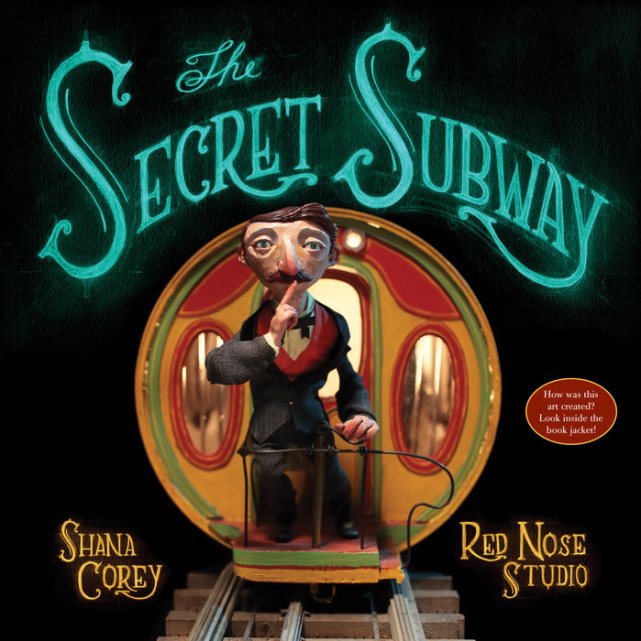
celebrate-picture-books-picture-book-review-the-secret-subway

About the Holiday

The brain child of Laura Stack, a specialist in employee motivation, Leave the Office Earlier Day urges a look at how employees and employers use the working hours of the day to best advantage. Today’s holiday motivates employees to finish their tasks before schedule by making a conscious effort to increase efficiency and productivity. Greater cooperation between workers and their bosses can lead to less downtime and more success. To celebrate today’s holiday, employees can ask their bosses if they can leave the office once their work is truly and well finished. Employers may want to allow their workers to leave as soon as they have completed all their tasks. Both sides may find this tactic improves productivity and creates a more positive work environment.

The Secret Subway

Written by Shana Corey | Illustrated by Red Nose Studio (Chris Sickels)


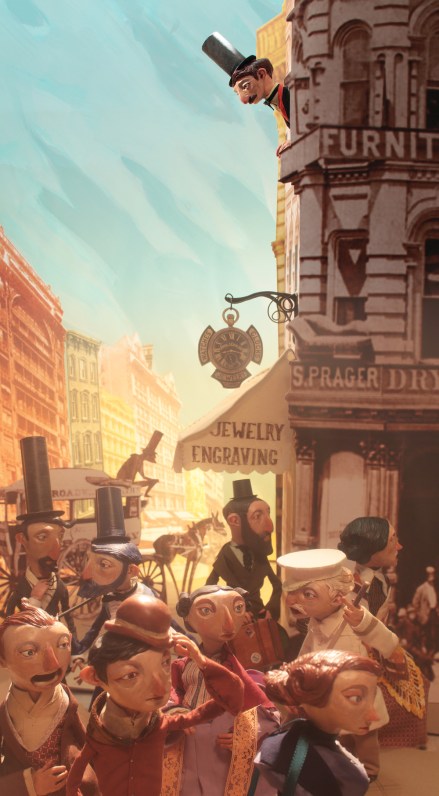
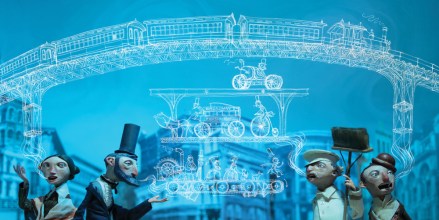
In the 1860s the streets of New York were…well, not to put too fine a point on it…disgusting. Cobblestone and filled with trash, waste, horse manure, dust, dirt, and throngs of people, the roads made for rough travel. Many people had ideas about what could be done to make the streets safer and cleaner. Some thought a moving sidewalk would work, others talked about double-decker roads or an elevated train system. But although there was a lot of talk, nothing ever got done.

celebrate-picture-books-picture-book-review-the-secret-subway-city

Image copyright Chris Sickles, courtesy of rednosestudio.com

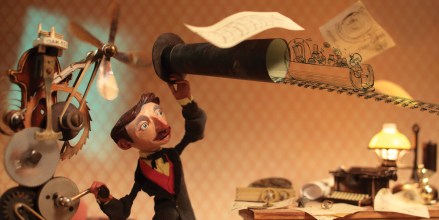
Alfred Ely Beach, however, peered down from his high office room and studied the street below him. Alfred Beach was a thinker, a publisher, and an inventor. He put his clever mind to work and came up with a solution. He envisioned a train powered by an enormous fan that would travel underground. “People would get where they needed to go as if by magic!” he thought. He couldn’t wait to start building. There was just one problem—he didn’t own the streets. And getting permission to dig them up would be hard. “So Beach hatched a sneaky plan. He would propose building an underground tube to carry mail instead.” As he had imagined, no one objected to this project when he proposed it—not even Boss Tweed, who unofficially ran the city.

celebrate-picture-books-picture-book-review-the-secret-subway-designing

Image copyright Chris Sickles, courtesy of rednosestudio.com

Given the okay, Beach rented the basement of Devlin’s Clothing Store. Every day he sent in workers to dig and every night wagons took away the debris. For 58 days and nights Beach’s men tunneled under the city, moving forward 8 feet each day. At last the tunnel was finished. It was 8 feet across and 294 feet long—large enough to hold a train full of people.

Beach then decorated the basement to be a beautiful, welcoming waiting room. Gaslight lamps and paintings dotted the walls, flowers added color, and a grandfather clock rang out the time. There was even a fountain with goldfish, a man playing a grand piano, and a delicious lunch. When everything was ready, Beach invited reporters, government officials, and distinguished citizens to join him on February 26, 1876 at the “Beach Pneumatic Transit Company.”

celebrate-picture-books-picture-book-review-the-secret-subway-designing

Image copyright Chris Sickles, courtesy of rednosestudio.com

That first day Alfred Beach’s guests only admired the train, but they gave it glowing praise. Soon Beach opened his train to the public. With a WHOOSH of a gigantic fan, the train zipped down the track and then back again. “Beach’s train was a SENSATION! All winter while wagons slipped and slid on the slushy streets above, people poured into Devlin’s for the twenty-five-cent ride.”

While riders loved it, some people objected. Shop keepers didn’t want potential buyers underground. Property owners were afraid the digging would hurt their buildings, and some felt Beach wanted too much power. Even Boss Tweed no longer supported it since some of his friends had their own ideas on building a subway. When the governor of New York refused to let Beach expand his train, the project came to a halt.

celebrate-picture-books-picture-book-review-the-secret-subway-invites-riders

Image copyright Chris Sickles, courtesy of rednosestudio.com

The idea didn’t die, however, and “many years later drilling could be heard once again under the streets of New York City” as a train system powered with electricity was being built. Diggers discovered many unusual things buried under the city. Perhaps the most surprising was a brick wall behind which stood a little railroad car rusting in its tracks, a memorial to innovation and the future.

Alfred Ely Beach was one clever man, and Shana Corey tells his story with historical perspective, wit, and suspense. Corey’s language crackles with evocative alliteration, stealth, and action. Kids will be excited to learn of the intrigue and imagination that led to this remarkable snippet of America’s history.

Fans of Claymation will love Chris Sickels’ multimedia artwork that combines sculpted characters, specially built props, photographs, and illustration. Sickels’ characters are nothing short of astounding. Their period clothing, hairstyles, and expressive faces lend an engaging and realistic dimension to the vintage scenes. Sickels cleverly depicts early New York City and people’s alternative ideas to the traffic problem. His use of color and lighting sets the perfect tone for this highly entertaining and educational picture book. Kids will want to linger over each page to catch all the details of The Secret Subway.

Ages 4 – 10

Schwartz & Wade, Random House Kids, 2016 | ISBN 978-0375870712

Leave the Office Early Day Activity


celebrate-picture-books-picture-book-review-the-secret-subway-chris-sickels-craft

Chris Sickels’ Secret Subway


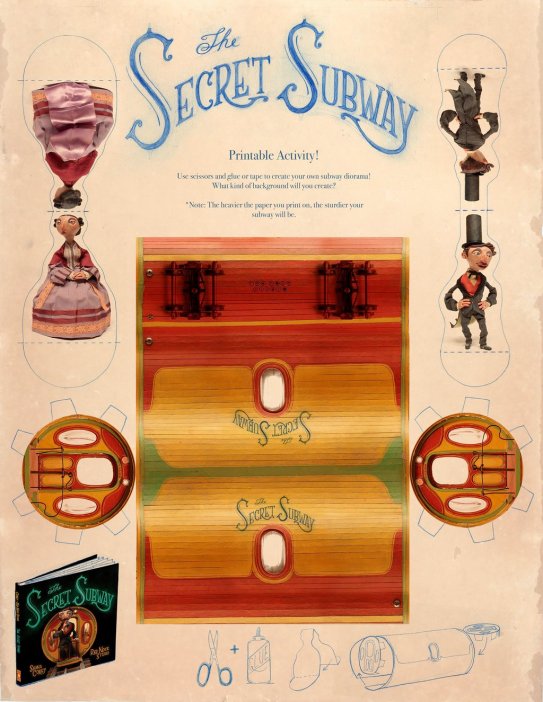
Chris Sickels of Red Nose Studio invites you to build your own Secret Subway with this printable play set, complete with Alfred Ely Beach and a passenger! Click here to download your printable Secret Subway Activity!

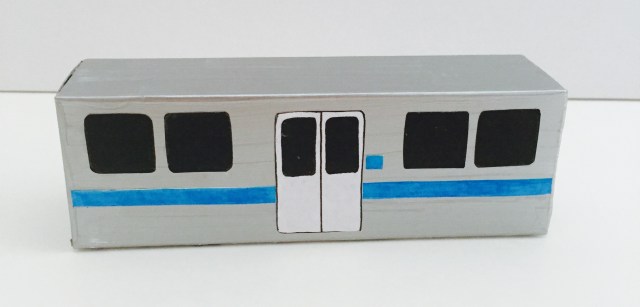
Build a Super Subway Car

celebrate-picture-books-picture-book-review-subway-car

Every day, millions of people all over the world travel to work, school, and other activities by subway. Here’s an easy and fun way to build your own subway train from recycled materials. You can make just one car or make a few and connect them to create a long train worthy of any big city!

Supplies

  • Printable Subway Car Template
  • Medium or long toothpaste box
  • Silver paint
  • Glue
  • Paintbrush
  • Scissors

Directions

  1. Paint the toothpaste box with the silver paint, let dry
  2. Cut out the windows, doors, and stripe templates
  3. Trim the stripes to fit your box
  4. To make the little sign near the door, trim a small aquare from one of the stripes
  5. Glue the templates to the box

Picture Book Review

May 24 – Brother’s Day

celebrate-picture-books-picture-book-review-the-day-glo-brothers

About the Holiday

Brothers share a special bond built on mischief, inside jokes, shared experience, and love. If you have a brother—either by blood or friendship—spend some time with him, give him a call, or just text and say, “hi.”

The Day-Glo Brothers: The True Story of Bob and Joe Switzer’s Bright Ideas and Brand-New Colors

Written by Chris Barton | Illustrated by Tony Persiani


Before the Switzer brothers had their bright idea, the world was a much less colorful place. Bob Switzer, born in 1914, loved to work and saved his money for exciting plans. His younger brother Joe loved magic and had an inventive mind. When the family moved to Berkley, California, Joe developed a magic act that included “black art” in which an object that was painted half black and half white seemed to float and disappear in midair.

Joe loved this trick but thought it could be better. Meanwhile Bob planned to become a doctor. But during the summer before he began college, Bob had an accident that ended his plans. Because his injury effected his head, he had to recover in a darkened room. While Bob healed, Joe spent time in the basement with him studying the glow of fluorescence, hoping to use it in his magic show. Together the brothers built an ultraviolet lamp which they tested in their father’s pharmacy. When they shone it on a shelf full of bottles, a container of eyewash glowed yellow.

celebrate-picture-books-picture-book-review-the-day-glo-brothers-inventing

Image copyright Tony Persiani, text copyright Chris Barton. Courtesy of Charlesbridge

The brothers had an idea. They experimented with chemicals that could make paints glow in the dark. In regular light the paint looked normal, but under ultraviolet light it radiated attention-getting colors. That was great for Joe’s magic act, but Bob thought these paints could be used for other things too, such as store-window displays. Selling the paint could help pay for Bob’s medical bills too.

Bob and Joe searched through the university and other labs for other fluorescent materials. They then combined them with other ingredients in their mother’s mixing bowl to create glowing paints and even once—when the mixing bowl was not cleaned well enough—a very colorful cake!

celebrate-picture-books-picture-book-review-the-day-glo-brothers-inventing

Image copyright Tony Persiani, text copyright Chris Barton. Courtesy of Charlesbridge

Joe used these paints to major effect in one of his acts in which a dancing woman “lost her head” as Joe, unseen by the audience in the darkened theater, took off her headdress as she danced away. This trick brought Bob and Joe lots of customers for their original paints. But there was one problem: these colors only shone under ultraviolet light.

One day in 1935, however, one of Bob’s experiments resulted in a surprising innovation—a dye that glowed even in daylight. Bob didn’t know how exactly it had worked, so the brothers continued experimenting. Finally, they discovered the secret when an orange billboard they had created glowed as if it were on fire even in the daytime! The brothers then created reds, yellows, greens, and other colors that could do the same thing.

During World War II these glowing colors were used on fabric panels used to send signals from the ground to airplanes overhead, in lifeboats, on buoys, and on other safety products. After the war the colors continued to influence culture and are still part of our lives today.

celebrate-picture-books-picture-book-review-the-day-glo-brothers-final

Image copyright Tony Persiani, text copyright Chris Barton. Courtesy of Charlesbridge

Older kids with a penchant for science and history will love this biography. Chris Barton goes in-depth to reveal the Switzer brothers’ dreams and motivations that resulted in a most astounding discovery. Barton infuses the story with humor and interesting details that will fascinate curious minds.

Using a retro style, Tony Persiani sets this biography in its time while also giving the story a modern feel. Gray scale tones become dotted with florescent color as the brothers’ experiments bear fruit and give way to eye-popping spreads with the ultimate success of Day-Glo paints and dyes.

Ages 7 – 12

Charlesbridge, 2009 | ISBN 978-1570916731

Brother’s Day Activity

celebrate-picture-books-picture-book-review-day-glo-maze

Day-Glow Maze


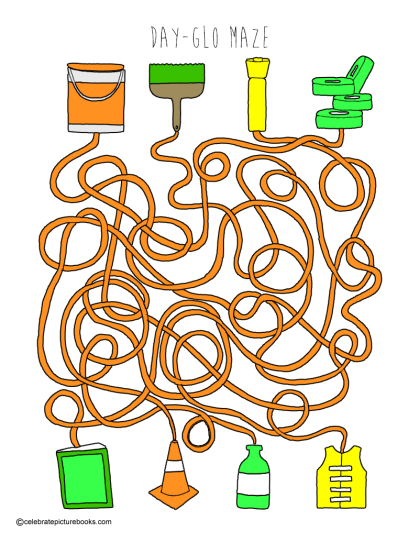
Follow the twisty glowing paths to match the Day-Glo product to the object they color! Print the Day-Glo Maze puzzle here!

Picture Book Review

April 18 – It’s National Inventor’s Month

The Most Magnificent Thing by Ashley Spires picture book review

About the Holiday

Perhaps April was chosen as Inventor’s Month because the blossoms of early spring echo the flourish of ideas that come from fertile minds. This month honors all the men and women throughout history who dared to think differently and changed the world. Today, that proud tradition continues in the excitement of school labs and classrooms, through online courses and computer technology, and in private homes where people of all ages are pondering and creating the next big thing. If you have a knack for innovation or invention, take time to sit down and work on your ideas today.

The Most Magnificent Thing

By Ashley Spires


A little pony-tailed girl and her puppy do everything together. They race, eat, explore, and relax. When she makes things, her best friend unmakes them. One day the girl has a brilliant idea—she is going to make “the most MAGNIFICENT thing!” In her mind it’s going to be “easy-peasy.” She knows exactly how it will look and how it will work.

With her faithful assistant following at her heels, the girl gathers materials and goes to work on the sidewalk outside her home. The girl “tinkers and hammers and measures” while her assistant “pounces and growls and chews.” When the little invention is finished, they stand back to examine it. Hmmm…it doesn’t look quite right. It doesn’t feel quite right either. In fact it is all wrong! The girl tries again.

She “smooths and wrenches and fiddles” while her assistant “circles and tugs and wags.” It still turns out wrong. Determined to make her vision reality, she gives it another go…and another…and another. She makes her invention different shapes, gives it various textures, measures out assorted sizes. One attempt even smells like stinky cheese! But none of these creations are MAGNIFICENT.

People stop by and offer encouraging—even admiring—remarks, but the little girl just gets mad. Can’t they see how wrong her invention is? In her anger the little girl works at a fevered pitch, shoving parts together, her brain fogged by “all the not-right things.” In her haste she hurts her finger. This is the last straw. She explodes and declares that she QUITS!

The ever-watchful assistant suggests a bit of fresh air. The girl takes her puppy for a walk and at first her feelings of defeat stay with her. Little by little, though, she pays attention to the world around her and her mind clears. Coming home, she encounters all the wrong things she has made lined up on the sidewalk. Her disappointment threatens to return, but then she notices something surprising—there are parts of each iteration that she likes!

After studying each earlier attempt, she knows just what to do! Slowly and carefully she once more begins to tinker. At the end of the day she and her assistant stand back to look. The machine may lean a bit, and be a little heavy, and it may need a coat of paint…but as the girl and her puppy climb aboard, they both agree that “it really is THE MOST MAGNIFICENT THING!”

You are never too young or too old for Ashley Spires’ inspiring and inspired story. The journey from idea to realization—so often fraught with disaster (or apparent disaster)—is depicted here honestly and with humor as the on-going process it is. Step-by-step the little girl thinks, gathers materials, tinkers, discovers, tinkers some more, and triumphs. It is this last step that is so “magnificently” presented—it’s only by not giving up that success can be achieved.

Spires’ tale is a delight of language—the girl “smooths, wrenches, fiddles, twists, tweaks, and fastens, pummels, jams, and smashes.” Likewise, her illustrations wonderfully depict the changing emotions of this thoughtful, steely-eyed, shocked, and ultimately thrilled young inventor. Her faithful puppy is a charming companion and foil, and kids will love examining the early inventions that lead up to the final product.

The Most Magnificent Thing is a fabulous book to keep on any child’s or adult’s bookshelf for those times when inspiration hits but achievement seems elusive.

Ages 3 – 7 and up (creative types of all ages will enjoy this book)

Kids Can Press, 2014 | ISBN 978-155453704

National Inventor’s Month Activity

CPB - Inventor's Tool Kit II (2)

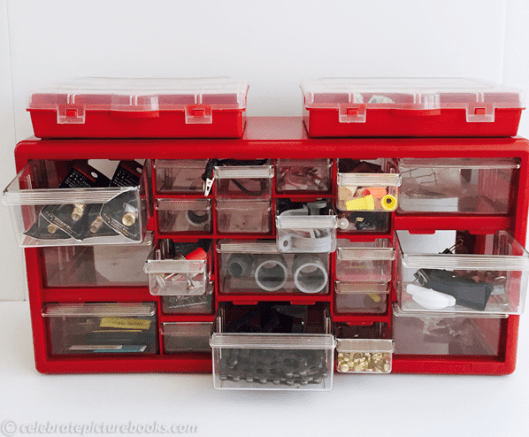
Inventor’s Tool Kit


Every idea begins as a jumble of seemingly unrelated parts. Gathering whatever types of material inspires you and keeping it in a box ready to go when inspiration hits is a great way to support innovation and spark experimentation.

Supplies

  • Small parts organizer with drawers or compartments, available at hardware stores and craft stores
  • A variety of parts or craft materials that can be combined, built with, or built on
  • Some hardware ideas—pulleys, wheels, small to medium pieces of wood, wire, nuts, bolts, screws, hooks, knobs, hinges, recyclable materials
  • Some craft ideas—clay, beads, wooden pieces, sticks, paints, pipe cleaners, string, spools, buttons, glitter, scraps of material, recyclable materials

Directions

  1. Fill the organizer with the materials of your choice
  2. Let your imagination go to work! Build something cool, crazy, silly, useful—Amazing!

March 13 – National Earmuff Day

Earmuffs for Everyone! by Meghan McCarthy Picture Book Review
About the Holiday

On March 13, 1877 Chester Greenwood—a 19-year-old inventor—received a patent for “improvements in ear-mufflers” and forever sealed his place in history—as well as making winter more comfortable for millions of freezing ears! Today we honor Chester and his invention that brought attention to Farmington, Maine and jobs for many people in the area. So if you live in an area where the cold winds are still blowing, wear your earmuffs in pride!

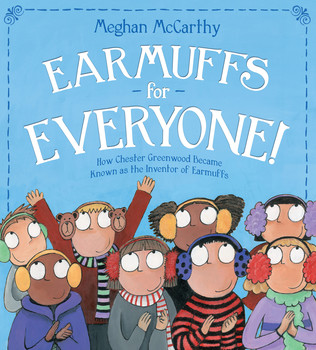
Earmuffs for Everyone! How Chester Greenwood Became Known as the Inventor of Earmuffs

By Meghan McCarthy


In the mid-1800s inventors were trying to solve the problem of winter’s chill effects on tender ears. William Ware designed an “ear, cheek, and chin muff” that one wore somewhat like a false beard. Ear protecting hats, ear “slippers,” high collars, and other designs followed. But it wasn’t until Chester Greenwood and his sensitive protruding ears came along that earmuffs became practical. While the exact steps Chester took in creating his earmuffs aren’t known, he eventually perfected his invention and received a government patent on March 13, 1877—when he was only 19 years old!

Chester was no one-invention wonder, though. Always on the lookout for clever ways to make money, he went on to improve other products. He applied his foresight to the tea kettle, rounding the edges of the bottom to reduce wear; constructed an interchangeable-tooth rake; and built a collapsible, if cumbersome, tent.

His inventions brought him a comfortable life—a beautiful house for his family in Maine, the first steam car in his town, and a bicycle shop on the bottom floor of his workshop—that he shared with others. His wife, also a progressive thinker, worked for women’s suffrage, and inspired her husband to hire women in his workshops.

After Chester passed away, some people, most notably Mickey Maguire, thought he deserved more acclaim—even a day dedicated as Chester Greenwood Day. Maguire was so excited about this that he became a kind of inventor himself—an inventor of tall tales. Over time he told some whoppers and they were printed, making it hard to separate fact from myth. But even without the made-up stories, it’s easy to say that Chester Greenwood had a very remarkable life

Earmuffs for Everyone goes beyond the story of Chester Greenwood to include other inventors, a discussion of the patent system (using products well-known to today’s kids), and how an inventor’s legacy grows. Meghan McCarthy writes with verve and humor, making the story of Greenwood’s invention as well as others’ creations inviting, accessible, and fun. Her illustrations of the first attempts at earmuffs and other1800s products are sure to delight kids and make them curious about the time period.

In her author’s note at the back of the book, McCarthy expands on the story of Chester Greenwood and the process of applying for and earning a patent.

Ages 4 – 8

Simon & Schuster/Paula Wiseman Books, 2015 | ISBN 978-1481406376 

National Earmuff Day Activity

CPB - Earmuff Maze.png

Here’s to Warm Ears! Maze


One muff on each side of the head—Genius! But it took inventors a lot of trial and error to make the perfect warming headgear. Use your own creative thinking on this Here’s to Warm Ears!earmuff-shaped maze. Solution included.

February 18 – National Battery Day

Using Batteries Picture Book review

About the Holiday

While not an official holiday, National Battery Day is a great time to think about how these small, ubiquitous power cells have changed and improved our lives, allowing us to take our gadgets and our necessities wherever we go. Batteries themselves may be relatively new, but the idea may have been around for 2,000 years. In 1936 archaeologist Wilhelm Konig unearthed a clay jar from a Parthian tomb that held an iron rod encased in copper that may have been used to electroplate gold onto silver.

It was Benjamin Franklin (of course it was!) who coined the term “battery” in 1748 to describe an array of charged glass plates. The word “volt” or a battery’s electric potential comes from Alessandro Volta, who in 1800 generated electrical current by layering silver, a material soaked in salt or acid, and zinc. William Cruickshank, an English chemist, advanced this method, and in 1802 created a battery for mass production. The first commercially available battery was introduced in 1896 by the company now known as Eveready, and we were off and charging!

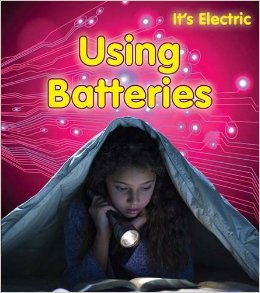
It’s Electric Series: Using Batteries

By Chris Oxlade

Batteries—those things that make our our cars run, our TV remotes change channels, our little book lights glow, and so much more—are part of our lives from the very beginning, when they’re required (but not included) for our favorite toys. But how many of us really know how they work? This little book explains to children in simple and easily understood language how batteries store and use electricity to fuel many of the world’s machines and gadgets.

Large photographs accompany the text and clearly demonstrate the concepts. Children will learn about using batteries, how batteries work in circuits, the different battery shapes and sizes, battery materials, rechargeable batteries, battery safety, portable power, and more!

For kids interested in electricity – and batteries in particular – theIt’s Electric series of books is a great place to start learning!

Battery Day Activity

Connect the Battery Puzzle

CPB - Battery Day maze

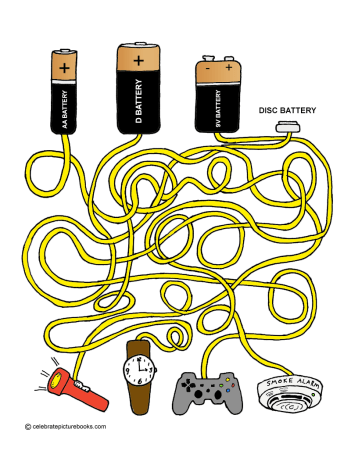
Hmmm…The flashlight, watch, video game controller, and smoke detector are all broken! Can you find which battery goes into which object to make them work again? Print out the Connect the Battery puzzle here.