March 13 – National Earmuff Day

Earmuffs for Everyone! by Meghan McCarthy Picture Book Review

About the Holiday

On March 13, 1877 Chester Greenwood—a 19-year-old inventor—received a patent for “improvements in ear-mufflers” and forever sealed his place in history—as well as making winter more comfortable for millions of freezing ears! Today we honor Chester and his invention that brought attention to Farmington, Maine and jobs for many people in the area. So if you live in an area where the cold winds are still blowing, wear your earmuffs in pride!

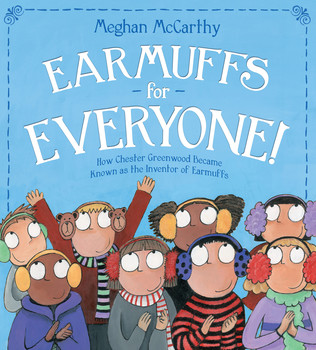
Earmuffs for Everyone! How Chester Greenwood Became Known as the Inventor of Earmuffs

By Meghan McCarthy


In the mid-1800s inventors were trying to solve the problem of winter’s chill effects on tender ears. William Ware designed an “ear, cheek, and chin muff” that one wore somewhat like a false beard. Ear protecting hats, ear “slippers,” high collars, and other designs followed. But it wasn’t until Chester Greenwood and his sensitive protruding ears came along that earmuffs became practical. While the exact steps Chester took in creating his earmuffs aren’t known, he eventually perfected his invention and received a government patent on March 13, 1877—when he was only 19 years old!

Chester was no one-invention wonder, though. Always on the lookout for clever ways to make money, he went on to improve other products. He applied his foresight to the tea kettle, rounding the edges of the bottom to reduce wear; constructed an interchangeable-tooth rake; and built a collapsible, if cumbersome, tent.

His inventions brought him a comfortable life—a beautiful house for his family in Maine, the first steam car in his town, and a bicycle shop on the bottom floor of his workshop—that he shared with others. His wife, also a progressive thinker, worked for women’s suffrage, and inspired her husband to hire women in his workshops.

After Chester passed away, some people, most notably Mickey Maguire, thought he deserved more acclaim—even a day dedicated as Chester Greenwood Day. Maguire was so excited about this that he became a kind of inventor himself—an inventor of tall tales. Over time he told some whoppers and they were printed, making it hard to separate fact from myth. But even without the made-up stories, it’s easy to say that Chester Greenwood had a very remarkable life

Earmuffs for Everyone goes beyond the story of Chester Greenwood to include other inventors, a discussion of the patent system (using products well-known to today’s kids), and how an inventor’s legacy grows. Meghan McCarthy writes with verve and humor, making the story of Greenwood’s invention as well as others’ creations inviting, accessible, and fun. Her illustrations of the first attempts at earmuffs and other1800s products are sure to delight kids and make them curious about the time period.

In her author’s note at the back of the book, McCarthy expands on the story of Chester Greenwood and the process of applying for and earning a patent.

Ages 4 – 8

Simon & Schuster/Paula Wiseman Books, 2015 | ISBN 978-1481406376 

National Earmuff Day Activity

CPB - Earmuff Maze.png

Here’s to Warm Ears! Maze


One muff on each side of the head—Genius! But it took inventors a lot of trial and error to make the perfect warming headgear. Use your own creative thinking on this Here’s to Warm Ears!earmuff-shaped maze. Solution included.

February 18 – National Battery Day

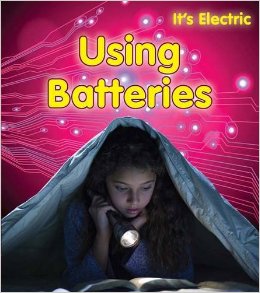
Using Batteries Picture Book review

About the Holiday

While not an official holiday, National Battery Day is a great time to think about how these small, ubiquitous power cells have changed and improved our lives, allowing us to take our gadgets and our necessities wherever we go. Batteries themselves may be relatively new, but the idea may have been around for 2,000 years. In 1936 archaeologist Wilhelm Konig unearthed a clay jar from a Parthian tomb that held an iron rod encased in copper that may have been used to electroplate gold onto silver.

It was Benjamin Franklin (of course it was!) who coined the term “battery” in 1748 to describe an array of charged glass plates. The word “volt” or a battery’s electric potential comes from Alessandro Volta, who in 1800 generated electrical current by layering silver, a material soaked in salt or acid, and zinc. William Cruickshank, an English chemist, advanced this method, and in 1802 created a battery for mass production. The first commercially available battery was introduced in 1896 by the company now known as Eveready, and we were off and charging!

It’s Electric Series: Using Batteries

By Chris Oxlade

Batteries—those things that make our our cars run, our TV remotes change channels, our little book lights glow, and so much more—are part of our lives from the very beginning, when they’re required (but not included) for our favorite toys. But how many of us really know how they work? This little book explains to children in simple and easily understood language how batteries store and use electricity to fuel many of the world’s machines and gadgets.

Large photographs accompany the text and clearly demonstrate the concepts. Children will learn about using batteries, how batteries work in circuits, the different battery shapes and sizes, battery materials, rechargeable batteries, battery safety, portable power, and more!

For kids interested in electricity – and batteries in particular – theIt’s Electric series of books is a great place to start learning!

Battery Day Activity

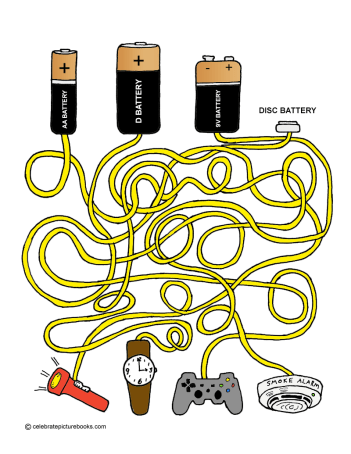
Connect the Battery Puzzle

CPB - Battery Day maze

Hmmm…The flashlight, watch, video game controller, and smoke detector are all broken! Can you find which battery goes into which object to make them work again? Print out the Connect the Battery puzzle here.

February 16 – Innovation Day

CPB - Girls Think of Everything Innovation Day

About the Holiday

Today we celebrate all those people who look at a problem and design a solution, or who just ask, “What if…?” and search for answers. So put on your thinking cap, look around you, and do something new, novel, and completely unexpected. Who knows…you may be the next great inventor!

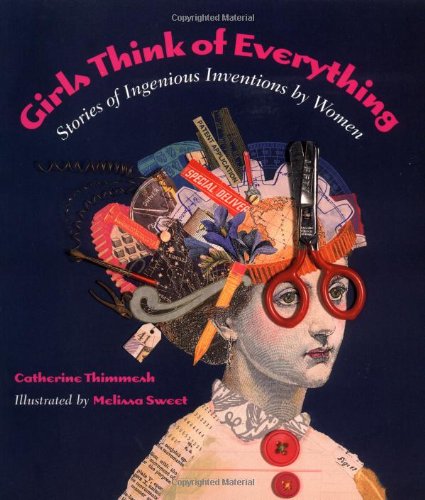
Girls Think of Everything: Stories of Ingenious Inventions by Women

Written by Catherine Thimmesh | Illustrated by Melissa Sweet


Throughout history women have invented new and clever ways of doing things—necessity is the Mother of invention, after all. In her fascinating picture book, Catherine Thimmesh highlights ten women and two girls whose creativity has changed the world.

Here, you’ll learn the intriguing stories behind each invention, the struggles for recognition, and the ultimate victory of innovation. Did you know that the original recipe for chocolate chip cookies was just a time-saver? Or that people once thought windshield wipers weren’t necessary? You’ll also discover how liquid paper, flat-bottomed paper bags, and the Glo-sheet came to be. Women in science have contributed Kevlar, Scotchgard, the COBOL computer language, and the space shields that protect the International Space Station, satellites, and more.

Catherine Thimmesh is an excellent storyteller, drawing you into the actions and minds of these women innovators and the situations or environments that fostered their talents. Melissa Sweet accompanies each profile with portraits of the inventor and colorful collage illustrations that build on the text and tell stories of their own.

Ages 7 – 12

Houghton Mifflin Company, Boston, 2000 | ISBN 978-0618195633

Innovation Day Activity

CPB - Invention Word Scramble

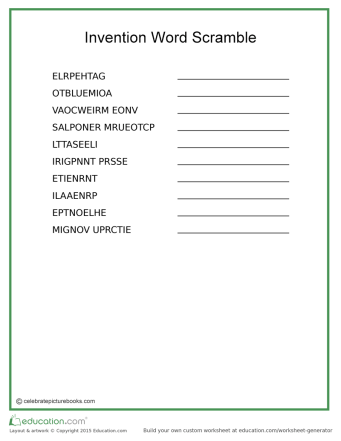
Invention Word Scramble


Every invention started out as a jumble of ideas in someone’s head. In this Invention Word Scramble you can unscramble the letters of some of the world’s greatest creations. Solutionincluded. Odog cklu!