November 17 – Get Ready for Hanukkah

About the Holiday

For children, preparations for Hanukkah are full of magic and wonder, and finding books that mirror their excitement can make the holiday even more special. Today’s book sparkles with an imaginative spin on the eight nights of Hanukkah and its the traditions of light, remembrance, and giving. 

Thank you to Orchard Books for sharing a digital copy of this book with me for review!

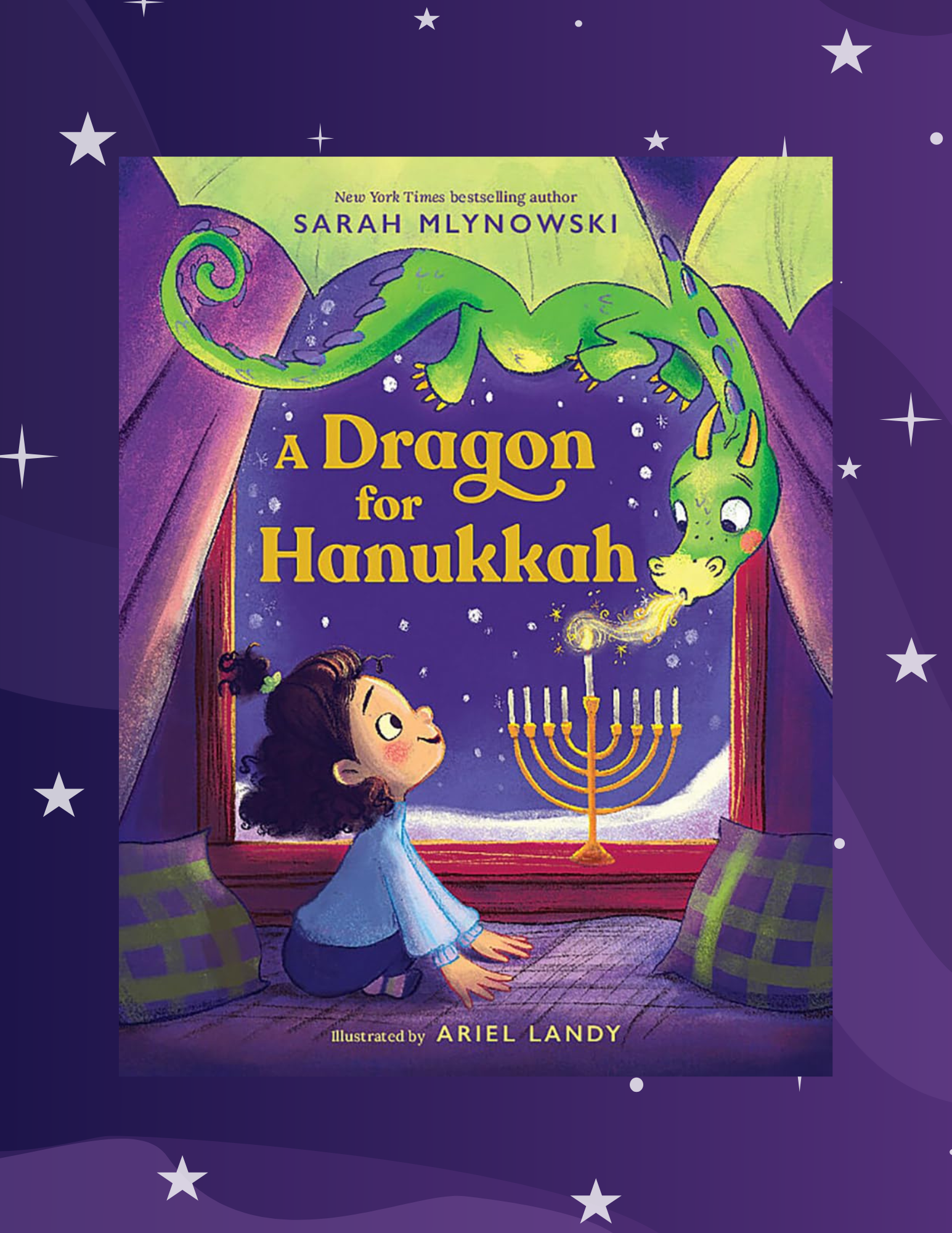
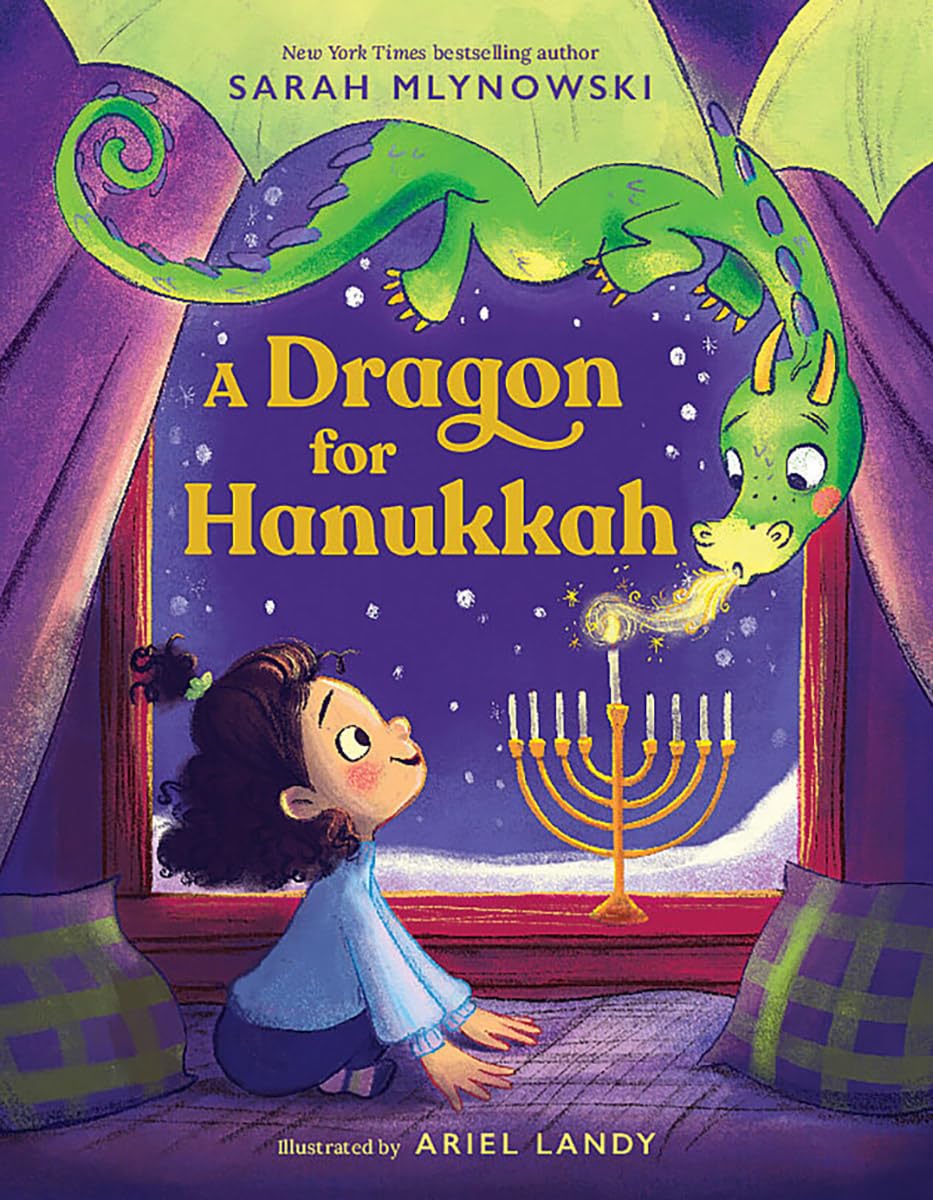
A Dragon for Hanukkah

Written by Sarah Mlynowski | Illustrated by Ariel Landy


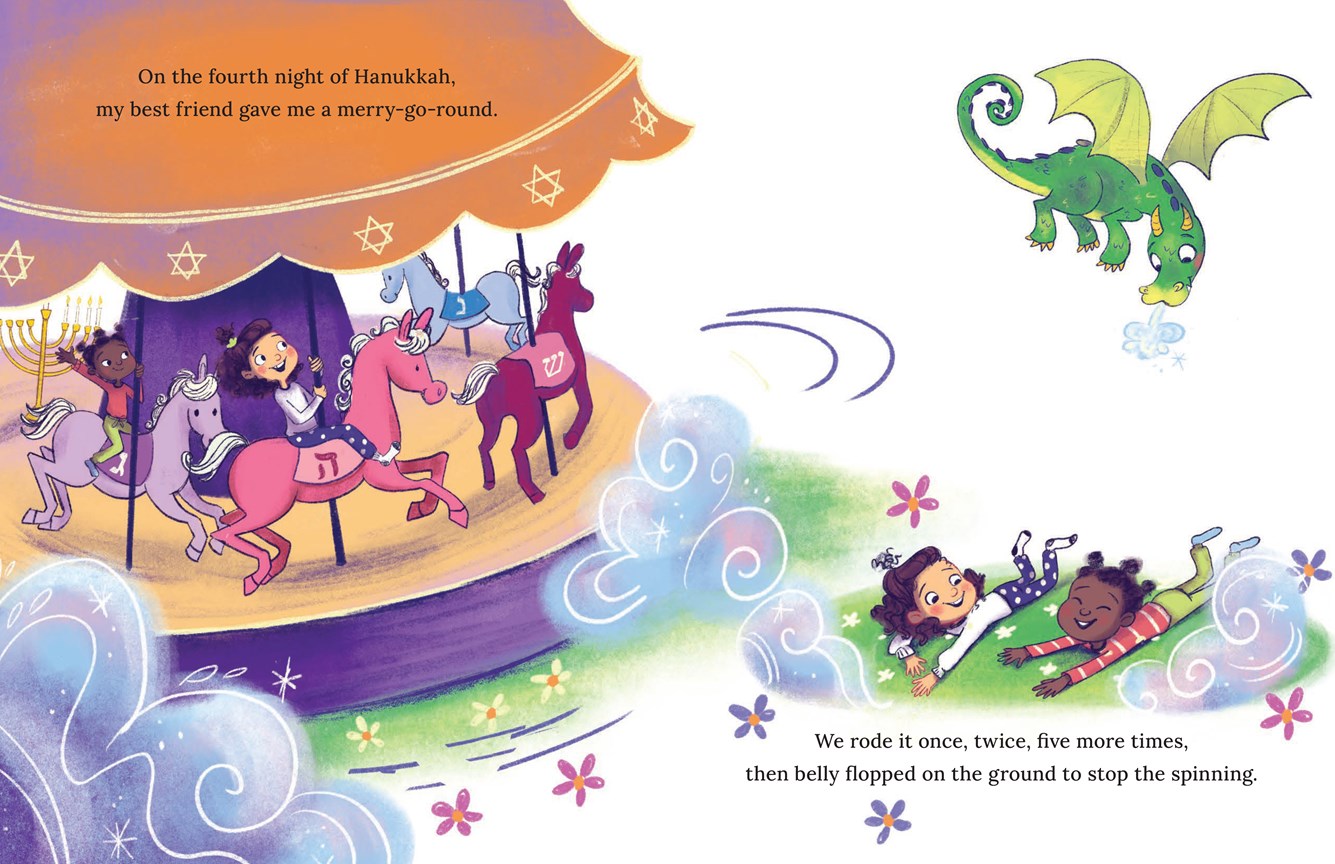
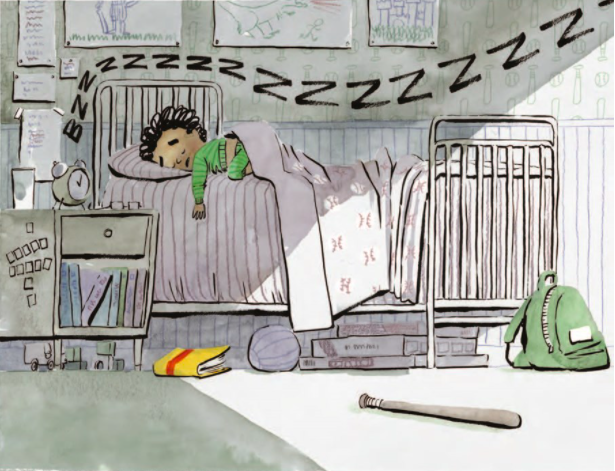
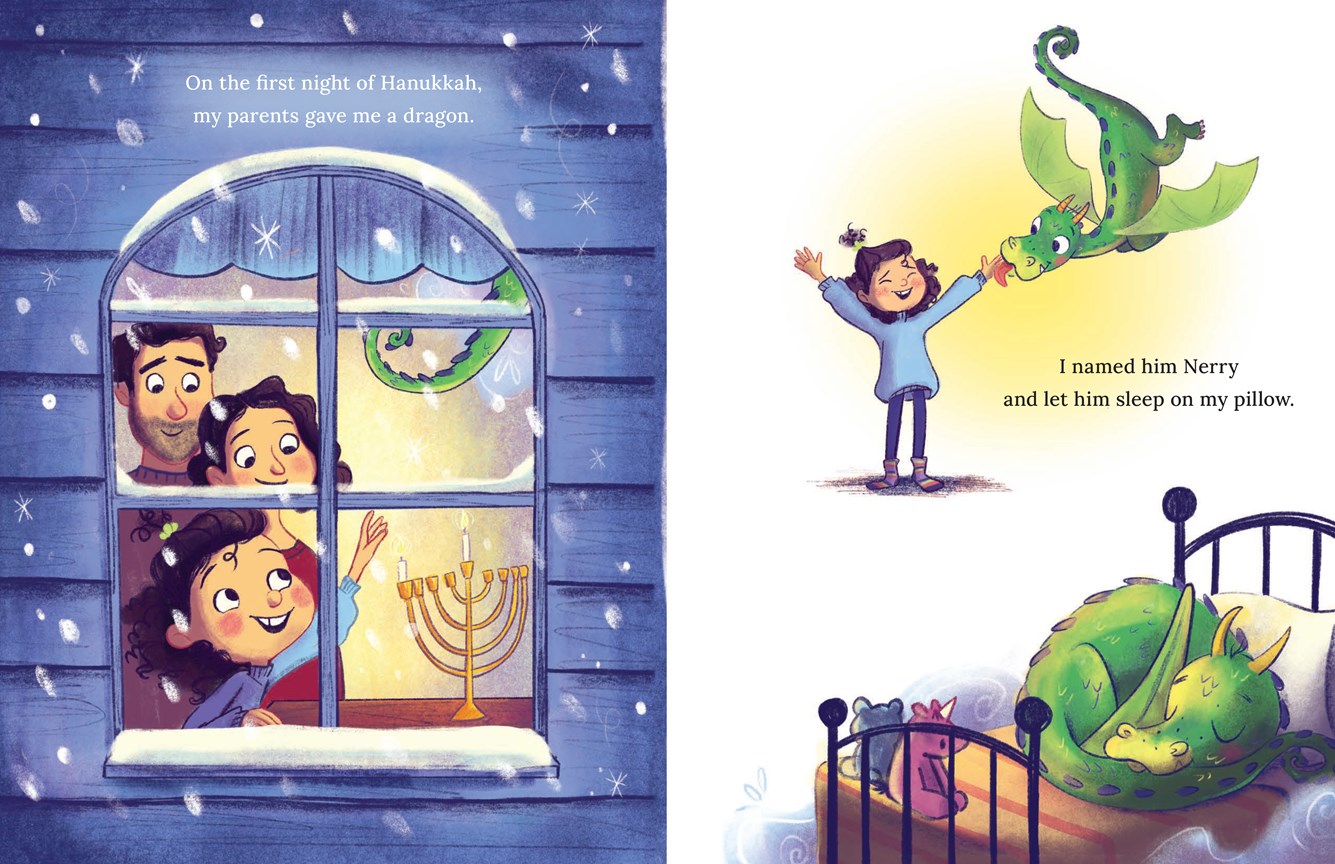
A girl, excited to be celebrating Hanukkah with her family, invites readers along as she receives gifts on nights one through seven. On the first night of Hanukkah, her parents give her a baby dragon, whom she calls Nerry and allows to sleep on her bed. On the second night, her Bubbie gives her a rainbow that sweeps her from her room and down the stairs, through the kitchen and out the door, where Nerry catches her before she slides away.

Illustration © 2024 Ariel Landy. Text © 2024 Sarah Mlynowski. Courtesy of Orchard Books.

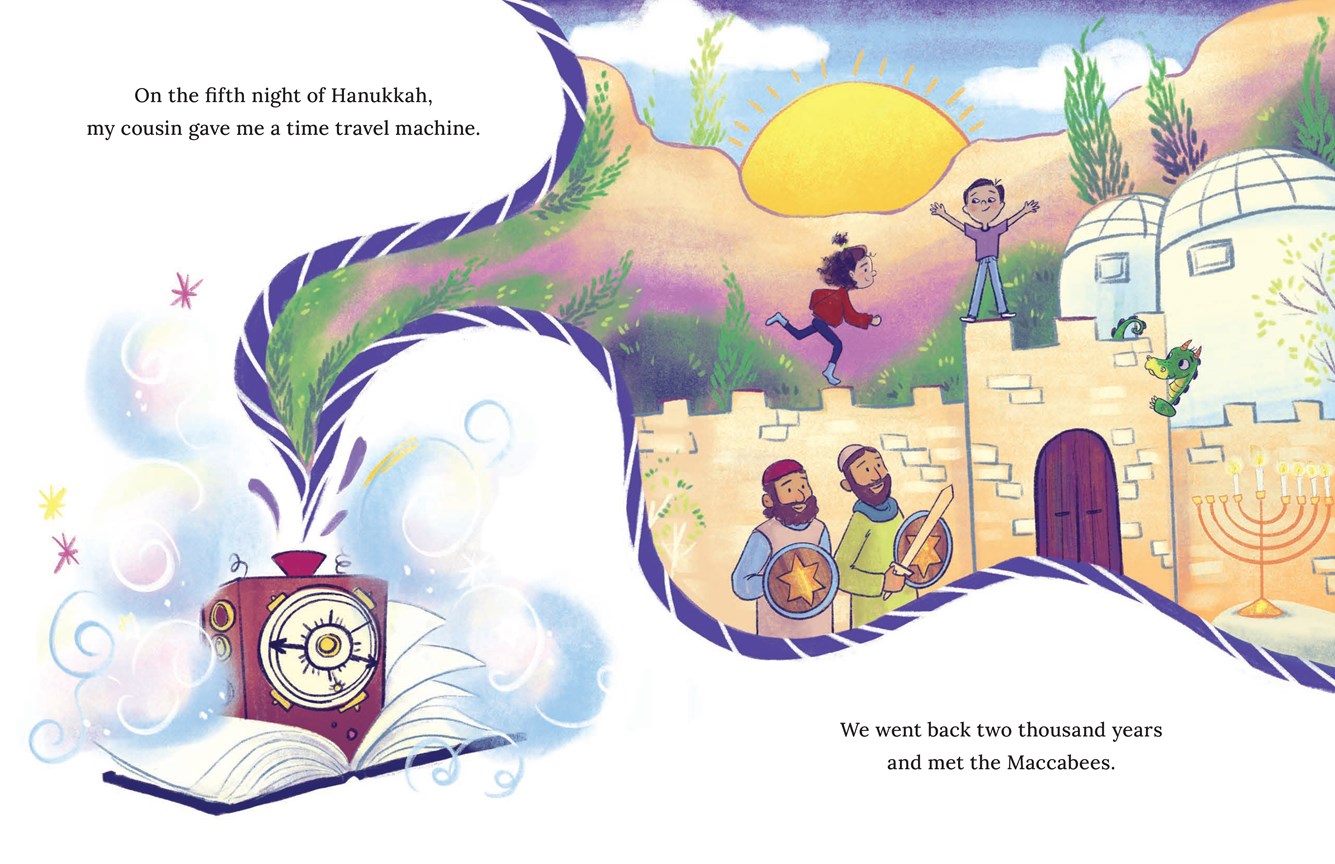
She receives a treasure chest full of gold and gems, a merry-go-round from her best friend, and a time machine from her cousin that transports them “back two thousand years” to meet the Maccabees. On the sixth night, her Zaidie gives her rocket boots, and on the seventh night, her younger brother presents her with her very own unicorn. Actually it was three energetic unicorns, including a baby that liked to eat socks.

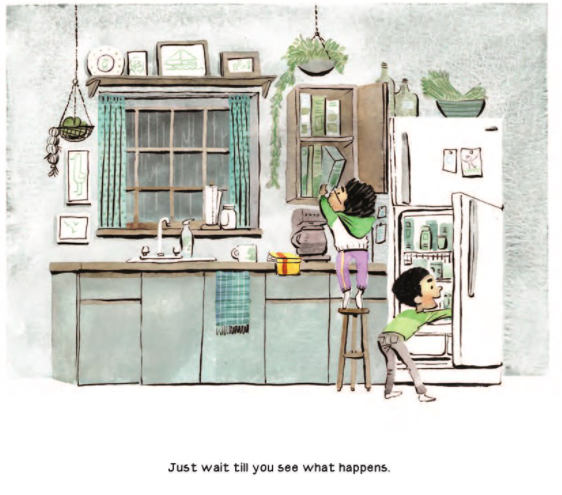
But it’s the eighth night that the girl has been looking forward to the most. On that night, it’s her turn to give gifts, and she’s cooking up a tasty treat. All finished in the kitchen, she heeds her mother’s call to clean up her room. She places her new stuffed dragon on her bed for nap time, returns a rainbow of crayons to their box, spins her dreidel one more time before placing it next to a bowlful of gelt, slides “The Story of Hanukkah” back onto the bookshelf, stuffs her starry socks in the drawer, and hangs up the unicorn pictures from her brother. Then “because it’s a time for giving,” she fills a Tzedakah donation box with toys and books.

Illustration © 2024 Ariel Landy. Text © 2024 Sarah Mlynowski. Courtesy of Orchard Books.

Soon it’s time for dinner and her family and friends gather around the table to “sing songs, play dreidel, and eat latkes, the tasty treat [she] made.” And, she says’ it is doing these things “which makes this last night, the eighth night, the most magical night of Hanukkah.”

Following the story, the girl and Nerry engage in a dialogue about the history of Hanukkah, how to play dreidel, giving gifts, traditional Hanukkah foods, and even where the dragon’s name comes from.

Illustration © 2024 Ariel Landy. Text © 2024 Sarah Mlynowski. Courtesy of Orchard Books.

Sarah Mlynowski blends imagination and tradition in her clever and enchanting story that immerses children in the joy, meaning, and excitement of Hanukkah. While readers logically know that a living dragon, full merry-go-round, or unicorn can’t really be a gift, Mlynowski’s twist when the girl begins cleaning her room comes as a delightful surprise. Her inclusion of a tzedakah box extends the idea of giving past the holiday in a way that resonates with children.

Ariel Landy’s exuberant illustrations sweep kids into the story and keep them riveted to see each new gift, from sweet Nerry to those rambunctious unicorns as well as the real gifts that so charm the little girl. Landy’s vibrant colors, warm tones, and wealth of details will keep children lingering over the pages as they celebrate Hanukkah with the young girl who is excitedly taking part in and contributing to the holiday. On subsequent readings, kids may enjoy pointing out clues to the true nature of some of the imaginative gifts.

A Dragon for Hanukkah is sure to be a favorite for those who celebrate Hanukkah, have family or friends who do, or who want to learn more about the holiday. This book would make a much-loved gift and addition to home and library collections.

Ages 4 – 8

Orchard Books, 2024 | ISBN 978-1338897524

About the Author

Sarah Mlynowski is the New York Times and USA Today bestselling author and coauthor of over fifty books for teens, tweens, kids, and adults, including the Whatever After series, the Best Wishes series, and the Upside-Down Magic series, which was adapted into a Disney Channel movie. Originally from Montreal, Sarah now lives in Los Angeles with her family. Visit her online at sarahm.com.

About the Illustrator

Ariel Landy has been illustrating her whole life, starting with crayon portraits of her cats, dogs, and hamsters. She is the illustrator of the Good Dog series and picture books such as Gitty and Kvetch. Originally from Boston, she currently lives in the south of France with her family. Her favorite Hanukkah song is “I Have a Little Dreidel”. Visit her at ariellandy.com.

Get Ready for Hanukkah Activities

Illustration © 2024 Ariel Landy. Text © 2024 Sarah Mlynowski. Courtesy of Orchard Books.

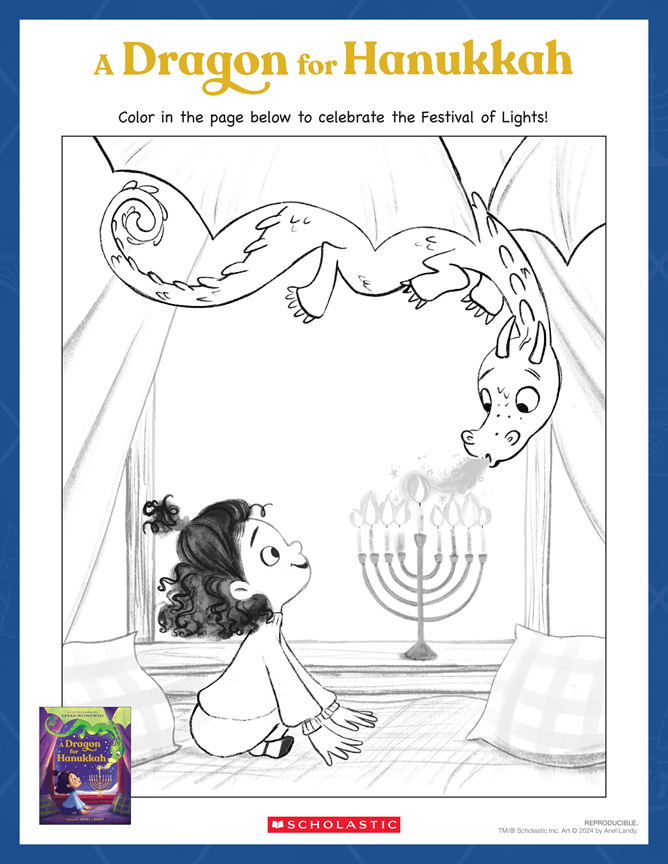
A Dragon for Hanukkah Coloring Page and Puzzle


Children can enjoy these fun activities from Orchard Books/Scholastic while they look forward to celebrating Hanukkah!

A Dragon for Hanukkah Coloring Page | A Dragon for Hanukkah Word Search

You can purchase A Dragon for Hanukkah from these booksellers

Amazon | Barnes & Noble | Bookshop

Picture Book Review

June 24 – International Fairy Day

About the Holiday

Full of sparkle, magic, and mischief, it’s no wonder that fairies captivate the imagination of young and old around the world! Today we celebrate these mythical creatures and all the joy they bring through cultural associations, books, movies, and pretend play. For an interesting look at the history of International Fairy Day, plus lots of ways to celebrate with your family and friends, visit Days of the Year and Punchbowl

Thank you to Candlewick Press for sharing a copy of Fairy Walk with me!

Fairy Walk

By Gaia Cornwall


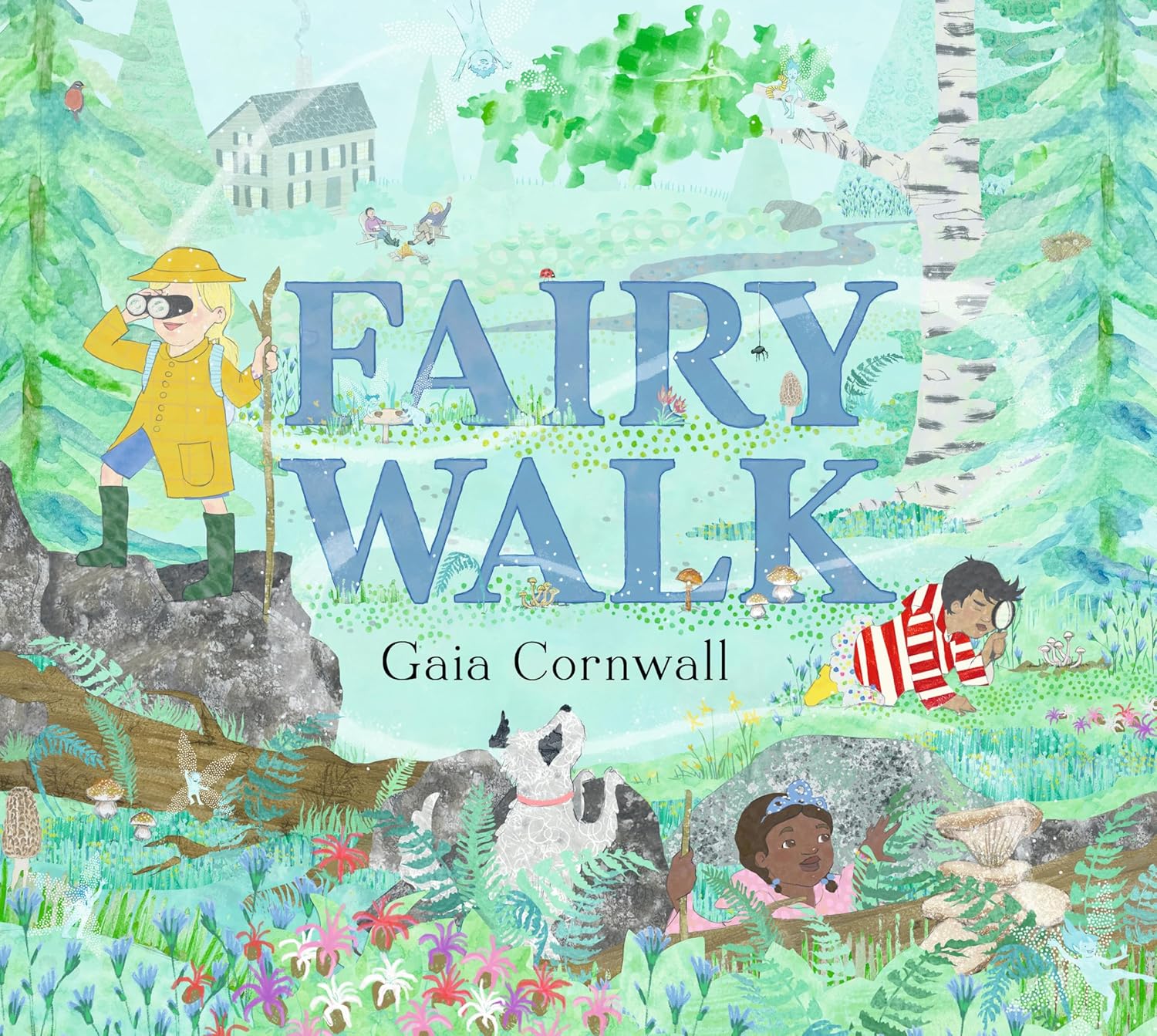
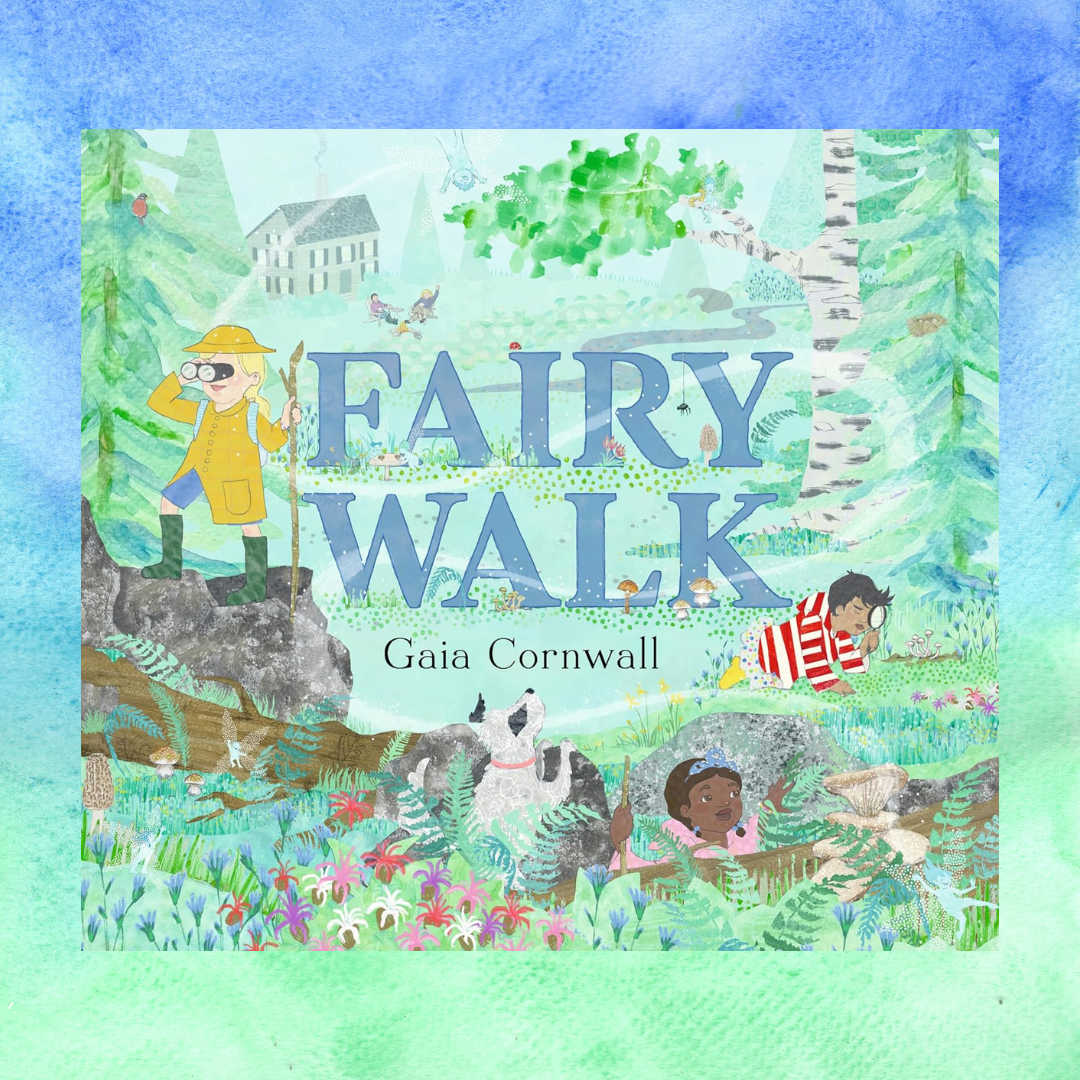
As their mothers relax and talk, three children and their curly-haired dog “skip, skip, skip, trip” into the woods behind the house, hopping from stone to stone to cross the little river “into the misty magic” of fairyland. “Where are you, fairies?” they call. Are they among the honey snowdrop flowers on the ground or under the boulder, so heavy it takes all three of them to tip? They don’t see any fairies, but they do find “a dragon!”—an orange salamander.

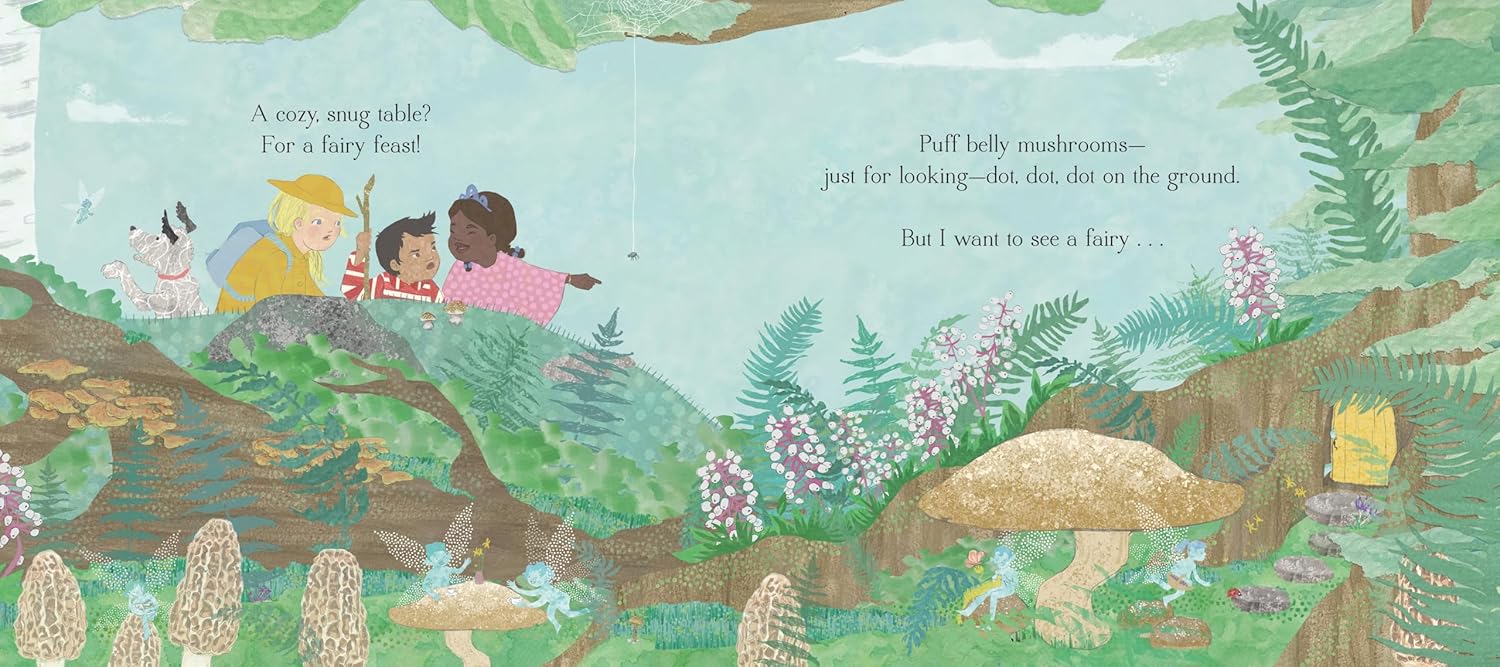
Are there fairies across the clearing, enjoying a feast on a “cozy, snug” mushroom table? No—or are there? Maybe they’re just a little farther, under the blanket of pixie moss. A peek underneath reveals “Bugs!” that “scramble, scamper, roll, and burrow,” but not a single fairy.

Text and illustration © 2025 by Gaia Cornwall. Used with permission of Candlewick Press. All rights reserved.

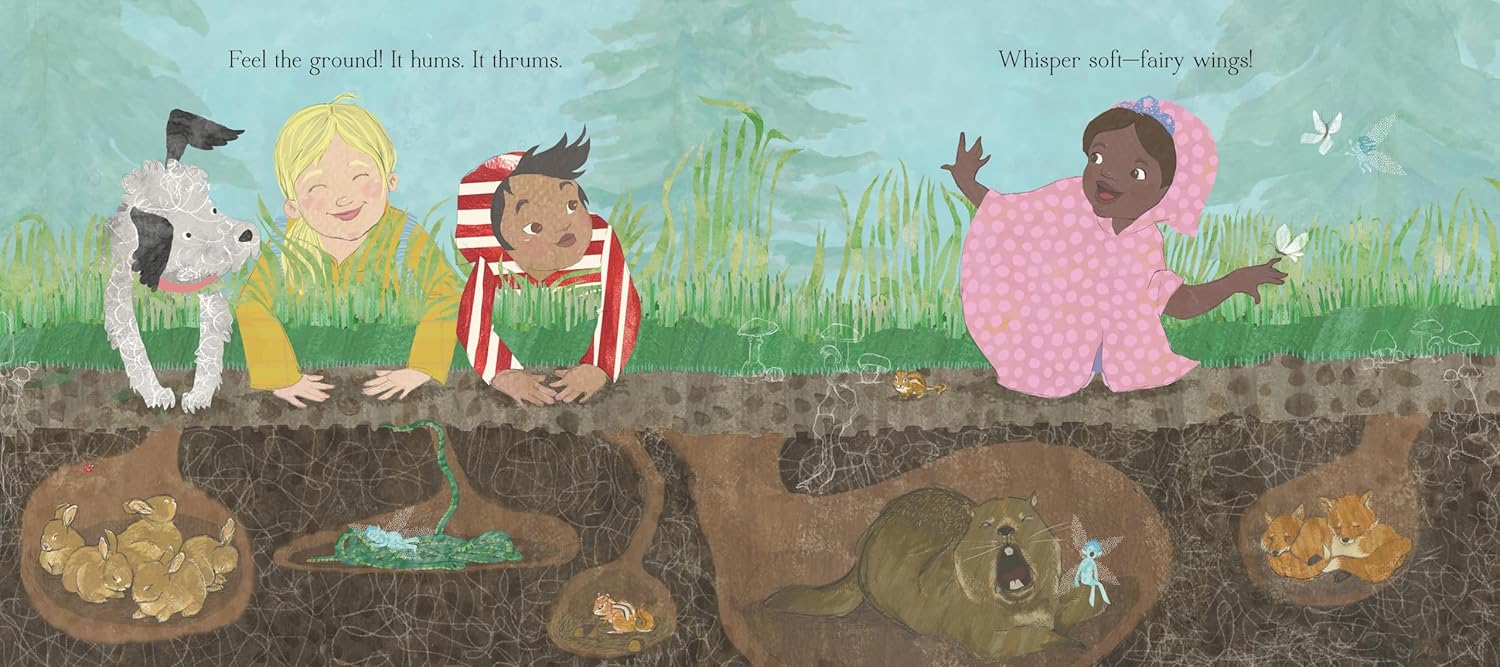
After all this fruitless searching, the kids grow frustrated and exhausted. It’s time for a snack. While they eat their sandwiches, the children decide that perhaps the fairies are shy. They then engage their other senses and can “hear them whisper in the trees.” They feel “thrums” in the ground below and appreciate the “whisper soft” wings of a butterfly.

They reconsider the gifts of flowers, stones, and mushrooms they’ve found, smelling them more deeply, creating a rock cairn, and inspecting them with a magnifying glass. The children leave a present for the fairies as well. The day is waning, and the trio bids goodbye to their fun and to the fairies, with hope for the future: “See you later!”

Text and illustration © 2025 by Gaia Cornwall. Used with permission of Candlewick Press. All rights reserved.

In her lovely, lyrical story that sings with sumptuous sensory language and the cadence of childhood fancies, Gaia Cornwall invites children into the magical realm of a lush woodland fed by a rocky stream and brimming with glorious flowers, mushrooms, and the kind of creepy crawlies that set the imagination whirling.

While the kids within the pages never see a fairy, the kids reading the pages will be delighted to spy plenty of tiny blue, sparkle-winged fairies hiding in the foliage; perched on the edge of a bird’s nest; enjoying the day among the mushrooms; and flitting playfully here and there with the kids’ charmed dog, who can see them. Eagle-eyed kids will also want to look for the tiny ladybug in each illustration. Cornwall’s soft-hued pencil, watercolor, and collage illustrations are dappled with texture and rich in details of the natural world that children and adults will also want to linger over.

Fairy Walk is an enchanting and clever combination read-aloud and fun I-spy story that children and adults will love sharing again and again. The book is sure to inspire nature walks through the neighborhood, in the backyard, or on hiking trails, where, even if you don’t see fairies, you’ll find lots of the gifts they scatter about. Fairy Walk will enjoy brisk circulation in any library and is highly recommended for home collections.

Ages 3 – 7

Candlewick Press, 2025 | ISBN 978-1536230710

About the Author/Illustrator

Gaia Cornwall loves to write and illustrate for children. She is the author-illustrator of Jabari Jumps, which was a Charlotte Zolotow Honor Book and an American Library Association Notable Children’s Book, and its follow-up, Jabari Tries, as well as The Best Bed for Me. Gaia Cornwall lives in Connecticut. Visit her at gaiacornwall.com.

International Fairy Day Activity

Text and illustration © 2025 by Gaia Cornwall. Used with permission of Candlewick Press. All rights reserved.


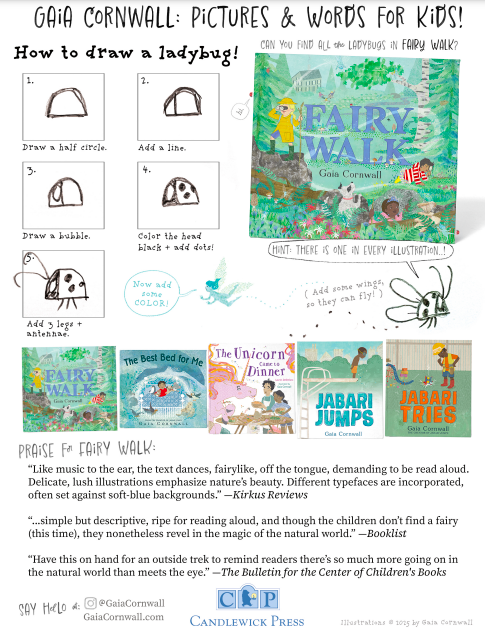
Fairy Walk Activity Kit


Learn how to draw fairies and bugs and go on a nature hunt with this four-page Fairy Walk Activity Kit from Gaia Cornwall and Candlewick Press!

You can purchase Fairy Walk from these booksellers

Amazon | Barnes & Noble | Bookshop (discounted books and support for your local independent bookstore)

Picture Book Review

April 16 – National Stress Awareness Month

About the Holiday

Stress Awareness Month has been held every April since 1992, when it was founded by the Health Resource Network. The holiday aims to help people identify the stress factors in their own life as well as to assess how all members of their family are handling various pressures. The goal is for everyone—either individually or together—to look for ways to manage their feelings while adding positive changes to their life. Talking about pressures with kids and doing simple activities with them can often help lessen the load. Sharing today’s book is a wonderful place to start!

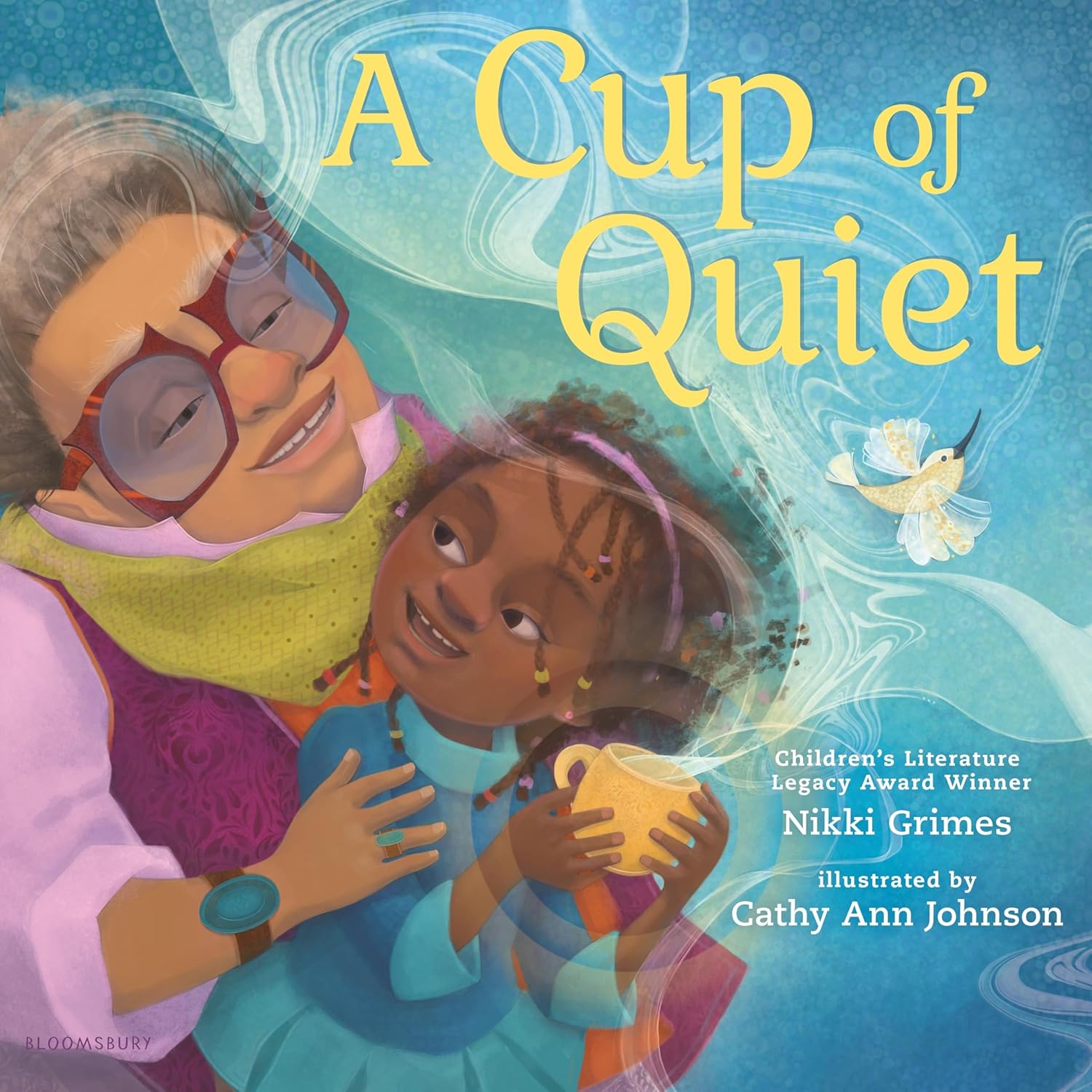
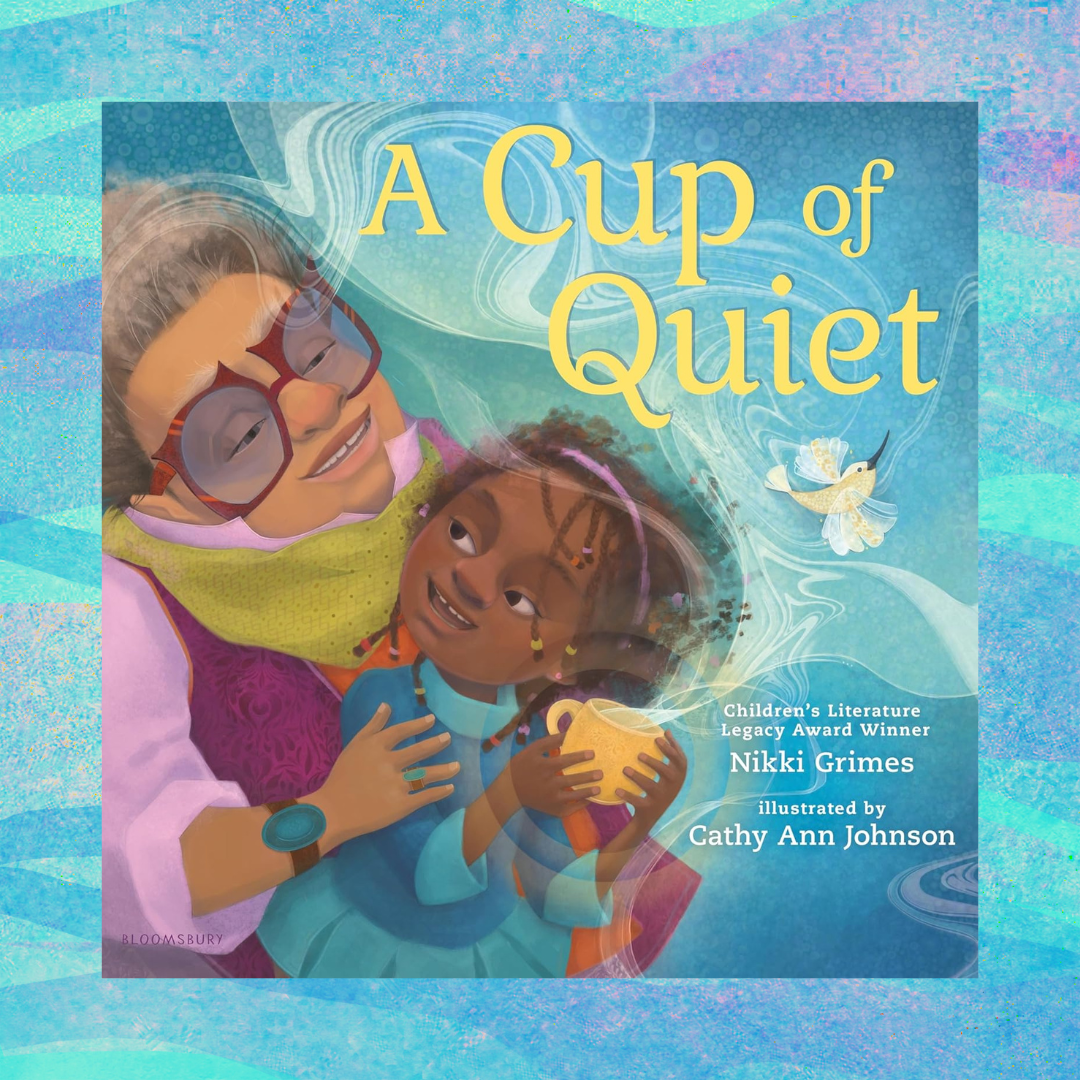
A Cup of Quiet

Written by Nikki Grimes | Illustrated by Cathy Ann Johnson

“You ever hear of smiles?” The young narrator’s talking about the two-week “summer camp” she gets to spend with her grandmother every June. In that breathless excitement of children, she reveals the visits give her and her Grandma time to “stitch sock puppets and put on shows, bake Martian Cake that tastes like banana bread and play tea party in the garden with my dolls.” But today, they’re acting out a story—that is until Grandpa’s hammering and loud music become just too much.
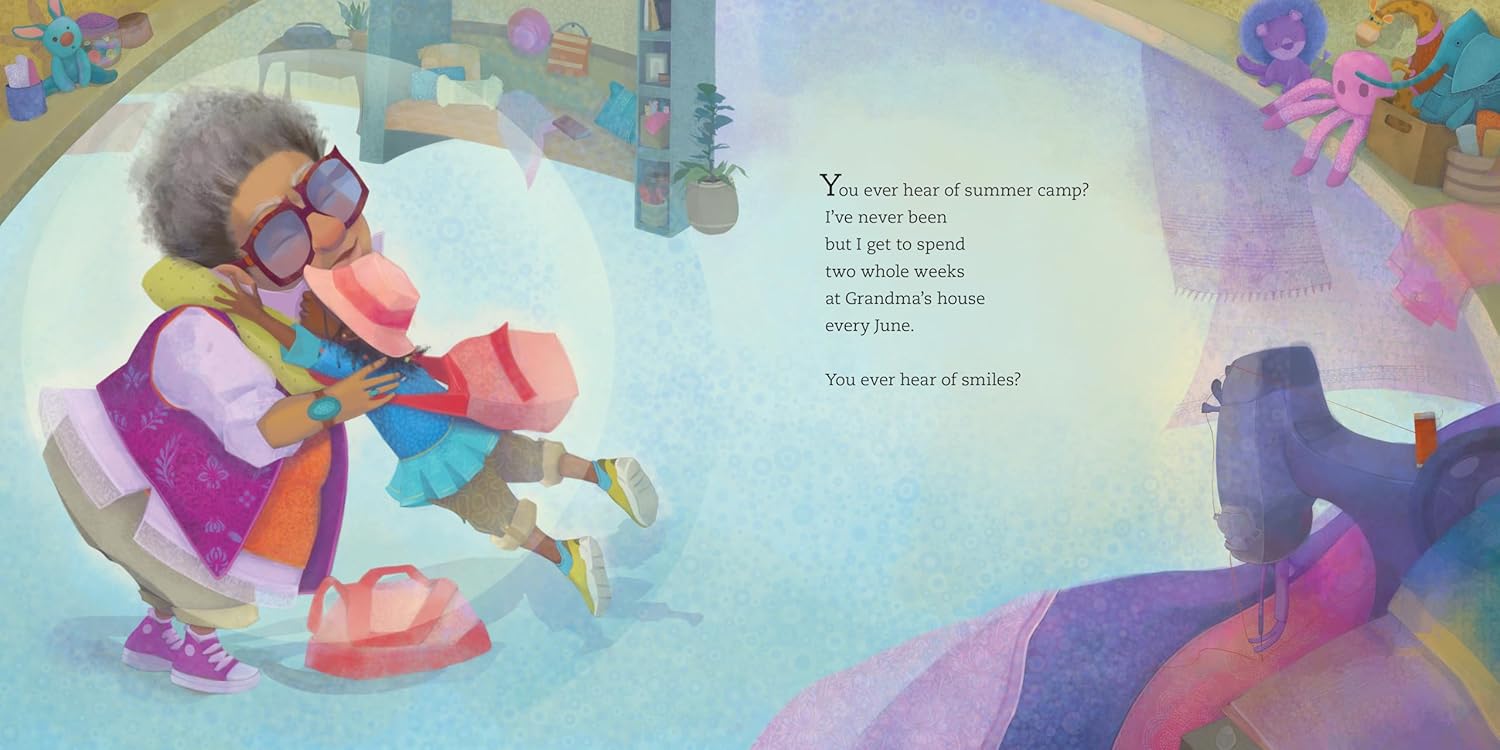
Illustration © 2025 by Cathy Ann Johnson, text © 2025 by Nikki Grimes. Courtesy of Bloomsbury Children’s Books.

Grandma flops into her chair with an “Ugh!” and tells her granddaughter she’s “thirsty for a cup of quiet.” This elicits a giggle and a bit of disbelief, but Grandma’s done with the noise and leads her granddaughter outside to the porch swing. But the city outside their house is just as noisy as Grandpa inside. A trip to the backyard garden is needed. Here, Grandma may be happy, but the narrator is getting fidgety.
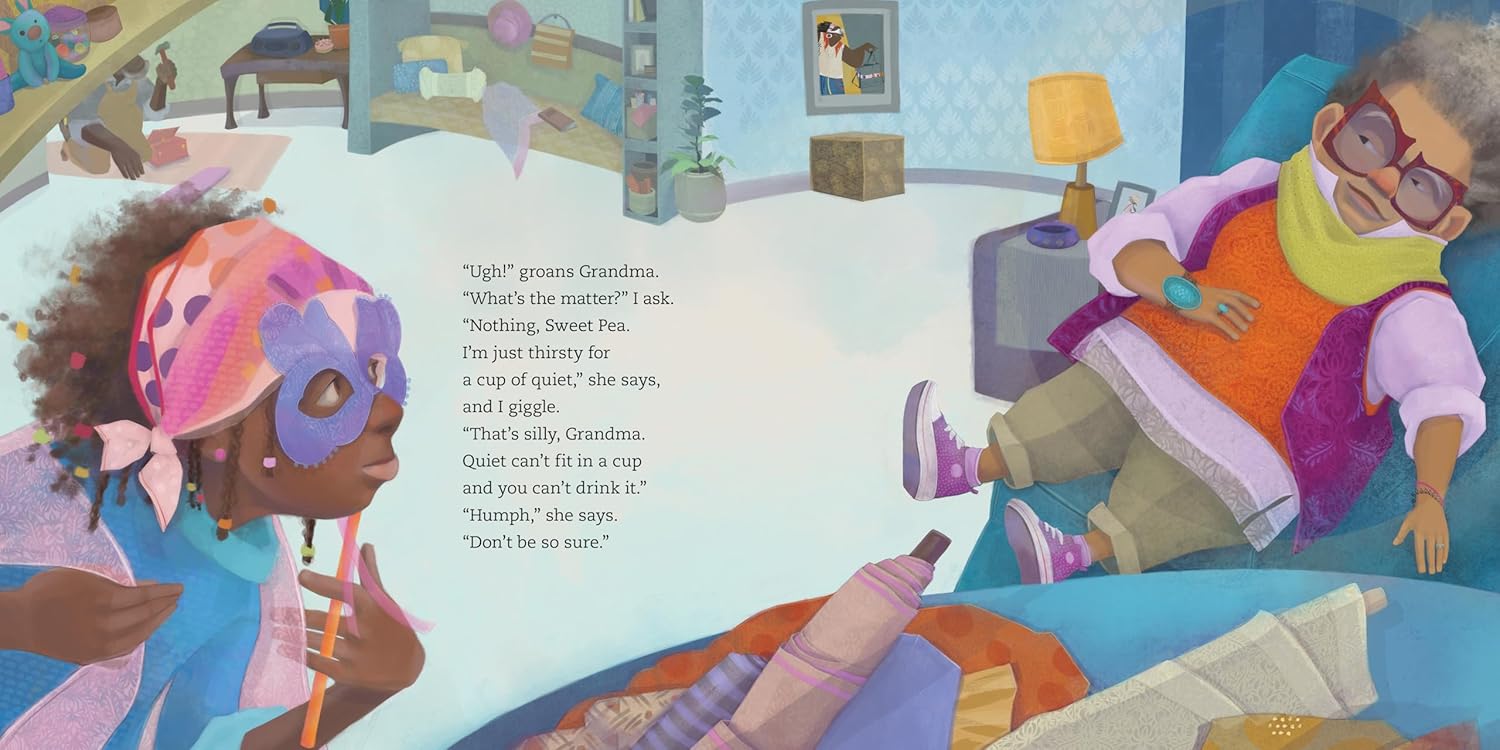
Illustration © 2025 by Cathy Ann Johnson, text © 2025 by Nikki Grimes. Courtesy of Bloomsbury Children’s Books.

Grandma gives her the side-eye and then hands her “an invisible cup” with instructions to “‘walk around the garden and fill this up with any sounds you hear.'” Up for this imaginative challenge, the girl first visits the rose bushes, where a bee is working and “snap[s] up a handful of his buzzing and drop[s] it in the cup.” On the ground below she sees a lizard and “spoon[s] up” the sound of its “scuttling across a dried leaf.” She begins paying more attention to the nature around her and listening harder to fill her cup.
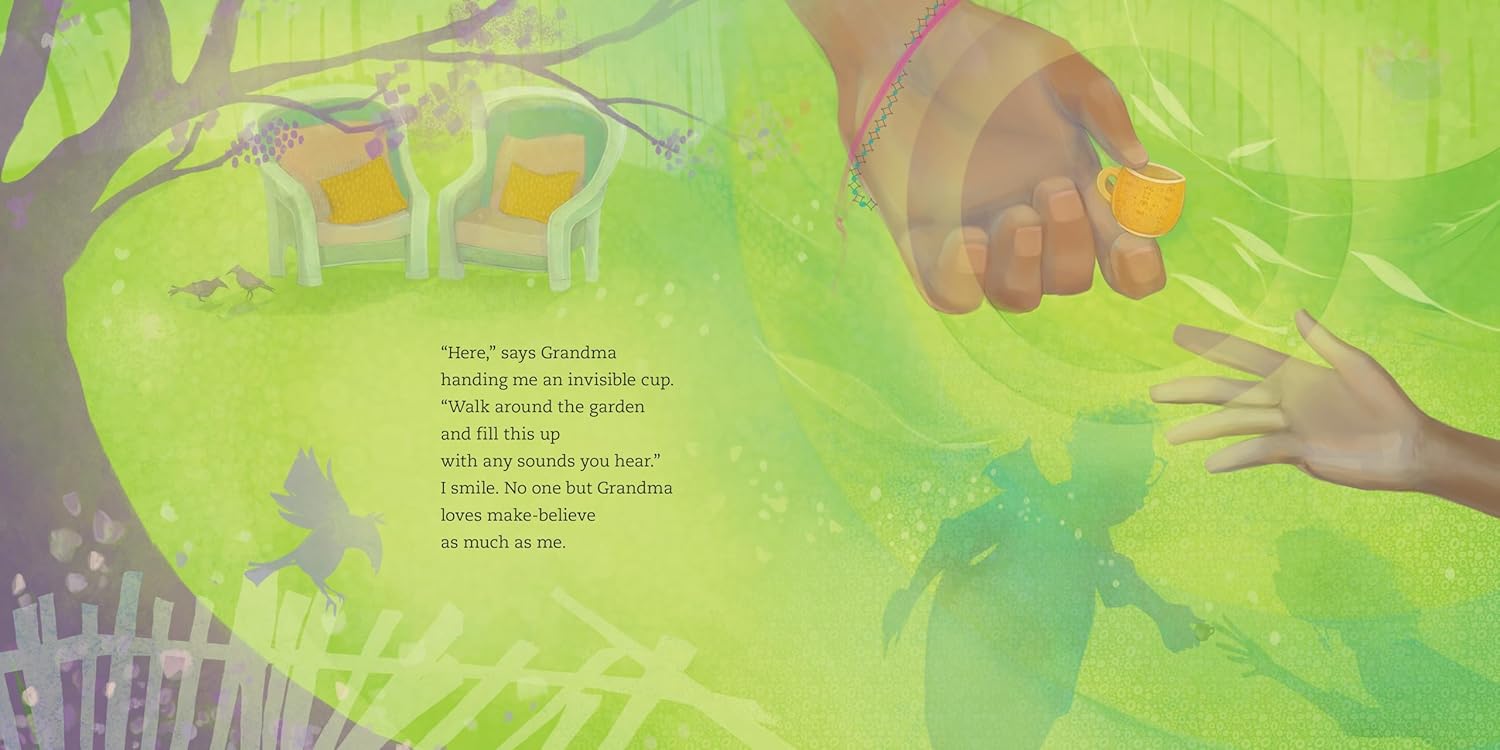
Illustration © 2025 by Cathy Ann Johnson, text © 2025 by Nikki Grimes. Courtesy of Bloomsbury Children’s Books.

A sudden thunderclap precipitates a downpour, but before she runs inside with Grandma, the narrator adds the first pings of raindrops on the roof to her nearly full cup. After drying off and changing, it’s finally time to enjoy a long sip from that make-believe cup. Ahhhh! So “‘refreshing!'” Her granddaughter thinks so too. Still, she has an observation: “‘… your quiet is awfully noisy!'” Grandma smiles and says, “‘I know, but Nature’s noise is peaceful, and I love that.'” Her granddaughter agrees—”You ever hear of perfect?”
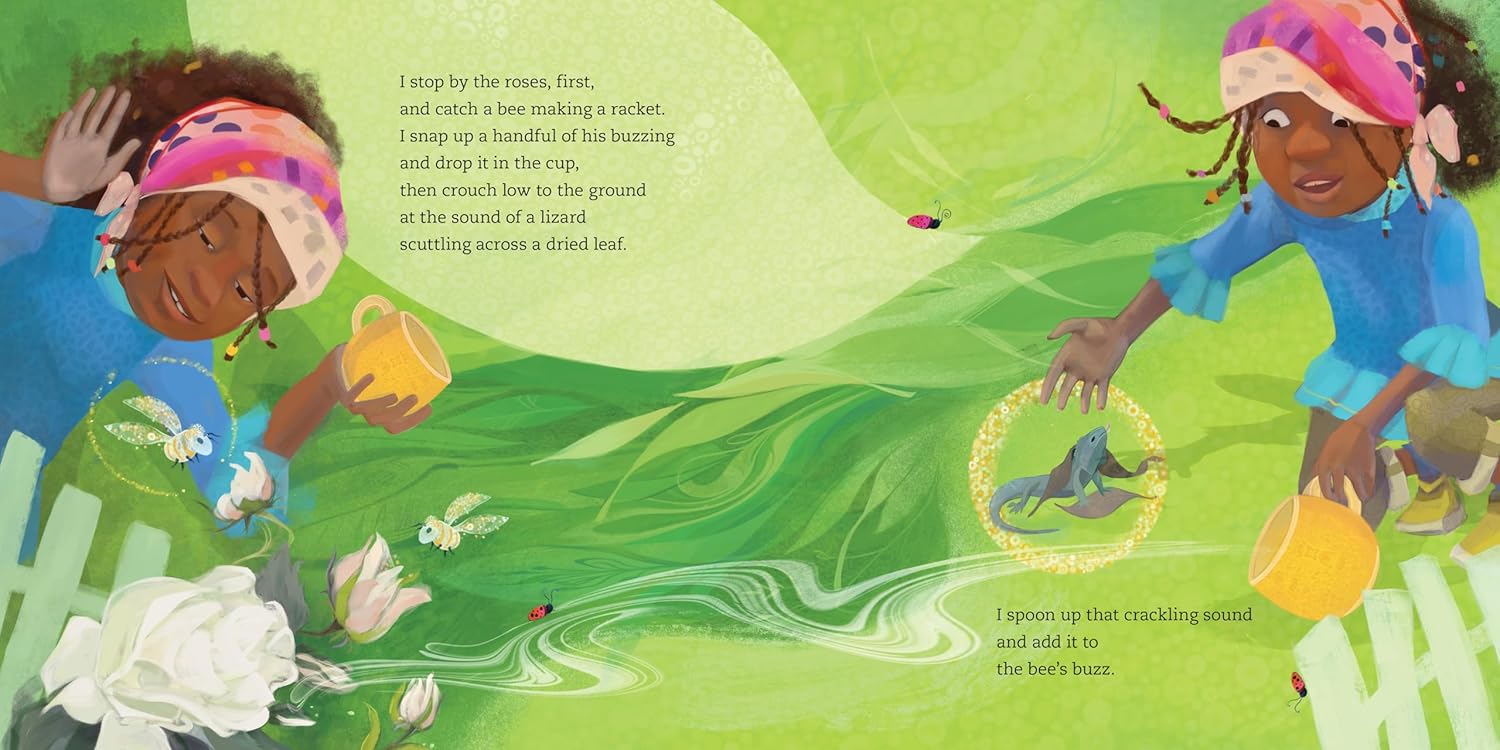
Illustration © 2025 by Cathy Ann Johnson, text © 2025 by Nikki Grimes. Courtesy of Bloomsbury Children’s Books.

Nikki Grimes invites readers to join in with a grandmother and granddaughter for a day of “summer camp” where love abounds. The easy banter between the two and affectionate gestures—such as Grandma’s playful tug on her granddaughter’s braid and the jump-into-her-arms hug the girl gives her grandma—immediately envelope both child and adult readers in this pair’s warm relationship. Grimes’ inventive call to interact with nature and find comfort there will have kids carrying their own imaginary cups to fill and spark other creative games and activities no matter where they live. 

Cathy Ann Johnson’s collage-style, mixed-media illustrations sweep readers into the creative and close-knit atmosphere of Grandma’s house during a week-long visit by her granddaughter. The vibrancy of the pair’s connection is shown through the colorful textures of the fabrics they use for crafting. The allure and importance of nature is likewise emphasized through the vivid greens and swirling motion in the grandmother’s back garden as well as the shimmering beauty of the creatures from which the girl collects sounds. The grandmother and granddaughter’s close bond is evident through their hugs, the way they sit close together (even touching hands while sitting in separate garden chairs), and the care Grandma provides after the rainstorm. The grandmother’s expressions are amusing in their honesty, and the look of wonder in the granddaughter’s eyes is inspirational.

Lyrical, playful, and full of love, A Cup of Quiet is a warm hug of a read aloud that adults and kids will love sharing again and again. The book is a must addition to school library, public library, and home collections.

Ages 3 – 7

Bloomsbury Children’s Books, 2025 | ISBN 978-1547610730

A Talk with Nikki Grimes
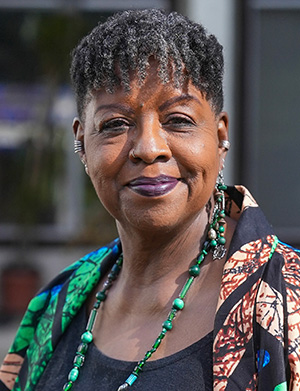
Photo Credit Marchel Hill

New York Times bestselling author Nikki Grimes was inducted into the Black Authors Hall of Fame in 2023. Her honors include the CSK Virginia Hamilton Lifetime Achievement Award, the ALAN Award for significant contributions to young adult literature, the Children’s Literature Legacy Medal, and the NCTE Award for Excellence in Poetry for Children. Author of the Coretta Scott King Award-winner Bronx Masquerade, and five Coretta Scott King Author Honors, she won the Printz Honor and Sibert Honofor her memoir Ordinary Hazards. Her latest titles include Garvey’s Choice:The Graphic Novel, a School Library Journal 2023 Best Book; Lullaby for the King, one of Book Riot’s 25 Best Christmas Books of All Time; and A Walk in the Woods, recipient of 8 starred reviews, and 11 Best Book listings for 2023, including the New York Times, NPR, and Smithsonian Magazine. Ms. Grimes lives in Corona, California. You can visit her at nikkigrimes.com.

Today, I’m honored to be talking with Nikki Grimes about the inspiration behind A Cup of Quiet, how she develops her characters, the joys and challenges of writing for multiple age groups, and much more!

A Cup of Quiet is a perfect book for adults and children to share, not only for outside noise but for times when life gets overwhelming.  Tell us about the inspiration for this story and a little about its journey to publication.

There’s a certain quality of quiet in nature that I’ve always found soothing. I need silence for my work because it allows me to concentrate fully when I write. But nature’s quiet is different. It’s rich with sound, but most of it requires you to pay close attention. To pick up the whir of a hummingbird’s wings, you have to be still, and you have to strain to hear it. The stillness that’s required is soothing, and the sounds you become attuned to are a healing balm. I wanted to write a story that celebrated those sounds, and the beauty of that kind of quiet.

In the early stages of the book, I’d go out to my garden and listen carefully, and I’d make mental notes of all that I heard that day. I’d jot everything down until I had a good list of sounds to play with.

My main character lived in the city and didn’t spend much time out in nature there, though she occasionally went to the park. But every summer, she’d travel out of the city for long visits with her grandmother who had a garden, and whose house was surrounded by trees, and greenery.

The story grew from there, and I knew immediately that I wanted Bloomsbury to publish the book, and I also knew intuitively who I wanted to illustrate—namely Cathy Ann Johnson. This teaming has proven to be perfect, all around.

If I had a cup to fill with quiet today, I’d add my cat’s little sleepy, dreamy purrs, the whoosh of cars passing my house, the rustle of squirrels in the trees, and a drop of water from my bubbling teapot. What would you put in your cup of quiet today?

I would put a bee’s buzz, the wind rustling leaves of a tree, the whir of a hummingbird’s wings—all the sounds I chose for A Cup of Quiet. Those are some of the sounds I listen for, and pay attention to, whenever I immerse myself in nature.

Cathy Ann Johnson’s mixed-media illustrations are a wonder of color, motion, humor, and the love between grandmother and granddaughter. What was your first impression when you saw her illustrations? Do you have a favorite spread?  Why is it a favorite?

First, I was over the moon for the grandmother! She had energy, and spunk, and style. I loved her!  And I loved her colors. Then, as I saw the book’s interiors, I was absolutely thrilled! Cathy Ann’s images, and their movements, were as lyrical as my own words. Our partnership on the page was the proverbial match made in heaven. I would be loath to choose a favorite spread.  Each one has its own magic.

A Cup of Quiet starts out “You ever hear of summer camp?”—a disarming introduction to the child narrator that’s so true to the way kids approach conversation. The dialogue in all of your work sings in this way with the kind of honesty, humor, emotion, and depth that makes your characters seem almost physically with the reader.  I’m curious about your process in developing your characters and stories.

My characters begin with a voice. I’ll hear a scrap of dialogue in my head—nothing extensive, just a few lines. The inspiration might come from the catalog of voices I’ve stored in memory over a lifetime of listening to people around me, or it might be the voice of a particular person in my life whose voice is special or one that has simply stayed with me for a long time. Either way, the voice feels familiar. I’ll jot down that scrap of dialogue as reference, then I’ll begin developing a character sketch and that character’s backstory. I never know how much or little of the backstory I’ll use, but that information guides me as I write. To nail the voice, I have to pay close attention. I climb into the character’s skin and look at the world from his or her perspective and write from that place, attuning myself to that character’s age, birth place, geographical region, quirks, fears—all of it guides me as I make decisions about what that character will say, how they’ll respond to various stimuli that shows up in the plot. If I step wrong, the character will bristle and call me out on it, almost audibly. “Do not put those words in my mouth! I would never say that!” or “I don’t speak like that!” It’s kind of eerie, actually. Characters can be very bossy!

You write books for all ages, from picture books to middle-grade to young adult. Can you talk a bit about the joys and challenges of each? What is one message you want readers in each age category to take away from your books? 

Each age format comes with its own set of limitations, constrictions, and also its own range of possibilities. I love mixing it up. Writing for different age groups keeps me on my toes. The picture book gives you very little room to develop character and plot, while, say, a young adult novel gives you so much unlimited space that you run the risk of overwriting, and of getting lost in the weeds of your plot, or tangled in the layers of your story. Being consistent with your tense or bookending your story in a way that is controlled and satisfying and that feels organic, is much more challenging in the long form of middle grade or YA storytelling.

Language choices are tricky, and different with each age group as well. You walk the line between accessibility and sophistication, between simplicity and complexity. The same variance is true of the emotional components appropriate for each age group as well. For those reasons, I think it’s wise to focus on one genre at a time until you work through the quirks of that genre and figure out a process that works for you. Then, by all means, go on and experiment with the next! It’s tough work, but I like that. For me, easy is boring!

As for your question about messages, I don’t write messages. I write stories. And a well-written story offers a number of ideas a reader might take away. It all depends on the particular reader. We bring ourselves to the page, as readers. Our own experiences, personalities, and what we need at a particular point in time, color what we see, what we notice, and what we ultimately take from a story. Of course, as the creator, I have a certain idea, or theme, I intend to weave into my story—and, by the way, it’s hard to know whether or not I’ve always succeeded—but I don’t worry about whether the reader will pick up on the specific note I had in mind. What matters to me is that, somewhere in the many layers of my story, readers find something valuable with which they resonate. Quite often, the things they find come as a surprise to me, but that’s okay. So long as they walk away with something of value to them, that’s all I can ask for.

While I read through your website, your generosity in sharing so much of your life really stood out.  I’m sure young readers and writers would love to know about when you first began writing and how you were recognized for your talent, having your first public reading when you were 13.  Could you share a little of our writing background with us?  What advice would you give to children and young adults who love to write and want to pursue it?

As I reference in my memoir Ordinary Hazards, and elsewhere, I started writing in earnest when I was six years old, and I did so because I would have burst, otherwise. I was so filled with the emotional and mental poison of anger, and pain, and confusion. I was desperate to get my feelings out, somehow. So, I began to pour those feelings onto a page. That’s how my writing began, but as I reached my teens, the idea of possibly pursuing writing as a career took root. I was encouraged by my father, by my sister, by the friends I dared share my poetry with, and later, by a couple of teachers.  At the same time, though, I also had peers who laughed me off the block for daring to dream of such a thing at all. But I decided early on to surround myself with other young people who nurtured dreams and goals of their own. Everyone else, I cut out of my circle. I refused to absorb the negativity of naysayers.

I encourage young people who have a heart for writing to read voraciously, and to read across genres.  Every genre has something to teach you, and the quality of your writing reflects the quality, variety, and breadth of your reading. So read, read, read.  

Next, write, write, write because writing is a muscle. You have to exercise that muscle if you want to become strong. There is no shortcut to excellence. And if you’re not going to pursue excellence, why even bother? Excellence is what your readers deserve. Remember: the world doesn’t need mediocrity, no matter what field you choose to pursue.

In addition to your many awards over the years, you received the Children’s Literature Legacy Award in 2017 and the Coretta Scott King-Virginia Hamilton Award for Lifetime Achievement Award in 2022. In 2023 you were inducted into the Black Authors Hall of Fame.  What does this recognition mean to you?

Recognition is affirmation, and who doesn’t appreciate that?  But an artist should never be satisfied to sit on their laurels. I use this recognition as fuel to keep pushing forward, to continue to stretch myself as an artist to try genres I’ve never attempted before, to explore forms of poetry I find challenging. Doing so keeps me alive, and grown, and excited about the work I’ve been doing professionally, now, for nearly 50 years. That way, even as I get old, my work never does!

What books of yours can readers look forward to next?

I have a new Dyamonde Daniel chapter book coming out in June.  It’s titled Loser, and it’s about healthy and unhealthy competition, and where to draw the line, especially when you’re competing with your best friend.

I also have a new picture book on the horizon, titled Stronger Than, a collaboration with Choctaw author, Stacy Wells and illustrated by E. B. Lewis, who I’ve worked with before. In this story, a Black Choctaw boy discovers the history of one ancestor who survived the Trail of Tears, and another ancestor who survived the Tulsa Race Massacre. Through their stories, he learns that he comes from stronger stock than he knew, and this knowledge helps him overcome one of his worst fears. I’m excited about both books, for very different reasons.

There are a few more books in production, as well, but it’s too soon to talk about those.

Is there a question I didn’t ask that you wish I had?  What would your answer be?

No. I think I’m about talked-out, for the moment!  This has been fun, though. And I hope you and the young readers in your life enjoy A Cup of Quiet.

Thank you so much, Nikki! It’s been terrific chatting with you! I wish you a wonderful spring and summer of nature’s refreshing quiet.
You can purchase A Cup of Quiet from these booksellers

Amazon | Barnes & Noble | Bookshop (discounted books and support for your local independent bookstore)

Picture Book Review

March 5 – It’s International Ideas Month

About the Holiday

This month we celebrate something that you can’t see or hold but which is real all the same. What is it? An idea! Ideas are amazing things. Sometimes seemingly conjured up out of thin air; sometimes borne out of necessity; and sometimes the “Eureka!” result of long, hard work, ideas fuel our arts, sciences, education, and home life. So today, write down those ideas you have while driving or commuting to work, while in the shower, when you’re daydreaming, or just as you turn off the light to go to sleep. You never know what they might become!

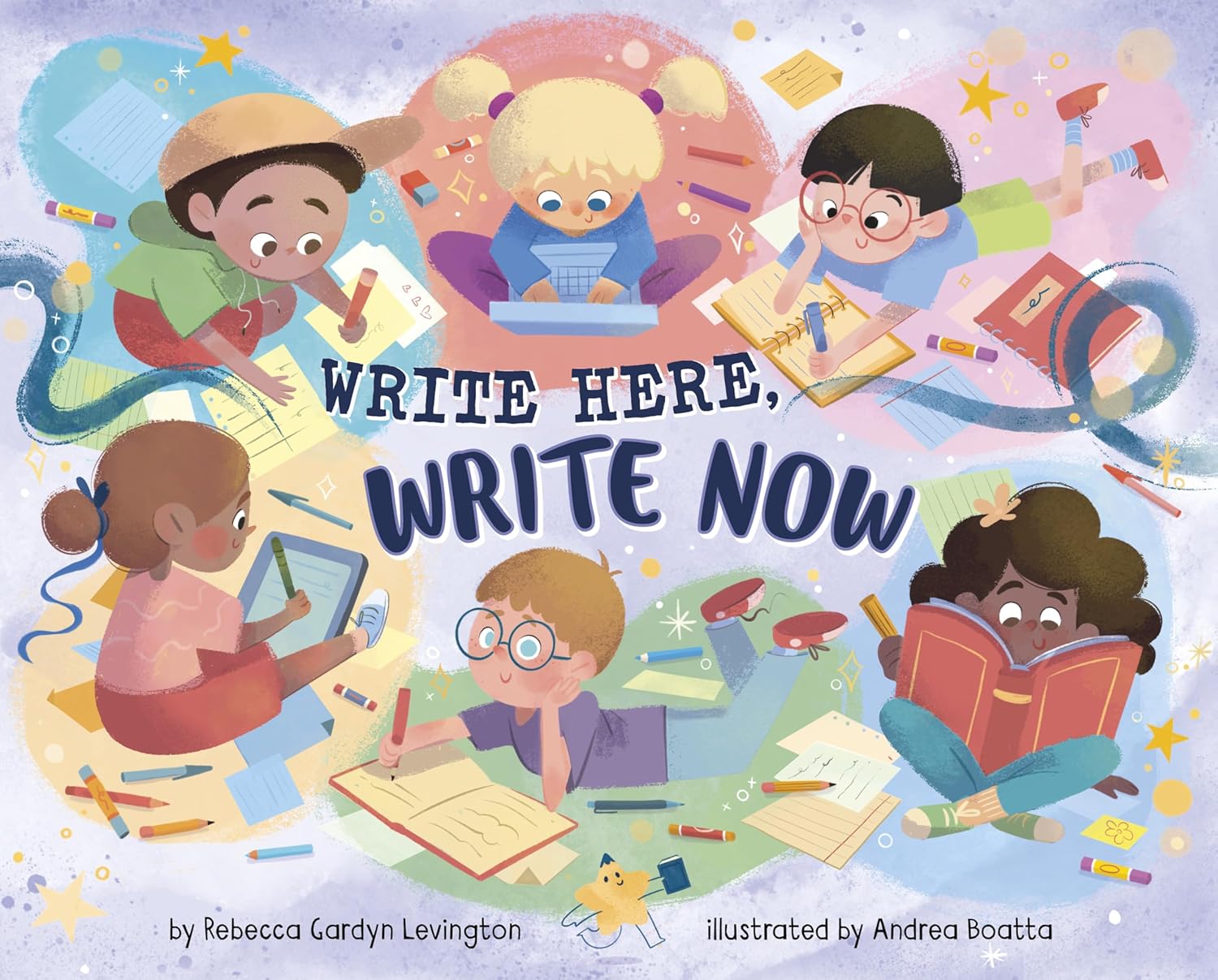
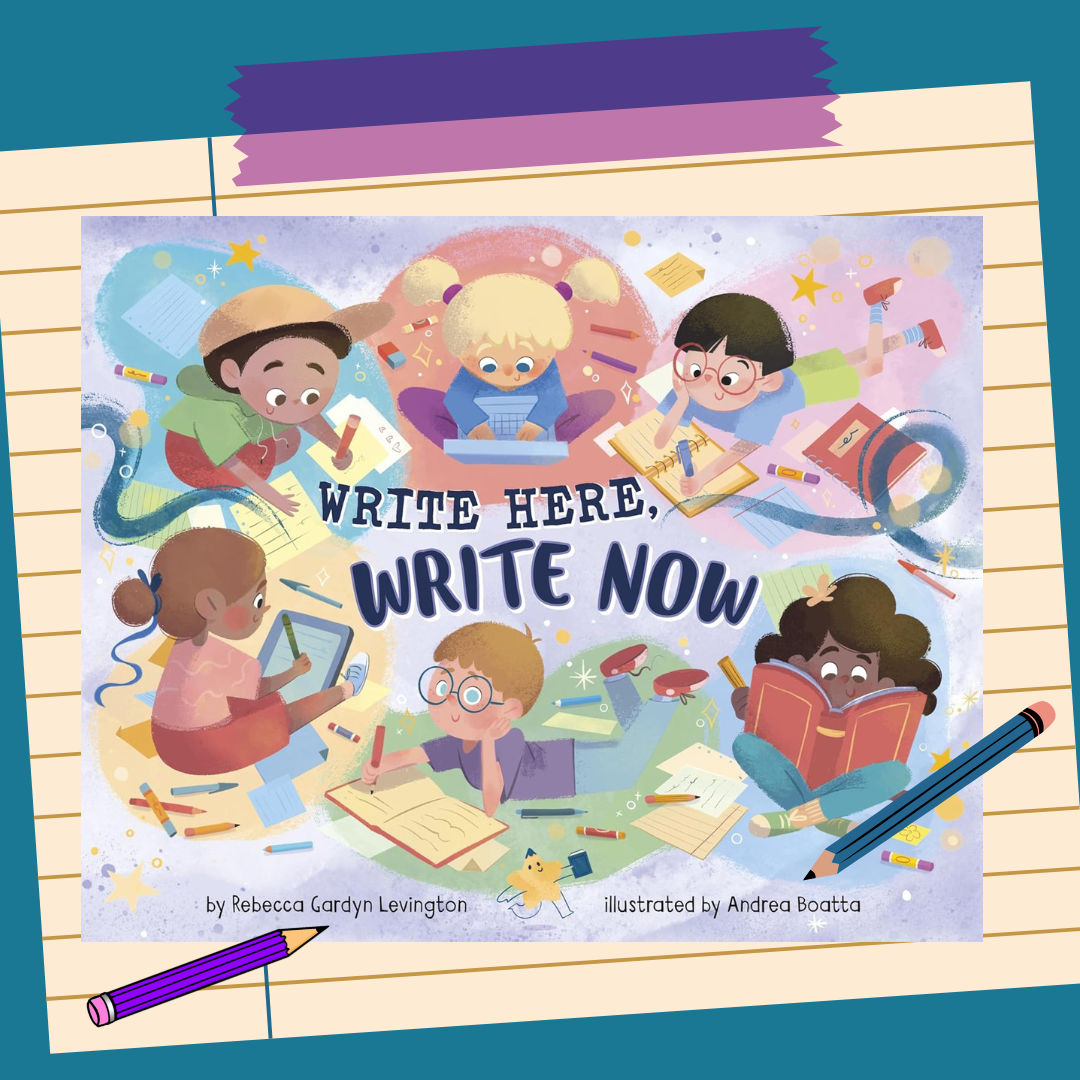
Write Here, Write Now

Written by Rebecca Gardyn Levington | Illustrated by Andrea Boatta

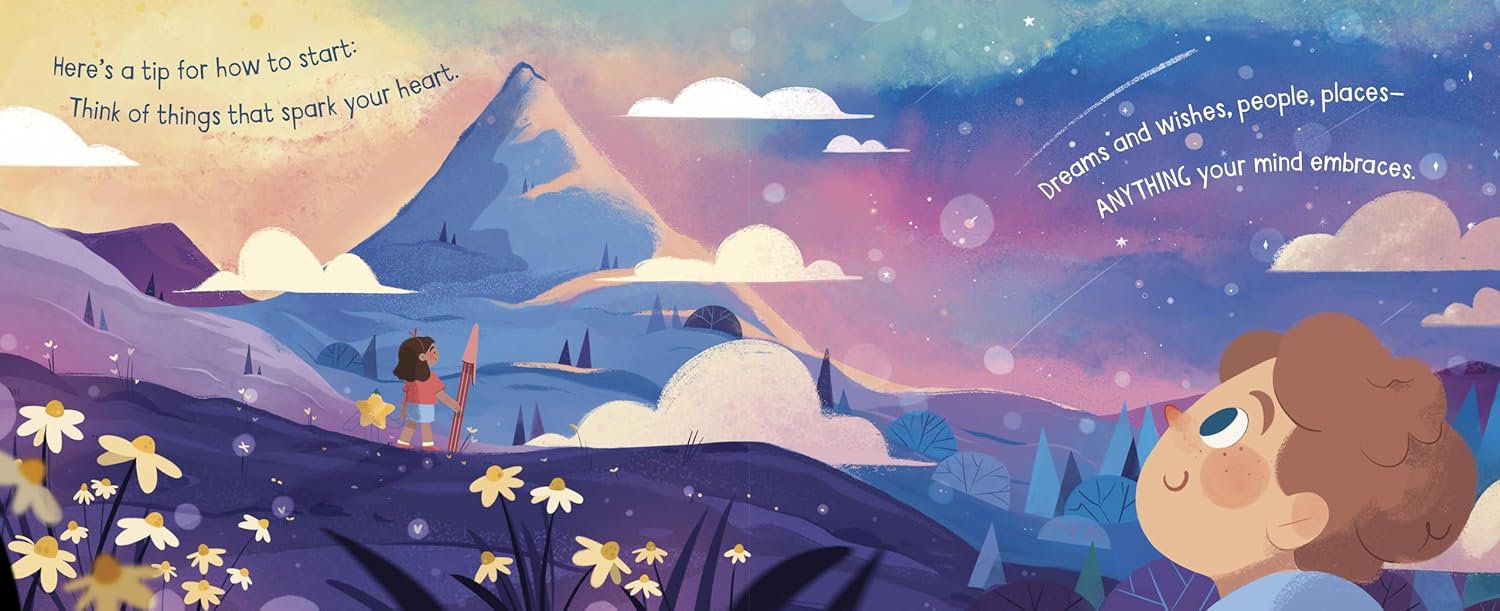
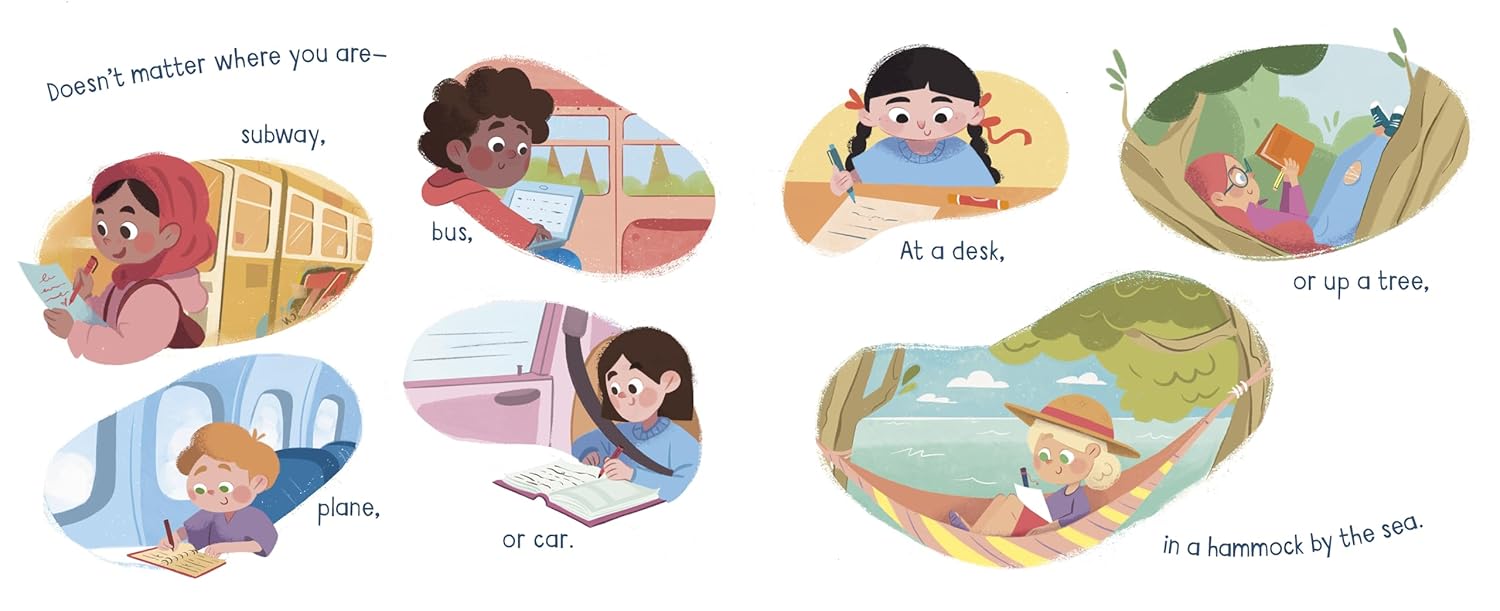
Opening the book, readers are met by a child who looks right at them and makes a very astute observation: “You’re a writer. Did you know?” And before the reader can think “Who, me? nah!” the boy has whisked them off for a trip through the amazing world of writing, offering “Here’s a tip for how to start. / Think of things that spark your heart. / Dreams and wishes, people, places—ANYTHING your mind embraces.”

Illustration © 2025 Andrea Boatta, text © 2025 Rebecca Gardyn Levington. Courtesy of Capstone Editions.

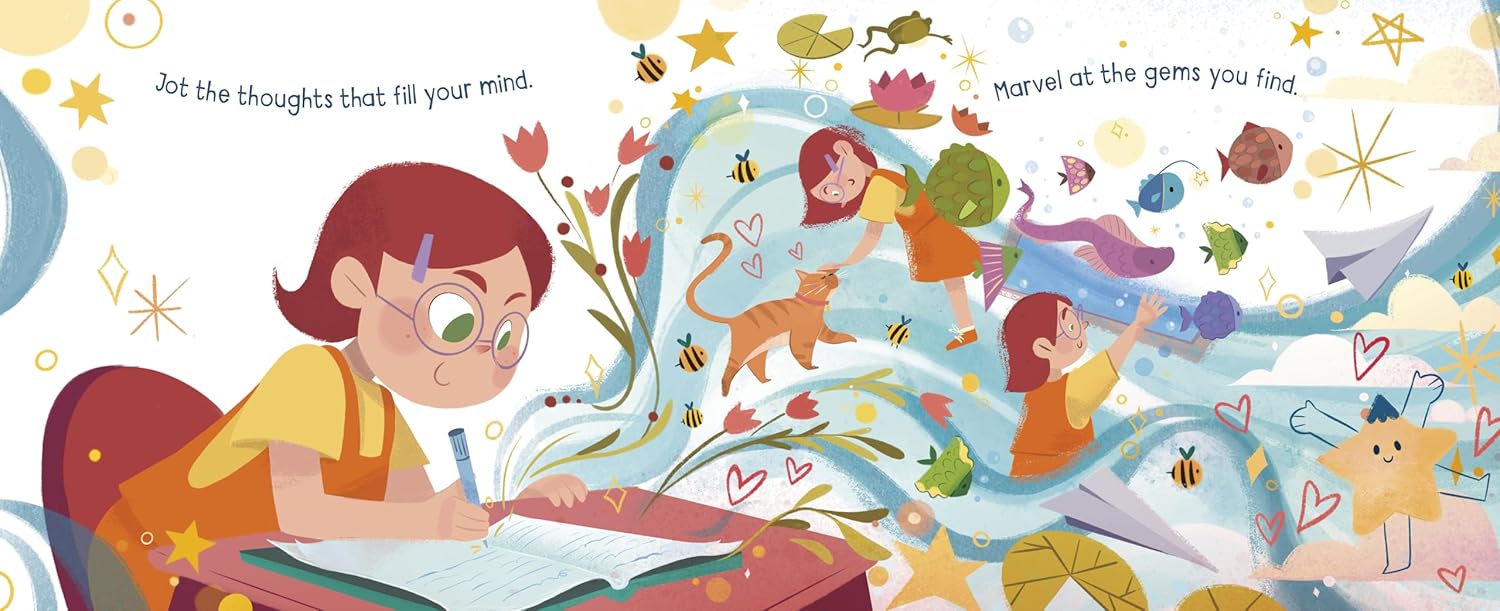
But there can be so many niggling questions that can make the idea of writing intimidating! Like where should I write? What should I write with? What if I like to draw or just tell my stories? The narrator puts all these doubts to rest with the simplest of answers: write wherever and however is best for you! The narrator even addresses the fear that what you write has to be perfect with the encouraging advice to “Scribble fast, or take it slow. / Play with words and let them flow.”

But, a would-be writer might think, is there a type of writing that’s better than others? Nope, the narrator assures. All writing is good writing. “Write a poem, play, or song / Write a note to right a wrong. / Write a joke, a script, a speech. Can’t decide? Write one of each.”

Illustration © 2025 Andrea Boatta, text © 2025 Rebecca Gardyn Levington. Courtesy of Capstone Editions.

So are there any rules to writing? Maybe just this one: to “let imagination lead!” The narrator leaves young writers with one more note of encouragement, reminding them that their writing is as unique as they are, and that their words or pictures or voice will find a place to flourish.

Following her story, Rebecca Gardyn Levington offers advice and encouragement to young writers in answers to those six proverbial writerly questions: Who? What? Where? Why? When? and How? 

Illustration © 2025 Andrea Boatta, text © 2025 Rebecca Gardyn Levington. Courtesy of Capstone Editions.

Rebecca Gardyn Levington’s enthusiastic ode to the wonders of writing is sure to spark any child to embrace their own personal method of creative expression. Her perfectly flowing, uplifting verses melt away any doubt or hesitance about putting pencil to paper or fingers to keyboard. Levington gives children freedom, inspiration, and encouragment. In short, she makes writing fun!

Andrea Boatta’s vivid, soft-hued illustrations sparkle with imagination and the flow of ideas as diverse children happily engage in writing wherever they are and whenever inspiration strikes. Children, whether new to writing or more experienced will find themselves right at home in Boatta’s dynamic imagery. Readers will also like following the little golden star that eagerly guides them from spread to spread. 

Write Here, Write Now is a joyful celebration of imagination and writing as well as a lively read aloud that kids will want to hear again and again. The book is highly recommended for classrooms, homeschoolers, school and public libraries, and family bookshelves. 

Ages 5 – 8

Capstone Publishing, 2025 | ISBN 978-1684469611

About the Author

Rebecca Gardyn Levington is a children’s book author, poet, and journalist with a particular penchant for penning both playful and poignant picture books and poems—primarily in rhyme. She is the author of BRAINSTORM!, WHATEVER COMES TOMORROW, and many other incredible picture books. Rebecca’s award-winning poems and articles have appeared in numerous anthologies, newspapers, and magazines. She lives in New Jersey with her family. Visit her at rebeccagardynlevington.com.

About the Illustrator

Andrea Boatta was born in a seaside town in southern Italy and grew up around vibrant colors and nature. After graduating from the Academy of Fine Arts, she came to love illustration and animation and continued her post-graduate studies at the National School of Cinema. Today she works in Naples, Italy, as a freelance illustrator and concept and background artist in the world of animation. You can follow Andrea on Instagram.

International Ideas Month Activity

CPB - Fairy Tale box

Treasure Box of Imagination

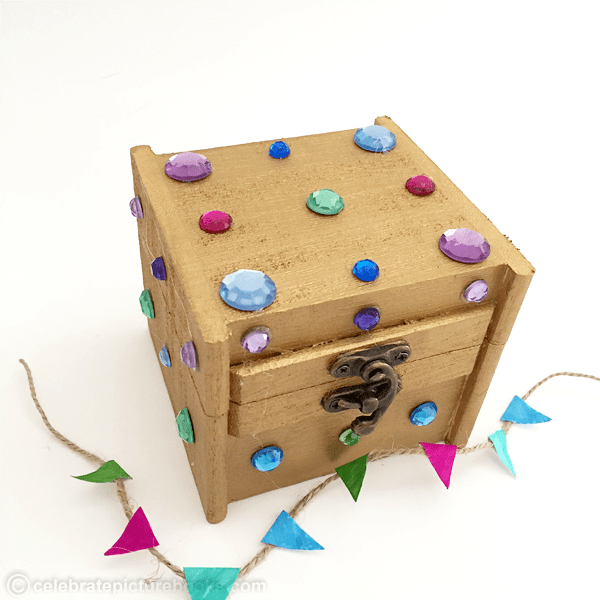
Writers often collect bits of imagination, wisps of dreams, snatches of memory, and treasures found along the way to use in their writing. With this craft, kids can make a treasure box to jot down and save ideas and tidbits to spark their own writing, drawing, and other creative endeavors.

Supplies

  • 1 small wooden box, available at craft stores
  • Acrylic craft paint – I used gold
  • Craft gems
  • Paint brush
  • Hot glue gun or strong glue

Directions

  1. Paint your wooden box 
  2. After the paint dries, decorate your Treasure Box of Imagination with gems

You can purchase Write Here, Write Now at these booksellers

Amazon | Barnes & Noble | Bookshop (to support your local independent bookstore.

Picture Book Review

January 15 – It’s International Creativity Month


celebrate-picture-books-picture-book-review-bear's-big-idea-cover

About the Holiday

Are you an artist, a writer, a decorator, a chef? How about a floral arranger, a woodworker, a fashion designer, or a gardener? Inside almost every heart lies a desire to create. Whether you use your ingenuity in your job or as an escape from the routine, this month celebrates all that is innovative. Sometimes this comes not in something you can see or touch but in a new thought or novel way of solving a problem—as seen in today’s book!

Thanks to Carolrhoda Books and Barb Fisch at Blue Slip Media for sharing a copy of Bear’s Big Idea with me! All opinions on the book are my own.

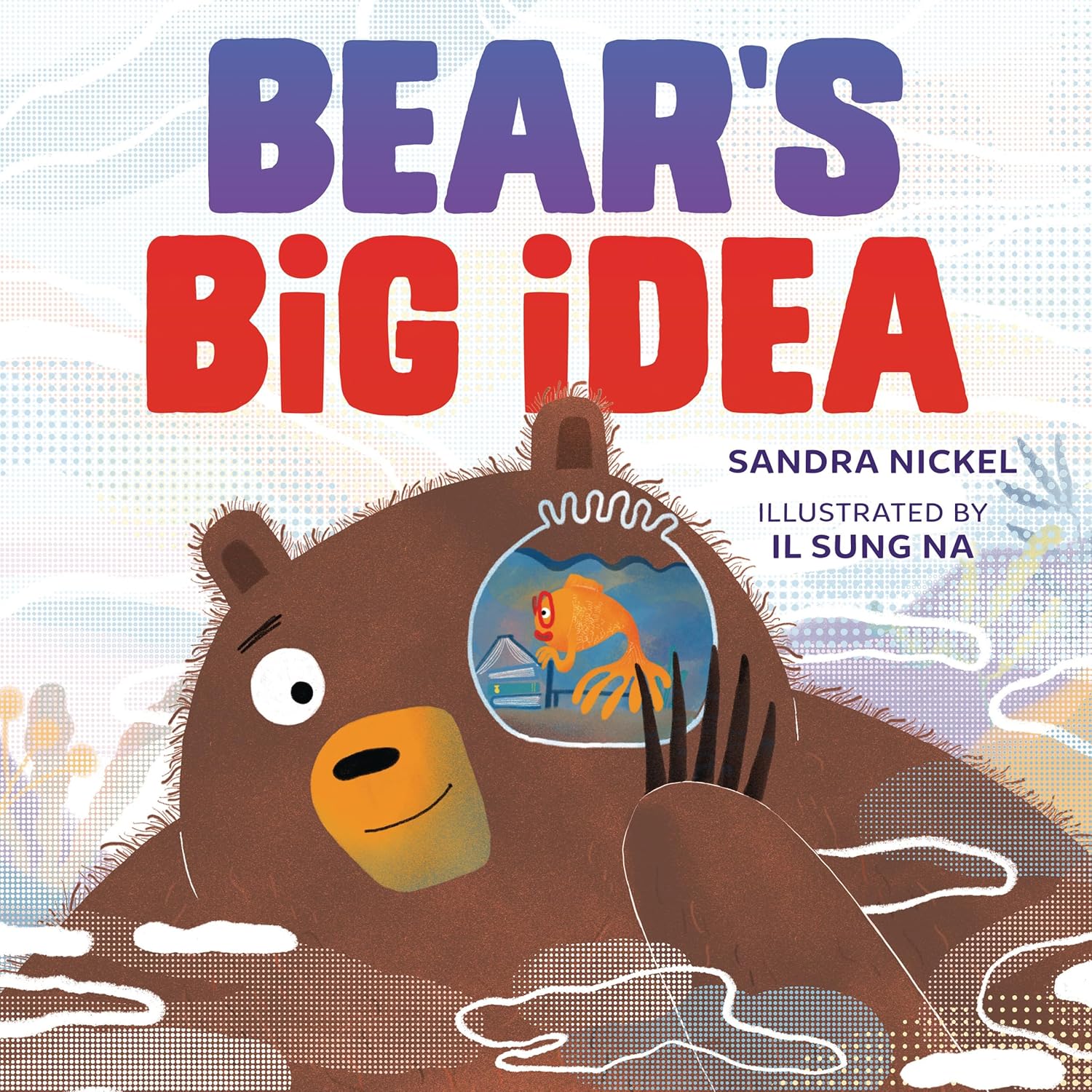
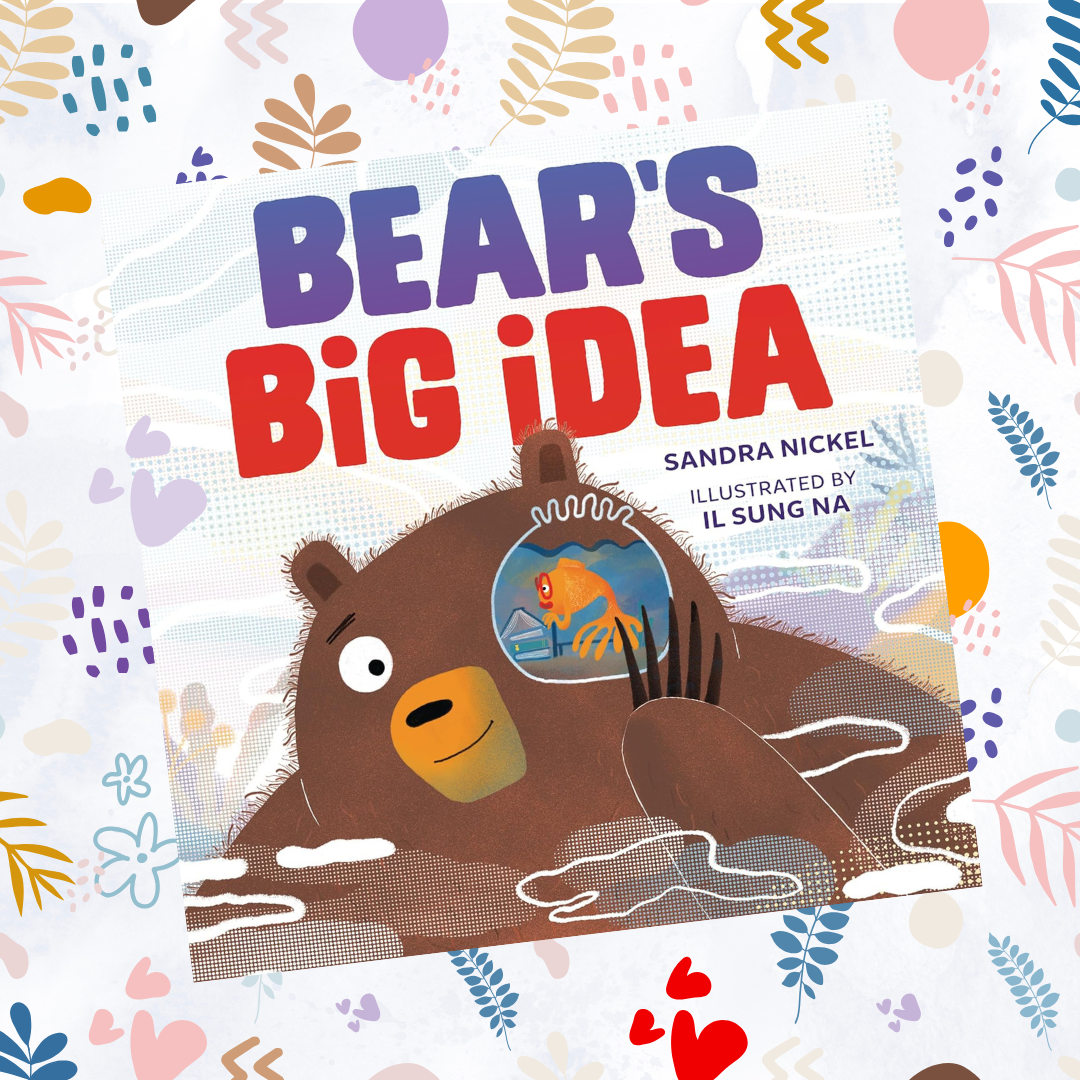
Bear’s Big Idea

Written by Sandra Nickel | Illustrated by Il Sung Na


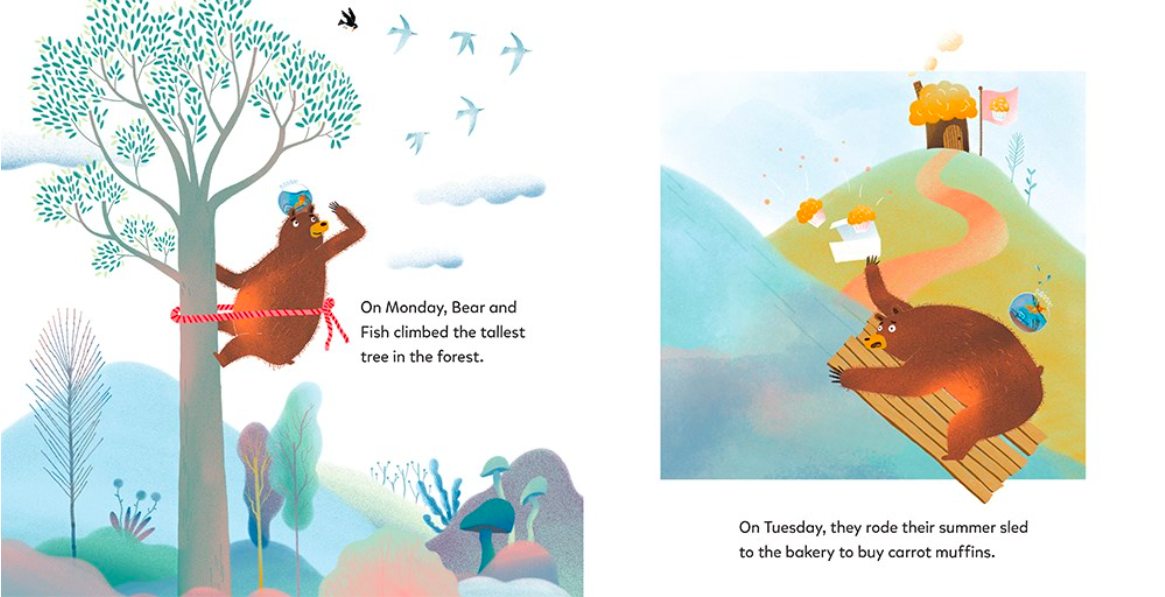
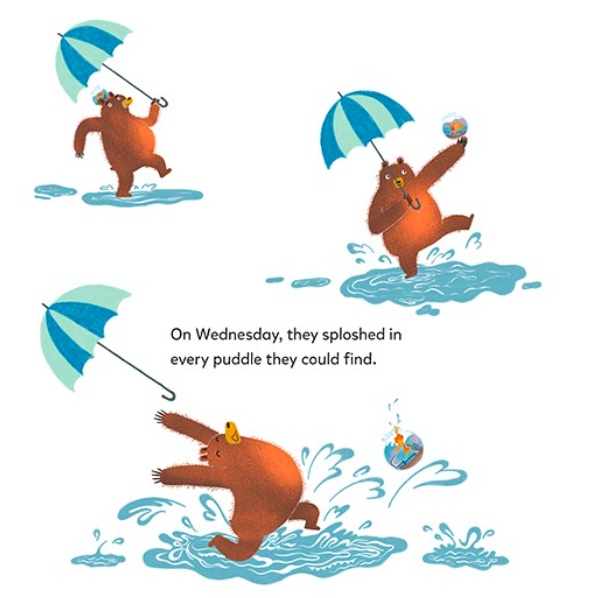
Fish and Bear were best friends. They did everything together, and usually—well, always—Fish was the one with the ideas. “Every morning, Fish would wake up, put on her glasses, and just like that, she would know the perfect thing to do.” Every day of the week, Fish found something—a rope, a sled, an umbrella, and a blanket—and dreamed up an innovative way to have fun with it.

celebrate-picture-books-picture-book-review-bear's-big-idea-Monday

Image copyright Il Sung Na, 2024, text copyright Sandra Nickel, 2024. Courtesy of Carolrhoda Books.

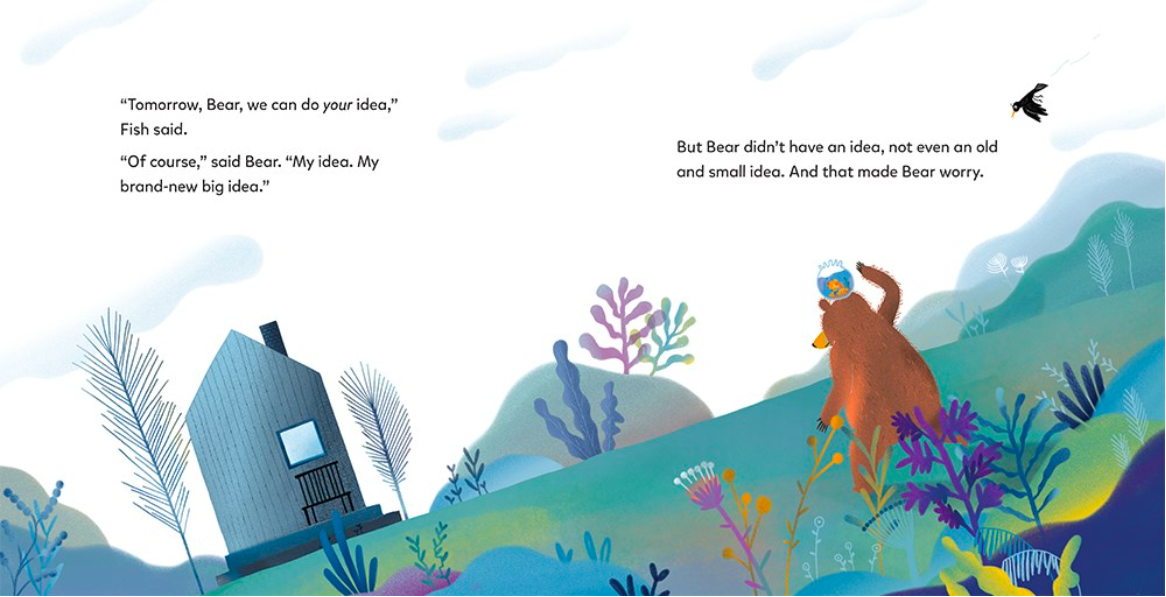
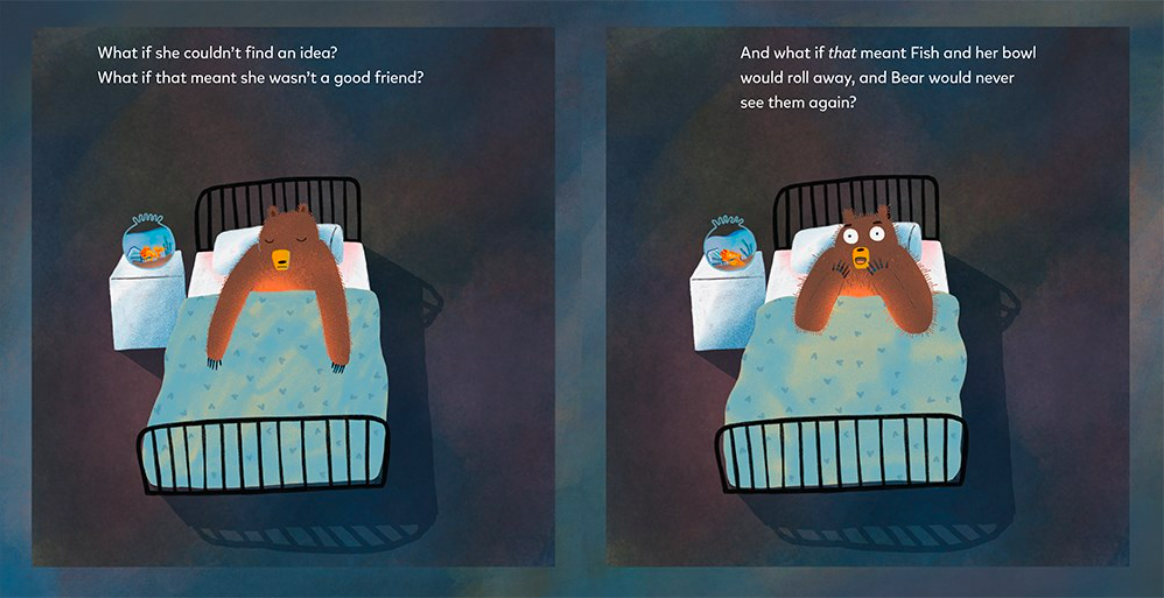
But Fish didn’t want Bear to feel left out, so on Thursday she said that the next day they could do Bear’s idea, “‘Of course, said Bear. ‘My brand-new big idea.'” But Bear was worried. She “didn’t have an idea, not even an old and small idea.” Bear tried to sleep that night, but she was afraid that not having an idea meant she wasn’t a good friend. Would Fish take her bowl and leave? Anxiety muddled Bear’s brain, and all she could think of were now-old ideas.

celebrate-picture-books-picture-book-review-bear's-big-idea-Wednesday

Image copyright Il Sung Na, 2024, text copyright Sandra Nickel, 2024. Courtesy of Carolrhoda Books.

The next morning it was the same. Bear looked everywhere for a brand-new big idea but found nothing. She kept checking in with Fish, asking if she was still there. “‘Always and forever,’ said Fish” with added reassurance. At last, Bear confessed that she couldn’t see an idea anywhere. “‘Don’t worry,’ Fish said. ‘Just because you can’t see something, doesn’t mean it’s not there.'”

celebrate-picture-books-picture-book-review-bear's-big-idea-no-idea

Image copyright Il Sung Na, 2024, text copyright Sandra Nickel, 2024. Courtesy of Carolrhoda Books.

So Bear thought some more, she listened, and she felt the wind whipping up. Suddenly, the air was filled with all of the old things from the past week. As Bear watched the things flying by, she saw it! Her brand-new big idea! She quickly gathered the items together and grabbed Fish’s bowl then rode the sled down to the beach, where she turned those individual items into an ingenious brand-new big idea that even impressed Fish! As pleased as Bear was with her idea, though, she was even happier to discover that good friends were “always and forever there.”

celebrate-picture-books-picture-book-review-bear's-big-idea-sleepless-night

Image copyright Il Sung Na, 2024, text copyright Sandra Nickel, 2024. Courtesy of Carolrhoda Books.

The second book in Sandra Nickel’s Bear and Fish series is a charming story that gently addresses children’s common fears about performance and pressure as well as the nature of friendship itself. Throughout the story, Nickel presents Bear’s conundrum realistically as she first alludes to having a big idea and then worries through the night and part of the next day that she will let down and maybe even lose her bestie because she has no idea at all.

Nickel—through Fish’s encouraging comments and confidence in Bear’s abilities—is always right there, though, with reassurance that children will find comforting in their own life. Nickel’s excellent pacing as well as her metaphorical dark and fog that stymies Bear until her approaching idea clears it away adds depth to the story and shows kids that things such as ideas, learning, self-confidence, and growth come to each person in their own time.

Children will be happy to see Il Sung Na’s fast friends back again in a new adventure. Il Sung’s soft-hued illustrations place Bear and Fish in a whimsically surreal mashup of vegetation from Bear’s forest and Fish’s underwater worlds. Bespectacled, ever-faithful Fish regales Bear with reassuring philosophy from her bowl, but also enjoys a madcap experience of her own thanks to Bear’s big idea. Through Il Sung’s clear depictions of Bear’s emotions, children can empathize with and cheer on Bear while gaining their own sense of self-confidence.

An uplifting, reassuring, and confidence boosting story, Bear’s Big Idea is sure to prompt requests for multiple readings and can spark discussions about feelings of fear, external and internal pressure, true friendship, and using one’s imagination. Bear’s Big Idea would make a valuable addition to home, library, and classroom collections.

Ages 4 – 8

Carolrhoda Books, 2024 | ISBN 979-8765610176

About the Author

Sandra Nickel is a writer of nonfiction picture books for children. Her work includes The Stuff Between Stars, Nacho’s Nachos, and Breaking Through the Clouds. She is the winner of a Christopher Award and holds an MFA in Writing for Children and Young Adults from Vermont College of Fine Arts. When at home in Switzerland, Sandra loves ambling and rambling and eating carrot muffins just as much as Bear and Fish do.

About the Illustrator

Il Sung Na was born in Seoul, South Korea. In 2001, he moved to London to pursue a BFA in Illustration and Animation at Kingston University, where he discovered a passion for children’s books. He completed his MFA Illustration Practice at MICA (Maryland Institute College of Art) in 2015. Il Sung has illustrated several books including Wild Peace, My Tree, and ZZZZ: A Book of Sleep. Currently based in Kansas City, Il Sung teaches illustration courses at KCAI (Kansas City Art Institute) and works on new books.

International Creativity Month Activity

celebrate-picture-books-picture-book-review-bear-craft

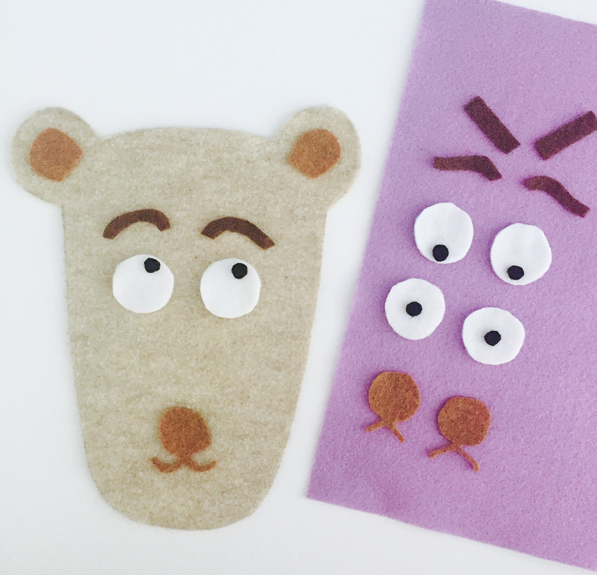
Expressive Bear


You can talk about different emotions and feelings or make up your own stories with this Expressive Bear Craft! Use the templates and/or make your own expressive eyes, eyebrows, and nose and mouths. You can also play a game in which the first person to collect all the parts of the bear’s face is the winner.

Supplies

  • Printable Bear Head Template
  • Printable Eyes and Noses Template
  • Printable Eyebrows  and Ears Template
  • Light brown felt or fleece (or color of your choice), 8 ½ x 11 inch piece
  • Dark brown felt or fleece(or color of your choice), 8 ½ x 11 inch piece
  • White felt or fleece, 8 ½ x 11 inch piece
  • Black felt or fleece, for pupils
  • Scissors
  • Glue
  • 1 playing die (optional)

Directions

  1. Print templates
  2. Cut bear head from light felt or fleece
  3. Cut eyes from white felt or fleece
  4. Cut nose and inner ears from dark brown felt or fleece
  5. Cut pupils from black felt or fleece
  6. Glue pupils onto white eyes

Alternatively: Color and play with the paper set

For a Fun Story Time

Give the bear different faces and make up stories of why he looks that way!

To Play a Game

Supplies

  • 1 plastic playing die. Or print this playing die template and draw one of the six facial features on each side.
  • Pencil, pen, or markers (if using printed die template)
  • Cut out, fold, and tape the die together

Directions

  1. Roll the die and follow the instructions below to collect parts of the bear’s face.
  2. The first player to create a full face is the winner.
  • Die dots correspond to:
  • 1—one eyebrow
  • 2—second eyebrow
  • 3—one eye
  • 4—second eye
  • 5—nose
  • 6—inner ears

celebrate-picture-books-picture-book-review-bear's-big-idea-cover

You can purchase Bear’s Big Idea from these booksellers

Amazon | Barnes & Noble | Bookshop (to support your local independent bookstore)

Picture Book Review
January 9 – National Word Nerd Day

celebrate-picture-books-picture-book-review-calvin-gets-the-last-word-cover

About the Holiday

Do you love nothing more than finding new words and using them in conversation or in your own writing? Does completing a  crossword or word search puzzle make for the perfect day? Is a pun your favorite type of joke? Then you’re a word nerd! Today’s holiday highlights the importance of language and the fun of learning and expressing yourself precisely with new or uncommon words. To celebrate, why not gather friends or family and play a word-based game like Scrabble, Tapple 10, Charades, or—my favorite—Boggle! 

Calvin Gets the Last Word

Written by Margo Sorenson | Illustrated by Mike Deas


The moment Calvin wakes up, he grabs his dictionary and heads to the kitchen for breakfast. While Calvin may be well-rested, his dictionary tells readers that it is tired. “Why? Because Calvin loves words—I mean REALLY loves words,” the dictionary says. Calvin won’t rest until he’s found the perfect “word for everything—especially his rascally brother.” At breakfast, Calvin takes a big gulp of milk. It’s just the moment his brother’s been waiting for to tell his super funny joke. You can imagine what happens—and why the dictionary’s page containing the word revenge is soaked.

celebrate-picture-books-picture-book-review-calvin-gets-the-last-word-cover

Image copyright Mike Deas, 2020, text copyright Margo Sorenson, 2020. Courtesy of Tilbury House Publishers.

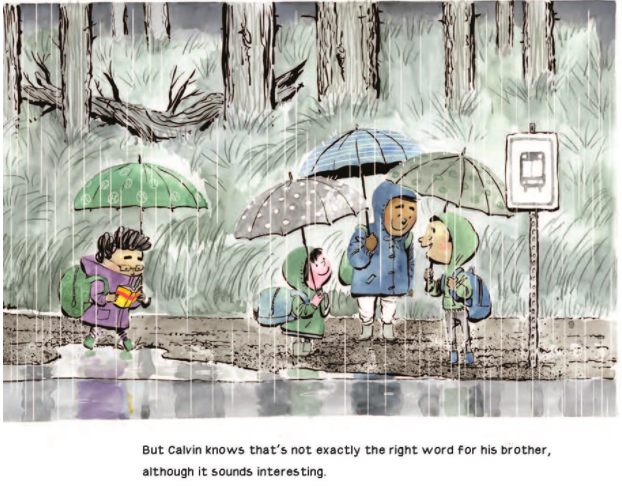
But is revenge the right word for Calvin’s brother? Not quite. On the school bus as the kids are tossing a backpack, talking, laughing, and hanging over the seats, Calvin’s dictionary describes it as mayhem, but that word doesn’t completely describe his brother either. As Calvin struggles in geography class and passes notes during library story time, his dictionary helps describe the mood, but the words it chooses don’t really apply to his brother. On the way home, though, Calvin does discover a good word for himself when he stands up to a bully and helps a kindergartener.

celebrate-picture-books-picture-book-review-calvin-gets-the-last-word-breakfast

Image copyright Mike Deas, 2020, text copyright Margo Sorenson, 2020. Courtesy of Tilbury House Publishers.

At Little League practice, the dictionary reveals that Calvin “loves to crush the ball during batting practice, sending it over the fence. That’s why the page that reads pulverize has grass stains on it.” Could pulverize be the right word for his brother? While Calvin thinks it could be fun, it’s not exactly right.

celebrate-picture-books-picture-book-review-calvin-gets-the-last-word-bus-milk

Image copyright Mike Deas, 2020, text copyright Margo Sorenson, 2020. Courtesy of Tilbury House Publishers.

That night dinner turns into a repeat of breakfast—only in broccoli green. When Calvin goes to bed, he sits for a while, thinking. Then he grabs his exhausted dictionary and a glass of water and sneaks into his brother’s room. The dictionary thinks it knows what’s going to happen and riffles through its pages to find the right word, unconcerned whether it stays dry or not. And suddenly it opens to the perfect word! But wait, that word doesn’t fit now because the brothers are laughing. The dictionary tries flipping to another page and a better word, but Calvin has it beat as he turns the pages and discovers the exact right word to describe his brother. What are all of these words? Come flip through Calvin Gets the Last Word yourself to find out!

celebrate-picture-books-picture-book-review-calvin-gets-the-last-word-bus-stop

Image copyright Mike Deas, 2020, text copyright Margo Sorenson, 2020. Courtesy of Tilbury House Publishers.

In her funny and unique mashup of sibling rivalry and vocabulary, Margo Sorenson offers kids an engaging story of the singular type of love brothers share uncovered little by little through word-building. Calvin’s dictionary makes a sincere and charming guide through high-interest words that lend panache and nuance to events throughout Calvin’s day even if they don’t quite describe his brother. Astute kids may notice that the words the dictionary chooses for Calvin’s brother proves his loyalty to his favorite reader. Calvin’s spewed milk, whispered secrets, and home run batting add up to a real kid that readers will love. The words that the dictionary finds are fun to learn and say and will spark an enthusiasm in readers to do their own flipping through the dictionary and thesaurus. Sorenson’s endearing ending rings true with a word kids are sure to embrace.

Mike Deas’ glasses-wearing and sweat suit-clad Calvin, whose dictionary is always at the ready to define his experiences, is a character readers will respond to. Images of the sprayed milk and broccoli, rockin’ school bus, library story rug, and baseball field are full of familiar details and plenty of action. As Calvin prepares to play his trick on his brother Deas gives kids a cutaway view of the house from above, letting them tiptoe through the maze of rooms with Calvin. The final scenes of the brothers checking out the dictionary together in the light of a bedside lamp is sibling devotion at its best.

A delightful family story that can stir a love of language, Calvin Gets the Last Word would be a favorite addition to home libraries. The book is highly recommended for school and classroom bookshelves to enhance language arts, writing, grammar, and vocabulary lessons and for public library collections as well.

Ages 6 – 8

Tilbury House Publishers, 2020 | ISBN 978-0884488224

Discover more about Margo Sorenson and her books on her website.

To learn more about Mike Deas, his books, and his art, visit his website.

National Word Nerd Day Activity

celebrate-picture-books-picture-book-review-big-words-vocabulary-word-search-puzzle

“Big Words” Word Search


Knowing and using a wide range of words allows you to express yourself in exact—and often—fun ways. Find the 26 “big” words—one for each letter of the alphabet—in this printable word search puzzle.

“Big Words” Word Search Puzzle |  “Big Words” Puzzle Solution!

celebrate-picture-books-picture-book-review-calvin-gets-the-last-word-cover

You can purchase Calvin Get’s the Last Word from these booksellers

Amazon | Barnes & Noble | Bookshop (to support your local independent bookstore)

Picture Book Review
November 1 – National Author’s Day

celebrate-picture-books-picture-book-review-as-edward-imagined-cover

About the Holiday

Today’s holiday was instituted in 1928 by Nellie Verne Burt McPherson, president of the Bement, Illinois Women’s Club. An avid reader, she established Author’s Day to thank writer Irving Bacheller—author of 31 novels and founder of the first modern newspaper syndicate—who sent her an autographed story in response to her fan letter. The day was officially recognized in 1949 by the United States Department of Commerce. McPherson’s granddaughter, Sue Cole, promoted the holiday after Nellie’s death in 1968. To celebrate, people are encouraged to write a note of appreciation to their favorite author.

Thank you to Knopf Books for Young Readers and Barbara Fisch of Blue Slip Press for sharing a copy of As Edward Imagined with me for review consideration. All opinions on the book are my own.
As Edward Imagined: A Story of Edward Gorey in Three Acts

Written by Matthew Burgess | Illustrated by Marc Majewski


Edward Gorey’s artistic life began early—very early—and built on itself, bit-by-bit, experience-by-experience just like a play, and so it is fitting that Matthew Burgess’s biography is divided into three acts. In Act One readers meet Edward Gorey as a precocious preschooler, creating his first drawing at a year and a half and learning to read at three and a half.
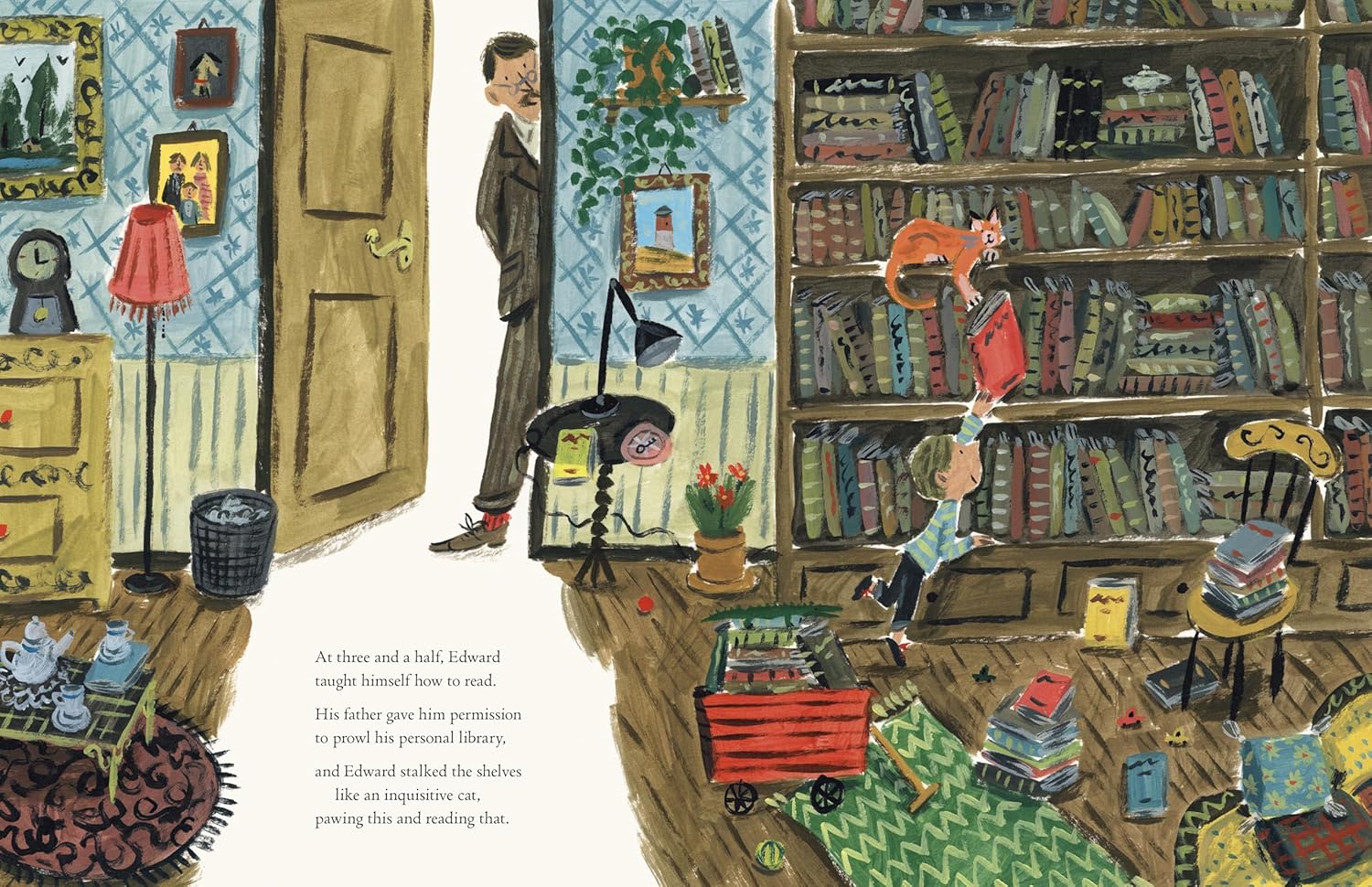
As a voracious reader, he devoured books from his father’s library, including Dracula before he was six. It didn’t take long before he was writing and illustrating his own stories. One was “titled ‘Hand of Doom,’ in which a skeleton’s fingers crept from page to page.” But Edward didn’t consign his “delightfully peculiar” personality to the page, “he [dared] to live the life he imagined.”

celebrate-picture-books-picture-book-review-as-edward-imagined-fathers-library

Image copyright Marc Majewski, 2024, text copyright Matthew Burgess, 2024. Courtesy of Knopf Books for Young Readers.

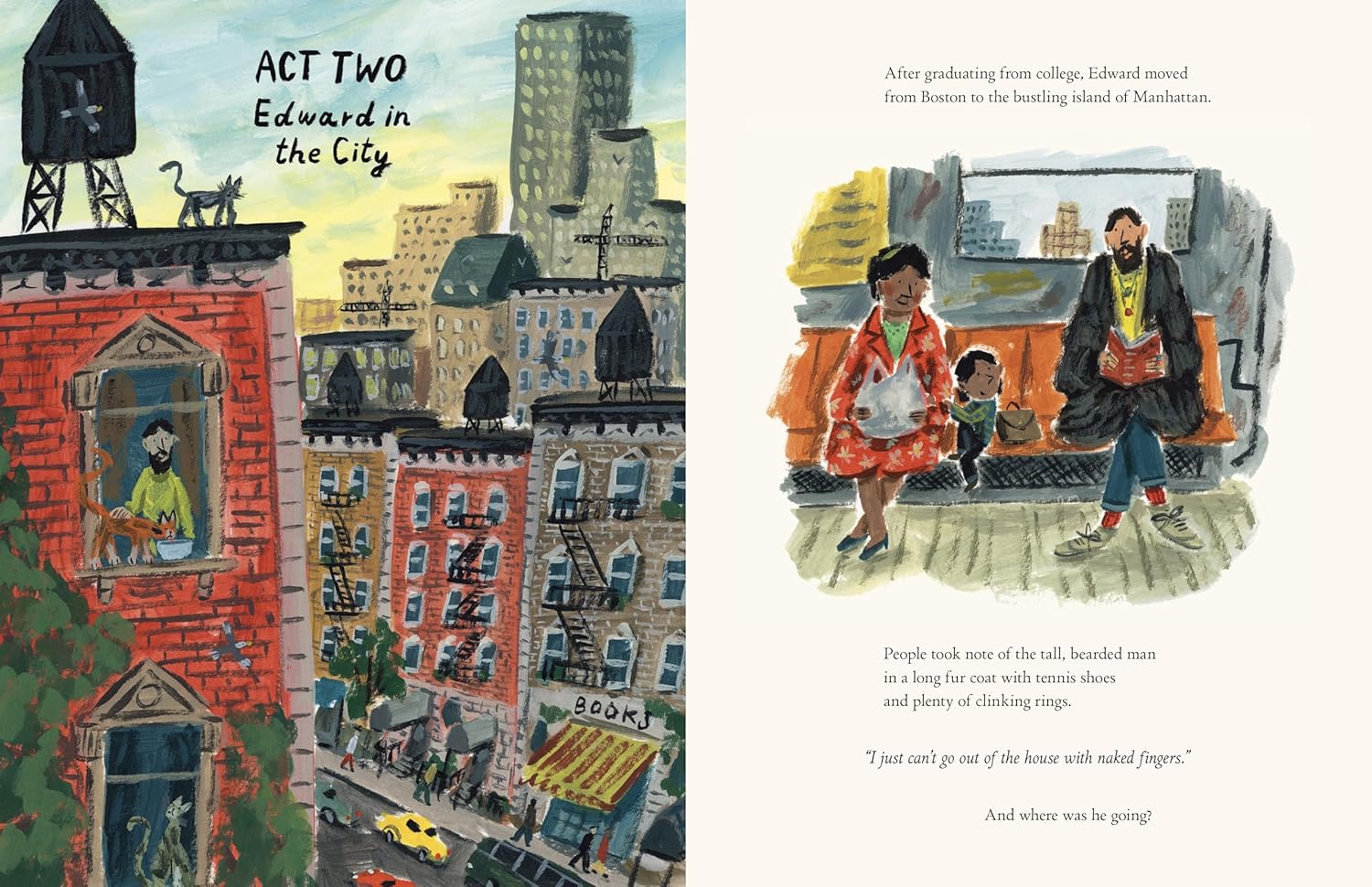
In Act Two, Edward has graduated from college and is living in New York, where he took the subway to attend nearly every performance of the New York City Ballet, dressed in his singular look: a fur coat, tennis shoes, and “plenty of clinking rings.” While working as a book illustrator, he also wrote, illustrated, and published his own stories, and little by little people began to take notice of “his stylish drawings, his outlandish poetry, and his deliciously sinister sense of humor.”

This popularity earned him an invitation to design the costumes and sets for a Broadway production of that classic he had read long ago—Dracula. The play was a smash, and Edward was nominated for Tony awards. Eschewing the limelight, however, Edward watched the ceremony and his own win from the comfort of his home and surrounded by his six beloved cats.

celebrate-picture-books-picture-book-review-as-edward-imagined-city

Image copyright Marc Majewski, 2024, text copyright Matthew Burgess, 2024. Courtesy of Knopf Books for Young Readers.

His success on Broadway brings readers to Act Three, and his purchase of an old captain’s house on Cape Cod, Massachusetts, drew, wrote, and collected. “Teddy bears, sea stones, skeletons of all sizes and shapes, and books by the thousands” became his companions and his inspirations. He also worked with local actors to bring his original plays to theaters. Here, Edward was happy living “his life precisely as he wished.” For readers today, he lives on in his one-of-a-kind characters and inimitable stories. 

Back matter includes an Author’s Note, a Bibliography, a photograph of Edward Gorey and one of his cats, and a Chronology of his life that fleshes out experiences from his childhood, during which he once owned a baby alligator, to his higher education and military service to his publishing career and animations for PBS’s Mystery! series to his time living on Cape Cod.

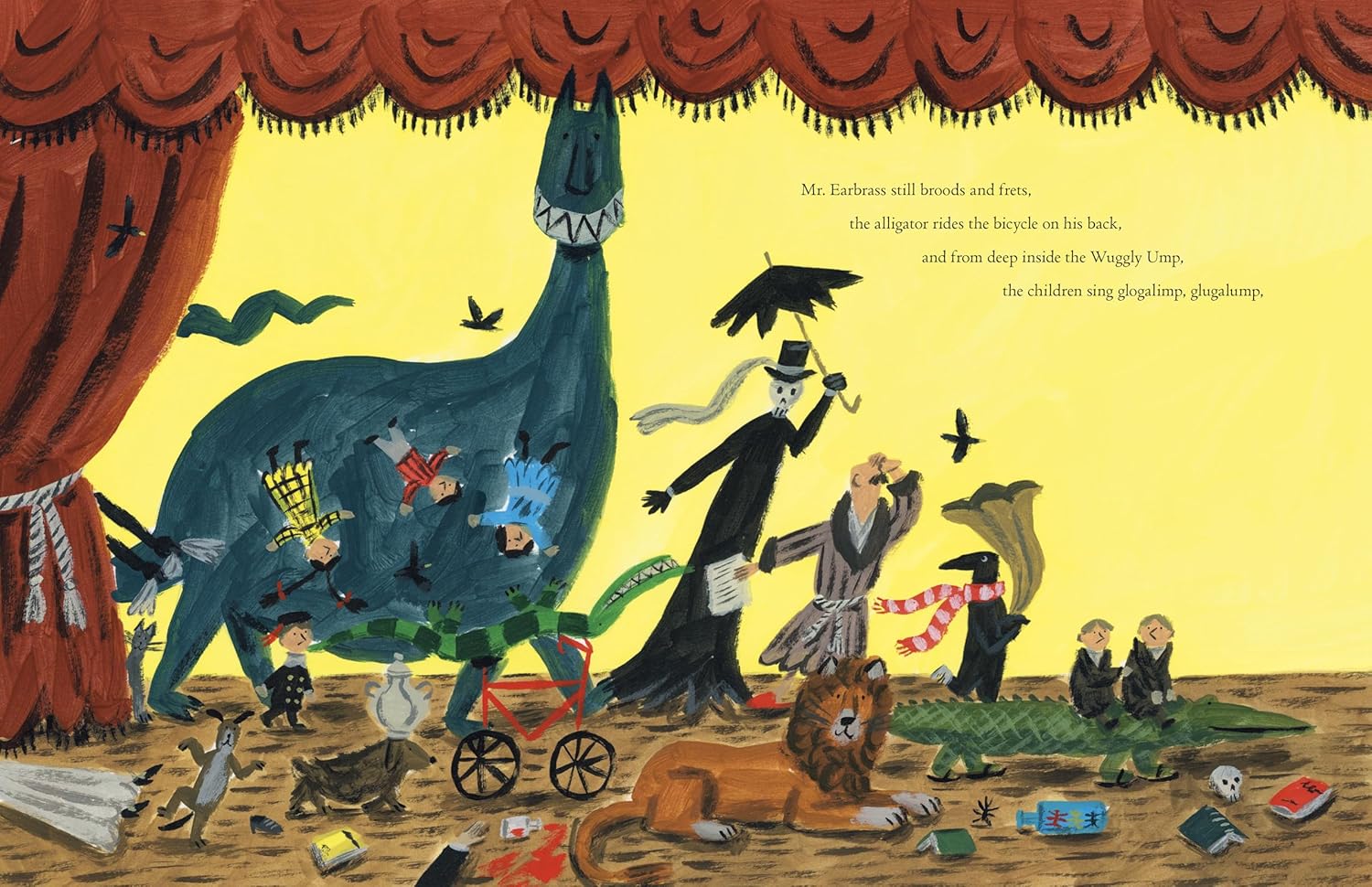
celebrate-picture-books-picture-book-review-as-edward-imagined-mr-earbrass

Image copyright Marc Majewski, 2024, text copyright Matthew Burgess, 2024. Courtesy of Knopf Books for Young Readers.

Matthew Burgess’s charming storytelling highlights the quirky ingenuity of Edward Gorey’s stories, plays, and illustrations. Cleverly divided into three acts, his biography emphasizes how Edward remained true to himself throughout his life, finding jobs that complimented his skills and pastimes that fed his imagination. Inspirational and celebrating the individual, Burgess’s breezy and uplifting text will engage children and encourage them to listen to and stay true to their own unique voice.

Marc Majewski’s enchanting and atmospheric illustrations will captivate readers with their combination of realism and whimsy that give them a tour through Edward Gorey’s childhood home, New York City haunts, Dracula sets, and Cape Cod comfort. Kids and adults alike will enjoy dawdling over each page to discover the themes of and influences on Edward’s life as well as his eccentric decor and characters and, of course, to point out all the cats.

A fabulous introduction to a truly unique talent and individual, As Edward Imagined: A Story of Edward Gorey in Three Acts will not only fascinate kids but also spark their creativity and an appreciation for the happiness that comes from following their own path. The book would be an often-asked-for favorite on home bookshelves and for public libraries and offers many applications for school libraries and creative arts programs. Pair with readings of Edward Gorey’s books to acquaint young readers with his endearing characters.

Ages 4 – 8

Knopf Books for Young Readers, 2024 | ISBN 978-1984893802

About the Author

Matthew Burgess is the author of Enormous Smallness: A Story of E. E. Cummings, and The Unbudgeable Curmudgeon. He has been a poet-in-residence in New York City elementary schools through the Teachers & Writers Collaborative since 2001. His work has appeared in various magazines and journals, and he recently received an award from the Fund for Poetry. He teaches creative writing and composition at Brooklyn College and lives in Brooklyn, New York. Visit Matthew at matthewjohnburgess.com.

About the Illustrator

Marc Majewski is a French author-illustrator based in Berlin. After obtaining a degree in literature and arts, he studied illustration and painting for two years. His picture books include, Does Earth Feel?, and Butterfly Child. Visit Marc at marc-majewski.com.

National Author’s Day Activity

celebrate-picture-books-picture-book-review-the-doubtful-guest-cover

Watch The Doubtful Guest by Edward Gorey

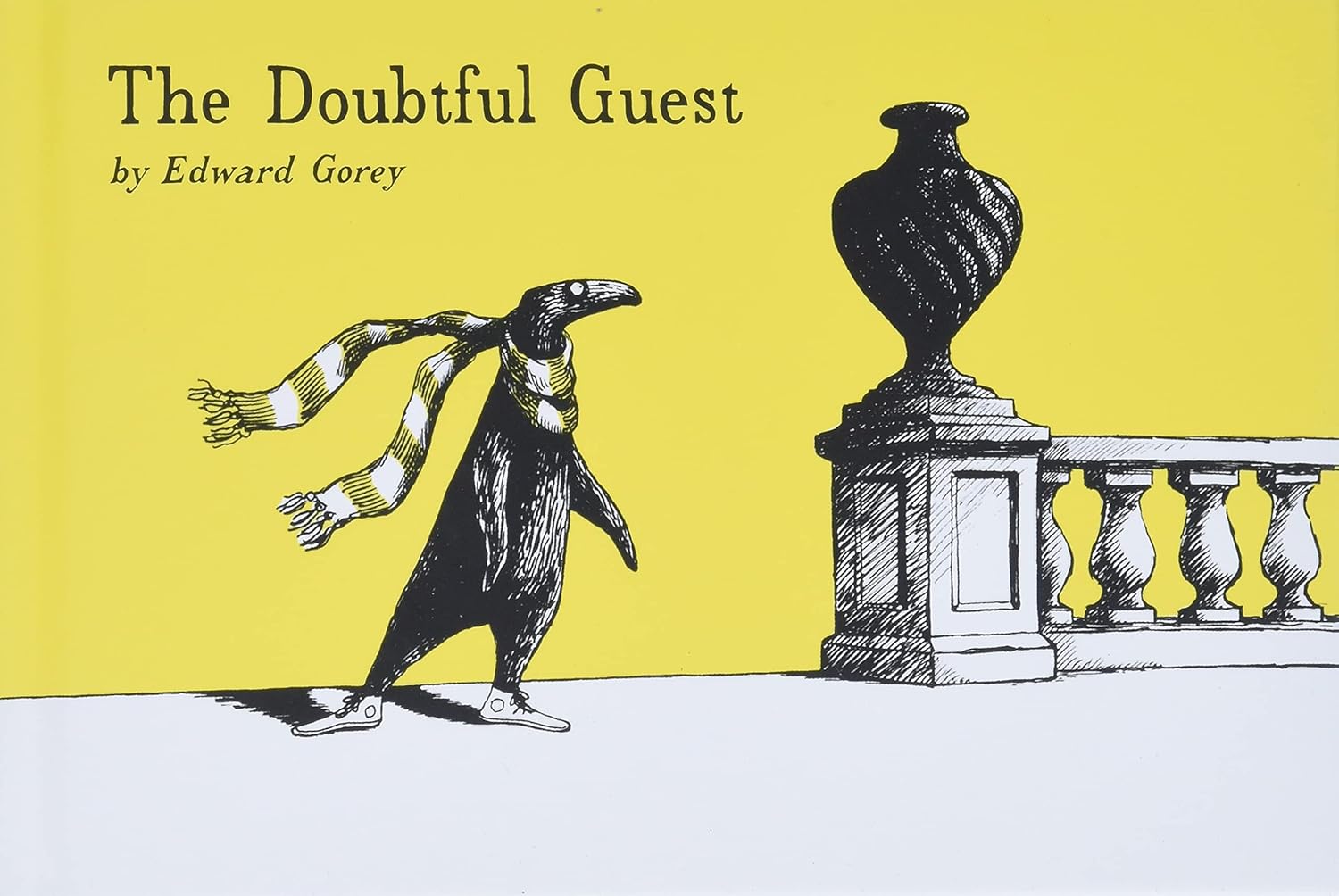
To celebrate today’s holiday listen to this reading of Edward Gorey’s The Doubtful Guest, a short, eccentric and slightly eerie tale of an uninvited guest. Then check out your local library for more books by Edward Gorey. 

celebrate-picture-books-picture-book-review-as-edward-imagined-cover

You can purchase As Edward Imagined: A Story of Edward Gorey in Three Acts at these booksellers

Amazon | Barnes & Noble | Bookshop (to support your local independent bookstore)

Picture Book Review