December 12 – International Sound Check Day

About the Holiday

Today’s holiday began with a bit of serendipity in 2012, when some people online noticed a connection with the abbreviated date notation 12/12/12 with the well-known phrase “check one two, one two” that musicians, speakers, and sound engineers use when testing microphones before a live event. This recognition grew over time to celebrate not only the suspense inherent in those momentary sound checks, but the importance of this preparation to performers and audiences alike as well as to all the creative professionals behind this technology. Likewise, today’s book sweeps readers away on a wave of sound.

Thank you to Eerdmans Books for Young Readers for sharing this book with me for review!

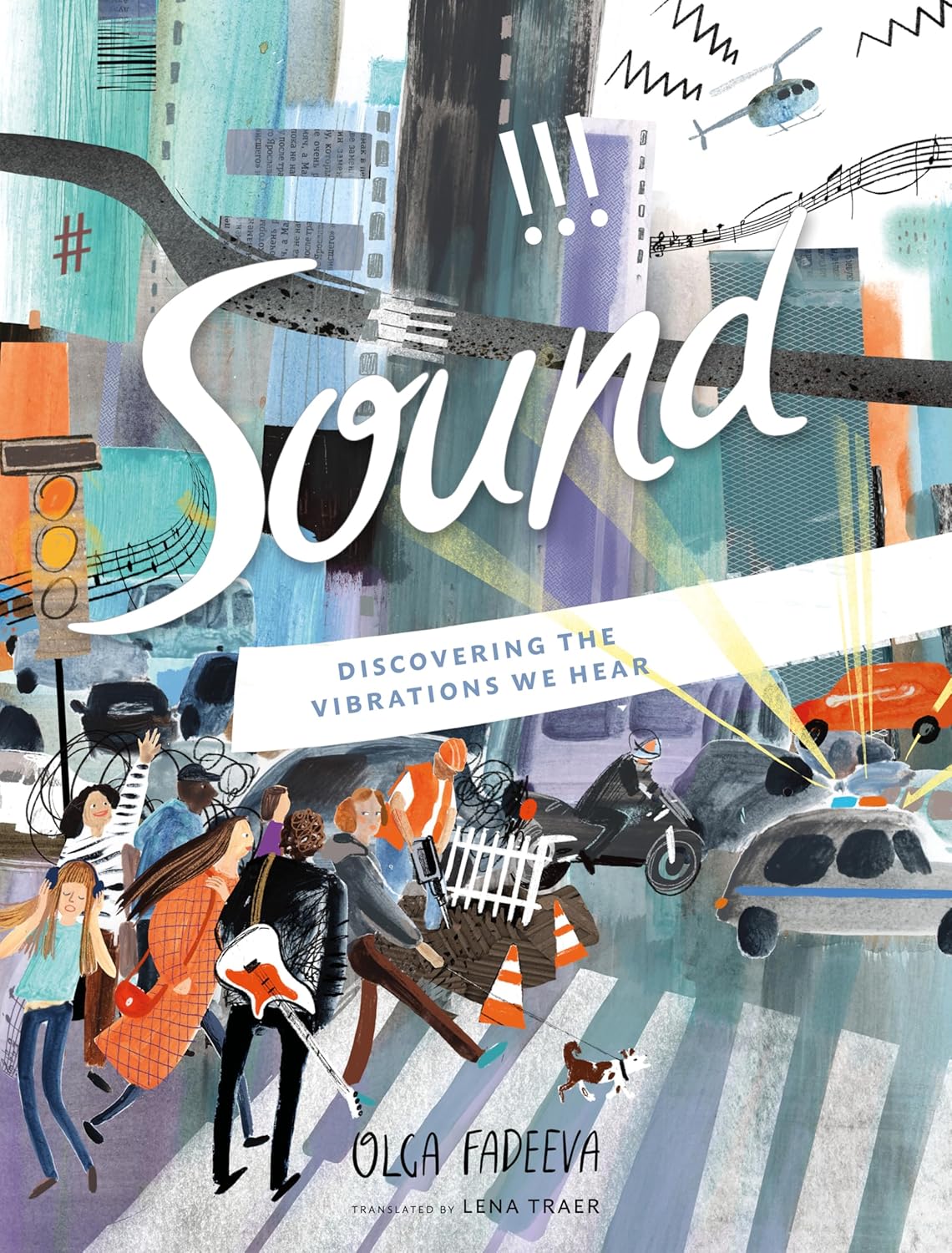
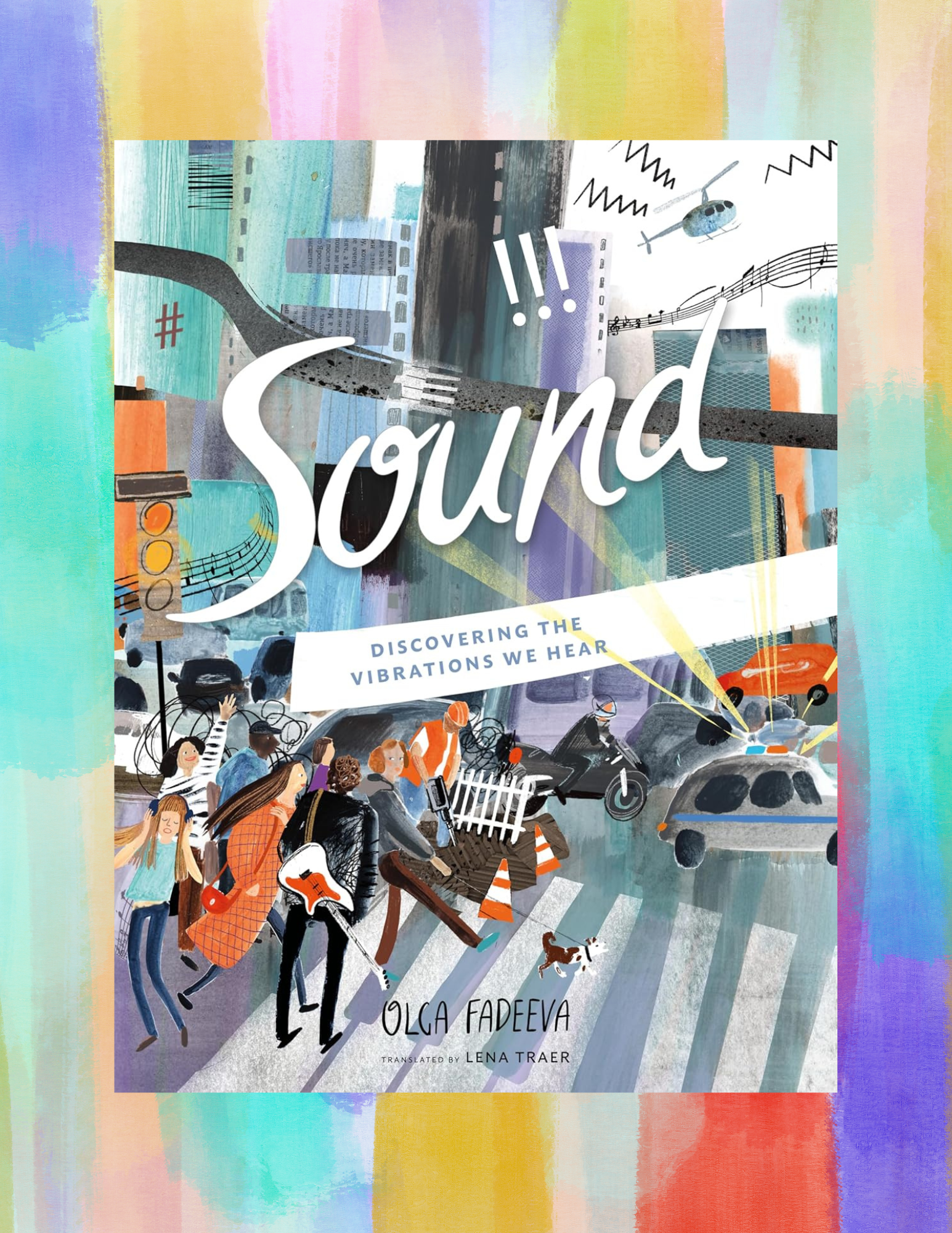
Sound: Discovering the Vibrations We Hear

By Olga Fadeeva | Translated by Lena Traer


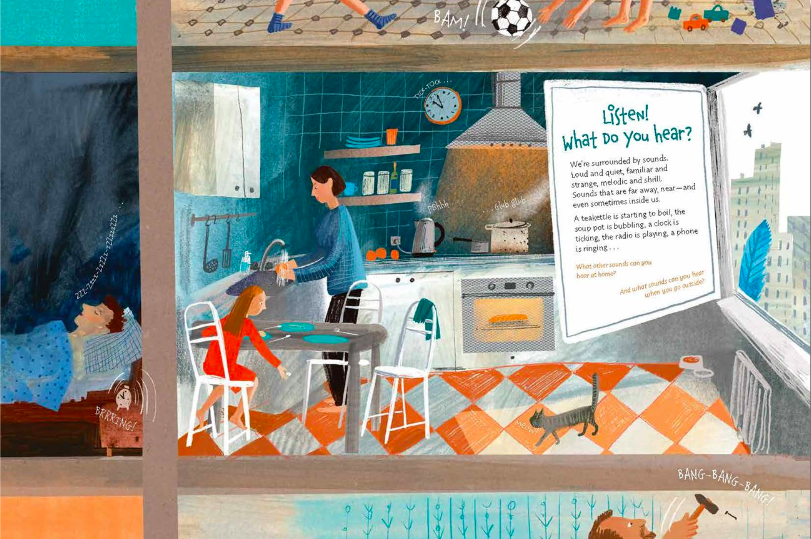
If you have a child who loves sound—making it and listening to it—and who often asks, “Didja hear that?” then they’re sure to love today’s book. Olga Fadeeva begins her fascinating deep dive into sound with a quick discussion that pings from the most simple definition (sound is “what we perceive with our ears”) to how physics describes it as a “wave that creates a vibration that passes from molecule to molecule through almost any medium,” to a visual representation using the way a stone dropped into water creates waves, plus a couple of other interesting tidbits to boot.

Text and illustration © 2025 by Olga Fadeeva. Translation by Lena Traer. Courtesy of Eerdmans Books for Young Readers.

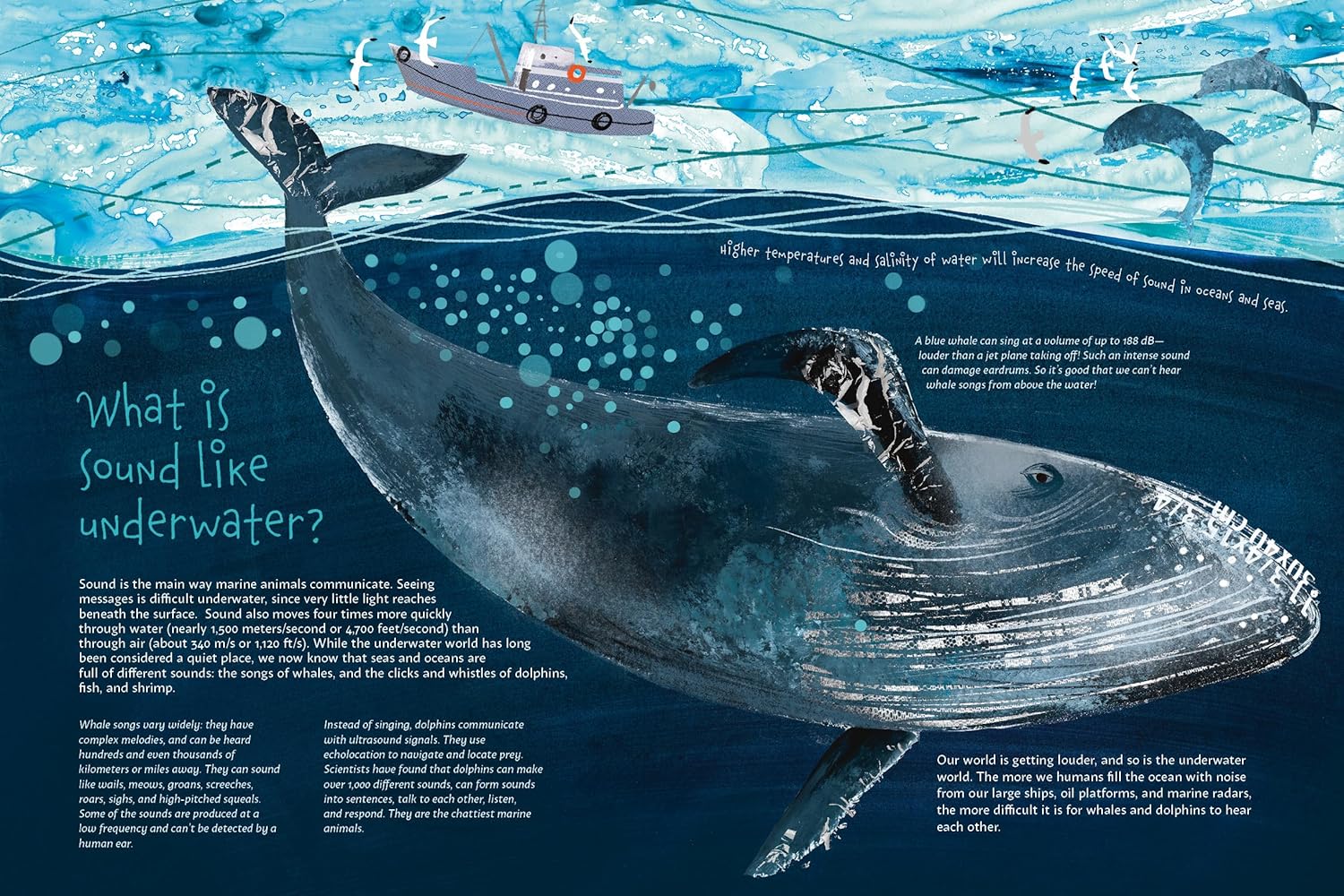
Fadeeva addresses how humans produce sounds and how we hear them, reveals what an echo and echolocation are (as well as the longest recorded echo), and swoops into the world of birds to break down the “two different types of birdsong: songs and calls.” She talks about how birds learn their particular songs and how they adapt to humans’ noise so they can be heard. Fadeeva then wings her way from birds to the sounds that animals and undersea creatures make.

Next, Fadeeva touches on the 7,000 world languages as well as sign language and hearing aids before taking readers on a marvelous time-traveling odyssey. With the turn of a page, children find themselves in the prehistoric world, listening for “the hack of a stone ace, the murmur of the wind, the crackling of a fire, the distant roar of wild animals.” Fadeeva imagines how these sounds and the peoples’ natural clapping, stomping, and vocalizations became music accompanied by the first percussion instruments—”drums, mallets, and rattles made from dried gourds filled with seeds or stones”—and wind instruments—”pipes and flutes made from reeds, bones, animal horns, and seashells.”

Text and illustration © 2025 by Olga Fadeeva. Translation by Lena Traer. Courtesy of Eerdmans Books for Young Readers.

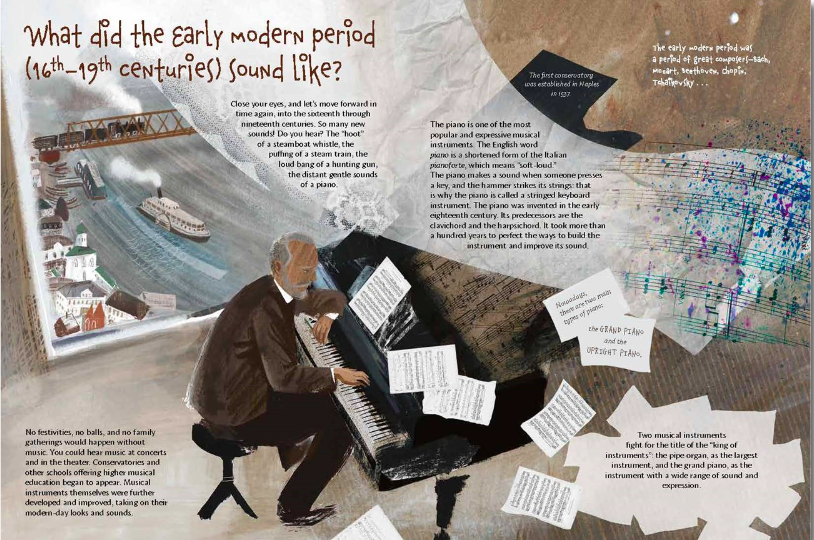
From prehistoric times, readers move on to the Ancient World with its innovation and astounding amphitheaters and actors’ face masks, both created to amplify sound from dramatic performances in an age well before microphones. Kids also drop into the Middle Ages; the early Modern Period of the 16th to 19th centuries, during which the “‘hoot’ of a steamboat whistle, the puffing of a steam train . . . [and] the sounds of a piano” first filled the air; and today’s Modern Age, where so many disparate sounds meet our ears while the music scene has exploded with innovation and experimentation.

Text and illustration © 2025 by Olga Fadeeva. Translation by Lena Traer. Courtesy of Eerdmans Books for Young Readers.

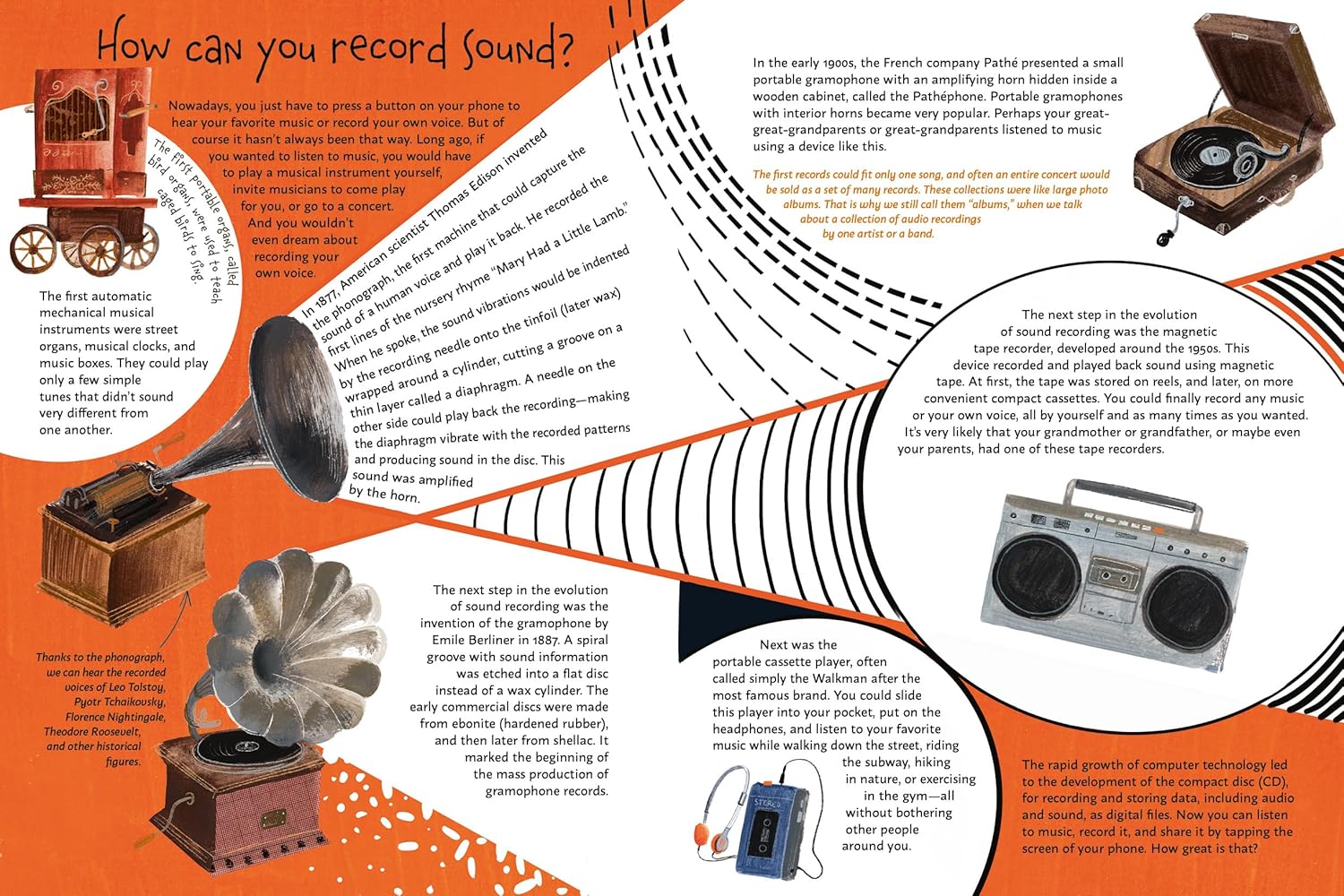
Fadeeva’s coda to her absorbing work includes information on musical notation, orchestras, and various recording devices. Young readers will also be entranced by the different ways people interpret animal sounds around the world and how music can affect how we feel. Even the endpapers offer trivia and experiments to try. Sprinkled throughout the pages are fun “Try It!” activities that engage readers in experimentation.

Fadeeva’s text is dynamically accompanied by her enthralling acrylic-and-water illustrations that bring sound, history, the animal kingdom, cities, and the world of music vibrantly alive for young readers.

Lena Traer’s smooth and captivating translation of the text from Russian creates an engrossing and rewarding reading experience. She has also translated Olga Fadeeva’s Water: Discovering the Precious Resource All Around Us (2024) and Wind: Discovering Air in Motion (2023).

Text and illustration © 2025 by Olga Fadeeva. Translation by Lena Traer. Courtesy of Eerdmans Books for Young Readers.

Part of the Spectacular STEAM for Curious Readers series, Olga Fadeeva’s scintillating Sound: Discovering the Vibrations We Hear synthesizes all types of aural experiences and devices, inviting young readers to engage their sense of hearing and imagination as she introduces them to the mechanics, history, and impact of sound. The book is a must addition to any library collection as well as for media specialists and teachers looking for an exciting cross-curricular way to engage their students, music educators, and children who respond to sound or have music flowing through their veins.

Ages 8 – 14

Eerdmans Books for Young Readers, 2025 | ISBN 978-0802856487

Olga Fadeeva is the author and illustrator of Water: Discovering the Precious Resource All Around Us, Wind: Discovering Air in Motion (Eerdmans), and many other books for children. Wind earned a starred reviews from Kirkus and was named a USSBY Outstanding International Book, and Water earned starred reviews from Booklist and School Library Journal. Olga’s art has been honored in Italy, China, and her home country of Russia. Follow Olga on Instagram @olgafadeeva_illustrations.

Lena Traer is a Russian- and English-language translator with a focus on books for children and young adults. She has translated Wind: Discovering Air in Motion, Water: Discovering the Precious Resource All Around Us, and On the Edge of the World (all Eerdmans) into English and has also translated a variety of picture books and scientific materials into Russian. Born and raised in Siberia, Russia, Lena now lives in San Francisco.

International Sound Check Day Activity

CPB - Music in Schools Day game

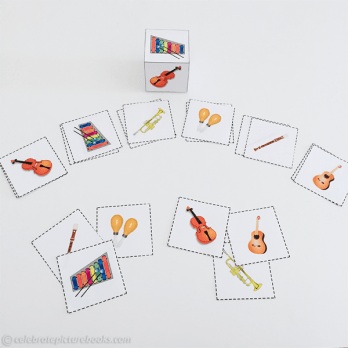
It’s Instrumental! Game


Roll the dice in this fun game to gather all the instruments you need to create a music group. The first person to collect all 6 instrument cards is the winner!

Supplies

Directions

  1. Print the Paper Cube Template, cut it out and assemble the cube die.
  2. Print the Musical Instruments cards, cut out cards, and separate the instruments into piles
  3. Players take turns rolling the die cube to collect musical instrument cards
  4. The first player to collect all 6 instrument cards is the winner

You can purchase Sound: Discovering the Vibrations We Hear from these booksellers

Amazon | Barnes & Noble | Bookshop

Picture Book Review

July 9 – National Fashion Day

About the Holiday

First celebrated in 2016, Fashion Day is a day to celebrate your own style, whether that’s following the latest trend or creating a look that’s as unique as you are. Since its very beginning, fashion has made a statement about the person, the times, what society values, even the weather. Of course before the invention of the sewing machine, pants, shirts, dresses, coats, and even socks and shoes were made entirely by hand. And many of these garments were festooned with elaborate decoration that boggles the mind. With the invention of the sewing machine in 1790, garments could be produced faster, and the rise of factory-made clothing made mass-market style fashionable. To learn more about Fashion Day and find lots of ideas on how to celebrate, visit Days of the Year.

Thank you to Phaidon Kids for sending me a copy of this book for review!

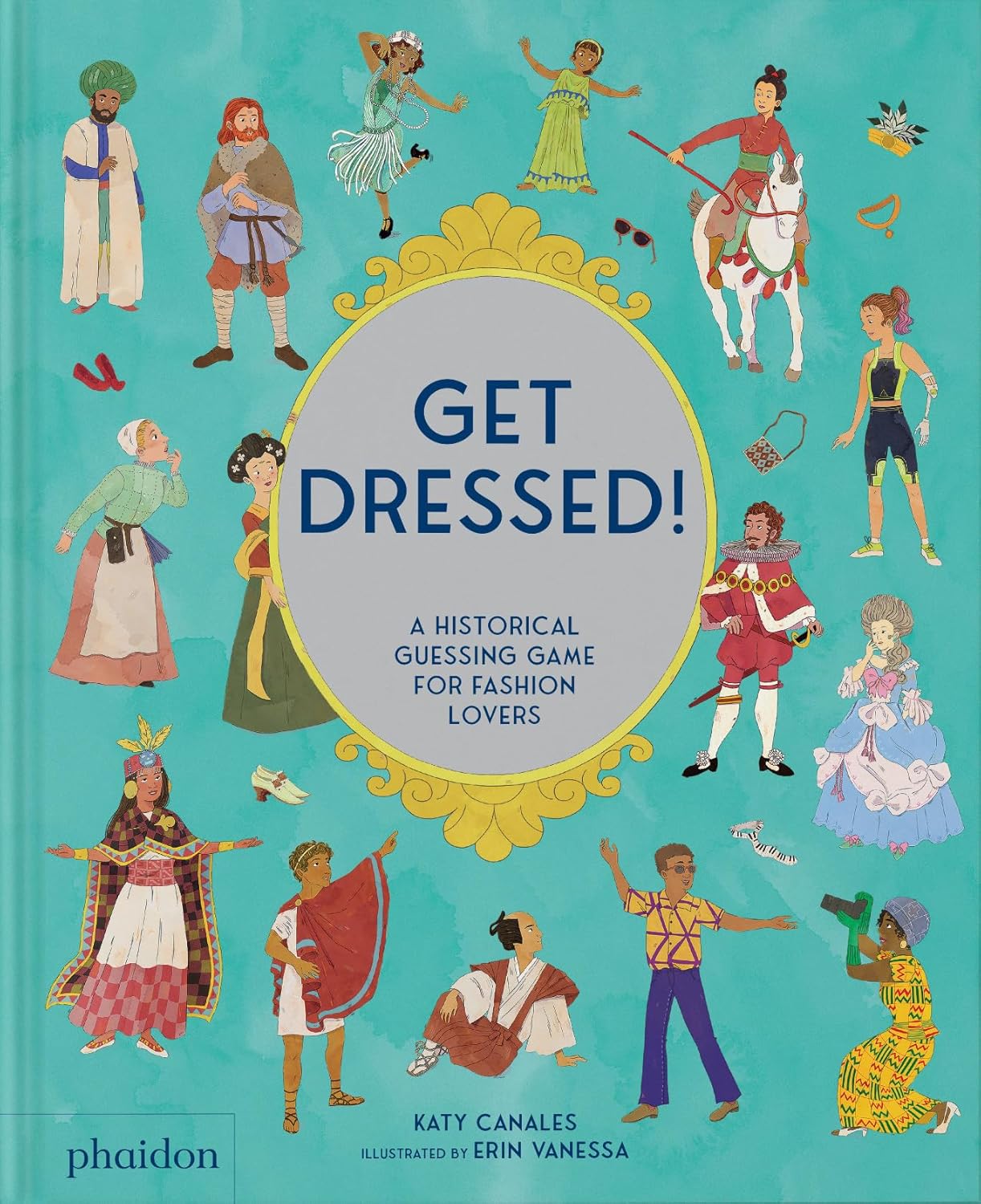
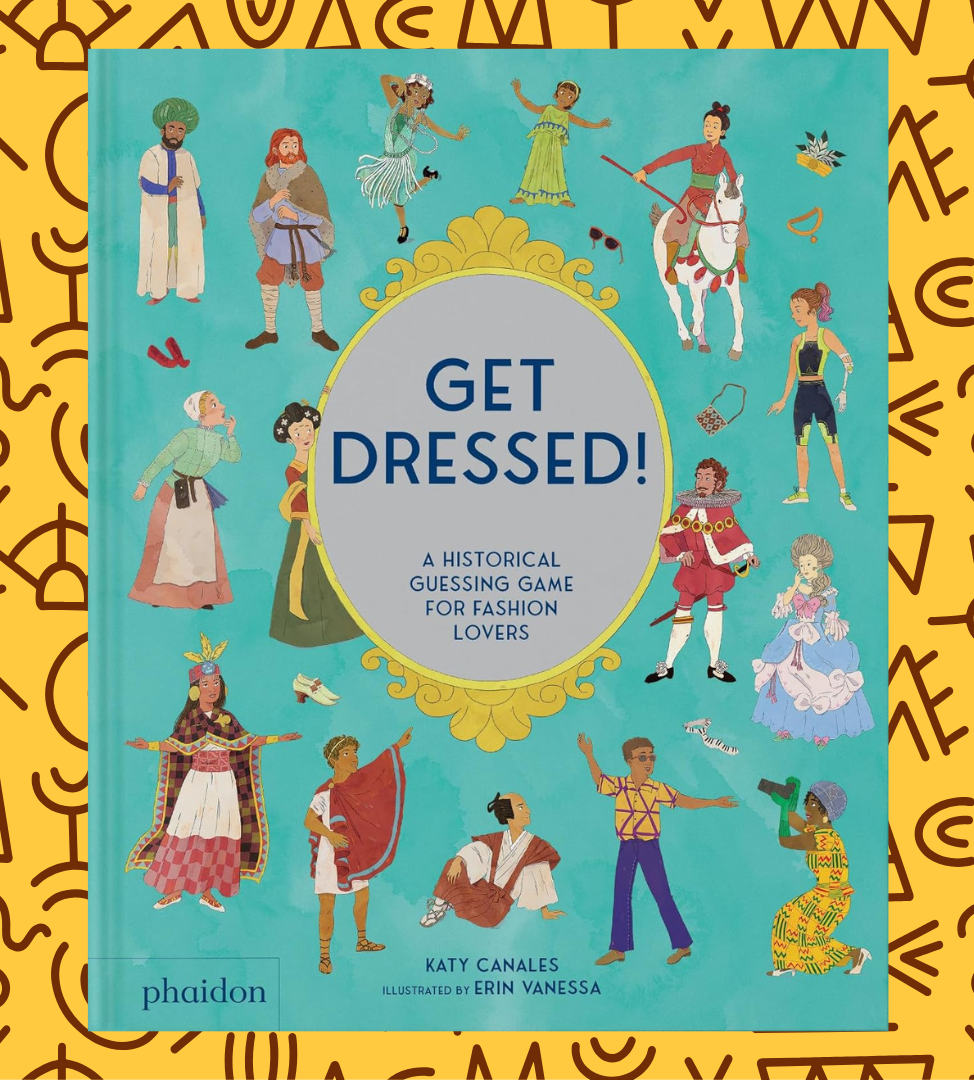
Get Dressed! A Historical Guessing Game for Fashion Lovers

Written by Katy Canales | Illustrated by Erin Vanessa


Throughout history people have worked, played, ruled and been ruled over, invented, engaged in the arts, made scientific discoveries—and dressed themselves. Through Get Dressed! today’s fashion-savvy kids can time travel to 10 influential eras and cultures throughout history—spanning from Ancient Greece to the Tang Dynasty, the Ottoman Empire, and Inca State to the Elizabethan and Edo eras to the French Revolution, the Roaring Twenties, and Independent Ghana—to learn fascinating facts about what people were wearing (or not wearing!) while they went about their days fulfilling their particular roles in society. 

Illustration © 2025 by Erin Vanessa, text © 2025 by Katy Canales. Courtesy of Phaidon Press.

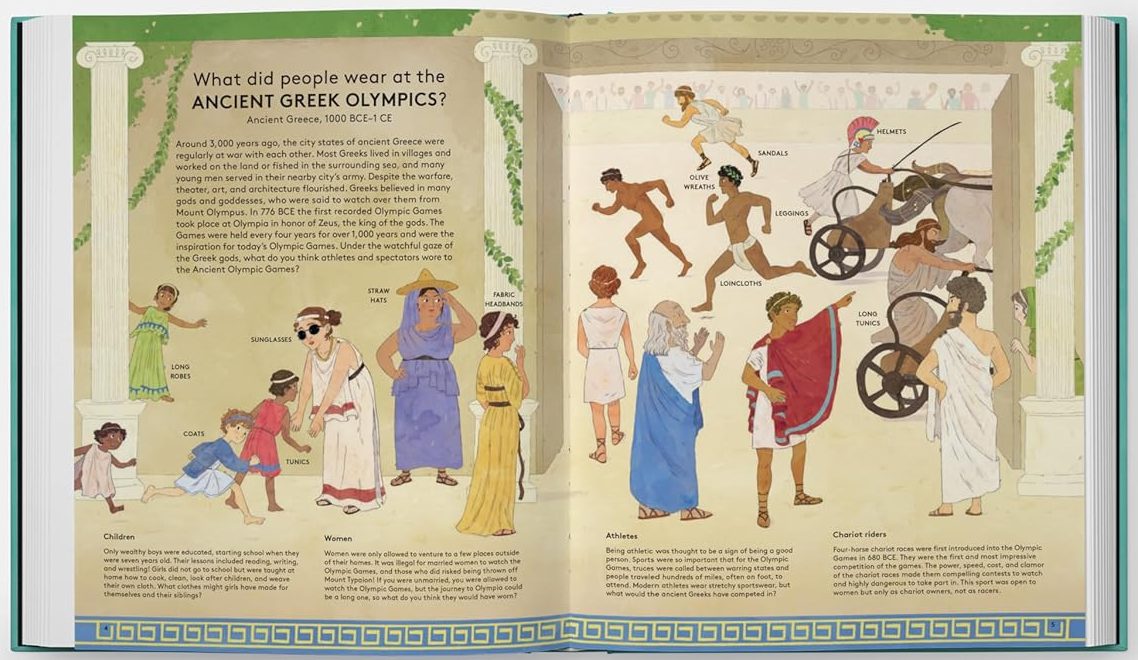
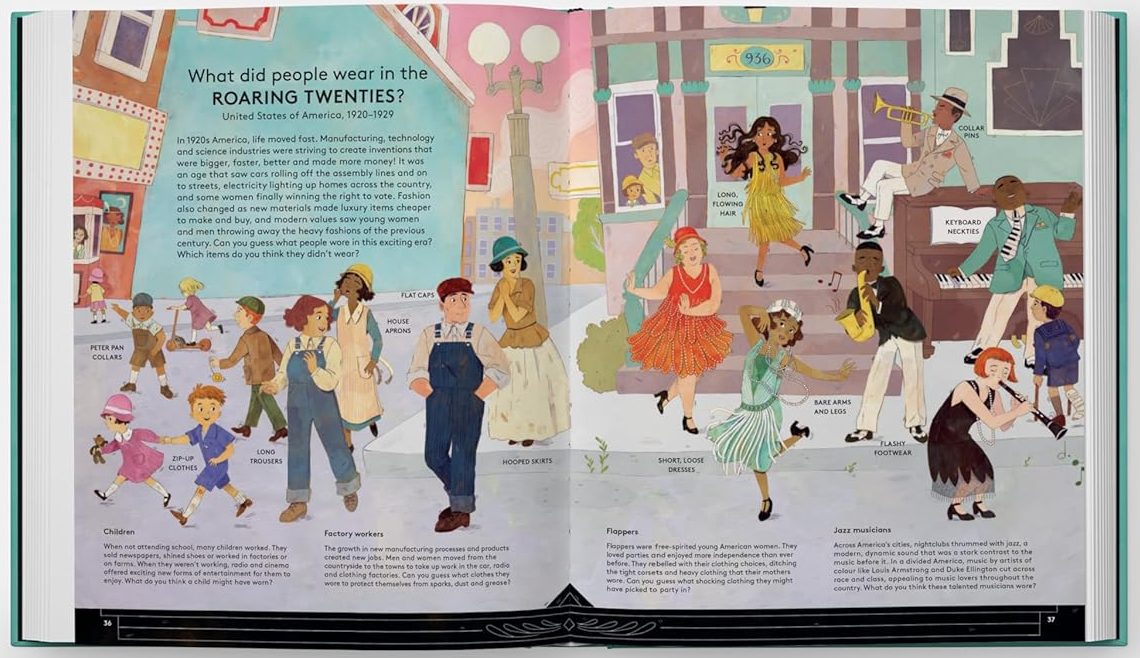
Dropping into each era, kids are oriented to the culture with a brief introduction that highlights it’s geographical reach, as well as its contributions to textiles, science, the arts, entertainment, and political thought. In addition, compelling paragraphs spotlight four important societal groups. As readers absorb this eye-opening information, they’re also set in the middle of a panoramic scene filled with action and appropriately dressed citizens.

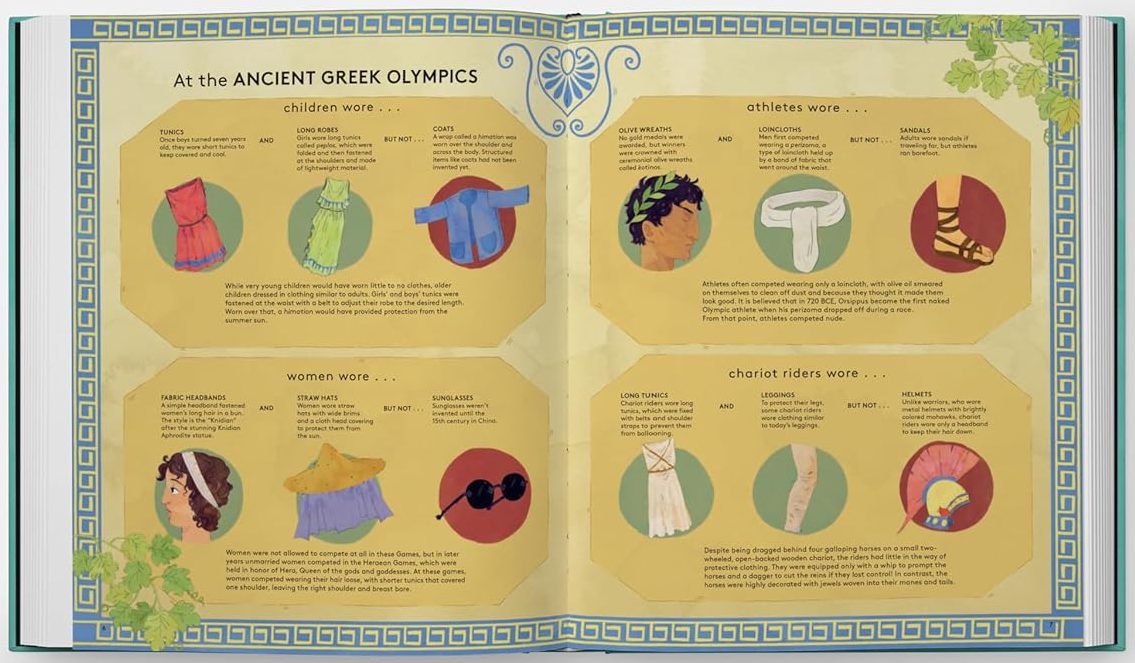
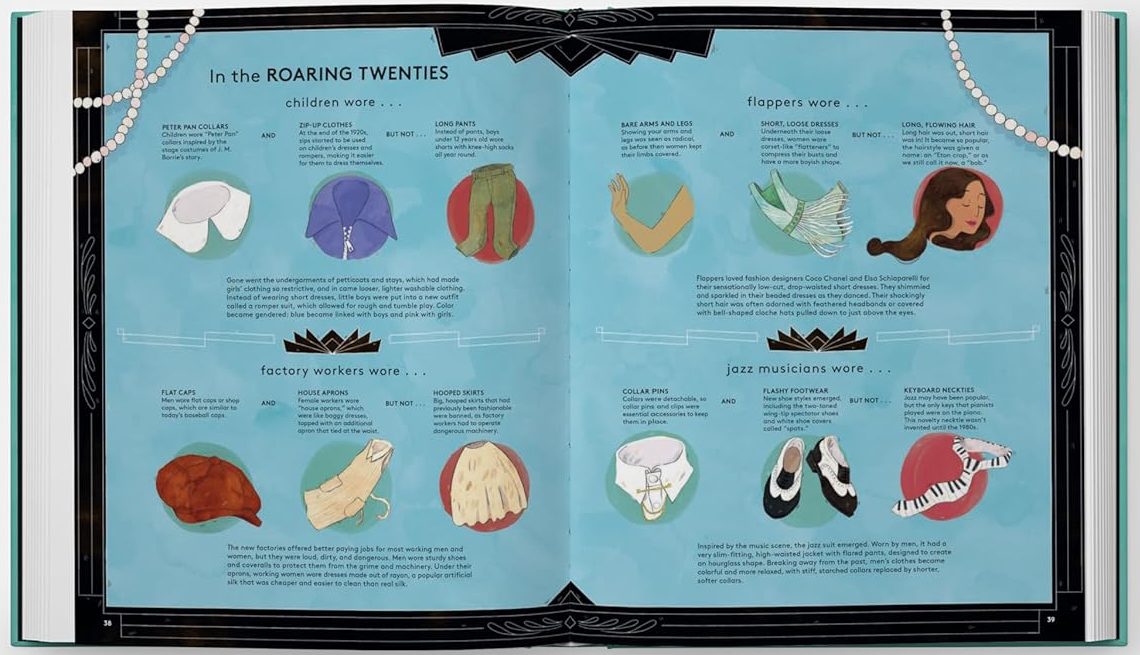
But wait! Are all three people in each societal group of four really wearing a garment or accessory from the time period? Look closely! One out of each group is actually sporting an anachronistic item. It’s up to readers to determine which one it is. Ready to test your guess? Just turn the page to find out if you’re right—and to discover the intriguing reasons why people wore “this” and “this” but not “that.”

Illustration © 2025 by Erin Vanessa, text © 2025 by Katy Canales. Courtesy of Phaidon Press.

For example, zipping all the way back to 776 BCE Greece, readers find themselves dropped into the first Olympic Games, where they meet a group of children, three women, three athletes, and three chariot riders. Chariot races, kids learn, were “highly dangerous to take part in” due to the “power, speed, cost, and clamor” of the competition. The riders are presented wearing long tunics, leggings, and helmets. Which of these is wrong? Turns out, “despite being dragged behind four galloping horses on a small two-wheeled, open-backed wooden chariot,” riders only wore “a headband to keep their hair down.”

Illustration © 2025 by Erin Vanessa, text © 2025 by Katy Canales. Courtesy of Phaidon Press.

After visiting the past, kids may be hankering to take a peek at their fashion future. They can whisk off to see that too with a section dedicated to addressing contemporary issues such as sustainability to combat the problem of clothing pollution, technological advancements, and how designers adapt to changing needs and styles. A final spread gives readers a quick tour of ten museums with fashion exhibits, and a fun prompt to get kids thinking about what clothing item of theirs they would donate to a museum.

Illustration © 2025 by Erin Vanessa, text © 2025 by Katy Canales. Courtesy of Phaidon Press.

Through her dynamic writing, Katy Canales weaves engrossing facts about historical events, gender-specific roles and dress, cultural touchstones, and the fun of a fashion guessing game into a unique tapestry sure to captivate children and adults as well. Each section can be read in its entirety or easily divided into parts that allow readers to enjoy the text at their own pace. Canales’ accessible storytelling provides a perfect portal into expanded lessons and activities on world history and culture, inventions, and art for teachers and homeschool educators. 

Erin Vanessa’s vibrant and beguiling illustrations transport children to the cities and villages where commoners and the elite mingle clad in the attire of the day. They meet peat cutters and poets, sultans and embroiderers, herders and farriers, and even Queen Elizabeth. They attend a Kabuki theater performance, join revolutionaries as they protest beneath Marie Antoinette’s balcony, and get in the swing as jazz musicians and flappers bring the spirit of the 1920s to a city street.

Get Dressed! A Historical Guessing Game for Fashion Lovers provides a perfect portal into expanded lessons and activities on world history and culture, inventions, and art for teachers and homeschool educators. The book would be an exciting addition to any library collection and a much-appreciated gift for fashion and history buffs.

Ages 5 – 8+

Phaidon Press, 2025 | ISBN 978-1838669966

About the Author

Debut children’s author Katy Canales is the Beatrix Potter Curator. Katy joined the National Trust after a decade at Young V&A and the V&A Museum. As curator, she produced family-focused exhibitions, displays and public events. Katy was the V&A Museum’s children’s clothing collection specialist.

About the Illustrator

Erin Vanessa’s artwork is a blend of traditional and digital methods. Erin lives and works in Canada. She is the author/illustrator of two picture books: You Do You-nicorn and Swept Away at Witch Camp. Visit her at erinvanessa.com.

National Fashion Day Activity

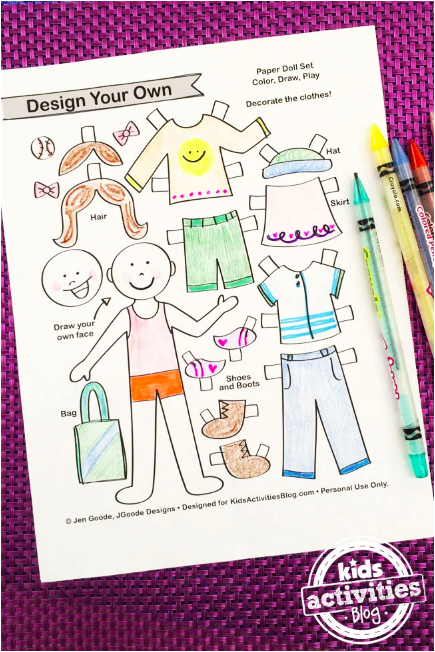
Paper dolls by Jen Goode from Kids Activities Blog.

Printable Paper Doll Kit


With these free printable Paper Doll Kits by Jen Goode found on Holly Homer’s Kids Activities Blog at kidsactivites.com, fashion lovers can decorate the clothing templates provided. They can then have fun designing their own fashion line with styles, costumes, accessories, and more! Use crayons, markers, or even cut out clothing and accessories from wrapping paper, scrapbooking paper, fabric, and other materials. Get creative!

Summer Paper Doll Set | Winter Paper Doll Set (scroll down for more paper doll and paper craft fun!)

You can purchase Get Dressed! A Historical Guessing Game for Fashion Lovers from these booksellers

Amazon | Barnes & Noble | Bookshop

Picture Book Review

May 10 – National Train Day

About the Holiday

You just have to love the train. With its storied past and iconic whistle, train travel is imprinted in our minds as a fun, efficient way to get from here to there and back again. Today’s holiday was established in 2008 to commemorate all the mystery and romance of train travel while also remembering the history of the railroad, especially the the May, 1869 completion of the transcontinental railroad, and its importance to the development of the United States. Suddenly, distances didn’t seem as far, and those seeking a new life out West or wanting to visit family back East had a safe, quick way of spanning the miles.

Thank you to Marsha Diane Arnold and Sleeping Bear Press for sharing a digital copy of today’s book with me!

Big Boy 4014 and the Steam Team: The World’s Largest Steam Engine Roars Back to Life!

Written by Marsha Diane Arnold | Illustrated by Adam Gustavson


In 2013, Big Boy 4014, the largest steam train in the world, sat stranded in an outdoor museum in Pomona, California, her work carrying heavy freight across the Wasatch Mountains and her indispensable role in transporting American soldiers and military equipment across the western prairies only a memory (Arnold makes note that trains were referred to as “she” by engineers and crew). She had thrilled museum visitors for more than fifty years, but “cold ashes lay in her firebox / Cobwebs wove through her wheels. / Rust crept into her cab.”

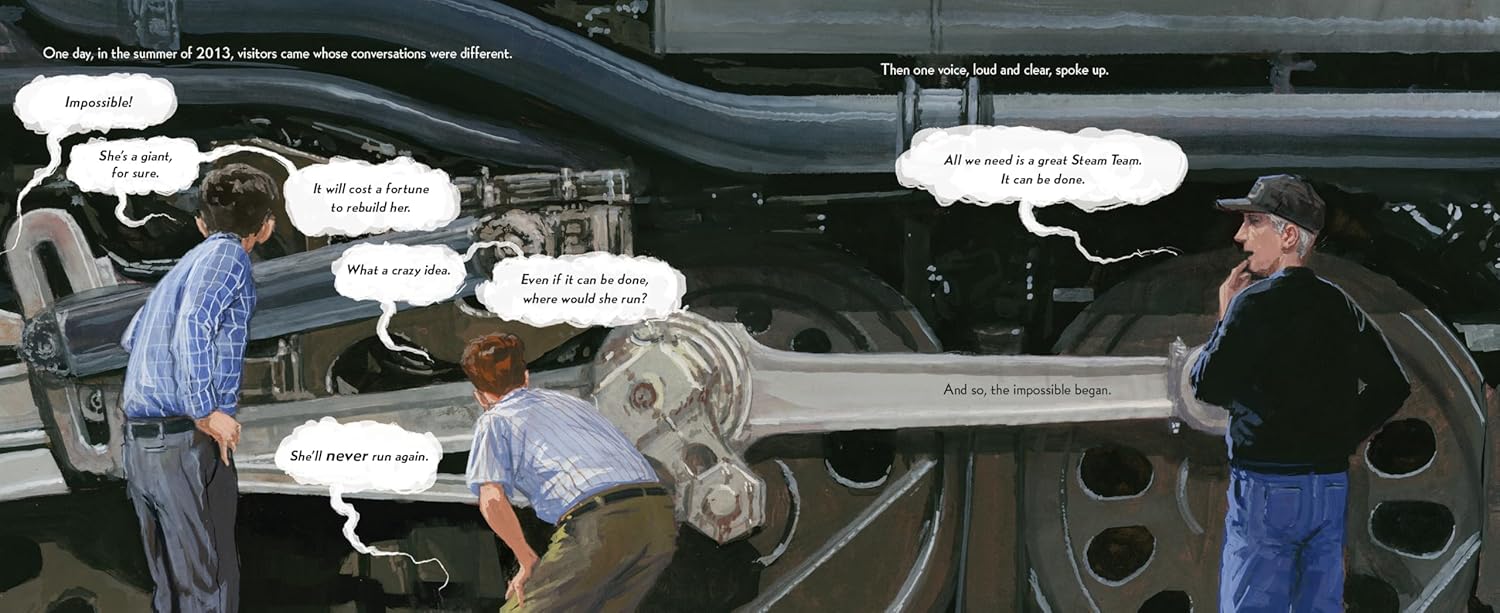
Then one day men came to visit her. As they inspected her, most decided that restoring her would be too expensive, too crazy, impossible. But one voice disagreed, saying “All we need is a great steam team. It can be done.” Nine men signed onto the Steam Team, with the aim to restore Big Boy for the Golden Spike Celebration in 2019 that would commemorate the finishing of the transcontinental railroad—the first railroad to stretch all across the America from East to West.

illustration © 2025 by Adam Gustavson, text © 2025 by Marsha Diane Arnold. Courtesy of Sleeping Bear Books.

To move Big Boy from the museum to the tracks a mile away, temporary tracks were laid and a bulldozer slowly pulled her along inch by inch. She was then pulled and pushed 1,300 miles to Wyoming, where the work on her would be done. There, Big Boy underwent intensive scrutiny, getting new parts, being made to look like new. Years went by, the Golden Spike Celebration was months away, then days away. It was “time to test her out.” 

“Double-headed with the ‘Living Legend,’ locomotive 884,” Big Boy, pulling train cars behind her, chugged “to Ogden, Utah, for the celebration.” All along the route, people came out to watch, “to feel the rumble under their feet as Big Boy passed, to see the steam cloud billowing above her, to hear her whistle, loud and clear.” At the ceremony, Big Boy 4014 and Locomotive 884 faced each other, just as two steam engines had 150 years before, when a set of tracks moving east-to-west and another running west-to-east were united with a golden spike.

illustration © 2025 by Adam Gustavson, text © 2025 by Marsha Diane Arnold. Courtesy of Sleeping Bear Books.

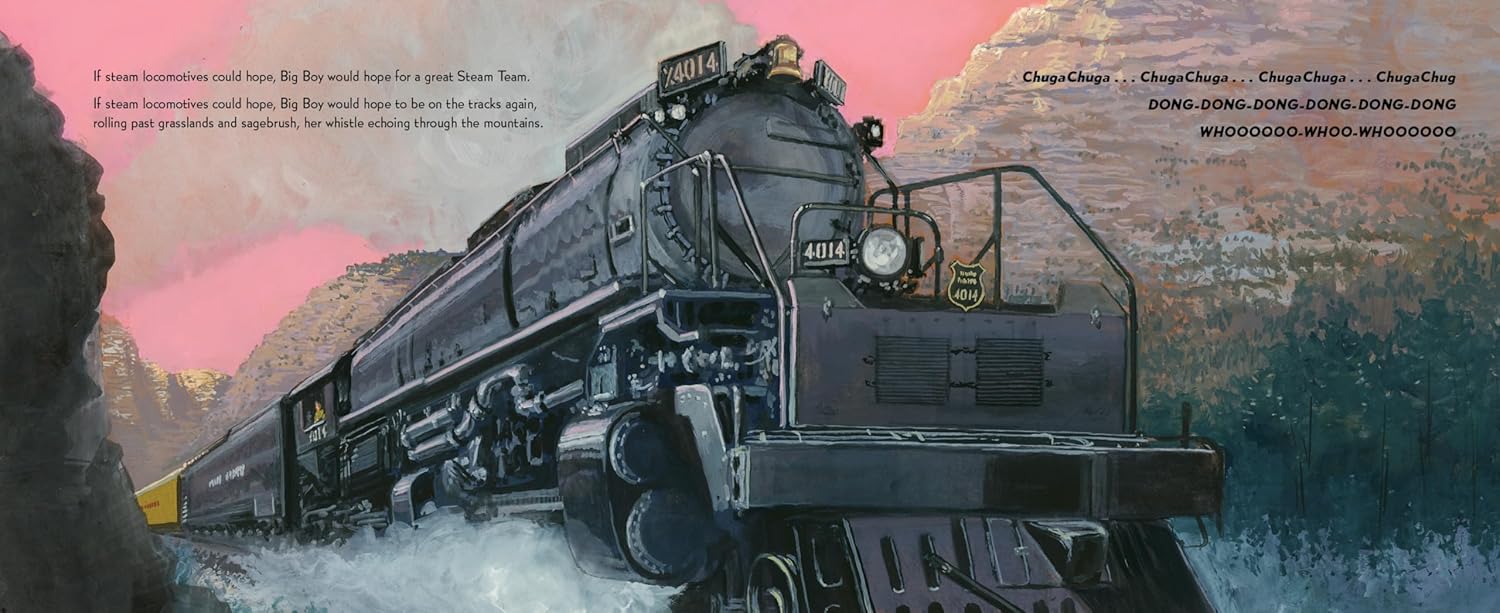
Following the Golden Spike Celebration, Big Boy 4014 took another trip, a tour of more than 8,000 miles “past grasslands and sagebrush. / Past farmlands and rivers. / Past fields and cities and towns.” Whether it was raining or snowing or blisteringly hot, people came out to cheer Big Boy on and feel that awesome rumble as she passed by. No longer is her time only a memory from long ago. With more tours planned, “if steam locomotives could talk, Big Boy would say . . . “I’m ringing my bell and sounding my whistle.” DONG-DONG-DONG-DONG-DONG-DONG WHOOOOOO-WHOO-WHOOOOOO / “I’m chugging up the Wasatch Mountains at top speed, feeling the warmth of the oil in my firebox, as powerful as 7,000 horses.”

An in-depth discussion about the origins of the twenty-five Big Boy steam locomotives; the incredible engineering feat of designing and building them; how a steam engine works, How Big Boy 4014 was chosen for restoration; short profiles of the men instrumental in Big Boy’s restoration; a brief history of the building of the transcontinental railroad; and the research involved in making tours of Big Boy 4014 possible.

illustration © 2025 by Adam Gustavson, text © 2025 by Marsha Diane Arnold. Courtesy of Sleeping Bear Books.

Combining imaginative lyrical text with compelling nonfiction storytelling, Marsha Diane Arnold weaves an immersive tale of the restoration and triumphant comeback of the steam locomotive Big Boy 4014. Where once 25 of these behemoth machines conquered mountains and rough terrain to move freight and people across the country and contributed to our success in World War II, they have been relegated to history as diesel and electric trains took prominence.

Arnold recalls the importance of these storied locomotives for young readers and train enthusiasts of all ages, bookending her story with wistful “If steam locomotives could dream/talk” re-imaginings of Big Boy 4014’s glory days of leaving a station, sounding her bell and whistle, and “chugging up mountains” with the “power of 7,000 horses.” Readers will be wowed by the dedicated and painstaking work that went into moving and restoring Big Boy 4014, a recounting Arnold accomplishes with a deft hand for details that don’t overwhelm. She leaves readers with a new appreciation for steam locomotives and a hope that they too will be able to witness a tour of this earth-rumbling beauty.

Adam Gustavson’s stunning realistic paintings depict Big Boy 4014 from various perspectives, giving readers a sense of her scale compared to the adults and children, the mountainous landscapes she traversed, and the crowds who came out to celebrate her. Up-close renderings allow train lovers to get a glimpse into the steam-powered mechanics that propelled her while also seeing how run-down she had become over her nearly 60 years of disuse. Each page spread is a showstopper to linger and marvel over as readers gain insight and admiration for these trains and those who created them.

For train enthusiasts, history buffs, and those who simply love a story masterfully told, Big Boy 4014 and the Steam Team: the World’s Largest Steam Engine Roars Back to Life! is a book you won’t want to miss. The book is an exciting must-addition for all school and public library collections.

Ages 6 – 9+

Sleeping Bear Press, 2025 | ISBN 978-1534113145

About the Author

Marsha Diane Arnold is a multiple-award–winning author whose books have sold over one million copies. Called a “born storyteller” by the media, Marsha’s works include Badger’s Perfect Garden (Florida Book Awards Bronze Medal), the bilingual Galápagos Girl/Galapagueña (Bank Street Best Book and Campoy-Ada honor book), and Lights Out (Golden Kite finalist). Among her many pastimes, Marsha especially enjoys reading to her grandchildren and visiting schools to talk about writing and books. Born in rural Kansas, Marsha now lives with her husband and dog Sailor in Alva, Florida. Visit her at marshadianearnold.com.

About the Illustrator

Adam Gustavson’s illustrations have appeared in over thirty books for children. He is a teaching professor of art at Rowan University, and lives in a quirky little house in New Jersey with his lovely wife, their two sons, and two rather small dogs.

National Train Day Activity

Steam Engine Coloring Page


Steam locomotives once carried passengers and freight. Enjoy this coloring page of a steam train from days gone by from Monday Mandala!

You can purchase Big Boy 4014 and the Steam Team: the World’s Largest Steam Engine Roars Back to Life! from these booksellers

Amazon | Barnes & Noble | Bookshop

Picture Book Review

January 20 – Martin Luther King, Jr. Day and Interview with Dean Robbins

celebrate-picture-books-picture-book-review-you-are-a-star-martin-luther-king-jr-cover

About the Holiday

Martin Luther King Jr. Day celebrates the life and legacy of the man who dedicated his life and work to teaching—as Coretta Scott King once stated—“the values of courage, truth, justice, compassion, dignity, humility and service” and who led a non-violent Civil Rights movement to enact racial equality and justice through state and federal laws. President Ronald Reagan created the national holiday in 1983, setting it on the third Monday of January to coincide with Martin Luther King Jr.’s birthday on January 15. To commemorate the holiday, learn more about the life and work of Martin Luther King Jr. We still have a long way to go before there is true justice and equality for all, and it’s more important now than ever to look for ways to offer help and hope.

Thank you to Scholastic Press for sharing a copy of You Are a Star, Martin Luther King, Jr. with me. All opinions on the book are my own.

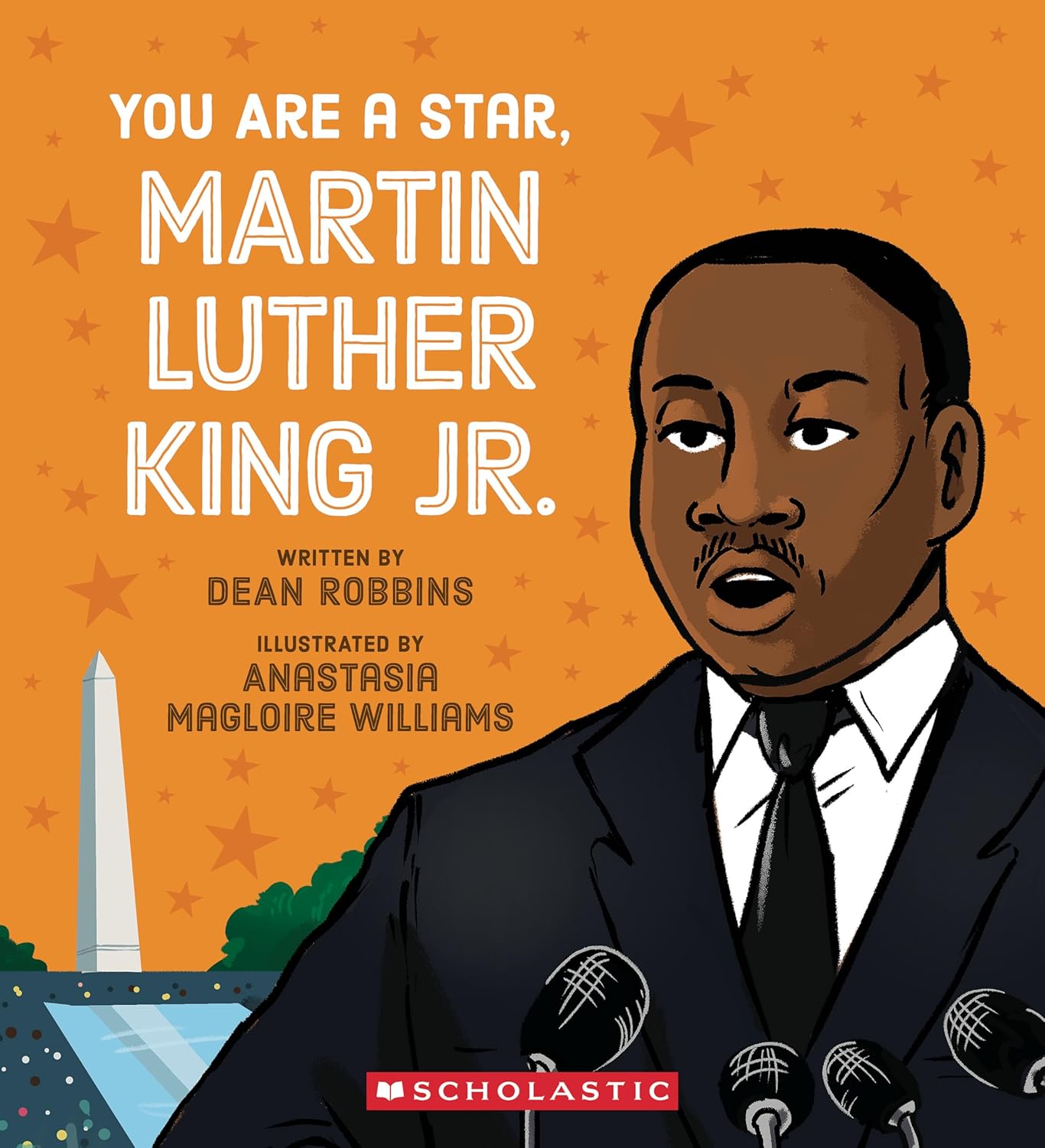
You Are a Star, Martin Luther King, Jr.

Written by Dean Robbins | Illustrated by Anastasia Magloire Williams

Opening the cover to this visually engaging biography, readers are first introduced to Martin Luther King, Jr. as he stands at a podium on August 28, 1963 ready to address the throngs of people who had joined the March on Washington and now filled the National Mall. He wonders if he’s prepared the right words to offer hope for a better future. His thoughts take him back to when he first experienced discrimination, and readers follow along, learning about segregation in schools, restaurants, recreation areas, even at drinking fountains.

Kids learn that even when Martin Luther King, Jr. was their age he was already thinking that “someone had to change these unfair rules” and deciding “Why not me?” Through the book’s first-person narration, children gain a close portrait of Martin Luther King, Jr. as a committed intellectual, believer in the foundations of America, and outspoken advocate for equal rights. They learn of his life as a minister, his work with Rosa Parks and others to end discrimination on public busses, and his adoption of nonviolent protests to affect change. 
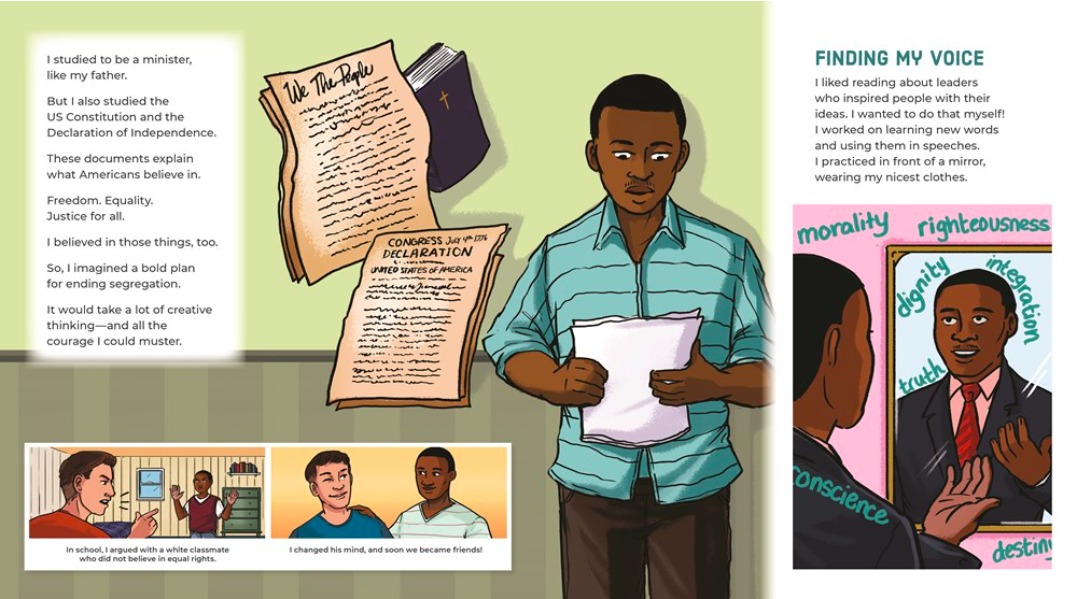
celebrate-picture-books-picture-book-review-you-are-a-star-martin-luther-king-jr-finds-voice

Image copyright Anastasia Magloire Williams, 2025, text copyright Dean Robbins, 2025. courtesy of Scholastic Press.

Readers come to understand how success in Montgomery spurred Martin Luther King, Jr. and others to work toward ending segregation in other places—like stores and restaurants—and even to “challenge American leaders to make a national law against segregation.” They learn how Martin Luther King, Jr. ended up in jail in Birmingham, Alabama, after a peaceful protest and wrote a letter to the world about oppression. Kids also hear about the Children’s March, which took place at the same time and during which more than 2,000 children were also arrested. 

Returning to the March on Washington, Dr. King decides to abandon his written speech and talk from his heart. The result is his now-famous “I have a dream” speech. Following this gathering of 250,000 people and more calls for a national law against segregation from around the country, Dr. King reveals that “In 1964, Congress passed the Civil Rights act.” But even then Dr. King says, “I knew we had more work to do. Many places still had rules to keep Black people from voting.” 
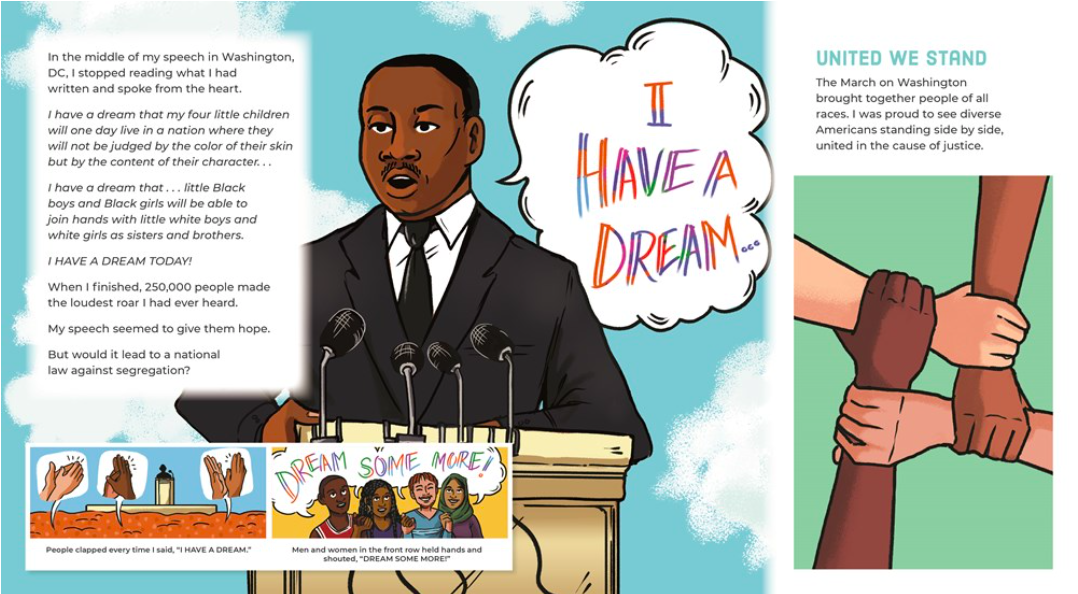
celebrate-picture-books-picture-book-review-you-are-a-star-martin-luther-king-jr-I-have-a-dream-speech

Image copyright Anastasia Magloire Williams, 2025, text copyright Dean Robbins, 2025. courtesy of Scholastic Press.

Another peaceful march was planned for Selma, Alabama, with a 50-mile march to Montgomery. This time, however, Alabama’s governor send troops to attack the marchers. The participants were not intimidated, though, and even invited more Americans to join them. Thousands answered the call. “Maids, students, and movie stars. Parents pushing baby carriages. People on canes and crutches.” Five days later, they reached Montgomery. “The Selma protest was our movement’s greatest victory,” Dr. King tells readers. “It led to a national voting rights law!”

Martin Luther King, Jr. reminds readers, though, that there’s still more to do to “see the good in one another,” “live with each other in peace,” “join together and change the world with love,” and “make my dream come true.”

Beneath the narration of Dr. King’s story, a comic-style panel highlights a single talking point, event, or fact—such as during the Montgomery bus boycott, one man “rode to work on a mule”—often with a light-hearted approach. On the righthand page, Robbins defines concepts such as nonviolent protests, boycotts, freedom of speech, protest songs, the Children’s March, polling place intimidation, and the Voting Rights Act of 1965 in easily understood language. 

Extensive back matter includes an Author’s Note, how children can “Be Like Martin,” notable quotations by Martin Luther King, Jr., four types of Nonviolent civil rights protests, a brief timeline of Dr. King’s life from his birth on January 15, 1929 to 2011, when the Martin Luther King, Jr. Memorial was dedicated in Washington, DC. Also included are a glossary of important terms and a list of resources.
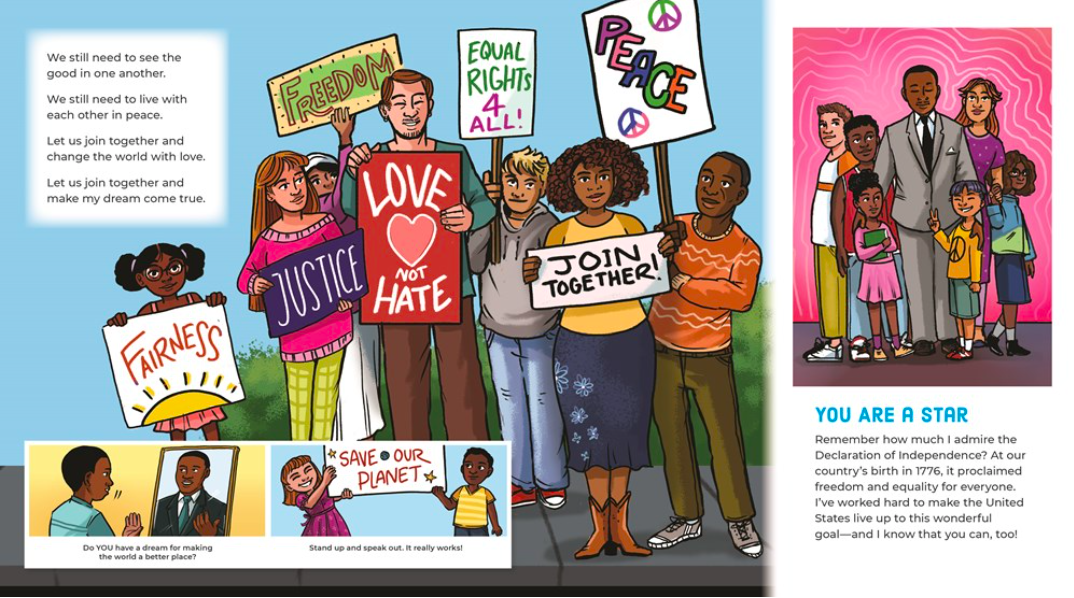
celebrate-picture-books-picture-book-review-you-are-a-star-martin-luther-king-jr-more-to-do

Image copyright Anastasia Magloire Williams, 2025, text copyright Dean Robbins, 2025. courtesy of Scholastic Press.

Dean Robbins’ immediately welcoming and dynamic first-person narration style not only draws young readers into Martin Luther King’s life and the history of the Civil Rights Movement, but makes children feel that they have a personal connection with Dr. King’s legacy. Robbin’s clear, factual writing, is presented in short, separated sentences. These make it easy for children to digest and understand King’s nonviolent approach to protest as well as the social and legal issues of the time and how, unfortunately, vigilance is still needed today. Robbins ends on a note of hope and an invitation to readers to join others and use their talents to help make Martin Luther King, Jr.’s dream come true.

Accompanying Robbins’ text are Anastasia Magloire Williams’ compelling illustrations that are at once realistic and accessible for today’s visual learners. Her stirring depiction of Martin Luther King, Jr. speaking at the 1963 March on Washington sets the tone for children to discover the impact King has had on people’s hearts, minds, and actions for more than 60 years. Through Williams’ expressive portraits, children see Martin Luther King, Jr.’s commitment to studying, practice, and rallying support as well as the effects of segregation, the determination of protestors during the Montgomery, Alabama, bus boycott, and how people from all parts of society working together created—and can still bring about—much-needed change.

With its graphic-style illustrations and well-researched content, You Are a Star, Martin Luther King, Jr. is vibrant and captivating. The book offers exhilarating learning opportunities for individuals, classrooms, and homeschoolers and may spark extended study or activism for a favorite cause. It is highly recommended for home bookshelves and a must for school and library collections.

Ages 5 – 7 and up

Scholastic Press, 2025 | ISBN 978-1338895100

Meet Dean Robbins

celebrate-picture-books-picture-book-review-dean-robbins

Photo credit David Giroux

Dean Robbins is a journalist and the author of the children’s picture books Two Friends: Susan B. Anthony and Frederick Douglass, Margaret and the Moon: How Margaret Hamilton Saved the First Lunar Landing, and Miss Paul and the President: The Creative Campaign for Women’s Right to Vote. His award-winning books have received starred reviews in Publishers Weekly and Kirkus Reviews and have been praised in the New York Times and USA Today. Dean grew up idolizing Apollo astronauts and loved working with Alan Bean on The Astronaut Who Painted the Moon. Learn more at deanrobbins.net.

Hi Dean! I’m thrilled to be talking with you today about your latest book, the impact heroes have always had on your life, and the importance of having heroes for children.

This biography about Martin Luther King, Jr. joins your You Are a Star series that began in 2022 with the story of Supreme Court Justice Ruth Bader Ginsburg. Other inspirational figures in the series are Jane Goodall and Malala Yousafzai. Can you discuss a little about how this series came to be and how you choose the subjects?

My passion is writing about my personal heroes, some of whom are relatively unknown and whose stories I can share with children for the first time. But then there are those like Jane Goodall, Ruth Bader Ginsburg, and Malala Yousafzai who are widely admired and frequently represented in children’s books. I developed the You Are a Star series with Scholastic to present such iconic figures in a new way for young readers, striving to combine emotional storytelling and humor. Each title tells an exciting life story from the subject’s point of view, including anecdotes and quirky details that don’t appear in other picture-book biographies. I hope this approach makes Jane, Ruth, and Malala feel like human beings that kids can relate to rather than like distant statues on Mount Rushmore.           

In You Are a Star, Martin Luther King, Jr., you so clearly present and connect the pivotal moments in King’s life as well as the Civil Rights Movement so children can understand and even feel as if they know Martin Luther King, Jr. How did you approach writing this biography? What kind of research did you do? What was the most meaningful part of the research and writing for you?

It’s a challenging subject to write about for elementary school students—that is, to write about both clearly and entertainingly. I tried to explain such important ideas as desegregation, free speech, and civil disobedience while also telling a page-turning story that, while concise, does justice to Dr. King’s life and work. I’m so glad you think I pulled it off! As a journalist, I love to do research, so the best part was immersing myself in the extensive literature on the civil rights movement to find material that might surprise and delight young readers.

As a library assistant in the children’s department of my local library, I see how excited kids are to read graphic novels. I love the way the format of the You Are a Star series bridges traditional picture books with that of the graphic style. Can you talk about the design of this striking series, and especially about Anastasia Magloire Williams’ dynamic illustrations in this book?

The format is what allows me to have so much fun with You Are a Star. It features a main story that flows throughout the book, supplemented by a two-panel comic and an essential-fact sidebar on each spread. The comics and sidebars offer the chance to introduce key concepts and funny details without bogging down the narrative.

As you noted, the format also provides a showcase for Anastasia’s brilliant illustrations. She artfully combines poignant and playful images, making Dr. King and his movement come alive on the page. She also has a genius for visualizing abstract ideas so that kids can understand them and feel their power. In one of the sidebars, for example, I introduce Dr. King’s comment that “the arc of the moral universe is long, but it bends toward justice.” How on earth do you illustrate such a thing? Anastasia’s creative solution was to show Black and white hands building a wall together, with bricks marked “Justice,” “Equality,” “Unity,” “Change,” “Love,” “Peace,” and “Freedom.” What a lovely way to help children grasp Dr. King’s humane vision.

You’ve talked about the wide range of heroes you had as a child, from sports stars to early social and political reformers. Some of these are represented in the books you’ve written, but could you name some others? What do you think it was about them and yourself that drew you to these specific people?

Ever since I read Superman and Wonder Woman comics as a child, I’ve been attracted to those who overcome seemingly insurmountable obstacles to make the world a better place. And how thrilling is it that our world has real-life analogues to Superman and Wonder Woman? I hope I live long enough to publish a children’s book about every heroic figure whose picture hangs on my office wall, ranging from Jackie Robinson to Emily Dickinson to Louis Armstrong. 

Why do you think it’s important for children to have heroes?

Someone has to demonstrate the best that human beings are capable of, right? Especially when we’re so often confronted with the worst. The more kids who grow up to be like Dr. King, the better our world will be. In the back matter of You Are a Star, Martin Luther King, Jr. is a list of tips titled “Be Like Martin,” which I hope will facilitate this process!

I’ve read that you relish traveling to historical sites. Which place is your favorite or made the biggest impact on you and why?

One of the most stirring places I’ve seen is Susan B. Anthony’s house in Rochester, New York. On my tour of this national historic landmark, the guide pointed out the parlor where Susan would have tea with her neighbor and fellow activist Frederick Douglass. It was news to me that Anthony and Douglass socialized in this way, and I was moved by the idea of two titanic reformers humbly sipping tea while sharing their hopes and dreams. The experience inspired me to write my Scholastic picture book Two Friends: Susan B. Anthony and Frederick Douglass.

Not only has your life included careers as a K–12 school teacher, a journalist, and an author, but you also present fascinating pieces about famous people—from Houdini to Theodore Roosevelt to Harrison Ford to a full stadium’s worth of musicians and sports stars—and their connection to Wisconsin on Public Radio. How did this collaboration come about? Could you take readers through a bit of your process in writing and recording the segments?

It’s yet another way to spread the word about my heroes, and I like doing so in a different medium—one with sound effects! I’ve included some of these pieces in a book of essays that will be published in April by the Wisconsin Historical Society Press. Wisconsin Idols: 100 Heroes Who Changed the State, the World, and Me offers my perspective on heroic figures with often surprising connections to Wisconsin, including Oprah Winfrey, Duke Ellington, and Georgia O’Keeffe. It makes the case for Wisconsin as a notably influential place: a crossroads for people who transformed the world.

What do you enjoy most about being a children’s author?

 When kids tell me that one of my heroes has now become one of their heroes. I can’t begin to describe how gratifying that is.

As a former teacher, you must love going to schools for presentations. From the photos on your website, it looks like you and the kids have a fantastic time! Could you describe what your presentations are like?

My own child has inspired much of my writing but is now 28 years old, so these days I visit schools to hang out with my favorite demographic. With their curiosity and enthusiasm, elementary school kids never fail to restore my hope for the world. The presentations are geared toward maximum interaction so we can get to know each other. I joke, read, ask questions, and give them lots of chances to clap and shout things out. I tell them about my favorite heroes, and they tell me about theirs.

What’s up next for you?   

Next year, Scholastic will publish a book about another one of my heroes: Albert Einstein. The Genius Next Door is based on a little-known true story that, I hope, will make Einstein seem relatable and math seem fun!

Thanks so much for sharing your insight and some background on your wonderful You Are a Star series. I wish you all the best with this book and am looking forward The Genius Next Door.

Look for the rest of the books in the You Are a Star series!

You can visit Dean Robbins on his website at deanrobbins.net | Instagram | X

Martin Luther King, Jr. Day Activity

Students and kids at home will enjoy spending time with these fun and thought-provoking printable activities about Martin Luther King, Jr. from A Day in Our Shoes.

Martin Luther King, Jr. Activity Pack
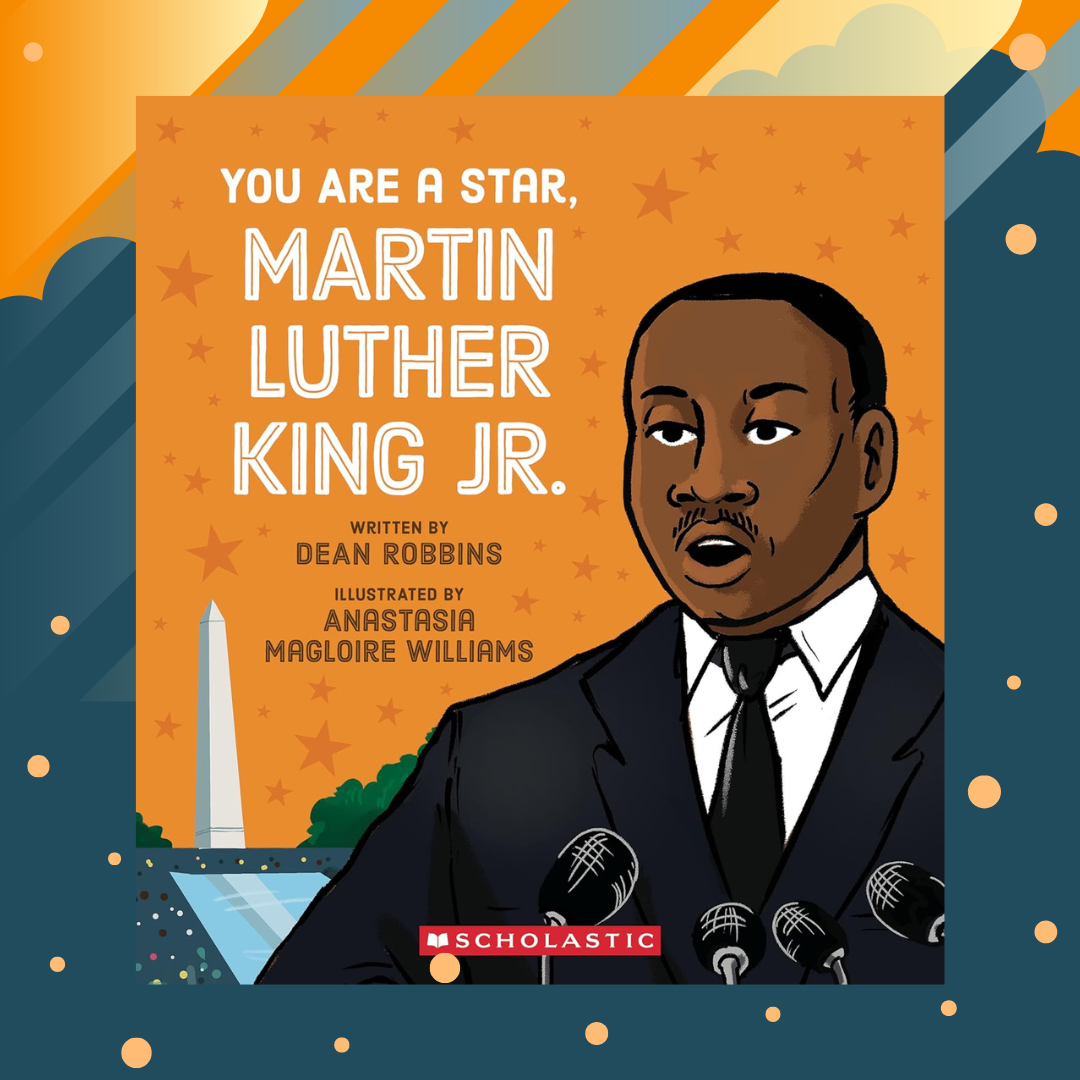
You can purchase You Are a Star, Martin Luther King, Jr. at these booksellers

Mystery to Me (Dean Robbins’ hometown independent bookstore)

Amazon | Barnes & Noble | Bookshop (to support your local independent bookstore)

Picture Book Review

December 15 – It’s Gift-Giving Season

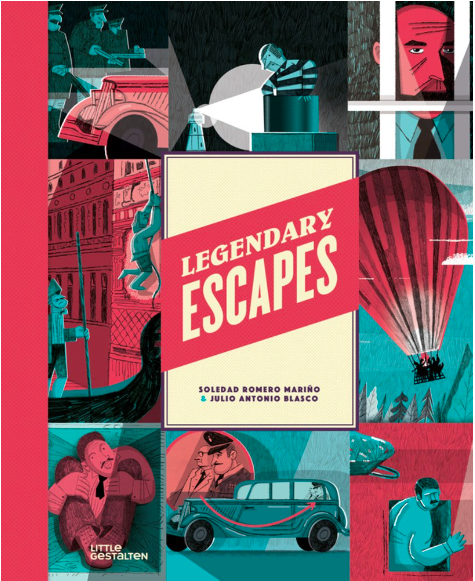
celebrate-picture-books-picture-book-review-legendary-escapes-cover

About the Holiday

If you’re looking for a gift for an older child or tween who’s curious about history, loves a good mystery, and is into puzzles, cyphers, and seemingly impossible feats, then you’ll want to put today’s book at the top of your shopping list. Books that encourage a child’s natural interests, stretches their knowledge, and sends them off to discover more about the world will always be gifts they appreciate.

I’d like to thank Little Gestalten for sending me a copy of Legendary Escapes for review consideration. All opinions on the book are my own.

Legendary Escapes

Written by Soledad Romero Mariño | Illustrated by Julio Antonio Blasco


There may be nothing as as thrilling as a daring escape from a dangerous situation or as mind-boggling as a seemingly impossible breakout from a high-security location. “How did they do that?” we ask, and usually we’re left scratching our heads as a few details trickle out and then the information dries up. But that’s not what happens when you get your hands on Legendary Escapes! Here, children (and, I dare say, a good number of adults) will learn each escapee’s backstory, discover the conditions of the prison, territory, or situation left behind, become privy to the planning stages of the escape, and then follow along, step-by-step, as the escapee fools their captors.

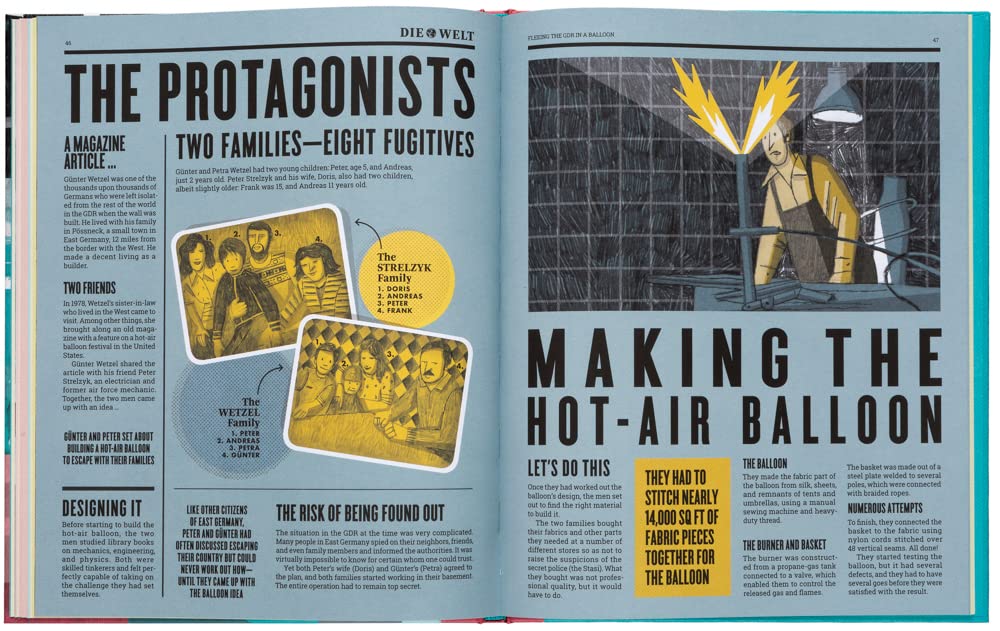
celebrate-picture-books-picture-book-review-legendary-escapes-strelzyk-family

Image copyright Julio Antonio Blasco, 2022, text copyright Soledad Romero Mariño, 2022.

In nine information-packed chapters, Soledad Romero introduces readers not only to these ingenious masterminds but to history, geography, and culture from 1750s Venice to Mexico in 2015. Her compelling narrative style draws readers in with straightforward, easily understood descriptions that allow them to immerse themselves in every aspect of the case at hand. Fascinating tidbits sprinkled throughout each chapter will amaze and may spark further research, while the titles of movies made about some of these events will have families grabbing the remote.

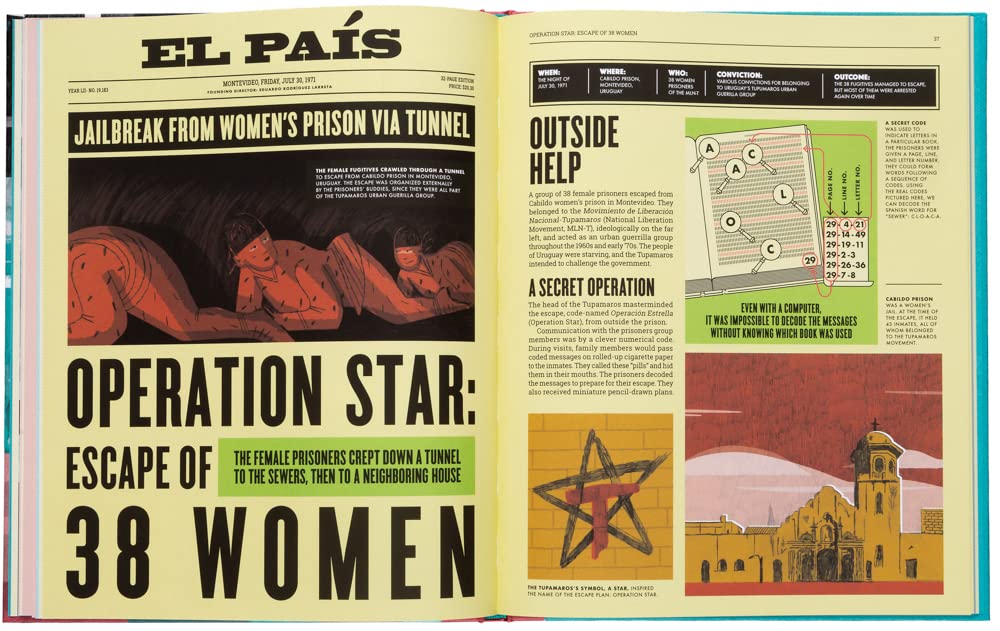
Among these astounding true stories, readers learn how one escapist “vanished” from prison by recreating the key to his cell from memory after seeing it in his jailer’s hand; how three prisoners fashioned papier-mâché heads to fool the guards at bed checks; how a man slipped through the meal-tray slot in his prison door to gain his freedom; how a slave fled the South for the free North with the help of the postal system; and how a charming rogue and conman, jailed for having a banned book, finally broke out of a notorious prison after a first attempt was thwarted. And that’s just to get you started!

celebrate-picture-books-picture-book-review-legendary-escapes-operation-star

Image copyright Julio Antonio Blasco, 2022, text copyright Soledad Romero Mariño, 2022.

Each color-coded chapter of this book, ingeniously designed by Julio Antonio Blasco, reads like above-the-fold newspaper articles published in The Los Angeles Examiner, the Daily Mirror, El País, Die Welt, and Korea Joongang Daily, among others, all complete with attention-grabbing headlines, sidebars, and eye-catching images that tell stories of their own. Stylized illustrations replicate over-the-wall scrambles, dangerous escape routes, WANTED posters, and insider views of some of the world’s toughest prisons. Readers will pore over each page, wanting to discover each fact, parse the clues, and find out what happened to each escapee.

Legendary Escapes is a book that will excite any history, journalism, mystery, or crime buff and offers a thrilling way to engage students in discovering the wider stories around these escapes. The book would make an excellent gift and is a must for any reader who loves to delve into the details of captivating true stories and compelling biographies. Legendary Escapes is a book that every school and public library should hold in its collection.

Ages 10 – 13 

Little Gestalten, 2022 | ISBN 978-3967047301

About the Author

Soledad Romero began her career as a creative director in advertising. In parallel, she founded her own publishing house where she collaborated with artists from all over the world. She now dedicates herself exclusively to the creation of children’s books as an author and editor. You can connect with her on Instagram.

About the Illustrator

Julio Antonio Blasco has worked as an illustrator and graphic designer for 15 years. He uses drawing, painting, collage, and other techniques in order to bring his books, and the characters within them, to life. You can view a portfolio of his work on his website.

celebrate-picture-books-picture-book-review-legendary-escapes-cover

You can find Legendary Escapes at these booksellers

Amazon | Barnes & Noble | Books-a-Million

To support your local independent bookstore, order from

Bookshop | IndieBound

Picture Book Review
October – It’s National Book Month

celebrate-picture-books-picture-book-review-professor-wooford-mcpaw's-history-of-astronomy-cover

About the Holiday

Readers might say that every month is National Book Month, but October is especially set aside to highlight books and the love of reading. Fall is a book bonanza as publishers release new books in all categories, and the holiday gift-giving season beckons. Books, of course, make superb gifts for all ages! So whether you’re looking for a new or new-to-you book to read right now or new titles to give to the family and friends who will be on your list, this month is a perfect time to check out your local bookstore to see what wonderful books are on the shelves! This month is also a great time to discover books that get kids excited about history, science, and technology in a whole new way – like today’s book!

Thanks to Cicada Books for sharing a digital copy of Professor Wooford McPaw’s History of Astonomy with me for review consideration. All opinions on the book are my own.

Professor Wooford McPaw’s History of Astronomy

By Elliot Kruszynski


The study of astronomy harkens back to the earliest days of scientific discovery, when “civilizations in Mesopotamia, Persia, China, India and Greece all examined the night sky. With only the naked eye, they mapped out the stars and used the information they gathered to create calendars, navigate great distances and keep time.” So begins this comprehensive, detailed, and even humorous compendium of our skies, scientists and thinkers, equipment, and a look to the future.

Professor Wooford McPaw and his telescope sidekick, Teley, takes kids back to 3000 BC, when religious leaders determined the longest day of the year by tracking the sun’s progress through the arches and columns erected at Stonehenge, and speeds forward to 1000 BC, when people connected the stars, creating the constellations and stories about them.

celebrate-picture-books-picture-book-review-professor-wooford-mcpaw's-history-of-astronomy-aristotle

Copyright Elliot Kruszynski, 2022, courtesy of Cicada Books.

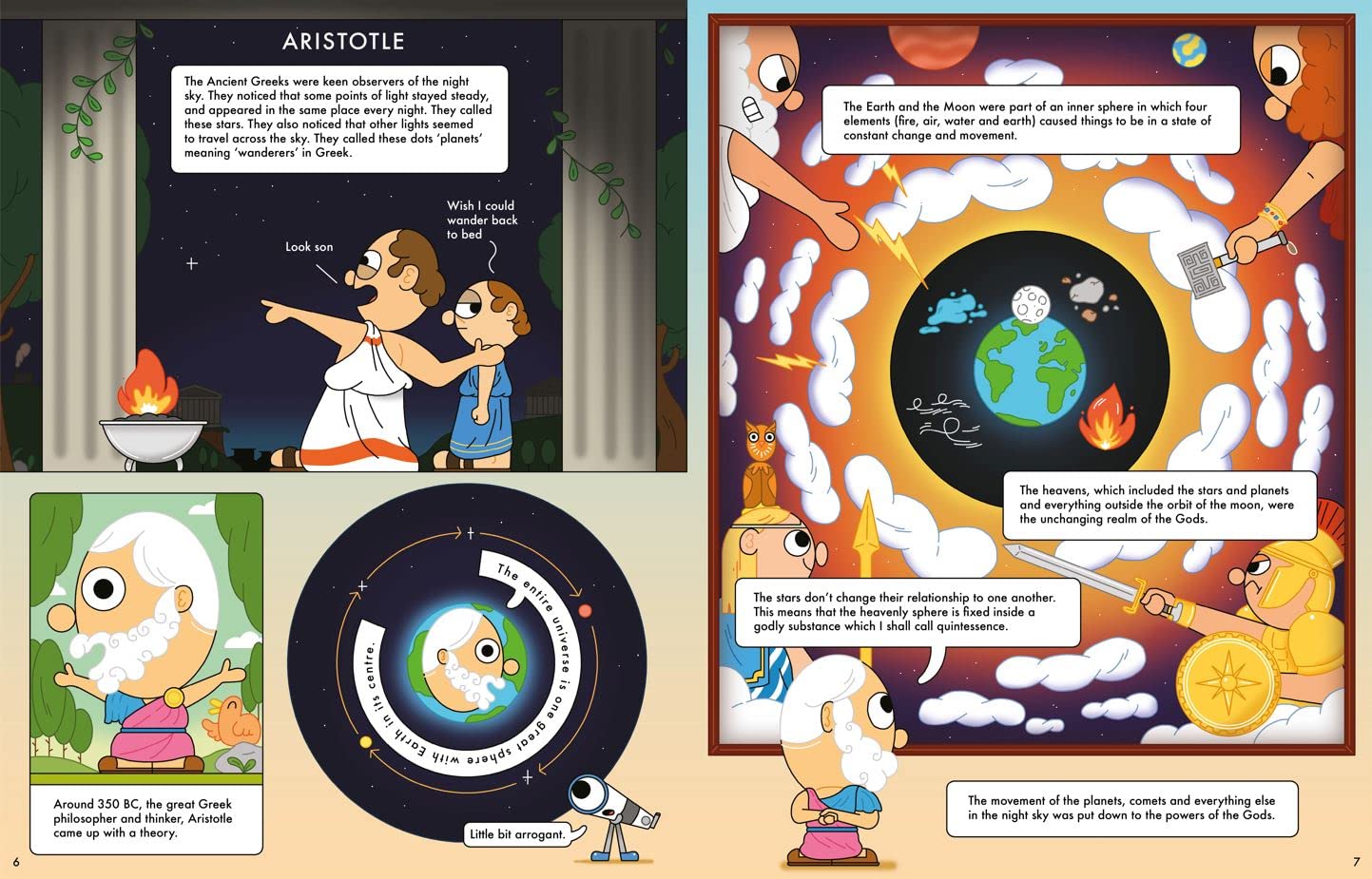
Kids then meet Aristotle and learn about his theories on the placement of the earth, the four elements, and the role of the gods in the universe. Then they discover the conflict between the teachings of Claudius Ptolemy around 140 AD and the discoveries of Nicolaus Copernicus in the 16th century, who left it to future scientists to explore his theory that that the earth revolved around the sun (and not the other way around). And what happened to those scientists? Well, children learn about Galileo Galilei, who, in addition to inventing the telescope, spent a good part of his life under house arrest for saying the earth and the planets did indeed revolve around the sun.

celebrate-picture-books-picture-book-review-professor-wooford-mcpaw's-history-of-astronomy-telescopic-history

Copyright Elliot Kruszynski, 2022, courtesy of Cicada Books.

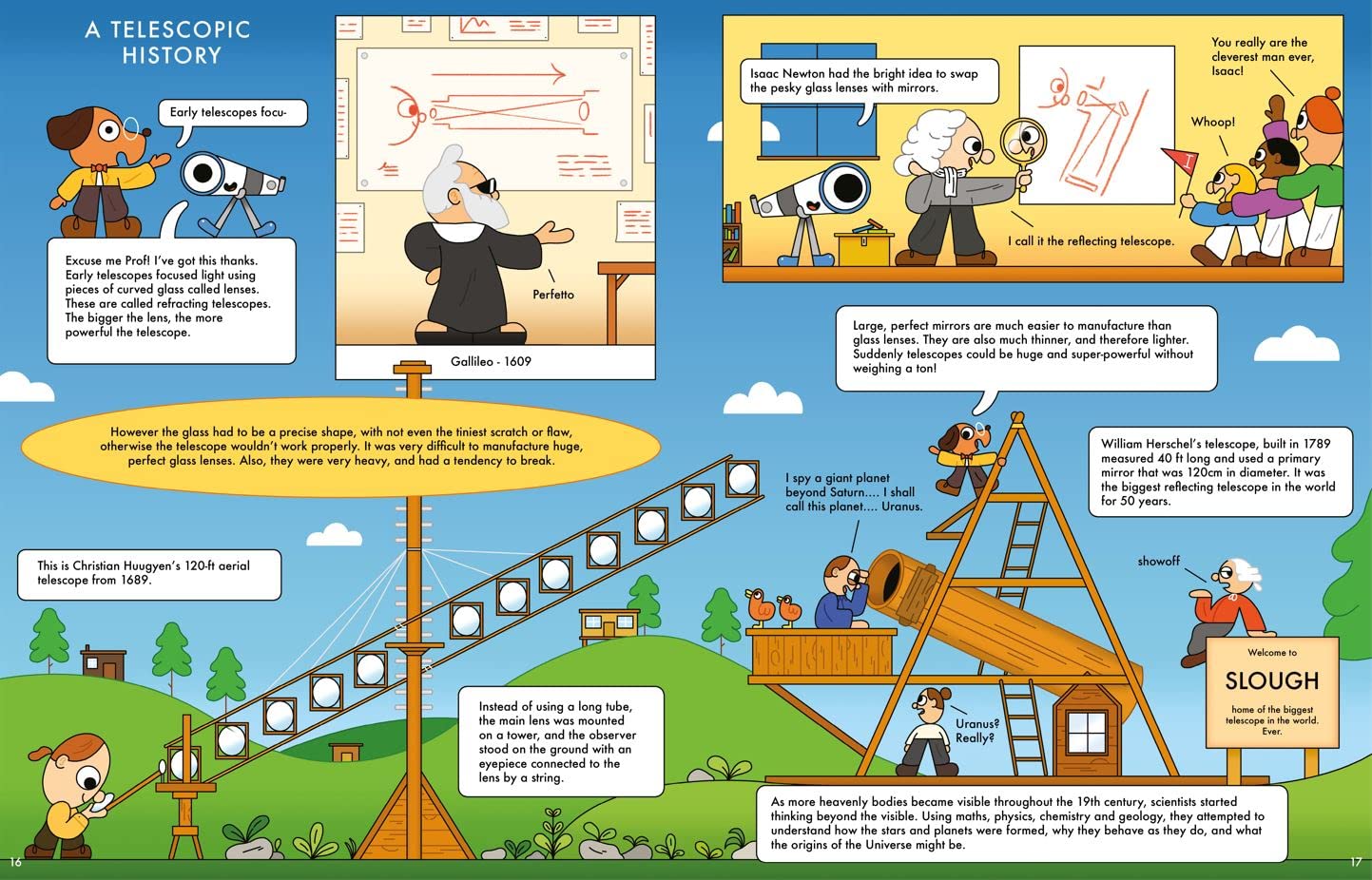
Professor Wooford introduces readers to Isaac Newton, whose “findings, along with the improvement of telescope technology, changed the way that humans (and for some dogs) looked at our planet.” What kind of telescope technology is the Prof talking about? He gives kids a run down from Galileo’s invention in 1609 to a switch from glass lenses to mirrors in the 1700s to today’s Hubble Space Telescope and James Webb Space Telescope. Here’s Teley explaining about lenses:

“Early telescopes, like the one Galileo invented, focused light using pieces of curved glass called lenses. The bigger the lens, the more powerful the telescope. They were called refracting telescopes. However the glass had to be a precise shape, with not even the tiniest scratch or flaw, otherwise the telescope wouldn’t work properly. It was very difficult to manufacture huge, perfect glass lenses. Also, they were very heavy and had a tendency to break.” Teley goes on to explain that it was Isaac Newton who “had the bright idea to swap the pesky glass lenses with mirrors,” which are much easier to make and are thinner and lighter, allowing telescopes to “be huge and super-powerful without weighing a ton.”

celebrate-picture-books-picture-book-review-professor-wooford-mcpaw's-history-of-astronomy-einstein

Copyright Elliot Kruszynski, 2022, courtesy of Cicada Books.

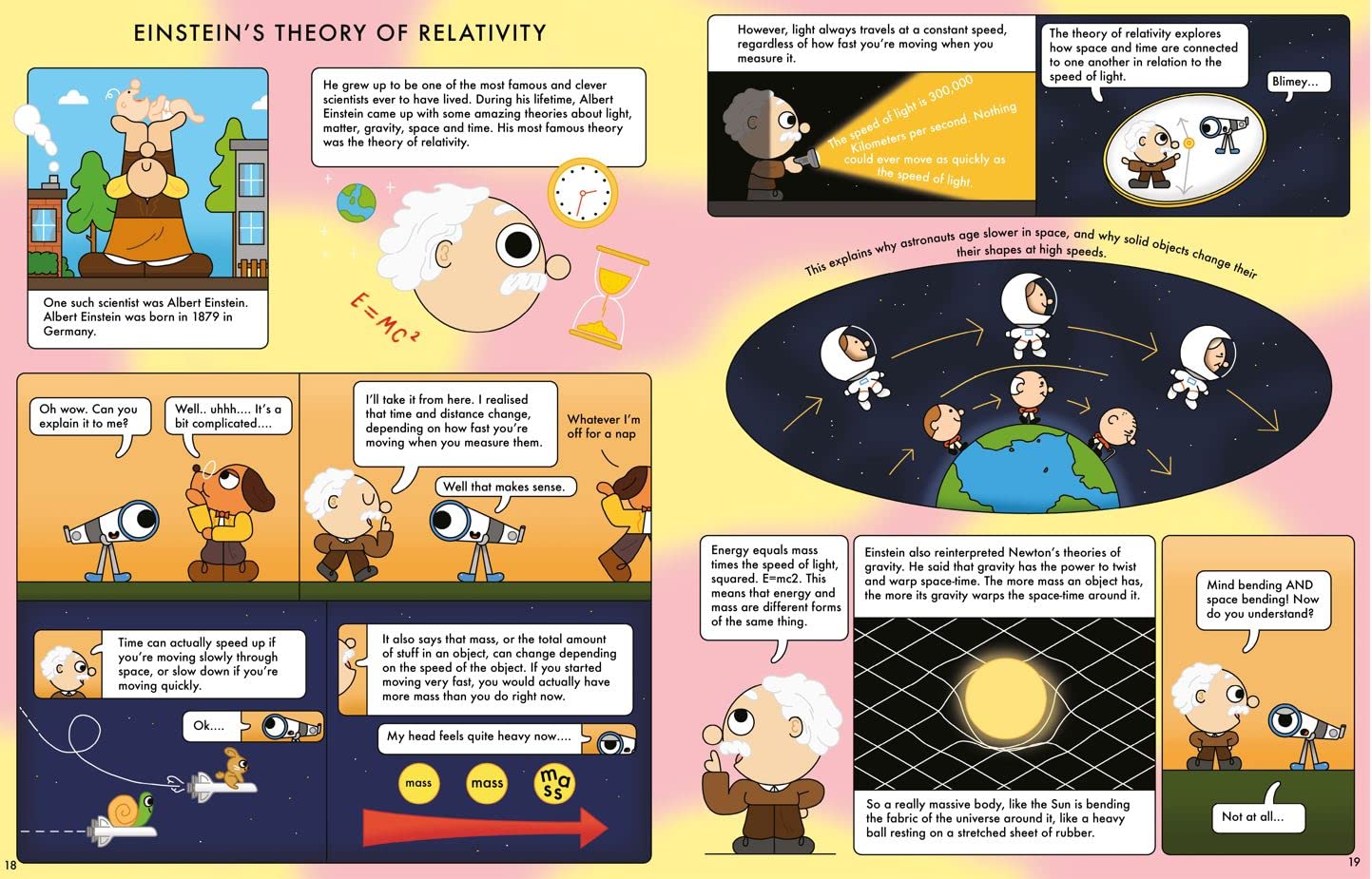
Albert Einstein travels back through time to explain his “mind bending and space bending” Theory of Relativity in terms that readers can understand. Then kids are launched into space—the space race, that is—where they learn about the advancements and setbacks of the Russian and American from 1957 to 1969, when the first moon walk occurred, as well as a weely … I mean … really unusual tradition among space-going astronauts.

celebrate-picture-books-picture-book-review-professor-wooford-mcpaw's-history-of-astronomy-space-probes

Copyright Elliot Kruszynski, 2022, courtesy of Cicada Books.

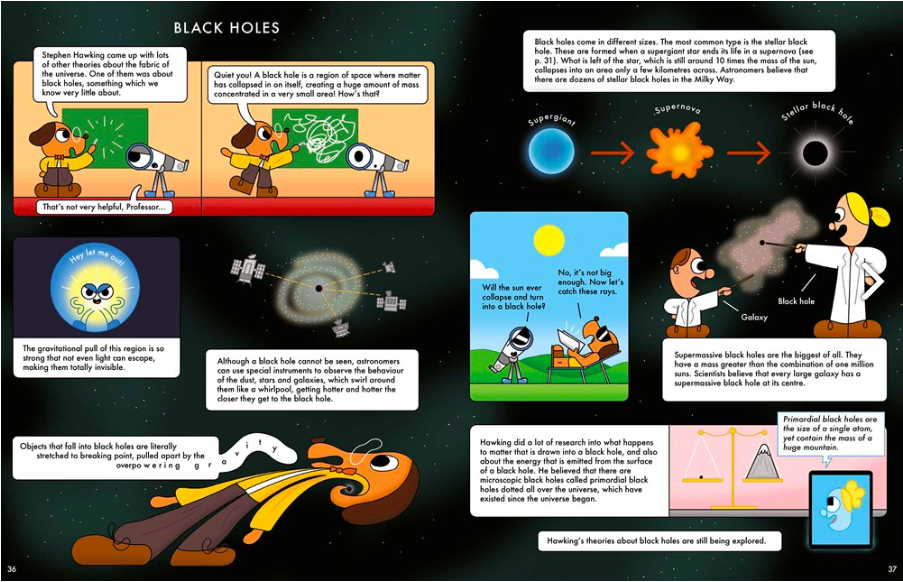
Children get info on different kinds of space probes from rovers to orbiters to interplanetary probes before blasting off into our solar system to find out about the planets (even little Pluto gets a cameo. But where is Earth and all of our other planets located? Professor McPaw explains: “Earth is located in a galaxy called the Milky Way. At its center is a supermassive black hole called Sagittarius A*, which contains as much mass as four million suns.” The prof goes on to teach kids about the three different shapes of galaxies, what dwarf galaxies are, how bigger galaxies cannibalize smaller galaxies, and where the term galaxy comes from.

celebrate-picture-books-picture-book-review-professor-wooford-mcpaw's-history-of-astronomy-black-holes

Copyright Elliot Kruszynski, 2022, courtesy of Cicada Books.

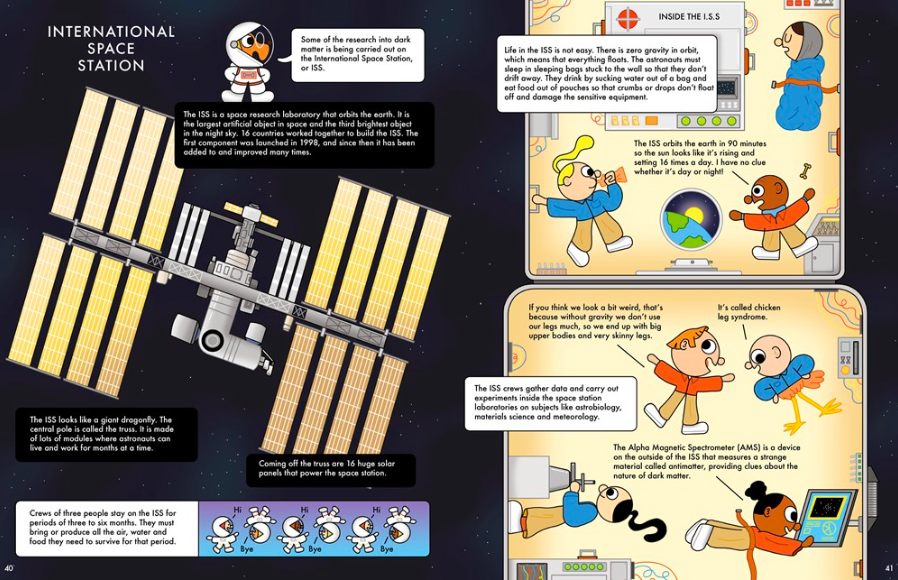
Professor Wooford McPaw and Teley also impart the same fascinating in-depth facts about stars, black holes, and dark matter. And what’s a trip into space without a ride on the International Space Station? Well, readers won’t find out because they get to explore the ISS and learn how the astronauts experience 16 sunrises and sunsets a day, sleep strapped to a wall, and develop “chicken leg syndrome” from not using their legs as much as their upper body in the no-gravity conditions.

By this time, kids are probably wondering about whether there’s life in other parts of the solar system or beyond as well as what the future might hold for astronomers, astrophysicists, other scientists, and even themselves. But are readers going to be abandoned in space? Not at all! Professor Wooford has thoughtfully included a Race to Earth “board game” on the last two-page spread that will get all astronauts … I mean readers … back home in time for dinner.

celebrate-picture-books-picture-book-review-professor-wooford-mcpaw's-history-of-astronomy-international-space-station

Copyright Elliot Kruszynski, 2022, courtesy of Cicada Books.

Elliot Kruszynski’s Professor Wooford McPaw’s History of Astonomy is just the kind of book that both kids who already love space and those who don’t yet know they do will devour, either bit-by-bit or all in one sitting. With affable hosts who give excellent easy-to-understand explanations, historical characters who add funny asides, and a quick-paced graphic-novel format, (title) will spark readers’ interest in learning all about the past, present, and future of astronomy. The book would make a perfect gift and very welcome addition to any home library. Educators and homeschoolers will find it a go-to text for introducing many scientific topics and an engaging way to heighten student’s eagerness for further research. School and public library librarians will find Professor Wooford McPaw’s History of Astonomy to be a favorite to recommend and to have on their shelves.

Ages 6 – 10 and up

Cicada Books, 2022 | ISBN 978-1800660236

To view a portfolio of work by Elliot Kruszynski and connect with him on Instagram, visit his website. 

National Book Month Activity

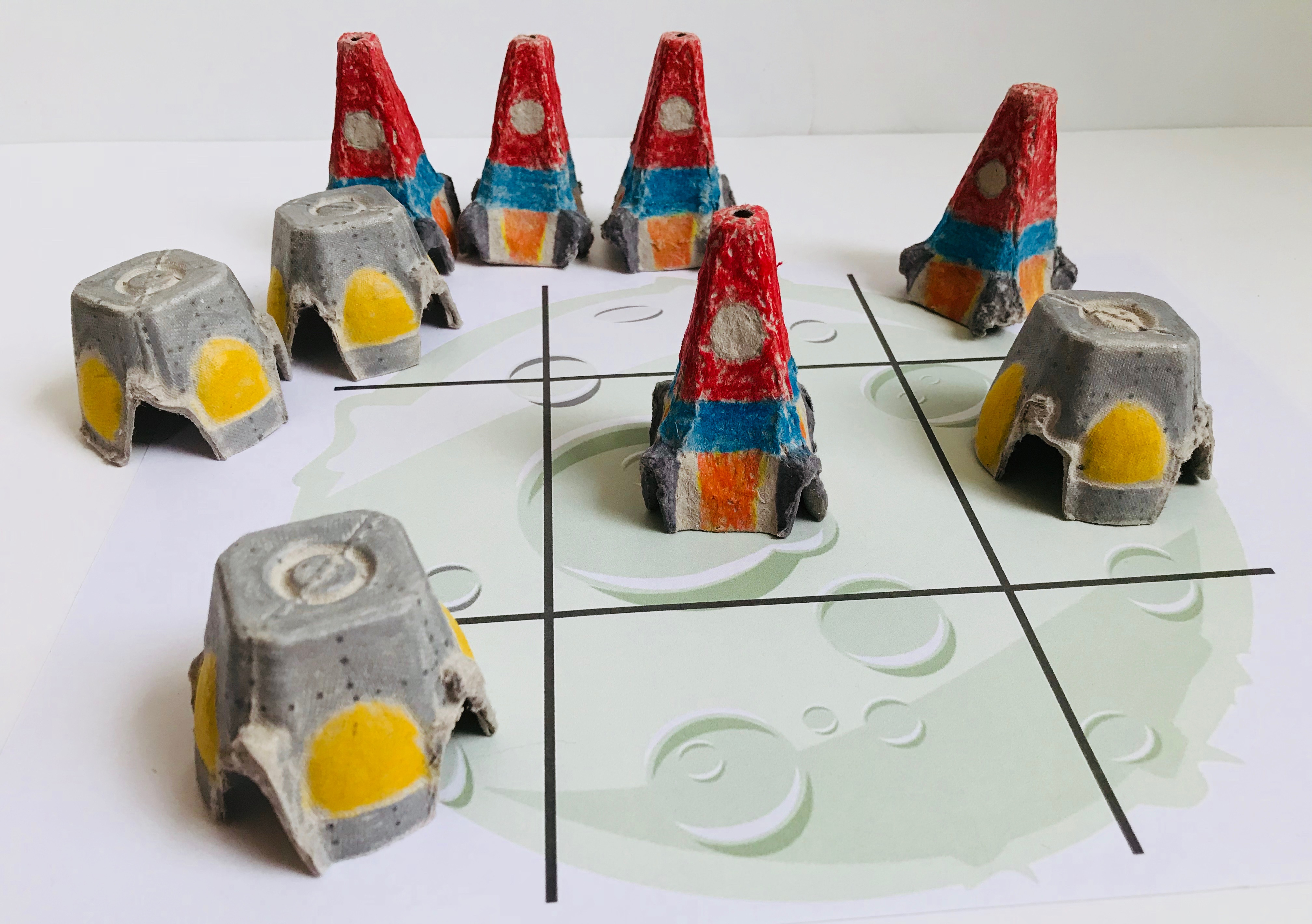
celebrate-picture-books-picture-book-review-rocket-to-the-moon-tic-tac-toe-game

Out of This World Tic-Tac-Toe Game

You can launch your own Tic-Tac-Toe Game with this set you make yourself! With just a couple of egg cartons, some crayons, and a printable game board, you’ll be off to the moon for some space-age fun! Opposing players can be designated by rockets and capsules. Each player will need 5 playing pieces. 

SUPPLIES

  • Printable Moon Tic-Tac-Toe Game Board
  • 2 cardboard egg cartons
  • Heavy stock paper or regular printer paper
  • Crayons
  • Black or gray fine-tip marker

DIRECTIONS

To Make the Rockets

  1. Cut the tall center cones from the egg carton
  2. Trim the bottoms of each form so they stand steadily, leaving the arched corners intact
  3. Pencil in a circular window on one side near the top of the cone
  4. Color the rocket body any colors you like, going around the window and stopping where the arched corners begin
  5. With the marker color the arched corners of the form to make legs
  6. On the cardboard between the legs, color flames for blast off

To Make the Capsule

  1. Cut the egg cups from an egg carton
  2. Color the sides silver, leaving the curved section uncolored. (If your egg cup has no pre-pressed curve on the sides of the cup, draw one on each side.)
  3. Color the curved section yellow to make windows
  4. With the marker, dot “rivets” across the capsule

Print the Moon Game Board and play!

celebrate-picture-books-picture-book-review-professor-wooford-mcpaw's-history-of-astronomy-cover

You can find Professor Wooford McPaw’s History of Astronomy at these booksellers

Amazon | Barnes & Noble | Books-a-Million

To support your local independent bookstore, order from

Bookshop | IndieBound

Picture Book Review

January 27 – International Holocaust Remembrance Day

celebrate-picture-books-picture-book-review-anne-frank-the-girl-heard-around-the-world-cover

About the Holiday

International Holocaust Remembrance Day was officially declared in November 2005 by the United Nations General Assembly. Every year on January 27th, “UNESCO pays tribute to the memory of the victims of the Holocaust and reaffirms its unwavering commitment to counter antisemitism, racism, and other forms of intolerance that may lead to group-targeted violence.” The date marks the day that the Nazi Concentration and Extermination Camp of Auschwitz-Birkenau was liberated by Soviet troops in 1945. This year commemorates the 77th anniversary of the liberation. This year UNESCO is presenting a series of mostly online events, including a commemoration ceremony, a panel discussion on the legacy of Jewish artists who died during the Holocaust and the United Nations, and a photography exhibition titled Generations: Portraits of Holocaust Survivors by the Royal Photographic Society of Great Britain, showcasing over 50 contemporary photos of Holocaust survivors and their families. To learn more about how to watch the events, visit the UNESCO International Holocaust Remembrance Day website. You can also find many excellent resources and personal stories on the United States Holocaust Museum website.

Anne Frank: The Girl Heard Around the World

Written by Linda Elovitz Marshall | Illustrated by Aura Lewis


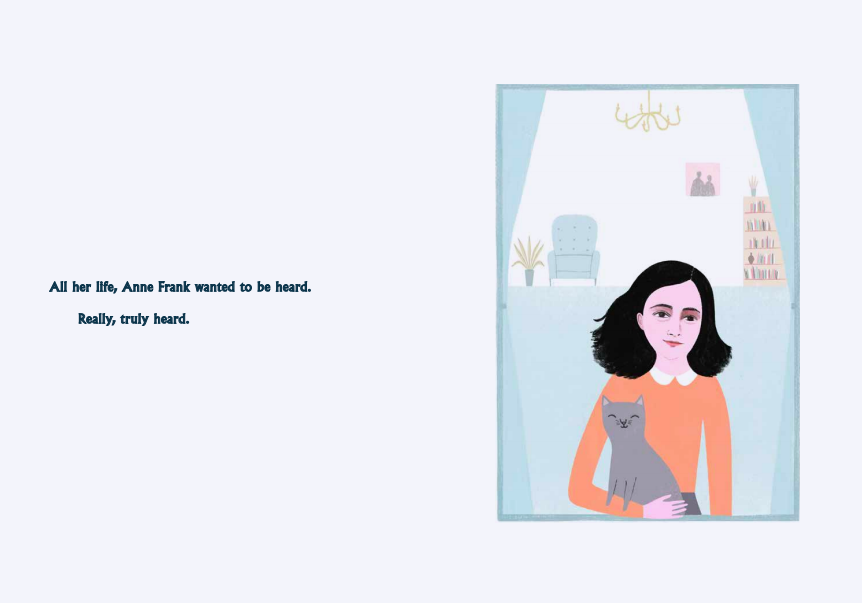
“All her life, Anne Frank wanted to be heard. Really, truly heard.” But sometimes no matter how loudly or entertainingly she talked, no one listened or seemed to understand. Anne’s family, “like many other Jewish families, had lived in Germany for centuries,” but when Adolf Hitler began to govern the country, Jewish families were in danger. When Anne was four years old, her family, hoping to find safety, moved to Amsterdam in the Netherlands. Here, Anne lived happily, “making mischief with her friends, telling jokes, and having fun. “In school, she talked and talked.”

celebrate-picture-books-picture-book-review-anne-frank-the-girl-heard-around-the-world-portrait

Image copyright Aura Lewis, 2020, text copyright Linda Elovitz Marshall, 2020. Courtesy of Orchard Books.

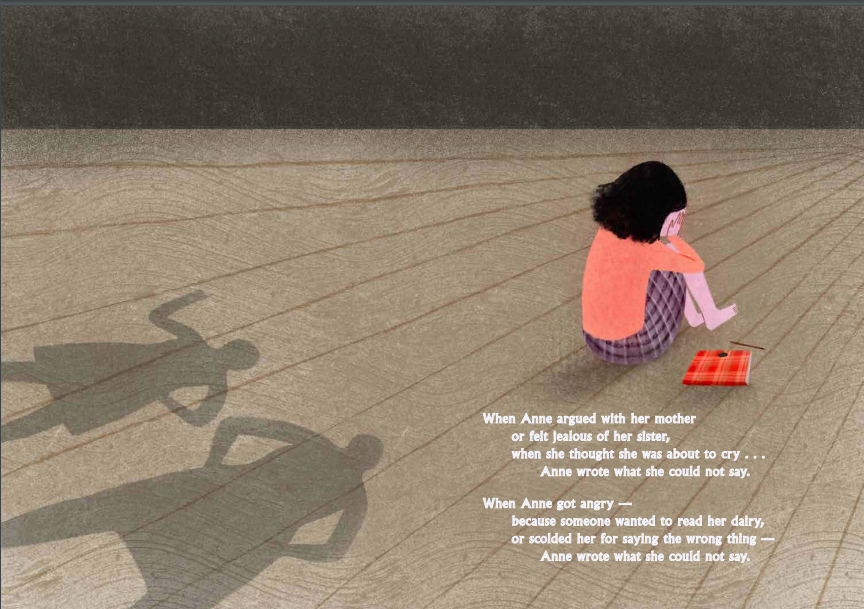
But in 1940, Hitler and his Nazi’s took over the Netherlands too, and life for Jewish people living there was no longer safe. Anyone who talked against the Nazis could be arrested, but Anne needed to express her opinions. On her 13th birthday Anne received a red plaid diary; she named it “Kitty.” In Kitty, Anne could share all of her thoughts and feelings about what was happening in her country. She wrote about the rules that restricted Jews from normal life, that made all Jews wear a yellow star that distinguished them from others. But Anne also wrote about school and other subjects. “Anne realized that by writing, she could speak her mind in a new way. She could really, truly be heard.”
celebrate-picture-books-picture-book-review-anne-frank-the-girl-heard-around-the-world-childhood

Image copyright Aura Lewis, 2020, text copyright Linda Elovitz Marshall, 2020. Courtesy of Orchard Books.

Then on a morning in 1942, Anne’s mother woke her, telling her that they needed to leave quickly and hide. Anne “packed her most treasured things.” Her diary was the first thing she packed. She and her family as well as four other people hid in a secret room in the warehouse where Anne’s father worked. Non-Jewish friends who also worked in the warehouse brought them food and supplies. While Anne tried to make the best of her life in hiding, she was lonely and always careful to whisper and tiptoe so the other workers in the factory did not discover them.

celebrate-picture-books-picture-book-review-anne-frank-the-girl-heard-around-the-world-writing

Image copyright Aura Lewis, 2020, text copyright Linda Elovitz Marshall, 2020. Courtesy of Orchard Books.

Now, Anne’s diary was even more important to her. In Kitty she wrote about her fears and feelings, her days and the things she missed. “She wrote about wishing people could live together, in peace,” and Kitty “was always there to listen, always there to understand.” Anne also wrote stories about a teddy bear, a fairy, and a caring grandmother. Once, water seeped in and soaked her diary. Anne rushed to hang the pages to dry. Anne wrote and wrote for two years. She hoped to publish a book about her experience.

celebrate-picture-books-picture-book-review-anne-frank-the-girl-heard-around-the-world-crying

Image copyright Aura Lewis, 2020, text copyright Linda Elovitz Marshall, 2020. Courtesy of Orchard Books.

“But on August 4, 1944, Nazi police discovered the secret hiding place.” Anne, her family, and all of the people living in the warehouse room were taken away. “One of their non-Jewish friends found Anne’s diary and writings and kept them safe,” hoping to return them to her. But just weeks before the war ended in 1945, Anne died. Anne’s father was the only one to survive. After the war ended, Anne’s father fulfilled her dream and published Anne Frank: The Diary of a Young Girl. Anne’s book has been read by people around the world and continues to speak for her in the hearts of readers everywhere.

Back matter includes more about Anne, her family, the Nazis and how Anne’s diary was saved; a timeline of Anne’s family, the rise of Hitler, and the war years; an Author’s Note; and lists of sources, suggested further reading, and websites.
celebrate-picture-books-picture-book-review-anne-frank-the-girl-heard-around-the-world-world-reads

Image copyright Aura Lewis, 2020, text copyright Linda Elovitz Marshall, 2020. Courtesy of Orchard Books.

Linda Elovitz Marshall’s moving telling of Anne Frank’s life and dreams, focusing on her beloved diary will resonate with children, who, like Anne, want to be heard. In her evocative storytelling, Marshall creates a rich portrait of Anne as a vivacious child who was also smart and thoughtful. Mirroring the devastating disruptions in Anne’s and her family’s life, Marshall intersperses pages of straightforward text which describes the rise of Hitler and the Nazis and emphasizes ways in which they restricted and silenced the Jewish population, reinforcing her book’s theme. The examples Marshall gives—riding bikes, going to the movies, having to wear an identification star—will impress upon children the changes in Anne’s life.

When Anne and her family move to the Secret Annex, Marshall superbly reveals the conditions of their confinement through Anne’s writing and how her diary was her lifeline and her confidant. The family’s eventual discovery is written factually but with sensitivity, fitting for picture book readers. The final spread honors the influence Anne Frank has had on the world with her diary—her voice that could not be silenced.

In Aura Lewis’s emotionally resonant illustrations, readers first meet Anne Frank in a snapshot that shows her as kind, thoughtful, and seemingly wise beyond her years. Vibrant scenes of Anne with her family in Germany and later with family and friends in Amsterdam give way to somber, gray-toned images that reflect Hitler’s takeover and the dangers Anne, her family, and all Jewish people faced. Lewis clearly sketches Anne’s childhood enthusiasms and hope and, especially, her pleasure at receiving her diary. Also, readily recognizable are Anne’s feelings of fear, frustration, and sadness. Lewis portrays Anne in signature orange and plaid, reflecting the deep interconnection between Anne and her diary. This visual metaphor is then carried onto the final spread, where a variety of people of all ages read Anne Frank: The Diary of a Young Girl.

An excellent book to introduce young children to Anne Frank, a most influential and inspiring young girl, Anne Frank: The Girl Heard Around the World would be a meaningful addition to home bookshelves and is a must for school and public library collections.

Ages 6 – 8

Orchard Books, 2020 | ISBN 978-1338312294

Discover more about Linda Elovitz Marshall and her books, visit her website.

To learn more about Aura Lewis, her books, and her art, visit her website.

National Dear Diary Day Activity

celebrate-picture-books-picture-book-review-anne-frank-word-search

Anne Frank and Her Diary Word Search


Find the twenty words associated with Anne Frank, her life, and her diary in this printable puzzle

Anne Frank and Her Diary Word Search Puzzle | Anne Frank and Her Diary Word Search Solution

celebrate-picture-books-picture-book-review-anne-frank-the-girl-heard-around-the-world-cover

You can find Anne Frank: The Girl Heard Around the World at these booksellers

Amazon | Barnes & Noble | Books-a-Million

To support your local independent bookstore, order from

Bookshop | IndieBound

Picture Book Review