June 5 – World Environment Day

About the Holiday

Sponsored by the United Nations, World Environment Day encourages worldwide awareness and action for the protection of the environment. Each year a different country hosts the day’s events. This year the Republic of Korea has been chosen as the host country, with a focus on ending plastic pollution globally. Ridding the planet of plastic pollution is an important contribution to achieving the Sustainable Development Goals adopted by the United Nations, including those on climate action, sustainable production and consumption, protection of seas and oceans and repairing ecosystems and retaining biodiversity. Everyone is needed to make a difference. You can learn more about World Environment Day, the 400 million tons of plastic produced each year (200 tons of which is single-use) and the dangers of microplastics throughout the environment, as well as the UN Decade on Ecosystem Restoration and how you can join the #GenerationRestoration movement on the UN World Environment Day website.

Thank you to Phaidon Press for sharing this book with me for review!

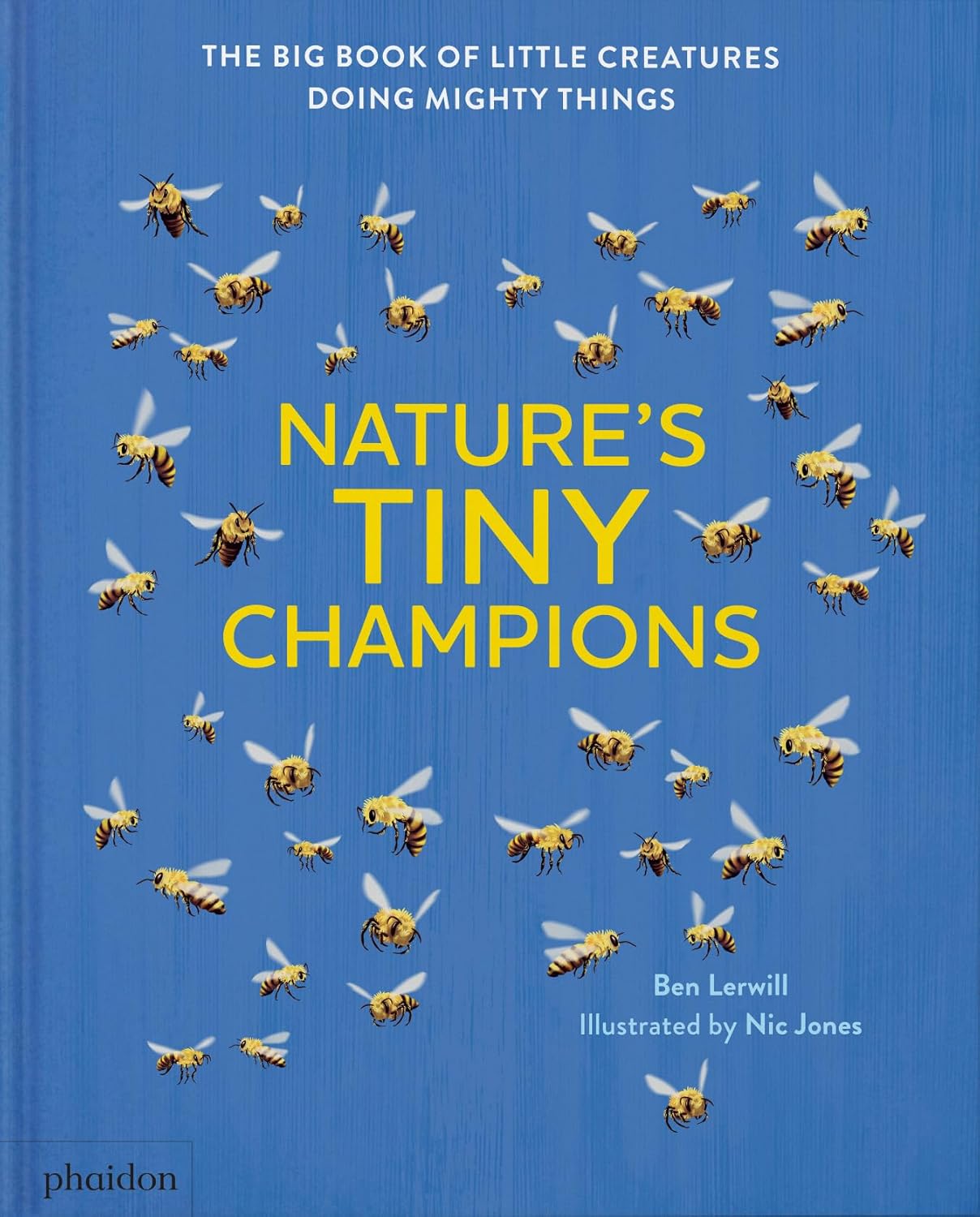
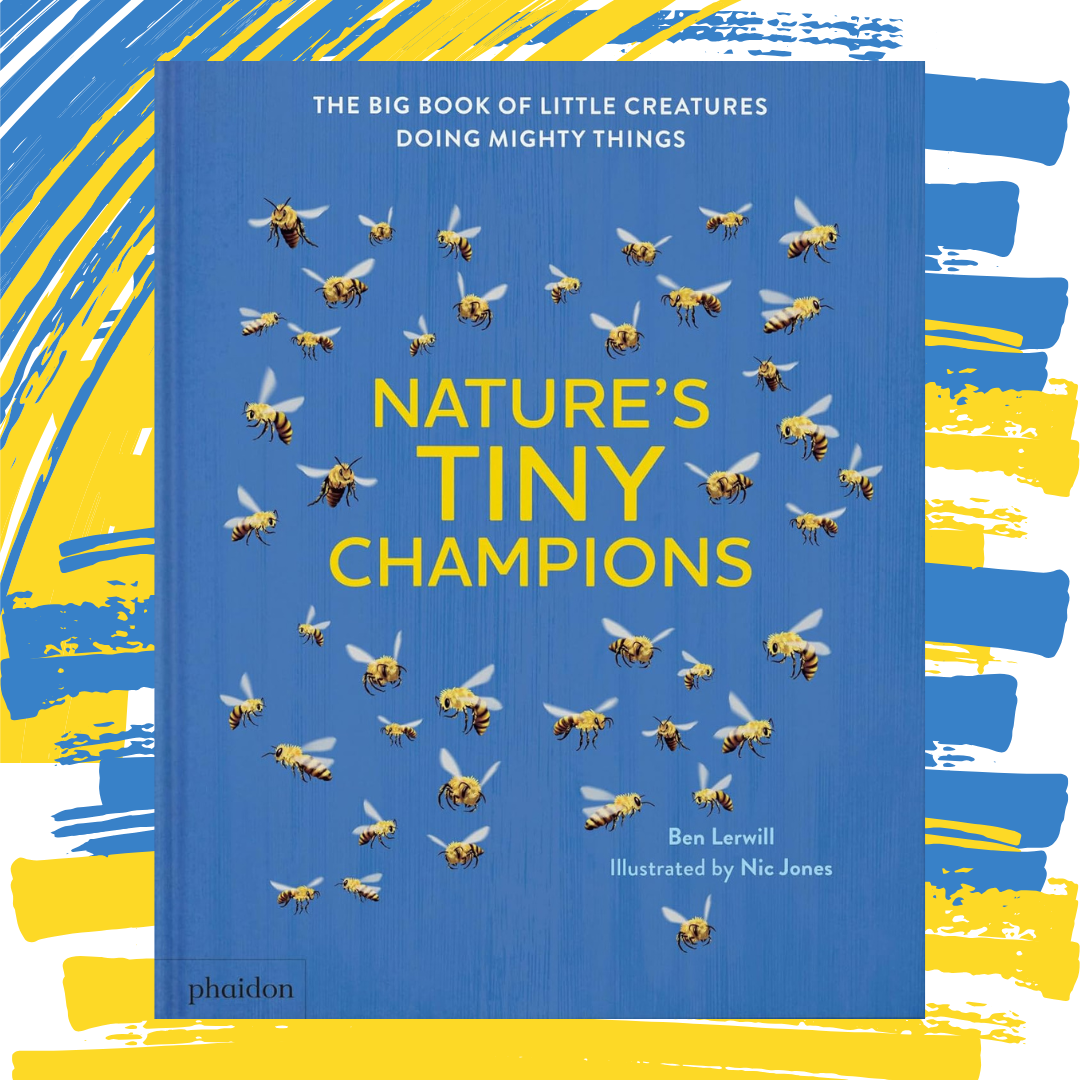
Nature’s Tiny Champions: The Big Book of Little Creatures Doing Mighty Things

Written by Ben Lerwill | Illustrated by Nic Jones


If you are awed by nature then you might know that “there are at least two million animal species on planet Earth.” But were you aware that some scientists believe the number might be more than eight million? So where are they? Well, all around—they’re just not easy to see. As Ben Lerwill reveals, “almost all of them are small enough to fit in the palm of your hand.” In fact, most could “sit on the tip of your little finger, and some are so impossibly minuscule that a whole herd of them could be hiding on the period at the end of this sentence.”

Illustration © 2025 by Nic Jones, text copyright © 2025 by Ben Lerwill.

So should we be thinking out of sight, out of mind? Absolutely not! And Nature’s Tiny Champions is here with detailed profiles of 20 phenomenal creatures to show you what an enormous impact itty-bitty animals make, plus back matter that presents short, illustrated entries on 21 more tiny champions of the air, land, and sea. Ready to dive in? Let’s go!

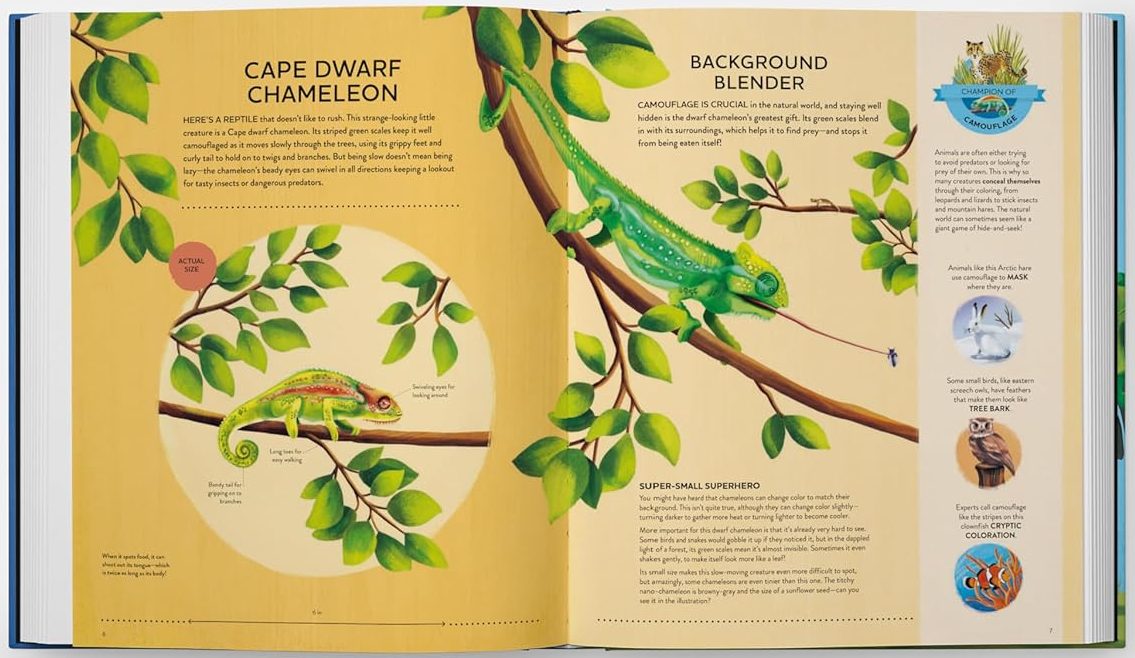
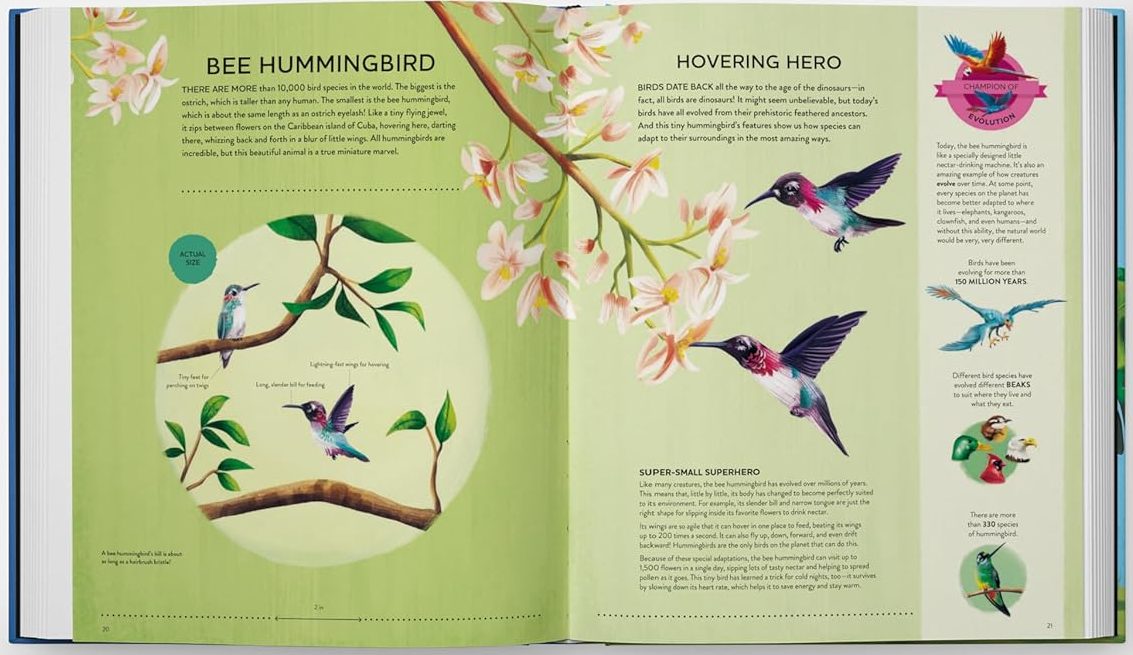
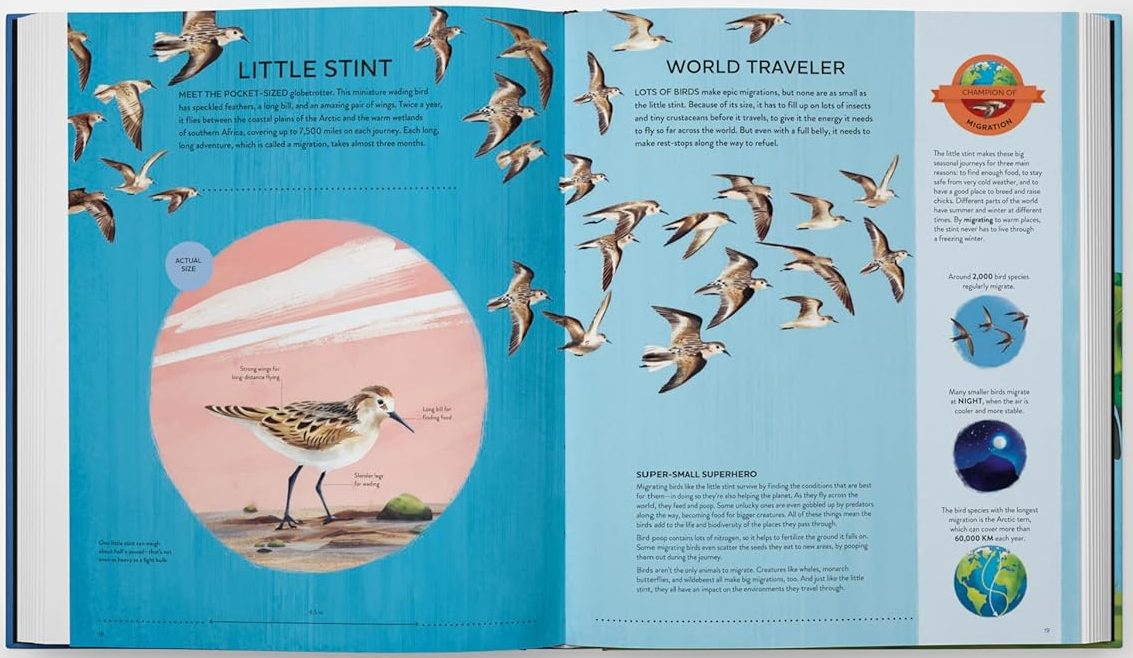
Each two-page spread in this cleverly designed oversized book introduces readers to an animal through Ben Lerwill’s easy-going, conversational description of the primary trait that makes it a champion, an often mind-boggling discussion of its crucial contribution to its ecosystem, and a sidebar containing even more memorable facts about natural phenomena such as camouflage, prey species, migration, metamorphosis, teamwork, survival, keystone species, indicator species, self-defense, and more.

Illustration © 2025 by Nic Jones, text copyright © 2025 by Ben Lerwill.

Each page spread stuns with Nic Jones’ vivid and gorgeously realistic illustrations that set each tiny creature in its natural habitat. Actual-size renderings of each animal is a highlight and are sure to spark plenty of “oh my gosh!” and “it’s so cute!” reactions. These images also allow kids to learn about how the animal is perfectly suited to its environment. Kids will enjoy comparing each animal to the size of their hand, finger, or even—in the case of the water bear—a grain of sugar. Where the animal is too small to see and be labeled clearly in its natural size, the image is expanded and labeled with the scale of magnification. 

Ready for a few examples of what readers will learn? Get this:

  • “The tiger piston shrimp is only the size of a french fry, but when it snaps its claw, the noise is louder than a gunshot!
  • “Leafcutter ants can carry 50 times their own weight. That’s like you carrying an RV—with your teeth!
  • A water bear “can go for 30 years without food or water,” it can survive temperatures as cold as -454ºF and as hot as 302ºF, and it has “even stayed alive after being blasted into outer space.”

Illustration © 2025 by Nic Jones, text copyright © 2025 by Ben Lerwill.

For budding zoologists, entomologists, and nature lovers at home and in the classroom, Nature’s Tiny Champions: The Big Book of Little Creatures Doing Mighty Things is a fascinating sure winner that will keep kids enthralled, watching out for the tiny creatures in their own area, and eager to learn more. The book’s impressive  would make a much-appreciated gift. It is highly recommended for home bookshelves and is a book librarians will be thrilled to display and recommend.  

Ages 6 – 9+

Phaidon Press, 2025 | ISBN 978-1838669973

About the Author

Ben Lerwill is a multi-award-winning children’s author and freelance writer who has written for over 50 publications, including National Geographic Traveller, The Sunday Times, and BBC Travel. Previous recognition for his books includes a Wainwright Prize for Children’s Nature Writing shortlist, a National Geographic Kids’ Magazine ‘Book of the Month’ and a Junior Library Guild Gold Standard Selection. Visit him at benlerwill.com.

About the Illustrator

Nic Jones has been a professional illustrator for nearly 5 years. Previous works include Earth Clock: The History of Our Planet in 24 Hours, and Above and Below: Dusk til Dawn.

World Environment Day Activity

Environment Word Search Puzzle


Find the words about our environment and protecting it’s resources in this puzzle! 

Environment Word Search Puzzle | Environment Word Search Puzzle Answer Key

You can purchase Nature’s Tiny Champions: The Big Book of Little Creatures Doing Mighty Things from these booksellers

Amazon | Barnes & Noble | Bookshop

Picture Book Review

May 30 – National Water a Flower Day

About the Holiday

National Water a Flower Day reminds us of the vast diversity of plants and flowers in the world and even in our own backyards, gardens, and communities. The holiday encourages us to show how much we appreciate plants for their sumptuous colors, their fragrant blossoms, their delicious fruits and seeds, and for the unique ways they survive under sometimes challenging conditions. To this end, as the name of the holiday nudges, we should take special time today to make sure all of our plants—both indoor and outdoor—are watered and cared for.

Superpowered Plants: Meet the Smartest, Strongest, Sneakiest Plants

Written by Soledad Romero Mariño | Illustrated by Sonia Pulido


From the beginning of time (perhaps even before) plants have been growing, spreading, and evolving to survive and thrive.  To do this, they’ve had to become smart, resilient, and even sneaky—ingenious. Plants and their blooms can last only a day or hundreds of years, quietly coexisting with generations of a family. Among the plants on Earth are some of nature’s craftiest mimics, chemists, thieves, and predators.

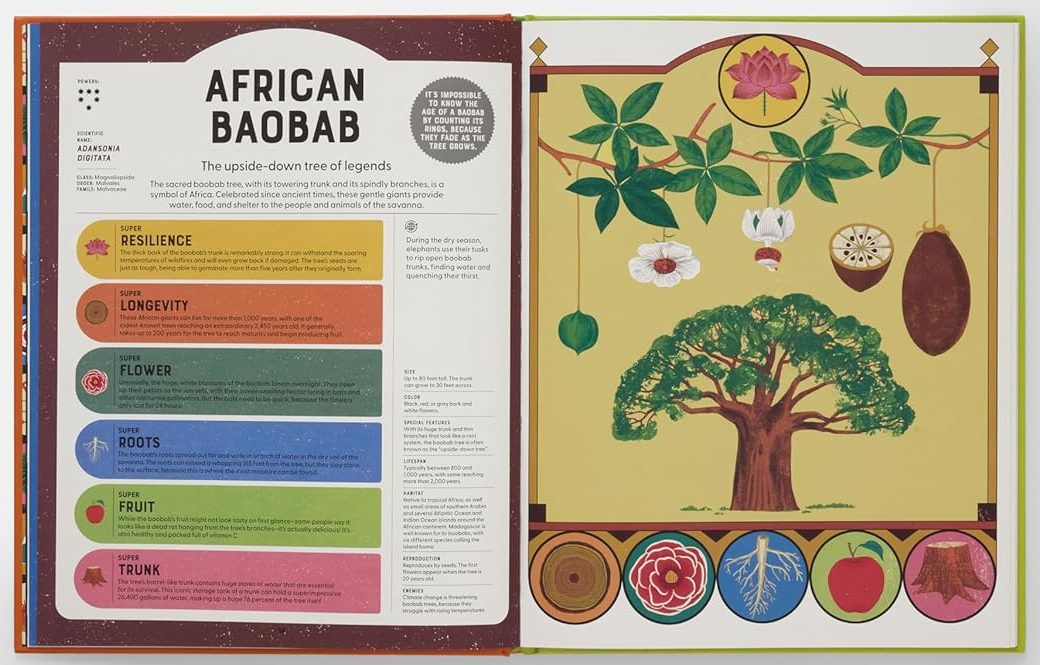
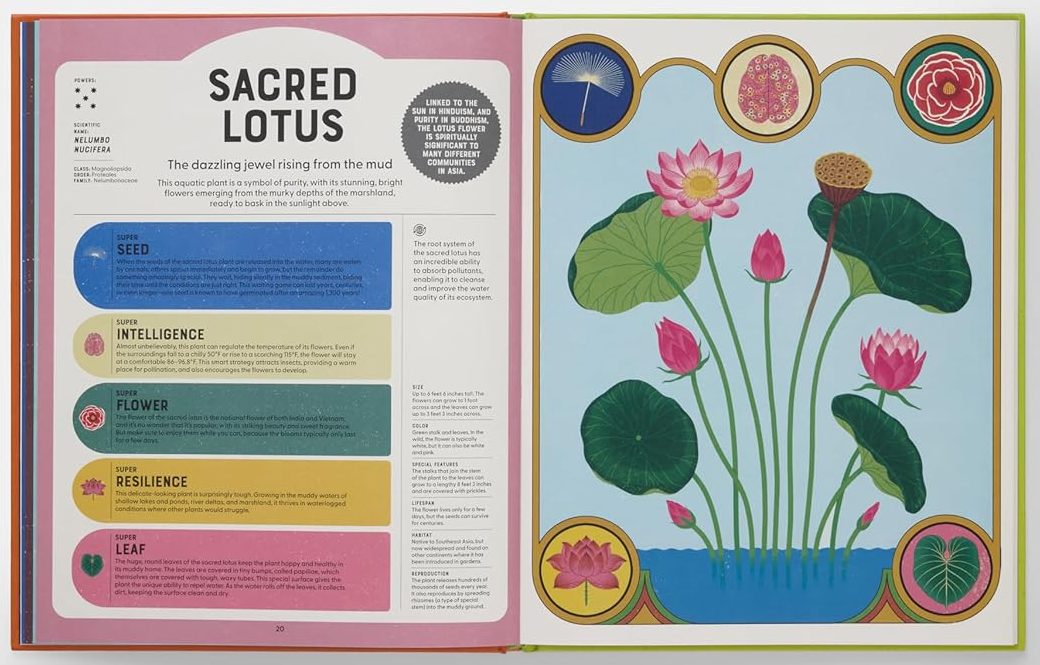
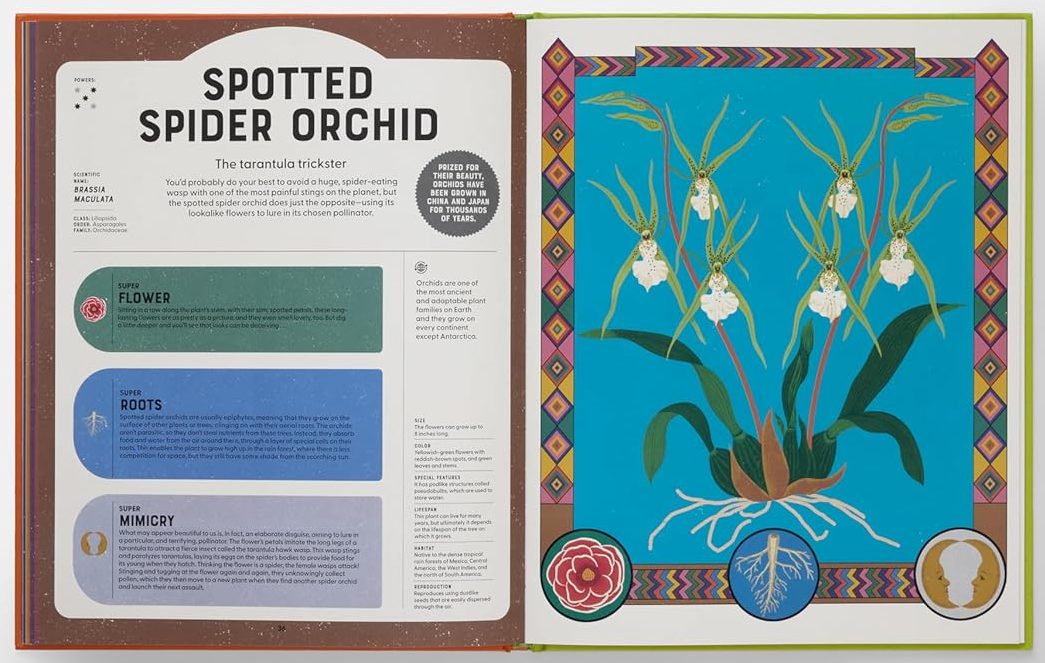
In Superpowered Plants, author Soledad Romero Mariño introduces readers to 22 astonishing plants from across the globe, including the African baobab, sacred lotus, spotted spider orchid, titan arum, and whistling thorn as well as more common varieties like dandelions and sunflowers. She identifies 17 superpowers that plants rely on to feed themselves, multiply, cope with extreme conditions, regenerate after fire or other challenges, and protect themselves. Some of these are super speed, super intelligence, super teamwork, super resilience, and super flower. 

Illustration © 2025 by Sonia Pulido, text © 2025 by Soledad Romero Mariño. Courtesy of Phaidon Press.

Working in tandem with illustrator Sonia Pulido, Mariño provides a short description of each plant before outlining its superpowers in clear, easily-digested tidbits presented in color-coded sections, further marked by a recognizable icon. Other information on the left-hand page includes the plant’s scientific name, class, order, and family as well as its size, color, lifespan, habitat, reproduction method, enemies, and special features, along with a fascinating trivia fact. 

To the right—in stunning tarot card-inspired illustrations that would easily be at home in any fine art museum—Pulido captures each plant in full-page, glorious, realistic splendor while stylishly displaying its flower, seed, and fruit and bordering it with representations of its habitat, superpowers, and unique features. 

Illustration © 2025 by Sonia Pulido, text © 2025 by Soledad Romero Mariño. Courtesy of Phaidon Press.

So what are a couple of examples of these astounding plants? Well, take the Whistling Thorn, which is native to the East African savanna. This plant really has the will (and the way) to survive! Not only are its branches covered in prickly spikes, but it teams up with a particular species of ant, offering colonies a home in exchange for aggressive attacks on any herbivore that dares take a nibble. And if that isn’t enough, the whistling thorn has “developed the superspecial skill of communication.” Where many whistling thorns grow in proximity, if one tree is attacked it releases a scent into the air, “alerting other trees in the area to the threat.” These trees “immediately secrete a toxic substance into their leaves, which can be harmful to touch and eat, therefore putting off the predator and keeping the community of trees safe.”

There’s also the Sandbox, native to tropical regions such as the Amazon rain forest, who’s playful name belies its nickname—the dynamite tree. Determined to spread its seeds far and wide, the sandbox produces fruit that, when ripe, explodes with such force “that it can cause injury to anyone standing in its way.” The seeds are propelled at “speeds of 230 feet per second and can cover distances of up to 150 feet.” It’s also best not to attempt to climb the sandbox, as its trunk is covered in “supersharp spikes.” 

Illustration © 2025 by Sonia Pulido, text © 2025 by Soledad Romero Mariño. Courtesy of Phaidon Press.

“Fascinating” hardly begins to describe all the discovery inside Superpowered Plants: Meet the Smartest, Strongest, and Sneakiest Plants. This well-conceived compendium will enthrall readers of all ages and spur a deeper appreciation for the earth’s vegetation—both the unusual and the common, which might just be more cunning than we imagine. Superpowered Plants is a must for all library collections and is highly recommended for home bookshelves, especially for nature lovers.

Ages 7 – 12+ (adults will be equally captivated)

Phaidon Press, 2025 | ISBN 978-1838669515

About the Author

Soledad Romero Mariño is an experienced children’s non-fiction author who specializes in ‘best of’ round-up style books. Her works include Superpowered Animals: Meet The World’s Strongest, Smartest, and Swiftest Creatures (also published by Phaidon), Awesome Accidents: 19 Discoveries that Changed the World, and Famous Robberies: The World’s Most Spectacular Heists.

About the Illustrator

Sonia Pulido’s illustrations have appeared in publications globally, including The New Yorker and The New York Times. In 2020 Pulido won the Spanish National Illustration Award and she is the illustrator of Phaidon’s bestselling What a Shell Can Tell.

National Water a Flower Day Activity

celebrate-picture-books-picture-book-review-flower-garden-game

Plant a Flower Garden Game


With this fun game you and your family and friends can grow gardens inside! Roll the dice to see whose garden will fully blossom first!

Supplies

Directions

Object: The object of the game is for each player to fill their garden or garden rows with flowers. Depending on the ages of the players, the game can be adjusted to fill all of the rows, some or all rows, or just one.           

  1. Print one Game Board for each player
  2. Print one or more sets of Flower Playing Cards for each player, depending on how  (for sturdier playing items, print on card stock)
  3. Cut the flowers into their individual playing cards
  4. Print one Flower Playing Die and assemble it (for a sturdier die, print on card stock)
  5. Color the “dirt” on the Garden Plot with the crayon (optional)
  6. Choose a player to go first
  7. The player rolls the die and then “plants” the flower rolled in a row on the game board
  8. Play moves to the person on the right
  9. Players continue rolling the die and “planting” flowers until each of the number of determined rows have been filled with flowers or one row has been filled with all six flowers.
  10. The first person to “grow” all of their flowers wins!

You can purchase Superpowered Plants: Meet the Smartest, Strongest, Sneakiest Plants from these booksellers

Amazon | Barnes & Noble | Bookshop

Picture Book Review
April 30 – National Month of Hope

About the Holiday

Founded in 1991, National Month of Hope encourages people to bring hope to those in need both emotionally and physically. Reaching out to let a family member or friend know you’re there for them no matter what they need, volunteering to help out in the community or on a personal level, and simply sharing a smile with those around you are all ways to show others you care. 

Thanks to Harry N. Abrams for sharing a copy of this book with me!

Old Blue Is My Home

By Lita Judge


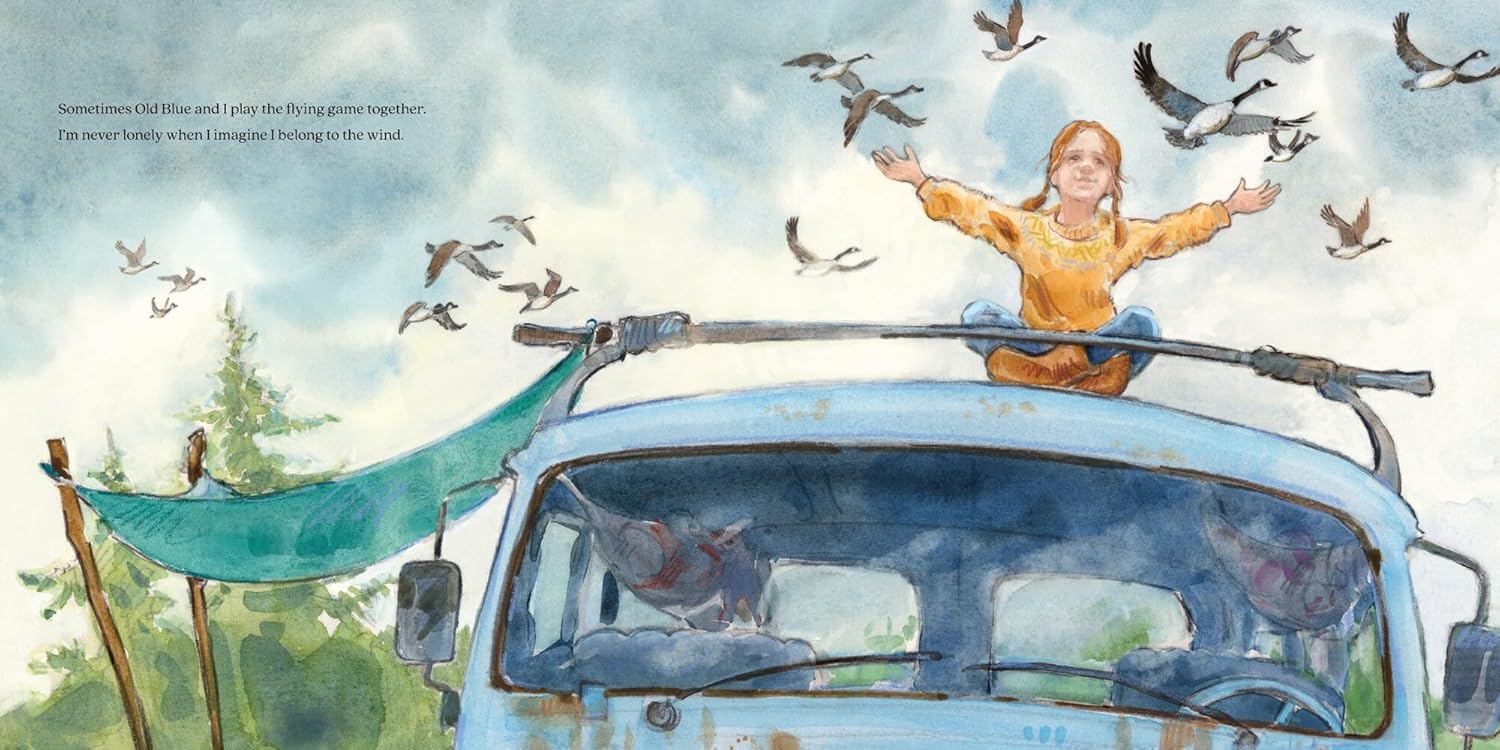
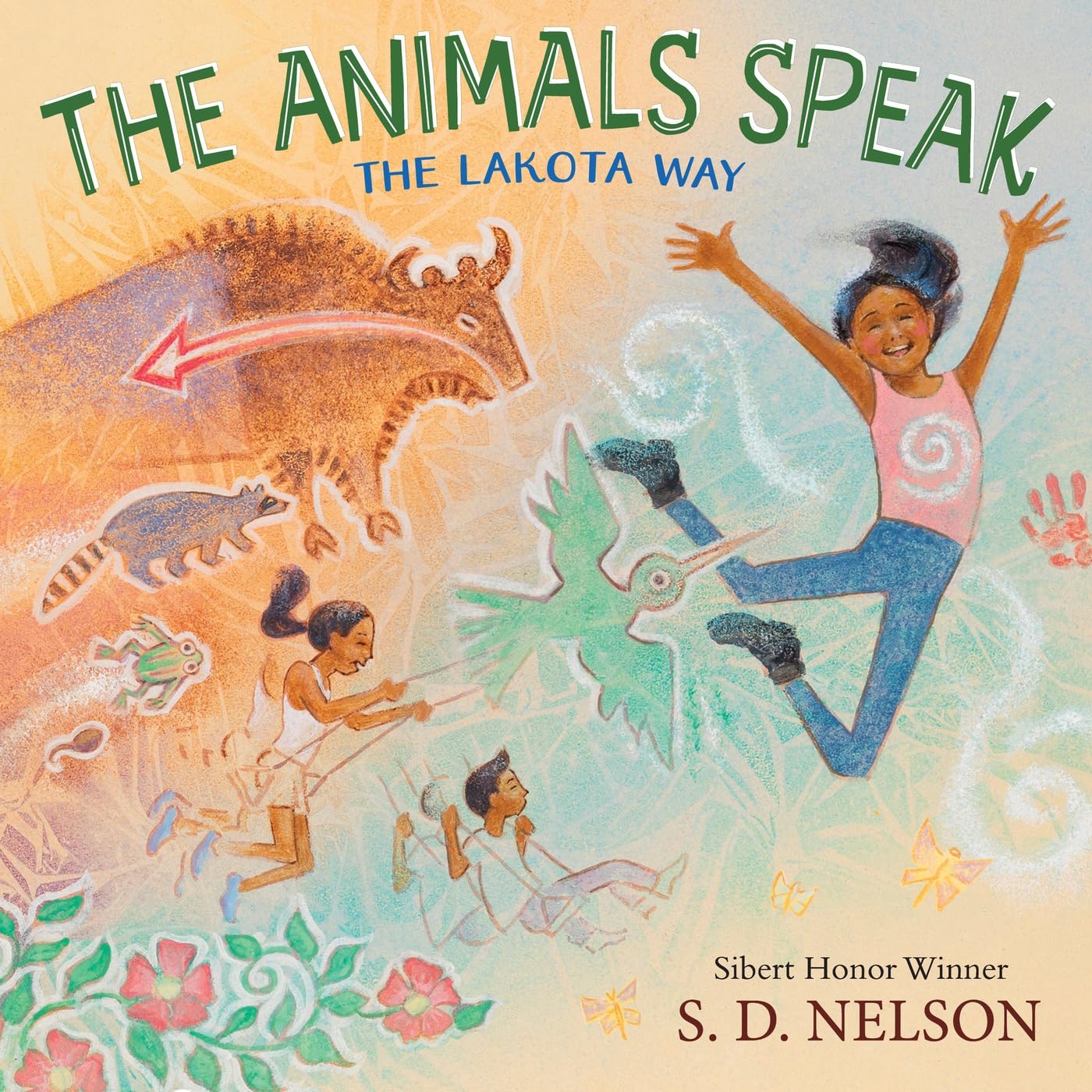
The young narrator introduces readers to Old Blue, her family’s faded and rusty-in-spots van, as they wait in traffic, stating that this beloved vehicle reliably transports them wherever they need to go, from town to the mountains and especially to out-of-the-way places where her family can “sit under the stars and eat warm soup before going to sleep.” Tucked in all together, the girl reveals, “Old Blue is my home.”

In the morning, Dad cooks breakfast on their camp stove, while she takes a shower courtesy of a plastic bag full of water hung from a tree. Inside Old Blue, there are nooks and crannies for all that they need, including a “cozy library” full of her “favorite books.” Rain or shine, she says, “Old Blue is my home.” Still, there are times when she yearns for permanence and community. “Sometimes,” she says, “living in Old Blue makes me feel like I’m from everywhere and belong nowhere.”

Text and illustration © 2025 by Lita Judge. Courtesy of Harry N. Abrams.

Going to school is especially difficult as kids shun her unconventional living conditions and don’t include her. When she feels this sadness, she finds comfort and assurance cuddling with her mom and peace in nature. While the family hopes for a “forever home,” the girl appreciates everything Old Blue provides. Old Blue is her home.

Following the story, Lita Judge talks about her own childhood experience living a “nomadic existence in Alaska, Nevada, Utah, Oregon, California, and Wisconsin” as her family moved frequently, following her “father’s work in remote areas” that “led to housing insecurity.” She also describes the “rich relationship with nature” her upbringing fostered as well as the toll it took on her feelings of security, serenity, and community. Judge finally reveals how her imagination helped her cope while also fueling her desire to connect through her creative talents. Judge includes a discussion adults can share with their children that defines various types of Housing Insecurity and its risks, and encourages readers to offer help through their local organizations.

Text and illustration © 2025 by Lita Judge. Courtesy of Harry N. Abrams.

While sharing her personal experience while growing up, Lita Judge’s moving tribute to her beloved non-traditional home connects all children through their common feelings, dreams, and close family ties. The narrator’s honest storytelling is compelling and heartfelt and will draw readers in, inspiring empathy and a better understanding of what many children face every day. Her repetition of “Old Blue is my home” can spark thoughtful consideration of what qualities actually make any dwelling a “home” rather than just a place to live in. 

Judge’s rich watercolor and colored pencil illustrations are infused with warmth, love, and togetherness. Children will relish the realistic portrayals of the family’s lifestyle and their facial expressions as well as the meticulous images of the van’s interior spaces that embrace the family’s necessary supplies, childhood comforts, and cherished pets.

Offering empathy and understanding for those experiencing housing insecurity as well as a touching look at family bonds, Old Blue Is My Home is a must addition to school and public libraries and home collections.

Ages 4 – 8

Harry N. Abrams, 2025 | ISBN 978-1419771521

About the Author/Illustrator

Lita Judge is the award-winning author-illustrator of many children’s books, including Dogs: A History of Our Best FriendsThe Wisdom of TreesBorn in the WildFlight SchoolRed Sled, and her illustrated young adult novel, Mary’s Monster, as well as the illustrator of Forty Winks: A Bedtime Adventure, written by Kelly DiPucchio. She lives with her husband, three cats, and a parrot in New Hampshire.

You can purchase Old Blue Is My Home from these booksellers

Amazon | Barnes & Noble | Bookshop

Picture Book Review
April 22 – Earth Day

About the Holiday

By 1970 awareness was growing worldwide about the damage that industrialization, pollution, and pesticides were causing people and the environment. On April 22, 1970—the date of the first Earth Day—millions of people demonstrated for change. In response, in July of 1970, Republican President Richard Nixon and the U.S. Congress created the Environmental Protection Agency. Between 1970 and 1973 they also enacted laws such as the Clean Air Act, the Clean Water Act, and the Endangered Species Act and more. Earth Day is now celebrated around the globe as a day for political action and civic participation.

Today, it’s more important than ever for citizens to participate in protecting the environment and speaking up against the policies of the current Republican president and administration so they do not reverse the progress and advancements we’ve made. This year the theme of Earth Day is Our Power, Our Planet and calls for people to unite around renewable energy. To learn more about this year’s theme, and discover ways that you and your kids can make a difference, visit earthday.org

Thanks go to Terry Pierce and the Yosemite Conservancy for sending me a copy of We Leave No Trace! for review.

We Leave No Trace!

Written by Terri Pierce | Illustrated by Nadja Sarell


In her gentle invitation for the youngest children and their families to enjoy the outdoors while also treating its flora and fauna with kindness, Terry Pierce models the “leave no trace” principles that ensure harmony between people and nature. Pierce touches on such ideas as not collecting natural “souvenirs,” maintaining a small footprint, and always throwing away trash in verses that encourage adults and children to talk about how they, particularly, can be good stewards of the earth as they hike, camp, picnic, or just enjoy a walk together.

Illustration © 2025 by Nadja Sarell, text © 2025 by Terry Pierce. Courtesy of Yosemite Conservancy.

While each page spread introduces a different way that kids can pitch in to help nature, Pierce has also included a repeated rhyming couplet that reinforces a child’s pride in supporting a cleaner, healthier environment for all while also having fun. This lively phrase can turn any read-aloud story time into an enjoyable interactive read-along for little ones. 

Kids will love hiking through Nadja Sarell’s vibrant landscapes that transports them to a mountain-side lake where various nature-lovers are boating, picnicking, and walking all within sight of a doe and her fawn and a bird that’s flying in low for its closeup; a forested trail in which a girl, instead of taking home a woodpecker’s feather, is snapping a picture of it; a park where ducks swim among lily pads as kids look on from a stone bridge while others play nearby; and more lovely locales. Each page spread also offers lots of opportunities for young readers to point out animals and other elements of nature as well as kid-favorite treats and activities.

We Leave No Trace! is a delightful adventure through nature that provides youngest children with easy and mindful reminders of how they can protect the environment now and for the future. Jaunty rhymes, repeated phrasing, and vivid illustrations that welcome discussion and interaction make this board book perfect for taking along on trips to playgrounds, parks, and other outdoor spots and a top choice for home and library collections.

Ages Baby – 3

Yosemite Conservancy, 2025 | ISBN 978-1951179373

About the Author

Terry Pierce is the author of more than twenty-five books for children, including We Leave No Trace!, Hello Meadow!, and Eat Up Bear! (Yosemite Conservancy), Love Can Come in Many Ways (Chronicle), Soccer Time! (Random House), Mama Loves You So (Little Simon) and My Busy Green Garden (Tilbury House). She is an outdoor enthusiast, enjoying backpacking, hiking, and rock climbing near her home in Mammoth Lakes, California.

About the Illustrator

Nadja Sarell is an illustrator living in Helsinki, Finland. She is the illustrator of We Leave No Trace!, Eat Up Bear! and Hello, Meadow! (Yosemite Conservancy), the Frankie Sparks, Third Grade Inventor series (Aladdin), and The One and Only Wolfgang (Zonderkidz). Nadja graduated with MA in dance from Theatre Academy Helsinki and graduated from North Wales School of Art and Design with BA in illustration for children’s publishing in 2004. Since then she has worked as a freelance illustrator in Finland and abroad. She loves to teach art, illustration, and dance for both children and adults.

We Leave No Trace! joins these two previous books in the Yosemite Conservancy’s “stewardship” board book series by Terry Pierce and Nadja Sarell

Eat Up, Bear!

Curious, hungry black bears just want to eat! Juicy berries, crunchy nuts, tender grubs, sticky honey—that’s good bear food. But if little park visitors and their families don’t watch out, their food will be bear food, too! The bouncy rhyming text and vibrant pictures in this board book show how people of all ages can help keep bears safe and thriving. Perfect for first-time and seasoned campers alike.

Hello, Meadow!

Grassy, flower-filled meadows are really pretty! It’s oh-so tempting to hike and skip right through them. But meadows are actually fragile, and human footsteps and picnics can cause them harm—then they cannot do their important work of providing a habitat for creatures and plants, filtering water, and even storing carbon. The lively text and beautiful illustrations in this sturdy board book show little nature lovers how to easily protect meadows while enjoying one of Earth’s loveliest features.

Earth Day Activity

Image courtesy of Explore More, Clean Less

Paint with Water


It’s fun to get creative with activities you can do outdoors that will leave no trace. Painting with water on boulders or river rocks or on areas of paved park trails or playground sidewalks with paint brushes or your fingers lets you explore your artistic side while being gentle with nature. You can find many more ways for kids to learn about and interact with the environment at Explore More, Clean Less!

You can purchase We Leave No Trace! from these booksellers

Yosemite Conservancy | Amazon | Barnes & Noble | Bookshop

Picture Book Review
April 10 – National Wildlife Week

About the Holiday

National Wildlife Week, dating back to 1938, is the National Wildlife Federation’s longest-running education program. The celebration was designed to connect budding conservationists of all ages to the awesome wonders of wildlife. Each year, we pick a theme and provide fun educational materials and activities for educators and caregivers to use with kids. This year’s theme is Keep an Eye on the Wild. Conservationists and animal lovers are keeping a lookout for wildlife in the most unexpected places as we learn how we can keep their habitats safe and live in harmony with our incredible wild neighbors. Whether you keep your eyes out for the wildlife living near you with a “critter cam” or by walking around and paying attention to your backyard, neighborhood, and wider area, being aware of the creatures around you can help them survive for generations to come. To learn more about National Wildlife Week and find fun activities aimed at connecting kids with wildlife, visit the National Wildlife Week Kids Page!

Finding Home: Amazing Places Animals Live

Written by Mike Unwin | Illustrated by Jenni Desmond


Finding Home begins: “Our planet is home to a mind-boggling number of different animals: at least 6,500 species of mammal, 10,000 species of reptile, 11,000 species of bird, and literally millions of insects. Every single one has its own home.” Just think of it! As your eye sweeps across any vista; as you walk across your yard, local playground, or favorite park, beach, or mountain trail, an untold number of creatures’ homes are within sight or underfoot. We know their names: Den. Nest. Burrow. Taxi (wait, what?). You’ll see, because in their astounding and gorgeous book, Mike Unwin and Jenni Desmond reveal that there is no such thing as a generic animal home.

Illustration © 2025 by Jenni Desmond, text © 2025 by Mike Unwin. Courtesy of Bloomsbury Children’s Books.

Take “den,” for instance—a polar bear’s snow den. Unwin and Desmond take you right inside this winter home, where a mother polar bear and her two cubs (born here in the cold of January) welcome you. As you squeeze inside, don’t worry about being cold. The polar bear’s “thick fur keeps the temperature 77°F warmer than outside.” 

Next up is “nest.” These are bowls made from twigs, straw, and fluff and, sometimes, found objects like bits of paper or cloth, right? Well, yes—for some birds. But you won’t believe your eyes when you see what appears to be several haystacks lodged within a tree’s branches. This nest, constructed by a whole community of birds smaller than sparrows, can “grow as big as a car, weigh more than a ton, and last 100 years.” Like humans’ apartment buildings, the bird pairs that inhabit this nest look out for each other and help their neighbors. Kids will also be amazed by another type of bird that literally sews leaves together with “plant fiber and spider silk” to create their soft, deep nests.

Illustration © 2025 by Jenni Desmond, text © 2025 by Mike Unwin. Courtesy of Bloomsbury Children’s Books.

And how about “burrows?” Yep, Unwin and Desmond showcase a couple of pretty spectacular burrows too. Take the aardvark’s home. You won’t see an aardvark during the day. While the sun is up, they stay below ground, sleeping and tending to their young. It’s only after sunset that these unusual, ant-eating animals (including two-week-old babies) make an appearance topside. This is when they do what they do best: sniff out anthills and termite mounds, dig them up, and have dinner. It takes a hearty meal to satisfy an aardvark: “One aardvark can eat an amazing 50,000 ants and termites in a single night!”

Now, about that “taxi.” Children will be wowed by two, very different types of animals who prefer moving from one area to another by hitching a ride on another creature, from whom they can get food and other necessities of life while helping their hosts as well. Of course, the variety of animal homes don’t stop at these four. Every page transports readers to a different part of the globe to witness creatures of the air, sea, and land living in the home of their choice.

Unwin ends this fascinating travelogue with a map showing different ways some of the animals in the book tend to the environment, protecting it and keeping it growing for themselves and humans. He also includes a caution, reminding readers that “all these habitats . . . fit together like jigsaw pieces to make up planet Earth. And just like a jigsaw needs all its pieces, a healthy planet needs all its animals and their habitats.” Sadly, humans have not been good stewards of Earth’s bounty. “Today, scientists and conservationists are working hard to put things right.” But everyone is needed to make sure our environment is cared for the way we care for our own families. “Only then will planet Earth truly be home, sweet home.”

Illustration © 2025 by Jenni Desmond, text © 2025 by Mike Unwin. Courtesy of Bloomsbury Children’s Books.

Mike Unwin draws readers in with engaging storytelling that allows kids to easily understand how each animal goes about building their home and why it’s perfect for their lifestyle. Children also learn just as much about the animals as the homes they build, giving them deep and well-rounded knowledge of some of the most unusual birds, fish, mammals, and insects on our planet and how many of them benefit humankind. Unwin’s phrasing, vocabulary and conversational lilt make Finding Home a highly satisfying nonfiction read aloud for younger kids. Independent readers will eagerly dip into the book again and again to meet these intriguing creatures.

With the impact of a museum exhibit, Jenni Desmond’s rich, full-bleed illustrations will take your breath away with their stunning realism and personality. Some animals peek out at the reader, while others busily go about their work oblivious to outside interest. From grassy hillsides to treetop canopies to sunny Africa and the snowy Himalayas, Desmond takes readers on an around the world tour like no other.

Gorgeous, educational, and nature nonfiction at its best, Finding Home: Amazing Places Animals Live is a must for all classroom, school, and public libraries as well as for nature- and animal-loving kids and families.

Ages 5 – 8+

Bloomsbury Children’s Books, 2025 | ISBN 978-1547615100

About the Author

Mike Unwin has written more than 30 books for both adults and children, including the Encyclopedia of Birds and Migration. He is also a regular contributor to publications such as BBC Wildlife and RSPB Nature’s Home. In 2013 Mike was voted UK Travel Writer of the Year by the British Guild of Travel Writers. Follow Mike on Instagram @mikeunwin.wildtravel.

About the Illustrator

Jenni Desmond is the illustrator of more than 20 books, including MigrationThe Wolves of Yellowstone, and The Blue Whale. Her books have been translated into over a dozen languages. In 2016 she was made a Maurice Sendak Fellow and her book The Polar Bear became a New York Times Best Illustrated Children’s Book of the Year. When Jenni is not in her studio, you’ll find her cooking, cycling and looking for adventure. Visit her at jennidesmond.com and follow her on Instagram @jennidesmond.

National Wildlife Week Activity

celebrate-picture-books-picture-book-review-shark-fin-craft

Fintastic Shark Fun


Sharks are awesome creatures and even feature as a home to another animal in today’s book! Follow the directions below and to make your own shark fin. 

Supplies

  • 2 pieces of 8.5 x 11 gray cardstock paper
  • Ribbon
  • Tape
  • Scissors
  • Pencil

fin outline white

celebrate-picture-books-picture-book-review-shark-fin

Directions

  1. Tape the top of the two pieces of paper together
  2. Fold them back together
  3. Measure an inch up from the bottom of the papers (the un-taped side) and trace a straight line across both papers
  4. Trace a shark fin outline onto your paper. The shark outline should stop an inch above the bottom
  5. Cut out the fin on both pieces of paper. If you should cut through the tape, re-tape the tops together
  6. Fold along the lines of both papers so the folds face towards each other.
  7. Tape the folds so the fin becomes a triangle
  8. Cut two slits parallel to the folded lines
  9. Thread ribbon through slits

You can purchase Finding Home: Amazing Places Animals Live from these booksellers

Amazon | Barnes & Noble | Bookshop (discounted books and support for your local independent bookstore)

Picture Book Review

March 14 – It’s Expanding Girls’ Horizons in Science and Engineering Month

About the Holiday

Expanding Girls’ Horizons in Science and Engineering Month was established in 2020 by the Expanding Your Horizons (EYH) Network. Founded in 1974 as a series of conferences aimed at promoting STEM careers to middle and high school girls, EYH provides hands-on activities, mentoring, and contact with role models as well as information about science and engineering fields.

Women still make up only 28% of the science and engineering workforce. With this month-long observance, the EYH Network hopes to make a significant impact on girls’ perceptions and career choices, encouraging them to explore and embrace STEM subjects​.

Thank you to Heyday and Barbara Fisch at Blue Slip Media for sharing a copy of I Love Salmon and Lampreys: A Native Story of Resilience with me!

I Love Salmon and Lampreys: A Native Story of Resilience

Written by Brook M. Thompson | Illustrated by Anastasia Khmelevska


In her powerful autobiographical story, Brook Thompson, a member of the Yurok and Karuk Tribes, warmly invites readers to join her on her journey from childhood to the present day to experience her intense love for her tribes’ traditions and the fish that sustain them. Readers are first taken out on Brook’s family’s fishing boat, where her father and her grandfather tell stories of their own childhoods as they check the nets in their designated fishing spots along the Klamath River in Northern California. Then it’s back home to learn how Brook helps cook the fish (lampreys in the winter and salmon the rest of the year) in a wide variety of delicious ways.

Illustration © 2025 by Anastasia Khmelevska, text © 2025 by Brook M. Thompson. Courtesy of Heyday.

Salmon and lampreys are more than just food to Brook, however. They are creatures of the earth to be admired and honored. She tells readers about their life and spawning cycles, how they predate the dinosaurs, and even about their fascinating symbiotic relationship. For Brook, this love she feels is shared. She says, “I feel loved by salmon because years ago my ancestors took care of the salmon for their future family” and reveals that the fish in the river now “are the great-great-great-great-great-great-grandkids of the salmon who had a relationship with my great-grandparents.”

Illustration © 2025 by Anastasia Khmelevska, text © 2025 by Brook M. Thompson. Courtesy of Heyday.

In 2002, when Brook was still young, over 60,000 salmon perished from a parasite which spread when the water level of the river became too low and the temperature too hot due to the six dams erected on the river. She explains how dams “block the salmon’s way home” and how the warming water promotes the growth of toxic green algae, which affects the fishes’ breathing and spreads disease. 

Brook joined protests by the tribal people and others, while scientists did research and local politicians lobbied for change. More than 20 years later agreements with the politicians and the companies that owned the dams were signed, and four of the six dams along the Klamath River were removed.

Illustration © 2025 by Anastasia Khmelevska, text © 2025 by Brook M. Thompson. Courtesy of Heyday.

As she grew into adulthood and inspired by her experiences, Brook set her eyes on higher education. She “went to college to learn about dams and about how to protect salmon in the future.” She became an engineer and a scientist who studies the interconnectedness of  “water, nature, people, animals, and buildings” and returned home to the Klamath River, where she continues the legacy of her ancestors in caring for the salmon, lampreys, and the environment.

Back matter includes Fun Facts about lampreys and salmon; photographs of Brook with salmon and at Iron Gate Dam, which was removed in 2024; a map of the Klamath River Watershed area; a note about the inspiration behind the book as well as the book’s font, OpenDyslexic, which makes it easier for those with dyslexia, like Brook, to read; and notes about the author and illustrator.

Illustration © 2025 by Anastasia Khmelevska, text © 2025 by Brook M. Thompson. Courtesy of Heyday.

Brook Thompson, in her compelling autobiographical story, will captivate children and touch their hearts. Thompson’s eloquent and straightforward storytelling immediately immerses readers in the Native relationship with nature and will inspire both young and adult readers to think deeply about how the earth sustains us and how we can show our appreciation in return. The theme of environmental justice and how citizens can and do make a difference is made personal through Thompson’s clear explanations of how the dams affected the salmon population and the long-term steps people took to reverse their damage. Thompson’s dedication—even from childhood—to her tribes, family, and future generations will impress readers. Children will also develop an understanding of how issues of interest to them now can inform their future endeavors.

Anastasia Khmelevska’s vibrant earth tone illustrations endear Brook to children through her evident passion for family, fishing, and the salmon and lampreys that have been a constant in her tribes’ lives. Her pacing and realistic depictions of people and events help children clearly understand the importance of each element of Thompson’s story from how the cyclical lives of salmon and lampreys are demonstrated in a swirling wave to the stunning landscapes highlight of the Pacific Northwest. These images make her depiction of the salmon die-off all the more impactful. Her final portrait of Brook Thompson coming home after earning her university degrees links her life to the salmon she loves so well. 

The combination of Native culture and environmental awareness makes I Love Salmon and Lampreys: A Native Story of Resilience a must addition to school and public libraries. The book offers extensive value and research opportunities for science and social studies classes. For families who care about the environment, sustainability, activism, and the future of our planet, I Love Salmon and Lampreys would be a much-loved choice.

Ages 4 – 8

Heyday, 2025 | ISBN 978-1597146685

About the Author

Brook M. Thompson is a part of the Yurok and Karuk Tribes. She is a neurodivergent and Two-Spirit author with dyslexia. She has a BS in civil engineering from Portland State University and an MS in environmental engineering from Stanford University, and she will soon have a PhD in environmental studies from University of California, Santa Cruz, where she studies water, politics, restoration, and salmon. You can find out more about her at brookmthompson.com.

About the Illustrator

Anastasia Khmelevska is an illustrator based in Lviv, Ukraine. She has illustrated several children’s books, including My Invisible Zoo, Marella the Mermaid, and Anything Helps. Follow her on Instagram @cute_miuu.

Expanding Girls’ Horizons in Science and Engineering Month Activities

Illustration © 2025 by Anastasia Khmelevska, text © 2025 by Brook M. Thompson. Courtesy of Heyday.

I Love Salmon and Lampreys Activity Pages

Play a printable board game, write about your dreams for the future, and learn fun facts about salmon and lampreys with these three I Love Salmon and Lampreys Activity Pages!

Chinook and Coho Salmon Coloring Pages

Coho and Chinook Salmon are vital to the Pacific Northwest. You can learn more about California salmon at caltrout.org. Enjoy these coloring pages of coho and chinook salmon. Colored images are included for your reference.

Chinook Salmon Coloring Page | Colored Image of Chinook Salmon

Coho Salmon Coloring Page | Colored Image of Coho Salmon

You can purchase I Love Salmon and Lampreys: A Native Story of Resilience at these bookstores

Amazon | Barnes & Noble | Bookshop

Picture Book Review
March 11 – It’s Gardening, Nature, and Ecology Books Month

About the Holiday

Established in the early 2000s by the Children’s Book Council, this month-long holiday encourages people to read books about gardening, nature, and ecology to foster a deeper connection with the environment and appreciation for our planet, encouraging more people to adopt sustainable practices in their daily lives.

I’d like to thank G.P. Putnam’s Sons Books for Young Readers for sharing a digital copy of Hello, I’m an Axolotl with me for review.

Hello, I’m an Axolotl

Written by Haley Rocco | Illustrated by John Rocco


Swimming into the popular Meet the Wild Things series that introduces kids to unusual and endangered animals is Hello, I’m an Axolotl and its spirited narrator who wastes no time in telling readers “I am A-M-A-Z-I-N-G!” And it’s not kidding!

First off, it’s named after a super hero-sounding Aztec god and then we learn that even though axolotl’s are related to salamanders, they’re a bit like an underwater Peter Pan because they “never really grow up,” which actually gives axolotls another superpower: the ability to breathe in two ways.

Illustration © 2025 by John Rocco, text © 2025 by Haley Rocco. Courtesy of G.P. Putnam’s Sons Books for Young Readers.

And if that doesn’t convince you that these little cuties are special, the fact that their skin sparkles like glitter certainly will! The book’s host then reveals how that’s possible. Pretty neat, huh? Still not convinced that the axolotl is one of the most fascinating animals on the planet? How about if you knew they can regrow “lost limbs, tails, even parts of [their] hearts and brains?!” This comes in handy, especially if one of their 1,000 siblings has mistaken them for a snack. Scientists are even studying how they do it with hopes of applying what they learn to humans one day.
But everything isn’t rosy for axolotls. While “there about a million axolotls all over the world living in tanks and aquariums,” there are fewer than 500 living in the wild—and these are only found in one “lake and some canals outside Mexico City.” You’ll be able to see why when you compare an illustration of Lake Xochimilco from the 1500s to one from current times.

Illustration © 2025 by John Rocco, text © 2025 by Haley Rocco. Courtesy of G.P. Putnam’s Sons Books for Young Readers.

There is hope, however, as conservationists are reintroducing “an ancient Aztec farming method” that provides conditions axolotls need to survive. World-wide notoriety that shines a light on the plight of these A-M-A-Z-I-N-G creatures helps too.

Back matter expands on the facts presented in the text, including short paragraphs on the Aztec people, the origins of all axolotls in captivity today, the science behind their sparkly skin, why axolotls are endangered, and much more. 

Illustration © 2025 by John Rocco, text © 2025 by Haley Rocco. Courtesy of G.P. Putnam’s Sons Books for Young Readers.

Haley Rocco’s superpower is introducing incredible animals in a witty, personal voice that immediately endears them to kids. In Hello, I’m an Axalotl, her charming first-person narration rivets readers to the fascinating facts about axolotls, providing plenty of eye-opening and “awww”-inspiring moments as well as heartfelt concern about the future of these one-of-a-kind creatures and how they can help.

John Rocco’s stunning mixed media illustrations put kids eye-to-eye with the feisty and adorable axolotl narrator as it takes kids on a tour of its home, a lab where scientists are studying the regenerative abilities of axolotls, and to ancient and modern Lake Xochimilco. Readers of all ages will be intrigued by the image of the Aztec farming method making a comeback to protect axolotls. There’s even an “actual size” depiction of an axolotl that will captivate kids.

Unforgettable learning at its best, Hello, I’m an Axolotl is a must addition for school and public library collections and would make a perfect choice for families with children who love animals and care about the environment.

Ages 3 – 7

G.P. Putnam’s Sons Books for Young Readers, 2025 | ISBN 978-0593618219

Discover all the books in the “Meet the Wild Things” series!

Hello, I’m a Sloth

Say hello to a sloth! Did you know sloths only poop once a week and can fall up to 100 feet without getting hurt? They also have hundreds of bugs living on them, including a species of moth that only lives on sloths! And they move so slowly that algae grows on their fur, which can actually help sloths camouflage!

Hello, I’m a Pangolin

Say hello to a pangolin! Did you know pangolins are the only mammals with scales? And did you know pangolins have a super-sticky tongue as long as their entire body (the better to eat 20,000 bugs a day with!)?


Hello, I’m a Quokka

Say hello to a quokka. Most of them live on a tiny island off of Western Australia. Like their relatives kangaroos and wallabies, they hop to get around and carry their babies in pouches. People say they are the happiest animal in the world. That’s because they’re very friendly, and their faces look like they are built for smiling—perfect for taking selfies with!

Hello, I’m a Toucan — Coming June 24!

Did you know a toucan’s bill is four times the size of its head? But you might be surprised by how lightweight and strong it is. And did you know that toucans use their bills to keep cool when it’s hot outside, by increasing blood flow from the rest of their body to maintain the perfect temperature? You can’t get much cooler than that.

About the Author

Hayley Rocco is the author of Wild Places: The Life of Naturalist David Attenborough, How to Send a Hug, and the Meet the Wild Things series, all in collaboration with her husband, John Rocco. Before dedicating herself to writing for children full-time, Hayley worked as a publicist at several major publishers. Visit Hayley at hayleyrocco.com and follow her on Instagram @hayleyroccobooks.

About the Illustrator

John Rocco is the #1 New York Times bestselling author and illustrator of many acclaimed books for children, including Blackout, the recipient of a Caldecott Honor, and How We Got to the Moon, which received a Sibert Honor and was longlisted for the National Book Award. John and Hayley live in Rhode Island in an old house tucked in the woods near the sea. Visit John at roccoart.com and follow him on Instagram @roccoart.

Hayley and John are also ambassadors for the nonprofit Wild Tomorrow and cofounders of Children’s Book Creators for Conservation.

You can purchase Hello, I’m an Axolotl at these booksellers

Amazon | Barnes & Noble | Bookshop (to support your local independent bookstore)

Picture Book Review