February 8 – Kite Flying Day

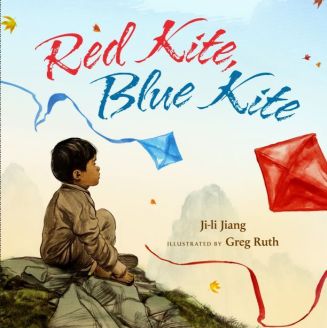
celebrate-picture-books-picture-book-review-red-kite-blue-kite-cover

About the Holiday

If you live in a cold climate and cabin fever has set in or if you live in a warm climate and want to get out and enjoy the day, why not take the opportunity of today’s holiday and go fly a kite? Whether you’re steering a simple diamond or a fancy dragon, watching a kite dip and soar through the sky is an exhilarating experience!

Red Kite, Blue Kite

Written by Ji-li Jiang | Illustrated by Greg Ruth


“I love to fly kites,” young Tai Shan relates, but not he’s while standing on the ground. Instead, because his city is so crowded, his Baba and he climb to the peak of their triangular roof where they are “above but still under, neither here nor there. We are free, like the kites.” While they fly their kites—red for Tai Shan and blue for Baba—Baba tells stories, and Tai Shan feels as if he is soaring through the clouds, “looking down at the dotted houses” and wanting to stay up there forever.

celebrate-picture-books-picture-book-review-red-kite-blue-kite-Tai-Shan-and-Baba-fly-kites

copyright Greg Ruth, courtesy of Disney-Hyperion

But one day dark times descend. Tai Shan’s school and many others are shuttered. Baba is taken away by men in red arm bands and sent to work in a labor camp. Tai Shan is sent to live with Granny Wang, a farmer who lives in a village next to the labor camp. A thick forest separates Tai Shan and Baba. During the day Granny Wang teaches Tai Shan how to make straw grasshoppers and spin cotton and lets him ride her buffalo. At night Tai Shan dreams of flying kites from the rooftop with his father.

On Sundays Baba walks for hours to visit Tai Shan. He spends time telling stories and playing with his son and his friends. Then they climb the hill and fly kites, Tai Shan’s red one following Baba’s blue. “The kites hop and giggle as they rise and dive, soaring and lunging together.” At the end of the day, Baba returns to the labor camp for another week. In the autumn Baba tells Tai Shan that he won’t be able to visit for a long time. But he has a clever plan—a way that he and Tai Shan can see each other.

Baba gives his son a new red kite and tells him to fly it from the hill each morning. He will see it from his camp. In the evening Baba will fly his blue kite so that Tai Shan can see it. Tai Shan likes the idea of this “secret signal.” The next morning Tai Shan runs to the hill and launches his kite, knowing that “Baba is smiling as he watches the red kite dancing.” In the evening he returns to the hill, and after a long wait “Baba’s blue kite sways into the white clouds.”

celebrate-picture-books-picture-book-review-red-kite-blue-kite-Baba-taken

copyright Greg Ruth, courtesy of Disney-Hyperion

Every day Tai Shan sends his father a silent message—“‘How are you, Baba? I miss you.’” and “Baba’s blue kite swirls and circles, replying, ‘I miss you, too, little Tai Shan.’” Autumn is coming to a close, but still Baba does not visit. One day no blue kite appears in the sky. The next day and the next no kite appears either. Tai Shan asks Granny Wang to take him to the camp to see Baba. If there is no kite on the fourth day they will go, Granny Wang promises.

That night Tai Shan dreams about the thick forest and hears Baba whisper, “‘Tai Shan, I saw your red kite fly so high.’” But these words are not in a dream, Baba is there. But Baba is not home to stay. Hurriedly, he gives Tai Shan his blue kite, telling him that he will not be able to fly it for a while. He asks Tai Shan to fly both kites and know that he is looking up and thinking about his son. Suddenly, men with red armbands rush in and take Baba away. Tai Shan tries to run after him, but Granny Wang holds him back.

Tai Shan cries and does not understand. Granny Wang explains that Baba is being sent to another labor camp far away because the authorities don’t agree with his ideas. During the three days when he didn’t fly his blue kite, Granny Wang says, Baba had been imprisoned. He had escaped and run all the way to see Tai Shan before he was taken away. Now Tai Shan flies the two kites every day and thinks of being together with Baba.
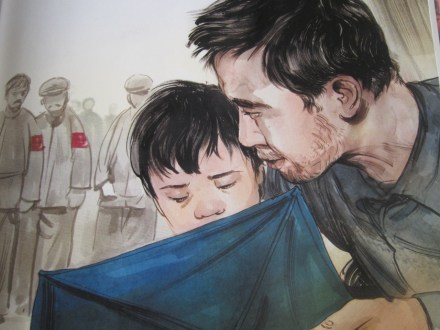
celebrate-picture-books-picture-book-review-red-kite-blue-kite-Baba-gives-kite

copyright Greg Ruth, courtesy of Disney-Hyperion

One summer afternoon, Tai Shan dozes while he allows his red kite to dip and soar in the clouds. When he opens his eyes, he sees dozens of red and blue kites in the sky. Tai Shan jumps up. He sees Baba smiling at him and “holding the string of a huge blue kite dancing in the sky.” Tai Shan’s friends are also smiling and flying their new kites. Tai Shan runs to Baba, and Baba runs toward Tai Shan. The sky “is filled with kites—red and blue. They hop and giggle and cheer as they rise and dive, soaring and lunging together. They are free, flying everywhere.”

An Author’s Note about the Chinese Cultural Revolution follows the text.

Inspired by the story of a family friend whose father was sent to a labor camp during the Chinese Cultural Revolution between 1966 and 1976, Ji-li Jiang wrote Red Kite, Blue Kite “for the many fathers and sons who suffered during that turmoil.” Jiang’s story is a universal and relevant reminder of the precious freedoms of thought and speech that need constant and vigilant protection. Through her sensitive storytelling and lyrical language, Jiang offers a story of understanding, hope, and infinite love that will fill readers’ hearts.

Greg Ruth’s stunning paintings show all the emotion of Jiang’s story through exquisite, realistic portraits of Tai Shan, Baba, and Granny Wang. The distinctive landscapes of China are rendered in colorful foregrounds set on gauzy backgrounds of rising hills. Smoky images of the followers of the Cultural Revolution mirrors the darkness and destruction of the time in a way that is understandable for the young audience. The final two-page spread of Tai Shan and Baba’s reunion amid dozens of red and blue kites is inspiring and full of the strength of the human spirit.

Red Kite, Blue Kite is a must for school and public libraries and makes an excellent addition to home libraries as well.

Ages 5 – 9

Disney-Hyperion, 2013 | ISBN 978-1423127536

For a downloadable Educator’s Guide click here.

Learn more about Ji-li Jiang and her books on her website!

Find galleries of books and illustration for children and adults plus lots more on Greg Ruth’s website!

Kite Flying Day Activity
celebrate-picture-books-picture-book-review-kite-maze

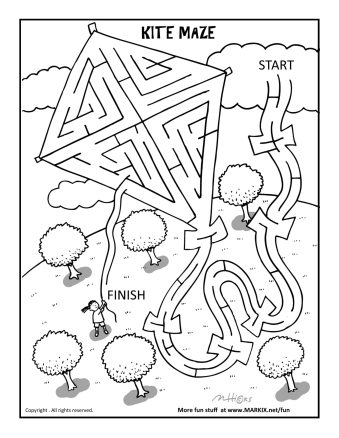
Soaring Kite Maze


The dips and rises your pencil takes through this maze is a little like the way a kite flies through the sky! Print your Soaring Kite Maze and enjoy!

Picture Book Review

January 30 – Chinese New Year

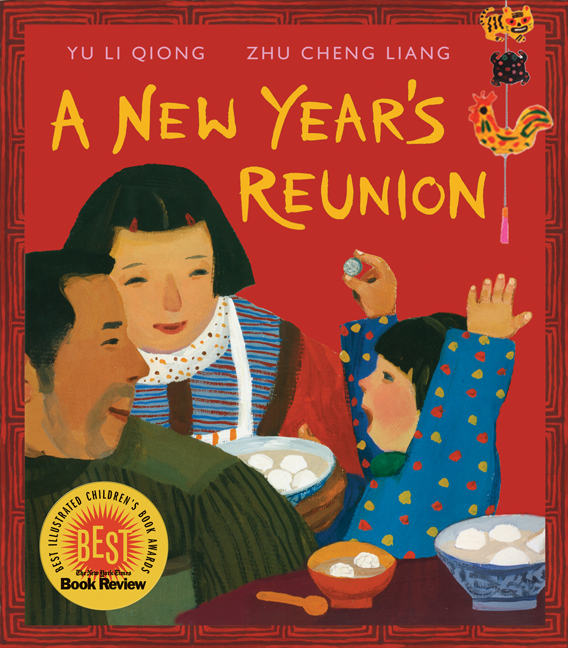
celebrate-picture-books-picture-book-review-a-new-year's-reunion-cover

About the Holiday

Chinese New Year celebrations began on the eve of January 28, ushering in the Year of the Rooster. Also known as the Spring Festival, the New Year is a time for festivities including lion and dragon dances, fireworks, visiting friends and relatives, family meals, and special decorations.The New Year is the busiest travel season of the year as family members return home to spend the holiday with loved ones. The Chinese New Year celebrations  end on the 15th day of the new year with the Lantern Festival.  People born in the Year of the Rooster are said to be honest, energetic, intelligent, flexible, and confident.

A New Year’s Reunion

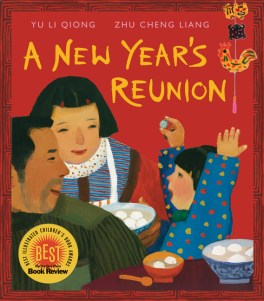
Written by Yu Li-Qiong | Illustrated by Zhu Cheng-Liang


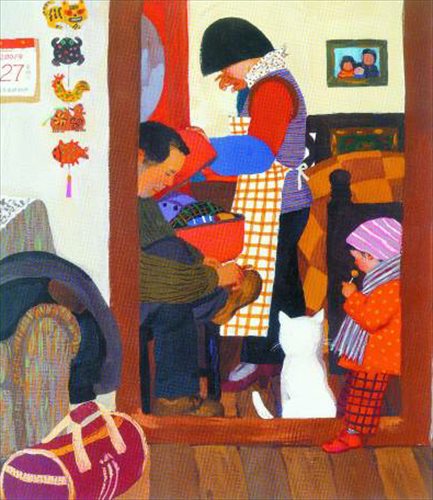
Maomao’s papa works far away as a house builder and can only return home once a year—during Chinese New Year. Today, Maomao and her mother wake up early and get ready because “Papa is coming home.” When Papa arrives, Maomao peers at her father from a distance. He seems unfamiliar, and when he picks her up in his arms she calls for her mama in alarm. But Papa has come with gifts—a hat for Maomao and a coat for Mama.

celebrate-picture-books-picture-book-review-a-new-year's-reunion-papa-decorating-house

Image copyright Yu Li-Qiong, 2011, courtesy of Candlewick Press

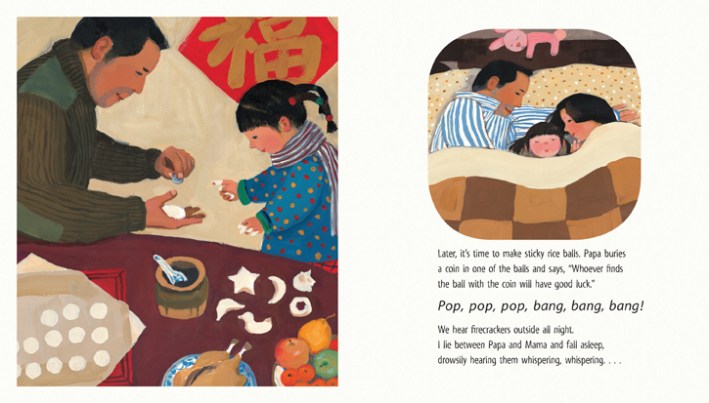
After catching up and eating lunch, Papa takes Maomao with him to the barber shop, where he gets a haircut and a shave. As Maomao watches, the Papa in the mirror is getting more like Papa the way he used to be.” Back home, Papa helps the family decorate their house and later they make sticky rice balls for the next day. “Papa buries a coin in one of the balls and says, ‘Whoever finds the ball with the coin will have good luck.’” As she falls asleep to the whispers of her parents, Maomao hears firecrackers snapping in the night air.

celebrate-picture-books-picture-book-review-a-new-year's-reunion-making-sticky-rice-balls

Image copyright Yu Li-Qiong, 2011, text copyright Zhu Cheng-Liang, 2013. Courtesy of Candlewick Press.

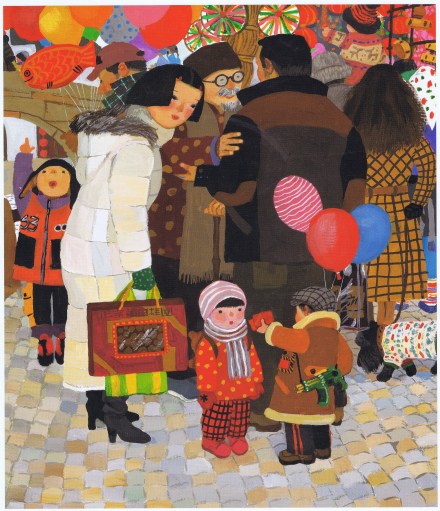
In the morning while eating the sticky rice balls, Maomao bites down on something hard. “‘The fortune coin! It’s the fortune coin!’” she exclaims. Her papa tells her to put it in her pocket so that the good luck will not escape. She places it in her coat pocket and then they all join the crowd in the square going on holiday visits. On the way she meets her friend Dachun, who shows her the red envelope he has gotten. Maomao proudly shows Dachun her lucky coin.

On the second day of New Year’s while Papa is doing chores around the house, he takes his little daughter to the roof. From here she can see Dachun’s house and hear the dragon dance over on Main Street. Maomao stands on tiptoe as tall as she can, but she can’t see the parade. Papa swings her onto his shoulders. “‘Now can you see it?’ he asks. ‘Yes, I can. They’re coming!’” she answers with excitement.

celebrate-picture-books-picture-book-review-a-new-year's-reunion-visiting-in-square

Image copyright Yu Li-Qiong, 2011, courtesy of Candlewick Press

The third day of New Year’s brings snow, and Maomao, Dachun, and the other neighborhood children build a tall snowman and have a snowball fight in the courtyard. When Maomao comes in at the end of the day, she reaches into her coat pocket, but her fortune coin is gone! She runs outside, but the courtyard is covered in snow, and she can’t find it anywhere. Papa tries to give her another coin, but it isn’t the same.

Later, feeling miserable, Maomao climbs into bed and takes off her jacket. Suddenly, she hears a clink as something falls to the floor. “‘It’s the coin! My fortune coin!’” she cries. ‘‘Papa come quick—come and see! I haven’t lost the fortune coin. It’s been with me all the time.’” Maomao falls asleep happy. The next morning, she wakes to see Mama packing Papa’s things. Soon, he will return to work. He crouches down and with a promise to bring Maomao a doll hugs her tight. But Maomao shakes her head. “‘I want to give you something…,’” she says. She puts the coin in Papa’s hand and tells him, “‘Here, take this. Next time you’re back, we can bury it in the sticky rice ball again!’” Papa is silent and gives Maomao another hug before they say goodbye for another year.

celebrate-picture-books-picture-book-review-a-new-year's-reunion-papa-packing

Image copyright Yu Li-Qiong, 2011, courtesy of Candlewick Press

Yu Li-Qiong’s touching story of a little girl’s reunion with the father she rarely sees is a heartfelt reminder that love continues over miles and days or months. Just as the fortune coin was with Maomao all the time, Maomao’s papa is always in her heart and she in his. Little ones, especially, will be captivated by the day-to-day activities of Maomao’s New Year festivities and appreciate the importance of her coin. Li-Qiong’s sweet story, filled with homey details of child and parent interactions, resonates beyond the holiday theme of the story and is a beautiful book for the many children who have parents who travel frequently with their jobs.

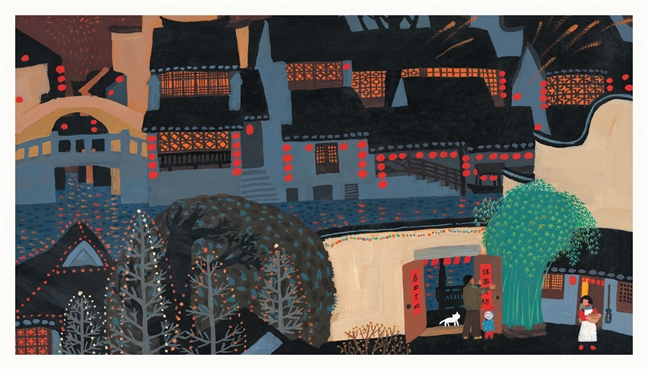
The quiet grace and wonder of Zhu Cheng-Liang’s gouache illustrations perfectly convey the loving relationship between father and daughter and the excitement of a family being together after a long absence. Although the Chinese New Year provides a frame for the story, Cheng-Liang’s paintings predominately focus on the day-to-day activities Maomao and her papa share—getting a haircut, fixing the house, cooking, meeting and playing with friends, and special hugs—emphasizing the universal scope of the story. The enchantment of the New Year’s festivities shines in a two-page spread where a fiery red-and-orange dragon puppet cavorts over the village bridge followed by a throng of people as others watch from homes and windows. Adorable Maomao may raise a lump in readers throats as she hugs her papa and gives him her treasured fortune coin.

A brief Author’s Note following the text pays tribute to the millions of migrant workers in China who often do not see their families except once each year.

A New Year’s Reunion would be a welcome book on any child’s bookshelf as a reminder that love overcomes any absence, long or short.

Ages 3 – 7

Candlewick Press, 2011 | ISBN 978-076366748

Chinese New Year Activity

celebrate-picture-books-picture-book-review-chinese-new-year-lantern-festival-coloring-page

Lantern Festival Coloring Page


Chinese New Year festivities end with a brilliant festival of lights. Enjoy this printable Lantern Festival Coloring Page to celebrate the Chinese New Year.

celebrate-picture-books-picture-book-review-a-new-year's-reunion-cover

You can find A New Year’s Reunion at these booksellers

Amazon | Barnes & Noble | Books-a-Million | IndieBound

Picture Book Review


January 27 – It’s Creativity Month

celebrate-picture-books-picture-book-review-stitchin'-and-pullin'-a-gee's-bend-quilt-cover

About the Holiday

January is a time for reflection and new beginnings. What better time to start thinking creatively and finding your inner artist, scientist, inventor, thinker? Go ahead and do the thing you’ve always wanted to do!

Stitchin’ and Pullin’: A Gee’s Bend Quilt

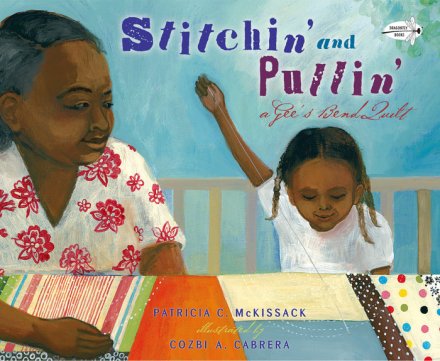
Written by Patricia C. McKissack | Illustrated by Cozbi A. Cabrera

In this story told through poems, a little girl begins telling of her life, starting with a recitation on Gee’s Bend Women: “Gee’s Bend women are / Mothers and Grandmothers / Wives / Sisters and Daughters / Widows.” They are every kind of woman you know, doing every type of work and activity. “Gee’s Bend women are / Talented and Creative / Capable / Makers of artful quilts / Unmatched. / Gee’s Bend women are / Relatives / Neighbors / Friends— / Same as me.”

In Who Would Have Thought, the girl muses on how perceptions change. “For as long as anyone can remember,” she says, the women of Gee’s Bend, Alabama have created quilts that were slept under, sat on, and wrapped around the sick or cold. But now those same quilts are “…hanging on museum walls, / their makers famous….”

When she was just a tot “Baby Girl” reveals in Beneath the Quilting Frame, she played under the quilting frame, listening to her “mama, grandma, and great-gran / as they sewed, talked, sang, and laughed / above my tented playground.” She remembers the “steady fingers  /[that] pieced together colorful scraps of familiar cloth / into something / more lovely / than anything they had been before” as her mother sang her a lullaby.

celebrate-picture-books-picture-book-review-stitchin'-and-pullin'-a-gee's-bend-quilt-puzzling-the-pieces

Image copyright Cozbi A. Cabrera, courtesy of Random House Books for Young Readers

In Something Else, “Baby Girl” is growing too big to play beneath the frame. Her legs becoming longer and her mind full of “recipes for eleven kinds of jelly…how to get rid of mold…and the words to a hundred hymns and gospel songs” while she waits her turn at the frame. Finally, in Where to Start? her time comes. The girl asks her mama how to begin and she answers, “‘Look for the heart. / When you find the heart, / your work will leap to life… / strong, beautiful, and… / independent.’”

In Remembering, the girl thinks about how her mama has told her that “cloth has a memory.” As she chooses the cloth that will become her quilt she sees the life and the history in each. 

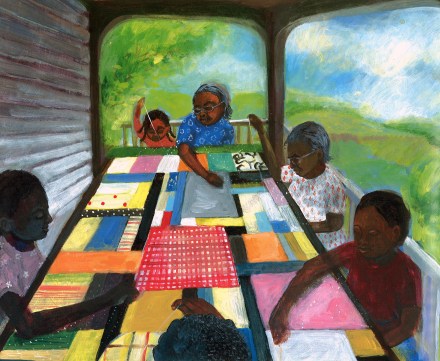
Nothing Wasted sees Grandma pulling apart a red-and-white gingham dress stitch by stitch to become a quilting square that the girl suddenly knows “will be the heart of my quilt.” In Puzzling the Pieces the girl and her grandma stand over the quilting frame fitting the squares together in the perfect way to tell the girl’s story. Her quilt comes together piece by piece to tell the history of Gee’s Bend in The River Island. The brown strips along three sides mirror the muddy waters surrounding her town. The fourth side is a green strip—“a symbol of the fields where my ancestors / worked cotton from can to can’t— / can see in the morning until / can’t see at night.” Lined up next to the green strip are six squares representing the small communities “where families with / the same name / are not kin by blood / but by plantation.”

Being Discovered is portrayed with “a large smoke-gray square”—the color of the Great Depression and the 15 minutes of fame Gee’s Bend garnered when discovered “by sociologists, historians, / educators, and journalists” who came and went, leaving Gee’s Bend “the way it had been / before being discovered.”

celebrate-picture-books-picture-book-review-stitchin'-and-pullin'-a-gee's-bend-quilt-understanding-comes-later

Image copyright Cozbi A. Cabrera, courtesy of Random House Books for Young Readers

In Colors, the girl’s grandma explains the meanings and feelings behind each colored cloth. “Blue cools. / Red is loud and hard to control, / like fire and a gossiping tongue.” Green, orange, yellow, white, pink, and all the others have their own personalities. “Grandma says, / ‘Colors show how you / feel deep down inside.’”

In Pinky, the harrowing facts of the march from Selma to Montgomery, Alabama frame the story of one marcher, Mr. Willie Quill who broke horses for the Alabama State Mounted Patrol and was saved from the Police attacks when one of the horses he’d trained knew his voice. In Dr. King Brings Hope, the little girl adds a “Patch of bright pink / to remember Pinky’s story. / Next to it I sew / a spotless white patch for the hope Dr. Martin Luther King / brought to the Bend” and goes on to tell how her grandma saw Dr. King at Pleasant Grove Baptist Church and what it meant to her.

By and By follows the girl as she adds “golden thank-yous, for James Reeb,” a “bright blue piece of velvet for Viola Liuzzo,” and a “big plaid people circle of white, black, brown, yellow, and red for Reverend Dr. King, all “killed for believing in justice.”

In the 1960s, The Sewing Bee tells, Gee’s Bend quilters were once again discovered. There were buyers for the handmade quilts, but stipulations. The girl asks her grandma if she was part of the Bee, to which she replies, “‘Yes, / more money. Less freedom. I chose to stay free.’”

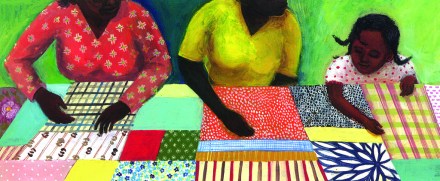
At last all of the patches are laid out and the time comes to stitch the girl’s quilt. Five women stand at the frame “all stitchin’ and pullin.’” They work “in a slow and steady rhythm” relaxing and enjoying being together until the quilt is finished. In Finished, the last stitch is sewn, and the thread bitten and knotted. The girl has hundreds of ideas for future quilts. “Quilts that are about me, / the place where I live, / and the people / who have been here for generations.”

Further poems unite the history of “Baby Girl,” her family, and neighbors, and an Author’s Note about quilting and the women of Gee’s Bend follow the text.

Patricia McKessack’s free verse poems capture the close relationships and camaraderie of the generations of women who join around the quilting frame to share and pass down their art and their heart. McKessack’s conversational verses, on page after page like the patches of a quilt, reveal the complexity of this handmade art form in the way intimate talks between friends unveil a life. Readers learn not only about the little girl and her own thoughts, but the history and influence of her immediate family, world events, inspirational figures, and deeply held beliefs that make her who she is and ties her to the other Gee’s Bend women.

Cozbi A. Cabrera’s stunning acrylic paintings take readers inside the heart of the Gee’s Bend women, depicting the girl’s home, the table-sized quilting frame where the women collectively work, the plantations, the protests, and the changes that came but did not unravel the convictions, values, and love of the little girl’s family. Readers can almost hear the talking and singing of the Gee’s Bend women as they stitch their quilts, and the comforting, embracing environment is evident on every page. Cabrera’s portraits of the little girl, her mama, and her grandma are particularly moving. For What Changed, Cabrera depicts a yellow school bus appearing on the dirt road from the right hand corner of the page. In the side mirror a dot of a house comes into view, reminding readers that no matter how far these women are from home, Gee’s Bend is always with them.

Children—and adults—will find Stitchin’ and Pullin’: A Gee’s Bend Quilt inspirational and uplifting. This volume of poetry can be read at one sitting and delved into again and again, making it a wonderful choice for home libraries and a must for school, public, and other libraries.

Ages 5 – 12

Dragonfly Books, Random House, 2016 (paperback edition) | ISBN 978-0399549502

View a gallery  of fashion designs, dolls, and other handmade art work by Cozbi A. Cabrera on her website!

Creativity Month Activity

celebrate-picture-books-picture-book-review-stars-quilt-coloring-page

Design a Quilt Coloring Pages

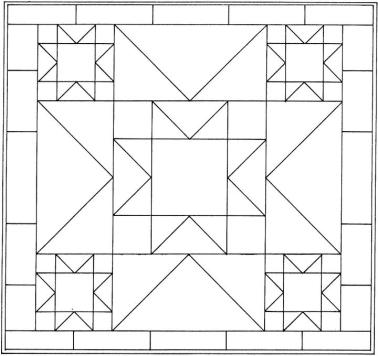
Quilts are so much more than pieces of material sewn together—they’re life stories! Here are two quilt coloring pages for you to design and color. What does each piece mean to you? As you color each section, write a sentence about an event or thought that is important to you.

Quilt Template 1 | Quilt Template 2

Picture Book Review

January 25 – A Room of One’s Own Day

celebrate-picture-books-picture-book-review-my-very-own-room-cover

About the Holiday

Everyone needs a little space of their own—a place to think, read, write, or just say Ahhhh… after a long day. In today’s world of Man Caves and Women’s Sheds, designing a spot where you can get away and spend some rejuvenating alone time doing a particular hobby or just doing nothing is becoming easier and more accepted. Kids need their own spaces too—a personal place surrounded by the things they love.

My Very Own Room / Mi propio cuartito

Written by / Escrito por Amada Irma Pérez | Illustrated by / Ilustrado por Maya Christina Gonzalez


One morning a little girl woke up in a bed overrun with brothers. Victor’s elbow was poking her in the ribs, and Mario was curled up on the pillow with his leg across her face. In the next bed slept the girl’s three other brothers. The girl had had enough—after all she was nearly 9 years old. After years of sharing a room with her five brothers, “more than anything in the whole world [she] wanted a room of [her] own,” but space in her tiny house was hard to come by. What’s more, besides the eight immediate family members, sometimes friends and relatives from Mexico came to stay. It could be fun, but there was no privacy.

To get away she sometimes crept out early in the morning and climbed “the crooked ladder that leaned against the elm tree” in her backyard. It wasn’t that she didn’t love her brothers, she just needed a place of her own. She looked around the house for a space that would be just right. She peeked behind the flour-sack curtain that divided the living room from the storage closet. It seemed perfect! She imagined it with her “own bed, table, and lamp—a place where she could read the books she loved, write in her diary, and dream.”

celebrate-picture-books-picture-book-review-my-very-own-room-mixing-paint

Image copyright Maya Christina Gonzalez, courtesy of Lee & Low Books

While the storage nook seemed the solution, the girl’s mother shook her head. The space was already assigned to her aunt’s sewing machine, her uncle’s garden tools, furniture, and old clothes—the things needed for others to make a better life in America. But then her mother saw the tears in her daughter’s eyes and decided that perhaps the things in the storage space could find a new home on the back porch with blankets and a tarp to protect them from the weather.

With a hug and a kiss, the little girl thanked her mother, and they and the five boys began rearranging the house. Finally, all that was left behind the flour-sack curtain were a few cans of leftover paint. There was blue, white, and pink, but not enough of any one color to paint the room. Suddenly, the girl had an idea. She and her brothers mixed the three together and made…magenta! Tío Pancho offered a spare bed and after measuring the room and then the bed with a piece of yellow yarn, the little girl discovered that the bed would indeed fit. An upended wooden crate became a nightstand. But what about a lamp?

Mamá brought out her box of Blue Chip stamps that she’d been collecting for years. The stamps were awarded with gas and food purchases. When they were stuck into booklets and used at special stores, the stamps were as good as money. The girl and her brothers “licked and licked and pasted and pasted.” When they were finished, they all went to the stamp store. As soon as she stepped into the store, the girl spied the lamp she wanted. “It was as dainty as a beautiful ballerina, made of white ceramic glass with a shade that had ruffles around the top and bottom.”

celebrate-picture-books-picture-book-review-my-very-own-room-books

Image copyright Maya Christina Gonzalez, courtesy of Lee & Low Books

Back home she carefully set the lamp on her bedside table, but “something was still missing, the most important thing…Books!” The next day the little girl brought home six books from the library—six was her “lucky number because there were six children” in her family. That night, the little girl nestled into her new room, turned on the light and began to read. When her two youngest brothers peered in through the curtain, she invited them in, and as they snuggled on her bed, she read them a story. At the end they said goodnight, and her brothers returned to their own room. Lying back against her pillow, the girl felt “like the luckiest, happiest little girl in the whole world” because each person in her family had worked to make her wish come true. She drifted off into peaceful sleep under a “blanket of books” in her very own room.

Amada Irma Pérez’s touching story from her own childhood is a delightful reminder for readers of the strong bonds of family love that puts other’s needs ahead of one’s own. The family’s commitment to each other is found not only in their willingness to help rearrange the house to accommodate a maturing daughter and sibling, but in the collection and storage of goods that will contribute to a better life for friends and relatives. Children familiar with reward points will be fascinated to learn about their predecessor “blue chip stamps.” The straightforward storytelling is infused with the kinds of hopes and suspense that resonate with kids, and the tender, quiet ending leaves readers with a lingering feeling of comfort and happiness.

Maya Christina Gonzalez fills the pages of My Very Own Room with joyous vibrancy and empathy that emphasizes the family’s connection. Soft edges and swirling patterns create a comforting environment, while elements, such as the long piece of yellow yarn, underscore the familial ties. While the little girl finds solace in the backyard elm tree and hunts for a space to call her own, her mother looks on with understanding, which leads to depictions of mother and daughter that are particularly moving. With warmth and welcome, each page invites readers into the family home to share a transitional event in their life.

The text is presented in both English and Spanish on each page, and is followed by a brief biographical note, including photographs, by Amada Irma Pérez.

It’s heartening to read a story in which siblings are so immediately supportive of each other. The gentle pace and upbeat tenor of My Very Own Room makes it a wonderful choice for quiet family story times or group school or library readings.

Ages 5 – 10

Lee & Low Books, 2008 | ISBN 978-0892392230

Learn more about Amada Irma Pérez and her books on her website!

Discover a gallery of book illustration and fine art by Maya Christina Gonzalez plus resources for educators on her website!

A Room of One’s Own Day Activity

celebrate-picture-books-picture-book-review-bedroom-coloring-page

Decorate Your Room Coloring Page


If you had a room to fix up just the way you’d like, how would it look? Here’s a printable Decorate Your Room Coloring Page for you to enjoy. Put your own knick-knacks on the shelf and your things on the nightstand by the bed. Then give your room a color scheme – and move in!

Picture Book Review

January 24 – It’s National Hobby Month

celebrate-picture-books-picture-book-review-more-igami-cover

About the Holiday

The idea of hobbies—something useful, purposeful, and fun done in one’s spare time—has been around at least since 1676 when Sir Matthew Hale wrote in Contemplations Moral and Divine that “Almost everyone hath some hobby horse or other wherein he prides himself.” Later, in the mid-1800s when work ceased to consume every hour of the day, and people had more time for leisure pursuits, hobbies became more popular. Today, it may be interesting to consider that many of our current hobbies—knitting, sewing, woodworking, candle making, etc.—were once the work of our ancestors. To celebrate this month’s holiday, try a new activity—it may turn into a favorite!

More-igami

Written by Dori Kleber | Illustrated by G. Brian Karas


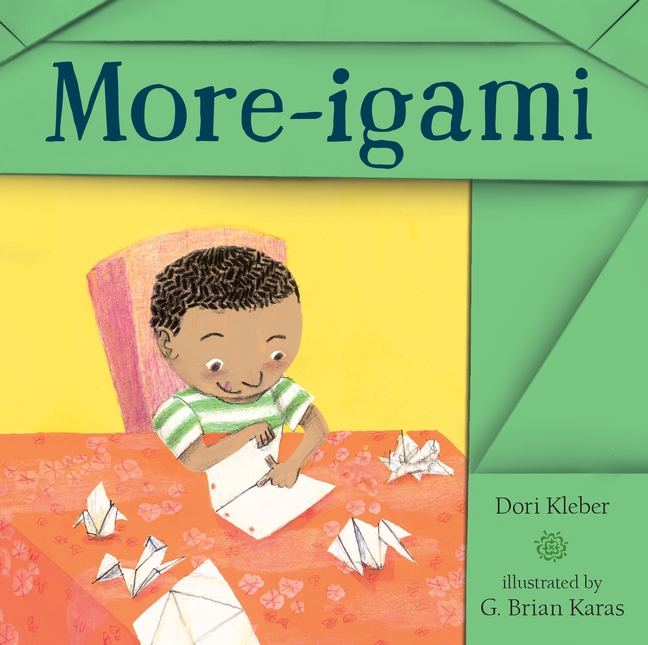
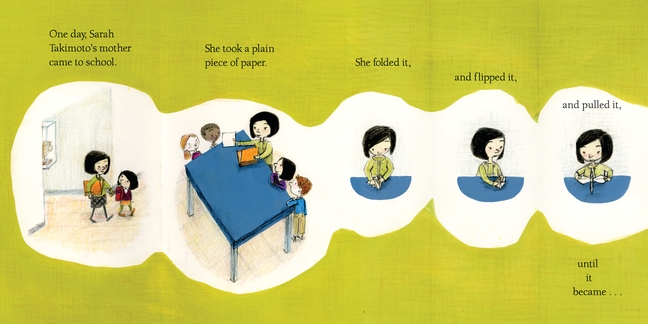
Joey was a little boy with a particular fascination. He was captivated by all things folded. At home he had a collection of “old road maps,” the bellows on an accordion made it his favorite instrument, and he even tucked himself into a foldaway bed at night. One day Joey witnessed the most amazing thing at school. Sarah Takimoto’s mother came to his class, and—right before the students’ eyes—folded, flipped, and pulled a plain white piece of paper “until it became…a crane.”

celebrate-picture-books-picture-book-review-more-igami-mrs-takimoto

Image copyright G. Brian Karas, text copyright Dori Kleber. Courtesy of Candlewick Press

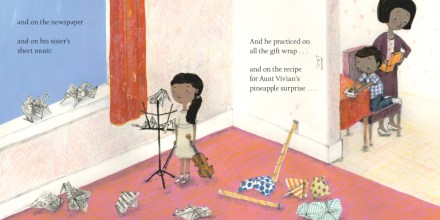
“Joey’s eyes popped. His jaw dropped. Mrs. Takimoto called it origami.” Joey was smitten. “‘I want to make origami,’” Joey told Sarah’s mother. “‘Will you teach me?’” Mrs. Takimoto  answered that while she could teach him the right folds, it would take practice and patience to become an origami master. Joey raced home that afternoon and began folding. When he ran out of notebook paper and construction paper, he used his homework…the newspaper…his sister’s sheet music…gift wrap… even “Aunt Vivian’s pineapple surprise” recipe card. But when he folded up all thirty-eight dollars in his mom’s purse, she put her foot down.

“Joey drooped.” His cranes were still coming out wrinkled and crooked, and he’d never be able to become an origami master without practicing. To soothe his disappointment, he headed next door to Muy Mexicana for some fajitas. Right away Mr. Lopez noticed Joey’s disgruntlement. When Joey explained that everyone was losing patience with him, Mr. Lopez said, “‘Many artists are misunderstood, amigo.’ Especially when they are just learning.’” Mr. Lopez went into the kitchen, and when he came out with the sizzling fajitas, he was delighted to see a napkin pyramid sitting on the table.

celebrate-picture-books-picture-book-review-more-igami-folding-sheet-music

Image copyright G. Brian Karas, text copyright Dori Kleber. Courtesy of Candlewick Press

Joey apologized, but Mr. Lopez thought it made the table look fancy. In fact, he liked it so much that he had Joey fold every napkin on every table. After that, Joey went to Muy Mexicana each day following school and folded the napkins into decorative shapes. One day he made fans, the next candlesticks, and the day after that, crowns. He patiently worked until each one was perfect.

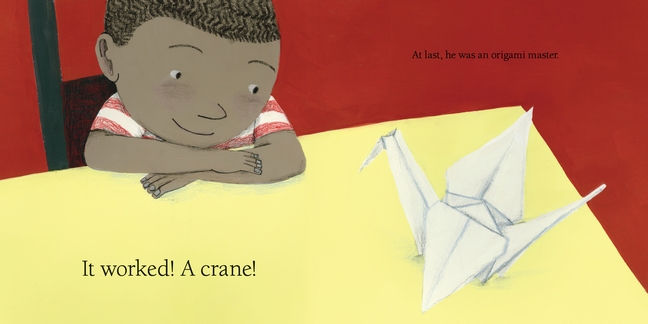
Finally, he felt ready to attempt his original challenge. “He took a crisp napkin. He folded. He flipped. He pulled.” When he was finished, a perfect crane sat in front of him. Just then a girl with a paper fan walked in. Her eyes widened as they zeroed in on Joey’s crane. Joey offered to show her how to make it, but warned, “‘It takes practice—and lots of patience!’”

celebrate-picture-books-picture-book-review-more-igami-crane

Image copyright G. Brian Karas, text copyright Dori Kleber. Courtesy of Candlewick Press

Dori Kleber’s unique multicultural story of a little boy who finds the perfect creative outlet for his singular interest will captivate kids who are just beginning to try their own hands at favorite hobbies, schoolwork, or other pursuits. With humor and honest depictions of Joey’s frustration and persistence, Kleber shows readers that practice and patience really do pay off. As Joey meets another folding enthusiast, kids will see that there are always others with whom to share favorite pastimes.

Opening More-igami to the first page where Joey sits gazing lovingly at a taco with a folded napkin next to his plate, readers will know they are in for something special. As always, G. Brian Karas’s characters are enthusiastic, encouraging, and adorable. Readers will empathize with Joey as they watch him folding and folding, and giggle at the many, many practice cranes that litter his home, even perching atop his sister’s music stand and appearing in his mom’s purse.

Karas makes full creative use of the origami theme in his clever page designs and illustrations, beginning with the square shape of the book itself and the origami paper-styled endpapers. Vivid, solid-color background pages are divided diagonally, vertically, or horizontally with subtle changes in hue or nearly invisible lines. In depictions of Joey’s school, home, and favorite restaurant, diagonals, angles, and sharp edges predominate: tables and floors create triangles on the page; windows, walls, and doors divide pages into shapes associated with the steps of origami’s folded creations; and floor tiles, the sidewalk, and even Joey’s shirt portray grid lines. The color schemes of each page, inspired by the patterns and shades of origami paper, are dazzling and unite the varied aspects of this special book.

For any child undertaking a new activity or venture, More-igami is a charming and encouraging companion on the way to proficiency—one that would make a wonderful home library addition.

Ages 4 – 8

Candlewick Press, 2016 | ISBN 978-0763668198

To learn more about Dori Kleber and her writing, visit her website!

G. Brian Karas has a whole gallery of illustrations, books, information, and “what nots” on his website!

National Hobby Month Activity

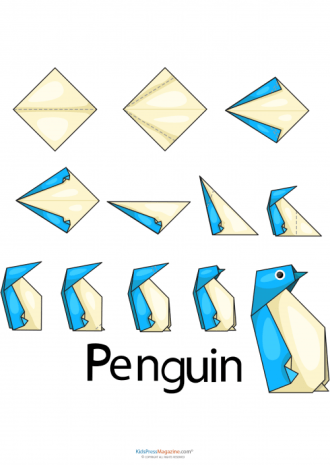
celebrate-picture-books-picture-book-review-origami-penguin-template

Origami Pets


Origami is a fun hobby that can grow in complexity as you gain skill. Here are two templates to get you started! All you need is a square piece of paper and—if you’d like to decorate your piece—some markers or colored pencils.

Puppy Template | Penguin Template

Picture Book Review
January 16 – Martin Luther King Jr. Day

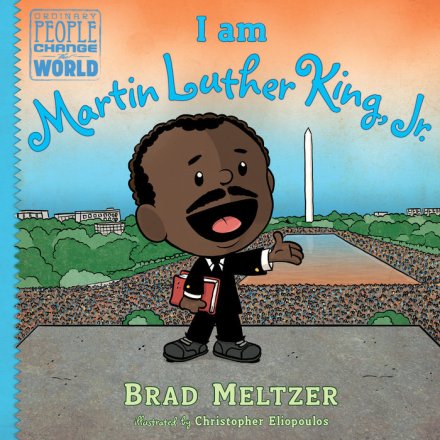
celebrate-picture-books-picture-book-review-i-am-martin-luther-king-jr-cover.png

About the Holiday

Martin Luther King Jr. Day celebrates the life and legacy of the man who dedicated his life and work to teaching—as Coretta Scott King stated—“the values of courage, truth, justice, compassion, dignity, humility and service” and led a non-violent Civil Rights movement to enact racial equality and justice throughout state and federal law. President Ronald Reagan signed the holiday into law in 1983, setting it on the third Monday of January to coincide with Martin Luther King, Jr.’s birthday on January 15. The holiday was officially observed in all 50 states in 2000. Today, learn more about the life and work of Martin Luther King and how you can help promote justice and equality for all. Consider volunteering in your community where help is needed.

I am Martin Luther King, Jr.

Written by Brad Meltzer | Illustrated by Christopher Eliopoulos


Standing inside a church, Martin Luther King, Jr. introduces himself with two anecdotes from his childhood that demonstrate his world outlook. “When I was little,” he says, “I used to get into a lot of accidents.” He was hit in the head by a baseball bat, knocked down by cars and once even “tumbled over our banister, then bounced through an open door into the basement.” While these incidents could have made him cautious, Martin instead was determined to keep “getting back up.” His second influence were the books in which he could find “big words.” Even as a child Martin recognized that “there is power in words.”

celebrate-picture-books-picture-book-review-i-am-martin-luther-king-jr-as-a-child

Image copyright Christopher Eliopoulos, text copyright Brad Meltzer. Courtesty of Dial Books for Young Readers

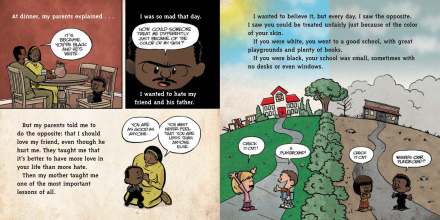
Before he went to school, Martin relates, his best friend was a white boy whose father owned a nearby store. They did everything together until school started. Then Martin went to a school with only black students while his friend went to a white-students-only school. Soon, Martin’s friend told him his father didn’t want them to play together anymore. Martin was confused. When his parents told him the reason was that they had different colored skin, Martin felt angry. He wanted to hate his friend and his father, but Martin’s parents taught him to love his friend, and his mother told him, “you must never feel that you are less than anyone else.”

It was a difficult lesson when all around him he saw inequality. White schools had better equipment, there were different elevators, bathrooms, water fountains, and other facilities for black people and white people, on buses black riders had to give up their seats to white riders. Everywhere black people and white people were segregated.

celebrate-picture-books-picture-book-review-i-am-martin-luther-king-jr-ice-cream

Image copyright Christopher Eliopoulos, text copyright Brad Meltzer. Courtesty of Dial Books for Young Readers

When Martin was only 15 he was admitted to college. At 19 he entered the seminary where he learned about civil disobedience and nonviolent resistance—ways to use “love and peaceful methods to change unfair things in society.” These were lessons Martin wanted to share with others. His chance to put his thoughts into action came when Rosa Parks was arrested for refusing to relinquish her seat to a white man. Martin advocated a peaceful protest—a boycott of public buses. He reasoned that without the money from black riders, the bus companies would change their policies.

As the boycott began working, Martin gave a speech in Montgomery, Alabama, motivating people to continue their peaceful protest. Martin was put in jail and his house was bombed, but the boycott continued for more than a year. Eventually, the bus companies changed their rules. Other peaceful protests began to take place in restaurants and other public places.

One protest took place in Birmingham, Alabama.  Martin was again put in prison, where he wrote one of his most famous speeches. Children also took part in the Birmingham protest. The Children’s Crusade attracted more than 1,000 kids. On the first day 900 of them were arrested, but that only inspired the children more. On the second day 2,500 children showed up. They stood firm while they were sprayed with water hoses and attacked by police dogs. People—both black and white—watching the news reports were aghast. Three months later the rules began to change.

celebrate-picture-books-picture-book-review-i-am-martin-luther-king-jr-i-have-a-dream-speech

Image copyright Christopher Eliopoulos, text copyright Brad Meltzer. Courtesty of Dial Books for Young Readers

“By the summer of 1963, an estimated one million Americans held their own protests in cities across the country.” Then A. Philip Randolph suggested a single huge march to convince “Congress and the president to pass laws so that no one in America can treat people differently based on skin color.” On August 28, 1963 the March on Washington for Jobs and Freedom took place. Martin gave what may now be considered his most famous speech in which he talked about his dreams for the country, for the people, and for their children.

Although Congress began passing new laws, the ability and right to vote in elections still eluded black people. To change the voting rules another march was organized to walk 54 miles from Selma to Montgomery Alabama. The 600 walkers were met by police who stopped them. Two days later 2,500 activists tried again but could not get through. On the third try 8,000 marchers showed up. This time, with the world watching on television, the activists made it to Montgomery, protected by troops sent by President Johnson.

celebrate-picture-books-picture-book-review-i-am-martin-luther-king-jr-montgomery-march

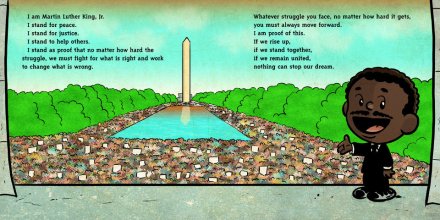
Martin continued to speak out, relating his philosophy and dreams for the nation. “To reach our goals, we must walk the path of peace,” he said. “We must lock arms with our brothers and sisters. We must march together. When we do…Our voices will be heard, and freedom will ring.” The lessons Martin Luther King taught still resonate today. He stands “as proof that no matter how hard the struggle, we must fight for what is right and work to change what is wrong.…if we stand together, if we remain united, nothing can stop our dream.”

celebrate-picture-books-picture-book-review-i-am-martin-luther-king-jr

Brad Meltzer’s Ordinary People Change the World: I am… series of biographies are well-known for showing young readers that they can achieve their dreams and make a difference no matter what those hopes may be. In his biography of Martin Luther King, Jr., Meltzer depicts several incidents from King’s childhood and early adulthood that influenced his future work. These help readers understand not only the types of prejudice King and other African Americans experienced, but also the people who inspired his philosophy of peace.

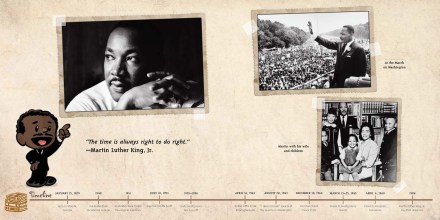
Meltzer’s inclusion of King’s imprisonments and the violence that met the peaceful protesters deepens the understanding of the dangers King and other protesters faced, and provides an opportunity to open a discussion between adults and children about those times and what they now see in the news. Meltzer’s description of the Children’s Crusade will inspire readers, making them proud of children in the past and stirring them to actions of their own. Sections from King’s Letter from Birmingham Jail and his most famous speeches are presented in speech bubbles. The text is followed by photographs of Martin Luther King, Jr. with his family and at the March on Washington as well as a timeline of his life. Sources and resources for further reading are also included.

celebrate-picture-books-picture-book-review-i-am-martin-luther-king-jr-timeline

In keeping with the style of all of Meltzer’s and Christopher Eliopoulos’s Ordinary People Change the World: I am… biographies, the illustrations are vibrant and cartoon-inspired. Martin Luther King, Jr. is depicted with the size of a child but the features of an adult, reinforcing the idea contained in the text of the dual nature of the future adult residing in the child and the ideals of the child remaining in the adult that appeals to ambitious young readers. Speech bubbles highlight text that carry emotional dialogue. Settings, including churches, Birmingham jail, Washington DC, the Edmund Pettus Bridge in Alabama, and the Martin Luther King, Jr. monument give children a look at the cities and places described in the text.

For young readers, I am Martin Luther King, Jr. offers a comprehensive biography of the man who was a national and world leader in the fight for equal rights for all people and makes an excellent starting place for classroom lessons and personal discussions.

Ages 5 – 8

Dial Books for Young Readers, 2016 | ISBN 978-0525428527

Discover more about Brad Meltzer and his books for adults and children as well as other goodies on his website!

Learn more about Christopher Eliopoulos, his books, and his comics on his website!

Martin Luther King Jr. Day Activity

celebrate-picture-books-picture-book-review-martin-luther-king-jr-coloring-page

Martin Luther King, Jr. Portrait


Color this printable Martin Luther King, Jr. Portrait and then hang it in your room or locker to inspire you!

Picture Book Review
January 2 – Motivation and Inspiration Day

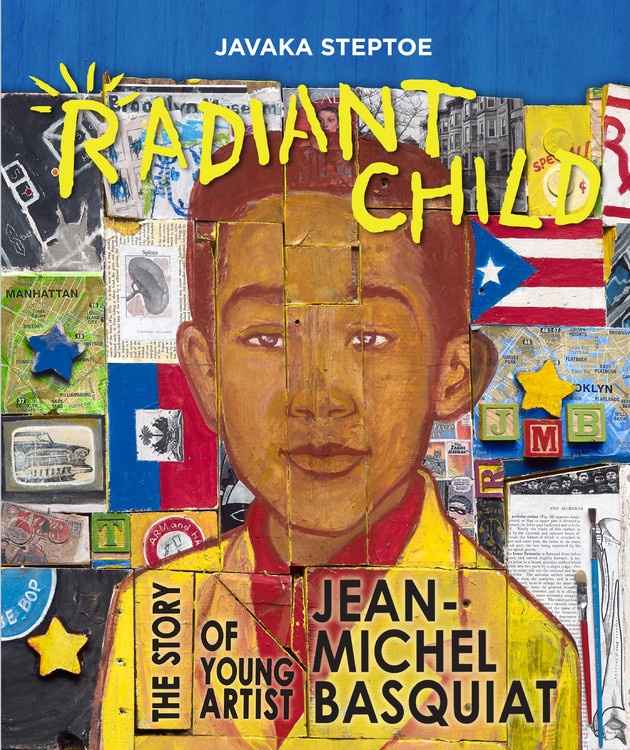
celebrate-picture-books-picture-book-review-radiant-child-cover

About the Holiday

While Motivation and Inspiration Day was instituted in reaction to the 9/11 attacks, the holiday’s influence and meaning has grown and now includes world-wide participation. Falling on the second day of the year, it encourages us to reflect on our lives—where we are and where we want to go. Take some time to consider what motivates and inspires you and follow those inner and external voices to help you achieve your dreams.

Radiant Child: The Story of Young Artist Jean-Michel Basquiat

By Javaka Steptoe


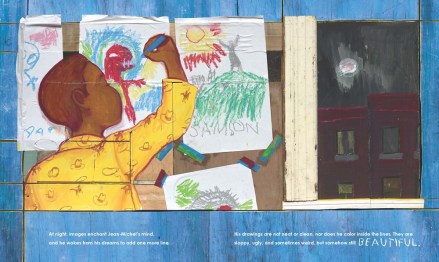
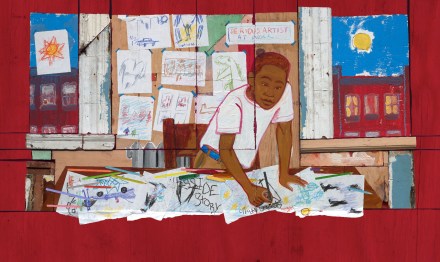
“Somewhere in Brooklyn, between hearts that thump, double Dutch, and hopscotch / and salty mouths that slurp sweet ice, a little boy dreams of being a famous artist.” All day Jean-Michel sits surrounded by colored pencils and “a storm of papers” and draws. As he sleeps his dreams swirl with images. When he wakes he adds to his drawings, scribbling away. What he creates is “sloppy, ugly, and sometimes weird, but somehow still beautiful.”

celebrate-picture-books-picture-book-review-radiant-child-beautiful-art

Image and text copyright Javaka Steptoe, courtesy of Little, Brown Books for Young People

Jean-Michel’s talent comes from his Puerto Rican mother, who has a natural sense of style and design and who always makes time to draw with her son, lying on the floor next to him. She takes Jean-Michel to art museums and theaters and reads poetry to him, but she also shows him the art of the city—its sounds, sights, style, and “patchwork” colors. Jean-Michel loves to visit the museum and read about the artwork and the artists. From these stories he “learns what it means to be a famous artist.”

When Jean-Michel is seriously injured in a car accident, his world seems scary and confusing. He mother gives him an anatomy book, which he memorizes. It erases his fears and becomes influential in his work. After returning home his life changes when his mother suffers a breakdown and can no longer live at home. “He tries drawing the terrible out of his blues, but things are not the same.” Jean-Michel visits his mother when he can, “always bringing his artwork to show, telling her that one day it will be in a museum, ‘when I am a famous artist.’”

celebrate-picture-books-picture-book-review-radiant-child-drawing

Image and text copyright Javaka Steptoe, courtesy of Little, Brown Books for Young People

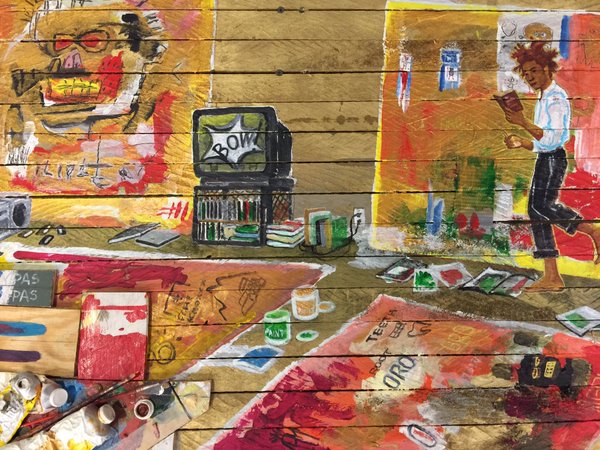
As a teenager, Jean-Michel follows his dream, moving from Brooklyn to New York City. There he stays with friends, painting, creating collages, and writing poems on paper strewn about him. At night he paints on city walls, trash cans, and other urban canvases. His art, signed ‘Samoo,’ attracts attention. People wonder, “‘Who is Samoo?’”
Soon his art can be found in art galleries and hanging in the homes of the people who buy his work. Jean-Michel continues to create, listening to “a sound track that is all his own.” Through talent, inspiration, and his mother’s loving influence, Jean-Michel Basquiat conquered the art world, becoming a king among artists, and fulfilling his desire to be a famous artist.

An extensive Author’s Note about Jean-Michel Basquait’s life, including his struggles with addiction and his death in 1988, the motifs and symbolism in his work that now is displayed in museums around the world and sells for millions of dollars, and a personal comment on the impact Basquait’s art had on the author follow the text.
celebrate-picture-books-picture-book-review-radiant-child-studio

Image and text copyright Javaka Steptoe, courtesy of Little, Brown Books for Young People

Javaka Steptoe’s compelling biography of this complex, brilliant artist who people called “radiant, wild, a genius child” beautifully brings to life the inspirations and motivations that fueled his unique and intense talent. Steptoe delivers the story in staccato and flowing sentences, using consonance, assonance, repetition, the rhythms of a poet. Taking the reader from Jean-Michel’s childhood to adulthood to show how maintaining his focused determination, self-confidence, and persistence over many years led to his ultimately becoming a famous artist demonstrates that success is not a matter of luck, but of belief in oneself despite obstacles. Steptoe sensitively addresses the serious injury Basquiat suffered, his mother’s mental illness and Basquiat’s continued love for her, and his unsettled teenage years to complete this far-reaching life story.

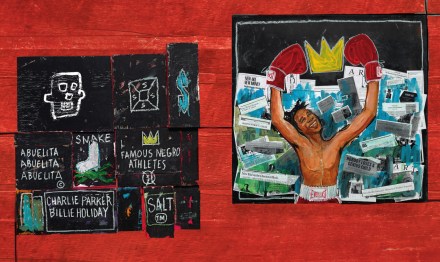
celebrate-picture-books-picture-book-review-radiant-child-boxing-image

Image and text copyright Javaka Steptoe, courtesy of Little, Brown Books for Young People

Steptoe’s mixed-media paintings were created on found wood from neighborhoods across New York City. While Steptoe does not reproduce any of Basquiat’s work, he states that readers will find “original pieces that were inspired by him and my interpretations of his paintings and designs.” As befitting his subject, Steptoe offers pages that burst with vibrant color and intricate details and beat with the pulse of the city, the people, the dreams, and the imagination that Basquiat transcribed onto paper, walls, and canvas. Part collage, part fine art, Steptoe’s illustrations will fascinate children and entice them to linger to take in all the emotion and meaning in each. The final spread, a crowd scene made up of photographs, sets Basquiat in the midst of people whom he and his art continue to inspire.

Radiant Child: The Story of Young Artist Jean-Michel Basquiat offers children an inspirational model of creativity, compassion, and confidence no matter where their talents lie. The book is an excellent choice for school, public, and home libraries.

Ages 6 – 10

Little, Brown Books for Young Readers, 2016 | ISBN 978-0316213882

Learn more about Javaka Steptoe, his books, art exhibitions, and life on his website!

Motivation and Inspiration Day Activity

celebrate-picture-books-picture-book-review-motivation-and-inspiration-day-craft

Found-Item Crafts


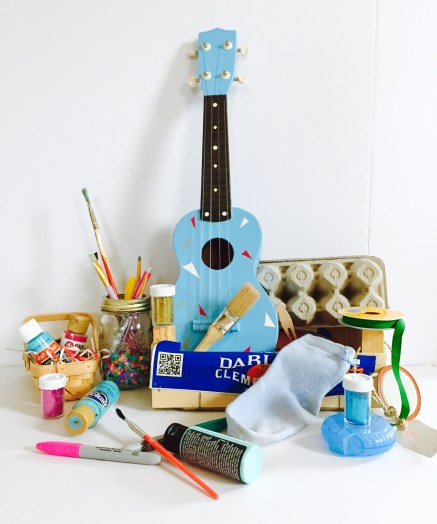
Each person finds motivation and inspiration in different things, places, and people. Today, try to create something new from the materials around you. Boxes, bottles, wire, magazines, cloth, wood, sponges—almost anything—can be transformed with some imagination. With those old socks, corks, flower pots, candle stubs, bits of ribbon, clementine crate, paint, glitter, beads, and more, you can make something useful, a decoration for your room, or even a gift for a friend!

Picture Book Review