April 10 – National Sibling Day

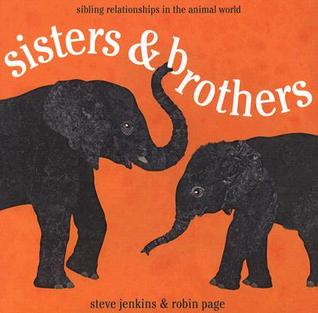
sisters & brothers by Steve Jenkins and Robin Page picture book review

About the Holiday

Brothers and sisters, huh? Sometimes you can’t live with them—but you’d never really want to live without them! Sure the bad part is that they know all your secrets and your quirks and you vie for that last cookie, but the good part is that they know all your secrets and your quirks and you didn’t really want that last cookie anyway.

Today do something fun with your sibling or siblings or tell them you love them—or both!

Sisters & Brothers: Sibling Relationships in the Animal World

By Steve Jenkins and Robin Page


You know that most animals are born in a litter or with one or two other siblings, but do you really consider that they are brothers and sisters just like human siblings? You might wonder if they have the same kind of relationship with each other that people do. How do they get along? How do they communicate? Do they stay together or go their separate ways? Sisters & Brothers: Sibling Relationships in the Animal World reveals the answers to these questions and more about 21 animals from around the world.

Would you like to be a clone of your brother or sister? Maybe not so much. If you were a nine-banded armadillo, though, you’d have no choice. These armadillos are always born four at a time—all females or all males—and are identical in every way! They stay with their mother until they are four months old and then set off on their own adventures.

If there are a lot of women and girls in your family, you may feel as if you’ve been born into a community of whiptail lizards. In the world of whiptails, there are no males! While their unusual reproduction method may avoid some battles, the identical traits of these creatures leaves them vulnerable to disease or changes in their environment.

Are you the youngest in your family? If you were a naked mole rat, you’d have to lie on the floor of your narrow tunnel and let your older siblings walk over you to pass. Mole rats aren’t the only ones who have worked out a hierarchical system. Brother bears fight fierce battles until the weaker one leaves to find his own territory, and black widow spiders even eat their weaker brothers and sisters!

Many animal siblings get along, however, and even help each other grow strong and develop important traits. Two of the fastest animals on earth—cheetahs and peregrine falcons—practice hunting techniques on each other, acquiring speed and accuracy along the way. There are even wildlife families that include adopted members, such as the cichlid fish and myna birds.

These are just a few of the intriguing animals readers will discover in this unique look at the world’s wild kingdom. Each animal is beautifully rendered through large cut or torn paper collages that enhance the short text, perfect for a child’s attention span. The final pages offer more information on each creature, and a list for further reading is also included.

Ages 4 – 8

Houghton Mifflin Harcourt, 2008 | ISBN 978-0547727387

National Sibling Day Activity
CPB - Heart Jar

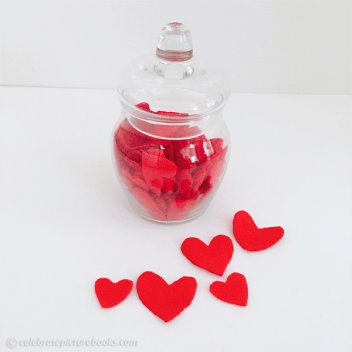
I Heart You! Jar


Sometimes it’s hard to say “I love you” (or even “I like you”) to siblings. But sisters and brothers like to know they’re important to each other. Here’s a gift you can make to give them that will tell them what is in your heart.

Supplies

  • A clear jar with a lid—you can use a recyclable jar or buy a mason jar or other decorative jar at a craft store
  • Red felt
  • Scissors

Directions

1. Cut red hearts from the felt

2. Add hearts to the jar—you can add as many as you like and continue to fill the jar after you’ve given it to your sibling. Here are some ideas:

  • Add one heart for each year you have known your sibling
  • Add one heart for each thing you love about your sibling (write those traits on the hearts)
  • Give a new heart whenever your sibling does something nice for you

3. Give your I Heart You! jar to your sister(s) and/or brother(s)

April 7 – International Beaver Day

The Flying Beaver Brothers and the Crazy Critter Race by Maxwell Eaton III

About the Holiday

Beavers are pretty amazing creatures. With their prominent teeth these largest members of the rodent family cut down large trees. They use the bark, buds, and small twigs for food then gnaw the trunk and branches into smaller parts and build dams that are just about as strong as anything people can construct. These dams can help prevent floods, clean the water supply, and restore wetlands. The largest beaver dam is in Wood Buffalo National Park in Alberta, Canada.

Beaver Day is celebrated to bring awareness to the declining beaver population and to promote their protection.

The Flying Beaver Brothers and the Crazy Critter Race

By Maxwell Eaton III


The flying Beaver brothers are back in a vine-popping, lasso-swirling adventure! Bub is reading Penguin Giant to Bob and Bob when Ace comes home with an intriguing ad for The Crazy Critter Race. The winner will receive—not pancakes as the penguins hope—but a free houseboat. The house Bob and Bob built for the Beaver brothers is a little less than desirable, so Ace and Bub swim over to Critter Houseboat Sales and Service to sign up.

There they meet the yeehawin’ cowboy hat-wearin’ crazy critter who has organized this unusual event. They also encounter the rope-snapping Raccoon sisters, and the competition is on! Crazy Critter explains the rules of the race: It seems the islands’ trees have been destroyed by ornery baboons, so the object of the race is to replant trees from a jar of seeds Crazy Critter gives them. The first team to reach the top of each mountain must plant one seed. The team who completes the race and rings the bell at the finish line will win a houseboat.

The racers take off, but the Beaver brothers and Raccoon sisters soon leave the rest of the competition in their wake. They both run to the top of the first mountain and plant their seeds. With a Rugga Rugga and a loud Brorg! two enormous vines break the earth and thunder toward the sky! In all the mayhem Ace and Bub’s jar of seeds opens and spills its contents on the beach.

In the blink of an eye, vines are shooting out of the ground and grabbing everything in sight. In fact, “Everything Vine” is the name of this Kudzu cousin because it covers everything. Ace and Bub go to work with their gnawing teeth, but even they are no match for the vine. Unaware of the disastrous consequences, the Beaver sisters use some pretty impressive moves to get ahead even as they continue planting seeds.

Now vines are erupting willy-nilly, threatening every land mass and even Beaver Island. Crazy Critter denies all knowledge of the fatal seeds, but has a solution of his own—if the islands are uninhabitable, he will sell houseboats to all the ex-habitants. Crazy Critter finally fesses up to his evil plan, but what can anyone do now? The vines are taking over!

The Beaver brothers look at the Raccoon sisters and the Raccoon sisters look at the Beaver brothers. They know that by working together they can save the islands. The Raccoon sisters use their awesome roping skills to gather the vines while the Beaver brothers chomp them in half, destroying them. Beaver Island is saved!

But who wins the houseboat? Let’s just say Crazy Critter isn’t so crazy after all.

This graphic novel-style book—the 6th in the series—will appeal to reluctant readers as  well as kids who enjoy a wild, humorous adventure. The quick pace of the story, teamed with action-packed drawings, will keep fans of the series cheering for their familiar friends in this race that just doesn’t seem right. Kids will laugh out loud at the funny asides and sound effects. A light-hearted lesson on competition and cooperation ties the story together in a satisfying finish.

Ages 6 – 9

Knopf Books for Young Readers, 2015 | ISBN 978-0385754699

International Beaver Day Activity

CPB - Beaver craft picture (2)

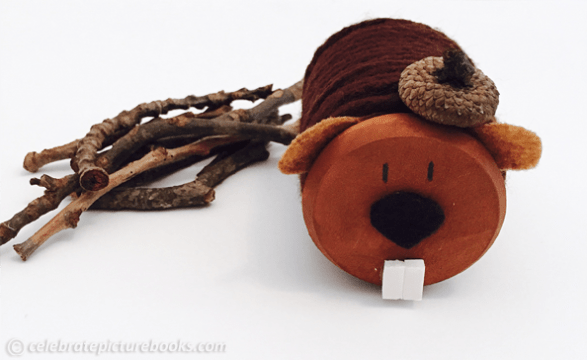
Make a Spool Beaver


Do you have a gnawing need to have a beaver of your own? Make one with this Spool Beaver craft!

Supplies

  • Printable Ears and Nose Template
  • 2-inch wooden spool, available at craft stores
  • 1 6-inch long x ¾ inch wide craft stick
  • Small piece of foam board
  • Brown “chunky” yarn
  • Brown felt, small piece for ears and tail
  • Black felt, small piece for nose
  • Acorn top for hat (optional)
  • Brown craft paint
  • Black craft paint
  • Black marker
  • Strong glue
  • Paint brush
  • Scissors

CPB - Beaver craft picture with tail

Directions

  1. Print the Ears and Nose template
  2. Paint the spool with the brown paint, let dry
  3. Cut the ears from the brown felt
  4. Cut the nose from the black felt
  5. Cut a piece from the end of the craft stick
  6. Paint the craft stick brown or black, let dry
  7. Cut two small pieces from the foam board, ½-inch long x 3/8 inch wide
  8. When the spool is dry, glue the ears to the spool, leaving the ears sticking up over the rim of the spool
  9. Glue one end of the yarn to the spool
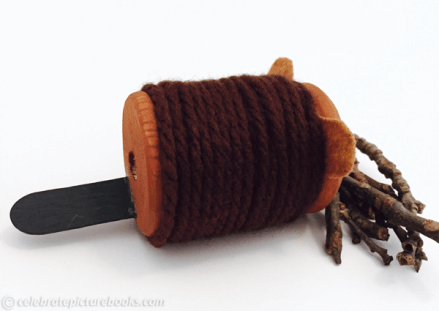
  10. Holding the spool horizontally, wind the rest of the yarn around the spool back and forth from front to back. Glue the end to the body of yarn. This will be the bottom of the beaver.
  11. Glue the nose over the hole in the spool
  12. Glue the teeth below the nose
  13. Glue the flat edge of the craft stick to the back of the spool to make the tail


April 5 – National Read a Road Map Day

Maps by Aleksandra and Daniel Mizielinski Picture Book Review

About the Holiday

Sure, GPS can get you where you want to go—even with voiced directions—but how do you know where you want to go? How do you discover what’s out there in your neighborhood, town, state, country? You can read a road map! It’s fascinating to see how roads snake along the terrain, around lakes, and over hills as well as crisscross in dozens of places but still get you where you want to go. And if you want to see how a place has changed over time, compare an old road map to a current one. So get out your road maps and start investigating!

Maps

By Aleksandra Mizielińska and Daniel Mizielińska


The world is a big and intriguing place in this oversized picture book. Forty-two countries are represented within its pages and populated from border to border and even from page edge to edge with cultural, historical, zoological, economic, agricultural, culinary, and linguistic information, all illustrated in stunning thumb-sized detail.

Whether you’re casually flipping through the book or examining each page, a colorful or unusual detail will capture your attention and demand a lingering look, which leads to discovering more and more intriguing facts. Opening the book to Switzerland, I noticed the Appenzeller sheepdog then the Appenzeller cheese round, both from the town of Appenzell. But what’s this? Schwingen? And why are the two guys wearing their shorts on the outside of their pants? It’s Swiss Wrestling! A quick Google search tells me that the wrestlers wear special “breeches” with belts for getting a good grip for tossing opponents!

Another flip of the pages brings me to Nepal, which is so mountainous! It’s home to the Himalayas which include Mount Everest (the tallest peak on earth), as well as Kangchenjunga, Lhotse, and Makalu (the third, fourth, and fifth highest peaks). As you might imagine you can engage in mountain biking, but beware of the Mugger Crocodile!

G’day, Mate! Welcome to Australia! Here you’ll find a Superb Lyrebird with a phenomenal tail, sneak a peek at a short-beaked echidna with a spiky coat and a mole-like snout, and learn to duck for a gliding possum. If you’re a sports fan, you’ll be interested in the didgeridoo, and remember vegemite? This is where it’s from!

I could go on and on! There are so many amazing animals, monuments, people, and structures around the world just waiting for you to discover them! The thick, matte, softly muted pages of Aleksandra and Daniel Mizielińska’s Maps are reminiscent of fine cartographers’ volumes. This book is a fantastic resource for teachers, homeschoolers, and students with curiosity or a report to write. Just a glance will give readers ideas, and a more thorough examination will open up a world of possibilities! Maps is a must-have for any young person’s or armchair traveler’s bookshelf.

Ages 5 and up

Big Picture Press, 2013 | ISBN 978-0763668969

National Read a Road Map Day Activity

CPB - Map Day II

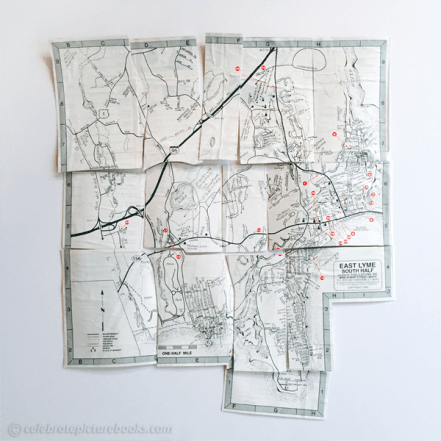
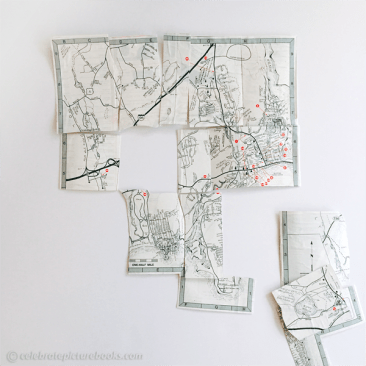
Map Jigsaw Puzzle


Sometimes reading a map is like putting together a puzzle—so why not make a puzzle out of a map? It can be fun to use a map of your town or state or to use a map of a state or country you’d like to visit!

Supplies

  • Small to medium size map (maps are often offered free at tourist stops, town halls, or other tourist information offices or racks)
  • Poster board
  • Glue
  • Scissors

CPB - Map Day

Directions

  1. Use the entire map or cut a desired-sized section from a map
  2. Glue the map to the poster board, let dry
  3. Cut the map from the poster board
  4. Cut the map into puzzle sections, these can be straight-sided sections or ones with interconnecting parts

March 27 – Easter

When Spring Comes by Kevin Henkes and Laura Dronzek Picture Book Review

About the Holiday

On this day we celebrate renewal—both personal and seasonal. Spring is officially here and new life is beginning. All around trees are budding, flowers are blooming, and baby animals and birds are being born and learning to make their way in the world. As the sun rises on warmer days, be inspired to discover new happiness.

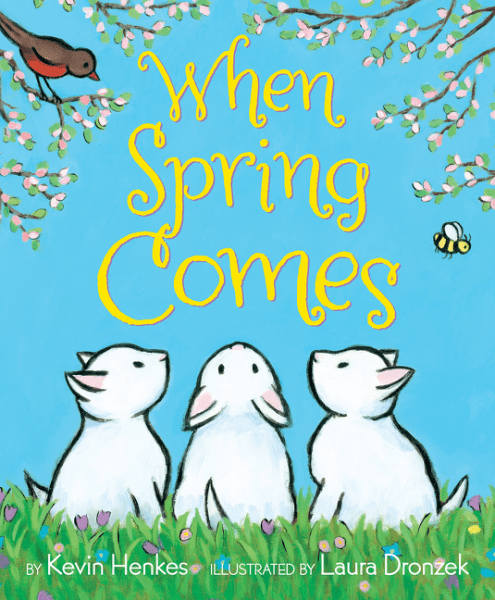
When Spring Comes

Written by Kevin Henkes | Illustrated by Laura Dronzek


This beautiful tribute to spring is as surprising as new buds pushing through the earth or tiny hatching eggs. Using repeated phrasing, lyrically expressed facts, and poetic rhythms, When Spring Comes echoes the anticipation that sunnier days bring after a long winter. The book opens with a simple, evocative sentence: “Before Spring comes the trees look like black sticks against the sky.” Children will immediately agree—they see trees in this way out their windows and draw them like this in art class.

The following sentence is equally as true: “But if you wait Spring will bring leaves and blossoms.” The book’s contrasting lines that explore conditions “before Spring comes” and “If you wait” gradually reveal more and more of springtime’s wonder, like the melting snows that usher in rainy days: “Spring comes with sun and it comes with rain and more rain and more rain. Do you like mud? Do you like puddles? I hope you like umbrellas.”

As Spring wakes more fully, it takes on a personality of its own: “Spring will call out the pussy willows and new kittens too. Spring can come quickly or slowly. It changes its mind a lot. But when Spring is finally here to stay, you will know it…There will be buds and bees and boots and bubbles.”  And there is much more to discover about this season of rebirth as well as the future within these pages.

When Spring visits it brings many wonderful smells, sounds, activities, and creatures, all of which are gorgeously depicted in Laura Dronzek’s radiant illustrations. The early gardens, blooming cherry trees, frolicking kittens, and profusions of flowers are as bright and welcome as the springtime sun. As the sweet-faced boy and girl in the book play, they are surrounded by birds, bunnies, dogs and kittens, and even ponder a little worm poking its head from the garden. Brilliant blues, pinks, greens meld with lush browns to create a joyful celebration of the newness of the season.

When Spring Comes is not only a book about a particular season or even for a particular age. It is a wonderfully gentile and uplifting way to introduce or discuss the idea of waiting for good things to happen. Everyone, even the smallest child, has “winter days” when life doesn’t look so bright. But if you wait, spring comes with new life and surprises.

Ages 4 – 8

Greenwillow Books, HarperCollins, 2016 | ISBN 978-0062331397

Easter Activity

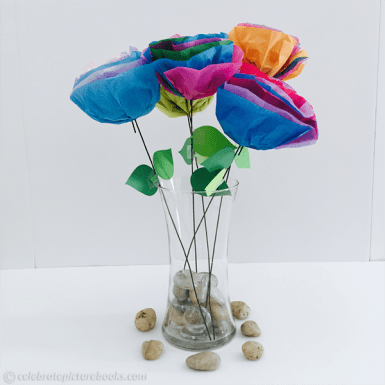
CPB - Paper Flowers

Paper Flowers


These paper flowers will brighten any room and come in a rainbow of colors. Make a bouquet for yourself or share them with a special friend.

Supplies

  • Tissue paper in many colors
  • Green paper
  • Green wire for stems
  • Scissors
  • Tape or glue
  • Pliers

CPB - Paper Flowers II

Directions

To make the stem

  1. Bend a 1 ½ -inch loop in the top of the wire
  2. Squeeze the wire together so it will fit tightly over the tissue paper

To make a flower

  1. Cut 6 or more 7-inch squares from tissue paper, mixing colors (you can make various sizes of flowers by making the squares larger or smaller and adding more squares)
  2. Gather all the squares together and fold them together accordion-style in 1-inch folds
  3. Slide the folded tissue paper under the wire loop, and tighten the wire
  4. Gently fan the tissue paper out on each side
  5. Beginning on one side, gently pull each sheet of tissue paper up toward the center
  6. Repeat step 5 on the other side

To make leaves

  1. Cut leaves from green paper, leaving a stem to wrap around the wire flower stem
  2. Fold the leaf stem around the wire and tape or glue


March 25 – International Waffle Day

Lady Pancake and Sir French Toast by Josh Funk and Brendan Kearney Picture Book Review

About the Holiday

When someone made a spelling error, turning the Swedish holiday “Our Lady’s Day” (Vårfrudagen) into Waffle Day (Våffeldagen), a brand new culinary celebration began! Waffle Day also ushers in spring and offers the perfect excuse to enjoy these crispy concoctions whether you like them sweet, with syrup or confectioner’s sugar, or savory, as a base for meat and other toppings. So mix up some batter and pull out your favorite waffle maker and enjoy a delicious day!

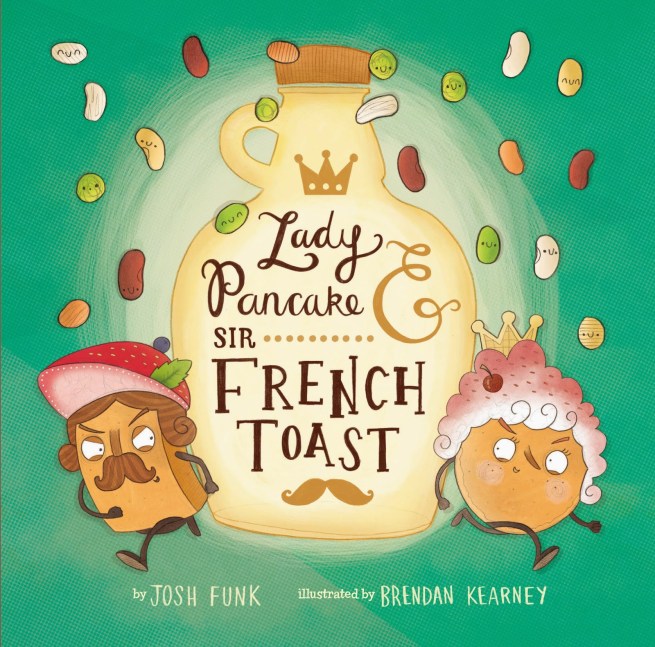
Lady Pancake and Sir French Toast

Written by Josh Funk | Illustrated by Brendan Kearney


You know those strange noises you sometimes hear coming from your refrigerator? And how you could have sworn the leftovers were on the top shelf? Well, Josh Funk’s Lady Pancake and Sir French Toast may solve those mysteries and more in this rambunctious tale about what happens when relationships grow frosty.

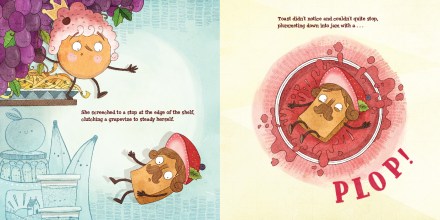
One day Lady Pancake and Sir French Toast are hanging out at the back of the fridge when they learn the syrup is almost gone. Lady Pancake claims it as her own, but Sir French Toast replies, “Not if I get there first!” And so off they race! “Through Broccoli Forest, past Orange Juice Fountain, they climbed to the top of Potato Mash Mountain.” But the race takes a turn as the two meet obstacles that are no fun at all: at the edge of a shelf “Toast couldn’t quite stop, plummeting down into jam with a plop.” And “Chili Lagoon slathered Pancake in muck and then at a fork in the road she got stuck.”

celebrate-picture-books-picture-book-review-lady-pancake-and-sir-french-toast-interior-art

The one-time friends call each other names and taunt each other with boasts of being the best breakfast food. As their competition upends the peace of the whole refrigerator from shelf to shelf, Lady Pancake and Sir French Toast find their energy wilting, and by the time they reach that sweet sought-after prize, they are “battered and soggy, exhausted and crumbling, too tired to push, they were limping and stumbling.”

With the bottle in sight, they are shocked to discover that the last drop of syrup is already gone. Who could have done this dastardly deed? None other than the sneaky Baron Von Waffle! With nothing to gain, Lady Pancake and Sir French Toast no longer have a reason to fight. In fact they realize that they lost out on the syrup because they were fighting. When they see that there is a little butter left, they decide to use the lesson they learned and share it.

celebrate-picture-books-picture-book-review-lady-pancake-and-sir-french-toast-interior-art

There are so many fantastic rhymes in this book that kids will want to hear again and again. One of my favorites comes as Sir French Toast catches up to Lady Pancake: “He scraped himself off and yelled up, / ‘You’re a meanie!’ / as Pancake rappelled / down a rope of linguini.” With such laugh-inducing verses, kids may never look at food the same way again. Josh Funk has created a tale about friendship that is both boisterous and unique and sure to quickly become a favorite.

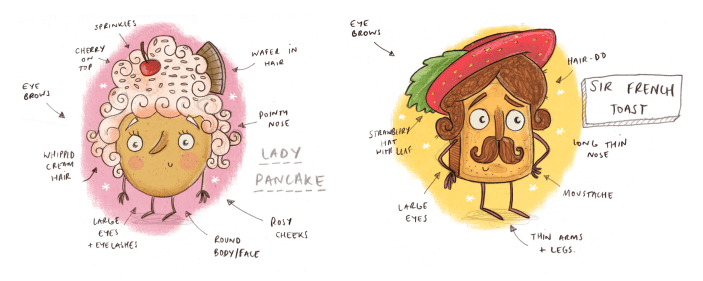
The refrigerator world as envisioned by Brendan Kearney is as colorful as the food rainbow and as active as a playground in summer. It’s also stacked with the cutest array of legumes, yogurt, cake, juices, fruit, and veggies you’ll find anywhere. The final fold-down page of the entire refrigerator is a delight that kids of all ages will want to linger over even after the story of The Great Race between Lady Pancake and Sir French Toast is over.

Ages 5 and up

Sterling Children’s Books, 2015 | ISBN 978-1454914044

Visit Josh Funk’s Website to download a free Lady Pancake and Sir French Toast Activity Kit and to learn about more upcoming titles!

Discover more art and books by Brendan Kearney on his website!

Watch the trailer for this amazing race – you’ll be singing the Lady Pancake & Sir French Toast theme song in no time!

International Waffle Day Activity 


celebrate-picture-books-picture-book-review-lady-pancake-and-sir-french-toast

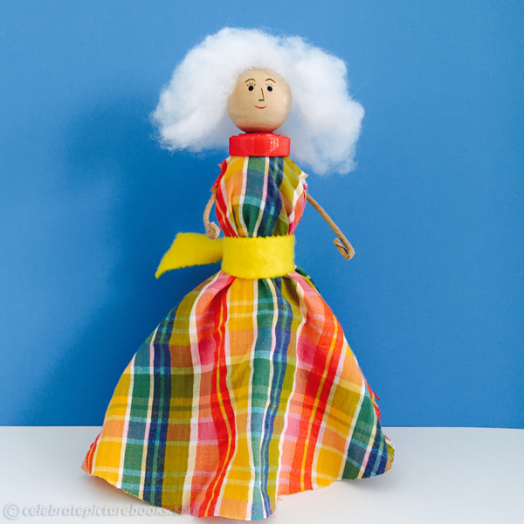
Sweet as Syrup Figure


Fun shouldn’t be kept bottled up! Well…maybe just this once. Make your own figure to display or play with from a syrup bottle with this craft. It’s sure to be as sweet as you are!

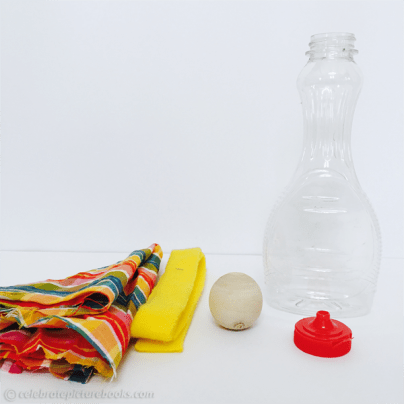
Supplies

  • Small plastic syrup bottle with a narrow squeeze fliptop and without a handle, empty
  • 1 ½-inch wooden ball with ½-inch hole in bottom
  • 16-inch to 18-inch square piece of cloth
  • Ribbon or strip of material
  • 12 to 14-inch long medium-gauge craft wire
  • Gel pens, black, blue, brown, red (Gel pens work well on the wood as the ink doesn’t bleed into the wood and are easy to control)
  • Poly fill or needle-felting wool
  • Scissors
  • Strong glue

CPB - Syrup Bottle Figure II

Directions

To prepare the bottle

  1. Remove labels from syrup bottle
  2. Cut the flip top in half, keeping the narrow nozzle part

To make the head

  1. Holding the wooden ball with the hole at the bottom, draw a face on the wooden ball with the gel pens
  2. Glue a small handful of poly fill or needle-felting wool to the top of the wooden ball for hair. You can make the hair has long, short, or poofy as you wish.

To make the dress

  1. Cut a 16-inch diameter circle from the material

To assemble the figure

  1. To make the arms, wrap the wire around the neck of the syrup bottle, crossing it in the back and pulling tight
  2. Center the material over the opening of the syrup bottle
  3. Cut tiny slits in the material at the location of the wire on each side of the bottle, and pull the arms through the material
  4. Bend the ends of the wire into a small loop to form hands
  5. Screw the cap with the narrow nozzle over the material
  6. Tie the ribbon or strip of material around the narrow part of the bottle to make the figure’s waist
  7. Place the hole in the wooden ball over the nozzle in the cap and glue into place

Make up your own story with your new figure!

March 24 – National Button Day

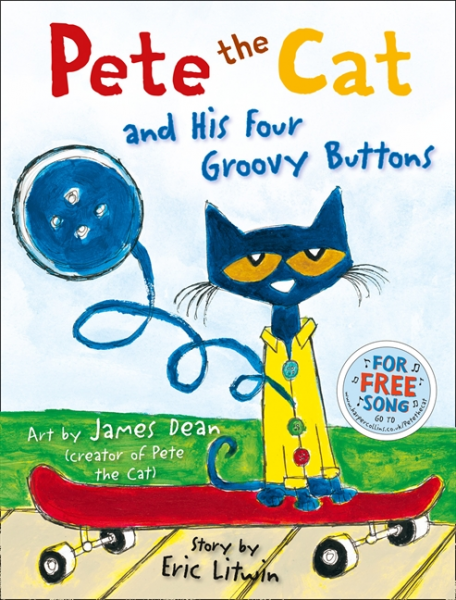
Pete the Cat and His Four Groovy Buttons by Eric Litwin and James Dean Picture Book ReviewAbout the Holiday

You have to admit it—those little round things that hold our clothes and bags shut are indispensable. Sometimes tiny works of art in their own right, buttons are fascinating. Antique buttons made of glass, metal, or even bone and decorated with intricate paintings, engraved designs, or gemstones offer a glimpse into history, both American and International. Today’s buttons, fashioned into engaging shapes or brightly colored, have stories of their own and enhance whatever garment or item they adorn.

Button collecting was recognized as an organized hobby by the National Button Society in 1938, and National Button Week – which I’m celebrating today – was founded in 1989. The goal is to promote awareness of the fun of button collecting and to recognize the study and display of antique and collectible buttons. Button collecting is a fun hobby that is exciting for all ages.

Pete the Cat and His Four Groovy Buttons

Written by Eric Litwin | Created and Illustrated by James Dean


It’s 8:00 in the morning and Pete the Cat is ready to start the day wearing his favorite shirt – the one with 4 groovy buttons. Those buttons are big, they are round, they are colorful, and they inspire him to sing a song: “My buttons, my buttons, my four groovy buttons. My buttons, my buttons, my four groovy buttons.”

Soon, however, one of the buttons pops off! That leaves Pete with how many buttons? 3! Right! Does Pete cry? “Goodness No! Buttons come and buttons go.” Fortunately for readers buttons continue to GO…inviting kids to do the math and sing the infectious song with each “Pop!”

As Pete sits atop his surfboard atop his VW Beetle looking very beachy, his last button goes sprooiiing and rolls away. What does Pete see then? Why, the only button that won’t desert him—his belly button!

Eric Litwin’s short, fast-paced text contains plenty of exciting opportunities for read-along, shout-along fun on every page. The subtraction problems offered as Pete loses buttons provide early learners with confidence-building moments, and Pete’s easy-going attitude is just right for these hyper-busy times.

James Dean’s illustrations are as big, bold, colorful, and groovy as Pete’s buttons. Vibrant primary colors rivet readers to the page, and—Watch out! That popping button is swirling right at you! But through it all Pete the Cat remains his nonchalant self.

Ages 4 – 8

HarperCollins, 2012 | ISBN 978-0062110589

National Button Week Activity

CPB - Button Coat

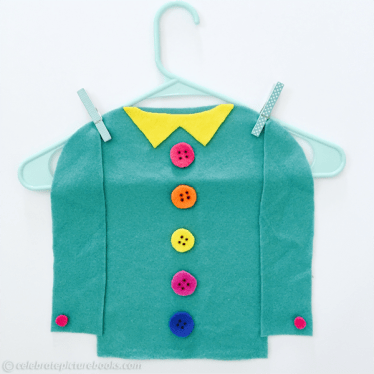
Pin the Button on the Coat Game


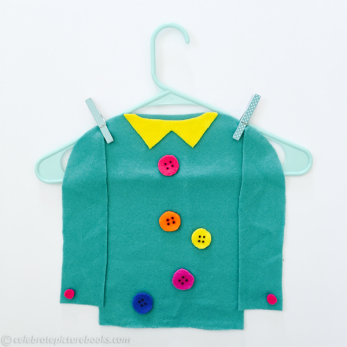
Pin the Button on the Coat is a fun game you can make yourself and play anytime! It’s great for a button-themed party or on any day that you’re holed up and just poppin’ to do something! The game is played like “Pin the Tail on the Donkey,” and the object is to get the buttons as close to the center of the coat as possible. Have fun!

Supplies

CPB - Button Coat II

Directions

  1. Cut out the coat, sleeves, and collar following the printable patterns
  2. With the fabric glue, attach the sleeves to the edge of the coat, and the collar to the top of the coat.
  3. Let dry
  4. Cut circles to represent buttons from the other colors of fleece or felt, as many as you need
  5. With the marker make dots to represent holes in the “buttons”
  6. When the glue on the coat is dry, attach it to the clothes hanger with the clothespins

If you like buttons and button crafts, pop on over to February 29—Haiku Writing Day for Guyku—a fun book of poetry—and directions to make a bookmark with colorful buttons!


March 22 – Tuskegee Airmen Day

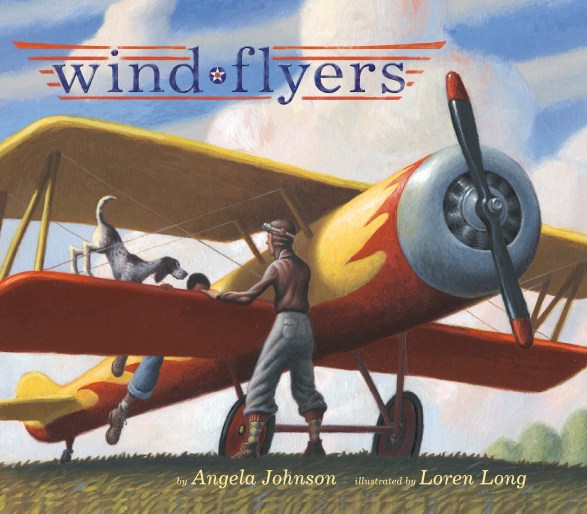
Wind Flyers by Angela Johnson and Loren Long Picture Book Review

About the Holiday

Today marks the 75th anniversary of the foundation of the Tuskegee Airmen, the first black military aviators in the U. S. armed forces during World War II. The regiment consisted of 996 pilots and more than 15,000 ground personnel who were trained at Tuskegee Army Air Field and other locations. These brave pilots have been credited with 15,500 combat sorties and earned more than 150 Distinguished Flying Crosses. The success of the Tuskegee Airmen paved the way for the integration of the U.S. military under President Harry S Truman in 1948.

Wind Flyers

Written by Angela Johnson | Illustrated by Loren Long


With pride a young African-American boy tells the story of his great-great-uncle who was a Tuskegee Airman in World War II. His uncle was “a smooth wind flyer. A Tuskegee wind flyer…” Like a bird, his uncle tells his nephew, he was born to fly, jumping off a chicken coop at the age of five and into a pile of hay from a barn when he was seven. He has his first real flight at the age of eleven, when he pays to be a passenger with a barnstormer.

Flying over lakes and fields, his uncle feels as if he’s in Heaven, among soft clouds that beckon for him to be a wind flyer too. The experience changes him forever, and always there is the desire to fly “into the wind, against the wind, beyond the wind.” As a young adult his uncle contributes his dream and his skills to the World War II effort, becoming a Tuskegee Airman, one of the first black pilots in the United States military.

The boy and his uncle look through old photographs, seeing once more those young and brave pilots—the Tuskegee wind flyers. After the war, his uncle crop dusted in order to fly. Now planes are different, he says, but the clouds remain the same. The boy and his uncle climb to the highest point of the uncle’s barn to watch the jets—and in those moments they once more become the smooth wind flyers, flying into the wind and beyond.

In her soaring, rhythmic language, Angela Johnson captures the dreams and yearning of a young boy whose greatest desire is to fly among the clouds. When he gets his chance by joining the Tuskegee Airman in World War II, Johnson combines straightforward narrative with poetic lines to enhance the sense of achievement and pride the young pilots felt. The structure of the story is well chosen, as the relating of the uncle’s life from childhood through old age through the eyes of his nephew, strengthens themes of strong familial relationships as well as shared dreams across generations.

Loren Long gives Wind Flyers additional power with his strong, vibrant paintings. Two-page spreads provide a sense of the vastness of the skies that so enticed the young would-be pilot. Even the clouds echo the emotion of the page—fluffy, floating, and alive in the flight scenes while linear, flat, and stationary when the plane and the uncle are earthbound. Realistic portrayals of the boy, his uncle, and the other Tuskegee Airmen are reminiscent of the WPA murals of the 1940s while still setting this book firmly in today for a new generation.

Wind Flyers is a wonderful book to share with aviation buffs and dreams of all types.

Ages 4 – 9

Simon & Schuster Books for Young People, 2007 | ISBN 978-0689848797

Tuskegee Airmen Day Activity

CPB - Biplane side

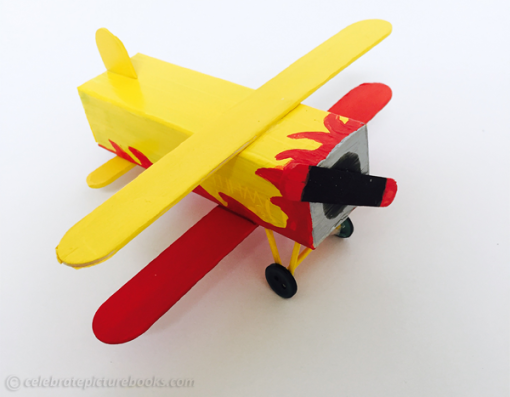
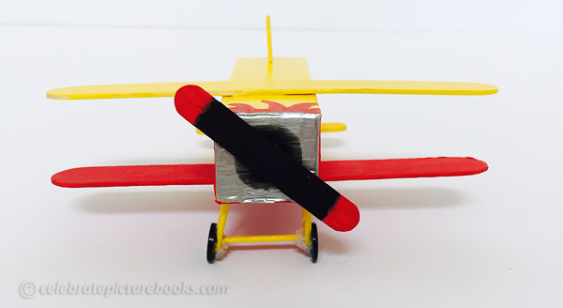
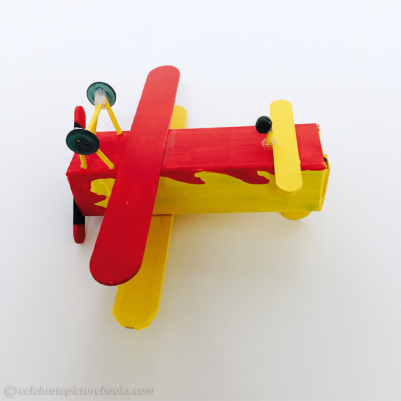
Head in the Clouds Box Biplane


If you love airplanes and flying, you’ll have fun making your own plane from recycled materials! Use your creativity to decorate your plane while you imagine yourself flying through the clouds on a beautiful day. Younger children will have fun sharing this activity with an adult or older sibling too!

Supplies

  • Travel-size toothpaste box
  • 3 6-inch x 1/2-inch craft sticks
  • 2  2 1/2-inch x 7/8-inch mini craft sticks
  • 5 Round toothpicks, with points cut off
  • Paint in whatever colors you like for your design
  • 4 small buttons 
  • 2 mini buttons
  • Paint brushes
  • Strong glue or glue gun

CPB - Biplane front

Directions

  1. Empty toothpaste box
  2. Paint toothpaste box and decorate it
  3. Paint the craft sticks and 5 toothpicks
  4. Paint one small craft stick to be the propeller
  5. Let all objects dry

To assemble the biplane

  1. For the Bottom Wing – Glue one 6-inch-long craft stick to the bottom of the plane about 1 inch from the end of the box that is the front of the plane
  2. For the Top Wing – Glue the other 6-inch-long craft stick to the top of the plane about 1 inch from the front of the plane
  3. For the Tail – Glue one mini craft stick to the bottom of the box about ¾ inches from the end that is the back of the plane
  4. For the Vertical Rudder – Cut the end from one of the painted 6-inch-long craft sticks, glue this to the back of the box, placing it perpendicular against the edge and half-way between each side

CPB - Biplane bottom

To assemble the front wheels

  1. Cut 4 painted toothpicks to a length of ¾-inches long
  2. Cut one painted toothpick to a length of 1-inch long
  3. Glue 2 of the 3/4-inch toothpicks to the back of 1 button, the ends of the toothpicks on the button should be touching and the other end apart so the toothpicks form a V
  4. Repeat the above step for the other wheel
  5. Let the glue dry
  6. Glue the 1-inch long toothpick between the wheels at the center of each wheel to keep them together and give them stability. Let dry

To make the back wheel

  1. Cut two ¼-inch lengths of painted toothpick and glue them together. Let dry
  2. Glue two mini buttons together to form the back wheel. Let dry
  3. Glue the ¼-inch toothpicks to the mini buttons. Let dry
  4. Glue these to the bottom of the plane in the center of the box directly in front of and touching the tail

Display your biplane!