December 9 – Lost and Found Day

celebrate-picture-books-picture-book-review-the-christmas-cat-cover

About the Holiday

We all know that feeling of joy when something we love and think lost is found again. Today’s holiday commemorates that emotion and gives us a chance to reflect on the things that are most important to us. While Lost and Found Day was established in 2012, the first Lost and Found repository was opened by Napoleon Bonapart—who knew a thing or two about loss—in 1805. Today, take a moment to remember a time when you found something precious.

The Christmas Cat

Written by Maryann Macdonald | Illustrated by Amy June Bates


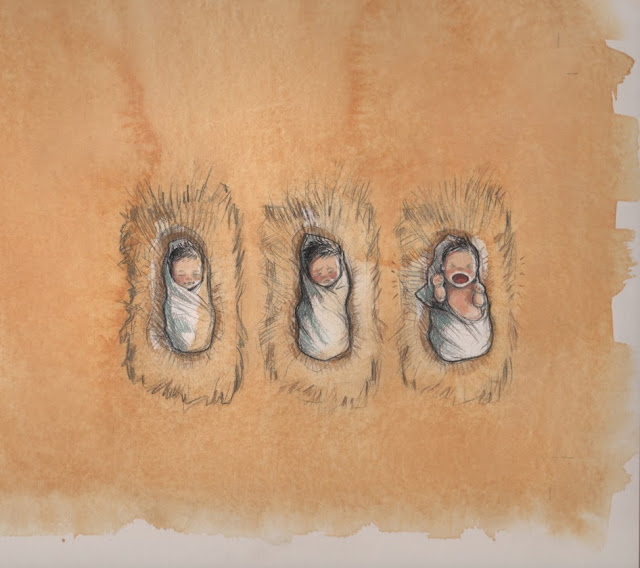
“Jesus was beautiful, like all babies,” but on the night he was born he cried and cried. Mary tried everything to comfort him—a warm blanket, feeding him, rocking him—but nothing soothed him. Looking on, the other animals longed to help. “Doves fluttered down from the rafters, settling on the creaky stable door.” Although their coos were soft and musical, the baby did not stop crying.
celebrate-picture-books-picture-book-review-the-christmas-cat-crying-jesus

Image copyright Amy June Bates, courtesy of amyjunebates.blogspot.com/

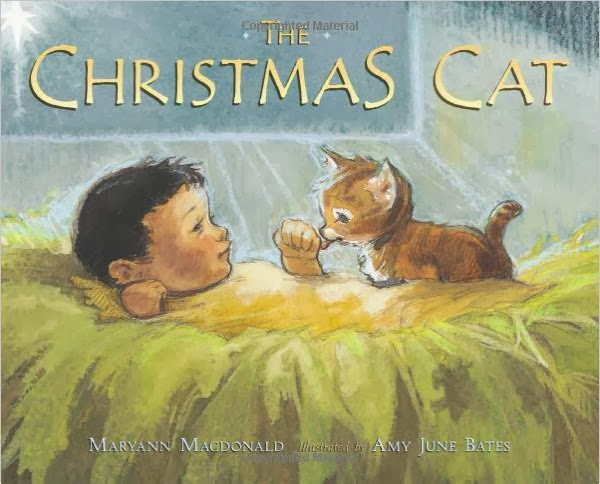
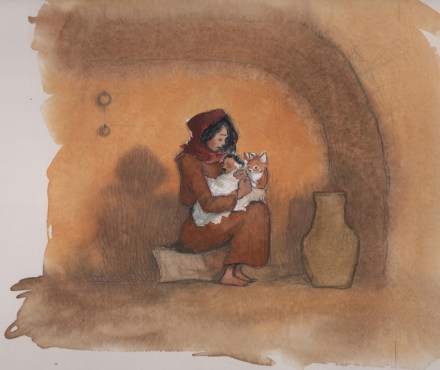
The gentle brown cow tried next, lowing the lullaby she used on her own calf, but Jesus cried louder. And even though the donkey meant well, her braying “made Jesus cry loudest of all.” Then from a hiding place a little kitten crept “step by careful step” toward Mary and Jesus. Leaping lightly onto Mary’s lap, the kitten “nuzzled Jesus’s neck. Then he began to purr, a calm, contented purr that came from deep inside.” Jesus gazed at the tiny kitten, and as he touched the soft fur his crying quieted. The barn grew silent and the new family and all the animals slept soundly.
celebrate-picture-books-picture-book-review-the-christmas-cat-mary-and-jesus

Image copyright Amy June Bates, courtesy of amyjunebates.blogspot.com/

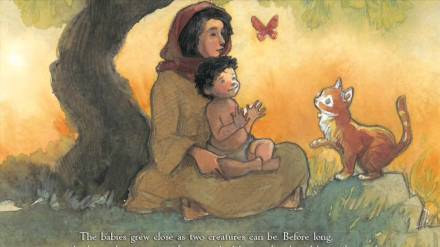
As time passed and the kitten grew into a cat, he and Jesus became close companions, playing together under the fig tree. When it was naptime, “it was the cat’s turn to watch over the baby and purr him to sleep.” But one day their peaceful life was shattered. Jesus’s father, Joseph, learned through an angel that King Herod was looking for Jesus. Harod had heard rumors that Jesus would grow up to be king one day. “Herod’s soldiers, the angel said, were racing toward Bethlehem, hoping to find the baby Jesus and destroy him.”

Joseph, Mary, and Jesus hurried to leave their home, packing everything they had to go now—in the middle of the night—to escape detection and flee to Egypt. With all their goods piled onto their donkey, Mary and Joseph were ready to leave. But where was Jesus’s cat? “Mary and Joseph combed through the tall grass, searched the shadows near the fire and looked high in the branches of the fig tree. But the cat was nowhere to be found.”
celebrate-picture-books-picture-book-review-the-christmas-cat-and-jesus-playing

Image copyright Amy June Bates, courtesy of Dial Books for Young Readers

It was much too dangerous to linger, and so, sadly, the family left Bethlehem without their beloved pet. In the chill night air, Jesus was uncomfortable; he missed his cat. “He clenched his tiny fists and screamed.” Joseph worried. Were the campfires on the horizon Herod’s soldiers? Could they hear Jesus crying? Both Mary and Joseph missed the calming influence of their cat. Suddenly, Jesus heard a familiar wail. Out of the basket tied to the donkey’s flank popped his companion. Jesus reached out for him, and the cat leaped into his arms.

After the two had greeted each other as long lost friends, they fell asleep to the cat’s tender purring as “the donkey carried them far away from Herod’s soldiers and their terrible swords, far away to the safe land of Egypt. Love had saved them.” As the two grew older together, they loved each other as only a pet and it’s child can. “They were meant for each other…from the very first Christmas night, in the bright starlight.”
celebrate-picture-books-picture-book-review-the-christmas-cat-bethlehem

Image copyright Amy June Bates, courtesy of amyjunebates.blogspot.com/

In her Author’s Note following the text, Maryann Macdonald reveals that her story is inspired by Leonardo da Vinci’s drawings of La Madonna del Gatto or the Madonna of the Cat, in which the baby Jesus is depicted holding and playing with a cat as he sits on his mother’s lap, as well as legends of a cat that lived in the stable where Jesus was born.

Maryann Macdonald’s gentle story of the baby Jesus soothed by a kitten on the night he was born and saved by this same pet on his flight to Egypt will captivate young children. The focus on the child-animal bond will delight little ones with pets of their own and makes the Christmas story immediately accessible. Macdonald’s lyrical language beautifully portrays the emotion and setting of the story, and she establishes the danger faced by the family with age-appropriate suspense.

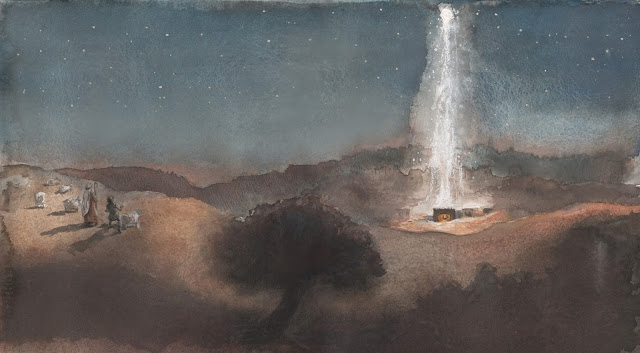
Amy June Bates enhances the story with gorgeous traditional paintings of Mary, Joseph, and Jesus, the stable and its animals, and the nighttime journey to Egypt. Her watercolor, gauche, and pencil illustrations glow with warm ambers, greens, and midnight blues. The barn animals are sweetly gentle and earnest in their attempts to soothe the crying baby, and the realistic portraits of the family demonstrate their love for each other. Children will especially like the images of Jesus and his pet cat cuddling and playing together. The final illustration of Mary, Jesus, and their cat echoes the drawing by Leonardo da Vinci that accompanies the Author’s Note.

For pet owners and animal lovers, The Christmas Cat would make a meaningful addition to their holiday collection.

Ages 3 – 6

Dial Books for Young Readers, 2013 | ISBN 978-0803734982

To learn more about Maryann Macdonald and her books, visit her website!

To view a portfolio of artwork by Amy June Bates, visit her blog!

Lost and Found Day Activity
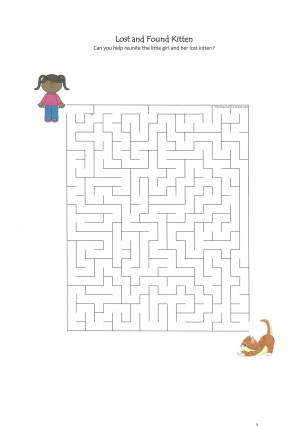
celebrate-picture-books-picture-book-review-lost-and-found-kitten-maze

Lost and Found Kitten Maze


A little girl has lost her kitten! Can you help her get through the printable Lost and Found Kitten Maze to find her pet?

Picture Book Review

September 8 – International Literacy Day

celebrate-picture-books-picture-book-review-the-summer-nick-taught-his-cats-to-read-cover

About the Holiday

In 1966 UNESCO (United Nations Organization for Education, Science and Culture) established International Literacy Day on this date to “actively mobilize the international community to promote literacy as an instrument to empower individuals, communities, and societies.” Marking its 50th anniversary, International Literacy Day is this year celebrating the theme “Reading the Past, Writing the Future” to commemorate five decades of efforts to increase in literacy rates around the world and the progress made. “It also looks to innovative solutions to further boost literacy in the future.” With a focus on innovation, International Literacy Prizes are also awarded to people with outstanding solutions that can drive literacy towards achieving future goals.

The World Literacy Foundation also celebrates today’s holiday with the 2016 campaign “The Sky’s the Limit,” which aims to eliminate the digital divide for students in the developing world.

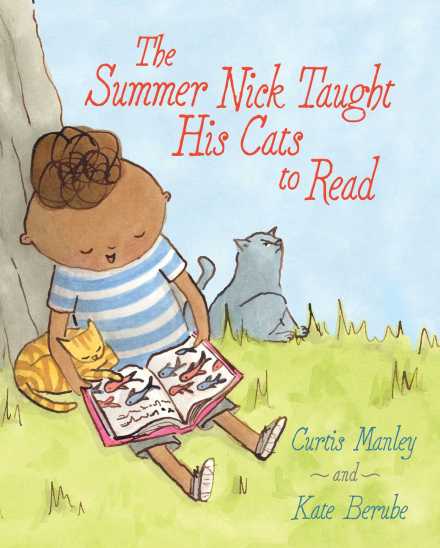
The Summer Nick Taught His Cats to Read

Written by Curtis Manley | Illustrated by Kate Berube


One summer Nick, Verne, and Stevenson did everything together. Nick is a little boy and Verne and Stevenson are two very different cats. Nick and Verne loved to spend time near the water—Stevenson tolerated it. Nick and Verne slept happily in a tent under the stars—Stevenson barely shut his eyes. While Nick rode his bike Verne eagerly sat in the front basket—Stevenson hunkered down in a box on the back. But when Nick sat down to read, both cats had their own ideas of fun—like lying on top of the book—and Nick could hardly read a sentence.

celebrate-picture-books-picture-book-review-the-summer-nick-taught-his-cats-to-read-ball

Image copyright Kate Berube, text copyright Curtis Manley, courtesy of simonandschuster.com

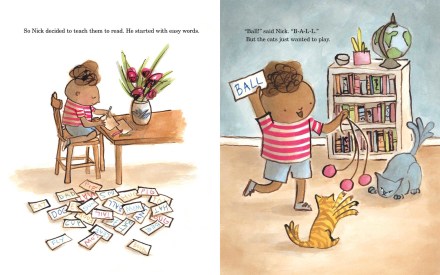
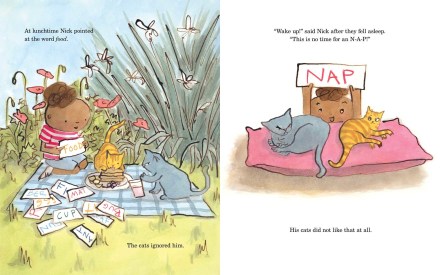
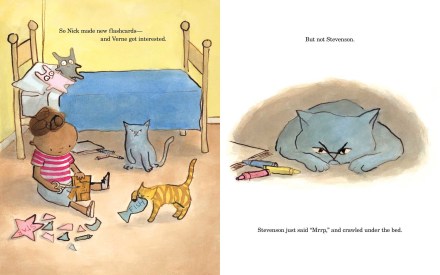
“So Nick decided to teach them how to read. He made flash cards and started with easy words” like “ball,” but Verne and Stevenson just wanted to play with the ball. While the three had a picnic on the lawn, “Nick pointed to the word food. The cats ignored him.” When the cats snoozed Nick woke them with a sign. “‘This is no time for an N-A-P!’” he said. Neither cat responded well, so Nick tried a new tactic. He made word-shaped flash cards. Verne took a nibble of “F-I-S-H,” but Stevenson hid under the bed.

celebrate-picture-books-picture-book-review-the-summer-nick-taught-his-cats-to-read-food-flash-cards

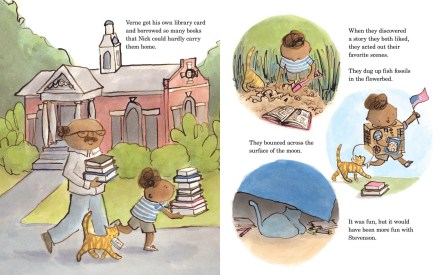
Nick began to see that Verne liked stories about cats and fish. “Verne loved fish. He followed along as Nick read, learning the sounds of the letters.” He even read by himself, discovering new stories, especially 2,000 Leagues Under the Sea. But Stevenson? When Nick spelled words for him, he merely ran under the porch, hissing. By this time Verne was reading so many books that he got his own library card and Nick needed help carrying all of his books home. Nick and Verne had fun acting out their favorite stories, but they missed Stevenson.

One day “Verne discovered a treasure under the bed—a great stack of Stevenson’s pirate drawings. “‘Wow!’” Nick whispered. “‘Stevenson drew a story.’” Nick and Verne put the pages together and began to write words to go with them. When the story was finished, Nick, Verne, and Stevenson “squeezed under the porch, gave Stevenson an eye patch, and read The Tale of One-Eyed Stevenson and the Pirate Gold. Stevenson listened and followed along. He didn’t run away. Or hiss. Not even once.”

celebrate-picture-books-picture-book-review-the-summer-nick-taught-his-cats-to-read-library

Image copyright Kate Berube, text copyright Curtis Manley, courtesy of simonandschuster.com


Suddenly, Stevenson couldn’t get enough of books.  Even before Nick woke up, Stevenson could be found with his nose in Treasure Island or another adventure book, and whenever Nick and Verne played pirates, Stevenson joined in. He helped bring down “scurvy mutineers” and found buried treasure. Now the three readers do everything together. They “hunt for dinosaurs in the lost world behind the garden…race around the yard in eighty seconds…and journey to the center of the basement.” And while they all like to read on their own, they also like it when someone reads to them. “Hmmm…,” Nick thinks, maybe next he could teach his cats to talk. “‘Meow,’ says Stevenson.”

celebrate-picture-books-picture-book-review-the-summer-nick-taught-his-cats-to-read-grumpy-stevenson

Image copyright Kate Berube, text copyright Curtis Manley, courtesy of simonandschuster.com

Curtis Manley’s adorable tribute to reading and learning to read using cats, with their variety of personalities, is inspired. Just as some people respond more to the words while others are attracted by the pictures, Verne and Stevenson have their own relationships with books. The names of the cats and their preferred reading material are also reminders that books are personal, and disinterest in one type of story does not reflect disinterest in all stories. Manley’s text makes for a joyful read-aloud as his language and phrasing is evocative, lyrical, and imaginative.

In perfect accompaniment, Kate Berube brings this creative story to life, illustrating the tender relationship between Nick and his pets as well as emphasizing the humor and distinct personalities inherent in orange striped Verne and smoky gray Stevenson that influence their journeys to literacy. Depictions of the various books Verne and Stevenson are drawn to highlight the literary references in the trio’s further play. Readers will want to stop and peruse the page of library shelves, where such books as “Harry Picaroon and the Swashbuckler’s Stone”, “Harold and the Purple Canon”, “Millions of Rats”, and “Where the Wild Pirates Are” wait to be checked out in the Pirates section.

Kids will eagerly want to adopt The Summer Nick Taught His Cats to Read, and it will snuggle in nicely on children’s bookshelves.

Ages 4 – 8

Simon & Schuster Books for Young Readers, 2016 | ISBN 978-1481435697

Discover “the facts, fictions, poems, and numbers” of Curtis Manley on his website!

View a gallery of Kate Berube‘s art on her website!

International Literacy Day Activity

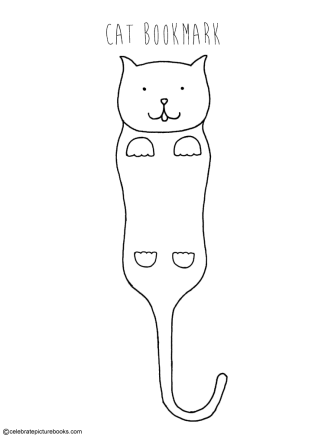
CPB - Cat Bookmark (2)

Feline Fine about Reading Bookmark


This want-to-be literary lion feels fine about reading! Let it hold your page while you’re away! Print your Feline Fine about Reading Bookmark and color it!

Picture Book Review

June 4 – Hug Your Cat Day

celebrate-picture-books-picture-book-review-the-white-cat-and-the-monk

About the Holiday

Just as it sounds, this holiday celebrates all the benefits of snuggling with your cat. While some cats may be cuddlier than others, today gives cat owners the opportunity to show just how much they love their feline friends. If you don’t happen to have a cat, why not consider visiting an animal shelter and showing some love to homeless kittens—you may even want to bring one home!

The White Cat and the Monk

Retold by Jo Ellen Bogart | Illustrated by Sydney Smith


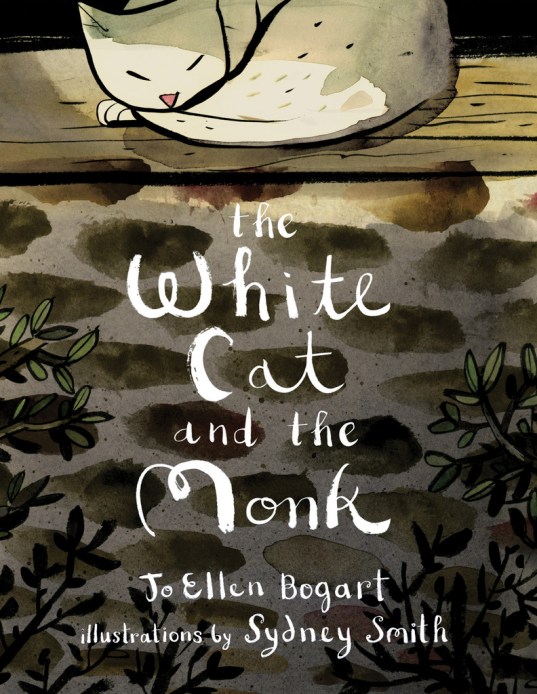
In the nighttime a white cat approaches a monastery. He slips through a window and pads along a darkened corridor and down stone steps. He creeps behind a barrel, vase, and pitcher standing in a row and adds his shadow to the black mosaic on the floor. He leaps the last few steps and hurries along to the doorway, leaking light.

His secret signal alerts the occupant of the room, who opens the door to this playful feline. “I, monk and scholar, share my room with my white cat, Pangur,” the old man explains. He lifts Pangur into his arms and strokes him then releases him to pursue his “special trade.” The monk also returns to his trade—studying ancient manuscripts to understand their meaning.

A dedicated scholar, the monk reveals, “Far more than any fame, I enjoy the peaceful pursuit of knowledge. I treasure the wealth to be found in my books.” Pangur is a dedicated scholar of another kind, studying “the hole that leads to the mouse’s home.” In that moment both man and cat become hunters—one for meaning and the other for prey.

The two do not disturb each other for each is content in his pursuit. Pangur at last “finds his mouse” as the monk finds “light in the darkness.”

Jo Ellen Bogart’s quiet and graceful retelling of Pangur Bán, a beloved Irish poem from the 9th century is a welcome respite in this age of multitasking and mega-activity. With sparse, but compelling and lyrical language, Bogart uncovers the companionable relationship between the monk and his cat as each follows their heart together.

The fine textured pages of Sydney Smith’s illustrations recall the beauty of parchment as the smooth gray and gold line drawings of the monastery’s architecture and characters give way to the vibrant colors of ancient manuscripts and the natural environment. The contentment and friendship of the monk and the cat are sweetly drawn in the characters’ mirrored actions as well as the depictions of a long-held affection between man and beast in the panels of the manuscript the monk studies. As the monk states, “Ours is a happy tale.”

Reassuring and reaffirming, The White Cat and the Monk honors the individual challenges and quests that make us who we are, and would be a wonderful addition to regular quiet-time reading.

Ages 4 and up (this book will be enjoyed by both children and adults)

Groundwood Books, House of Anansi Press, 2016 | ISBN 978-1554987801

Hug Your Cat Activity

celebrate-picture-books-picture-book-review-cat-toy

Fishing for Playtime Cat Toy


Cats love to chase after bouncing, sliding objects, and they love fish. While this toy may not taste as good as fish, it sure smells better and doesn’t require worms or hooks to attain!

Supplies

  • Old or new child’s sock
  • Fiber Fill
  • Yarn or string
  • Fabric paint or markers
  • Small bell (optional)
  • Catnip (optional)

Directions

  1. Paint or draw fins and eyes on the sock
  2. Fill the sock with fiber fill
  3. Add a teaspoon of catnip (optional)
  4. Add a small bell (optional)
  5. Use the yarn or string to close the opening with a strong knot
  6. Leave a long section of yarn or string to pull or dangle the toy

May 11 – National Night Shift Workers Day

celebrate-picture-books-picture-book-review-frankie-works-the-night-shift

About the Holiday

Today’s holiday honors all the people—medical personnel, firefighters, police officers, bakers, maintenance workers, and others who work the 3rd or night shift. These night owls work to keep us safe and protected, prepare treats for our morning repast, and maintain our living and work spaces for the next day. Take some time to thank a night shift worker and ask them about their perspective on the world.

Frankie Works the Night Shift

By Lisa Westberg Peters | Illustrated by Jennifer Taylor


In a quiet town after most people have gone to bed, Frankie the cat begins his work. He keeps busy emptying a wastebasket and cleaning two counters. From his doorway he calls other night workers to three meetings.

When the geraniums need watering, he sees that they are fed. It’s also his job to inspect the tool shelves, and tonight he discovers a stray intruder among the hammers. He chases it as it makes for the ladders—up and down, up and down—between the nail bins, ad up the stairs, causing a mess where there had just been order.

Frankie’s bosses wouldn’t approve, but he can’t worry about that now. He has his important job to attend to. But tonight is a wild night, and Frankie has awakened the management. “Be quiet, Frankie,” they shout. From their comfortable beds they ask, “What’s going on? Some of us have to work in the morning!”

And then the day workers see it—“Agh! A mouse!” They give him a task: “Go get it, Frankie!” and try to help by pointing out its whereabouts here and there. But Frankie is good at his job and pursues it through the cat door and into the backyard. It’s a night’s work well done! Frankie yawns and stretches. As he looks back at his domain, he’s glad he doesn’t work the day shift—there’s so much to clean up!

Frankie goes to bed in his red paint bucket in the hardware store window and dreams of relaxing at the beach on his well-deserved vacation.

Kids will love Lisa Westberg Peters’ frisky Frankie who is only doing his job but ends up creating chaos. Sometimes when you’re all in and concentrating on the work at hand, it’s like that, as kids and adults involved in play or projects well know. Peters’ clever story builds from Frankie’s playful antics in the hardware store to his necessary role of family protector and mouse dispatcher. The story contains an element of counting (Frankie empties one trash can, cleans two counters, calls three meetings…) which serves to enhance the humor.

Jennifer Taylor’s stunning mixed media illustrations make excellent use of digital photography. You almost want to reach out and pet Frankie or catch the objects flying in his wake. And when the little mouse peeks out from the broom or scampers across the floor, kids will say “aww!” or “eek!” depending on their courage. The first page of the streetscape at night is arresting for its uniquely designed old buildings. When I opened to this page, my graphics-loving daughter exclaimed, “Oh! What’s this book?!” and settled in to read it with me. Definitely a great beginning to an enjoyable read!

Ages 4 – 8

Greenwillow Books, Harper Collins Publishers, 2010 | ISBN 978-0060090951

Gardening for Wildlife Activity

celebrate-picture-books-picture-book-review-cattails

Creative Cattails


Cattails are so cool, just like their namesake felines. They’re sleek and sophisticated and inside holds mystery that bursts out when you least expect it! Here’s a simple craft for making cattails that will enhance any bouquet or décor.

Supplies

  • 6-inch by 5/8-inch craft stick
  • 3/16–inch by 12-inch dowel
  • Chunky brown yarn,  
  • Green origami paper, 8-inch square
  • Green craft paint
  • Paint brush
  • Glue gun

Directions

To make the cattail:

  1. Paint the dowel green, let dry
  2. Glue 1 inch of the dowel to one end of the craft stick with the glue gun
  3. Starting at the bottom of the craft stick, glue an end of the brown yarn to the end of the craft stick meets the dowel
  4. Wind the yarn upward around the dowel and craft stick to the top. You will leave the 1/2 –inch curved part of the craft stick open.  Then reverse.
  5. Wind the yarn downward, going past the end of the craft stick about ½ inch to make the end of the cattail
  6. Wind the yarn upward once more to the top
  7. When you reach the top, put glue on either side of the curved top of the craft stick and pull a little of existing yarn into the glued area, pinching it closed.
  8. Cut the end of the yarn from the skein and tuck the end into the glued top.

To add the leaf:

  1. Cut a thin triangle from one side of the origami paper, starting with a 1-inch base and angling to the top of the paper
  2. Glue the base to the dowel about 1 ½ inches from the bottom
  3. Wind the paper upward around the dowel, leaving 5 inches unwound
  4. Glue the paper to the dowel, letting the 5-inch section stick up

If you’d like to make another craft using chunky brown yarn, see my April 7 post on The Flying Beaver Brothers and the Crazy Critter Race by Maxwell Eaton III to create a cute spool beaver.

April 17 – International Haiku Poetry Day

The Maine Coon's Haiku and Other Poems for Cat Lovers by Michael J. Rosen and Lee White picture book review

About the Holiday

Part of National Poetry Month, International Haiku Writing Day celebrates the wonders of this most minimalistic yet impactful type of poetry. The familiar 5-7-5 syllable rule doesn’t begin to describe the intricacies of form and thought that goes into these beautiful creations. If you have the opportunity today, read or write some haiku, or attend a recitation of this lovely form of expression.

The Maine Coon’s Haiku and Other Poems for Cat Lovers

Written by Michael J. Rosen | Illustrated by Lee White


Fortunately for poetry—and cat—lovers there are as many types of felines as there are ways to describe them. With wit and keen insight, this collection of haiku depicts the mystery, stealth, crouching, and curiosity of twenty breeds of cats.

The remains of a shredded plant elicits an unanswerable question in Ragdoll: “why today the cat / who sleeps beneath the ivy / halved the blameless hearts”.

celebrate-picture-books-picture-book-review-the-maine-coon's-haiku-american-shorthair

Image copyright Lee White, text copyright Michael J. Rosen. Courtesy of Candlewick Press

Any cat owner who finds vases or lamps overturned will appreciate Siamese: “a toppled lamp shade / moon moth must be here somewhere / batted from the dark” It is commonly known that cats own their domain, a fact acknowledged in British Shorthair: “paws plant mud-daisies / along the polished hillside / parked on the cat’s street.”

In these lines felines become baseball players, gymnasts, ghosts, and mist, as in Bombay: “paired shadows prowling / in nightfall, but just two lights / pierce that darkness” and Norwegian Forest Cat: “caught among branches / fog descends the trunk headfirst / one foot at a time.”

celebrate-picture-books-picture-book-review-the-maine-coon's-haiku-norwegian-forest-coon

Image copyright Lee White, text copyright Michael J. Rosen. Courtesy of Candlewick Press

While the haiku form is necessarily rigid, the supple rhythms of Michael Rosen’s phrases perfectly capture the vast array of quirks, moves, attitudes, and friskiness that make cats such favorite pets. These poems are in turn sweet, spirited, and humorous—just like their subjects.

Lee White similarly highlights the bounding, creeping, prowling, and snoozing postures of all manner and colors of the breeds represented here. The Turkish Angora is painted as transparent as it leaps through the door, becoming more opaque as it reaches mid-page and disappearing from the edge of the book, leaving only its back end behind. The Abyssinian plunks its head and whole body across the open book on its owner’s lap, its eyes closed in dreamy sleep, and the Scottish Fold indomitably maintains its perch in the magnolia tree, determined not to fall like the raining petals.

Ages 5 and up (any cat lover will enjoy these poems)

Candlewick Press, 2015 | ISBN  978-0763664923

Get to know Michael J. Rosen and discover books for kids and adults, poems, videos, work for radio and TV, and more on his website!

View a beautiful gallery of artwork for books and personal illustration by Lee White on his website!

International Haiku Poetry Day Activity

CPB - Cat Bookmark (2)

Hang in there, Kitty! Bookmark


Love cats? Love reading? Then here is the purrfect bookmark for you!

Supplies

Directions

  1. Print the Hang in there, Kitty! bookmark
  2. Color the bookmark
  3. Cut around the toes of the paws, leaving the top of the paws attached to make flaps that will hang over the book’s page you want to mark

Picture Book Review