December 9 – Lost and Found Day

celebrate-picture-books-picture-book-review-the-christmas-cat-cover

About the Holiday

We all know that feeling of joy when something we love and think lost is found again. Today’s holiday commemorates that emotion and gives us a chance to reflect on the things that are most important to us. While Lost and Found Day was established in 2012, the first Lost and Found repository was opened by Napoleon Bonapart—who knew a thing or two about loss—in 1805. Today, take a moment to remember a time when you found something precious.

The Christmas Cat

Written by Maryann Macdonald | Illustrated by Amy June Bates


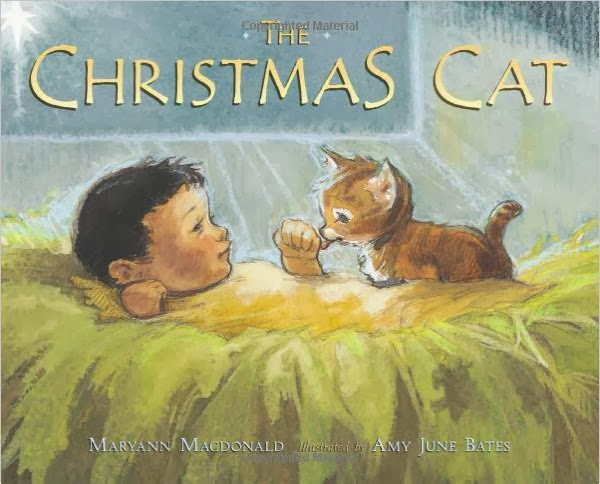
“Jesus was beautiful, like all babies,” but on the night he was born he cried and cried. Mary tried everything to comfort him—a warm blanket, feeding him, rocking him—but nothing soothed him. Looking on, the other animals longed to help. “Doves fluttered down from the rafters, settling on the creaky stable door.” Although their coos were soft and musical, the baby did not stop crying.
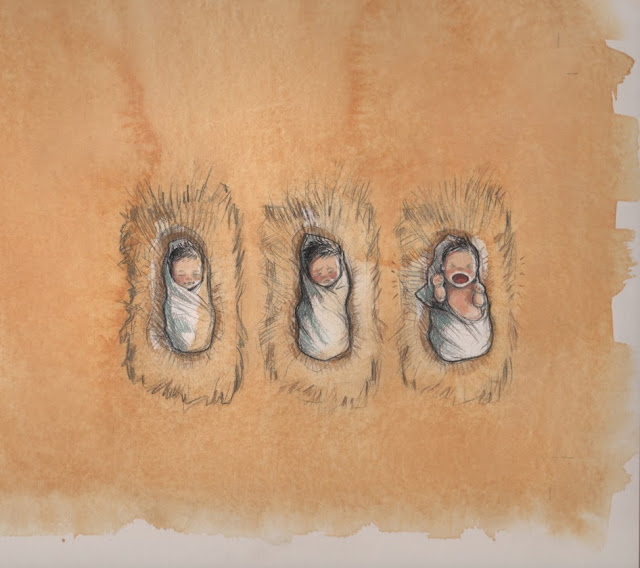
celebrate-picture-books-picture-book-review-the-christmas-cat-crying-jesus

Image copyright Amy June Bates, courtesy of amyjunebates.blogspot.com/

The gentle brown cow tried next, lowing the lullaby she used on her own calf, but Jesus cried louder. And even though the donkey meant well, her braying “made Jesus cry loudest of all.” Then from a hiding place a little kitten crept “step by careful step” toward Mary and Jesus. Leaping lightly onto Mary’s lap, the kitten “nuzzled Jesus’s neck. Then he began to purr, a calm, contented purr that came from deep inside.” Jesus gazed at the tiny kitten, and as he touched the soft fur his crying quieted. The barn grew silent and the new family and all the animals slept soundly.
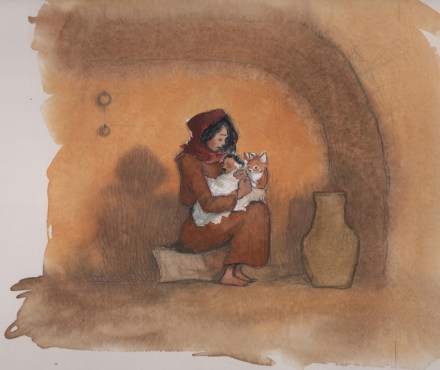
celebrate-picture-books-picture-book-review-the-christmas-cat-mary-and-jesus

Image copyright Amy June Bates, courtesy of amyjunebates.blogspot.com/

As time passed and the kitten grew into a cat, he and Jesus became close companions, playing together under the fig tree. When it was naptime, “it was the cat’s turn to watch over the baby and purr him to sleep.” But one day their peaceful life was shattered. Jesus’s father, Joseph, learned through an angel that King Herod was looking for Jesus. Harod had heard rumors that Jesus would grow up to be king one day. “Herod’s soldiers, the angel said, were racing toward Bethlehem, hoping to find the baby Jesus and destroy him.”

Joseph, Mary, and Jesus hurried to leave their home, packing everything they had to go now—in the middle of the night—to escape detection and flee to Egypt. With all their goods piled onto their donkey, Mary and Joseph were ready to leave. But where was Jesus’s cat? “Mary and Joseph combed through the tall grass, searched the shadows near the fire and looked high in the branches of the fig tree. But the cat was nowhere to be found.”
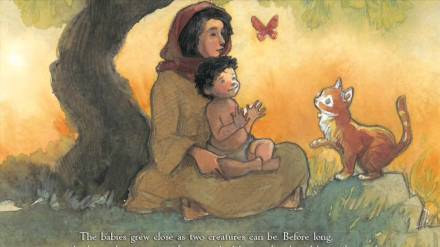
celebrate-picture-books-picture-book-review-the-christmas-cat-and-jesus-playing

Image copyright Amy June Bates, courtesy of Dial Books for Young Readers

It was much too dangerous to linger, and so, sadly, the family left Bethlehem without their beloved pet. In the chill night air, Jesus was uncomfortable; he missed his cat. “He clenched his tiny fists and screamed.” Joseph worried. Were the campfires on the horizon Herod’s soldiers? Could they hear Jesus crying? Both Mary and Joseph missed the calming influence of their cat. Suddenly, Jesus heard a familiar wail. Out of the basket tied to the donkey’s flank popped his companion. Jesus reached out for him, and the cat leaped into his arms.

After the two had greeted each other as long lost friends, they fell asleep to the cat’s tender purring as “the donkey carried them far away from Herod’s soldiers and their terrible swords, far away to the safe land of Egypt. Love had saved them.” As the two grew older together, they loved each other as only a pet and it’s child can. “They were meant for each other…from the very first Christmas night, in the bright starlight.”
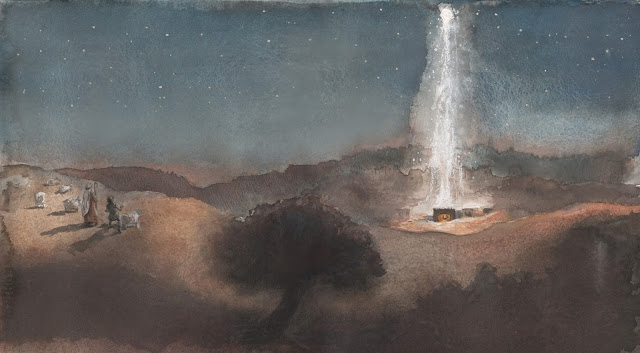
celebrate-picture-books-picture-book-review-the-christmas-cat-bethlehem

Image copyright Amy June Bates, courtesy of amyjunebates.blogspot.com/

In her Author’s Note following the text, Maryann Macdonald reveals that her story is inspired by Leonardo da Vinci’s drawings of La Madonna del Gatto or the Madonna of the Cat, in which the baby Jesus is depicted holding and playing with a cat as he sits on his mother’s lap, as well as legends of a cat that lived in the stable where Jesus was born.

Maryann Macdonald’s gentle story of the baby Jesus soothed by a kitten on the night he was born and saved by this same pet on his flight to Egypt will captivate young children. The focus on the child-animal bond will delight little ones with pets of their own and makes the Christmas story immediately accessible. Macdonald’s lyrical language beautifully portrays the emotion and setting of the story, and she establishes the danger faced by the family with age-appropriate suspense.

Amy June Bates enhances the story with gorgeous traditional paintings of Mary, Joseph, and Jesus, the stable and its animals, and the nighttime journey to Egypt. Her watercolor, gauche, and pencil illustrations glow with warm ambers, greens, and midnight blues. The barn animals are sweetly gentle and earnest in their attempts to soothe the crying baby, and the realistic portraits of the family demonstrate their love for each other. Children will especially like the images of Jesus and his pet cat cuddling and playing together. The final illustration of Mary, Jesus, and their cat echoes the drawing by Leonardo da Vinci that accompanies the Author’s Note.

For pet owners and animal lovers, The Christmas Cat would make a meaningful addition to their holiday collection.

Ages 3 – 6

Dial Books for Young Readers, 2013 | ISBN 978-0803734982

To learn more about Maryann Macdonald and her books, visit her website!

To view a portfolio of artwork by Amy June Bates, visit her blog!

Lost and Found Day Activity
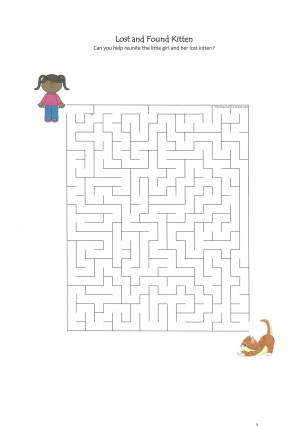
celebrate-picture-books-picture-book-review-lost-and-found-kitten-maze

Lost and Found Kitten Maze


A little girl has lost her kitten! Can you help her get through the printable Lost and Found Kitten Maze to find her pet?

Picture Book Review

December 7 – Letter Writing Day

celebrate-picture-books-book-review-exclamation-mark-cover

About the Holiday

With all the letter writing going on during December by young wishers, it should be no surprise that a letter-writing day be included in this month’s calendar. Today’s holiday celebrates all forms of personal communication written by hand and remembers the correspondence of the past that has given us such insight into our favorite poets, novelists, historical figures, and more. Sure email might be faster, but there’s a certain luxury in taking the time to write your thoughts and an unexplainable excitement in holding a heartfelt letter in your hands. The punctuation marks in today’s reviewed book not only help correspondents write more dramatically, but they remind us that we all have unique things to say!

Exclamation Mark

Written by Amy Krouse Rosenthal | Illustrated by Tom Lichtenheld


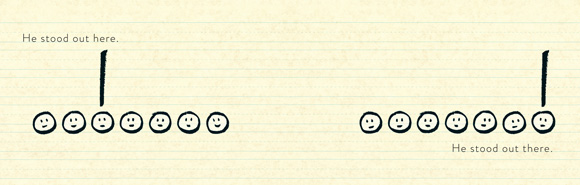
! “stood out from the very beginning.” When he was standing in a row of ……, it didn’t matter if he was in the middle or at the end—he still stuck out. The only time he wasn’t so noticeable was when he laid down to go to sleep. Sometimes he twisted himself into coils and did somersaults to be like the others, but nothing worked. “He just wasn’t like everyone else. Period.” This left him feeling “confused, flummoxed, and deflated.”

celebrate-picture-books-book-review-exclamation-mark-stands-out

Image copyright Tom Lichtenheld, text copyright Amy Krouse Rosenthal. Courtesy of Scholastic Press

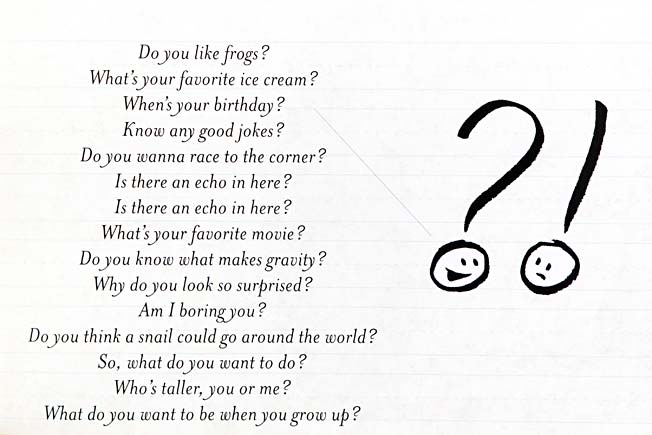
He was just about to run away from all his problems when he met ?. ? rushed right up to him and wanted to know everything. “Who are you?…What’s your favorite color? Do you like frogs?…Do you wanna race to the corner? Is there an echo in here? Is there an echo in here?…Why do you look so surprised?….” The list went on and on.

celebrate-picture-books-book-review-exclamation-mark-lots-of-questions

Image copyright Tom Lichtenheld, text copyright Amy Krouse Rosenthal. Courtesy of Scholastic Press

“STOP!” ! shouted. The sound stunned him. ? smiled and wanted him to do it again. ! didn’t know if he could, so he tried a small “Hi!” “That felt right, so he tried something bigger. Howdy!” And then he said, “Wow!” After that there was no stopping him: “You’re it!…Home run!…Yum!…Look out!…Thanks!…Boo!…Go!”

He rushed off to show everyone what he could do. The …… were delighted and “there was much exclaiming.” Now feeling happy and confident, ! “went off to make his mark.”

celebrate-picture-books-book-review-exclamation-mark-yippee

Image copyright Tom Lichtenheld, text copyright Amy Krouse Rosenthal. Courtesy of Scholastic Press

Amy Krouse Rosenthal’s clever story of an exclamation point searching for self expression is as moving as it is original. Kids will recognize his feelings of sticking out in a crowd and uncertainty of purpose and applaude when ? comes on the scene to befriend !. Readers will giggle knowingly at the barrage of questions, and feel emboldened themselves as ! finds his voice and his own unique contribution.

Tom Lichtenheld’s adorable punctuation marks hanging out on kid-ruled paper demonstrate all the expression and expressions of this well-crafted story. With simple dot eyes and small streak mouths, Lichtenheld animates the various emotions of the periods, exclamation mark, and question mark as they discover !’s special talent with individuality for each. The unbridled exuberance of ?‘s and !’s meeting makes this a terrific book about friendship as well.

! deftly points out “What would we do without exclamation points?” Likewise it asks, “What would we do without each one of us?” The positive message, creatively and humorously presented, makes this book a terrific addition to any child’s library.

Scholastic Press, 2013 | ISBN 978-054543679

You’ll find more about Amy Krouse Rosenthal, her books for children and adults, videos, other projects, and so much more on her website!

Discover a portfolio of books by Tom Lichtenheld as well as fun book-related activities and resources for teachers on his website!

!!!! for this ! book trailer!

National Letter Writing Day Activity

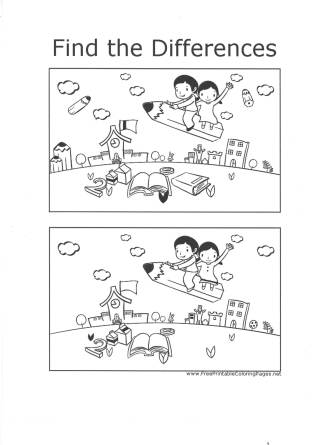
celebrate-picture-books-picture-book-review-pencil-riding-kids-find-the-differencesLetter-Writing Kids Find the Differences Puzzle


Sometimes writing a letter is a flight of fancy through the thoughts and stories you want to tell someone else. Can you find the 12 differences in this printable Letter-Writing Kids Find the Differences Puzzle?

Picture Book Review 

December 6 – Mitten Tree Day

celebrate-picture-books-picture-book-review-the-mitten-tree-cover

About the Holiday

The feel of a cozy mitten on freezing fingers is one of the luxuries of wintertime. But where did mittens come from? You might be surprised to discover that the word “mitten” comes from the French word mitaine, which was an old nickname for a cat, because early mittens were typically made of animal fur. The earliest mittens, dating to around 1000 AD, were used as sheaths for gloves, adding extra protection for cold hands. Today, I’m pleased to review the book in which Mitten Tree Day is said to have its origins! Although originally published in 1997, the story has endured and sparked programs in schools, libraries, and other places around the country.

The Mitten Tree

Written by Candace Christiansen | Illustrated by Elaine Greenstein


In a small house at the end of a lane Sarah lives all alone. Her own children have grown and moved away, but as she watches the kids gather at the blue spruce tree to wait for the school bus she remembers all the years that she walked her son and daughter to this same spot. As she makes her way down the lane to her mailbox, she wishes the children will wave and smile, but they never seem to notice her. Still, it makes Sarah smile to see them.

celebrate-picture-books-picture-book-review-the-mitten-tree-sarah

Image copyright Elaine Greenstein, courtesy of Fulcrum Publishing

One winter morning Sarah notices all the kids throwing snowballs and making snowmen—all except one little boy dressed all in blue who lacks the mittens needed to join his friends. All day Sarah worries about the boy with no mittens. As the sun goes down Sarah digs “through the basket of yarn scraps she had saved for many years.” She finds her needles and four shades of blue wool. Then Sarah begins to knit.

With the rising sun Sarah hurries to the bus stop and hangs the new blue mittens on the spruce tree. Then she hides behind a hedge to watch. The little boy in blue is the first to arrive at the bus stop. When he sees the mittens hanging there, he tries them on and finds that they fit perfectly. With a big smile he makes “a perfect snowball” and throws “it high into the winter sky.” Soon Sarah sees a little girl with mismatched mittens. That night she finds the perfect color of wool and knits a pair to match the girl’s red coat.

celebrate-picture-books-picture-book-review-the-mitten-tree-blue-sprce

Image copyright Elaine Greenstein, text copyright Candace Christiansen. Courtesy of Fulcrum Publishing

Every morning Sarah watches the children, looking for any who have no mittens. During the day her needles are busy making gifts for these children. The next morning before anyone else is up she rushes to the spruce tree and adorns it with the mittens she has knitted. The children have warmed to the “game,” and each day search “under every branch and bough for another pair of mittens.” Once or twice Sarah thinks the boy with her blue mittens sees her, but his eyes don’t linger.

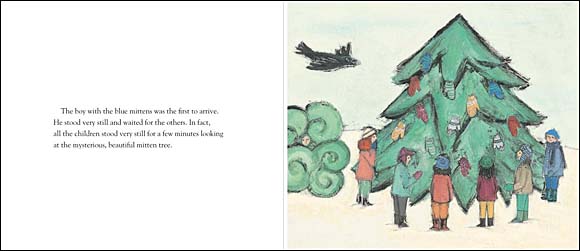
On the day before the school’s winter break Sarah fills her knitting basket with the latest mittens she’s knit. She heads out the door and down the lane. When she reaches the blue spruce, she hangs “mittens on every branch.” When the children arrive, they stand “very still for a few minutes looking at the mysterious, beautiful mitten tree.” As they board the bus, each child is wearing a new pair of mittens. Sarah sees them appear one by one in the bus windows, but none see Sarah.

celebrate-picture-books-picture-book-review-the-mitten-tree-basket

Image copyright Elaine Greenstein, text copyright Candace Christiansen. Courtesy of Fulcrum Publishing

Sarah goes home feeling happy and with her heart as full as it was “when the sounds of her own children had filled her house.” But what awaits Sarah? As she climbs the stairs to her porch, she notices a “basket woven with thick brown vines and decorated with a large white bow.” She’s surprised to see that it is filled to the brim with balls of colorful yarn. Even today Sarah knits new mittens for all the children in town, and “every time her basket is empty, a new full one appears.” Sarah doesn’t know who brings the basket, just as the children don’t know who supplies the mittens. “But someone must….”

Candace Christiansen’s heartwarming story of kindness given and reciprocated will inspire kids to see that anyone can make a difference in the lives of others by using their talents to fill a need. This gentle, quiet tale offers suspense that will pique readers’ curiosity from page to page, and the mystery surrounding the never-empty basket of wool provides a satisfying and moving ending that also reassures kids that deeds of thoughtfulness and compassion are noticed. The grandmotherly Sarah and familiar school bus stop setting and winter activities will resonate with readers.

Elaine Greenstein’s softly colored, folk-style illustrations give the story a cozy feeling—perfect for cold-weather reading, The variety of intricately knitted mittens, with their hearts, stripes, snowflakes and cables, are charming, and the enchanting image of the blue spruce decorated with mittens makes it easy to see how The Mitten Tree continues to inspire so many acts of kindness and charity.

Ages 3 – 7

Fulcrum Publishing, 2009 (paperback) | ISBN 978-1555917333

Mitten Tree Day Activity

celebrate-picture-books-picture-book-review-mitten-match

Mitten Match & Coloring Page


Mittens often get lost or mismatched in the fun of winter activities. Find the pairs in this printable Mitten Match & Coloring Page and then decorate them!

Celebrate Picture Books

December 5 – International Ninja Day

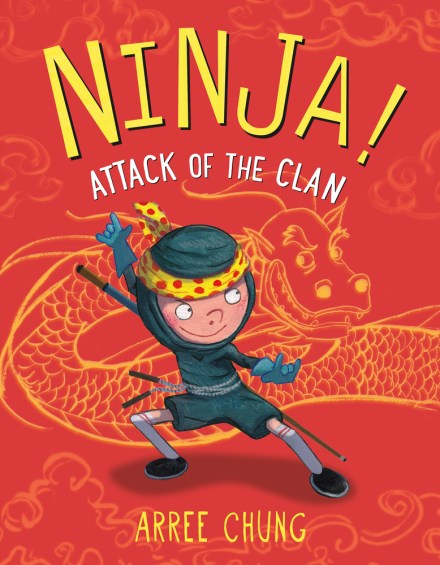
celebrate-picture-books-picture-book-review-ninja-attack-of-the-clan-cover

About the Holiday

Today’s celebration remembers and honors the ninja warriors of China and Japan who with stealth and their signature black clothing could appear and vanish “like a hawk on stolen wings” to defeat their opponents. It was rumored that they were masters of Kuji-Kiri, an eastern magical practice that allowed them to combine their natural ability to move undetected with supernatural powers. The original ninja came from the Iga province of Japan and were made up of regular citizens. Their weapons were those of farmers, making it easier for them to be explained away and these warriors to escape exposure. The black clothing that we now associate with the ninja came from the theater, where the “invisibility” of the common-man warrior was represented by stage hands playing the parts of the ninja. To conceal themselves from the audience, stage hands wore black costumes that blended in with the black background curtains. When they became part of the play, theater-goers were taken by surprise. Today, ninja remain popular characters in movies and books, and especially with children.

Ninja! Attack of the Clan

By Arree Chung


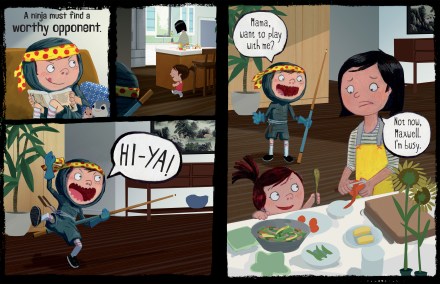
Maxwell is dressed in his ninja best, pool cue at the ready. Now all he needs is a “worthy opponent.” He leaps into the kitchen where his mom’s making a salad. “HI-YA!” But when he asks if his mom wants to play, she tells him she’s too busy. He turns to his sister. “BOOYAH! Cassy, want to play with me?” he asks. “I working,” she answers from behind the tall building she’s constructing from blocks. Disappointed, Maxwell searches out his dad in his office.

celebrate-picture-books-picture-book-review-ninja-attack-of-the-clan-cassy-asks-mom-to-play

Copyright 2016 Arree Chung, courtesy of us.macmillan.com

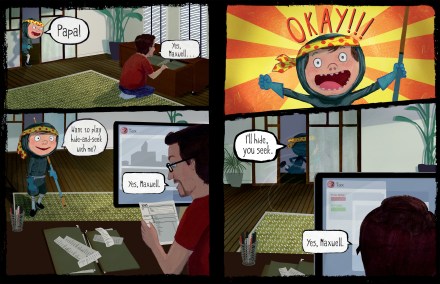
“Papa!” Maxwell exclaims. “Yes, Maxwell…,” Papa says, flipping through the file cabinet. Want to play hide-and-seek with me?” Maxwell asks. “Yes, Maxwell,” Papa says, studying the income tax form in his hand. “OKAY!!! I’ll hide, you seek.” Maxwell shouts as he runs out of the room. “Yes, Maxwell,” Papa says, opening the tax program on the computer.

Maxwell tries out various hiding places, but none seem ninja-worthy. Then he spies the bed. Concealing himself underneath, he waits for Papa to find him…and waits. Finally, he hears a thump, thump, thump, and giggles with anticipation. But it’s only Brutus sniffing him out. Time goes by and still no Papa. Maxwell shouts out an anti-clue, but still nothing happens. At last Maxwell leaves his hiding place and goes back to his dad’s office, where Papa is still sitting in front of the computer. “Hey, you never came looking for me,” Maxwell says. But his dad is too distracted to hear him. Maxwell heads out with a dejected, “Forget it.”

celebrate-picture-books-picture-book-review-ninja-attack-of-the-clan-cassy-asks-dad-to-play

Copyright Arree Chung, courtesy of us.macmillan.com

To recover from disappointment, Maxwell knows “a ninja must practice the art of meditation and find inner peace.” But even here his bad day continues. When he’s called for dinner he skips out to the dining room, but no one is at the table except Brutus, who is gulping down Maxwell’s soup. Suddenly, Brutus barks a warning. From behind comes a “surprise attack!” “Defend yourself,” orders Papa. With a flick of his finger, Maxwell secures his mask and goes to work, poking Papa in the belly. His dad comes back with an awesome bear hug, but Maxwell deftly somersaults out of his arms. With lightning speed he whips his jump rope across the room and ties up Papa.

celebrate-picture-books-picture-book-review-ninja-attack-of-the-clan-maxwell-hides

Copyright 2016 Arree Chung, courtesy of us.macmillan.com

Next comes his mom, wielding her yellow bag. Maxwell leaps over the flying purse and retrieves its lost lipstick, which he slathers on in preparation for the “kiss of death!” Covered in red lip marks, Maxwell’s mom joins his father in defeat. Cassy, however, is harder to pin down. She sneaks behind him and in one swift move covers his eyes with his own headband and applies a dastardly “SLURP!” Stunned, Maxwell admits, “I’ve been licked.” Still—as the battle continues to wage—Maxwill declares, “I love my ninja clan!”

In Ninja! Attack of the Clan, Arree Chung’s cute sequel to Ninja!, Maxwell just wants to play with his family but is disappointed as each is too busy to take notice. Maxwell’s dilemma is handled with honesty and humor that will resonate with kids. The end of the story in which Maxwell’s family executes the perfect remedy for his bad day is touching and will have kids cheering for this enthusiastic ninja. Chung’s bold, vibrant cartoon-inspired panels perfectly carry the high-action parts of the story, while full-page illustrations slow things down a bit to embrace family time.

Ages 4 – 7

Henry Holt, 2016 | ISBN 978-0805099164

For little ninjas there’s so much to see and do on Arree Chung’s website, including fun activities, a video, more about the characters, a gallery of ninja art by kids, and even a place where they can “ninjafy” pictures of themselves!

International Ninja Day Activity

celebrate-picture-books-picture-book-review-stealthy-ninja-maze

Stealthy Ninja Maze


Two ninja have been separated from their group! Can you help them find their way back in this printable Stealthy Ninja Maze?

Picture Book Review
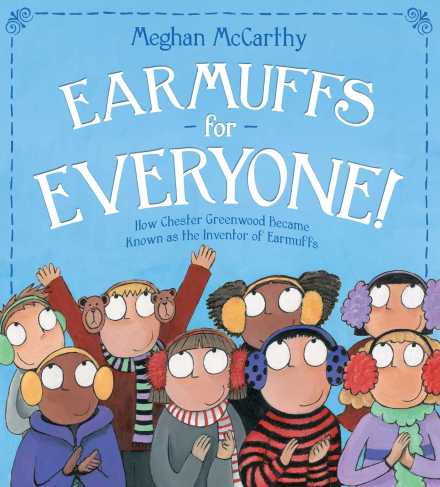
December 3 – Chester Greenwood Day

celebrate-picture-books-picture-book-review-earmuffs-for-everyone-cover

About the Holiday

On March 13, 1877 Chester Greenwood—a 19-year-old inventor—received a patent for “improvements in ear-mufflers” and forever sealed his place in history—as well as making winter more comfortable for millions of freezing ears! Today we honor Chester and his invention that brought attention to Farmington, Maine and jobs for many people in the area. 2016 marks the 40th anniversary of Chester Greenwood Day, and the people of Farmington are pulling out all the stops. With a theme of Holiday Celebrations around the World, the day will include a parade, gingerbread contest, chili contest, craft fairs, historical open houses, Polarbear Dip, 5K race, Festival of Trees and more. If you live nearby, why not plan to attend? If not, and you live in an area where the cold winds are blowing, wear your earmuffs with pride!

Earmuffs for Everyone! How Chester Greenwood Became Known as the Inventor of Earmuffs

By Meghan McCarthy


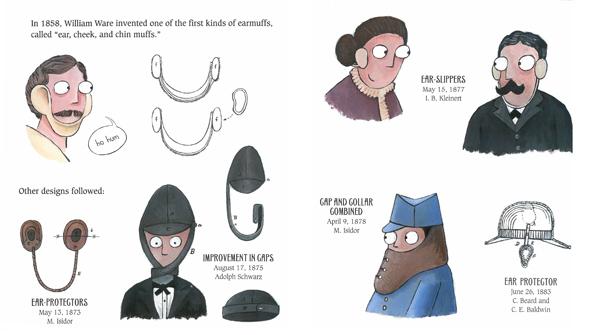
In the mid-1800s inventors were trying to solve the problem of winter’s chill effects on tender ears. William Ware designed an “ear, cheek, and chin muff” that one wore somewhat like a false beard. Ear protecting hats, ear “slippers,” high collars, and other designs followed. But it wasn’t until Chester Greenwood and his sensitive protruding ears came along that earmuffs became practical. While the exact steps Chester took in creating his earmuffs aren’t known, he eventually perfected his invention and received a government patent on March 13, 1877—when he was only 19 years old!

celebrate-picture-books-picture-book-review-earmuffs-for-everyone-patents

Copyright Meghan McCarthy, courtesy of Simon & Schuster

Chester was no one-invention wonder, though. Always on the lookout for clever ways to make money, he went on to improve other products. He applied his foresight to the tea kettle, rounding the edges of the bottom to reduce wear; constructed an interchangeable-tooth rake; and built a collapsible, if cumbersome, tent.

His inventions brought him a comfortable life that he shared with others—a beautiful house for his family in Maine, the first steam car in his town, and a bicycle shop on the bottom floor of his workshop. His wife, also a progressive thinker, worked for women’s suffrage and inspired her husband to hire women in his workshops.

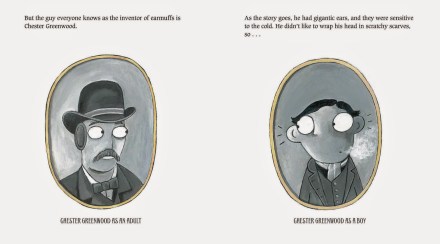
After Chester passed away, some people, most notably Mickey Maguire, thought he deserved more acclaim—even a day dedicated as Chester Greenwood Day. Maguire was so excited about this that he became a kind of inventor himself—an inventor of tall tales. Over time he told some whoppers about Chester which were repeated in the press, making it hard to separate fact from myth. But even without the made-up stories, it’s easy to say that Chester Greenwood had a very remarkable life

celebrate-picture-books-picture-book-review-earmuffs-for-everyone-portraits

Copyright Meghan McCarthy, courtesy of Simon & Schuster

Earmuffs for Everyone! goes beyond the story of Chester Greenwood to include other inventors, a discussion of the patent system (using products well-known to today’s kids), and an explanation of how an inventor’s legacy grows. Meghan McCarthy writes with verve and humor, making the story of Greenwood’s invention as well as others’ creations inviting, accessible, and fun. Her illustrations of early attempts at creating earmuffs as well as other products from the 1800s are sure to delight kids and make them curious about the time period.

In her author’s note following the text, McCarthy expands on the story of Chester Greenwood and the process of applying for and earning a patent.

Ages 4 – 8

Simon & Schuster/Paula Wiseman Books, 2015 | ISBN 978-1481406376 

Discover more about Meghan McCarthy and her books plus fun activities, videos,  artwork, advice for writers and artists and more visit her website!

National Earmuff Day Activity

CPB - Earmuff Maze.png

Here’s to Warm Ears! Maze


One muff on each side of the head—Genius! But it took inventors a lot of trial and error to make the perfect warming headgear. Use your own creative thinking on this Here’s to Warm Ears!earmuff-shaped maze. Solution included.

Picture Book Review
November 27 – Pins And Needles Day

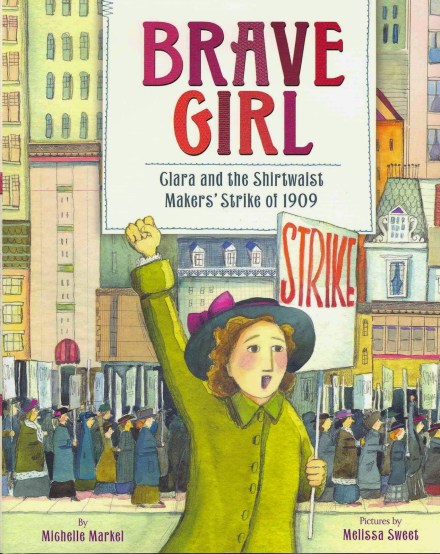
celebrate-picture-books-picture-book-review-brave-girl-clara-and-the-shirtwaist-makers'-strike-of-1909-cover

About the Holiday

It’s not often that a whole holiday is dedicated to a theatrical play. Pins and Needles Day dates back to 1937 and commemorates the Broadway musical of the same name that originally ran from 1937 to 1940. The play was produced by the International Ladies Garment Workers Union and cast sewing machine operators, cutters, and basters who were just looking for a creative outlet in their free time. The play ran for 1,108 performances and was so successful that the cast members were able to quit their jobs to fully partake in the performance schedule. The pro-Labor play saw a revival in 1978 and continues to be staged. This year the musical ran at the Provincetown Playhouse in New York City, featuring NYU students who were near the ages of the original cast members.

Brave Girl: Clara and the Shirtwaist Makers’ Strike of 1909

Written by Michelle Markel | Illustrated by Melissa Sweet


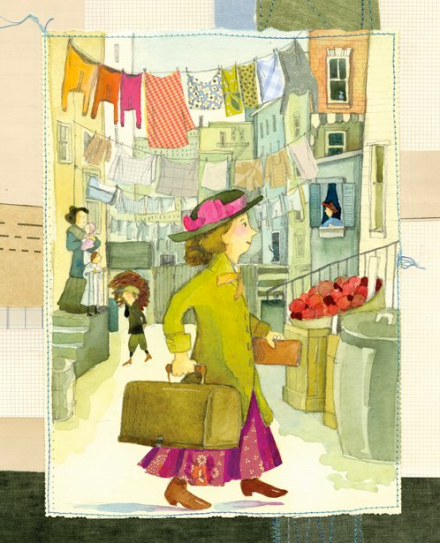
Among the immigrants sailing to New York stands five-foot-tall Clara Lemlich. She may not know it now, but she’s going to change her new city. While her father can’t find work, Clara gets a job in the garment industry, which hires school-age girls to make women’s clothing. Instead of going to school, Clara spends her days hunched over her sewing machine in a dark, smelly factory with many other girls, making clothes as fast as she can.

celebrate-picture-books-picture-book-review-brave-girl-clara-and-the-shirtwaist-makers'-strike-of-1909-clara-comes-to-town

Image copyright Melissa Sweet, courtesy of HarperCollins

The rules of the factory are severe. For minor mistakes workers can be fined or worse—fired, leaving their families without an income. The doors are locked so the girls can’t leave without being inspected to ensure they haven’t stolen anything. And the workers must toil long into the night. Despite it all Clara is determined to get an education even though it means walking to the library after work and missing sleep to read her lessons. 

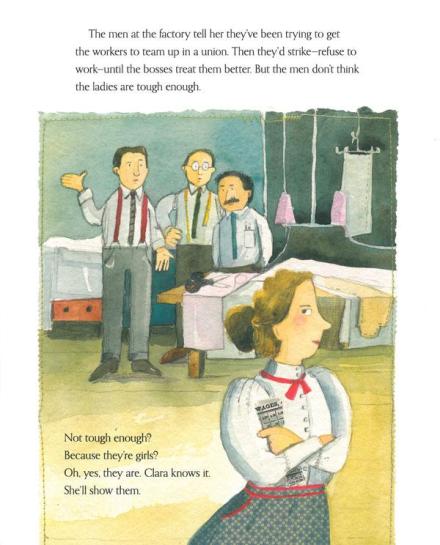
At the factory the girls become friends and reveal stories and secrets. The working conditions make Clara angry. She hears that the men at the factory want to form a union. If all the workers team up, they can hold a strike and force the management to treat them better the men say. But they don’t think the girls are tough enough.

celebrate-picture-books-picture-book-review-brave-girl-clara-and-the-shirtwaist-makers'-strike-of-1909-forming-a-union

Image copyright Melissa Sweet, text copyright Michelle Markel. Courtesy of HarperCollins

Clara knows what the girls are capable of. Every day she talks to her friends and the other women, urging them to fight for their rights—and they do! But it’s not as easy as the men predicted. The bosses don’t want to give in. In fact Clara’s life is in danger! She is beaten and arrested. Despite the intimidation she continues to picket. These small strikes make little difference, however—the bosses just hire new girls and the work continues.

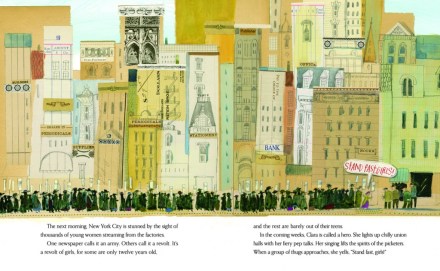
Clara and other union leaders think only a huge strike by all workers in every garment factory in New York will cause the bosses to listen and make changes. At a union meeting workers pack the seats to listen to leaders from across the country. Not one of them recommends such a large strike. Clara can keep silent no more. She moves to the front of the hall and calls out. People lift her to the stage. Shouting “Unity is strength” she rallies the crowd and begins the largest strike of women workers ever in United States history.

celebrate-picture-books-picture-book-review-brave-girl-clara-and-the-shirtwaist-makers'-strike-of-1909-picket-line

Image copyright Melissa Sweet, text copyright Michelle Markel. Courtesy of HarperCollins

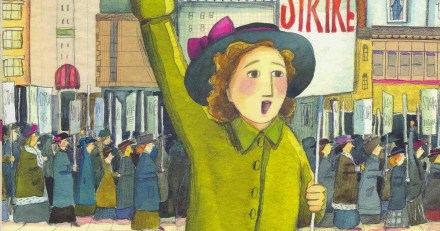
The next morning thousands of women take to the sidewalks, leaving their sewing machines empty and silent. New York is stunned! Newspapers call the strike a “revolt” and the girls an “army.” But this is really an army of children—the girls range in age from only 12 to 25 years old. Clara knows how to lead and motivate the girls. She gives rousing pep talks, sings, and stands up to thugs sent to harass them.

celebrate-picture-books-picture-book-review-brave-girl-clara-and-the-shirtwaist-makers'-strike-of-1909-clara-on-picket-line

Image copyright Melissa Sweet, courtesy of HarperCollins

All winter the girls join the men strikers. They are starving and cold and become the inspiration for newspaper articles and fundraising. Many wealthy women donate to their cause and join them on the picket lines. Finally the bosses relent. They agree to the formation of unions in their factories, to raise salaries, and to shorten the work week. Clara’s influence reaches far beyond New York. Factory workers in Philadelphia and Chicago take heart from her work and improve conditions in their cities. 

The final pages include more information about the garment industry in the early 1900s as well as a bibliography.

Brave Girl: Clara and the Shirtwaist Makers’ Strike of 1909 is a wonderful addition to any school, classroom, or home library not only for the biographical facts of Clara Lemlich’s life, but also because her story shows readers that no matter how young or small they are they can right wrongs and make a difference.

Michelle Markel’s Brave Girl is a spirited biography of Clara Lemlich, clearly outlining the life and working conditions of immigrants in the early 1900s—especially certain industries’ use of children to fill low-paying, oppressive jobs. This true-life story of a girl who wouldn’t give up or give in is told with pride and balance, touching on the dangers Clara faced in a sensitive manner appropriate for children. Overall, the idea that one person can make a difference no matter how big or how old shines through, making this not only a tale of the past, but an inspiration for today’s children and the future.

Melissa Sweet cleverly combines watercolor and gouache paintings with colorful fabric, ribbon, sewing pattern paper, and ledger pages to create illustrations fitting to the story. The pictures appear sewn onto the pages with straight, zigzag, and embroidery stitches, and the vibrant colors depict the fiery nature of Clara and all the workers who strove for better lives.

Ages 4 – 9 

Balzer + Bray, Harper Collins, 2013 | ISBN 978-0061804427

To find more books by Michelle Markel plus what’s coming next, visit her website!

Discover more books and fun activities for kids as well as resources for educators by Melissa Sweet on her website!

Vote “yes” to watch this Brave Girl book trailer!

Pins and Needles Day Activity

celebrate-picture-books-picture-book-review-sewing-word-search

Sewing Up Fun! Word Search


Sewing is a wonderful hobby and a fun way to make unique decorations for your room, accessories for your outfits, or gifts for friends and family. Like any great activity sewing has a vocabulary of its own. Find the 25 sewing-related words in this printable Sewing Up Fun! Word Search. Here’s the Solution!

Picture Book Review
November 14 – International Girls Day

celebrate-picture-books-picture-book-review-women-in-science-cover

About the Holiday

Today’s holiday recognizes the spirit of girls and encourages girls and young women to pursue their dreams, talents, and abilities with the slogan “She Can Do Anything.” Around the world young women have a long way to go to overcome the stereotypes, conditions, and pressures in the media and other organizations that keep them from receiving an equal education and from both attempting and succeeding in their desired profession. Today, celebrate the uniqueness of the girls and women in your life, listen to what they really want and want to accomplish, and support them.

Women in Science: 50 Fearless Pioneers Who Changed the World

By Rachel Ignotofsky


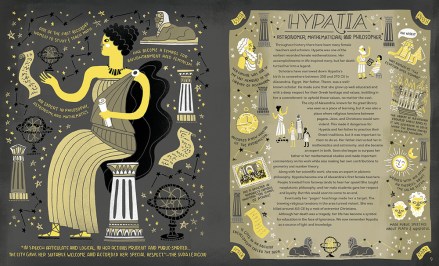
“Nothing says trouble like a woman in pants.” With this revealing attitude from the 1930s, Rachel Ignotofsky introduces her scintillating biographies of 50 intelligent, self-confident, persevering, and inspiring women working in engineering, math, medicine, psychology, geology, physics, astronomy, and more sciences from ancient history through today. The book begins with Hypatia who lived in Greece in the late 300s to early 400s CE and became an expert in astronomy, philosophy,and mathematics, making “contributions to geometry and number theory.” She became one of Alexandria’s first female teachers, “invented a new version of the hydrometer,” and can be found among the intellects in Raphael’s painting “The School of Athens.”

celebrate-picture-books-picture-book-review-women-in-science-hypatia

Image and text copyright Rachel Ignotofsky, courtesy of rachelignotofskydesign.com

Zipping ahead to 1647 readers find Maria Sibylla Merian, considered one of the “greatest scientific illustrators of all time.” Her specialty was entomology. By carefully documenting the lifespan of butterflies, she taught people about the science of metamorphosis, publishing a book on the subject filled with notes and illustrations in 1679. Later she scoured the rainforests of South America, gathering information on never-before-seen insects from that region. Her book, The Metamorphosis of the Insects of Suriname “was published in 1705 and became a hit all over Europe.” Maria was so famous, her picture appeared on German money and stamps.

celebrate-picture-books-picture-book-review-women-in-science-mary-anning

Image and text copyright Rachel Ignotofsky, courtesy of rachelignotofskydesign.com

Other women in the nature sciences include Mary Anning, who as a child discovered the first complete ichthyosaur skeleton and went on to become a paleontologist; Mary Agnes Chase, a botanist and expert on grasses; Marjorie Stoneman Douglas, who as a conservationist helped save the Florida Everglades; and Joan Beauchamp Procter, a zoologist specializing in reptiles who discovered the Peninsula Dragon Lizard in 1923; and more.

celebrate-picture-books-picture-book-review-women-in-science-marie-curie

Image and text copyright Rachel Ignotofsky, courtesy of rachelignotofskydesign.com

One of the earliest women astronomers and mathematicians was Wang Zhenyi, born in China in 1768. Creating her own eclipse model, she proved her advanced “theories about how the moon blocks our view of the sun—or the earth blocks the sun’s light from reaching the moon—during an eclipse.” She also measured the stars and explained the rotation of the solar system. At the age of 24 she published the 5-volume Simple Principles of Calculation. Zhenyi died at the age of 29, but in her short life she published many books on math and astronomy as well as books of poetry.
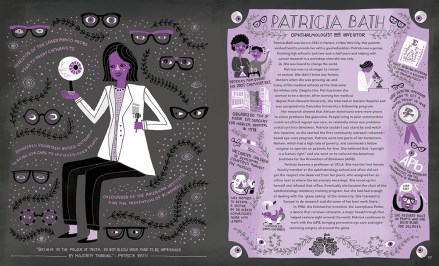
celebrate-picture-books-picture-book-review-women-in-science-patricia-bath

Image and text copyright Rachel Ignotofsky, courtesy of rachelignotofskydesign.com

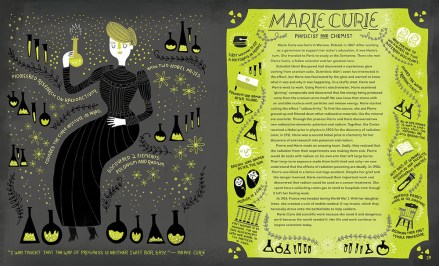
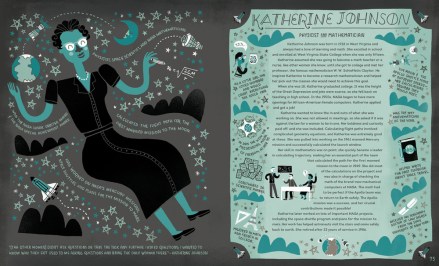
Women in Science includes many other women who have looked to the stars and mathematics for their careers. Some of these are: Ada Lovelace, the first person to write a computer program; Emmy Noether, who helped Albert Einstein develop his theory relativity, created the field of abstract algebra, and “made new connections between energy and time, and angular momentum”; Cecilia Payne-Gaposchkin a quantum physicist in 1900s England who “discovered that the sun is made mostly of hydrogen and helium gas” and in 1956 became Harvard University’s first astronomy professor; Mae Jemison, who in 1992 became the first African-American woman in space and later started her own technology consulting firm as well as founding BioSentient Corporation, and a science camp for kids; plus many others.
celebrate-picture-books-picture-book-review-women-in-science-rosalind-franklin

Image and text copyright Rachel Ignotofsky, courtesy of rachelignotofskydesign.com

The book also features Engineers, such as Hertha Ayrton who improved electric lights by inventing “a new rod that made a clean and quiet bright light” and the Ayrton fan that blew away mustard gas during World War I; and Lillian Gilbreth, who used her theories of “organizational psychology” in inventing the foot pedal for garbage cans, shelving for refrigerators, and even the “work triangle” for kitchens “that determines the distance from the sink to the stove” and saves time. There are Geneticists such as Nettie Stevens who discovered the “X” and “Y” chromosomes, and Barbara McClintock—the pants wearer from the beginning of the post—and the first person “to make a complete genetic map of corn” and discover jumping genes, or “transposons.”
The field of Medicine has benefited from women such as Elizabeth Blackwell, the first woman doctor; Alice Ball, a chemist and the first African-American woman to graduate from the University of Hawaii, who helped cure leprosy with her chemical work; and Gerty Cori who discovered how our bodies covert glucose, helping us better understand diabetes. In 1947 she became the first American woman to win a Nobel Prize.

celebrate-picture-books-picture-book-review-women-in-science-katherine-johnson

Image and text copyright Rachel Ignotofsky, courtesy of rachelignotofskydesign.com

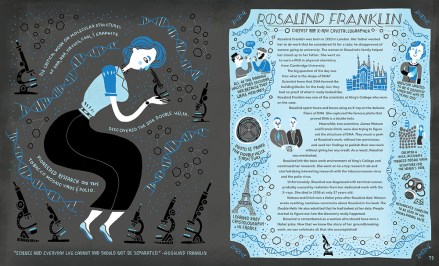
And this list only begins to scratch the surface of all the fascinating stories of women who overcame social, political, and personal obstacles to follow where their intelligence took them. Inspirational, entertaining, and undeniably eye-catching Rachel Ignotofsky’s Women in Science presents expertly written, one-page biographies that hit all the high (and sometimes unfortunate low) points in these scientist’s lives. The striking layout of both the text and illustrations keep readers riveted to the page, The left-hand side contains a representational drawing of the scientist surrounded by the subjects and materials of her work as well as trivia about her and a quotation. On the right-hand page, small illustrated facts frame the woman’s life story.

Interspersed between the biographies are pages offering a timeline of women’s milestones, depicting lab tools, and graphing statistics of women in STEM. The back matter is impressive, with two more pages presenting 15 more scientists, a four-page, illustrated glossary, resources including films, websites, and books, and an index. Rachel Ignotofsky concludes her book by saying, “Let us celebrate these trailblazers so we can inspire the next generation. Together, we can pick up where they left off and continue the search for knowledge. So go out and tackle new problems, find your answers and learn everything you can to make your own discoveries!”

Ages 7 and up

Ten Speed Press, 2016 | ISBN 978-160774976

To discover more books by Rachel Ignotofsky, visit her website!

International Girls Day Activity

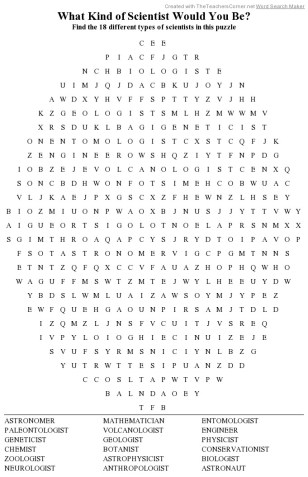
celebrate-picture-books-picture-book-review-scientists-word-search

What Kind of Scientist Would You Be? Word Search


Find the 18 different scientists in this printable What Kind of Scientist Would You Be? Puzzle. Here’s the Solution!  Then pick one and write why you would like to be that type of scientist!

Picture Book Review