June 10 – National Children’s Day

celebrate-picture-books-picture-book-review-city-moon-cover

About the Holiday

On National Children’s Day, parents, grandparents, and other family members and caregivers are encouraged to spend the day with their children, celebrating each child’s unique qualities, listening to their children, and recommitting the family to core values of love and acceptance.  Spend the day doing an activity that is meaningful to your family. This can even be as simple as taking a walk around the neighborhood—as in today’s book.

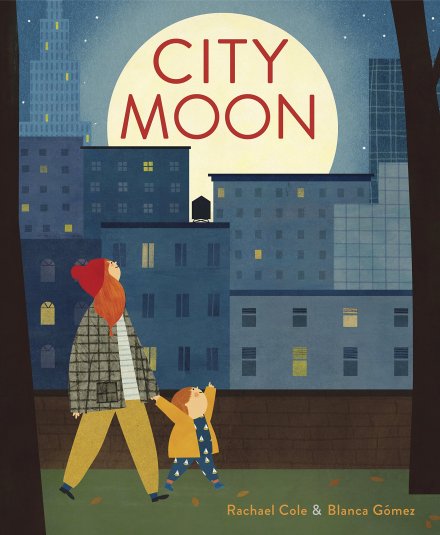
City Moon

Written by Rachael Cole | Illustrated by Blanca Gómez


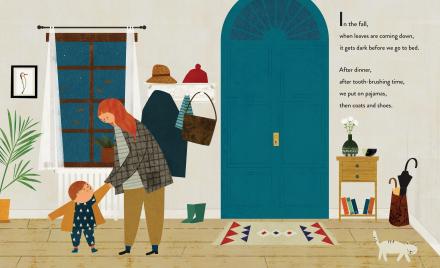
A mother and child take advantage of fall’s early darkness to take a walk around their neighborhood. Cozy in pajamas and a coat, the little one is eager to leave home behind for a bit “to look for the moon.” When they get to the park, where people are out walking their dogs, they gaze into the sky, but the moon “is hiding. Where is it?”

celebrate-picture-books-picture-book-review-city-moon-getting-coats-on

Image copyright Blanca Gómez, 2017, text copyright Rachael Cole, 2017. Courtesy of Schwartz & Wade.

Suddenly, they see it rising above the tall buildings. The child points and exclaims “Oh…there it is! The moon!” They watch it as people pass on their way home from work. As they continue on their way, the moon disappears. The child sees “glittery dots in the sky” and wonders if those are also moons. “‘Theyre stars,’ says Mama. Oh, stars.”

As they turn the corner around the fruit and vegetable stand, the moon appears again. But is it a different moon, the little one wonders. Mama explains that there is only one moon. “Oh, the same moon,” the child understands. At the crosswalk, the child sees the moon in a puddle. Could it have fallen in? Mama tells her curious child that it is the moon’s reflection. “Oh…a reflection.”

celebrate-picture-books-picture-book-review-city-moon-moon-in-park

Image copyright Blanca Gómez, 2017, text copyright Rachael Cole, 2017. Courtesy of Schwartz & Wade.

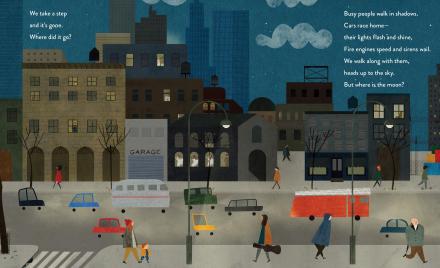
They cross the street and the moon vanishes again. Here the street is busier, with people rushing home, busses and cars zooming by, and a fire engine wailing as it speeds along. They join the throng, keeping their eyes on the sky, but the moon is nowhere to be seen. Then, a little farther on, “there it is. Bright and light and round and glowing.” They “stop and look.”

The child is mesmerized by the moon, but “why doesn’t everyone look?” Mama says that they are busy. In the windows they can see people cooking dinner, reading, and playing. Others jog and stroll on the sidewalk, while still others ride bikes home after a long day. Mama bends down and whispers, “‘And it is also time for us to go to bed.’” They head home and once more see the moon, full and bright. 

celebrate-picture-books-picture-book-review-city-moon-busy-street

Image copyright Blanca Gómez, 2017, text copyright Rachael Cole, 2017. Courtesy of Schwartz & Wade.

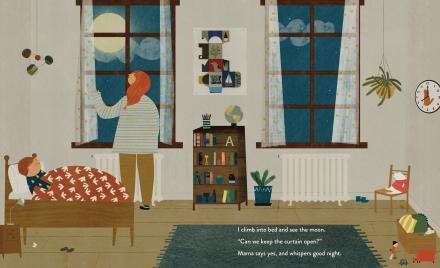
It plays hide-and-seek peeking out from its hiding place behind a cloud just as the little one becomes too sleepy to walk along. Mama carries her child home, to their stairs and the stoop. Inside they take off their coats and shoes, and the child is tucked into bed. The full moon shines through the window. “‘Can we keep the curtain open?’” the little one asks before falling asleep in the gentle glow of the natural nightlight.

celebrate-picture-books-picture-book-review-city-moon-moon-shines-through-window

Image copyright Blanca Gómez, 2017, text copyright Rachael Cole, 2017. Courtesy of Schwartz & Wade.

Rachael Cole’s delightful evening stroll is the perfect antidote to a busy day. At once lyrical and perceptive, the story is told from the child’s point of view and tenderly reflects all the wonder and magic that children find in being outside at night. Young readers will revel in the precise observations and step-by-step chronicle of the mother and child’s walk. The playful game of hide-and-seek from page to page will enchant little ones. Cole’s lovely language also echoes the way children learn—by asking questions, repeating new words and ideas, and taking time to stop and see.

celebrate-picture-books-picture-book-review-city-moon-night-sky

Image copyright Blanca Gómez, 2017, text copyright Rachael Cole, 2017. Courtesy of Schwartz & Wade.

Blanca Gómez infuses City Moon with exquisite illustrations that are as genuine and nuanced as life itself. The rhythms and habits of diverse city life and depicted with meticulous care in stylish vignettes rendered in a sophisticated and textured palette. A variety of perspectives bring the post-working day hustle and bustle close while hinting at the quieter comfort to come. Readers—both children and adults—will love peeking in the windows to see what people are up to.  With so much to see and experience,

A warm hug that embraces family and neighborhood, City Moon gives readers so much to see and experience during leisurely bedtime or daytime story times. The story will also inspire families to take similar evening walks. City Moon is highly recommended as a wonderful  gift and a must for any child’s bookshelf or classroom library.

Ages 3 – 7

Schwartz & Wade, 2017 | ISBN 978-0553497076

Discover more about Rachael Cole, her books, and her work on her website.

To learn more about Blanca Gómez and her artwork, visit her website.

National Children’s Day Activity

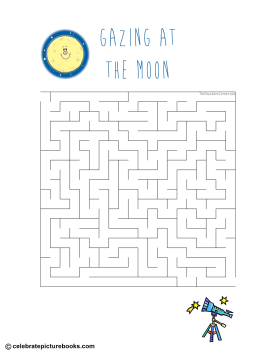
celebrate-picture-books-picture-book-review-moon-maze

Gazing at the Moon Maze


The moon is super bright! Can you follow the sight line from the telescope to the moon to see it in this printable Gazing at the Moon Maze? Here’s the Solution.

June 5 – It’s Great Outdoors Month and Interview with Author/Illustrator Paul Owen Lewis

celebrate-picture-books-picture-book-review-motomice-cover

About the Holiday

Getting outside is one of the joys of summer! As schools close, leaving more time for leisure pursuits, it’s fun to explore the great outdoors through hiking, biking, swimming, camping, and just plain playing. Some people even give up their cold-weather vehicles and take to the open road on scooters and motorcycles. Having a variety of summer experiences gives you the opportunity to meet different people and make new friends—just like the mice in today’s book!

Motomice

By Paul Owen Lewis


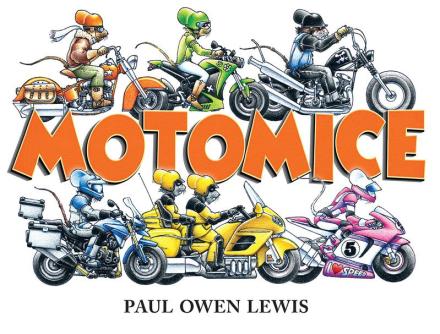
When you imagine a biker do you think of someone who wears black, looks tough, and roars through town on a loud motorcycle? Well, let’s take a ride and see what a colorful crew bikers really are! Did you know that some “bikers wear orange. They look like pilots” as they roll through the suburbs. Sometimes “their motorcycles are old.”
celebrate-picture-books-picture-book-review-motomice-roxie

Copyright Paul Owen Lewis, 2018, courtesy of Beyond Words Publishing.

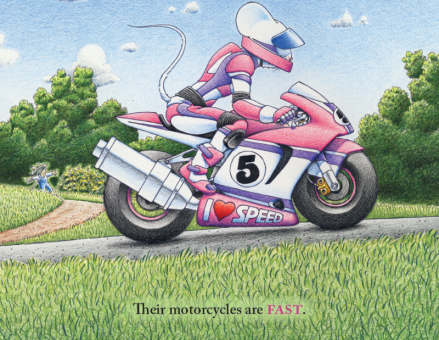
Some “bikers wear pink” like Roxie, who zooms around the track or heads out on a winding country lane on her sleek, fast motorcycle. There are even grandmas and grandpas who are bikers. They travel all over on big, sturdy motorcycles that can carry loads of stuff for camping with friends. Have you ever spied someone in silver and blue with a fancy helmet who looks a bit like an astronaut, it’s a good bet they’re a biker too! And—look!—there’s Sparky refueling her green motorcycle at the electric vehicle charging station. She “cares about the environment.” Her motorcycle is quiet. Then all gassed up and ready to go, the group is off again. But where to? It’s a Motomice Reunion Rally, where “everyone is welcome!”

So whatever road you’re on, take a good look. “Bikers are every color, every style, and every kind of person. If fact, “they are just like you and me.”
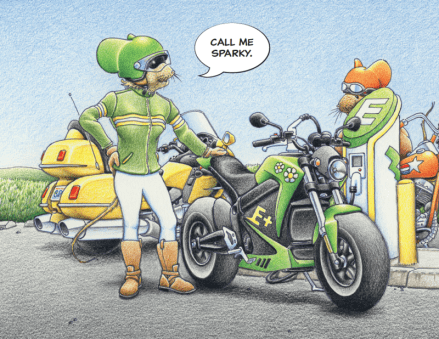
celebrate-picture-books-picture-book-review-motomice-sparky

Copyright Paul Owen Lewis, 2018, courtesy of Beyond Words Publishing.

In his heartwarming story, Paul Owen Lewis introduces kids to the welcoming community of bikers, replacing the stereotype of the tough, leather-clad biker with the reality that bikers come from all walks of life. By using different colors, comparing the appearance of bikers and their motorcycles to other professions, and adding that even grandpas and grandmas are bikers, Lewis gives readers concrete ways to relate to bikers even if they’ve only seen bikers passing by on the street. Many kids, of course, have family members and friends who ride motorcycles. Motomice is a joyful book for them to share with their biker buddies.
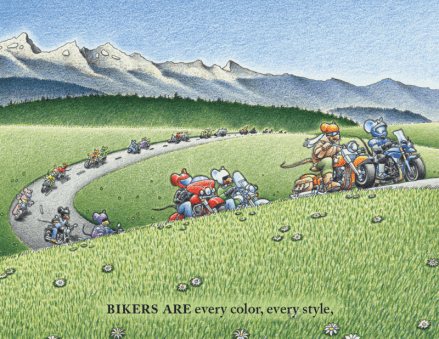
celebrate-picture-books-picture-book-review-motomice-every-color-every-style

Copyright Paul Owen Lewis, 2018, courtesy of Beyond Words Publishing.

Lewis’s stunningly realistic depictions of a variety of motorcycles will thrill detail-oriented and vehicle-loving kids. As the mice roll through beautiful vistas—adding new friends along the way—each double-page spread mirrors the sweeping feeling of the open road. A clever image occurs when the biker dressed like an astronaut hails his friends from a rocky, lunar-esque mountain side. The image of the reunion rally, where motorcycles line both sides of the street as far as the eye can see, is full of cheer and camaraderie. On the final page, the crew welcomes a baby, happy and secure with Mom in her sidecar, to the Motomice family. Young readers will feel the warm embrace as well.

Ages 3 – 7

Beyond Words Publishing, 2018 | ISBN 978-1582706603

Discover more about Paul Owen Lewis, his books, and his art on his website.

Meet Paul Owen Lewis

celebrate-picture-books-picture-book-review-motomice-paul-owen-lewis

Today, I’m happy to be talking with Paul Owen Lewis, who always offers a unique perspective in his work, about being a biker, Northwest Coast Native carving, and how to answer the heart’s questions in a story.

What inspired you to write Motomice?

I was inspired when I discovered there were 25 million active riders in the US and their average age was 52, which means there are millions of grandparents riding out there. But there wasn’t a single quality kid’s book on the market anywhere to share with their grandkids about their passion for motorcycles, and the true nature of the community who ride them (as opposed to the negative stereotype in the media). And being both a biker and an author I thought I had just the credibility to create it.

For a more detailed account, go to http://www.paulowenlewis.com/motomice/behindthestory.html

In Motomice, the different bikers and their motorcycles are described by color. What color biker are you and why?

I suppose I’m a little of all of them. Most true motorcycle enthusiasts would say they would like to collect and ride almost every style or genre (I would!). But the colors in Motomice are more or less arbitrary with the possible exception of Rat’s black bike. I chose black for him since it’s the go-to color of those who want to strike the bad-biker-boy image. And perhaps Roxy’s pink bike is meant to express associations with femininity (FYI, there are lots of female professional racers out there proudly sporting pink gear), but as for me, I’ve worn at least four of them in my 40 years of riding. So far I’ve had red, green, black, and orange motorcycles, café racers, cruisers, and sports bikes, and I wouldn’t rule out something blue and/or yellow in my future. What can I say? It’s an addiction.

As a fine artist, what attracted you to become a picture book author?

Right after art school, when I was doing my student teaching, Chris Van Allsburg’s books started appearing (Jumanji, The Polar Express, etc.) and I was struck by how solid, opaque, and strong his images appeared. Not at all like the usual dreamy, tentatively pencil-drawn images washed with faint tints of watercolor I was used to seeing in children’s book illustrations in my youth. And I remember thinking, “Wow, that’s what picture book art is like now? Awesome stuff. Maybe that’s what I’ll do with my artistic skills at some point; illustrate picture books in that in-your-face solid style that argues for its own believable reality.”

You have a very interesting artistic career that includes carving chests and totem poles in the Northwest Coast Native style. Can you describe how you began carving and a bit about your work? Are any of your carvings on public display?

In the early 90s I started noticing Northwest Coast Native art in and around Seattle. It seemed to be everywhere. And, being someone who is fascinated by the origins of things, I realized this was the unique art that originated from this unique region (as say, Egyptian art emerged from Egypt), and, being a “native” of the Northwest myself, felt like it was something I should know more about. Well, one thing led to another and soon I was taking carving lessons from some of the finest artists of the region. Then I thought to ask myself, “Has anyone done a picture book with this amazing cultural art?” So with the help and guidance of my artist friends and scholars, Storm Boy was soon born. After its publication in 1995 I became quite well-known among these circles and was offered many more opportunities to further my carving and cultural experiences. It’s truly been one of the great privileges of my life.

Your earlier books, including Storm Boy, Frog Girl, and Davy’s Dream, as well as your fine art (some examples can be seen on Paul’s website) seem to blur the distinction between earth and universe, wakefulness and dreams, allowing reality to be defined by the reader or viewer. Can you talk about your perspective a little and also why children are attracted to this perception?

Well, “blurring distinctions” is pretty much what a lot of art is about, or existing in a place in between realities. At least much of my art and interests are. I don’t think you have to look further than my own childhood for possible clues to its genesis. Both my parents succumbed relatively early in their lives to catastrophic illnesses. So, unlike so many of my middle class, suburban peers with stable home lives, I grew up with absolute uncertainty at home. And now that I’m no longer a child, I can see that I wasn’t unusual. I know now that lots of children, perhaps a majority of them, are struggling with similar questions and circumstances. So stories and art that reflect this circumstance, their reality of blurred distinctions, are bound to be of interest.

You’re well known for your inspirational school visits. Can you talk a little about your presentations? Do you have an anecdote from any presentation you’d like to share? Do you ever hear later from any of the kids that heard you speak?

When I speak at a school it is not merely to entertain (though they get that, too). I’m speaking to that kid who was me, that kid who finds him or herself in a confusing, complicated, even dangerous place and dreams of something better, but who has no way to express or see their way to it. So I tell them that writers write stories to answer the questions of their hearts. I steer them there and urge them to write the kind of story they would like to live, the kind of story that would answer the questions of their hearts.

I also tell them that writing is first storytelling, and every human being tells stories. It’s who we are. It’s what makes us human. So if you can tell a story you can write a story – and so, yes, you too can be a writer if you really want. For those who are intimidated by the writing process (words first, in sequence, on paper) I say don’t write first but tell; tell your story any way you can—whether that’s talking, acting, singing, or drawing—and capture the main points with notes, sketches, recordings, whatever, and then apply the beginning-middle-ending form of standard narrative sequence to it later. To illustrate I share slide images of myself working on my books onscreen, from first inspiration to sketching the main events to arranging them in order and then to writing the words. Once they see me do it, they feel confident that they can do it.

I’ve been a popular speaker at schools for 30 years. Now I meet teachers at schools who were once students who saw me years ago, and they can repeat back what I said to them verbatim. It’s unnerving!

What’s up next for you?

I’m about to have surgery to reattach the bicep on my right arm—my writing and art making arm—and will be more or less out of action for six months. I’ve been meaning to take a break. I guess this is it.

What is your favorite holiday and why?

New Years. I like the idea of new beginnings. That maybe this year things will turn around, work out, etc.

Has a holiday ever inspired your writing or art?

Yes! See my counting book, P. Bear’s New Year’s Party.

Thanks, Paul! It’s been enlightening and inspirational chatting with you. I wish you all the best with Motomice and all of your work!

Great Outdoors Month Activity
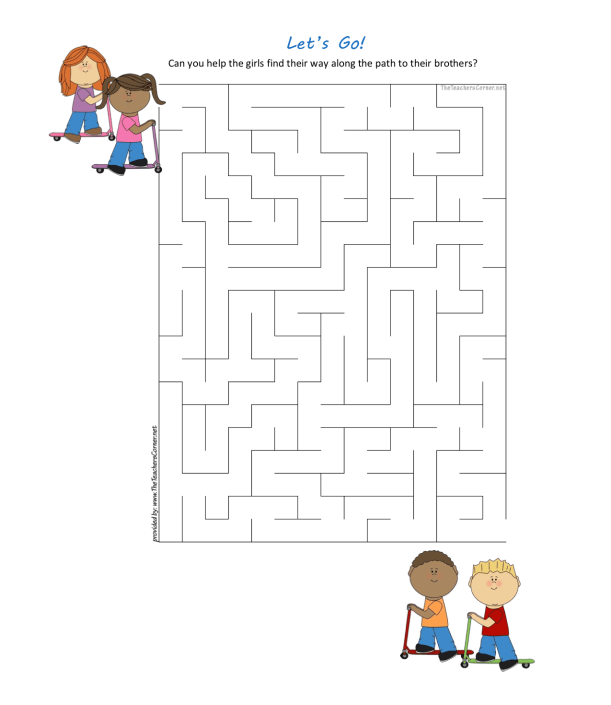
celebrate-picture-books-picture-book-review-let's-go-scooter-maze

Let’s Go! Maze


These four friends want to ride their scooters together. Can you help the girls find their way along the path to the boys?

Let’s Go! Maze | Let’s Go! Maze Solution
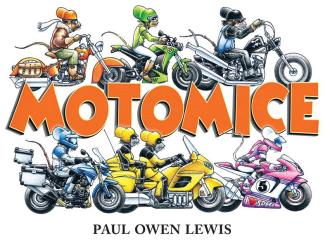
celebrate-picture-books-picture-book-review-motomice-cover

You can find Motomice at these booksellers 

Amazon | Beyond Words Publishing

Picture Book Review

June 4 – Hug Your Cat Day

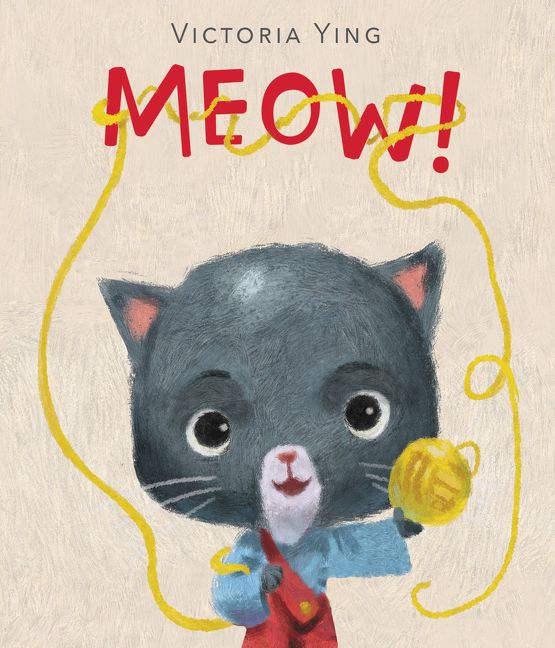
celebrate-picture-books-picture-book-review-meow!-victoria-ying-cover

About the Holiday

If you share a home with a cat, then you know how these furry friends can change your life. Whether you love them for their playful antics, for their companionship, or even for their independent spirit, your life just wouldn’t be the same without their daily presence. Hug Your Cat Day is the perfect time to show your cat or kitten  some extra love with a snuggle or quick hug if your feline friend is more independent. June is also Adopt a Cat month. If you’re considering adding a cat or kitten to your family, visit your local animal shelter to give a cat a forever home.

Meow!

By Victoria Ying


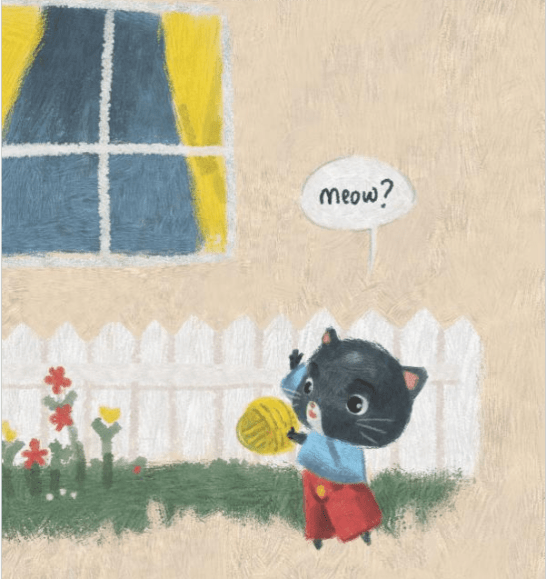
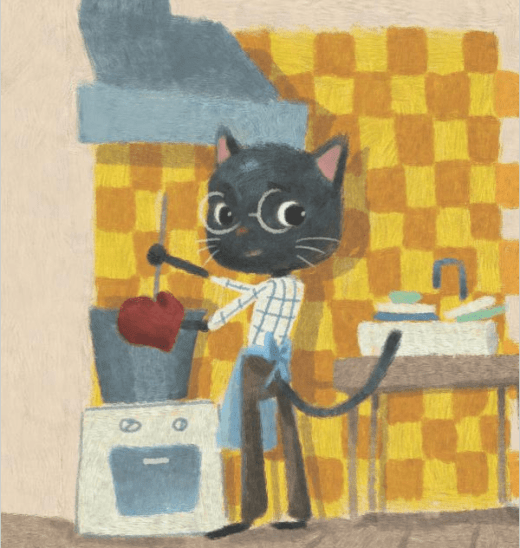
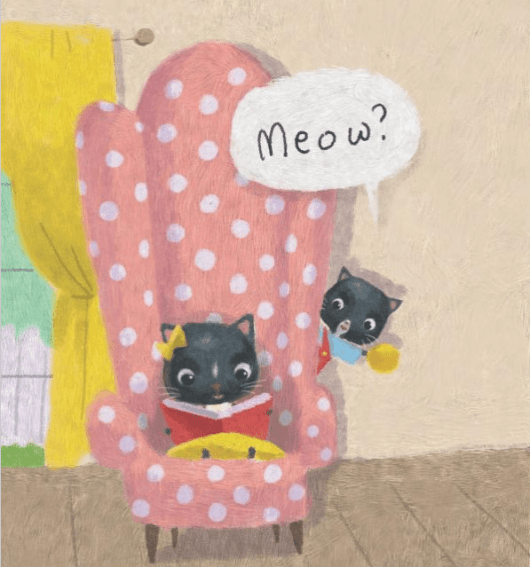
A little kitten finds his mom out in the garden planting seeds. He wants to play. “Meow?” he says, holding up a ball of yellow yarn. Next he tries his dad, who’s stirring up a big pot of something delicious on the stove. “Meow?” the little tyke asks.  Everyone seems busy in this house as the kitten’s sister ignores him while she reads her book in the tall-backed, polka dotted chair.

celebrate-picture-books-picture-book-review-meow-victoria-ying-garden

Copyright Victoria Ying, 2017, courtesy of HarperCollins.

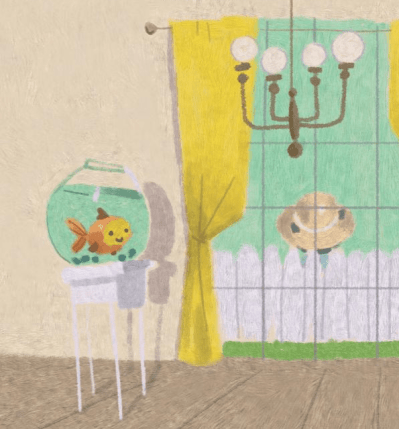
“Mrreow…,” the disappointed kitten says. He begins to unwind the ball of yarn. If no one will play with him, he will show everyone how much fun they are missing (and maybe how upset he is too). Trailing yarn behind him, the kitten winds his way through the sitting room and around his sister’s chair, tangling yarn over the chandelier, around the flower in its vase, and around the little table it sits on.

celebrate-picture-books-picture-book-review-meow-victoria-ying-dad

Copyright Victoria Ying, 2017, courtesy of HarperCollins.


He nearly trips his dad as he carries a plate of snacks across the kitchen and then weaves in and out among the rows of flowers where his mom is working. “Meow!” But when he lassos and nearly knocks over the fishbowl with a loud “MEOOOW!!” everyone comes running. Mom and dad seat their little one in the time-out chair and give him a joint talking to: “Meow!!”

celebrate-picture-books-picture-book-review-meow-victoria-ying-reading

Copyright Victoria Ying, 2017, courtesy of HarperCollins.

The little guy didn’t mean to cause trouble. Are his parents really mad at him? What can he do? “meow…?” He really is sorry, “meow.” Dad and Mom understand. Dad hands his son a yellow cloth to clean up. The kitten mops up the spilled fishbowl water and begins rewinding his ball of yarn. His sister holds the tall chair as he reaches to remove the strings from the chandelier.

Mom lets her son help in the garden, and Dad shows him how to bake and decorate special mouse cookies, “meow!” Big sister scoots over and makes room for her brother in her chair and reads to him. “Meow!” Later the whole family enjoys the cookies and plays Cat’s Cradle with the yarn. After that it’s bath time and teeth-brushing time. Then with kisses and sweet dream wishes—“Meow. Meow…”—it’s bedtime. “purrrrr…”

celebrate-picture-books-picture-book-review-meow!-victoria-ying-cats-cradle

Copyright Victoria Ying, 2017, courtesy of HarperCollins.

Nearly wordless picture books don’t come much more adorable and full of emotion than Victoria Ying’s Meow! With only one syllable and well-placed punctuation, Ying presents the rollercoaster of emotion that little ones can feel when disappointed. Ying’s gauzy, textured illustrations are bright and inviting, and the facial expressions of each character perfectly portray the meaning behind their looks and meows—from hopeful and listening to surprised and frustrated to anger, reconciliation, and resolution.

Images of the family taking time to play with the littlest one are heartwarming and demonstrate a touching solution for restoring household harmony while showing children that they are loved and important.

celebrate-picture-books-picture-book-review-meow-victoria-ying-fish

Copyright Victoria Ying, 2017, courtesy of HarperCollins.

Meow! is a sweet and meaningful story that even the youngest readers will understand and appreciate. A dramatic reading of the various emotions involved in each “meow” as well as a bit of discussion and an invitation for little ones to read along can promote empathy and give children a voice for those feelings that are sometimes so hard to describe. Meow! would be a welcome addition to home and classroom bookshelves.

Ages 3 – 8

HarperCollins, 2017 | ISBN 978-0062440969

Discover more about Victoria Ying, her books, and her art on her website.

Hug Your Cat Day Activity

celebrate-picture-books-picture-book-review-cat-match-puzzle

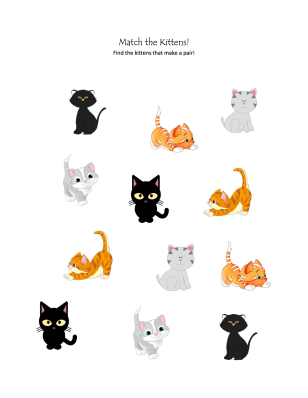
Match the Kittens Puzzle


These playful kittens have gotten separated from their twin. Can you match them up again in this printable Match the Kitten Puzzle?

Picture Book Review
May 27 – It’s Mystery Month

celebrate-picture-books-picture-book-review-Kate-Warne-pinkerton-detective-cover

About the Holiday

The month of May is dedicated to mysteries! Established nine years ago by Booklist, part of the American Library Association, Mystery Month highlights all things mysterious and offers webinars, articles, awards, recommendations and more! For kids it’s a terrific time to discover this most exciting, chilling, and fun genre. So celebrate by reading all types of mysteries from gentle puzzlers for little ones to more complex fiction and biographies of great detectives – likes today’s book!

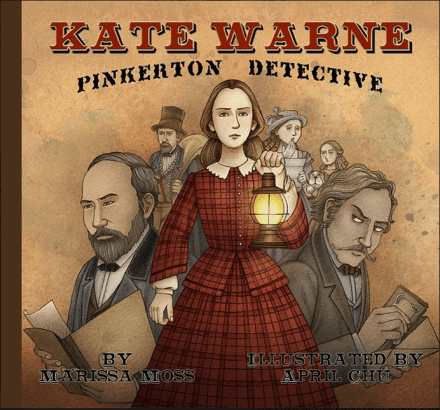
Kate Warne: Pinkerton Detective

Written by Marissa Moss | Illustrated by April Chu


As Kate read the newspaper advertisement from the Pinkerton Agency for the third time, she knew that this was the job for her. It said: “Wanted: Detective. Must be observant, determined, fearless, and willing to travel.” But in 1856 no one would hire a single woman, so Kate decided to present herself as a widow.

Kate had been raised by her father, a printer. Books had always been her companions, and she knew how to make up a story—even the story of her life. “So Kate Carter became Kate Warne…exactly the kind of person you’d want to hire as a detective.” As soon as she walked through the door, Allan Pinkerton began writing down his impressions of Kate. He thought she was a client seeking help. From her manner and appearance, he knew he would take her case—whatever it was.

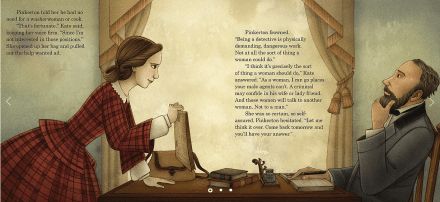
But when Kate told him she was applying for a job, he told her he “had no need for a washerwoman or cook.” Kate told him she was there to apply for the detective position. Pinkerton had reservations. The dangerous work was “not at all the sort of thing a woman could do,” he said. But Kate disagreed. She told him that she would be able to go into places his male detectives could not and could be the confidant of women witnesses. Pinkerton told her he would think it over.

celebrate-picture-books-picture-book-review-Kate-Warne-pinkerton-detective-applying-for-job

Image copyright April Chu 2017, text copyright Marissa Moss, 2017. Courtesy of Creston Books.

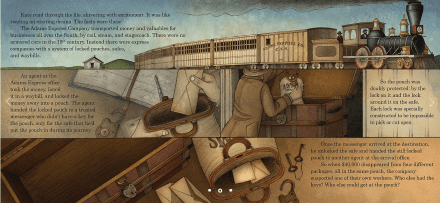
The next day Kate was at the office as soon as it opened. “Today, you’ve made some history,” Pinkerton told her, “You’re now the first woman detective in the country.” He handed her a file marked The Adams Express Case. As she read the case, Kate felt a thrill of excitement. “The Adams Express Company transported money and valuables for businesses all over the South, by rail, steamboat, and stagecoach.” Valuables were well protected by locks that couldn’t be picked.

But $40,000 had disappeared. One suspect stood out from the rest—Nathan Maroney, the manager of the Montgomery office where the packages had come from. He had been the last person to lock up the carrying pouch before the messenger, Mr. Chase, transported it to Atlanta, where it was found to be empty. Maroney was arrested, but there was little hard evidence—only a slit in the pouch that had not been there before Maroney was accused.

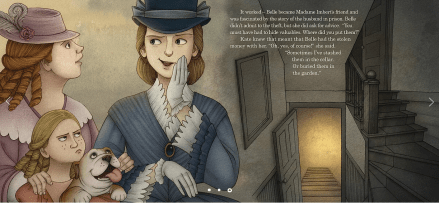
Kate considered the problem then remembered the sleight of hand tricks huskers used to fool people. She figured out how Maroney had stolen the money, but they needed more evidence and a confession. While a male agent pretended to be a fellow thief named “John White” in the same jail cell as Maroney, Kate befriended Maroney’s wife, Belle, pretending to be Madame Imbert. While Belle didn’t confess to the theft, she did ask her new friend for advice on where to hide valuables. Kate told her she hid her valuables in the basement or buried them in the garden.

celebrate-picture-books-picture-book-review-Kate-Warne-pinkerton-detective-train

Image copyright April Chu, 2017, text copyright Marissa Moss, 2017. Courtesy of Creston Books.

When Belle left town to visit her husband in jail, Kate took the opportunity to do some snooping at her house. Just as Kate found a freshly dug mound behind crates and barrels in the basement, she heard Belle returning home. She hurriedly put everything back in place and rushed upstairs. Belle was suspicious of the dust on Kate’s dress, and Kate knew she and the other agents had to act fast. She alerted another agent who crawled through the basement window while Belle slept. He tidied up the basement, and the next morning when Belle checked her hiding place, everything was in order. She could still trust her friend she thought.

The Pinkerton Agency plan was going like clockwork. Inside the jail cell, Maroney put his faith—and his money—in the detective’s hands. Maroney wrote to Belle, telling her that John White was going to help them. He instructed her to give John White all the money he had stolen. White was going to plant some of it on Mr. Chase, use some of it to bribe a judge to find Maroney not guilty at trial, and keep the rest for Maroney to collect later. At first, Belle didn’t trust John White, but one sentence from her friend “Madame Imbert” eased her mind and she went along with her husband’s plan.

As the ingenious plan was hatched and carried out, Kate made sure that all the money was secure. The money made its way to the Pinkerton agent “Mr. White” with Belle and Maroney none the wiser. As Maroney’s trial proceeded, and he heard Mr. White called as the first witness, Maroney suddenly changed his plea from “not guilty” to “guilty.” “The reputation of the Pinkerton agency was made. So was Kate Warne’s.”

Kate became one of the agency’s most valuable detectives. She was even put in charge of a women’s division and hired many more women who became “some of Pinkerton’s strongest agents.” But Kate Warne, the first woman detective in America, would always be considered the best.

celebrate-picture-books-picture-book-review-Kate-Warne-pinkerton-detective-belle

Image copyright April Chu, 2017, text copyright Marissa Moss, 2017. Courtesy of Creston Books.

An Author’s Note explaining more about the Pinkerton Detective Agency and the first woman detective follow the text.

Children who love mysteries will be enthralled with this true tale of the first woman detective in America and her explosive first assignment. Marissa Moss’s suspenseful, compelling storytelling and excellent pacing reveal the facts of the case, Kate’s insightful reasoning, and the clever ruses the agents used in outsmarting and capturing the thief. Moss infuses the story with the feeling of the time period and a sense of pride in this little-known piece of women’s history.

April Chu’s detailed period drawings take kids to the mid-1800s to follow Kate Warne as she solves her first case. Depictions of Kate’s father’s printing press, the dirt roads traversed by horse-drawn wagons and carriages, the Adams Express locked pouches and secure rail car will excite history and mystery buffs. The full cast of characters are clearly portrayed, allowing young readers to become detectives themselves as they see the action through Kate’s eyes. The dramatic finale to the case will have children on the edge of their seats whether they are hearing the story aloud or reading it themselves.

Kate Warne: Pinkerton Detective is a thrilling picture book introduction to both biographies and mysteries for children. It offers a unique look at the contributions of strong women in history and is an excellent selection for school, public, and home libraries.

Ages 5 – 13

Creston Books, 2017 | ISBN 978-1939547330

Visit with Marissa Moss on her website to discover more about her, her books, and loads of fun activities!

View a gallery of artwork by April Chu on her website!

Mystery Month Activity

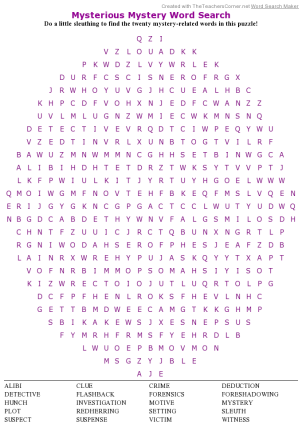
celebrate-picture-books-picture-book-review-mysterious-mystery-word-search

Mysterious Mystery Word Search Puzzle


Do a little sleuthing to find the twenty mystery-related words in this printable Mysterious Mystery Word Search Puzzle! Here’s the Solution!

Picture Book Review
May 26 – It’s Get Caught Reading Month

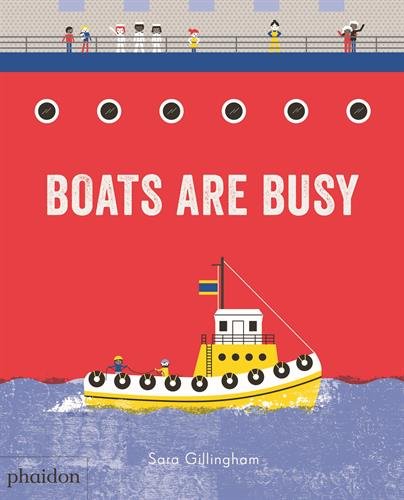
celebrate-picture-books-picture-book-review-boats-are-busy-cover

About the Holiday

Get Caught Reading Month was established in 1999 by the Association of American Publishers to encourage people of all ages to read more. Authors, illustrators, celebrities, athletes, and others participate by sharing pictures of themselves reading an old favorite or new book on social media. Schools, libraries, bookstores, and community venues hold special programs throughout the month. For more information and to find resources, visit the Get Caught Reading website.

Boats Are Busy

By Sara Gillingham


In Sara Gillingham’s beautiful collection of the various kinds of boats that sail our lakes and oceans, she introduces kids to ships, their purpose, and the meaning of maritime flags that captains use to communicate with each other. First up is the Tugboat that helps other ships when they cannot move on their own. Next is the Sailboat. “Sailboats are patient. They wait for the wind to blow their sails and move them in the right direction. If it’s a windy day, they’ll sail away!”

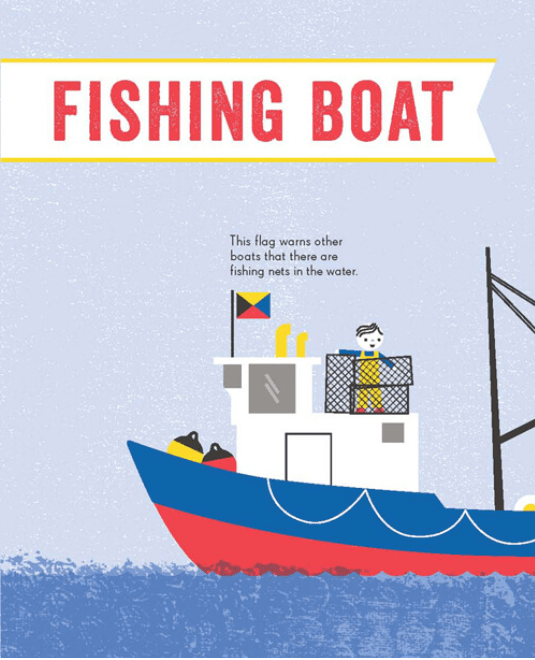
Cargo Ships are the strong movers of the sea that transport goods from place to place and country to country. The crews of Fishing Boats catch delicious food for us to eat. They have lots of equipment on board to bring fish in. The Aircraft Carrier’s so large, they are “like floating airports” where planes take off and land. Some boats even move underwater. These are Submarines. “Submarines are sneaky…. Shhhhh, they’re hiding!”

celebrate-picture-books-picture-book-review-boats-are-busy-tug-cargo-ship

Copyright Sara Gillingham, 2018, courtesy of Phaidon.

A long time ago wooden Clipper Ships sailed the seas carrying goods and even pirates. Today, they are  as “floating classrooms.” These Research Vessels “are made for studying different parts of the ocean so that we can understand more about fish or plants or the bottom of the sea.” Many people like to spend their vacation on the water on a Cruise Ship. These enormous ships are like little cities, with bedrooms, restaurants, pools, games, and places to relax.”

Readers also learn about Car Carriers, Ferries, Oil Tankers, Police Boats, Rescue Boats, and Diving Boats. Each boat also flies a maritime flag so that children can learn which ones mean yes and no, signal left and right turns, warn of fishing nets or divers in the water, direct others to stop and listen, say Hello, warn of dangerous cargo, indicate the boat is not moving, signal reversing, tell other boats to stop, and tells that the boat will soon be leaving port.

celebrate-picture-books-picture-book-review-boats-are-busy-fishing-boatt

Copyright Sara Gillingham, 2018, courtesy of Phaidon.

Sara Gillingham’s welcoming and conversational descriptions will excite kids who love modes of transportation and/or the sea as they learn a few facts about each boat. Her engaging rhythm and well-chosen vocabulary will appeal to a wide range of readers. The text elevates her target audience, understanding toddlers’ and preschoolers’ thirst for learning. After reading Boats Are Busy, kids are sure to happily recognize different boats and be able to recount their new knowledge. Gillingham’s boldly colored pages spotlight each boat with realistic details that clearly show young readers its shape and purpose. Crew members and passengers working and enjoying each vessel also demonstrate the scale of the boats.

Docking Boats Are Busy on home or classroom bookshelves will delight little ones. This sturdy board book also makes a terrific take-along for the beach and other outings.

Ages 2 – 5

Phaidon, 2018 | ISBN 978-0714876719

Discover more about Sara Gillingham, her books, and her art on her website.

Get Caught Reading Month Activity

celebrate-picture-books-picture-book-review-tugboat-matching-puzzle

Tugs to the Rescue! Matching Puzzle


The ships below need help. Match each tug to a ship in this printable Tugs to the Rescue! Matching Puzzle?


May 23 – It’s National Smile Month and Interview with Erin Danielle Russell

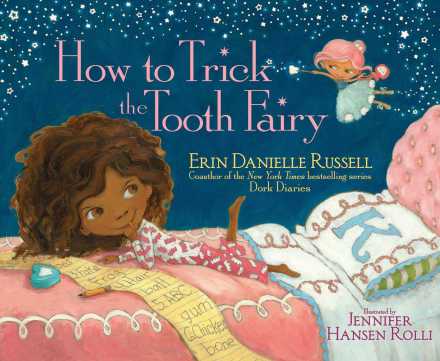
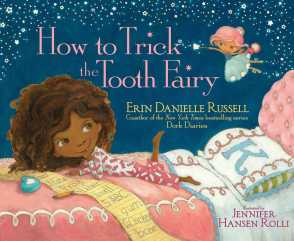
celebrate-picture-books-picture-book-review-how-to-trick-the-tooth-fairy-cover

About the Holiday

First celebrated in Britain in 1977, this holiday has been embraced by other countries around the world. The aim of the holiday is to promote awareness of good oral health through teeth brushing and flossing, cutting down on sugary sweets, and seeing your dentist regularly. Healthy teeth lead to a bright smile, and smiles lead to feeling better and enjoying life more!

How to Trick the Tooth Fairy

Written by Erin Danielle Russell | Illustrated by Jennifer Hansen Rolli


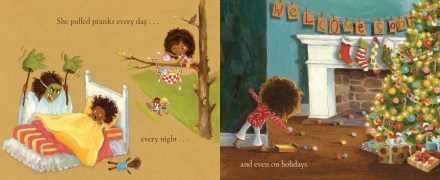
Kaylee seemed born to pull pranks. Her eyes sparkled with mischief, she knew how to creep up on people unawares, she was cute and smart, and April Fool’s Day was her favorite holiday. There was never a time when Kaylee wasn’t pulling or planning pranks. But there was actually someone else who was a bigger trickster than Kaylee—the Tooth Fairy.

celebrate-picture-books-picture-book-review-how-to-trick-the-tooth-fairy-tricks-everyday

Image copyright Jennifer Hansen Rolli, 2018, text copyright Erin Danielle Russell, 2018. Courtesy of simonandschuster.com.

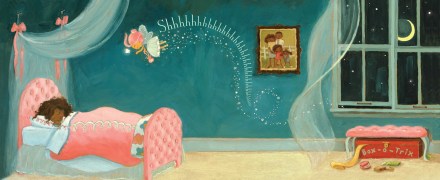
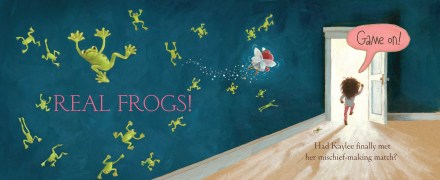
The Tooth Fairy, with her “smirky smile, fairy wings for a quick getaway”, and bag full of more tricks than teeth, was the reigning “prank princess.” But when the Tooth Fairy flew into Kaylee’s room to retrieve her tooth, she reached under the pillow and pulled out a… toy frog. There was only one thing for the Tooth Fairy to do—leave real frogs in her wake. For Kaylee, this meant “Game on!”

celebrate-picture-books-picture-book-review-how-to-trick-the-tooth-fairy-kaylee-sleeping

Image copyright Jennifer Hansen Rolli, 2018, text copyright Erin Danielle Russell, 2018. Courtesy of simonandschuster.com.

To make amends, Kaylee baked up a berry (and hot sauce) pie and gave the Tooth Fairy a piece. With her mouth on fire, the Tooth Fairy retaliated with an a la ice cream mess. Kaylee grabbed the sprayer to wash off the whipped cream and sprinkles but “turned it on the Tooth Fairy” instead. A wave of the Tooth Fairy’s wand turned those water droplets into cats and dogs. The sudden downpour scared Kaylee, and she ran for the closet. The Tooth Fairy hadn’t meant to scare Kaylee so she went to find her. Kaylee was ready with a slingshot and a wad of gum.

celebrate-picture-books-picture-book-review-how-to-trick-the-tooth-fairy-frogs

Image copyright Jennifer Hansen Rolli, 2018, text copyright Erin Danielle Russell, 2018. Courtesy of simonandschuster.com.

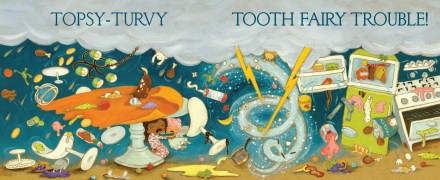
Things got sticky, and in the battle, the Tooth Fairy’s magic wand split apart. “And if you know anything about tooth fairies, you know a broken wand means… Topsy-Turvy Tooth Fairy Trouble!” Kaylee and the Tooth Fairy cowered under the table as swirling clouds and lightning sent everything in the kitchen flying. When things settle down, Kaylee looked at the Tooth Fairy and the Tooth Fairy looked at Kaylee.

“Kaylee had one more trick up her pajama sleeve.” She and the Tooth Fairy used the sprayer to clean up the floor and the bubble gun to fix the wand. They sent the cats and dogs soaring back into the sky with little umbrellas and the frogs hopping happily into the yard. Soon the kitchen was shiny and neat again, and Kaylee and the Tooth Fairy shared fairy-dust cookies as Kaylee handed over her lost tooth. That night was just the beginning for “two prank princesses and one new friendship.”

celebrate-picture-books-picture-book-review-how-to-trick-the-tooth-fairy-topsy-turvy

Image copyright Jennifer Hansen Rolli, 2018, text copyright Erin Danielle Russell, 2018. Courtesy of simonandschuster.com.

Erin Danielle Russell’s talent for humor and creating feisty heroines is on full, fun display in her rollicking debut picture book. With her vivacious, conversational tone, Russell crafts the camaraderie of a sleepover even as the two pranksternistas try to outwit each other. After their tricks send them both ducking for cover, they discover that they’re kindred spirits and make perfect best friends.

From the glittery cover to the wild, action-packed pages, Jennifer Hansen Rolli conjures up delightfully designed trickery that will charm kids. Rolli sets the stage with examples of Kaylee’s early pranks on her sister and classmates (two of whom are appropriately wary of the chocolate sandwich cookies on offer, while an unsuspecting newcomer is all smiles). Rolli’s rich color pallet enhances the magical atmosphere,and images of a fully laden dessert table, puppies and kittens plummeting into the kitchen, and the Tooth Fairy stuck to the refrigerator with gum will make kids laugh out loud. While mischief is evident in both Kaylee’s and the Tooth Fairy’s eyes, it’s also clear that they understand and like each other, making their battle of wits a playful challenge.

Perfect for reading when a child has lost a tooth, How to Trick the Tooth Fairy is also an original friendship story for any time of year. Children will love keeping the book on hand for repeated readings when the Tooth Fairy is expected.

Ages 4 – 8

Aladdin, 2018 | ISBN 978-1481467322

Discover more about Erin Danielle Russell and her books on her How to Trick the Tooth Fairy website

To learn more about Jennifer Hansen Rolli, her books, and her art, visit her website.

This How to Trick the Tooth Fairy book trailer is sure to make smile!

Meet Erin Danielle Russell

celebrate-picture-books-picture-book-review-erin-danielle-russell-headshot

Erin Danielle Russell is the co-author of the New York Times best-selling Dork Diaries. How to Trick the Tooth Fairy is her first picture book. Today, I’m excited to talk with her about how How to Trick the Tooth Fairy came about, writing space, and her favorite pranks.

What inspired you to write How to Trick the Tooth Fairy?

How to Trick the Tooth Fairy is inspired by my childhood.  It’s a book I would’ve wanted to read as a child because I’d always wanted to meet the Tooth Fairy and become friends with her.  My character, Kaylee, is basically living my dream!

Can you talk a little about the journey to getting How to Trick the Tooth Fairy published?

Funny story, but the idea for How to Trick the Tooth Fairy came to me when was sick with the flu.  I was stuck in bed with nothing to do, so I wrote the first draft for fun in a notebook.  Later, I polished it, submitted it to my literary agent, found an amazing illustrator, named Jennifer Hansen Rolli, to bring my book to life, and the rest is history!

Losing that first tooth is such a rite of passage for kids, with celebrations at school and the fun surrounding the Tooth Fairy or other traditions at home. Do you remember losing your first tooth?

I do remember losing my first tooth and my first Tooth Fairy visit!  I was super excited to find money under my pillow where my tooth had been.  And, the best part was seeing the trail of glittery fairy dust across my bedroom floor!  It was solid evidence to me that the Tooth Fairy and magic were real, and I became a total Tooth Fairy fangirl after that!

Do you like to pull pranks? What was your favorite kind of prank?

I was a little prankster when I was Kaylee’s age, and owned a whoopee cushion, hand buzzer, invisible ink, and fake bugs. The whoopee cushion was my favorite!    

What’s the best part about being an author for young readers?

The best part about being an author for young readers is making them laugh and showing them that reading can be fun.  I’m a bookworm to this day because I fell in love with the picture books my parents read to me as a kid.  I hope I can inspire young readers to love books like I do.

What was your favorite picture book when you were a child?

There are so many wonderful picture books to choose from!  But, if I have to narrow it down to one, I’d say Harold and the Purple Crayon by Crockett Johnson, because Harold could turn all his ideas into reality, and I wanted that ability too.  I even drew on my bedroom walls with a purple crayon to be like him, but that wasn’t such a good idea.  Lol!

Do you have a special place that you like to write? Can you describe it a little?

I’m not much of a desk person, so my favorite place to write is in my bed because it’s comfy and cozy.  I just prop up a few pillows, light a scented candle, and I’m in my happy writing place!

What’s up next for you?

I’m currently working on a second picture book and a middle grade book.  After writing How to Trick the Tooth Fairy, I’d love to write more fantasy.

What is your favorite holiday?

My favorite holiday is Christmas.  I love the festivities, music, food and how magical it was for me as a child. 

Do you have an anecdote from any holiday that you’d like to share?

Some of my favorite Christmas memories revolve around picture books.  I loved reading How the Grinch Stole Christmas by Dr. Seuss, and The Polar Express by Chris Van Allsburg.  When I was eight, I even wrote and illustrated my own picture book in a spiral notebook about a girl, named Melody, who helped Santa Claus deliver Christmas presents all over the world on Christmas Eve.

Thanks so much for chatting! I wish you all the best with How to Trick the Tooth Fairy and all of your books!

You can connect with Erin Danielle Russell on

Official How to Trick the Tooth Fairy Website | Facebook | InstagramTwitter

National Smile Month Activity

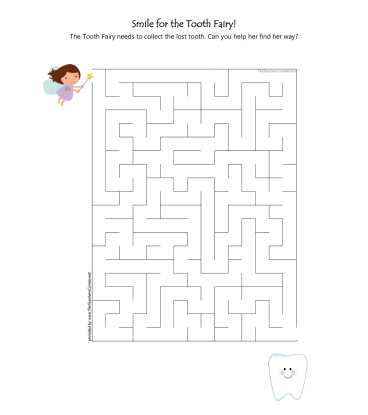
celebrate-picture-books-picture-book-review-Smile-for-the-tooth-fairy-mazeSmile for the Tooth Fairy! Maze


The Tooth Fairy is trying to collect a lost tooth! Can you help her find her way in this printable maze?

Smile for the Tooth Fairy! Maze | Smile for the Tooth Fairy! Maze Solution

celebrate-picture-books-picture-book-review-how-to-trick-the-tooth-fairy-cover

You can find How to Trick the Tooth Fairy at these booksellers

Amazon | Barnes & Noble | Books-a-Million | IndieBound | Simon & Schuster

Picture Book Review
May 20 – It’s National Egg Month

celebrate-picture-books-picture-book-review-after-the-fall-cover

About the Holiday

During the month of May we celebrate the humble egg. In that small oval package lie protein and other nutrients that provide low-cost, healthy meals for people across the world. Eggs are also used as delicate canvases for beautiful art, colorful objects for hide-and-seek-games, and as characters in children’s books—the most famous of which is the star of today’s book!

After the Fall (How Humpty Dumpty Got Back Up Again)

By Dan Santat


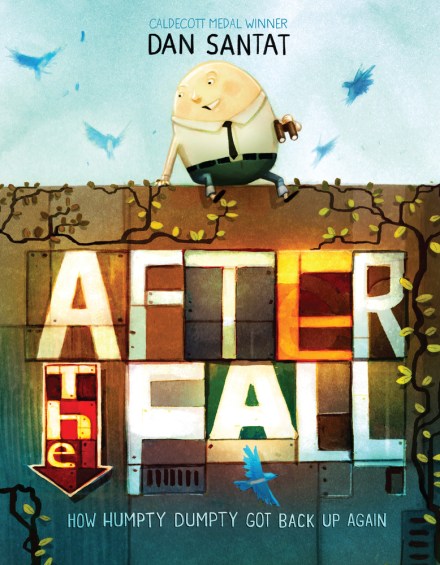
If readers don’t quite remember what happened to Humpty Dumpty back in the day,  his unfortunate accident is captured on the title page. But this is not a story about falling (we all do that sometimes). Instead, as the subtitle reveals, it’s about the recovery. Here, Humpty Dumpty tells his story his way—what really happened on that fateful day and afterward.

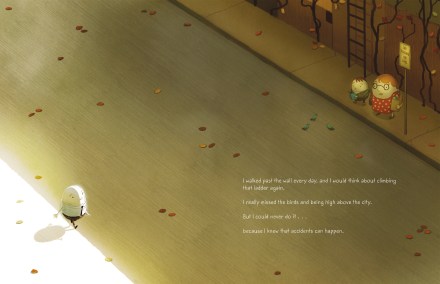
Humpty takes readers back to the scene where it all happened: his “favorite spot high up on the wall.” He acknowledges that it’s a strange place for such a fragile being to be, but up there he felt closer to the birds. He goes on to say that he’s not really comfortable with all the fuss and the fancy “Great Fall” title. It was just a mistake; even if that mistake did change his life.

celebrate-picture-books-picture-book-review-after-the-fall-wall

Copyright Dan Santat, 2017, courtesy us.macmillan.com.

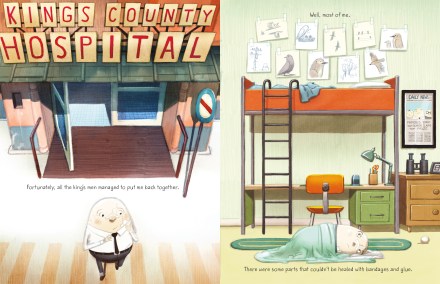
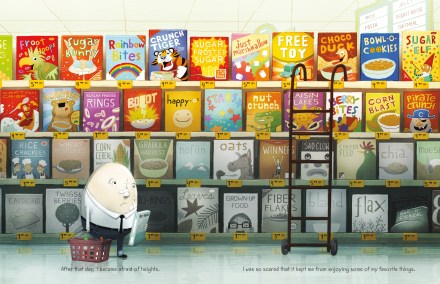
It turns out that despite what we’ve all learned, the king’s men were able to patch Humpty up. Well, at least partly. His shell was repaired, but inside? “There were some parts that couldn’t be healed with bandages and glue.” Where Humpty once loved his bunk bed above his desk, he now slept on a mat on the floor; he only bought items from the lowest grocery store shelves; and even though he passed the wall every day, he knew he could never climb the ladder to the top again.

Humpty resigned himself to watching the birds from the ground through a pair of binoculars. Then, one day, a paper airplane streaked across the sky and gave him an idea. Paper airplanes looked so easy to make, but Humpty found it hard. Day after day he struggled, suffering paper cuts and scratches. One day, though, he “got it just right.” In his hand was a beautiful paper bird.

celebrate-picture-books-picture-book-review-after-the-fall-hospital

Copyright Dan Santat, 2017, courtesy us.macmillan.com.

Humpty took his bird plane outside and launched it into the air. “It flew like nothing could stop it.” Humpty felt happier than he had in ages, and even though watching his plane wasn’t the same as being on top of the wall among the birds, “it was close enough.” But then the unthinkable happened—the bird plane flew over the wall. Humpty was well aware that “unfortunately, accidents happen…they always do.”
For a minute Humpty Dumpty considered walking away. But then he remembered all the work he’d put into his plane, which led him to think about all the things he was missing out on. He looked up that tall, tall ladder and started to climb. The farther up he got, though, the more afraid he became. Without looking up or down, he continued climbing. “One step at a time.”

When he reached the top, he “was no longer afraid.” At that moment, as his shell began to crack and he felt lighter and more powerful. Humpty tells readers that he hopes they won’t remember him as “that egg who was famous for falling,” but as “the egg who got back up and learned how to fly.”

celebrate-picture-books-picture-book-review-after-the-fall-cereals

Copyright Dan Santat, 2017, courtesy us.macmillan.com.

Dan Santat deftly works with preconceived notions and a well-known idiom to turn the nursery rhyme about Humpty Dumpty into an inspirational “happily ever after” story. Just as fears can come to define a person, traditional interpretations of this tale classify Humpty as a chicken egg and specify his lack of repair as physical. But what if, as Santat envisions, Humpty is the egg of a bird that soars and that his hurts are more internal? Then readers can identify with this hero who doesn’t give in and who conquers his fear to come out of his shell and fly. Santat’s honest, straightforward storytelling will resonate with young readers and listeners. The gentle reassurance in After the Fall will encourage children to try again—one step at a time.

celebrate-picture-books-picture-book-review-after-the-fall-walking-past-wall

Copyright Dan Santat, 2017, courtesy us.macmillan.com.

Santat’s luminous illustrations express wonder, humor, and touching moments in ways that not only enhance the story but make readers think about other issues as well.  Children will want to linger over the pages to catch all the references to Humpty’s bird watching hobby, take in the enormity of the wall that Humpty Dumpty confronts, and catch humorous takes on the original rhyme, including Santat’s King’s County Hospital. Adults and kids alike will enjoy poring over and discussing the wall of cereals, and as Humpty’s tiny hand reaches for the next rung on the ladder adults may feel a lump in their throats. When Humpty breaks free of his shell and emerges in the same form as the paper bird he created, readers may consider whether Humpty spent time only working on his toy or on himself as well.

After the Fall is a picture book that offers reassurance and invites deeper discussion. The book would be a welcome addition to home, classroom, and school libraries.

Ages 4 – 8

Roaring Brook Press, 2017 | ISBN 978-1626726826

Learn more about Dan Santat, his books, and his art on his website.

National Egg Month Activity

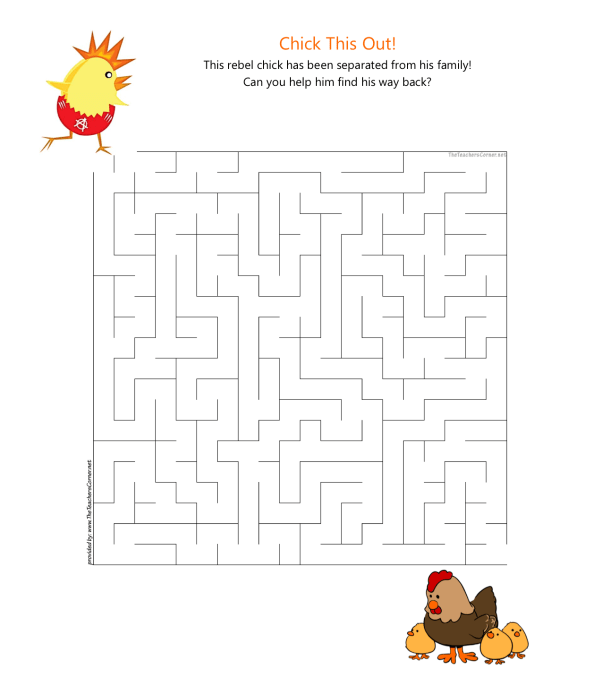
 celebrate-picture-books-picture-book-review-Chick-This-Out-maze

Chick This Out! Maze


This little rebel chicken has been separated from his family! Can you help him find his way back to the nest? 

Chick This Out! Maze | Chick This Out! Solution

Picture Books Review