September 29 – It’s National Piano Month

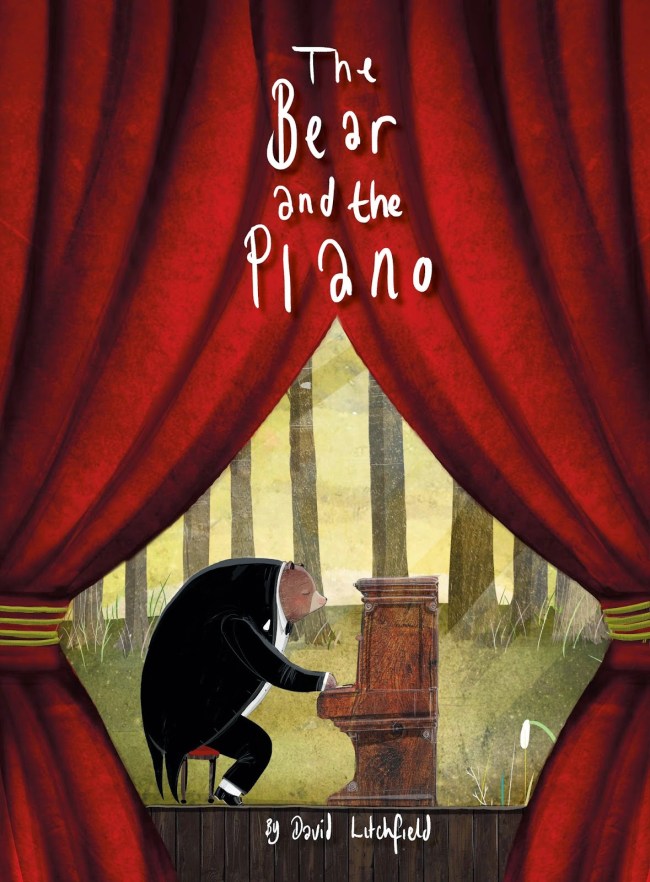
The Bear and the Piano by David Litchfield picture book review

About the Holiday

Invented around 1700, the piano was not an immediate hit with composers and performers. It took several decades before musicians embraced its versatility, and over the next 150 years the piano underwent many changes in tonality, size, and shape. In the 19th century the instrument became larger and more powerful to accompany soloists in concert and on tour with large orchestras. At the same time, individuals and families took the piano to heart – and hearth – as it became the primary source of home entertainment and piano lessons a must for all children. The United States became a major producer of pianos, with factories in Boston, New York, and Philadelphia. New technology in the twentieth century provided other types of entertainment that came to toke precedence over the piano, and domestic sales declined.

Today we celebrate the beauty of the piano—both in shape and sound—and all the musical artists who play and compose for this storied instrument.

The Bear and the Piano

By David Litchfield


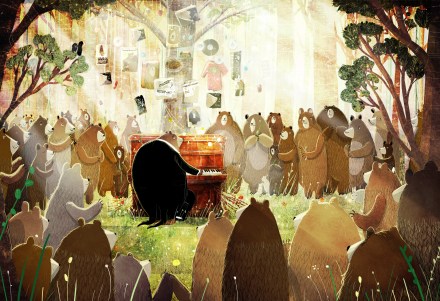
One day a bear cub happens upon a piano in a clearing in the middle of the forest. Wondering what it could be, he approaches and lays his paw on the keys. The strange thing goes PLONK!—such an awful sound. The bear cub leaves, but is drawn back again and again for days, months, and years. Over time the bear grows up and learns to play the piano. The music is beautiful and transports him to strange and wonderful places.
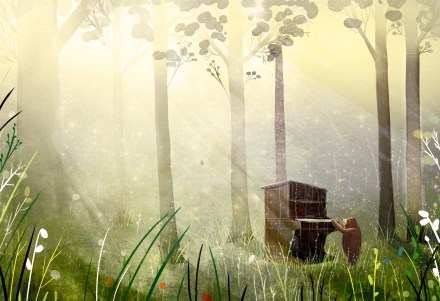
celebrate-picture-books-picture-book-review-bear-finds-piano

Image copyright David Litchfield, courtesy of davidlitchfieldillustration.com

Other bears soon gather in the clearing to hear the “magical melodies” the bear plays. The bear is happy entertaining his friends. One night a girl and her father hiking in the forest come to the clearing. They listen and then tell the bear what his strange instrument is. They invite him to move to the city with them, where he will be able to play grand pianos for hundreds of people. The music he will play and hear “will make your fur stand on end,” they tell him.

The bear is conflicted. One on paw he knows that leaving the forest will make the other bears sad; on the other he longs to explore the world, to play the piano better, and master more intricate music. He decides to go with the girl and her father.
celebrate-picture-books-picture-book-review-bear-in-big-city

Image copyright David Litchfield, courtesy of davidlitchfieldillustration.com

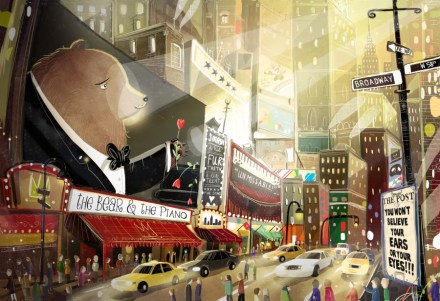
In the city the bear is a sensation! He quickly becomes a celebrity with his name on marquees and playing to sold-out crowds. The bear records albums that go platinum, he appears on the covers of magazines, and wins awards. His experience is everything he could ever wish for. But deep in his heart there is another longing. He misses the forest and his friends there.

He decides to leave the city and rows a boat across the expanse of water to his old home. Excitedly he runs to the clearing, but when he arrives everything has changed. His piano is gone and there are no friends to greet him. The bear worries that everyone is angry at him for leaving, or worse—that they have forgotten him.
celebrate-picture-books-picture-book-review-bear-playing-for-friends

Image copyright David Litchfield, courtesy of davidlitchfieldillustration.com

Suddenly an old friend peeks around the trunk of a tree. The bear hails him with a hearty “Hello!” The other bear remains silent, however, and then turns and runs into the trees. The bear follows, plunging deeper and deeper into the forest. Suddenly he stops. In front of him is a sight that makes his fur stand on end.

There, protected in the shade of a tree and surrounded by the albums, magazines, t-shirts, and other mementos of the bear’s success sits the old piano. The bear’s friends have not forgotten him and they are not angry. They are proud and welcoming. The bear tells them all about his adventures then sits down to play again—for the most important audience of all.

David Litchfield’s very original and moving story is such a wonderfully conceived microcosm of the changes life brings. Stumbling upon a talent, cause, or inspiration; opening up to other influences; and acting on hard decisions are all part of growing up. These concepts are honestly and sensitively presented in The Bear and the Piano, and the reassuring ending brings comfort as well as a tear to the eye.

celebrate-picture-books-picture-book-review-bear-giving-concert

Image copyright David Litchfield, courtesy of davidlitchfieldillustration.com

Litchfield’s touching illustrations—rendered in gorgeous hues of browns, greens, yellows, and blues—brim with yearning and mystery. The piano sits in a misty glow, silent and draped with vines, when the cub discovers it. While the bear grows and learns to play, the air clears and the colors become brighter. When the bear moves to the city, the pages glint and swirl with the glow of marquees and concert halls announcing his enormous achievements. But as he sits on a rooftop one night contemplating his life and looking out toward his old home, the lights around him are the elements of normal life—lamps in apartment windows, stars, and the moon glimmering on the water. His nostalgia to be home will resonate with both kids and adults.

The Bear and the Piano makes a wonderful gift for any age—especially as a graduation or new-job gift—and is a must-have for anyone’s personal library.

Clarion Books, Houghton Mifflin Harcourt, 2016 | ISBN 978-0544674547

To learn more about David Litchfield, his books, and his artwork, visit his website!

While I take a few personal days during this month, I am reposting earlier reviews updated with new links, interior art, and book trailers.

Watch the beautiful The Bear and the Piano book trailer!

National Piano Month Activity
CPB - Record Bulletin Board

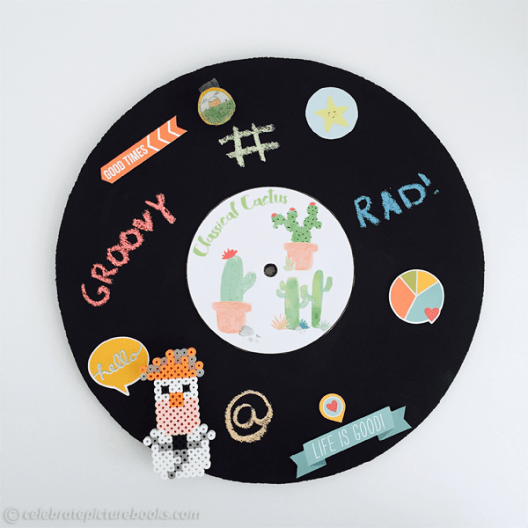
Make a Record Chalkboard Bulletin Board


Do you play the piano or another instrument? Would you like to make a record some day? Why wait? In this fun craft you can create your own record bulletin board—and even create your own label art! While this record may not spin on turntables around the world, it will drop in a more important place—your very own room!

Supplies

  • Printable Record Label for you to design
  • Foam board, or a corkboard at least 12-inches x 12-inches square
  • Adhesive cork
  • A 12-inch round plate, record, or other round object to trace OR a compass
  • Chalkboard paint, black
  • X-acto knife
  • Paint brush or foam paint brush
  • Mounting squares

Directions

  1. Cut a section from the adhesive cork a little larger than 12 inches by 12 inches
  2. Affix the cork to the foam board
  3. Trace the 12-inch round object onto the cork/foam board OR use the compass to make a 12-inch circle
  4. With the x-acto knife, carefully cut out the circle (adult help needed for children)
  5. Cut out a ¼ -inch circle in the center of the record bulletin board
  6. Paint the cork, sides and inside the spindle hole with the black chalkboard paint. Let dry
  7. Print the label template and design your own record label
  8. When the paint is dry, glue your label to the center of the bulletin board
  9. Hang your bulletin board with the mounting squares
  10. Decorate!

Picture Book Review
September 28 – Good Neighbor Day

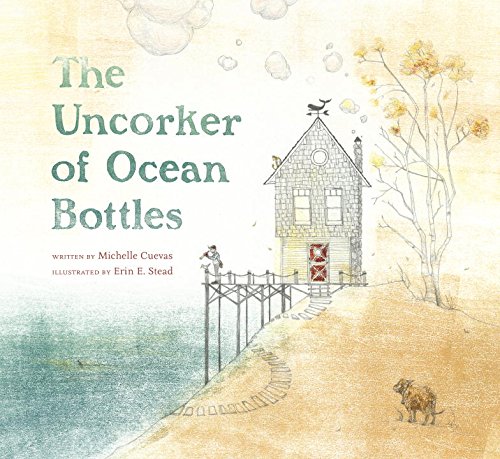
celebrate-picture-books-picture-book-review-the-uncorker-of-ocean-bottles-cover

About the Holiday

With our busy lifestyles it’s sometimes hard to get to know our neighbors. We might give them a quick wave and smile as we’re driving in and out, but finding time to stop and chat can be more difficult. Today’s holiday encourages us to get to know our neighbors and become friends. Why not take the opportunity to say “hi” to someone on your block or in your building or even share a special note of thanks for being a great neighbor!

The Uncorker of Ocean Bottles

Written by Michelle Cuevas | Illustrated by Erin E. Stead


A man in a red stocking cap and clam digger pants sits at his kitchen table with a cup of coffee, sharing space with a tabby cat. His day as the “uncorker of ocean bottles” is about to begin. He follows the path from his isolated house on the hill down to the water’s edge, where he keeps “his eyes on the waves, watchful for a glint of glass.” When he sees a bottle floating past, it is his job to retrieve it and read the message inside.

“Sometimes to deliver a bottle, he needed only to stroll to the nearest village. Other times, he would journey until his compass became rusty and he felt loneliness as sharp as fish scales.” Some messages have been buffeted by the seas for a long time, and while some messages are sad, most make their recipients very happy, “for a letter can hold the treasure of a clam-hugged pearl.”

Although the man doesn’t mind living alone and loves his job, he sometimes feels a niggling wish to receive a letter himself. It is a fleeting dream, however, and as likely as finding a mermaid’s toenail on the beach,” because the man “had no name and no friends who would ever write him a letter.” One day, thoiugh, the man opens a very singular message: “I’m not sure you will get this in time, but I am having a party. Tomorrow, evening tide, at the seashore. Will you please come?”

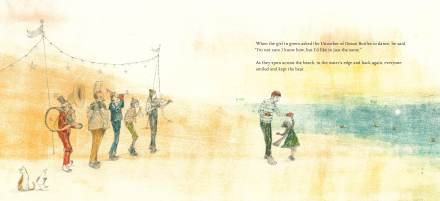
celebrate-picture-books-picture-book-review-the-uncorker-of-ocean-bottles-beach-party

Image copyright Erin E. Stead, text copyright Michelle Cuevas, courtesy of Penguin Random House

Without a name or an address the Uncorker is at a loss as to how to deliver this very important invitation. It is such an intriguing invitation, in fact, that the man finds that he wants to go himself. With reasoned purpose, the Uncorker rides his bicycle into town to investigate who might know something about the letter. The maker of cakes studies the note but can offer no insight beyond the fact that he, too, would like to attend such a get- together.

At the candy shop neither the owner, nor a woman buying candy, nor a young girl know anything about the note, but they too wish they had been invited. The Uncorker meets others—a sailor, a seagull, and a one-man band—but no one can help him. The man goes home feeling dejected. Never before has he failed to deliver a message. Lying awake in bed he decides the only thing he can do is to meet the sender of the letter the next night at the seaside and apologize.

He arrives early with a gift of seashells and discovers the seashore “draped in seaweed and starfish. Candles floated in clamshells, There were sand sculptures and umbrellas.” Standing in the festive atmosphere are the maker of cakes, the candy shop owner, the woman and her daughter, and all the others the Uncorker had met in his search the previous day. As the rest of the group play music, the little girl asks the Uncorker to dance, and although the man says he isn’t sure he knows how, he twirls the little girl on the golden sand.

Later, sitting quietly the party gazes out at the ocean that has brought them together. The Uncorker has opened a gift chosen specifically for him and is enjoying a piece of cake while “his heart was a glass vessel filled to the brim.”

Michelle Cuevas’s unique story of a man adrift in life without the anchor of family or friends is a gorgeously written reminder that companionship is often waiting if we just invite it in. With moving language and fresh, evocative metaphors—in two of my favorites, loneliness is “as sharp as fish scales,” and some messages are “very old, crunchy like leaves in the fall”—Cuevas gently nudges readers to acknowledge the little voice inside and discover what else the world has to offer.

Erin E. Stead’s warm green, gold, and gray-hued illustrations rendered in delicate lines and gossamer washes are as wistful as the Uncorker himself. The man’s calm resolve is echoed in the serene ocean water, the soft companionship of his cat, and the tidy seaside town. There is a wonderful quiet, unhurried feeling to each page which seems to allow not only the Uncorker but the reader to enjoy contemplative moments. The final scene of the party happily enjoying the view and each other’s company fulfills not only the Uncorker’s deepest longing, but that of readers as well.

For it’s beauty and message The Uncorker of Ocean Bottles should find a place on every child’s and school library’s book shelf. Adults will enjoy this book as much as children and it would make a wonderful coffee table book.

Ages 4 and up

Dial Books for Young Readers, Penguin, 2016 | ISBN 978-0803738683

Discover more books by Michelle Cuevas on her website!

View a gallery of artwork and children’s book illustration by Erin E. Stead on her website!

Good Neighbor Day Activity

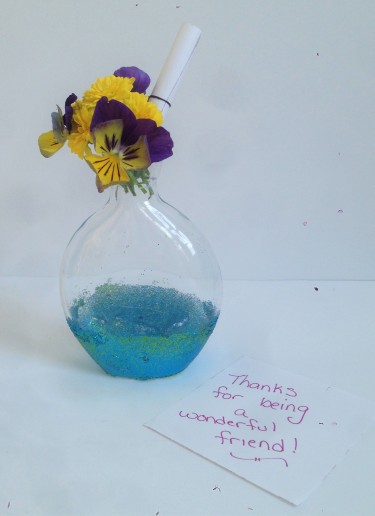
celebrate-picture-books-picture-book-review-bottle-of-friendship-craft

Bottle of Friendship


Sometimes a small gesture means so much more! With this easy craft you can make a unique-to-you message for a neighbor or friend that can later also be used as a vase. After making the Bottle of Friendship, take it to a recipient or leave it on the doorstep as a nice surprise!

Supplies

  • Recycled glass or plastic bottle, or a decorative bottle from a craft store
  • Glitter (Or Glitter Glue)
  • Glue
  • Real or imitation flowers
  • Small piece of paper
  • Thread or string

Directions

  1. Wash and dry the bottle
  2. Along the bottom (or in any design you’d like) spread the glitter glue. If using glue and glitter separately, spread glue and sprinkle with glitter.
  3. Let the bottle dry
  4. Write a note of thanks or friendship on a small piece of paper
  5. Roll and tie with thread or string
  6. Add flowers and the note to your bottle
  7. Deliver!

Picture Book Review
 

September 26 – Family Day

celebrate-picture-books-picture-book-review-meet-the-mckaws-cover

About the Holiday

The purpose of today’s holiday is simple—to fully appreciate the family one has, whether it is small or large, with a whole crew of siblings, aunts, uncles, cousins, grandparents, and others. The founders of Family Day, which is celebrated on different dates around the world, wanted people to relax their busy schedules and spend time with those they love in a meaningful and fun way. The great thing about family is they are always there for you when you need them most—as we see in today’s book!

Meet the McKaws

By Ged Adamson


Captain Stan and Tiny McKaw, Stan’s parrot first mate, love everything about being pirates—“Sailinng the seven seas, fighting battles, and searching for treasure! What could be better? Yes, life is pretty perfect for Stan and Tiny” until…Tiny’s parents come to visit. Mr. and Mrs. McKaw aren’t on board 5 minutes before the squawking begins. Mrs. McKaw takes exception to Stan: “‘He doesn’t’ look like much of a captain to me. He’s just a boy!’” And while Mr. McKaw is trying to apologize for his wife’s behavior, he lets out “a huge, disgusting BURP!”

Tiny’s mom is appalled at the state of the ship, calling it “a messy old wreck,” and Tiny’s dad starts in with a long, meandering story of his days as a pirate, complete with a treasure map, a deserted island, the Kraken, sword fights, canon fire, a treasure chest, and even a commendation. I think you get the picture. Problem is…Mr. McKaw never was a pirate.

Maybe a nice sit-down dinner will clear the air and get things started off on the right pegleg again. With a big grin the cook presents the special meal he has prepared in the McKaw’s honor, but after “just one mouthful, both the McKaws were violently sick. ‘Horrible! Horrible!’” cries Mrs. McKaw. The poor cook bursts into tears and runs back to the galley. Perhaps nighttime will bring a little relief. But no, Mr. McKaw snores and Mrs. McKaw nags in her sleep.

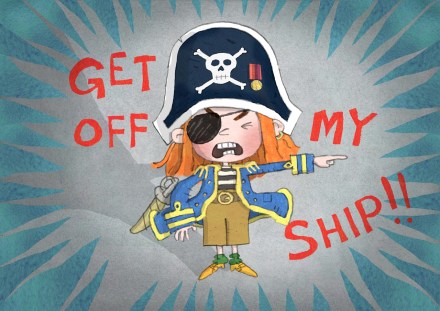
celebrate-picture-books-picture-book-review-meet-the-mckaws-get-off-my-ship

Image copyright Ged Adamson, courtesy of gedadamson.com

The next morning Captain Stan wakes up to the worst insult of all—guano dots his royal blue pirate coat. Even this offense, thought, pales in comparison to what Stan sees next. Perched between his parents sits Tiny in a crisp white shirt and tie with his feathers slicked back. This is the last straw. “GET OFF MY SHIP!!” yells Captain Stan. Mr. and Mrs. McKaw waste no time in flying the coop, but there’s no respite for Captain Stan and Tiny for dead ahead is a colossal storm.

The ship is no match for the lightning, crashing waves, and fierce winds. The cook, the cabin boy, Captain Stan, and the remains of the broken brigand are washed into the roiling sea. “Just when all seems lost, however, Tiny gives a great SQUAWK! ‘It’s Mr. and Mrs. McKaw!’” cries Stan. “‘And my aunts, uncles, cousins…everyone!’” says Tiny. The parrots rescue everyone and fly them safely to a nearby island—Blue Feather Island, which just happens to be Tiny’s home.

All the members of the parrot family help Stan build a new ship, and in the process he discovers a new perspective on Mrs. and Mr. McKaw’s personalities. “Mrs. McKaw’s bossiness turned out to be very useful” as she delegates jobs, and Mr. McKaw keeps the crew entertained while they work “just by being Mr. McKaw.” The two are even hungry enough to eat up everything the cook prepares, much to his delight.

celebrate-picture-books-picture-book-review-meet-the-mckaws-building-new-ship

Image copyright Ged Adamson, courtesy of gedadamson.com

With a new ship finally complete, it’s time for the McKaws to take wing. Stan thanks them for all their help and apologizes for throwing them off his ship. On her part, Mrs. McKaw apologizes for being rude and thanks Stan for taking care of Tiny. And what about the new ship? It might be even better than the original with a bold parrot-emblazoned sail and a parrot figurehead pointing the way. As the crew sets sail, Captain Stan acknowledges, “‘You know, Tiny, I’m really glad I met the McKaws.’”

With the dash of a swashbuckler and the true aim of a compass, Ged Adamson depicts the high and low tides of family life in this high seas adventure. His humorous portrayals of personality traits that can drive family members crazy will resonate with kids and adults alike as they laugh through the travails Captain Stan and Tiny suffer during a visit by Tiny’s parents. In a sweet turn of events, though, Adamson reminds us that when storms come—in whatever form—the momentary squalls are forgotten, the anchor of family relationships is dropped, and everyone battens the hatches together.

Adamson’s vivid illustrations of Captain Stan in his sharp pirate garb, colorful (in more ways than one) Mr. and Mrs. McKaw, and the well-fitted wooden ship will delight pirate fans of all ages. Mr. McKaw’s imaginary stories are cleverly portrayed as chalk drawings on a black background, and the sea swirls with cool hues of blue and turquoise. Like Captain Stan readers will be glad they have a chance to Meet the McKaws and will want them to visit again and again.

Ages 4 – 8

Sky Pony Press, 2015 | ISBN 978-1629146188

Discover more of Ged Adamson’s work on his website!

Meet Ged Adamson and learn about his inspirations, his writing life, and his other books in this funny and insightful Q & A!

Family Day Activity

celebrate-picture-books-picture-book-copyright-review-avast!-pirate-treasure-map-game

Original Avast! Pirate Treasure Map Board Game design by Conor Carroll copyright 2016

Avast! Pirate Treasure Map Board Game


Gather your family around and set out to discover buried treasure and the treasure of spending time together! This printable, original board game has all the excitement of a pirate voyage across the bounding main, including shark attacks, mutiny, the Kraken, mermaids, mateys, and more!

Supplies

Printable Avast! Game Board and Game Pieces

celebrate-picture-books-picture-book-review-avast!-pirate-game-tokens

Original artwork copyright Conor Carroll and Celebrate Picture Books, 2016

Directions

  1. Print the Avast! Board Game pages (Options: print on white paper, parchment-colored paper, or on card stock. To make white paper appear old – as in the picture – paint with a tea wash before taping together. See directions for tea wash below)
  2. Tape together the 4 pieces of the map. (Option: map pages printed on regular paper can be  glued to a piece of poster board to make the game board more sturdy.) 
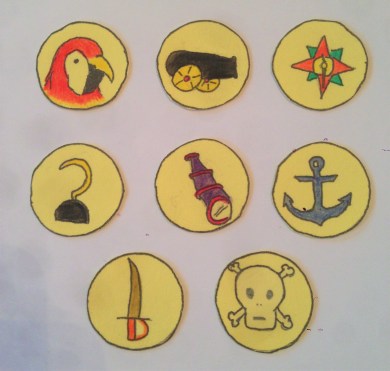
  3. Print the Avast! Pirate Loot Tokens
  4. Cut out the Avast! Pirate Loot Tokens
  5. Print the Avast! Game Cards
  6. Cut out the Avast! Game Cards

To use a tea bag to make the map look old:

  1. Steep a black tea tea bag in 1/4 cup boiling water for 3 minutes
  2. Squeeze the tea bag dry over the cup and discard
  3. With the paint brush, paint the 4 pages of the map with the tea before taping them together
  4. Let dry or dry with a hair drier set on Low.

To Play the Game

  1. Each player chooses a Pirate Loot Token as their playing piece to move along the board
  2. Shuffle and stack the Game Cards
  3. Choose which player will go first
  4. Players choose the top card from the pile and follow the directions to move spaces on the game board.
  5. After moving, players should put their game card in a discard pile
  6. If Game Cards run out before the end of the game, flip over the discard pile and use the cards again
  7. The first player to arrive at the X on the map finds the treasure and is the winner!

Picture Book Review
September 25 – World Dream Day

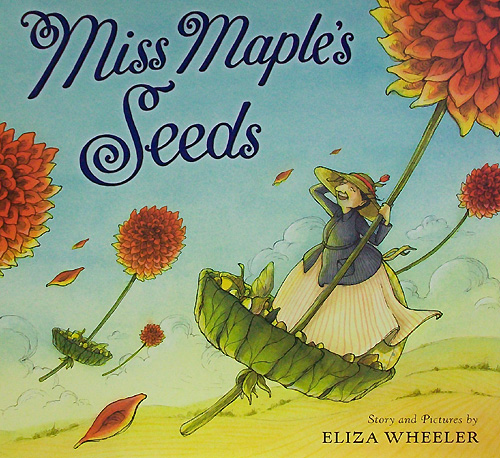
MIss Maple's Seeds by Eliza Wheeler Picture Book Review
About the Holiday

Dreamed up by a professor at Columbia University in 2012, today’s holiday is not for the sleepy  but for those wide awake to all the possibilities in life. It’s a time for adults and kids to really think about their hopes and dreams and plan how to achieve them. So sit down with a group of friends or by yourself and let your imagination soar – don’t let the day or opportunities pass you by! 

Miss Maple’s Seeds 

By Eliza Wheeler


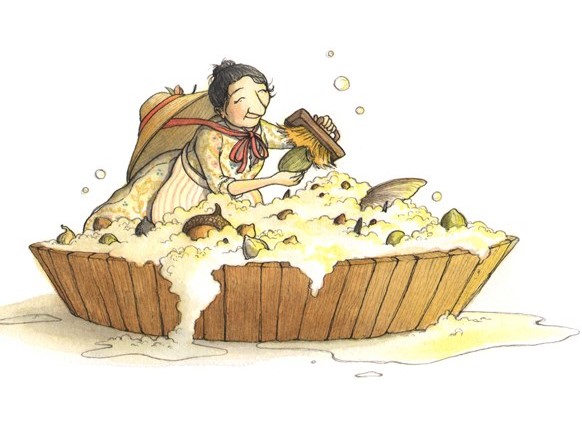
Late in the summer, Miss Maple hurries to prepare for some very special guests. She has searched all summer for “orphan seeds that got lost during the spring planting,” and now bluebirds are carrying baskets full of these little pods so full of potential to her home. Once they arrive she “learns each seed by heart.” There are poppy, wild rice, maple, water lily, pine, impatiens, apple raspberry, sunflower, acorn, pea, fern seeds, and as many more as make up our world.

celebrate-picture-books-picture-book-review-miss-maple's-washing-the-seeds

Image copyright Eliza Wheeler, courtesy of Nancy Paulson Books, Penguin Books

As she lovingly tends to each one, she whispers to them, “Take care, my little ones, for the world is big and you are small.” Miss Maple takes her little charges on field trips and shows them the world they will inhabit—muddy soil along riverbanks, grassy fields, and thickly populated forests. She cautions them about “weedy characters” who can show up even in a “bustling garden.”

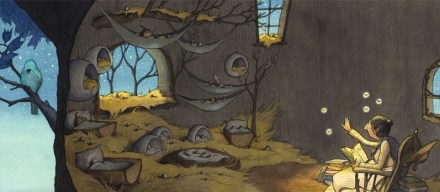
At night Miss Maple snuggles each seed into a comfortable bed and reads to them by the light of fireflies. During the winter Miss Maple entertains other guests—woodland creatures who gather in her maple tree home to share food, stories, and songs. With the spring come rains and new lessons that teach the seeds how to burrow into the ground.

celebrate-picture-books-picture-book-review-miss-maple's-seeds-bedtime-story

Image copyright Eliza Wheeler, courtesy of Nancy Paulson Books, Penguin Books

In May Miss Maple knows it’s time for her little ones to “find roots of their own.” She sends them out into the world, knowing that she has prepared them well for what they will become. Her seeds say goodbye and sail off to begin their futures, leaving Miss Maple alone. But soon another summer day comes, and Miss Maple sets off to gather more orphan seeds, because “the world is big and they are small.”

Eliza Wheeler’s Miss Maple’s Seeds is a lovely metaphor for the nurturing relationship between children and their parents or caregivers. At once comforting and liberating, Wheeler’s sweet tribute reveals the hopes and dreams adults have for each child they raise and finally let go to bloom into what they are meant to be.  

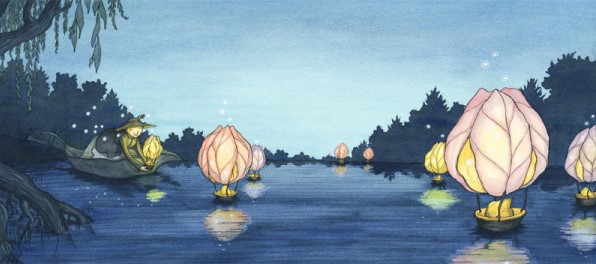
celebrate-picture-books-picture-book-review-miss-maple's-lantern-boats

Image copyright Eliza Wheeler, courtesy of Nancy Paulson Books, Penguin Books

Wheeler’s beautiful language floats as quietly and unhurried as a leaf on a gentle breeze, and her luminous artwork is breathtaking in its fully realized details of the greater world Miss Maple’s seeds and all of us inhabit. Each season is gorgeously rendered in soft blues, roses, browns, and yellows, and Wheeler imbues each little seed with personality without anthropomorphism. The reader may well wish they could be friends with these future beauties and with Miss Maple as well.

Miss Maple’s Seeds would be a wonderful gift for high school graduates, teachers, and anyone who loves taking care of children. It’s timeless message also makes it a perfect choice for quiet reading times or bedtime and a welcome addition to anyone’s bookshelf.

Ages 3 – 7, all ages

Nancy Paulsen Books, an imprint of Penguin Group, 2013 | ISBN 978-0399257926

Discover the world of Eliza Wheeler‘s books and art on her website! Download an activity sheet for Miss Maple’s Seeds here!

While I take a few personal days this month, I am reposting earlier reviews updated with new links and interior art.

World Dream Day Activity

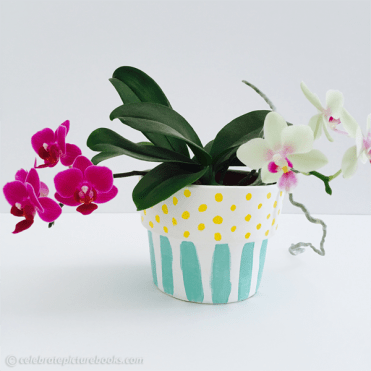
CPB - Flower Pot

Hopes and Dreams Flower Pot


Ideas, hopes, and dreams are like seeds, sprouting and growing into fruition with a bit of attention and care. With today’s craft you can create a flower pot of your own design. Then fill it with “dream seeds” of your favorite flower or plant. As you tend to the plant and it grows, tend to your own dreams and watch them grow as you achieve your desires.

Supplies

  • Terra cotta pot in any size
  • Acrylic multi-surface paint in various colors
  • Flower seeds
  • Soil

Directions

  1. Paint your terra cotta pot—be creative!
  2. Let paint dry
  3. Fill pot with soil
  4. Plant flower seeds

Picture Book Review

September 24 – International Rabbit Day

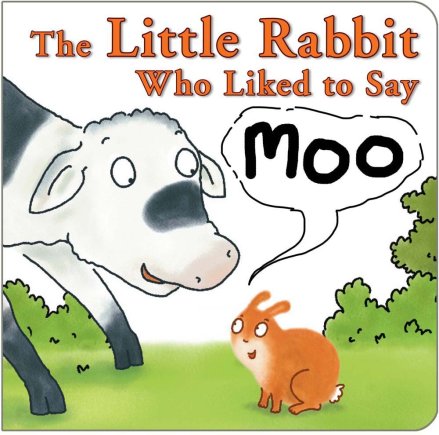
celebrate-picture-books-picture-book-review-the-little-rabbit-who-liked-to-say-moo-cover

About the Holiday

Established in 1999 by UNESCO, Mother Language Day celebrates cultural diversity and promotes the protection of endangered languages. Events include multicultural festivals where all voices are heard and social cohesion, cultural awareness, and tolerance are honored.

The Little Rabbit Who Liked to Say Moo

By Jonathan Allen


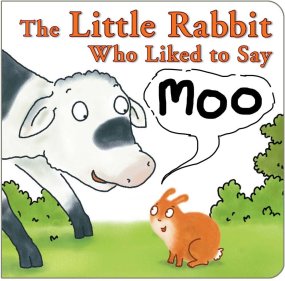
Little Rabbit sits in the farmer’s field listening to the animals talk and learning their languages. “Moo,” Little Rabbit repeats, “Moo.” A calf responds and questions Little Rabbit. It turns out that Little Rabbit knows and likes many languages. Calf joins Rabbit in the fun. “Baa,” they say together, which summons Lamb. The three friends decide to try “Oink.” With each new noise, the group expands and enthusiastically continues their linguistic experiment.

celebrate-picture-books-picture-book-review-the-little-rabbit-who-liked-to-say-moo-quack

Copyright Jonathan Allen, 2008, courtesy of Boxer Books Ltd.

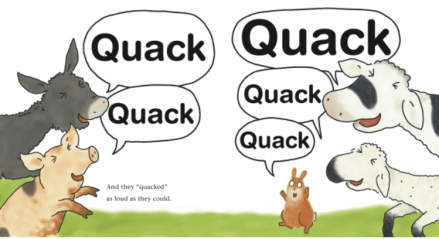
Finally, after a rousing chorus of “Quack,” Duckling asks , “Why are you all saying quack? You’re not ducks.” Baby Donkey is the first to answer. “I like Quack.” “So do I…Me too,” the other young animals pipe up. “Is quack your favorite animal sound?” Duckling asks. Each animal then reveals with pride that, while they like other noises, they prefer their own. But what about Little Rabbit, who doesn’t “have a big noise?” Will Rabbit’s answer begin the game again?

The wide-eyed, smiling animals in this adorable picture book by author-illustrator Jonathan Allen perfectly captures the joyous camaraderie of good friends discovering the world together. The book is a wonderful introduction for young children to the ideas of inclusiveness and self-esteem. Kids will love the repetition as each new animal joins the group, and will have as much fun saying each sound as Little Rabbit and the other farmyard friends.

Ages 2 – 5

Boxer Books Limited, 2015 (Board Book) | ISBN 978-1910126257

International Rabbit Day Activity

CPB - Rabbit Puppet made

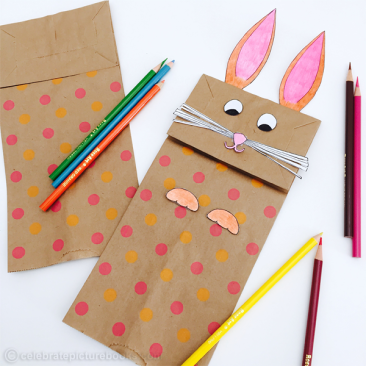
Paper Bag Rabbit Puppet


With this easy and fun craft you can make your own little rabbit who likes to play with you and talk in other languages! Make up stories of your own – what does your little rabbit like to do?

Supplies

  • Rabbit Puppet Template
  • A paper lunch bag
  • Markers, crayons, or colored pencils
  • Cotton Ball
  • Scissors
  • Glue or tape

Directions

  1. Print the Rabbit Puppet template.
  2. Color the parts of the rabbit and cut them out.
  3. Place the flat paper bag on a table with the bottom flap facing you. Glue or tape the eyes, and the nose and whiskers to the bottom flap. Attach the ears, placing the tabs behind the top of the bottom flap. Attach the paws to the body below the bottom flap. Attach the cotton ball tail to the opposite side of the bag.  
  4. When it’s dry, use your puppet to read The Little Rabbit Who Liked to Say Moo again and play along, making the other animals’ sounds.
  5. Then let your Little Rabbit try saying “Hi” in the languages below.

Learn to Say “Hello” in Other Languages

  • Spanish: Hola (oh-la)
  • French: Bonjour (bon zhur)
  • German: Hallo (hă-lo)
  • Chinese: Nin Hao (nee hah)
  • Filipino: Kamusta (ka-muh-stah)
  • Italian: Ciao (chi-ow)
  • Japanese: Kon’nichiwa (ko-nee-chee-wah)
  • Turkish: Merhaba (mĕr-hah-bah)

celebrate-picture-books-picture-book-review-the-little-rabbit-who-liked-to-say-moo-cover

You can find The Little Rabbit Who Liked to Say Moo at these booksellers

Amazon | Barnes & Noble | Books-a-Million | IndieBound

Picture Book Review


September 22 – Elephant Appreciation Day

celebrate-picture-books-picture-book-review-strictly-no-elephants-cover

About the Holiday

While today’s holiday was established in 1996 by Mission Media and its owner Wayne Hepburn because of Hepburn’s love for elephants, the day has garnered official recognition and deserves wide acknowledgement. These gentile, giant animals need our protection from environmental and human dangers. To celebrate today’s holiday visit a zoo or animal preserve, watch a documentary on elephants, or consider donating to their cause.

Strictly No Elephants

Written by Lisa Mantchev | Illustrated by Taeeun Yoo


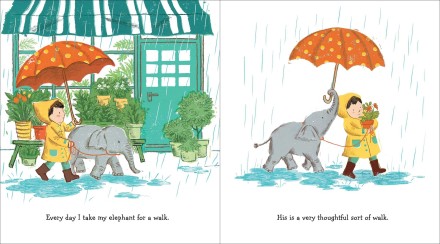
A little boy, his adorable pet elephant by his side, kneels on his bed and gazes out the window at the brownstones across the street. There he sees other kids with their—more conventional—pets: a bird, a cat, a fish, and dogs. “The trouble with having a tiny elephant for a pet is that you never quite fit in,” the boy reveals. Every day the boy takes his elephant for a walk, but even in this common pet-owner activity, the boy and the elephant show their special relationship. The elephant is thoughtful—protecting the boy with an umbrella on rainy days—and the boy is considerate—carrying his elephant over cracks in the sidewalk that frighten it. Why? Because “that’s what friends do: lift each other over the cracks.”

celebrate-picture-books-picture-book-review-strictly-no-elephants-thoughtful-pet

Image copyright Taeeun Yoo, courtesy of simonandschuster.com

On this particular day the boy winds a red scarf around his elephant’s neck and joins the parade of kids on their way to Number 17 where the Pet Club meets. The elephant is reluctant, but the boy is reassuring, even carrying his pet on his back the last few feet. “‘It’ll be fine,’” he says. But when they reach the apartment, there’s a sign on the door that reads “Strictly No Elephants.” There’s even a picture of a crossed out elephant on the sign.

The elephant understands all too well and leads the boy back onto the sidewalk, now ignoring the cracks. “‘That’s what friends do: brave the scary things for you,’” the boy says. The day has suddenly become rainy, and they are caught on the sidewalk without an umbrella. Taking shelter under an awning, the two find a little girl holding her pet skunk. “‘Did you try to go to the Pet Club meeting too?’” she asks. “‘Yes,’” the boy says, “‘But they don’t allow elephants.’”

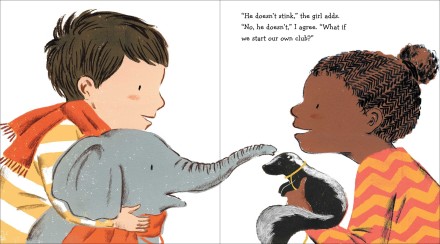
celebrate-picture-books-picture-book-review-strictly-no-elephants-girl-with-skunk

Image copyright Taeeun Yoo, courtesy of simonandschuster.com

While the sign may not explicitly forbid skunks, the little girl says that the other members didn’t want to play with her and her skunk either. Wisely, the boy tells her “‘They don’t know any better.’” The elephant reaches out its trunk toward the skunk with the girl’s reassurance that he doesn’t stink. The two new friends decide to start their own pet club and head down the sidewalk to find a venue. The boy makes sure that his elephant follows because friends “‘never leave anyone behind.’”

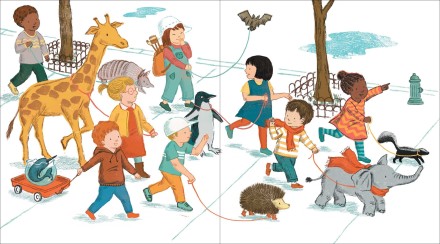
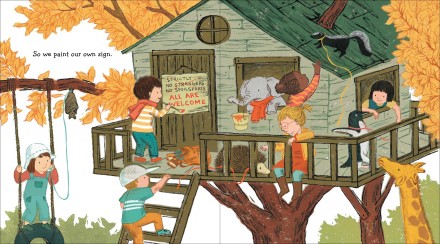
On the way the boy, girl, elephant, and skunk encounter a whole crowd of kids with unusual pets—a tiny giraffe, a mini narwhal, an armadillo, a bat, a hedgehog, and a penguin. They come to a park, complete with tree house, that is perfect for their club. The kids and pets eagerly adopt their new play space—swinging on the tire swing, waddling around the balcony, exploring the roof, playing tag, reading, and more. The boy quickly does the most important thing of all: he paints a new sign for the clubhouse door. “Strictly No Strangers, No Spoilsports ALL ARE WELCOME” it reads. And if you need directions to the club, the boy’s tiny elephant will give them to you “‘because that’s what friends do.’”

celebrate-picture-books-picture-book-review-strictly-no-elephants-new-friends

Image copyright Taeeun Yoo, courtesy of simonandschuster.com

Lisa Mantchev has written a story addressing the types of isolation and rejection that kids (and adults) can face sometimes because of a single perceived difference in an uplifting and productive way. With gentle honesty and thoughtfulness, Mantchev invites kids—on both sides of this “elephant in the room” issue to consider their actions, attitudes, and responses to others. As Mantchev reveals, more inclusiveness leads to more understanding and better relationships. Her lyrical language and sweet reminders of “what friends do” elevate this tribute to camaraderie and companionship and make it a story kids will want to hear again and again.

celebrate-picture-books-picture-book-review-strictly-no-elephants-new-clubhouse

Image copyright Taeeun Yoo, courtesy of simonandschuster.com

Taeeun Yoo’s adorable illustrations of the boy, his tiny pet elephant, and the other animal-and-owner pairs are irresistible. Any reader would want pets as cute and adaptable as these, which may lead to questions about why and how they could be excluded from the club. As the boy and his elephant are turned away from the Pet Club door, the day turns dark and stormy. The two-page spread is rendered in somber shades, except for the little boy with his yellow-striped shirt and red scarf, the elephant sporting a matching red scarf, and the soon-to-be-met African-American girl who wears a red and yellow-striped dress, emphasizing the connections between these two children. The final pages in which the new friends meet and play together are joyful, inviting all readers to “join the club.”

Strictly No Elephants gives readers so much to see, think about, and discuss. The book is a must for school and classroom libraries and would be a very welcome addition to children’s home bookshelves.

Ages 4 – 8

Simon & Schuster, 2015 | ISBN 978-1481416474

Discover Lisa Mantchev’s books for children, young adults, and adults on her website.

See a gallery of books by Taeeun Yoo on her website!

Elephant Appreciation Day Activity

celebrate-picture-books-picture-book-review-spool-elephants-craft

Image copyright Celebrate Picture Books, 2016

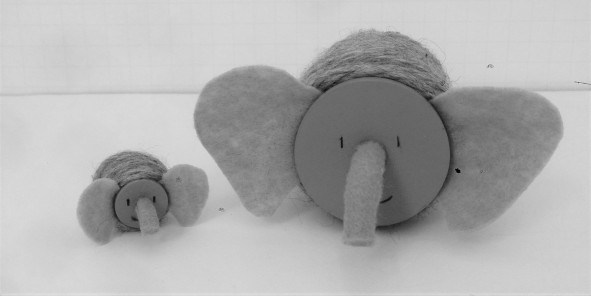
Spool Elephant


Who wouldn’t like a tiny elephant for a pet?! With this easy craft you can make your own little pal to keep you company.

Supplies

  • Printable Elephant Ears Template
  • 1¾-inch wooden spool with center hole, available at craft stores
  • ¾ -inch wooden spool with center hole, available at craft stores
  • Gray craft paint
  • Chunky gray yarn
  • Gray felt, 1 8 ½ x 11 piece
  • Paint brush
  • Black fine-tip marker
  • Hot glue gun or fabric glue

Directions

To Make the Ears

  1. Print the Elephant Ears Template
  2. Trace and cut out the large and small ears

To Make the Body

  1. Paint the spools with the gray paint, let dry
  2. Glue the tab on the ears to the body of the spool to secure, allowing the ears to stick out on either side of one flat end of the spools
  3. Wind the gray yarn back and forth around the spool, creating several layers of thickness
  4. When the body is as thick as you desire, cut the end and secure with glue

To Make the Trunk

  1. Cut a 2 x 4-inch piece of felt for the large elephant; 1/2 x 2-inch piece for small elephant
  2. Roll tightly and secure with glue
  3. Feed one end of the roll into the hole in the middle of the spool
  4. Cut to desired length

To Make the Tail

  1. Twist a small length of yarn and push it into the hole on the back of the spool
  2. With the marker draw eyes and a mouth on the face

Picture Book Review
September 20 – Get Ready Day

celebrate-picture-books-picture-book-review-three-ninja-pigs-cover

About the Holiday

Today’s holiday was established in 2006 by the American Public Health Association to encourage individuals, families, schools, businesses, and others to be prepared for any type of emergency. Having the right supplies on hand and proper training help to avert a larger crisis and can be a source of comfort and confidence. Take some time today to check your stock piles and preparedness plans and, if needed, enroll in a class like the heroes of today’s story!

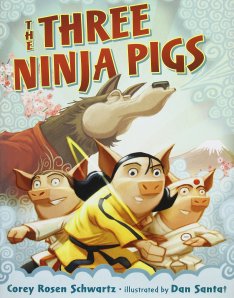
The Three Ninja Pigs

Written by Corey Rosen Schwartz | Illustrated by Dan Santat


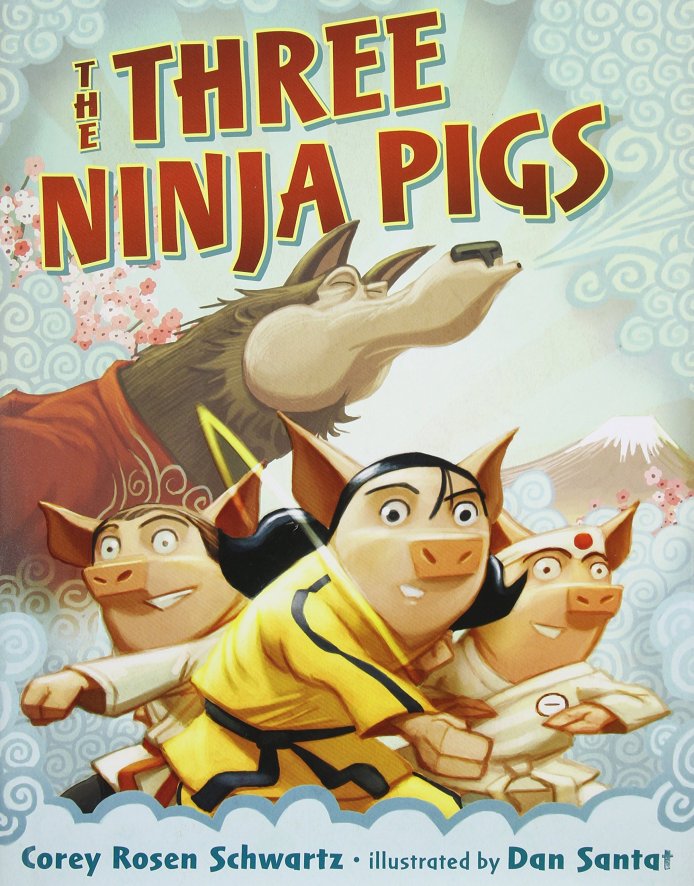
The Big Bad Wolf has never encountered Three Little Pigs like these! When he comes into town huffing and puffing and blowing homes down, the sibling trio (two brothers and a sister) in this fractured fairy take matters into their own trotters and vow: “‘We’ve got to get rid of that bully!’” / “‘We’re tired of letting him rule.’” / “‘We must put an end / To this terrible trend.’” / “‘Let’s train at that new Ninja school.’” At the dojo, Pig One begins to learn aikido, but with a “straw-house” attitude, he drops out after only two weeks.

celebrate-picture-books-picture-book-review-three-ninja-pigs-house-of-straw

Image copyright Dan Santat, courtesy of coreyrosenschwartz.com

Pig Two has a little more “stick”-to-itiveness with his Jujitsu training, and “The teacher said, ‘Excellent progress. / But Pig-san, you must study more.’ / Pig Two said, ‘No way. / Sayonara, Sensei! / I’m ready to settle a score.’” Thankfully, Pig Three has the steadfastness of a brick in her karate lessons and masters each move. “She balanced and blocked like an expert, / and practiced her lessons nonstop. / By the time she was through, / she could break boards in two / by performing a perfect pork chop!’” When she earns her black belt, she’s ready to rumble.

celebrate-picture-books-picture-book-review-three-ninja-pigs-retreat

Image copyright Dan Santat, courtesy of coreyrosenschwartz.com

When the wolf comes huffing and puffing to the straw house of Pig One, this little piggie can talk big but with a swing and a miss, he suddenly wishes he were more prepared. For Pig Two, things go…well…you know…. and the wolf chases the two brothers to their sister’s house. Here Pig Three stands waiting “…outside in her gi. / ‘I’m a certified weapon, / so watch where you’re steppin’. / You don’t want to start up with me!’” While she demonstrates her kicks and flips, the wolf stands strong, but when he witnesses her mighty ability to split bricks with one chop he scrams.

How do these intrepid pigs top that success? The brothers learn their lesson and—after going back to school—their ninja moves. After graduating these “Three pigs full of mojo / then ran their own dojo, / and life was forever wolf-free.’”  

celebrate-picture-books-picture-book-review-three-ninja-pigs-wolf

Image copyright Dan Santat, courtesy of coreyrosenschwartz.com

Corey Rosen Schwartz has created a rowdy, rambunctious triple-pig threat in this uproarious rendering of the three little pigs tale. With perfect rhythmic limericks that are a joy to read aloud, Schwartz cleverly uses puns, funny dialogue, and one feisty piglet to chop the wolf down to size.

Dan Santat’s illustrations are full of angst, action, and attitude. Legs kick, hands chop, boards and bamboo fly as the three pigs and their nemesis wolf nearly leap from the page in their battles.

Ages 4 – 8

G. P. Putnam’s Sons Books for Young Readers, 2012 | ISBN978-0399255144

Discover more about Corey Rosen Schwartz and her books plus fun activities and detailed teachers’ guides on her website!

Check out Dan Santat‘s site to learn about his books, view his artwork, and more!
While I take a few personal days over the next couple of weeks, I am republishing earlier posts updated with links, internal art, and book trailers.

Watch this kickin’ The Three Ninja Pigs book trailer!

Get Ready Day Activity

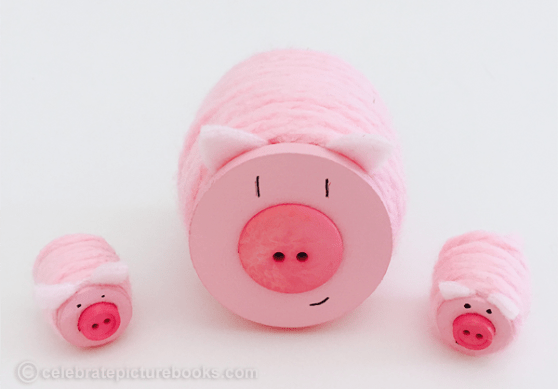
CPB - Pig Day pigs

Roly-Poly Pig and Piglets


Get ready to have fun making this cute and easy craft! Ham it up with your own pig and piglets who can keep you company on your desk, near your bed or anywhere it’s fun to play!

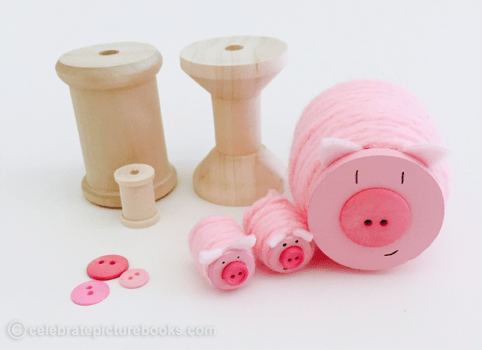
Supplies

  • 2 ½-inch wooden spoon, available from craft stores
  • 1-inch wooden spool, available from craft stores
  • Pink yarn, I used a wide-strand yarn
  • Pink fleece or felt
  • Pink craft paint
  • Pink 5/8-inch or 1-inch flat button with two holes
  • Pink 3/8-inch flat button with two holes
  • Paint brush
  • Scissors
  • Glue
  • Black marker

CPB - Pig Day with spools (2)

Directions

  1. Cut triangular ears for the pigs – cut larger triangles for the big pig and smaller triangles for the babies. Leave a tab on the bottom of the ears to secure them with the yarn.
  2. Paint the spool with the pink paint
  3. Let spool dry
  4. When the spool is dry, glue the ears to the spool, letting the ears stick up over the rim of the spool.
  5. Wrap yarn in straight layers around spool until the body of the pig is a little bigger than the end of the spool, which will be the face
  6. Cut yarn off skein and glue the end to the body
  7. To make the nose, glue the button over the hole in the middle of the spool
  8. Mark the eyes and mouth with a marker
  9. To make the tail for the large pig, cut a 4-inch long piece of yarn. Tie a triple knot in the yarn (or a knot big enough to fill the hole in the spool). Then tie a single knot below the first knot. Insert the large knot into the spool’s hole at the back of the pig. Trim the yarn in front of the second knot as needed.
  10. To make the tail for the piglets, tie a single knot in the yarn and another single know below the first. Insert one of the single knots into the hole. Trim yarn as needed.

celebrate-picture-books-picture-book-review-three-ninja-pigs-cover

You can find The Three Ninja Pigs at these booksellers

Amazon | Barnes & Noble | Books-a-Million | IndieBound

Picture Book Review