August 3 – It’s National Back to School Month

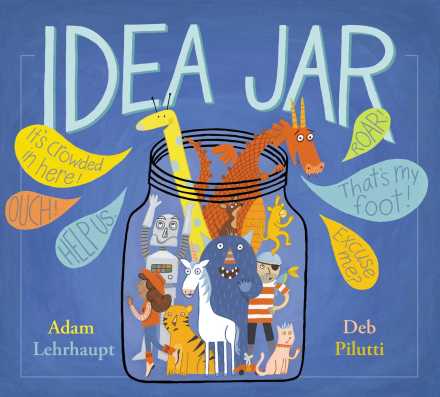
celebrate-picture-books-picture-book-review-idea-jar-cover

About the Holiday

It may seem like summer vacation just began, but it’s already time to start thinking about the new school year. The stores are stocked with clothes, supplies, and plenty of gear to make the new school year the best ever. But the stuff of going to school is just part of getting ready. Kids are looking forward—eagerly or maybe with a little trepidation—to meeting new friends, having new teachers, and exploring new subjects and ideas. Making the transition to a different grade easier and exciting is what National Back to School Month is all about.

Simon & Schuster sent me a copy of Idea Jar to check out. All opinions are my own. I’m also thrilled to be partnering with Simon & Schuster in a giveaway of a copy of Idea Jar. See details below.

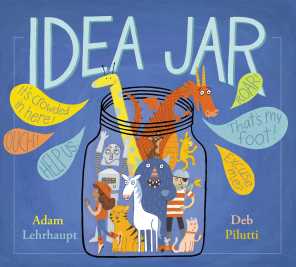
Idea Jar

Written by Adam Lehrhaupt | Illustrated by Deb Pilutti


On the teacher’s desk sits an Idea Jar that holds her student’s story ideas. The teacher “says a story can be about anything” the kids want it to be. Like maybe “a space robot” or a “horseless cowgirl” or, yes, even that Viking who is trying to hoist himself over the edge of the jar to freedom. See, “there’s no such thing as a bad story idea,” and there are so many ways to tell your story.
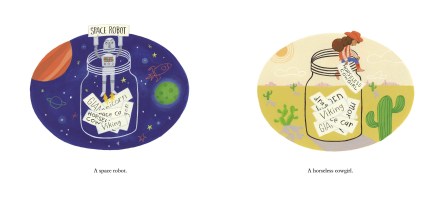
celebrate-picture-books-picture-book-review-idea-jar-space-robot

Image copyright Deb Pilutti, 2018, text copyright Adam Lehrhaupt, 2018. Courtesy of simonandschuster.com.

You can even combine your own ideas or make up a story with a friend. And maybe even that Viking in the back of your mind would make a good character too. He certainly thinks so. His motto is “Everything is better with a Viking”—even a giant badger who has lost her pink dress.

There is one thing about the Idea Jar, though. “It’s important to create stories for your ideas, or else your ideas get rowdy.” Just look at that Viking, who’s poking…at…the…jar! “Oh no! The ideas!”  They’re all loose! Now the robot is shooting his laser eyes and the dragon is swishing its enormous tail and the ideas are running amok!
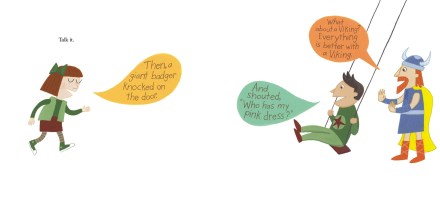
celebrate-picture-books-picture-book-review-idea-jar-bored-giant-badger

Image copyright Deb Pilutti, 2018, text copyright Adam Lehrhaupt, 2018. Courtesy of simonandschuster.com.

“These ideas need a story. Will you help?” Great! Should we? Should we start with the Viking? What if he gets into a battle with the space robot? Then gets rescued by the dragon? Who’s ridden by the horseless cowgirl! What? You’d like to change some ideas around? Go for it! This is your story, after all! “Wow! You were awesome!” You made all of those story ideas very, very happy. But it’s time that they went back in the jar to meet some other ideas for next time.
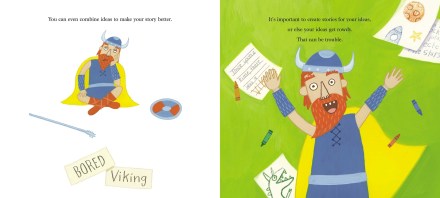
celebrate-picture-books-picture-book-review-idea-jar-bored-viking

Image copyright Deb Pilutti, 2018, text copyright Adam Lehrhaupt, 2018. Courtesy of simonandschuster.com.

As the award-winning author of Warning: Do Not Open this Book, Please Open this Book, This is a Good Story, and many others, Adam Lehrhaupt knows a thing or two—or three—about corralling ideas into a story. By appealing directly to students and any story creator, the narrator of the madcap Idea Jar will excite kids to pay attention to the ideas rattling around and flashing through their minds and inspire them to write, draw, or tell their own stories. The persistent Viking, who gives story suggestions throughout the book and nudges the story along, will delight kids and can serve two purposes for teachers or other writing coaches.

With his infectious enthusiasm, the Viking is that great idea that knocks at your consciousness until it is used. His whispered recommendations may also remind writers and artists of that little self-editor who so often can keep great ideas from running free. Learning to manage both of these is what great storytelling is all about. As the Viking sails into the classroom portrayed in the book, kids will jump at the chance to turn on their imaginations and give him—and their own characters—a story full of suspense, humor, and unexpected twists and turns.

celebrate-picture-books-picture-book-review-idea-jar-viking-climbing-out-of-jar

Image copyright Deb Pilutti, courtesy of simonandschuster.com.

As a space robot rockets from the Idea Jar, a horseless cowgirl lifts herself over the edge, and a big, scaly arm reaches from within to pull out the words “dragon” and “giant,” kids will be instantly invested in these characters without a story…yet. Deb Pilutti’s vibrant and dynamic illustrations show the creative process in action, whether a child’s talent lies in writing, drawing, or even reciting ideas aloud. The crafty Viking makes a frequent appearance—just like any good idea does—to prod the ideas in the jar (including the horseless cowgirl, the space robot, and the dragon as well as a pirate, a unicorn, a giraffe, a monster, and various animals) to unleash their inventive power. As the story comes together, the students and teacher cheer as they see their creation come to life. 

Kids will love answering the call to create a story and interacting with the ideas in Idea Jar. Idea Jar is infused with the natural spontaneity and inventiveness of children’s imaginations, making it a winner for jump-starting writing or art lessons in classrooms and inspiring creativity at home for kids and adults.

Ages 4 – 8 (and up)

Simon & Schuster/Paula Wiseman Books, 2018 | ISBN 978-1481451666

Discover more about Adam Lehrhaupt and his books on his website.

To learn more about Deb Pilutti, her books, and her art, visit her website.

Meet Deb Pilutti
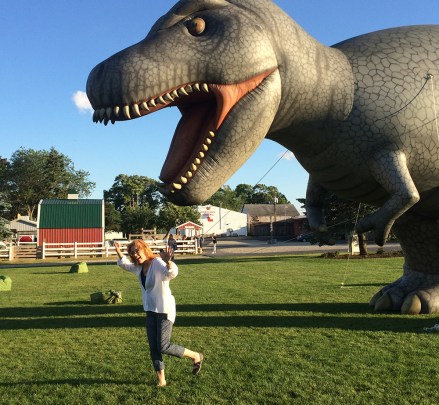
celebrate-picture-books-picture-book-review-deb-pilutti-intreview-chased-by-t-rex

Today I’m excited to talk with author/illustrator Deb Pilutti about her new book Idea Jar with Adam Lehrhaupt, her branding work inspired by vintage signs, and the old Creepy Crawlies Thingmaker, a toy which I was surprised and delighted to discover we both loved as children.

Readers will love the way the characters interact with each other and with the kids writing and drawing stories in Idea Jar. Can you describe your journey from when you first received Adam Lehrhaupt’s manuscript for Idea Jar to the finished book?

I am a fan of Adam’s Warning: Do Not Open this Book! so I was quite excited when Paula Wiseman at Simon & Schuster asked me if I would like to illustrate IDEA JAR. Who wouldn’t want to illustrate a book with a Space Robot, a Viking, a cowgirl and a Dragon as the main characters? Adam left a lot of room for me to play. He did not specify what the other ideas in the jar would be, only the characters he had written into the text. It was fun to develop additional characters and their relationships and mini-side stories, like the developing friendship between the Yeti and the small dog, and the mouse driving a race car.

Kids’ imaginations are always so full of possibilities, and they can make such funny and amazing leaps of character and plot. What are some steps you’d give young writers and illustrators for capturing those snatches of imagination and developing an idea into their own story?

Keep a journal. I have several that I write or doodle in. If there is something I find interesting, like an idea or a character, I go back to it and try to work out a story. I start by asking questions of the character or situation. What would happen if… type of questions.
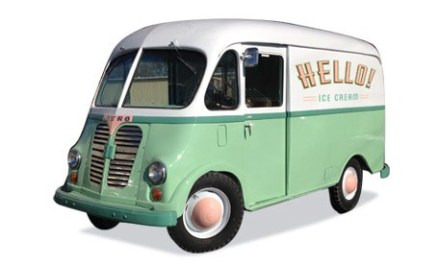
celebrate-picture-books-picture-book-review-deb-pilutti-interview-hello!-ice-cream-truck

Your branding work for Sea World, Warner Brothers, artists, food trucks, and more are infused with such a fun vintage vibe. Do you have a favorite decade to draw design ideas from, and why?

I absolutely love vintage signage and type from the 50s and 60s. Some of it is so campy while others can be evocative or elegant. The colors used were bold and saturated.
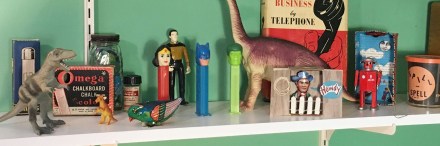
celebrate-picture-books-picture-book-review-deb-pilutti-intreview-studio-toys

Before you began illustrating and writing for children, you designed toys, and in your recent release The Secrets of Ninja School, the main character makes dragon stuffies for all of her classmates. Why do you think playing with traditional toys is so important for children? What was your favorite toy when you were a child?

Mostly because it’s fun. I also think it’s a way to navigate the world, but that isn’t something I thought about as a child. When I was young, I loved making Creepy Crawlers, which was an incredibly dangerous toy at that time. You pored possibly toxic goop into a metal mold and cooked it in a blisteringly hot ThingmakerTM oven, which resulted in many scorched fingers. But totally worth it, because once the plate cooled, you would have an army of colorful and stretchy bugs.
celebrate-picture-books-picture-book-review-deb-pilutti-intreview-srudio-desk

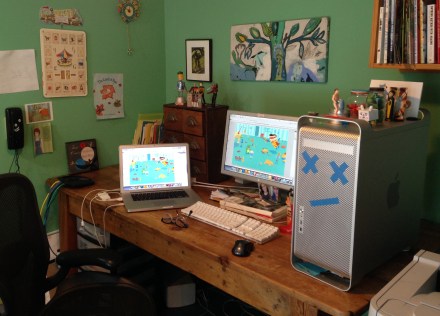
My cousin is a graphic designer and whenever I visited her as a child I loved seeing her special corner of the house. It was so full of color and knick-knacks (inspiration, really, I guess) and works in progress, that I developed a fascination with artists’ studios. Do you mind describing your work space a little? What is your favorite thing in it?

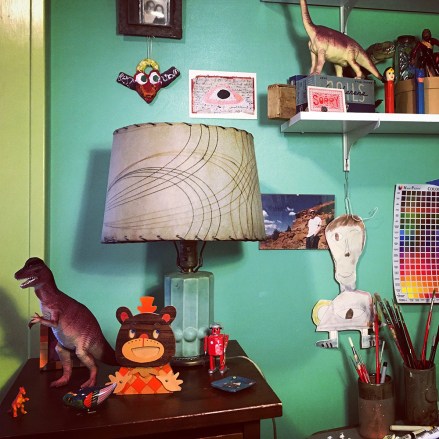
My studio is in a small bedroom. I have a long table with a computer and extra monitor set up on it, and I sometimes sketch here as well. A painting easel is in the corner of the room. It’s a very messy place, with papers everywhere and knick-knacks and toys and bits of shiny things on every surface. I like all of my toys, but my favorite one is a realistic toy model of a T-rex with a moveable jaw.
celebrate-picture-books-picture-book-review-deb-pilutti-intreview-studio-knick-knacks

What’s the best part of being a children’s illustrator and author?

I have always loved books. To be involved with the art of bookmaking is a wondrous thing. My favorite part of the process is making the final illustrations.

Do you have any anecdotes from a reading or event that you’d like to share?

I was visiting a school last April and had a blast creating stories with the students using an Idea Jar. We made some pretty silly stories together. One student came up with a zombie tomato for a character, which was brilliant!

What’s up next for you?

I’m currently working on final illustrations for two books. The first is Old Rock (is not boring). A story about a rock sounds like it could be boring, right? At least Old Rock’s friends think so. Old Rock reveals her own surprising story, slowly and languidly, as rocks do. I’m also illustrating a sequel to Ten Rules of Being a Superhero. It’s called Ten Steps to Flying Like a Superhero. I had so much fun with the characters from the first book that they are back for another adventure. Lava Boy’s superhero toy, Captain Magma, wants to fly more than anything. They devise a plan, which does not go as anticipated.

What is your favorite holiday and why?

Summer Solstice. I live in Michigan, which is quite lovely, but the cold and dark of winter can get a bit old. I miss the light. Our summer nights are very long. On Summer Solstice, I try to stay outside until the last vestiges of daylight disappear at around 9:45.

Has a holiday ever influenced your work?

Yes, I illustrated The Twelve Days of Christmas in Michigan, illustrated by Susan Collins Thoms.

Thanks so much for chatting, Deb! I wish you all the best with Idea Jar and all of your books!

National Back to School Month Activities
celebrate-picture-books-picture-books-review-adam-lehrhaupt-create-your-own-idea-jar

Make Your Own Idea Jar

If you have lots of ideas looking for a place to hang out, discover how to make your own Idea Jar and find some cool starter ideas from Adam Lehrhaupt! Make your own IDEA JAR!

celebrate-picture-books-picture-books-review-deb-pilutti-5-methods-to-generate-stories-logo

Dream up Story Ideas

Do your kids (or maybe you!) want to think up awesome story ideas? Check out Deb Pilutti’s 5 Methods of Generating Story Ideas

celebrate-picture-books-picture-book-review-idea-jar-cover

You can find Idea Jar at these booksellers

Amazon | Barnes & Noble | Books-a-Million | IndieBound

Picture Book Review

August 2 – It’s National Crayon Collection Month

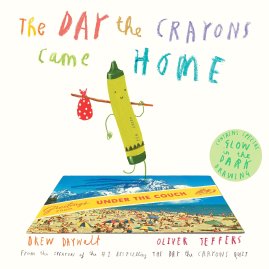
celebrate-picture-books-picture-book-review-the-day-the-crayons-came-home-cover

About the Holiday

Kids love going to restaurants that provide a fun placemat and crayons to color with while they wait. But what happens to those crayons when the meal is over? Most times they’re thrown in the trash with the napkins and straws and other items left behind. Wouldn’t it be great if those gently used crayons could go on to be used by other kids at schools that can’t afford such supplies? They can! Begun by Crayon Collection, National Crayon Collection Month encourages restaurants, hotels, and other organizations that provide free crayons to collect the ones left behind and donate them to under-serviced schools. As school arts programs are threatened with budget cuts, these important supplies can make a big difference in the lives of students. The ability of children to express their creativity is a crucial part of their education and growth.  You can get involved too! To learn how you can make an impact, visit CrayonCollection.org. Or look into donating crayons (and other supplies) to a school in your area.

The Day the Crayons Came Home

Written by Drew Daywalt | Illustrated by Oliver Jeffers


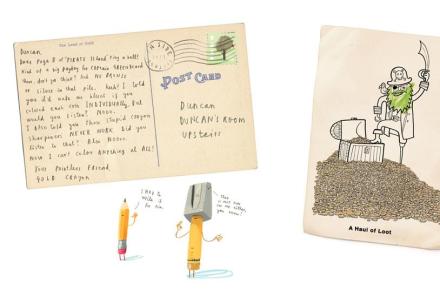
One day, as Duncan and his crayons were creating something together, Duncan received a mysterious package of postcards. The first postcard Duncan read was from Maroon Crayon, who, it turned out had been marooned in the couch, broken in half when Duncan’s dad sat on him, and then “nursed back to health” by paperclip. Now ready to rejoin the pack, Maroon Crayon was asking to be rescued.

celebrate-picture-books-picture-book-review-the-day-the-crayons-came-home-pea-green-crayon

Image copyright Oliver Jeffers, 2015, text copyright Drew Daywalt, 2015. Courtesy of Philomel Books.

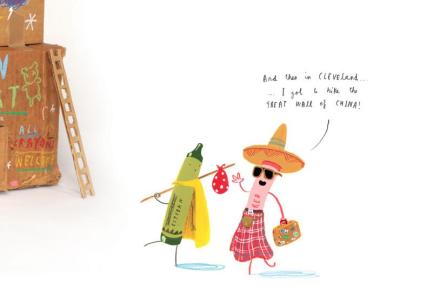
The next postcard brought distressing news from Pea Green Crayon, who feeling unloved, had changed his name to Esteban the Magnificent and was “running away to see the world.” Neon Red Crayon was feeling similarly dismissed and was writing—with a bit of well-earned pique—from the side of the pool at the Ritz Motel. “REMEMBER that great vacation we had with your family? Remember how we laughed when we drew a picture of your dad’s sunburn? Remember dropping me by the hotel pool when you left? Clearly you do NOT, BECAUSE I’M STILL HERE!” Still, Neon Red Crayon was taking it upon herself to walk home.

celebrate-picture-books-picture-book-review-the-day-the-crayons-came-home-red-neon-crayon

Image copyright Oliver Jeffers, 2015, text copyright Drew Daywalt, 2015. Courtesy of Philomel Books.

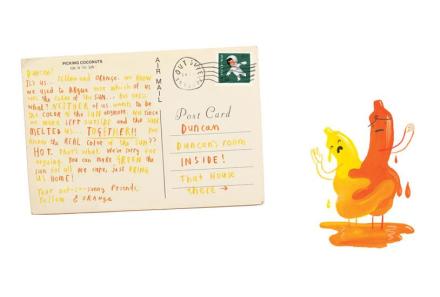
Yellow and Orange crayons wrote to let Duncan know they’ve put their argument “over which of us was the color of the sun” aside now that the sun has fused them together forever in the backyard. They don’t care what color the sun is anymore—they just want to come home. But perhaps “Tan (or possibly Burnt Sienna?) Crayon” has the saddest tale to tell. He’s had a hard time of it since being eaten by the dog and is now “more carpet fuzz than crayon.”

celebrate-picture-books-picture-book-review-the-day-the-crayons-came-home-yellow-and-orange-crayon

Image copyright Oliver Jeffers, 2015, text copyright Drew Daywalt, 2015. Courtesy of Philomel Books.

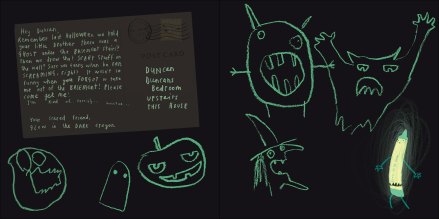
Up from the basement comes a postcard from Glow in the Dark Crayon, who was abandoned there last Halloween after Duncan used him to draw scary stuff on the wall. He just wants to be brought into the light because he’s “kind of … terribly … horrified ….” Meanwhile, Esteban has reached the front door, seen that the world is rainy, and has decided to return.

A dryer mishap has left Turquoise Crayon with one of Duncan’s socks stuck to his head, one compelling question, and one big desire to be reunited with the other crayons. But it’s not just Duncan’s crayons who are begging to be brought back into the fold. Duncan’s baby brother’s “Chunky Toddler Crayon” wants to be saved from another week like the last one in which the little tyke had “bitten the top of my head, put me in the cat’s nose, drawn on the wall and tried to color GARBAGE with me!”

celebrate-picture-books-picture-book-review-the-day-the-crayons-came-home-glow-in-the-dark-crayon

Image copyright Oliver Jeffers, 2015, text copyright Drew Daywalt, 2015. Courtesy of Philomel Books.

Brown Crayon admits that he’s embarrassed by what Duncan used him for, but still wants to come back, and Neon Red Crayon has sent postcards from all over the world as she’s made her way back, at last sending a card picturing herself skiing in the Amazon Rain Forest. After reading all of these missives, Duncan felt bad and ran around the house collecting them. But where would he put them? They “were all so damaged and differently shaped than they used to be that they no longer fit in the crayon box.”

But why did the crayons have to fit the box? Duncan had a better idea. He built a box to fit the crayons—“a place where each crayon would always feel at home.”

celebrate-picture-books-picture-book-review-the-day-the-crayons-came-home-gold-crayon

Image copyright Oliver Jeffers, 2015, text copyright Drew Daywalt, 2015. Courtesy of Philomel Books.

An instant classic, Drew Daywalt ‘s and Oliver Jeffers’ sequel to the equally loved The Day the Crayons Quit, The Day the Crayons Came Home is a laugh-out-loud look at life as a forgotten crayon. As given voice by Drew Daywalt, these crayons, with personality, attitude, and some legitimate gripes, make hilarious champions for any story time. Daywalt’s selection of colors and mishaps is inspired, and his recurring characters, Esteban and Neon Red Crayon, add just the right touch of silly cluelessness as they wax poetic.

Screen Shot 2018-08-01 at 5.28.44 PM

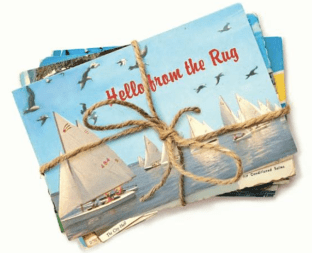
From the first glimpse of Maroon Crayon facing the indignity of being sat upon and emerging from the wreckage with a full beard, tattered paper, and paperclip bandage, kids will be hooked on the lives of these misplaced, misused crayons. Each crayon’s expression reveals the personality and predicament of these little heroes. Vintage postcards and crayon-drawn backdrops add to the distinctive look of this very original story in letters. A page of glow-in-the-dark drawings and text will have kids running for the nearest closet or dark corner to check it out, and the final reveal of the crayons’ new home will inspire readers to create one of their own.

A colorful, creative addition to any home or classroom library, The Day the Crayons Came Home (and its companion The Day the Crayons Quit) will be asked for again and again…and again.

Discover more about Drew Daywalt and his books on his website.

To learn more about Oliver Jeffers, his books, and his art, visit his website.

National Crayon Collection Month Activity

CPB - Rainbow Crayon Art 3

Crayon Rainbow Art


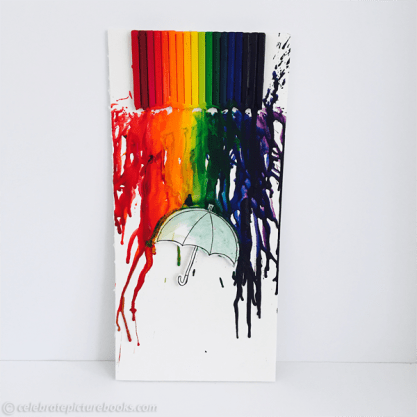
With this cool project you can create an art piece that’s as colorful as a rainbow and as unique as you are! Adult help is needed for children.

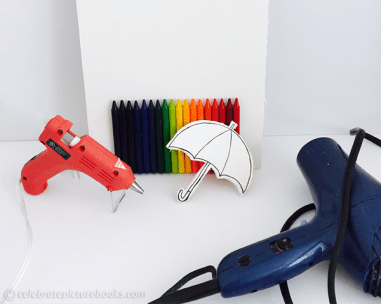
Supplies

  • Box of 24 crayons
  • White foam board or thick poster board, 8 inches by 17 inches
  • A small piece of corrugated cardboard, about 5 inches by 5 inches (a piece of the foam board can also be used for this step)
  • A small piece of poster board, about 5 inches by 5 inches
  • Scissors
  • X-acto knife (optional)
  • Hot glue gun
  • Hair dryer
  • Old sheets or towels, newspapers, a large box, or a trifold display board

CPB - Rainbow Crayon Art 2

CPB - Rainbow Crayon Art 1 (2)

Directions

  1. Remove the various red, orange, yellow, blue, indigo, and violet hued crayons from the box of crayons
  2. Strip the paper from the crayons by slicing the paper with the x-acto knife, or removing it by hand
  3. Line them up in order at the top of the white foam board
  4. Glue the crayons with their tips facing down to the board with the hot glue gun
  5. Cut an umbrella or other shape of your choice from the poster board
  6. Trace the umbrella or other shape onto the corrugated cardboard or a piece of the foam board and cut out
  7. Glue the poster board shape onto the corrugated cardboard, let dry
  8. Glue the umbrella or other shape to the foam board, about 4 ½ inches below the crayons
  9. Set up a space to melt the crayons. The wax will fly, so protect the floor and walls by placing the art piece in a large box or hanging newspapers, old sheets or towels on the walls and placing newspapers on the floor. A trifold display board and newspapers works well.
  10. Stand the art piece upright with the crayons at the top
  11. With the hot setting of the hair dryer, blow air at the crayons until they start to melt
  12. Move the hair dryer gently back and forth across the line of crayons from a distance of about 6 to 12 inches away. The closer you are to the crayons, the more they will splatter
  13. The crayons will begin to melt and drip downward
  14. You can experiment with aiming the hair dryer straight on or at an angle to mix colors
  15. Wax that drips onto the umbrella or other shape can be chipped off after it dries or wiped off to create a “watercolor” effect on the shape
  16. Once the hair dryer is turned off, the wax cools and dries quickly
  17. Hang or display your art!

celebrate-picture-books-picture-book-review-the-day-the-crayons-came-home-cover

You can find The Day the Crayons Came Home at these booksellers

Amazon | Barnes & Noble | Books-a-Million | IndieBound

Picture Book Review

May 18 – International Museum Day

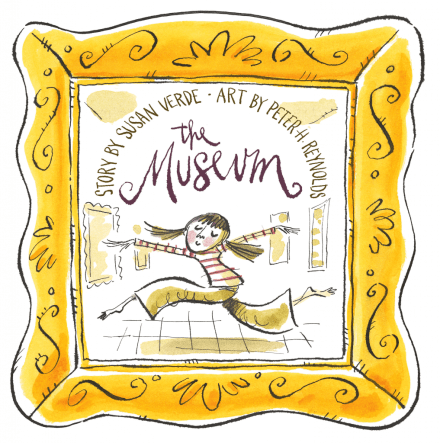
celebrate-picture-books-picture-book-review-the-museum-cover

About the Holiday

Created in 1946, the International Council of Museums established International Museum Day in 1977 to institute an annual event highlighting museums as “important means of cultural exchange, enrichment of cultures and development of mutual understanding, cooperation, and peace among peoples.” The day also aims to unify “the creative aspirations and efforts of museums and draw the attention of the world public to their activity.” Each year a theme is chosen to spotlight a relevant issue. This year’s theme is “Hyperconnected Museums: New approaches, new publics.” With today’s technology, museums have many more ways to share their exhibits and reach new audiences. Museums are also turning their attention to their local diverse communities, creating projects in collaboration with minorities, indigenous peoples, and local institutions. To learn more visit the International Council of Museums website! To celebrate today’s holiday show your support for museums by visiting and/or donating to your favorite museum!

The Museum

Written by Susan Verde | Illustrated by Peter H. Reynolds


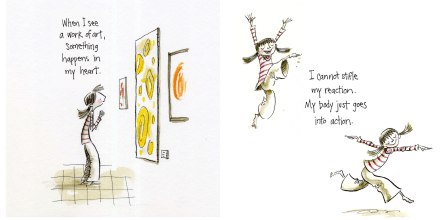
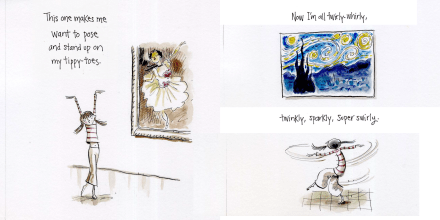
A lanky young girl enters an art museum and goes right up to an abstract painting of sunlight yellow circles. She says, “When I see a work of art, something happens in my heart.” The painting makes her feel like dancing and leaping, and in front of a painting of a ballerina, the girl lifts up on her toes and raises her arms gracefully.

Van Gogh’s Starry Night makes her “all twirly-whirly” and she spins around like the painting’s swirling winds. She sees off-beat sculptures that inspire her to turn upside down and become a human work of art with bent legs and pointed toes. She sits face to face with The Thinker, contemplating “the whos and whats and wheres and whys.” A woman’s abstract face painted in blues makes her sad, while a plate of apples reminds her she’s hungry.

celebrate-picture-books-picture-book-review-the-museum-coming-to-museum

Image copyright Peter H. Reynolds, 2013, text copyright Susan Verde, 2013. Courtesy of Harry N. Abrams Books for Young Readers.

The girl skips past a wall lined with paintings of flowers, mirrors The Scream, and makes “silly faces at a guy” by Picasso. Paintings of squiggles make her burst out in giggles. But then she sees a wall-sized painting that makes her stop and stare. The canvas is completely blank. She looks long and hard, then shuts her eyes and says, “I start to see things / in my head, / yellow, blue, then green / and red, / circles, lines, all kinds of shapes, / faces, flowers, and landscapes.” The idea of a world that’s hers to fill anyway she wants leaves her elated, and as she walks out the door at the end of the day, the girl is happy and content because, she says, “The museum lives inside of me.”

Through one girl’s trip to a museum Susan Verde celebrates the emotions and dreams that experiencing art can stimulate in visitors. Her jaunty rhymes and conversational rhythm create an atmosphere of active participation for her happy museum-goer as well as for readers, leading them to the realization that not only a canvas, but their life itself, is a unique work of art.

celebrate-picture-books-picture-book-review-the-museum-ballet

Image copyright Peter H. Reynolds, 2013, text copyright Susan Verde, 2013. Courtesy of Harry N. Abrams Books for Young Readers.

Peter H. Reynolds’ fluid, uninhibited line drawings are ideally suited to Verde’s inspirational story. As the girl flits, twirls, and skips from gallery to gallery and mimics the paintings and sculpture she sees, readers’ imaginations will also take off, remembering art that they’ve seen and conjuring up some of their own. Reproductions of famous works of art give younger kids a chance to learn about some pieces of world art and allows older children the opportunity to show their knowledge.

A smart and stylish tribute to art museums, the feelings expressed in The Museum are also fitting for any child who finds inspiration in a museum of history, natural science, science, or any discipline. The book makes a beautiful gift, a stirring addition to home bookshelves, and a terrific book to pair with museum trips, art classes, and inspirational story times in any classroom.

Ages 5 – 7 (and up)

Abrams Books for Young Readers, 2013 | ISBN 978-1419705946

Discover more about Susan Verde and her books on her website.

To learn more about Peter H. Reynolds and view a gallery of his books and art, visit his website

World Museum Day Activity

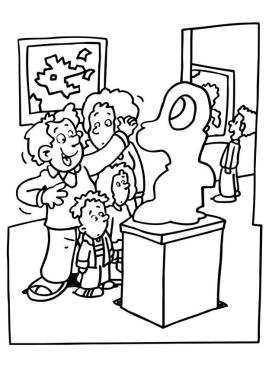
celebrate-picture-books-picture-book-review-museum-coloring-page

Museum Exhibit Coloring Page


Going to a museum is a terrific family outing! Here’s a printable Museum Exhibit Coloring Page for you to enjoy!

celebrate-picture-books-picture-book-review-the-museum-cover

You can find The Museum at these booksellers

Amazon | Barnes & Noble | Books-a-Million | IndieBound

Picture Book Review
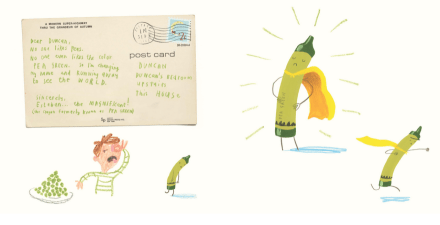
April 16 – It’s National Humor Month

celebrate-picture-books-picture-book-review-the-book-of-mistakes-cover

About the Holiday

There may be no more infectious sound than the tinkle or guffaw of a good laugh. Laughter is therapeutic and can make tough times a little easier. Kids, it seems, are born with the ability to see and appreciate the silliness, absurdity, and fun in life. This month, enjoy the zany side of things—it’s guaranteed to brighten your days and give you a new perspective.

The Book of Mistakes

By Corinna Luyken


The whole thing started while drawing a picture. The head of the child looks good—nice little ear and nose, a dot for the left eye. The hair goes on pretty well—a swoop on the right side, straight on the left. The eyebrows are tiny dashes, and the mouth the size of a chocolate sprinkle. Just have to add the right eye…Oh, no! The right eye is too big!! Okay, okay, this mistake can be fixed. The left eye just needs to be a liiittle bigger…Oh, good grief! “Making the other eye even bigger was another mistake.”

celebrate-picture-books-picture-book-review-the-book-of-mistakes-splotch-on-head

Copyright Corinna Luyken, 2017, courtesy of Dial Books for Young Readers.

Maybe…the perspective might just be right for…Yes! “the glasses—they were a good idea.” Okay on to the body. Hmmm… “The elbows and the extra-long neck? Mistakes. But the collar—ruffled, with patterns of lace and stripes—that was a good idea.” And elbow patches make the arms look a little less pointy.

Moving on to the background, a thick and leafy bush is just the thing to hide the animal. Animals? It could be a cat, a cow, or a frog. “Another mistake.” And why is the ground so far below the girl’s feet anyway? Oh! Because she’s wearing roller skates. Nice save! “Those were definitely not a mistake.” Let’s see, the “second frog-cat-cow thing made a very nice rock.” Now, what about the other girl with long hair and one very long leg? Got it! She “looks like she always meant to be climbing that tree” on the side of the page.

celebrate-picture-books-picture-book-review-the-book-of-mistakes-leaves

Copyright Corinna Luyken, 2017, courtesy of Dial Books for Young Readers.

The ink smudges at the top of the paper can be leaves, but back to the roller-skating girl. What to do with those awkwardly positioned arms? Oh dear—the pen should not have been hovering over the page. How to fix the splotch on the side of her head? Ah-hah! An old-fashioned aviator’s helmet. Or is it a swimming cap? No matter…she’s now holding a yellow balloon in her left hand and lots of strings in her right. Wow, tons of yellow balloons are at the ends of those strings!

She’s skating toward the tree with the long-legged girl, and there are a bunch of other kids playing in it too. Cool! They’re all wearing aviator helmets/swimming caps too. Some are wearing roller skates—good—and they’re erecting some kind of tent over a big branch. Wow! Look at the pink balloons and the green ones! There’s a kid riding a hot-air unicycle through the sky and a skateboarder is floating down to a ramp supported by springs in the top of the tree. Someone’s even tatting a lace banner.

celebrate-picture-books-picture-book-review-the-book-of-mistakes-tree

Copyright Corinna Luyken, 2017, courtesy of Dial Books for Young Readers.

“Do you see?” They’re all waiting for the roller-skating girl to bring the yellow balloons. But let’s step back a little. “Do you see—how with each mistake she is becoming?” If we back up some more, she and the tree look so tiny and there’s a big, dark forest in the foreground. “Do you see—” Looking from way far away, doesn’t that forest look a bit like curly hair or…Oh! The top of the roller-skating girl’s cap! She’s so big now, and she’s gazing out of those green glasses at the white page where she’s drawing a small head with a nice little ear and nose and a dot for the left eye. “Do you see—who she could be?”

celebrate-picture-books-picture-book-review-the-book-of-mistakes-girl-as-artist

Copyright Corinna Luyken, 2017, courtesy of Dial Books for Young Readers.

Kids will be charmed by the start of the little head on the first page, begin giggling at the one too-big eye on the third page, and laugh out loud at the even bigger eye on the fifth in Corinna Luyken’s magically inventive The Book of Mistakes. As each mistake is adjusted for or inspires a new twist in the story, young readers will appreciate how creatively right the fix is and look forward to the next mistake and the next. The final pages presenting the tree full of children are so enticing that readers will want to linger over each one to find all the details. Luyken’s minimally colored drawings are funny and endearing and lead readers to question their own perspective and give free reign to their imagination.

The Book of Mistakes is a must for classrooms and highly recommended for home libraries for all those times when mistakes can be perfect conversation starters or the inspiration for…anything!

Ages 4 – 8 and up

Dial Books for Young Readers, 2017 | ISBN 978-0735227927

To find a portfolio of artwork and more information about Corinna Luyken and her books visit her website.

National Humor Month Activity

celebrate-picture-books-picture-book-review-share-a-laugh-wordsearch

Share a Laugh! Word Search Puzzle


Sharing a laugh with friends makes a day better. Can you find the fifteen words about laughter in this puzzle?

Share a Laugh! Word Search PuzzleShare a Laugh! Word Search Solution

Picture Book Review
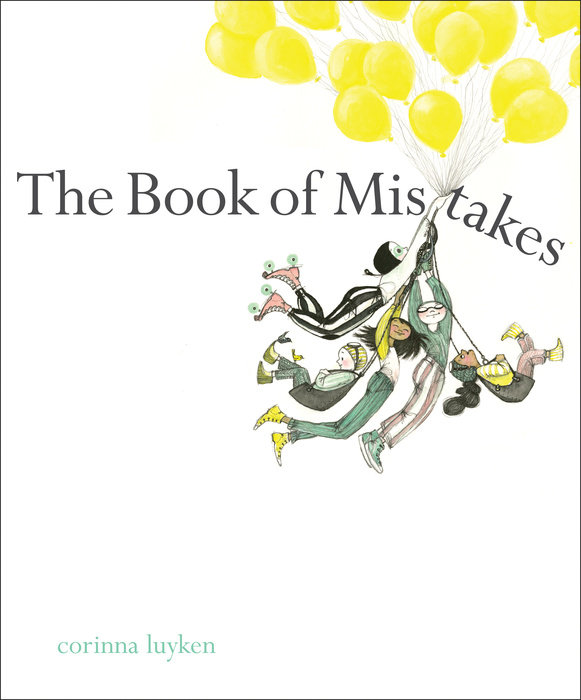
April 15 – National Rubber Eraser Day

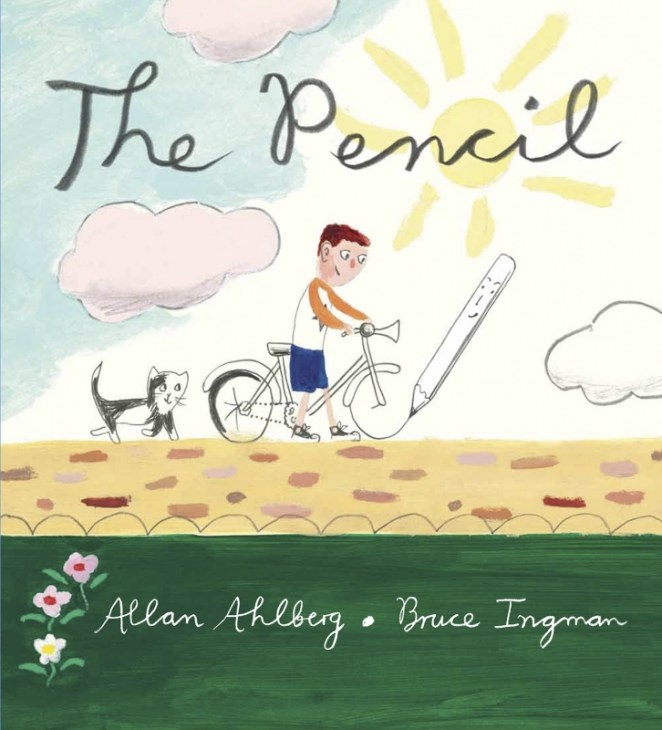
The Pencil by Allan Ahlberg and Bruce Ingman Picture Book Review
About the Holiday

Today we celebrate that little item at the end of the pencil or near at hand that gives us second (or third…or fourth…or…) chances. The rubber eraser has been around since 1770, when Joseph Priestly invented a vegetable gum that could remove pencil marks and Edward Nairne developed it into an eraser that could be widely marketed. In 1839 Charles Goodyear’s work with vulcanization made erasers more durable, and Hyman Lipman put pencil and eraser together in 1858. What did people do before the rubber eraser? They still made mistakes, but wax and even crustless bread were the remedies of choice. To celebrate today, draw or write with abandon and feel free to erase as often as you want!

The Pencil

Written by Allan Ahlberg | Illustrated by Bruce Ingman


Even before the title page readers learn of a little pencil, alone in the world. One day the pencil quivers and begins to draw. The pencil draws a boy, who asks for a name, and receives “Banjo” in reply. The boy wants a dog, and the pencil obliges. Bruce is the dog’s name, and he wants a cat. Mildred is immediately created, and of course Bruce chases Mildred. Banjo chases Bruce. They need a place to run, so the pencil draws a house, a town, and a park.

celebrate-picture-books-picture-book-review-the-pencil-boy

Image copyright Bruce Ingman, 2012, text copyright Allan Ahlberg, 2012. Courtesy of Candlewick Press.

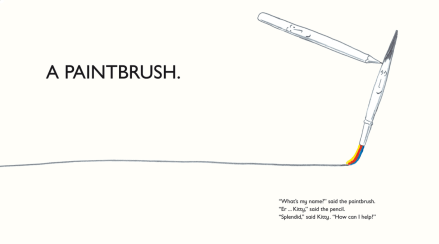
All this excitement makes the trio hungry and tired. Banjo demands the pencil draw him an apple, Bruce wants a bone, and Mildred really wants a mouse but settles for cat food. There’s just one problem—the food is so unappetizing in black and white. The pencil thinks for a bit and comes up with a solution. He draws a paintbrush named Kitty. Kitty colors the food, the boy, the dog, the house, the town, and the park. Mildred is left as created – she’s a black-and-white cat anyway.

celebrate-picture-books-picture-book-review-the-pencil-black-and-white

Image copyright Bruce Ingman, 2012, text copyright Allan Ahlberg, 2012. Courtesy of Candlewick Press.

The team of Pencil and Paintbrush creates a whole family, a friend for Bruce, a ball (Sebastian) for Banjo, and a kitten for Mildred. But all these extra characters cause trouble. Sebastian breaks a window, and the mom, dad, sister, and grandpa aren’t completely satisfied with the traits they’ve been given. What’s a pencil to do? Draw an Eraser, of course!

The eraser takes care of the problems, but he grows fond of his power to rub things out. He erases the table, chair, front door—the whole house. And that’s not all! Nothing the Pencil and Paintbrush have created is safe. Eraser rubs everything out until all that’s left is the pencil and the eraser locked in opposition.

celebrate-picture-books-picture-book-review-the-pencil-paintbrush

Image copyright Bruce Ingman, 2012, text copyright Allan Ahlberg, 2012. Courtesy of Candlewick Press.

The pencil draws a wall, a cage, a river and mountains with fierce animals but none of it is a match for the eraser. Then the pencil has a brainstorm and draws…another eraser! The two erasers engage in an epic battle, and in the end they rub each other out.

Pencil recreates everything he had before, and Kitty colors it all in, including a new picnic with a runaway boiled egg named Billy and ten A-named ants to clean up the crumbs. As the day fades into night, a moon appears in the sky along with a cozy box for Pencil and Paintbrush to sleep in.

celebrate-picture-books-picture-book-review-the-pencil-rubs-out-everything

Image copyright Bruce Ingman, 2012, text copyright Allan Ahlberg, 2012. Courtesy of Candlewick Press.

Allen Ahlberg is a master at tapping into children’s unbridled imagination and silly side. His endearing story of a little pencil who creates himself a world full of friends and excitement—as well as the inevitable conflict—will keep kids laughing with its word play, topsy-turvy names, and mad-dash action. As the eraser rubs out everything in its path, kids will also understand the gentle, underlying  lesson that simply getting rid of a problem can sometimes just create more and that resolution is a better tact.

Bruce Ingman’s sly, childlike illustrations are the perfect accompaniment to Ahlberg’s story, deftly depicting the friendship and collaboration between Pencil and Paintbrush as they create house and its family with a mom sporting a crazy hat, a dad with large ears, and a grandpa smoking a pipe he doesn’t want. As Eraser begins his rampage, readers will enjoy the giddy suspense of how it will all end and will be happy to see that Paintbrush once again fills the pages with joyous and vivid color.

Ages 4 – 8

Candlewick Press, 2012 | ISBN 978-0763660888

National Rubber Eraser Day Activity

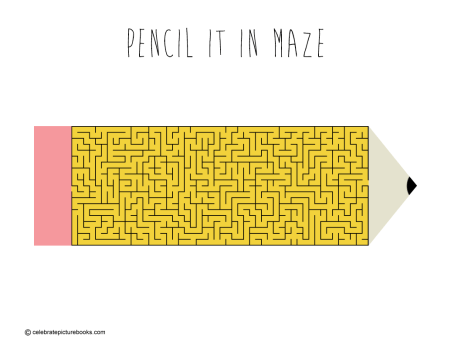
CPB - Pencil Maze

Pencil It In! Maze


Sharpen your pencil and start having fun with this printable pencil-shaped maze. 

Pencil It In Puzzle!  | Pencil It In! Solution

Picture Book Review

March 10 – It’s National Women’s History Month

celebrate-picture-books-picture-book-review-maya-lin-artist-architect-of-light-and-lines-cover

 About the Holiday

This month we celebrate the accomplishments of women in the past who have broken barriers and forged paths for today’s women and who still inspire the leaders of tomorrow. To honor women this month, learn more about the influential woman in your own field or in areas you enjoy as hobbies and teach your children about the women who made incredible contributions to the world long ago and those who are changing the way we live today.

Maya Lin: Artist-Architect of Light and Lines

Written by Jeanne Walker Harvey | Illustrated by Dow Phumiruk


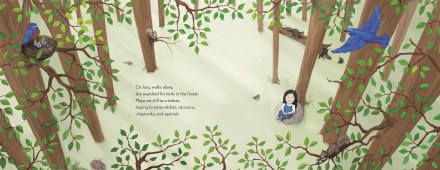
As a child, Maya Lin loved playing and interacting with nature near her home. She and her brother liked to run over what Maya had named “the Lizard’s Back”—a hill behind her house—and into the woods. Sometimes Maya went into the woods alone and “sat as still as a statue, hoping to tame rabbits, raccoons, chipmunks, and squirrels.” She liked to play chess with her brother and build towns from scraps of paper, boxes, books, and other things she found around the house.

celebrate-picture-books-picture-book-review-maya-lin-artist-architect-of-light-and-lines-in-forest

Image copyright Dow Phumiruk, 2017, text copyright Jeanne Walker Harvey, 2017. Courtesy of us.macmillan.com.

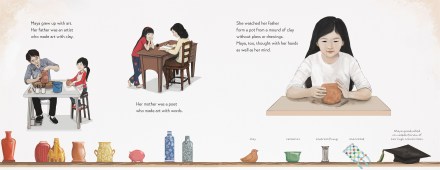
Maya’s “parents had fled China at a time when people were told what to be and how to think.” They did not want the same for their children and always encouraged Maya to be and think what she wanted. Maya grew up surrounded by art. Her father worked with clay, and her mother was a poet. Maya also liked to make things with her hands. The beautiful library where she went to college inspired Maya to become an architect.

To learn about different buildings, Maya traveled all over the world. When she was only a senior in college, “Maya entered a contest to design a memorial to honor soldiers who died during the Vietnam War.” The contest stated two rules: the memorial had to fit in with a park-like setting, and it had to include the 58,000 names of the soldiers who had died in the war. These rules resonated with Maya. She “believed that a name brings back all the memories of a person, more than a photo of a moment in time.”

celebrate-picture-books-picture-book-review-maya-lin-artist-architect-of-light-and-lines-as-young-girl

Image copyright Dow Phumiruk, 2017, text copyright Jeanne Walker Harvey, 2017. Courtesy of us.macmillan.com.

Maya visited the site where the memorial would be built. As she looked at the gently rolling hill, she envisioned a simple cut in the earth that would support a polished wall covered in names. Not only would the wall reflect those who died, but also those who came to visit and the surrounding nature. At school, Maya worked with mashed potatoes and then with clay to help her create the perfect monument. When she had finished her drawings and plans, she wrote an essay to accompany them. She wrote that her monument would be “a place to be experienced by walking down, then up past names that seemed to go on forever.”

celebrate-picture-books-picture-book-review-maya-lin-artist-architect-of-light-and-lines-with-parents

Image copyright Dow Phumiruk, 2017, text copyright Jeanne Walker Harvey, 2017. Courtesy of us.macmillan.com.

More than 1,400 artists and architects—many of them famous—entered the contest. The designs were hung in an airplane hangar anonymously for judging. Finally, the day came for the announcement of the winner. When the judges called out Maya Lin’s name and she came forward, they were surprised to find that she was so young. Maya was excited to have won, but then some people began to object to her design. Some said her “design looked like a bat, a boomerang, a black gash of shame.”

celebrate-picture-books-picture-book-review-maya-lin-artist-architect-of-light-and-lines-library

Image copyright Dow Phumiruk, 2017, text copyright Jeanne Walker Harvey, 2017. Courtesy of us.macmillan.com.

Maya was hurt by these comments, but she defended her design and, finally, it was approved. Maya worked with the architects and engineers who excavated the land and built the wall. As each granite panel was polished, engraved with the soldiers’ names, and set in place, Maya looked on. The memorial opened on Veterans Day in 1982. Thousands of people came to see it and to find the names of loved ones they had lost. As Maya approached the wall, “she searched for the name of the father of a friend. When she touched the name, she cried, just as she knew others would.” Every day since then visitors come to the wall to remember.

Maya Lin has gone on to design many more works of art and architecture that can be seen inside and outside. Each piece has a name and a particular vision. Maya wants people to interact with her art—to touch it; read, walk, or sit near it; or think about it. After each piece is finished, Maya thinks about her next work and how she can inspire the people who will see it.

celebrate-picture-books-picture-book-review-maya-lin-artist-architect-of-light-and-lines-Vietnam-War-Memorial

Image copyright Dow Phumiruk, 2017, text copyright Jeanne Walker Harvey, 2017. Courtesy of us.macmillan.com.

An Author’s Note about Maya Lin and the Vietnam War Memorial follows the text.

Jeanne Walker Harvey has written an inspiring biography of Maya Lin that reveals not only her creativity but the importance of creative freedom for children. Lin’s confidence that led her to enter the contest and then defend her winning design will encourage readers to pursue their dreams. Harvey’s lyrical storytelling reflects Maya Lin’s quiet, introspective nature, the influences that nurtured her creative spirit, and her dedication to inviting others to be part of her art.

Dow Phumiruk’s graceful, soft-hued illustrations allow children to follow Maya Lin as she grows from a girl discovering nature, constructing cardboard cities, and learning the arts from her parents to a young woman who draws inspiration from the world’s buildings and relies on her own sensitivity to guide her. Back-to-back pages of the landscape of Vietnam and the site of the memorial connect the two places for children’s better understanding. Phumiruk’s depictions of the Vietnam War Memorial also give children an excellent view of this moving monument. Her images of Lin’s other architectural work will entice young readers to learn more about her and to explore where each of these pieces can be found.

Ages 4 – 8

Henry Holt & Company Books for Young Readers, 2017 | ISBN 978-1250112491

Discover more about Jeanne Walker Harvey and her books on her website!

Learn more about Dow Phumiruk, her art, and her books on her website!

National Women’s History Month Activity

 celebrate-picture-books-picture-book-review-maya-lin-coloring-page

Maya Lin Coloring Page

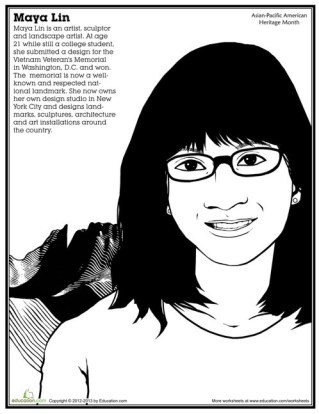
Maya Lin’s accomplishments are inspirational for all children! Here’s a printable coloring page that you can personalize and hang in your room or locker to remind you that you can reach your goals too!

Maya Lin Coloring Page

Picture Book Review

February 23 – National Tile Day

celebrate-picture-books-picture-book-review-the-world-is-not-a-rectangle-cover

About the Holiday

Today’s holiday was established just last year and celebrates that architectural accent that has given exteriors and interiors pizazz and individuality since ancient times. Made in nearly every color, pattern, and shape imaginable, tiles were once all handmade and available only to the wealthy few. Innovations during the Industrial Revolution allowed tile to be mass produced and, thus, affordable to many. Tile has become a favorite decoration in homes across the world—as any HGTV viewer knows!

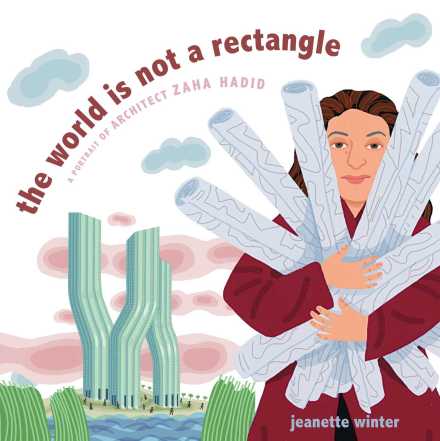
The World Is Not a Rectangle: A Portrait of Architect Zaha Hadid

By Jeanette Winter


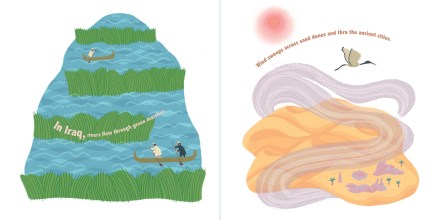
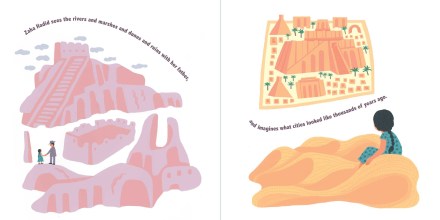
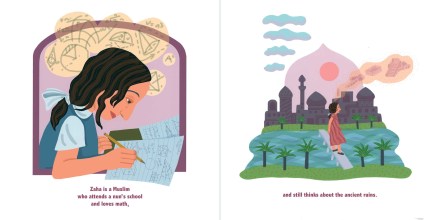
Growing up in Iraq, Zaha Hadid sees the way rivers brake up the marshland, watches when the wind sculpts sand dunes, and visits the ruins of ancient cities. At home in Baghdad, young Zaha studies the patterns of her Persian carpet, noticing “how the shapes and colors flow into each other, like the dunes and rivers and marshes” and dreaming of designing her own cities.

celebrate-picture-books-picture-book-review-the-world-is-not-a-rectangle-rivers

Copyright Jeanette Winter, 2017, courtesy of Beach Lane Books.

In her room, she arranges and rearranges the furniture, creates her own clothes, and comes up with ideas. When Zaha grows up, she moves to London to study to be an architect. After graduation, she opens an office in an old school building—Studio 9. Zaha is joined by some friends and they work tirelessly on their architectural drawings.

celebrate-picture-books-picture-book-review-the-world-is-not-a-rectangle-ruins

Copyright Jeanette Winter, 2017, courtesy of Beach Lane Books.

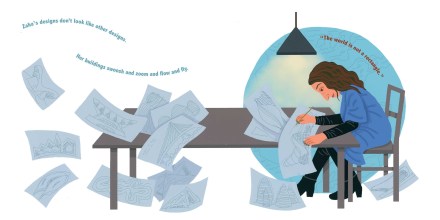
“Zaha’s designs don’t look like other designs. Her buildings swoosh and zoom and flow and fly. ‘The world is not a rectangle’” she says. But Zaha cannot find anyone to build her designs; everyone says they are impossible. Finally, one of Zaha’s designs is chosen from among all the others in a competition. When it is presented to the city’s committee, however, they reject it. Another competition is held, and Zaha’s design wins again. The city rejects it again. Zaha is as strong as her name Hadid, which means iron in Arabic, and she continues to design plan after plan.

celebrate-picture-books-picture-book-review-the-world-is-not-a-rectangle-school

Copyright Jeanette Winter, 2017, courtesy of Beach Lane Books.

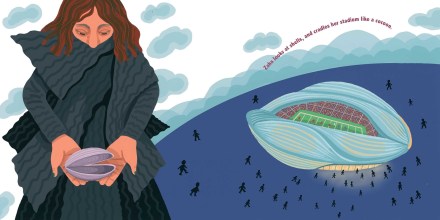
Then one by one her plans are accepted. She “remembers the grasses in the marshes swaying” and designs tall towers “dancing like grass.” In the desert, she creates a building that allows the wind to blow over and around and through it. The sports stadium she imagines has the beauty of a cocoon. Remembering the stones in a stream, Zaha “builds an opera house like the pebbles in the water. Inside the opera house, a singer is the pearl in the oyster shell.”

celebrate-picture-books-picture-book-review-the-world-is-not-a-rectangle-designs

Copyright Jeanette Winter, 2017, courtesy of Beach Lane Books.

The swirling stars in far-away galaxies inspire a complex of connected buildings, and the undulating waves become the model for a bridge that seems to move with the water. From looking at the Alps, Zaha fashions a museum built “inside a mountain peak with windows to see the sky and the valleys” and a ski jump that “reaches to the sky like the mountain.” From the “jungle and ancient wood temples,” Zaha draws inspiration for “a wooden building to remember a faraway war.”

celebrate-picture-books-picture-book-review-the-world-is-not-a-rectangle-stadium

Copyright Jeanette Winter, 2017, courtesy of Beach Lane Books.

With every building, Zaha gets busier and busier more than four hundred architects are working in that old school building, “designing, planning, engineering, and making models of Zaha’s visions.” But Zaha’s ideas don’t stop at buildings. She believes “you should do what you like,” so she designs doll houses, shoes, chairs, sculpture, and benches. No matter what she designs, Zaha’s early memories return. She thinks of “the beauty of the landscape—where sand, water, reeds, birds, buildings, and people all somehow flow together” and never loses her belief in the impossible.

Even though the light in Zaha’s office is now dark, “her architects keep their lights on—designing, planning, engineering, and making models of her visions, keeping her flame blazing bright.”

celebrate-picture-books-picture-book-review-the-world-is-not-a-rectangle-night

Copyright Jeanette Winter, 2017, courtesy of Beach Lane Books.

Following the text, readers can learn the name and location of each building, discover more information about Zaha Hadid’s life and awards, and read more of her own words about her work.

Jeanette Winter shines a light on an architect who will inspire children not only with her work but with her original ideas, self-confidence, and refusal to compromise on her beliefs. Winter combines straightforward passages of Zaha’s childhood and early professional struggles with lyrical phrasing that describes her influences in nature and her soaring buildings. Sprinkled throughout are Zaha’s own words that define her ideas and ideals.

In her dreamlike illustrations, Winter clearly depicts Zaha Hadid’s inspirations and the way in which she interpreted each natural motion, shape, or phenomenon in steel, glass, concrete, or wood. Winter’s pages swirl, shimmer, flow, and soar, and Zaha is always there, seeing, thinking, envisioning, and drawing.

An excellent biography of a strong and creative woman who has designed some of the world’s most beautiful and original buildings, The World Is Not a Rectangle: A Portrait of Architect Zaha Hadid would be a superb addition to classroom discussions and home story times.

Ages 5 – 10

Beach Lane Books, 2017 | ISBN 978-1481446693

National Tile Day Activity

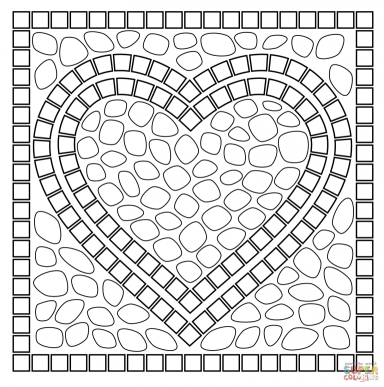
celebrate-picture-books-picture-books-review-heart-mosaic-coloring-page

I (Heart) Tiles! Coloring Page


With colorful tiles you can make beautiful pictures. Put your imagination to work and color this I (Heart) Tiles! Coloring Page!

Picture Book Review