April 16 – National Stress Awareness Month

About the Holiday

Stress Awareness Month has been held every April since 1992, when it was founded by the Health Resource Network. The holiday aims to help people identify the stress factors in their own life as well as to assess how all members of their family are handling various pressures. The goal is for everyone—either individually or together—to look for ways to manage their feelings while adding positive changes to their life. Talking about pressures with kids and doing simple activities with them can often help lessen the load. Sharing today’s book is a wonderful place to start!

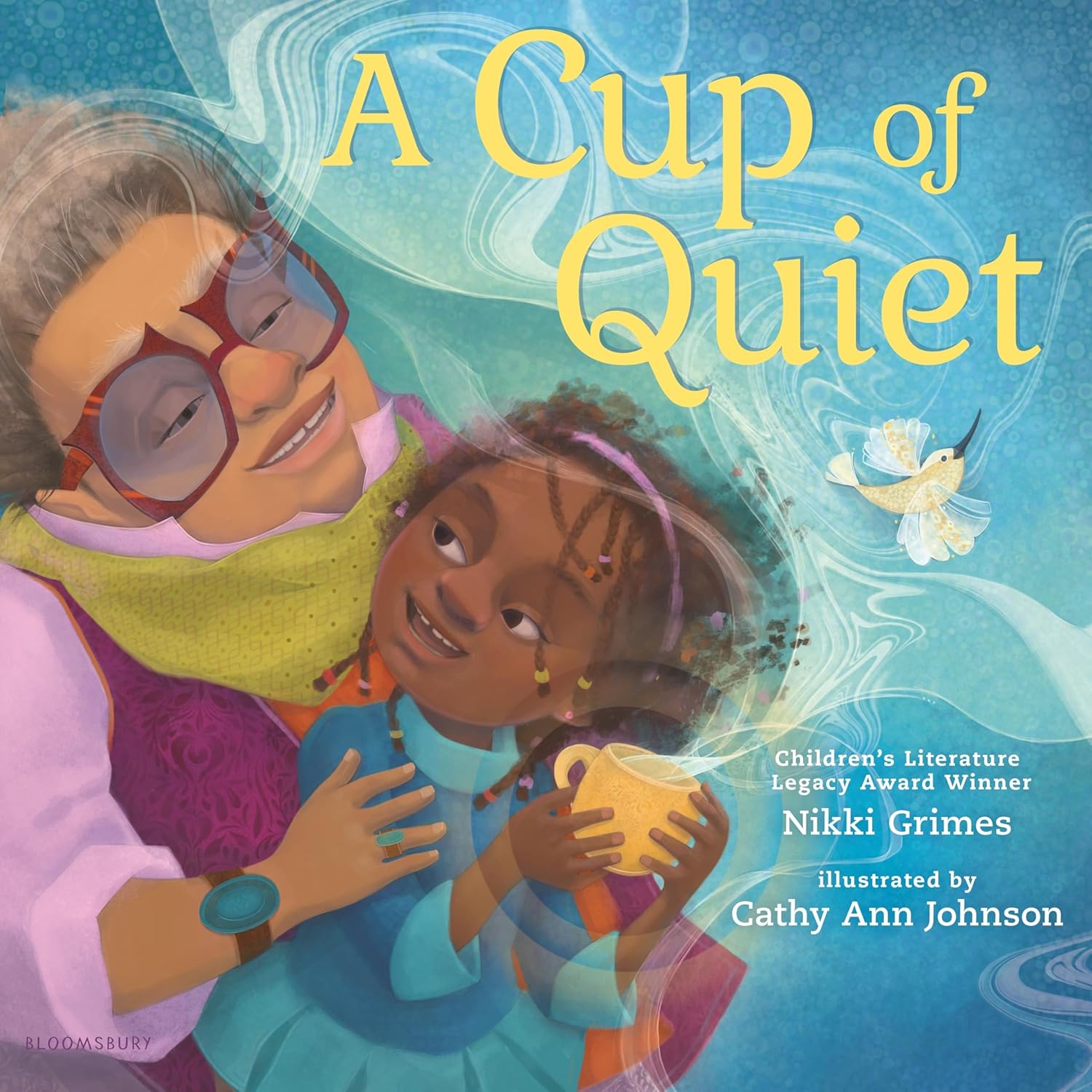
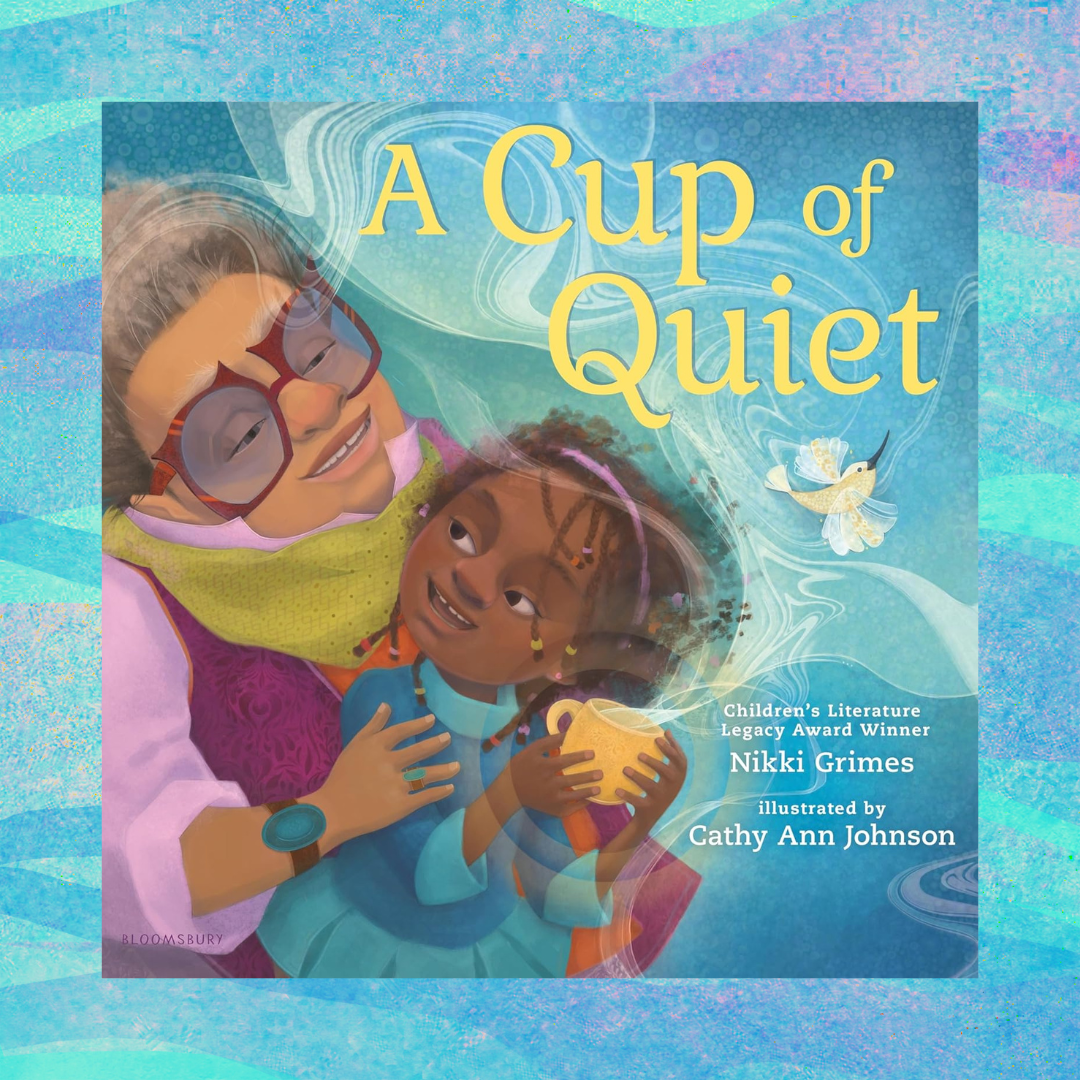
A Cup of Quiet

Written by Nikki Grimes | Illustrated by Cathy Ann Johnson

“You ever hear of smiles?” The young narrator’s talking about the two-week “summer camp” she gets to spend with her grandmother every June. In that breathless excitement of children, she reveals the visits give her and her Grandma time to “stitch sock puppets and put on shows, bake Martian Cake that tastes like banana bread and play tea party in the garden with my dolls.” But today, they’re acting out a story—that is until Grandpa’s hammering and loud music become just too much.
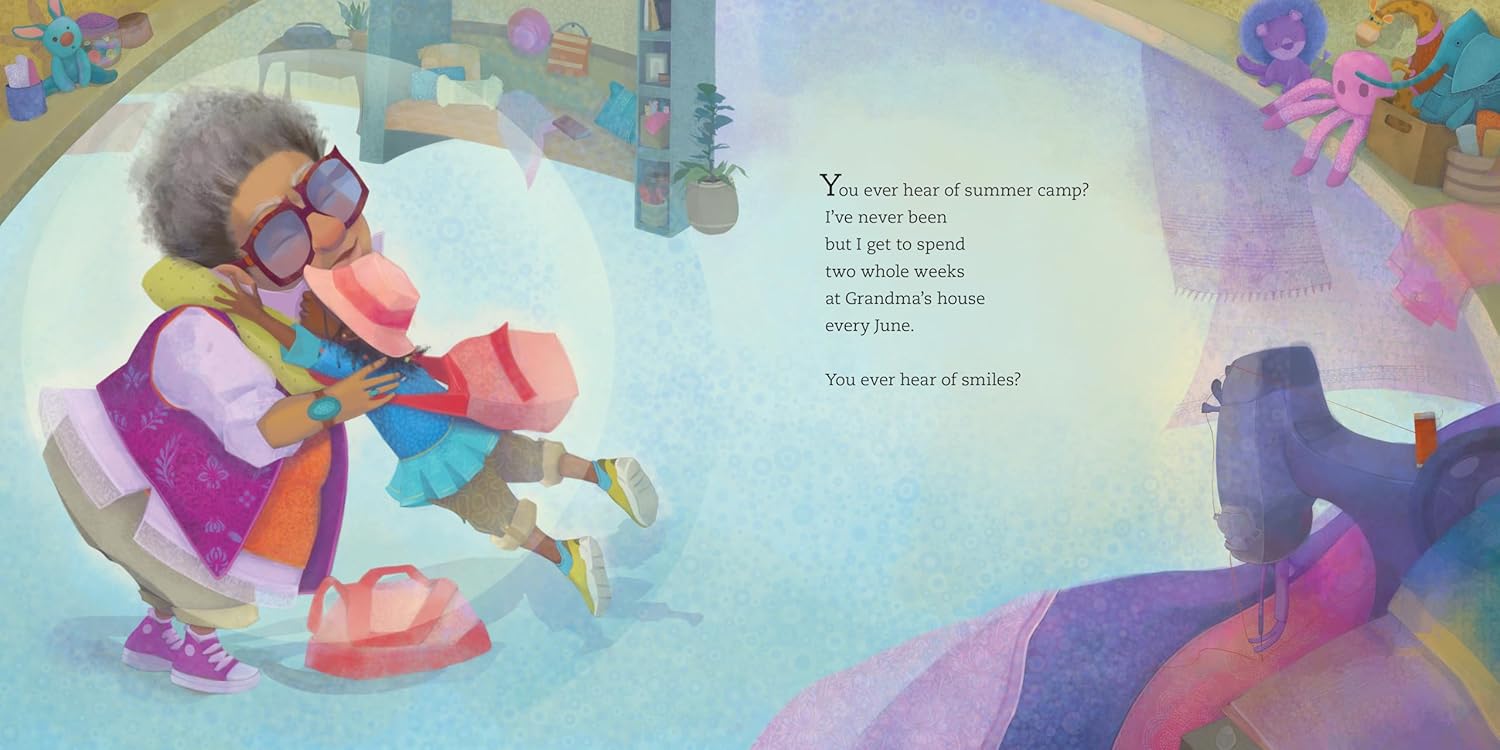
Illustration © 2025 by Cathy Ann Johnson, text © 2025 by Nikki Grimes. Courtesy of Bloomsbury Children’s Books.

Grandma flops into her chair with an “Ugh!” and tells her granddaughter she’s “thirsty for a cup of quiet.” This elicits a giggle and a bit of disbelief, but Grandma’s done with the noise and leads her granddaughter outside to the porch swing. But the city outside their house is just as noisy as Grandpa inside. A trip to the backyard garden is needed. Here, Grandma may be happy, but the narrator is getting fidgety.
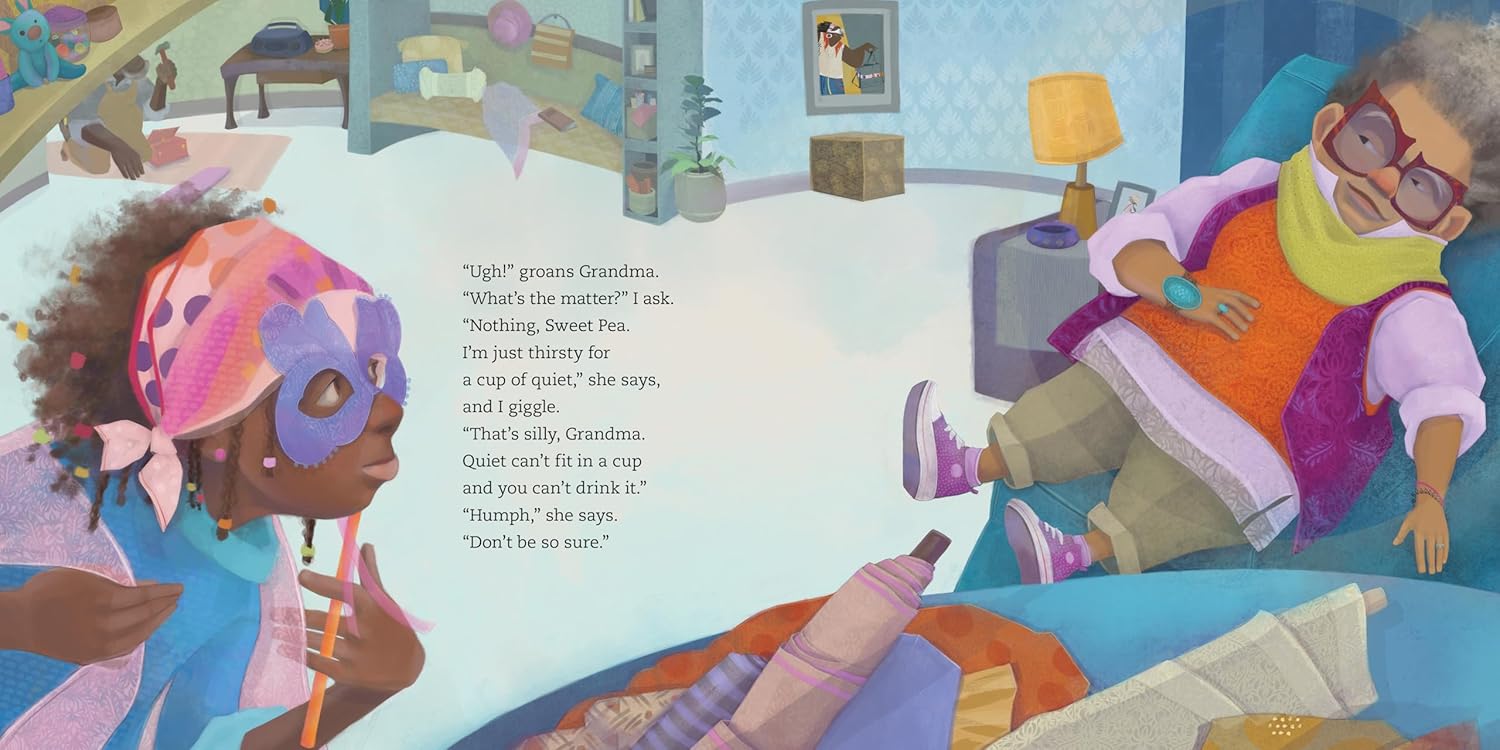
Illustration © 2025 by Cathy Ann Johnson, text © 2025 by Nikki Grimes. Courtesy of Bloomsbury Children’s Books.

Grandma gives her the side-eye and then hands her “an invisible cup” with instructions to “‘walk around the garden and fill this up with any sounds you hear.'” Up for this imaginative challenge, the girl first visits the rose bushes, where a bee is working and “snap[s] up a handful of his buzzing and drop[s] it in the cup.” On the ground below she sees a lizard and “spoon[s] up” the sound of its “scuttling across a dried leaf.” She begins paying more attention to the nature around her and listening harder to fill her cup.
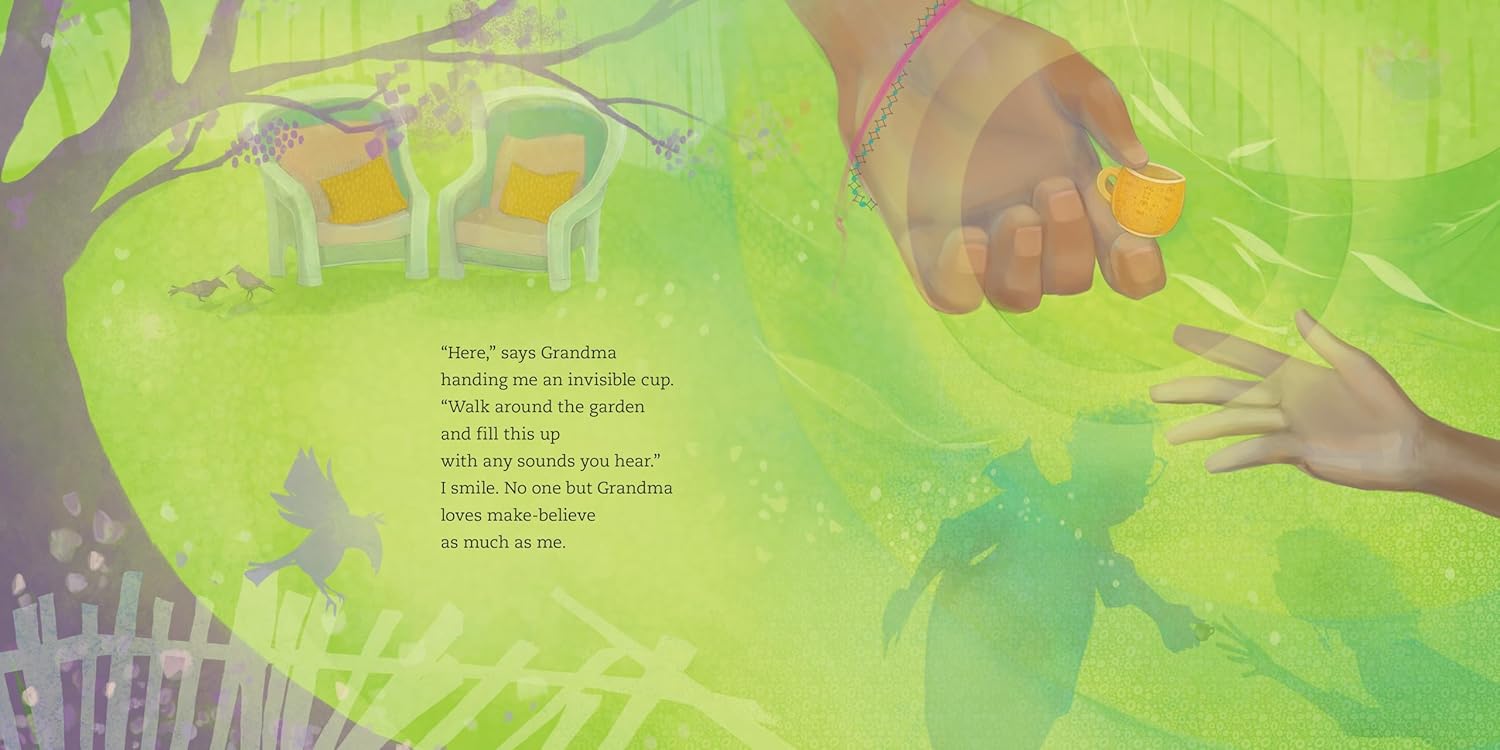
Illustration © 2025 by Cathy Ann Johnson, text © 2025 by Nikki Grimes. Courtesy of Bloomsbury Children’s Books.

A sudden thunderclap precipitates a downpour, but before she runs inside with Grandma, the narrator adds the first pings of raindrops on the roof to her nearly full cup. After drying off and changing, it’s finally time to enjoy a long sip from that make-believe cup. Ahhhh! So “‘refreshing!'” Her granddaughter thinks so too. Still, she has an observation: “‘… your quiet is awfully noisy!'” Grandma smiles and says, “‘I know, but Nature’s noise is peaceful, and I love that.'” Her granddaughter agrees—”You ever hear of perfect?”
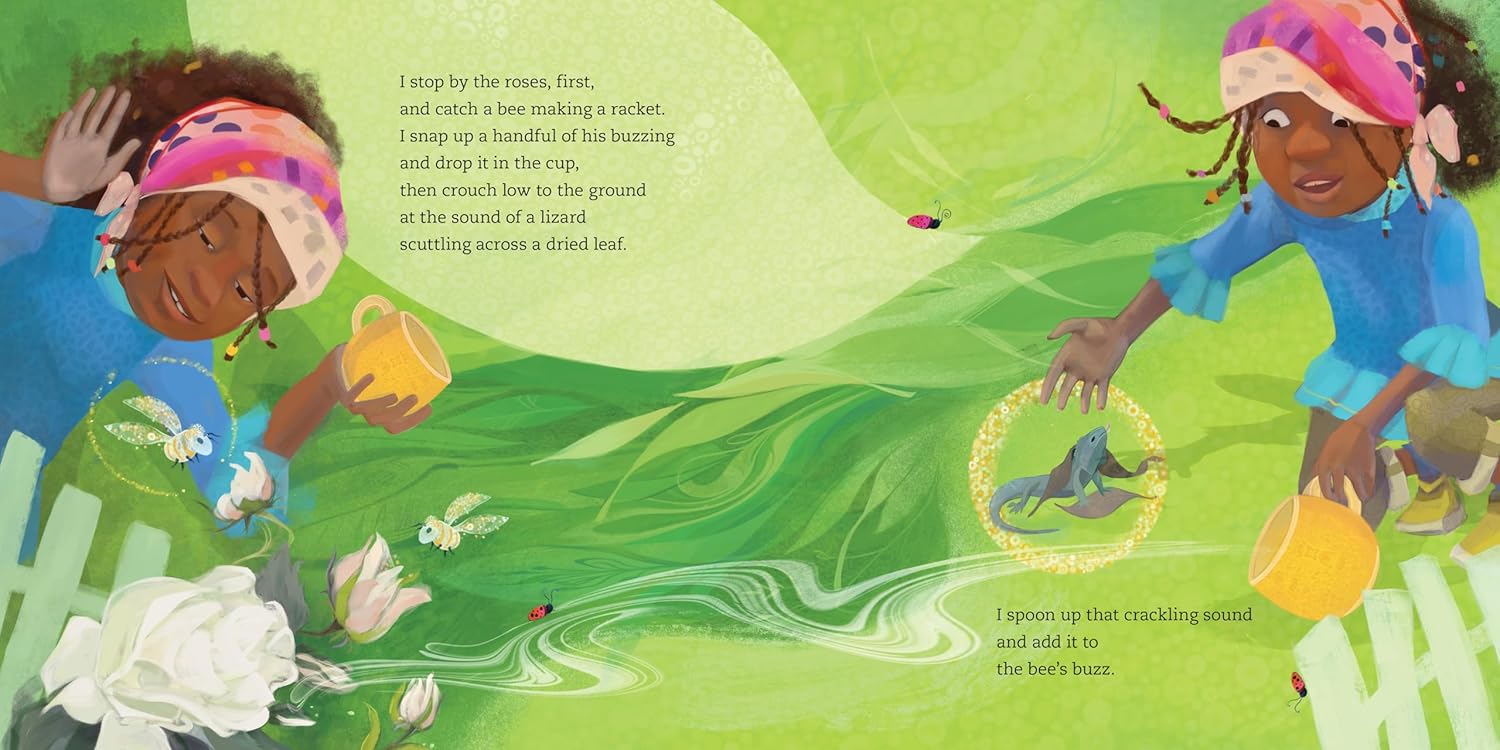
Illustration © 2025 by Cathy Ann Johnson, text © 2025 by Nikki Grimes. Courtesy of Bloomsbury Children’s Books.

Nikki Grimes invites readers to join in with a grandmother and granddaughter for a day of “summer camp” where love abounds. The easy banter between the two and affectionate gestures—such as Grandma’s playful tug on her granddaughter’s braid and the jump-into-her-arms hug the girl gives her grandma—immediately envelope both child and adult readers in this pair’s warm relationship. Grimes’ inventive call to interact with nature and find comfort there will have kids carrying their own imaginary cups to fill and spark other creative games and activities no matter where they live. 

Cathy Ann Johnson’s collage-style, mixed-media illustrations sweep readers into the creative and close-knit atmosphere of Grandma’s house during a week-long visit by her granddaughter. The vibrancy of the pair’s connection is shown through the colorful textures of the fabrics they use for crafting. The allure and importance of nature is likewise emphasized through the vivid greens and swirling motion in the grandmother’s back garden as well as the shimmering beauty of the creatures from which the girl collects sounds. The grandmother and granddaughter’s close bond is evident through their hugs, the way they sit close together (even touching hands while sitting in separate garden chairs), and the care Grandma provides after the rainstorm. The grandmother’s expressions are amusing in their honesty, and the look of wonder in the granddaughter’s eyes is inspirational.

Lyrical, playful, and full of love, A Cup of Quiet is a warm hug of a read aloud that adults and kids will love sharing again and again. The book is a must addition to school library, public library, and home collections.

Ages 3 – 7

Bloomsbury Children’s Books, 2025 | ISBN 978-1547610730

A Talk with Nikki Grimes

Photo Credit Marchel Hill

New York Times bestselling author Nikki Grimes was inducted into the Black Authors Hall of Fame in 2023. Her honors include the CSK Virginia Hamilton Lifetime Achievement Award, the ALAN Award for significant contributions to young adult literature, the Children’s Literature Legacy Medal, and the NCTE Award for Excellence in Poetry for Children. Author of the Coretta Scott King Award-winner Bronx Masquerade, and five Coretta Scott King Author Honors, she won the Printz Honor and Sibert Honofor her memoir Ordinary Hazards. Her latest titles include Garvey’s Choice:The Graphic Novel, a School Library Journal 2023 Best Book; Lullaby for the King, one of Book Riot’s 25 Best Christmas Books of All Time; and A Walk in the Woods, recipient of 8 starred reviews, and 11 Best Book listings for 2023, including the New York Times, NPR, and Smithsonian Magazine. Ms. Grimes lives in Corona, California. You can visit her at nikkigrimes.com.

Today, I’m honored to be talking with Nikki Grimes about the inspiration behind A Cup of Quiet, how she develops her characters, the joys and challenges of writing for multiple age groups, and much more!

A Cup of Quiet is a perfect book for adults and children to share, not only for outside noise but for times when life gets overwhelming.  Tell us about the inspiration for this story and a little about its journey to publication.

There’s a certain quality of quiet in nature that I’ve always found soothing. I need silence for my work because it allows me to concentrate fully when I write. But nature’s quiet is different. It’s rich with sound, but most of it requires you to pay close attention. To pick up the whir of a hummingbird’s wings, you have to be still, and you have to strain to hear it. The stillness that’s required is soothing, and the sounds you become attuned to are a healing balm. I wanted to write a story that celebrated those sounds, and the beauty of that kind of quiet.

In the early stages of the book, I’d go out to my garden and listen carefully, and I’d make mental notes of all that I heard that day. I’d jot everything down until I had a good list of sounds to play with.

My main character lived in the city and didn’t spend much time out in nature there, though she occasionally went to the park. But every summer, she’d travel out of the city for long visits with her grandmother who had a garden, and whose house was surrounded by trees, and greenery.

The story grew from there, and I knew immediately that I wanted Bloomsbury to publish the book, and I also knew intuitively who I wanted to illustrate—namely Cathy Ann Johnson. This teaming has proven to be perfect, all around.

If I had a cup to fill with quiet today, I’d add my cat’s little sleepy, dreamy purrs, the whoosh of cars passing my house, the rustle of squirrels in the trees, and a drop of water from my bubbling teapot. What would you put in your cup of quiet today?

I would put a bee’s buzz, the wind rustling leaves of a tree, the whir of a hummingbird’s wings—all the sounds I chose for A Cup of Quiet. Those are some of the sounds I listen for, and pay attention to, whenever I immerse myself in nature.

Cathy Ann Johnson’s mixed-media illustrations are a wonder of color, motion, humor, and the love between grandmother and granddaughter. What was your first impression when you saw her illustrations? Do you have a favorite spread?  Why is it a favorite?

First, I was over the moon for the grandmother! She had energy, and spunk, and style. I loved her!  And I loved her colors. Then, as I saw the book’s interiors, I was absolutely thrilled! Cathy Ann’s images, and their movements, were as lyrical as my own words. Our partnership on the page was the proverbial match made in heaven. I would be loath to choose a favorite spread.  Each one has its own magic.

A Cup of Quiet starts out “You ever hear of summer camp?”—a disarming introduction to the child narrator that’s so true to the way kids approach conversation. The dialogue in all of your work sings in this way with the kind of honesty, humor, emotion, and depth that makes your characters seem almost physically with the reader.  I’m curious about your process in developing your characters and stories.

My characters begin with a voice. I’ll hear a scrap of dialogue in my head—nothing extensive, just a few lines. The inspiration might come from the catalog of voices I’ve stored in memory over a lifetime of listening to people around me, or it might be the voice of a particular person in my life whose voice is special or one that has simply stayed with me for a long time. Either way, the voice feels familiar. I’ll jot down that scrap of dialogue as reference, then I’ll begin developing a character sketch and that character’s backstory. I never know how much or little of the backstory I’ll use, but that information guides me as I write. To nail the voice, I have to pay close attention. I climb into the character’s skin and look at the world from his or her perspective and write from that place, attuning myself to that character’s age, birth place, geographical region, quirks, fears—all of it guides me as I make decisions about what that character will say, how they’ll respond to various stimuli that shows up in the plot. If I step wrong, the character will bristle and call me out on it, almost audibly. “Do not put those words in my mouth! I would never say that!” or “I don’t speak like that!” It’s kind of eerie, actually. Characters can be very bossy!

You write books for all ages, from picture books to middle-grade to young adult. Can you talk a bit about the joys and challenges of each? What is one message you want readers in each age category to take away from your books? 

Each age format comes with its own set of limitations, constrictions, and also its own range of possibilities. I love mixing it up. Writing for different age groups keeps me on my toes. The picture book gives you very little room to develop character and plot, while, say, a young adult novel gives you so much unlimited space that you run the risk of overwriting, and of getting lost in the weeds of your plot, or tangled in the layers of your story. Being consistent with your tense or bookending your story in a way that is controlled and satisfying and that feels organic, is much more challenging in the long form of middle grade or YA storytelling.

Language choices are tricky, and different with each age group as well. You walk the line between accessibility and sophistication, between simplicity and complexity. The same variance is true of the emotional components appropriate for each age group as well. For those reasons, I think it’s wise to focus on one genre at a time until you work through the quirks of that genre and figure out a process that works for you. Then, by all means, go on and experiment with the next! It’s tough work, but I like that. For me, easy is boring!

As for your question about messages, I don’t write messages. I write stories. And a well-written story offers a number of ideas a reader might take away. It all depends on the particular reader. We bring ourselves to the page, as readers. Our own experiences, personalities, and what we need at a particular point in time, color what we see, what we notice, and what we ultimately take from a story. Of course, as the creator, I have a certain idea, or theme, I intend to weave into my story—and, by the way, it’s hard to know whether or not I’ve always succeeded—but I don’t worry about whether the reader will pick up on the specific note I had in mind. What matters to me is that, somewhere in the many layers of my story, readers find something valuable with which they resonate. Quite often, the things they find come as a surprise to me, but that’s okay. So long as they walk away with something of value to them, that’s all I can ask for.

While I read through your website, your generosity in sharing so much of your life really stood out.  I’m sure young readers and writers would love to know about when you first began writing and how you were recognized for your talent, having your first public reading when you were 13.  Could you share a little of our writing background with us?  What advice would you give to children and young adults who love to write and want to pursue it?

As I reference in my memoir Ordinary Hazards, and elsewhere, I started writing in earnest when I was six years old, and I did so because I would have burst, otherwise. I was so filled with the emotional and mental poison of anger, and pain, and confusion. I was desperate to get my feelings out, somehow. So, I began to pour those feelings onto a page. That’s how my writing began, but as I reached my teens, the idea of possibly pursuing writing as a career took root. I was encouraged by my father, by my sister, by the friends I dared share my poetry with, and later, by a couple of teachers.  At the same time, though, I also had peers who laughed me off the block for daring to dream of such a thing at all. But I decided early on to surround myself with other young people who nurtured dreams and goals of their own. Everyone else, I cut out of my circle. I refused to absorb the negativity of naysayers.

I encourage young people who have a heart for writing to read voraciously, and to read across genres.  Every genre has something to teach you, and the quality of your writing reflects the quality, variety, and breadth of your reading. So read, read, read.  

Next, write, write, write because writing is a muscle. You have to exercise that muscle if you want to become strong. There is no shortcut to excellence. And if you’re not going to pursue excellence, why even bother? Excellence is what your readers deserve. Remember: the world doesn’t need mediocrity, no matter what field you choose to pursue.

In addition to your many awards over the years, you received the Children’s Literature Legacy Award in 2017 and the Coretta Scott King-Virginia Hamilton Award for Lifetime Achievement Award in 2022. In 2023 you were inducted into the Black Authors Hall of Fame.  What does this recognition mean to you?

Recognition is affirmation, and who doesn’t appreciate that?  But an artist should never be satisfied to sit on their laurels. I use this recognition as fuel to keep pushing forward, to continue to stretch myself as an artist to try genres I’ve never attempted before, to explore forms of poetry I find challenging. Doing so keeps me alive, and grown, and excited about the work I’ve been doing professionally, now, for nearly 50 years. That way, even as I get old, my work never does!

What books of yours can readers look forward to next?

I have a new Dyamonde Daniel chapter book coming out in June.  It’s titled Loser, and it’s about healthy and unhealthy competition, and where to draw the line, especially when you’re competing with your best friend.

I also have a new picture book on the horizon, titled Stronger Than, a collaboration with Choctaw author, Stacy Wells and illustrated by E. B. Lewis, who I’ve worked with before. In this story, a Black Choctaw boy discovers the history of one ancestor who survived the Trail of Tears, and another ancestor who survived the Tulsa Race Massacre. Through their stories, he learns that he comes from stronger stock than he knew, and this knowledge helps him overcome one of his worst fears. I’m excited about both books, for very different reasons.

There are a few more books in production, as well, but it’s too soon to talk about those.

Is there a question I didn’t ask that you wish I had?  What would your answer be?

No. I think I’m about talked-out, for the moment!  This has been fun, though. And I hope you and the young readers in your life enjoy A Cup of Quiet.

Thank you so much, Nikki! It’s been terrific chatting with you! I wish you a wonderful spring and summer of nature’s refreshing quiet.
You can purchase A Cup of Quiet from these booksellers

Amazon | Barnes & Noble | Bookshop (discounted books and support for your local independent bookstore)

Picture Book Review

February 11 – National Inventors’ Day

About the Holiday

Today’s holiday was established in 1983 and is celebrated on February 11 to honor the birthday of Thomas Edison. The day recognizes the spirit of inventors who look at life a little differently, let their imagination fly, and create a new . . . something! While we often think of inventions that change the world on a day like today, simple ideas implemented at home also make a big impact—or just lead to lots of fun. If you and/or your kids enjoy being creative, today’s the day to tinker around with your ideas. 

Thanks to Eerdman’s Books for Young Readers for sharing a digital copy of The Quiet One with me!

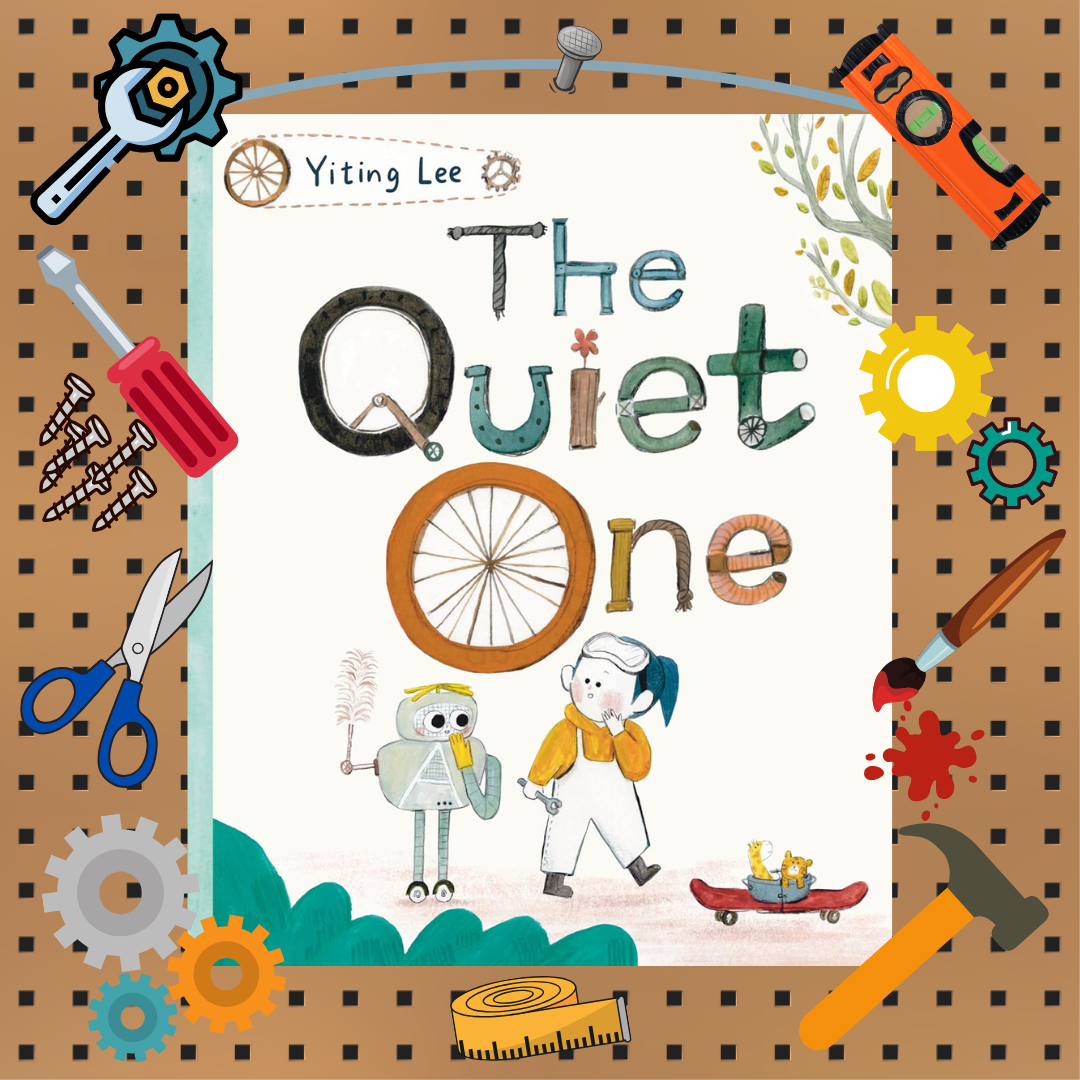
The Quiet One

By Yiting Lee


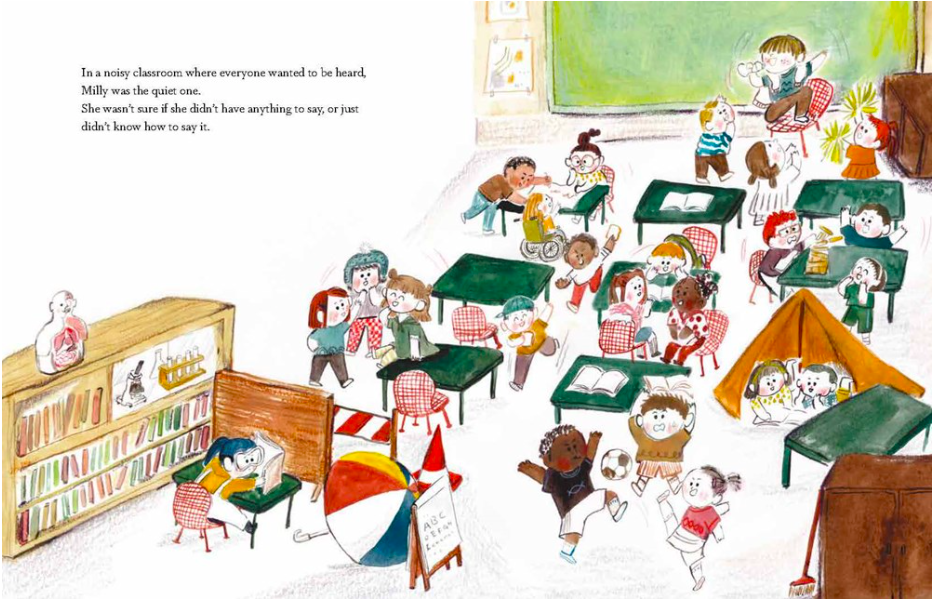
In her noisy classroom, Milly was the quiet one. She wasn’t exactly sure why she didn’t join in with her talkative classmates or why she especially dreaded Show and Tell, which was coming up on Friday. She most liked hanging out in her “secret place”—a shed filled with all sorts of things people didn’t need anymore or had forgotten. Milly was happy in her own company and liked to entertain herself by transforming other people’s old junk into amazing inventions like a running wheel for the shed’s mice and a working train from unused roller skates.

Copyright Yiting Lee, 2025. Courtesy of Eerdmans Books for Young Readers.

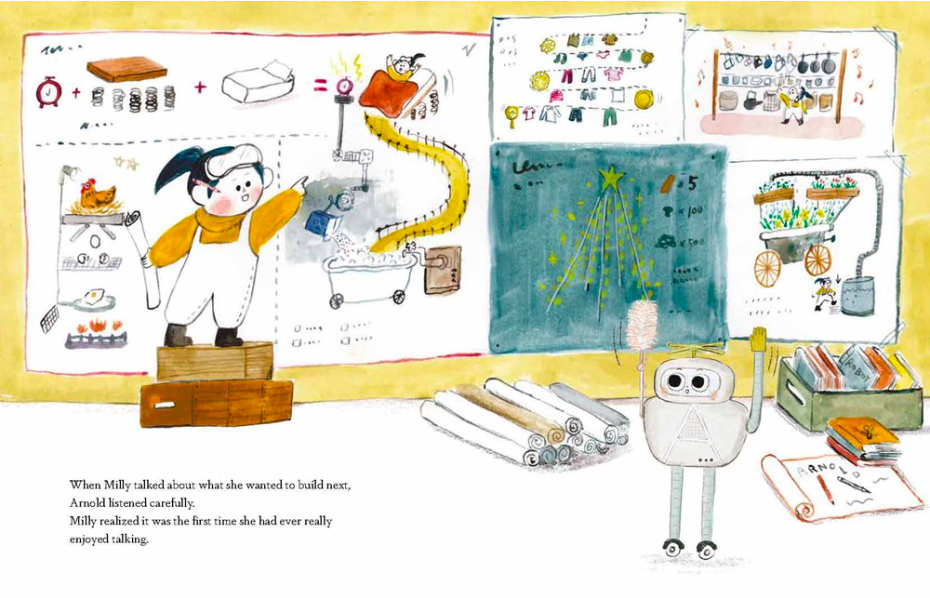
Then Milly found a broken cleaning robot. Getting out her toolbox, two caster wheels, and other supplies, Milly went to work. When she was finished and rebooted the robot, she was astonished to discover that it could talk—”Hi, I’m Arnold,” it said. Milly told Arnold her name. All afternoon Milly and Arnold worked to turn Milly’s secret place into a playground. Then as Milly explained what she wanted to build next, she “realized it was the first time she ever really enjoyed talking.”

Copyright Yiting Lee, 2025. Courtesy of Eerdmans Books for Young Readers.

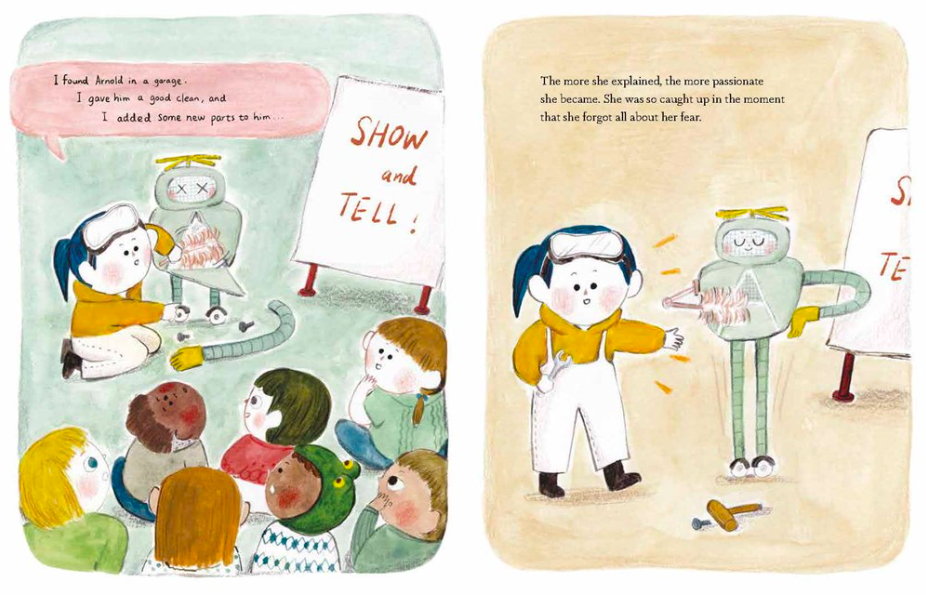
Milly was still nervous about Show and Tell, but Arnold told her he would go with her and she could talk about him. On Friday, under the gaze of her classmates who seemed to loom above her, Milly froze. Arnold came to the rescue. He introduced himself and began: “Milly made me out of . . . of . . .”. He stopped, not knowing what came next. But Milly found her voice and finished the story, becoming more passionate about her subject as she went along. In fact, “she was so caught up in the moment that she forgot all about her fear.” Her classmates thought Milly was amazing, and Milly, later playing with her new friends on the playground she and Arnold had built, “was happy that she had been heard.”

Copyright Yiting Lee, 2025. Courtesy of Eerdmans Books for Young Readers.

Yiting Lee’s story offers reassurance to quiet, introspective children as well as to those who feel anxious when talking in or to a group. Through Milly’s experience, such children may feel encouraged to talk about a special skill, experience, or talent or to share the “stage” with a supportive friend who can help them overcome their fear. Lee also reminds readers that—as a favorite teacher of mine liked to say—”still waters run deep”, and that beneath a quiet exterior often bubbles unique perspectives, creativity, and loyal friendship.

Lee’s charming, cartoon illustrations contrast how Milly shrinks in her raucous classroom with how she comes alive in the junk shed—for her, a lab full of exploration, inspiration, and energy. Readers will enjoy stopping to look over all the images of Milly’s inventions and be inspired to create a few themselves.

A fast-paced, multilayered and inspiring story to spark confidence, foster understanding, and build connections among kids of all talents, The Quiet One offers a valuable resource for classrooms and school libraries and is a heartening choice for home and library collections.

Ages 4 – 8

Eerdman’s Books for Young Readers, 2025 | ISBN 978-0802856418

About the Author/illustrator

Yiting Lee was once the quiet one in class, much like Milly. She followed her love of art to earn her MA in children’s book illustration at the University of Cambridge. Originally from Taiwan, Yiting currently lives in Surrey, England, where she has illustrated books like What’s the Rush? (Princeton Architectural) and Little Dinosaurs, Big Feelings (Magic Cat). Follow her on Instagram @yitinglee_art and visit her website at yitinglee.com.

National Inventors’ Day Activity

celebrate-picture-books-picture-book-review-inventor's-box

Inventor’s Box


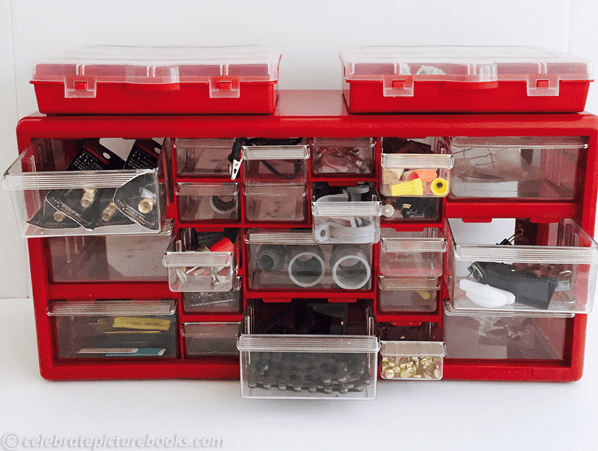
For young inventors or tinkerers, having bits and pieces of this and that as well as some tools to work with all stored in one place encourages creative thinking. Filling the drawers of a tool case, a tool box, or a tackle box with items like springs, brads, wheels, hinges, plastic piping, pieces of wood, glue, tape, and simple tools can spark a child’s imagination. Take your child along to the craft or hardware store and choose items together!

You can purchase The Quiet One at these booksellers

Amazon | Barnes & Noble | Bookshop (to support your local independent bookstore)

Picture Book Review

January 15 – It’s International Creativity Month


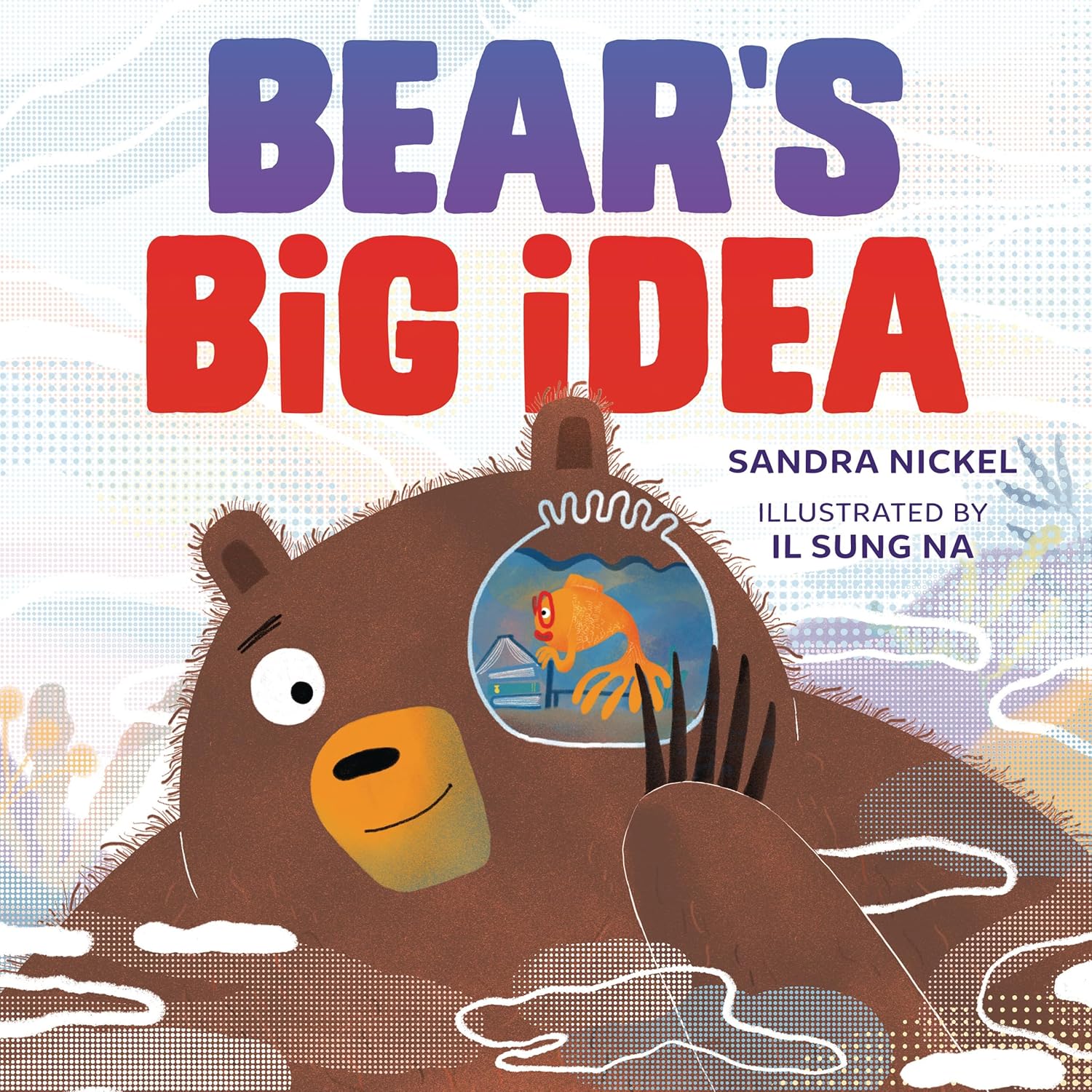
celebrate-picture-books-picture-book-review-bear's-big-idea-cover

About the Holiday

Are you an artist, a writer, a decorator, a chef? How about a floral arranger, a woodworker, a fashion designer, or a gardener? Inside almost every heart lies a desire to create. Whether you use your ingenuity in your job or as an escape from the routine, this month celebrates all that is innovative. Sometimes this comes not in something you can see or touch but in a new thought or novel way of solving a problem—as seen in today’s book!

Thanks to Carolrhoda Books and Barb Fisch at Blue Slip Media for sharing a copy of Bear’s Big Idea with me! All opinions on the book are my own.

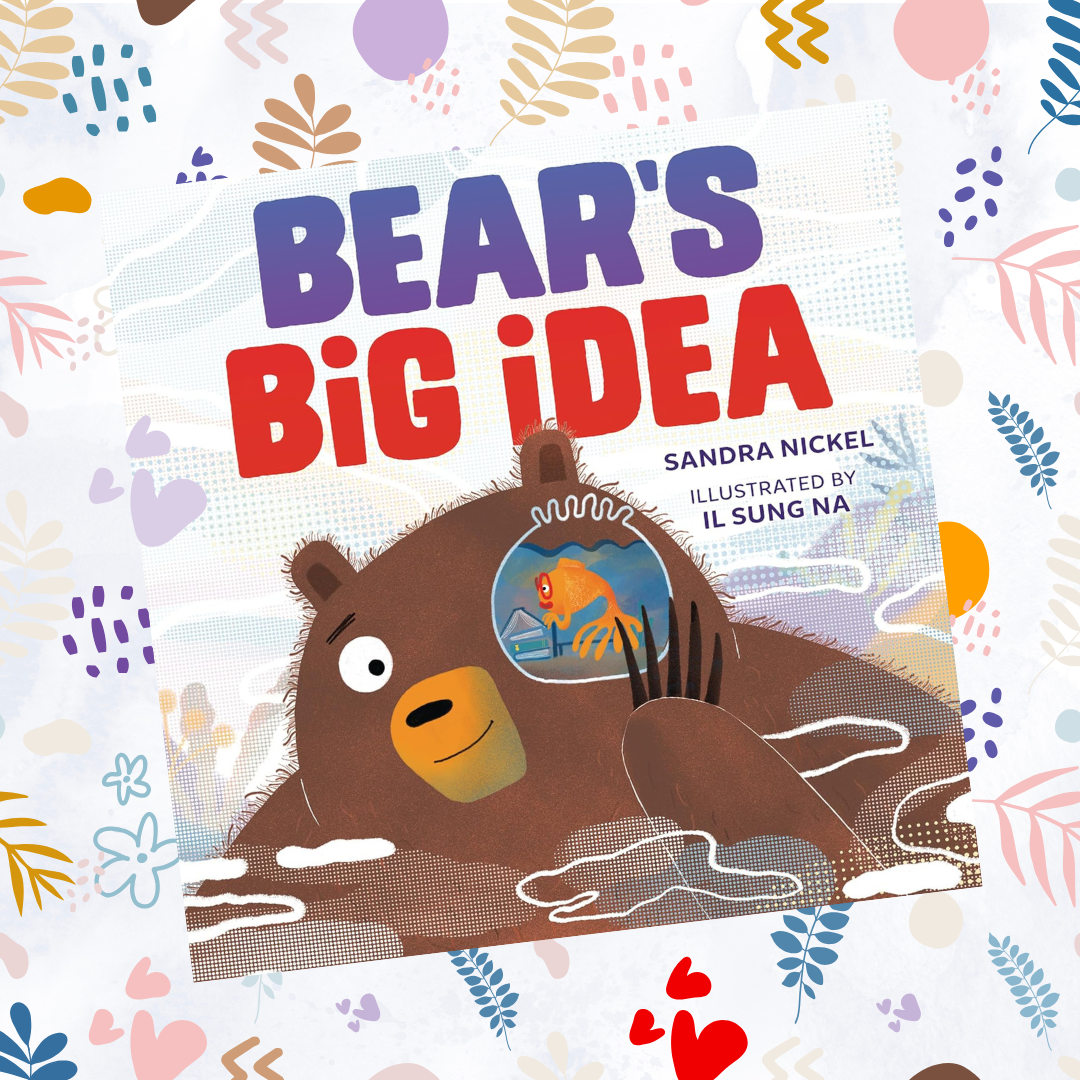
Bear’s Big Idea

Written by Sandra Nickel | Illustrated by Il Sung Na


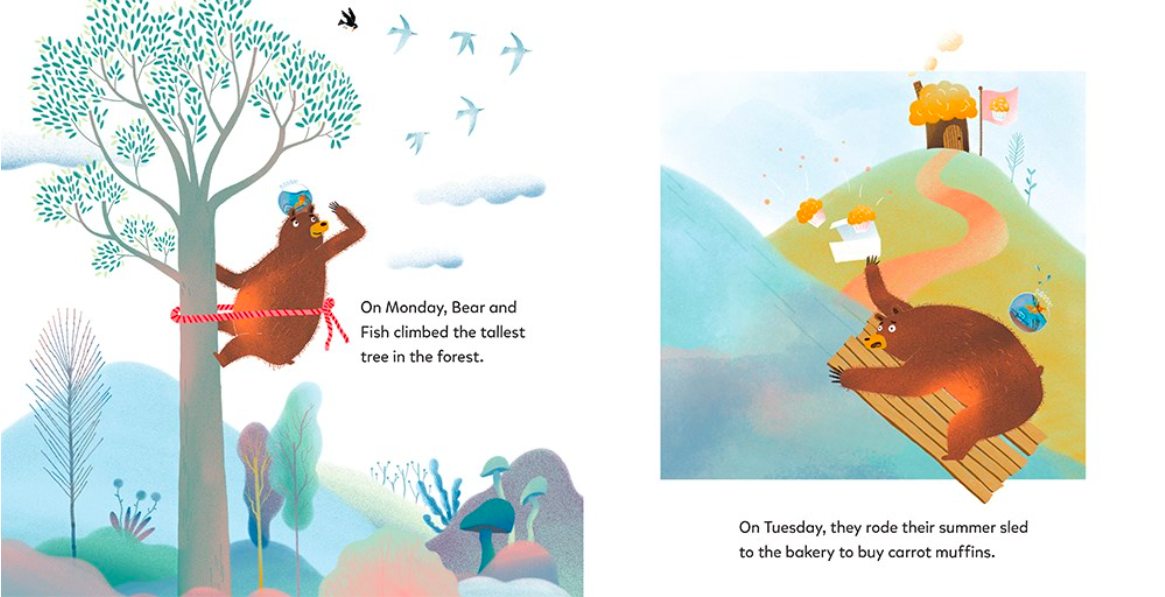
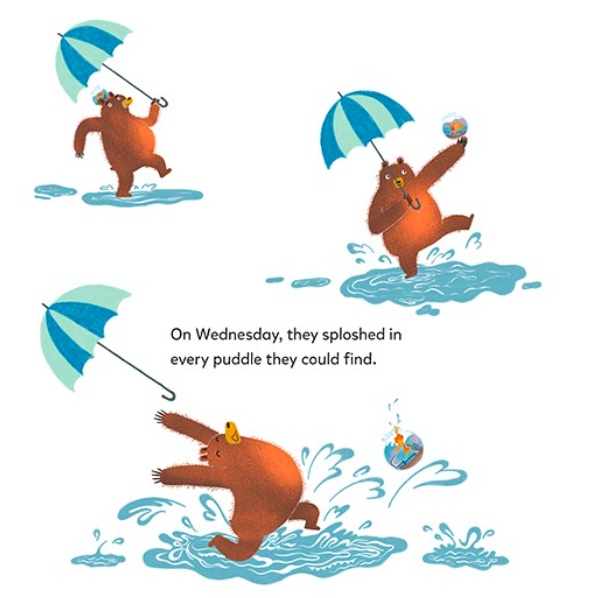
Fish and Bear were best friends. They did everything together, and usually—well, always—Fish was the one with the ideas. “Every morning, Fish would wake up, put on her glasses, and just like that, she would know the perfect thing to do.” Every day of the week, Fish found something—a rope, a sled, an umbrella, and a blanket—and dreamed up an innovative way to have fun with it.

celebrate-picture-books-picture-book-review-bear's-big-idea-Monday

Image copyright Il Sung Na, 2024, text copyright Sandra Nickel, 2024. Courtesy of Carolrhoda Books.

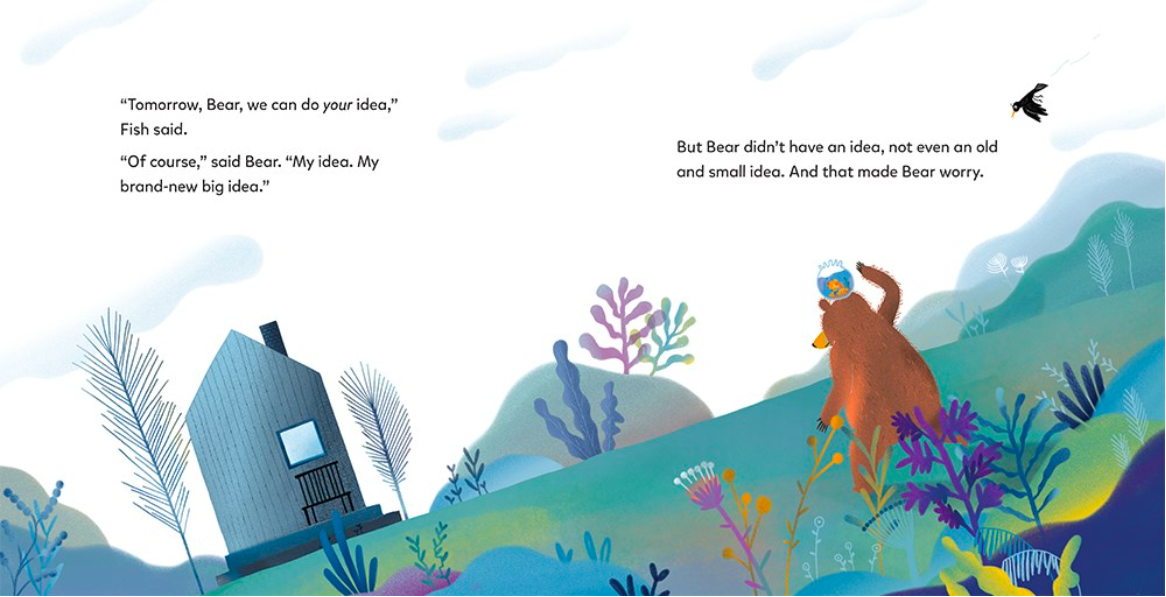
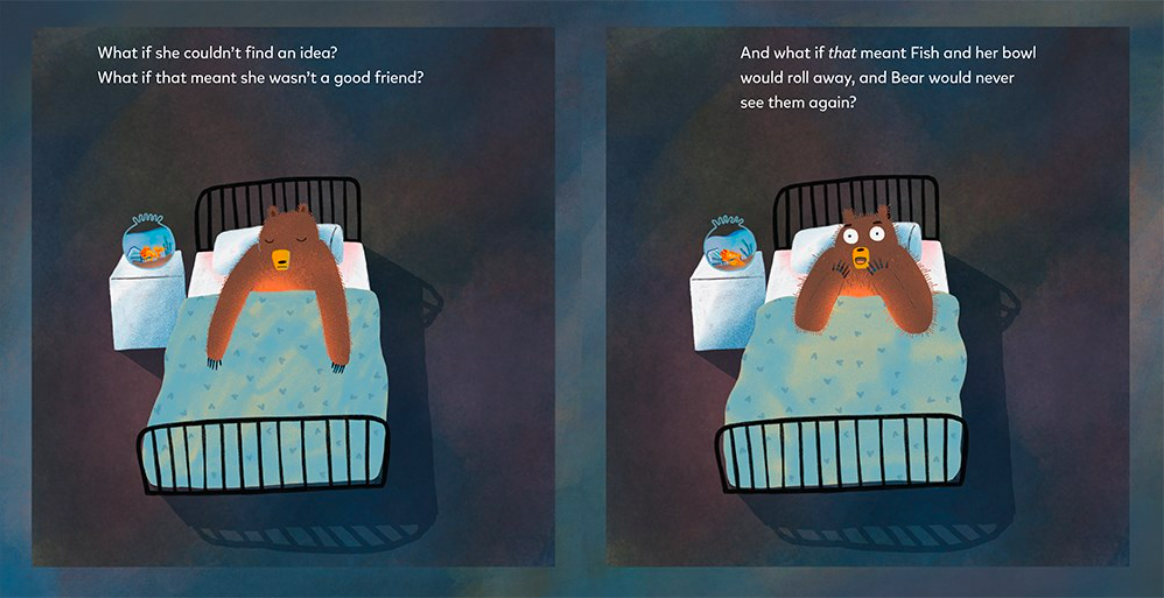
But Fish didn’t want Bear to feel left out, so on Thursday she said that the next day they could do Bear’s idea, “‘Of course, said Bear. ‘My brand-new big idea.'” But Bear was worried. She “didn’t have an idea, not even an old and small idea.” Bear tried to sleep that night, but she was afraid that not having an idea meant she wasn’t a good friend. Would Fish take her bowl and leave? Anxiety muddled Bear’s brain, and all she could think of were now-old ideas.

celebrate-picture-books-picture-book-review-bear's-big-idea-Wednesday

Image copyright Il Sung Na, 2024, text copyright Sandra Nickel, 2024. Courtesy of Carolrhoda Books.

The next morning it was the same. Bear looked everywhere for a brand-new big idea but found nothing. She kept checking in with Fish, asking if she was still there. “‘Always and forever,’ said Fish” with added reassurance. At last, Bear confessed that she couldn’t see an idea anywhere. “‘Don’t worry,’ Fish said. ‘Just because you can’t see something, doesn’t mean it’s not there.'”

celebrate-picture-books-picture-book-review-bear's-big-idea-no-idea

Image copyright Il Sung Na, 2024, text copyright Sandra Nickel, 2024. Courtesy of Carolrhoda Books.

So Bear thought some more, she listened, and she felt the wind whipping up. Suddenly, the air was filled with all of the old things from the past week. As Bear watched the things flying by, she saw it! Her brand-new big idea! She quickly gathered the items together and grabbed Fish’s bowl then rode the sled down to the beach, where she turned those individual items into an ingenious brand-new big idea that even impressed Fish! As pleased as Bear was with her idea, though, she was even happier to discover that good friends were “always and forever there.”

celebrate-picture-books-picture-book-review-bear's-big-idea-sleepless-night

Image copyright Il Sung Na, 2024, text copyright Sandra Nickel, 2024. Courtesy of Carolrhoda Books.

The second book in Sandra Nickel’s Bear and Fish series is a charming story that gently addresses children’s common fears about performance and pressure as well as the nature of friendship itself. Throughout the story, Nickel presents Bear’s conundrum realistically as she first alludes to having a big idea and then worries through the night and part of the next day that she will let down and maybe even lose her bestie because she has no idea at all.

Nickel—through Fish’s encouraging comments and confidence in Bear’s abilities—is always right there, though, with reassurance that children will find comforting in their own life. Nickel’s excellent pacing as well as her metaphorical dark and fog that stymies Bear until her approaching idea clears it away adds depth to the story and shows kids that things such as ideas, learning, self-confidence, and growth come to each person in their own time.

Children will be happy to see Il Sung Na’s fast friends back again in a new adventure. Il Sung’s soft-hued illustrations place Bear and Fish in a whimsically surreal mashup of vegetation from Bear’s forest and Fish’s underwater worlds. Bespectacled, ever-faithful Fish regales Bear with reassuring philosophy from her bowl, but also enjoys a madcap experience of her own thanks to Bear’s big idea. Through Il Sung’s clear depictions of Bear’s emotions, children can empathize with and cheer on Bear while gaining their own sense of self-confidence.

An uplifting, reassuring, and confidence boosting story, Bear’s Big Idea is sure to prompt requests for multiple readings and can spark discussions about feelings of fear, external and internal pressure, true friendship, and using one’s imagination. Bear’s Big Idea would make a valuable addition to home, library, and classroom collections.

Ages 4 – 8

Carolrhoda Books, 2024 | ISBN 979-8765610176

About the Author

Sandra Nickel is a writer of nonfiction picture books for children. Her work includes The Stuff Between Stars, Nacho’s Nachos, and Breaking Through the Clouds. She is the winner of a Christopher Award and holds an MFA in Writing for Children and Young Adults from Vermont College of Fine Arts. When at home in Switzerland, Sandra loves ambling and rambling and eating carrot muffins just as much as Bear and Fish do.

About the Illustrator

Il Sung Na was born in Seoul, South Korea. In 2001, he moved to London to pursue a BFA in Illustration and Animation at Kingston University, where he discovered a passion for children’s books. He completed his MFA Illustration Practice at MICA (Maryland Institute College of Art) in 2015. Il Sung has illustrated several books including Wild Peace, My Tree, and ZZZZ: A Book of Sleep. Currently based in Kansas City, Il Sung teaches illustration courses at KCAI (Kansas City Art Institute) and works on new books.

International Creativity Month Activity

celebrate-picture-books-picture-book-review-bear-craft

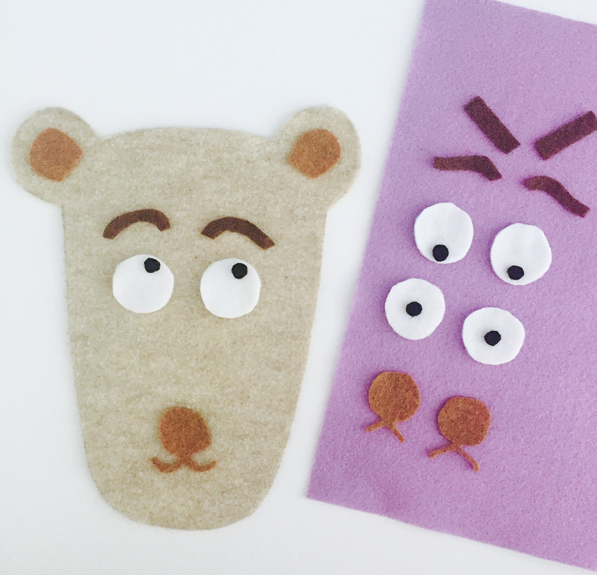
Expressive Bear


You can talk about different emotions and feelings or make up your own stories with this Expressive Bear Craft! Use the templates and/or make your own expressive eyes, eyebrows, and nose and mouths. You can also play a game in which the first person to collect all the parts of the bear’s face is the winner.

Supplies

  • Printable Bear Head Template
  • Printable Eyes and Noses Template
  • Printable Eyebrows  and Ears Template
  • Light brown felt or fleece (or color of your choice), 8 ½ x 11 inch piece
  • Dark brown felt or fleece(or color of your choice), 8 ½ x 11 inch piece
  • White felt or fleece, 8 ½ x 11 inch piece
  • Black felt or fleece, for pupils
  • Scissors
  • Glue
  • 1 playing die (optional)

Directions

  1. Print templates
  2. Cut bear head from light felt or fleece
  3. Cut eyes from white felt or fleece
  4. Cut nose and inner ears from dark brown felt or fleece
  5. Cut pupils from black felt or fleece
  6. Glue pupils onto white eyes

Alternatively: Color and play with the paper set

For a Fun Story Time

Give the bear different faces and make up stories of why he looks that way!

To Play a Game

Supplies

  • 1 plastic playing die. Or print this playing die template and draw one of the six facial features on each side.
  • Pencil, pen, or markers (if using printed die template)
  • Cut out, fold, and tape the die together

Directions

  1. Roll the die and follow the instructions below to collect parts of the bear’s face.
  2. The first player to create a full face is the winner.
  • Die dots correspond to:
  • 1—one eyebrow
  • 2—second eyebrow
  • 3—one eye
  • 4—second eye
  • 5—nose
  • 6—inner ears

celebrate-picture-books-picture-book-review-bear's-big-idea-cover

You can purchase Bear’s Big Idea from these booksellers

Amazon | Barnes & Noble | Bookshop (to support your local independent bookstore)

Picture Book Review
November 16 – It’s Picture Book Month

celebrate-picture-books-picture-book-review-gift-and-box-cover

About the Holiday

If you love picture books, you know the thrill of holding a new or a new-to-you book in your hands and opening up to that very first page. The children’s sections of bookstores and libraries draw you in with humor, fairy tales, poetry, biographies, science, and so much more—a whole universe of creativity, thought, knowledge, and imagination—that enlightens and entertains. This month take time to indulge your passion for picture books!

I’d like to thank Knopf Books for Young Readers for sending me a copy of Gift & Box for review consideration. All opinions on the book are my own.

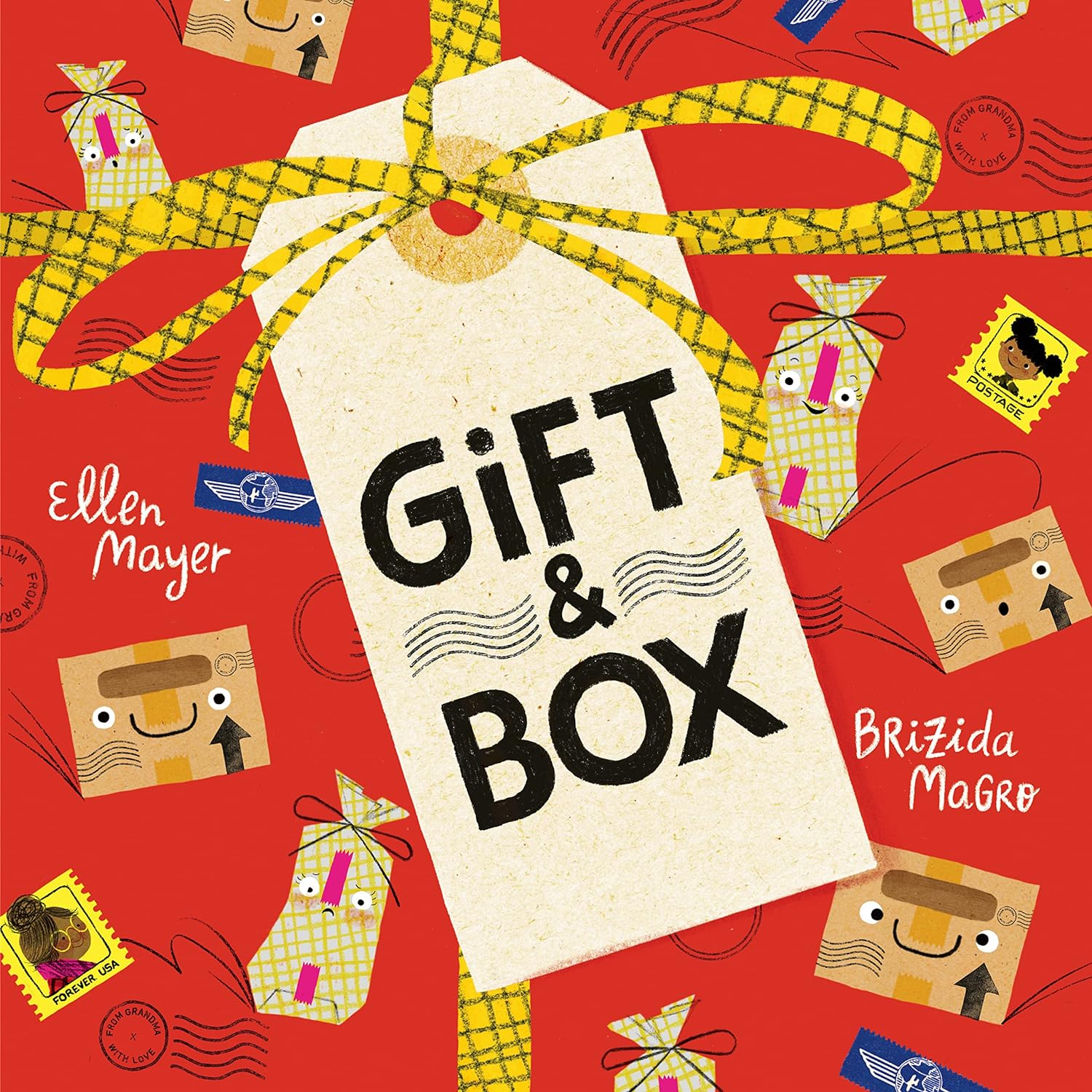
Gift & Box

Written by Ellen Mayer | Illustrated by Brizida Magro

“Gift was a gift. Box was a box,” and when Grandma lovingly placed Gift inside Box, they became “a package.” Gift couldn’t wait to delight. Box was ready to protect. Grandma took the package to the post office, and Gift and Box “were on their way.”

celebrate-picture-books-picture-book-review-gift-and-box-wrapping-gift

Illustration copyright Brizida Magro, 2023, text copyright Ellen Mayer, 2023. Courtesy of Knopf Books for Young Readers.

“They were not Priority Mail,” making the journey long and with many ups and downs. ‘”When will we be there?’ asked Gift.” Sometimes they waited and waited; sometimes they were tossed this way and that. Gift had lots of questions, a few complaints, and a moment of disappointment when the wrapping tore a bit. But Box always answered and comforted even though it could be “challenging.”

Being a package could be fun—like when they rode the conveyor belt. But the fun could turn scary, too—like when the big shipping container they were in was transferred to another ship. ‘”Don’t worry!'” shouted Box” when Gift was afraid. ‘”I’ve got you!'” As they got closer to their destination, each admitted they would miss one another. And then with a “Thunk!” they landed on a door step. Mama opened the door. Sofia rushed to see what had come.

celebrate-picture-books-picture-book-review-gift-and-box-conveyor-belt

Illustration copyright Brizida Magro, 2023, text copyright Ellen Mayer, 2023. Courtesy of Knopf Books for Young Readers.

Sofia opened Box and lovingly lifted Gift out. “Gift and Box were no longer a package.” Sofia unwrapped Gift and was delighted. Box was happy to have protected Gift, but now their time together had ended. Mama came over to flatten Box for recycling. Sofia, however, had other ideas—lots of ideas. Sofia got out tape and scissors; crayons, markers, and glue. When she was finished creating, Sofia and Gift and Box were ready for another adventure—together!

celebrate-picture-books-picture-book-review-gift-and-box-package-delivered

Illustration copyright Brizida Magro, 2023, text copyright Ellen Mayer, 2023. Courtesy of Knopf Books for Young Readers.

What child doesn’t love getting a package in the mail? But who is it come from? How does it get to them? And Oh, the joy when the gift is revealed! Rooted in objects, emotions, ideas, and questions familiar to kids, Ellen Mayer’s story will delight readers of all ages with its fresh and innovative twists and turns. Together Gift and Box mirror the most appealing kinds of relationships—best friends; parent or caregiver and child; teacher and student. Children will love learning how a package navigates its way through the postal system, and adults and kids may even like to speculate on where Grandma and Sofia live since Gift and Box cross an ocean.

Mayer’s realistic dialogue creates a wonderful read-aloud story that can give adults and kids a fun way to interact while reading. The story also could easily be staged as a play in classrooms or libraries. The details of their journey make perfect prompts to discuss patience, fear, anxiety, and disappointment as well as new experiences, teamwork, excitement, growing friendships, and imaginative, creative play. Young readers will be delighted by the sweet and surprising ending.

On the very first page, kids will fall in love with Brizida Magro’s adorable Gift and Box. Their bright eyes, sweet, simple smiles (which cleverly register a full range of emotions) and creatively placed tape make them expressive and beloved characters to root for. Magro’s vivid collage-style illustrations play with repeating patterns, colors, and textures to create a charming and cohesive sense of movement as Gift and Box (and readers) follow the story’s journey. Magro’s final illustration is sure to inspire a child’s own creativity.

A Special Note: Readers will be well-rewarded by unwrapping the book from it’s jacket to meet Gift and Box in person!

An exciting, multi-layered story that kids will ask for again and again, Gift & Box makes a perfect addition to anyone’s gift list for holidays, birthdays, and “just because” days. Public and school libraries can be sure Gift & Box, with it’s bright, enticing cover and “read again!” appeal, will be a welcome addition to their collection and enjoy continuous rotation.

Ages 3 – 7

Knopf Books for Young Readers, 2023 | ISBN 978-0593377611

About the Author

Ellen Mayer is an award-winning author of lively children’s books that help build language and math skills. She has a background in early childhood education, as a researcher and early literacy home visitor. Ellen lives with her husband in Cambridge, Massachusetts. And while her grandchildren all live close by, she still mails them gifts in boxes they can open with delight.

Visit Ellen on Her Website | Instagram | Twitter

About the Illustrator

Brizida Magro is an illustrator and educator based in Boulder, Colorado, who grew up in Portugal. She teaches illustration at Rocky Mountain College of Art and Design. Brizida is also the illustrator of Saturday at the Food Pantry by Diane O’Neill and Let Me Call You Sweetheart by Mary Lee Donovan. She is passionate about rock climbing and wandering the world. She enjoys simplicity, wee characters, collecting vintage papers, and bringing stories to life.

Visit Brizida on Her Website | Instagram

Picture Book Month Activity

celebrate-picture-books-picture-book-review-shaving-cream-wrapping-paper-newer-best-2

Shaving Cream Wrapping Paper

Kids will love wrapping any birthday, holiday, or even surprise gift in unique wrapping paper they’ve made themselves! This simple creative craft is fun for the whole family! 

Supplies

  • 1 can of shaving cream
  • Food coloring
  • Shallow baking tray
  • Frosting spatula or regular spatula
  • Toothpicks or skewer for swirling food coloring
  • White paper, computer paper works well

celebrate-picture-books-picture-book-review-shaving-cream

celebrate-picture-books-picture-book-review-shaving-cream-colors

celebrate-picture-books-picture-book-review-shaving-cream-wrapping-paper-drying

Directions

  1. Squirt the shaving cream onto the tray in small amounts and spread into a thin layer with the spatula
  2. Squeeze a few drops of different colored food coloring onto the shaving cream
  3. With the toothpick or skewer gently swirl the colors. Alternately, gently smooth the colors around and together with the icing spatula.
  4. Lay a piece of white paper on top of the shaving cream
  5. Gently pat the paper all over. Do not submerge the paper in the shaving cream.
  6. Lift the paper up and place on the table
  7. Let sit for a few minutes
  8. Scrape the shaving cream off the paper and let the paper dry

celebrate-picture-books-picture-book-review-gift-and-box-cover

Order from Bookshop to support your local independent bookstore.


You can also find Gift & Box at these booksellers

Amazon | Barnes & Noble | Books-a-Million

Picture Book Review

August 16 – Celebrating the Book Birthday of A Case of the Zaps

celebrate-picture-books-picture-book-review-a-case-of-the-zaps-cover

Thanks to Abrams Books for Young Readers for sending me a copy of A Case of the Zaps for review consideration. All opinions on the book are my own.

A Case of the Zaps

Written by Alex Boniella and April Lavalle | Illustrated by James Kwan


On Robot-Earth there lived a robot named 3.14159… (“or Pi, for short”). Pi liked doing things most young robots did, like “playing music, walking their dog, and hanging out with their Parental Units and friends. Pi also liked sports, science, camping, and exploring, and their favorite food was DW-40. One day at school, their teacher announced that in a month the class would be going on a field trip to Olde Silicon Valley.

celebrate-picture-books-picture-book-review-a-case-of-the-zaps-parental-units

Image copyright James Kwan, 2022, text copyright Alex Boniello and April Lavalle, 2022. Courtesy of Abrams Books for Young Readers.

All of Pi’s classmates were excited about the trip, and “Pi felt their circuit board BUZZ with anticipation.” Pi couldn’t stop thinking about the trip. But along with all the fun things they would do, thoughts about what could go wrong crept into his consciousness. And then, unexpectedly, while walking home from school with their friends, Pi experienced a tingle in their arms and then their “defense mechanisms JOLTED on.” Pi’s friends asked if they were all right.

celebrate-picture-books-picture-book-review-a-case-of-the-zaps-hobbies

Image copyright James Kwan, 2022, text copyright Alex Boniello and April Lavalle, 2022. Courtesy of Abrams Books for Young Readers.

Pi wasn’t sure and took off for home, “feeling zaps all around. Feeling afraid for reasons they didn’t quite understand.” The intrusive thoughts kept Pi awake that night, and during the next few days, even though Pi tried to act calm, they felt anything but. Trying not to think about the field trip just made things worse. One night they couldn’t even eat their DW-40, and then… ZAP! 

Pi ran to their room and shut the door. Pi’s “Mother-Board and Father-Board followed their robo-kid upstairs. When they asked through the door what was wrong, Pi admitted that they didn’t want to go on the field trip anymore. They they explained that “something feels wrong” and how all their gears and sensors seemed to be in overdrive. Pi confessed “‘I’m scared I might be . . . broken.'”

celebrate-picture-books-picture-book-review-a-case-of-the-zaps-school

Image copyright James Kwan, 2022, text copyright Alex Boniello and April Lavalle, 2022. Courtesy of Abrams Books for Young Readers.

Pi was surprised to find that just telling their parents made them feel better. Pi’s Father-Board told them that they had had the zaps when he started his new job and that “‘cousin Cosine Tangent has had them for years.'” Pi was surprised because Cosine Tangent had recently won a major science award. Mother-Board suggested that they visit the doctor the next day.

Doctor Bleep Bloop was very friendly and welcoming. The doctor explained to Pi that the Zaps can happen to anyone and at any time and acknowledged that they can be scary. When Pi asked if there was any cure for the Zaps, Doctor Bleep Bloop was honest and told them “‘There isn’t a simple cure.'” The doctor went on to say, though, that there were ways of managing the Zaps and that they could work together to find strategies to help Pi.

celebrate-picture-books-picture-book-review-a-case-of-the-zaps-anxiety

Image copyright James Kwan, 2022, text copyright Alex Boniello and April Lavalle, 2022. Courtesy of Abrams Books for Young Readers.

By the time the field trip to Olde Silicone Valley came around, Pi was ready to go, and they had a lot of fun. Even after the trip, Pi sometimes felt the Zaps. “When that happened, Pi used the tools that Dr. Bleep Bloop had shared with them, and then the Zaps didn’t feel quite so scary.” 

Back matter includes an Authors Note explaining how both Alex and April have experienced anxiety in their lives as well as online resources where parents and caregivers can find more information and help from professionals in the areas of anxiety, depression, and other mental health issues.

celebrate-picture-books-picture-book-review-a-case-of-the-zaps-Dr.-Bleep-Bloop

Image copyright James Kwan, 2022, text copyright Alex Boniello and April Lavalle, 2022. Courtesy of Abrams Books for Young Readers.

Experiencing anxiety can be scary and confusing, and without the language to describe what is happening to them, children can feel isolated and alone. Alex Boniello and April Lavalle’s A Case of the Zaps provides kids and adults with a straightforward way to comfortably talk about anxiety while offering reassurance and a road map to discovering coping strategies that can help. Descriptions of the physical and mental effects of anxiety on Pi give kids direct examples to point to when talking about their own emotions and experiences with their parents, caregivers, or doctors. Pi’s parents’ suggestion to visit the doctor gives adults a starting point on the journey to helping their children. 

James Kwan’s vibrant illustrations, incorporating elements of comics and graphic novels, will enchant kids as they learn about Pi’s hobbies, family life, and excitement to visit Olde Silicone Valley. As Pi’s enthusiasm for the field trip turns to trepidation, kids can watch the robot’s expressive face change from happy to worried and fearful. They also see that anxiety causes physical effects, sleeplessness, depleted energy, and the body’s fight-or-flight mechanism to kick in. After the family’s visit with Dr. Bleep Bloop, Kwan’s depictions of calming activities Pi does with their mother-board and father-board, friends, and the doctor show readers that therapy can be found in many places from play to sports to yoga and more.

Honest, accessible, sprinkled with humor, and written in partnership with Child Mind Institute to ensure that the book can serve as a social-emotional tool, A Case of the Zaps is an outstanding book for talking about anxiety with any child. The book is highly recommended for home libraries and a must for classroom, school, and public library collections.

Ages 4 – 8

Abrams Books for Young Readers, 2022 | ISBN 978-1419756726

You can connect with writer, actor, musician, singer, and Tony award-winning producer Alex Boniella on Twitter and Instagram.

Connect with writer, comedian, actor, and Tony award-winning producer April Lavalle on her website and Twitter.

You’ll find James Kwan on Instagram.

celebrate-picture-books-picture-book-review-a-case-of-the-zaps-cover

You can find A Case of the Zaps at these booksellers

Amazon | Barnes & Noble | Books-a-Million

To support your local independent bookstore, order from

Bookshop | IndieBound


Picture Book Review

September 1 – It’s Read a New Book Month

celebrate-picture-books-picture-book-review-dylan's-dragon-cover

About the Holiday

The beginning of a new school year is a terrific time to celebrate Read a New Book Month. Whether the books are recently published or just new to you, there are stories and nonfiction books to fit any subject, to inspire learning, to laugh or cry with, and to share with friends. This month visit your local bookstore and library and stock up on books for everyone in the family! 

Dylan’s Dragon

Written by Annie Silvestro | Illustrated by Ben Whitehouse


When Dylan was little, he liked to while away his days “playing, doodling, drawing, daydreaming.” He drew spaceships and race cars, dragons and robots. But as he got older, Dylan found there were many more things to do, like karate, baseball, gymnastics, and swimming. And of course there was lots of homework. There wasn’t a moment when Dylan wasn’t doing something. Then one day Dragon showed up at his door wanting to play. But Dylan was just on his way to school. All day long Dylan thought about Dragon. He seemed vaguely familiar, but Dylan couldn’t remember. Dylan planned on playing with Dragon after school, and when he got home they did fly a few circles around the yard, but then it was time for his piano lesson. 

celebrate-picture-books-picture-book-review-dylan's-dragon-drawing

Image copyright Ben Whitehouse, 2021, text copyright Annie Silvestro, 2021. Courtesy of Albert Whitman & Company.

The next morning, after he gave Dylan a ride to the kitchen, Dylan asked if Dragon would like to play after school. “Dragon stuck out his tongue and slurped oatmeal off Dylan’s cheek, which felt kind of slimy but seemed like a yes.” But they only had a few short minutes before Dylan had to study and then go to science club. Dylan thought Dragon might be able to help with his homework, but Dragon’s flames singed his test review papers.

On the rest of the days that week, Dylan tried to include Dragon, but it just didn’t work out. Finally, the weekend came and Dylan thought they would be able to play then. Dragon “swatted Dylan with his tail, which felt cold and scaly but had to mean yes.” Saturday morning, Dylan jumped out of bed ready to play with Dragon, but his parents reminded him of his baseball game, piano recital, and Aunt Edith’s 90th birthday party. But “when do I get to play?” Dylan asked.

celebrate-picture-books-picture-book-review-dylan's-dragon-activities

Image copyright Ben Whitehouse, 2021, text copyright Annie Silvestro, 2021. Courtesy of Albert Whitman & Company.

When Sunday morning rolled around, Dylan woke up and asked his mom, “‘What do we have to do now?'” Surprisingly, Dylan had nothing planned. “‘Just go out and play,'” his mom told him. Dylan cheered and called for Dragon, but he didn’t come. In fact, he was nowhere to be found. “It seemed like Dragon was draGONE.” Dylan looked everywhere, but no dragon. Dylan began to cry. 

When his mom asked him what was wrong, Dylan told her about Dragon and wanting to play and never having enough time. “‘Sounds like we need to cut back,'” his mom said. Then she told him she’d help look for Dragon. As Dylan was drawing a picture of Dragon to show his mom, when he remembered where he’d seen Dragon before – in his old drawings from when he was little.

As he carried his drawing downstairs to show his mom, it began to steam. “It smoked… then POOF popped Dragon, right into the living room. This time when Dylan asked if he wanted to play, Dragon wrapped a wing around him in a hug that “was most definitely a yes!”

celebrate-picture-books-picture-book-review-dylan's-dragon-school

Image copyright Ben Whitehouse, 2021, text copyright Annie Silvestro, 2021. Courtesy of Albert Whitman & Company.

Annie Silvestro’s creative storytelling is both whimsical and realistic as she reminds readers about the importance of balance between activities, school, and free time in children’s schedules. When the dragon, a favorite drawing from Dylan’s preschool or kindergarten days, appears to rescue him and his harried family, many kids (and adults) may identify with Dylan’s desire for a more relaxed lifestyle. Silvestro’s dialogue rings true as Dylan’s parents call him from snatched moments of play and Dylan pleads for just ten more minutes. Dylan’s mom’s recognition of the need to cut back on some of her son’s activities sets a good example, and Silvestro’s message that imagination and creativity make beneficial playmates is reassuring.

Ben Whitehouse’s vivid illustrations cleverly depict the dichotomy between Dylan’s desire for playtime and his over-scheduled routine as images of Dylan riding and playing with his Dragon are juxtaposed with his mom and dad indicating that it’s time to go to one activity after another. Well-marked calendars, a tablet, watches and clocks, lots of sticky note reminders, and equipment for various extracurricular activities at the ready crowd the family’s home – fitting images for the dizzying swirl of appointments that must also crowd Dylan and his parents’ minds. While Dylan’s room is decorated with his many interests, Whitehouse shows that it is his long-lost love of drawing and imagination that truly makes him happy.

A clever and engaging story about recapturing the simple pleasures of free time and playtime, Dylan’s Dragon can also spark conversations between adults and kids about how much is too much and finding that happy medium. A perfect book to share at home, especially as the new school year begins, Dylan’s Dragon would be an excellent addition to home bookshelves as well as school and public library collections.

Ages 4 – 7 

Albert Whitman & Company, 2021 | ISBN 978-0807517420

Discover more about Annie Silvestro and her books on her website.

To learn more about Ben Whitehouse, his books, and his art, visit his website.

Read a New Book Month Activity

celebrate-picture-books-picture-book-review-darling-dragon-match-puzzle

Darling Dragon Matching Puzzle


In this group of darling dragons, each dragon has a twin. Can you help them find each other in this printable puzzle?

Darling Dragon Matching Puzzle

celebrate-picture-books-picture-book-review-dylan's-dragon-cover

You can find Dylan’s Dragon at these booksellers

Amazon | Barnes & Noble | Books-a-Million

To support your local independent bookstore, order from

Bookshop | IndieBound

Picture Book Review

February 9 – It’s Creative Romance Month

celebrate-picture-books-picture-book-review-bear-meets-bear-cover

About the Holiday

February, the month of love, is a perfect time to think up creative ways to surprise that special person in your life with a romantic gesture, exciting date night, or fun adventure that will add spice and fun to your relationship. With a little imagination you can find unique ways to show all the love that’s in your heart. 

I’d like to thank Bloomsbury Children’s Books for sharing Bear Meets Bear with me for review consideration. All opinions on the book are my own.

Bear Meets Bear

By Jacob Grant


Bear was waiting for the teapot he and Spider had ordered to arrive. It was exciting to think of getting something new delivered. At last the doorbell rang. When Bear opened the door, he found Panda, a delivery person he’d never seen before. She asked him to sign for his package, but Bear was smitten. “His heart beat fast…. He wanted to say something clever, or funny, or anything at all,” but he couldn’t.

celebrate-picture-books-picture-book-review-bear-meets-bear-delivery

Copyright Jacob Grant, 2020, courtesy of Bloomsbury Children’s Books.

The delivery woman asked for his signature again, and finally he was able to sign the sheet. He watched Panda peddle away on her delivery bike. Spider thought Bear’s predicament was quite funny. Bear rushed to his computer and ordered another teapot. Bear waited and waited. He watched out the window, hoping to see Panda’s delivery bike roll up.

celebrate-picture-books-picture-book-review-bear-meets-bear-waiting

Copyright Jacob Grant, 2020, courtesy of Bloomsbury Children’s Books.

Bear was just considering ordering another tea pot when he saw Panda coming up the walk. But when she handed him the box and asked him to sign, Bear just stood silently again. “Spider felt sorry for his friend.” Bear ordered another teapot and another and another. Never could he summon the courage to talk to Panda, even though Spider encouraged him. Standing among all of the boxes of teapots, Spider told him he should “invite her to tea” or “at least remember to breathe” when Panda came to the door.

Bear agreed. He would order one more teapot and talk to Panda when it arrived. Bear waited with anticipation. But when the doorbell rang, it wasn’t Panda standing there, but a “gruff raccoon.” “Bear’s heart hurt.” He bemoaned the missed opportunities and regretted all the teapots. Spider wanted to help. He wrote a note and headed out to find Panda. He went from door to door asking if anyone had seen her. Finally, he found her at Duck’s house.

celebrate-picture-books-picture-book-review-bear-meets-bear-sad

Copyright Jacob Grant, 2020, courtesy of Bloomsbury Children’s Books.

The next day Panda was excited to see Panda on his doorstep. She thanked him for his invitation to a tea party. Bear felt himself freeze, but then he told her he would be just a minute. He cleaned up the scattered teapots and welcomed her in. Soon Bear and Panda were chatting and laughing like old friends.

After Panda said goodbye, Bear thanked Spider and said that Panda was very nice but that they would “not be meeting for tea again.” It turned out that Panda didn’t like tea! Bear was nonplussed, but thought it was “all rather funny.” The next time he and Panda met, Bear served lemonade. And what about all those teapots? Bear held a yard sale!

celebrate-picture-books-picture-book-review-bear-meets-bear-tea-party

Copyright Jacob Grant, 2020, courtesy of Bloomsbury Children’s Books.

Fans of Jacob Grant’s Bear and Spider series know that Bear is often hesitant to put himself out there, to try something new, or even, sometimes, to leave the house. It might be because his feelings are so strong or he doubts himself  – or a little of both. Fortunately, Bear has his good friend Spider who supports him and gives him a nudge when he needs it. When Bear meets Panda and is smitten, he, like many people, can’t find the exact right words among all those feelings; a simple “hello” doesn’t seem like enough. Grant understands. Enter Spider, who offers a gentle dose of honesty and provides always-polite Bear with an opportunity to shine. When Bear discovers that Panda doesn’t like tea, Grant also shows readers that conditions don’t have to be perfect to make a new friend and that a little humor goes a long way toward smoothing things over.

Grant’s tranquil color palette and simple shapes make it easy for readers to immerse themselves in Bear’s feelings, empathizing with his all-too-human predicament while enjoying the comical collection of all those tea pots. When Bear watches out the window day after day, willing Panda to return only to be filled with fear and anxiety when she does, Grant perfectly captures that “oh no, now what?” emotion as Bear’s paws fly to his face and his eyes widen. Likewise, Bear’s regrets are palpable as, surrounded by boxes, he buries his head in the chair. Throughout, Spider is there, weaving his web, strumming his banjo, and watching out for Bear. Wordless images of Bear and Panda enjoying lemonade together and Bear’s yard sale let kids know it has all turned out all right.

A charming, poignant, and reassuring addition to the Bear and Spider series, Bear Meets Bear,  a story about overcoming emotions that hold us back, is highly recommended for home, school, and public library bookshelves.

Ages 3 – 6

Bloomsbury Children’s Books, 2020 | ISBN 978-1547604241

Discover more about Jacob Grant, his books, and his art on his website.

Creative Romance Month Activity

celebrate-picture-books-picture-book-review-ceramic-mug-craft

Create a Mug


If you’re kids are looking for a gift to make for a family member or a friend for Valentine’s Day or any time, a personalized mug makes a creative way to share a little love every time it’s used. 

Supplies

  • Plain ceramic mug
  • Bakeable markers or paint

Directions

  1. Design and color your mug
  2. Follow directions on the markers or paint to properly bake on your decoration and make it permanent.

celebrate-picture-books-picture-book-review-bear-meets-bear-cover

You can find Bear Meets Bear at these booksellers

Amazon | Barnes & Noble | Books-a-Million

To support your local independent bookstore, order from

Bookshop | IndieBound

Picture Book Review