July 4 – Independence Day

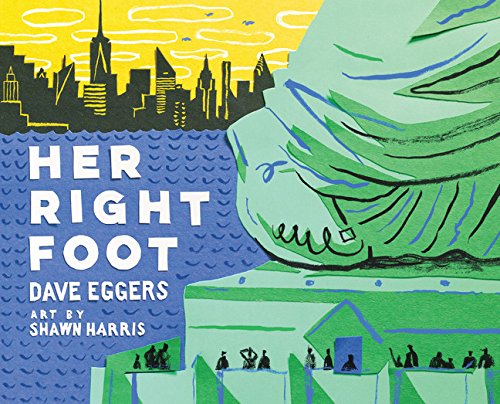
celebrate-picture-books-picture-book-review-her-right-foot-cover

About the Holiday

Today, the United States commemorates the signing of the Declaration of Independence on July 4, 1776 by delegates of the original 13 colonies, which asserted that the colonies considered themselves a new nation and no longer part of the British Empire. The day is traditionally celebrated with parades, picnics, and grand fireworks in cities and towns across the country. The holiday also provides the opportunity to remember and honor all the people who have come to America’s shores and have helped to build our nation.

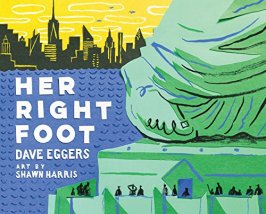
Her Right Foot

Written by Dave Eggers | Illustrated by Shawn Harris


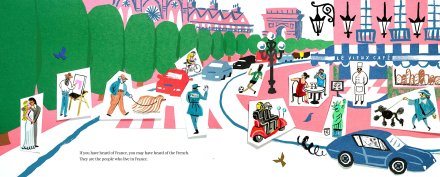
As you may know, one day, a Frenchman named Édouard de Laboulaye had the idea to celebrate the 100th birthday of the United States by giving the country a giant sculpture. He enlisted the help of artist Frédéric Auguste Bartholdi to design the statue. Bartholdi started by making a tiny version of the statue of Liberty and building bigger and bigger ones and “finally the one we know which stands 305 feet above the water.” He gave it a thin skin of copper—about as thick as two pennies.
celebrate-picture-books-picture-book-review-her-right-foot-france

Image copyright Shawn Harris, 2017, text copyright Dave Eggers, 2017. Courtesy of Chronicle Books.

It took many men to build the statue, as even just the hand was much bigger than a person. When all the parts were ready, the statue was constructed in Paris. “The Statue of Liberty stood there. High above Paris, for almost a year in 1884. In 1885, the statue was taken apart and placed into 214 crates that were shipped across the Atlantic. When the pieces reached New York, they were reassembled on an island that was then known as Bedloe’s Island. It took seventeen months to finish putting the statue back together.

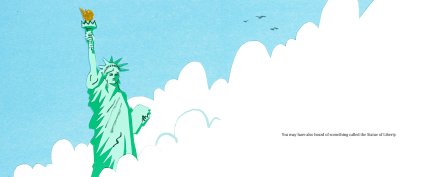
You may not have recognized the Statue of Liberty when she was first erected. That’s because she was made of copper, and her outside was brown. Over thirty-five years of standing in all weathers, the Statue of Liberty oxidized, turning the greenish-blue we see today.
celebrate-picture-books-picture-book-review-her-right-foot-statue-of-liberty

Image copyright Shawn Harris, 2017, text copyright Dave Eggers, 2017. Courtesy of Chronicle Books.

You may have learned about many of the historical and geological facts associated with features of the Statue of Liberty—for instance about the book and the torch she carries and the crown she wears. And perhaps you have heard some of the humorous stories about her—for instance, that Thomas Edison thought it would be a good idea to put a giant phonograph inside her so that she could talk.

But there is one point you may not know. “The point is that if you have seen a picture of the Statue of Liberty, or many of pictures of the Statue of Liberty, or even hundreds of pictures of the Statue of Liberty, you probably have not seen pictures of her feet. And even if you have seen pictures of her feet, you probably have not seen pictures of the back of her feet. In particular, her right foot.”

celebrate-picture-books-picture-book-review-her-right-foot-striding-leg

Image copyright Shawn Harris, 2017, text copyright Dave Eggers, 2017. Courtesy of Chronicle Books.

When you look at the Statue of Liberty’s right foot, you notice that she is taking a step. “She is on the move.” Now, for years people have talked about her crown and her gown, her torch and the serious look on her face, but no one has wondered where she is going. Could she be headed into downtown Manhattan? Or maybe New Jersey? Doubtful. If you look closely, you’ll see that around her feet are broken chains, “implying she had freed herself from bondage.”
celebrate-picture-books-picture-book-review-her-right-foot-refugees

Image copyright Shawn Harris, 2017, text copyright Dave Eggers, 2017. Courtesy of Chronicle Books.

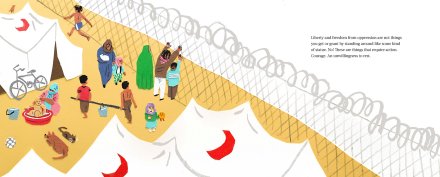
This is a truth the Statue of Liberty understands. “Liberty and freedom from oppression are not something you get or grant by standing around like some kind of statue. No. These are things that require action. Courage. An unwillingness to rest.” The Statue of Liberty was not built to welcome immigrants only from one country on one particular day, but to welcome people from all over, every day. “After all, the Statue of Liberty is an immigrant too,” and she does not stand still to welcome people to our shores. She is striding out into the sea to meet them.

celebrate-picture-books-picture-book-review-her-right-foot-immigrants

Image copyright Shawn Harris, 2017, text copyright Dave Eggers, 2017. Courtesy of Chronicle Books.

Seamlessly transitioning from droll to thoughtful, David Eggers succinctly tells the history of the Statue of Liberty’s coming to America and then invites readers to focus on and think about just one feature—her striding right foot. Timely and timeless, Egger’s story is a call to action, reminding readers of the promise of America in a most moving way.

Shawn Harris’s striking paper-cut collage images complement Egger’s conversational storytelling with personality, vibrant color, eye-catching perspectives, and—most importantly—the people the Statue of Liberty is welcoming.

Combining a perfect package of storytelling and art, Her Right Foot is an entertaining and compelling addition to home bookshelves for kids interested in history, travel, and social issues as well as for classrooms for story times and to stimulate conversations about the history and meaning of America.

Ages 6 – 9

Chronicle Books, 2017 | ISBN 978-1452162812

Discover more about Dave Eggers and his books for children and adults on his website.

To learn more about Shawn Harris, his books, his art, and his music visit his website.

Independence Day Activity

celebrate-picture-books-picture-book-review-statue-of-liberty-coloring-page

Statue of Liberty Coloring Page


Grab your crayons or pencils and enjoy this printable Statue of Liberty Coloring Page

celebrate-picture-books-picture-book-review-her-right-foot-cover

You can find Her Right Foot at these booksellers

Amazon | Barnes & Noble | Books-a-Million | IndieBound

Picture Book Review

July 3 – Compliment Your Mirror Day

celebrate-picture-books-picture-book-review-why'd-they-wear-that

About the Holiday

Take a peek in the mirror and who do you see? That’s right—a fantastic person with inner and outer beauty! Today is dedicated to recognizing and appreciating that person in the mirror! 

Why’d They Wear That? Fashion as the Mirror of History

By Sarah Albee


Whether you’re a fashionista or an “any ol’ thing will do” kind of person, there’s no denying that clothes make a statement. Sarah Albee’s fascinating look at human wraps spans history from 10,000 BC to the modern era. Along the way she exposes both historical facts as well as the often repugnant, laughable, and can’t-look-away fashion fads and disasters that have brought us to “wear” we are today.

In Chapter 1: That’s a Wrap, Albee reveals facts about the first needles and thread, silk production, the Mayan tradition of forced elongation of skulls (this was considered attractive, denoted social status, and was intimidating), the first pants, warrior wear, and much more.

Chapter 2: Keeping the Faith exposes the influence religion had on clothing in the Middle Ages. White or russet colored robes were worn by men traveling on pilgrimages while penitents could wear a hair shirt made of itchy, bristly horsehair as punishment. Medieval armor, Samurai dress, why modern men’s loafers are decorated with little holes, and more are also discussed here as is the job of Wool Fuller – in which the Fuller soaked wool in urine to degrease it and improve its texture.

celebrate-picture-books-picture-book-review-why'd-they-wear-that

Image courtesy of National Geographic, 2015

Chapter 3: Going Global covers the Age of Exploration, which changed fashion as explorers from Europe came in contact with Native peoples in the New World. Red dye, rubber shoes, and the leather Moccasins were all adopted by Europeans. And if you think the search for remedies for wrinkles and other vestiges of older age is a modern pursuit, you’ll learn about Ponce de Leon and his quest for the fountain of youth.

Chapter 4: Ruff & Ready takes a look at the Renaissance. You may have seen fur stoles with the head of the animal still attached and wondered, Why? This fashion statement goes back to “Flea Furs” which were dead, stuffed animals that people draped over their shoulders in the belief that the fleas that were munching on their skin would transfer to the animal instead. Unfortunately, people discovered that fleas prefer warm bodies. Another curious fad was the ruff collar. While people may have thought they looked swell, these collars hindered physical movement and even led to the invention of the long-handled spoon because people could not get food to their mouths any other way. One “benefit” perhaps: when the first American settlers ran out of all other food options, they ate their collars, which were stiffened with wheat paste. And there’s so much more!

In Chapter 5: Lighten Up! readers will discover facts about the dour dress of the Puritans and the ostentatious dress of the French court. The tradition of men’s wigs is explained, and today’s face-painting has nothing on the unusual solution for facial blemishes—black velvet, leather, or silk patches in various shapes.

celebrate-picture-books-picture-book-review-why'd-they-wear-that

Image courtesy of National Geographic, 2015

Revolutionary Times take center stage in Chapter 6: Hats (and Heads) Off. During this time clothes began to fit the task. There were clothing items to protect (walking canes became popular as a way to ward off marauding wild dogs), uniforms to highlight the good looks of running footmen, elaborate costumes for Venetian parties, and homespun clothes that became a sign of protest from the American colonists. And if you think “bumpits” and hair extensions are new, women trying to keep up with Marie-Antoinette wore their hair (real and artificial) “cemented upward over wire armatures into two-foot (0.6-m)-high coiffures that made the wearer stand 7 ½ feet tall!”

Chapters 7 through 9 bring readers into the modern age, taking them from a time when children were dressed as young adults and boys wore elaborate gowns until the age of 7 to the textile innovations of the Industrial Revolution and the popularity of bustles that put fanny packs to shame to the fads of the 1960s and today.

celebrate-picture-books-picture-book-review-why'd-they-wear-that

Image courtesy of National Geographic, 2015

Albee’s Why’d They Wear That? is much more than a book about fashion. It’s a humorous, fabulously entertaining way to learn about so many aspects of history, from social revolution to inventions to cultural differences. Enlightening side bars, especially the fascinating “Tough Job” entries, and full-color illustrations, paintings, and photographs depicting every concept make Why’d They Wear That? an essential book for school libraries as well as for home bookshelves. Readers of all ages will want to dip into it again and again…and will “Oh!” “Ah!” and “Ewww!” over every page.

Ages 7 and up (children on the younger end of the range will enjoy the facts and pictures during a read-along session)

National Geographic Children’s Books, 2015 | ISBN 978-1426319198

Learn more about Sarah Albee and her books on her website!

Watch the trailer for Why’d They Wear That? Fashion never looked so…good? unsettling? hilarious? You decide!

Compliment Your Mirror Day Activity

celebrate-picture-books-picture-book-review-mirror-word-search

Mirror, Mirror, What Shall I Wear?


In this magic mirror word search are 20 fashion-related terms from history. Find them all! Here’s the printable Mirror, Mirror, What Shall I Wear puzzle and the Solution.

celebrate-picture-books-picture-book-review-why'd-they-wear-that

Why’d They Wear That? Fashion as the Mirror of History can be found at these booksellers

Amazon | Barnes & Noble | Books-a-Million | IndieBound

May 28 – Memorial Day

celebrate-picture-books-picture-book-review-anna-and-natalie-cover

eBook

About the Holiday

Memorial Day is observed each year on the last Monday of May to honor all members of the military who lost their lives in the service of their country, especially in battle. Begun after the Civil War, the holiday expanded after World War II to remember those who died in all American wars. Memorial Day was made a national holiday by an act of Congress in 1971. 

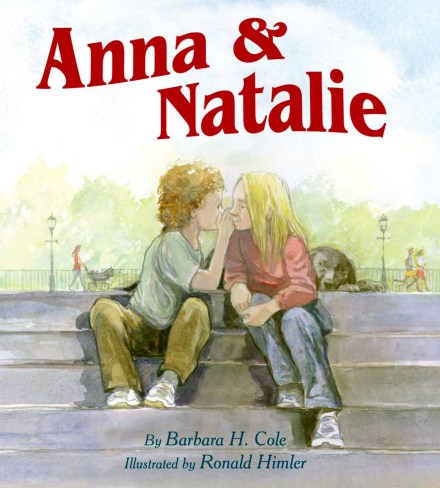
Anna & Natalie

Written by Barbara H. Cole | Illustrated by Ronald Himler


Every year Mrs. Randall’s third-grade class attends the Wreath-laying ceremony at the Tomb of the Unknown Soldier at Arlington National Cemetery. What’s more every year four students are chosen from her class to carry the wreath. This year everyone wonders who those lucky four will be. Students who want to be in the running to be selected, Mrs. Randall, says, must write a letter telling her why they should be chosen. Hearing that Freddie and Tommy drop out immediately, while Nancy says her letter will be the best.

Anna dreams of being chosen too, but experience tells her she will not. She’s never chosen for the basketball or softball team, the cheerleading squad, or the lines of Red Rover. “Sure, someone always chose her for the spelling team, but the others—the fun ones—never.” But this time seems different. All day—even though Mrs. Randall’s eagle eyes catch it—Anna daydreams and makes plans. When the bus drops her and her sister off, they hurry home to start work.

celebrate-picture-books-picture-book-review-anna-and-natalie-school-bus

Image copyright Ronald Himler, text copyright Barbara H. Cole. Courtesy of Star Bright Books

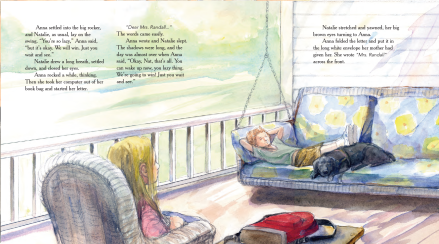
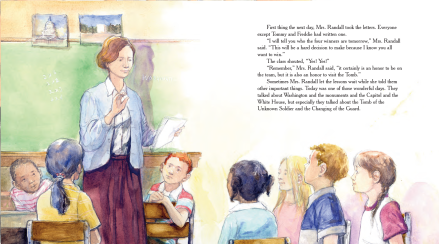
There Anna makes a secret call to her grandpa and then she and Natalie go to the front porch, and while Nat naps on the swing Anna pulls out her computer and begins writing her letter to Mrs. Randall. The next day Mrs. Randall collects the letters with the promise to choose the team by tomorrow and a reminder for those who will not be picked: “‘Remember,’” she says, “‘it certainly is an honor to be on the team, but it is also an honor to visit the Tomb.’” Then “they talked about Washington and the monuments and the Capitol and the White House, but especially they talked about the Tomb of the Unknown Soldier and the Changing of the Guard.”

celebrate-picture-books-picture-book-review-anna-and-natalie-on-the-porch

Image copyright Ronald Himler, text copyright Barbara H. Cole. Courtesy of Star Bright Books

At school the next day, Mrs. Randall says that while she received four excellent letters, one stood out. She begins to read it to the class: “‘I want to be on the team, not for myself, but for many others who have not been honored or remembered….They worked long and hard and saved many lives….And sometimes they were heroes bigger than the strongest men around. Sometimes they carried medicine and food to dangerous places to save the wounded soldiers. My own great-great-grandfather was in this special service and saved lives. I would like to be on the team to say thank you to those forgotten heroes of World War II. Yours truly…’ Mrs. Randall’s voice cracked and choked, and then she read, ‘From Natalie (with help from Anna)’”

The class starts whooping and cheering, but Mrs. Randall interrupts their celebration to read one more line: “P.S.—Would you please let Anna walk with me so I will not be alone and she won’t be either?” The class begins chanting “Yeah, Anna! Yeah, Anna!,” and Anna can’t believe that her dream of being on the team has come true. When Anna gets home from school and tells her family, they proudly make plans to travel with their “two girls” to the ceremony.

celebrate-picture-books-picture-book-review-anna-and-natalie-anna-and-natalie

Image copyright Ronald Himler, text copyright Barbara H. Cole. Courtesy of Star Bright Books

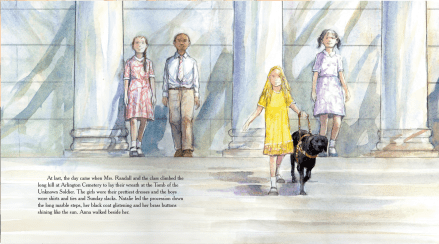
Finally, the day of the Wreath-Laying Ceremony arrives. The students are dressed in their best clothes, and as the four team members prepare to accept the wreath, “Natalie led the procession down the long marble steps, her black coat glistening and her brass buttons shining like the sun. Anna walked beside her.” As the soldier hands the children the wreath fashioned from “dogwood flowers, magnolias, and decorative red birds,” he loudly announces, “The students of Willow Run School and Natalie, a seeing-eye dog, will lay this wreath to honor the men who served in World War II and the dogs who helped them. ATTENTION!”

celebrate-picture-books-picture-book-review-anna-and-natalie-tomb-of-the-unknowns

Image copyright Ronald Himler, text copyright Barbara H. Cole. Courtesy of Star Bright Books

The clear notes of Taps rang across Arlington National Cemetery as Anna and the three other children lay the wreath in front of the Tomb of the Unknown Soldier. Afterward, Anna’s grandfather and parents took pictures of Anna and Natalie to remember “this shining moment of Anna, and of Natalie, who saw the world that Anna could not see.”

An Author’s Note revealing the use of dogs during wartime—from ancient history to today—follows the text.

Barbara H. Cole’s story of Anna and Natalie is compelling in many ways. First, it presents a look at what Veterans Day means to children from their point of view. Second, the story honors not only the brave soldiers who protect our country but also the canine corps which has served our military from our country’s earliest history. Third, in Anna, Cole has created a character who is part of a military family through her great-great-grandfather and also has a personal connection to service dogs through Natalie, her seeing-eye dog. The portrayal of Anna as a child with a disability is honest and inclusive, and while the fact of Anna’s blindness is contained in a surprise ending, this serves to present Anna as just another student in the class—a girl who is an excellent writer, enthusiastic about her dreams to be part of the team, and a good friend.

celebrate-picture-books-picture-book-review-anna-and-natalie-classroom

Image copyright Ronald Himler, text copyright Barbara H. Cole. Courtesy of Star Bright Books

Cole’s straight narration of a school day and a special assignment—complete with asides from students—as well as Anna’s family life creates an environment that will be familiar to readers and carries the story in a natural arc.

Ronald Himler’s realistic illustrations of Anna’s Willow Run School, her home, and Arlington Cemetery beautifully represent this moving story. His pages are full of diverse, real kids, smiling, laughing, getting off the school bus, enjoying a family dinner, and solemnly performing their job at the Tomb of the Unknown Soldier. A hint to Natalie’s true identity is subtly inserted into various scenes, making the final reveal a satisfying moment.

Anna & Natalie is a wonderful choice for all kids observing Veterans Day, Memorial Day, and other patriotic holidays.

Ages 5 – 10

Star Bright Books, 2010 | ISBN 978-1595722119

To learn more about Anna & Natalie and download a Curriculum Guide, visit Star Bright Books!

To view a gallery of artwork and picturebook illustration by Ronald Himler, visit his website!

Memorial Day Activity

celebrate-picture-books-picture-book-review-memorial-day-trivia-page 

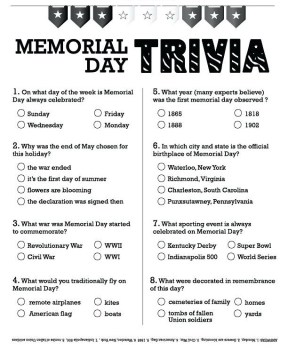
Memorial Day Trivia Page


Learn a little more about Memorial Day with this printable Memorial Day Trivia Page!

Picture Book Review
May 16 – National Biographers Day

celebrate-picture-books-picture-book-review-write-on-irving-berlin-cover

About the Holiday

National Biographers Day commemorates a very special meeting that led to one of the most celebrated biographies in English literature. On May 16, 1763, James Boswell met with Samuel Johnson for the first time in a Covent Garden, London bookshop. Thirty years later, Boswell, who was also a poet, essayist, editor, literary critic, and lexicographer, published his biography of Samuel Johnson. Today’s holiday honors all those who delve into the life of others to bring their often fascinating and inspiring stories to readers. To celebrate today, read up on one of your favorite people and introduce your kids to biographies—like today’s book—that can encourage them to follow their dreams.

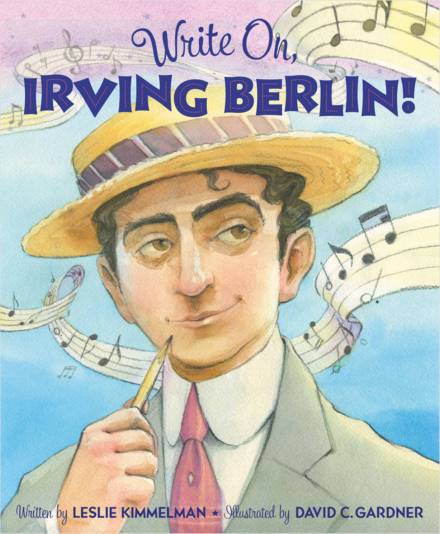
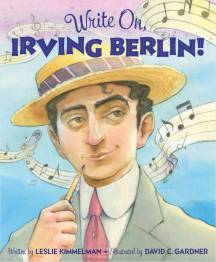
Write On, Irving Berlin!

Written by Leslie Kimmelman | Illustrated by David C. Gardner


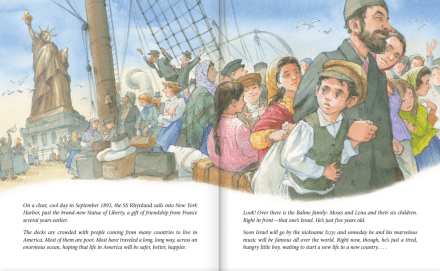
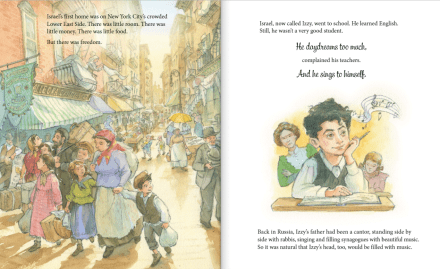
In September of 1893 Moses and Lena Baline and their six children, including 5-year-old Israel, sailed into New York Harbor hoping “to start a new life in a new country.” They came from Russia, where their home had been burned down by “gangs of angry men” who “rode from village to village in pogroms, destroying Jewish homes and hurting the people who lived in them.” In America, the Balines had a small apartment, little money, and little food. But they did have freedom.

celebrate-picture-books-picture-book-review-write-on-irving-berlin-immigrating

Image copyright David C. Gardner, 2018, text copyright Leslie Kimmelman, 2018. Courtesy of Sleeping Bear Press.

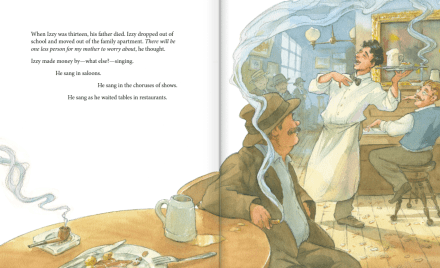
At school, Izzy—as Israel was nicknamed—paid less attention to his schoolwork than to the music in his head. When Izzy was only thirteen, his father died. Izzy knew that money was tight, so he moved out and made his own living singing in saloons, in the chorus line of New York shows, and even as he waited tables.  Irving as Izzy now called himself, became a professional song writer when he was paid 37 cents for his first song.

Irving continued to write the tunes that filled his head. When Ragtime was all the rage during the early 1900s, Irving tried this new, jazzy kind of music, and his “‘Alexander’s Ragtime Band’ was a smash.”  Irving married, but his wife died only a few months after their wedding. Irving consoled himself by writing. He became an American citizen, and when he was drafted into the US Army during WWI, he wrote songs to encourage his fellow soldiers. When he married again, he was inspired to write a song called “Always” about a love that lasts forever.

celebrate-picture-books-picture-book-review-write-on-irving-berlin-school

Image copyright David C. Gardner, 2018, text copyright Leslie Kimmelman, 2018. Courtesy of Sleeping Bear Press.

Irving never seemed to be without a tune in his head. He “wrote music for plays, for movies, for friends, for strangers. He scribbled ideas on napkins and on the sleeves of his shirt. He wrote songs in elevators and in taxicabs. He wrote songs in the bathtub.” During World War II, one of his older songs—“‘God Bless America’ became a HUGE hit.” In the winter of 1942, Irving wrote “White Christmas.” It’s sentimental words and catchy tune inspired the “American soldiers fighting fierce battles all around the world.”

Since Irving was too old to fight in the war, he developed a show called “This is the Army” that he took around the world to entertain the troops. His “cast was completely integrated—black and white soldiers lived, ate, and traveled together, which was rare in those days.” Even after the war ended, Irving continued to write songs that people still love today.

An Author’s Note about Irving Berlin and his songs as well as books for further reading follow the text.

celebrate-picture-books-picture-book-review-write-on-irving-berlin-thirteen

Image copyright David C. Gardner, 2018, text copyright Leslie Kimmelman, 2018. Courtesy of Sleeping Bear Press.

Leslie Kimmelman brings to life the story of one of America’s most prolific and beloved song writers with enthusiasm and wit and the kinds of details that capture kids’ attention and inspire them to learn more. Timely for this year’s 100th anniversary of the writing of “God Bless America” and the 80th anniversary of its public appearance, Write On, Irving Berlin would make an excellent centerpiece of school music units when paired with Berlin’s songs, many of which kids will recognize. Berlin’s success, as revealed in Kimmelman’s well-paced, upbeat, and converstional storytelling is a powerful motivator for any child with big dreams.

David C. Gardner’s beautiful, softly-washed and detailed paintings take readers from the New York neighborhoods, restaurants, and dance halls of the early 1900s to the battlefields of World Wars I and II to the bright lights of Broadway, where his last musical, “Annie Get Your Gun” is advertised on the marquee. Along the way, kids see Irving as a child, a young man, and an older professional, always with a pencil and paper in hand. Images of the Statue of Liberty seen throughout the book tie together the theme of the immigrant’s experience, Berlin’s love of America, and one of his most famous works, “God Bless America.”

Write On, Irving Berlin! is an excellent biography that should find a home in classroom, school, and public libraries as well as on home bookshelves for children who love history, music, and biographies and who have big ideas of their own.

Ages 6 – 9

Sleeping Bear Press, 2018 | ISBN 978-1585363803

Discover more about Leslie Kimmelman and her books on her website.

To learn more about David C. Gardner, his books, and his art, visit his website.

Write On, Irving Berlin! Giveaway

celebrate-picture-books-picture-book-review-write-on-irving-berlin-cover

I’m thrilled to partner with Sleeping Bear Press in this giveaway of:

  • One (1) copy of Write On, Irving Berlin!

To be entered to win, just Follow me on Twitter @CelebratePicBks and Retweet a giveaway tweet during this week, May 16 – 22. Already a follower? Thanks! Just retweet for a chance to win.

A winner will be chosen on May 23.

Giveaways open to US addresses only. | Prizing provided by Sleeping Bear Press.

National Biographer’s Day Activity

celebrate-picture-books-picture-book-review-biography-worksheet

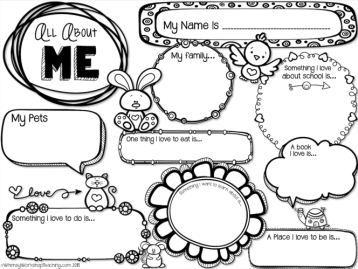
I Am…  Biography Page


How well do you know yourself – or your friends? This printable I Am… Biography Page can be fun to fill out and share with friends. Make a game of it and see if you can answer the questions for someone else in your family or among your friends!


Picture Book Review
May 6 – National Nurses Day

celebrate-picture-books-picture-book-review-nurse-soldier-spy-the-story-of-sarah-edmonds-cover

About the Holiday

Today’s holiday kicks off National Nurses Week, which runs until May 12, the birthday of Florence Nightingale. Nightingale, born in 1820, was an English social reformer and the founder of modern nursing. She was well-known for her work tending wounded soldiers during the Crimean War and was called “the lady with the lamp,” because of the rounds she made of her patients during the night.

During National Nurses Day and Week, we honor and thank all of the nurses working in hospitals, private practices, and with charitable organizations around the world for their dedication to and compassion for the patients under their care.

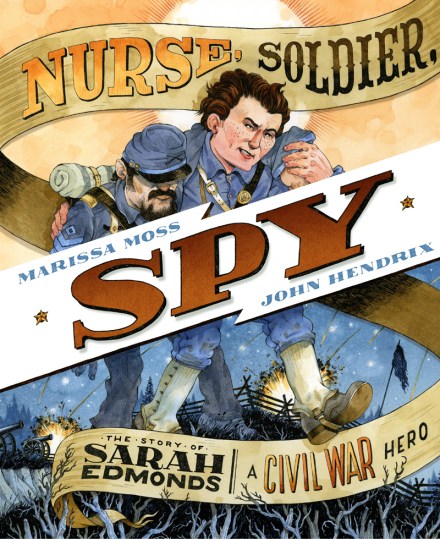
Nurse, Soldier, Spy: The Story of Sarah Edmonds, A Civil War Hero

Written by Marissa Moss | Illustrated by John Hendrix


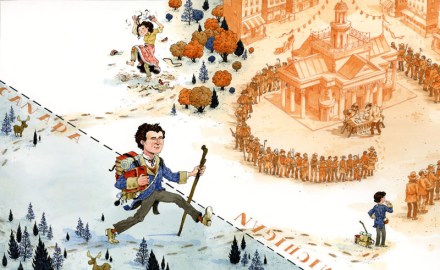
When President Abraham Lincoln called for young men to join the army fighting against the Southern states that wanted to secede from the Union, Frank Thompson signed up. One thing though, Frank wasn’t really a man but, instead, a 19-year-old woman named Sarah Edmonds. Sarah already knew the freedom that posing as a man could bring in her society. Three years earlier to escape a marriage arranged by her parents, Sarah cut her long hair, began wearing pants, and crossed “the border from Canada into the United States, trading a bridal gown for trousers, trading countries, without a single regret.”

celebrate-picture-books-picture-book-review-nurse-soldier-spy-the-story-of-sarah-edmonds-becoming-frank

Image copyright John Hendrix, courtesy of johnhendrix.com

Now, outside the Michigan courthouse, Sarah slowly moved her way along the line to the table where she could sign up to join the troops. When she finally stood in front of the recruiter, however, he stopped her. Sarah was mystified. How did he know she wasn’t a man? She had grown up on a farm, learning the work, copying the gestures, and even wearing the clothes of her brother. But the recruiter took one look at “Frank Thompson” and told her…she was too young to join the army. “He looked at her peachy cheeks free of any sign of a whisker. ‘We aren’t taking any sixteen-year-olds,’” he told her.

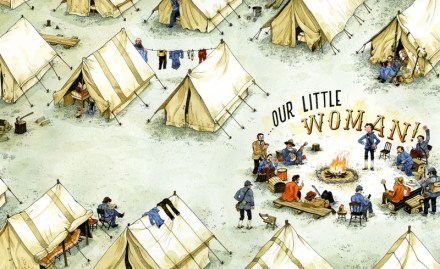
A month later, however, more men were needed, and Sarah was allowed to join up. Now a soldier, Frank was a valuable member of the corps. She was an expert at riding and shooting, and she felt at home among the men, enjoying the jokes, stories, and letters. Keeping her identity a secret was made easier by the fact that soldiers did not change clothes to go to sleep. Her small feet led the other soldiers to give her a nickname: “Our little woman.” A name Frank enjoyed immensely.

celebrate-picture-books-picture-book-review-nurse-soldier-spy-the-story-of-sarah-edmonds-union-camp

Image copyright John Hendrix, courtesy of johnhendrix.com

On the battlefield Frank trained to be a nurse, “which was something only men with the strongest stomachs did because of the long, draining hours and the horrors of surgery without anesthetic.” She fearlessly participated in the battles of Bull Run and Fair Oaks, risking her own life to rescue wounded soldiers. One night the regimental chaplain approached Frank. He wanted to recommend her for a very important—and very dangerous—job. The chaplain wanted to recommend to the generals that Frank become a spy for the North.

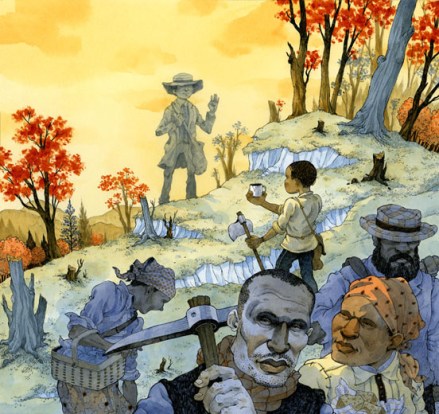
“Frank didn’t hesitate. ‘I’m your man!’” she said. Disguising herself as a freed slave, she infiltrated “a group of slaves bringing breakfast to the rebel pickets, the men who guarded the camp.” With so much work to do, the group quickly accepted her, but when the rest of the men, women, and children went off to their own assignments Frank hesitated, not knowing where to go next. Suddenly, a Confederate soldier caught Frank and ordered her to work on the fortifications. The work was backbreaking and left her hands blistered and bloody. The other workers helped when she had trouble.

celebrate-picture-books-picture-book-review-nurse-soldier-spy-the-story-of-sarah-edmonds-battlefield

Image copyright John Hendrix, courtesy of johnhendrix.com

The work gave Frank an opportunity to count the number of guns the army had, sketch a layout of the fort, and notice that some cannons were fake—just logs painted to look like cannons. By switching jobs with the water boy, Frank was able to get closer to the troops, where she encountered another spy—one working for the Confederate army. When night fell, Frank returned to his Union battalion. Giving the password, Frank was let into camp and made her way to the general’s tent. “Freedom, she knew, wasn’t something to take for granted. It was something to fight for, to cherish. And so long as her heart was beating strong, that’s just what she would do.”

An extensive Author’s Note revealing more about Sarah Edmond’s life and an Artist’s Note on the creation of the illustrations follow the text.

Marissa Moss’s biography of Sarah Edmonds is a suspenseful, gripping, and enlightening story of a woman who broke molds, lived on her own terms, and paved the way for future generations of women. Her well-chosen vignettes from Edmonds’ time as a Union soldier demonstrate not only Edmonds’ bravery and abilities but also create a clear and exciting trajectory of her increasing responsibilities and the danger that went with them. Fascinating details of the Civil War period, the people and attitudes involved, and the duplicitous nature of warfare, add up to a rich account of Sarah Edmonds’ life as well as the Civil War era in general.

celebrate-picture-books-picture-book-review-nurse-soldier-spy-the-story-of-sarah-edmonds-as a spy

Image copyright John Hendrix, courtesy of johnhendrix.com

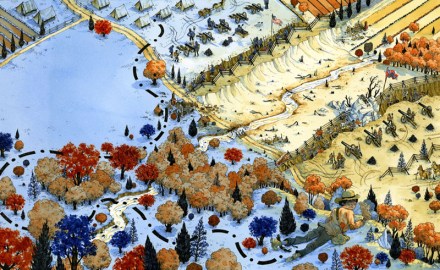
Meticulously researched and drawn, John Hendrix’s illustrations perfectly accompany and illuminate the text. Accurate depictions of Civil War-era buildings and clothing as well as Union and Confederate uniforms and weapons allow children to become fully immersed in the time period. Wide-view depictions of encampments and battlefields let readers peek into tents and scour trenches, and action abounds. In camp soldiers pick out tunes on banjos, write letters, and hang laundry; on the battlefield fires rage and ammunition explodes as soldiers follow the charge of their leaders; at the Confederate fortifications black workers steer wheelbarrows of rock; and in the medical tent Frank tends to wounded soldiers, the equipment used clearly visible. Scenes portrayed in both daylight and at night highlight the ongoing conflict and the dangerous, secretive work Sara Edmonds undertook.

Nurse, Soldier, Spy: the Story of Sarah Edmonds a Civil War Hero is historical and biographical work at its best. This fast-paced, fascinating look at one particular soldier informs readers about so many aspects of the Civil War era, including societal issues that shaped the United States and are still discussed today. The book is a must for school and public libraries and its in-depth, absorbing content makes it a welcome addition to home libraries for children who love history, art, biographies, and a well-told story.

Ages 5 – 12

Abrams Books for Young People, 2016 (Paperback edition) | ISBN 978-1419720659

Discover many more books, fun stuff, writing tips and more on Marissa Moss‘s website!

View a portfolio of picture book art, editorial illustration, a sketchbook, and more on John Hendrix‘s website!

National Nurses Day Activity

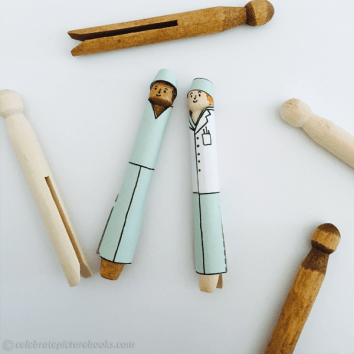
CPB - Doctors Clothespins

Nurse Clothespin Dolls


Make one of these clothespin figures that honors hard-working and compassionate emergency nurses!

Supplies

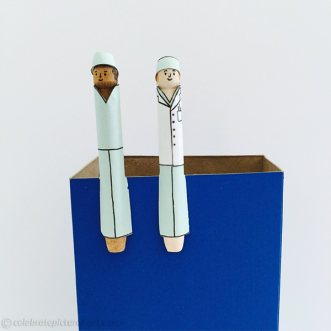
CPB - Doctors Clothespins on box

Directions

  1. Draw a face and hair on the clothespin
  2. Cut out the outfit you want your doctor to wear (color pants on your clothespin if you choose the lab coat)
  3. Wrap the coat or scrubs around the clothespin. The slit in the clothespin should be on the side.
  4. Tape the clothes together
  5. Wrap the cap around the head and tape it.
  6. If you’d like to display your clothespin doctor on a wire, string, or the edge of a box or other container, cut along the dotted lines of the clothes template.

Picture Book Review
May 3 – It’s Get Caught Reading Month and Interview with Author Jody Jensen Shaffer

celebrate-picture-books-picture-book-review-a-chip-off-the-old-block-cover

About the Holiday

Launched in 1999 by the Association of American Publishers and managed by Every Child a Reader, Get Caught Reading Month hopes to instill a love of reading in every child and encourages people of all ages to read more. Celebrities, authors, illustrators, and others participate by sharing pictures of themselves reading an old favorite or new book on social media. Special materials are available for and programs held in schools, libraries, bookstores, and community venues all month long. Why not join in by finding a new book to lovelike today’s book?! For more information and to find resources, visit the Get Caught Reading website.

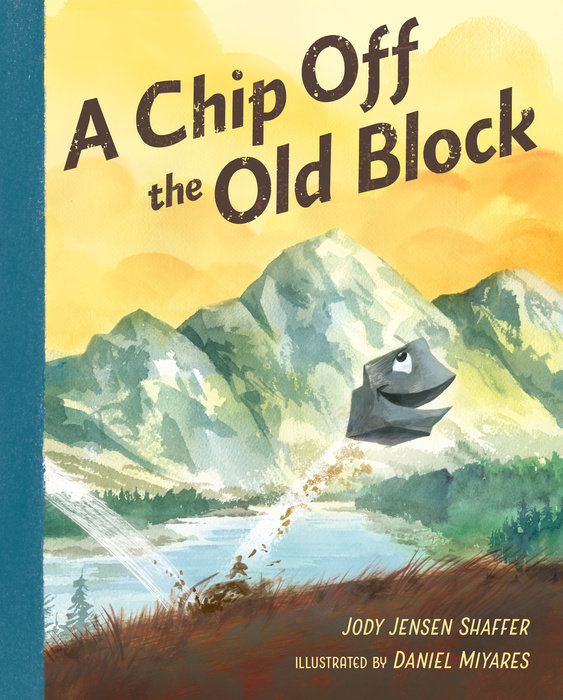
Penguin Random House sent me a copy of A Chip Off the Old Block to check out. All opinions are my own. I’m partnering with Penguin Random House in a giving away a copy of A Chip Off the Old Block. See details below.

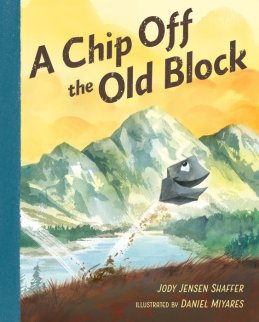
A Chip Off the Old Block

Written by Jody Jensen Shaffer | Illustrated by Daniel Miyares


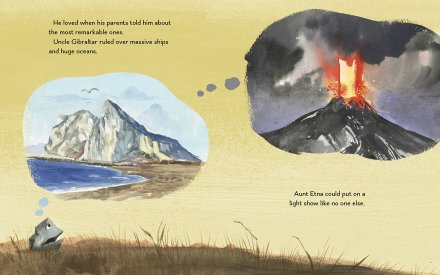
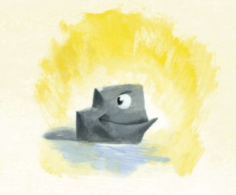
Rocky had an impressive family. There was Aunt Etna, Uncle Gibraltar, and his Great-Grandma Half Dome. His cousins were pretty well-known too. In fact, “tons of his relatives were rock stars.” Rocky loved hearing his parents’ stories about his family. Rocky wanted to be important too, but his parents thought he was too little. He may have been “just a chip off the old block” like his dad said, “but inside, Rocky was a boulder!”

celebrate-picture-books-picture-book-review-a-chip-off-the-old-block-aunt-etna

Image copyright Daniel Miyares, 2018. text copyright Jody Jensen Shaffer, 2018. Courtesy of Penguin Random House.

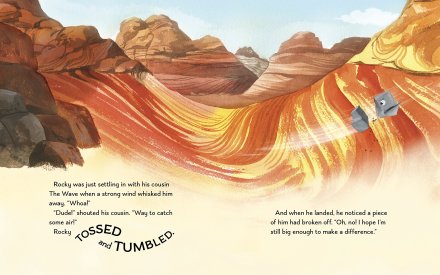
Rocky made a plan, and in the morning he hopped on a pickup truck headed for Arizona to join his cousin The Wave. As soon as he got there, though, a gust of wind blew him away. He landed hard and “noticed that a piece of him had broken off.” Undeterred, he caught a flight with an eagle out to Wyoming and another cousin, The Tower. Rocky was almost settled in when a rainstorm washed him over the side.

At the bottom of the long slide down, Rocky hitched a ride on a car bound for Texas. There, he thought he could watch over the sauropod tracks at Dinosaur Valley State Park. But it didn’t take long for an armadillo to dig him out and send him back on the road again. this time he was determined to go to South Dakota. When he arrived, tinier than when he’d begun his trip, he decided that he’d make a terrific souvenir of his cousin Rushmore.

celebrate-picture-books-picture-book-review-a-chip-off-the-old-block-the-wave

Image copyright Daniel Miyares, 2018. text copyright Jody Jensen Shaffer, 2018. Courtesy of Penguin Random House.

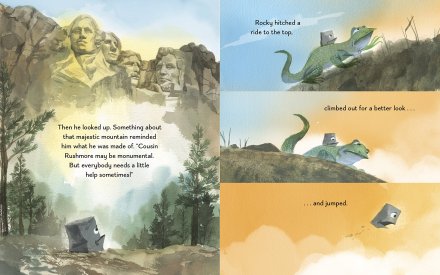
Just then he heard the news. The park was closing because a crack had been discovered in Abraham Lincoln’s nose. “Rocky was crushed.” His dreams of being important would never come true now. But looking up at his cousin, he realized that maybe he could help. A passing lizard gave him a ride to the top, and Rocky jumped. He tumbled down, down and right into the crack in Lincoln’s nose. “He was a perfect fit! I did it! I did something important! I saved Abraham Lincoln!” Rocky exaulted, excited and proud.

Down below, visitors and park employees cheered. Reporters relayed the news, and photographers took pictures. The park was saved, and it was “all thanks to Rocky, the little pebble that wouldn’t be taken for granite.”

A guide to igneous, metamorphic, and sedimentary rocks, illustrated descriptions of some of the world’s most majestic rock formations, and an Author’s Note about Mount Rushmore follow the story.

celebrate-picture-books-picture-book-review-a-chip-off-the-old-block-mount-rushmore

Image copyright Daniel Miyares, 2018. text copyright Jody Jensen Shaffer, 2018. Courtesy of Penguin Random House.

There’s so much to love about Jody Jensen Shaffer’s A Chip Off the Old Block! Part adventure, part educational travelogue, and completely inspirational—with lots of funny wordplay to boot—Shaffer’s story will charm kids. Little Rocky is a sweetie of a go-getter who has big dreams and sets out to achieve them. He overcomes obstacles, setbacks, and disappointments and adjusts to changes with optimism while never losing heart and building up his self-confidence. Kids will cheer when Rocky finally finds the place where he can make the most monumental difference.

celebrate-picture-books-picture-book-review-a-chip-off-the-old-block-rocky

Daniel Miyares’ gorgeous illustrations depict the splendor of Rocky’s magnificent cousins and the landscape they dominate while cleverly tracing his journey from state to state, carried along by a truck and a car, in a backpack, and with the help of some animal friends. Rocky is full of personality and childlike expressions that will endear him to readers. Miyares’ full-color, full-bleed pages will get kids excited to learn more about geology and each rock formation, and will no doubt inspire some vacation wish lists.

A Chip Off the Old Block is a smart and witty book that will excite a child’s imagination. It would be a terrific addition to home bookshelves and should be included in classroom libraries to accompany STEM, STEAM, and English Language Arts lessons and well as fun story times.

Ages 5 – 8

Nancy Paulsen Books, Penguin Random House, 2018 | ISBN 978-0399173882

Discover more about Jody Jensen Shaffer and her books and find teachers’ resources and activities on her website.

To learn more about Daniel Miyares, his books and his art, visit his website.

Meet Jody Jensen Shaffer

celebrate-picture-books-picture-book-review-Jody-Jensen-Shaffer-author-photo

I’m excited to talk with Jody Jensen Shaffer today about what she loves about writing poetry, fiction, and nonfiction, her favorite childhood memories, and her rescue dog, Sophie.

What was the spark for A Chip off the Old Block?

Hi Kathy! Thanks for having me on your blog. The spark for A Chip off the Old Block was the phrase, “Rocky loved his rock star relatives.” It came to me as I was brainstorming picture book ideas, and it felt like the first line of a story. I loved the word play of the line, so I created a story around it. I just had to discover who Rocky was and what his story would be.

A Chip off the Old Block combines terrific storytelling with science and history. What would you like for readers to take away from the book? How have children reacted to Chip?

Thanks! It was lots of fun to write. I hope readers take away from the book the idea that you’re never too small to matter and to never give up on your dreams. Bonus points if they learn a little about rocks, US landmarks, maps, and natural formations! I’ve been really happy with how Chip has been received by children and adults! One class even did a Google maps tour of the places Rocky visits in his travels.

You write across the spectrum of children’s literature from poetry to nonfiction to fiction. Can you briefly describe what you like about each?

I love writing poetry because of the challenge of the form. It’s like putting a puzzle together, and the pieces are brevity, beauty, meaning, and joy.

I love writing fiction because I can choose any characters I want, put them in any situations I want, and have fun with the language, voice, and story.

I love writing nonfiction because I love learning new things! And my interest in science comes to me naturally because of my dad’s influence. He was a college professor of biological sciences (and a great wordsmith).

You’ve said that you loved being a kid. What’s one of your favorite memories? How does being able to tap into that feeling of childhood influence your work?

I have so many great memories of my childhood: fishing with my family at local ponds, riding bikes to the swimming pool, visiting my dad’s lab at the college, even working our huge garden with my siblings (before we were allowed to ride our bikes to the swimming pool). I feel so blessed to have had the parents I had and the childhood they gave me. It’s easy to recall feelings of being loved and valued. I hope to send that same message to my readers through my writing.

You say you can remember the exact moment you learned to read. Can you talk about that a little?

It’s a very brief memory. I was reading an early chapter book and laboriously sounding out each syllable, index finger on page, when it occurred to me that if I just read “lighter,” the words might come to me more easily. I relaxed, I guess, and the words came. It was like a light switch turned on. From then on, I read fluently.

What’s the best part about being a children’s author? Do you have an anecdote from an author event that you’d like to share?

There are so many great things about writing for children, and I feel really blessed to be able to do it, but if I have to choose the best thing, I’d say it’s being able to play with words for a living. In terms of an anecdote, I was Skyping with a class for World Read Aloud Day recently, and a little guy stepped up to the screen and told me how much he liked one of my less well-known books. I felt his sincerity, and I appreciated him telling me.

In 2017, your book Prudence the Part-Time Cow was chosen to represent Missouri in the National Book Festival in Washington DC that is hosted by the Library of Congress. Can you talk about this honor a little? How was Prudence chosen and what did it mean for you as an author and for the book?

I was super excited to learn that the Missouri Center for the Book chose Prudence for that honor! At the National Book Festival, each state chooses a book to represent it. All the states’ books are displayed together in one room for festival-goers. I didn’t attend the event, but several people who did told me Prudence sold out several times!

You’re a dog lover and have a rescue dog named Sophie. I’d love to hear more about her!

How much time do you have? Just kidding. She’s part long-haired dachshund, part chihuahua, we think. Very friendly, a good walking companion, pretty, and a real cuddler. She sleeps under the sheets with us.

What’s up next for you?

In July 2018, just in time for back-to-school, Beach Lane will publish It’s Your First Day of School, Busy Bus! about a school bus’s first day of school. In 2019, Grosset & Dunlap will release my bobble-head biography, Who Is Jackie Chan? I’ve got more projects coming that have yet to be announced, so I better stop there. I’ll continue to publish poetry in great children’s magazines, too.

What’s your favorite holiday? Do you have an anecdote from any holiday you’d like to share?

I really like Earth Day and Arbor Day. I love helping take care of the earth.

Thanks, Jody! It’s been so great chatting with you! I wish you all the best with A Chip Off the Old Block and all of your books and projects!

celebrate-picture-books-picture-book-review-a-chip-off-the-old-block-cover

You can find A Chip Off the Old Block at these booksellers

Amazon | Barnes & Noble | Books-a-Million | IndieBound | Penguin Random House

(Leaving a review is one of the best ways to support authors and illustrators!)

You can connect with Jody Jensen Shaffer on

Her website | Twitter

Get Caught Reading Month Activity

celebrate-picture-books-picture-book-review-reading-bug-book-plate

Catch the Reading Bug Bookmark and Bookplate


If you love to read, show it with these printable Reading Bug book bling!

I’ve Got the Reading Bug Bookmark | I’ve Got the Reading Bug Bookplate

Picture Book Review

April 27 – It’s National Park Week and Interview with Jennifer Thermes
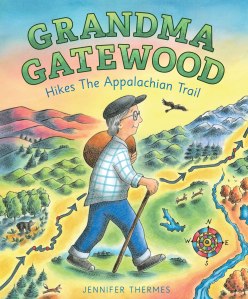
celebrate-picture-books-picture-book-review-grandma-gatewood-hikes-the-appalachian-trail-cover

About the Holiday

Don’t you feel it? That little nudge to leave home and enjoy the outdoors again? Spring is the perfect time to discover or rediscover the beauty all around by visiting a national park. Whether you like hiking, camping, fishing, swimming, or just the quiet pleasure of a picnic, there’s a national park near you to enjoy. This year’s theme for National Park Week, which runs from April 21 through April 29, is “Park Stars” and encompasses everything from the starry skies to those rock-star rangers and volunteers who maintain the system of parks across the country. This year, why not join them in protecting our national parks and the wildlife that call them home.

I’m thrilled to partner with Abrams Books for a giveaway of one copy of Grandma Gatewood Hikes the Appalachian Trail. See more details below.

Grandma Gatewood Hikes the Appalachian Trail

By Jennifer Thermes


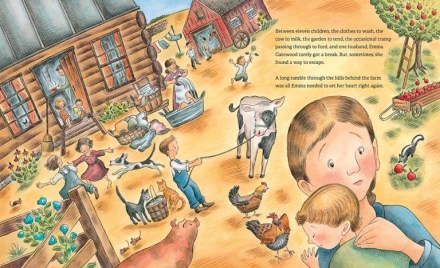
With eleven children, a farm to tend, and chores to do, Emma Gatewood’s days were plenty busy. When she needed a bit of escape, “a long ramble through the hills behind the farm was all Emma needed to set her heart right again.” So when her children had all left home and sparked by a magazine article about the Appalachian Trail, Emma put on her walking shoes and took to “‘the longest footpath in the world.’” The article had said that no woman had ever hiked the Trail from beginning to end, and Emma determined to change that.

celebrate-picture-books-picture-book-review-grandma-gatewood-hikes-the-appalachian-trail-kids

Copyright Jennifer Thermes, 2018, courtesy of Abrams Books for Young Readers.

On May 3, 1955, at the age of sixty seven, Emma left her home in Ohio and traveled to Mt. Oglethorpe in Georgia to begin her hike along the 2,190-mile-long Appalachian Trail. With just a light homemade sack and canvas shoes, Emma made her way up the trail, eating berries and drinking from streams as she went. When the trail took her through small towns and mountain farms, she got a real “supper and a cozy place to sleep.”

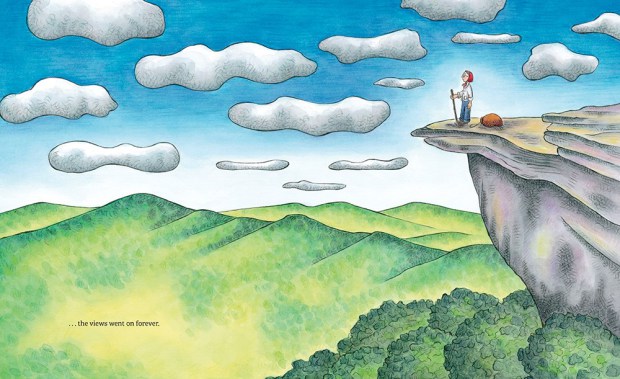
Word traveled about the older woman hiking the trail, and “Emma soon became known as ‘Grandma Gatewood.’” In June Emma crossed into Virginia and at the beginning of July took a quick jog through Maryland. The magazine article had said that hiking the trail was easy, but Emma had a different perspective. She once said the trail always seemed to “‘lead you right up over the biggest rock to the top of the biggest mountain they can find.’”

celebrate-picture-books-picture-book-review-grandma-gatewood-hikes-the-appalachian-trail-vista

Copyright Jennifer Thermes, 2018, courtesy of Abrams Books for Young Readers.

Grandma Gatewood walked in all weather and saw sights that were sometimes dull, but more often stunning. During July she crossed Pennsylvania, traced an edge of New Jersey, and hopped a corner of New York State. Pennsylvania’s sharp rocks “tore the soles of Emma’s shoes, so she held them together with tape.” By this time the newspapers had heard about Emma too, and “reporters met her at almost every stop.” Pretty soon, the whole country was talking about her! When people asked her why she was doing it, she answered, “‘Just for the heck of it.’”
celebrate-picture-books-picture-book-review-grandma-gatewood-hikes-the-appalachian-trail-new-hampshire-map

Copyright Jennifer Thermes, 2018, courtesy of Abrams Books for Young Readers.

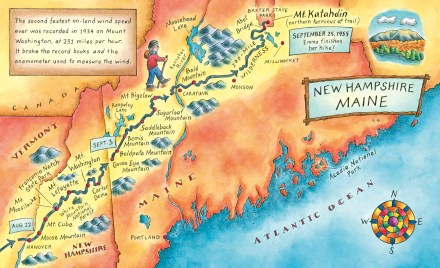
It was late summer and Emma was over halfway finished, but a bigger challenge was headed her way. A hurricane was swirling toward the East Coast. In early August, Emma hiked through Connecticut, Massachusetts, and Vermont. When the hurricane hit, she was soaked by rain, threatened by falling trees, and blown by the wind. She found shelter in a hut where a group of teenage boys were also waiting out the storm. They carried her across a swollen stream, and Emma continued her journey.

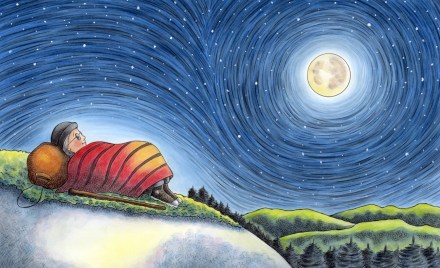
She met up with boy scouts and even went to tea with someone who had pinned an invitation to a tree along the trail. On September 3, she crossed from New Hampshire into Maine. Cold weather was coming, but the last mountain was in her sights. She bundled into every bit of clothes she had, and with torn shoes, cracked glasses, and aching muscles, Emma scrambled up the mountain all the way to the top. She had accomplished what she set out to do—and two years later, she did it again!

A timeline and an extensive author’s note about Emma Gatewood and the Trail follow the text.

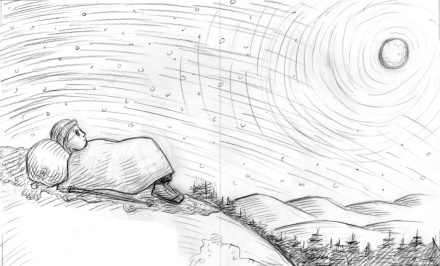
celebrate-picture-books-picture-book-review-grandma-gatewood-hikes-the-appalachian-trail-night-scene

Copyright Jennifer Thermes, 2018, courtesy of Abrams Books for Young Readers.

Inspiring from beginning to end, Jennifer Thermes’ story highlights a woman who lived life on her terms and accomplished a personal goal while, literally, blazing a trail for women and the elderly. The jaunty lilt of Thermes’ storytelling mirrors Emma’s brisk pace while giving readers an excellent sense of her personality and the twists, turns, and obstacles of the Appalachian Trail. Facts about landmarks along the trail are sprinkled throughout.

The story of Grandma Gatewood and the Appalachian Trail is a perfect match for Thermes’ superb artwork and map-making skills. Colorful and detailed two-page maps, set every three pages, keep readers apprised of the dates that Emma passed through each state on her trek north. In between, kids get to see Emma scaring off a bear, making friends with townspeople along the way, trudging up mountains, cooling her feet in rushing streams, climbing over rocks, and weathering the storm. Themes also includes some of the gorgeous vistas that have made the Appalachian Trail a must for hikers of all ages and experience.

Grandma Gatewood Hikes the Appalachian Trail  would make an inspiring addition to home libraries for children who love nature, history, and the outdoors. The book would also enhance many classroom discussions and lesson plans from language arts to social studies to science.

Ages 5 – 9

Abrams Books for Young Readers, 2018 | ISBN 978-1419728396

Discover more about Jennifer Thermes, her books, and her art on her website

Meet Jennifer Thermes

celebrate-picture-books-picture-book-review-jennifer-thermes

I’m excited to talk with Jennifer Thermes today about mapmaking, her love of history, and how her own house inspired a book.

What drew you to Emma Gatewood as a subject for your latest biography? Have you ever hiked any part of the Appalachian Trail?

I was inspired by Emma’s independence and determination to do something just because she wanted to, without even thinking she might be too old. A few people had solo hiked the entire trail before her, but she did it at a time when it had fallen into disrepair, and when women’s lives were much more constricted. I was also fascinated by the idea of the Appalachian Trail– a footpath that follows so many miles of changing landscape–and wanted to weave a map of it throughout a story.

In your writing and illustrating, you seem to have an affinity for history. Do historical subjects inspire you? What is your favorite time period?

They do! A love of history has led to the non-fiction books I write and illustrate today. Really, there’s something fascinating about all eras, so I can’t say I have just one favorite. I’m very happy to see how many stories about lesser-known people and periods of history are being published today.

You started out as a map designer for magazines and newspapers. How did you get started creating maps? What kind of research goes into that work? Can you talk a little about the aesthetics of a good map?

I was a design major in art school but always wanted to draw. Maps were a good combination of design and drawing. Research involves gathering information about geography, land shapes, picture reference, and figuring out what to include or not. (To be clear, I’m not a cartographer, much as I admire the work they do!) For me, a good map tells a tale of its own, while also inspiring a reader to want to learn more about the story. Clarity is important, but that doesn’t necessarily mean simple. Poring over details can be the best part of looking at a map.

celebrate-picture-books-picture-book-review-grandma-gatewood-hikes-the-appalachian-trail-map-sketch

Copyright Jennifer Thermes, 2018, courtesy of Abrams Books for Young Readers.

How did you transition from designing for magazines and newspapers into writing and illustrating for children?

My map work caught the eye of a children’s book editor who asked if I had any story ideas. (I did!) For a long time I thought of myself as more of an illustrator than a writer, but I’ve always been a big reader, so the writing part felt like a natural progression of storytelling.

I was intrigued to learn you own an 18th century farmhouse in Connecticut. I have an 1898 Connecticut farmhouse with many cool, tucked away features. What is one of your favorite things about your house? Was your first book When I Was Built inspired by your own home?

It was! Our kids were quite young when we bought our home, and we spent a lot of time fixing it up. As we uncovered clues about the house, they had questions about what life might have been like for the people who lived here over the years, which in turn inspired the book. Again, the theme circles back to a love of history.

What’s the best part of being a children’s author and illustrator?

I’m happiest when drawing, or puzzling over a new idea. The feeling of possibility is creatively fulfilling.

celebrate-picture-books-picture-book-review-grandma-gatewood-hikes-the-appalachian-trail-night-scene-sketch

Copyright Jennifer Thermes, 2018, courtesy of Abrams Books for Young Readers.

Do you have any anecdotes from an event with kids that you’d like to share?

“Are you as old as your house?” Kid’s questions are the best kind of unfiltered honesty.

What’s up next for you?

Not sure how much I can share yet, but I’ve recently finished black & white illustrations for a middle grade novel written by a super talented writer, coming out in early 2019. I’m very excited for that book. And currently, I’m immersed in writing and illustrating a picture book about the story of the island of Manhattan. (“Obsessed” is more like it—my history-geek self is on cloud nine!)

What’s your favorite holiday?

Darwin Day 

Thank you so much for inviting me to be a guest on your blog!

Thank you, Jennifer! I know we’ll all be on the lookout for that middle-grade novel, and I can’t wait to see your next picture book! I wish you all the best with Grandma Gatewood Hikes the Appalachian Trail!

celebrate-picture-books-picture-book-review-grandma-gatewood-hikes-the-appalachian-trail-cover

You can find Grandma Gatewood Hikes the Appalachian Trail at these booksellers:

Abrams BYR | Amazon | Barnes & Noble | Books-a-Million | IndieBound

You can connect with Jennifer Thermes on:

Facebook | InstagramTwitter | Pinterest

Grandma Gateway Hikes the Appalachian Trail Giveaway


I’m excited to partner with Abrams Books for Young Readers in this giveaway of

  • one copy of Grandma Gatewood Hikes the Appalachian Trail by Jennifer Thermes

To be entered to win, just Follow me on Twitter @CelebratePicBks and Retweet a giveaway tweet during this week, April 27 – May 4. Already a follower? Thanks! Just  Retweet for a chance to win.

A winner will be chosen on May 5.

Giveaways open to US addresses only. | Prizing provided by Abrams Books for Young Readers

National Park Week Activity

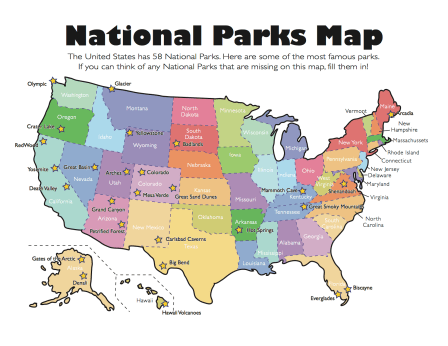
celebrate-picture-books-picture-book-review-National-Parks-Map

National Park Coloring Pages and Map


The National Parks are home to some of the most beautiful scenery in the country. Enjoy these coloring pages while you learn a little bit about four of them. Then check the map and see if there’s a National Park near you!

Acadia National Park | Everglades National Park | Mesa Verde National Park | Rocky Mountains National Park | National Parks Map

Picture Book Review