October 28 – National Immigration Day

Today’s holiday celebrates the uniqueness of our “melting pot” culture and our tradition of welcoming those seeking a new and better life of opportunity. Most of America’s citizens can look back on a history of immigration, especially during the 19th century, when famine, oppression, and political upheaval threatened people’s lives and livelihoods. To honor today’s holiday, talk with your kids about your family’s history.

Thank you to Apples & Honey Press for sending me this book for review!

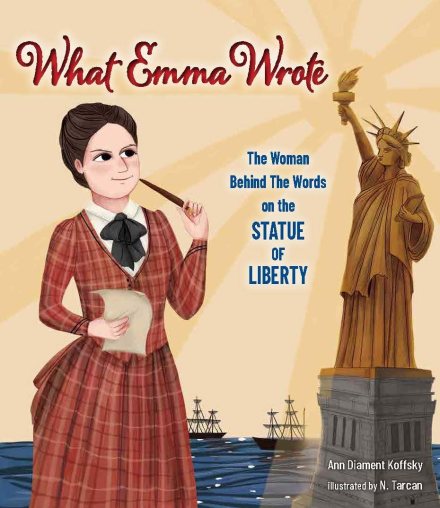
What Emma Wrote: The Woman Behind the Words on the Statue of Liberty

Emma Lazarus was a born writer, penning stories, poems, and essays wherever she went. Her parents were so proud of her that they bound her work into a book for family and friends, but so many people wanted one that they had to print more copies. While Emma was happy with this accomplishment, she was also looking for new ideas. Then one day Emma heard a group complaining about the “many people who had recently moved to New York from other countries.” Emma thought about her own family, who had come from Brazil many years ago after the king made it illegal to be Jewish.
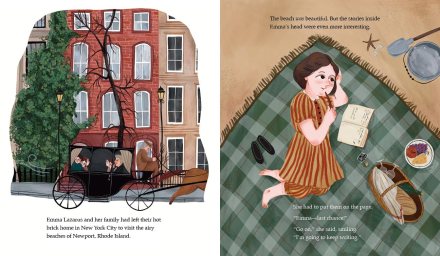
Illustration copyright © 2026 by N. Tarcan. Text copyright © 2026 by Ann Diament Koffsky. Published by Apples & Honey Press copyright © 2026.

Emma wondered about the new immigrants’ stories and decided to talk to them herself. “She went to Wards Island, where many new immigrants lived.” She met a mother from Russia with young children and others who had come to America after their homes were burned because they were Jewish. Emma began helping this community, bringing them food and clothing and helping to set up a trade school to help them find work.
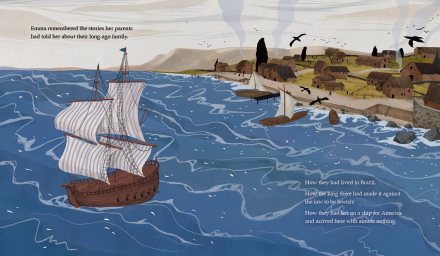
Illustration copyright © 2026 by N. Tarcan. Text copyright © 2026 by Ann Diament Koffsky. Published by Apples & Honey Press copyright © 2026.

When Emma read an article in a popular magazine blaming the immigrants for their plight, she went to the magazine’s editor, who told her to write a rebuttal. Her first article led to many more, and soon these were changing people’s minds and conversations about the immigrants. Now, people wanted to help them and accept them as their own. Her work became so well-known that Emma was asked to write a poem about the Statue of Liberty. Emma imagined what the statue would say to those “who traveled so far to come to America,” and pictured her as a “mother, welcoming her children home.” She began to write: “Give me your tired, your poor, / Your huddled masses yearning to breathe free . . .”
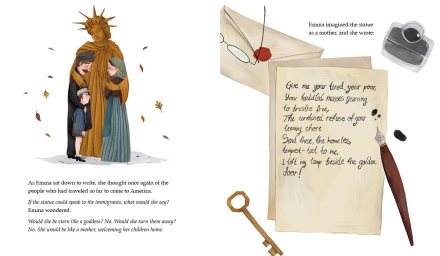
Illustration copyright © 2026 by N. Tarcan. Text copyright © 2026 by Ann Diament Koffsky. Published by Apples & Honey Press copyright © 2026.

People loved Emma’s poem, and “it inspired them to love the statue, too.” When her pedestal and the Statue of Liberty were finally settled in New York Harbor, the celebration attracted more than a million people. In the ensuing years, millions of people have traveled through New York Harbor to make America their home. Emma’s poem, “carved into a metal plate inside the statue’s base” welcomes each of them “with kindness.”

Back matter includes an Author’s Note about immigration in the 1800’s to early 1900’s and today, as well as the story of her own family’s immigration to America; facts about the Statue of Liberty; and a discussion of the deep connection between Emma and the Statue along with the text of Emma’s sonnet, “The New Colossus.”

Illustration copyright © 2026 by N. Tarcan. Text copyright © 2026 by Ann Diament Koffsky. Published by Apples & Honey Press copyright © 2026.

Ann Diament Koffsky reveals Emma Lazarus as a profound thinker and writer with a big heart even from a very young age, who, instead of relying on hearsay and the voices of prejudice, sought the truth by talking to the immigrants herself and then acting on their behalf. Through her poignant use of Emma’s thoughts, various characters’ dialogue, and Emma’s family’s and other immigrants’ stories, Koffsky provides readers with an understanding of the underpinnings of immigration. Her compelling, well-paced prose will keep children riveted to the story and prompt them to want to learn more about their own family’s history of coming to America. Koffsky’s excellent portrayal of the impact of journalism on people’s opinions opens doors to discuss today’s communication methods.

N. Tarcan’s stunning illustrations of New York during the mid to late 1800s allow readers to experience the customs and lifestyle of Emma’s world during this period. Tarcan contrasts this with an image of the village in Brazil from which Emma’s ancestors escaped. Children see the trade school Emma established as well as her determination to help the immigrants on Wards Island and elsewhere. An image of the Statue of Liberty embracing an immigrant family is particularly moving and exemplifies Emma Lazarus’s warmhearted welcome to all.

What Emma Wrote: The Woman Behind the Words on the Statue of Liberty is a must for all public and school libraries and would be an inspiring and impactful addition to any home collection.

Ages 4 – 8

Apples & Honey Press, 2026 | ISBN 978-1681157191

About the Author

Ann D. Koffsky is an award-winning author and illustrator of more than thirty books for children, including The Peddler and the President, the Kayla and Kugel series, What’s In Tuli’s Box?, Under-the-Sea Seder, and Noah’s Swimathon, all published with Apples & Honey Press. She lives in West Hempstead, New York. Visit her at annkoffsky.com.

About the Illustrator

N. Tarcan is a Turkish illustrator. She studied photography at Yildiz Technical University, but life had other plans! One day, she was taking photos of a local circus and the next thing she knew, she was performing with them and traveling around the world—from Qatar to Georgia and beyond. When COVID hit, she decided to return to her first love: drawing. Today, she draws inspiration from the small details of everyday life. She lives in Namur, Belgium. Follow her on Instagram.

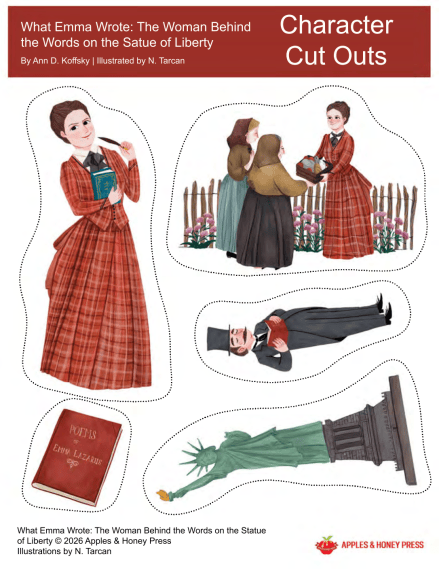
You can find a detailed Reading Guide to What Emma Wrote with discussion questions, extension activities, coloring pages, character cut outs, and more on the Apples & Honey Press and Behrman House website and here.
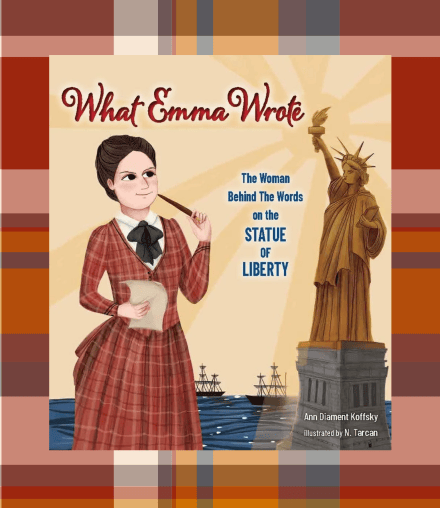
You can purchase What Emma Wrote: The Woman Behind the Words on the Statue of Liberty from these booksellers

Amazon | Barnes & Noble | Bookshop

July 20 – Celebrating Park and Recreation Month with Chana Stiefel

celebrate-picture-books-picture-book-review-one-question-interview-chana-stiefel-in-front-of-statue-of-liberty

Chana Stiefel is the author of more than 25 books for children, both fiction and nonfiction. Her most recent picture book is LET LIBERTY RISE (illustrated by Chuck Groenink, Scholastic, 2021), the true story of how children helped build the Statue of Liberty. Her next nonfiction picture book, THE TOWER OF LIFE, is the biography of Yaffa Eliach, a Jewish historian and survivor of the Holocaust who rebuilt her village in stories and photos to create the Tower of Faces in the U.S. Holocaust Memorial Museum in Washington, DC (illustrations by Susan Gal, Scholastic, 2022). Other picture books by Chana include MY NAME IS WAKAWAKALOCH!, illustrated by Mary Sullivan (HMH, 2019) and DADDY DEPOT, illustrated by Andy Snair (Feiwel & Friends, 2017).

You can connect with Chana Stiefel on Her website | Facebook | Instagram | Twitter

Welcome, Chana! I’m really glad to have you joining me for a one-question interview this summer! As the Statue of Liberty National Monument is part of the National Park System, Let Liberty Rise! is a perfect book for celebrating Park and Recreation month, which encourages people to get out and enjoy America’s beautiful national parks and all they have to offer. 

I know how much you love to connect with your readers. Can you talk about a poignant thing that happened during one of your visits this year?

My newest picture book Let Liberty Rise! How America’s Schoolchildren Helped Save the Statue of Liberty (illustrated by Chuck Groenink) launched from Scholastic on March 2nd. Soon afterward, I received a phone call from the youth director at a local synagogue asking if I’d be interested in doing an in-person reading to children on a Circle Line Cruise to the Statue of Liberty.

I nearly dropped the phone. 

“It will be socially distanced and everyone will be masked,” she said. “The event will be on Passover [the holiday of freedom]. Maybe you can talk to the kids about the meaning of liberty?”

“So let me get this straight,” I replied. “You’re asking if I would like to read my book about the history of the Statue of Liberty to children in front of the statue herself?” Having received my second vaccine, my answer was an emphatic, “YES! OMG, YES!” 

celebrate-picture-books-picture-book-review-one-question-interview-chana-stiefel-in-front-on-ferry

On April 1st, anchors away! My family and I joined over 100 people on the Circle Line’s maiden cruise in the wake of the Coronavirus, including Jim Morgan, owner of the Curious Reader bookshop, who helped me with a book signing. For the first time since the pandemic began, I shared with children (real, live children!) the story of how, in 1885, school children contributed their hard-earned pennies to build the pedestal of America’s most beloved statue. 

And then, there we were! Floating on a boat at the base of the Statue of Liberty. It was magical.

celebrate-picture-books-picture-book-review-one-question-interview-chana-stiefel-giving-talk

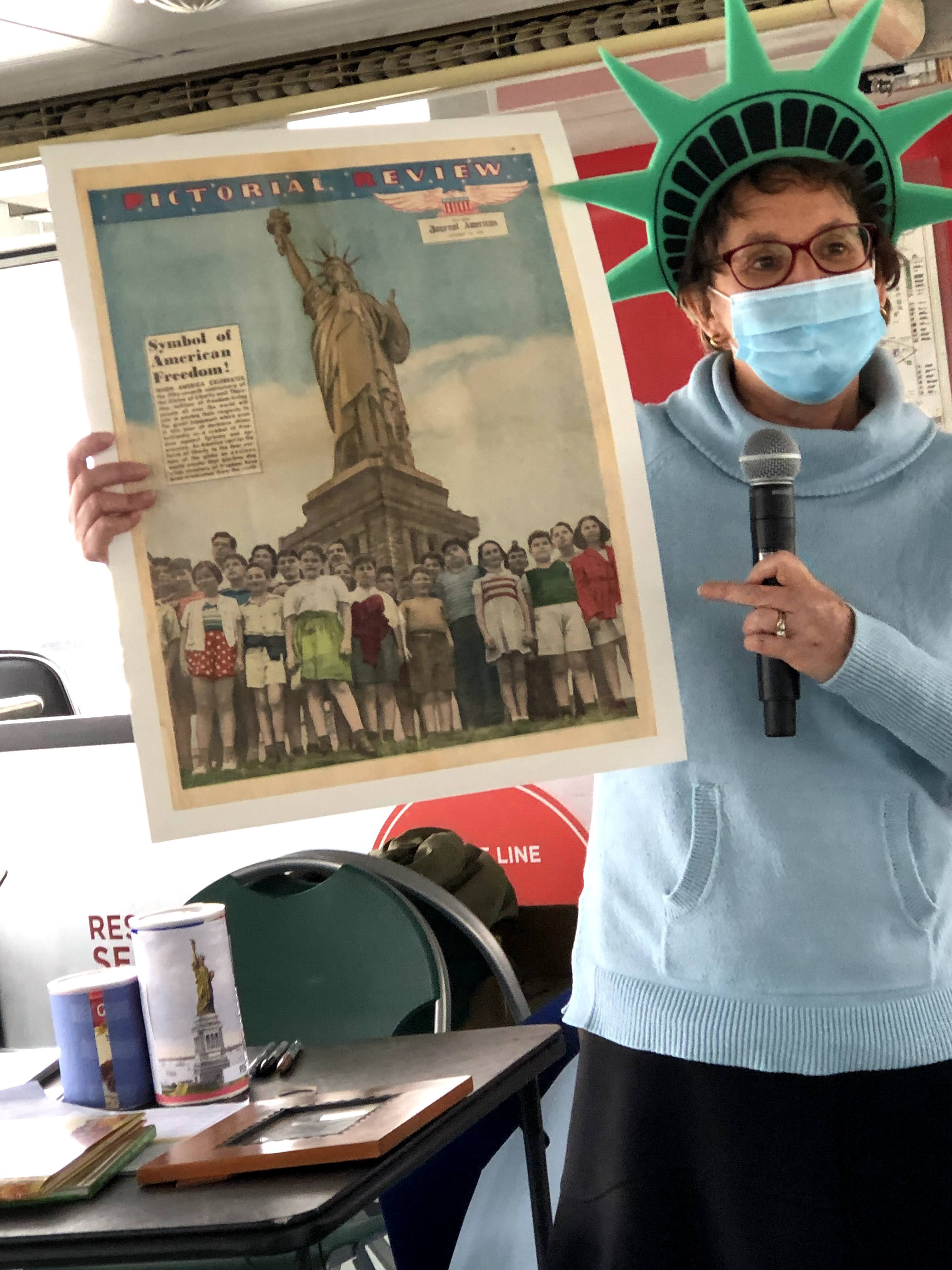
On our return to dock, I shared with the children the story of my late mother-in-law, Hannelore Guthof Stiefel, who escaped Nazi Germany as a young child. She arrived with her parents in New York City in 1941. One of our family’s most cherished possessions is a full page of the Journal American newspaper from October 24, 1943. It shows 11-year-old Hannelore in a red and white striped dress as a new immigrant standing with her classmates in front of the Statue of Liberty! Hannelore grew up and married my father-in-law Arnold Stiefel, also a German Jewish immigrant, who then returned to Germany as an American soldier. They moved to Bergenfield, NJ, where they became the 18th family to join Congregation Bnai Yeshurun (CBY)—the very same synagogue that invited me on the boat cruise. CBY, by the way, now has over 600 families! 

So there you have it: At the tail end of this terrible pandemic, a live reading to children at the base of the Statue of Liberty with my family’s immigration story.

Talk about liberty!

What a fabulous, unforgettable experience – for you and the kids! Thanks so much for sharing it and your wonderful pictures! 

celebrate-picture-books-picture-book-review-let-liberty-rise-cover

Let Liberty Rise! How America’s Schoolchildren Helped Save the Statue of Liberty

Written by Chana Stiefel | Illustrated by Chuck Groenink


When Lady Liberty arrived in New York after a long voyage from France, her unassembled parts sat in crates instead of standing tall over the harbor. Why? No one wanted to pay for the pedestal needed to give her a strong foundation. Upset about people’s disinterest, Joseph Pulitzer announced that he would publish the names of every person who donated to the cause – no matter how much or how little they gave. Children answered the call, and their pennies, nickels, and dimes rolled in, eventually adding up to the $100,000 needed to build the pedestal.

Now everyone could see America’s monument to “freedom and hope,” and the Statue of Liberty welcomed the immigrants who sailed to our shores in steamships from around the world. Today, Lady Liberty still stands “thanks to the contributions of people all across America — and children just like you.” 

celebrate-picture-books-picture-book-review-let-liberty-rise-face

Image copyright Chuck Groenink, 2021, text copyright Chana Stiefel, 2021. Courtesy of Scholastic.

Chana Stiefel raises children’s empowerment, excitement, and pride in what they can achieve in her uplifting true story of how children were instrumental in building the foundation for the Statue of Liberty. Her straightforward, conversational storytelling shines and the inclusion of quotes from children’s letters at the time will impress and charm today’s kids. 

Chuck Groenink’s delightful mixed-media illustrations inform readers on every page about the time period surrounding, the personalities involved in, and the scale of the project to build the pedestal for the Statue of Liberty. Images of kids donating their hard-earned change, knitting socks to sell, sacrificing candy and trips to the circus, and creating special clubs to raise money will remind today’s charitable readers that they are carrying on a proud tradition to make a difference to their community and their country. 

Ages 6 – 9

Scholastic Press, 2021 | ISBN 978-1338225884

Discover more about Chana Steifel and her books on her website.

You can learn more about Chuck Groenink, his books, and his art on his website.

Check out these other picture books and middle grade books by Chana!

celebrate-picture-books-picture-book-review-my-name-is-wakawakaloch-cover celebrate-picture-books-picture-book-review-daddy-depot-cover

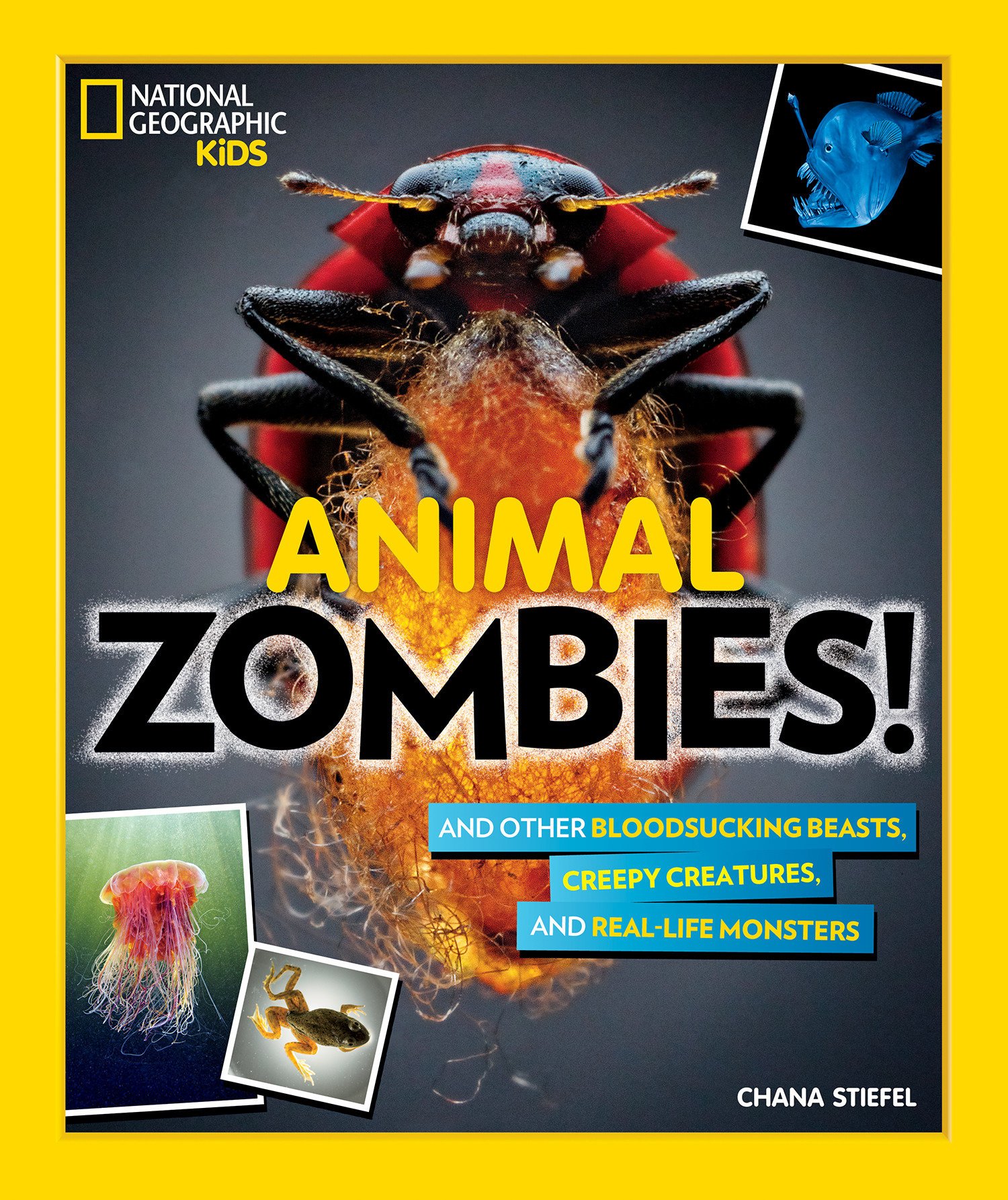
celebrate-picture-books-picture-book-review-animal-zombies-cover celebrate-picture-books-picture-book-review-tsunamis-cover

celebrate-picture-books-picture-book-review-let-liberty-rise-cover

You can find Let Liberty Rise! at these booksellers

Amazon | Barnes & Noble | Books-a-Million

To support your local independent bookstore, order from

Bookshop | IndieBound

Picture Book Review

October 14 – National Dessert Day

celebrate-picture-books-picture-book-review-betty-bunny-loves-chocolate-cake-cover

About the Holiday

Fermented chocolate drinks date back to 1900 BCE and the Aztecs believed cacao seeds were a gift from Quetzalcoatl, their god of wisdom. Who can argue that chocolate is a pretty smart thing? Almost anything is better covered in chocolate, and today’s holiday proves it! Whether you like your chocolate straight up or on the…potato chips, enjoy the day with a little indulgence!

Betty Bunny Loves Chocolate Cake

Written by Michael B. Kaplan | Illustrated by Stéphane Jorisch


Betty Bunny knows she’s a “handful” because her parents often tell her so. Betty Bunny also knew her parents love her, so she figures that “being a handful must be very, very good.” One day when her mom offered her a piece of chocolate cake after dinner, Betty Bunny declined. She didn’t like trying new things, and “announced: ‘I hate chocolate cake. Chocolate cake is yucky.” But then added “‘What’s chocolate cake?’”

celebrate-picture-books-picture-book-review-betty-bunny-loves-chocolate-cake-school

Image copyright Stéphane Jorisch, 2016, text copyright, 2016. Michael B. Kaplan. Courtesy of Penguin Books.

With her first bite, Betty Bunny was in love. She was so in love, in fact, that she decided that when she grew up she was “going to marry chocolate cake.” Her siblings were supportive—kind of—but her older brother Bill thought “‘you’re going to have really weird-looking kids.’” The next day at school, Betty Bunny had chocolate on the brain. When her teacher went over the A B C’s Betty said, “‘A is for chocolate cake, B is for chocolate cake, C is for chocolate cake.’”

On the playground when Betty Bunny mixed together dirt and water, it looked like chocolate cake, but sure didn’t taste like it. At dinner Betty Bunny was ready for her dessert before her healthy dinner, but her mom said no; and her dad agreed with her mom. Her siblings tried to help—kind of. Henry suggested she eat some peas. Kate told her to eat her carrots, and Bill taunted, “‘Why don’t you have some chocolate cake? That’s what you really want. Oh, no, wait. You can’t. Ha-Ha.’”

celebrate-picture-books-picture-book-review-betty-bunny-loves-chocolate-cake-siblings

Image copyright Stéphane Jorisch, 2016, text copyright, 2016. Michael B. Kaplan. Courtesy of Penguin Books.

Betty Bunny exploded. She threw peas at Henry, tossed carrots at Kate, and lobbed mashed potatoes at Bill. Betty Bunny’s mother was not pleased and sent her little daughter to bed without chocolate cake. “Betty Bunny screamed, ‘This family is yucky!’” and stomped up the stairs. Later, her mom came up to kiss her goodnight, and she had a plan. She would put a piece of cake in the fridge and the next day after a good dinner, Betty Bunny could have it. “‘Maybe if you know it’s there waiting for you, it will be easier to be patient,’” her mom said. Betty Bunny thought this was a great idea and “wanted to say something especially nice to her mother. ‘Mommy,’ she said, ‘you are a handful.’”  

celebrate-picture-books-picture-book-review-betty-bunny-loves-chocolate-cake-school

Image copyright Stéphane Jorisch, 2016, text copyright, 2016. Michael B. Kaplan. Courtesy of Penguin Books.

The next morning Betty Bunny couldn’t leave the house without first checking on her piece of cake. It looked so alone sitting on the plate all by itself, so Betty Bunny decided to put it in her pocket and take it to school with her. All day the secret knowledge of what was in her pocket made Betty Bunny happy. At dinner, after she had cleaned her plate, she reached into her pocket for her chocolate cake, but all she found was “a brown, goopy mess” that made her cry.

After her mom explained to her that putting the cake in her pocket was not the same as being patient, she prepared another piece for the next day. In the morning, Betty Bunny remembered her lesson in patience—and that’s why she put the cake…in her sock.

celebrate-picture-books-picture-book-review-betty-bunny-loves-chocolate-cake-kiss-goodnight

Image copyright Stéphane Jorisch, 2016, text copyright Michael B. Kaplan, 2016. Courtesy of Penguin Books.

Michael B. Kaplan’s adorable Betty Bunny Loves Chocolate Cake is a delight from its beginning to its smashing ending. He hits all the right notes in this humorous family drama, from the “helpful” siblings to the hair-trigger tantrums to the Ramona Quimby-esque misunderstanding of phrase. Along with the giggle-inducing fun kids learn a bit about patience, and adults discover insight into what goes on in their little bunny’s mind when obsession meets disappointment.

Stéphane Jorisch’s Bunny family is as cute as…well…a bunny.  His watercolor, pen and ink, and gouche paintings employ brilliant color and crisp lines to depict the loving relationship among the siblings and parents as well as the realistic home and school environments. The perfectly drawn body language—including folded arms, sly looks, emotional meltdowns, and understanding smiles—will resonate with kids and adults alike. And once the piece of chocolate cake appears, it’s easy to see how little Betty Bunny could become such a fan.

Ages 3 – 7

Puffin Books, 2016 (paperback) | ISBN 978-1101998632

Chocolate Covered Anything Day

celebrate-picture-books-picture-book-review-cake-dot-to-dot

Delicious Dot-to-Dot


Everything is better with chocolate—even this printable Delicious Dot-to-Dot! Get your pencils, follow the dots, and then color this delectable page!

celebrate-picture-books-picture-book-review-betty-bunny-loves-chocolate-cake-cover

You can find Betty Bunny Loves Chocolate Cake at these booksellers

Amazon | Barnes & Noble | Books-a-Million | IndieBound

Picture Book Review

Picture Book Review

July 4 – Independence Day

celebrate-picture-books-picture-book-review-her-right-foot-cover

About the Holiday

Today, the United States commemorates the signing of the Declaration of Independence on July 4, 1776 by delegates of the original 13 colonies, which asserted that the colonies considered themselves a new nation and no longer part of the British Empire. The day is traditionally celebrated with parades, picnics, and grand fireworks in cities and towns across the country. The holiday also provides the opportunity to remember and honor all the people who have come to America’s shores and have helped to build our nation.

Her Right Foot

Written by Dave Eggers | Illustrated by Shawn Harris


As you may know, one day, a Frenchman named Édouard de Laboulaye had the idea to celebrate the 100th birthday of the United States by giving the country a giant sculpture. He enlisted the help of artist Frédéric Auguste Bartholdi to design the statue. Bartholdi started by making a tiny version of the statue of Liberty and building bigger and bigger ones and “finally the one we know which stands 305 feet above the water.” He gave it a thin skin of copper—about as thick as two pennies.

celebrate-picture-books-picture-book-review-her-right-foot-france

Image copyright Shawn Harris, 2017, text copyright Dave Eggers, 2017. Courtesy of Chronicle Books.

It took many men to build the statue, as even just the hand was much bigger than a person. When all the parts were ready, the statue was constructed in Paris. “The Statue of Liberty stood there. High above Paris, for almost a year in 1884. In 1885, the statue was taken apart and placed into 214 crates that were shipped across the Atlantic. When the pieces reached New York, they were reassembled on an island that was then known as Bedloe’s Island. It took seventeen months to finish putting the statue back together.

You may not have recognized the Statue of Liberty when she was first erected. That’s because she was made of copper, and her outside was brown. Over thirty-five years of standing in all weathers, the Statue of Liberty oxidized, turning the greenish-blue we see today.

celebrate-picture-books-picture-book-review-her-right-foot-statue-of-liberty

Image copyright Shawn Harris, 2017, text copyright Dave Eggers, 2017. Courtesy of Chronicle Books.

You may have learned about many of the historical and geological facts associated with features of the Statue of Liberty—for instance about the book and the torch she carries and the crown she wears. And perhaps you have heard some of the humorous stories about her—for instance, that Thomas Edison thought it would be a good idea to put a giant phonograph inside her so that she could talk.

But there is one point you may not know. “The point is that if you have seen a picture of the Statue of Liberty, or many of pictures of the Statue of Liberty, or even hundreds of pictures of the Statue of Liberty, you probably have not seen pictures of her feet. And even if you have seen pictures of her feet, you probably have not seen pictures of the back of her feet. In particular, her right foot.”

celebrate-picture-books-picture-book-review-her-right-foot-striding-leg

Image copyright Shawn Harris, 2017, text copyright Dave Eggers, 2017. Courtesy of Chronicle Books.

When you look at the Statue of Liberty’s right foot, you notice that she is taking a step. “She is on the move.” Now, for years people have talked about her crown and her gown, her torch and the serious look on her face, but no one has wondered where she is going. Could she be headed into downtown Manhattan? Or maybe New Jersey? Doubtful. If you look closely, you’ll see that around her feet are broken chains, “implying she had freed herself from bondage.”

celebrate-picture-books-picture-book-review-her-right-foot-refugees

Image copyright Shawn Harris, 2017, text copyright Dave Eggers, 2017. Courtesy of Chronicle Books.

This is a truth the Statue of Liberty understands. “Liberty and freedom from oppression are not something you get or grant by standing around like some kind of statue. No. These are things that require action. Courage. An unwillingness to rest.” The Statue of Liberty was not built to welcome immigrants only from one country on one particular day, but to welcome people from all over, every day. “After all, the Statue of Liberty is an immigrant too,” and she does not stand still to welcome people to our shores. She is striding out into the sea to meet them.

celebrate-picture-books-picture-book-review-her-right-foot-immigrants

Image copyright Shawn Harris, 2017, text copyright Dave Eggers, 2017. Courtesy of Chronicle Books.

Seamlessly transitioning from droll to thoughtful, David Eggers succinctly tells the history of the Statue of Liberty’s coming to America and then invites readers to focus on and think about just one feature—her striding right foot. Timely and timeless, Egger’s story is a call to action, reminding readers of the promise of America in a most moving way.

Shawn Harris’s striking paper-cut collage images complement Egger’s conversational storytelling with personality, vibrant color, eye-catching perspectives, and—most importantly—the people the Statue of Liberty is welcoming.

Combining a perfect package of storytelling and art, Her Right Foot is an entertaining and compelling addition to home bookshelves for kids interested in history, travel, and social issues as well as for classrooms for story times and to stimulate conversations about the history and meaning of America.

Ages 6 – 9

Chronicle Books, 2017 | ISBN 978-1452162812

Discover more about Dave Eggers and his books for children and adults on his website.

To learn more about Shawn Harris, his books, his art, and his music visit his website.

Independence Day Activity

celebrate-picture-books-picture-book-review-statue-of-liberty-coloring-page

Statue of Liberty Coloring Page


Grab your crayons or pencils and enjoy this printable Statue of Liberty Coloring Page! 

celebrate-picture-books-picture-book-review-her-right-foot-cover

You can find Her Right Foot at these booksellers

Amazon | Barnes & Noble | Books-a-Million | IndieBound

Picture Book Review