August 31 – It’s National Inventor’s Month

celebrate-picture-books-picture-book-review-who-invented-this-cover

About the Holiday

Established in 1998 by the United Inventors Association of the USA, the Academy of Applied Science, and Inventors’ Digest magazine, this month-long holiday celebrates the imagination and talent of individuals who dare to think differently and create new products, services, and ways of doing things that make a positive contribution to the world. To join in, enjoy your favorite new inventions, and if you harbor dreams of being an inventor—on a large or small scale—look for opportunities to share your ideas.

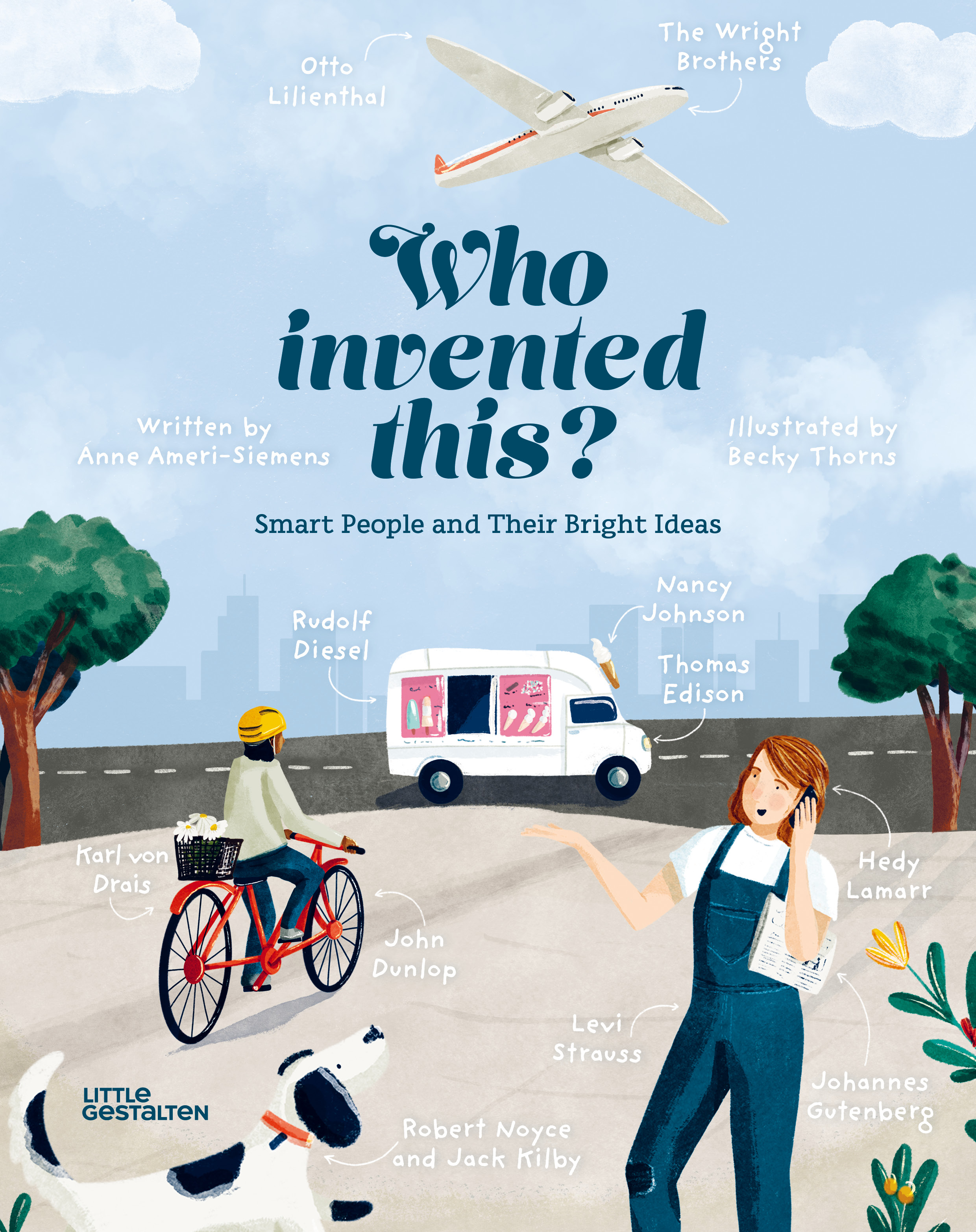
Who Invented This? Smart People and Their Bright Ideas

Written by Anne Ameri-Siemens | Illustrated by Becky Thorns


When you jump in the car or turn on a lamp, the idea that these were someone’s inventions (and even the names Henry Ford and Thomas Edison) may flash through your mind. But what about when you slurp up delicious Raman noodles, watch your pet fish through the aquarium glass, or squeeze out the last bit of toothpaste in the tube? In Who Invented This? Anne Ameri-Siemens introduces young readers to the brilliant minds behind some of the things we use every day.
celebrate-picture-books-picture-book-review-who-invented-this-light-bulb

Image copyright Becky Thorns, 2021, text copyright Anne Ameri-Siemans, 2021. Courtesy of Little Gestalten.

Take bicycles, for instance. You’ve probably seen pictures of those old bikes with a huge front wheel and a tiny back wheel. Was this the first bike? Not at all! Ameri-Siemens reveals that the first bicycle—called a “running machine”—had two wheels but didn’t have pedals. Invented by Karl von Drais in 1817, it had a steering bar in the front and was powered by the rider sitting on the seat and “running along the ground.” It may seem comical, but this invention led to more and more improvements until Pierre Michaux designed the first bike with pedals in the 1860s. You can read about all of the advancements in bikes and the other products it inspired too.
celebrate-picture-books-picture-book-review-who-invented-this-frequency-hopping

Image copyright Becky Thorns, 2021, text copyright Anne Ameri-Siemans, 2021. Courtesy of Little Gestalten.

As long as we’re talking about things that transport people here and there, have you ever thought about what drivers did before there were modern traffic lights? While the idea of indicating “stop” and “go” in red and green is universal across the world, the use of yellow for the transition came later from American policeman William Potts. “The first traffic lights in the world were built in London in 1868.” But they weren’t automatic. A policeman standing in the road had to move arms up and down to regulate the flow of traffic. “At night the arms were lit up in red and green.” Readers will find out more about how traffic lights progressed as well as how the timing of stop and go is controlled.

celebrate-picture-books-picture-book-review-who-invented-this-fizz

Image copyright Becky Thorns, 2021, text copyright Anne Ameri-Siemans, 2021. Courtesy of Little Gestalten.

Sometimes inventors get their ideas from nature—this is called bionics—and kids will learn how George de Mestral was ingeniously inspired by those sticky burrs that cling to socks to create a product most of them use all the time. There are other everyday products that are so important that they were invented long, long, long ago. One of these? Toothpaste! While Washington Sheffield invented the first smooth paste in 1850 by adding glycerin to the powder then used—“a mixture of pumice stone, powdered marble, grated oyster shells, ashes, peppermint oil or sage, and some soap power”—and his son realized the toothpaste could be packed in tubes like artists’ paints instead of sold in foil bags, prehistoric humans also brushed their teeth. Kids will be fascinated to learn more about the history of this morning and nighttime routine and even examples from the animal kingdom.
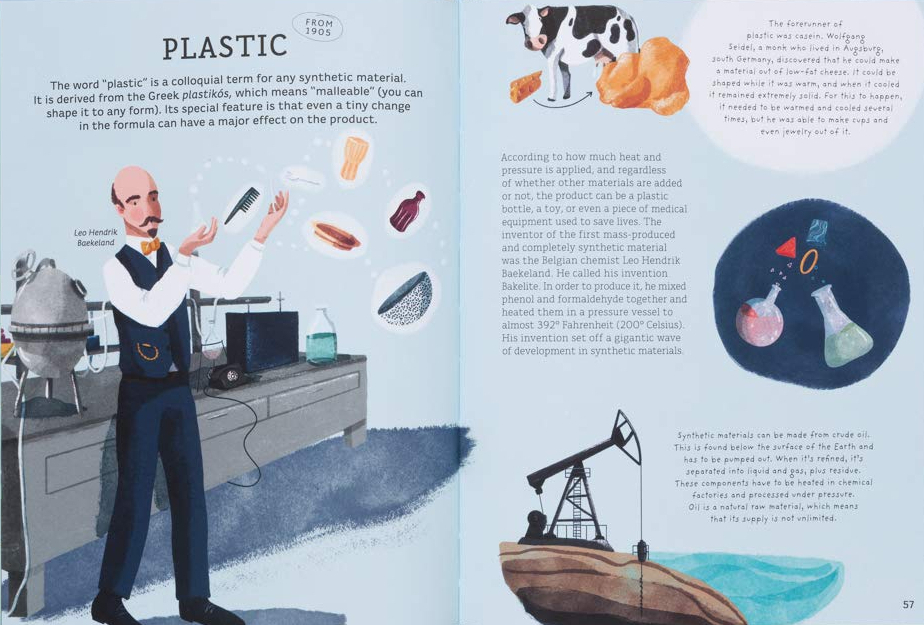
celebrate-picture-books-picture-book-review-who-invented-this-plastic

Image copyright Becky Thorns, 2021, text copyright Anne Ameri-Siemans, 2021. Courtesy of Little Gestalten.

Readers will be excited to learn about these inventions and many more that make up the fabric of our everyday lives and were conceived by talented inventors, scientists, and engineers. Some are the result of teamwork while some are the product of many years spent alone in a laboratory or even simply chance. In all, kids learn about 34 inventions that fall into diverse categories from transportation to communications, clothing to food, music to science and high-tech marvels.
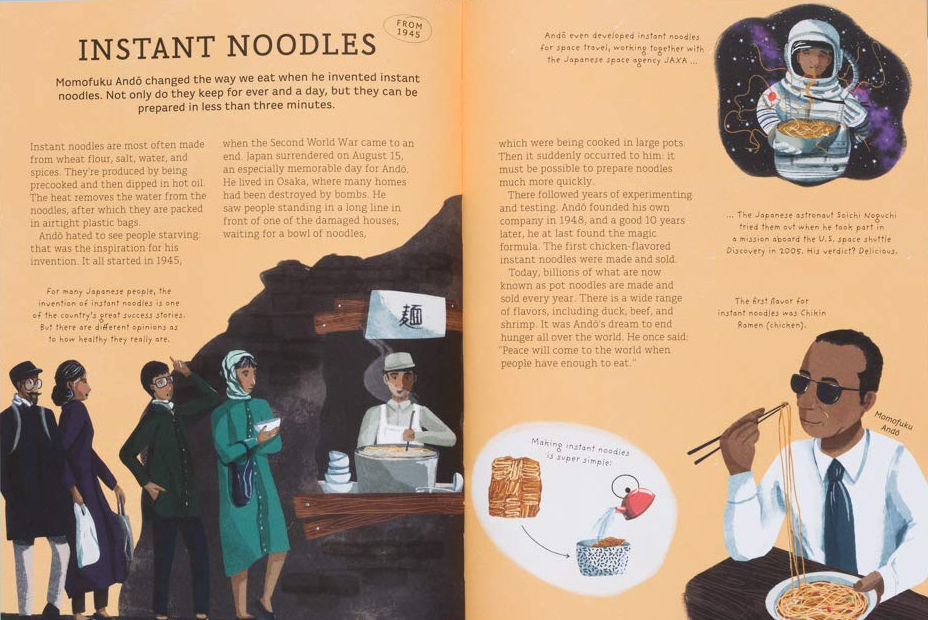
celebrate-picture-books-picture-book-review-who-invented-this-instant-noodles

Image copyright Becky Thorns, 2021, text copyright Anne Ameri-Siemans, 2021. Courtesy of Little Gestalten.

Anne Ameri-Siemens’ conversational and engaging text will captivate readers interested in learning about how the world they know came to be. Ameri-Siemen’s storytelling beautifully balances the scientific and personal details of each invention to deliver compelling profiles. Interesting asides on each page reveal more about the inventions and the people who created them.

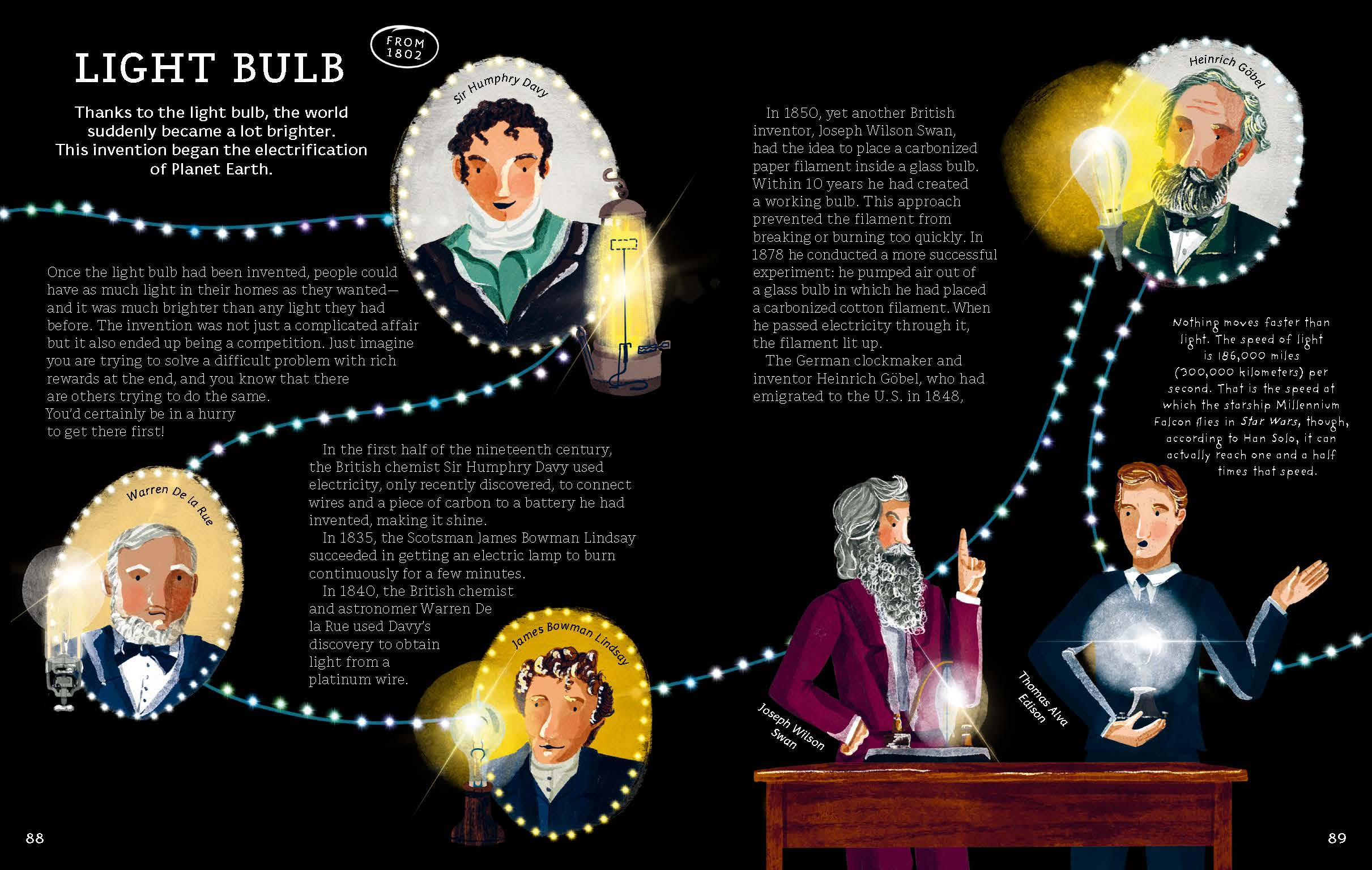
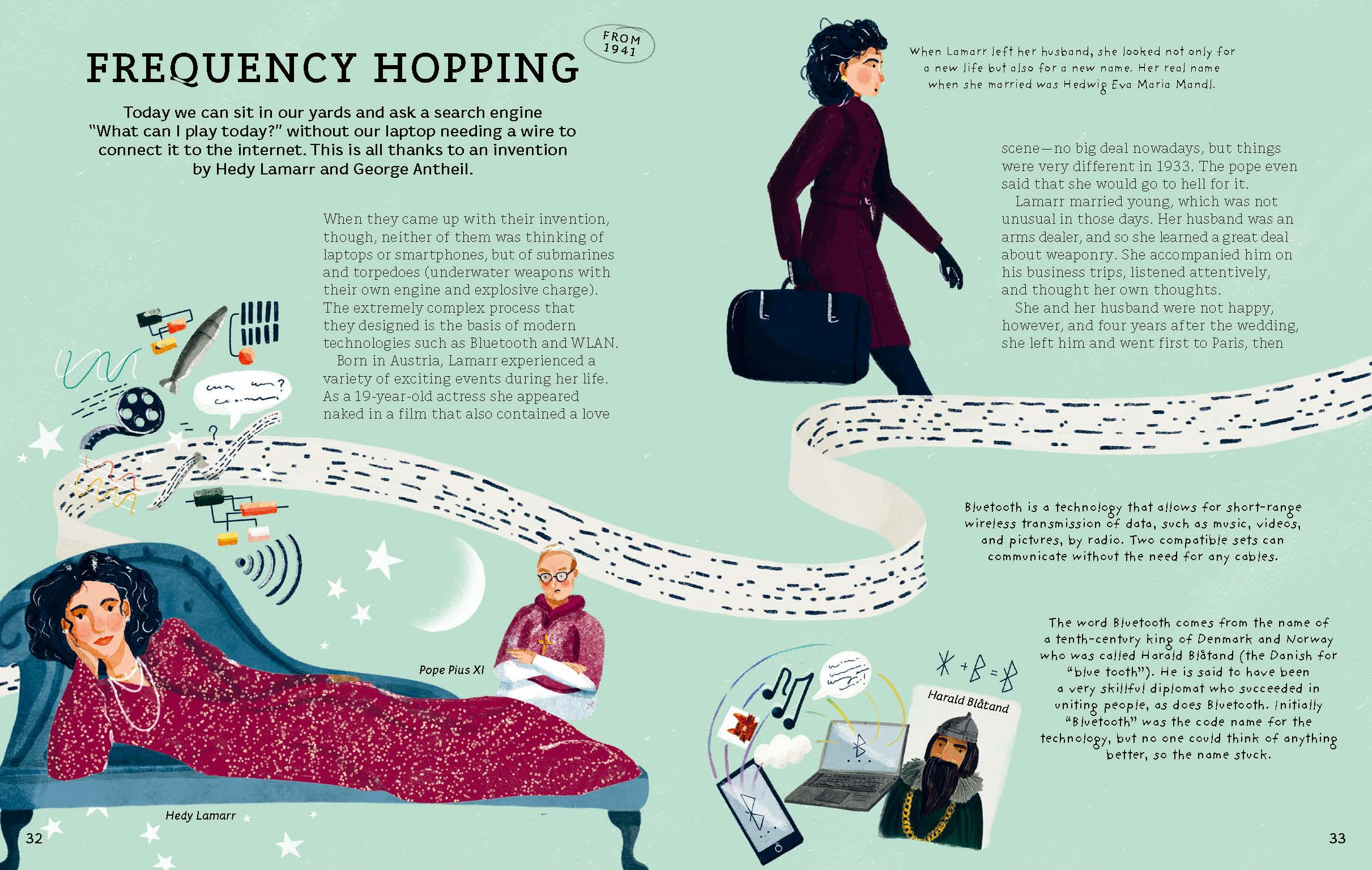
Accompanying each subject are Becky Thorns’ eye-catching illustrations that depict not only the invention but its creator or creators as well as how it is used or where it can be found. Thorns also employs clever ways to connect images on a page-spread that reinforcing their purpose and history. Each page spread offers plenty of ideas to spur research projects or extended lessons for classrooms and homeschoolers.

Packed with information on products, ideas, world-changing inventions, and the brilliant minds behind them, Who Invented This? Smart People and Their Bright Ideas will fascinate kids and spark an interest in further research, science, engineering, and technical studies. The book is highly recommended for young inventors, history buffs, and other creative thinkers as well as for classrooms and school and public library collections.

Ages 9 – 12 and up

Little Gestalten, 2021 | ISBN 978-3899551334

To learn more about Becky Thorns, her books, and her art, visit her website.

National Inventor’s Month Activity

celebrate-picture-books-picture-book-review-share-your-bright-idea-activity

Share Your Bright Idea! Page


Do you sometimes have a lightbulb moment when an idea seems just right? Use this printable Share Your Bright Idea! Page to write about or draw your idea!

celebrate-picture-books-picture-book-review-who-invented-this-cover

You can find Who Invented This? Smart People and Their Bright Ideas at these booksellers

Amazon | Barnes & Noble | Books-a-Million

To support your local independent bookstore, order from

Bookshop | IndieBound

Picture Book Review

May 29 – It’s National Inventor’s Month

celebrate-picture-books-picture-book-review-just-like-rube-goldberg-cover

About the Holiday

Established in 1998 by the United Inventors Association of the USA, the Academy of Applied Science, and Inventors’ Digest magazine, this month-long holiday celebrates the imagination and talent of individuals who dare to think differently and create new products, services, and ways of doing things that make a positive contribution to the world. To join in, enjoy your favorite new inventions, and if you harbor dreams of being an inventor—on a large or small scale—look for opportunities to share your ideas.

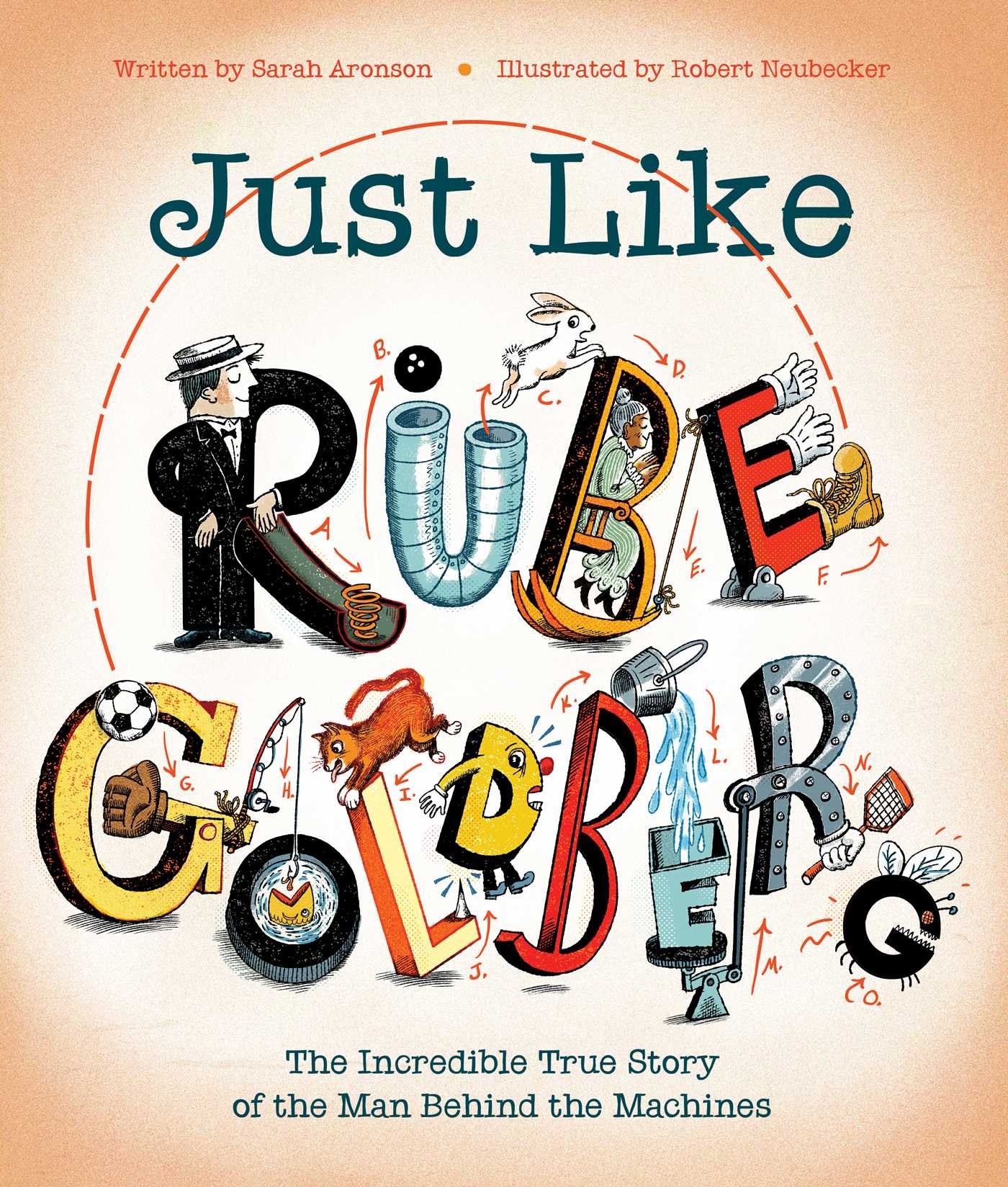
Just Like Rube Goldberg: The Incredible True Story of the Man Behind the Machines

Written by Sarah Aronson | Illustrated by Robert Neubecker


Famous inventors usually get that way by creating something new—something that people can’t live without, right? Well, it kind of was and wasn’t this way for Rube Goldberg—as you’ll see. Even as a very young boy, Rube Goldberg loved to draw. As a four-year-old he traced the cartoons in the newspaper and when he got older, he took art lessons. His dream was to be a cartoonist for a major newspaper.

celebrate-picture-books-picture-book-review-just-like-rube-goldberg-water-department

Image copyright Robert Neubecker, 2019, text Sarah Aronson, 2019. Courtesy of Beach Lane Books.

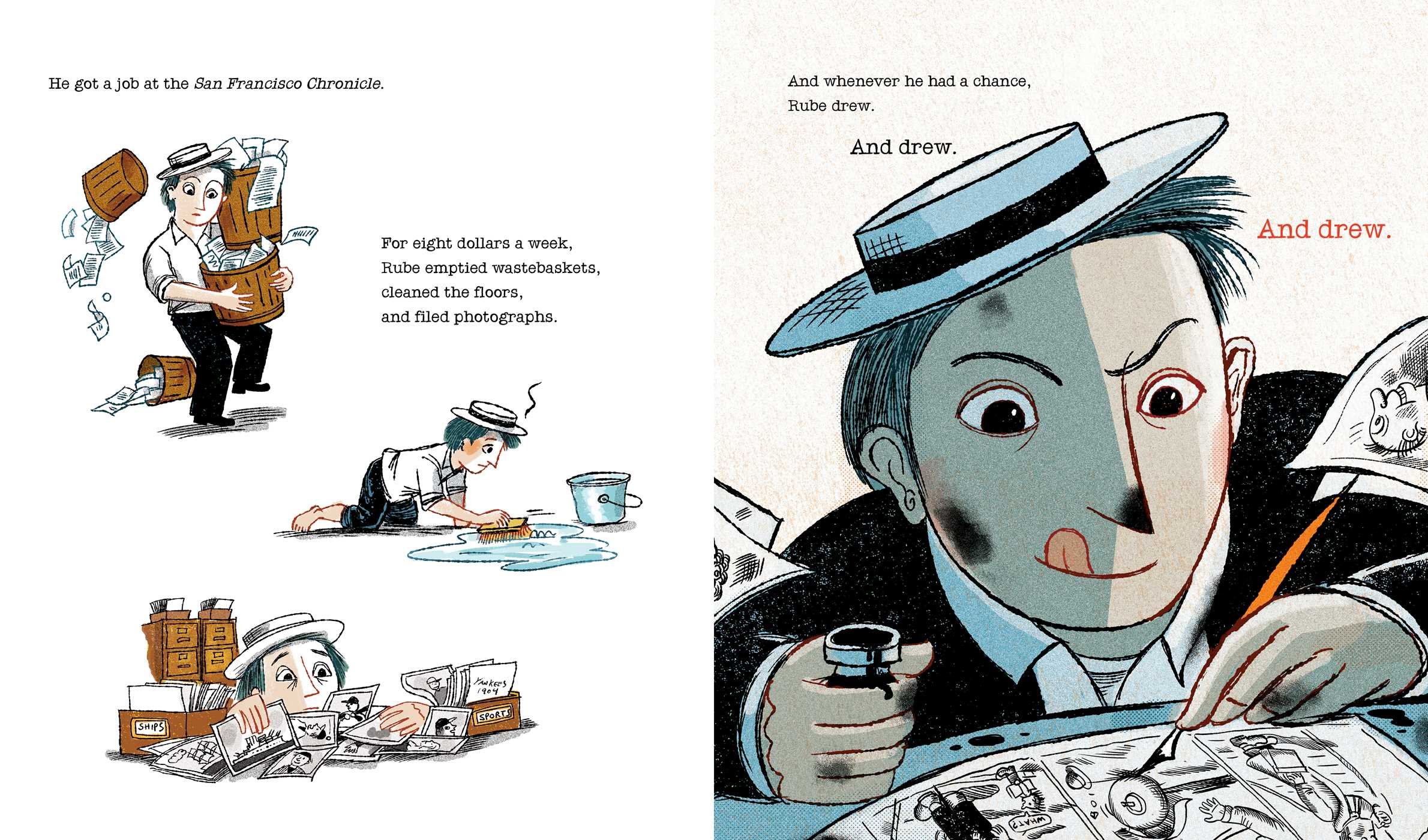
Rube’s family was not so supportive, though. His father—who had moved to America from Germany so that his family could have a better life—believed his son would end up as a beggar if he pursued his art. So, Rube went to college and became an engineer for the Department of Water and Sewers in San Francisco—for six months. He gave up his good-paying job for a job as an errand boy at the San Francisco Chronicle at eight dollars a week. In between cleaning, emptying trash cans, and filing photographs, “Rube drew. And drew. And drew.”

Rube submitted his cartoons to the editor and most of the time they were rejected. When the editor “said yes, Rube sometimes got paid, but other times he just got out of the office tasks he didn’t like to do.” A year went by, and finally Rube was hired by the San Francisco Bulletin sports department, where he drew cartoons and wrote a column too. Then in 1906, the great earthquake hit San Francisco. Homes were lost, as were jobs. In the broken city, people couldn’t focus on their future or even feel hopeful. Rube “did the only thing he could do: He drew comics to cheer people up.”

celebrate-picture-books-picture-book-review-just-like-rube-goldberg-errand-boy

Image copyright Robert Neubecker, 2019, text Sarah Aronson, 2019. Courtesy of Beach Lane Books.

Rube also decided to move to New York—the place he considered the “‘front row,’ the cartoon capital of the country.” For twelve days he showed his art to newspaper after newspaper and was finally hired by the New York Evening Mail as a cartoonist. “Right off the bat, Rube became a celebrity. People couldn’t wait to see what he had to say about all kinds of things.” He drew comics about sports, politics, and “the silliness of everyday life,” but the comics people loved the best were drawn by his alter ego, Professor Lucifer Gorgonzola Butts. The professor was known for his intricately complex inventions that made even the simplest action a “surreal and ridiculous” multi-step wonder that often defied physics.

celebrate-picture-books-picture-book-review-just-like-rube-goldberg-newsroom

Image copyright Robert Neubecker, 2019, text Sarah Aronson, 2019. Courtesy of Beach Lane Books.

He invented a machine that employed a carrot-eating goat, a ghost, an egg-laying chicken, an archer, a target with a mechanical hand, an upright-shooting canon, and dough that cooked in the smoke of the cannon as a cannonball shot through the middle of it. Turning off the light, might just require the pull of a cord, but in Professor Butts’ world, it also required a banana-laden fishing pole, a monkey bouncing on a balloon, a fan that turned a bicycle wheel, a jack-in-the-box, a bucket, a bowling ball, and seesaw. Perhaps one of the silliest was a contraption for cutting your own hair.

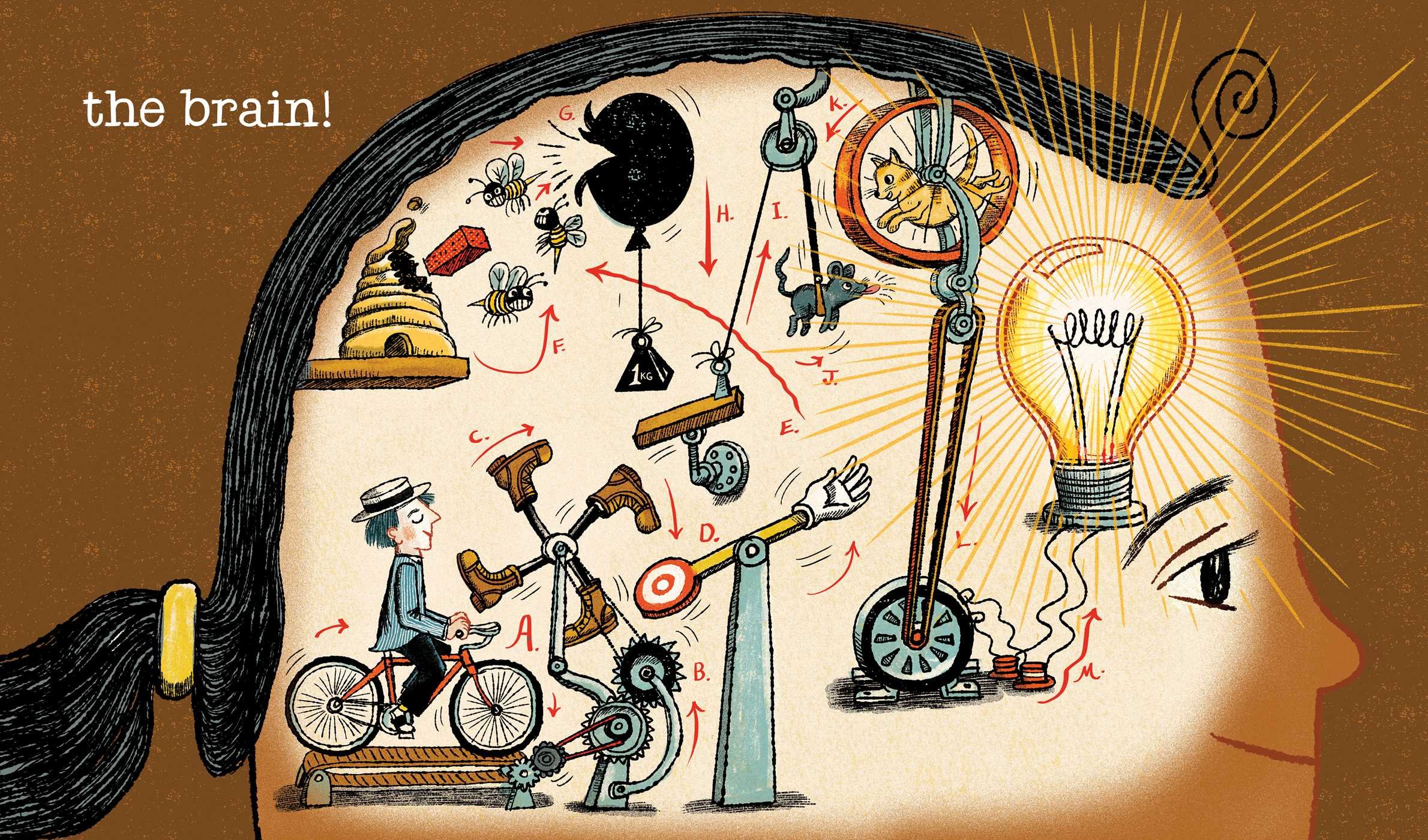
Of course, these gizmos weren’t designed to really work—only to make people “look closer. And question logic. And tickle the imagination.” At a time when new discoveries were being made all around, Rube Goldberg’s cartoons “challenged people to use the most amazing machine in the universe: the brain!” Do you have aspirations, thoughts, and dreams that seem out of the mainstream and wonder if this same kind of success is still possible? The answer is: “You bet it is.” So “figure out what you want” then work hard and “have a great time getting there…. Just like Rube Goldberg!”

celebrate-picture-books-picture-book-review-just-like-rube-goldberg-doughnuts

Image copyright Robert Neubecker, 2019, text Sarah Aronson, 2019. Courtesy of Beach Lane Books.

The book’s endpapers depict eight of Rube Goldberg’s original invention cartoons, and an Author’s Note following the text reveals more about Goldberg’s amazing life as a cartoonist, artist, and political observer. The awards he won and the children’s game inspired by his contraptions are also mentioned.

For Rube Goldberg fans, young inventors and artists, and anyone with a dream, Sarah Aronson’s story of this beloved cartoonist’s life is a fast-paced trip into the past and the fine tradition of lampoonery. Goldberg’s one-of-a-kind imagination and unstoppable confidence in his dream are on full display as he quits a lucrative job for the uncertainty of an artist’s life. His success and long career is a tribute not only to Goldberg himself, but to all the employers and consumers who recognize innovation and embrace it.

celebrate-picture-books-picture-book-review-just-like-rube-goldberg-brain

Image copyright Robert Neubecker, 2019, text Sarah Aronson, 2019. Courtesy of Beach Lane Books.

Robert Neubecker’s stylized and entertaining illustrations take inspiration from and honor Rube Goldberg while also transporting readers to the early 1900s. Kids will particularly enjoy the clever design that takes text through underground maze of the San Francisco Department of Water and Sewers and the busy newsroom—complete with carrier pigeon—where Goldberg found a home as a cartoonist. In two-page spreads, three of Goldberg’s cartoons are rendered in color, giving readers plenty to linger over and giggle at, and the final images are sure to spark a new appreciation for the imagination and its power.

Sure to create new fans of Rube Goldberg’s work, Just Like Rube Goldberg would be an exciting addition to home, school, and public libraries for all of those unique thinkers out there.

Ages 3 – 8

Beach Lane Books, 2019 | ISBN 978-1481476683

Discover more about Sarah Aronson and her books on her website.

To learn more about Robert Neubecker, his books, and his art on his website.

National Inventor’s Month Activity

CPB - Inventor's Tool Kit II (2)

Inventor’s Tool Kit


Every idea begins as a jumble of seemingly unrelated parts. Gathering whatever types of material inspires you and keeping it in a box ready to go when inspiration hits is a great way to support innovation and spark experimentation.

Supplies

  • Small parts organizer with drawers or compartments, available at hardware stores and craft stores
  • A variety of parts or craft materials that can be combined, built with, or built on
  • Some hardware ideas—pulleys, wheels, small to medium pieces of wood, wire, nuts, bolts, screws, hooks, knobs, hinges, recyclable materials
  • Some craft ideas—clay, beads, wooden pieces, sticks, paints, pipe cleaners, string, spools, buttons, glitter, scraps of material, recyclable materials

Directions

  1. Fill the organizer with the materials of your choice
  2. Let your imagination go to work! Build something cool, crazy, silly, useful—Amazing!

celebrate-picture-books-picture-book-review-just-like-rube-goldberg-cover

You can find Just Like Rube Goldberg at these booksellers

Amazon | Barnes & Noble | Books-a-Million | IndieBound

Picture Book Review

January 17 – Kid Inventors’ Day

celebrate-picture-books-picture-book-review-the-girl-who-thought-in-pictures-cover

About the Holiday

Today’s holiday celebrates all those ingenious kids who have improved the world with their inventions. This date was chosen to commemorate another child inventor—Benjamin Franklin—who designed the first swim fins when he was just 12 years old! (Seriously, is there nothing this man didn’t or couldn’t do?). With their supple minds and can-do attitudes, kids have changed the ways things are done in the fields of medicine, technology, communications, and even food—as today’s book shows! To learn more about the day and find lots of resources, including a list of books, contests, tips, and teachers’ guides, visit the K.I.D website.

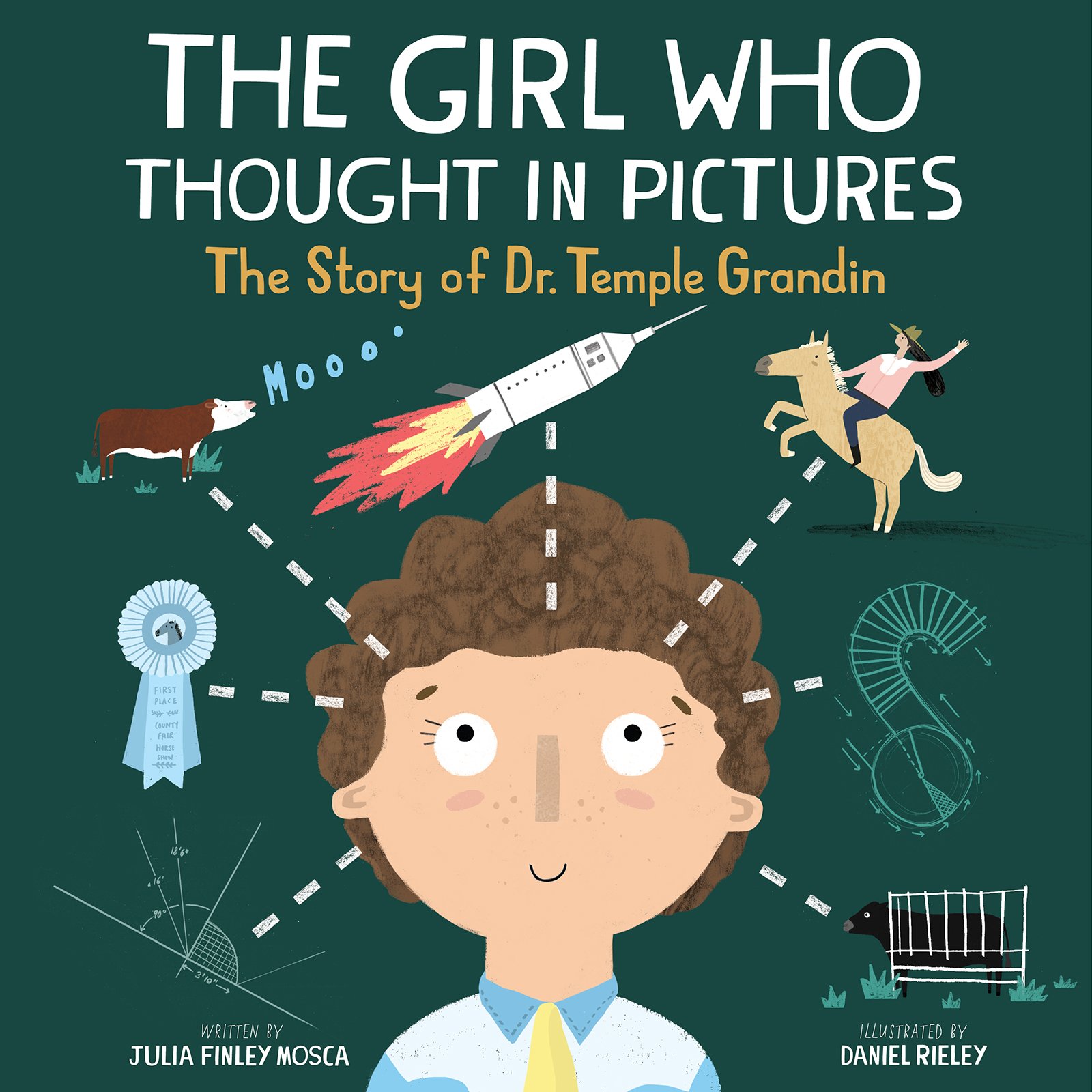
The Girl Who Thought in Pictures: The Story of Dr. Temple Grandin

Written by Julia Finley Mosca | Illustrated by Daniel Rieley


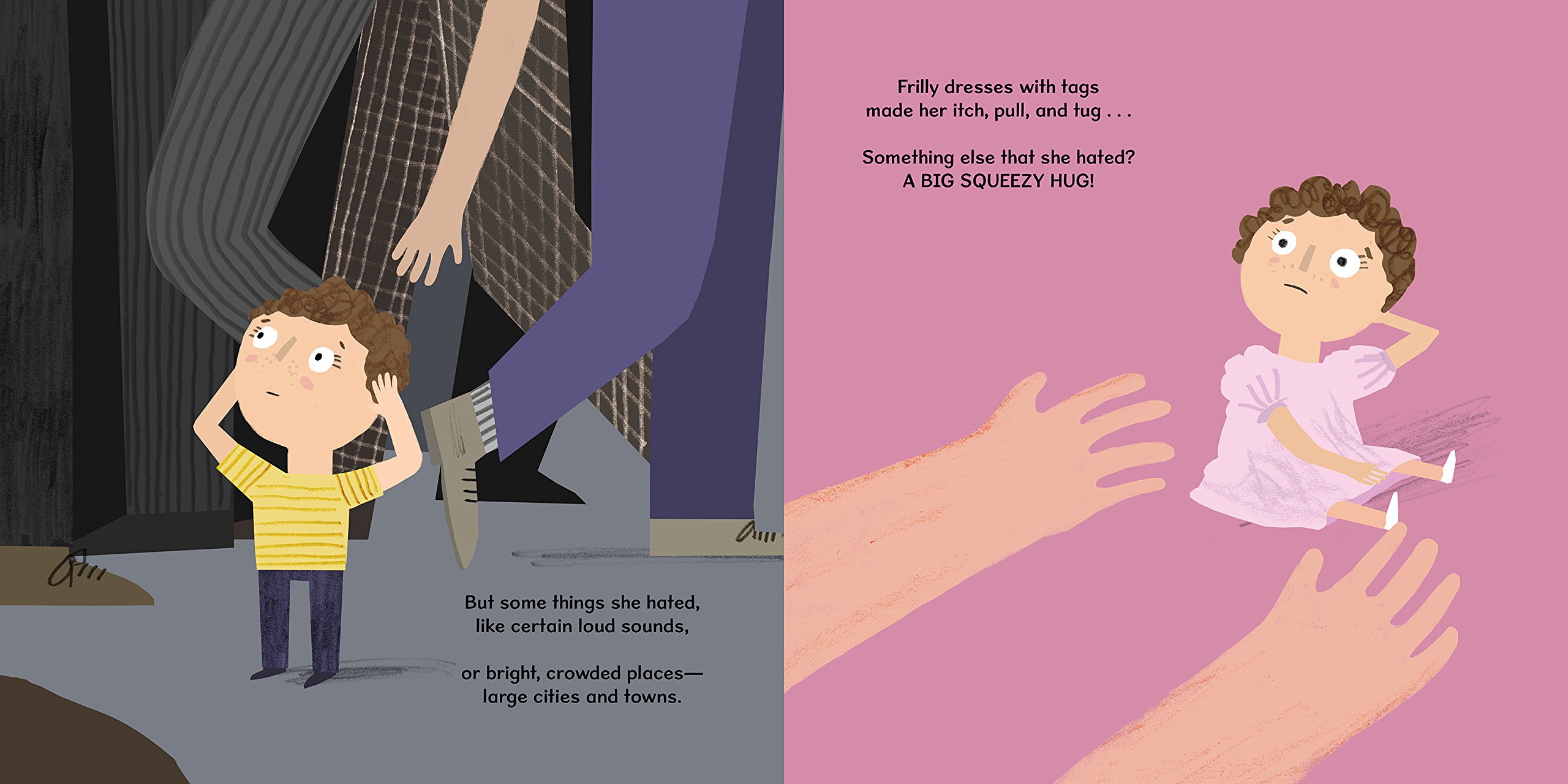
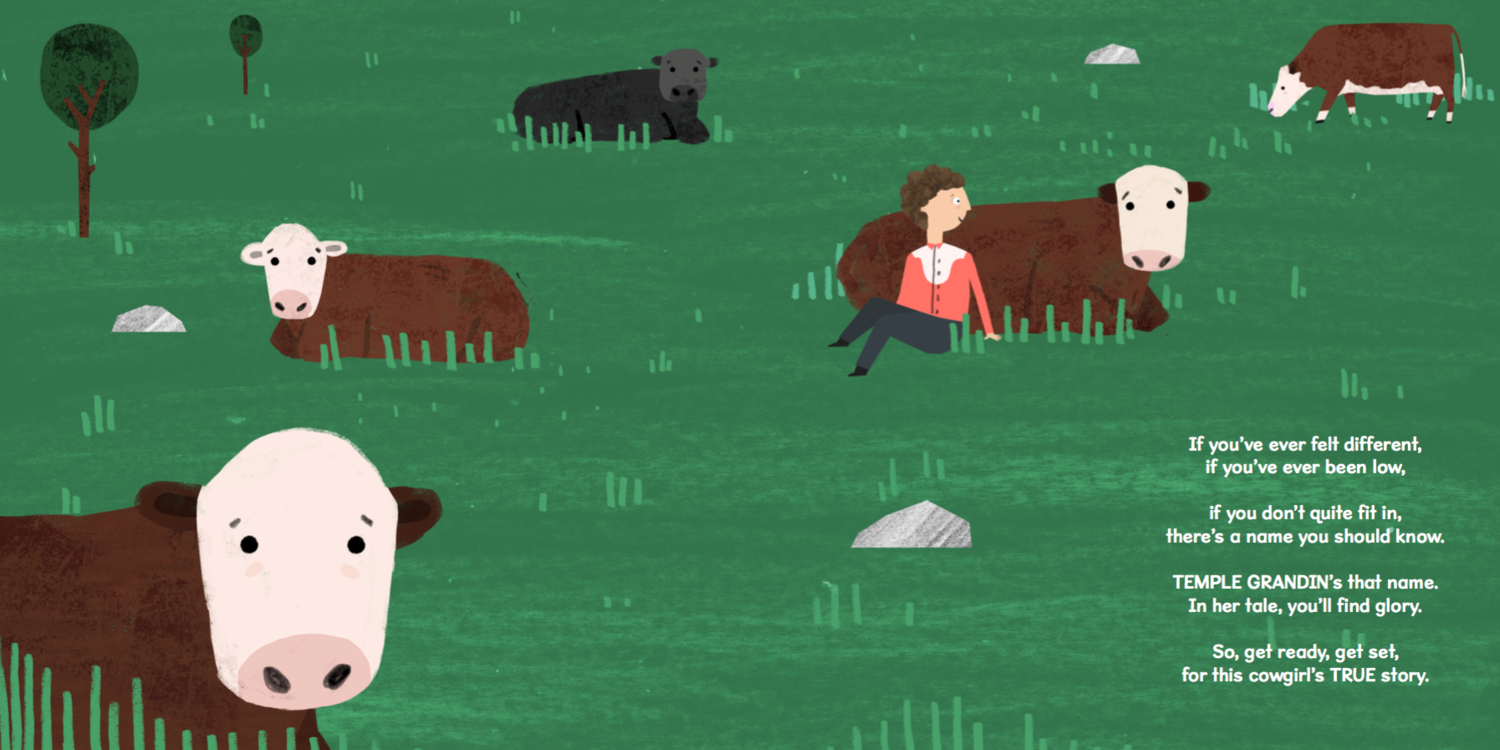
If you feel different and sometimes discouraged, the story of Temple Grandin may help you see that everyone has a talent and their own place in the world. Temple was born in Boston and “unique from the start, / an unusual girl, / she loved spinning in circles / and watching things twirl.” Loud sounds, big crowds, bright lights, and scratchy clothes disturbed her. And she did not like to get a “big squeezy hug.”

celebrate-picture-books-picture-book-review-the-girl-who-thought-in-pictures-too-loud

Image copyright Daniel Rieley, 2017, text copyright Julia Finley Mosca, 2017. Courtesy of The Innovation Press.

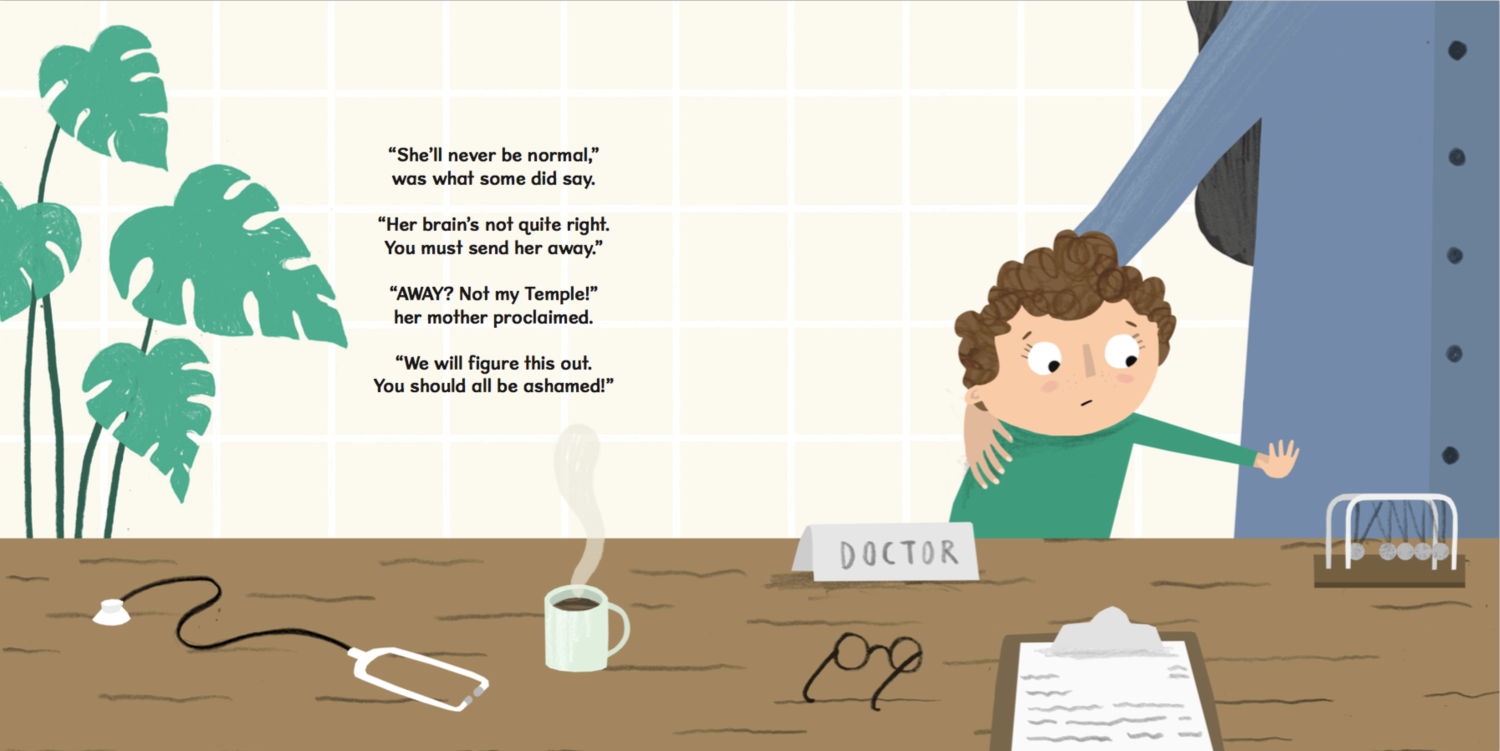
When she became overloaded with stress and frustration, Temple was known to “kick, holler, bang, shrieeeeek! Yet, still, by age three, not one word did she speak.” People told Temple’s parents that she’d never be normal and to send her away, but her mother would not hear of it. With a lot of work, special teachers helped Temple learn to talk. “And that thing with her brain… / it was AUTISM, see? / She was ‘different not less,’ / they all finally agreed.”

celebrate-picture-books-picture-book-review-the-girl-who-thought-in-pictures-doctor

Image copyright Daniel Rieley, 2017, text copyright Julia Finley Mosca, 2017. Courtesy of The Innovation Press.

While Temple was like her peers in many ways, she interacted with words differently. “If something was mentioned, / for instance, a fly, / in her mind, she’d see dozens / of PHOTOS buzz by.” Her different view point made it hard for her at school. The other kids chased her and teased her for the way that she acted and for “…saying things / over and over. / and over… / and over… / AND over.” When she had finally had enough, “she threw a book at a kid / and was kicked out of school!” No one understood Temple and Temple couldn’t understand them.

celebrate-picture-books-picture-book-review-the-girl-who-thought-in-pictures-fly

Image copyright Daniel Rieley, 2017, text copyright Julia Finley Mosca, 2017. Courtesy of The Innovation Press.

Her mother then sent her to visit her aunt, who lived on a ranch out west. Here, among the animals, Temple felt better. Her favorites were the cows, so silent and sweet. “At a NEW school that fall, / Temple found more support / said a teacher who taught her: / ‘You’ll never fall short.” That teacher was right, and at engineering and science she felt right at home.

Her first invention—made from memory—was “a machine / like she’d seen on some farms, / an INVENTION that hugged her / with boards, and not arms.” In this device she felt snug and calm, just like the cows. As she began to succeed, Temple came to see that her attention to detail was a benefit, and she began to feel special. Then she learned about farms where the cows were not treated kindly and resolved to change that.

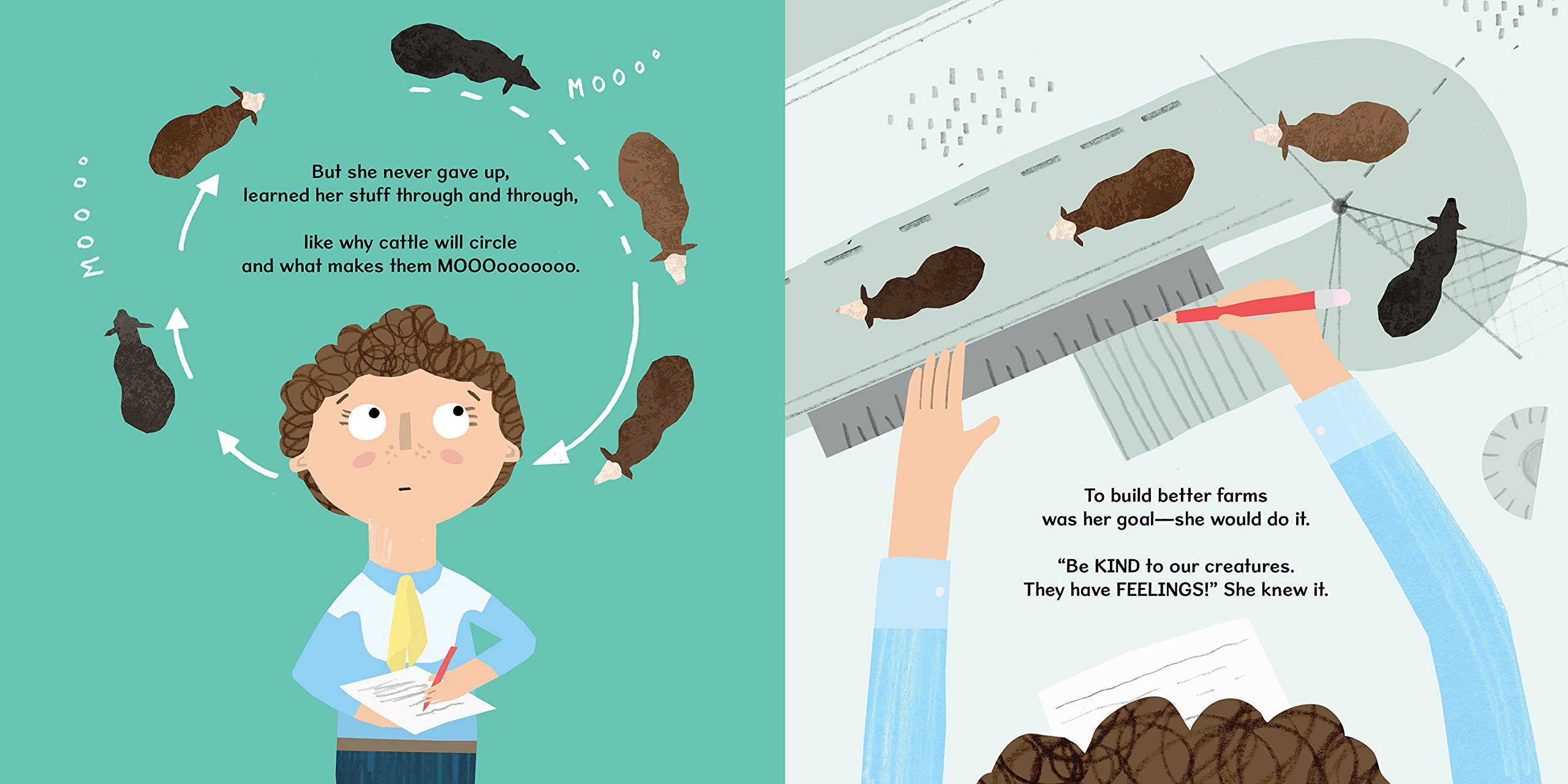
celebrate-picture-books-picture-book-review-the-girl-who-thought-in-pictures-cows

Image copyright Daniel Rieley, 2017, text copyright Julia Finley Mosca, 2017. Courtesy of The Innovation Press.

She went on to college and became an expert on farms, earning three degrees. Telling people about her ideas for farming improvements was sometimes scary because they ignored her and, well…weren’t very sweet. But she didn’t give up. She learned more about cattle, like why they circle and moo. “To build better farms / was her goal—she would do it. / ‘Be KIND to our creatures. / They have FEELINGS!’ She knew it.”

It took time, but people began to see that Temple was right, and farm after farm implemented her ideas. She won awards for this work and other ideas, a movie was made about her life, and she now travels the world telling her story and teaching: “‘Each person is special– / so UNIQUE are our minds. / This world needs YOUR ideas. / It takes brains of ALL kinds!”

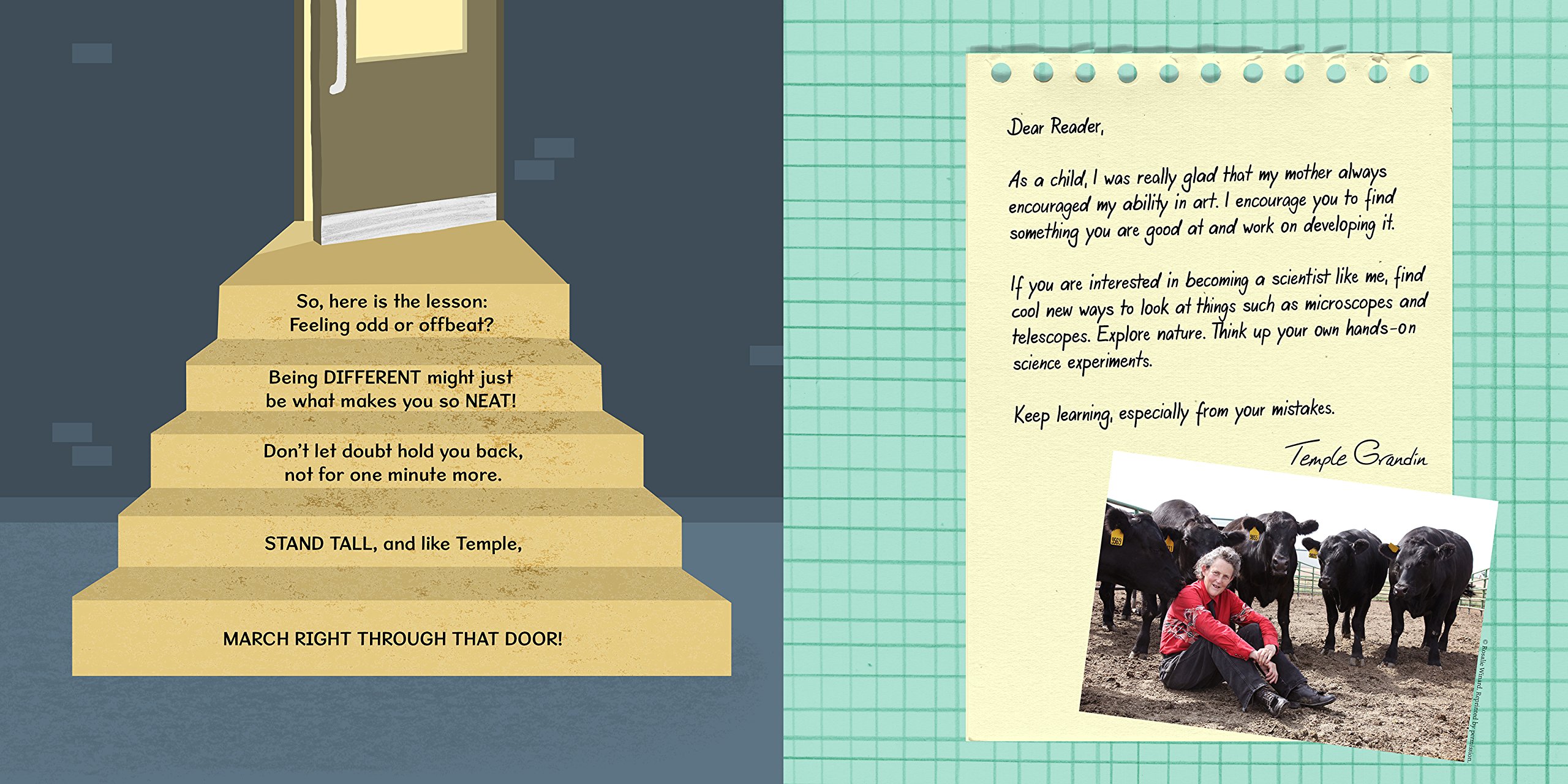
celebrate-picture-books-picture-book-review-the-girl-who-thought-in-pictures-letter

Image copyright Daniel Rieley, 2017, text copyright Julia Finley Mosca, 2017. Courtesy of The Innovation Press.

A letter from Temple Grandin to young readers, extensive information about Temple and tidbits from her interview with the author, a timeline of her life, and resources follow the text.

Julia Finley Mosca’s insightful biography of Temple Grandin offers inspiration and encouragement to children at those times when life seems difficult or if they feel misunderstood. Childhood can be filled with moments—both small and large, short or long—when comfort and reassurance are needed. Mosca’s rhyming verses make Temple’s story accessible to a wide age range of readers while providing an inclusive way to show how autism creates a different way of experiencing the world. Temple’s supportive teachers are role models for all educators. Temple Grandin’s fascinating life demonstrates that there is a niche for everyone and that through understanding, perseverance, and acceptance, all children can go far.

celebrate-picture-books-picture-book-review-the-girl-who-thought-in-pictures-cows-in-field

Image copyright Daniel Rieley, 2017, text copyright Julia Finley Mosca, 2017. Courtesy of The Innovation Press.

Daniel Rieley’s cartoon-style illustrations will resonate with readers as Temple takes in everything she sees with wide-open eyes and interprets it in her own way—even before she can speak. The separation between Temple and the other students at her first school is poignantly communicated in a two-page spread in which pointing hands and a lobbed ball of paper appear from the left-hand margin and Temple reads alone on the far side of the right-hand page. Temple’s ability to think in pictures is demonstrated throughout the book with inset images. Readers see some of the farming practices Temple wanted to change, her original drawings, and the resulting equipment now used on farms to improve the conditions of the animals raised there.

The Girl Who Thought in Pictures: The Story of Dr. Temple Grandin is a moving and motivational story for all children and is a must for school and public libraries.

Ages 5 – 10

The Innovation Press, 2017 | ISBN  978-1943147304 (Hardcover) | ISBN 978-1943147618 (Paperback), 2018

Discover more about Julia Finley Mosca and her Amazing Scientists series on the Amazing Scientists website.

Learn more about Daniel Rieley, his books, and his art on his website.

Kid Inventors’ Day Activity

celebrate-picture-books-picture-book-review-kid-inventors-coloring-page

Inventing Is Fun! Coloring Page


If you love to invent as much as these kids do, grab your crayons, markers, or pencils and give their lab a bit more color in this printable Inventing Is Fun! Coloring Page!

celebrate-picture-books-picture-book-review-the-girl-who-thought-in-pictures-cover

You can find The Girl Who Thought in Pictures: The Story of Dr. Temple Grandin at these booksellers

Amazon | Barnes & Noble | Books-a-Million | IndieBound

Picture Book Review