October 1 – World Architecture Day

celebrate-picture-books-picture-book-review-brick-who-found-herself-in-architecture-cover

About the Holiday

Established in 1986 by the International Union of Architects, World Architecture Day is celebrated on the first Monday in October to coincide with the United Nations-sponsored World Habitat Day. Each year a different theme highlights the important aspects of architecture in our lives. This year’s theme is “Architecture…for a Better World” and emphasizes the issues, challenges, and rewards of housing the world’s citizens. To celebrate today take a walk around your town or city with your kids and study the buildings and how they fit into history or new construction in your area. You can also research a famous building and the architect who designed it!

Brick, Who Found Herself in Architecture

Written by Joshua David Stein | Illustrated by Julia Rothman


When Brick was a baby, she marveled at all the tall buildings and “wondered how anything could grow so big.” Her mother told her that “‘great things begin with small bricks.’” And Brick saw that it was true. When she looked closely, she saw that all the buildings she admired were made of bricks just like her. Brick wondered if there were buildings like this in all towns and even in other countries.

celebrate-picture-books-picture-book-review-brick-who-found-herself-in-architecture-baby-brick

Image copyright Julia Rothman, 2018, text copyright Joshua David Stein, 2018. Courtesy of Phaidon Press.

Pretty soon, Brick was old enough to satisfy her curiosity on her own and “find her place in the world.” Brick bravely set sail and landed at Malbork Castle, which had high walls with slits for shooting arrows through. Next, she visited The Ark, which was in the desert. Brick saw that both of these castles had suffered from years of fighting. “Brick did not want to fight. So she moved on.”
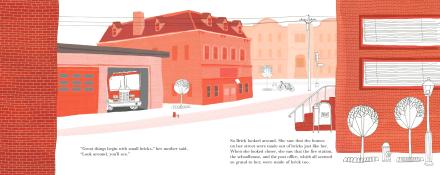
celebrate-picture-books-picture-book-review-brick-who-found-herself-in-architecture-great-things

Image copyright Julia Rothman, 2018, text copyright Joshua David Stein, 2018. Courtesy of Phaidon Press.

She saw churches, mosques, synagogues, and a Buddhist temple. She thought they were beautiful, “but they did not call out to her. And so she kept going.” She walked on walls and looked down both sides, but she did not want to divide places and people, so she kept going. She visited apartment houses, houses in the suburbs, and even a country house with a “chimney billowing smoke.” But Brick knew that “homes eventually empty and hearths grow cold.” This was not the future she wanted. Where did she belong? Brick wondered.

celebrate-picture-books-picture-book-review-brick-who-found-herself-in-architecture-churches

Image copyright Julia Rothman, 2018, text copyright Joshua David Stein, 2018. Courtesy of Phaidon Press.

Brick considered all the buildings she had seen, and she remembered the words her mother had told her long ago about great things. She sat at the end of her path and pondered into the night. When the sun rose, Brick saw the answer right in front of her. She settled herself in and “became part of a wide and lovely path” that would guide other bricks to find where they belonged too.

An Afterword presents a description, complete with photograph, of the various buildings Brick encounters in her travels.

celebrate-picture-books-picture-book-review-brick-who-found-herself-in-architecture-wall

Image copyright Julia Rothman, 2018, text copyright Joshua David Stein, 2018. Courtesy of Phaidon Press.

Full of lovely metaphors and deeply considered thoughts on the way architecture models the human heart as well as how people design their buildings and structures for purposes both positive and negative, Joshua David Stein’s story is a unique look at growing up. The brick makes a particularly compelling character, for in any building each brick holds a crucial place in the design while also joining with others to create a durable whole—just as it is for any individual in a strong, vibrant community.

As the little brick is exposed to the various roles she could dedicate her life to, she thinks not only of the immediate reward of “having a job” but of what her philosophies are and what she wants her future to be. In a perhaps surprising—but welcome—choice, Brick decides that instead of being part of a grand edifice, becoming a step along the path and guiding others is her calling. This recognition of teachers, parents, caregivers, and other such role models is inspired and uplifting.

Julia Rothman’s light touch, variety of reds, and whimsical black-and-white line drawings of foliage, ancillary elements, and toy-strewn backyards beautifully showcase a world of sturdy brick buildings while giving readers a sense of the soaring awe with which Brick views her city and the landmarks she visits. Rothman’s use of perspective juxtaposes tiny Brick against towering structures mirroring a feeling that young readers may know well. The path Brick travels is ever-present, running from edge to edge of the pages. The final two-page spread of Brick happily fitted into a path that meanders through a lushly landscaped park, which is being crossed by a young brick on his way to the city in the distance will delight readers.

Brick, Who Found Herself in Architecture is an original and lyrical look at individuality, growing up, and finding one’s place in the world. The book would be a strong addition to school, classroom, and public libraries and an encouraging and reassuring choice for home bookshelves as well.

Ages 4 – 8

Phaidon Press, 2018 | ISBN 978-0714876313

To learn more about Julia Rothman, her books and her art, visit her website.

World Architecture Day Activity
celebrate-picture-books-picture-book-review-brick-craft

Build Your Identity 


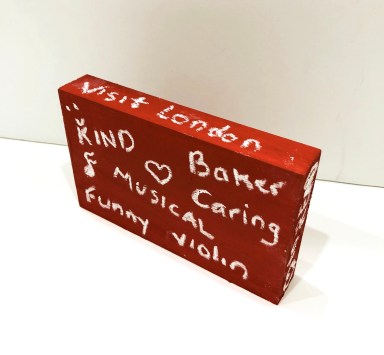
Sometimes it’s good for kids to remind themselves of all the things that they like, stops along their path, and even words that describe them. With this craft, kids can make a “brick” that stands strong with all of their unique qualities. While a wooden block can be used to make a brick, if you have a real brick that can be used too!

Supplies

  • Wooden rectangular block, available at craft stores
  • Brick red craft paint
  • Paint brush
  • Chalk

Directions

  1. Paint the block with the craft paint, let dry
  2. Write words about yourself, things you like to do, inspirational places you’ve been, even places and things you’d like to do in the future.
  3. Display your brick on a shelf, hang on a wall, or use it as a book end

Classroom Idea

As a story extension for the classroom, cut one brick-sized rectangle from red construction paper, heavy-stock paper, or poster board for each student. Have them write about themselves, about what they think they would like to do in the future, or about some other topic pertinent to your class. Let students display their bricks by working together to “build” their own path in the classroom.

celebrate-picture-books-picture-book-review-brick-who-found-herself-in-architecture-cover

You can find Brick, Who Found Herself in Architecture at these booksellers

Amazon | Barnes & Noble | Books-a-Million | IndieBound

Picture Book Review


September 15 – International Dot Day

celebrate-picture-books-picture-book-review-the-dot-cover

About the Holiday

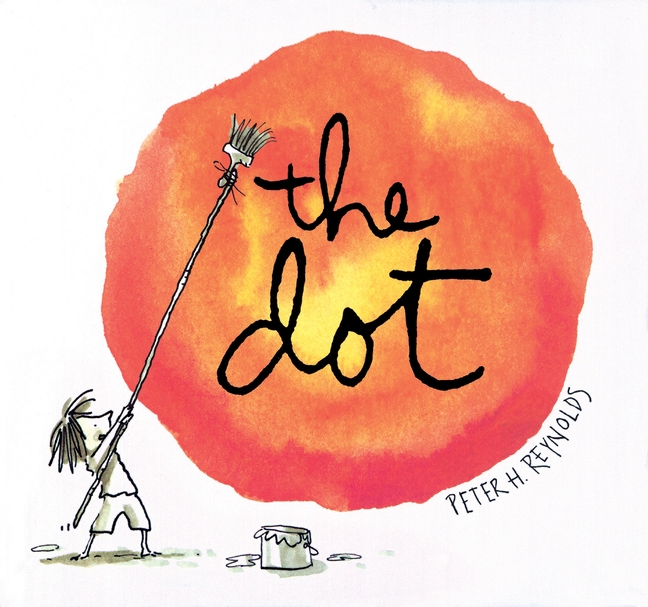
Usually, I match books to existing holidays. Today, though, I have the pleasure of posting a review of a book that established a holiday. On September 15, 2009 teacher Terry Shay introduced his class to Peter H. Reynold’s The Dot. From that one event grew a national and then an international celebration of creativity and the freedom to make art with your heart. All around the world, school children and adults are inspired on this day to make their mark and celebrate creativity, courage, and collaboration.

For more information on International Dot Day visit the International Dot Day website. There you can  download posters, coloring pages, postcards, badges, and other resources and register to view a livestream event from the Metropolitan Museum of Art starting at 10:00 a.m. PT.

The Dot

By Peter H. Reynolds


At the end of art class, Vashti looked at her paper. It was still as blank as it was at the beginning of art class. Her teacher came over and took a peek. She saw right away that Vashti had drawn “‘a polar bear in a snowstorm.’” Vashti wasn’t fooled by the joke. “‘I just CAN’T draw,’” she said. But her teacher had a suggestion. “‘Just make a mark and see where it takes you.’”

celebrate-picture-books-picture-book-review-the-dot-vashti-jabs-paper

Copyright Peter H. Reynolds, 2003, courtesy of Candlewick Press.

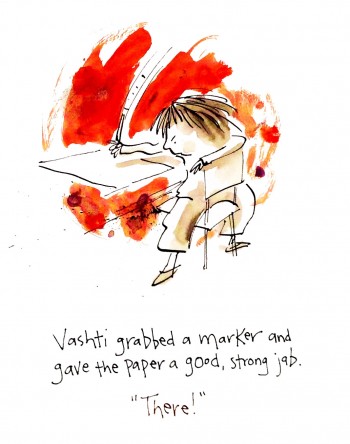
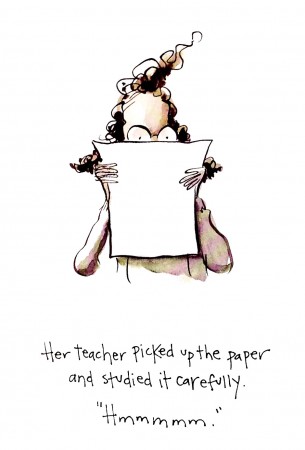
Vashti jabbed at the paper with a marker, making a dot right in the center. Her teacher studied her drawing carefully then told Vashti to sign it. That, at least, was something Vashti could do. She signed her name and gave the paper to her teacher. At the next week’s art class, Vashti was stunned to see her dot framed and hanging above the teacher’s desk. She looked at the tiny mark and decided that she could do better than that.

celebrate-picture-books-picture-book-review-the-dot-teacher

Copyright Peter H. Reynolds, 2003, courtesy of Candlewick Press.

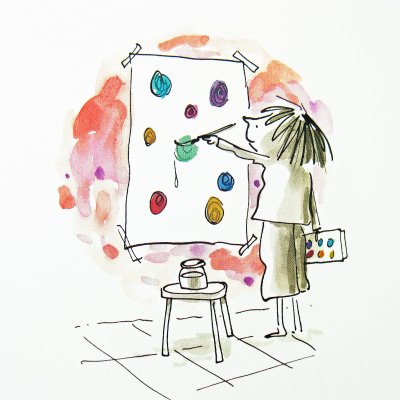
Vashti opened her watercolor set and began. She “painted and painted. A red dot. A purple dot. A yellow dot. A blue dot.” Then she discovered that blue mixed with yellow made a green dot. Vashti went to the easel and began painting lots of little dots in all sorts of colors. She realized if she could make little dots, she could make big dots. She knelt down on the floor with a big piece of paper and a big brush and created a huge dot.

celebrate-picture-books-picture-book-review-the-dot-experimenting-with-dots

Copyright Peter H. Reynolds, 2003, courtesy of Candlewick Press.

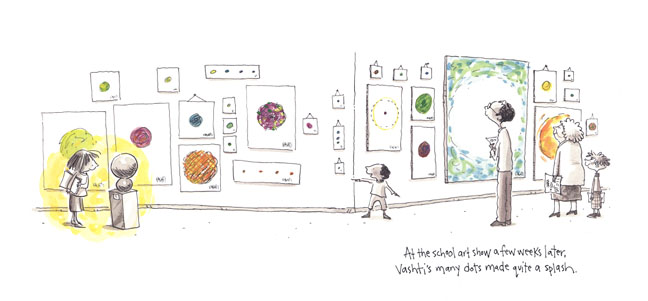
Then on an enormous canvas Vashti “made a dot by not making a dot.” At the school art show, Vashti’s dot paintings covered two walls and were quite a hit. Coming around the corner a little boy spied Vashti. He came close and told her, “‘You’re a really great artist. I wish I could draw.’” Vashti was encouraging, but the little boy said he couldn’t even “‘draw a straight line with a ruler.’”

Vashti wanted to see. She handed the boy a blank sheet of paper. With a quivering pencil, he drew a line and handed the paper back to her. Vashti studied the wavy line for a minute, and then gave the paper back. “‘Please…sign it,’” she said.

celebrate-picture-books-picture-book-review-the-dot-art-show-II

Copyright Peter H. Reynolds, 2003, courtesy of Candlewick Press.

Peter H. Reynold’s classic story of a little girl who believes she can’t draw is inspirational for anyone at any age who listens too closely to that voice in their head that stops them from letting go and doing. Whether it’s painting, writing, changing the décor of one’s house, updating a wardrobe, getting healthy, or even taking a class, the project often seems insurmountable. But what if you could start with a YouTube video, one step, a pair of earrings, a pillow, a word, or…a dot? Reynolds says you can! With his straightforward storytelling, Reynolds gives readers permission to play, experiment, and feel free.

celebrate-picture-books-picture-book-review-the-dot-little-boy

Copyright Peter H. Reynolds, 2003, courtesy of Candlewick Press.

Reynold’s familiar line drawings that sketch out adorable Vashti and her wise teacher are punctuated by the colorful dots that Vashti draws in profusion. Even Vashti, herself, is surrounded by circular auras of color throughout the story, reflecting her talent and creative spirit. The final scene of the art show gallery is a revelation, showing readers that one’s work or life work adds up to an impressive display of the self.

Through and through The Dot is charming, moving, and encouraging. It is a must addition to home libraries, public libraries, and classrooms.

Ages 5 and up

Candlewick Press, 2003 | 978-0763619619

Discover more about International Dot Day, download an Educator’s Guide, and see a gallery of projects on International Dot Day website.

You’ll learn more about Peter H, Reynolds, his books, and his art as well as find lots of inspiration and creative tips on his website!

International Dot Day Activity

celebrate-picture-books-picture-book-review-peter-reynolds-circle-of-friends-coloring-page-international-dot-day

A Circle of Friends Coloring Page


Grab your favorite paints, markers, or crayons and color this page from Peter Reynolds!

A Circle of Friends Coloring Page

celebrate-picture-books-picture-book-review-the-dot-cover

You can find The Dot at these booksellers

Amazon | Barnes & Noble | Books-a-Million

To support your local independent bookstore, order from

Bookshop | IndieBound

Picture Book Review

July 26 – National All or Nothing Day

celebrate-picture-books-picture-book-review-perfectly-norman-cover

About the Holiday

Today’s holiday encourages people to throw caution to the wind and embrace who they really are and what they have always wanted to do. It’s a day to overcome fears and doubts to accomplish the large and small things that will make life better. To celebrate, seize the day, do that thing—you know which one—and the best you you can be!

Bloomsbury sent me a copy of Perfectly Norman to check out. All opinions are my own. I’m excited to be partnering with Bloomsbury for a giveaway of a copy of Perfectly Norman! See details below.

Perfectly Norman

By Tom Percival


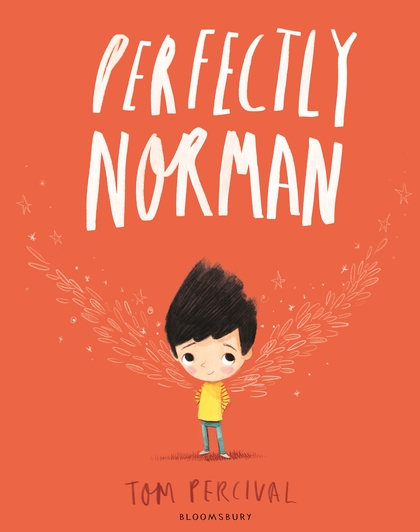
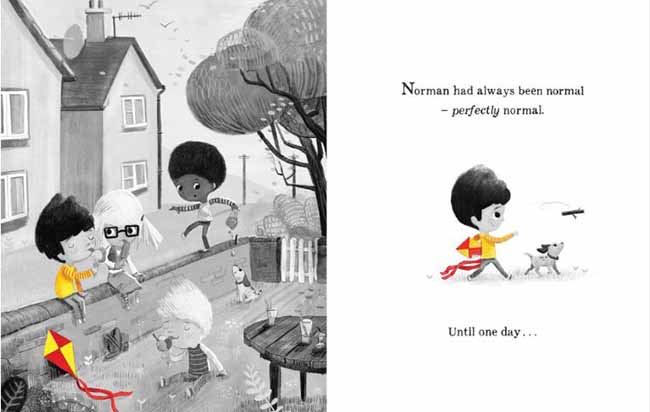
“Norman had always been normal—perfectly normal.” He liked to hang out with his friends and eat ice cream cones and fly kites. “Until one day … he grew a pair of wings!” When Norman thought about all the ways he might grow as he got older, he never imagined that he would sprout wings. But since he had them, he thought it was kind of cool and he took off immediately to try flying.

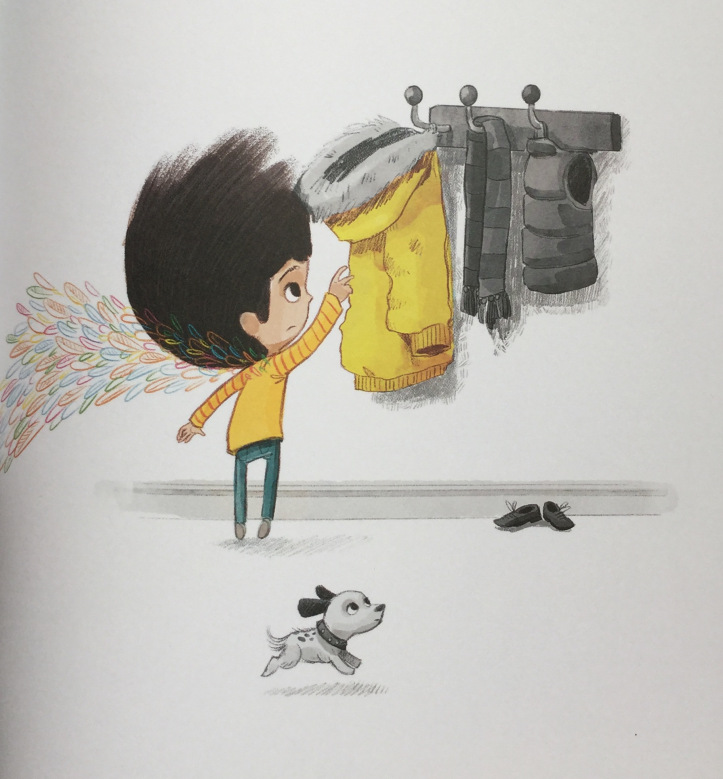
He was having tremendous fun soaring and diving, but then he heard his parents calling him in for dinner. Suddenly, Norman had doubts. “You see, Norman had always been so normal he didn’t know how his parents would feel about his extraordinary wings.” As soon as he walked in the door he put on his coat to cover them up. While his parents didn’t see his wings, they did wonder why he was wearing his coat inside.

celebrate-picture-books-picture-book-review-perfectly-norman-friends

Copyright Tom Percival, 2018, courtesy of Bloomsbury Children’s Books.

“Norman had decided that no one should see his wings—ever, even if it made bathtime and bedtime difficult. The coat was sweltering, making it hard to play with his friends, ride in the car, swim at the pool, and even friends’ birthday parties were impossible. Now, Norman only felt normal on rainy days. One day, after Norman barely escaped having a boy pull his coat off, he was so angry and sad that he “wished he’d never grown those stupid wings.”

Then, as Norman watched some birds flying overhead, he remembered how joyous his flight had been. He realized that it wasn’t the wings but the coat that was the real problem. When his parents suggested that he remove the coat, he did “and let his wonderful wings fan out.” He soared into the air. From above he saw other children wearing coats. They gazed at Norman and then glanced at each other. In a moment they dropped their coats and took to the air. “Whoosh! The sky was filled with flying people!”

Norman felt happier than ever before as he understood that “there was no such thing as perfectly normal.” But “perfectly Norman?” That felt just right.

celebrate-picture-books-picture-book-review-perfectly-norman-coat

Copyright Tom Percival, 2018, courtesy of Bloomsbury Children’s Books.

Tom Percival’s celebration of what it means to be human is moving reassurance for children who—for whatever reason—feel different from the rest. Percival’s pacing—transitioning from “normal” to “not” with a page turn—mirrors the kinds of sudden realizations, doubts, and fears that many children experience. Norman’s attempts to hide his wings as well as the results this brings will also resonate with kids. Norman’s realization that it is external forces, not himself, that is making him miserable is a powerful and empowering moment for both children and adults. The recognition that Norman’s wings are what makes him uniquely him should encourage young readers to take off their own coats and soar.

In poignantly metaphorical imagery, Percival spotlights a colorful Norman against black-and-white backgrounds—hinting at first of the coming change and then demonstrating Norman’s feelings of difference and isolation. While color surrounds Norman when he gets his wings and tries them out, full-color spreads come when Norman flies with outspread wings. Norman’s facial expressions are clear, and Norman’s parents—an interracial couple—show their son love and support as well as space to come to his own understanding, The last spread of the sky filled with flying children will excite and cheer readers.

An important story beautifully told, Perfectly Norman should be in every home and classroom library to inspire children to spread their wings.

Ages 4 – 8 and up

Bloomsbury Children’s Books, 2018 | ISBN 978-1681197852

Discover more about Tom Percival, his books, and his art on his website.

Take off with this Perfectly Norman book trailer!

Perfectly Norman Giveaway!

I’m thrilled to partner with Bloomsbury Children’s Books to offer a giveaway of:

  • One (1) copy of Perfectly Norman 

To be entered to win, just Follow me on Twitter and Retweet one of my giveaway tweets during this week, July 26 – 30. 

A winner will be chosen on July 31.

Giveaways open to US addresses only | Prizing provided by Bloomsbury Children’s Books

National All or Nothing Day Activity

celebrate-picture-books-picture-book-review-fairy-wings-template

Color Your Wings!


What color are your wings? Use these printable wing templates to show your special colors!

Wings Template 1 | Wings Template 2

celebrate-picture-books-picture-book-review-perfectly-norman-cover

You can find Perfectly Norman at these booksellers

Amazon | Barnes & Noble | Books-a-Million | IndieBound

Picture Book Review
July 19 – Get to Know Your Customers Day

celebrate-picture-books-picture-book-review-duck-gets-a-job-cover

About the Holiday

There was a time when long-established businesses and mom-and-pop shops provided most of the goods and services people needed. These days consumers are likely to shop online or use the big-box stores for most of their needs. But small shops, local farmers markets, and neighborhood providers have much to offer customers in terms of personalized service, a friendly atmosphere, and a peaceful, unhurried shopping experience. Today’s holiday was established for business owners and their employees to really take the time to get to know their customers so they can better serve them. It’s also a day for employees to consider their own job satisfaction. Only by truly loving the work you do, can you enjoy your job and make each day pleasurable for yourself and your customers. To celebrate today’s holiday, chat a bit with your customers. Get to know them and how you can better help them. If your heart isn’t really in your work, today offers a good opportunity to consider other options.

Duck Gets a Job

By Sonny Ross


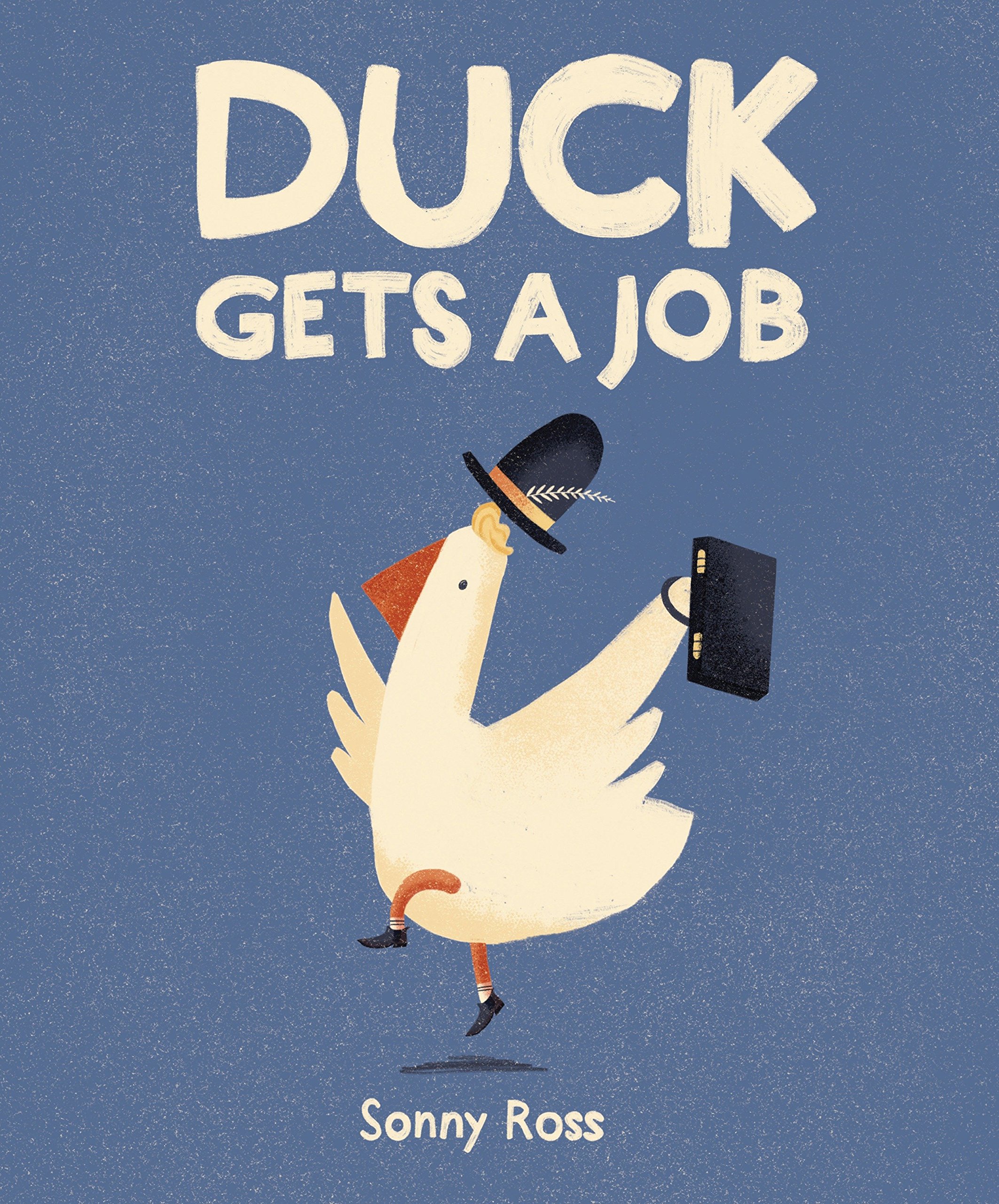
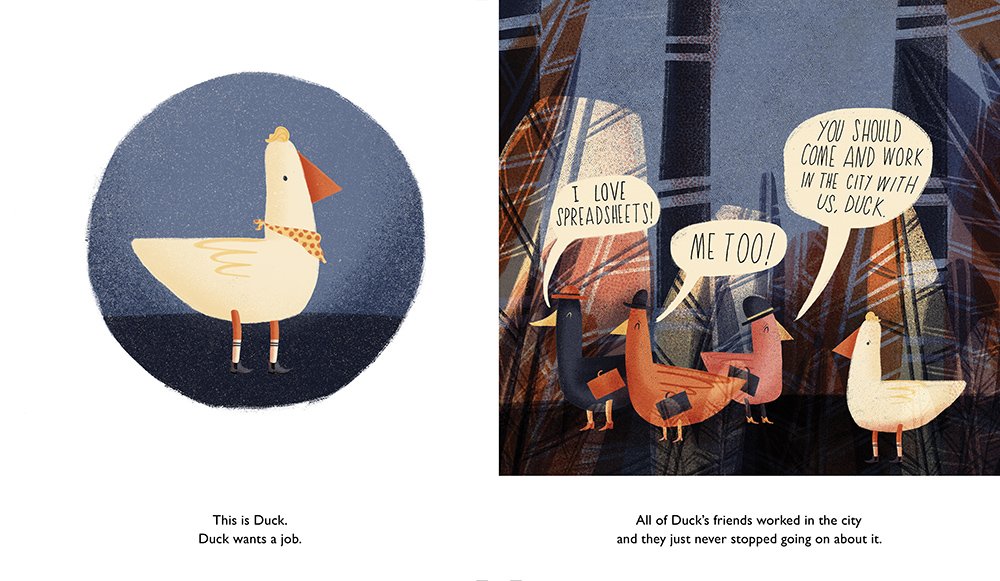
Duck needed a job. All of his friends talked about their super office jobs in the city and encouraged him to get one too. Duck scoured the want ads in the newspaper. There were lots of jobs in tech, finance, and business. He imagined himself working with spreadsheets like his friends did. The jobs “seemed boring, but he applied anyway. And he got an interview!”

celebrate-picture-books-picture-book-review-duck-gets-a-job-friends

Copyright Sonny Ross, 2018, courtesy of Templar Books.

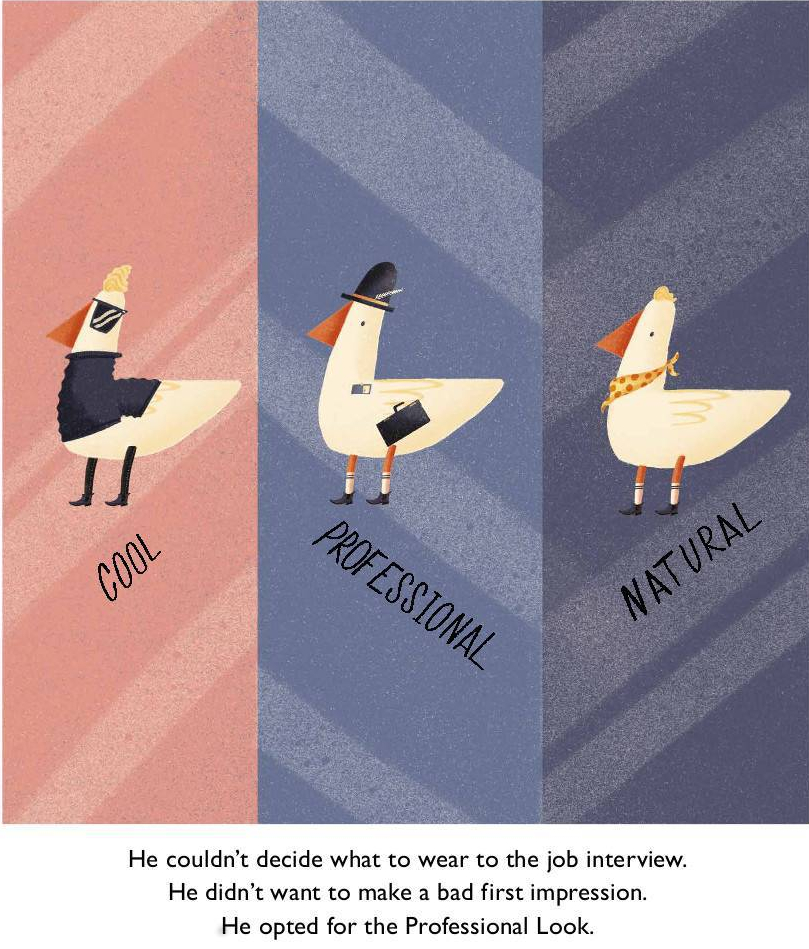
Duck agonized over what he’d wear. He tried on an outfit that made him look cool, one that was very professional, and one that was his natural, casual look. He decided to go with the professional style. Next, Duck thought about how he would get to the office. “Flying would make him tired and sweaty, but public transportation is tricky for ducks.” In the end he walked… and he got lost. Once in the city, he hailed a taxi, and while he rode to the interview “he gave himself a pep talk.”

celebrate-picture-books-picture-book-review-duck-gets-a-job-taxi

Copyright Sonny Ross, 2018, courtesy of Templar Books.

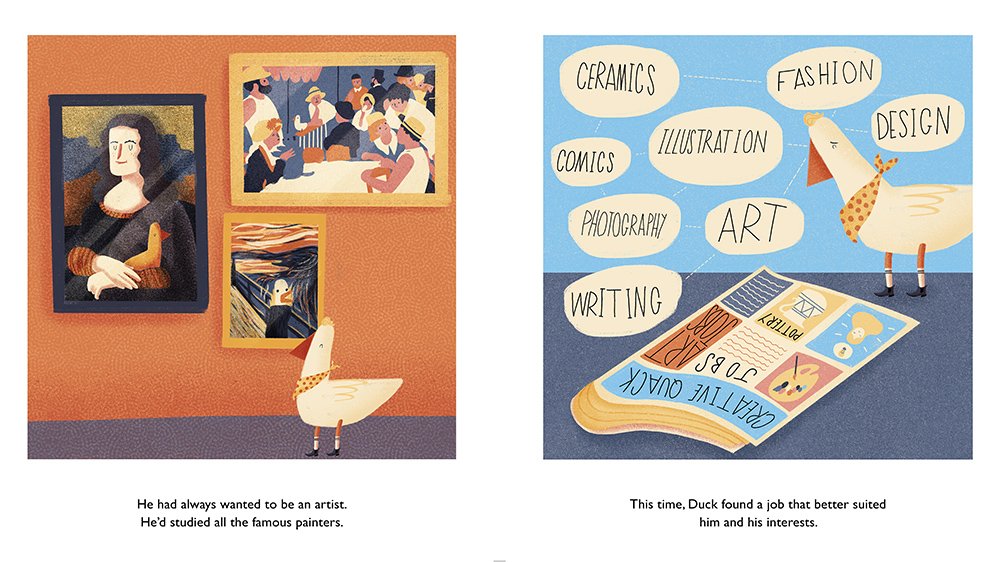
Talking to the interviewer made Duck very nervous, but, still, he was offered a job. Sitting in his little cubicle with “spreadsheets full of facts and figures” in front of him, Duck realized that this job “did not interest him at all.” Duck decided to quit. Duck had always dreamed of being an artist, so he looked at job ads for the Creative Quack Magazine and found one he thought he’d like. “For his interview, he dressed in his natural look and put samples of his best work in a portfolio.”

He prepared for his trip into the city, and when he got to the office he didn’t feel at all nervous. He showed the art director his portfolio feeling confident about his work. The art director loved his work and offered him a job. Now Duck loves his job, and he’s especially glad “that he had decided to follow his dreams.”

celebrate-picture-books-picture-book-review-duck-gets-a-job-creative-job

Copyright Sonny Ross, 2018, courtesy of Templar Books.

The strength of Sonny Ross’s affirming story comes in its straightforward approach to recognizing when an action is not right for you and feeling free to change course. While Duck is looking for the perfect job, the story is appropriate for any activity that children embark on as they find their place in the world. Ross peppers his story with clues that will alert readers to Duck’s true feelings about the two jobs—internal thoughts, clothing styles, and confidence level to name a few—feelings that they too can rely on to guide them in the choices they make.

celebrate-picture-books-picture-book-review-duck-gets-a-job-style

Copyright Sonny Ross, 2018, courtesy of Templar Books.

Ross’s matte mixed-media illustrations are fresh and stylish in a palette of blues, reds, and golds. Kids experimenting with their own look will appreciate Duck’s dilemma in choosing between cool, professional, and natural clothing styles. They’ll also empathize with his previous attempts at using public transportation and his travails in getting to the first interview on time. When Duck decides that a “spreadsheet job” isn’t for him, the page backgrounds lighten, his road to the interview is smooth, and his happiness is evident. A clever contrasting juxtaposition comes in the depictions of Duck’s two very different interviews. While the businessman sits at his desk peering down on tiny Duck who can barely see over the desk and is nearly swallowed up in his chair, the art director kneels down to Duck’s level to shake his wing in congratulations on getting the job.

Both an entertaining story and a lesson for kids on trusting their gut and staying true to themselves, Duck Gets a Job is a confidence-boosting tale for any home or classroom bookshelf.

Ages 3 – 7

Templar Books, 2018 | ISBN 978-0763698966

Discover more about Sonny Ross, his books, and his art on his website.

Get to Know Your Customers Day Activity

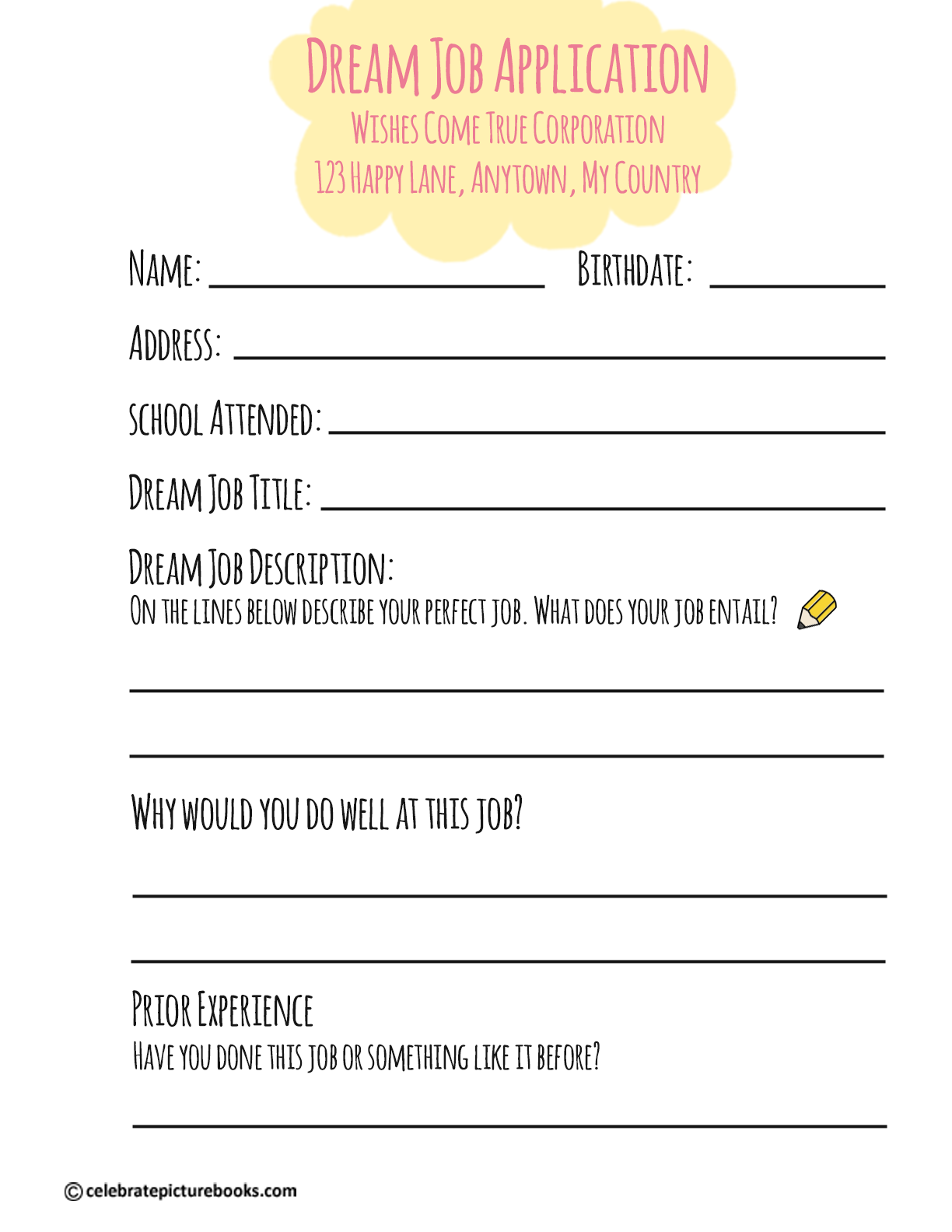
celebrate-picture-books-picture-book-review-dream-job-application

Dream Job Application


Before you can know your customers, you need to know yourself and find your perfect job. Here’s a printable Dream Job Application to get you thinking about what job you’d like to have!

celebrate-picture-books-picture-book-review-duck-gets-a-job-cover

Duck Gets a Job is available at these booksellers

Amazon | Barnes & Noble | Books-a-Million | IndieBound

Picture Book Review
 

July 17 – National Yellow Pig Day

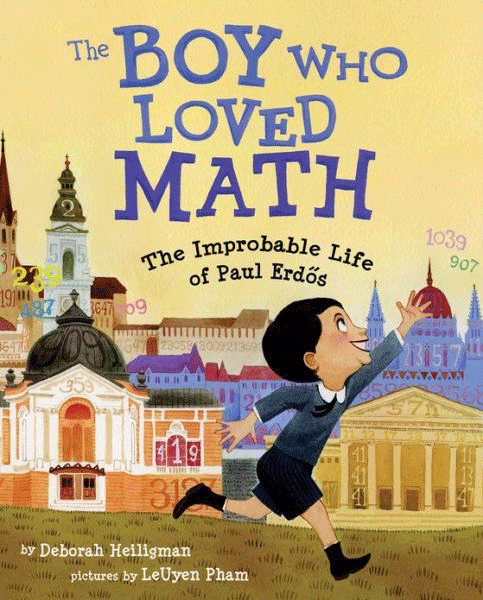
The Boy Who Loved Math: The Improbable Life of Paul Erdős by Deborah Heiligman and LeUyen Pham picture book review

About the Holiday

Today’s holiday isn’t really about the color yellow or about pigs—it’s about math! Who knew? Well, plenty of people, actually! Mathematicians, college professors, and students spend the day celebrating the number 17 with special problems and yellow pig cakes, songs, parades, and more. The holiday was established in the 1960 when two Princeton University students, David Kelly and Michael Spivak began obsessing over the number 17. And the yellow pig? One story say it’s a reference to David Kelly’s collection of yellow pigs while another goes that the two concocted the idea of a yellow pig with 17 toes, teeth, eyelashes, etc. To celebrate, study up on the prime number 17 and have some more math fun!

The Boy Who Loved Math: The Improbable Life of Paul Erdős

Written by Deborah Heiligman | Illustrated by LeUyen Pham


In Budapest, Hungary a boy is born who loves math. His name is Paul Erdős and he lives with his mother, who loves him “to infinity” just as Paul loves her. When she goes back to work as a math teacher, she leaves Paul with Fräulein, his nanny. Fräulein loves rules and tries to get Paul to sit still, eat all his lunch, take a nap—to obey. But Paul hates rules.

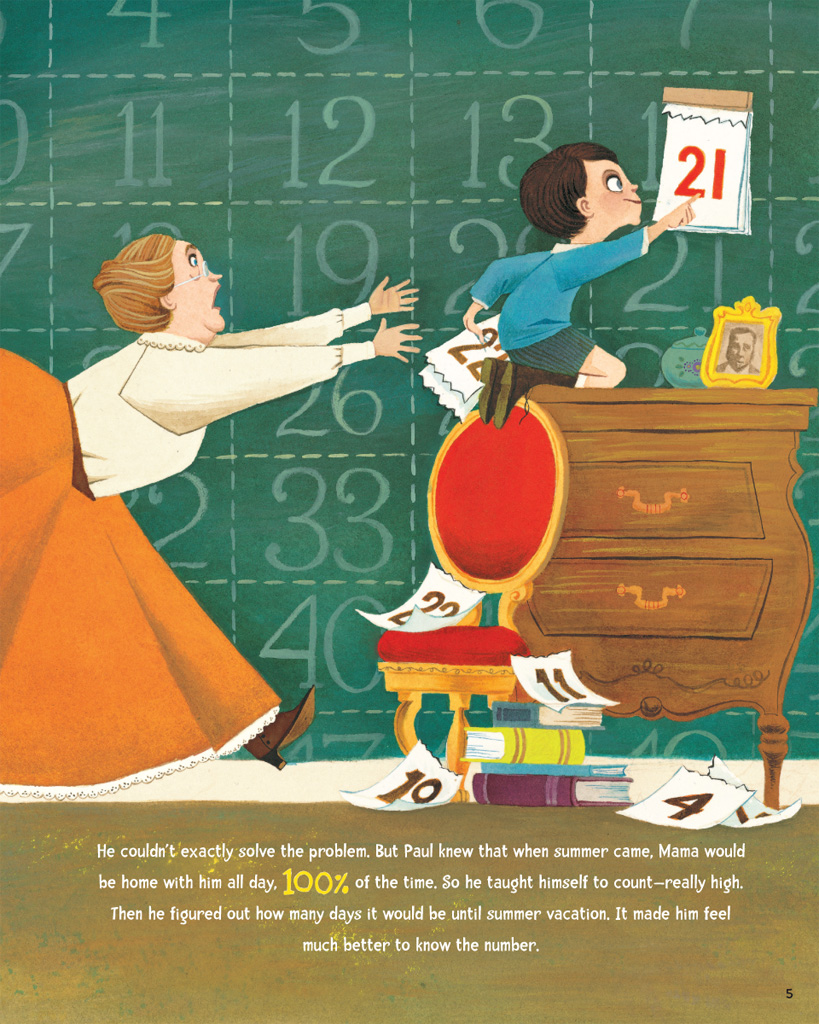
celebrate-picture-books-picture-book-review-the-boy-who-loved-math-the-improbable-life-of-paul-erdos-young-paul-calendar

Image copyright LeUyen Pham, 2013, text copyright Deborah Heiligman, 2013. Courtesy of usmacmillan.com.

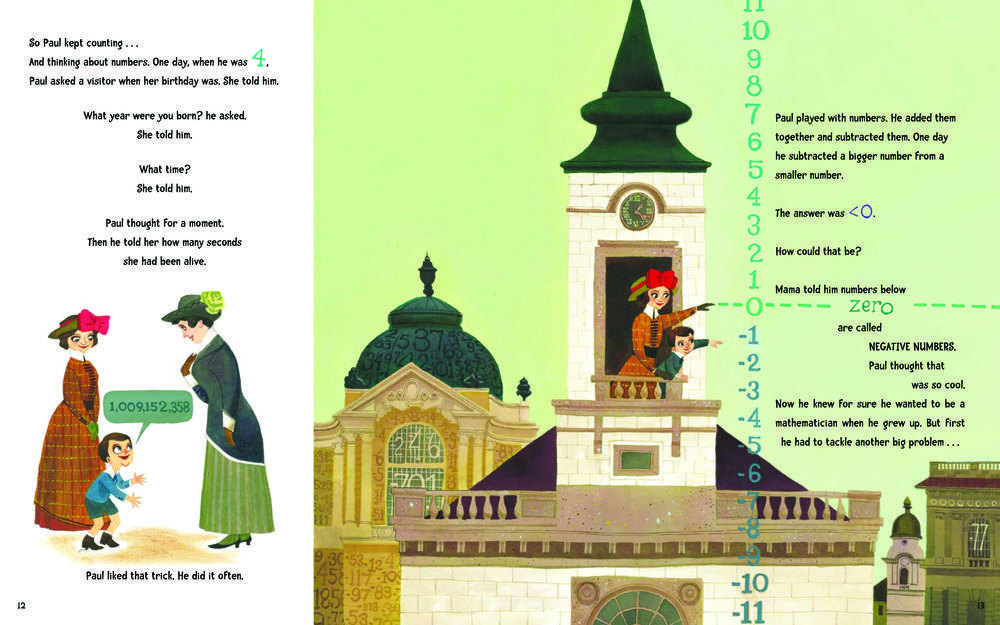
At three years of age he teaches himself to count the days until his mother will be home with him 100 percent of the time. Knowing the number makes Paul feel better as his head is constantly full of numbers and what they can do. One day when he is four years old, he meets a woman and asks her two questions—what year she was born and at what time. When the woman tells him, it only takes him a moment to reveal how many seconds she has been alive.

celebrate-picture-books-picture-book-review-the-boy-who-loved-math-the-improbable-life-of-paul-erdos-tower

Image copyright LeUyen Pham, 2013, text copyright Deborah Heiligman, 2013. Courtesy of usmacmillan.com.

He continues to play with numbers, learning more and more about the various types. He decides he will be a mathematician when he grows up. When Paul is old enough to go to school, he once again encounters rules he can’t abide. His mother decides he will be schooled at home, and even though this means more time with Fräulein, Paul considers it the better option.

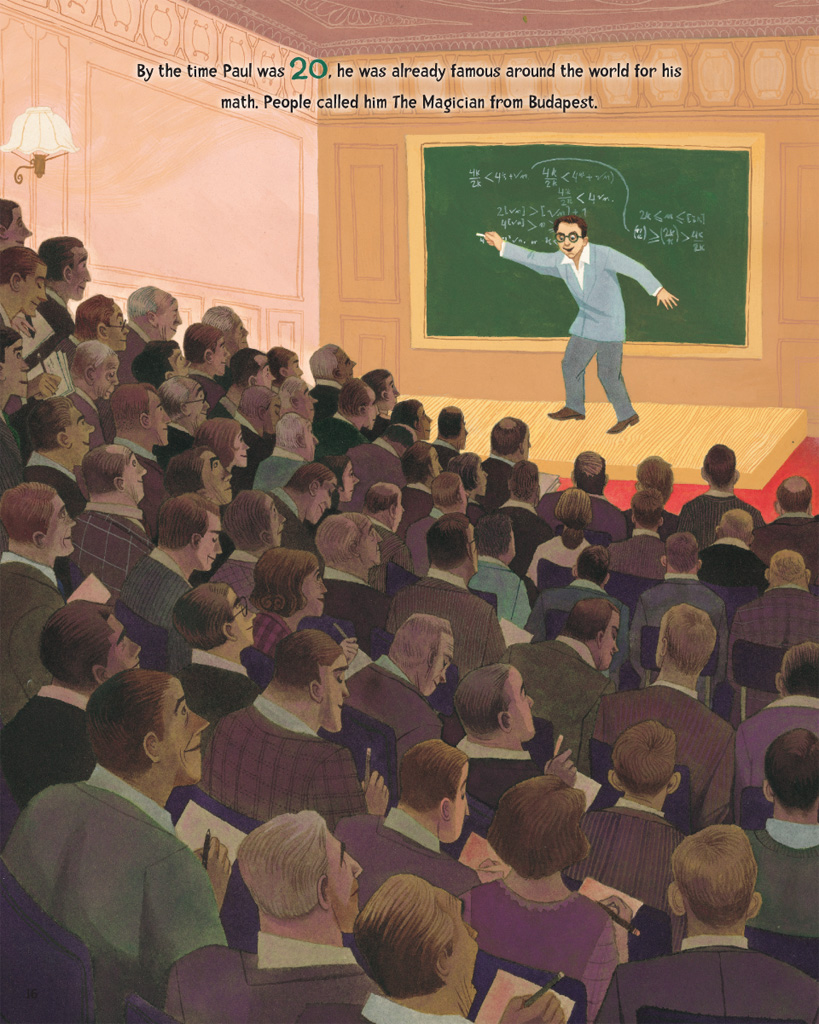
There’s just one thing – while Paul thinks about numbers, Fräulein and his mother do everything for him. At meals they cut his meat and butter his bread; they dress him, and tie his shoes. When he becomes a teenager, he goes to high school and meets other kids who love math. He and his friends spend all their time doing math and by the time Paul is 20 he is famous around the world for his math equations.

celebrate-picture-books-picture-book-review-the-boy-who-loved-math-the-improbable-life-of-paul-erdos-paul-around-the-world

Image copyright LeUyen Pham, 2013, text copyright Deborah Heiligman, 2013. Courtesy of usmacmillan.com.

There’s just one problem – even as an adult, Paul is so focused on numbers and math that he still doesn’t know how to do basic things for himself. When he is 21 he’s invited to go to England to work. At his first dinner there he stares at his bread and he stares at his meat. What is he supposed to do? With a little experimentation, he figures it out, but he also figures out that he sees the world in a different way.

He doesn’t want a normal life with a family and a house and a regular job. He designs for himself a very unusual lifestyle. Everything he owns fits into two suitcases, and with a little money in his pocket he flies from city to city to do math. He knows so many mathematicians that wherever he goes they invite Paul to stay with them. These families take care of Paul just as his mother and Fräulein had! They do his laundry, cook his meals, and pay his bills.

celebrate-picture-books-picture-book-review-the-boy-who-loved-math-the-improbable-life-of-paul-erdos-teacher-paul

Image copyright LeUyen Pham, 2013, text copyright Deborah Heiligman, 2013. Courtesy of usmacmillan.com.

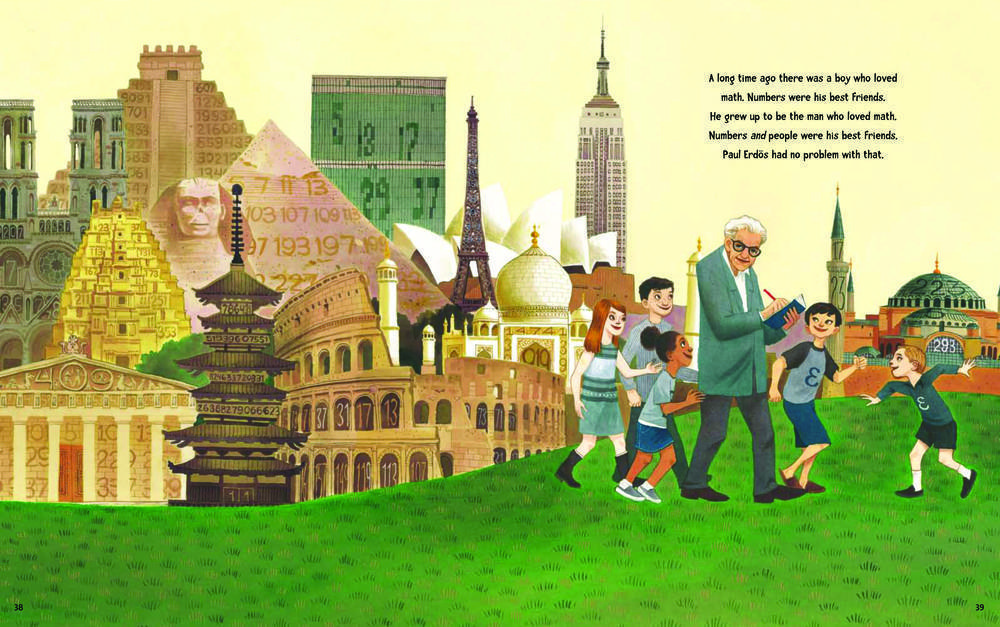
But even so, everyone loves “Uncle Paul!” He brings people together and shares his knowledge. His work in mathematics has given the world better computers, better search engines, and better codes for our spies to use. He was so admired that even now people represent their relationship with Paul by giving it a number – the “Erdős number.” Paul was a unique person who counted numbers and people as his best friends and experienced the world in a way that added up to a very special life.

celebrate-picture-books-picture-book-review-the-boy-who-loved-math-the-improbable-life-of-paul-erdos-older-paul

Image copyright LeUyen Pham, 2013, text copyright Deborah Heiligman, 2013. Courtesy of usmacmillan.com.

Reading Deborah Heiligman’s The Boy Who Loved Math is a liberating experience. Her biography reveals not just what Paul Erdős did, but the quirky genius he was. It also honors all the people around the world who embraced his personality, allowing Erdős to focus on the work he was born to do. Heiligman’s engaging patter, full of interesting anecdotes, humor, and personality, is storytelling at its best and provides an absorbing look at a very unique life.

LeUyen Pham’s illustrations perfectly complement the text, exposing Erdős’s chafing under rules, his delight in math, and his development from youth to old age. Each fascinating page cleverly represents the way Erdős saw the world as numbers, equations, and geometric shapes appear on buildings, domes, and even in the very air! The text too is infused with numerals and mathematical symbols (“Paul loved Mama to ∞, too!), making this a prime book for any math lover!

Ages 5 – 9

Roaring Brook Press, 2013 | ISBN 978-1596433076

Discover more about Deborah Heiligman and her books on her website.

To learn more about LeUyen Pham, her books, and her art, visit her website.

Mathematics Awareness Month Activity

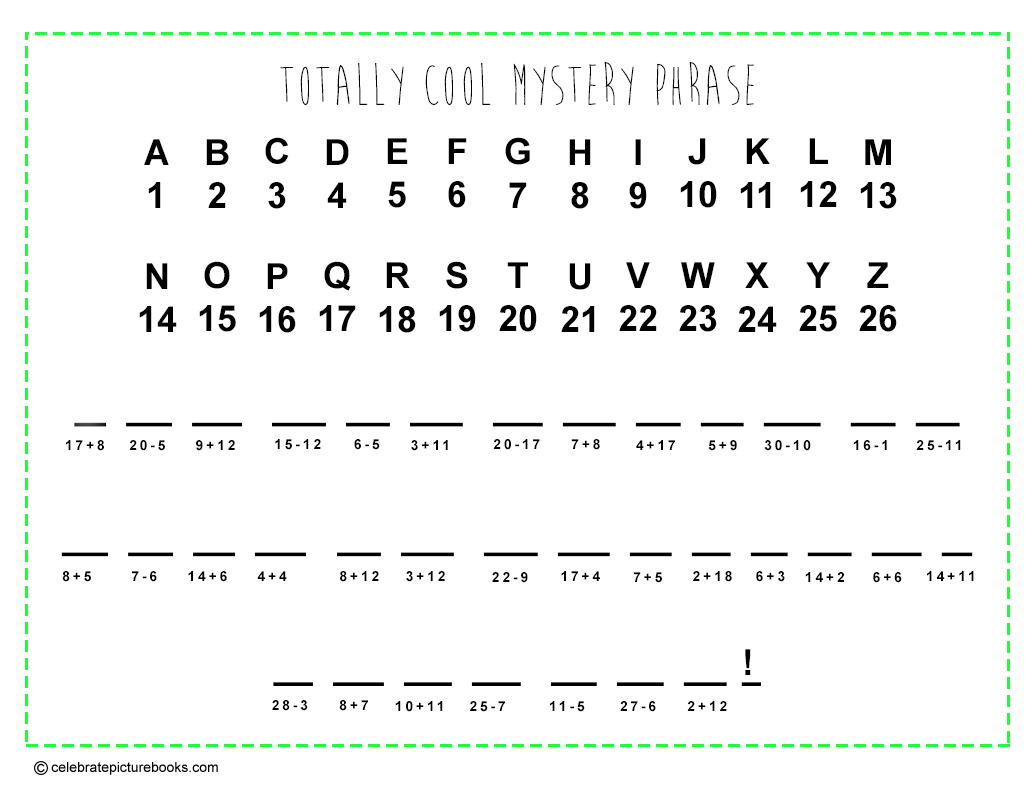
CPB - Math Mystery Phrase

Totally Cool Mystery Phrase! Puzzle


What plus what equals an equation that can’t be beat? You and numbers, of course! Complete this Printable Totally Cool Mystery Phrase! puzzle to discover a coded sentence! Here’s the Solution!

The Boy Who Loved Math: The Improbable Life of Paul Erdős by Deborah Heiligman and LeUyen Pham picture book review

You can find The Boy Who Loved Math at these booksellers

Amazon | Barnes & Noble | Books-a-Million | IndieBound

Picture Book Review
July 12 – New Conversations Day

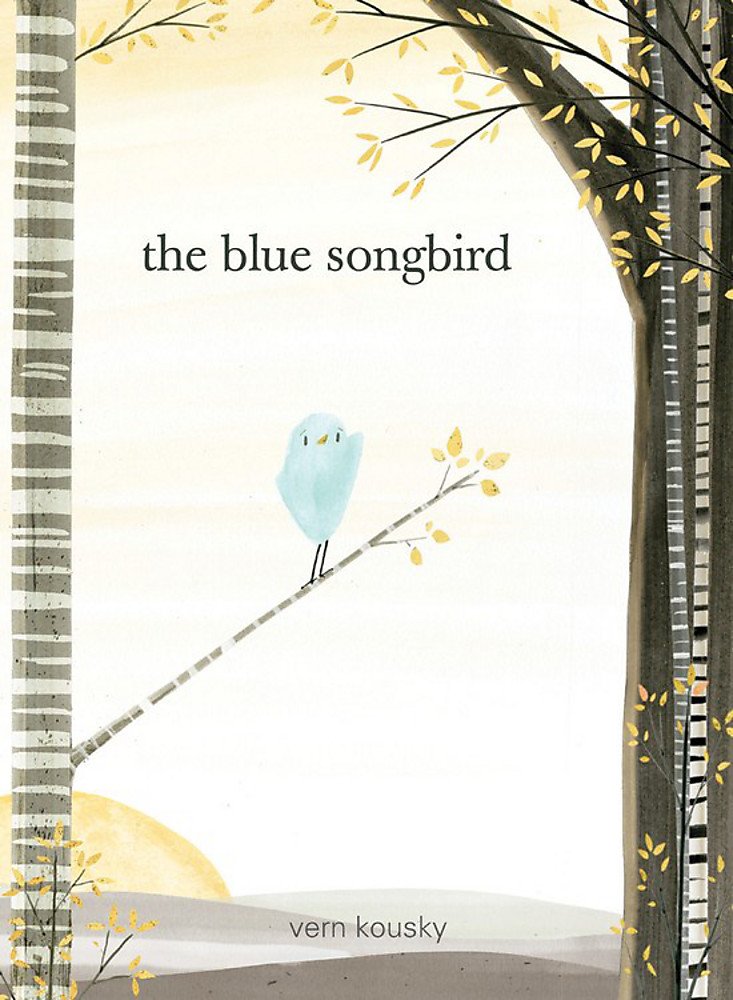
celebrate-picture-books-picture-book-review-the-blue-songbird-cover

About the Holiday

This brand-new holiday extols the virtues of a really good conversation. Too often our exchanges with others fall into the realm of small talk where the weather, the score of the latest game, or a cursory “how are you?” is as deep as it gets. But there are so many more interesting topics to discuss that would lead to better connections with and understanding of family, friends, and acquaintances. Take the opportunity of today’s holiday to get together with your friends and talk about the funniest thing that ever happened to you, the best meal you ever had, or your favorite work of art. Of course a perfect topic of conversation is your favorite book or character and why! You’ll find out a lot about your friends as well as about yourself!

The Blue Songbird

By Vern Kousky


There once was a little blue songbird who loved to listen to her sisters singing in the morning, but when she tried to join in, the notes always fell flat. Sadly, she told her mother that she thought there were no songs for her, but her mother gently told her, “‘not just any notes will do. You must go and find a special song that only you can sing.’” So the little songbird began a journey to “find her special song.”

celebrate-picture-books-picture-book-review-the-blue-songbird-cuddling-with-mother

Copyright Vern Kousky, 2017, courtesy of vernkousky.com.

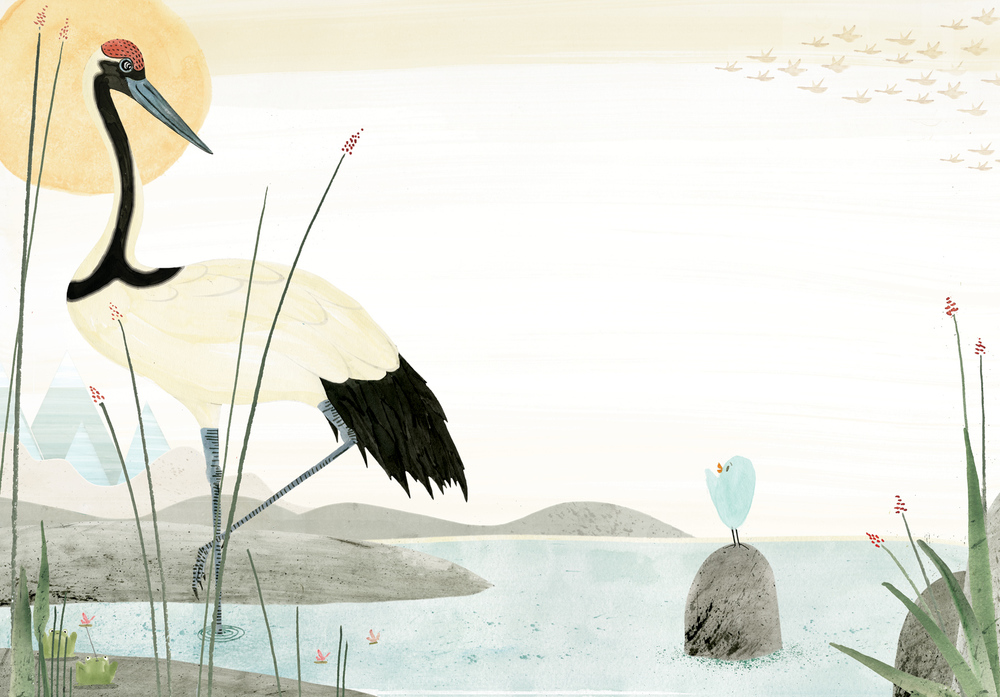
When she was far from home, she met a great crane and asked if he knew of any song made especially for her. The crane said he couldn’t help her, but pointed her in the direction of the mountains, where a wise bird lived. When she reached the pine forest on the other side of the mountains, the songbird explained to Mr. Wise Old Bird his quest for a song. But the owl could only ask, “‘Whoooo? Whoooo?’” so the songbird went on her way.

celebrate-picture-books-picture-book-review-the-blue-songbird-crane

Copyright Vern Kousky, 2017, courtesy of vernkousky.com.

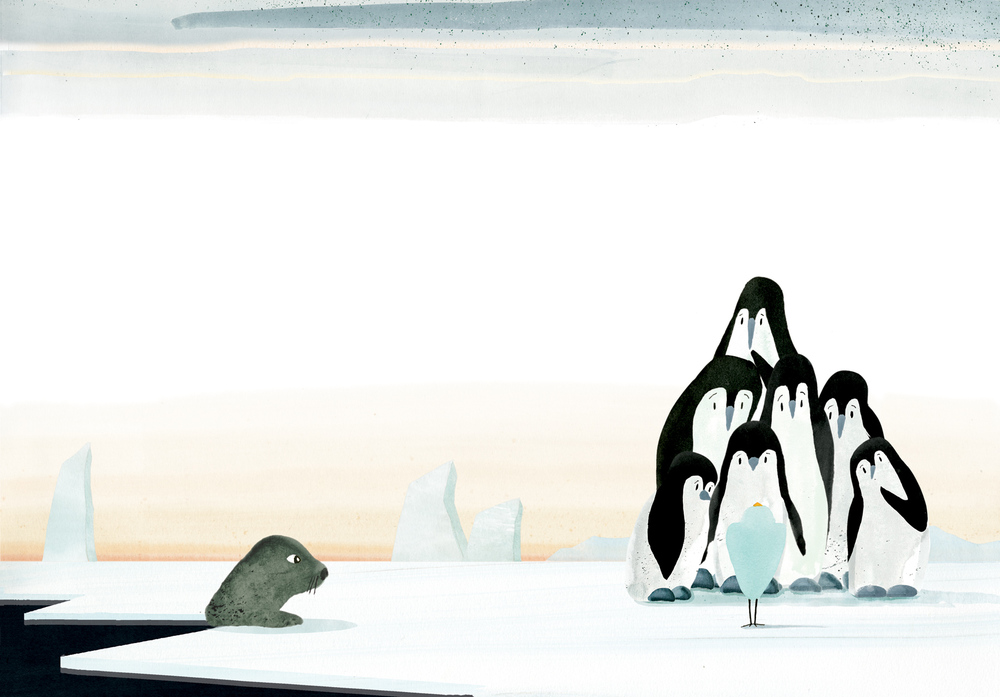
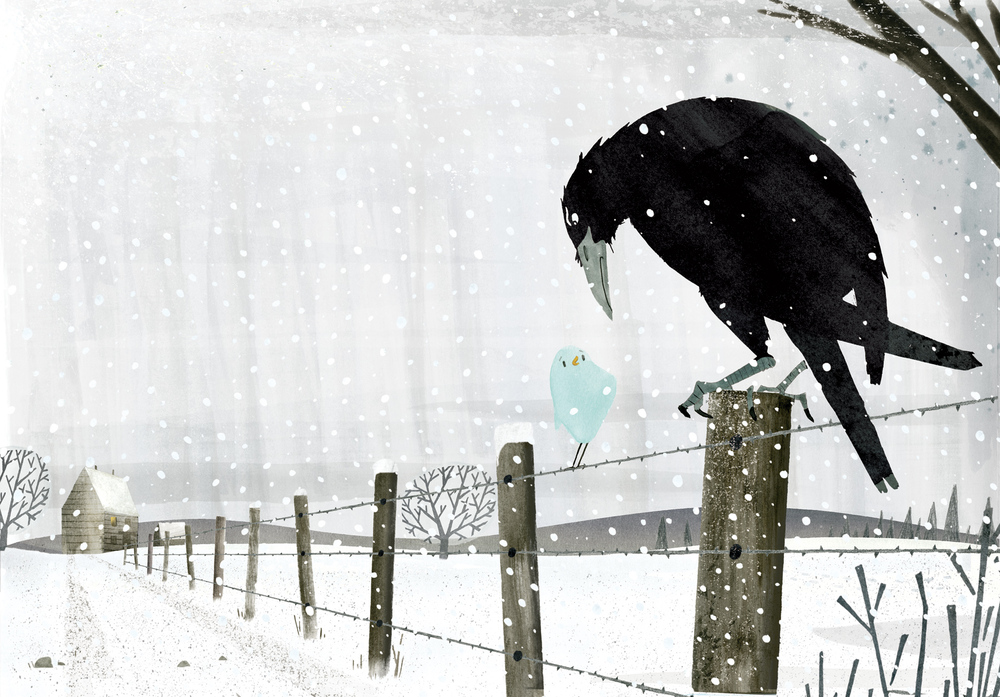
She stopped here and there to talk to a buzzard, a group of pigeons, and a family of penguins, but “no bird ever had the answer.” Then one snowy day the songbird saw “a bird who looked a little bit mean and more than a little hungry. Even so the songbird bravely chirped: ‘Please don’t eat me, Mr. Scary Bird. I was just wondering if you’ve ever heard of a very special thing—a song that only I can sing.’” The crow did know of such a thing and told the songbird about an island filled with enchanting music.

celebrate-picture-books-picture-book-review-the-blue-songbird-penguins

Copyright Vern Kousky, 2017, courtesy of vernkousky.com.

The songbird grew weary searching for the island, and then one day he saw a glow on the horizon and knew she had found it. She could hear the faint strains of beautiful music, and she flew faster and faster to get there. When she neared the island, though, she knew this place. It was home. “The songbird’s heart fell.” After all that time and all the conversations with other birds, “her quest had failed.”

When she saw her mother, however, her mood brightened. She wanted to tell her mother all about her travels and the other birds she’d met. When she opened her beak to tell her stories, though, “what came out was not words at all…but a song!” She sang about Crane and Owl and Crow, “of cities and of stormy seas and mountains capped with snow.” She told of warm days and cold days and most of all “of the love the songbird felt for her family and her home.”

celebrate-picture-books-picture-book-review-the-blue-songbird-crow

Copyright Vern Kousky, 2017, courtesy of vernkousky.com.

Vern Kousky gently nudges little ones out of the nest to begin exploring the world on their own, to test their wings, meet others, and discover their talents. Along the way young readers learn that they can trust their instincts, be brave, and that perseverance pays off. Kousky’s lyrical story also reassures children that home is always waiting and that no matter where they go or what they do, family will always welcome them.

Kousky’s tiny blue smudge of a bird is adorable as she cuddles with her mother to reveal her doubts and then demonstrates hopeful pluck as she talks with much larger birds on her way to self-discovery. Kousky’s settings delight with muted hues of blues, yellows, and reds and angled mountains, skyscrapers, and glaciers that point the little songbird—as well as readers—skyward. The image of the little songbird’s mother welcoming her home with outstretched wings is heartwarming, and the songbird’s elation at having found her song will fill readers with joy.

A joyful story for inspiring self-confidence, interactions with others, and personal growth, The Blue Songbird is a beautiful book for home and classroom libraries that will be asked for again and again.

Ages 4 –  8

Running Press Kids, 2017 | ISBN 978-0762460663

To learn more about Vern Kousky, his books, and his art, visit his website.

New Conversations Day Activity

celebrate-picture-books-picture-book-review-conversation-starters

Family Conversation Starters


Because children have such fertile imaginations, great conversations can start from just one intriguing question. Put these printable conversation starters on the dinner table and let the fun and serious talk begin!

Conversation Starters Page 1Page 2Page 3Page 4Page 5Page 6

celebrate-picture-books-picture-book-review-the-blue-songbird-cover

You can find The Blue Songbird at these booksellers

Amazon | Barnes & Noble | Books-a-Million | IndieBound

Picture Book Review
July 10 – Cow Appreciation Day

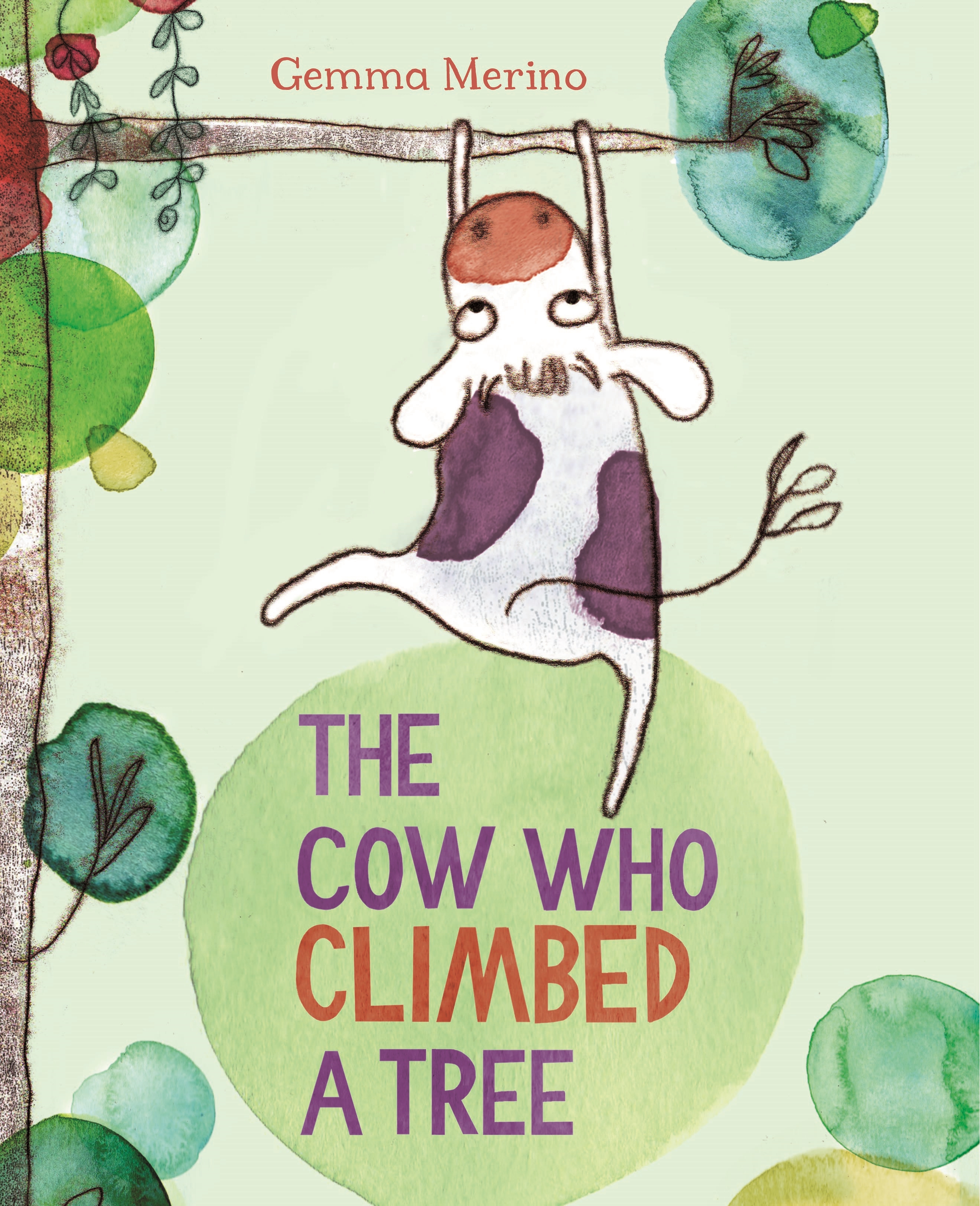
celebrate-picture-books-picture-book-review-the-cow-who-climbed-a-tree

About the Holiday

The brainstorm of the Chik-Fil-A Company as a clever advertising ploy to herd customers to the chicken side of things, Cow Appreciation Day, also gives us an opportunity to really think about the importance of cattle to the world as a food source and source of material from earliest times. Cows have also long been beloved characters in children’s books, inspiring laughs, empathy, and imagination – as in today’s book!

The Cow Who Climbed a Tree

By Gemma Merino


Tina is a very unique cow. Unlike her sisters who are only interested in “fresh and juicy grass,” Tina is very curious and always inventing new ideas. Her sisters proclaim her notions “‘Impossible! Ridiculous! And Nonsense!’” One day while exploring the woods, Tina decides to climb a tree. Branch by branch she swings herself to the top. Up there among the owls and squirrels Tina discovers a dragon—a friendly one, and a vegetarian to boot!

celebrate-picture-books-picture-book-review-the-cow-who-climbed-a-tree-tina

Copyright Gemma Merino, 2016, courtesy of Albert Whitman & Company.

“All afternoon they talked about wonderful dreams and incredible stories.” Tina is excited to tell her sisters, but when she gets home they aren’t impressed. The whole idea of cows climbing trees and dragons is “‘Impossible! Ridiculous! And Nonsense!’” The next morning Tina never shows up for breakfast. Her sisters find a note that reads “Gone flying with the Dragon of the Woods.”

celebrate-picture-books-picture-book-review-the-cow-who-climbed-a-tree-dragon

Copyright Gemma Merino, 2016, courtesy of Albert Whitman & Company.

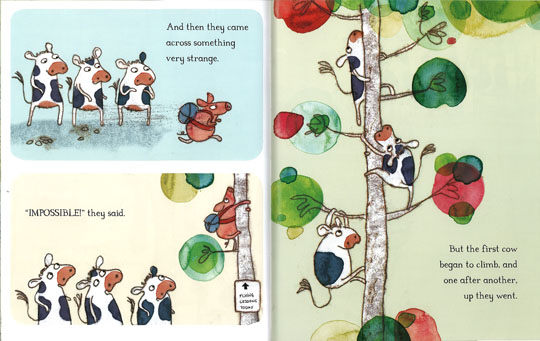
Her sisters decided this nonsense has to stop, so they head out to find her. As they leave behind their familiar farmland and enter the forest, they can’t believe how beautiful it is. Suddenly a pig wearing a backpack dashes past them and shimmies up a tree. Even though they consider this “impossible,” one sister follows the pig. The others join her. From a treetop branch the three find that “the world beyond the fields was extraordinary.”
celebrate-picture-books-picture-book-review-the-cow-who-climbed-a-tree-something-strange

Copyright Gemma Merino, 2016, courtesy of Albert Whitman & Company.

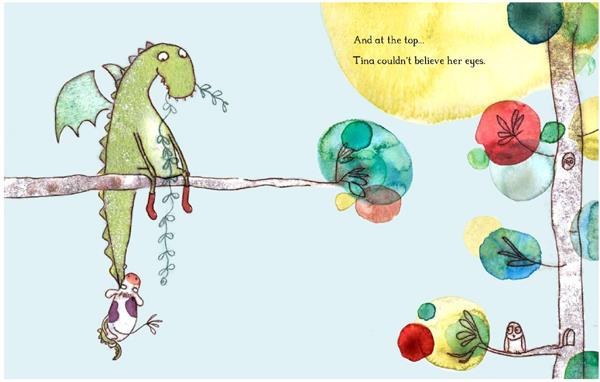
Still, Tina is nowhere to be found. The sisters look left, right, down, and up. Up! “It was impossible. It was ridiculous. It was nonsense. But it was true! Tina was flying!” She and other animals are taking flying lessons from the dragon, and while they don’t have wings, they soar just fine with a little help. From her lofty place, Tina asks her sisters to join her, and they say something she has never heard before: “Yes, why not?” They float, drift, and glide in the sunlit sky, and ever afterward find that nothing is “impossible, ridiculous, or nonsense.” Now all four sisters can’t wait to see what else is possible.

celebrate-picture-books-picture-book-review-the-cow-who-climbed-a-tree-interior-art-telescope

Copyright Gemma Merino, 2016, courtesy of Albert Whitman & Company.

Gemma Merino’s mooving tribute to people who live and dream large will inspire young children to reach for the treetops and beyond. The plucky heroine who doesn’t cower under her sisters’ reproach is a confident and likable role model, happy to include her sisters when they finally see the light. Merino’s sweet, soft-hued illustrations humorously depict the dichotomy between the sisters’ grass-focused existence and Tina’s vivid imagination. The cows’ home has sage green walls, furniture, and floors.

The pictures on the walls, the flowerpot on the windowsill, and the planter are all full of various types of vegetation, and the jars in the pantry contain such ingredients as Pickled Leaves, Meadow Mix, Dried Petals, and Herbal Tea. But Tina’s imagination and the forest she loves to visit are infused with reds, ambers, blues, and teals; even the greens are more brilliant. For anyone contemplating the unknown, The Cow Who Climbed a Tree is rousing fun!

Ages 4 – 7

Albert Whitman & Company, 2016 | ISBN 978-0807512982

To learn more about Gemma Merino and her books visit her website!

Cow Appreciation Day Activity

celebrate-picture-books-picture-book-review-cow-mug-craft

Moo Cow Mug

Milk—regular or chocolate!—will taste so much better in a Moo Cow Mug  you make yourself! 

Supplies

  • White ceramic mug, available at craft stores
  • Black permanent marker or paint for ceramics
  • Pink permanent marker or paint for ceramics
  • Brown permanent marker or paint for ceramics

celebrate-picture-books-picture-book-review-cow-mug-craft-back

Directions

  1. With the pink marker or paint, draw an oval shape for the nose near the bottom of the mug. Let dry.
  2. With the brown marker or paint, draw two angled nostrils inside the pink oval and color them in. Let dry.
  3. Color in the nose with the pink marker or paint.
  4. With the black marker, color the top tip of the handle where it meets the mug to make the tail.
  5. With the black marker or paint, draw two wavy lines on either side of the face starting at the top, angling toward the middle and returning to the bottom of the mug. Leave white space between the lines.
  6. Draw circles for eyes within the black lines. Add black pupils at the bottom of the eyes.
  7. Color inside the black lines and around the eyes to make the face markings.
  8. With the black marker or paint, make two or three splotches on the back of the mug.
  9. Let the mug dry and follow the directions for the markers or paint to set the color.
  10. Pour yourself a mug of milk and enjoy!

celebrate-picture-books-picture-book-review-the-cow-who-climbed-a-tree

You can find The Cow Who Climbed a Tree at these booksellers

Amazon | Barnes & Noble | Books-a-Million | IndieBound

Picture Book Review