March 26 – Noodle Day

Noodle Magic by Roseanne Greenfield Thong and Meilo So Picture Book Review

About the Holiday

Noodle on this: what’s the difference between noodles and most other dry pastas? Noodles contain eggs! It’s just this kind of fascinating fact you can learn during noodle month. Whether you like spinning the long strands around your fork or slurping them right from the bowl, noodles make the perfect comfort food whether they’re mixed with sauce, pesto, or meat and veggies. People make some pretty awesome crafts from them too! Did you know that 13th century bakers made their dough into birds, stars, words, and other shapes? Too bad Pinterest wasn’t around then! So boil up some water and get cookin’ on a delicious day!

Noodle Magic

Written by Roseanne Greenfield Thong | Illustrated by Meilo So


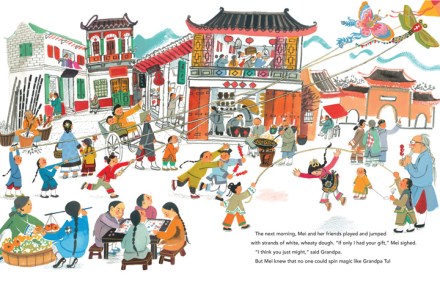
The emperor’s birthday is coming, and everywhere excitement fills the air. Mei’s Grandpa Tu will no doubt be making his famous noodles for the celebration. Mei loves to watch her grandfather work, slapping and kneading the dough and pulling the strands of noodles. He is so creative with his cooking that everyone marvels, even the Moon Goddess. In fact, Grandpa Tu is such an extraordinary artist that he makes noodle jump ropes and kite strings for Mei and her friends. They are as “simple as a sunflower” and as “easy as a sea breeze” to make, says Grandpa Tu.
celebrate-picture-books-picture-book-review-noodle-magic-playing-with-noodles

Image copyright Meilo So, text copyright Roseanne Thong. Courtesy of meiloso.com

But Mei thinks there is more to his talent and wishes that she had his magic. Her grandfather believes she does possess it. One afternoon the pair watch animal-shaped clouds fill the sky, and Mei asks if her grandpa can catch them with noodles. That night he makes a batch of noodles, and in the morning the two collect clouds as the sun appears.

On the day before the emperor’s birthday, everyone is busy making something special—everyone except Grandpa Tu. The villagers are perplexed. On such an important day, they will all want to enjoy noodles—and what about the special long-life noodles for the emperor? It is time, Grandpa Tu tells Mei, for her to make the noodles.

Mei is surprised and terrified. She slaps and kneads the dough as she has seen her grandfather do, but it remains ordinary. Where is the magic? “‘Trust in yourself,’” Grandpa Tu tells her, but Mei is doubtful. She decides that perhaps if she gives the Moon Goddess a gift, she will get magic in return. “‘You have all the magic you need,’” her grandfather assures her. Still, he helps Mei make enough dough to form an enormous ball of noodles.

celebrate-picture-books-picture-book-review-noodle-magic-making-noodles

Image copyright Meilo So, text copyright Roseanne Thong. Courtesy of meiloso.com

Mei throws the ball to the Moon Goddess and calls out for the Goddess to give her magic. Wisely, the Goddess reminds Mei that magic must come from inside. Mei closes her eyes and thinks very hard. She tussles with the Moon Goddess in a noodle tug-of-war, and suddenly…Snap!…the noodles break. The sky rains noodles of all shapes and sizes, Mei has discovered the magic that was in her all along!

With the charm of a Chinese folktale, Roseanne Greenfield Thong tells the universal tale of self-discovery. Her lyrical language adds a magic of its own to the tale, as when Mei watches her grandfather make dough: “she loved the powdery flakes that hung in the air and freckled the morning light.” The relationship between the little girl and her grandfather is lovingly portrayed, offering a gentle depiction of the wisdom and reassurance provided by extended family members.

Meilo So brings the story to vibrant life with her colorful paintings of village life, Mei and Grandpa Tu’s home, and the Moon Goddess. The magic of Grandpa Tu’s noodles is cleverly shown in the transparent animals, dragons, and birds outlined in noodles that frolic across the pages. The two-page spreads of Mei’s village are particularly captivating, as packed with interesting scenes and details as any bustling town.

Ages 4 – 8

Orchard Books, 2014 | ISBN 978-0545521673

Noodle Day Activity
CPB - Noodle Puzzle

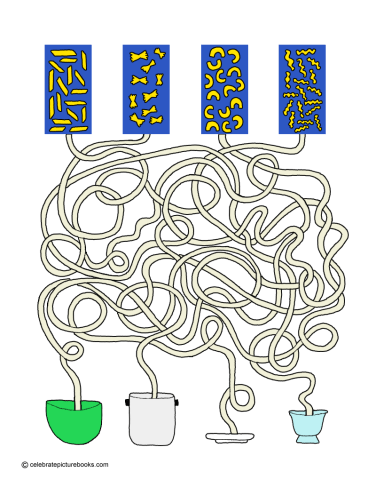
Noodle on This Puzzle


Everyone has their favorite kind of noodles! Help these noodles get to the right plate, bowl, or pot in this printable Noodle on This puzzle that’s as wiggly as a wet noodle!

Picture Book Review

March 25 – International Waffle Day

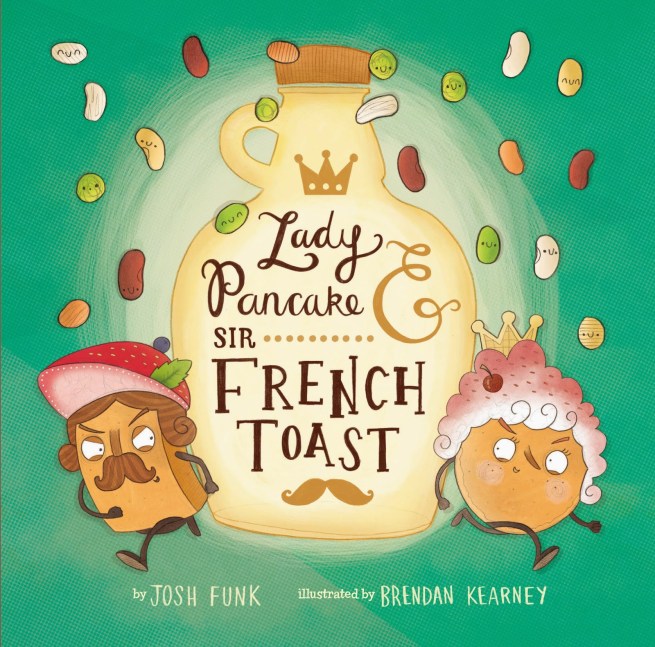
Lady Pancake and Sir French Toast by Josh Funk and Brendan Kearney Picture Book Review

About the Holiday

When someone made a spelling error, turning the Swedish holiday “Our Lady’s Day” (Vårfrudagen) into Waffle Day (Våffeldagen), a brand new culinary celebration began! Waffle Day also ushers in spring and offers the perfect excuse to enjoy these crispy concoctions whether you like them sweet, with syrup or confectioner’s sugar, or savory, as a base for meat and other toppings. So mix up some batter and pull out your favorite waffle maker and enjoy a delicious day!

Lady Pancake and Sir French Toast

Written by Josh Funk | Illustrated by Brendan Kearney


You know those strange noises you sometimes hear coming from your refrigerator? And how you could have sworn the leftovers were on the top shelf? Well, Josh Funk’s Lady Pancake and Sir French Toast may solve those mysteries and more in this rambunctious tale about what happens when relationships grow frosty.

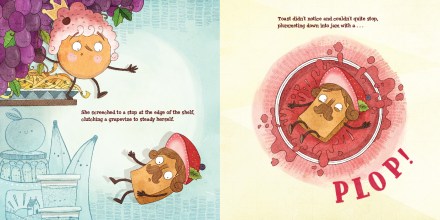
One day Lady Pancake and Sir French Toast are hanging out at the back of the fridge when they learn the syrup is almost gone. Lady Pancake claims it as her own, but Sir French Toast replies, “Not if I get there first!” And so off they race! “Through Broccoli Forest, past Orange Juice Fountain, they climbed to the top of Potato Mash Mountain.” But the race takes a turn as the two meet obstacles that are no fun at all: at the edge of a shelf “Toast couldn’t quite stop, plummeting down into jam with a plop.” And “Chili Lagoon slathered Pancake in muck and then at a fork in the road she got stuck.”

celebrate-picture-books-picture-book-review-lady-pancake-and-sir-french-toast-interior-art

The one-time friends call each other names and taunt each other with boasts of being the best breakfast food. As their competition upends the peace of the whole refrigerator from shelf to shelf, Lady Pancake and Sir French Toast find their energy wilting, and by the time they reach that sweet sought-after prize, they are “battered and soggy, exhausted and crumbling, too tired to push, they were limping and stumbling.”

With the bottle in sight, they are shocked to discover that the last drop of syrup is already gone. Who could have done this dastardly deed? None other than the sneaky Baron Von Waffle! With nothing to gain, Lady Pancake and Sir French Toast no longer have a reason to fight. In fact they realize that they lost out on the syrup because they were fighting. When they see that there is a little butter left, they decide to use the lesson they learned and share it.

celebrate-picture-books-picture-book-review-lady-pancake-and-sir-french-toast-interior-art

There are so many fantastic rhymes in this book that kids will want to hear again and again. One of my favorites comes as Sir French Toast catches up to Lady Pancake: “He scraped himself off and yelled up, / ‘You’re a meanie!’ / as Pancake rappelled / down a rope of linguini.” With such laugh-inducing verses, kids may never look at food the same way again. Josh Funk has created a tale about friendship that is both boisterous and unique and sure to quickly become a favorite.

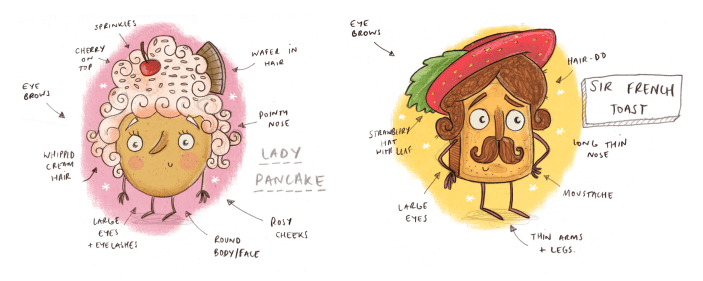
The refrigerator world as envisioned by Brendan Kearney is as colorful as the food rainbow and as active as a playground in summer. It’s also stacked with the cutest array of legumes, yogurt, cake, juices, fruit, and veggies you’ll find anywhere. The final fold-down page of the entire refrigerator is a delight that kids of all ages will want to linger over even after the story of The Great Race between Lady Pancake and Sir French Toast is over.

Ages 5 and up

Sterling Children’s Books, 2015 | ISBN 978-1454914044

Visit Josh Funk’s Website to download a free Lady Pancake and Sir French Toast Activity Kit and to learn about more upcoming titles!

Discover more art and books by Brendan Kearney on his website!

Watch the trailer for this amazing race – you’ll be singing the Lady Pancake & Sir French Toast theme song in no time!

International Waffle Day Activity 


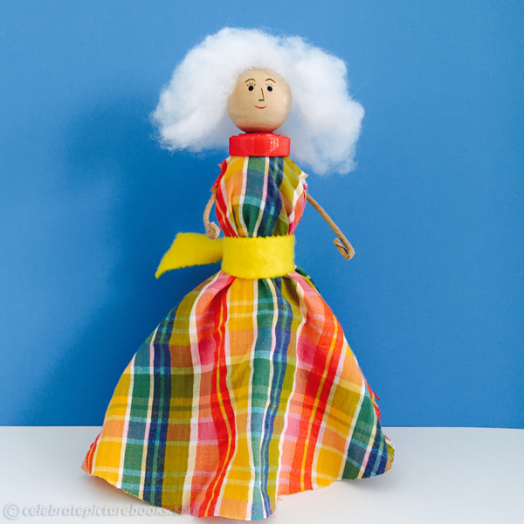
celebrate-picture-books-picture-book-review-lady-pancake-and-sir-french-toast

Sweet as Syrup Figure


Fun shouldn’t be kept bottled up! Well…maybe just this once. Make your own figure to display or play with from a syrup bottle with this craft. It’s sure to be as sweet as you are!

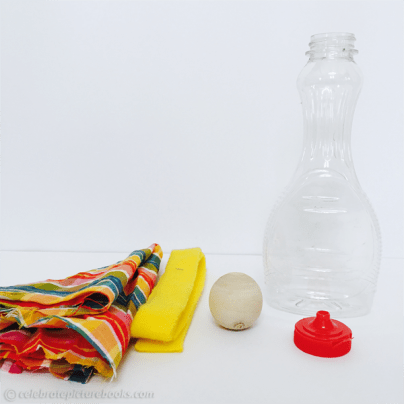
Supplies

  • Small plastic syrup bottle with a narrow squeeze fliptop and without a handle, empty
  • 1 ½-inch wooden ball with ½-inch hole in bottom
  • 16-inch to 18-inch square piece of cloth
  • Ribbon or strip of material
  • 12 to 14-inch long medium-gauge craft wire
  • Gel pens, black, blue, brown, red (Gel pens work well on the wood as the ink doesn’t bleed into the wood and are easy to control)
  • Poly fill or needle-felting wool
  • Scissors
  • Strong glue

CPB - Syrup Bottle Figure II

Directions

To prepare the bottle

  1. Remove labels from syrup bottle
  2. Cut the flip top in half, keeping the narrow nozzle part

To make the head

  1. Holding the wooden ball with the hole at the bottom, draw a face on the wooden ball with the gel pens
  2. Glue a small handful of poly fill or needle-felting wool to the top of the wooden ball for hair. You can make the hair has long, short, or poofy as you wish.

To make the dress

  1. Cut a 16-inch diameter circle from the material

To assemble the figure

  1. To make the arms, wrap the wire around the neck of the syrup bottle, crossing it in the back and pulling tight
  2. Center the material over the opening of the syrup bottle
  3. Cut tiny slits in the material at the location of the wire on each side of the bottle, and pull the arms through the material
  4. Bend the ends of the wire into a small loop to form hands
  5. Screw the cap with the narrow nozzle over the material
  6. Tie the ribbon or strip of material around the narrow part of the bottle to make the figure’s waist
  7. Place the hole in the wooden ball over the nozzle in the cap and glue into place

Make up your own story with your new figure!

March 24 – National Button Day

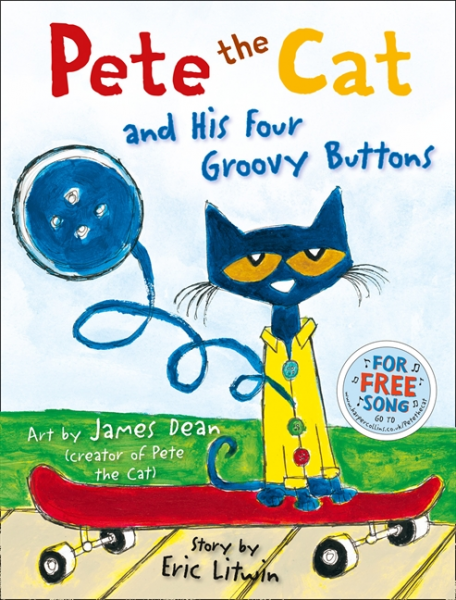
Pete the Cat and His Four Groovy Buttons by Eric Litwin and James Dean Picture Book ReviewAbout the Holiday

You have to admit it—those little round things that hold our clothes and bags shut are indispensable. Sometimes tiny works of art in their own right, buttons are fascinating. Antique buttons made of glass, metal, or even bone and decorated with intricate paintings, engraved designs, or gemstones offer a glimpse into history, both American and International. Today’s buttons, fashioned into engaging shapes or brightly colored, have stories of their own and enhance whatever garment or item they adorn.

Button collecting was recognized as an organized hobby by the National Button Society in 1938, and National Button Week – which I’m celebrating today – was founded in 1989. The goal is to promote awareness of the fun of button collecting and to recognize the study and display of antique and collectible buttons. Button collecting is a fun hobby that is exciting for all ages.

Pete the Cat and His Four Groovy Buttons

Written by Eric Litwin | Created and Illustrated by James Dean


It’s 8:00 in the morning and Pete the Cat is ready to start the day wearing his favorite shirt – the one with 4 groovy buttons. Those buttons are big, they are round, they are colorful, and they inspire him to sing a song: “My buttons, my buttons, my four groovy buttons. My buttons, my buttons, my four groovy buttons.”

Soon, however, one of the buttons pops off! That leaves Pete with how many buttons? 3! Right! Does Pete cry? “Goodness No! Buttons come and buttons go.” Fortunately for readers buttons continue to GO…inviting kids to do the math and sing the infectious song with each “Pop!”

As Pete sits atop his surfboard atop his VW Beetle looking very beachy, his last button goes sprooiiing and rolls away. What does Pete see then? Why, the only button that won’t desert him—his belly button!

Eric Litwin’s short, fast-paced text contains plenty of exciting opportunities for read-along, shout-along fun on every page. The subtraction problems offered as Pete loses buttons provide early learners with confidence-building moments, and Pete’s easy-going attitude is just right for these hyper-busy times.

James Dean’s illustrations are as big, bold, colorful, and groovy as Pete’s buttons. Vibrant primary colors rivet readers to the page, and—Watch out! That popping button is swirling right at you! But through it all Pete the Cat remains his nonchalant self.

Ages 4 – 8

HarperCollins, 2012 | ISBN 978-0062110589

National Button Week Activity

CPB - Button Coat

Pin the Button on the Coat Game


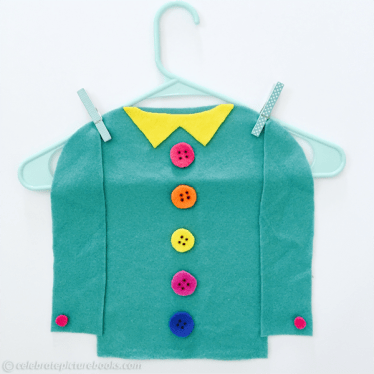
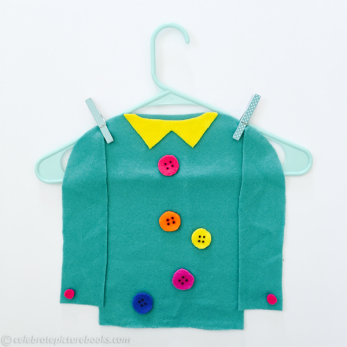
Pin the Button on the Coat is a fun game you can make yourself and play anytime! It’s great for a button-themed party or on any day that you’re holed up and just poppin’ to do something! The game is played like “Pin the Tail on the Donkey,” and the object is to get the buttons as close to the center of the coat as possible. Have fun!

Supplies

CPB - Button Coat II

Directions

  1. Cut out the coat, sleeves, and collar following the printable patterns
  2. With the fabric glue, attach the sleeves to the edge of the coat, and the collar to the top of the coat.
  3. Let dry
  4. Cut circles to represent buttons from the other colors of fleece or felt, as many as you need
  5. With the marker make dots to represent holes in the “buttons”
  6. When the glue on the coat is dry, attach it to the clothes hanger with the clothespins

If you like buttons and button crafts, pop on over to February 29—Haiku Writing Day for Guyku—a fun book of poetry—and directions to make a bookmark with colorful buttons!


March 23 – National Puppy Day

The Octopuppy by Martin McKenna Picture Book Review

About the Holiday

National Puppy Day was founded in 2006 by Colleen Paige to recognize the joy and companionship that puppies bring to people. The day also promotes puppy rescue and adoption as well as education about puppy mills, and is quickly becoming an international observance. To celebrate consider donating to your local animal shelter or if you have room in your life for a new friend, adopt a puppy!

The Octopuppy

By Martin McKenna


Edgar wants a puppy for his birthday, but what he gets is so NOT a puppy. Out of the gift box pops Jarvis, a goggle-eyed octopus ready to party. Disappointing doesn’t even begin to describe it. Jarvis can’t do anything a dog could do. Sure, he might be clever—Jarvis buys Edgar an ice-cream cone instead of staying on his leash tied to the lamppost, for example—but Edgar wants a pet he can enter in the upcoming dog show.

celebrate-picture-books-picture-book-review-the-octopuppy-dog-show

Copyright Martin McKenna, courtesy of http://www.storycorner.scholastic.com

Perhaps with training Jarvis can learn to be more like a dog. But when Edgar tells him to lie down, Jarvis goes to sleep wearing PJs and socks, holding a teddy bear and surrounded with books. Edgar’s command to “play dead” elicits a surprise lunge from a wardrobe in a toilet-paper mummy costume. It’s just too much, and drives Edgar crazy! Finally, however, Jarvis learns to sit like a dog, and off they go to the dog show.

celebrate-picture-books-picture-book-review-the-octopuppy-lie-down

Copyright Martin McKenna, courtesy of http://www.storycorner.scholastic.com

At the dog show things go…well…Jarvis just can’t help being himself. He wears a tutu, plays the piano, does card tricks, and plays the drums—all at the same time. The other entrants are not amused, and Edgar is sooo embarrassed.

celebrate-picture-books-picture-book-review-the-octopuppy-sleeping

Copyright Martin McKenna, courtesy of http://www.storycorner.scholastic.com

Jarvis decides to leave, and after penning a note apologizing for being a bad dog, he slips down the toilet and out to sea. When Edgar discovers Jarvis is missing, he realizes he has been wrong. He remembers all the great things Jarvis did and thinks that Jarvis was the best Octopuppy in the world! Suddenly, he wants his pet back. He looks everywhere, but Jarvis is nowhere to be found.

As a last resort Edgar yells his apology into Jarvis’s escape route. His message is carried through the plumbing by various pipe and underground creatures until Jarvis hears it. Before Edgar can turn around, Jarvis is back! To celebrate his being home, Edgar’s family and friends throw Jarvis the kind of wild party he was looking for all along.

celebrate-picture-books-picture-book-review-the-octopuppy-edgar-has-change-of-heart

Copyright Martin McKenna, courtesy of http://www.storycorner.scholastic.com

This endearing story has just the right mix of craziness and sincerity to make it a favorite on any child’s bookshelf. Martin McKenna hits all the right notes in his tribute to friendship and the idea that true friends accept and appreciate each other the way they are. Jarvis is a sweetie doing very un-doglike things. He rescues a cat instead of chasing it, cooks sausages instead of stealing them, and performs surgery instead of biting the mailman. These vignettes make Edgar’s rejection all the more heartrending and his ultimate realization very satisfying. McKenna’s illustrations are loaded with silly and profound details that kids will want to linger over, and the two-page spread of Edgar leading Jarvis home after the dog show is an emotional marvel.

Ages 3 – 6

Scholastic Press, 2015 | ISBN 978-0545751407

National Puppy Day Activity

CPB - Dog Toy

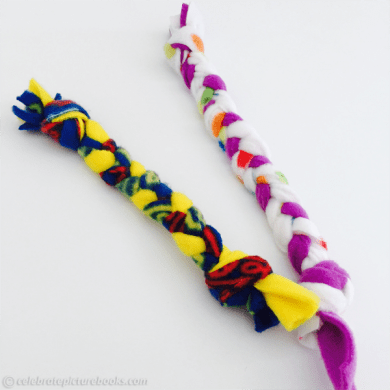
Braided Puppy Toy


Your puppy or full-grown dog will love playing with you and this easy-to-make toy that’s perfect for tug-of-war, fetch, or any kind of fun.

Supplies

  • Fleece in two or three colors or patterns
  • Scissors

CPB - Dog Toy II

Directions

  1. Cut 3 strips of fleece 15 inches to 20 inches long. You can use just one color, two, or three!
  2. Holding all three strips of fleece together, make a knot by looping them at the top, feeding the ends through the loop, and pulling tight.
  3. Braid the 3 strands of fleece until there are 3” to 4” left at the end
  4. Holding all three strands together, knot them as before
  5. Your puppy or dog toy is ready to play with! (Cats and kittens like these too, just don’t tell your puppy—Shhh!)

Picture Book Review

March 22 – Tuskegee Airmen Day

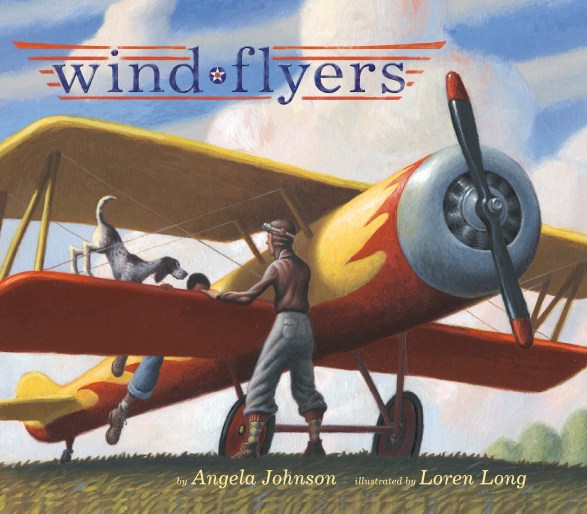
Wind Flyers by Angela Johnson and Loren Long Picture Book Review

About the Holiday

Today marks the 75th anniversary of the foundation of the Tuskegee Airmen, the first black military aviators in the U. S. armed forces during World War II. The regiment consisted of 996 pilots and more than 15,000 ground personnel who were trained at Tuskegee Army Air Field and other locations. These brave pilots have been credited with 15,500 combat sorties and earned more than 150 Distinguished Flying Crosses. The success of the Tuskegee Airmen paved the way for the integration of the U.S. military under President Harry S Truman in 1948.

Wind Flyers

Written by Angela Johnson | Illustrated by Loren Long


With pride a young African-American boy tells the story of his great-great-uncle who was a Tuskegee Airman in World War II. His uncle was “a smooth wind flyer. A Tuskegee wind flyer…” Like a bird, his uncle tells his nephew, he was born to fly, jumping off a chicken coop at the age of five and into a pile of hay from a barn when he was seven. He has his first real flight at the age of eleven, when he pays to be a passenger with a barnstormer.

Flying over lakes and fields, his uncle feels as if he’s in Heaven, among soft clouds that beckon for him to be a wind flyer too. The experience changes him forever, and always there is the desire to fly “into the wind, against the wind, beyond the wind.” As a young adult his uncle contributes his dream and his skills to the World War II effort, becoming a Tuskegee Airman, one of the first black pilots in the United States military.

The boy and his uncle look through old photographs, seeing once more those young and brave pilots—the Tuskegee wind flyers. After the war, his uncle crop dusted in order to fly. Now planes are different, he says, but the clouds remain the same. The boy and his uncle climb to the highest point of the uncle’s barn to watch the jets—and in those moments they once more become the smooth wind flyers, flying into the wind and beyond.

In her soaring, rhythmic language, Angela Johnson captures the dreams and yearning of a young boy whose greatest desire is to fly among the clouds. When he gets his chance by joining the Tuskegee Airman in World War II, Johnson combines straightforward narrative with poetic lines to enhance the sense of achievement and pride the young pilots felt. The structure of the story is well chosen, as the relating of the uncle’s life from childhood through old age through the eyes of his nephew, strengthens themes of strong familial relationships as well as shared dreams across generations.

Loren Long gives Wind Flyers additional power with his strong, vibrant paintings. Two-page spreads provide a sense of the vastness of the skies that so enticed the young would-be pilot. Even the clouds echo the emotion of the page—fluffy, floating, and alive in the flight scenes while linear, flat, and stationary when the plane and the uncle are earthbound. Realistic portrayals of the boy, his uncle, and the other Tuskegee Airmen are reminiscent of the WPA murals of the 1940s while still setting this book firmly in today for a new generation.

Wind Flyers is a wonderful book to share with aviation buffs and dreams of all types.

Ages 4 – 9

Simon & Schuster Books for Young People, 2007 | ISBN 978-0689848797

Tuskegee Airmen Day Activity

CPB - Biplane side

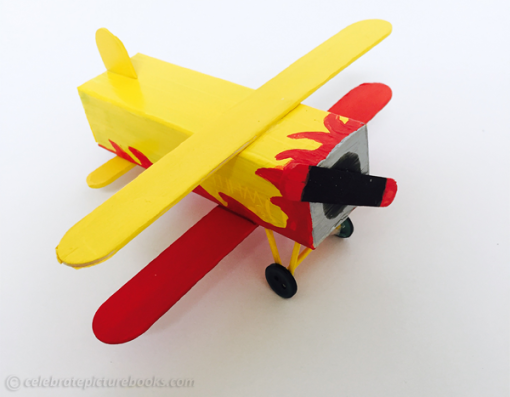
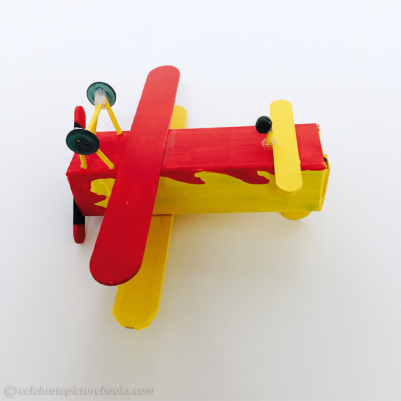
Head in the Clouds Box Biplane


If you love airplanes and flying, you’ll have fun making your own plane from recycled materials! Use your creativity to decorate your plane while you imagine yourself flying through the clouds on a beautiful day. Younger children will have fun sharing this activity with an adult or older sibling too!

Supplies

  • Travel-size toothpaste box
  • 3 6-inch x 1/2-inch craft sticks
  • 2  2 1/2-inch x 7/8-inch mini craft sticks
  • 5 Round toothpicks, with points cut off
  • Paint in whatever colors you like for your design
  • 4 small buttons 
  • 2 mini buttons
  • Paint brushes
  • Strong glue or glue gun

CPB - Biplane front

Directions

  1. Empty toothpaste box
  2. Paint toothpaste box and decorate it
  3. Paint the craft sticks and 5 toothpicks
  4. Paint one small craft stick to be the propeller
  5. Let all objects dry

To assemble the biplane

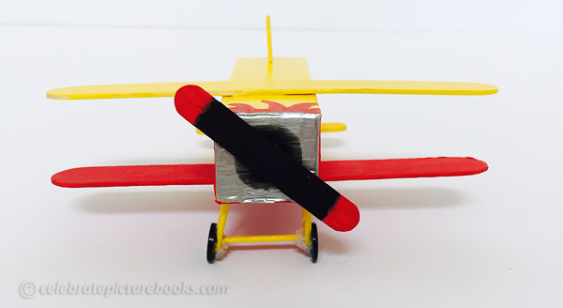
  1. For the Bottom Wing – Glue one 6-inch-long craft stick to the bottom of the plane about 1 inch from the end of the box that is the front of the plane
  2. For the Top Wing – Glue the other 6-inch-long craft stick to the top of the plane about 1 inch from the front of the plane
  3. For the Tail – Glue one mini craft stick to the bottom of the box about ¾ inches from the end that is the back of the plane
  4. For the Vertical Rudder – Cut the end from one of the painted 6-inch-long craft sticks, glue this to the back of the box, placing it perpendicular against the edge and half-way between each side

CPB - Biplane bottom

To assemble the front wheels

  1. Cut 4 painted toothpicks to a length of ¾-inches long
  2. Cut one painted toothpick to a length of 1-inch long
  3. Glue 2 of the 3/4-inch toothpicks to the back of 1 button, the ends of the toothpicks on the button should be touching and the other end apart so the toothpicks form a V
  4. Repeat the above step for the other wheel
  5. Let the glue dry
  6. Glue the 1-inch long toothpick between the wheels at the center of each wheel to keep them together and give them stability. Let dry

To make the back wheel

  1. Cut two ¼-inch lengths of painted toothpick and glue them together. Let dry
  2. Glue two mini buttons together to form the back wheel. Let dry
  3. Glue the ¼-inch toothpicks to the mini buttons. Let dry
  4. Glue these to the bottom of the plane in the center of the box directly in front of and touching the tail

Display your biplane!

March 21 – World Poetry Day

Nasty Bugs by Lee Bennett Hopkins and Will Terry Picture Book Review

About the Holiday

World Poetry Day, an initiative of the United Nations Educational, Scientific, and Cultural Organization, recognizes the important role poetry plays in people’s lives across the world and over time. The day promotes small publishers of poetry as well as oral poetry traditions and works to strengthen the connection between poetry and other forms of expression. Another objective is to “support linguistic diversity thorough poetic expression and to offer endangered languages the opportunity to be heard within their communities.”

Celebrations on this day include poetry readings, school lessons focused on poetry and poets, poetry writing sessions, and poetry readings by professional and amateur poets in schools and other venues.

Nasty Bugs

Poems Selected by Lee Bennett Hopkins | Illustrated by Will Terry


Who in the world can resist bugs? They’re in every country, every city, every town, even every house! And they have so much going for them—lots of legs, pincher mouths, transparent wings, amazing survival skills, and so much general creepy-crawliness! Bugs may be a little (or a lot) icky, but you can’t deny that they’re fascinating.

Nasty Bugs brings together 16 poets to turn the traits of all kinds of insects, from stink bugs to chiggers to water bugs and more, into creative odes that tickle the funny bone as well as teach. Readers learn from Cynthia S. Cotton’s “Stink Bug” that “Some spread their wings in flight, / Some look scary, / some taste bad, / some use camouflage / to blend in just right.”

Rebecca Kai Dotlich exposes the boll weevil: “I am an evil weevil, / a cotton-craving beetle / whose reputation’s rotton / ‘cause I gobble crops of cotton, / yes I do.” And the Colorado Potato Beetle? Among other quirks, X. J. Kennedy reveals its name is a bit of a misnomer: “His other name’s Potato Bug. / This munching desperado / infests our gardens coast to coast. / Not just in Colorado.”

April Halprin Wayland gives voice to the fire ants’ tribal cry “All for one and one for all!” as they jump into action when “Flood waters rise! / Quick, form a ball—/ our larvae, pupae, eggs, and Mother Queen inside! / We roll this writhing globe, / take turns on top / so all breathe air, so all survive.”

“Spoiled Rotton” by J. Patrick Lewis may make grammarians squirm with this pointed description: “I’m a comma / in a drama / of disgusting devastation.” while readers will be itchin’ to know more in Rebecca Andrew Loescher’s “Ode to Chigger” with lines such as “You hatch with six small legs for running, / then grow two more—for leaps most stunning,” Poems about flies (Ann Whitford Paul), wasps (Michele Krueger), fleas (Marilyn Singer), lice (Amy Ludwig VanDerwater), ticks (Kami Kinard), termites (Alice Schertle), cockroaches (Fran Haraway), and bedbugs (Kristine O’Connell George) also contribute to the buzzzzz of this anthology.

But if bugs, well…bug you, you may find these lines in Lee Bennett Hopkins’ “Ode to a Dead Mosquito” most satisfying: “You of little brain / didn’t you know / I felt your sting / the instant you / began to drain? / So— / I whacked you. / SMACK! / You dropped.”

Will Terry lends his distinctive talent to making this book as colorful, bold, and eye-popping as nature itself. Each insect, depicted in its favorite milieu, nearly flies, creeps, or chomps it’s way off the page. Brilliant greens, reds, yellow, oranges, and blues give life to these most prolific pests, and their prominent features – whether pinchers, stingers, gnawing mandibles, or even stinky odor – are inspiringly drawn.

More facts about each bug are given in the back of the book, and are a must read. Whether insects make you squirm with discomfort or squeal with delight, Nasty Bugs is fun.

Ages 5 – 9

Paperback: Puffin, Penguin Group, 2016 | ISBN 978-0147519146

Hardcover: Dial Books for Young Readers, Penguin Group, 2012 | ISBN 978-0803737167

World Poetry Day Activity

CPB - Nasty Bugs magnet II (2)

Rockin’ Bug Magnet or Paperweight


On World Poetry Day it’s fun to write a poem of your own. Whether your creation is long or short, you can proudly display it using one of these Rockin’ Bug Magnets.

Supplies

Rocks, small and flat work best for magnets. Larger rocks are great for paperweights. You can find rocks in your yard, at the beach or park, or buy them from craft stores or nurseries.

  • Paint in your favorite colors
  • Paint brush
  • Small to medium round magnets, available at craft and hardware stores
  • Googly eyes
  • Strong glue

CPB - Nasty Bugs magnet (2)

Directions

  1. Wash rocks and let them dry
  2. Create your own creepy, crawly bug on the front of the rock
  3. Paint your bug
  4. Let the paint dry
  5. If you want to give your insect buggy eyes, glue googly eyes to the rock.
  6. Glue a magnet to the back of the rock
  7. Hang it on the refrigerator or any metal surface


If you love books, you must have caught the reading bug! Check out another great book and craft on March 2—Read Across America Day and make an “I’ve Got the Reading Bug” Bookplate for your favorite books!

CPB - Reading Bug Book Plate (2)


March 20 – International Day of Happiness

Double Happiness by Nancy Tupper Ling Picture Book Review

About the Holiday

In 2011, the UN General Assembly adopted a resolution stating that happiness is a “fundamental human goal” and called for a more inclusive, equitable and balanced approach to economic growth that promotes the happiness and well-being on all peoples.” March 20 was chosen by all 193 United Nations member states as the day to remember and honor this goal. The holiday was first celebrated in 2013.

Today you get a free pass to spend the day doing what makes you and others happy—so enjoy! If you’d like to learn more about the holiday visit the International Day of Happiness organization.

Double Happiness

Written by Nancy Tupper Ling | Illustrated by Alina Chau


This quiet, thoughtful picture book tells the story of a family’s move from China to America in a series of unrhymed verses that reveal the experience honestly from alternating viewpoints of a brother, Jake, and his sister, Gracie. Each page is dedicated to one or the other sibling with the boy’s poems written in blue and the girl’s in purple. In several poems the children interact with each other, the blue and purple lines acting as dialog tags.

In the first poem, The Move, Gracie stand on her doorstep surrounded by boxes and suitcases and thinks, “I won’t go! / I won’t move / away / from our city house / by the trolley tracks….” Jake is already imagining his new room in the second poem,Train. After considering different décor, he decides what he really wants is something familiar, something outside—“just one long train / that rocks and wobbles / my bed each night. /I can’t fall asleep until the train passes by.”

The siblings are each given a happiness box by their Nai Nai inGrandmother, who wisely challenges her grandchildren to “Find four treasures each, / leading from this home / to your new.” The search is taken up in the next poems—Treasure, Lucky, and Leaf—in which the kids find objects for their happiness boxes. The train and treasures for the happiness boxes are threads that unite many of the poems and the children’s experiences.

In keeping with the long hours of travel from China to the United States, the next 6 poems chronicle the brother and sister’s experience in the airport, waiting for their plane, and during the flight.

In Here the children wake up to see their new city far below them and wonder, “can I found our house / from the sky?” Marble andSadness juxtapose Jake’s happiness at finding a treasure for his box with the apprehension of Gracie.

At last the family reaches their new home by taxi. Gracie seems only to see the “piles of snow,” but Jake likes the “windy roads, lots of trees, and the curvy driveway.” In Explore Gracie and Jake walk around the countryside, and while Gracie still determines that she won’t like it, Jake hears a train and is happy. My Roomand Dinner see the kids settling in, with a photograph of the family they’ve left behind accompanying them on the table while they eat. In A Surprise, Gracie finds that her grandmother is still with her through a special scarf, and Paints resolves the move as Jake and Gracie paint their happiness boxes: Jake decorates his with a dragon and a train, while Gracie depicts her and her brother walking in the snow and “they look very, / very / happy.”

While Double Happiness tells the story of a family’s distant move, Nancy Tupper Ling’s gentle verses are appropriate for any situation involving change or uncertainty. She reminds children that happiness can be found wherever they are and all around them if they look for it. The unrhymed poems flow as freely as thoughts, fears, and unguarded moments. As Gracie and Jake resolve their feeling, readers or listeners will also see that feelings of apprehension are common, and that happiness is waiting for them.

Alina Chau’s soft, lovely watercolor illustrations are beautiful representations of Gracie and Jake’s move from the familiar surroundings of their home in China to a new home in a snowy countryside. The children’s emotions resonate as they alternate between sadness and happiness and between concrete places and their own imagination.

Ages 5 – 8

Chronicle Books, 2015 | ISBN 978-1452129181

International Day of Happiness Activity

CPB - Happiness typography

Happiness Is…Game


Happiness is all around you! Grab one or more friends to play a game that reveals what things make you happy. Here are two ways to play:

  1. Like the “Geography” game: the first player names something that makes them happy, the next player must think of something that starts with the last letter of the word the previous player said. The game continues with each player continuing the pattern. Players drop out as they cannot think of a word. The last player left is the winner.
  2. Within a certain time limit (depending on age), players must think of something that makes them happy. Players drop out if they cannot think of a word within the time limit. The last player left is the winner.