February 20 – National Love Your Pet Day

About the Holiday

Whether you have a dog or cat, hamster or fish, parakeet, iguana, or alpaca, your pet is one of the most beloved parts of your family. Sharing your life with a furry friend and their funny antics, eager personalities, and unconditional love simply makes things better. Today’s holiday encourages people to spend more time with their pet or pets by taking a longer walk, extending playtime, and giving special treats that show your them how much they mean to you. If you don’t have a pet, but have been considering getting one, maybe today’s the day!

Thank you to Beach Lane Books and Barb Fisch at Blue Slip Media for sharing a copy of Alpacas Here, Alpacas There with me!

Alpacas Here, Alpacas There

Written by Carrie Tillotson | Illustrated by Elisa Chavarri


Alpaca lovers here, alpaca lovers there, alpaca lovers everywhere will be charmed by these oh-so-soft-coated animals brought to life through Carrie Tillotson’s lyrical verses that introduce fact-packed text and Elisa Chavarri’s vibrant illustrations. As readers visit alpaca farms in the animals’ native South America and comparatively recent homes in North America (Tillotson reveals that alpacas were domesticated 6,000 years ago by Indigenous peoples in South America and developed finer fleece under Incan advanced breeding programs but were first brought to North America only in the 1980s), they learn similarities and differences in the animals’ lifestyles—and even how they’re a bit like humans!

Illustration © 2025, Elisa Chavarri; text © 2025 Carrie Tillotson. Courtesy of Beach Lane Books.

Just like human moms sing to their babies, mother alpacas and their newborn crias hum to each other as a way to bond and also find each other in the midst of the herd. In describing how South American alpacas survive the snowy mountains by developing thick coats and North American alpacas find relief during hot summers by lounging in cool wading pools, Tillotson writes: “While winter brings its crystal shawl, / in summer’s blaze they laze and sprawl.”

And kids who are wary of haircuts may be envious of an alpaca’s grooming schedule: “Their fleece grows long. Then, once a year, / the farmers gather . . . time to shear!” While South American farmers follow traditional methods “to trim their alpacas’ fleece with hand shears or a knife, . . . in North America, farmers usually use electric shears.” And what happens to all that cut fleece? “Assorted colors flurry, whirl! / From fleece to yarn, they spin and twirl.” Alpacas fleece is so diverse that in South America “alpaca fleece is often categorized into twenty-two colors  . . . and sixteen colors in North America.”

Illustration © 2025, Elisa Chavarri; text © 2025 Carrie Tillotson. Courtesy of Beach Lane Books.

While people everywhere love the soft warmth of alpaca fleece clothing, they’re also smitten by the playful way alpaca’s “pronk and prance,” springing into the air with “all four feet off the ground at once with stiff, straight legs,” a “bounding dance” they often perform at sunset. Having learned so much about these captivating creatures, readers of all ages will agree “they warm the hearts and heads and hands of everyone across the lands.”

Extensive back matter includes an Author’s Note; an Artist’s Note; a look at the history of alpacas in South America and North America; Alpaca-raising Practices; a description of the four types of camelids found in South America; a Glossary; and a list of Selected Sources.

Illustration © 2025, Elisa Chavarri; text © 2025 Carrie Tillotson. Courtesy of Beach Lane Books.

Carrie Tillotson’s enthusiasm for her subject spills over into her delightful verses that will enchant young readers and her fascinating supporting text that will captivate nonfiction lovers. Tillotson introduces facts and new vocabulary with a natural flow that makes it easy for readers to grasp concepts and definitions, enhancing their appreciation for these gentle, endearing animals and the soft, warm, fleecy products they provide.

Elisa Chavarri’s vivid illustrations of alpaca farming in South and North America will bring plenty of “Awww!”s from young readers (and not a few adults, too!) as they meet baby alpacas snuggling with their moms, beating the heat in an inflatable wading pool, and most especially pronking close to home as the sun sets. It’s impossible to resist these alpaca’s tender eyes as they gaze directly at readers, inviting them to join in the fun. 

Alpacas Here, Alpaca’s There is a wonderful compendium of facts and lore about these treasured animals. The poetic story is perfect for bedtime or story time, while the in-depth facts make the book a valuable resource for social studies lessons or school reports. The book would make a charming addition to home collections and an exciting choice for school and public library collections.

Ages 4 – 8

Beach Lane Books, 2025 | ISBN 978-1665942027

About the Author

Carrie Tillotson is the author of children’s books including Alpacas Here, Alpacas There and Counting to Bananas. After getting a master’s degree in public health, Carrie worked as a biostatistician for more than ten years and now sculpts her interests in science into playful picture books. Carrie lives in Oregon with her husband and son, two dogs, and two chickens. Visit her at CarrieTillotson.com. You can also find Carrie on Instagram and Bluesky.

About the Illustrator

Elisa Chavarri is an illustrator and artist working from Alpena, Michigan where she lives with her husband, daughter, and pets. Elisa attended Savannah College of Art and Design where she earned a degree in Animation. She is a native of Lima, Peru. You can visit her at ElisaChavarri.com and on Instagram.

National Love Your Pet Day Activity

celebrate-picture-books-picture-book-review-paw-print-magnet-smaller

Paw Print Magnet


A print of your pet’s paw makes a cute magnet for your locker to give you a paw…er, hand… holding those important messages and pictures. Here’s how to do this easy craft with your dog or cat.

Supplies

  • 1/2 cup flour
  • 1/2 cup salt
  • 1/4 cup water
  • Cookie cutter (optional)
  • Bowl
  • Wax paper
  • Strong multi-surface glue or hot glue gun
  • Strong magnet, available at craft stores or ribbon
  • Paint (optional)

Directions

  1. Mix the flour and salt in the bowl
  2. Slowly add the water and mix the dough, kneading it until it is smooth and soft. Add more water if necessary.
  3. Roll out the dough until it is about 1/4 – 1/2 inch thick
  4. Place the dough on the wax paper
  5. Carefully press your pet’s paw into the dough. 
  6. Place the cookie cutter over the print and cut out. If not using a cookie cutter, cut a shape about 1/4-inch around the paw print.
  7. Bake the dough at 250 degrees for 1 to 2 hours depending on thickness of dough
  8. When it’s cool, you may like to paint your paw print
  9. Glue the magnet to the back or make a loop hanger with ribbon and glue to back

You can purchase Alpacas Here, Alpacas There at these booksellers

Amazon | Barnes & Noble | Bookshop (to support your local independent bookstore)

Picture Book Review


February 19 – Random Acts of Kindness Week

About the Holiday

Random Acts of Kindness Week may be ending, but that only means it’s time to extend the spirit of the holiday day after day until it rolls around again next February! Today, I’m celebrating with one of my favorite stories about a little girl who sees someone in need of help or kindness and generously offers the comforts of tea and treats with a smile. Children are particularly good at offering such caring gestures that can have far-reaching effects. Adults can foster a child’s natural kindness by supporting their ideas and actions for helping their community.

Thanks to Sleeping Bear Press for sharing a copy of The Princess and the Café on the Moat with me!

The Princess and the Café on the Moat

Written by Margie Markarian | Illustrated by Chloe Douglass


There once was a little princess who lived in a very busy castle. Every morning knights brought news of “enemies defeated, dragons seized, and citizens rescued.” Upstairs, ladies-in-waiting were given their duties for “silks to sew, invitations to ink, and chandeliers to shine.” The princess wanted a special job too, but her voice was never heard above the din, so she went in search of something to occupy her time.

The court jester was too busy to teach her how to juggle. The wandering minstrel said her fingers were too delicate to pluck the wiry strings of a mandolin, and the wizard banished her from the tower, saying his potions were too dangerous. Even the royal baker thought her kitchen was no place for a princess. “The princess’s kind heart and eager spirit were not easily discouraged.” She wondered if there were people beyond the castle who could use her help. Just then the drawbridge descended, and the princess crept by the guard and ran outside.

Illustration © 2018, Chloe Douglass; text © 2018 Margie Markarian. Courtesy of Sleeping Bear Press.

Right outside the castle, she met a sad old man who had gotten a letter from his far-away son, but because of his weak eyesight couldn’t read it. “‘I have time to read your letter and sit awhile,’ said the princess, happy to have found a task so quickly.” Next, she met a worried widow who had no one to watch her children as she traveled to the village market. The princess happily offered to watch them. And when a brave squire came limping by with an injured knee, she quickly bandaged.

Back at the castle, though, everything was in an uproar as everyone was hunting everywhere for the princess. When the king suddenly heard laughter and singing and saw through the window that it was the princess, everyone paraded out through the drawbridge to join her and her new friends.

Illustration © 2018, Chloe Douglass; text © 2018 Margie Markarian. Courtesy of Sleeping Bear Press.

The princess ran to her mother and father and told them about all the things she had done for the old man, the widow, and the squire. The king and queen “were proud to have such a kindhearted daughter.” The king suggested that they “all celebrate together with treats and refreshments.” From that day on in the afternoon, the drawbridge was dropped and tables and chairs set up. Then the “princess welcomed townspeople and travelers from far and wide to her café on the moat.” The café welcomed everyone, and “indeed, they all lived happily and busily ever after.”

An Afterword about fairy tales and a kindness activity for children follow the story.

Illustration © 2018, Chloe Douglass; text © 2018 Margie Markarian. Courtesy of Sleeping Bear Press.

Margie Markarian’s sweet story is an enchanting fairy tale for today’s socially conscious and active kids. Instead of needing rescue, this princess looks for opportunities to help others. When she’s turned away from helping inside the castle, she leaves the comfort of home and reaches out to her community, an idea that children will embrace. Through her cheerful storytelling, Markarian also shows readers that in their talents and kind hearts they already have what it takes to make a difference to others. As the princess opens her café on the moat, both children and adult readers will be inspired to find ways to support each other in planned—or random—acts of kindness. Markarian’s language is charmingly “medieval,” making the story a fun read aloud. The story would also lend itself well to dramatic play for classrooms, child-centered organizations, or enterprising groups of friends and families.

Chloe Douglass’s adorable princess is a terrific role model for young readers. Her eagerness to help and positive spirit are evident in her smiles and persistent requests for a job to do. When she ventures out of the castle, she displays obvious empathy for the people she meets, and children will recognize her joy at being able to brighten the townspeople’s day. Despite their busy days, the king and queen are happy and supportive of their daughter. Children will love the bright and detailed images of the castle and town, where the crest of love rules.

The Princess and the Café on the Moat is a charming flip on the traditional fairy tale—one that children will want to hear again and again. It would make an inspiring spring gift and an enriching addition to home, classroom, and library collections.

Ages 5 – 8

Sleeping Bear Press, 2018 | ISBN 978-1585363971

To discover more about Margie Markarian and her picture book and to find fun activities, visit her website. 

Learn more about Chloe Douglass, her books, and her art on her website.

Random Acts of Kindness Week Activity

celebrate-picture-books-picture-book-review-the-princess-and-the-cafe-on-the-moat-number sequence-page

The Princess and the Café on the Moat Activities


The Princess likes to help people relax and have fun together! You can help her too with these four The Princess and the Café Activity Pages!

You can purchase The Princess and the Café on the Moat at these booksellers

Amazon | Barnes & Noble | Bookshop (to support your local independent bookstore)

Picture Book Review
February 17 – Random Acts of Kindness Day

About the Holiday

It’s Random Acts of Kindness Day! Coming mid-way through Random Acts of Kindness Week, today’s holiday offers the perfect time to begin or reconfirm your commitment to doing nice things for those around you. Simple gestures of kindness—like sharing a smile, giving a compliment, or helping out when you see someone struggling—make anyone feel better and create a bond that brings a community closer. To keep the good feelings flowing throughout the year, look for opportunities to help out and share books that encourage kindness, such as today’s book!

Thank you to Orchard Books/Scholastic for sharing a copy of Hop Helps Out with me!

Hop Helps Out

By Marc Brown, Tolon Brown and Peter Hirsch


One morning as Hop and Benny are out exploring their town of Fair Village, they come across a troll named Helga, who’s crying because she’s too afraid to venture out into the world on her own. Hop immediately takes her by the hand and invites her to come adventuring with him and Benny. Hop and Benny are eager to show their new friend Helga some of their favorite places.

First, they visit a meadow, lush with clover, daisies, lupines, daffodils, and wildflowers in a rainbow of colors. Then Benny wants to show Helga the small mobile home he lives in. His yard, strewn with toys and games and sporting a garden, delights Helga, and when they go inside she is treated to a mug of hot chocolate and a story. Next, they take Helga to their friend Hoot’s farm. ‘”She’s as cute as a kitten in a mitten,'” Hoot declares. “‘You can help me milk the cows, Helga,'” Hoot says. Afterward, they’re all treated to homemade ice cream, dress up play, and a ride in Hoot’s talking car, Jinx.

Illustration © 2025, Marc Brown; text © 2025, Marc Brown, Tolon Brown, Peter Hirsch. Courtesy of Orchard Books/Scholastic.

Jinx takes the merry group to see another friend, Filipa. Filipa is just filling the swimming pool underneath her treehouse when they arrive. Helga can’t believe her eyes. There are so many fun things to do here; even a swing! Even though Benny warns Helga not to swing too high, she falls off. But when Hop hurries over, Helga giggles and reveals that trolls “‘can bounce.'” In Filipa’s art studio, Helga gets to try out being creative—with herself as the canvas. Not to worry, though! Filipa fills her pool with bubbles for an impromptu (and colorful) bubble bath. “‘I like bubbles,’ cheered Helga.” “‘Who doesn’t?'” Hop agrees.

Next on the tour is Hop’s Lily Pad Diner, where Hop’s sister, Penny, plays the piano while the others dance. All this activity and excitement is making Helga tired and ready to go home. When they arrive, Helga treats her new friends to a Moon Snack of sassafras twigs and fungus chips. No one wants this fun day to end. Especially Helga, who is happy to be part of the group and to have discovered so much. “‘The world is filled with so many good things.'” she exclaims.

Illustration © 2025, Marc Brown; text © 2025, Marc Brown, Tolon Brown, Peter Hirsch. Courtesy of Orchard Books/Scholastic.

The story is followed by a detailed map of Fair Village with many homes, restaurants, farms, parks, and other landmarks for kids to explore. In an afterword, Marc Brown explains how the world of Hop—a new animated series streaming on MAX—started out as a doodle of a frog with one leg shorter than the other then joined by a host of other characters. Brown, with the help of his son Tolon (a producer on the Arthur series) and Peter Hirsch (the head writer for Arthur), expanded on this inclusive universe for a younger audience.

Brown shares, “It was important to me that Hop’s world introduced characters that were reflective of our communities and friends and inclusive of children who had been underrepresented in the media. In Fair Village, disabilities never define who you are or what you can achieve. Our goal is to create a safe, inviting world that challenges kids to appreciate others who are not like them and to act with understanding and kindness.”

Illustration © 2025, Marc Brown; text © 2025, Marc Brown, Tolon Brown, Peter Hirsch. Courtesy of Orchard Books/Scholastic.

Enthusiasm, kindness, and acceptance radiate from the pages, as Hop and Benny take charge of showing Helga around Fair Village—a name that reflects both the beauty of the town as well as how its residents treat each other—and introducing her to things she’s never seen before. Young readers will find pleasure in sharing so many of these favorites too, such as hot chocolate, bubble baths, ice cream, and playing dress up, with this crew of fast friends. Gentle humor is sprinkled throughout, and the simply stated, heartfelt ending invites readers to look around at their own family, friends, home, and community and find the “many good things” there.

Marc Brown’s illustrations are infused with color and offer children a multitude of familiar things to see and identify. The full-bleed spreads immerse readers in the community of Fair Village and the individual homes of the characters. Detail-oriented children will love lingering over the map to find each of the character’s homes as well as fun additions, such as the crooked house, the haunted castle, and the appropriately shaped Pie Shop, Pizza Palace, and Pet Hospital. As this book and the series are inclusive of children underrepresented in media, Brown depicts Hop’s anisomelia (having one leg shorter than the other) in his two different shoes—one of which has an extra, yellow layer to its sole. Helga is coded as having agoraphobia.

A tie-in to the new MAX series HOP, Hop Helps Out introduces children to some of the characters and the vast Fair Village community in a joyful and empathetic way. The story can stand alone as well, encouraging discussions about meeting new people, being open to new experiences, visiting unfamiliar places, and showing kindness to others. 

Ages 4 – 8

Orchard Books/Scholastic, 2025 | ISBN 978-1339035680

About the Creators

Marc Brown is the beloved creator of the bestselling Arthur Adventure book series and creative producer of PBS’s Peabody and Emmy award-winning television series Arthur, now the longest-running children’s animated show in history. He also has illustrated many other books for children, including the New York Times bestseller Wild About Books, as well as The Little Shop of Monsters and Mary McScary, both written by R.L. Stine. For more information, visit marcbrownstudios.com.

Peter Hirsch is the co-creator and head writer of the MAX series, HOP. Before then he was the head writer of the PBS series Arthur for over 20 years. He has won 7 Emmys and a Peabody award, and lives in New York City with his wife, playwright Cusi Cram, and their two overweight cats.

Tolon Brown is an Emmy award-wining producer of culturally significant shows such as Arthur on PBS, and co-creator of the animated series HOP on MAX. Long ago he discovered a fondness for complaining about “good coffee” and people who can’t change a flat tire, which inspired him to split his time between Brooklyn and Baldwin County, Alabama in order to pursue both. Somehow he managed to raise two amazing daughters, yet remains open to the possibility that was purely accidental.

You can purchase Hop Helps Out at these booksellers

Amazon | Barnes & Noble | Bookshop (to support your local independent bookstore)

Picture Book Review
February 14 – Read to Your Child Day

About the Holiday

Today’s holiday is one one of the best days of the year for kids and adults who love to read together. Reading to children has many benefits from helping with language development to instilling in children a love of books and learning to building bonds that last a lifetime. Today, as it happens, is also Valentine’s Day, and there’s no better way to say “I Love You” than by spending time together with a grrrreat book like today’s! For neat ideas on how to make the most of Read to Your Child Day, visit Days of the Year

Thanks to Bloomsbury Children’s Books for sharing a copy of Little Lion Girl with me!

Review by Dorothy Levine

Little Lion Girl

Written by Olivia Hope | Illustrated by Fiona Woodcock

It’s time to line up for a copy of Little Lion Girl, a vibrant tale of mother and daughter taking on the roaring city.

When Leonie spots the orange lights of the train coming to take her to the big city, she knows it’s time for an adventure. On the ride she notices unique characters around her and decides she too will meet the city with extravagance. With the help of a few accessories, Leonie cleverly transforms herself into a lion. When “the city roared like a jungle,” Leonie “roared back at the city. / She shook her mane and swished her tail. / She was lion girl.”

Illustration © 2025, Fiona Woodcook, text © 2025, Olivia Hope. Courtesy of Bloomsbury Children’s Books.

Lion girl spends the day stalking through bustling colorful streets, “through legs like trees between squawks, grunts, and shrieks” finding lions inside and out of a museum as she goes. In a cafe families sit in their “prides;” in the park she declares she is the king of the city.

All is going lion-tastically when a butterfly—a real wild thing—causes her to wander a bit further from her mother. Without her mama lion, the city jungle starts to feel bigger, and lion girl curls up in fear. Just as she starts to lose her roar, her mother calls to her, and they reunite with a hug and a purr.

Illustration © 2025, Fiona Woodcook, text © 2025, Olivia Hope. Courtesy of Bloomsbury Children’s Books.

Olivia Hope’s upbeat tale will excite wild children and their animal-loving hearts. From barking engines to city bustle grunts and shrieks, Hope’s story is jam-packed with animal-based vocabulary to set the scene. As Leonie and her mother explore the city, the reader’s confidence will grow along with lion girl as she explores the feelings that come with each step of her journey. A sweet story that inspires children to venture out with bravery, while also offering a gentle reminder that staying close to the pack is important too. Little Lion Girl shows kids that it’s okay to feel scared sometimes and to receive comfort from adults.

Fiona Woodcock’s illustrations light up the city in soft primary color hues. Leonie’s cat ears and scarf-tail form an exciting shadow of a real lion as she prowls through the streets. Woodcock illustrates a wonderfully diverse range of characters, including two train passengers dressed to resemble a zebra and giraffe—one of whom is spotted again later at the park. Leonie’s detailed facial expressions reflect her awe, excitement, fear and ultimately comfort when she snuggles up against her mom.

Little Lion Girl would make a lovely addition to home and library collections. It’s the perfect read-aloud to take with you on a train ride or to read while gearing up for an adventure!

Ages 3 – 6

Bloomsbury Children’s Books, 2025 | ISBN 978-1547616688

About the Author

Olivia Hope is an Irish writer with a special love for fiction about wild children. Before becoming an author, she was a teacher, creative arts facilitator and even an international athlete. She currently lives in the wilds of Southwest Ireland with her family.

About the Illustrator

Fiona Woodcock is an illustrator and picture book author. She studied Graphic Communication at Glasgow School of Art and for many years worked in animation. Her debut book Hiding Heidi was nominated for the 2017 Kate Greenaway award. Look was the winner of the AOI World Illustration Awards 2019, and A Dot In The Snow by Corrinne Averiss was selected as one of ‘The Times Children’s Books of the Year 2016’ and nominated for the Kate Greenaway Award 2018. Fiona lives in London.

Read to Your Child Day Activity

Image courtesy of Hello Wonderful

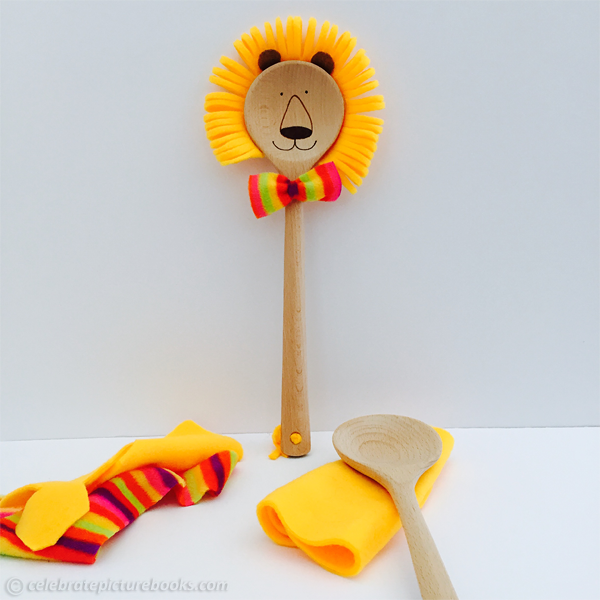
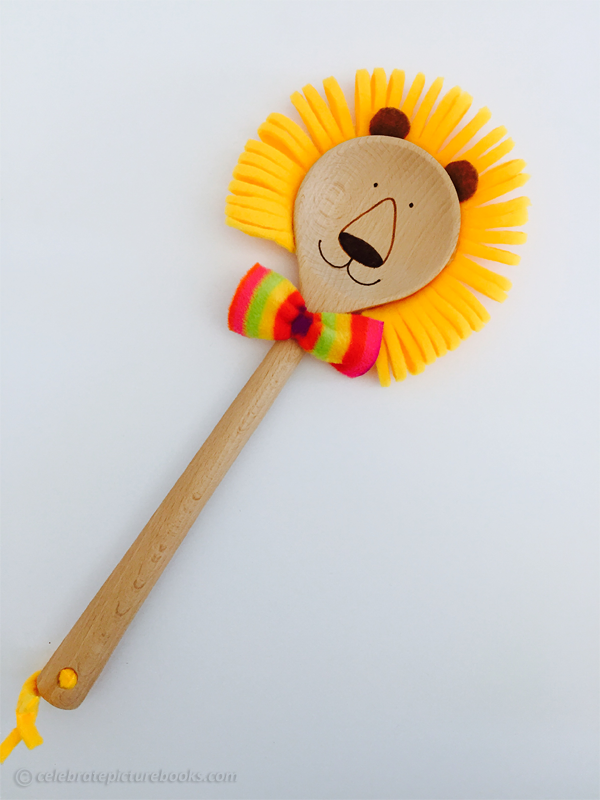
Paper Tube Lion

Kids can make and display this cute Paper Tube Lion from Hello Wonderful to remind themselves that they are as brave and confident as a lion.

You can purchase Little Lion Girl at these booksellers

Amazon | Barnes & Noble | Bookshop (to support your local independent bookstore)

Picture Book Review
February 10 – National Poop Day

celebrate-picture-books-picture-book-review-poop-for-breakfast-cover

About the Holiday

Who knew poop could inspire such a thoughtful and health-conscious holiday? But it has! Initiated in 2016 by the Madison Children’s Museum in Wisconsin to celebrate and educate the public on digestion and excretion, the day has become a fun, educational way to encourage people to be more aware of their digestive health and hygiene as well as that of their pets. By normalizing conversations about poop, the holiday aims to improve overall health practices and increase understanding of how our bodies work. The topic is no less fascinating in the world of wildlife, as today’s book shows.

Thank you to Sara Levine and Millbrook Press for sharing a copy of Poop for Breakfast: Why Some Animals Eat It with me!

Poop for Breakfast: Why Some Animals Eat It 

Written by Sara Levine | Illustrated by Florence Weiser


So, you wake up starving for a delicious meal. You’ve been dreaming of pancakes, maybe, or a plate of eggs and bacon. But when you get to the table, there’s a bowl of poop waiting for you?! What’s going on?! While you might sulk (and probably hold your nose), there are plenty of creatures who’d be thinking “Bring it on!” Who are these critters? They’re animals that practice coprophagy, and they do it “for a number of surprisingly good reasons,” as Sara Levine reveals.

celebrate-picture-books-picture-book-review-poop-for-breakfast-coprophagy

Image copyright Florence Weiser, 2023, text copyright Sara Levine, 2023. Courtesy of Millbrook Press.

For some animals eating poop is just part of being a Number 1 (or maybe Number 2 is better in this case) parent. Butterflies, cats, and dogs as well as robins and other birds all have specific reasons for dining on doo-doo, from making eggs strong to protecting their babies from predators to keeping “a nest clean and tidy.” 

While these animals eat poop for external or aesthetic reasons, others engage in coprophagy to keep their digestive system working well. Still others, because of the length or shape of their digestive tract, require that food travels through their body twice to extract all of the nutrients. If you have a rabbit, hamster, guinea pig, or other small rodent as a pet, you know that their poop looks like little round balls or small pellets. As Levine tells readers, “this is the poop that has been through their digestive tract a second time. These animals’ first poop comes out soft, sticky, and full of nutrients. It’s called a cecotrope (SEE-ca-trope).” They then “gobble it up at night when it comes out. That’s why you don’t see it” in the cage.

celebrate-picture-books-picture-book-review-poop-for-breakfast-butterflies

Image copyright Florence Weiser, 2023, text copyright Sara Levine, 2023. Courtesy of Millbrook Press.

Since there are so many creatures who do eat poop, why don’t humans? Levine has included a whole list of reasons for why we don’t—and don’t need to. She also provides back matter that includes “The Scoop on Poop”—an explanation of what poop and pee are, how they’re created in the body, and how they’re eliminated. Kids will also have fun becoming “poop detectives” with the help of the illustrated poop identification guide for common pets and wildlife and also by playing a synonym game.

celebrate-picture-books-picture-book-review-poop-for-breakfast-robins

Image copyright Florence Weiser, 2023, text copyright Sara Levine, 2023. Courtesy of Millbrook Press.

Sara Levine is exceptional at presenting fascinating nature science topics in humorous and accessible ways for young audiences, and her latest book is no exception, Leaning into the “Ewww!” factor, Levine dishes up short, take-away reasons certain animals, birds, and insects practice coprophagy followed up with longer passages that explain the science and/or behavior behind them in easy-to-understand language sprinkled with humor that will keep readers riveted to this already high-interest subject.

Florence Weiser’s colorful illustrations perfectly bridge the humorous and the scientific nature of Levine’s text. Readers’ skeptical view of this “gross” habit is amusingly juxtaposed with creatures’ excited anticipation of a delicious meal through the characters’ facial expressions while the anatomical reasons for or against coprophagy are clearly depicted in images of human and various animals’ digestive systems.

Anatomy and nature science education at its best, Poop for Breakfast: Why Some Animals Eat It will keep kids enthralled as each page turn brings on a new round of giggles and avid learning. The book would enhance any home STEM collection and is a must for classroom, school, and public library bookshelves.

Ages 5 – 10

Millbrook Press, 2023 | ISBN 978-1728457963

About the Author

Sara Levine is an author, educator, and veterinarian. Her science books for children include the Animal by Animal series, Germs Up Close, and A Peek at Beaks: Tools Birds Use. Her books have received a number of awards including AAAS/Subaru SB&F Prize, Utah Beehive Book Award, Cook Prize finalist, Monarch Award master list, and Bank Street College Best Children’s Book of the Year. Visit her at saralevine.com and on Instagram at saralevinebooks.

About the Illustrator

Florence Weiser is a French illustrator currently based in beautiful, rainy Belgium. While growing up in Luxembourg, she always knew she wanted to draw and draw. She lives and works surrounded by nature, from which she gathers most of her inspiration. Visit her at florenceweiser.com and on Instagram at florence_weiser_illustration

You can find Poop for Breakfast: Why Some Animals Eat It at these booksellers

Amazon | Barnes & Noble | Bookshop (to support your local independent bookstore)

Picture Book Review
February 7 – National Send a Card to a Friend Day

About the Holiday

Today’s holiday is all about reaching out to a friend or family member with cheerful wishes or a reminder about how much they mean to you. Sure, texting is more immediate, but the sentiments get lost amid long scrolls of typed conversations, shared pictures, and links sent. A card or a letter is more permanent and easy to enjoy again and again without all the dizzying swiping, swiping, swiping to retrieve the message that meant so much to you. Sending cards is such a wonderful way for kids, especially, to keep in touch with friends, cousins, aunts and uncles, and grandparents. Today, encourage your children to share their feelings in a card or letter and get today’s book to read and inspire creative communication whenever your kids are missing a loved one.

Thanks to Tara Knudson for sharing a copy of Paper Wishes with me!

Paper Wishes

Written by Tara Knudson | Illustrated by Kirsti Beautyman

A child wistfully flies a paper airplane through their room, wishing they could fly, sail, take a train or drive to visit their grandparents and “bring a gift by hand.” Spying a piece of red paper on their desk, the child has an idea: Even though you’re far away, there’s one thing I can do. / Fold and crease . . . and fold again. / I made my gift for you!” With a few deft folds and tucks, the child creates an origami heart for their grandmother and grandfather.

Image copyright Kirstie Beautyman, 2024, text copyright Tara Knudson, 2024. Courtesy of Picture Window Books.

The child places the heart in an envelope and places it in the corner mailbox, sending “it on its way.” And then the waiting begins. Each day, they wonder “Is it on a truck? / Is it on a plane? / Is it on a boat? / Is it on a train?” and hope that their gift arrives safely. The child wishes they could see their grandparents’ reactions when they open the gift, and . . . through technology, the child and their grandparents get to share their smiles.

Easy-to-follow, illustrated instructions on how to make an origami heart follow the story.

Image copyright Kirstie Beautyman, 2024, text copyright Tara Knudson, 2024. Courtesy of Picture Window Books.

Tara Knudson’s touching and uplifting story will be treasured by children who miss seeing family members or friends and want to share stories, smiles, and love with them. Knudson’s lively rhymes and easy-flowing rhythms will captivate even the youngest children. Kids will enjoy reading along with the recurring phrasing and evocative vocabulary. Children who are eager gift-makers will love the inspiration in both the story and the included origami craft.

Kirsti Beautyman takes readers over a towering city, across choppy seas, winding past cacti in a sandy desert all the way to colorful townhouses on a shady street in a plane, boat, train, and truck cleverly drawn to mimic origami creations. Readers will immediately empathize with the child, whose expressions show a yearning to see grandparents again, happiness when close to them, pride in the gift they’ve made, and hopeful waiting to hear from family. Young readers are also reassured that family members or friends who are far away are thinking about and missing them too.

A tender, heartfelt, and inspiring read aloud that children will want to hear again and again, Paper Wishes would be an exceptional addition to home, library, and classroom collections.

Ages 4 – 8

Picture Window Books, Capstone Press, 2024 | ISBN 978-1684466184

About the Author

Tara Knudson is the author of multiple picture books, including Christmas Cookie Day, Fun Fall Day, and Valentine’s Day Treats. Tara is a former teacher who has been writing poetry since she was a young girl growing up in Chicago.

About the Illustrator

Kirsti Beautyman is an author and illustrator from the North East of England. After studying at Edinburgh College of Art and graduating in 2016, Kirsti turned her hand to illustrating children’s books and partook in the Picture Hooks Mentorship scheme in 2017. At the end of the scheme, Kirsti exhibited alongside her Mentor in the National Gallery of Scotland and was named “Picture Hooks Illustrator Of The Year”. Since then, she has continued to build on her career as a children’s book illustrator, and works from her studio, nestled away on the outskirts of Newcastle. Kirsti predominantly uses a culmination of digital, dry and wet media to create her illustrations… and is prone to leaving a vibrant jumbled mess in her wake.

National Send a Card to a Friend Day Activity

Paper Wishes Craft

Kids can make their own origami heart to give with the instructions in this Paper Wishes Instruction Sheet.

You can purchase Paper Wishes at these booksellers

Amazon | Barnes & Noble | Bookshop (to support your local independent bookstore)

Picture Book Review
February 6 – Children’s Mental Health Week

About the Holiday


February 3rd-9th marks the United Kingdom’s 11th National Children’s Mental Health week, sponsored by the children’s mental health charity Place2Be. While the US has its own Children’s Mental Health Awareness week in May, it’s always good to share resources and support around mental health for children. This February’s theme is Know Yourself Grow Yourself, with an emphasis on building resilience and coping skills through self-understanding. To honor Children’s Mental Health week, adults and kids alike can engage in mood journaling, verbal processing of emotions, and reading books that explore just what to do to get through hard times.

Review by Dorothy Levine

Just What to Do

By Kyle Lukoff | Illustrated by Hala Tahboub


When a loved one is experiencing a loss, it can be hard to know how best to help. Just What to Do is a gentle story that walks readers through exactly that—just what to do. The key? Figuring out how each person best likes to be comforted.

The book begins with a narrator confidently clutching a handmade condolence card with a smiling cactus angel featured on the front. “When my brother’s cactus died,” they say, “I knew just what to do.” As the narrator discovers, however, a card is not how the brother would like to receive support. “Could you tell me a joke instead? I really want to laugh.” he says.
Image copyright Hala Tahboub, 2024, text copyright Kyle Lukoff, 2024. Courtesy of Dial Books.

So, naturally, when the protagonist’s cousin’s goldfish dies, they know exactly what to do; at the library they nab a book of jokes in preparation for a visit. But instead, the cousin asks for a hug.

The pattern continues with the narrator learning a new method of supporting a loved one with each instance of grief. And learning that the same technique does not feel good to the next person in need of their comfort.

Image copyright Hala Tahboub, 2024, text copyright Kyle Lukoff, 2024. Courtesy of Dial Books.

When the narrator’s best friend’s grandmother dies, they are unsure what to do. Would she want a card, a snack, a hug? How could they know? Finally, they decide the best way to find out is simply to ask: “Can you tell me what to do? I don’t know how to help.” While the friend is at first unsure how to answer this question, the narrator and friend find ways to seek out comfort and connection by spending time together. The story ends with a wordless spread of them swinging, talking, picking flowers and a spread with the word “together” in which they share a flower crown.

Image copyright Hala Tahboub, 2024, text copyright Kyle Lukoff, 2024. Courtesy of Dial Books.

Just What to Do tackles a tough but topical topic for children, what to do with grief and how to support others through it, something that even adults struggle with. Oftentimes, people make the mistake of thinking there is a cookie cutter “one size fits all” fix for working through grief, but, as Lukoff poignantly shows, this simply is not the case. Readers will learn and grow with the protagonist as they explore new ways of helping and providing care for a diverse cast of family and friends.

Hala Tahboub creates simple sketches featuring an androgynous-appearing elementary-school-aged narrator. Wordless spreads of characters connecting are interspersed in the story and are contrasted with more bare pages focused solely on the narrator when they reach emotionally salient moments. There is a clarity in the images and an intricacy in the facial expressions that allows the audience to focus on the main character’s internal struggles. The words of the story are expanded on in the images, with different characters expressing their grief in unique ways (a babysitter commemorating her dog with dog toys, the cousin holding her goldfish’s tank under a large shady tree with a bouquet of flowers, etc.)

Just What to Do is an essential addition to library and home collections, as well as counseling centers. The book lovingly guides readers through a difficult subject with an appropriate amount of levity and learning to make for a perfect read aloud.

Ages 3 – 7

Dial Books for Young Readers, 2024 | ISBN 978-0593462942

About the Author

Kyle Lukoff is the author of many books for young readers. His debut middle-grade novel, Too Bright To See, received a Newbery honor, the Stonewall award, and was a National Book Award finalist. His picture book When Aidan Became A Brother also won the Stonewall. He has forthcoming books about mermaids, babies, apologies, and lots of other topics. While becoming a writer he worked as a bookseller for ten years, and then nine more years as a school librarian. Visit him at kylelukoff.com.

About the Illustrator

Hala Tahboub is a children’s book writer and illustrator. She started her creative journey as an architect and interior designer. She won the SCBWI Canada East chapter’s Storyteller Award for Illustration in 2019, and she was the SCBWI’s December Featured Illustrator in 2020. Hala believes in kindness, coffee, chocolate, and in the immense power of stories. She lives in Montreal. Visit her at halatahboub.com.

National Children’s Mental Health Week Activities

Place2be Activity with Ricky Martin


Art Room Activity

Watch the Art Room’s video on this self-awareness art activity and create your own identity plant.

Exploring Emotions Tip Sheet for Families

Download this Exploring Emotions Tip Sheet for families on how to encourage children to explore and express their emotions.

You can purchase Just What to Do at these booksellers

Amazon | Barnes & Noble | Bookshop (to support your local independent bookstore)

Picture Book Review