March 8 – International Women’s Day

celebrate-picture-books-picture-book-review-hidden-figures-the-true-story-of-four-black-women-and-the-space-race-cover

About the Holiday

Today’s holiday is celebrated around the world and focuses on the social, economic, cultural, and political accomplishments of women. Spurred on by recent events and increased activism, this year’s theme is “Press for Progress: a Push for Gender Parity worldwide.” Rallies, performances, and discussions as well as special events and lessons in schools are just some of the ways that International Women’s Day is commemorated.

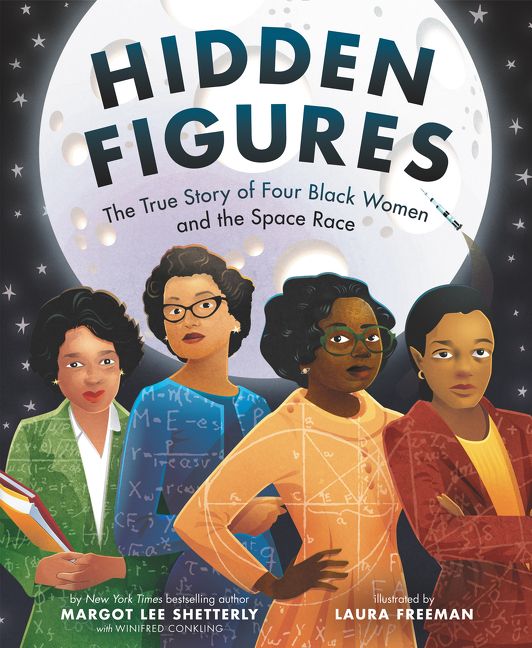
Hidden Figures: The True Story of Four Black Women and the Space Race

Written by Margot Lee Shetterly | Illustrated by Laura Freeman


“Dorothy Vaughan, Mary Jackson, Katherine Johnson, and Christine Darden were good at math…really good.” The United States was involved in World War II, and Dorothy wanted to help the war effort by working for the National Advisory Committee for Aeronautics to make planes faster, stronger, and safer. Developing new airplanes required lots of tests at the Langley Laboratory in Virginia. Today, we use computers to do the kinds of math needed, “but in the 1940s computers were actual people like Dorothy, Mary, Katherine, and Christine.”

celebrate-picture-books-picture-book-review-hidden-figures-the-true-story-of-four-black-women-and-the-space-race-dorothy

Copyright Laura Freeman, 2018, courtesy of lfreemanart.com.

Even though Dorothy was a woman and an African-American in the segregated South, Dorothy did not think her dream of getting a job was impossible. After all, she was really good at math. She applied and was hired as a computer. At Langley, whites and blacks worked in different buildings and had separate facilities. After the United States won the war, Dorothy stayed on to create better aircraft.

Now America and Russia were in competition to build the best airplanes. This required more math, more tests, and more computers. Mary Jackson was hired at Langley to test model airplanes in wind tunnels. Mary had her sights set on becoming an engineer, but most of the engineers were men. To prepare, Mary needed to take advanced math classes, “but she was not allowed into the white high school where the classes were taught.” Mary didn’t take no for an answer. She got special permission to take classes, got good grades, and “became the first African-American female engineer at the laboratory.”
celebrate-picture-books-picture-book-review-hidden-figures-the-true-story-of-four-black-women-and-the-space-race-katherine

Copyright Laura Freeman, 2018, courtesy of HarperCollins.

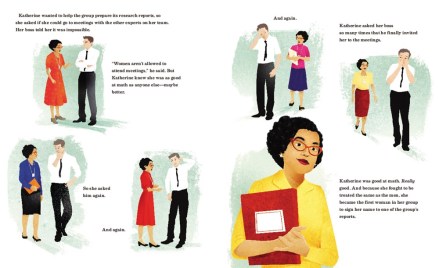
In 1953 Katherine Jackson was hired for a team who tested airplanes while they were in the air. Her work was to analyze turbulence to make planes safer in dangerous gusts of wind. She wanted to go to her team’s meetings, but she was told by her boss again and again that it was impossible; women were not allowed to attend meetings. At last her persistence paid off, and she became the first woman to sign one of the group’s reports.

When machine computers were installed at Langley in the 1950s, they were faster than the human computers but made many mistakes. “Dorothy learned how to program the computers so they got the right answers and taught the other women in her group how to program too.”

In 1957 Russia launched a satellite into space, ramping up the competition with the United States. Now “the United States started building satellites to explore space too,” and the name of the agency was changed to the National Aeronautics and Space Agency or NASA. Then President John F, Kennedy set a goal of sending a man to the moon. First, however, there would need to be many experiments, new space craft, and tests to send astronauts into orbit. This meant more people who were good at math would be needed.

celebrate-picture-books-picture-book-review-hidden-figures-the-true-story-of-four-black-women-and-the-space-race-separate-offices

Copyright Laura Freeman, 2018, courtesy of lfreemanart.com.

When the first manned space flight was planned, Katherine calculated the trajectory that would take John Glenn into space and bring him home again. In 1967 Dorothy Darden came to work at Langley. She loved electronic computers and wanted to become an engineer. “Her first job was to help with NASA’s mission to the moon.”

When Neal Armstrong stepped onto the moon’s surface for the first time on July 20, 1969, he said it was a giant leap for mankind. “It was also a giant leap for Dorothy, Mary, Katherine, Christine, and all of the other computers and engineers who had worked at the lab over the years.” The moon landing was just the beginning. NASA engineers were already dreaming of trips to other planets and super-fast spacecraft. And although it would be hard and require a lot of numbers, “Dorothy, Mary, Katherine, Christine knew one thing: with hard work, perseverance, and a love of math, anything was possible.”
celebrate-picture-books-picture-book-review-hidden-figures-the-true-story-of-four-black-women-and-the-space-race-four-women

Copyright Laura Freeman, 2018, courtesy of HarperCollins.

Margot Lee Shetterly brings her compelling story Hidden Figures to children in this exceptional picture book that skillfully reveals the talents and dreams of Dorothy, Mary, Katherine, Christine as well as the work atmosphere and social injustices of the time period. While acknowledging the struggles and obstacles the four women faced, Shetterly keeps her focus on the incredible achievements of these brilliant women and the positive changes and opportunities for others they created. Brief-yet-detailed descriptions and explanations of math, science, and computer terms flow smoothly in the text, allowing all readers to understand and appreciate the women’s work.

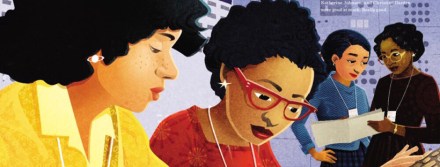
As Dorothy, Mary, Katherine, Christine each begin their work at Langley as young women, Laura Freeman establishes their dreams and their particular field of expertise through richly colorful illustrations that highlight the schematics, tools, equipment, and models they used. In one particularly affecting spread, Dorothy, Mary, Katherine, and Christine go off to their offices on the left-hand side, and their white counterparts head out to theirs on the right-hand side while the blueprint of their building lies under their feet. Dorothy, Mary, Katherine, and Christine’s clothing is also mirrored in color by the women on the other side of the fold. Period dress and electronics show progression through the years, and kids may marvel at the size of early computers. The final image of Dorothy, Mary, Katherine, and Christine as older women is moving and inspirational.

Hidden Figures: The True Story of Four Black Women and the Space Race is an outstanding biography of four women who contributed their gifts for math as well as their self-confidence not only to science but to dreamers in their own and future generations. The book would be a stirring choice for classroom and home libraries.

Ages 4 – 8

HarperCollins, 2018 | ISBN 978-0062742469

Discover more about Margot Lee Shetterly and her books on her website.

To learn more about Laura Freeman, her books, and her art, visit her website.

International Women’s Day Activity

celebrate-picture-books-picture-book-review-women-in-stem-coloring-book

Women in STEM Coloring Book


Discover five women who broke barriers  and made important contributions to the science, technology, engineering, and math fields in this printable  Women in STEM Coloring Book created by the United States Department of Energy.


Picture Book Review

March 5 – It’s National Women’s History Month

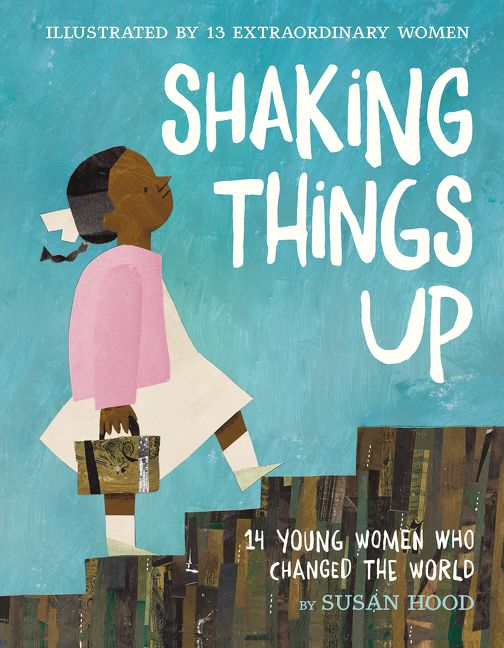
celebrate-picture-books-picture-book-review-shaking-things-up-cover

About the Holiday

National Woman’s History Month was established by the United States Congress in 1987 to recognize and celebrate the achievements of American women in the past and today. This year’s theme is “Nevertheless She Persisted: Honoring Women Who Fight All Forms of Discrimination against Women” which provides an opportunity to recognize the tireless efforts of women in all walks of life who fight against discrimination to be heard and to achieve their goals. There’s no better time than now to get involved to ensure that all women have equal rights and standing in all areas of their lives.

Shaking Things Up: 14 Young Women Who Changed the World

Written by Susan Hood 

Illustrated by Shadra Strickland, Hadley Hooper, Lisa Brown, Emily Winfield Martin, Sara Palacios, Erin K. Robinson, Sophie Blackall, Melissa Sweet, Oge Mora, Isabel Roxas, Julie Morstad, LeUyen Pham, and Selina Alko


This superb collection of biographies in verse highlights not only well-known pioneers but some delightfully fresh names and a few who are influencing the arts, science, and cause of human rights today. Each of the women profiled show the qualities of  bravery, persistence, intelligence, and ability over a vast spectrum of fields. Their success led the way for today’s women and will inspire tomorrow’s.

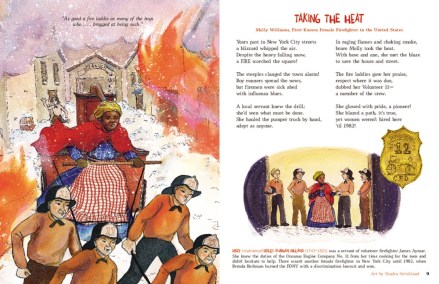
celebrate-picture-books-picture-book-review-shaking-things-up-Molly-Williams

Image copyright Shadra Strickland, 2018, text copyright Susan Hood, 2018. Courtesy of HarperCollins.

Organized on a timeline from the early 1780s to 2014, Shaking Things Up begins with Taking the Heat and Molly Williams, who was the first known female firefighter in America. When the flu knocked out all the members of the Oceanus Fire Department and a fire raged, Molly, the servant of James Aymar, a volunteer fireman, “… knew the drill; / she’d seen what must be done. / she hauled the pumper truck by hand, / adept as anyone.” For her work she was named Volunteer 11 and made part of the crew. It took about two-hundred years before another woman—Brenda Berkman—was added to the New York Fire Department.

celebrate-picture-books-picture-book-review-shaking-things-up-Mary-Anning

Copyright Hadley Hooper, 2018, courtesy of HarperCollins.

Young paleontologists-in-the-making will be amazed by the story of Mary Anning, who, while searching the British coast for fossils to sell to support her family, uncovered the skeleton of an ichthyosaur in 1812. In Buried Treasure, children learn how she went on to discover “the first two complete plesiosaurs and a pterosaur, laying the foundation for Charles Darwin’s theory of evolution.”

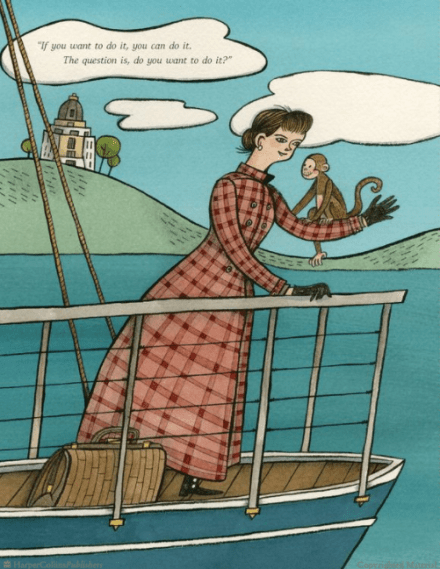
Children who love spies, news reporting, and uncovering the truth will want to know about Nellie Bly, who as an investigative journalist took on disguises to infiltrate institutions and write about “corruption and cruelty.” She was also widely admired for her around-the-world trip that beat Jules Verne’s “80 days” by eight days. As told in Woman of the World: “Bly hopped a ship and told her tale / of all she saw on Earth. / She wrote of camels, temples, jewels / with gutsy wit and mirth.” Nellie was only twenty-five when she undertook her travels in “a record-breaking race. / No soul on Earth had ever sped / the globe at such a pace!”

celebrate-picture-books-picture-book-review-shaking-things-up-Mary-Anning-poem

Image copyright Hadley Hooper, 2018, text copyright Susan Hood, 2018. Courtesy of HarperCollins.

If it weren’t for Annette Kellerman, women may never have made such a splash in swimming. Kellerman was a champion swimmer who began the sport to strengthen her legs after having rickets. Turning the Tide reveals that when she took to the water “without pantaloons—her swimsuit was deemed obscene!” After she was arrested she calmly stated, “who can swim fifty laps / wearing corsets and caps? / Her statement could not be contested,” and she went on to create the modern one-piece swimsuit, changing swimming for women forever.

In The Storyteller, a full alphabet of attributes describes Pura Belpré, a children’s librarian and the New York Public Library’s first Latina librarian. By offering—and often writing—Spanish books and creating programs for the Spanish-speaking community, Belpré revolutionized her library and touched many lives. 

celebrate-picture-books-picture-book-review-shaking-things-up-nellie-bly

Copyright Lisa Brown, 2018, courtesy of HarperCollins.

Children who reach for the stars will be transported by Lift-Off and the inspiration of Mae Jemison, the first female African-American astronaut. When young Mae gazes into the dark night sky, the “glittering stars, swirling galaxies / fill her, thrill her.” It doesn’t matter if she is afraid of the dark and afraid of heights, Mae looks and goes where she wants, where she needs to to learn and understand. And when she’s ready? “Ignition. / All systems are go. / Three / Two / One / Blast off!”

celebrate-picture-books-picture-book-review-shaking-things-up-secret-agents

Image copyright Sophie Blackall, 2018, text copyright Susan Hood, 2018. Courtesy of HarperCollins.

Break It Down reveals the way Angela Zhang attacks the questions she has about the way the world works, questions that lead her to answers and incredible achievements. From creating magic solutions with a Harry Potter potion kit at five years old to discovering answers to questions like why rainbows follow storms at seven years old to using a Stanford University lab at fifteen, Zhang has chipped away “at the ‘black boxes of life,’” including the “biggest black box of all– / a cure for cancer.” For Zhang science is “… both stone and chisel, / and I, your willing apprentice, / yearn to care away life’s mysteries / as a sculptor chisels marble / to find beauty inside.”

celebrate-picture-books-picture-book-review-shaking-things-up-Malala-Yousefzai

Image copyright Selina Alko, 2018, text copyright Susan Hood, 2018. Courtesy of HarperCollins.

Also included are poems about artist Frida Kahlo, World War II secret agents Jacqueline and Eileen Nearne, anti-hunger activist Frances Moore Lappé, civil rights pioneer Ruby Bridges, architect Maya Lin, and Noble Peace Prize winner Malala Yousafzai.

An illustrated timeline precedes the text, and suggested resources for further study on each woman follows the text.

Susan Hood has created fourteen poems that are as unique as the woman they describe. Some rhyming and some free verse, the poems include facts, quotes, intriguing details and the rhythms, sounds, and dreams of these young women. A paragraph following each poem reveals more about the woman and her work. Readers will be awe-struck by the enticing stories that inform each lyrical biography and will long to learn more about the women and their lives.

The theme of individuality is carried through in the illustrations, which are each created by a different illustrator. Colorful, whimsical, and realistic, the illustrations let children see the faces of the women presented, surrounded by their work and set within their time period. Readers will want to linger over the images and discuss the details included. A quotation from each woman accompanies her illustration.

Shaking Things Up offers an inviting way to introduce children to these amazing women and is an excellent reminder that they too can dream of what could be and make it happen. A must for classroom and school libraries, the book would be an inspirational addition to home bookshelves as well.

Ages 4 – 10

HarperCollins, 2018 | ISBN 978-0062699459

Discover more about Susan Hood and her books on her website.

You can learn more about these illustrators on their websites:

Shadra Strickland | Hadley Hooper | Lisa Brown | Emily Winfield Martin | Sara Palacios | Erin K. Robinson | Sophie Blackall | Melissa Sweet | Oge Mora | Isabel Roxas | Julie Morstad | LeUyen Pham | Selina Alko

Check out the Shaking Things Up book trailer!

Women’s History Month Activity

celebrate-picture-books-picture-book-review-freda-kahlo-coloring-page

Amazing Women Coloring Pages


There are so many incredible women to learn about during this month. Today, enjoy these coloring pages of inspiring women.

Mary Anning | Mae Jemison | Freda Kahlo 

Picture Book Review

January 27 – National Seed Swap Day

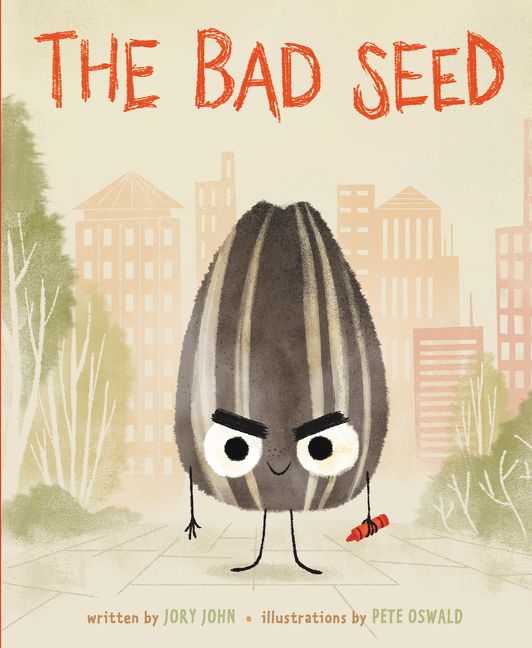
celebrate-picture-books-picture-book-review-the-bad-seed-cover

About the Holiday

If you love to garden, you may want to get involved with National Seed Swap Day! The first Seed Swap Day was held in Washington DC in 2006. Since then it has grown to be a nation-wide event as gardeners get together to trade the seeds from their best plants. Not only does this improve the biodiversity in your local area, it’s a great way to make new friends! To learn more about what events are planned in your area, visit the official National Seed Swap blog.

The Bad Seed

Written by Jory John | Illustrated by Pete Oswald


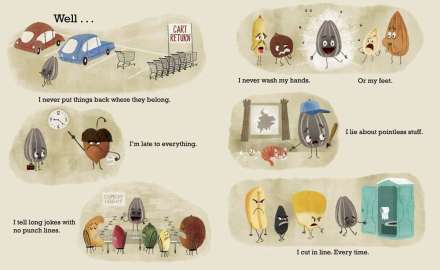
A sunflower seed stares straight off the page and admits it: “I’m a bad seed. A baaaaaaaad seed.” He knows that all the other seeds feel the same way. They point him out and mumble, “There goes a baaaad seed.” You might wonder just how bad a seed he can be. Pretty bad…he’ll tell you himself. Are you ready? Take a listen: “I never put things back where they belong. I’m late to everything. I tell long jokes with no punchlines.”

celebrate-picture-books-picture-book-review-the-bad-seed-first-page

Image copyright Pete Oswald, 2017, text copyright Jory John, 2017. Courtesy of HarperCollins.

Heard enough? Still think this seed may not be so bad? Well, what if you knew he was unhygienic, a little untruthful, and sometimes a lot inconsiderate. Why does he do this stuff? You know…he’s “a bad seed. A baaaad seed.” Was he always this way, you might wonder. The answer’s No. In fact, he “was born a humble seed on a simple sunflower in an unremarkable field.”

celebrate-picture-books-picture-book-review-the-bad-seed-bad-behavior

Image copyright Pete Oswald, 2017, text copyright Jory John, 2017. Courtesy of HarperCollins.

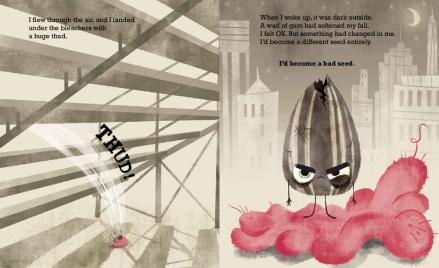
He just hung out with his big family of seeds until the flower began to droop, the seeds scattered and then…there was this bag. The seed was almost eaten by a giant with a big, scary mouth but was “spit out at the last possible second.” He landed under the bleachers, and when he woke up he found his life changed forever. He had “become a different seed entirely.” He’d “become a bad seed.”

celebrate-picture-books-picture-book-review-the-bad-seed-under-bleachers

Image copyright Pete Oswald, 2017, text copyright Jory John, 2017. Courtesy of HarperCollins.

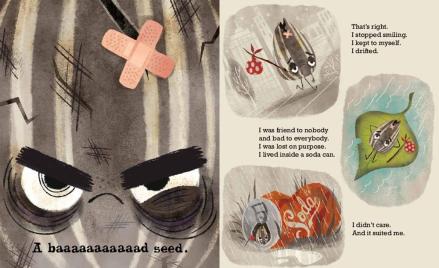
He was in unknown territory, by himself. He’s happy to share the sad details: “I stopped smiling. I kept to myself. I drifted. I was friend to nobody and bad to everybody. I was lost on purpose. I lived inside a soda can. I didn’t care. And it suited me.” That is it did suit him until recently. This seed did some soul searching, and decided to be better.

celebrate-picture-books-picture-book-review-the-bad-seed-soda-can

Image copyright Pete Oswald, 2017, text copyright Jory John, 2017. Courtesy of HarperCollins.

So now he still does some of that bad stuff (did you hear someone talking during a movie? That was probably him), but he does some good stuff too—like having good manners and smiling at people. Now, he says, “even though I still feel bad, sometimes, I also feel kind of good. It’s sort of a mix.” He’s just going to keep trying, and thinking, and readjusting his behavior and his view of himself. And now when he’s walking down the street, he still hears, “There goes that bad seed.” But he also hears, “Actually, he’s not all that bad anymore.”

celebrate-picture-books-picture-book-review-the-bad-seed-other-seeds

Image copyright Pete Oswald, 2017, text copyright Jory John, 2017. Courtesy of HarperCollins.

Jory John’s sly look at bad behavior is a sophisticated psychological thriller for the youngest set. John’s humorous take on the “bad seed” descriptor gives him full reign to explore some of the more serious life events that can cause sadness, loneliness, and even personality changes. As the once-happy seed loses his home, scatters from family, and ends up a bit bruised and battered, he sees his once sunny life turn dark.

With a hardened heart, he goes about his days, acting badly and letting the comments of others define him. To his credit, however, this seed has the presence of mind—and enough honesty—to recognize his bad behavior and also to know that only he can change it. The niceties that the seed foregoes will have kids and adults laughing out loud as his reputation seems a bit more roguish than the reality. And the authentic ending holds a reassuring kernel of truth—life is a bit of a mix, but happiness often wins out.

celebrate-picture-books-picture-book-review-the-bad-seed-peanut

Image copyright Pete Oswald, 2017, text copyright Jory John, 2017. Courtesy of HarperCollins.

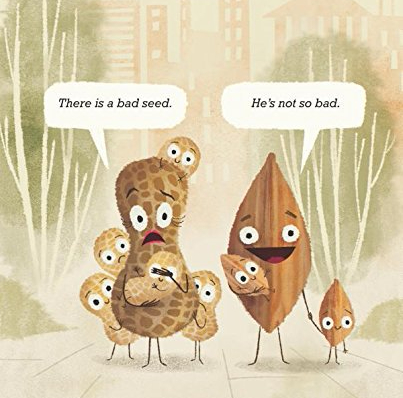
It’s understandable if you don’t quite believe the sunflower seed when he says he’s a baaaad seed in Pete Oswald’s adorable illustrations. Sure, he scowls and furrows his brow, butts in line, and gets a bit stinky, but underneath that hard shell, really lies the heart of a softie. The other seeds in the neighborhood—pistachios, peanuts, almonds, chestnuts, cashews, and more—are fed up, though, registering fear, dismay, and even anger over the sunflower’s behavior. When the sunflower seed has a change of heart, however, others take note, and he gets another crack at life.

The Bad Seed is a funny book that kids will love to hear again and again. It also provides many teachable moments for those times when life gets a little discouraging. If you’re looking for an original book that has a bit of everything to add to a home, classroom, or public library would make a great addition to home and classroom bookshelves.

Ages 4 – 8

HarperCollins, 2017 | ISBN 978-0062467768 (Hardcover) | ISBN 978-1338346664 (Paperback, 2018)

Discover more about Jory John and his books on his website

Learn more about Pete Oswalk and view a portfolio of his artwork on his tumblr.

How good is this The Bad Seed book trailer? Take a look!

National Seed Swap Day Activity

celebrate-picture-books-picture-book-review-carrots-seeds-coloring-page

Seed Packet Coloring Pages


All of your favorite veggies come from seeds, of course!, and those seeds come in packets that are little bits of art. Grab your crayons or pencils and color these printable Seed Packet Coloring Pages.

Carrots Seed Packet | Peas Seed Packet | Broccoli Seed Packet | Corn Seed Packet

celebrate-picture-books-picture-book-review-the-bad-seed-cover

You can find The Bad Seed at these booksellers:

Amazon | Barnes & Noble | Books-a-Million | IndieBound

Picture Book Review
January 24 – Global Belly Laugh Day

celebrate-picture-books-picture-book-review-the-legend-of-rock-paper-scissors-cover

About the Holiday

If there’s one thing that unites us all, it’s laughter. A good belly laugh is good for your soul and your health! Today’s holiday encourages and celebrates smile, laughs, and all the things that bring us joy. It’s also a day to think about and thank those who share their funny stories, fun times, and laughter with us. So spend a happy day being with friends, watching a funny movie or show, and reading a laugh-out-loud book like…

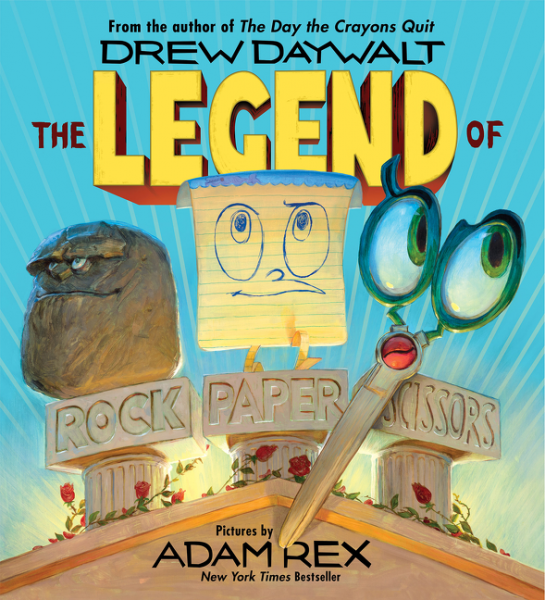
The Legend of Rock Paper Scissors

Written by Drew Daywalt |Illustrated by Adam Rex


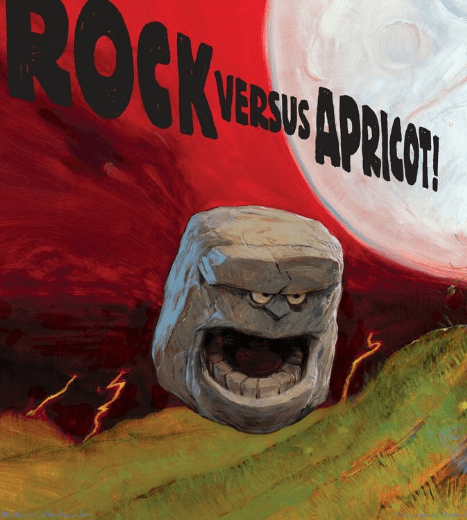
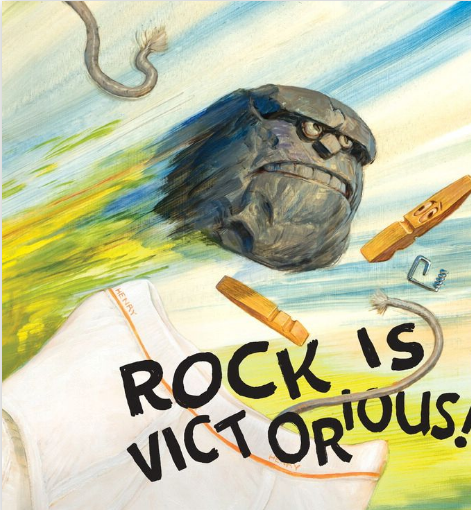
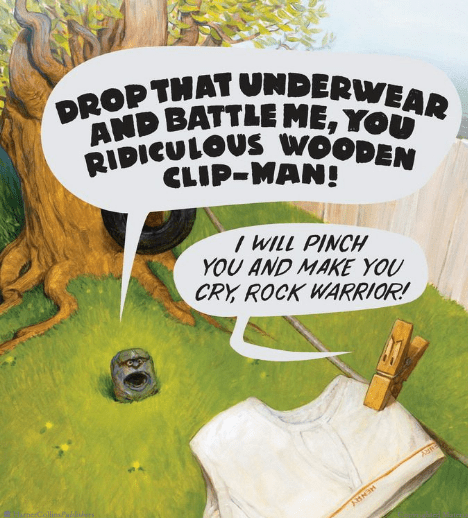
“Long ago in an ancient and distant realm called the Kingdom of Backyard,” Rock ruled. There was just one problem. There was no one left who could challenge this mighty warrior. Rock traveled far and wide, even to the “Forest of Over by the Tire Swing.” Here, on a line strung between two trees, he spied a tiny opponent with super strength “holding a giant’s underwear.” The trash talking began as Rock called out Clip Man to fight him. Clip Man was not intimidated and threatened to pinch Rock until he cried. The battle was on! With a smash and a crack, Rock easily defeated Clip Man.

celebrate-picture-books-picture-book-review-the-legend-of-rock-paper-scissors-clothes-pin

Image copyright Adam Rex, 2017; text copyright Drew Daywalt, 2017. Courtesy of Balzar + Bray.

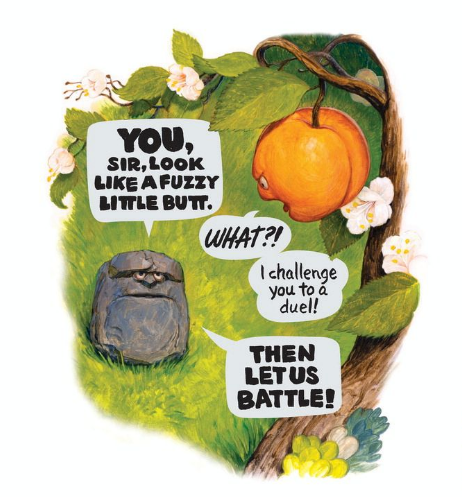
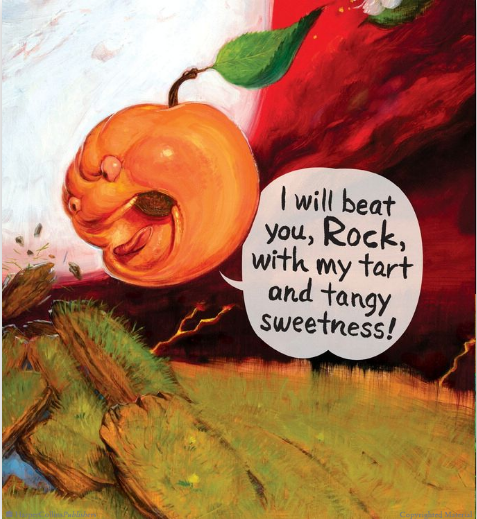
Rock’s win just whet his appetite for victory, so he moseyed over to “the Mystical Tower of Grandma’s Favorite Apricot Tree.” There he encountered a small, orange fruit. Rock told the Apricot exactly what he thought of him. Apricot couldn’t let the dis go unchallenged, so the battle was on! Although Apricot gave it his all, his “tart and tangy sweetness” was no match for Rock’s smooshing power. While Rock took some pleasure in his win, it did not bring him the joy he sought. He decided to leave the Kingdom of Backyard in search of a worthy opponent.

celebrate-picture-books-picture-book-review-the-legend-of-rock-paper-scissors-peach

Image copyright Adam Rex, 2017; text copyright Drew Daywalt, 2017. Courtesy of Balzar + Bray.

“Meanwhile, in the Empire of Mom’s Home Office, on lonely and windswept Desk Mountain, a second great warrior sought the glory of battle.” Paper was smart and so clever that “no one could outwit him.” As he roamed across the vast desk, Paper met up with Computer Printer, who vowed to gobble him up and spit him out. The battle was on! But within seconds Computer Printer realized he was in a jam—a Paper jam! Flush with victory Paper rappelled over the side into the “Pit of Office Trash Bin,” where the menacing “Half-Eaten Bag of Trail Mix” awaited him. Paper leapt! Paper blocked the light! The Trail Mix fled! Disheartened by this easy win, Paper also left his kingdom in search of a worthy opponent.

celebrate-picture-books-picture-book-review-the-legend-of-rock-paper-scissors-apricotpng

Image copyright Adam Rex, 2017; text copyright Drew Daywalt, 2017. Courtesy of Balzar + Bray.

Back in “the Kitchen Realm in the tiny village of Junk Drawer, there lived a third great warrior. They called her Scissors.” She too was looking for a challenging adversary. She was happy to take on the “tacky and vaguely round monstrosity” who confronted her, but Roll of Tape’s “adhesive and tangling powers” were no match for Scissors’ sharp blades. She sauntered across her kingdom to Refrigerator/Freezer, where the breaded-chicken dinosaurs lived. They were ready to fight, and the battle is on! At first it looks as if the “kid-pleasing shapes and flavors” will vanquish Scissors, but it’s just a plot twist! Scissors is victorious again!

celebrate-picture-books-picture-book-review-the-legend-of-rock-paper-scissors-rock

Image copyright Adam Rex, 2017; text copyright Drew Daywalt, 2017. Courtesy of Balzar + Bray.

Scissors knew it was time to move on, so she left the Kitchen Realm for the “Great Cavern of Two-Car Garage.” There she came face-to-face with Rock. They sized each other up, and Scissors threw down the gauntlet: “I hope you’re wearing your battle pants, rock warrior.” Rock answered: “If by ‘battle pants’ you mean ‘no pants but I’m willing to fight you,’ then yes…yes, I am wearing my battle pants, weird scissory one.” The battle was on!

Rock versus Scissors! The battle raged, until…Rock defeated Scissors. Suddenly, Scissors knew the happiness of having a worthy opponent, but Rock was still unsatisfied. Just then Paper floated onto the scene, and with the well-known fighting words, “Hi there,” the battle was on! Brought down and wrapped up by Paper’s flexible forces, Rock was joyful. But what about Paper? Who could defeat him?

celebrate-picture-books-picture-book-review-the-legend-of-rock-paper-scissors-rock-battle

Image copyright Adam Rex, 2017; text copyright Drew Daywalt, 2017. Courtesy of Balzar + Bray.

Scissors stood on her tippy toes and faced Paper. With one smooth slice, she cut a hole in his win record. Now Paper knew the thrill of defeat. The three warriors became fast friends and battled each other over and over. Their story became legend and their legend became the stuff of “backyards, playgrounds, and yes, even classrooms” as kids around the world play Rock, Paper, Scissors!

Get ready for plenty of dramatic reading, out loud laughs, and ringing cheers the moment you open Drew Daywalt’s The Legend of Rock, Paper, Scissors. This worthy spoof on the warrior genre from Medieval knights to the wrestling ring is a hilarious take down of challenges, trash talking, and bravado with a good bit of truth about the nature of competition and friendship: true friends are open to challenges and supportive when the other guy wins. Daywalt’s freewheeling conversational tone, inspired kingdoms, and cunning choices of opponents will have readers looking at their homes in a whole new light.

Employing the same thrilling spectacle as action movies, Adam Rex brings to life the adrenaline-pumping swagger of three brave warriors. Bold typefaces invite spirited reading, and the details of the realms overseen by Rock, Paper, and Scissors will enthrall kids. Both young and adult readers will want to linger and laugh over every page to check out all the anthropomorphized items that populate these kingdoms.

The Legend of Rock Paper Scissors is sure to be a champion in any child’s home library. It would make a perfect gift and a much-asked-for book for exuberant story times.

Ages 4 – 9

Balzer + Bray, HarperCollins, 2017 | ISBN  978-0062438898

Check out books, art, and other fun stuff by Adam Rex on his website!

Global Belly Laugh Day Activity

celebrate-picture-books-picture-book-review-laughing-girl-and-boy-coloring-page

Rock Paper Scissors Extravaganza


Come on! You know that a few rounds of Rock Paper Scissors will make you laugh! Find someone or many someones and challenge them to the battle of all rock, paper, scissors battles just like the two kids in this printable Laugh Along with Rock Paper Scissors Coloring Page!


Picture Book Review
January 16 – Nothing Day

celebrate-picture-books-picture-book-review-on-a-magical-do-nothing-day-cover

About the Holiday

Newspaper columnist Harold Coffin established Nothing Day in 1973 to satirize the proliferation of daily holidays. His purpose was to give people a day to do absolutely nothing. Sounds good to me! Still, does celebrating this holiday constitute doing something? This may be the most baffling holiday on the calendar! Why not find something—or nothing—to do with today’s book?

On a Magical Do-Nothing Day

By Beatrice Alemagna


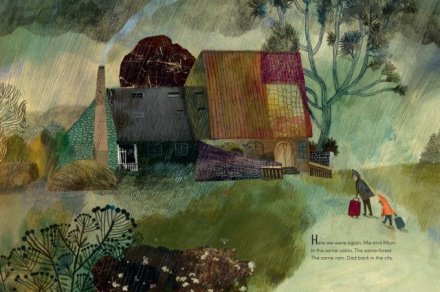
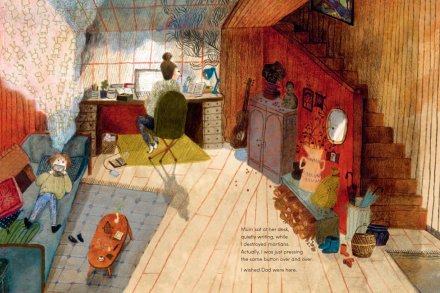
A little girl and her mom are “back again” at the cottage—even trudging up the walk in “the same rain”—while Dad is working back at home in the city. While Mom works at her computer, the girl destroys Martians, but she says, “Actually, I was just pressing the same button over and over.” She wishes that her dad were there.

celebrate-picture-books-picture-book-review-on-a-magical-do-nothing-day-cabin

Copyright Beatrice Alemanga, 2017, courtesy of HarperCollins.

Mom turns away from her writing and watches her daughter playing her video game. “Is this going to be another day of doing nothing?” she growls. Mom takes the device and hides it—“as usual”—and the little girl finds it—“as usual.” But this time she takes it outside. As the rain pelts down from gloomy skies it looked as if everything in the “garden was hiding from the sun.”

celebrate-picture-books-picture-book-review-on-a-magical-do-nothing-day-playing-video-games

Copyright Beatrice Alemanga, 2017, courtesy of HarperCollins.

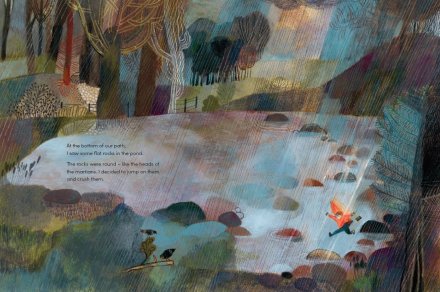
In the pond at the bottom of the hill she finds a line of flat stones. She hops from one to another, crushing them like the Martians in her game. While jumping, though, her game falls out of her pocket and into the pond. The water is so icy cold that she can’t grab it before it sinks out of sight. Oh no! she thinks, “Without my game, I have nothing to do.” The rain strikes her “like rocks,” and she feels “like a small tree trapped outside in a hurricane.”

celebrate-picture-books-picture-book-review-on-a-magical-do-nothing-day--jumping-on-rocks

Copyright Beatrice Alemanga, 2017, courtesy of HarperCollins.

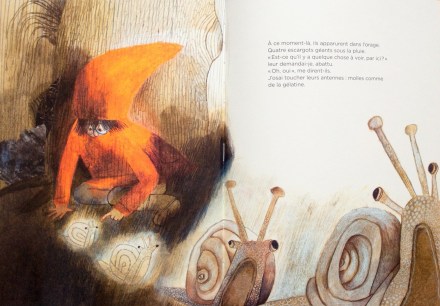
Just then she spies four giant snails slithering by. She asks them if there is anything to do around there, and they tell her yes. She gently feels one of the snail’s antennae. It is “as soft as jello” and makes her smile. She follows the snails and discovers a field filled with mushrooms. Their damp musky smell reminds her of her grandparents’ basement—her “cave of treasures.” She walks on and finds a spot in the earth where she digs her hand into the ground. She feels “thousands of seeds and pellets and kernals, grains and roots and berries touch “her fingers and hand.” When she looks up the sun is shining “through a giant strainer” and blinds her.

celebrate-picture-books-picture-book-review-on-a-magical-do-nothing-day-snails

Copyright Beatrice Alemanga, 2017, courtesy of beatricealemanga.com.

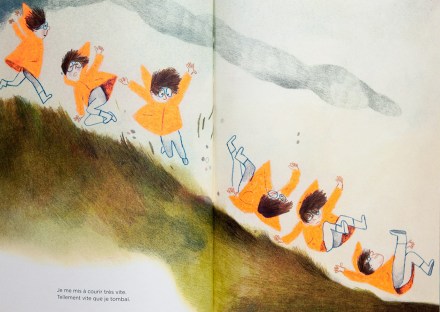
Her heart starts beating fast with energy. She takes off running and runs so quickly that she tumbles down the hill. She lands on her back with a flop, and when she opens her eyes, the world is topsy-turvy new. Energized, she climbs a tree and gazes out at the horizon, breaths deeply in the fresh air, drinks raindrops as they fall from a leaf, and notices bugs she’s never seen before. She talks to a bird, splashes in a puddle, and watches the world through stones as clear as glass.

celebrate-picture-books-picture-book-review-on-a-magical-do-nothing-day-tumbling

Copyright Beatrice Alemanga, 2017, courtesy of beatricealemanga.com.

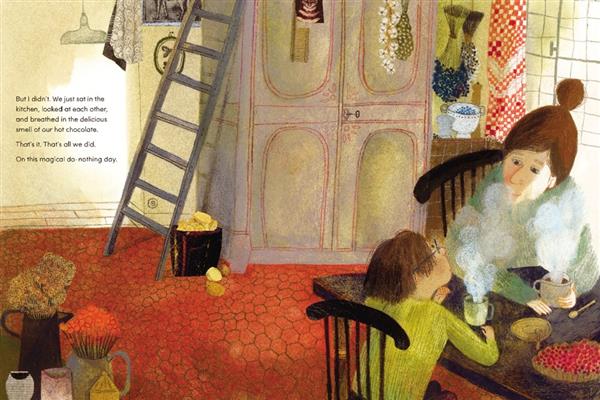
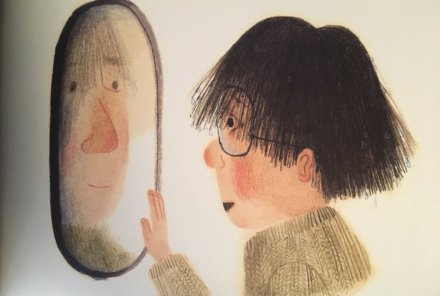
She hurries home and takes off her raincoat. When she glances in the mirror, for a moment she thinks she “sees her dad smiling at [her].” Her mom is still writing, but now she looks different to the little girl—“like one of the creatures outside.” Her mom notices how soaked she is and takes her to the kitchen to dry her off in a big, soft towel. The little girl feels like giving her mom a big hug. For a moment she wants to tell her about all the things she saw and did, but she doesn’t.

Instead, they enjoy their hot chocolate quietly together. “That’s it,” she says. “That’s all we did. On this magical do-nothing day.”

celebrate-picture-books-picture-book-review-on-a-magical-do-nothing-day-hot-chocolate

Copyright Beatrice Alemanga, 2017, courtesy of HarperCollins.

While the protagonist of A Magical Do-Nothing Day may never have looked at the world outside closely, Beatrice Alemagna certainly has. Alemagna’s exquisite illustrations portray the beauty of our environment—both indoors and out—and our connections to it with novel descriptions and stunning color and perspectives. As the girl ventures outside, video game clutched tightly, her face registers sadness and wariness. The Martians from the game crawl over and surround her, even when the game is off, seeming to fill any space that might be open to exploration, and, indeed, her first forays into the wild are taken game-style, hopping from platform to platform, rock to rock.

celebrate-picture-books-picture-book-review-on-a-magical-do-nothing-day-mirror

Copyright Beatrice Alemanga, 2017, courtesy of HarperCollins.

When the gaming device sinks into frigid water (as cold and impersonal as the gaming experience itself?), the child quickly comes out of her shell with the help of snails that lead her to greater discovery. The story gives readers much to ponder in the relationships between the child and parents and the child’s newfound appreciation for the natural world.

On a Magical Do-Nothing Day is a fantastic book to add to home and classroom libraries to spur children’s exploration—both in the natural world and within. While I used the feminine pronoun in my review, the story is told from the first person point of view and the child is drawn with gender neutral clothing and hairstyle, making this a book with universal appeal.

Ages 4 – 8

HarperCollins, 2017 | ISBN 978-0062657602

Discover more about Beatrice Alemanga, her books, and her art on her website.

Nothing Day Activity

celebrate-picture-books-picture-book-review-rainy-day-with-mushroom-and-cricket-coloring-pageNothing To Do Coloring Pages


Rainy days are perfect “do-nothing” days. The next time you have an indoor day, grab your crayons or colored pencils and enjoy these printable coloring pages

Splashing in the Rain Coloring Page | Cricket Hiding from the Rain Coloring Page

Picture Book Review
January 4 – It’s National Hot Tea Month

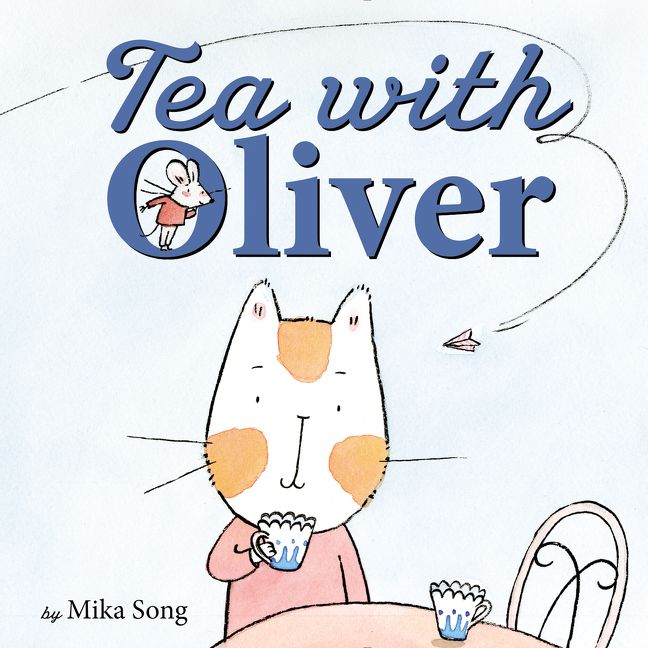
celebrate-picture-books-picture-book-review-tea-with-oliver-cover

About the Holiday

There’s nothing cozier during the month of January than enjoying a steaming cup of your favorite, flavorful tea as the temperature dips and the snow swirls. To celebrate this month’s holiday, why not try a new kind of tea or throw a tea party? Many teas have health benefits and can help you relax and get a good night’s sleep. This drink has been around for thousands of years and is enjoyed the world over. So boil up some water, grab the honey or sugar, add a splash of milk if you like, and enjoy!

Tea with Oliver

By Mika Song


Oliver the cat sits at his kitchen table, holding a conversation with himself. It’s something he does “a lot.” He’d like to have a cup of tea, but wonders who will join him. Philbert, the little mouse under the couch calls up that he would be happy to drink tea with Oliver, but Oliver doesn’t hear him and Philbert is “too shy to come out.” Meanwhile, Oliver is having a tea party with his teddy bear.

celebrate-picture-books-picture-book-review-tea-with-paper-airplane

Copyright Mika Song, 2017, courtesy of mikasongdraws.com.

“Philbert decides to write Oliver a letter. ‘Dear Oliver, Let’s have tea,’” it reads. Philbert secretly hopes they have cookies too. Now, though, Oliver is cleaning the floor, and Philbert’s letter gets swept back under the couch. While he sweeps, Oliver sings about his lonesomeness, and Philbert tries another tactic. He folds his note into an airplane and shoots it into the air. Instead of floating into Oliver’s field of view, however, it hits him in the back. “Eek! A flea!” Oliver cries. He dances around, scratching and itching and completely misses the note.

celebrate-picture-books-picture-book-review-tea-with-oliver-cups-break

Copyright Mika Song, 2017, courtesy of mikasongdraws.com.

Philbert is just imagining what to do next when someone knocks on the door. When Oliver opens it, his wild cousin Lester leaps in playing his banjo. Oliver invites him for tea. “I’m throwing a party,” Lester says, “but I guess there could be tea.” Philbert’s ears perk up. He wants to go to this tea party. Feeling brave, Philbert decides to deliver his note to Oliver personally.

It seems Lester’s party is at Oliver’s house, and before Philbert can deliver his letter, the guests start arriving. The guests are too boisterous and bouncy to want tea, and Philbert, wanting to stay out of the way, flattens himself against the floor. “I don’t like this party one bit,” he tells himself. Oliver tries to serve tea to some other guests, but they’re dancing and too busy for tea. From far below, Philbert shouts, “Me! I want tea!” But Oliver doesn’t hear him. Then one guest bumps into Oliver, and his tray of teacups goes flying.

celebrate-picture-books-picture-book-review-tea-with-oliver-lying-on-floor

Copyright Mika Song, 2017, courtesy of mikasongdraws.com.

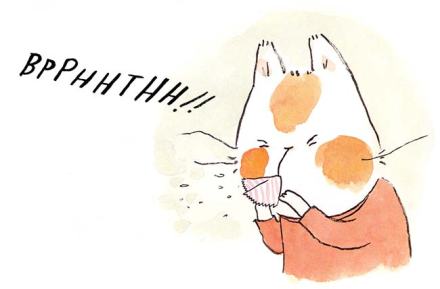
“The party ends as quickly as it began” as Lester and the other guests depart, leaving Oliver to clean up the shards of china. Oliver lays on the floor, despairing that he’ll “never have tea with anyone now.” He rolls over to see Philbert under the couch. Philbert introduces himself and hands Oliver his letter. Mistaking it for a tissue, Oliver blows his nose in Philbert’s note.

celebrate-picture-books-picture-book-review-tea-with-oliver-blowing-nose

Copyright Mika Song, 2017, courtesy of mikasongdraws.com.

Philbert alerts Oliver to his error, and contritely Oliver opens the note and reads it. He’s surprised and excited to find that Philbert wants to have tea with him, but then  remembers that he has no more cups. Now it’s Philbert’s turn to be excited – and surprising.”Yes you do!” He runs away and returns pulling a soft cushion holding two of Oliver’s tea cups. “I saved these for you!” Philbert exclaims. “Hooray!” Oliver cheers. “And the new friends sat down to a nice cup of tea.” With cookies.

celebrate-picture-books-picture-book-review-tea-with-oliver-tea-party

Copyright Mika Song, 2017, courtesy of mikasongdraws.com.

Mika Song’s sweet story will have little ones giggling as one thing after another goes just a little bit wrong. Many will empathize with Philbert’s predicament as he tries to attract Oliver’s attention and will cheer along with Oliver when he saves two of Oliver’s beloved tea cups and the day. Song’s straightforward tale offers gentle lessons on the true nature of friendship as Philbert watches out for Oliver when others don’t, and the two discover they have a lot in common despite the traditional differences between cats and mice.

Through her delicate ink and watercolor illustrations, Song brings out the adorable natures of Oliver and Philbert, the subtly humorous and slapstick events of the afternoon, the moments of disappointment, and Philbert’s happy surprise that lead to the friend’s cozy tea party. 

Tea with Oliver will charm young readers and would be a cute, often-asked-for addition to home libraries. 

Ages 4 – 8 

HarperCollins, 2017 | ISBN 978-0062429483

Discover more about Mika Song and her books on her website.

National Hot Tea Month Activity

celebrate-picture-books-picture-book-review-tea-bag-buddy

Tea Bag Buddy


It’s fun to have a tea party with a friend, and this little tea bag buddy is ready to hang out with you!

Supplies

  • Tea bags
  • Poly-fill
  • Permanent markers
  • Needle

Directions

  1. Gently open a tea bag, unfold it, and discard the tea
  2. Remove the string with the tag and set aside
  3. Fill the tea bag with a bit of poly-fill
  4. Thread the string of the tag through the needle
  5. Fold the tea bag back up
  6. Fold the ends of the bag under and sew them closed with the tag string, leaving the tag dangling
  7. With the permanent markers, draw a face on the front of the tea bag

Picture Book Review
December 14 – Monkey Day

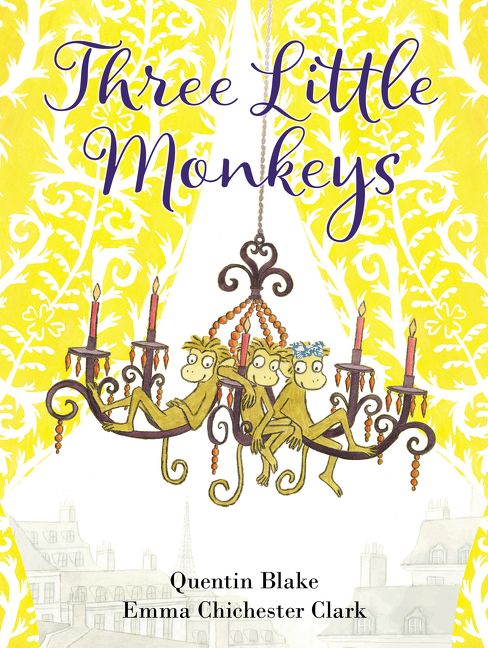
celebrate-picture-books-picture-book-review-three-little-monkeys-cover

About the Holiday

Today’s holiday actually got started with some monkeying around by art students at Michigan State University when Casey Sorrow wrote “Monkey Day” on this date on his roommate’s calendar. The idea sparked a real celebration with other art students and later became popularized through a comic strip that Sorrow and a friend published. Since then Monkey Day has become an international opportunity to raise awareness of primates and the dangers facing them. To celebrate today’s holiday, learn more about these mischievous animals, visit a zoo, or have a little fun in honor of these favorite animals!

Three Little Monkeys

Written by Quentin Blake | Illustrated by Emma Chichester Clark


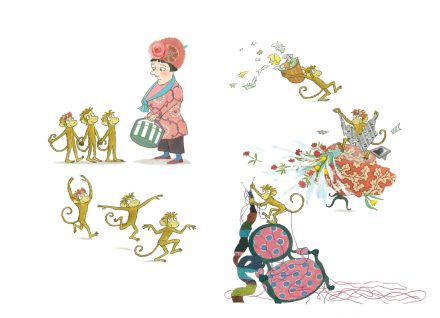
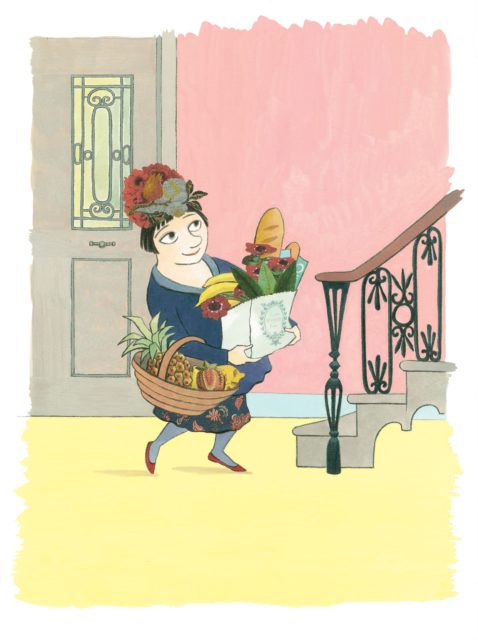
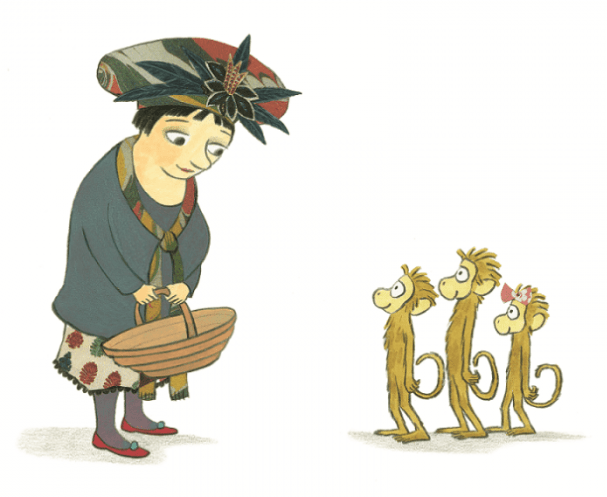
Whenever Hilda Snibbs came home, the first thing she did was call out “‘I’m home! Where are you?’” You  might think she was talking to her kids, her dog, or her cat, but she was actually addressing her three little monkeys whose “names were Tim and Sam and Lulu.” Hilda was sure to give them healthy snacks because “they were very lively.”

celebrate-picture-books-picture-book-review-three-little-monkeys-snack

Copyright Emma Chichester Clark, 2016, courtesy of HarperCollins.

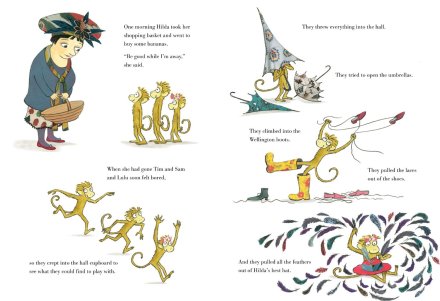
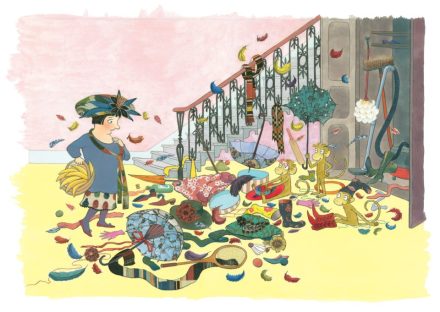
One day when Hilda went to the grocery store, the monkeys grew bored. They opened the hall closet and “threw everything into the hall.” They opened the umbrellas, tore the laces from all the shoes, and plucked all the feathers from Hilda’s favorite hat. When Hilda came home and saw the mess she had one thing to say: “‘I’m really very disappointed in such naughty little monkeys.” Tim, Sam, and Lulu just gazed at her silently.
celebrate-picture-books-picture-book-review-three-little-monkeys-hall

Image copyright Emma Chichester Clark, 2016, text copyright Quentin Blake, 2016. Courtesy of HarperCollins.

The next day Hilda went to the hat store. Before she left she told her little monkeys to be good. But as soon as she was out the door, they hurried to the living room to play. They upended the wastebasket, spilled the flower vase, tore the newspapers, and tangled Hilda’s knitting into knots. “When Hilda came home and went into the living room she found the most awful mess. There were flowers all over the place. And her poor knitting!” She admonished the little monkeys, but they just “looked at her with their big round eyes and said nothing.”

celebrate-picture-books-picture-book-review-three-little-monkeys-living-room

Copyright Emma Chichester Clark, 2016, courtesy of HarperCollins.

Needing more wool, Hilda headed into town the next day with a reminder to her monkeys to be good while she was away. But the kitchen was so enticing, and they tossed everything out of the cupboards, scattered the powdered soap, emptied the trashcan, and tipped the soup pan onto the floor. This time when Hilda got home, she became angry. “‘Great grief! How long can I put up with these terrible little monkeys?’” But Tim, Sam, and Lulu just smiled at her.

celebrate-picture-books-picture-book-review-three-little-monkeys-kitchen

Copyright Emma Chichester Clark, 2016, courtesy of HarperCollins.

The next day was market day again and once again the monkeys grew bored as soon as Hilda was gone. The bathroom was a perfect playroom with its toilet paper to unroll, toothpaste tube to squeeze, and shampoo to splash around. Hilda nearly tore her hair out when she returned to this mayhem. As she stared at her monkeys wrapped in toilet paper and sporting sudsy costumes, she cried, “‘Oh, for a peaceful life without these wicked little monkeys!’”

celebrate-picture-books-picture-book-review-three-little-monkeys-closet

Copyright Emma Chichester Clark, 2016, courtesy of HarperCollins.

Before going out the next morning, Hilda gave Tim, Sam, and Lulu a stern talking to. It was late when she returned and as she stepped through the door something seemed amiss. The living room was in perfect order, the kitchen was spotless, and the bathroom shone. Hilda broke down in tears. Something horrible must have happened to her three little monkeys. Her handkerchief was soaked through, and when she went to the closet to get a new one, she found Tim, Sam, and Lulu waiting quietly for her.

Hilda hugged them all and “that night…went up the stairs to bed with a happy heart.” As she got under the covers, she found herself lying on all her forks, spoons, and cans of sardines. “But that is the kind of thing you have to expect if you have three little monkeys.”

celebrate-picture-books-picture-book-review-three-little-monkeys-coming-home

Copyright Emma Chichester Clark, 2016, courtesy of HarperCollins.

Quentin Blake’s hilarious tale of three little monkeys has all the charm and style of classic storytelling that will set young readers giggling and eagerly anticipating each of Hilda’s trips into town. Adults with “little monkeys” of their own will anticipate the tenderhearted ending, and children will be delighted with the assurance of enduring love Hilda’s tears provide. A dramatic reading of Hilda’s increasing frustration with her mischievous charges will enthrall listeners as they gaze at the reader with the same sweet expression as Tim, Sam, and Lulu.

celebrate-picture-books-picture-book-review-three-little-monkeys-gazing

Copyright Emma Chichester Clark, 2016, courtesy of HarperCollins.

Emma Chichester Clark’s sophistcated illustrations begin on the endpapers, where Hilda is leaving her elegant brownstone under the watchful gaze of her little monkeys. Tim, Sam, and Lulu are as cute as can be as they happily eat their snack and give a hint of the shenanigans to come. With each new day, the monkeys get into more and more trouble, leading to wonderful, fully detailed two-page masterpieces of the mayhem they cause. Hilda’s growing consternation is clear in her facial expressions and gestures. Kids will love Hilda’s collection of hats and matching outfits and scenes of her home. When Hilda comes home to a pristine house, the brightly colored pages turn as gray as a cloudy day. The sunny hues return with the discovery of her precious little ones, and the bedtime surprise is a delight.

Ages 4 – 8

HarperCollins, 2017 | ISBN 978-0062670670

Discover more about Quentin Blake, his books, and his illustration work on his website

To learn more about Emma Chichester Clark, her books, and her paintings, visit her website.

Monkey Day Activity

celebrate-picture-books-picture-book-review-types-of-monkeys-word-search

Just Monkeying Around! Word Search Puzzle


Monkeys are interesting and fun to watch! Can you find the names of twenty-one types of monkeys in this printable Just Monkeying Around! Word Search Puzzle? Here’s the Solution.

Picture Book Review