July 21 – It’s National Culinary Arts Month

celebrate-picture-books-picture-book-review-kitchen-dance-cover

About the Holiday

Culinary arts from entrees to desserts and everything in between are celebrated during July. Whether you like going out to restaurants or staying in for a home-cooked meal remember to thank the chef for their time and talents!

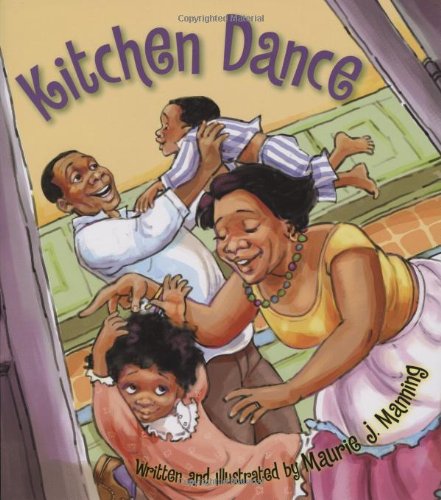
Kitchen Dance

By Maurie J. Manning


A little girl wakens to sounds coming from the kitchen—“Glasses clinking. Water swishing. Forks clattering.” Then more personal sounds—humming, laughing, and “hush!” The girl slips out of her blankets and climbs to the top bunk to wake her brother, Tito. Together they tiptoe downstairs and peek through the kitchen door. “A bright skirt flashes by! Four feet fly!”

With a wooden spoon microphone the kids’ father sings, “Cómo te quiero! Oh, how I love you. Umm, hmm.” Juggling stacked plates in one hand while using the other to dance hand-in-hand, the kids’ parents glide, slide, and twirl around the kitchen floor. Laughing, their mom closes cabinet doors with a bump of her hips as she spins into her husband’s arms “then out again, like a yo-yo on a string.”

celebrate-picture-books-picture-book-review-kitchen-dance-interior-art-dancing

Image copyright Maurie J. Manning

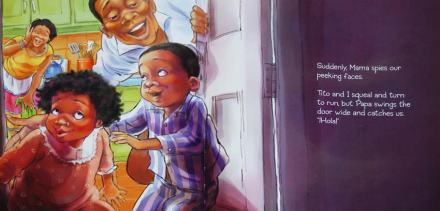
Pots and pans find their storage space with a swirl and a dip while another is dried with the swish of a towel. Around the kitchen the couple dances, “feet tapping, water dripping, sponge wiping, towel snapping.” While singing, “they tango across the room with the leftover tamales.” As they turn toward the door, Mama glimpses her little ones. The kids squeal and start to run, but Papa swings open the door—“Hola!” He pulls Tito into his arms, while Mama catches her tiny daughter.

As the four whirl around the kitchen, Tito and his sister sing into wooden spoons, “Cómo te quiero! Oh, how I love you!” They “twirl around and around in a circle of family.” The dance slows to a gentle swaying as Tito and his sister grow sleepy. Mama and Papa carry their drowsing children upstairs and cover them once more under their cozy blankets. “Cómo te quiero,” Papa whispers. “Besitos, mi’ja,” Mama says “Sweet dreams.”
celebrate-picture-books-picture-book-review-kitchen-dance-interior-art-kids-caught

Image copyright Maurie J. Manning

Maurie J. Manning’s sweet story of a private moment between parents that becomes a celebration of family love offers a fresh, fun, and lively glimpse of the small events that contribute to real connectedness. Telling the story from one of the children’s point of view adds a deeper level of understanding and recognition that of the strong bond between the parents. The repeated phrase, “Cómo te quiero! How I love you!” is reassuring and allows kids to read along with the book’s most important theme.

Manning’s vivacious and vibrant illustrations bring to life the swirling energy of the text. Tito and his sister creep downstairs in a house bathed in shadow only to open the door to flashing yellow, green, purple, and orange brilliance. The scenes of Mama and Papa dancing together, using a wooden spoon as a microphone and pot lids as cymbals as well as twirling hand in hand while balancing stacks of dishes are filled with happiness, and the  picture of the two tangoing with tamales will make kids giggle. Tito and his sister are adorable as they spy on their parents with astonished looks on their faces and then join the dance.

Kitchen Dance is a joy for story time or bedtime, and in these always busy days would be a welcome reminder that carefree moments carry their own special meaning.  Kitchen Dance is a great addition to a child’s bookshelf.

Ages 3 – 8

Clarion Books, 2008 | ISBN 978-0618991105

To learn more about Maurie J. Manning, her books, and her art, check out her website!

Take a look at the Kitchen Dance book trailer!


National Culinary Arts Month Activity
celebrate-picture-books-picture-book-review-wooden-spoon-microphone-craft

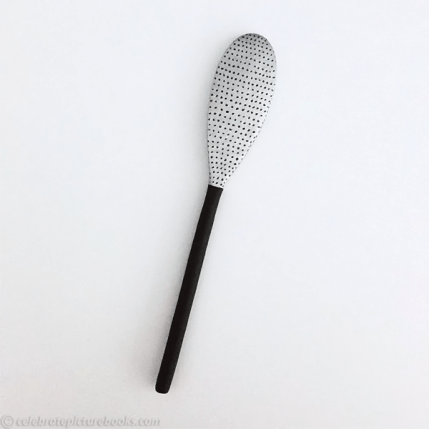
Wooden Spoon Microphone


With this easy craft you can turn a wooden cooking spoon into a fun microphone for playtime or in case you ever have to sing for your supper!

Supplies

  • Long-handled wooden spoon
  • Black craft paint
  • Silver craft paint
  • Black permanent marker

Directions

  1. Paint the handle of the spoon black, let dry
  2. Paint the head of the spoon silver, let dry
  3. After the paint is dry, make rows of small dots on the head of the spoon

July 20 – National Moon Day

celebrate-picture-books-picture-book-review-to-the-stars-cover

About the Holiday

Today’s holiday celebrates the astounding technological achievement that saw men land—and walk—on the moon. On July 20, 1969 Apollo 11 with astronauts Neil Armstrong, Buzz Aldrin, and Michael Collins touched down on the moon. Six hours after landing, Armstrong made the first “small step for man, one giant leap for mankind” when he descended the ladder of the space craft to the moon’s surface. He spent two and a half hours exploring our nearest neighbor. Aldrin also made a lunar walk. Between them, the two astronauts brought 47.5 pounds of material back to Earth. Millions of people watched live coverage of the moon landing on television, cheering along with NASA at this amazing feat.

To the Stars! The First American Woman to Walk in Space

Written by Carmella Van Vleet and Dr. Kathy Sullivan | Illustrated by Nicole Wong


As a child Kathy Sullivan loved to explore. Her father designed airplanes, and when he brought home blueprints, she carefully studied every line and curve. When she saw airplanes in the sky she wished she were on them, flying to exciting locations all over the world. Maps and foreign languages fascinated her. “Their strange symbols, exotic tales, and musical sounds made her feel like the world was waiting for her.” Kathy wanted to see that whole world and thought maybe she’d like to be a spy or a diplomat, but her friends and other adults told her those weren’t jobs for women.

celebrate-picture-books-picture-book-review-to-the-stars-blueprints

Image copyright Nicole Wong, courtesy of nicole-wong.com

But Kathy always followed her heart. She loved going fishing with her dad and brother, finishing the day with a swim. She “delighted in how her arms and legs moved in slow motion underwater.” Kathy was still a teenager when she learned how to pilot a plane. At first the busy instrument panel made her nervous, but she quickly learned how to manage all the “dials, buttons, and numbers.”

Kathy got a taste for the thrill of space when she bravely jumped at the opportunity to ride in a Breezy—an open air framework plane. Sitting at the very tip of the airplane, in front of the pilot, Kathy had a bird’s eye view. “The wind rushed past her face so fast it pushed her cheeks back. Higher! Faster! Young Kathy looked at the ground below her feet. She felt like she could see the whole world.”

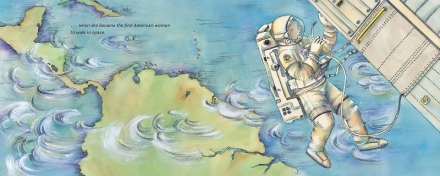
Later, as the first American woman to walk in space, she did!

celebrate-picture-books-picture-book-review-to-the-stars-spacewalk

Image copyright Nicole Wong, courtesy of charlesbridge.com

Carmella Van Vleet and Dr. Kathy Sullivan, have written a compelling biography of Dr. Sullivan that not only tells the story of her adult achievements, but also reveals the childhood and teenage motivations and influences that fostered her journey to the stars. As each event in Kathy’s young life is introduced, it is followed by an adult accomplishment: Kathy’s poring over her father’s aircraft blueprints leads to a spread of college-age Kathy studying charts in textbooks. Her enjoyment of swimming underwater is followed by an illustration showing her NASA training underwater. Her initial introduction to a plane’s instrument panel informs her later responsibilities inside the spacecraft. And the question she once asked herself as a child—what kind of job would allow her to see the whole world—is answered as the astronaut Kathy gazes down at Earth from space.

celebrate-picture-books-picture-book-review-to-the-stars-breezy

Image copyright Nicole Wong, courtesy of charlesbridge.com

Nicole Wong’s lovely, realistic watercolor and ink paintings clearly show readers Kathy Sullivan’s trajectory from curious girl to accomplished astronaut. The blueprints that Kathy studies are filled with schematics. The aqua water she swims in swirls and bubbles in the wake of her cannonball dive, the crisscrossing fields lay like a mottled green quilt under the Breezy. Especially stunning and effective are the illustrations of Dr. Sullivan’s work with NASA. Kids will love the up-close view of the spacecraft’s instrument panel with its myriad buttons and dials, and find the gorgeous two-page spreads of the space shuttle’s launch, the view from the cockpit, and Kathy’s spacewalk particularly thrilling.

Following the text are a personal note from Kathy Sullivan to her young readers, as well as more extensive biographical notes on how Dr. Sullivan discovered her love of science and the NASA missions she supported. Two more pages highlight the women of the first space-shuttle class, which included Kathy Sullivan, and other firsts by eight other women in space.

To the Stars is a wonderful book to teach children that following their own heart is the best path to future happiness and personal accomplishment. It’s a nice addition to any budding scientist’s or adventurer’s library!

Ages 5 – 9

Charlesbridge, 2016 | ISBN 978-1580896443

To find fun activities for To the Stars—including how to make space play dough—as well as other books by Carmella Van Vleet, visit her website!

To learn more about Nicole Wong and view a portfolio of her artwork, visit her website!

National Moon Day Activity

celebrate-picture-books-picture-book-review-moon-and-earth-coloring-page

Out of this World Coloring Page


The view of the Moon from Earth or of Earth from the Moon is spectacular! Have fun coloring this printable Out of this World Coloring Page!

Picture Book Review

July 19 – It’s National Zookeepers Week

celebrate-picture-books-picture-book-review-the-opposite-zoo-cover

About the Holiday

Every year more than 180 million people visit zoos and aquariums in the United States. Caring for the animals that live in these zoological parks, maintaining the facilities, and educating guests about the scientific facts and personal stories of the animals under their care is more than just a profession for zoo keepers—it’s a passion! Today’s holiday raises awareness of the day-to-day work of zoo keepers who protect and preserve the world’s species.

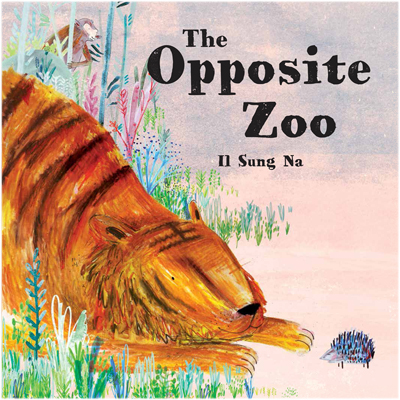
The Opposite Zoo

By Il Sung Na


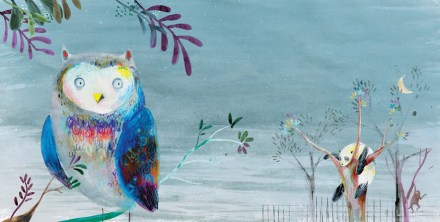
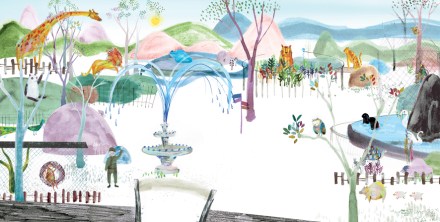
The Dark of twilight has descended on the Opposite Zoo and all the visitors are gone. But the clever monkey finds his door Open! He creeps out to explore the zoo by night. Two animals sit amid the tree tops. The owl is Awake, while the panda hangs suspended in the branches, Asleep. The lion, having a final stretch before snoozing, is Hairy, but the hippo taking a late dip is Bald.

celebrate-picture-books-picture-book-review-the-opposite-zoo-interior-art-owl

Image copyright Il Sung Na, courtesy of ilsungna.com

The Tall giraffe, munching leaves, towers over the trees as well as the Short pig who is feeding her piglets. The monkey plays peek-a-boo with a Shy iguana as it climbs a rock to watch the Bold peacock fan his beautiful tail feathers.

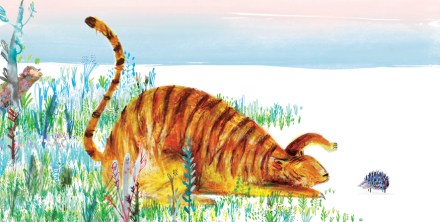
The tiger, with his Soft fur, is intrigued by the Prickly hedgehog, and the Black seals frolic in the pond while the White swans float majestically above. The monkey then hitches a ride on the tail of a Fast cheetah, leaving the Slow sloth to meander on its way. Oh those Noisy monkeys! Are they bothering the Quiet turtle?

celebrate-picture-books-picture-book-review-the-opposite-zoo-interior-art-tiger

Image copyright Il Sung Na, courtesy of ilsungna.com

The prowling monkey has had a long night of fun, but now the sun is Bright. He hurries back to his tree just in time for his door to Close—because now the Opposite Zoo is Open!

The Opposite Zoo combines several concepts—opposites, animals, and a search-and-find element—into a fun romp for young readers. The story is appropriately simple and serves as the frame for Il Sung Na’s stunning paintings: The fiery lion, tiger, and cheetah crackle with orange energy. The owl is a midnight blue tapestry, and the peacock’s tail is as graceful and intricate as a fine Asian fan. Na’s vibrant colors are set against delicate, softly hued backgrounds. Readers will love following the silly monkey through each picture and pointing out his shenanigans.

The Opposite Zoo is a wonderful choice as a new baby gift or for youngest children’s libraries.

Ages birth – 5

celebrate-picture-books-picture-book-review-the-opposite-zoo-interior-art-zoo

Image copyright Il Sung Na, courtesy of ilsungna.com

Knopf Books for Young Readers, 2016 | ISBN 978-0553511277

View more artwork and books by Il Sung Na on his website!

National Zoo Keepers Week Activity

celebrate-picture-books-picture-book-review-opposites-crossword-puzzle

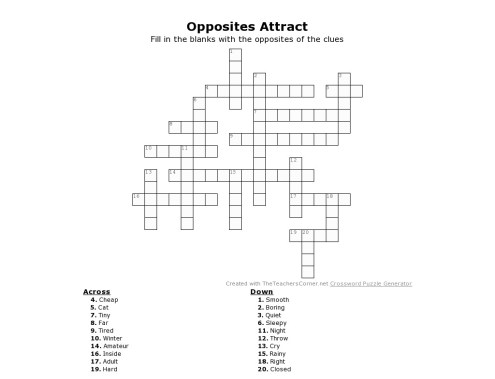
Opposites Attract Crossword Puzzle


Some words go hand in hand even though they’re different. Find the words that make pairs fill in the blanks of this printable Opposites Attract Crossword Puzzle

July 18 – Get Out of the Doghouse Day

celebrate-picture-books-picture-book-review-the-bear-who-stared-cover

About the Holiday

Being “in the dog house” means that somehow you’ve upset someone, made them mad or in some other way fallen out of favor with them. Maybe you owe them an apology or at least an explanation. Today’s holiday gives people a chance to say “I’m sorry” and patch up any hurt feelings. Like the bear in today’s book, you may find yourself out of the doghouse and on the path to better friendships!

The Bear Who Stared

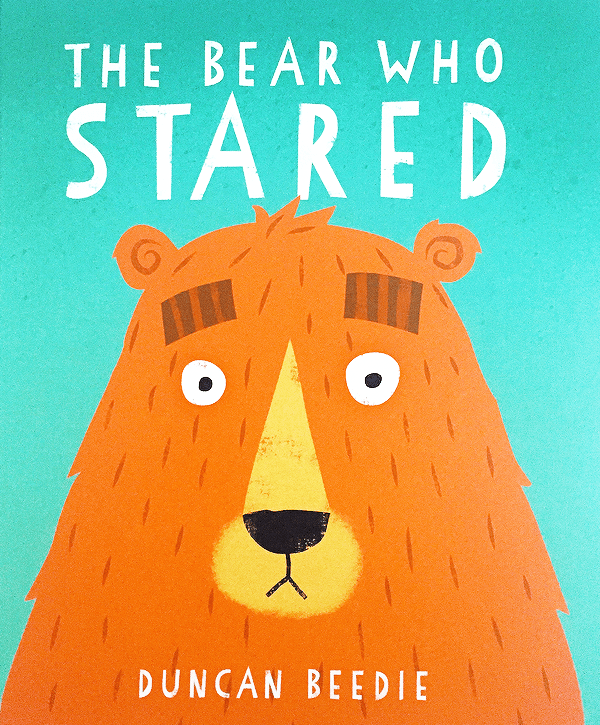
By Duncan Beedie


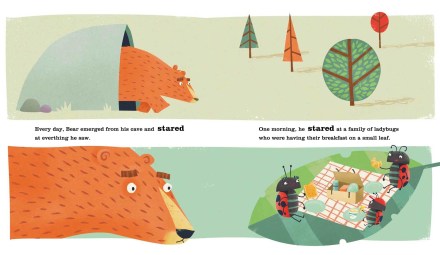
Bear loves to stare…and stare…and stare. One morning he emerges from his den to find a family of ladybugs having a picnic breakfast. He can’t help but gaze at them intently. “‘What are you staring at?’” the daddy ladybug demands before he and his family pack up to find a more private leaf. Bear continues on his way. In a bit he climbs a tree and stares at a bird feeding her chicks. “‘Can I help you?’” the mother bird asks, but Bear remains silent. The chicks don’t like Bear interfering with their meal, so the mother bird angrily tells him to “‘sshhhooooo!’”

celebrate-picture-books-picture-book-review-the-bear-who-stared-interior-art-ladybugs

Image copyright Duncan Beedie, courtesy of simonandschuster.com

At the bottom of the tree Bear spies a badger hole and sticks his head inside. The badger, particularly irritated at Bear’s badgering stare while he is shaving, bites poor bear on the nose. Sore and dejected, Bear wanders through the forest to a large pond. He sits down on a log to ponder his situation. He doesn’t mean to be annoying, he’s “just curious but too shy to say anything.”

A little frog floating on a lily pad in the middle of the pond pipes up, “‘I’ve seen that look before.’” Bear stares at the frog and the frog stares back. “‘Not much fun being stared at, is it?’” he says. Bear confesses that he just doesn’t know what to say to anyone. Just then Bear catches a glimpse of another bear staring back at him from the mossy water of the pond. This bear looks exactly like Bear, except that he is green and wavy. Suddenly, the green bear smiles. “‘You see?’” says the frog. “‘Sometimes a smile is all you need.’” The frog dives off his lily pad into the pond, and the green bear disappears too.

celebrate-picture-books-picture-book-review-the-bear-who-stared-interior-art-staring

Image copyright Duncan Beedie, courtesy of simonandschuster.com

The next day Bear leaves his den and discovers the ladybug family breakfasting again. As soon as they spot Bear, they begin to gather their things. “‘Hello!’” Bear says with a big smile on his face. The ladybugs are surprised and happy. “‘Oh, hello!’” replies the dad, smiling back. With renewed confidence Bear wanders into the forest. He smiles at the birds and smiles at the badger, and they smile at him in return. Bear makes a lot of new friends that day. And there’s even that friend down at the pond who likes to stare as much as he does!

Duncan Beedie highlights the awkward feeling many kids—and even adults—often feel in social situations. Nothing pops immediately to mind to say and yet there’s a desire for connection. As Bear discovers, staring is not the answer—so what is? In The Bear Who Stared Beedie offers a simple, but universal solution through an engaging and humorous story. Bear, sporting a bemused expression that aptly depicts his predicament, is such an endearing character that readers will wish they could give him a hug as he suffers slights from the woodland creatures.

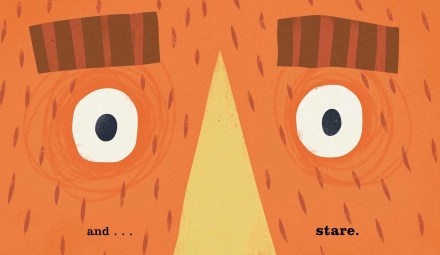
The full-bleed, oversized pages put readers at eye level with bear and his subjects, and the very up-close look into Bear’s staring eyes will make kids laugh. The green, rust, and blue palette on matte paper is bold, but muted, giving the pages an organic, environmental feel that is perfect to carry the story.

The Bear Who Stared is a funny story time read with a heart that kids will ask for again and again.

Ages 4 – 8

little bee books, 2016 | ISBN 978-1499802856

Check out more of Duncan Beedie’s illustration and animation work on his website!

Get Out of the Doghouse Day Activity

celebrate-picture-books-picture-book-review-bear-craft

Expressive Bear Craft


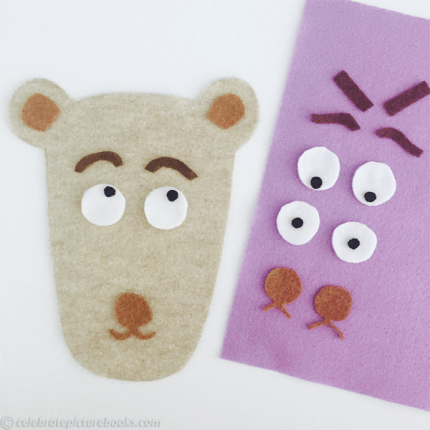
Sometimes it’s hard to manage or even recognize various emotions that land you in the doghouse. With this easy-to-make felt (or paper) set, you can try out different emotions and talk about them, make up stories to go with each facial expression, or play a fun game. Below, you’ll find a couple of ideas!

Supplies

  • Printable Bear Head Template
  • Printable Eyes and Noses Template
  • Printable Eyebrows Template
  • Light brown felt or fleece, 8 ½ x 11 inch piece
  • Dark brown felt or fleece, 8 ½ x 11 inch piece
  • White felt or fleece, 8 ½ x 11 inch piece
  • Black felt or fleece, for pupils
  • Scissors
  • Glue
  • 1 playing die (optional)

Directions

  1. Print templates
  2. Cut bear head from light felt or fleece
  3. Cut eyes from white felt or fleece
  4. Cut nose and inner ears from dark brown felt or fleece
  5. Cut pupils from black felt or fleece
  6. Glue pupils onto white eyes

Or: Color and play with the paper set

To Play a Game

Roll the die to collect parts of the bear’s face. The first player to create a full face is the winner.

  • Die dots correspond to:
  • 1—one eyebrow
  • 2—second eyebrow
  • 3—one eye
  • 4—second eye
  • 5—nose
  • 6—inner ears

For a Fun Story Time

Give the bear different faces and make up stories of why he looks that way!

Picture Book Review

July 17 – National Tattoo Day

celebrate-picture-books-picture-book-review-tell-me-a-tattoo-story-cover

About the Holiday

As an emerging holiday, National Tattoo Day gives us an opportunity to learn about and appreciate this very personal form of art. As the Smithsonian reports, tattoos have been found on human remains dating to Ancient Egypt and is believed to have been designed for therapeutic reasons similar to acupuncture. Body art has long been associated with soldiers and sailors, seeing a surge in popularity during the American Civil War, with the establishment of modern tattoo artists, and World War II. Today people of all ages and cultures embrace body art as a way of self-expression, and as today’s book shows, each tattoo tells its own story.

Tell Me a Tattoo Story

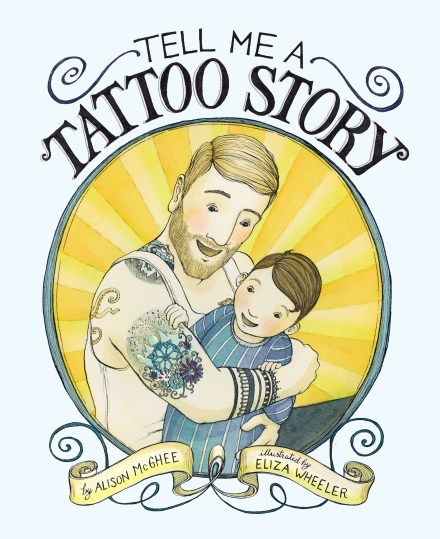
Written by Alison McGhee | Illustrated by Eliza Wheeler


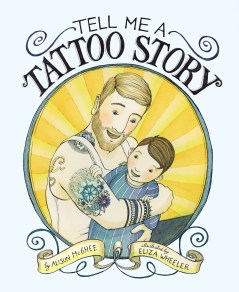
A little boy tugs on his dad’s T-shirt, wanting to see his tattoos—again. His dad sits down with his son and patiently goes through them, like the pages of a favorite book. In fact, the tattoo on his shoulder—a dragon flying above mountain peaks—is from the book his mom read to him in childhood. “Did she read it to him over and over and over? She sure did,” he says.

celebrate-picture-books-picture-book-review-tell-me-a-tattoo-story-interior-art-at-home

Image copyright Eliza Wheeler, courtesy of abramsandchronicle.co.uk

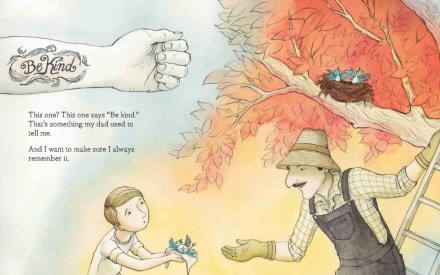
The elaborate design on the dad’s wrist reads “Be Kind,” advice his father used to give him. An intricate depiction of a carnival, complete with a Ferris wheel, fireworks, and flowers reminds him “of the day I met a pretty girl.” His son asks what made the girl so pretty, and his dad responds, “That’s a good question, little man. I’d have to say it was her smile.” In answer to his son’s wondering if he has ever met this girl, Dad looks at his wife and says, “You sure have.”

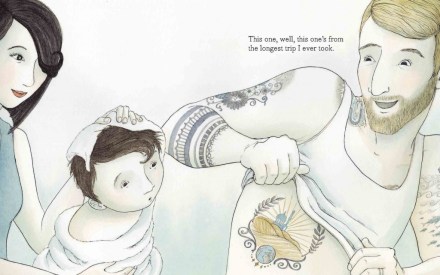
The tattoo picturing a globe and monument that covers the dad’s right side is from “the longest trip I ever took.” He reminisce—Did I miss home while I was there?”—and confesses, “I sure did.”  The last tattoo the little boy asks about is a small heart festooned with a banner that reads “7● 22 Two Thousand Twelve.” Father and son engage in banter that is most likely familiar to them both, with the boy asking the questions he already knows the answers to but loves to hear again and again: “Those numbers inside it? Just somebody’s birthday, I guess. Whose birthday? / Oh some little man I know, is all. / What do you mean, this one’s your favorite? This dinky little heart?” Then leaning in to learn a secret, the boy rediscovers that that tattoo is his dad’s favorite too.

celebrate-picture-books-picture-book-review-tell-me-a-tattoo-story-interior-art-be-kind

Image copyright Eliza Wheeler, courtesy of abramsandchronicle.co.uk

Alison McGhee’s Tell Me a Tattoo Story is such a sweet, original homage to the love between father and son. The use of body art to reveal not only seminal events in the dad’s life but the trajectory of his child’s birth is inspired. The minimal text highlights the deep emotion, giving the boy in the story as well as young readers the information they are really looking for. The soft-spoken dad is such an appealing character—emotionally available, honest, and offering just the right tone of humorous repartee—for today’s family dynamic.

Beautifully rendering McGhee’s text into art, Eliza Wheeler creates a homey atmosphere that emphasizes the theme of the book while creating tattoos that are immediately accessible to children. The dragon tattoo could come from The Hobbit or Harry Potter, kids will recognize the fun and excitement represented by the Ferris wheel, and the little heart is simplicity at its finest. While the pages depicting the dad’s tattoos are minimally hued, the father’s reminiscences burst with color and details—providing an overall feeling of warmth and affection. The image of the dad in his military uniform over the hot, golden sands on “the longest trip he ever took” will bring a tear to your eye.

celebrate-picture-books-picture-book-review-tell-me-a-tattoo-story-interior-art-longest-trip

Image copyright Eliza Wheeler, courtesy of abramsandchronicle.co.uk

The originality of the story and gorgeous illustrations make Tell Me a Tattoo Story a must for children’s bookshelves and will become an often-asked-for read during quiet story times or for bedtime.

Ages Birth – 6

Chronicle Books, 2016 | ISBN 978-1452119373

To discover more books for children and adults by Alison McGhee, visit her website!

View Eliza Wheeler’s portfolio and other books on her website!

National Tattoo Day Activity

celebrate-picture-books-picture-book-review-design-your-own-tattoo-template

Design Your Own Tattoo


Tattoos can be simple or elaborate, but they are always personal. They tell a story, commemorate an event, or reveal an emotion. What would your tattoo look like? Design your own body art on this printable Design Your Own Tattoo Template!

celebrate-picture-books-picture-book-review-tell-me-a-tattoo-story-cover

You can find Tell Me a Tattoo Story at these booksellers

Amazon | Barnes & Noble | Books-a-Million | IndieBound

July 16 – World Snake Day

celebrate-picture-books-picture-book-review-i-don't-like-snakes-cover

About the Holiday

Snakes are beautiful and fascinating creatures, but they often get a bad rap due to their mysterious nature and their portrayals in literature and throughout history. Today’s holiday promotes awareness of dangers to the snake population through habitat destruction, climate change, disease, and other threats. The wide variety of snakes provide many benefits to their natural environments and deserve protection.

I Don’t Like Snakes

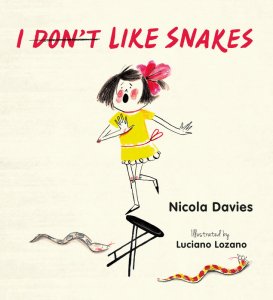
Written by Nicola Davies | Illustrated by Luciano Lozano


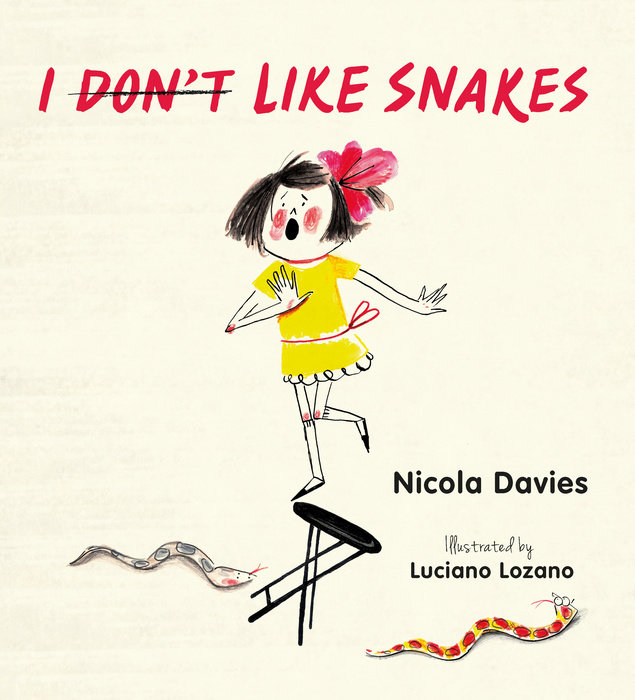
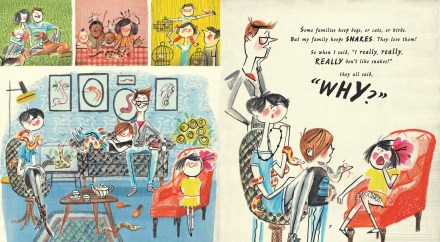
Can you imagine a family who has nothing but snakes for pets? Well, that’s the way it is for the little girl in I Don’t Like Snakes. Sitting in her red chair surrounded by her mother, father, brother and four snakes, she finally pipes up and tells her family that she “‘really, really, REALLY doesn’t like snakes!’” And they ask, “‘Why?’”

“‘Because they slither,’” she answers. Her mom has a ready answer that leads into a scientific discussion of why and how different kinds of snakes move. The mechanics of concertina and serpentine slithering as well as caterpillar crawling are clearly described in both easy-to-understand text and accompanying illustrations. Her father adds more transportation methods, including side-winding, twining, climbing, swimming, and even flying.

celebrate-picture-books-picture-book-review-i-don't-like-snakes-interior-art-why

Image copyright Luciano Lozano, courtesy of walker.co.uk

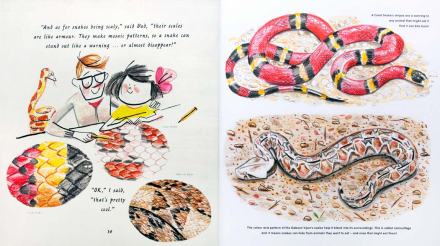
The little girl has to admit these sound pretty smart. “‘But what about their slimy, scaly skin?’” She asks. After all it’s so icky! Well, her mom reveals, snakes aren’t actually slimy, but dry. Following this readers learn why snakes look wet and how they shed their skin. Her dad goes on to explain that a snake’s scales are used for protection and as camouflage or as a warning to other creatures. Ok, the little girl agrees, “‘That’s pretty cool.’”

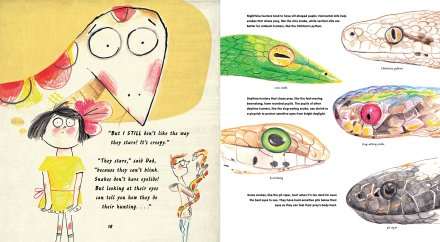
Still, the girl doesn’t like their flicking tongues. Her mom reassures her that snakes only use their tongues to smell with. Readers then see how a snake picks up the scent of a mouse or other prey and how it is transferred to the Jacobsen’s organ that helps it detect even faint odor trails. “‘That IS interesting,’” the girl tells her mom. “‘But I STILL don’t like the way they stare! It’s creepy.’”

celebrate-picture-books-picture-book-review-i-don't-like-snakes-interior-art-eyes

Image copyright Luciano Lozano, courtesy of walker.co.uk

Dad has the answer to that one. They stare because they have no other choice. Without eyelids, it’s impossible for them to blink. But if you look closely at a snake’s eyes, you can tell if they are a night or day hunter or whether they are chasers or ambushers.

All this information is starting to change the little girl’s mind about snakes. “‘Maybe now that I know something about them, I do like snakes—just a little bit!’” she tells her brother. And just like brothers everywhere, he ups the ante by revealing how snakes kill. He revels in explaining about how some snakes have hollow fangs that inject poison into their victims and how others strangle their prey until there’s no life left. And without proper teeth, snakes have to swallow their dinner whole!

The boy’s sister is braver than he thinks, and now she wants to get in the game. She says that she has discovered something about snakes herself. She knows how snakes have babies. Some give birth to live babies but most lay leathery eggs. Either way, the babies are on their own soon after hatching. The little girl has had a complete change of heart. She now thinks snakes are beautiful. “‘And do you know what?’” she says. “‘I really, really, REEEEEALLLLY LIKE THEM!’”

celebrate-picture-books-picture-book-review-i-don't-like-snakes-interior-art-skin

Image copyright Luciano Lozano, courtesy of walker.co.uk

Whether you like snakes, don’t like snakes, or are somewhere in between, Nicola Davies’ engaging tribute to this interesting and often misunderstood species will delight. Cleverly written to include commonly held opinions and provide compelling facts, I Don’t Like Snakes is part story, part nature encyclopedia seamlessly woven together to create a fascinating and funny read. Kids and adults will respond to the conversational tone, and, like the little girl in the story, be open to a change in attitude toward this intriguing reptile.

Luciano Luzano bridges the world of the fictional story and the nonfiction facts in I Don’t Like Snakes with charming sketches of the family and realistic depictions of the snakes they discuss. The little girl with her oversized hair bow and astonished expressions is a disarming guide to discovery. The family’s reptilian obsession is everywhere, from the snakes that twine around the mother, father, and brother’s arms and shoulders to the snakeskin upholstery. The factual information about snakes is accompanied by accurate drawings and representations of the traits portrayed.

I Don’t Like Snakes is a wonderful book for those who already love snakes as well as for those who want to learn more! It’s a great addition to anyone’s nonfiction collection.

Ages 5 – 10

Candlewick Press, 2015| ISBN 978-0763678319

Learn more about Nicola Davies and her books on her website!

To view more art and books by Luciano Luzano visit his website!

World Snake Day Activity

celebrate-picture-books-picture-book-review-snake-word-search

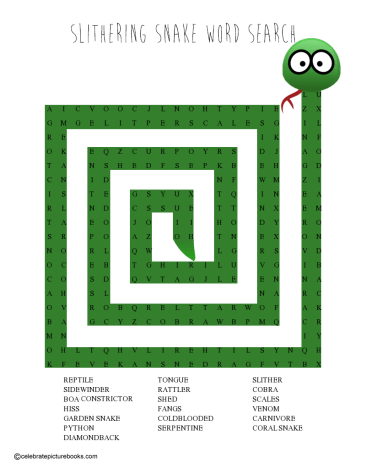
Slithering Snake Word Search


Snakes wind their way along wherever they want to go. Follow the twists and turns in this printable Slithering Snake Word Search to find the reptile-inspired words! 

celebrate-picture-books-picture-book-review-i-don't-like-snakes-cover

You can find I Don’t Like Snakes at these booksellers

Amazon | Barnes & Noble | Books-a-Million | IndieBound

Picture Book Review

July 15 – It’s National Ice Cream Month

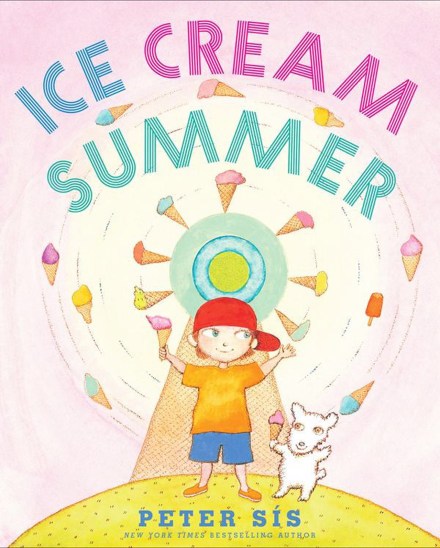
celebrate-picture-books-picture-book-review-ice-cream-summer

About the Holiday

Ice cream has a long and elite history, dating back to Ancient Greece when the confection was made of snow, honey, and fruit. Catherine de’ Medici introduced the treat again in the 16th century. Charles I of England, using his royal clout, proclaimed ice cream to be the prerogative of the crown. He kept the recipe secret and forbid the common people to eat it. The first recorded recipes for ice cream are reported in the 18th century.

This favorite dessert received its true recognition in 1984 when President Ronald Reagan established July as National Ice Cream Month. Today indulge in your favorite flavor or sundae!

Ice Cream Summer

By Peter Sís


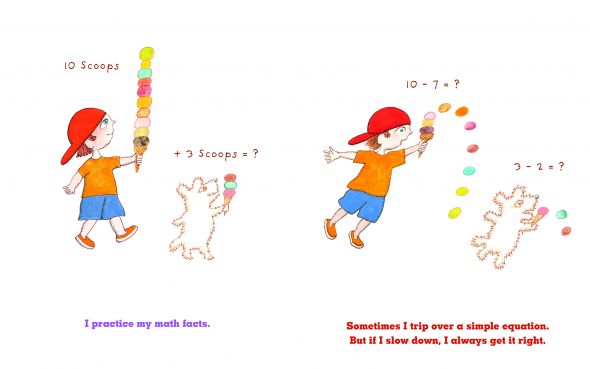
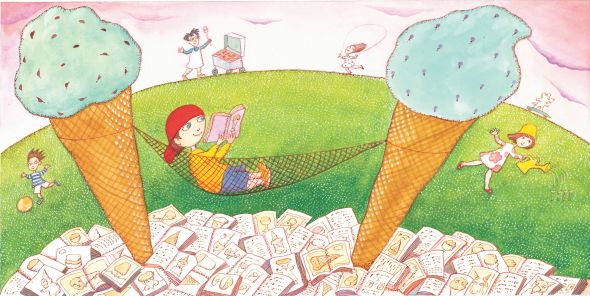
A little boy writes a letter to his grandpa telling him about his summer. “So far it’s been a delicious summer,” he says of his ice cream extravaganza. The boy reports that he’s very busy, but is also paying attention to school work every day. He knows how to read big words like tornado and explosion, and he is even creating his own book. He can solve math problems—even word problems—lickity split on his own and sometimes with his family’s help.

At day camp he and his friends are involved in all sorts of activities, such as sports, cartography, and field trips. The boy tells his grandpa that he’s poring over the encyclopedias he sent, learning about world history from Ancient China to Europe and America. He is discovering fabulous inventions and designing some of his own.

celebrate-picture-books-picture-book-review-ice-cream-summer

Image copyright Peter Sís, courtesy of scholastic.com

He assures his grandpa that he has “been working hard all summer (though I always take a break on sundaes)” and has earned the special trip his grandpa mentioned. As the two meet it’s obvious that Grandpa understands his grandson very well. They both sport ice cream shaped backpacks, and the trip they are embarking on is a hike to the tip of Ice Cream Peak.

Peter Sís’s celebration of ice cream is a perfect mixture of text and art. While the boy’s letter is kid-like bare bones, the ice-cream hued illustrations humorously and cleverly portray the boy’s delicious obsession. His room, with its scoop-shaped window overlooking an ice cream factory, is filled with a bed, bookshelves, desk, and toys that are all familiarly conical. The boy builds his sandcastle, complete with cone turrets, at the edge of multi-colored scoop waves, and the family’s beach umbrella is a wavy sundae top.

celebrate-picture-books-picture-book-review-ice-cream-summer

Image copyright Peter Sís, courtesy of scholastic.com

At day camp all roads lead to flavorful sites where skyscrapers, attractions, and transportation are all seen through a sweet ice-cream cone lens. Even the Statue of Liberty holds aloft a vanilla soft serve cone. The boy’s travels through history encompass fascinating facts about the invention of ice cream, how it spread across Europe and to America as well as innovations of and improvements to this favorite treat.

The final reveal of Ice Cream Peak, with its sprinkles-covered tip will delight ice cream aficionados of all ages. Kids and adults will want to linger over each page to scoop up all the visual pleasures.

Ages 4 – 8

Scholastic Books, 2015 | ISBN 978-0545731614

To view more books by Peter Sís and discover fun title-related activities, visit his website!

National Ice Cream Month Activity

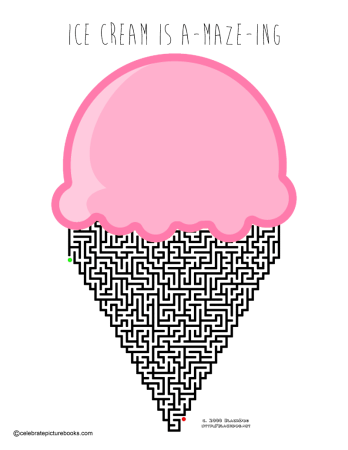
celebrate-picture-books-picture-book-review-ice-cream-maze

Ice Cream is A-maze-ing! Puzzle


Sometimes you’d walk forever and through any kind of obstacle to get your favorite flavor ice cream cone. Have fun following the path through this printable Ice Cream is Amaze-ing Puzzle

Picture Book Review