May 5 – It’s Get Caught Reading Month

celebrate-picture-books-picture-book-review-old-lion-and-little-rabbit-cover

About the Holiday

Initiated in 1999 and sponsored by the Association of American Publishers, Get Caught Reading Month inspires people of all ages to discover or rediscover the joys of reading. No matter what types of books you like best—from fiction to nonfiction, mystery to humor, picture books to novels—there are stories on bookstore and library shelves that will enhance your life! This month take the opportunity to read a new book or an old favorite and get caught up in the magic!

The Old Lion and the Little Rabbit

By Keiko Kaichi


Once King of the Plains, Old Lion had given up his place in the herd to his sons and now lived a quiet life alone. One day while napping, he felt a tickle in his mane and smelled a tantalizing aroma nearby. Old Lion discovered a tiny baby rabbit sleeping peacefully in the soft fur of his mane. “‘Hey,’ Old Lion thought, ‘this little one won’t fill my belly. But if I let him eat enough, he’ll grow up to be big and delicious!’” So Old Lion gathered as much grass as he could and fed the baby rabbit well, all the while feeling hunger growing in his stomach.
celebrate-picture-books-picture-book-review-old-lion-and-little-rabbit-herd

Copyright Keiko Kaichi, 2017, courtesy of minedition.

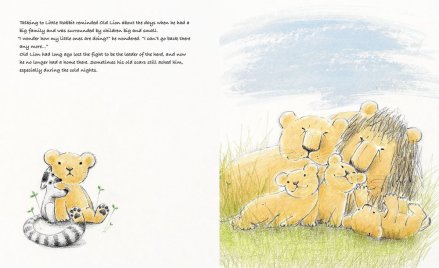
To pass the time between feedings, Old Lion told Little Rabbit about his younger days on the savanna. “Little Rabbit crinkled up his nose with joy when he listened to Old Lion’s stories.” When other animals saw Old Lion and Little Rabbit together, they couldn’t believe it. As Old Lion talked to Little Rabbit, he remembered his big family and the joy of having children around him. He wondered how they were doing. But he knew that he couldn’t go back once he had “lost the fight to be the leader of the herd. Sometimes his old scars still ached him, especially during the cold nights.”

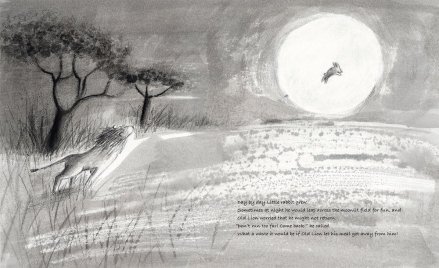
Now that Little Rabbit was growing bigger, he sometimes hopped far into the field, exploring just for fun. Then Old Lion worried that he might not come back, fearful that all his time and hard work would be wasted. He would call after Little Rabbit, reminding him to come back, and Little Rabbit always did.
celebrate-picture-books-picture-book-review-old-lion-and-little-rabbit-hopping-in-moonlight

Copyright Keiko Kaichi, 2017, courtesy of minedition.

They spent their days watching the other animals, Little Rabbit perched on top of the lion’s head in order to see better. As time went by, Old Lion began to wish he could be satisfied with a diet of plants and wondered about the unfamiliar feeling in his heart. “Could it be that he was starting to care about this little creature who trusted him so blindly? Such a thing made no sense. Still, he had to admit that something warm stirred in him when he saw Little Rabbit each morning.”

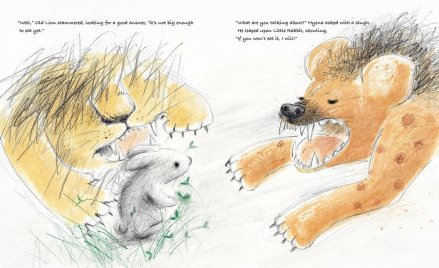
One day as Little Rabbit played among the weeds while Old Lion rested, Hyena came calling. When he saw the little bunny, he immediately asked to share in the delicious meal as he often did. Old Lion was taken off guard and stammered that Little Rabbit was not nearly big enough to make a meal of. Hyena protested and pounced. Old Lion found his former quick reflexes and “with one gulp he snatched up Little Rabbit into his jaws.”
celebrate-picture-books-picture-book-review-old-lion-and-little-rabbit-hyenna

Copyright Keiko Kaichi, 2017, courtesy of minedition.

With a bit of regret but admiration for his old friend, Hyena turned and skulked away. When they were alone, Old Lion opened his mouth wide and let Little Rabbit climb out. He saw that his tiny friend had suffered a cut on his paw and bandaged it carefully. Then he placed Little Rabbit on his head and began to walk in the direction of the wind. “He could no longer deny that he loved Little Rabbit.”

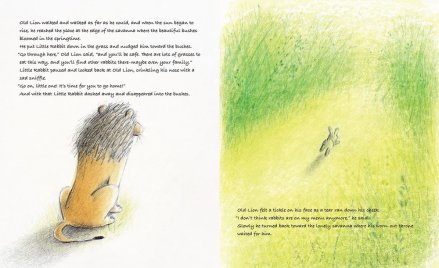
Old Lion walked and walked to the edge of the savanna, where bushes and tall grasses blossomed. He set Little Rabbit down gently and nudged him forward. “You’ll be safe” there, Old Lion told him. “You’ll find other rabbits there—maybe even your family.” Little Rabbit gazed at Old Lion sadly, but the lion reassured him that it was time to go home. Old Lion watched Little Rabbit bound away and “felt a tickle on his face as a tear ran down his cheek.” Then he turned and walked back to where his throne waited.
celebrate-picture-books-picture-book-review-old-lion-and-little-rabbit-letting-rabbit-go

Copyright Keiko Kaichi, 2017, courtesy of minedition.

Keiko Kaichi’s books masterfully tug at readers’ heartstrings with poignant stories populated with adorable characters that immediately inspire love and empathy. In Old Lion and Little Rabbit, the lion’s history is revealed naturally and at a pace that makes his transformation believable and all the more emotional. Just as do children within a family, Little Rabbit alters Old Lion’s life simply through trust and dependence. Children will respond to the growing love between Old Lion and Little Rabbit. They will also find the solution to the mystery established at the beginning both surprising and satisfying. Adult readers cannot be faulted for feeling a small lump in their throat when Old Lion unselfishly protects Little Rabbit from Hyena and then takes him to safety.

Kaichi’s acrylic and pencil drawings are both evocative of the golden savanna and filled with tender sentiments. Old Lion may once have been a fierce predator, but he is now a contemplative and caring elder statesman while Little Rabbit is a wee nubbin of cuteness. As he sits next to the much bigger lion, his tiny paw touching Old Lion’s arm, or collects a bouquet of weeds under Old Lion’s watchful gaze, Little Rabbit swells readers hearts.

Superb in every way, Old Lion and Little Rabbit would make a wonderful choice for home bookshelves as well as for public and school libraries.

Ages 3 – 7

minedition, 2017 | ISBN 978-9888341245

Get Caught Reading Month Activity
celebrate-picture-books-picture-book-review-catch-a-book-maze

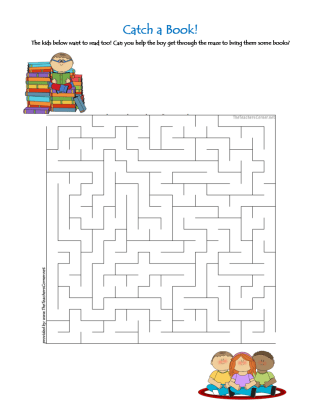
Catch a Book! Maze


One boy has a whole stack of books to share with his friends! Can you help him through this printable Catch a Book! Maze? Here’s the Solution!

Picture Book Review

May 2 – Baby Day

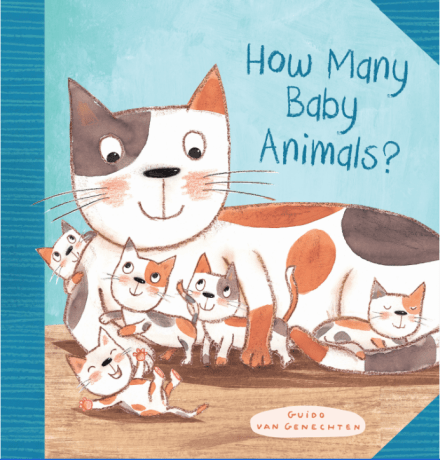
celebrate-picture-books-picture-book-review-how-many-baby-animals-cover-clavisAbout the Holiday

Today we celebrate babies in all their cuteness, curiosity, and cuddliness.  If you have a baby or young child, spend the day doing something special with them! The years go by so quickly—enjoy showing your little ones the world around them! Of course, kids love babies of all kinds—and as today’s book shows Moms of all kinds love their kids!

How Many Baby Animals

By Guido van Genechten


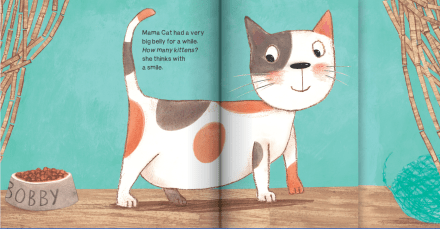
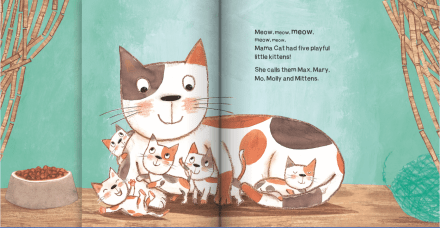
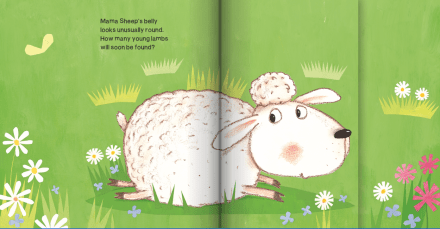
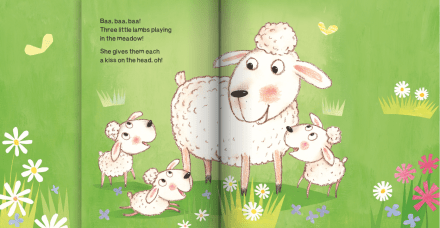
It’s springtime and the farm animals are about to welcome lots of little ones to their families! How many? Little readers are about to find out! Mama Sheep is happily waiting for her babies to be born, and with a turn of the page, kids discover “Baa, baa, baa! / Three little lambs playing / in the meadow! / She gives them each / a kiss on the head, oh!” Mama Cat smiles at the thought of her new kittens to come. Just lift the flap and see—she has five: “Max, Mary, Mo, Molly, and Mittens!”

celebrate-picture-books-picture-book-review-how-many-baby-animals-cat-clavis

Copyright Guido van Genechten, 2017. Courtesy of Clavis Publishing.

celebrate-picture-books-picture-book-review-how-many-baby-animals-kittens-clavis

Copyright Guido van Genechten, 2017. Courtesy of Clavis Publishing.

“Mama Chicken sits on her eggs / for more than a week. / Then the eggs begin to wobble / and start to speak!” Her new little peepers are keeping her busy—they’re such “brave little chicks!” What do they look like? Well, “they’re yellow and fluffy and there’s a freckle on number six.”

celebrate-picture-books-picture-book-review-how-many-baby-animals-sheep-clavis

Copyright Guido van Genechten, 2017. Courtesy of Clavis Publishing.

Wow! Mama Pig’s belly nearly touches the ground! How many babies will she welcome? Just flip the flap to count eight little piglets snuggling close. Mama Mouse is preparing for her little brood with tasty cheese and nuts, but how much should she store away? Enough for “eleven wee mice! They love sleeping together. Isn’t that nice?” And Mama Fish is the last to give birth. She swims through the water and hides in the plants with her large, happy family of…thirty three?!

celebrate-picture-books-picture-book-review-how-many-baby-animals-lambs-clavis

Copyright Guido van Genechten, 2017. Courtesy of Clavis Publishing.

Children who love animals and/or have pets will be enchanted with this unique counting book that also teaches a little bit about the nature of…nature. Sweet, smiling animal moms welcome their babies and cuddle up close, while Guido van Genechten’s funny rhymes lead readers to count increasing numbers of babies. The bold, vibrant pages allow kids to see each baby clearly, making counting easier. They also include one or two details about each animal’s farm habitat that can spur discussions of how and where each animal lives. The half-flap pages provide opportunities for interaction and fine-motor-skill practice, and the paper is heavy enough to stand up to much flipping back and forth.

Ages 2 and up

Clavis, 2017 | ISBN 978-1605373249

Baby Day Activity

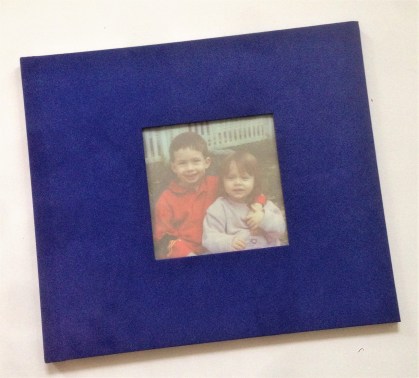
celebrate-picture-books-picture-books-review-photo-album

Baby’s Own Family Photo Book


Babies love seeing pictures of their family! Take the opportunity of Baby Day to put together a photo album for your baby or young child to look through. An album with pages of individual photographs makes it easier for babies to focus on one picture at a time, and close-up shots of family members smiling will make kids smile too. When you share the photo book with little ones, talk about the person in the picture and tell a family story. Doing this will help kids learn about their family and develop closer bonds!

Picture Book Review

April 25 – National DNA Day

celebrate-picture-books-picture-book-review-when-I-grow-up

About the Holiday
National DNA Day commemorates the completion of the Human Genome Project in April 2003 and the discovery of the double helix of DNA in 1953 that have led to advanced research in the medical, science, and other fields. As part of the observance, students in grades 9 through 12 can compete in an essay contest for monetary prizes and grants.

When I Grow Up

By Anita Bijsterbosch


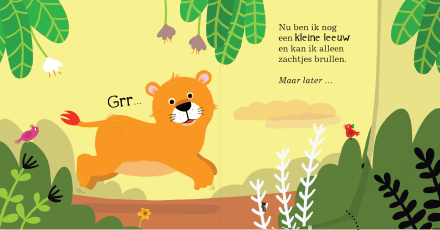
In Anita Bijsterbosch’s adorable and eye-catching animal kingdom book, little ones will identify with their counterparts in the wild who are also just starting out on their journey through life. Opening to the first page, children enter the jungle, where a lion cub romps among the foliage. He looks directly at the reader as he tells them, “Now I’m just a little lion and I can only growl softly. But someday….” This lead-in to the future invites kids to turn the half-cut page and discover the cub all grown up and able to “roar so loudly that all the animals can hear me!”

celebrate-picture-books-picture-book-review-when-I-Grow-Up-lion-cub

When I Grow Up is available in Dutch and English versions. Copyright Anita Bijsterbosch, courtesy of anitabijsterbosch.nl

Next, children visit the bayou, where a young crocodile can now only wade through puddles. On the next page, though he’s big enough to “jump into the deep water to swim with my friends!” Little Toucan is just learning how to fly. With a monkey, a lemur, and a bird looking on, he tells readers a secret: “I pretend to fly when I jump. But someday…I’ll be a big toucan and I’ll spread my winds. Then I’ll fly high in the sky!”

In the savanna, a baby giraffe lifts her head toward the treetops. She says, “Now I’m just a little giraffe and I can barely touch the leaves with my nose.” When she gets older, however, young readers can see that meals and snacks of tasty leaves will be within easy reach.

Curled around a thin branch, a little snake dreams of the day when he will be long enough to wrap around the whole tree—many times. Turning to the last page, Little Elephant happily splashes in the water and sprinkles her friends, but someday she knows that she will be big enough to use her trunk “to spray everything and everyone!”

celebrate-picture-books-picture-book-review-when-I-Grow-Up-lion-adult

When I Grow Up is available in Dutch and English versions. Copyright Anita Bijsterbosch, courtesy of anitabijsterbosch.nl

Toddlers and older youngsters beginning to learn about the vast world around them will delight in this early science book that combines the sturdiness of a board book and the sensory-stimulating interactivity of a lift-the-flap book. Anita Bijsterbosch’s vibrant illustrations engage little ones’ visual senses with bold images of the animals as well as smaller pictures of birds, insects, and flowers for them to discover. A tiny red bird with rakish green head feathers seems to be friends with all of the animals, and readers will love pointing him out on every page.

Little ones will recognize the animal traits spotlighted through Bijsterbosch’s straightforward and easy-to-understand language and will be reassured that they too will soon grow big enough and old enough to do what the “big kids” do.

With sweet illustrations and opportunities for multiple types of learning, When I Grow Up would make a great baby shower or new baby gift as well as a nice addition to a toddler’s growing home library.

Ages 2 – 5

Clavis Publishing, 2017 | ISBN 978-1605373348

You’ll find more books and artwork by Anita Bijsterbosch on her website!

National DNA Day Activity

celebrate-picture-books-picture-book-review-elephants-coloring-page

Mom and Baby Elephant Coloring Page


This mommy elephant and her baby are out for a walk. Give their world a little color with your crayons or pencils and this printable Mom and Baby Elephant Coloring Page!

Picture Book Review

April 8 – Draw a Picture of a Bird Day

celebrate-picture-books-picture-book-review-birds-&-other-animals-with-pablo-picasso-cover

About the Holiday

With the onset of spring, our feathered friends are busy building nests and hatching little ones. The return of birds to backyards, parks, and beaches as well as the increased activity gives budding nature artists the perfect opportunity to try their hand at sketching these favorite colorful creatures. Whether you prefer to make detailed renderings or simple line drawings, today’s holiday should inspire you to grab your pencil or paints and create!

Birds & Other Animals with Pablo Picasso

First Concepts with Fine Artists | Illustrations by Pablo Picasso


Pablo Picasso, “one of the most famous artists who ever lived,” was a prodigy who loved to draw animals of all kinds. Perhaps best known for his abstract portraits and his colorful canvases, Picasso also created line drawings, many of which were “inspired by poems about animals written by his friend Guillaume Apollinaire, a famous French poet.” The illustrations in Birds & Other Animals with Pablo Picasso come from Picasso’s notebooks and, combined, make a wonderfully conceived concept book for little ones.

Opening to the first page, readers meet three birds, one perhaps a little more steady on its feet than the others. Four more birds follow on the next page, a few gamely trying to stand on one leg like the regal flamingos behind them. From the tropical home of the flamingo, readers next travel to a snowy clime, where “penguins are birds who waddle over snow.”

celebrate-picture-books-picture-book-review-birds-&-other-animals-with-pablo-picasso-flamingo

All artworks by Pablo Picasso © Succession Picasso/DACS, London 2017. © 2017 Phaidon Press

“Cock-a-doodle-doo!” Don’t snooze! The rooster wants you to know that he is a bird too! Of course, “some birds fly,” and many insects have wings too. Flies fly and wasps fly. How about grasshoppers? They prefer to hop! Who else likes to hop? “Bunnies hop…especially to get away from hungry foxes. Does [the] fox look hungry to you?”

Some animals seem to be hungry all the time—like the squirrel on the next page (you know how squirrels are!) and the camel, whose “humps are small. When she eats, her humps will grow!” Do you like dogs? “This little dog has no humps—he’s long like a hot dog!” His friend is a big dog who can do tricks. Horses can learn tricks too and perform for people. They can even rear up and stand on two legs! You know who can’t stand on two legs? Right! Fish! “They swim! Turtles swim too.”

celebrate-picture-books-picture-book-review-birds-&-other-animals-with-pablo-picasso-dogs

All artworks by Pablo Picasso © Succession Picasso/DACS, London 2017. © 2017 Phaidon Press

But we were talking about birds, weren’t we? There are some birds that are like fish. The pelican is a bird who likes to swim—of course, it likes to eat fish too. The ostrich is too big for either flying or swimming, but it can run—really fast! There are so many kinds of birds, aren’t there? Peacocks have long, colorful tail feathers, and owls like the nighttime. Yes, there are so many birds, “beautiful birds.”

The First Concepts with Fine Artists series by Phaidon Press is one of my favorite new collections for babies, toddlers, and even older kids. As an art lover, I’m impressed with the variety of styles and artists introduced to young children who will be attracted to the colors, shapes, and movement in the chosen artwork. As someone who works with words, I love the way the art is tied together with engaging and conversational text.

celebrate-picture-books-picture-book-review-birds-&-other-animals-with-pablo-picasso-fox

All artworks by Pablo Picasso © Succession Picasso/DACS, London 2017. © 2017 Phaidon Press

Birds and Other Animals with Pablo Picasso will enchant little ones with whimsical line drawings of animals that embody charming poise and personality. Each page invites readers to create stories of their own about the characters they see, and both children and adults will enjoy running a finger along the line to discover that most of the animals in this sturdy board book are created from one smooth stroke. Along the way, kids learn facts about certain animals, discover how shapes work together, and find objects to count. 

Line it all up and Birds and Other Animals with Pablo Picasso rewards readers with sophisticated fun. The book would make a lovely new baby gift or a delightful addition to young children’s home libraries.

Ages 2 – 5

Phaidon Press, 2017 | ISBN 978-0714874180

Draw a Picture of a Bird Day Activity

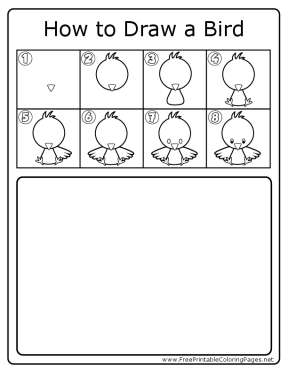
celebrate-picture-books-picture-book-review-how-to-draw-a-bird

Flight of Fancy Bird Drawings


Birds come in all shapes and sizes—which kind of bird is your favorite? With these two printables you can learn how to draw a bird and color a pair of birds who are busy collecting flowers!

Learn to Draw a Bird | Birds Carrying Flowers

Picture Book Review

April 7 – International Beaver Day

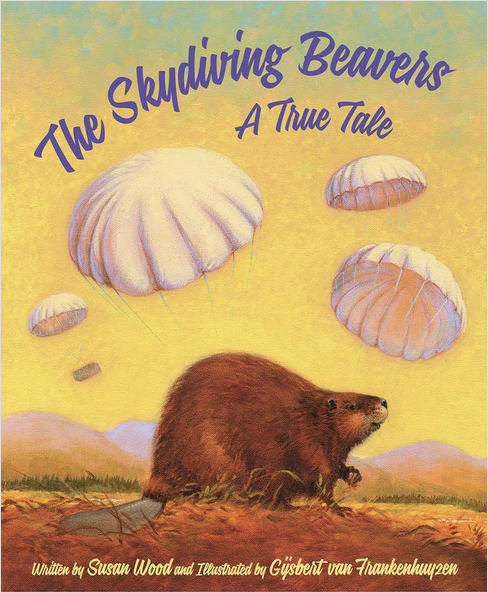
celebrate-picture-books-picture-book-review-the-skydiving-beavers-cover

About the Holiday

Two species of today’s honored animal are found across America, Canada, and Eurasia. Known primarily for building dams in rivers and streams, the beaver is a fascinating animal in many ways. Perhaps one of the greatest natural conservationists, beavers use all parts of the trees they fell. The buds, bark, and leaves are consumed as food, and the rest is gnawed into smaller bits to be used as building materials. The dams, themselves, are helpful in preventing droughts and floods, restoring wetlands, and keeping the water clean. The beaver population has seen a decline for several decades, and today’s holiday aims to promote awareness of this beneficial animal in order to protect it.

The Skydiving Beavers: A True Tale

Written by Susan Wood | Illustrated by Gijsbert van Frankenhuyzen


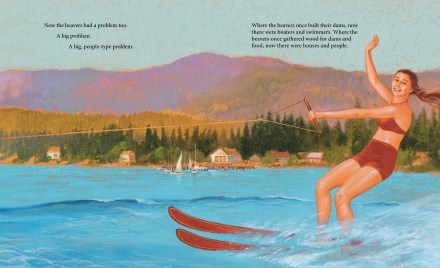
The time was post-World War II and families were eager to build homes and enjoy life again. In McCall, Idaho this meant that people moved to the shore of the beautiful lake, where they could fish, sail, waterski, and have fun. So roads were constructed, docks built, and land cleared. “Trouble was, that lakeside land had already been claimed. For decades—centuries, even—beavers had been the only ones doing the building there.”

Now, though, there was a turf war, of sorts. “Where the beavers once gathered wood for dams and food, now there were houses and people. And where the people tried to drive their cars, now water flooded the roads because of the dams.” Trees were also being “toppled left and right” by those busy beavers. Something needed to be done.

celebrate-picture-books-picture-book-review-the-skydiving-beavers-a-true-tale-water-skiing

Image copyright Gijsbert van Frankenhuyzen, text copyright Susan Wood. Courtesy of Sleeping Bear Press

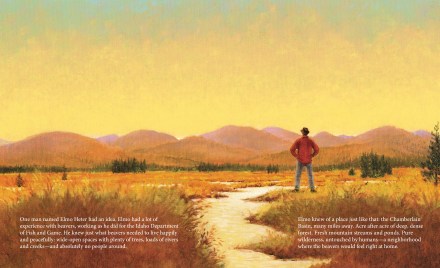
Elmo Heter had an idea. Elmo had experience with beavers from his job with the Idaho Department of Fish and Game. He knew that beavers needed open areas with lots of trees, rivers, and creeks—and no people. There was a place just like this many miles away. The Chamberlain Basin would be perfect for the beavers, but there was a problem—how could he move all those beavers “to a place with no roads, no railway, no airport, and no bus station?”

Elmo thought about loading them into boxes carried by horses or mules, but the rough trip would be too hard on both the beavers and the pack animals. Then Elmo remembered that there were piles of parachutes left over from the war going unused. “What if he dropped the beavers from a plane? Skydiving beavers? Well, why not?” Elmo decided.

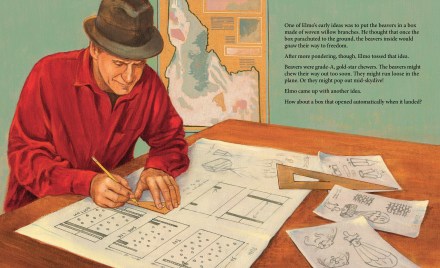
Elmo went to work to design a crate that could hold the beavers safely. His first idea was to build a box of woven willow branches. Once the boxes hit the ground, the beavers could gnaw their way out. But then Elmo feared that those champion chewers might escape before the box touched down. Next, he came up with the idea for a box that opened automatically when it hit the ground. After he created his box, Elmo found a beaver to test it.

celebrate-picture-books-picture-book-review-the-skydiving-beavers-a-true-tale-sunset

Image copyright Gijsbert van Frankenhuyzen, text copyright Susan Wood. Courtesy of Sleeping Bear Press

He found his daredevil and named him Geronimo. Geronimo, cozy in his box, was loaded onto a plane, and as the plane flew low over the test field the box was dropped. “The chute bloomed like a buttercup, then caught the breeze….The box fell as gently as a mountain snowflake, landing softly on the grass.” Just as it was designed to do, the box opened and Geronimo scrambled out.

Elmo wanted to make sure his invention would work every time, so he tested it again and again.  All this flying and skydiving seemed to agree with Geronimo. He soon began to treat it like a game, shuffling out of the box when the door opened and then crawling “right back in for another go.” Now that Elmo knew the plan would work, he gathered the beavers from McCall, put them in their special traveling crates, and headed for the Chamberlain Basin.

When they found the perfect spot, Elmo and his team prepared the chutes and let the beavers go. One by one the parachutes opened, and the beavers “wafted like falling leaves on the autumn wind to their new woodsy patch of paradise.” And who was the first pioneer? Why Geronimo, of course!

celebrate-picture-books-picture-book-review-the-skydiving-beavers-a-true-tale-plans

Image copyright Gijsbert van Frankenhuyzen, text copyright Susan Wood. Courtesy of Sleeping Bear Press

An Author’s Note following the text reveals more about this true story. It also discusses what scientists have since learned about the benefits of beavers to the environment and how communities now work with and around them. A list of interesting facts about beavers is also included.

Susan Wood’s story of a little-known event is a thought-provoking glimpse into early conservation efforts. Her conversational tone and lyrical phrasing enhance the tale, lending it suspense and personality that will draw readers in. Wood’s detailed descriptions allow children to understand the problems for the community as well as the concern for the animals that led to this historical event. 

Gorgeous paintings by Gijsbert van Frankenhuyzen uncover the beauty of Idaho’s backcountry with its sparkling lakes and tree-covered mountains. Glorious sunsets fill the two-page spreads, turning the rolling hills pink and gold as beavers scurry near the shore building their dams. Readers will be intrigued by the clear and close-up views of Elmo Heter as he works on his plans to relocate the beavers. A table strewn with publications and photographs from World War II, set children in the time period, and his schematics of the box he designs as well as his workshop are plainly displayed. Kids can ride along with Geronimo as he climbs into his crate, travels by plane over wide-open vistas, and floats into the Chamberlain Basin at the end of a parachute.

The Skydiving Beavers would be a fresh addition to classroom environmental units to spur discussions on past, present, and future conservation science and will delight young readers interested in the natural sciences.

Ages 6 – 9

Sleeping Bear Press, 2017 | ISBN 978-1585369942

Learn more about Susan Wood and her books on her website!

View a portfolio of artwork by Gijsbert van Frankenhuyzen on his website!

International Beaver Day Activity

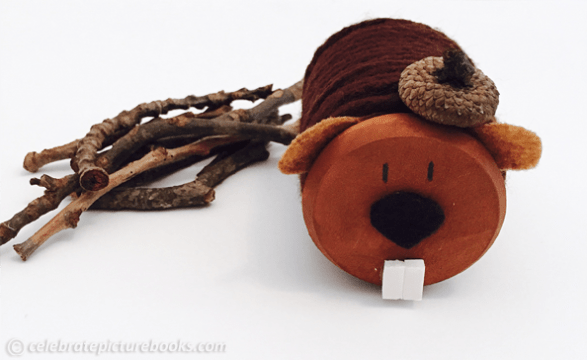
CPB - Beaver craft picture (2)

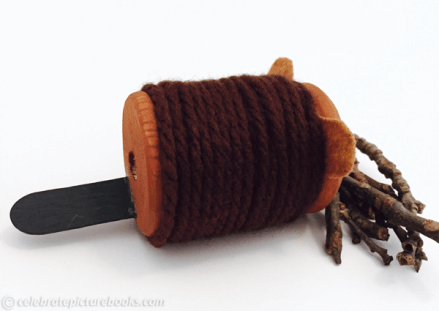
Make a Spool Beaver


Do you have a gnawing need to have a beaver of your own? Make one with this Spool Beaver craft!

Supplies

  • Printable Ears and Nose Template
  • 2-inch wooden spool, available at craft stores
  • 1 6-inch long x ¾ inch wide craft stick
  • Small piece of foam board
  • Brown “chunky” yarn
  • Brown felt, small piece for ears and tail
  • Black felt, small piece for nose
  • Acorn top for hat (optional)
  • Brown craft paint
  • Black craft paint
  • Black marker
  • Strong glue
  • Paint brush
  • Scissors

CPB - Beaver craft picture with tail

Directions

  1. Print the Ears and Nose template
  2. Paint the spool with the brown paint, let dry
  3. Cut the ears from the brown felt
  4. Cut the nose from the black felt
  5. Cut a piece from the end of the craft stick
  6. Paint the craft stick brown or black, let dry
  7. Cut two small pieces from the foam board, ½-inch long x 3/8 inch wide
  8. When the spool is dry, glue the ears to the spool, leaving the ears sticking up over the rim of the spool
  9. Glue one end of the yarn to the spool
  10. Holding the spool horizontally, wind the rest of the yarn around the spool back and forth from front to back. Glue the end to the body of yarn. This will be the bottom of the beaver.
  11. Glue the nose over the hole in the spool
  12. Glue the teeth below the nose
  13. Glue the flat edge of the craft stick to the back of the spool to make the tail

Picture Book Review