April 2 – International Children’s Book Day

About the Holiday

Each year since 1967 Hans Christian Andersen’s birthday has served as the date for Children’s Book Day. The International Board on Books for Young People (IBBY), a non-profit organization founded in Zurich, sponsors the day to promote a love of reading. Seventy-five National Sections around the world alternate in hosting the event. The host for 2025 is The Netherlands, and this year’s theme is “The Freedom of Imagination.” Each year a prominent author and illustrator from the sponsoring country prepare materials used to raise awareness of books and reading. Rian Visser wrote this year’s message and the poster was designed by Janneke Ipenburg. To learn more about the initiative, download digital materials, and learn about how children can enter the international drawing competition, visit the IBBY website. Today’s story that tells the tale of a young girl writing a story is a perfect example of the eternal power and influence of children’s books.

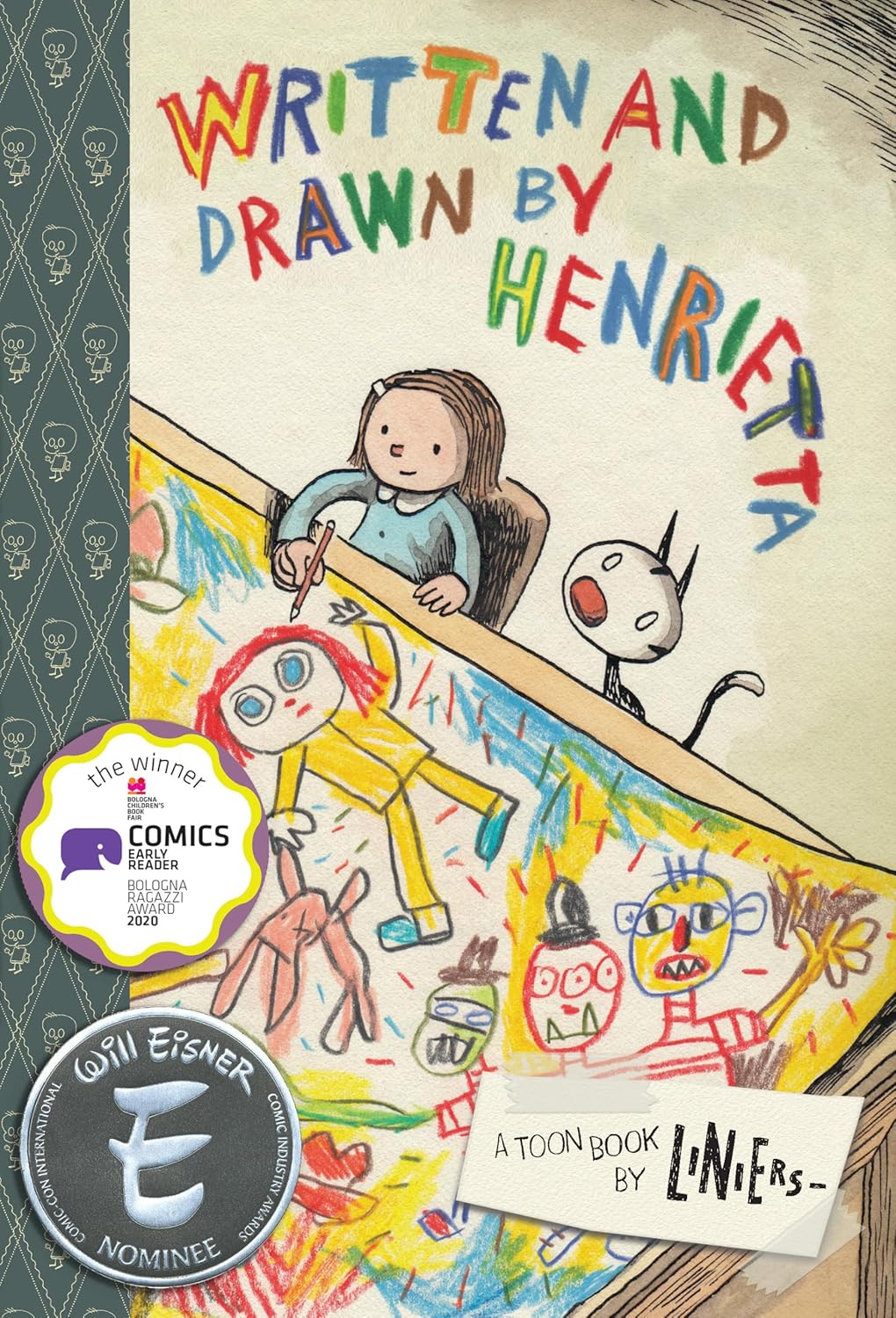
Written and Drawn by Henrietta

By Liniers


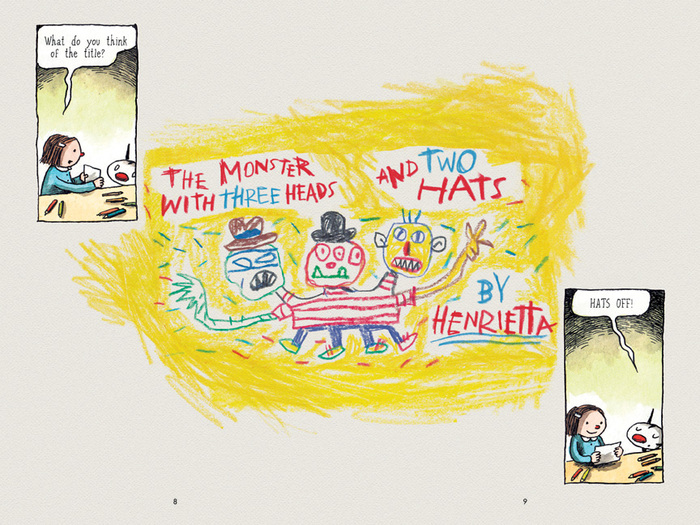
Henrietta’s mom gives her a new box of colored pencils, which Henrietta says is “as close as you can get to owning a piece of the rainbow.” She sits down to draw her own book and titles it “The Monster with Three Heads and Two Hats.” She begins with an illustration of a little girl, Emily, in bed at night. “I’m scaring myself…,” she thinks. Her thought is played out in her next page which shows Emily asking her stuffed rabbit if it will sleep with her because she’s scared of an unexplained Creak, Creak.
celebrate-picture-books-picture-book-review-written-and-drawn-by-henrietta-three-headed-monster

Copyright © 2025 by Liniers. Courtesy of TOON Books.

“Hmm…What’s that noise?” ponders the young writer. Her fears make it to the page—Creeak…Creeak…Thump…Crash…Boom. What are those noises, my favorite? Emily asks, her eyes now wide. The Noises! They’re getting closer!!

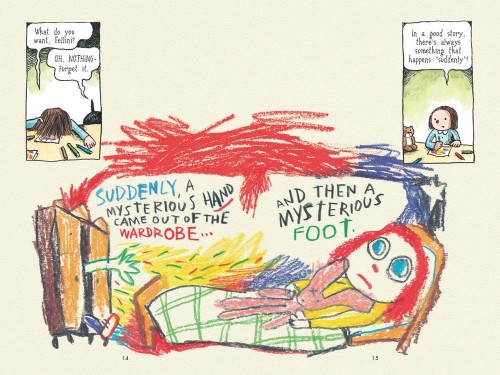
Henrietta knows that in a good story something always happens “suddenly,” and so she draws a mysterious hand and a mysterious foot emerging from Emily’s wardrobe. The plot thickens and finally the full terrifying monster with three heads pops out of the wardrobe.
celebrate-picture-books-picture-book-review-written-and-drawn-by-henrietta-in-bed

Copyright © 2025 by Liniers. Courtesy of TOON Books.

They acquire names from Henrietta’s imagination—Huey, Dewey, and Louie Bluie. . She is stuck for a bit as to how to go on, then gives Emily a question: What were you doing inside my wardrobe? The monster answers that it is looking for a hat. Emily joins them in their search, entering her wardrobe. She’s aghast to find that it is full of…clothes! (The wardrobe had been made in Narnia, the well-read Henrietta tells her cat, Fellini).

When the monster and Emily wonder which way to go, they meet a direction-giving mouse, and the story takes off—even Henrietta can’t wait to see what happens. She draws a huge pile of hats (she’s learned about “hat-o-logy” from the encyclopedia—the printed version!). The creature’s two heads with hats begs the third head to choose a hat before “the monster” shows up. Emily is terrified again—Another monster? What has Henrietta concocted this time? A monster with one head and three hats! This horrible beast suddenly appears and chases the crew through the wardrobe. Everyone is shouting Aaaaaaaaaaa—even the author.
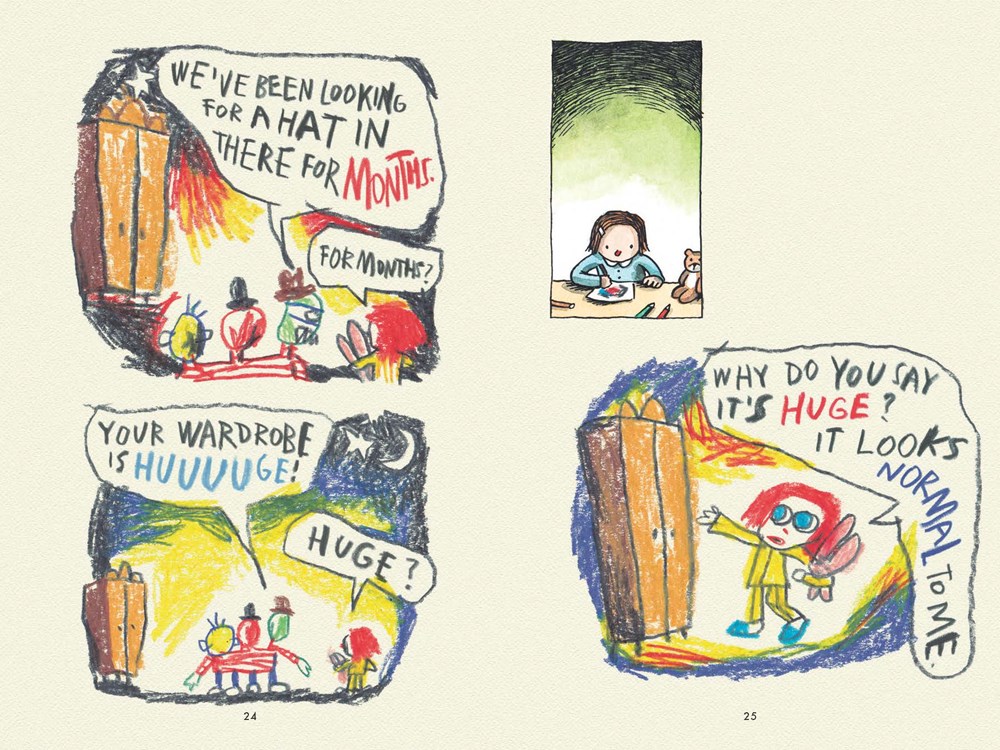
celebrate-picture-books-picture-book-review-written-and-drawn-by-henrietta-wardrobe

Copyright © 2025 by Liniers. Courtesy of TOON Books.

Emily and the first monster lose the tremendous beast, ask the direction-giving mouse how to escape, and burst out of the wardrobe just in time. Henrietta thinks the story should have a happy ending, and before the monster with three heads and now three hats flies out the window, they give Emily a present. What could it be? Henrietta is so curious! It’s a wonderful hat, of course!

The End

“Now,” Henrietta says, “to find a publisher!”

This classic Toon Book by Liniers is a wonder as it reveals the inner-workings of children’s imaginations and the spontaneous nature of their brilliant creativity. Henrietta’s thought process as she conjures up her story is shown in neat comic-style panels with speech bubbles, while her story is depicted in colorful kid-like drawings and dialogue written in all capital letters. This interplay between the young artist/writer and her work enhances the fun, suspense, and surprise of this story-within-a-story. 

Ages 5 and up

TOON Books, an imprint of RAW Junior, LLC, 2015 | ISBN 978-1935179900

International Children’s Book Day Activity

CPB - Comic Panel

Create Your Own Story


It’s so much fun to let your imagination fly! Use this printable Comic Style Page to create a story as unique as you are!
You can purchase Written and Drawn by Henrietta from these booksellers

Amazon | Barnes & Noble | Bookshop (discounted books and support for your local independent bookstore)

Picture Book Review

March 5 – It’s International Ideas Month

About the Holiday

This month we celebrate something that you can’t see or hold but which is real all the same. What is it? An idea! Ideas are amazing things. Sometimes seemingly conjured up out of thin air; sometimes borne out of necessity; and sometimes the “Eureka!” result of long, hard work, ideas fuel our arts, sciences, education, and home life. So today, write down those ideas you have while driving or commuting to work, while in the shower, when you’re daydreaming, or just as you turn off the light to go to sleep. You never know what they might become!

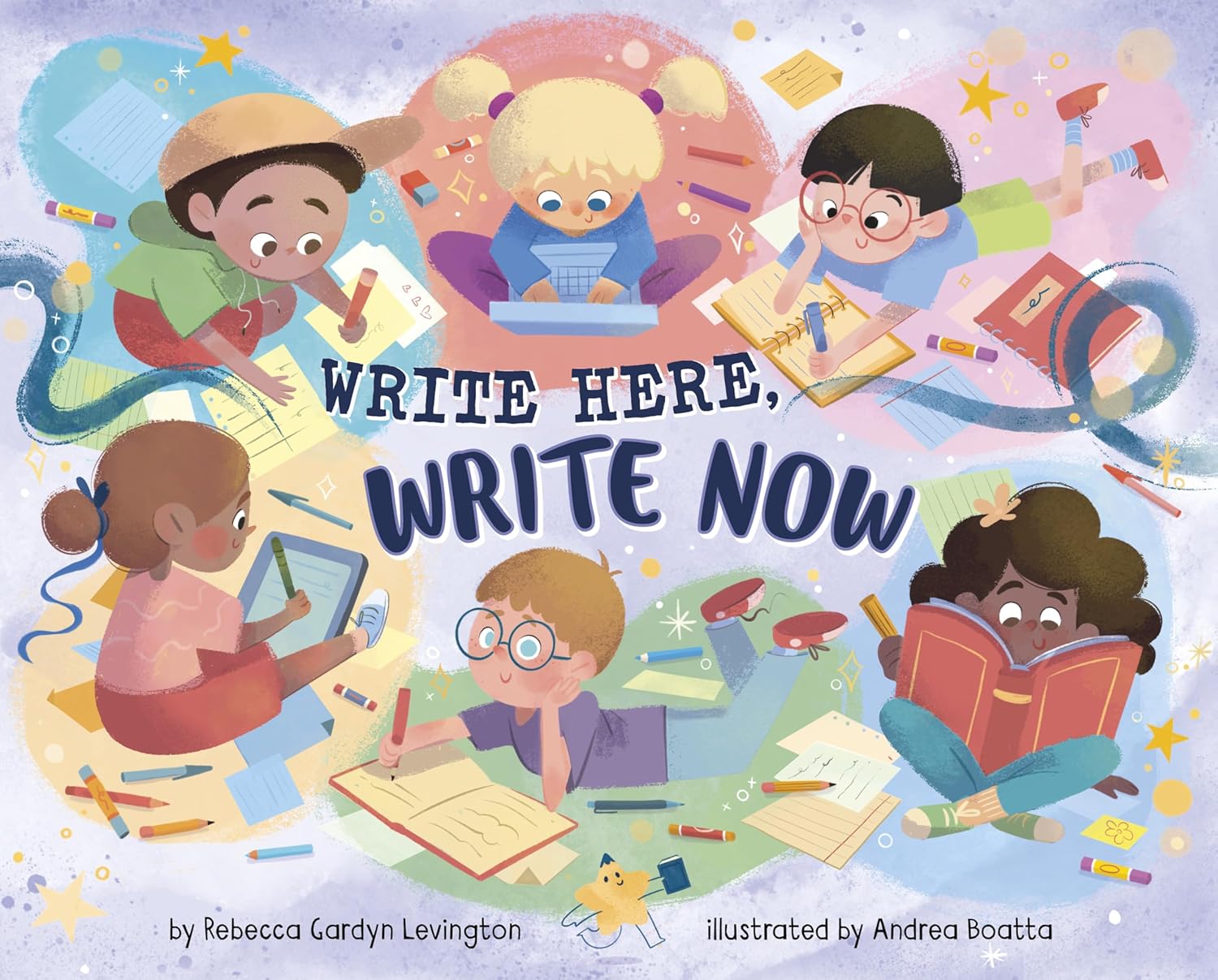
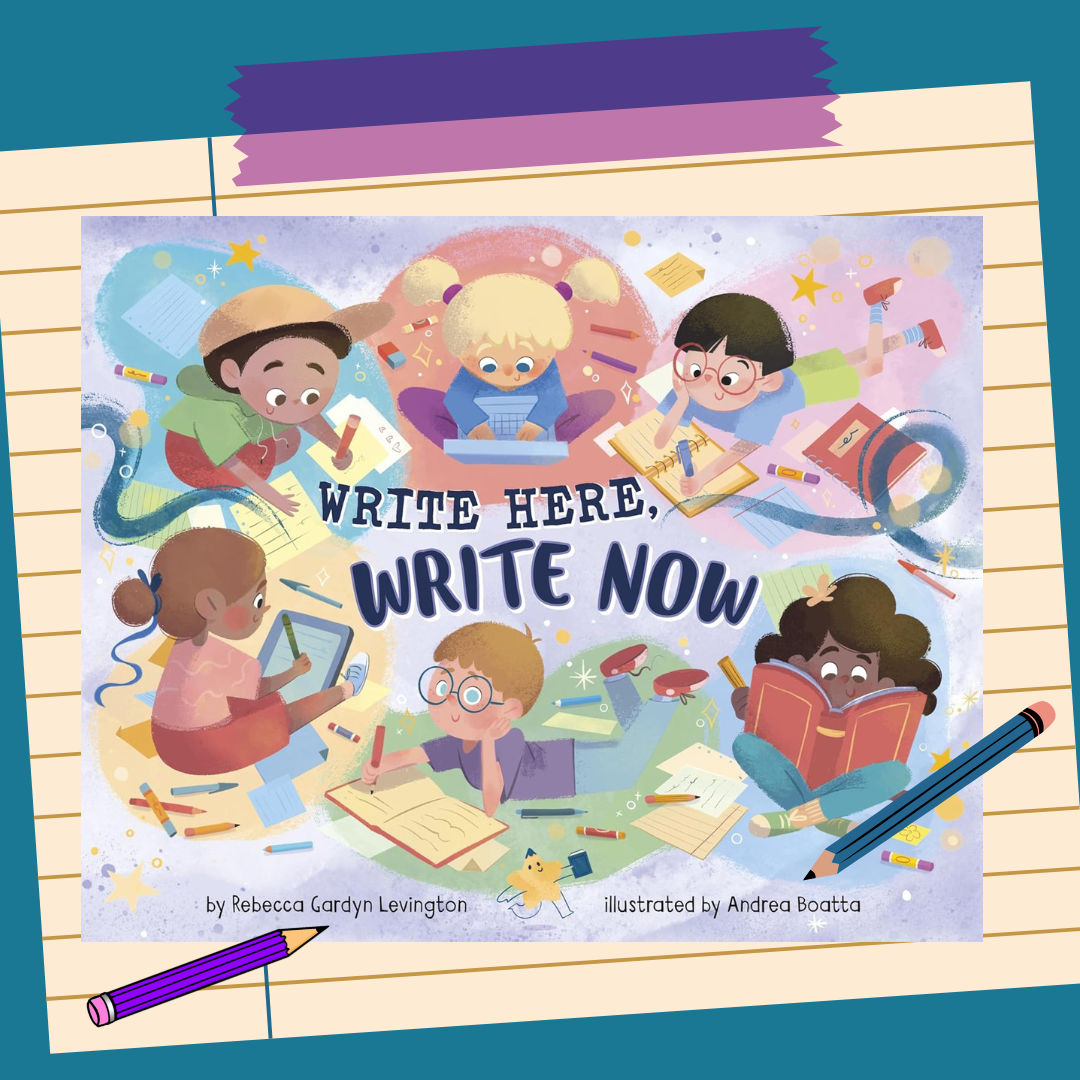
Write Here, Write Now

Written by Rebecca Gardyn Levington | Illustrated by Andrea Boatta

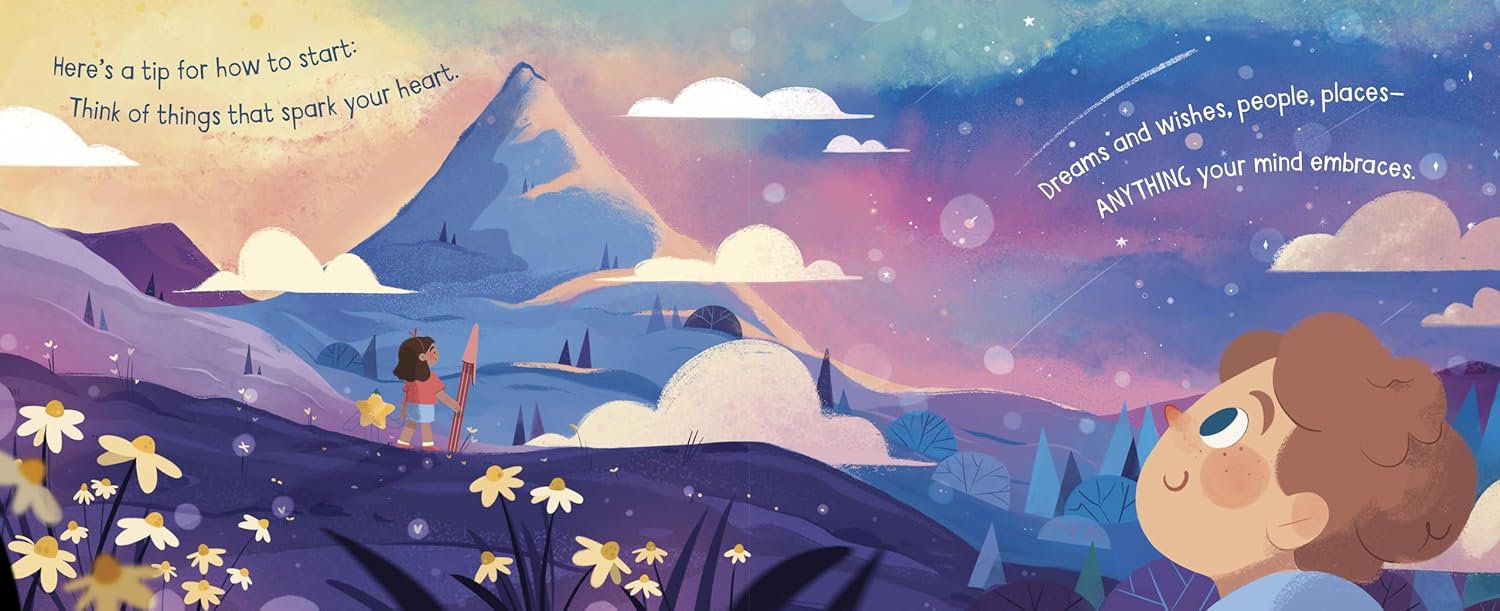
Opening the book, readers are met by a child who looks right at them and makes a very astute observation: “You’re a writer. Did you know?” And before the reader can think “Who, me? nah!” the boy has whisked them off for a trip through the amazing world of writing, offering “Here’s a tip for how to start. / Think of things that spark your heart. / Dreams and wishes, people, places—ANYTHING your mind embraces.”

Illustration © 2025 Andrea Boatta, text © 2025 Rebecca Gardyn Levington. Courtesy of Capstone Editions.

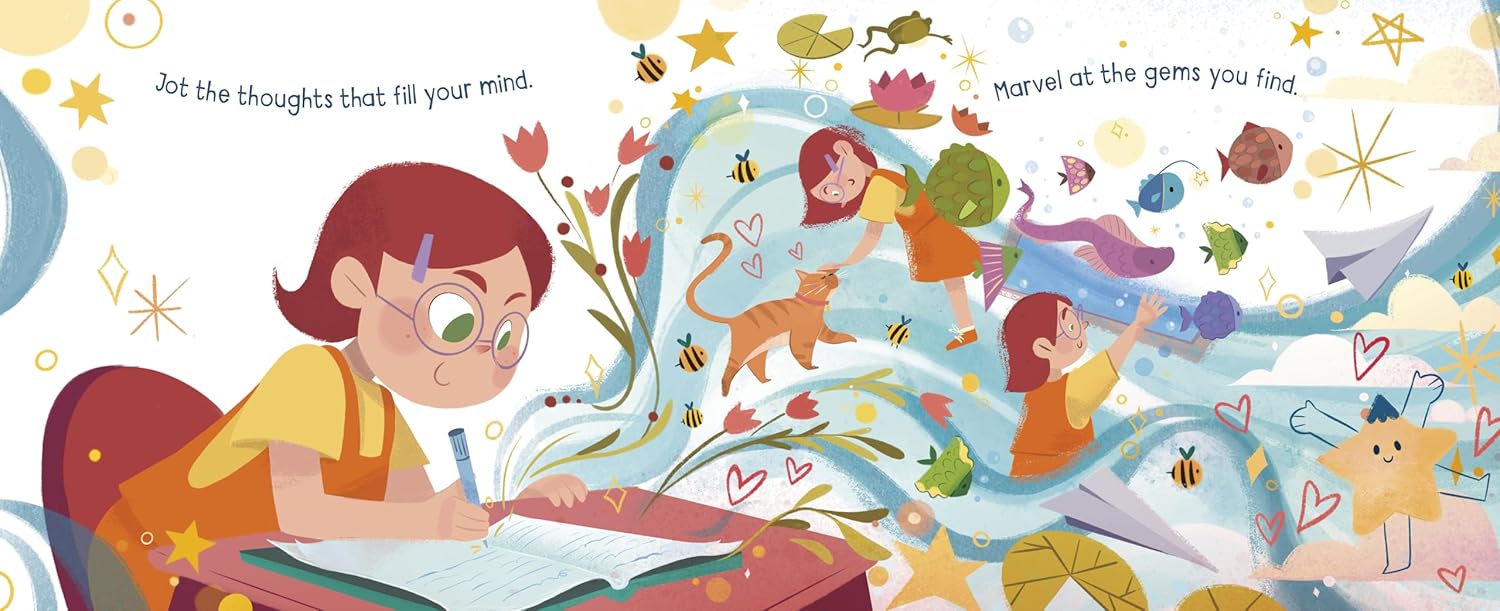
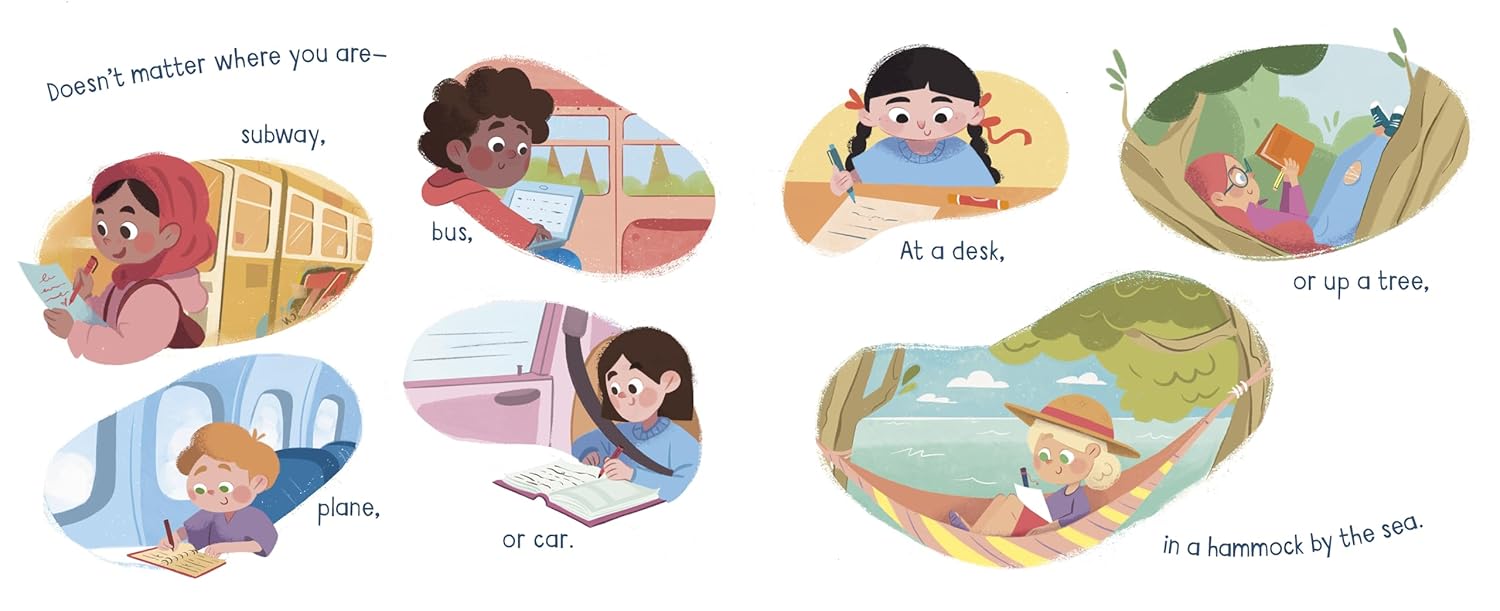
But there can be so many niggling questions that can make the idea of writing intimidating! Like where should I write? What should I write with? What if I like to draw or just tell my stories? The narrator puts all these doubts to rest with the simplest of answers: write wherever and however is best for you! The narrator even addresses the fear that what you write has to be perfect with the encouraging advice to “Scribble fast, or take it slow. / Play with words and let them flow.”

But, a would-be writer might think, is there a type of writing that’s better than others? Nope, the narrator assures. All writing is good writing. “Write a poem, play, or song / Write a note to right a wrong. / Write a joke, a script, a speech. Can’t decide? Write one of each.”

Illustration © 2025 Andrea Boatta, text © 2025 Rebecca Gardyn Levington. Courtesy of Capstone Editions.

So are there any rules to writing? Maybe just this one: to “let imagination lead!” The narrator leaves young writers with one more note of encouragement, reminding them that their writing is as unique as they are, and that their words or pictures or voice will find a place to flourish.

Following her story, Rebecca Gardyn Levington offers advice and encouragement to young writers in answers to those six proverbial writerly questions: Who? What? Where? Why? When? and How? 

Illustration © 2025 Andrea Boatta, text © 2025 Rebecca Gardyn Levington. Courtesy of Capstone Editions.

Rebecca Gardyn Levington’s enthusiastic ode to the wonders of writing is sure to spark any child to embrace their own personal method of creative expression. Her perfectly flowing, uplifting verses melt away any doubt or hesitance about putting pencil to paper or fingers to keyboard. Levington gives children freedom, inspiration, and encouragment. In short, she makes writing fun!

Andrea Boatta’s vivid, soft-hued illustrations sparkle with imagination and the flow of ideas as diverse children happily engage in writing wherever they are and whenever inspiration strikes. Children, whether new to writing or more experienced will find themselves right at home in Boatta’s dynamic imagery. Readers will also like following the little golden star that eagerly guides them from spread to spread. 

Write Here, Write Now is a joyful celebration of imagination and writing as well as a lively read aloud that kids will want to hear again and again. The book is highly recommended for classrooms, homeschoolers, school and public libraries, and family bookshelves. 

Ages 5 – 8

Capstone Publishing, 2025 | ISBN 978-1684469611

About the Author

Rebecca Gardyn Levington is a children’s book author, poet, and journalist with a particular penchant for penning both playful and poignant picture books and poems—primarily in rhyme. She is the author of BRAINSTORM!, WHATEVER COMES TOMORROW, and many other incredible picture books. Rebecca’s award-winning poems and articles have appeared in numerous anthologies, newspapers, and magazines. She lives in New Jersey with her family. Visit her at rebeccagardynlevington.com.

About the Illustrator

Andrea Boatta was born in a seaside town in southern Italy and grew up around vibrant colors and nature. After graduating from the Academy of Fine Arts, she came to love illustration and animation and continued her post-graduate studies at the National School of Cinema. Today she works in Naples, Italy, as a freelance illustrator and concept and background artist in the world of animation. You can follow Andrea on Instagram.

International Ideas Month Activity

CPB - Fairy Tale box

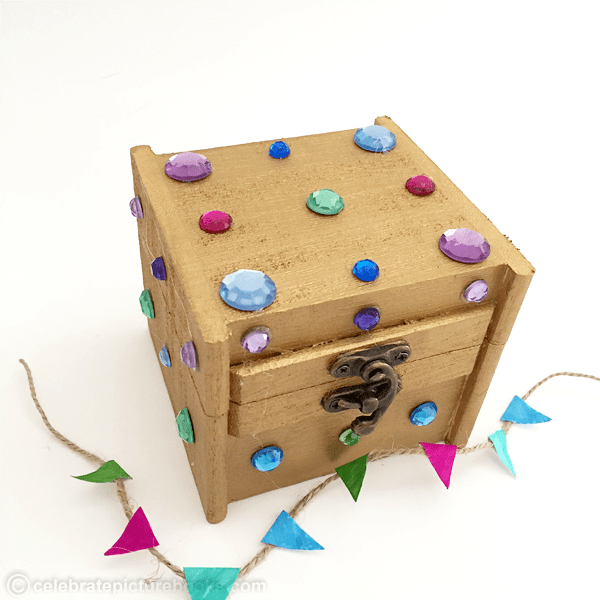
Treasure Box of Imagination

Writers often collect bits of imagination, wisps of dreams, snatches of memory, and treasures found along the way to use in their writing. With this craft, kids can make a treasure box to jot down and save ideas and tidbits to spark their own writing, drawing, and other creative endeavors.

Supplies

  • 1 small wooden box, available at craft stores
  • Acrylic craft paint – I used gold
  • Craft gems
  • Paint brush
  • Hot glue gun or strong glue

Directions

  1. Paint your wooden box 
  2. After the paint dries, decorate your Treasure Box of Imagination with gems

You can purchase Write Here, Write Now at these booksellers

Amazon | Barnes & Noble | Bookshop (to support your local independent bookstore.

Picture Book Review
September 24 – National Punctuation Day

celebrate-picture-books-picture-book-review-the-ghouls-guide-to-good-grammar-cover

About the Holiday

Founded in 2004 by Jeff Rubin, National Punctuation Day promotes the correct usage of all those little marks that make reading clearer and more meaningful. Do you ever wonder just how to use the ; and what’s the real difference between – and —? It can all get a little confusing. But misplaced or misused punctuation can result in some pretty funny mistakes—or some serious misinterpretations. Whether you love punctuation, would like to understand it better, or just use it to make emojis, today’s holiday will make you : – ). To find information on the day, resources for using punctuation correctly, and a fun contest to enter, visit Jeff Rubin’s National Punctuation Day website.

Thanks to Sleeping Bear Press for sending me a copy of The Ghouls’ Guide to Good Grammar for review consideration. All opinions on the book are my own.

The Ghouls’ Guide to Good Grammar

Written by Leslie Kimmelman | Illustrated by Mary Sullivan


Afraid you’ll never find a grammar guide that’s effective, hilarious, and that kids will want to read just for the fun of it? Your search is over! The Ghouls’ Guide to Good Grammar is packed with rules on punctuation, contractions, possessives, capitalization, tricky homophones, and more all explained with laugh-out-loud example sentences and milk-snorting illustrations.

celebrate-picture-books-picture-book-review-the-ghouls-guide-to-good-grammar-periods

Written by Leslie Kimmelmon, 2021, text copyright Mary Sullivan, 2021. Courtesy of Sleeping Bear Press.

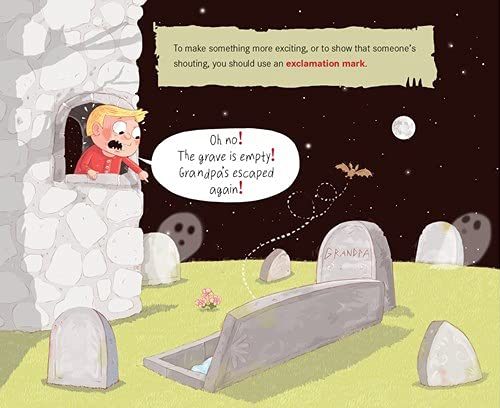
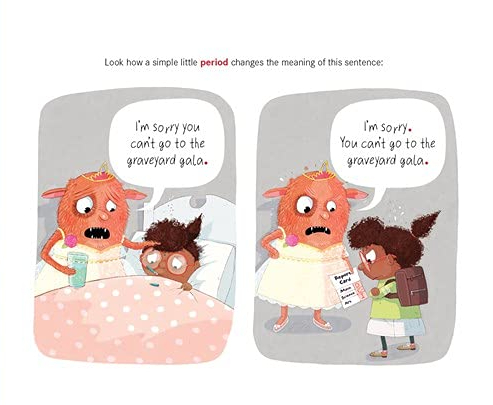
Leslie Kimmelman introduces each type of grammar with sound and clear descriptions that will help children to understand what its purpose is and to recognize it when reading and writing on their own. She follows this up with sentences full of puns and macabre situations that will tickle kids’ funny bones. Mary Sullivan then does an outstanding job of reinforcing the lesson with her community of monsters, zombies, ghosts, vampires, werewolves, and kids interacting in funny, spellbinding illustrations. Her typography calls out the particular punctuation mark or words of the lesson in red.

celebrate-picture-books-picture-book-review-the-ghouls-guide-to-good-grammar-exclamation-marks

Written by Leslie Kimmelmon, 2021, text copyright Mary Sullivan, 2021. Courtesy of Sleeping Bear Press.

Here are two excerpts to show what I mean:

About Commas

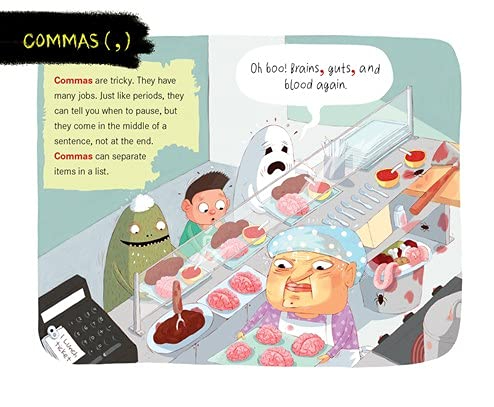
“Commas are tricky. They have many jobs. Just like periods they can tell you when to pause, but they come in the middle of a sentence, not at the end. Commas can separate items in a list.”

Example sentences include these:

To demonstrate the series comma: A ghost standing in line at the school cafeteria complains about that day’s lunch offering: “Oh boo! Brains, guts, and blood again.”

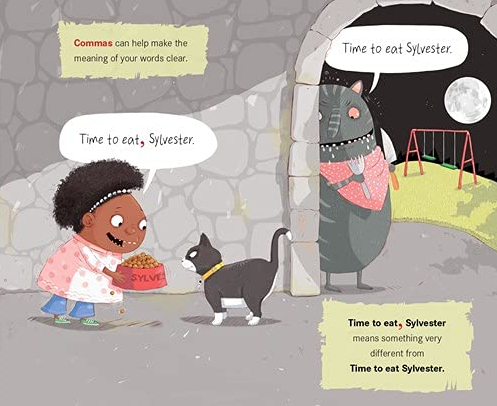
To show the importance of correctly placed commas: “Vanessa Vampire loves cooking, her parents, and her baby sister. Uh-oh! Without commas, Vanessa’s family is in big trouble!” How big? Vanessa’s shown stirring up a boiling vat of family stew. The ingredients? “Vanessa Vampire loves cooking her parents and her baby sister.”

celebrate-picture-books-picture-book-review-the-ghouls-guide-to-good-grammar-commas

Written by Leslie Kimmelmon, 2021, text copyright Mary Sullivan, 2021. Courtesy of Sleeping Bear Press.

About Contractions and Possessives

“Contractions are two words shortened and combined with an apostrophe to make one word. The apostrophe takes the place of a letter or two. / Possessives use apostrophes, too. But they have a different job to do. They show ownership. Where you put the apostrophe can make a big difference.”

Example sentences with accompanying illustrations include these:

A little green ghoul is sitting on his bed eating popcorn and surrounded by trash, bugs, and open bureau drawers: “Ghouls really gross bedroom. (The room belongs to just one ghoul.)” And the same room, now occupied by seven ghouls: “Ghouls really gross bedroom. (Many ghouls share this bedroom.)”

Featured contractions and possessives also show up in the discussions of tricky pairs and homophones, which include “It’s and Its,” “Who’s and Whose,” and “They’re, There, and Their” – a triple-threat that gets a two-page spread of a graveyard dance, where enthusiastic onlookers exclaim, “They’re doing the tombstone tango,” while two newcomers shout, “There they are!” and “Their tango is terrific!” The definitions of these three words read:  “They’re is a contraction meaning they are. / There means at that place. / Their is possessive, meaning it belongs to them.”

A short quiz at the end asks the reader to find the one sentence out of four that has no mistakes – a fun way for kids to show what they’ve learned.

celebrate-picture-books-picture-book-review-the-ghouls-guide-to-good-grammar-commas-2

Written by Leslie Kimmelmon, 2021, text copyright Mary Sullivan, 2021. Courtesy of Sleeping Bear Press.

It’s hard to overstate how comprehensive, captivating, and educational The Ghouls’ Guide to Good Grammar is for its target audience, whether the reader is an avid grammarian or struggles with the rules. Leslie Kimmelman knows how kids learn and what makes them laugh, and Mary Sullivan uses her cartoon-style art to create eye-popping spreads that will get kids lingering to catch all the ghastly details while they soak up the lesson. In addition the text and illustrations on each page can easily be used by teachers, homeschoolers, parents, and other educators as prompts for extended writing practice to reinforce the rules of grammar. The Ghouls’ Guide to Good Grammar is a must for home, classroom, school, and public library collections.

Ages 5 – 8 and up

Sleeping Bear Press, 2021 | ISBN 978-1534110953

You can find an Activity Guide for The Ghouls’ Guide to Good Grammar on the Sleeping Bear Press Website here.

Discover more about Leslie Kimmelman and her books on her website.

To learn more about Mary Sullivan, her books, and her art, visit her website.

National Punctuation Day Activity

celebrate-picture-books-picture-book-review-Punctuation-Word-Search

Pick Out the Punctuation! Word Search


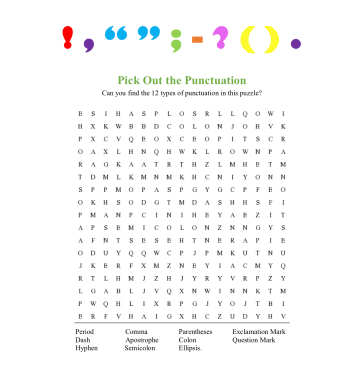
Have fun finding the twelve types of punctuation in this printable puzzle!

Pick Out the Punctuation! Word Search Puzzle | Pick Out the Punctuation! Solution

celebrate-picture-books-picture-book-review-the-ghouls-guide-to-good-grammar-cover

You can find The Ghouls’ Guide to Good Grammar at these booksellers

Amazon | Barnes & Noble | Books-a-Million

To support your local independent bookstore, order from

Bookshop | IndieBound

Picture Book Review

Picture Book Review
December 2 – It’s Read a New Book Month

celebrate-picture-books-picture-book-review-the-B-on-your-thumb-cover

About the Holiday

You’ve heard the saying “Too Many Books, Too Little Time,” right? Well, this truism has spawned not only one, but two Read a New Book Month celebrations! Both December and September have been designated as times to make special plans to search out and read new books. These can be books that are newly published or books that are new to you. And if you find yourself putting a few old favorites in the pile, that’s okay too! It’s also a great time to think about adding books to those gift lists!

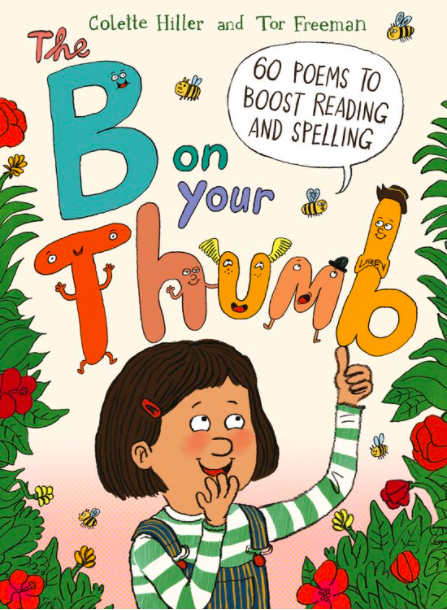
The B on Your Thumb: 60 Poems to Boost Reading and Spelling

Written by Colette Hiller | Illustrated by Tor Freeman


One of the joys of books for little ones is sitting with a parent, teacher, or other caregiver and listening to the story play out with wonder, silliness, sadness, and a whole world of feelings. Hearing the words and sentences, it all makes sense. But when kids start reading, start really looking at the words, well…all of those vowel combinations, silent letters, words that sound the same but look completely different, words that look completely different but sound the same… it can get confusing!

And that’s where Colette Hiller and Tor Freeman’s book of poetry comes in handy. Sixty poems covering the topics of spelling and pronunciation are broken out into four categories—Sounds, Silent Letters and Secrets, Spellings, and Words that Sound the Same—that make understanding the written English language easier and more fun to learn. With this ditty, Hiller welcomes kids in to this delightful book: “Some letters sound as they are meant to. / Other letters change. / They sometimes make surprising noises. / English can be strange!”

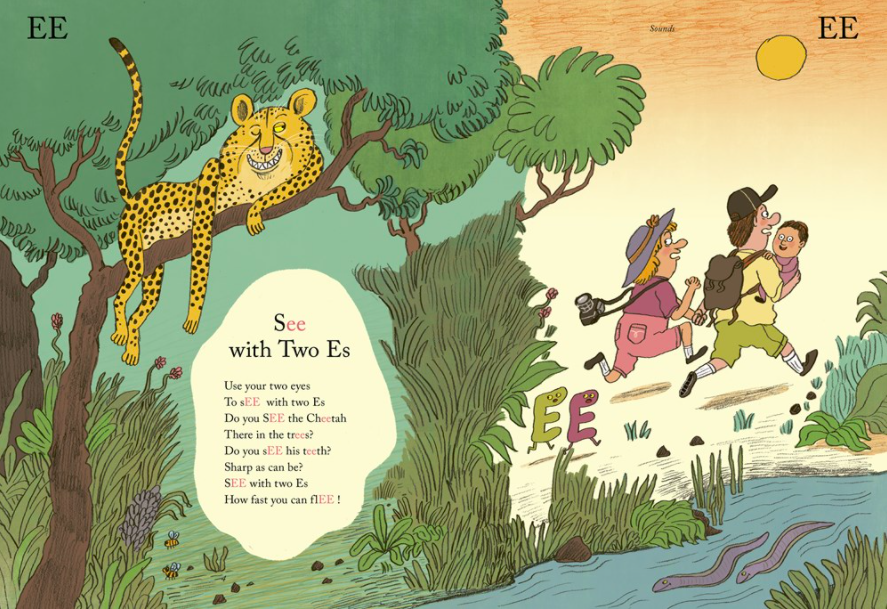
celebrate-picture-books-picture-book-review-the-B-on-your-thumb-cheetah

Image copyright Tor Freeman, 2020, text copyright Colette Hiller, 2020. Courtesy of Frances Lincoln Children’s Books.

One of the first sounds a baby hears may be a gentle “sh.” Encountering this consonant combination on the page, though, can seem daunting. Ssss and Huh? Hiller gives a hand in pronouncing it though, with a little intro to the two letters on their own and then… “S and H go sh, / that is what they do. / The sh that’s in your shoulder, the sh that’s in your shoe.” She then goes on to add a few more lines with familiar “sh” words that will make kids “shout!”

With clever versus that will bring on many giggles and even more “Ah-ha” moments, Hiller and Freeman introduces kids to the sounds that vowel combinations “o-u,” “o-i,” “a-i,” “o-a,” “e-e,” and “o-o” make with a sad U that’s just struck “out,” and a cheering crowd that invites them to join in chanting “oggy, oggy, oggy, oi, oi,oi!” There’s also a train filled with rain, a goat in love with a toad, a treed cheetah, and of course the man in the moon.

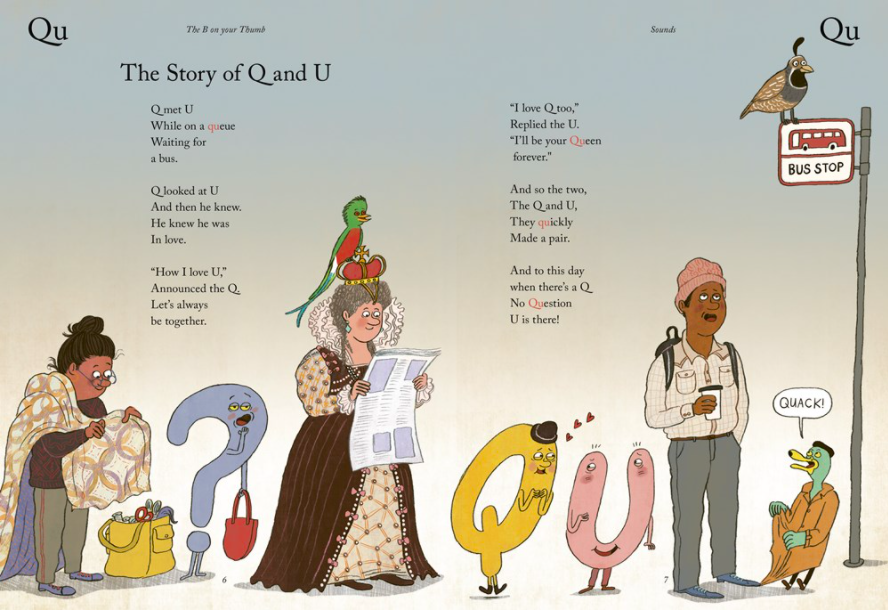
Hiller doesn’t forget about those perfectly matched consonant couples either. She relates the story of how Q and U fell in love in a queue; goes shopping with Mrs. Owl for a new gown and crown; and takes on that “bossy E” who always takes over when together with A. There are many more poems about letter combinations in this section as well, and each one is loaded with examples of words that incorporate those letters.

celebrate-picture-books-picture-book-review-the-B-on-your-thumb-queue

Image copyright Tor Freeman, 2020, text copyright Colette Hiller, 2020. Courtesy of Frances Lincoln Children’s Books.

In the chapter Silent Letters and Secrets, Hiller engages readers in the finer arts of the silent B in “doubt” and “thumb.” In the book’s title poem, she says, “Look, there’s a B / right there on your thumb, / but of course you shouldn’t mind… / For the B that you see / right there on your thumb / is not the stinging kind!” Silent K gets two poems of its own and silent W comes knocking in two more poems. She investigates that mysterious “h” in where, what, why, and when as well as the equally mysterious pair “g-h” in words like night and sight. Kids will also enjoy finding hidden words lurking in longer words.

Now, reading may be one thing, but spelling? At times that seems like something all together different. In the chapter Spellings, Hiller teaches kids some tricks of the trade. In her poem “Magical E,”  “Magical E / has magical might. / See how she turns / a kit to a kite…. / Abracadabra: / a cap is a cape! / She hops on a tub. / Now the tub is a tube. / Abracadabra… / A dud is a dude!” Readers discover rhymes that make it easier to remember unusual spellings in words such as “separate, important, and rhyme as well as that old favorite “I before E except after C” that includes a twist.

Colette Hiller finishes up with Words that Sound the Same. In “Two, Too, and To,” she explains the difference in those three little words that often trip us up and gives tips on remembering them. “Witch” and “which,” “here” and “here,” “whole” and “hole,” and “whether” and “weather” are also treated to poems of their own. 

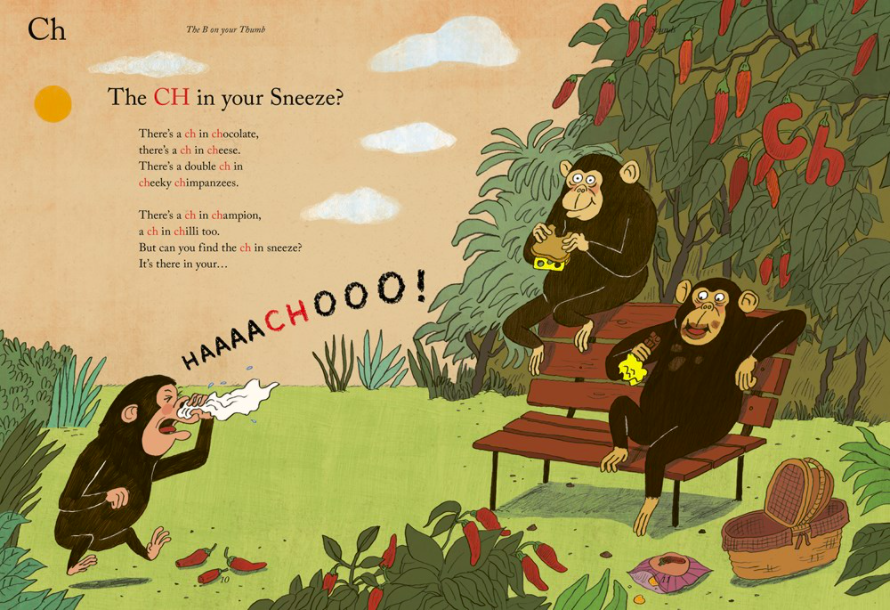
celebrate-picture-books-picture-book-review-the-B-on-your-thumb-chimpanzees

Image copyright Tor Freeman, 2020, text copyright Colette Hiller, 2020. Courtesy of Frances Lincoln Children’s Books.

In each poem, the subject letters are called out in a bright color that allows kids to make the connection between the combinations of letters and how they contribute to the structure of a word visually and in sound. Following the poems, Hiller includes detailed tips and fun exercises and activities that adults and kids can do together to enhance learning from poem to poem and when reading classroom assignments and books and other materials at home.

Colette Hiller nimbly navigates the dual desires to teach and entertain with her jaunty rhymes that are ingenious, witty, and clear examples of how words sound and are pronounced. When shared with children reading along, the poems reinforce how each word looks with their sometimes-confusing mix of letters. When education is this humorous and joyful, kids will beg to read “just one more” which, of course, means better literacy, success in school, and opportunities in the future.

Accompanying each poem are Tor Freeman’s whimsical and hilarious illustrations of adorable letters interacting with people taking showers, fleeing from a wily cheetah, waiting in a queue, and even flying a car in outer space. There are also chimpanzees eating cheese sandwiches, a cat doing calisthenics, and an ant learning a lesson in importance. And, of course, there are letters, letters, letters rowing a boat, deigning to give audience to a princess, dining in a haunted castle, and cavorting from page to page and poem to poem.

A rousing collection of poems that kids will love on their own and as inspirational learning tools in language arts lessons, The B on Your Thumb is highly recommended for homeschoolers and home bookshelves and a must for classroom and public library collections.

Ages 3 – 8 and up

Frances Lincoln Children’s Books, 2020 | ISBN 978-0711254602

You can download a Teacher’s Guide with pre- and post-reading discussion questions, a writing activity and a word play activity on the Quarto Knows website.

Discover more about Colette Hiller and her books on her website.

To learn more about Tor Freeman, her books, and her art on her website.

National Read a New Book Day Activity

celebrate-picture-books-picture-book-review-reading-bug-book-plate

I’ve Got the Reading Bug! Collection


When you buy a new book, you need new book bling to go with it! Here’s a printable book plate and bookmark, plus a want-to-read list to help you choose your next new book to buy! 

I’ve Got the Reading Bug! Books to Read List | I’ve Got the Reading Bug Bookmark | I’ve Got the Reading Bug Bookplate

celebrate-picture-books-picture-book-review-the-B-on-your-thumb-cover

You can find The B on Your Thumb at these booksellers

Amazon | Barnes & Noble | Books-a-Million

To support your local independent bookstore, order from

Bookshop | IndieBound

Picture Book Review
 

August 9 – National Book Lover’s Day

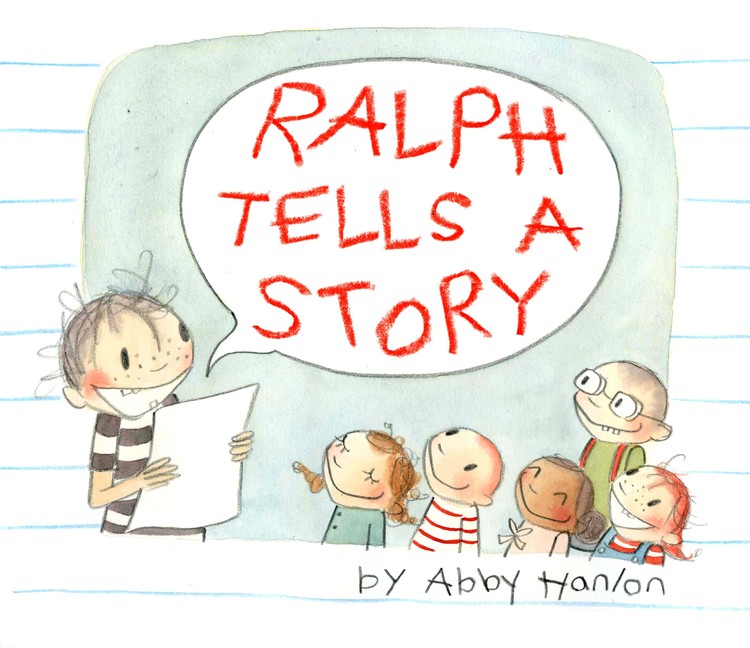
celebrate-picture-books-picture-book-review-ralph-tells-a-story-cover

About the Holiday

Simply stated this is a day when those who love to read can indulge their passion. With so many amazing books available—both new and old—no one could fault you if you call in sick and spend the day reading!

Ralph Tells a Story

By Abby Hanlon


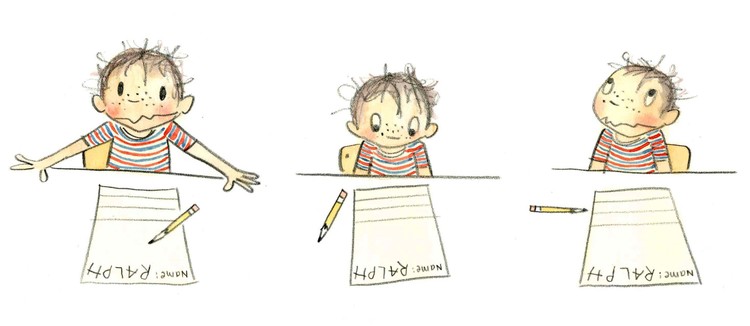
“‘Stories are everywhere!’” Ralph’s teacher sang to her class, but Ralph wasn’t so sure. He didn’t see stories anywhere. It seemed the other kids could make up stories from everything that happened to them, and Ralph’s teacher loved these stories. But when it came time to write, Ralph just stared at his paper or at the ceiling; he could never think of anything. He tried distractions like going to the bathroom or the water fountain, but it didn’t work.

celebrate-picture-books-picture-book-review-ralph-tells-a-story-thinking

Copyright Abby Hanlon, 2012. Courtesy of abbyhanlon.com.

One day Ralph asked his friend Daisy for help. She was surprised that Ralph couldn’t write a story because she had written a bunch about him. One was about the time she combed his hair and another was about when he painted his fingernails black with a marker. In fact she was just stapling all these stories together into a book. Ralph wanted to use the stapler too, but Daisy said he needed a story first.

celebrate-picture-books-picture-book-review-ralph-tells-a-story-classroom

Copyright Abby Hanlon, 2012. Courtesy of Two Lions.

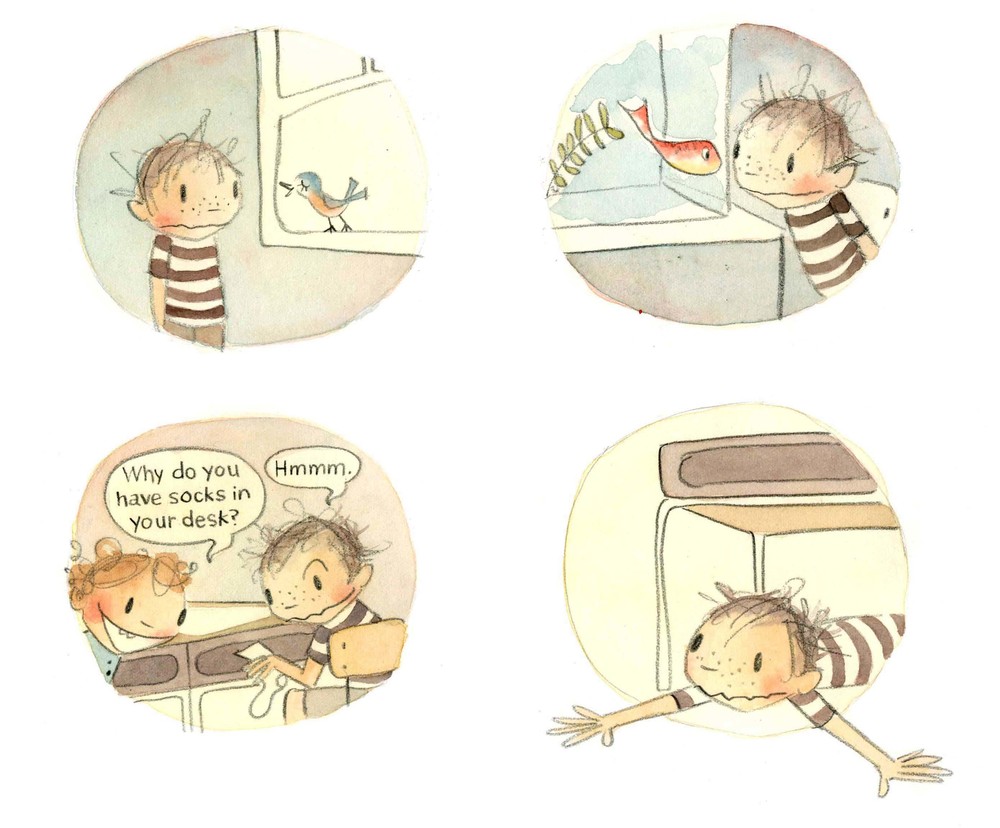
So Ralph “looked for stories out the window, in the aquarium, in [his] desk…and even on the floor.” Lying on the floor reminded Ralph of a time at the park when an inchworm crawled on his knee. Just then his teacher saw him and asked what his story was about. Ralph said the first thing he thought: “Um…um…I saw an inchworm.” His teacher thought that sounded marvelous. But really, Ralph thought, there was no story to tell.

And when Ralph sat down to write it, he immediately got stuck. He asked Daisy to help, but she was too busy writing her own story. Suddenly, the teacher called everyone up to the rug, and she picked Ralph to read his story first. Ralph got up and, clutching his paper to his chest, said, “‘I was at the park and an inchworm crawled on my knee.’” He looked out at the quiet faces gazing up at him.

celebrate-picture-books-picture-book-review-ralph-tells-a-story-on-floor

Copyright Abby Hanlon, 2012. Courtesy of abbyhanlon.com.

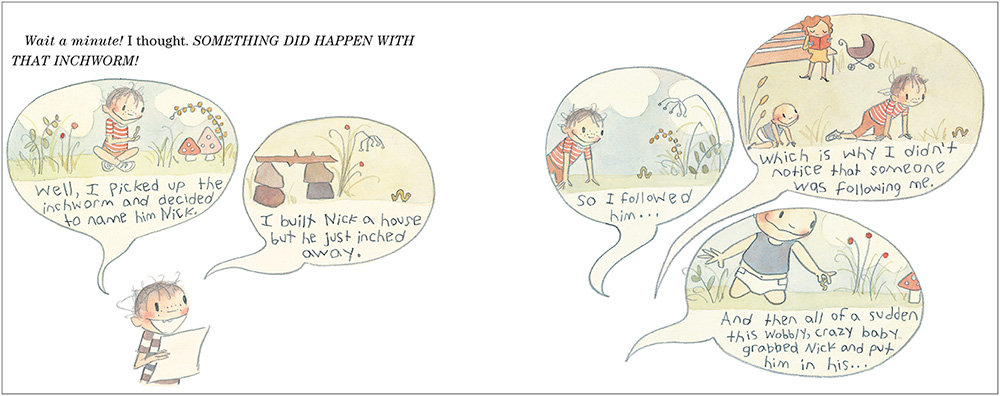
Ralph looked at Daisy. She said, “‘Wow! Really? Did it feel squishy, Ralphie? Did you take it home?’” Then everyone started asking questions, and Ralph remembered that something had happened with the inchworm. He began to tell about the day. He had picked up the inchworm and named him Nick. He had “built Nick a house but he just inched away.” Ralph followed Nick and never noticed the baby following him until the baby picked up Nick and put him in his diaper.

celebrate-picture-books-picture-book-review-ralph-tells-a-story-incheworm-story

Copyright Abby Hanlon, 2012. Courtesy of Two Lions.

Ralph asked the baby to give Nick back, but he didn’t. Then Ralph saw Nick escaping from the diaper by crawling up the baby’s belly. He grabbed Nick and ran, and they spent the day playing together. At the end “everybody clapped and cheered” and they wanted to see Ralph’s picture.

Now Ralph is a great writer. He’s written one hundred funny stories and has even drawn covers for some of his favorites. Do you need help writing? Take a few tips from Ralph! 

celebrate-picture-books-picture-book-review-ralph-tells-a-story-story-rug

Copyright Abby Hanlon, 2012. Courtesy of abbyhanlon.com.

Abby Hanlon’s story of a would-be storyteller with writer’s block is as cute as they come. Ralph’s angst at not finding the stories that his classmates seem to pop out so easily will be recognized by anyone who is a bit of a perfectionist when it comes to their endeavors. With gentle humor, Hanlon shows readers that putting oneself out there often turns out okay. Ralph’s inchworm story will keep kids riveted to and giggling over Nick’s fate. Through Daisy, Hanlon also reveals how a good friend can help encourage the kinds of self-confidence that lead to success. Ralph’s writing tips are lighthearted and helpful in getting kids to relax, appreciate their own real-life stories, and open their imaginations.

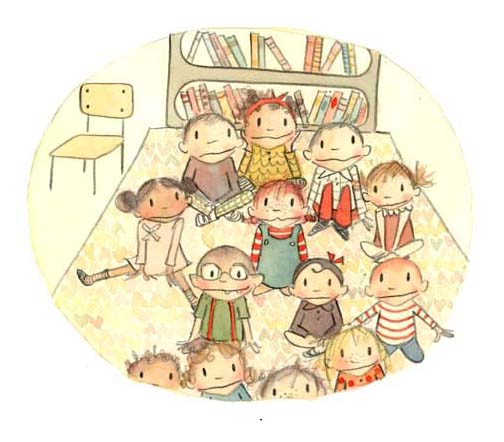
Hanlon’s soft-hued illustrations of a group of adorable, rakish kids draw readers in to Ralph’s creative classroom. Once there, children will want to linger over all the details included. Comics-style dialog bubbles hold humorous asides as well as Ralph’s developing inchworm story. The titles of Ralph’s many stories many inspire kids to make up tales to go with them.

Ralph Tells a Story would be a fantastic classroom book to share during a story-writing unit and a fun addition to home bookshelves for anyone who needs a little encouragement or who loves a funny story.

Ages 5 – 8

Two Lions, 2012 | ISBN 978-0761461807

National Book Lovers Day Activity

celebrate-picture-books-picture-book-review-bookworm-bookmark

Bookworm Bookmark


If you love books then you will love this printable Bookworm Bookmark! Just print it out, give it some color, and cut a slit at the mouth. This little worm will happily save your page for you!

celebrate-picture-books-picture-book-review-ralph-tells-a-story-cover

You can find Ralph Tells a Story at these booksellers

Amazon | Barnes & Noble | Books-a-Million

To support your local independent bookstore, order from

Bookshop | IndieBound

Picture Book Review

September 24 – National Punctuation Day

celebrate-picture-books-picture-book-review-the-day-punctuation-came-to-town-cover

About the Holiday

Founded in 2004 by Jeff Rubin, National Punctuation Day promotes the correct usage of all those little marks that make reading clearer and more meaningful. Do you ever wonder just how to use the ; and what’s the real difference between – and —? It can all get a little confusing. But misplaced or misused punctuation can result in some pretty funny mistakes—or some serious misinterpretations. Whether you love punctuation, would like to understand it better, or just use it to make emojis, today’s holiday will make you : – ). To find information on the day, resources for using punctuation correctly, and a fun contest to enter, visit Jeff Rubin’s National Punctuation Day website.

The Day Punctuation Came to Town

Written by Kimberlee Gard | Illustrated by Sandie Sonke


The Punctuations had just moved to Alphabet City and the kids—Exclamation Point, Question Mark, Period, and Comma—were excited about their first day of school. Exclamation Point was in a rush to get there. “‘We are going to have so much fun!’” he said. He “was always excited about something.” Question Mark was a little more subdued. She wondered if the other kids would be nice and even pondered whether they were walking in the right direction. “Comma kept pausing,” and Period said she would let her siblings know when to stop.

celebrate-picture-books-picture-book-review-the-day-punctuation-came-to-town-alphabet-city

Image copyright Sandie Sonke, 2019, text copyright Kimberlee Gard, 2019. Courtesy of Familius.

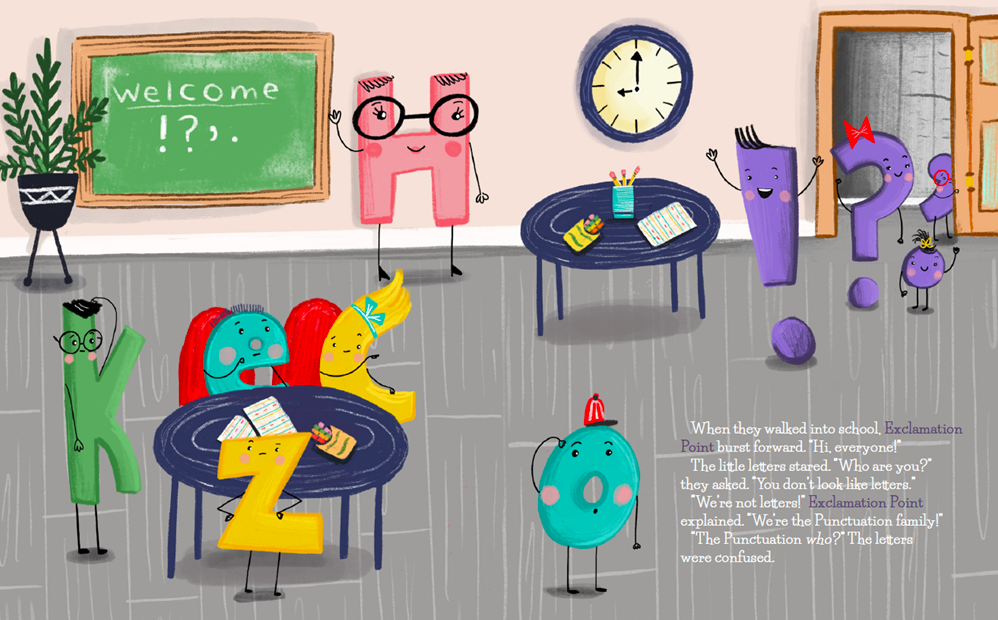
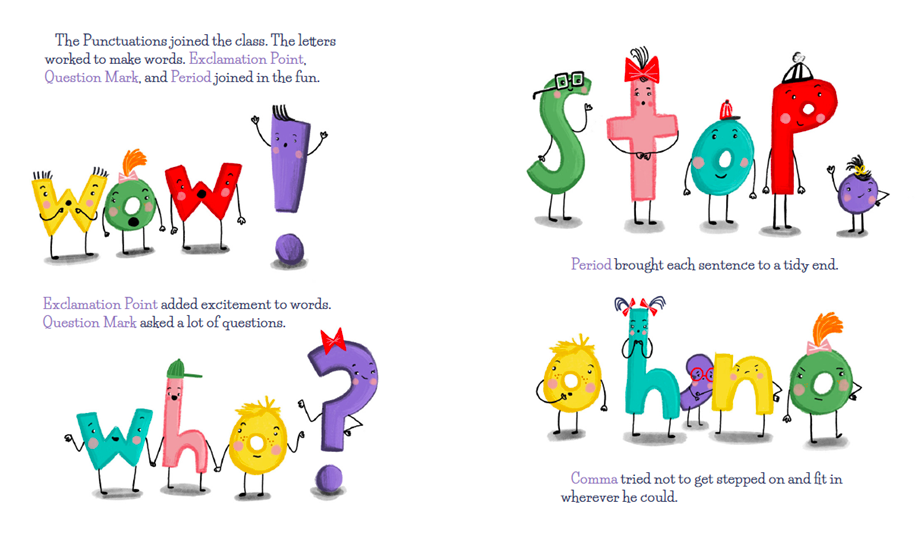
When they got to school and introduced themselves, the student letters were confused. They’d never seen anyone like the Punctuations before. As the letters practiced forming words, Exclamation Point joined W, O, and W; Question Mark helped out W, H, and O; and “Period brought each sentence to a tidy end.” For Comma, though, it wasn’t so easy. As he tried to squeeze in between letters, he began to feel as if he was just a bother. Undetected, he tiptoed away.

celebrate-picture-books-picture-book-review-the-day-punctuation-came-to-town-classroom

Image copyright Sandie Sonke, 2019, text copyright Kimberlee Gard, 2019. Courtesy of Familius.

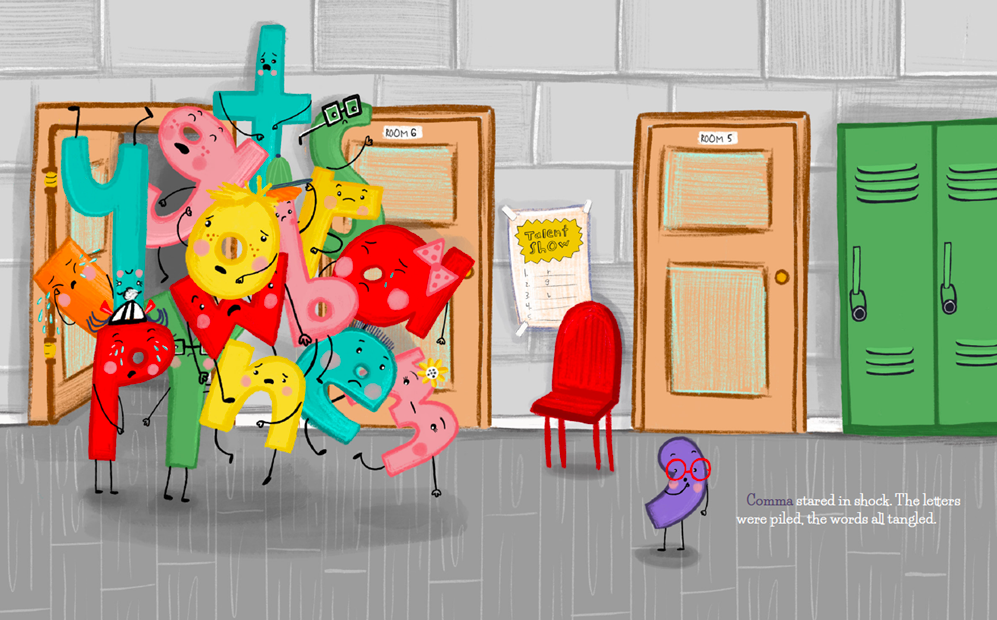
Meanwhile in the classroom, Exclamation Point had all the letters scrambling to make more and more exciting words. There was a lot of cheering and booming, ducking, and running. Question Mark asked if maybe they shouldn’t all quiet down a bit, but no one was listening. Even Period couldn’t get them to stop. Pretty soon, there was a huge word pileup. In the next moment it came crashing down and all the letters “tumbled through the door, spilling into the hall.” There, they found Comma, who just stared in disbelief. His siblings wondered why he was in the hall instead of in the classroom. Comma told them how he felt. But, “‘Comma, without you, things become a disaster!’” Exclamation Point said. Period and Question Mark agreed.

celebrate-picture-books-picture-book-review-the-day-punctuation-came-to-town-roles

Image copyright Sandie Sonke, 2019, text copyright Kimberlee Gard, 2019. Courtesy of Familius.

Then his siblings gently reminded little Comma about how each member of their family has a certain purpose. They told him, “‘we all work together to help letters and the words they make.’” Once everyone had gone back into the classroom, the letters continued making words. But now Comma took his place between them. When the letters looked confused, he explained that it was his job to keep order and that words and punctuation needed each other to make good and clear sentences.

celebrate-picture-books-picture-book-review-the-day-punctuation-came-to-town-hallway

Image copyright Sandie Sonke, 2019, text copyright Kimberlee Gard, 2019. Courtesy of Familius.

For children just learning about sentence structure and how punctuation and words fit together to create meaning, Kimberlee Gard’s lively story helps them visualize and understand the different roles of each punctuation mark. Coming at the end of a sentence and accompanied by vocal clues, exclamation points, question marks, and periods are more familiar to kids. But what about that comma, which seems to float around here and there? Gard demonstrates that without the break commas provide, words run amok, becoming jumbled, unwieldy, and confusing. Readers will respond to the classroom setting, where the letters work and play together during lessons, and they will be eager to make friends with the Punctuation family themselves.

celebrate-picture-books-picture-book-review-the-day-punctuation-came-to-town-yes-please

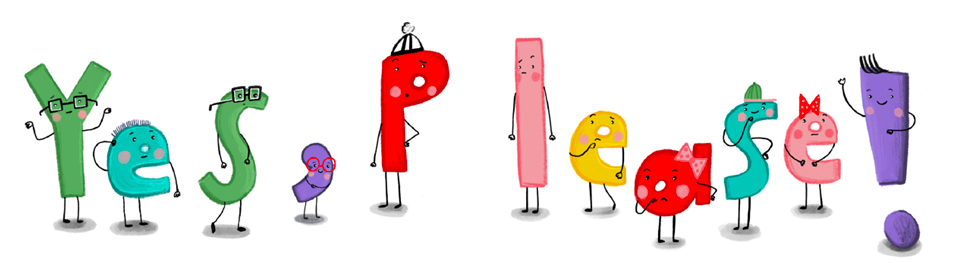
If any readers think learning about punctuation is dry and dull, Sandie Sonke’s vibrant colors and cartoon characters will change their mind. The Punctuations (and their butterfly friend Apostrophy) are sweet and earnest, wanting to fit into the class and make a difference. As the letters form words, the purple Punctuations are easy for kids to pick out, allowing for discussion of their distinct roles. The tangled piles of letters invite kids to make words from the muddle. After Comma realizes his own importance and the letters embrace him, the story ends with a familiar and funny example of just how a well-placed comma can change the meaning of a sentence.

An entertaining and joyful accompaniment to grammar lessons to get kids excited about learning, The Day Punctuation Came to Town would be a rousing addition to classroom, homeschool, and public library collections.

Ages 5 – 8

Familius, 2019 | ISBN 978-1641701457

Discover more about Kimberlee Gard and her books on her website.

To learn more about Sandie Sonke, her books, and her art, visit her website.

National Punctuation Day Activity

celebrate-picture-books-picture-book-review-Punctuation-Word-Search

Pick Out the Punctuation! Word Search


Have fun finding the twelve types of punctuation in this printable puzzle!

Pick Out the Punctuation! Word Search Puzzle | Pick Out the Punctuation! Solution

celebrate-picture-books-picture-book-review-the-day-punctuation-came-to-town-cover

You can find The Day Punctuation Came to Town at these booksellers

Amazon | Barnes & Noble | Books-a-Million | IndieBound

Picture Book Review
February 8 – It’s Children’s Authors and Illustrators Week

celebrate-picture-books-picture-book-review-where-are-the-words-cover

About the Holiday

This week was established to raise awareness and promote literacy and the joys and benefits of reading. During the week, children’s authors and illustrators attend special events at schools, bookstores, libraries, and other community centers to share their books and get kids excited about reading. To learn more about how you can instill a lifelong love of learning, visit ChildrensAuthorsNetwork!
Where Are the Words?

Written by Jodi McKay | Illustrated by Denise Holmes


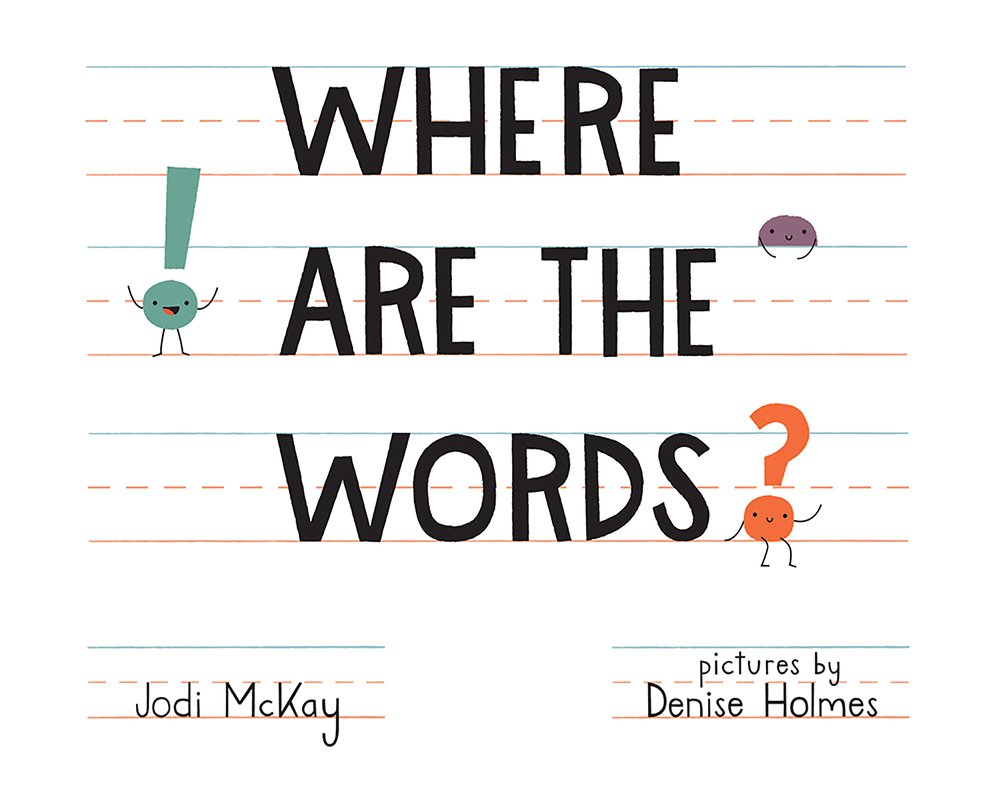
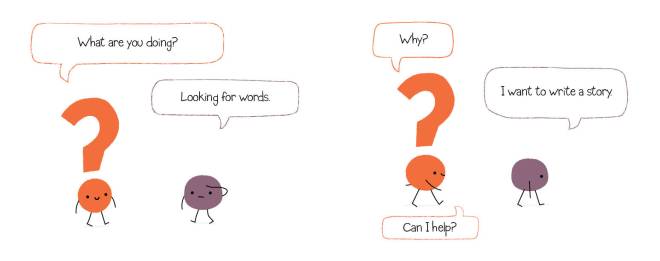
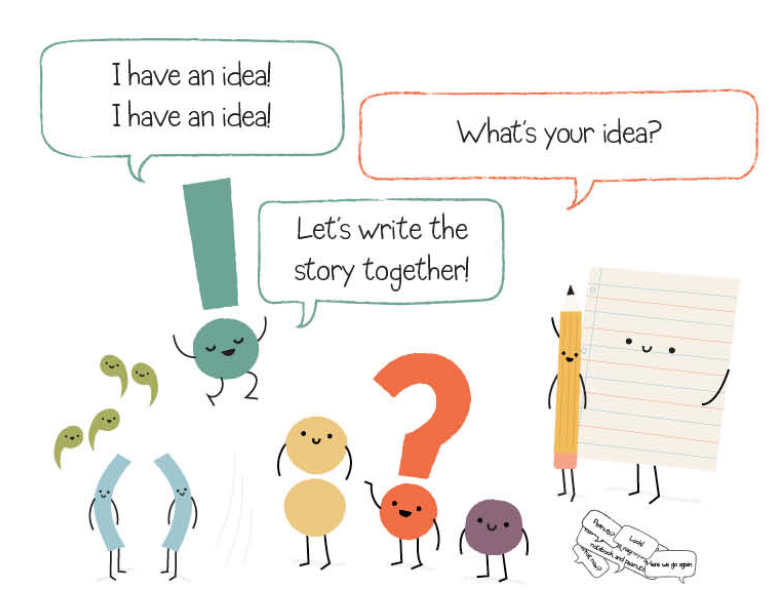
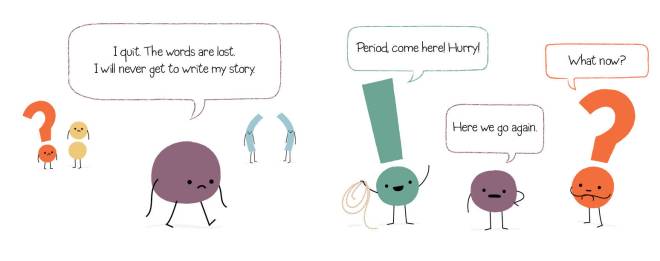
A little purple period feels like writing a story. He goes to visit Pencil and Paper and tells them his plan. They want to help, but Pencil says, “We are at a loss for words.” So the three set off to find some. Question Mark sees Period searching here and there and asks what he’s doing. When he finds out about Period’s plan, Question Mark has, well… lots of questions and joins the hunt.

celebrate-picture-books-picture-book-review-where-are-the-words-story

Image copyright Denise Holmes, 2016, text copyright Jodi McKay. Courtesy of Albert Whitman and Company.

Exclamation Point is excited to learn about the story writing idea and is eager to help. “What do you know about words?” Question Mark wonders. “Lots!” Exclamation Point answers as he heads off the page. “Let me get them for you!” While Exclamation Point is gone, Question Mark and Period meet up with Quotation Marks, who have sage advice for these two. “‘Seek and ye shall find,’” they offer. Just then Exclamation Point comes back with an armload of words: Once, Upon, A, and Time. Just as he’s about to pass them over, though, he trips and the words scatter in a jumble of letters. Undeterred, Exclamation Point hurries off to get more words.

Then Parentheses meanders by. Question Mark thinks maybe they know where words hang out. “I might,” one says, raising everyone’s hopes. But then she adds, “(although I doubt it).” Period is disappointed and even a little miffed when he sees Exclamation Point rushing around waving a net. But Exclamation Point’s just trying to corral some rather active words who would rather “run, jump, skip, hop” freely. Colon offers aid as long as there are peanuts, but Period thinks the whole thing is getting out of hand.

celebrate-picture-books-picture-book-review-where-are-the-words-disappointed

Image copyright Denise Holmes, 2016, text copyright Jodi McKay. Courtesy of Albert Whitman and Company.

In fact, Period decides to quit. But not so fast! Exclamation Point has something to show everyone. “Look!” Exclamation Point says, and they all gaze upward to find all the words they’ve said hanging in the air. “They were here all along,” Period says. Now Period has everything to write a story—except an idea. Exclamation Point suggests they all write the story together.

And so each one contributes a little bit to the story while Pencil writes it all down on Paper. Their own hunt for words and a little imagination inspires them to write a story that they all think is… “Wonderful?” offers Question Mark. “Incredible!” says Exclamation Point.  But Parentheses thinks something is missing. What is it? Pictures! But where will they find them? Everyone agrees when Period says, “Pencil could draw us the perfect pictures.”

celebrate-picture-books-picture-book-review-where-are-the-words-write-together

Image copyright Denise Holmes, 2016, text copyright Jodi McKay. Courtesy of Albert Whitman and Company.

Jodi McKay’s adorable set of punctuation marks take kids on a whirlwind ride to find words that Period can use to write a story. As each punctuation mark joins the search, McKay gives them personalities and conversation to match their grammatical uses. Readers will giggle at the mishaps and setbacks that beset Period’s creative process but empathize with him as his dream of writing a story seems to slip away. When the friends discover that the words they’re searching for are right at hand, children will see that they too have the words they need to express themselves creatively and even in social situations.

celebrate-picture-books-picture-book-review-where-are-the-words-period

Punctuation has never been so cute! With their sweet smiles and expressive stick arms and legs, Denise Holmes’s colorful, ready-to-help punctuation marks, pencil, and paper are true friends as they take on Period’s wish and make it their own. Dialogue bubbles make it easy for kids to understand how the various punctuation marks are used in a sentence, and dynamic typography sprinkled throughout the pages show action and add to the humor. Readers will also have fun guessing why Colon is so fond of peanuts in a clever running joke.

A charming way for children to engage with writing and punctuation, Where Are the Words is a grammatical mystery that would make its mark on home, classroom, and library bookshelves for fun story times and composition lessons.

Ages 4 – 8

Albert Whitman and Company, 2016 | ISBN 978-0807587331

Discover more about Jodi McKay and her books on her website.

To learn more about Denise Holmes, her books, and her art, visit her website

Children’s Authors and Illustrators Week Activity

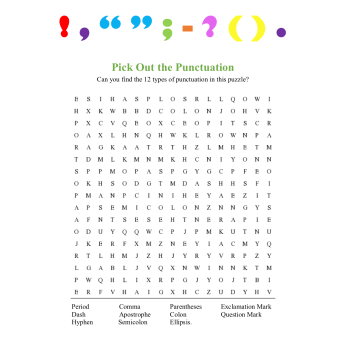
celebrate-picture-books-picture-book-review-pick-out-the-punctuation-word-search

Pick Out the Punctuation Word Search


Can you find the twelve types of punctuation in this printable puzzle?

Pick Out the Punctuation Word Search | Pick Out the Punctuation Word Search Solution

celebrate-picture-books-picture-book-review-where-are-the-words-cover

You can find Where Are the Words? at these booksellers

Amazon | Barnes & Noble | Books-a-Million | IndieBound

Picture Book Review