March 24 – It’s Women’s History Month

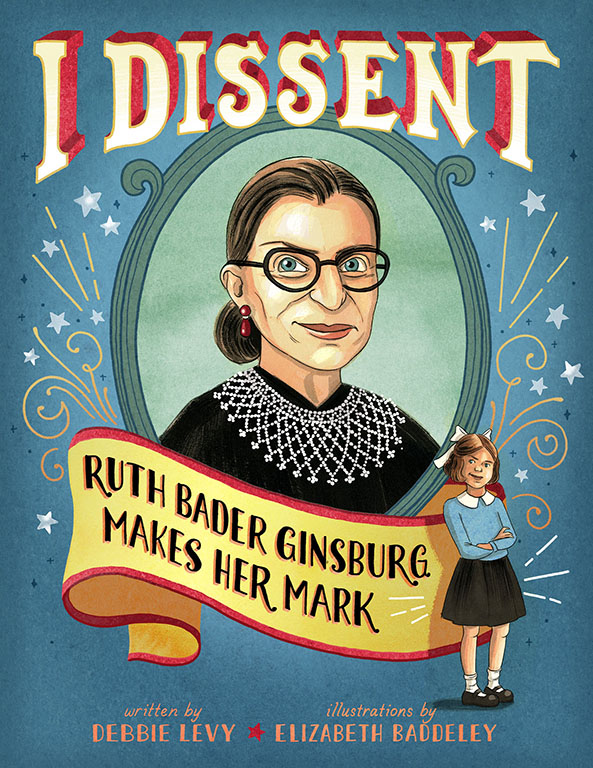
celebrate-picture-books-picture-book-review-i-dissent-cover

About the Holiday

During the month of March we celebrate the roles and contributions of women throughout history. The theme for 2017 is “Honoring Trailblazing Women in Labor and Business.” From earliest times, women have participated in and influenced events, often without receiving recognition. This month encourages all women to stand up to discrimination and stand up for what they believe in. 

I Dissent: Ruth Bader Ginsburg Makes Her Mark

Written by Debbie Levy | Illustrated by Elizabeth Baddeley


Ruth Bader grew up during the 1940s in Brooklyn, New York’s multicultural neighborhood. It was a time when boys were educated for jobs and bright futures while girls were expected to marry and raise children. Ruth’s mother, Celia Amster Bader, however, “thought girls should also have the chance to make their mark on the world.” She introduced Ruth to books in which she discovered women who used their strength, courage, and intelligence to do big things.
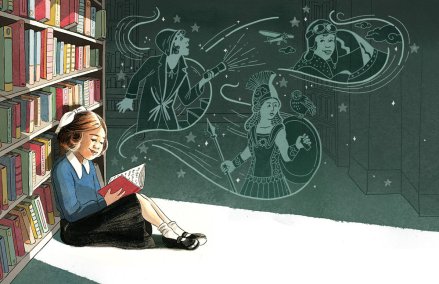
celebrate-picture-books-picture-book-review-i-dissent-in-the-library

Image copyright Elizabeth Baddeley, text copyright Debbie Levy. Courtesy of simonandschuster.com.

Ruth also saw and felt the sting of prejudice while growing up. Her family was Jewish, and at the time “hotels, restaurants, even entire neighborhoods” denied access to Jews, African Americans, Mexicans, and others. Ruth disagreed and never forgot. She was even discriminated against for being left-handed. In school she was instructed to write with her right hand, but her awkward penmanship earned a D. First, she cried; then she protested by only writing with her left hand—“it turned out she had quite nice handwriting!”
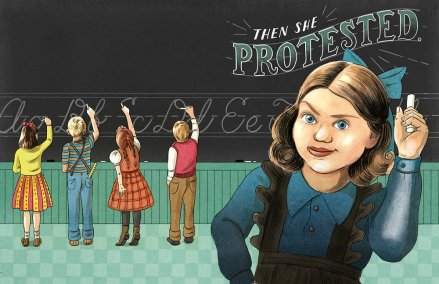
celebrate-picture-books-picture-book-review-i-dissent-in-the-left-handed

Image copyright Elizabeth Baddeley, text copyright Debbie Levy. Courtesy of simonandschuster.com.

During elementary school, Ruth was outstanding in some classes, such as history and English, and did not do so well in others, such as sewing and cooking. Music, especially opera, was another favorite subject—even though she did not have the voice to match her dreams. She excelled in high school and was even chosen as a graduation speaker. But Ruth had been hiding the fact that her mother was very ill. The day before graduation, her mother died. Ruth did not go to her graduation, but she did fulfill her mother’s wish and entered college.

In college Ruth met Marty Ginsberg, and the two fell in love. They both decided to become lawyers to fight prejudice and unfairness in court. People thought this was a great idea for Marty, but disapproved of it for Ruth. “Ruth disapproved right back. So did Marty.” After college they got married, went to law school, and had a baby girl.
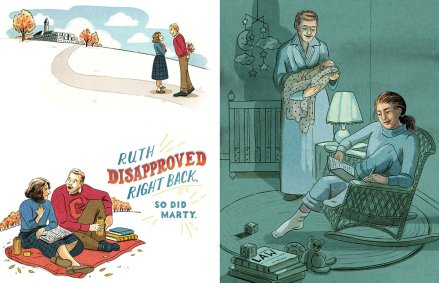
celebrate-picture-books-picture-book-review-i-dissent-college

Image copyright Elizabeth Baddeley, text copyright Debbie Levy. Courtesy of simonandschuster.com.

In law school Ruth was one of nine women in a class of 500. She worked hard and tied with another student as first in the class, but after graduation she couldn’t find a job. Employers objected because she was a woman, a mother, and Jewish. Finally, she found work with a judge. Her excellent work for him translated into jobs at one law school after another, and she became “one of the few female law professors in the whole country.”

All around her Ruth saw other women who were denied jobs or paid less than men. Women also had very little voice in courtrooms or in government. Rulings by the Supreme Court, the highest court in America, had helped maintain this inequality. The Court had stated that women were unfit for many jobs because of their “natural and proper timidity and delicacy.” Besides, the Supreme Court also said, “Woman has always been dependent upon man.”
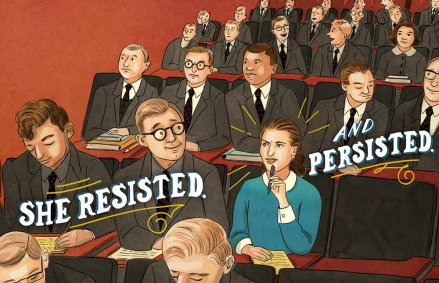
celebrate-picture-books-picture-book-review-i-dissent-in-the-law-school

Image copyright Elizabeth Baddeley, text copyright Debbie Levy. Courtesy of simonandschuster.com.

“Ruth really, really disagreed with this!” So she began fighting in court for equal rights for women. But equal rights for women also meant equal rights for men: Ruth believed men should be able to stay home with children if they wanted to while women worked. “These were fresh ideas in the 1970s. Ruth did not win every case, but she won enough. With each victory, women and men and girls and boys enjoyed a little more equality.”

At home, Ruth’s own family agreed with her. Marty was a successful lawyer and also an accomplished chef who cooked the family’s meals. Ruth went on to become a well-known and well-respected lawyer. President Jimmy Carter asked her to be a judge in Washington DC. Then President Bill Clinton chose her to fill a vacancy on the Supreme Court. “Ruth agreed.

celebrate-picture-books-picture-book-review-i-dissent-family-life

Image copyright Elizabeth Baddeley, text copyright Debbie Levy. Courtesy of simonandschuster.com.

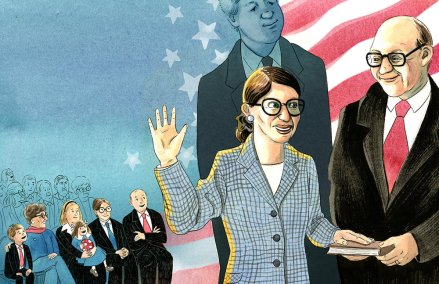
In 1993, Justice Ruth Bader Ginsburg became the first Jewish woman on the nation’s highest court.” When the nine justices decide a case, they listen to both sides and then vote. The winning side then writes an opinion explaining their ruling. When Justice Ginsburg votes with the winning side, she wears a special lace collar over her robe. When she does not agree with the ruling, she says, “I dissent” and writes an opinion explaining why. She has a special collar for dissenting too.

Some of her dissensions were influenced by her early experiences. She dissented when “the court wouldn’t help women or African Americans or immigrants who had been treated unfairly at work.” She dissented when the court did not protect voting rights for all citizens. She dissented when the court disagreed with schools that offered African Americans a better chance to go to college.” And once when she dissented, Congress and the president agreed with her and overturned the Supreme Court’s ruling.
celebrate-picture-books-picture-book-review-i-dissent-supreme-court

Image copyright Elizabeth Baddeley, text copyright Debbie Levy. Courtesy of simonandschuster.com.

Justice Ruth Bader Ginsburg is now the oldest member of the Supreme Court. Some people think she should retire, but she disagrees. She still has work to do. Over the years, she has “cleared a path for people to follow in her footsteps—girls in college, women in law school, and everyone who wants to be treated without prejudice….Step by step, she has made a difference…one disagreement after another.”

An extensive Author’s Note about Ruth Bader Ginsburg’s life, notes on Supreme Court Cases, and a selected bibliography follow the text.

Debbie Levy’s outstanding biography allows readers to journey with Ruth Bader Ginsburg as her experiences and beliefs lay the foundation for her life’s work. Well-chosen anecdotes from Ginsburg’s childhood make her accessible to kids and may even inspire them to look toward their own futures. Ginsburg’s trajectory from college student to lawyer to judge and finally to the Supreme Court is balanced and uplifting, emphasizing the positive impact of persistence and self-confidence.

Elizabeth Baddeley’s illustrations go hand-in-hand with Levy’s text to fully illuminate the life of Ruth Bader Ginsburg for children. Ginsburg’s intelligence, sense of humor, courage, and principles are evident as she matures from school girl to Supreme Court Justice. Dynamic typography highlights the theme of dissent and disagreement as a force for positive change. The color, expression, and spirit imbued in each page make I Dissent: Ruth Bader Ginsburg Makes Her Mark an exciting and eye-catching read for all children.

I Dissent: Ruth Bader Ginsburg Makes Her Mark is a superb and recommended book for girls and boys. The book’s focus on a woman who continues to make a difference will inspire children and even adult readers to speak up and act on their convictions.

Ages 5 – 9

Simon & Schuster Books for Young Readers, 2016

To learn more about Debbie Levy and her books for children and young adults, visit her website!

Discover a gallery of illustration by Elizabeth Baddeley on her website!

Women’s History Month Activity

celebrate-picture-books-picture-book-review-rosie-the-riveter-coloring-page

Rosie the Riveter Coloring Page


Rosie the Riveter became a symbol of strong women during World War II and continues to be an iconic figure today. Print and color this Rosie the Riveter Page then display it to always remember that women can do anything!

Picture Book Review

January 27 – It’s Creativity Month

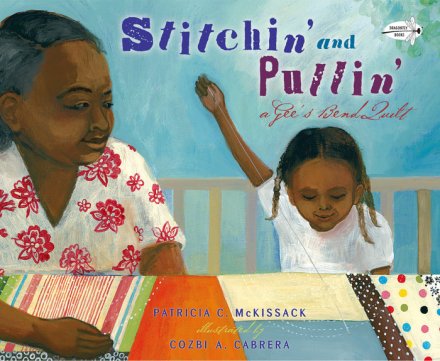
celebrate-picture-books-picture-book-review-stitchin'-and-pullin'-a-gee's-bend-quilt-cover

About the Holiday

January is a time for reflection and new beginnings. What better time to start thinking creatively and finding your inner artist, scientist, inventor, thinker? Go ahead and do the thing you’ve always wanted to do!

Stitchin’ and Pullin’: A Gee’s Bend Quilt

Written by Patricia C. McKissack | Illustrated by Cozbi A. Cabrera

In this story told through poems, a little girl begins telling of her life, starting with a recitation on Gee’s Bend Women: “Gee’s Bend women are / Mothers and Grandmothers / Wives / Sisters and Daughters / Widows.” They are every kind of woman you know, doing every type of work and activity. “Gee’s Bend women are / Talented and Creative / Capable / Makers of artful quilts / Unmatched. / Gee’s Bend women are / Relatives / Neighbors / Friends— / Same as me.”

In Who Would Have Thought, the girl muses on how perceptions change. “For as long as anyone can remember,” she says, the women of Gee’s Bend, Alabama have created quilts that were slept under, sat on, and wrapped around the sick or cold. But now those same quilts are “…hanging on museum walls, / their makers famous….”

When she was just a tot “Baby Girl” reveals in Beneath the Quilting Frame, she played under the quilting frame, listening to her “mama, grandma, and great-gran / as they sewed, talked, sang, and laughed / above my tented playground.” She remembers the “steady fingers  /[that] pieced together colorful scraps of familiar cloth / into something / more lovely / than anything they had been before” as her mother sang her a lullaby.

celebrate-picture-books-picture-book-review-stitchin'-and-pullin'-a-gee's-bend-quilt-puzzling-the-pieces

Image copyright Cozbi A. Cabrera, courtesy of Random House Books for Young Readers

In Something Else, “Baby Girl” is growing too big to play beneath the frame. Her legs becoming longer and her mind full of “recipes for eleven kinds of jelly…how to get rid of mold…and the words to a hundred hymns and gospel songs” while she waits her turn at the frame. Finally, in Where to Start? her time comes. The girl asks her mama how to begin and she answers, “‘Look for the heart. / When you find the heart, / your work will leap to life… / strong, beautiful, and… / independent.’”

In Remembering, the girl thinks about how her mama has told her that “cloth has a memory.” As she chooses the cloth that will become her quilt she sees the life and the history in each. 

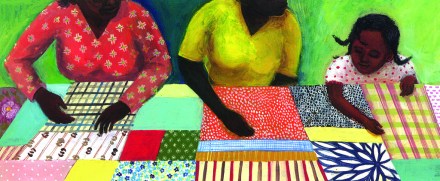
Nothing Wasted sees Grandma pulling apart a red-and-white gingham dress stitch by stitch to become a quilting square that the girl suddenly knows “will be the heart of my quilt.” In Puzzling the Pieces the girl and her grandma stand over the quilting frame fitting the squares together in the perfect way to tell the girl’s story. Her quilt comes together piece by piece to tell the history of Gee’s Bend in The River Island. The brown strips along three sides mirror the muddy waters surrounding her town. The fourth side is a green strip—“a symbol of the fields where my ancestors / worked cotton from can to can’t— / can see in the morning until / can’t see at night.” Lined up next to the green strip are six squares representing the small communities “where families with / the same name / are not kin by blood / but by plantation.”

Being Discovered is portrayed with “a large smoke-gray square”—the color of the Great Depression and the 15 minutes of fame Gee’s Bend garnered when discovered “by sociologists, historians, / educators, and journalists” who came and went, leaving Gee’s Bend “the way it had been / before being discovered.”

celebrate-picture-books-picture-book-review-stitchin'-and-pullin'-a-gee's-bend-quilt-understanding-comes-later

Image copyright Cozbi A. Cabrera, courtesy of Random House Books for Young Readers

In Colors, the girl’s grandma explains the meanings and feelings behind each colored cloth. “Blue cools. / Red is loud and hard to control, / like fire and a gossiping tongue.” Green, orange, yellow, white, pink, and all the others have their own personalities. “Grandma says, / ‘Colors show how you / feel deep down inside.’”

In Pinky, the harrowing facts of the march from Selma to Montgomery, Alabama frame the story of one marcher, Mr. Willie Quill who broke horses for the Alabama State Mounted Patrol and was saved from the Police attacks when one of the horses he’d trained knew his voice. In Dr. King Brings Hope, the little girl adds a “Patch of bright pink / to remember Pinky’s story. / Next to it I sew / a spotless white patch for the hope Dr. Martin Luther King / brought to the Bend” and goes on to tell how her grandma saw Dr. King at Pleasant Grove Baptist Church and what it meant to her.

By and By follows the girl as she adds “golden thank-yous, for James Reeb,” a “bright blue piece of velvet for Viola Liuzzo,” and a “big plaid people circle of white, black, brown, yellow, and red for Reverend Dr. King, all “killed for believing in justice.”

In the 1960s, The Sewing Bee tells, Gee’s Bend quilters were once again discovered. There were buyers for the handmade quilts, but stipulations. The girl asks her grandma if she was part of the Bee, to which she replies, “‘Yes, / more money. Less freedom. I chose to stay free.’”

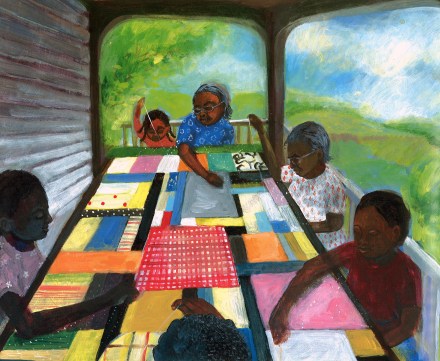
At last all of the patches are laid out and the time comes to stitch the girl’s quilt. Five women stand at the frame “all stitchin’ and pullin.’” They work “in a slow and steady rhythm” relaxing and enjoying being together until the quilt is finished. In Finished, the last stitch is sewn, and the thread bitten and knotted. The girl has hundreds of ideas for future quilts. “Quilts that are about me, / the place where I live, / and the people / who have been here for generations.”

Further poems unite the history of “Baby Girl,” her family, and neighbors, and an Author’s Note about quilting and the women of Gee’s Bend follow the text.

Patricia McKessack’s free verse poems capture the close relationships and camaraderie of the generations of women who join around the quilting frame to share and pass down their art and their heart. McKessack’s conversational verses, on page after page like the patches of a quilt, reveal the complexity of this handmade art form in the way intimate talks between friends unveil a life. Readers learn not only about the little girl and her own thoughts, but the history and influence of her immediate family, world events, inspirational figures, and deeply held beliefs that make her who she is and ties her to the other Gee’s Bend women.

Cozbi A. Cabrera’s stunning acrylic paintings take readers inside the heart of the Gee’s Bend women, depicting the girl’s home, the table-sized quilting frame where the women collectively work, the plantations, the protests, and the changes that came but did not unravel the convictions, values, and love of the little girl’s family. Readers can almost hear the talking and singing of the Gee’s Bend women as they stitch their quilts, and the comforting, embracing environment is evident on every page. Cabrera’s portraits of the little girl, her mama, and her grandma are particularly moving. For What Changed, Cabrera depicts a yellow school bus appearing on the dirt road from the right hand corner of the page. In the side mirror a dot of a house comes into view, reminding readers that no matter how far these women are from home, Gee’s Bend is always with them.

Children—and adults—will find Stitchin’ and Pullin’: A Gee’s Bend Quilt inspirational and uplifting. This volume of poetry can be read at one sitting and delved into again and again, making it a wonderful choice for home libraries and a must for school, public, and other libraries.

Ages 5 – 12

Dragonfly Books, Random House, 2016 (paperback edition) | ISBN 978-0399549502

View a gallery  of fashion designs, dolls, and other handmade art work by Cozbi A. Cabrera on her website!

Creativity Month Activity

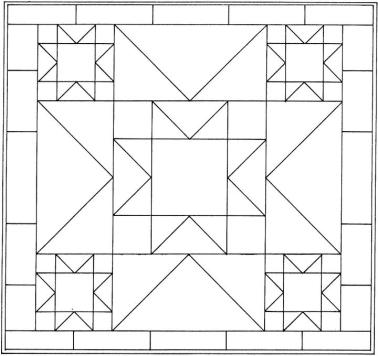
celebrate-picture-books-picture-book-review-stars-quilt-coloring-page

Design a Quilt Coloring Pages

Quilts are so much more than pieces of material sewn together—they’re life stories! Here are two quilt coloring pages for you to design and color. What does each piece mean to you? As you color each section, write a sentence about an event or thought that is important to you.

Quilt Template 1 | Quilt Template 2

Picture Book Review

November 14 – International Girls Day

celebrate-picture-books-picture-book-review-women-in-science-cover

About the Holiday

Today’s holiday recognizes the spirit of girls and encourages girls and young women to pursue their dreams, talents, and abilities with the slogan “She Can Do Anything.” Around the world young women have a long way to go to overcome the stereotypes, conditions, and pressures in the media and other organizations that keep them from receiving an equal education and from both attempting and succeeding in their desired profession. Today, celebrate the uniqueness of the girls and women in your life, listen to what they really want and want to accomplish, and support them.

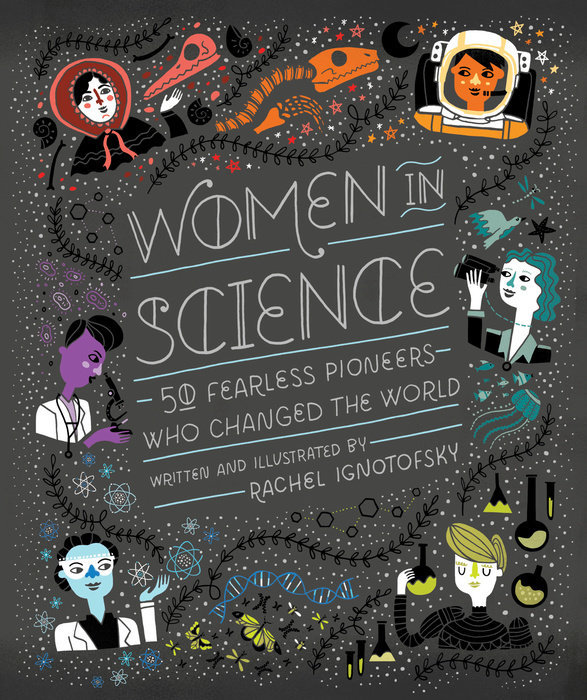
Women in Science: 50 Fearless Pioneers Who Changed the World

By Rachel Ignotofsky


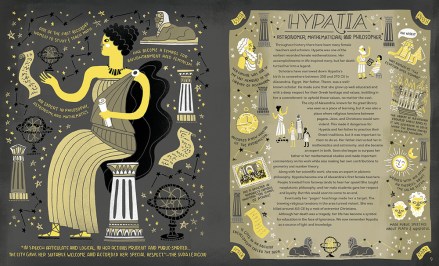
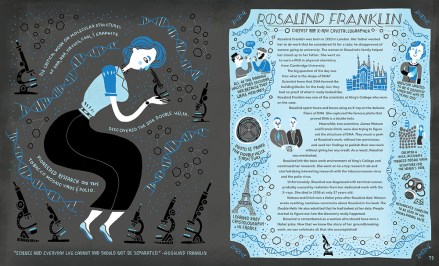
“Nothing says trouble like a woman in pants.” With this revealing attitude from the 1930s, Rachel Ignotofsky introduces her scintillating biographies of 50 intelligent, self-confident, persevering, and inspiring women working in engineering, math, medicine, psychology, geology, physics, astronomy, and more sciences from ancient history through today. The book begins with Hypatia who lived in Greece in the late 300s to early 400s CE and became an expert in astronomy, philosophy,and mathematics, making “contributions to geometry and number theory.” She became one of Alexandria’s first female teachers, “invented a new version of the hydrometer,” and can be found among the intellects in Raphael’s painting “The School of Athens.”

celebrate-picture-books-picture-book-review-women-in-science-hypatia

Image and text copyright Rachel Ignotofsky, courtesy of rachelignotofskydesign.com

Zipping ahead to 1647 readers find Maria Sibylla Merian, considered one of the “greatest scientific illustrators of all time.” Her specialty was entomology. By carefully documenting the lifespan of butterflies, she taught people about the science of metamorphosis, publishing a book on the subject filled with notes and illustrations in 1679. Later she scoured the rainforests of South America, gathering information on never-before-seen insects from that region. Her book, The Metamorphosis of the Insects of Suriname “was published in 1705 and became a hit all over Europe.” Maria was so famous, her picture appeared on German money and stamps.

celebrate-picture-books-picture-book-review-women-in-science-mary-anning

Image and text copyright Rachel Ignotofsky, courtesy of rachelignotofskydesign.com

Other women in the nature sciences include Mary Anning, who as a child discovered the first complete ichthyosaur skeleton and went on to become a paleontologist; Mary Agnes Chase, a botanist and expert on grasses; Marjorie Stoneman Douglas, who as a conservationist helped save the Florida Everglades; and Joan Beauchamp Procter, a zoologist specializing in reptiles who discovered the Peninsula Dragon Lizard in 1923; and more.

celebrate-picture-books-picture-book-review-women-in-science-marie-curie

Image and text copyright Rachel Ignotofsky, courtesy of rachelignotofskydesign.com

One of the earliest women astronomers and mathematicians was Wang Zhenyi, born in China in 1768. Creating her own eclipse model, she proved her advanced “theories about how the moon blocks our view of the sun—or the earth blocks the sun’s light from reaching the moon—during an eclipse.” She also measured the stars and explained the rotation of the solar system. At the age of 24 she published the 5-volume Simple Principles of Calculation. Zhenyi died at the age of 29, but in her short life she published many books on math and astronomy as well as books of poetry.

celebrate-picture-books-picture-book-review-women-in-science-patricia-bath

Image and text copyright Rachel Ignotofsky, courtesy of rachelignotofskydesign.com

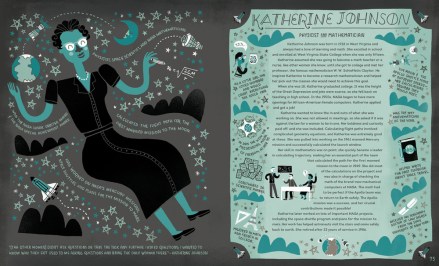
Women in Science includes many other women who have looked to the stars and mathematics for their careers. Some of these are: Ada Lovelace, the first person to write a computer program; Emmy Noether, who helped Albert Einstein develop his theory relativity, created the field of abstract algebra, and “made new connections between energy and time, and angular momentum”; Cecilia Payne-Gaposchkin a quantum physicist in 1900s England who “discovered that the sun is made mostly of hydrogen and helium gas” and in 1956 became Harvard University’s first astronomy professor; Mae Jemison, who in 1992 became the first African-American woman in space and later started her own technology consulting firm as well as founding BioSentient Corporation, and a science camp for kids; plus many others.

celebrate-picture-books-picture-book-review-women-in-science-rosalind-franklin

Image and text copyright Rachel Ignotofsky, courtesy of rachelignotofskydesign.com

The book also features Engineers, such as Hertha Ayrton who improved electric lights by inventing “a new rod that made a clean and quiet bright light” and the Ayrton fan that blew away mustard gas during World War I; and Lillian Gilbreth, who used her theories of “organizational psychology” in inventing the foot pedal for garbage cans, shelving for refrigerators, and even the “work triangle” for kitchens “that determines the distance from the sink to the stove” and saves time. There are Geneticists such as Nettie Stevens who discovered the “X” and “Y” chromosomes, and Barbara McClintock—the pants wearer from the beginning of the post—and the first person “to make a complete genetic map of corn” and discover jumping genes, or “transposons.”

The field of Medicine has benefited from women such as Elizabeth Blackwell, the first woman doctor; Alice Ball, a chemist and the first African-American woman to graduate from the University of Hawaii, who helped cure leprosy with her chemical work; and Gerty Cori who discovered how our bodies covert glucose, helping us better understand diabetes. In 1947 she became the first American woman to win a Nobel Prize.

celebrate-picture-books-picture-book-review-women-in-science-katherine-johnson

Image and text copyright Rachel Ignotofsky, courtesy of rachelignotofskydesign.com

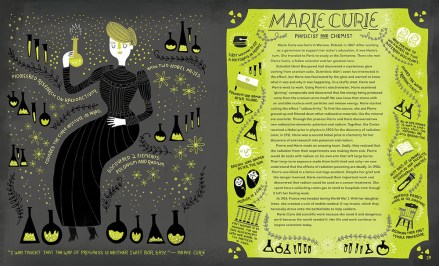
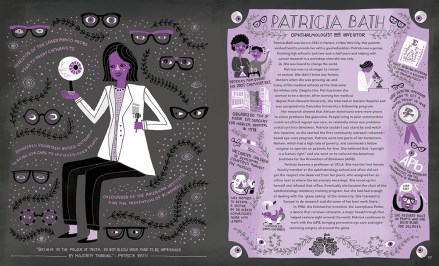
And this list only begins to scratch the surface of all the fascinating stories of women who overcame social, political, and personal obstacles to follow where their intelligence took them. Inspirational, entertaining, and undeniably eye-catching Rachel Ignotofsky’s Women in Science presents expertly written, one-page biographies that hit all the high (and sometimes unfortunate low) points in these scientist’s lives. The striking layout of both the text and illustrations keep readers riveted to the page, The left-hand side contains a representational drawing of the scientist surrounded by the subjects and materials of her work as well as trivia about her and a quotation. On the right-hand page, small illustrated facts frame the woman’s life story.

Interspersed between the biographies are pages offering a timeline of women’s milestones, depicting lab tools, and graphing statistics of women in STEM. The back matter is impressive, with two more pages presenting 15 more scientists, a four-page, illustrated glossary, resources including films, websites, and books, and an index. Rachel Ignotofsky concludes her book by saying, “Let us celebrate these trailblazers so we can inspire the next generation. Together, we can pick up where they left off and continue the search for knowledge. So go out and tackle new problems, find your answers and learn everything you can to make your own discoveries!”

Ages 7 and up

Ten Speed Press, 2016 | ISBN 978-160774976

To discover more books by Rachel Ignotofsky, visit her website!

International Girls Day Activity

celebrate-picture-books-picture-book-review-scientists-word-search

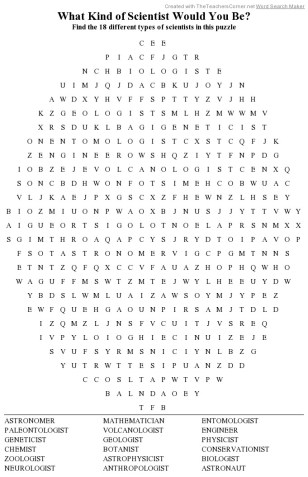
What Kind of Scientist Would You Be? Word Search


Find the 18 different scientists in this printable What Kind of Scientist Would You Be? Puzzle. Here’s the Solution!  Then pick one and write why you would like to be that type of scientist!

Picture Book Review
October 11 – Ada Lovelace Day

celebrate-picture-books-picture-book-review-ada-byron-lovelace-and-the-thinking-machine-cover

About the Holiday

Today we remember the woman who is regarded as “the first computer programmer.” A mathematician, inventor, and scientific pioneer, Ada Lovelace wrote and was the first to publish an algorithm to generate Bernoulli numbers. Her notes published in Taylor’s Scientific Memoirs in 1842 inspired Alan Turing to design the first modern computers 100 years later. Today’s holiday celebrates all women in the science, technology, mathematics, and engineering fields. To learn more about Ada Lovelace Day visit findingada.com.

Ada Byron Lovelace and the Thinking Machine

Written by Laurie Wallmark | Illustrated by April Chu


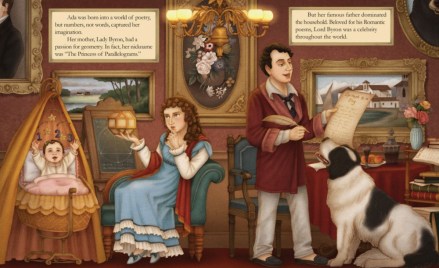
Ada was the daughter of two very distinguished—and distinct—parents. Her mother loved geometry and was known as “‘The Princess of Parallelograms.’” Her father was a world-renowned poet, “beloved for his Romanic poems.” When Ada was still a baby, however, her mother left Lord Byron and his “scandalous behavior” behind, and “Ada never saw her father again.”

celebrate-picture-books-picture-book-review-ada-byron-lovelace-and-the-thinking-machine-ada's-parents

Image copyright April Chu, text copyright Laurie Wallmark. Courtesy of crestonbooks.com

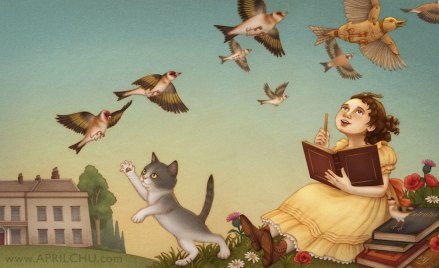
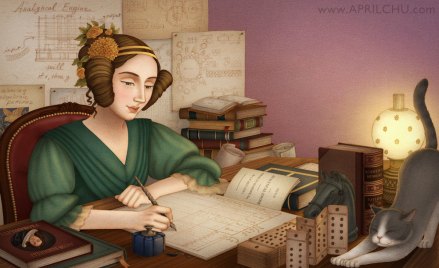
As was common in Ada’s time she was often left on her own while her mother traveled. Ada filled the hours and days writing, sketching, and inventing in her journal. When she was still a little girl, she built a set of wings for a flying machine she had imagined. To discover if her wings could actually fly, “Ada needed to compute the wings’ power. She broke the problem into steps—surface area and weight, wind speed and angles.” She had to multiply and divide again and again, and while she loved calculating numbers, Ada wondered if there wasn’t an easier way to find the answers.

As she sat at her desk one day a storm blew up, sending the curtains around her open window flapping. They reminded Ada of sails and she suddenly realized that sails were like wings. She grabbed her toy sailboat and headed out to a nearby pond to test her theories. She launched her boat over and over, and “each time she adjusted the sails and studied the effect on the little boat’s speed. A storm of numbers and calculations whirled in her mind and spilled onto her pages.” She stayed by the pond until dark, and “returned home muddy, dripping wet, and triumphant.” Her nanny was not pleased. She didn’t agree with Ada’s mother, instead believing that girls “should not waste their time with math and science and experiments and other such nonsense.”

celebrate-picture-books-picture-book-review-ada-byron-lovelace-and-the-thinking-machine-imagining-a-flying-machine

Image copyright April Chu, courtesy of aprilchu.com

Overnight, Ada developed a high fever, and the doctor diagnosed measles. Ada’s mother was sent for. She hurried home and spent the days and nights at Ada’s bedside reading to her. Ada’s “fever finally broke, but the measles left her paralyzed and blind. To keep Ada’s mind sharp, Mama quizzed her on math problems,” asking her harder and harder questions. The numbers kept her company, and in her imagination Ada used her flying machine to travel to London.

While Ada regained her sight in a few weeks, it was three years before she could walk again. During this time Ada’s mother hired tutors to teach her higher and higher level math. One of her tutors was Mary Fairfax Somerville, a famous scientist and mathematician. Somerville invited Ada and her mother to a gathering of other influential scientists, mathematicians, and inventors. There Ada met Charles Babbage. Babbage, a mathematician and inventor, was impressed by 17-year-old Ada’s knowledge and understanding and invited her to visit his laboratory.

celebrate-picture-books-picture-book-review-ada-byron-lovelace-and-the-thinking-machine-difference-engine

Image copyright April Chu, courtesy of aprilchu.com

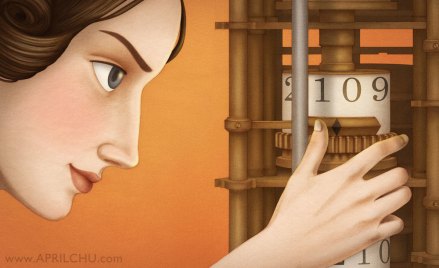
Ada brought her journal and shared with Charles Babbage her own work. He didn’t treat Ada as a child but as a fellow scientist and engineer. Babbage showed Ada a mechanical calculator he had designed. With the turn of a handle cylinders of numbers on the three columns of his Difference Engine spun toward the answer to a math problem Ada posed: what is 15 x 12? The machine gave the right answer: 180!

Babbage also had an idea for a mechanical computer—and Analytical Engine—that “would solve harder problems by working through them step by step.” It was an amazing concept, but Babbage hadn’t built it yet. He gave Ada his notebooks and she studied Babbage’s descriptions of how the machine might work. She realized that the Analytical Engine could work if numbers told it how.

celebrate-picture-books-picture-book-review-ada-byron-lovelace-and-the-thinking-machine-calculating

Image copyright April Chu, courtesy of aprilchu.com

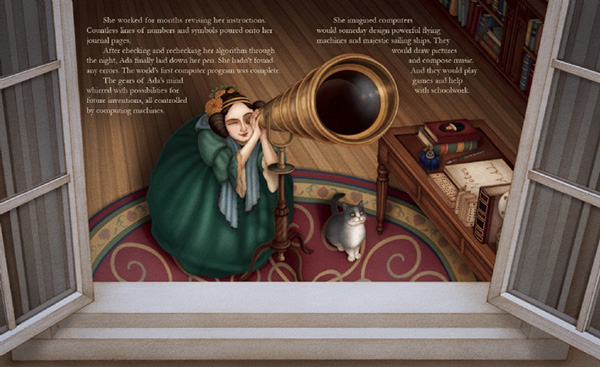
Over several months Ada created an algorithm—a set of mathematical instructions. Her journal was filled with lines and lines of numbers and symbols. At last she checked her work for errors and found none. Ada had developed the world’s first computer program! With her creative imagination she could see that someday computers would “design powerful flying machines and majestic sailing ships. They would draw pictures and compose music. And they would play games and help with schoolwork.”

Unfortunately, Charles Babbage never finished building his Analytical Machine, and Ada never saw her program in action. But future generations remembered her and her contributions to computer programming. There is even a computer program named for her. We can imagine that the little girl who wanted to fly would be very pleased to know that Ada helps guide modern flying machines.

An extensive Author’s Note, a timeline of Ada’s life as well as a partial bibliography and resources follow the text.

celebrate-picture-books-picture-book-review-ada-byron-lovelace-and-the-thinking-machine-looking-at-stars

Image copyright April Chu, text copyright Laurie Wallmark. Courtesy of crestonbooks.com

Laurie Wallmark’s compelling biography of Ada Lovelace is perfectly aimed at her young audience, highlighting Ada’s childhood dreams, obstacles, and events that led her to become an influential mathematician and inventor. Wallmark’s fast-paced text, which beautifully merges lyrical and technical language to tell Ada’s story, is uplifting in its revelation that from even a young age, Ada was respected and acknowledged for her intelligence and mathematical gifts. Illuminating Ada’s predictions for future uses of the computer forms a bridge between her foresight and the experience of today’s children, bringing history alive for readers.

Gorgeous, detailed illustrations set Ada Byron Lovelace and the Thinking Machine firmly in its 19th-century time period. Lush greens, reds, and golds welcome readers into Ada’s home, where her wooden and paper wings lay among blueprints for other inventions as Ada sits at her desk jotting notes in her journal. A mural in her home cleverly depicts Ada’s imaginings while she recovered from the measles, and the gathering that Ada and her mother attend is a stimulating portrait of the scientists and new inventions of the day. Kids will be amazed to see one of the first “calculators” as built by Charles Babbage. Included on the pages are images of an early loom and punch cards that influenced the development of our computers. It is fitting that the last page shows how far we have come—and how forward thinking Ada was—with an illustration of Space technology in action.

Ada Byron Lovelace and the Thinking Machine is an important biography that should be included in every public and school library. For children interested in history, biographies, and the science and math fields, Laurie Wallmark’s and April Chu’s book would make a beautiful gift and addition to home bookshelves as well.

Ages 5 – 10

Creston Books, LLC, 2015 | ISBN 978-1939547200

Discover more about Laurie Wallmark and download curriculum and activity guides on her website!

View a portfolio of artwork and learn more about April Chu’s books on her website

This is one book trailer that really computes!

Ada Lovelace Day Activity

celebrate-picture-books-picture-book-review-computer-coloring-page

Love Your Computer! Coloring Page


What would we do without our computers? Here’s a fun printable Love Your Computer! coloring page for you to enjoy!

Picture Book Review
August 26 – Women’s Equality Day

celebrate-picture-books-picture-book-review-for-the-right-to-learn-malala-yousafzai's-story-cover

About the Holiday

Today’s holiday commemorates the day in 1920 when the 19th Amendment to the United States Constitution was ratified, giving  women the right to vote. Over the years women all over the world have fought and are still striving to gain equal footing with men in areas such as employment, salary, and education and to be free from fears of violence and discrimination. Empowering women across the globe and ensuring their voices are heard is an issue for all people to be involved in.

For the Right to Learn: Malala Yousafzai’s Story

Written by Rebecca Langston-George | Illustrated by Janna Bock


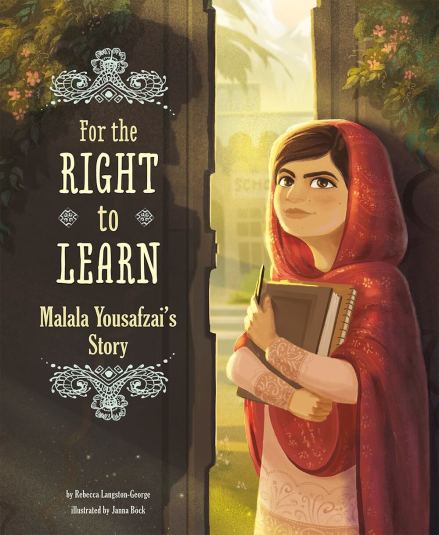
Malala Yousafzai lived in the Swat Valley of Pakistan, where her father, Ziauddin, ran a school in the town of Mingora. Malala loved school and even when she was tiny visited classes with her father often. Not all Pakistani children could go to school—some families couldn’t afford it and some believed girls should stay home to clean, cook, and keep house. But Malala’s father believed his daughter had the same right to an education as his sons. Malala thrived at school. She learned multiple languages and won many academic awards.

“But Taliban leaders who controlled the area were against letting girls go to school. They declared that females should be separated from males. They wanted to outlaw education for girls.” The Taliban leaders even tried to intimidate Malala’s father. “One ordered Ziauddin to close his school because girls and boys used the same entrance.” Ziauddin refused.

celebrate-picture-books-picture-book-review-for-the-right-to-learn-malala-yousafzai's-story-writing

Image copyright Janna Bock, courtesy of Capstone Press

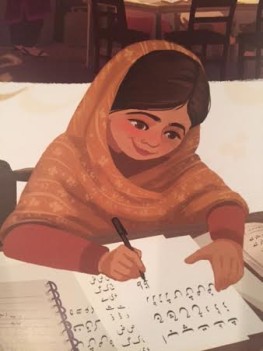
While her father was worried, Malala’s determination grew stronger. She studied harder at school, and during the school holidays while most Pakistani women covered their hands with henna flowers and vines, Malala painted science formulas on hers. The Taliban continued to exert a tight grip on the Swat Valley, and instituted new rules: men could not shave, women had to cover their faces, movies were banned. And the radio “crackled with the sound of the Taliban preaching: No education for girls! Girls who attend school bring shame to their families!”

The Taliban frightened many, and empty seats in school classrooms began to be more frequent. Ziauddan and Malala appeared on TV to express the importance of education. In response the Taliban threatened Ziauddan and his school. Despite the threats Malala and her father continued to speak and write, “demanding equal education for girls.” The Taliban began patrolling the streets, perpetrating violence and destruction on anyone who didn’t obey their rules.

In December 2008, the Taliban announced that all girls’ schools would close by January 15. “Even before the deadline, bombs started to rain down on nearby schools as warnings.” The British Broadcasting Corporation wanted to reveal to the world what was happening. They wanted a girl to write a blog about her experience and “how it felt to be denied an education. Malala volunteered.

celebrate-picture-books-picture-book-review-for-the-right-to-learn-malala-yousafzai's-story-sneaking-to-school

Image copyright Janna Bock, courtesy of Capstone Press

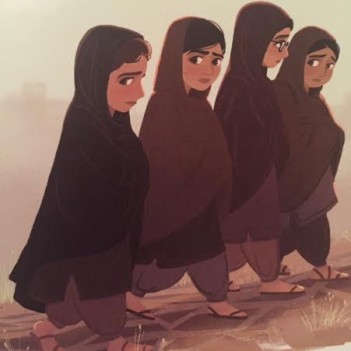
She took the pen name Gul Makai and related her blog by phone to a reporter who typed and published her words for two months. The first post appeared on January 3, 2009. On January 14 Malala wrote: “‘They can stop us from going to school, but they can’t stop us learning!’” Because activists were growing angry, the Taliban let girls ages 10 and younger go to school. Malala and her friends were 11. They began dressing to look younger and hid school books in their clothes. If they had been caught lying about their ages, they and their teachers could have been beaten or executed.

In May 2009 the Pakistani army began battling the Taliban and ordered everyone to evacuate. Malala and her family had to pack their belongings and leave. Malala wanted to take her books along, but there wasn’t room. She could only hope that they—and her home—would survive the fighting. Three months later, the people of Mingora were allowed to come home, but the town was not the same as they had left it. Shops and buildings were destroyed, burned frames of cars were strewn across the roads. The school’s walls were riddle with bullet holes. But the Taliban was gone. Ziauddin reopened his school for boys and girls.

While Malala returned to school, her life was not the same. Because of her blog, speeches, and interviews, she was internationally famous. Everyone wanted to hear what she had to say—everyone but the Taliban. “Talban leaders began to threaten her on the Internet. Saying she was working for the West, they announced Malala was on their hit list. The police warned the Yousafzai family to leave, but Malala refused to hide. She refused to be silenced.”

Because of the danger, Malala’s mother wanted her to ride the bus to school instead of walk. On October 9, 2012 as Malala and her classmates rode the bus home after school, the bus was stopped and a man boarded, demanding to know which girl was Malala. While no one spoke, the girls couldn’t stop their eyes from flashing quickly toward Malala. That was all the man needed. He “pointed a gun at Malala. Three shots shattered the silence.”

The bus driver rushed Malala and two of her friends to the hospital. Word spread quickly about the shooting through the town and around the world. Malala lay unconscious for days as the Taliban threatened her again should she live. As determinedly as Malala fought for equal education, she fought for survival. Finally, she was flown to a hospital in England for more surgery and to keep her safe. Gifts and wished poured in from all over the world. Malala stayed in the hospital for three months and underwent many procedures to correct the damage done by the Taliban’s bullets.

When she had recovered, Malala returned to her family and to her place on the world stage where she continues to speak out for the rights of all. On July 12, 2013 in a speech at the United Nations, Malala “declared, ‘One child, one teacher, one book, and one pen can change the world.’” On December 10, 2014 Malala became the youngest recipient of the Nobel Peace Prize for her “strength, power, and courage” to “lift her voice for children everywhere.”

celebrate-picture-books-picture-book-review-for-the-right-to-learn-malala-yousafzai's-story-speaking-to-the-UN

Image copyright Janna Bock, courtesy of Capstone Press

Malala. Those three syllables have become synonymous with bravery, freedom, and education. Rebecca Langston-George tells Malala’s remarkable story with the same unstinting vision that fuels Malala’s mission. Told sensitively, but candidly, this compelling biography reveals the harrowing evolution of the Taliban’s reach that, far from intimidating young Malala, only served to make her more determined. Langston-George’s excellent command over her well-chosen details and gripping pacing enhances the power of this important true story. Readers should come away inspired—not only by Malala’s life, but the fact that they too can make a difference.

Janna Bock depicts the changing landscape of Malala’s hometown both physically and philosophically with illustrations that help readers clearly envision and understand Malala’s life and environment. The faces of the townspeople and the Yousefzai family register distress and fear, but also determination, courage, and optimism as schools close, Mingora comes under fire, and the citizens become refugees. Malala’s shooting, and recovery are portrayed with thoughtful consideration of the readers, and the ending takes children inside the United Nations to witness Malala’s ultimate triumph.

An Author’s Note detailing more about Malala’s story then and now as well as a glossary and index follow the text.

For the Right to Learn: Malala Yousafzai’s Story is an important biography of current events and people shaping the world and our children’s future and is a must read for all.

Ages 8 – 12

Capstone Press, 2016 | ISBN 978-1623704261

Discover more fascinating books by Rebecca Langston-George on her website!

View a gallery of art by Janna Bock on Tumblr!

Women’s Equality Day Activity

celebrate-picture-books-picture-book-review-star-border-writing-template

Be a Star! Letter to Your Teacher


The school year is about to begin! Do you feel excited? Nervous? Ready to learn? Your teachers are looking forward to meeting you! With the printable Be a Star! Letter to Your Teacher Template, tell your teacher something funny about yourself, something serious, and something you’d like to learn about this year. Add a thank you for all their work and dedication and give it to your teacher on the first day of school! If you’ve already started school, give it to your teacher this week!

Picture Book Review
April 28 – Workers’ Memorial Day

celebrate-picture-books-picture-book-review-brave-girl

About the Holiday

Some jobs are so dangerous that workers get hurt or even die doing them. Around the world organizations have been established to help industries provide safer working environments for their employees by establishing standard rules and regulations for buildings, machinery, working hours, and more. Unions and other groups have also been founded that represent workers to ensure their rights are upheld and their needs are met. Today we honor the sacrifices of workers in dangerous professions and raise awareness for safe working conditions.

Brave Girl: Clara and the Shirtwaist Maker’s Strike of 1909

Written by Michelle Markel | Illustrated by Melissa Sweet


Among the immigrants sailing to New York, stands five-foot-tall Clara Lemlich. She may not know it now, but she’s going to change her new city. While her father can’t find work, Clara gets a job in the garment industry, which hires school-age girls to make women’s clothing. Instead of going to school, Clara spends her days hunched over her sewing machine in a dark, smelly factory with many other girls, making clothes as fast as she can.

The rules of the factory are severe. For minor mistakes workers can be fined or worse—fired, leaving their families without an income. The doors are locked so the girls can’t leave without being inspected to ensure they haven’t stolen anything. And the workers must toil long into the night. Despite it all Clara is determined to get an education even though it means walking to the library after work and missing sleep to read her lessons. 

At the factory the girls become friends and reveal stories and secrets. The working conditions make Clara angry. She hears that the men at the factory want to form a union. If all the workers team up, they can hold a strike and force the management to treat them better, the men say. But they don’t think the girls are tough enough.

Clara knows what the girls are capable of. Every day she talks to her friends and the other women, urging them to fight for their rights—and they do! But it’s not as easy as the men predicted. The bosses don’t want to give in. In fact Clara’s life is in danger! She is beaten and arrested. Despite the intimidation she continues to picket. These small strikes make little difference, however—the bosses just hire new girls and the work continues.

Clara and other union leaders think only a huge strike by all workers in every garment factory in New York will cause the bosses to listen and make changes. At a union meeting workers pack the seats to listen to leaders from across the country. Not one of them recommends such a large strike. Clara can keep silent no more. She moves to the front of the hall and calls out. People lift her to the stage. Shouting “Unity is strength” she rallies the crowd and begins the largest strike of women workers ever in United States history.

The next morning thousands of women take to the sidewalks, leaving their sewing machines empty and silent. New York is stunned! Newspapers call the strike a “revolt,” and the girls an “army.” But this is really an army of children—the girls range in age from only 12 to 25 years old. Clara knows how to lead and motivate the girls. She gives rousing pep talks, sings, and stands up to thugs sent to harass them.

All winter the girls join the men strikers. They are starving and cold and become the inspiration for newspaper articles and fundraising. Many wealthy women donate to their cause and join them on the picket lines. Finally the bosses relent. They agree to the formation of unions in their factories, raise salaries, and shorten the work week. Factory workers in Philadelphia and Chicago take heart from Clara’s work and improve conditions in their cities.

Even though Clara is young and small, she proves that anyone can right wrongs and make a difference.

The final pages include more information about the garment industry in the early 1900s as well as a bibliography.

Michelle Markel’s Brave Girl is a spirited biography of Clara Lemlich, clearly outlining the life and working conditions of immigrants in the early 1900s—especially industries’ use of children to fill low-paying, oppressive jobs. This true-life story of a girl who wouldn’t give up or give in is told with pride and balance, touching on the dangers Clara faced in a sensitive manner appropriate for children. Overall, the idea that one person can make a difference no matter how big or how old shines through, making this not only a tale of the past, but an inspiration for today’s children and the future.

Melissa Sweet cleverly combines watercolor and gouache paintings with colorful fabric, ribbon, sewing pattern paper, and ledger pages to create illustrations fitting to the story. The pictures appear sewn onto the pages with straight, zigzag, and embroidery stitches, and the vibrant colors depict the fiery nature of Clara and all the workers who strove for better lives.

Ages 4 – 9 (and up as Brave Girl makes a wonderful teaching text)

Balzar + Bray, Harper Collins, 2013 | ISBN 978-0061804427

Workers’ Memorial Day Activity

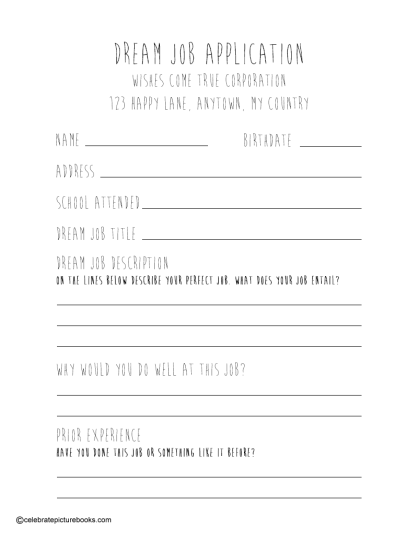
celebrate-picture-books-picture-book-review-dream-job-application

Dream Job Application


Work isn’t working when you love your job—it’s fun! What is your perfect job? Is it working with animals? Playing a sport? Being an artist, scientist, entrepreneur? Fill out this application and get started on following your dreams! Print the Dream Job Application below!

Dream Job Application 

March 8 – International Women’s Day

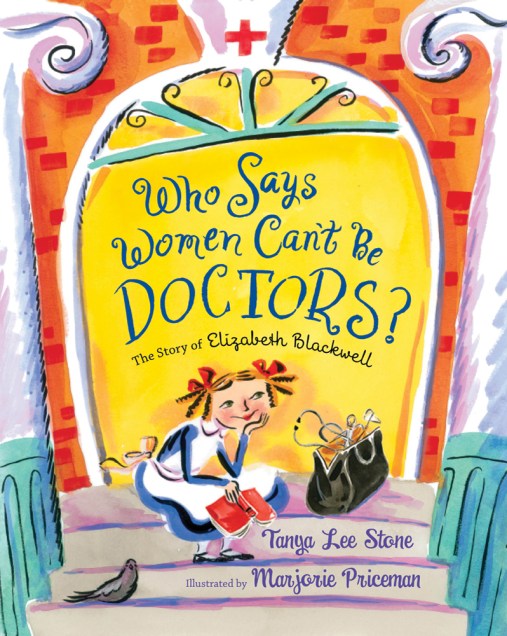
Who Says Women Can't Be Doctors by Tanya Lee Stone and Marjorie Priceman picture book review
About the Holiday

When the United States celebrated International Women’s Day in 1911, it paved the way for more extensive recognition of the contributions of women. Women’s Day stretched to a week officially in 1981 when Republican Senator Orin Hatch of Utah and Democratic Representative Barbara Mikulski of Maryland co-sponsored a Joint Congressional Resolution that established Women’s History Week. Six years later Congress named March as Women’s History Month.

March is a great time to discover and learn about the women who have shaped our country in all fields of endeavor from the arts to education to the sciences and beyond. Today we celebrate a woman who changed the medical profession forever.

Who Says Women Can’t be Doctors? The Story of Elizabeth Blackwell

Written by Tanya Lee Stone | Illustrated by Marjorie Priceman


Once upon a time there were no women doctors. Women weren’t even allowed to be doctors. Sounds like a fairy tale, doesn’t it? Fortunately, this one-time fact has entered the realm of fiction—all thanks to Elizabeth Blackwell. Elizabeth was not like other girls of the 1830s. She loved to explore and take on challenges. She could lift her brother over her head, and to toughen herself up she slept on the hard wood floor. To get a better look at the world she climbed to the roof of her house and leaned waaaaay out with a spyglass. What did she see? Maybe she saw her future. But it wasn’t what she imagined at the time. Blood made her queasy, dissection was disgusting, and being sick just made her want to hide from all the fussing.

But a comment by a sick friend, puts a bee in her bonnet. Mary Donaldson tells Elizabeth that she would much rather have been examined by a woman than her male doctor. “You should be a doctor, Elizabeth,” Mary says.

What a crazy notion, right? Well… Elizabeth can’t stop thinking about it. She asks around. Some people think it’s a good idea, but impossible; others just think it’s impossible. They believe women aren’t strong enough or smart enough and they laugh at her. By this time, though, Elizabeth is determined.

She applies to 28 medical schools, and they all say, “No.” But one day a “Yes” arrives in the mail. Elizabeth packs her bags. The townspeople all come out to see this new medical student, but they aren’t outside to welcome Elizabeth; they just want to whisper and point and stare. Surely, Elizabeth thinks, the students will be happy to see her.

But she receives the same reception on the college campus. In fact, she learns, the only reason she was accepted is because the men voted to let her in as a joke! Elizabeth knows how to handle it. She studies hard and gives her opinions, and soon she wins the respect of her fellow students—even if the townspeople still don’t accept her.

On January 23, 1849 Elizabeth Blackwell graduates from medical school with the highest grades in the class. She has become the first woman doctor in America! Many people hope that she would be the last. But as we know…she was Not!

Tanya Lee Stone magnificently imbues this short biography of Elizabeth Blackwell with enough mystery, conflict, and history for even the youngest readers to understand the type of girl and woman Elizabeth was as well as the challenges she faced. The details of Blackwell’s life that Stone includes are deftly chosen, and make her instantly recognizable and relatable to children. One line in the text written in the present tense amid the historical past transforms this biography into a universal story for all generations. Blackwell may have started out as a reluctant dreamer, but once she dared to believe she accomplished more than she or anyone could have imagined. It is what we want for all our children.

Marjorie Priceman’s illustrations, swirling with words, angled on the page and floating in white space, are as topsy-turvy as the world Elizabeth Blackwell created. Blackwell’s boldness is echoed in the rich colors and strong lines of the gouache and India-ink paintings, and the emotions she stirred in others—from derision to horror to admiration—are cleverly and exceptionally drawn in a minimal style on the characters’ faces.

Ages 5 – 9

Christy Ottaviano Books, Henry Holt and Company | ISBN 978-0805090482

International Women’s Day Activity

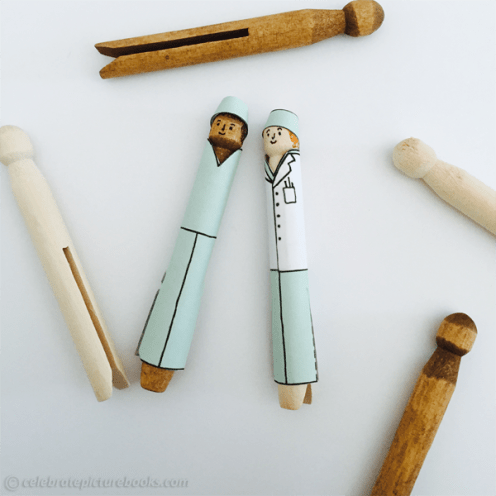
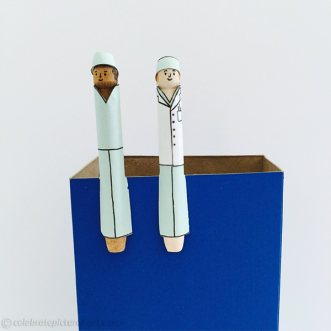
CPB - Doctors Clothespins

Doctor Clothespin Figure


Make one of these clothespin figures that honors International Women’s Day and Women’s History Month as well as everything doctors do to help us stay healthy.

Supplies

CPB - Doctors Clothespins on box

Directions

  1. Draw a face and hair on the clothespin
  2. Cut out the outfit you want your doctor to wear (color pants on your clothespin if you choose the lab coat)
  3. Wrap the coat or scrubs around the clothespin. The slit in the clothespin should be on the side.
  4. Tape the clothes together
  5. Wrap the cap around the head and tape it.
  6. If you’d like to display your clothespin doctor on a wire, string, or the edge of a box or other container, cut along the dotted lines of the clothes template.