April 2 – International Children’s Book Day

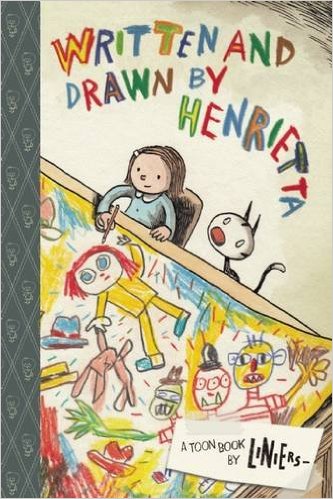
Written and Drawn by Henrietta by Liniers

About the Holiday

Each year since 1967 Hans Christian Andersen’s birthday has served as the date for Children’s Book Day. The International Board on Books for Young People, a non-profit organization founded in Zurich, sponsors the day to promote a love of reading. Seventy-five National Sections around the world alternate in hosting the event. The host for 2016 is Brazil, and this year’s theme is “Once Upon a Time.” A prominent author and illustrator from the sponsoring country prepare materials used to raise awareness of books and reading. Luciana Sandroni wrote this year’s message and the poster was designed by Ziraldo.

Children’s Book Day is celebrated with special events in schools and libraries, writing competitions, book awards, and opportunities to meet authors and illustrators. 

Written and Drawn by Henrietta

By Liniers

Henrietta’s mom gives her a new box of colored pencils, which Henrietta says is “as close as you can get to owning a piece of the rainbow.” She sits down to draw her own book and titles it “The Monster with Three Heads and Two Hats.” She begins with an illustration of a little girl, Emily, in bed at night. “I’m scaring myself…,” she thinks. Her thought is played out in her next page which shows Emily asking her stuffed rabbit if it will sleep with her because she’s scared of an unexplained Creak, Creak.

celebrate-picture-books-picture-book-review-written-and-drawn-by-henrietta-three-headed-monster

Copyright Liniers, 2015, courtesy of TOON Books

“Hmm…What’s that noise?” ponders the young writer. Her fears make it to the page—Creeak…Creeak…Thump…Crash…Boom. What are those noises, my favorite? Emily asks, her eyes now wide. The Noises! They’re getting closer!!

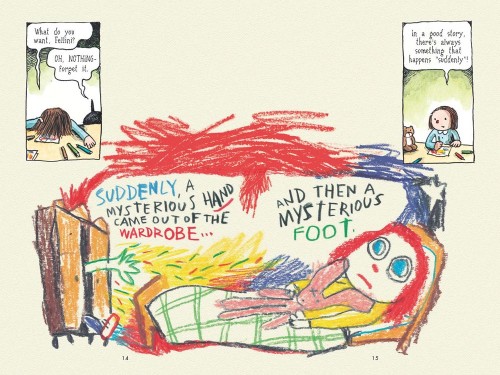
Henrietta knows that in a good story something always happens “suddenly,” and so she draws a mysterious hand and a mysterious foot emerging from Emily’s wardrobe. The plot thickens and finally the full terrifying monster with three heads pops out of the wardrobe.
celebrate-picture-books-picture-book-review-written-and-drawn-by-henrietta-in-bed

Copyright Liniers, 2015, courtesy of TOON Books

They acquire names from Henrietta’s imagination—Huey, Dewey, and Louie Bluie. . She is stuck for a bit as to how to go on, then gives Emily a question: What were you doing inside my wardrobe? The monster answers that it is looking for a hat. Emily joins them in their search, entering her wardrobe. She’s aghast to find that it is full of…clothes! (The wardrobe had been made in Narnia, the well-read Henrietta tells her cat, Fellini).

When the monster and Emily wonder which way to go, they meet a direction-giving mouse, and the story takes off—even Henrietta can’t wait to see what happens. She draws a huge pile of hats (she’s learned about “hat-o-logy” from the encyclopedia—the printed version!). The creature’s two heads with hats begs the third head to choose a hat before “the monster” shows up. Emily is terrified again—Another monster? What has Henrietta concocted this time? A monster with one head and three hats! This horrible beast suddenly appears and chases the crew through the wardrobe. Everyone is shouting Aaaaaaaaaaa—even the author.

celebrate-picture-books-picture-book-review-written-and-drawn-by-henrietta-wardrobe

Copyright Liniers, 2015, courtesy of TOON Books

Emily and the first monster lose the tremendous beast, ask the direction-giving mouse how to escape, and burst out of the wardrobe just in time. Henrietta thinks the story should have a happy ending, and before the monster with three heads and now three hats flies out the window, they give Emily a present. What could it be? Henrietta is so curious! It’s a wonderful hat, of course!

The End

“Now,” Henrietta says, “to find a publisher!”

This Toon Book by Liniers is a wonder as it reveals the inner-workings of children’s imaginations and the spontaneous nature of their brilliant creativity. Henrietta’s thought process as she conjures up her story is shown in neat comic-style panels with speech bubbles, while her story is depicted in colorful kid-like drawings and dialogue written in all capital letters. This interplay between the young artist/writer and her work enhances the fun, suspense, and surprise of this story-within-a-story. 

Ages 5 and up

TOON Books, and imprint of RAW Junior, LLC, 2015 | ISBN 978-1935179900

International Children’s Book Day Activity

Create Your Own Book

CPB - Comic Panel

It’s so much fun to let your imagination fly! Use this printable Comic Style Page to create a story as unique as you are!

Picture Book Review

April 1 – National One Cent Day

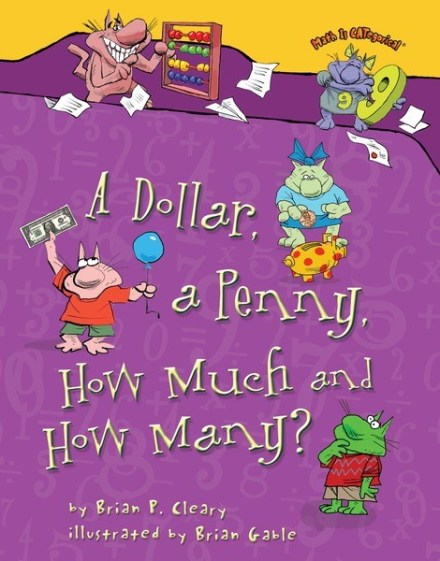
A Dollar, a Penny, How Much and How Many? by Brian Cleary and Brian Gable Picture Book Review
About the Holiday

Do you pick up a penny on the street or step over it as worthless? If you do the latter, you might want to reconsider. Today we celebrate the one-cent coin and its historical and artistic significance. The penny has been in circulation since 1793 and derives its name from the English “penny” but is pluralized in the US as “pennies” instead of the British “pence.”

It wasn’t until 1909 that Abraham Lincoln’s face appeared on the coin as part of President Roosevelt’s initiative to improve the artistic nature of the country’s coinage. Roosevelt enlisted famed sculptor August Saint-Gaudens to design the new penny, as well as the other gold pieces in use at the time. While the designs of other coins have changed over the years, Lincoln has remained the iconic image on the copper-colored penny.

While a single penny may not buy much these days, added together they can still make a difference. And remember the old adage: Find a penny pick it up. All the day you’ll have good luck!

A Dollar, a Penny, How Much and How Many?

Written by Brian P. Cleary | Illustrated by Brian Gable


Part of the Math is CATegorical series, this book is all about money—what it looks like, what it’s used for, and how the different denominations add up to equal the same price for a desired or needed item. Each two-page spread relates in verse a little lesson. The book opens with a general definition of money: “Money is the term for coins and bills that people use / to buy things such as pizzas, pencils, planes, and chains and shoes.”

Kids learn the names of our coins, what they are made of, and the value of each. They discover that coins can be added together or mixed and matched—10 pennies equal a dime; two dimes and a nickel equal a quarter, and so on. The story moves to a dollar store, where the cats buy different items with various combinations of coins. Jenny has 4 quarters, while her brother has 10 dimes. Anna has 100 pennies and Zack is carrying 7 dimes, 1 quarter, and 5 pennies. Kids see that all of these combinations have the same value.

Paper money is up next. A short description of the minting process leads to a discussion of value as the cats purchase a $20 book with various bills.

Brian Cleary’s catchy rhymes and straightforward explanations make this a perfect book for introducing money, its value, and the mathematical concepts of addition, subtraction, and multiplication of using money to buy things.

Brian Gable’s well-known comical cats of the series walk kids through the pages as they ponder prices on items on the shelf and the amount of money in their pocket. The cats’ humorous expressions and silly situations turn this money math lesson into a funny and fun experience. The brightly colored pages focus on the coins and bills, which are clearly displayed, and the direct connections between this money and the objects being bought is obvious.

Ages 5 – 9

Millbrook Press, 2012 | ISBN 978-0822578826

National One Cent Day Activity

CPB - Penny matching

Count Your Pennies! Matching Game


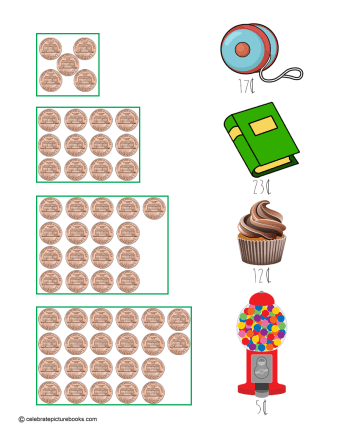
Counting pennies can be so much fun! Saving them can be even better! Collect enough pennies and you can buy something special or donate to your favorite cause! In this printable Count Your Pennies! matching game, draw a line from the stack of pennies to the object they will buy.

March 31 – Eiffel Tower Day

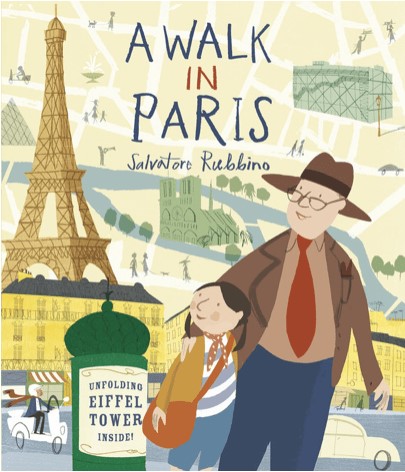
A Walk in Paris by Salvatore Rubbino Picture Book Review
About the Holiday

The Eiffel Tower is one of the most recognized monuments in the world. Its iconic shape was designed by Gustav Eiffel, for whom the tower is named. It was built for the International Exhibition of Paris and opened on March 31, 1889 to commemorate the 100th anniversary of the French Revolution.

The Eiffel Tower stands 984 feet high and was at the time of its opening the world’s tallest building, an honor it held until the Chrysler Building was erected in New York in 1930. When the International Exhibition’s 20-year lease on the land expired, the Eiffel Tower was almost taken down, until people realized it could be used as a radio antennae.

Of course, all these facts don’t convey the magic of the tower itself. To celebrate this auspicious date, visit the Eiffel tower if you live close or take a vicarious walk in the fabled city of Paris with today’s book. You can also make and enjoy the French Butter cookie recipe found below.

A Walk in Paris

By Salvatore Rubbino


A girl and her grandpa visiting the city of Paris emerge from the metro at Place Maubert just in time to join the throng of shoppers perusing the colorful food stalls on Market Day and to buy some famous French cheese. They continue on their tour through old streets and new boulevards, avoiding the gushing water for the street cleaners, until they reach the fountain at Place Saint-Michel. Their meanderings take them to the River Seine and Notre-Dame. After a long wait in line, they climb to the Chimera Gallery, 151 feet above the ground. From there they look out on the city, all the way to the Eiffel Tower.

On the ground once more they pass salons and boutiques and settle into a cozy bistro for lunch. They visit the Marais, a fashionable area of shops and cafes built on what was once marshland. Up next is a structure that seems to have been built inside-out since all its pipes and escalators are on the outside! This is Pompidou Center, a famous gallery of modern art. The little girl proclaims it formidable!, which means “wonderful!”

Time for a snack! The grandpa-granddaughter duo find themselves in front of a pâtisserie window full of delectable cakes. It’s so hard to choose! Back on the boulevard, they make their way to the majestic building and glass pyramids of the Louvre Art Museum, where perhaps the world’s most famous painting—the Mona Lisa—hangs. A well-deserved rest comes in Tuileries Gardens, where the grandfather enjoys his favorite view and the girl makes a friend by the fountain pool.

It’s getting late and time to leave, but there is one more site to see. As the sun goes down and the night sky darkens, the grandfather treats his granddaughter to a magnificent event – the bright, twinkling lights of the Eiffel Tower!

Through A Walk in Paris Salvatore Rubbino has created a beautiful armchair tour of one of the world’s great cities. The large format of this picture book allows for broad views of the landmarks and vistas, giving children a good idea of the vastness of the city. Each page is dotted with trivia and factual information, printed in small type that does not disturb the flow of the illustrations.

The illustrations in muted yet rich tones and with fine details aptly capture the culture and grandeur of the City of Lights. A fold-out page of the luminescent Eiffel Tower is sure to elicit some oohs and ahhs from children.

Ages 4 – 9 (the embedded facts and illustrations make this a good book for older children and research projects also)

Candlewick Press, 2014 | ISBN 978-0763669843

Eiffel Tower Day Activity

CPB - Eiffel Tower Cookies

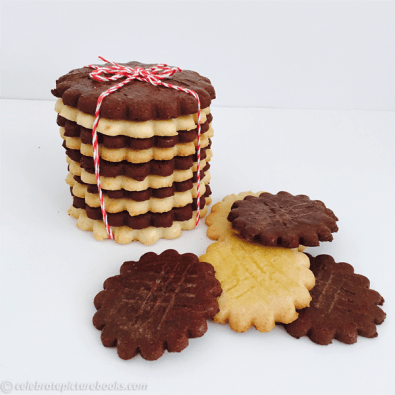
French Butter Cookies – Lemon and Chocolate


Whip up a batch of these delicious cookies to eat while enjoying A Walk in Paris. There’s no better way to spend a day than to take a trip for a new place—even if you do it in the coziness of your own room!

Ingredients for Lemon Cookies

  • 10 tablespoons unsalted butter (room temperature)
  • 1/2 cup sugar
  • 1 large egg
  • 1 1/4 teaspoons vanilla extract
  • 2 cups flour
  • 1/2 teaspoon baking powder
  • 1/4 teaspoon salt
  • 2 teaspoons lemon zest (or to taste)

For Egg Wash

  • 1 egg
  • 1 tablespoon water

For Chocolate Cookies

  • 1 ½ cups flour
  • ½ cup cocoa powder
  • ½ teaspoon cinnamon
  • ¼ teaspoon ground ginger

Directions

  1. In a bowl beat butter and sugar until light and fluffy
  2. Add the egg and vanilla extract and beat until blended
  3. Add the flour, baking powder and salt and beat just until incorporated. Do not over mix the dough. **For Chocolate Cookies use 1 ½ cups flour and add cocoa powder, cinnamon, and ground ginger before mixing**
  4. Transfer the dough to a lightly floured work surface, knead the dough a few times to bring it together, and then divide the dough in half.
  5. Wrap each half in plastic wrap and refrigerate for at least one hour or until firm
  6. Preheat oven to 350 degrees F (177 degrees C) and place rack in the center of the oven.
  7. Line two baking sheets with parchment paper and set aside.
  8. Remove one portion of the dough from the refrigerator and place on a lightly floured work surface. Roll out the dough until it is 1/4 inch (1 cm) thick.
  9. Using a lightly floured 2 inch (5 cm) round, fluted cookie cutter (or other cookie cutter of your choice), cut out the cookies and place them on the prepared baking sheet.
  10. Put the baking sheet of cut out cookies in the refrigerator for about 15 -20 minutes to chill the dough.
  11. Meanwhile, in a small bowl, whisk the egg with the water for the egg wash. Remove the cookies from the refrigerator and brush the tops with the egg wash.
  12. Then, with the tines of a fork or a toothpick, make a crisscross pattern on the top of each cookie.
  13. Bake cookies for about 12-14 minutes or until golden brown around the edges.
  14. Cool cookies on wire rack.

February 29 – Haiku Writing Day

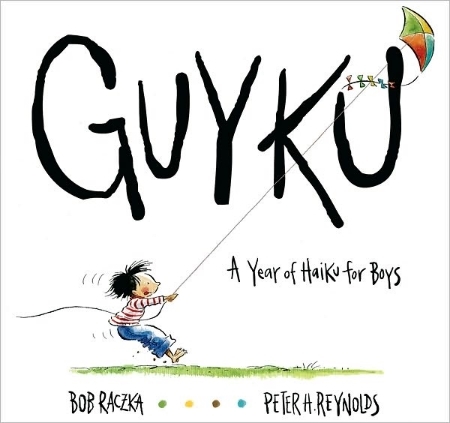
celebrate-picture-books-picture-book-review-guyku-cover

About the Holiday

In honor of the shortest form of poetry, February—the year’s shortest month—has been designated as haiku writing month. While it may be the shortest form of poetry, a good haiku creates feelings and recognition far beyond its tiny size. Through objective words and unique juxtapositions, a haiku can make a reader experience a common event or emotion in a new and surprising way. February is National Haiku Writing Month, but you can write and enjoy this beautiful form of poetry every day of the year!

Guyku: A Year of Haiku for Boys

Written by Bob Raczka | Illustrated by Peter H. Reynolds


When you’re a guy sometimes the best moments in life are just that—moments. Observing insects or splashing in puddles doesn’t need pages of explanation. And feelings?—Yuck! But still, wouldn’t it be cool to describe these unforgettable moments creatively? Bob Raczka and Peter H. Reynolds have done just that in Guyku, which plucks the essence out of such seasonal activities as kite flying, raking leaves, swatting mosquitos, skipping stones, building snowmen, and more. Each haiku is a small gem that boys (and girls) will recognize and identify with.

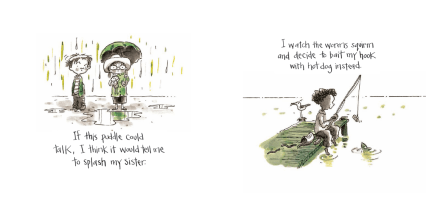
celebrate-picture-books-picture-book-review-guyku-fishing

Image copyright Peter H. Reynolds, text copyright Bob Raczka. Courtesy of bobraczka.com

Peter Reynolds’ minimalist pen, ink, and watercolor illustrations highlight the brief poetry while giving each haiku individual boys who are curious, mischievous, determined, happy, and full of fun.Guyku stands up to multiple readings and will spark an appreciation for the joy in life’s fleeting moments.

Ages 4 – 8

Houghton Mifflin Books for Children, New York, 2010 | ISBN 978-0547240039

Discover so many more books by Bob Raczka on his website!

Meet Peter H. Reynolds and view a gallery of art and books on his website!

Haiku Day Activity

CPB - Haiku Day Bookmark (2)

Cute-as-a-Button Bookmark


Sometimes you just can’t finish a book in one sitting, or you want to mark your favorite poem so you can go back and read it again and again. This bookmark is easy to make and will keep your page in style.

Supplies

  • Fleece or felt in your favorite color
  • Buttons of different colors and/or styles
  • Pony beads in various colors
  • Fabric or strong glue
  • Scissors

Directions

  1. Cut a strip of fleece or felt 1 – 1½ inches wide and 4 – 5 inches longer than the book you want to use it in.
  2. Glue the buttons onto the top of the bookmark
  3. Cut ¼ inch-wide by 1 inch-long fringe strips at the bottom of the fleece or felt.
  4. Slide pony beads onto the fringe strips (you may need to pull the fleece or felt through the bead with a tweezers)

February 2 – Sled Dog Day

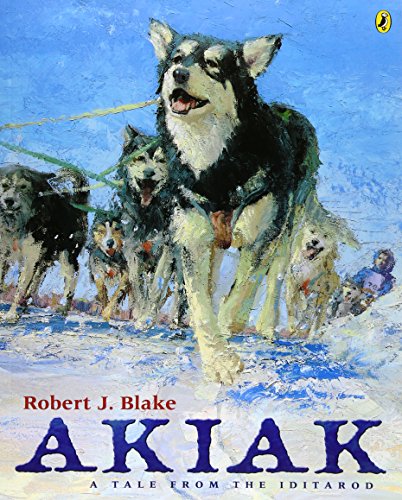
celebrate-picture-books-picture-book-review-akiak-a-take-from-the-iditarod-cover

About the Holiday

On this day we honor the sled dogs who have bravely risked their lives to help human beings survive and flourish in some of the harshest landscapes from our earliest history. One of these memorable times occurred in 1925 when a diphtheria epidemic swept through Nome, Alaska. The only anti-toxin that could help was in Anchorage—more than 900 miles away! The weather was horrific and the only way for the serum to reach the ailing population in time was by dog sled. Through incredible bravery, strength, and perseverance, a relay of dog-sled teams completed the run and delivered the serum.

Today’s Iditarod honors this heroic effort. While this picture book review revolves around the Iditarod, if you would like to read about the serum run and a brave sled dog that made the success of the project possible, I highly recommend another picture book by Robert Blake: Togo.

Akiak: A Tale from the Iditarod

Written and Illustrated by  Robert J. Blake

The annual Iditarod is the setting for this dramatic outdoor adventure that pits mushers and their sled dogs against the harshest climate and each other. Akiak is a veteran of this grueling race from Anchorage to Nome, Alaska. She has led a team of dogs to a fifth, third, and second place, but that winning spot has been so elusive. This year Akiak is 10 years old and it will be her last chance to bring home a first-place finish for the 16-dog team and Mick, her musher.

celebrate-picture-books-picture-book-review-akiak-a-take-from-the-iditarod-sled-team

Image copyright Robert J. Blake, courtesy of Puffin Books

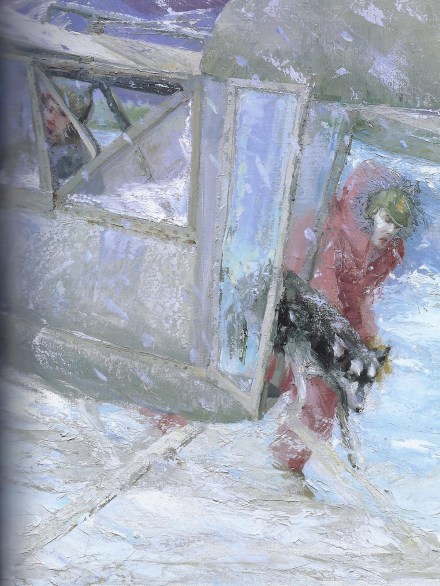
Akiak possesses the drive and heart to lead the sled up and over dangerously steep hills, through icy water and deep snow, and through howling storms. On Day 3 Akiak, Mick, and the other dogs pass Willy Ketcham, their main rival, and the race is looking good. But on the fourth day of the race, ice jams Akiak’s paw and she can’t continue. Mick leaves her at a checkpoint to be flown home while another of the dog team takes her place.

celebrate-picture-books-picture-book-review-akiak-a-take-from-the-iditarod-akiak-goes-outside

Image copyright Robert J. Blake, courtesy of Puffin Books

But Akiak won’t give up easily. Taking advantage of difficult weather, she is able to escape from the handlers putting her on the plane and speeds away, following her knowledge of the trail and the scent of the team to find Mick.

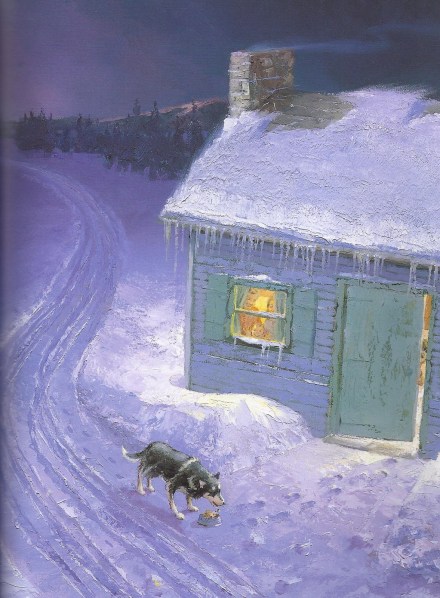
Akiak waits out a blizzard, outsmarts trail volunteers who try to catch her, and endures hunger and thirst to narrow the distance between her and Mick. With the help along the trail, Akiak comes closer to her old team. Finally on day 10, just when the team and Mick need her most, Akiak catches up with them! The Iditarod rules say Akiak can’t be put back on the team, but that doesn’t mean she still can’t help.

celebrate-picture-books-picture-book-review-akiak-a-take-from-the-iditarod-akiak-gets-food-along-the-way

Image copyright Robert J. Blake, courtesy of Puffin Books

Akiak knows something Mick doesn’t. While the team is floundering among crisscrossing trail marks, Akiak nudges them onto the right track. Akiak jumps in the sled with Mick, and they glide into Nome ahead of Ketcham – triumphant!

Author-illustrator Robert Blake has created a fast-paced adventure full of as many twists and turns as the Iditarod trail itself. Children of all ages will cheer Akiak along on his journey. Blake’s oil painting illustrations bring to life the whipping snow, howling winds, and deep drifts of this forbidding landscape. The movement and determination of Akiak and the other sled dogs are rendered beautifully as they strive to win. Alaska’s vast beauty becomes a character itself in the icy blue and white tones of Blake’s work.

Ages 4 – 8

Puffin Books, New York, 2004 | ISBN 978-0142401859

Discover more about Robert Blake and his many books, plus sketchbooks and a video on his website!

Sled Dog Day Activity

CPB - Iditarod game map

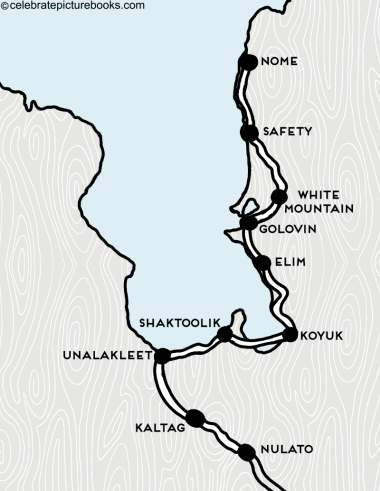
Race the Iditarod Trail! Board Game


Play Race the Iditarod Trail—a game as wild as the run itself! The game board, playing cards, and instructions can all be found here (save images to print a full page):

Even Years Route

Odd Years Route

February 1 – National Freedom Day

celebrate-picture-books-picture-book-review-henry's-freedom-box-cover

About the Holiday

National Freedom Day was created by a former slave named Major Richard Robert Wright Sr. and was established as a national holiday on June 30, 1948 by President Harry S Truman. The observance commemorates the day in 1865 when Abraham Lincoln signed a resolution that would become the thirteenth amendment to the U.S. Constitution. The amendment was ratified almost one year later by each state and outlawed slavery.

Today, people often celebrate National Freedom Day by laying a wreath at the Liberty Bell, which is located in Philadelphia, Pennsylvania.

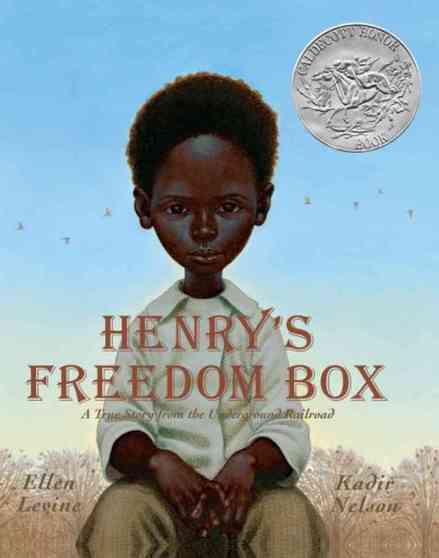
Henry’s Freedom Box: A True Story from the Underground Railroad

 Written by Ellen Levine | Illustrated by Kadir Nelson


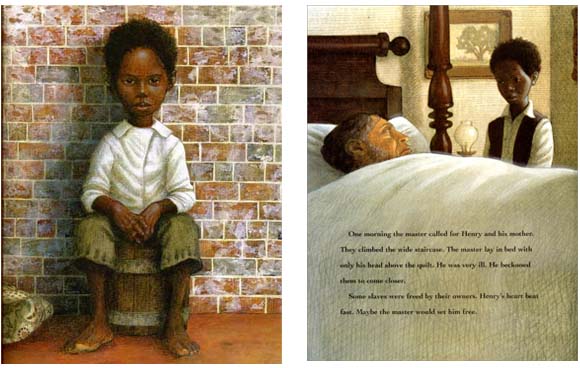
Henry Brown was born a slave. He didn’t know his birthday and he never knew security. “Like autumn leaves are torn from the trees,” his mother tells him, “slave children can be torn from their families.” When Henry’s master calls him to his sickbed, Henry hopes to be freed, but instead, his mother’s fear comes true. Henry is taken away and grows up far from his family, learning to be careful not to make mistakes that will bring severe punishment.

celebrate-picture-books-picture-book-review-henry's-freedom-box-henry

Image copyright Kadir Nelson, text copyright Ellen Levine. Courtesy of Scholastic Press

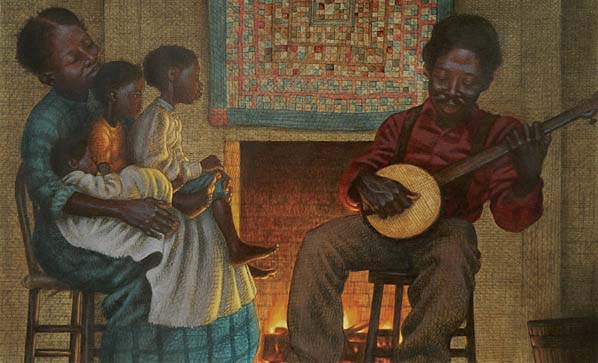
One day Henry, now a young man, falls in love with Nancy, a slave on another plantation. Henry and Nancy marry and are allowed to live together despite being owned by separate masters. Henry and Nancy have three children and are living happily.

But one day Nancy tells Henry that her master’s plantation is in financial trouble. She is afraid her master will sell their children to make money. The idea strikes fear into Henry’s heart. The next day Henry learns that indeed Nancy and his children have been sold. He knows he can show no emotion, but “his heart twisted in his chest.”

celebrate-picture-books-picture-book-review-henry's-freedom-box-henry-plays-music-for-his-family

Image copyright Kadir Nelson, courtesy of Scholastic Press

Henry runs to the town square and sees his children and Nancy being driven away. Henry is devastated. Time passes and Henry thinks about freedom. Lifting a crate used for shipping tobacco gives him an ingenious idea. He will mail himself to the North, where he can be free.

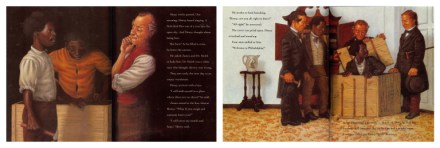
Henry’s friends agree to help him, and although they’re afraid he will be discovered, they seal him into a wooden box, address it to people in Philadelphia, and send him off. The crate is handled roughly throughout the journey north, and Henry must endure pain for many hours. Henry finally arrives safely in Philadelphia on March 30, 1849. Known from then on as Henry “Box” Brown, he became one of the most famous runaway slaves in America.

celebrate-picture-books-picture-book-review-henry's-freedom-box-henry-comes out of box

Image copyright Kadir Nelson, text copyright Ellen Levine. Courtesy of Scholastic Press

Based on an actual story of The Underground Railway, Henry’s Freedom Box is written and illustrated to stunning effect. Ellen Levine’s lyrical and metaphorical language combines with the excellent pacing of the pages to enhance the emotional impact of this powerful and original true story. Children will be inspired by this man who suffered devastating loss, but persevered and through cunning, bravery, and the help of friends, obtained freedom.

Kadir Nelson took inspiration for his illustrations from an antique lithograph of Henry Brown, created by Samuel Rowse in 1850. Through a combination of watercolor and oils crosshatched with pencil lines, Nelson’s richly hued paintings capture the poignancy of Henry’s struggles and ultimate freedom. His characters’ facial expressions are particularly moving.

Henry’s Freedom Box: A True Story from the Underground Railroad is a riveting story of slavery and one man’s fight for freedom that would make an excellent addition to children’s libraries.

To view a gallery of books and other illustration work by Kadir Nelson, visit his website!

Ages 4 – 8

Scholastic Press, 2007 | ISBN 978-043977733

National Freedom Day Activity

CPB - Freedom Stamp template (2)

Create Your Own Freedom Stamp


If you were going to create a postage stamp representing freedom, what would it look like? Think about what freedom means to you, then grab some colored pencils and design your own stamp!

Supplies

Directions

  1. Print the Freedom Stamp template
  2. Draw your own design about what freedom means to you
  3. Cut out the stamp and display it in your room or in a common area of your home

OR:

  1. Inside the stamp template write a letter to:
  • Someone in the Military: Thank them for their service to the United States to help keep our country free. You can learn how to send letters to members of the military here.
  • Your Teacher: Thank your teacher for all of her or his hard work. Only through education can we really be free.
  • Someone else who inspires you: Tell this person why they inspire you and thank them for their work.
  1. Give your Freedom Stamp letter to the person it is written to

Picture Book Review