July 4 – Independence Day

celebrate-picture-books-picture-book-review-lady-liberty's-holiday

About the Holiday

On July 4, 1776, the thirteen colonies that then made up America claimed their independence from England. After much debate and with a majority—but not unanimous—vote, delegates to the Continental Congress adopted the Declaration of Independence. While the vote may not have been unanimous, delegates from all 13 colonies signed the document penned by Thomas Jefferson. John Hancock, who was President of the Continental Congress, signed his name “‘with a great flourish’ so England’s ‘King George can read that without spectacles!’” The action led to the Revolutionary War and ultimately to a break with England.

On this United States national holiday most cities host parades, fireworks displays, and other special events.

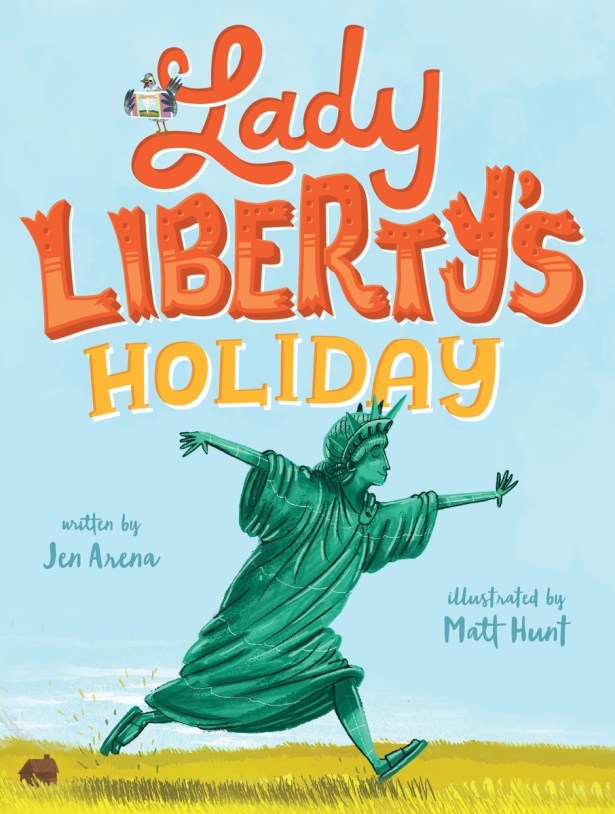
Lady Liberty’s Holiday

Written by Jen Arena | Illustrated by Matt Hunt


Shortly before the Fourth of July Lady Liberty is feeling down. Year after year she has stood in the same place holding aloft a torch in one hand and cradling a tablet in the other. She turns to her friend Moe, the pigeon on her shoulder, and expresses her dissatisfaction. Moe has a suggestion: “‘Lady, you need a getaway!’” Lady Liberty thinks about it and about the vastness of America. She has only seen a small corner of it. That night Lady Liberty pries herself from her pedestal and sneaks away.

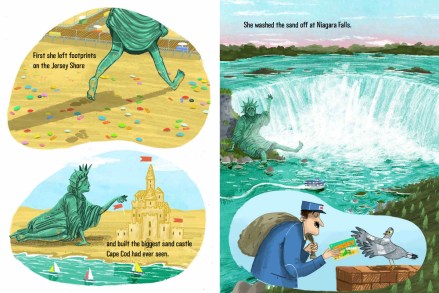
She walks the wide beaches of New Jersey, builds a huge sandcastle on Massachusetts’ Cape Cod, and dips her feet in Niagara Falls. With her long strides it doesn’t take her long to reach the Mississippi River. She finds a seat atop the Gateway Arch in St. Louis, Missouri and watches the Ol’ Man river slip past. In Kansas she plays in wheat fields that “tickle her feet” and are as good for making angels as snow. In South Dakota she photo bombs at Mount Rushmore, and she takes a quick hike over the Rocky Mountains. After all this fun Lady Liberty needs a rest, so she takes a nap on San Francisco’s Golden Gate Bridge.

But the people in New York have noticed the Lady’s absence. The Fourth of July is only three days away and no one is in the mood to celebrate without her. “Tourists were gloomy. Cops were cross. Even the stock market was down.” The mayor is even considering cancelling the holiday! Moe is worried Liberty might not come back.
celebrate-picture-books-picture-book-review-lady-liberty's-holiday

Image copyright Matt Hunt, courtesy of Jen Arena (jenarenabooks.com)

And Moe is right! Lady Liberty is enjoying herself too much to think about returning. The grandeur of the Grand Canyon makes her feel small—it’s a nice change, she thinks. She drinks water from a geyser in Yellowstone Park and sleeps under the stars in Texas. With a hop and a skip she’s dancing in New Orleans, and the Florida Keys make excellent “stepping stones” to her next adventure. She doesn’t even mind schlepping through swamps in the deep south, and an alligator that latches onto her toe is dispatched with a shake.

Lady Liberty suddenly hears the familiar flap of Moe’s wings. Moe tells Liberty how things are in New York. When she hears that they are thinking of cancelling the Fourth of July, she “bolts up as if she’d been struck by lightning.” Yes, says, Moe. “‘Nobody feels like celebrating without you.’” But after her cross-country tour, Lady Liberty knows that “‘the Fourth of July isn’t about me. It’s about America!’” Without another thought Liberty is racing north.

As New Yorkers wake at dawn, they see Lady Liberty happy to be back overlooking the Harbor, “where she had stood for over a hundred years.” Her copper dress shines in the early morning sun. Later that night she glows again in the colors of fireworks and enjoys a very Happy Fourth of July!

The final two pages tell the story of Lady Liberty’s creation, installation, and meaning. Tantalizing tidbits about the statue of Liberty are also revealed.

Jen Arena’s Lady Liberty’s Holiday is an engaging introduction to the story of the Statue of Liberty and American geography. A road trip across America was once a staple of childhood, and Arena replicates the excitement and wonder of viewing the country’s monuments and splendor through Lady Liberty’s walking tour. As each page brings readers to another awe-inspiring landmark, kids will want to learn more about the parks, states, and history of America.

Matt Hunt’s vibrant, full-bleed spreads are as expansive as the American landscape. The blue waters of Niagara Falls roar over the edge, creating white mist; the rock-hewn faces of George Washington, Thomas Jefferson, Teddy Roosevelt, and Abraham Lincoln gaze out from the peak of Mount Rushmore; and the spume of water from a Yellowstone geyser dwarfs the tourists below. As Liberty towers over cruise boats and trees, lounges across the Golden Gate Bridge, and flicks away a pesky alligator, kids gain an excellent perspective on the size of the Statue of Liberty as well as the monuments and natural landmarks she visits.

Like the postcards that Liberty sends to her friend Moe from stops on her journey, Lady Liberty’s Holiday is a welcome snapshot of America any time of year.

Ages 4 – 8

Knopf Books for Young People, Random House Kids, 2016 | ISBN 978-0553520675

To learn more about Jen Arena and view the books she’s written , visit her website!

A gallery of Matt Hunt‘s work can be seen on his website!

Independence Day Activity

celebrate-picture-books-picture-book-review-fourth-of-july-coloring-page

Fourth of July Coloring Page


The 4th of July celebrations mean flags, fireworks, and fun! Here’s a printable Fourth of July Coloring Page for you to make your own holiday festivities. You can even make it sparkle with a dash of glitter!

May 19 – It’s National Photography Month

celebrate-picture-books-picture-book-review-dorothea's-eyes-cover

About the Holiday

National Photography Month was established in 1987 by the United States Congress to commemorate the importance of photos to present and future generations. National Photo month gives you an opportunity to consider what you photograph and how you can become more intentional about making photos that will be meaningful decades from now. Look at your subjects and see the colors, people, events, the culture—even the moment that you are documenting. Once you’ve taken your pictures, don’t just leave them on your phone, in the cloud, or on your hard drive. Print them and archive them for the future. Your inspiration, perspective, and opinions will live on in them.

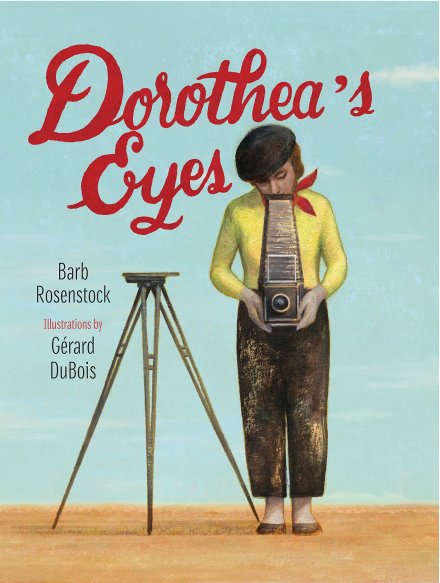
Dorothea’s Eyes: Dorothea Lange Photographs the Truth

Written by Barb Rosenstock | Illustrated by Gérard DuBois


When Dorothea Lange opens her green eyes, she sees things others miss. In the shadows, in patterns within the grain of wooden tables, in the repeated shapes of windows on a wall, and most especially in people’s faces. “Dorothea loves faces! When Dorothea looks at faces, it’s like she’s hugging the world.”

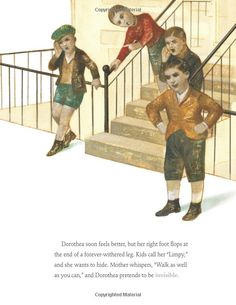
When Dorothea is seven she contracts polio. The disease withers her right leg and forever after she walks with a limp. Other kids tease her and make her want to hide. Her mother encourages her, but Dorothea pretends to be invisible. When her father leaves his family, her mother gets a job in New York and Dorothea goes to a new school. She is different and lonely.

celebrate-picture-books-picture-book-review-dorotheas-eyes-with-camera

Image copyright Gérard DuBois , text copyright Barb Rosenstock. Courtesy of Caulkins Creek

As Dorothea waits for her mother to finish work, she looks around her, spying “into crowded tenements where fathers, home from peddling, read newspapers, and mothers wash dishes, clothes, and babies in rusty sinks—happy and sad mixed together.” She begins to skip school to wander the city, gazing at it with her curious eyes and heart.

When Dorothea grows up she decides to become a photographer. Her family is surprised—it is not a ladylike profession. She works any job she can find in the photography industry, learning about cameras, darkrooms, negatives, and the printing process. “Alone in the darkroom’s amber glow, she studies the wet printing paper while faces appear in black and white. Dorothea loves faces!”

When she is 23 Dorothea travels west and when all her money is stolen in San Francisco, she stays, gets a job, and starts her own portrait studio. She becomes the sought-after photographer of the richest families in California. She makes money, gains friends, gets married, and starts a family of her own. But she always wonders, “Am I using my eyes and my heart?”

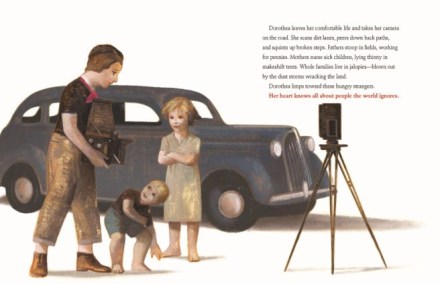
When the stock market crashes and the Great Depression sweeps the country, Dorothea focuses her camera on the desperate and the downtrodden. Her friends don’t understand, but Dorothea sees into these poor people’s hearts. She “knows all about people the world ignores.” For 5 years she goes out into the fields, peers into tents, documents families living in their cars, crouches in the dirt to reveal the stories of the people struggling with the devastation wrought by the Dust Bowl.

celebrate-picture-books-picture-book-review-dorotheas-eyes-with-car-and-camera

Image copyright Gérard DuBois , text copyright Barb Rosenstock. Courtesy of Caulkins Creek

Newspapers and magazines publish her pictures. “Her photographs help convince the government to provide parents with work, children with food, and families with safe, clean homes. “The truth, seen with love, becomes Dorothea’s art.” Dorothea’s photographs are still known today. Their subjects continues to help us see others with our hearts.

Six of Dorothea Lange’s most famous and recognizable photographs are reproduced on the last page—still as riveting today as they were in the 1930s. Further information on her life and work is provided as well as sources where her photographs can be viewed, resources for further study, and a timeline of her life.

celebrate-picture-books-picture-book-review-dorotheas-eyes-kids

Image copyright Gérard DuBois , text copyright Barb Rosenstock. Courtesy of Caulkins Creek

Barb Rosenstock brings Dorothea Lange’s vision to the page with love, honesty, and understanding in this excellent biography of a woman whose photographs defined the Great Depression and Dust Bowl era. Lange’s life-long connection to the poor and often overlooked people of the world is beautifully described and explained in a gentle, compassionate way that will resonate with children. Rosenstock’s language is lyrical with staccato sentences that echo the clicks of Lange’s shutter capturing life’s reality with her eyes and her heart.

Gérard DuBois’s illustrations are arresting and set Dorothea Lange’s story firmly in its historical and emotional landscape. Rendered in acrylic and digital imagery, they feature the muted colors and style of book illustrations from long ago. By placing the images of Dorothea, her family, and her photography subjects against white backgrounds, DuBois emphasizes Lange’s focus on the people she met and faces that inspired her. Distressed textures accentuate the troubled times and the anguish of both Dorothea and her subjects.

Ages 7 – 12

Calkins Creek, 2016 | ISBN 978-1629792088

Discover all the amazing books by Barb Rosenstock on her website!

View a portfolio of art and book illustration by Gérard DuBois on his website!

Here’s a snapshot of Dorothea’s Eyes!

National Photography Month Activity

CPB - New Professionals Picture

News Professionals Clothespin Figures


Make one of these clothespin figures that honors the men and women who work to keep the world informed.

Supplies

Directions

  1. Draw a face and hair on the clothespin
  2. Cut out the clothes you want your journalist or photographer to wear
  3. Wrap the clothes around the clothespin. The slit in the clothespin should be on the side.
  4. Tape the clothes together
  5. Cut out the camera
  6. Tape one end of a short length of thread to the right top corner of the camera and the other end of the thread to the left corner. Now you can hang the camera around the figure’s neck.

Idea for displaying the figures

  • Attach a wire or string to the wall and pin the figure to it
  • Pin it to your bulletin board or on the rim of a desk organizer


Picture Book Review

April 28 – Workers’ Memorial Day

celebrate-picture-books-picture-book-review-brave-girl

About the Holiday

Some jobs are so dangerous that workers get hurt or even die doing them. Around the world organizations have been established to help industries provide safer working environments for their employees by establishing standard rules and regulations for buildings, machinery, working hours, and more. Unions and other groups have also been founded that represent workers to ensure their rights are upheld and their needs are met. Today we honor the sacrifices of workers in dangerous professions and raise awareness for safe working conditions.

Brave Girl: Clara and the Shirtwaist Maker’s Strike of 1909

Written by Michelle Markel | Illustrated by Melissa Sweet


Among the immigrants sailing to New York, stands five-foot-tall Clara Lemlich. She may not know it now, but she’s going to change her new city. While her father can’t find work, Clara gets a job in the garment industry, which hires school-age girls to make women’s clothing. Instead of going to school, Clara spends her days hunched over her sewing machine in a dark, smelly factory with many other girls, making clothes as fast as she can.

The rules of the factory are severe. For minor mistakes workers can be fined or worse—fired, leaving their families without an income. The doors are locked so the girls can’t leave without being inspected to ensure they haven’t stolen anything. And the workers must toil long into the night. Despite it all Clara is determined to get an education even though it means walking to the library after work and missing sleep to read her lessons. 

At the factory the girls become friends and reveal stories and secrets. The working conditions make Clara angry. She hears that the men at the factory want to form a union. If all the workers team up, they can hold a strike and force the management to treat them better, the men say. But they don’t think the girls are tough enough.

Clara knows what the girls are capable of. Every day she talks to her friends and the other women, urging them to fight for their rights—and they do! But it’s not as easy as the men predicted. The bosses don’t want to give in. In fact Clara’s life is in danger! She is beaten and arrested. Despite the intimidation she continues to picket. These small strikes make little difference, however—the bosses just hire new girls and the work continues.

Clara and other union leaders think only a huge strike by all workers in every garment factory in New York will cause the bosses to listen and make changes. At a union meeting workers pack the seats to listen to leaders from across the country. Not one of them recommends such a large strike. Clara can keep silent no more. She moves to the front of the hall and calls out. People lift her to the stage. Shouting “Unity is strength” she rallies the crowd and begins the largest strike of women workers ever in United States history.

The next morning thousands of women take to the sidewalks, leaving their sewing machines empty and silent. New York is stunned! Newspapers call the strike a “revolt,” and the girls an “army.” But this is really an army of children—the girls range in age from only 12 to 25 years old. Clara knows how to lead and motivate the girls. She gives rousing pep talks, sings, and stands up to thugs sent to harass them.

All winter the girls join the men strikers. They are starving and cold and become the inspiration for newspaper articles and fundraising. Many wealthy women donate to their cause and join them on the picket lines. Finally the bosses relent. They agree to the formation of unions in their factories, raise salaries, and shorten the work week. Factory workers in Philadelphia and Chicago take heart from Clara’s work and improve conditions in their cities.

Even though Clara is young and small, she proves that anyone can right wrongs and make a difference.

The final pages include more information about the garment industry in the early 1900s as well as a bibliography.

Michelle Markel’s Brave Girl is a spirited biography of Clara Lemlich, clearly outlining the life and working conditions of immigrants in the early 1900s—especially industries’ use of children to fill low-paying, oppressive jobs. This true-life story of a girl who wouldn’t give up or give in is told with pride and balance, touching on the dangers Clara faced in a sensitive manner appropriate for children. Overall, the idea that one person can make a difference no matter how big or how old shines through, making this not only a tale of the past, but an inspiration for today’s children and the future.

Melissa Sweet cleverly combines watercolor and gouache paintings with colorful fabric, ribbon, sewing pattern paper, and ledger pages to create illustrations fitting to the story. The pictures appear sewn onto the pages with straight, zigzag, and embroidery stitches, and the vibrant colors depict the fiery nature of Clara and all the workers who strove for better lives.

Ages 4 – 9 (and up as Brave Girl makes a wonderful teaching text)

Balzar + Bray, Harper Collins, 2013 | ISBN 978-0061804427

Workers’ Memorial Day Activity

celebrate-picture-books-picture-book-review-dream-job-application

Dream Job Application


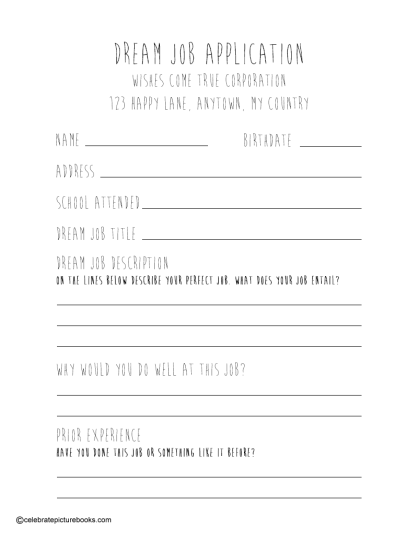
Work isn’t working when you love your job—it’s fun! What is your perfect job? Is it working with animals? Playing a sport? Being an artist, scientist, entrepreneur? Fill out this application and get started on following your dreams! Print the Dream Job Application below!

Dream Job Application 

April 13 – National Bookmobile Day

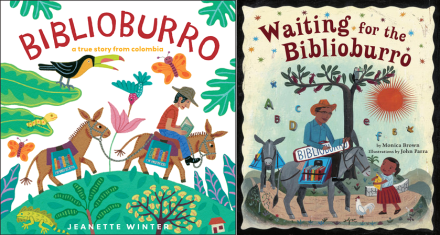
CPB - Biblioburro 3It’s not often that kids are able to read the same story from two different sides. In today’s post I review two picture books about the inspiring Luis Soriano Bohórquez. The first book is from Soriano’s viewpoint, and the second focuses on the children whose lives are changed by his courage and dedication.

About the Holiday

Today we honor the more than 930 dedicated library professionals who bring books to remote places, shut-ins, and others in the community who have no access to libraries and the services they offer. For over 100 years, bookmobiles have delivered information, technology, and resources for life-long learning to Americans of all walks of life.  To celebrate today’s holiday show your support for bookmobiles by thanking your library workers in person or by sending them a letter or email. You can also consider donating to a book drive or book fund to keep this vital service going!

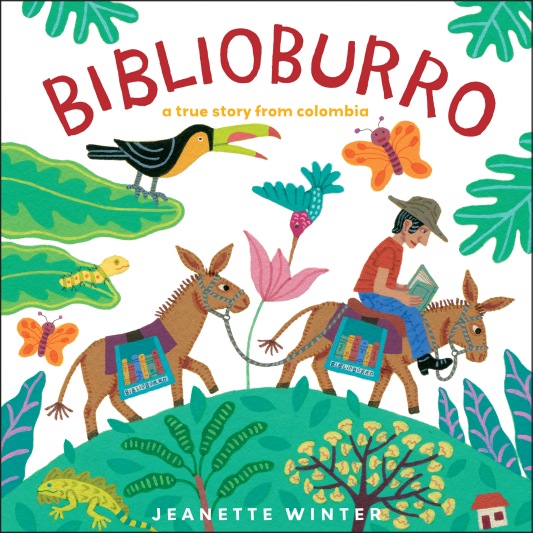
Biblioburro: a True Story from Columbia by Jeanette Winter Picture Book Review

Biblioburro: A True Story from Columbia

By Jeanette Winter


Luis lives deep in the jungles of Columbia surrounded by his beloved books. In fact, Luis loves books so much that his entire house is filled with them, floor to ceiling. “What will we do with them all?” asks his wife, Diana. Luis thinks about it and suddenly has an idea. He can share his books with people who live in the faraway hills! How will he get them there? By burro!

Luis buys two burros and names them Alfa and Beto. He builds special crates that will fit on their backs to carry the books. He paints a sign to carry with him: “Biblioburro”—The Burro Library—it says. Every week Luis takes the burros to far off villages, but it is not an easy trip. On his way to El Tormento, the hot sun makes the burros thirsty. When they stop at a stream to drink the water, Luis has a hard time pulling Beto away from the cool oasis.

celebrate-picture-books-picture-book-review-biblioburro-el-tormento

Copyright Jeanette Winter, 2010, courtesy of Beach Lane Books.

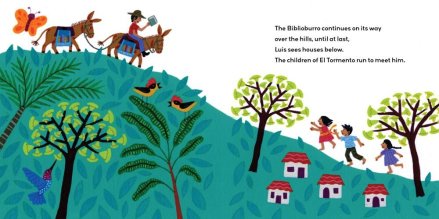
Among the jungle trees, bandits wait. As Luis passes through a lonely section of his path, a robber jumps out and demands silver. Luis has no money, so the bandit takes one of his precious books, demanding silver “next time.” At last Luis reaches El Tormento. The children run to greet him! Before they choose their books, however, Luis reads them a story. Today he has brought along a special treat—pig masks for everyone! As the children wear their masks, Luis reads the story of the Three Little Pigs and the Big Bad Wolf. After the story the kids choose their books and head for home.

Luis leads Alfa and Beto on the journey back as the sun sets. At home he and his burros have a well-deserved dinner. Luis is tired from his long journey, but as Diana sleeps he sits in his rocking chair reading into the deep, dark night—just the same as the children of El Tormento.

celebrate-picture-books-picture-book-review-biblioburro-Luis

Copyright Jeanette Winter, 2010, courtesy of Beach Lane Books.

The final page presents factual information about Soriano and his life. He has inspired many to donate to his cause, bringing education and literacy to hundreds of people since the year 2000. This book is also available in a Spanish language version.

celebrate-picture-books-picture-book-review-biblioburro-spanish-edition-cover

Any book lover will be fascinated by this true story of a man dedicated to bringing books to children living in remote areas of Columbia. Jeanette Winter’s straightforward tale reveals not only the imagination and care it took to make Luis’s dream a reality, but also the perils he faces in carrying out his mission. Winter’s lyrical tone emphasizes the isolation of the far-off villages Luis visits and his solitary travels. The story is full of suspense and humor that will draw children into this unique biography of Luis Soriano Bohórquez.

Winter’s vivid illustrations bring the Columbian jungles to life—vivid green leaves and flowers are home to orange snakes, yellow caterpillars, multi-colored toucans and parrots, and other native species. Kids will wish they could reach out and pet the sweet burros that work so hard to carry the books. As nighttime falls, the hues cool to muted teals and blues—the color of dreams.

Ages 5 – 9

Beach Lane Books, Simon & Schuster, 2010 | ISBN 978-1416997788

You can find Biblioburro: A True Story from Columbia at these booksellers

Amazon| Barnes & Noble | Books-a-Million | IndieBound

Waiting for the Biblioburro by Monica Brown and John Parra picture book review

Waiting for the Biblioburro

Written by Monica Brown | Illustrated by John Parra


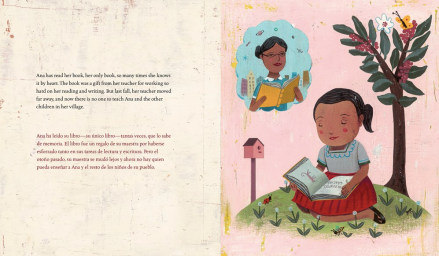
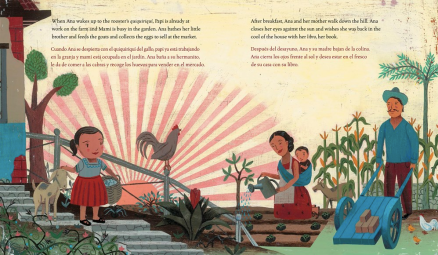
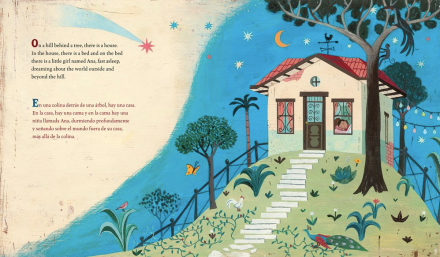
On a faraway hill in a small Columbian village, a little girl named Ana wakes to a day of feeding the farm animals, taking care of her younger brother, and collecting eggs to sell in the market. When the long, hot day is over, Ana retreats to her room to read her most precious treasure—the one book that her teacher gave her before she moved and the school closed.

celebrate-picture-books-picture-book-review-waiting-for-the-biblioburro-bilingual-edition-reading

Image copyright John Parra, 2016, text copyright Monica Brown, 2016. Courtesy of Tricycle Press.

Ana has memorized the book and wishes she had more, but there is no one to provide books or education in her tiny village. To make up for it, Ana imagines her own stories and tells them to her brother before they go to sleep. But one day everything changes. Ana hears an unfamiliar clip-clop and a loud iii-aah! Iii-aah!

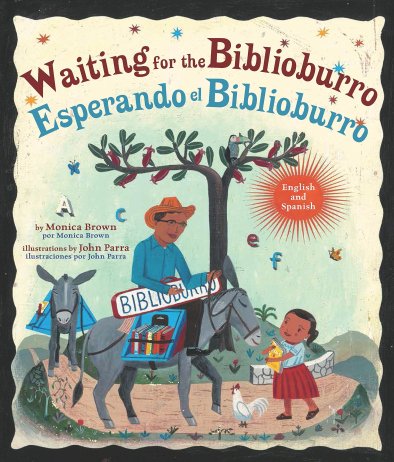
Ana runs outside to see a most unusual but wonderful sight! Riding past her house is a man with two burros loaded down with books! All the children leave the fields and run to this stranger. “Who are you?” the children ask. The man says he is a librarian and a teacher. His burros are Alfa and Beto, and his name is Luis Soriano. Together they are a moving library. Luis reads to the children and teaches them the alphabet. He then tells them they can choose books from the crates strapped to the burros’ backs and keep them until he returns.

celebrate-picture-books-picture-book-review-waiting-for-the-biblioburro-bilingual-edition-sunrise

Image copyright John Parra, 2016, text copyright Monica Brown, 2016. Courtesy of Tricycle Press.

Ana gazes at the selection—there are so many cuentos, so many stories! She hugs the books she has chosen and, before Luis goes on his way, tells him someone should write a story about Alfa and Beto. Why don’t you? Luis encourages her. With a promise to return, Luis is gone. Ana shares her books with her brother, reading until she can’t keep her eyes open.

celebrate-picture-books-picture-book-review-waiting-for-the-biblioburro-bilingual-edition-nighttime

Image copyright John Parra, 2016, text copyright Monica Brown, 2016. Courtesy of Tricycle Press.

It seems like forever and no biblioburro! “When will he come back?” Ana pesters her mother. Finally, unable to wait for a new story, Ana takes the librarian’s advice and creates a book about the biblioburros. Just when Ana has almost given up hope of seeing Luis again, she hears the now familiar iii-aah! Iii-aah. She runs to show Luis her special surprise. Not only does he read her book to the other children, he carefully packs it away on the burro’s back “ready to be carried away over the hills and through the fields to another child “who is dreaming of the stories the biblioburro will bring.”

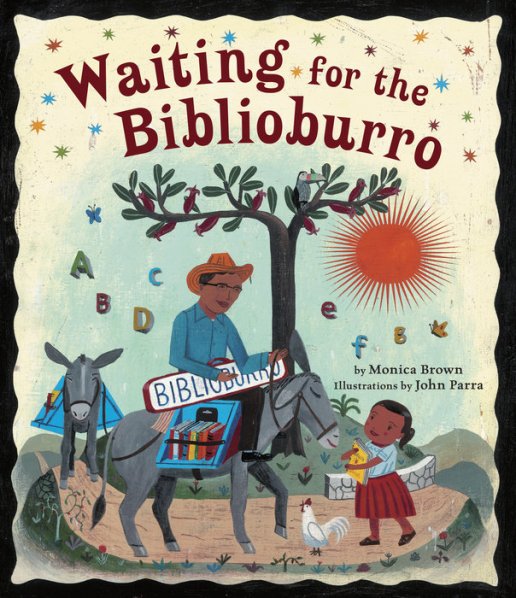
This book is also available in a bilingual edition: Waiting for the Biblioburro/Esperando el Biblioburro.

celebrate-picture-books-picture-book-review-waiting-for-the-biblioburro-bilingual-edition-cover

Monica Brown’s telling of this inspirational story reveals how much one person’s actions can touch another. Through her expressive language and rhythms, Brown effectively reveals the thoughts and feelings of a little girl thirsty for knowledge but without any means of acquiring it. The girl’s enthusiasm for books and learning is infectious and will resonate with children. Listeners will empathize with her longing and celebrate when they hear of the biblioburro’s arrival.

John Parra’s well-known paintings are a highlight of this book, filling each page with the radiant sun, colorful architecture, exotic animals, tropical vegetation, and other sights of the jungles and hills of Columbia. Ana’s hopes and dreams are also illustrated in Parra’s unique style, creating a world of imagination fitting for a budding young writer.

Ages 5 – 8

Tricycle Press, Penguin Random House, 2011 | ISBN 978-1582463537 | ISBN 978-0553538793 (Spanish–English Bilingual Edition)

Discover more about Monica Brown and her books on her website.

To learn more about John Parra, his books, and his art, visit his website.

You can find Waiting for the Biblioburro at these booksellers

Amazon | Barnes & Noble | Books-a-Million | IndieBound

National Bookmobile Day Activity

CPB - Bookmobile

Make a Box Bookmobile


Bookmobiles are love on wheels! If libraries are some of your favorite places, you’ll like making this box bookmobile! You can even use it as a desk organizer!

Supplies

  • Printable Book Shelves and Sign Template
  • Cardboard box, 16-oz pasta or other recyclable boxes work well (I used a 5” x 7 ¼ -inch pasta box)
  • Small wooden spools or bottle caps, large beads, or toy wheels
  • Paint
  • Scissors
  • X-acto knife
  • Strong glue
  • Paint brush

Directions

1.Gently pull the box apart at the seam and lie flat with the unprinted side facing up

2. To Make the Awning:

  • On one of the wide sides of the box, measure a rectangle 1 inch from the top of the box, leaving at least 1 ¼ inches at the bottom of the box and 1 ¼ inches on both sides
  • With the x-acto knife or scissors cut the sides and bottom of the rectable, leaving the top  uncut
  • Paint the top and underside of the awning (if you want to make stripes on the awning lay strips of tape side by side across the awning. Remove every other strip of tape. Paint the open stripes one color of paint. When the paint dries replace the tape over the paint and remove the tape from the unpainted stripes. Paint those stripes a different color.)

3. Paint the rest of the box on the unprinted side any way you like, let dry

4. Cut the Printable Book Shelf template to fit the size of your window opening, leaving at least a ½ inch margin all around

5. Tape the book shelf to the inside of the window

6. Reconstruct the box, making the original seam an inside flap

7. Glue the flap and sides together

8. If using small spools for wheels, paint them black. Let dry

9. Glue the wheels to the bottom of the box

10, Attach the Bookmobile sign, found on the printable template, above the awning

** To Make a Desk Organizer from the Bookmobile

  • Cut an opening in the top of the bookmobile with the x-acto knife or a scissor

April 5 – National Read a Road Map Day

Maps by Aleksandra and Daniel Mizielinski Picture Book Review

About the Holiday

Sure, GPS can get you where you want to go—even with voiced directions—but how do you know where you want to go? How do you discover what’s out there in your neighborhood, town, state, country? You can read a road map! It’s fascinating to see how roads snake along the terrain, around lakes, and over hills as well as crisscross in dozens of places but still get you where you want to go. And if you want to see how a place has changed over time, compare an old road map to a current one. So get out your road maps and start investigating!

Maps

By Aleksandra Mizielińska and Daniel Mizielińska


The world is a big and intriguing place in this oversized picture book. Forty-two countries are represented within its pages and populated from border to border and even from page edge to edge with cultural, historical, zoological, economic, agricultural, culinary, and linguistic information, all illustrated in stunning thumb-sized detail.

Whether you’re casually flipping through the book or examining each page, a colorful or unusual detail will capture your attention and demand a lingering look, which leads to discovering more and more intriguing facts. Opening the book to Switzerland, I noticed the Appenzeller sheepdog then the Appenzeller cheese round, both from the town of Appenzell. But what’s this? Schwingen? And why are the two guys wearing their shorts on the outside of their pants? It’s Swiss Wrestling! A quick Google search tells me that the wrestlers wear special “breeches” with belts for getting a good grip for tossing opponents!

Another flip of the pages brings me to Nepal, which is so mountainous! It’s home to the Himalayas which include Mount Everest (the tallest peak on earth), as well as Kangchenjunga, Lhotse, and Makalu (the third, fourth, and fifth highest peaks). As you might imagine you can engage in mountain biking, but beware of the Mugger Crocodile!

G’day, Mate! Welcome to Australia! Here you’ll find a Superb Lyrebird with a phenomenal tail, sneak a peek at a short-beaked echidna with a spiky coat and a mole-like snout, and learn to duck for a gliding possum. If you’re a sports fan, you’ll be interested in the didgeridoo, and remember vegemite? This is where it’s from!

I could go on and on! There are so many amazing animals, monuments, people, and structures around the world just waiting for you to discover them! The thick, matte, softly muted pages of Aleksandra and Daniel Mizielińska’s Maps are reminiscent of fine cartographers’ volumes. This book is a fantastic resource for teachers, homeschoolers, and students with curiosity or a report to write. Just a glance will give readers ideas, and a more thorough examination will open up a world of possibilities! Maps is a must-have for any young person’s or armchair traveler’s bookshelf.

Ages 5 and up

Big Picture Press, 2013 | ISBN 978-0763668969

National Read a Road Map Day Activity

CPB - Map Day II

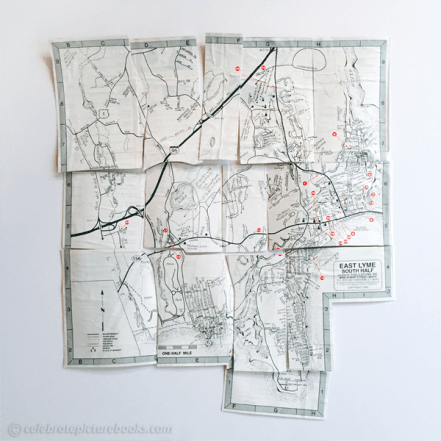
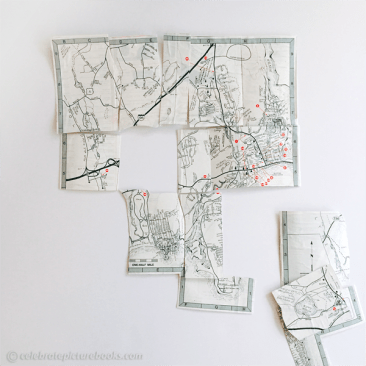
Map Jigsaw Puzzle


Sometimes reading a map is like putting together a puzzle—so why not make a puzzle out of a map? It can be fun to use a map of your town or state or to use a map of a state or country you’d like to visit!

Supplies

  • Small to medium size map (maps are often offered free at tourist stops, town halls, or other tourist information offices or racks)
  • Poster board
  • Glue
  • Scissors

CPB - Map Day

Directions

  1. Use the entire map or cut a desired-sized section from a map
  2. Glue the map to the poster board, let dry
  3. Cut the map from the poster board
  4. Cut the map into puzzle sections, these can be straight-sided sections or ones with interconnecting parts

March 31 – Eiffel Tower Day

A Walk in Paris by Salvatore Rubbino Picture Book Review

About the Holiday

The Eiffel Tower is one of the most recognized monuments in the world. Its iconic shape was designed by Gustav Eiffel, for whom the tower is named. It was built for the International Exhibition of Paris and opened on March 31, 1889 to commemorate the 100th anniversary of the French Revolution.

The Eiffel Tower stands 984 feet high and was at the time of its opening the world’s tallest building, an honor it held until the Chrysler Building was erected in New York in 1930. When the International Exhibition’s 20-year lease on the land expired, the Eiffel Tower was almost taken down, until people realized it could be used as a radio antennae.

Of course, all these facts don’t convey the magic of the tower itself. To celebrate this auspicious date, visit the Eiffel tower if you live close or take a vicarious walk in the fabled city of Paris with today’s book. You can also make and enjoy the French Butter cookie recipe found below.

A Walk in Paris

By Salvatore Rubbino


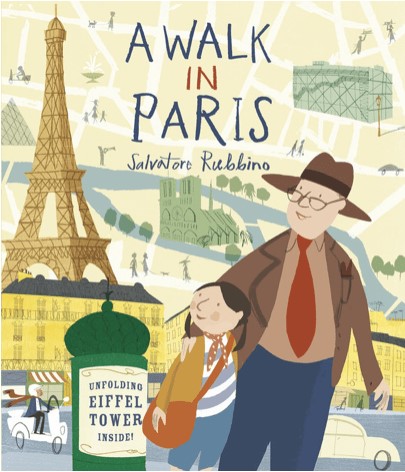
A girl and her grandpa visiting the city of Paris emerge from the metro at Place Maubert just in time to join the throng of shoppers perusing the colorful food stalls on Market Day and to buy some famous French cheese. They continue on their tour through old streets and new boulevards, avoiding the gushing water for the street cleaners, until they reach the fountain at Place Saint-Michel. Their meanderings take them to the River Seine and Notre-Dame. After a long wait in line, they climb to the Chimera Gallery, 151 feet above the ground. From there they look out on the city, all the way to the Eiffel Tower.

On the ground once more they pass salons and boutiques and settle into a cozy bistro for lunch. They visit the Marais, a fashionable area of shops and cafes built on what was once marshland. Up next is a structure that seems to have been built inside-out since all its pipes and escalators are on the outside! This is Pompidou Center, a famous gallery of modern art. The little girl proclaims it formidable!, which means “wonderful!”

Time for a snack! The grandpa-granddaughter duo find themselves in front of a pâtisserie window full of delectable cakes. It’s so hard to choose! Back on the boulevard, they make their way to the majestic building and glass pyramids of the Louvre Art Museum, where perhaps the world’s most famous painting—the Mona Lisa—hangs. A well-deserved rest comes in Tuileries Gardens, where the grandfather enjoys his favorite view and the girl makes a friend by the fountain pool.

It’s getting late and time to leave, but there is one more site to see. As the sun goes down and the night sky darkens, the grandfather treats his granddaughter to a magnificent event – the bright, twinkling lights of the Eiffel Tower!

Through A Walk in Paris Salvatore Rubbino has created a beautiful armchair tour of one of the world’s great cities. The large format of this picture book allows for broad views of the landmarks and vistas, giving children a good idea of the vastness of the city. Each page is dotted with trivia and factual information, printed in small type that does not disturb the flow of the illustrations.

The illustrations in muted yet rich tones and with fine details aptly capture the culture and grandeur of the City of Lights. A fold-out page of the luminescent Eiffel Tower is sure to elicit some oohs and ahhs from children.

Ages 4 – 9 (the embedded facts and illustrations make this a good book for older children and research projects also)

Candlewick Press, 2014 | ISBN 978-0763669843

Eiffel Tower Day Activity

CPB - Eiffel Tower Cookies

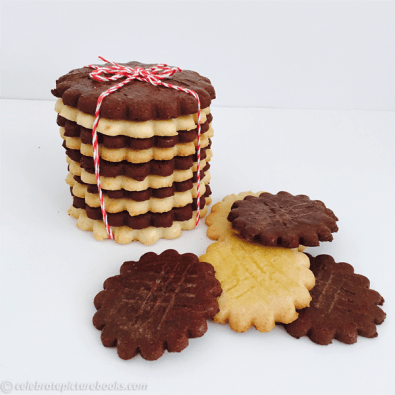
French Butter Cookies – Lemon and Chocolate


Whip up a batch of these delicious cookies to eat while enjoying A Walk in Paris. There’s no better way to spend a day than to take a trip for a new place—even if you do it in the coziness of your own room!

Ingredients for Lemon Cookies

  • 10 tablespoons unsalted butter (room temperature)
  • 1/2 cup sugar
  • 1 large egg
  • 1 1/4 teaspoons vanilla extract
  • 2 cups flour
  • 1/2 teaspoon baking powder
  • 1/4 teaspoon salt
  • 2 teaspoons lemon zest (or to taste)

For Egg Wash

  • 1 egg
  • 1 tablespoon water

For Chocolate Cookies

  • 1 ½ cups flour
  • ½ cup cocoa powder
  • ½ teaspoon cinnamon
  • ¼ teaspoon ground ginger

Directions

  1. In a bowl beat butter and sugar until light and fluffy
  2. Add the egg and vanilla extract and beat until blended
  3. Add the flour, baking powder and salt and beat just until incorporated. Do not over mix the dough. **For Chocolate Cookies use 1 ½ cups flour and add cocoa powder, cinnamon, and ground ginger before mixing**
  4. Transfer the dough to a lightly floured work surface, knead the dough a few times to bring it together, and then divide the dough in half.
  5. Wrap each half in plastic wrap and refrigerate for at least one hour or until firm
  6. Preheat oven to 350 degrees F (177 degrees C) and place rack in the center of the oven.
  7. Line two baking sheets with parchment paper and set aside.
  8. Remove one portion of the dough from the refrigerator and place on a lightly floured work surface. Roll out the dough until it is 1/4 inch (1 cm) thick.
  9. Using a lightly floured 2 inch (5 cm) round, fluted cookie cutter (or other cookie cutter of your choice), cut out the cookies and place them on the prepared baking sheet.
  10. Put the baking sheet of cut out cookies in the refrigerator for about 15 -20 minutes to chill the dough.
  11. Meanwhile, in a small bowl, whisk the egg with the water for the egg wash. Remove the cookies from the refrigerator and brush the tops with the egg wash.
  12. Then, with the tines of a fork or a toothpick, make a crisscross pattern on the top of each cookie.
  13. Bake cookies for about 12-14 minutes or until golden brown around the edges.
  14. Cool cookies on wire rack.

March 22 – Tuskegee Airmen Day

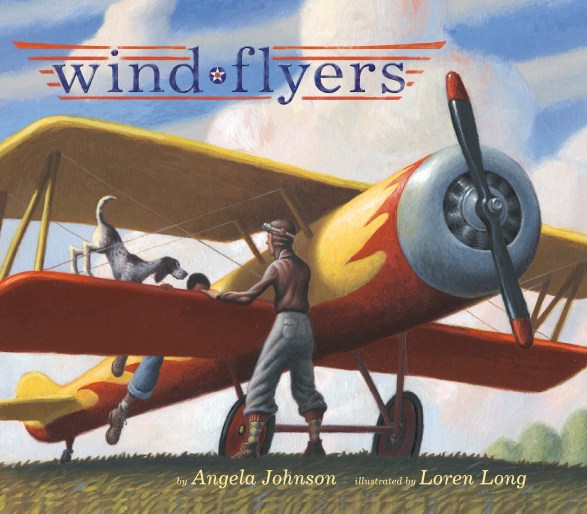
Wind Flyers by Angela Johnson and Loren Long Picture Book Review

About the Holiday

Today marks the 75th anniversary of the foundation of the Tuskegee Airmen, the first black military aviators in the U. S. armed forces during World War II. The regiment consisted of 996 pilots and more than 15,000 ground personnel who were trained at Tuskegee Army Air Field and other locations. These brave pilots have been credited with 15,500 combat sorties and earned more than 150 Distinguished Flying Crosses. The success of the Tuskegee Airmen paved the way for the integration of the U.S. military under President Harry S Truman in 1948.

Wind Flyers

Written by Angela Johnson | Illustrated by Loren Long


With pride a young African-American boy tells the story of his great-great-uncle who was a Tuskegee Airman in World War II. His uncle was “a smooth wind flyer. A Tuskegee wind flyer…” Like a bird, his uncle tells his nephew, he was born to fly, jumping off a chicken coop at the age of five and into a pile of hay from a barn when he was seven. He has his first real flight at the age of eleven, when he pays to be a passenger with a barnstormer.

Flying over lakes and fields, his uncle feels as if he’s in Heaven, among soft clouds that beckon for him to be a wind flyer too. The experience changes him forever, and always there is the desire to fly “into the wind, against the wind, beyond the wind.” As a young adult his uncle contributes his dream and his skills to the World War II effort, becoming a Tuskegee Airman, one of the first black pilots in the United States military.

The boy and his uncle look through old photographs, seeing once more those young and brave pilots—the Tuskegee wind flyers. After the war, his uncle crop dusted in order to fly. Now planes are different, he says, but the clouds remain the same. The boy and his uncle climb to the highest point of the uncle’s barn to watch the jets—and in those moments they once more become the smooth wind flyers, flying into the wind and beyond.

In her soaring, rhythmic language, Angela Johnson captures the dreams and yearning of a young boy whose greatest desire is to fly among the clouds. When he gets his chance by joining the Tuskegee Airman in World War II, Johnson combines straightforward narrative with poetic lines to enhance the sense of achievement and pride the young pilots felt. The structure of the story is well chosen, as the relating of the uncle’s life from childhood through old age through the eyes of his nephew, strengthens themes of strong familial relationships as well as shared dreams across generations.

Loren Long gives Wind Flyers additional power with his strong, vibrant paintings. Two-page spreads provide a sense of the vastness of the skies that so enticed the young would-be pilot. Even the clouds echo the emotion of the page—fluffy, floating, and alive in the flight scenes while linear, flat, and stationary when the plane and the uncle are earthbound. Realistic portrayals of the boy, his uncle, and the other Tuskegee Airmen are reminiscent of the WPA murals of the 1940s while still setting this book firmly in today for a new generation.

Wind Flyers is a wonderful book to share with aviation buffs and dreams of all types.

Ages 4 – 9

Simon & Schuster Books for Young People, 2007 | ISBN 978-0689848797

Tuskegee Airmen Day Activity

CPB - Biplane side

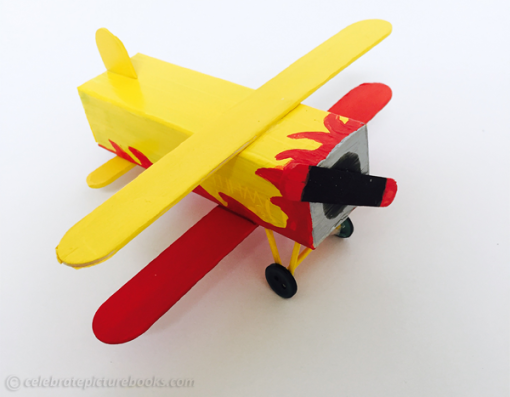
Head in the Clouds Box Biplane


If you love airplanes and flying, you’ll have fun making your own plane from recycled materials! Use your creativity to decorate your plane while you imagine yourself flying through the clouds on a beautiful day. Younger children will have fun sharing this activity with an adult or older sibling too!

Supplies

  • Travel-size toothpaste box
  • 3 6-inch x 1/2-inch craft sticks
  • 2  2 1/2-inch x 7/8-inch mini craft sticks
  • 5 Round toothpicks, with points cut off
  • Paint in whatever colors you like for your design
  • 4 small buttons 
  • 2 mini buttons
  • Paint brushes
  • Strong glue or glue gun

CPB - Biplane front

Directions

  1. Empty toothpaste box
  2. Paint toothpaste box and decorate it
  3. Paint the craft sticks and 5 toothpicks
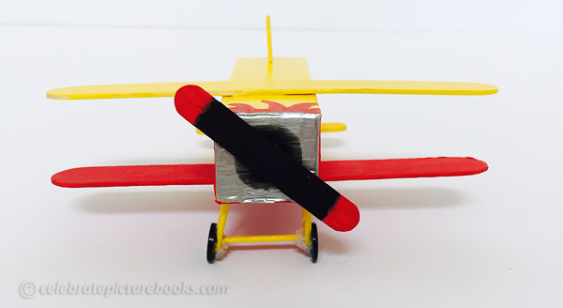
  4. Paint one small craft stick to be the propeller
  5. Let all objects dry

To assemble the biplane

  1. For the Bottom Wing – Glue one 6-inch-long craft stick to the bottom of the plane about 1 inch from the end of the box that is the front of the plane
  2. For the Top Wing – Glue the other 6-inch-long craft stick to the top of the plane about 1 inch from the front of the plane
  3. For the Tail – Glue one mini craft stick to the bottom of the box about ¾ inches from the end that is the back of the plane
  4. For the Vertical Rudder – Cut the end from one of the painted 6-inch-long craft sticks, glue this to the back of the box, placing it perpendicular against the edge and half-way between each side

CPB - Biplane bottom

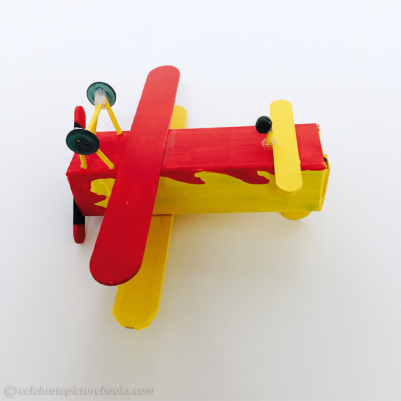
To assemble the front wheels

  1. Cut 4 painted toothpicks to a length of ¾-inches long
  2. Cut one painted toothpick to a length of 1-inch long
  3. Glue 2 of the 3/4-inch toothpicks to the back of 1 button, the ends of the toothpicks on the button should be touching and the other end apart so the toothpicks form a V
  4. Repeat the above step for the other wheel
  5. Let the glue dry
  6. Glue the 1-inch long toothpick between the wheels at the center of each wheel to keep them together and give them stability. Let dry

To make the back wheel

  1. Cut two ¼-inch lengths of painted toothpick and glue them together. Let dry
  2. Glue two mini buttons together to form the back wheel. Let dry
  3. Glue the ¼-inch toothpicks to the mini buttons. Let dry
  4. Glue these to the bottom of the plane in the center of the box directly in front of and touching the tail

Display your biplane!