March 22 – Tuskegee Airmen Day

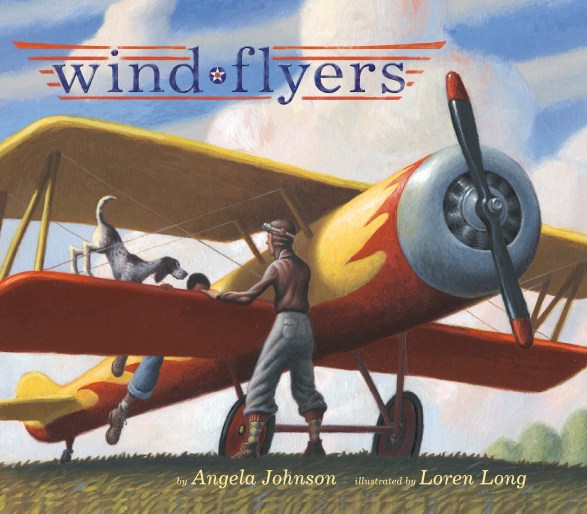
Wind Flyers by Angela Johnson and Loren Long Picture Book Review

About the Holiday

Today marks the 75th anniversary of the foundation of the Tuskegee Airmen, the first black military aviators in the U. S. armed forces during World War II. The regiment consisted of 996 pilots and more than 15,000 ground personnel who were trained at Tuskegee Army Air Field and other locations. These brave pilots have been credited with 15,500 combat sorties and earned more than 150 Distinguished Flying Crosses. The success of the Tuskegee Airmen paved the way for the integration of the U.S. military under President Harry S Truman in 1948.

Wind Flyers

Written by Angela Johnson | Illustrated by Loren Long


With pride a young African-American boy tells the story of his great-great-uncle who was a Tuskegee Airman in World War II. His uncle was “a smooth wind flyer. A Tuskegee wind flyer…” Like a bird, his uncle tells his nephew, he was born to fly, jumping off a chicken coop at the age of five and into a pile of hay from a barn when he was seven. He has his first real flight at the age of eleven, when he pays to be a passenger with a barnstormer.

Flying over lakes and fields, his uncle feels as if he’s in Heaven, among soft clouds that beckon for him to be a wind flyer too. The experience changes him forever, and always there is the desire to fly “into the wind, against the wind, beyond the wind.” As a young adult his uncle contributes his dream and his skills to the World War II effort, becoming a Tuskegee Airman, one of the first black pilots in the United States military.

The boy and his uncle look through old photographs, seeing once more those young and brave pilots—the Tuskegee wind flyers. After the war, his uncle crop dusted in order to fly. Now planes are different, he says, but the clouds remain the same. The boy and his uncle climb to the highest point of the uncle’s barn to watch the jets—and in those moments they once more become the smooth wind flyers, flying into the wind and beyond.

In her soaring, rhythmic language, Angela Johnson captures the dreams and yearning of a young boy whose greatest desire is to fly among the clouds. When he gets his chance by joining the Tuskegee Airman in World War II, Johnson combines straightforward narrative with poetic lines to enhance the sense of achievement and pride the young pilots felt. The structure of the story is well chosen, as the relating of the uncle’s life from childhood through old age through the eyes of his nephew, strengthens themes of strong familial relationships as well as shared dreams across generations.

Loren Long gives Wind Flyers additional power with his strong, vibrant paintings. Two-page spreads provide a sense of the vastness of the skies that so enticed the young would-be pilot. Even the clouds echo the emotion of the page—fluffy, floating, and alive in the flight scenes while linear, flat, and stationary when the plane and the uncle are earthbound. Realistic portrayals of the boy, his uncle, and the other Tuskegee Airmen are reminiscent of the WPA murals of the 1940s while still setting this book firmly in today for a new generation.

Wind Flyers is a wonderful book to share with aviation buffs and dreams of all types.

Ages 4 – 9

Simon & Schuster Books for Young People, 2007 | ISBN 978-0689848797

Tuskegee Airmen Day Activity
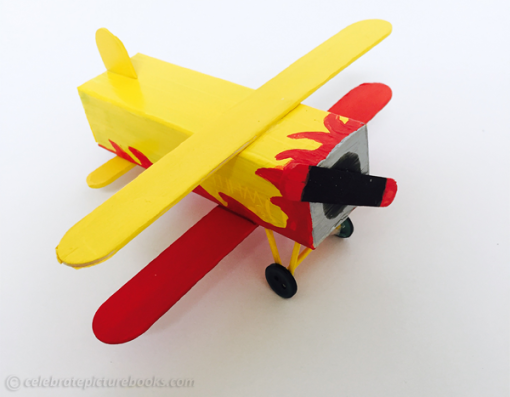
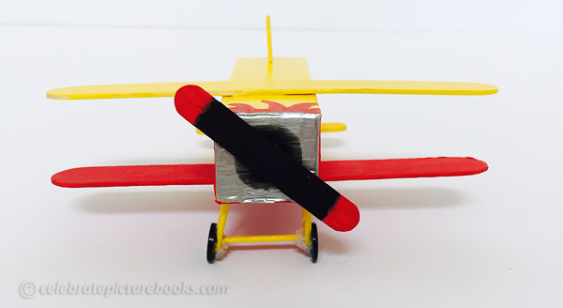
CPB - Biplane side

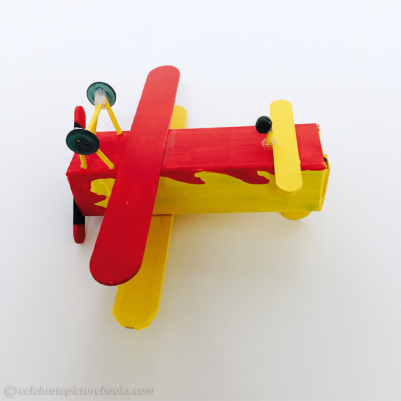
Head in the Clouds Box Biplane


If you love airplanes and flying, you’ll have fun making your own plane from recycled materials! Use your creativity to decorate your plane while you imagine yourself flying through the clouds on a beautiful day. Younger children will have fun sharing this activity with an adult or older sibling too!

Supplies

  • Travel-size toothpaste box
  • 3 6-inch x 1/2-inch craft sticks
  • 2  2 1/2-inch x 7/8-inch mini craft sticks
  • 5 Round toothpicks, with points cut off
  • Paint in whatever colors you like for your design
  • 4 small buttons 
  • 2 mini buttons
  • Paint brushes
  • Strong glue or glue gun

CPB - Biplane front

Directions

  1. Empty toothpaste box
  2. Paint toothpaste box and decorate it
  3. Paint the craft sticks and 5 toothpicks
  4. Paint one small craft stick to be the propeller
  5. Let all objects dry

To assemble the biplane

  1. For the Bottom Wing – Glue one 6-inch-long craft stick to the bottom of the plane about 1 inch from the end of the box that is the front of the plane
  2. For the Top Wing – Glue the other 6-inch-long craft stick to the top of the plane about 1 inch from the front of the plane
  3. For the Tail – Glue one mini craft stick to the bottom of the box about ¾ inches from the end that is the back of the plane
  4. For the Vertical Rudder – Cut the end from one of the painted 6-inch-long craft sticks, glue this to the back of the box, placing it perpendicular against the edge and half-way between each side
CPB - Biplane bottom

To assemble the front wheels

  1. Cut 4 painted toothpicks to a length of ¾-inches long
  2. Cut one painted toothpick to a length of 1-inch long
  3. Glue 2 of the 3/4-inch toothpicks to the back of 1 button, the ends of the toothpicks on the button should be touching and the other end apart so the toothpicks form a V
  4. Repeat the above step for the other wheel
  5. Let the glue dry
  6. Glue the 1-inch long toothpick between the wheels at the center of each wheel to keep them together and give them stability. Let dry

To make the back wheel

  1. Cut two ¼-inch lengths of painted toothpick and glue them together. Let dry
  2. Glue two mini buttons together to form the back wheel. Let dry
  3. Glue the ¼-inch toothpicks to the mini buttons. Let dry
  4. Glue these to the bottom of the plane in the center of the box directly in front of and touching the tail

Display your biplane!

March 16 – Freedom of Information Day

Gordon Parks: How the Photographer Captured Black and White America Picture Book Review

About the Holiday

Freedom of Information Day is observed today to honor James Madison, who was born March 16, 1751 in Port Conway, Virginia. Madison is widely regarded as the Father of the Constitution and was the 4th President of the United States. He was a leading proponent of openness in government. The Freedom of Information Act, which took effect on July 4 1967, was enacted to promote transparency in government, but the idea of openness and inclusion can pertain to all aspects of society and relationships.

Today we remember all those who work to provide free and honest information and portrayals of government as well as other conditions and situations around the world.

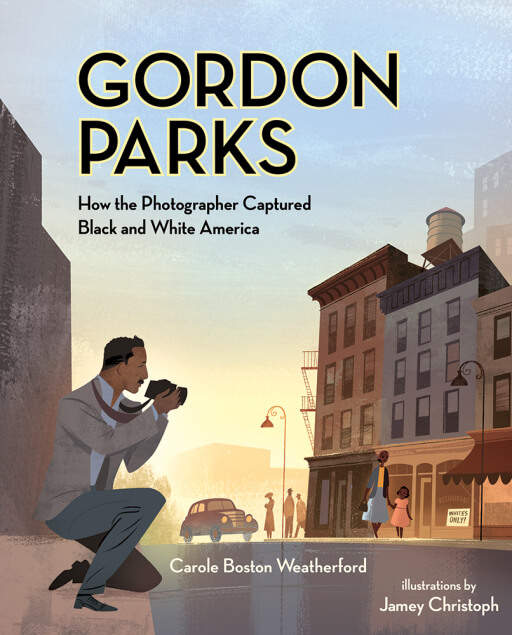
Gordon Parks: How the Photographer Captured Black and White America

Written by Carole Boston Weatherford | Illustrated by Jamey Christoph


When the 15th child of the Parks family is born, he has neither a heartbeat nor a name. But the doctor is able to revive the nearly dead infant in an ice bath, and the appreciative mother gives her child his name—Gordon. Gordon Parks’ dramatic entry into the world may have given him the unique perspective he used in becoming a renowned photographer and the first black movie director in Hollywood.

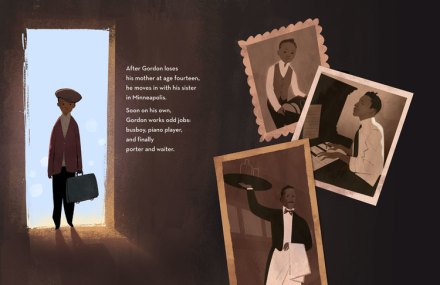
celebrate-picture-books-picture-book-review-gordon-parks-how-the-photographer-captured-black-and-white-america-gordon-works

Image copyright Jamey Christoph, 2015, text copyright Carole Boston Weatherford, 2015. Courtesy of Albert Whitman & Company.

Gordon rides a horse across the wide open fields of Kansas to school, but once there his prospects narrow with a white teacher who tells her all-black class that their education will go to waste as they are destined to work as waiters and porters. When he is 14 Gordon’s mother dies, and Gordon moves to Minneapolis. He soon must make his own way, and he finds jobs as a busboy, a piano player, and the predicted waiter and porter.

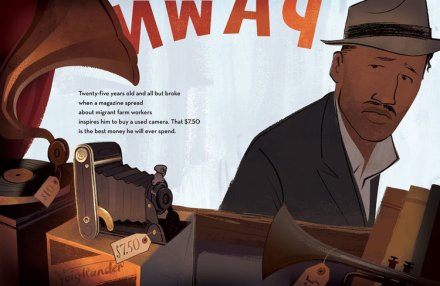
At the age of 25 Gordon reads about the plight of migrant workers and, inspired, buys a camera. Gordon has discovered his natural talent—a unique eye on the world. After only a month he exhibits his photographs in a camera store and is soon engaged in fashion and portrait photography. His work takes him to Chicago, where he documents the struggling families living on the South Side and wins a job with the government in Washington DC. Encouraged by his boss to find a subject for his work, Gordon focuses his lens on the black families living in the back alleys and in the shadows of the Capitol’s great monuments.

celebrate-picture-books-picture-book-review-gordon-parks-how-the-photographer-captured-black-and-white-america-gordon-sees-a-camera

Image copyright Jamey Christoph, 2015, text copyright Carole Boston Weatherford 2015. Courtesy of Albert Whitman & Company.

Through his photographs Gordon vows to expose the racism blacks face in housing, shops, restaurants, and other institutions. Looking for a personal subject, Gordon talks to Ella Watson, a cleaning lady in his office building. Ella supports five children on only $1,000 a year and knows hardship. Gordon accompanies her and her grandchildren, taking pictures wherever they go and of whatever they are doing. They become the inspiration for his greatest work.

Over his lifetime Gordon Parks will break barriers in the publishing and entertainment industries, becoming the first black photographer for Vogue and Life magazines and the first black director in Hollywood. He writes novels and poetry and composes music. But the work that becomes his most famous is a photograph of Ella Watson standing in front of the American flag, with her broom in hand. Called “American Gothic,” this picture fulfills Park’s determination to expose segregation and the hopes of all people struggling under its inequality.

celebrate-picture-books-picture-book-review-gordon-parks-how-the-photographer-captured-black-and-white-america-gordon-in-washington

Image copyright Jamey Christoph, 2015, text copyright Carole Boston Weatherford, 2015. Courtesy of Albert Whitman & Company.

Carole Boston Weatherford’s portrayal of Gordon Parks’ life is as starkly revealing as her subject’s photographs. With her writer’s skills, however, she deftly contrasts the facts of his life and turns his story into a universal metaphor for freedom and the struggle to attain it: “When young Gordon crosses the prairie on horseback, nothing seems beyond reach. But his white teacher tells her all-black class, you’ll all wind up porters and waiters. What did she know?” Weatherford’s pacing also adds to the story’s power. Although Parks attained wide acclaim, this biography ends with one of his earlier photographs—a picture of Ella Watson, a cleaning lady, who inspired Parks and came to symbolize the hopes of her generation and beyond. This is not only Parks’ story, but the story of millions of others.

Jamey Christoph continues and strengthens the metaphorical force of this biography in his illustrations. Readers first see Gordon Parks as a much-loved, smiling infant. He goes to school and grows up, his expression changing, slightly but importantly. He acquires his camera, and the pages are filled with drawn representations of his black-and-white photographs. Alternating dark and light pages further emphasize Parks’ world. The darkroom contrasts with Parks’ new bright office and prospects; the shadowed back alleys of Washington DC contrast with the city’s gleaming white marble monuments. Later photographs are also depicted, and “American Gothic” is represented on two pages. Christoph provides readers with much to see and ponder.

Ages 5 – 8

Albert Whitman & Company, 2015 | ISBN 978-0807530177

Ages 5 – 8

Albert Whitman & Company, 2015 | ISBN 978-0807530177

Freedom of Information Day Activity

CPB - New Professionals Picture

News Professionals Clothespin Figures

Make one of these clothespin figures that honors the men and women who work to keep the world informed.

Supplies

Directions

  1. Draw a face and hair on the clothespin
  2. Cut out the clothes you want your journalist or photographer to wear
  3. Wrap the clothes around the clothespin. The slit in the clothespin should be on the side.
  4. Tape the clothes together
  5. Cut out the camera
  6. Tape one end of a short length of thread to the right top corner of the camera and the other end of the thread to the left corner. Now you can hang the camera around the figure’s neck.

Idea for displaying the figures

  • Attach a wire or string to the wall and pin the figure to it
  • Pin it to your bulletin board or on the rim of a desk organizer


March 13 – National Earmuff Day

Earmuffs for Everyone! by Meghan McCarthy Picture Book Review

About the Holiday

On March 13, 1877 Chester Greenwood—a 19-year-old inventor—received a patent for “improvements in ear-mufflers” and forever sealed his place in history—as well as making winter more comfortable for millions of freezing ears! Today we honor Chester and his invention that brought attention to Farmington, Maine and jobs for many people in the area. So if you live in an area where the cold winds are still blowing, wear your earmuffs in pride!

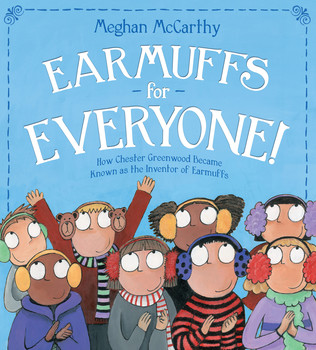
Earmuffs for Everyone! How Chester Greenwood Became Known as the Inventor of Earmuffs

By Meghan McCarthy


In the mid-1800s inventors were trying to solve the problem of winter’s chill effects on tender ears. William Ware designed an “ear, cheek, and chin muff” that one wore somewhat like a false beard. Ear protecting hats, ear “slippers,” high collars, and other designs followed. But it wasn’t until Chester Greenwood and his sensitive protruding ears came along that earmuffs became practical. While the exact steps Chester took in creating his earmuffs aren’t known, he eventually perfected his invention and received a government patent on March 13, 1877—when he was only 19 years old!

Chester was no one-invention wonder, though. Always on the lookout for clever ways to make money, he went on to improve other products. He applied his foresight to the tea kettle, rounding the edges of the bottom to reduce wear; constructed an interchangeable-tooth rake; and built a collapsible, if cumbersome, tent.

His inventions brought him a comfortable life—a beautiful house for his family in Maine, the first steam car in his town, and a bicycle shop on the bottom floor of his workshop—that he shared with others. His wife, also a progressive thinker, worked for women’s suffrage, and inspired her husband to hire women in his workshops.

After Chester passed away, some people, most notably Mickey Maguire, thought he deserved more acclaim—even a day dedicated as Chester Greenwood Day. Maguire was so excited about this that he became a kind of inventor himself—an inventor of tall tales. Over time he told some whoppers and they were printed, making it hard to separate fact from myth. But even without the made-up stories, it’s easy to say that Chester Greenwood had a very remarkable life

Earmuffs for Everyone goes beyond the story of Chester Greenwood to include other inventors, a discussion of the patent system (using products well-known to today’s kids), and how an inventor’s legacy grows. Meghan McCarthy writes with verve and humor, making the story of Greenwood’s invention as well as others’ creations inviting, accessible, and fun. Her illustrations of the first attempts at earmuffs and other1800s products are sure to delight kids and make them curious about the time period.

In her author’s note at the back of the book, McCarthy expands on the story of Chester Greenwood and the process of applying for and earning a patent.

Ages 4 – 8

Simon & Schuster/Paula Wiseman Books, 2015 | ISBN 978-1481406376 

National Earmuff Day Activity

CPB - Earmuff Maze.png

Here’s to Warm Ears! Maze


One muff on each side of the head—Genius! But it took inventors a lot of trial and error to make the perfect warming headgear. Use your own creative thinking on this Here’s to Warm Ears!earmuff-shaped maze. Solution included.

March 8 – International Women’s Day

Who Says Women Can't Be Doctors by Tanya Lee Stone and Marjorie Priceman picture book review

About the Holiday

When the United States celebrated International Women’s Day in 1911, it paved the way for more extensive recognition of the contributions of women. Women’s Day stretched to a week officially in 1981 when Republican Senator Orin Hatch of Utah and Democratic Representative Barbara Mikulski of Maryland co-sponsored a Joint Congressional Resolution that established Women’s History Week. Six years later Congress named March as Women’s History Month.

March is a great time to discover and learn about the women who have shaped our country in all fields of endeavor from the arts to education to the sciences and beyond. Today we celebrate a woman who changed the medical profession forever.

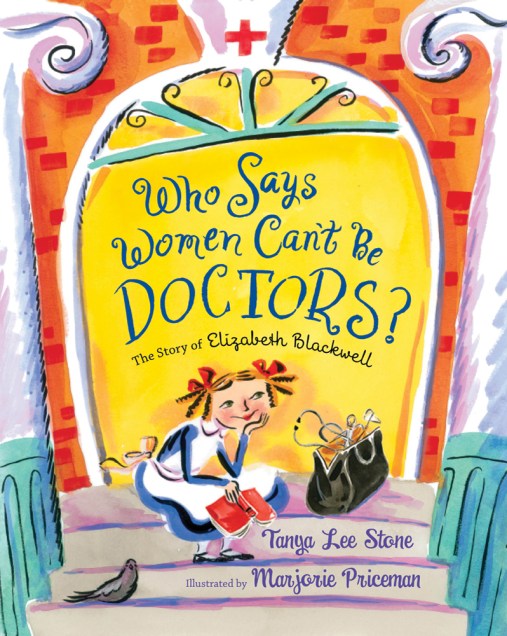
Who Says Women Can’t be Doctors? The Story of Elizabeth Blackwell

Written by Tanya Lee Stone | Illustrated by Marjorie Priceman


Once upon a time there were no women doctors. Women weren’t even allowed to be doctors. Sounds like a fairy tale, doesn’t it? Fortunately, this one-time fact has entered the realm of fiction—all thanks to Elizabeth Blackwell. Elizabeth was not like other girls of the 1830s. She loved to explore and take on challenges. She could lift her brother over her head, and to toughen herself up she slept on the hard wood floor. To get a better look at the world she climbed to the roof of her house and leaned waaaaay out with a spyglass. What did she see? Maybe she saw her future. But it wasn’t what she imagined at the time. Blood made her queasy, dissection was disgusting, and being sick just made her want to hide from all the fussing.

But a comment by a sick friend, puts a bee in her bonnet. Mary Donaldson tells Elizabeth that she would much rather have been examined by a woman than her male doctor. “You should be a doctor, Elizabeth,” Mary says.

What a crazy notion, right? Well… Elizabeth can’t stop thinking about it. She asks around. Some people think it’s a good idea, but impossible; others just think it’s impossible. They believe women aren’t strong enough or smart enough and they laugh at her. By this time, though, Elizabeth is determined.

She applies to 28 medical schools, and they all say, “No.” But one day a “Yes” arrives in the mail. Elizabeth packs her bags. The townspeople all come out to see this new medical student, but they aren’t outside to welcome Elizabeth; they just want to whisper and point and stare. Surely, Elizabeth thinks, the students will be happy to see her.

But she receives the same reception on the college campus. In fact, she learns, the only reason she was accepted is because the men voted to let her in as a joke! Elizabeth knows how to handle it. She studies hard and gives her opinions, and soon she wins the respect of her fellow students—even if the townspeople still don’t accept her.

On January 23, 1849 Elizabeth Blackwell graduates from medical school with the highest grades in the class. She has become the first woman doctor in America! Many people hope that she would be the last. But as we know…she was Not!

Tanya Lee Stone magnificently imbues this short biography of Elizabeth Blackwell with enough mystery, conflict, and history for even the youngest readers to understand the type of girl and woman Elizabeth was as well as the challenges she faced. The details of Blackwell’s life that Stone includes are deftly chosen, and make her instantly recognizable and relatable to children. One line in the text written in the present tense amid the historical past transforms this biography into a universal story for all generations. Blackwell may have started out as a reluctant dreamer, but once she dared to believe she accomplished more than she or anyone could have imagined. It is what we want for all our children.

Marjorie Priceman’s illustrations, swirling with words, angled on the page and floating in white space, are as topsy-turvy as the world Elizabeth Blackwell created. Blackwell’s boldness is echoed in the rich colors and strong lines of the gouache and India-ink paintings, and the emotions she stirred in others—from derision to horror to admiration—are cleverly and exceptionally drawn in a minimal style on the characters’ faces.

Ages 5 – 9

Christy Ottaviano Books, Henry Holt and Company | ISBN 978-0805090482

International Women’s Day Activity

CPB - Doctors Clothespins

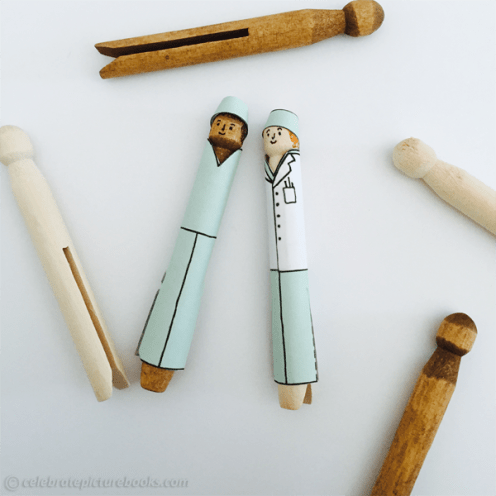
Doctor Clothespin Figure


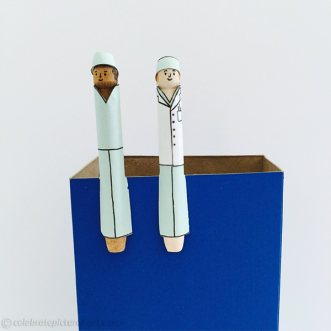
Make one of these clothespin figures that honors International Women’s Day and Women’s History Month as well as everything doctors do to help us stay healthy.

Supplies

CPB - Doctors Clothespins on box

Directions

  1. Draw a face and hair on the clothespin
  2. Cut out the outfit you want your doctor to wear (color pants on your clothespin if you choose the lab coat)
  3. Wrap the coat or scrubs around the clothespin. The slit in the clothespin should be on the side.
  4. Tape the clothes together
  5. Wrap the cap around the head and tape it.
  6. If you’d like to display your clothespin doctor on a wire, string, or the edge of a box or other container, cut along the dotted lines of the clothes template.


February 28 – Tooth Fairy Day

Throw Your Tooth on the Roof picture book review

About the Holiday

For hundreds of years losing baby teeth has conjured up stories, legends, and superstitions. The idea of paying for teeth may have come from the Vikings, who reportedly believed the teeth could make them better warriors and so paid their children for their teeth, which they fashioned into necklaces to wear in battle. Some people buried the teeth, wanting to hide them from witches and evil spirits. The first immaginary creature to actively search for and take teeth was perhaps a mouse, which is still taught in many countries today. From the mouse came the Tooth Fairy, who is one of those mysteries of childhood in America and other English-speaking lands.

Throw Your Tooth on the Roof: Tooth Traditions from Around the World

Written by Selby B. Beeler | Illustrated by G. Brian Karas


When children lose a tooth, it’s so exciting! They know it means they’re growing up. It also means they can participate in a tradition that is fanciful and fun. American kids put the tooth under their pillow, believing that while they sleep the Tooth Fairy will visit them, take the tooth, and leave them money. But what do kids in other countries do with their baby teeth?

In Throw Your Tooth on the Roof, Selby Beeler reveals traditions from 65 countries around the world. In many countries children are rewarded with money but the deliverer differs. El Ratón, a magic mouse, visits children in Mexico, Guatemala, Dominican Republic, Columbia, and other countries. A rabbit sneaks into homes in El Salvador, and in India, Korea, and Brazil birds take the tooth.

In some places what children do with their teeth doesn’t bring monetary riches, but the value of a beautiful smile. In Yellowknife Déné putting a lost tooth in a tree and dancing around it ensures that the new tooth grows in as straight as a tree. In many Asian countries upper teeth are placed in the ground and lower teeth are thrown on the roof in the belief that the new tooth will grow straight toward the old one.

Selby B. Beeler’s book offers children a fascinating way to learn about their counterparts in other countries through a common experience and rite of passage. Each description is accompanied by Brian Karas’ appealing illustrations of children in their native environment happily performing their tradition.

Ages 4 – 8

Houghton Mifflin Company, 2001 | ISBN 978-0618152384

Tooth Fairy Day Activity

CPB - Tooth Fairy Maze finished

Help the Tooth Fairy Find the Tooth Maze


The Tooth Fairy has a job to do, but she doesn’t know which way to go! Can you show her the right path? Print out the Help the Tooth Fairy Find the Tooth Maze and lead her to the tooth! The Solution is included.

February 16 – Innovation Day

CPB - Girls Think of Everything Innovation Day

About the Holiday

Today we celebrate all those people who look at a problem and design a solution, or who just ask, “What if…?” and search for answers. So put on your thinking cap, look around you, and do something new, novel, and completely unexpected. Who knows…you may be the next great inventor!

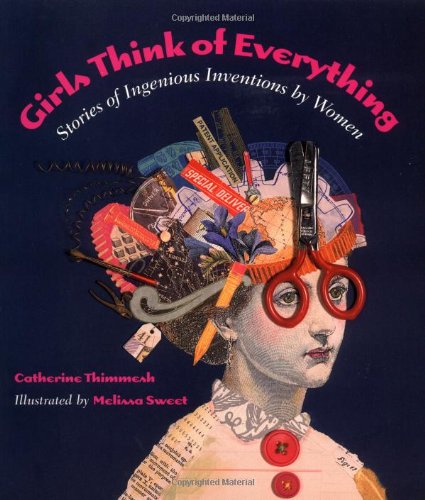
Girls Think of Everything: Stories of Ingenious Inventions by Women

Written by Catherine Thimmesh | Illustrated by Melissa Sweet


Throughout history women have invented new and clever ways of doing things—necessity is the Mother of invention, after all. In her fascinating picture book, Catherine Thimmesh highlights ten women and two girls whose creativity has changed the world.

Here, you’ll learn the intriguing stories behind each invention, the struggles for recognition, and the ultimate victory of innovation. Did you know that the original recipe for chocolate chip cookies was just a time-saver? Or that people once thought windshield wipers weren’t necessary? You’ll also discover how liquid paper, flat-bottomed paper bags, and the Glo-sheet came to be. Women in science have contributed Kevlar, Scotchgard, the COBOL computer language, and the space shields that protect the International Space Station, satellites, and more.

Catherine Thimmesh is an excellent storyteller, drawing you into the actions and minds of these women innovators and the situations or environments that fostered their talents. Melissa Sweet accompanies each profile with portraits of the inventor and colorful collage illustrations that build on the text and tell stories of their own.

Ages 7 – 12

Houghton Mifflin Company, Boston, 2000 | ISBN 978-0618195633

Innovation Day Activity

CPB - Invention Word Scramble

Invention Word Scramble


Every invention started out as a jumble of ideas in someone’s head. In this Invention Word Scramble you can unscramble the letters of some of the world’s greatest creations. Solutionincluded. Odog cklu!


February 15 – Susan B. Anthony Day

celebrate=picture-books-picture-book-review-heart-on-fire-cover

About the Holiday

On February 15, 1820 in Adams, Massachusetts a girl was born who would grow up to set the world afire with her belief in women’s rights. Her name was Susan Brownell Anthony. An early feminist, her father believed it was as important for his five daughters to receive an education as for his two sons. After graduating from school, Susan Anthony became a teacher—at the age of 14—making $2.50 a week compared to the $10.00-per-week salary of the male teachers. Anthony later became active in the abolition and temperance movements. She recognized that the inability to vote limited women’s influence in these causes and began promoting women’s rights. She worked tirelessly to change the voting laws until her death on March 13, 1906 without seeing her greatest wish fulfilled. It was not until 1920, with the ratification of the 19th Amendment, that women were allowed to vote.

Susan B. Anthony has been honored for her dedication with commemorative stamps, and her portrait appears on the dollar coin. We also remember her work on behalf of all women on her birthday with memorial services at her gravesite in Rochester, NY and in Washington DC. Susan B. Anthony Day is a legal holiday in Florida, West Virginia, Wisconsin, New York and California.

Heart on Fire: Susan B. Anthony Votes for President

Written by Ann Malaspina | Illustrated by Steve James


It’s November 1, 1872 and only four days until the presidential election. Everywhere people are being urged to register to vote. Knowing how important voting is, Susan B. Anthony races to the registration office with her sister and a friend in tow. The men in the office stare at her in confusion.

They know that women can’t vote—only men! What is Susan B. Anthony trying to do? But Anthony argues that the new 14thAmendment, which says “all persons born in the United States have the same rights as citizens,” gives women the right to vote. Some inspectors think she is right, some disagree. Finally they allow Anthony to sign the registration card.

celebrate=picture-books-picture-book-review-heart-on-fire-susan-goes-to-vote

Image copyright Steve James, courtesy of Albert Whitman & Company

On November 5, Voting Day, Anthony and 15 other women cast their ballots. Thirteen days later, however, a deputy federal marshal shows up at Anthony’s door with a warrant for her arrest. The charges? Voting illegally! The other women and the men who had allowed them to register and vote are also arrested.

In January word comes that unless Anthony pays a $1,000 fine, she will have to spend the time until her trial in prison. Anthony is adamant about not paying, but her lawyer sends the money. People in the country are split over whether she is right or not, but Anthony knows she’s right. Without being able to vote, women will have no voice in government.

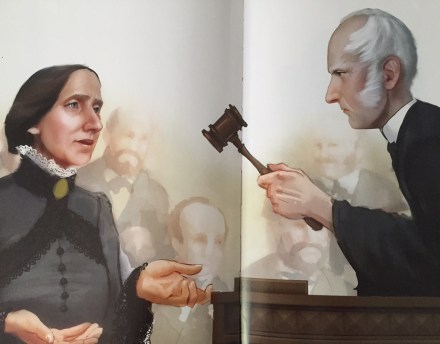
She gives speeches, trying to rally people to her cause, and when her trial begins on June 17, 1873 the courtroom is packed. After Anthony’s lawyer and the prosecutor speak, the judge decides that Anthony has broken the law. He proclaims her guilty. When the judge asks if she has anything to say, Anthony answers, “You have trampled under foot every vital principle of our government. My natural rights, civil rights, political rights….” The judge stops her and does not allow her to continue speaking. He fines her $100, plus court costs. Susan B. Anthony refuses to pay, and she never did.

celebrate=picture-books-picture-book-review-heart-on-fire-susan-pleads-case

Image copyright Steve James, courtesy of Albert Whitman & Company

Through action, dialogue, and the metaphorical theme of fire, Ann Malaspina has written an exciting biography of Susan B. Anthony. Readers will understand and, more importantly, feel the opinions and determination that fueled Anthony’s crusade for women’s rights. The final pages follow the history of the women’s suffrage movement until the ratification of the 19th Amendment in 1920 and provide photographs from the time. The text of the 14th and 19th Amendments is also included.

Opening the pages of Heart on Fire is like walking into a city of the 1800s. The lush colors and intricate details of Steve James’ illustrations immediately immerse readers in the time and place of Susan B. Anthony’s world, depicting the reality of her struggles. This is a perfect book to share with children, especially in this election year when they can see how far women have come—from being denied the vote to running for president.

Ages 5 – 9

Albert Whitman & Company, Chicago, 2012 | ISBN 978-0807531884

Learn more about Ann Malaspina and her books on her website!

View a gallery of illustration by Steve James on his website!

Susan B. Anthony Day Activity

CPB - Vote For Me round (2)

Vote For Me! Campaign Poster and Frame


If you were running for President, what would be important to you? Here’s a Vote For Me! Poster and Picture Frame to get your campaign started!

Supplies

Directions

  1. Print Vote For Me! Poster and Picture Frame templates
  2. Take a selfie or use your school picture
  3. Cut out the Picture Frame and the circle or rectangle in the middle
  4. Tape or glue your picture in the circle or rectangle
  5. If you are using a clear magnetic frame, slip the template inside and hang on your refrigerator or any metal object.
  6. If you are using a magnetic sheet, peel the paper off the adhesive side. Stick the Vote For Me! Picture Frame template with your picture attached to the adhesive. Cut around the edges. Hang!
  7. On the Vote For Me! Poster, list the things you would do if you were President. Talk to your family and see if you might be able to do some of them now! Hang your poster in your room or in the house where others can see it.