April 16 –National Orchid Day

celebrate-picture-books-picture-book-review-flower-talk-cover

About the Holiday

National Orchid Day was established to celebrate one of the world’s most intricate and diverse flowering plants. With over 25,000 recognized species each, the orchid and the sunflower families of flowers vie for the title of largest as new species are discovered every year. Orchids range in size from a tiny 2.1mm flower with transparent petals only one cell thick to the grammatophyllum speciosum or Queen of Orchids, which grows to nearly 10 feet tall. Vivid coloring and striking patterns make the petals of each species things of wonder and prized plants for homes and botanical gardens. To celebrate today, learn how flowers use their colors and other features with today’s book!

I received a copy of Flower Talk: How Plants Use Color to Communicate from Millbrook Press to check out. All opinions are my own.

Flower Talk: How Plants Use Color to Communicate

Written by Sara Levine | Illustrated by Masha D’yans


A little purple prickly pear has something he wants to get off his spines. He shouts up at the reader holding the book. “Pssst! Down here! That’s right—I’m a plant, and I’m talking to you!” Once the reader is all attention, he goes on: “I want to clear up some of your crazy ideas about what the colors of our flowers mean.” You’ve got it all wrong if you think “red roses stand for love and white ones are good for weddings.” The prickly pear may see that the reader feels a bit confused, even a little embarrassed, so he softens his tone a bit and explains that while we may interpret a flower’s colors in certain ways, that’s not what they’re really for.

celebrate-picture-books-picture-book-review-flower-talk-cactu

Image copyright Masha D’yans, 2019, text copyright Sara Levine, 2019. Courtesy of Millbrook Press.

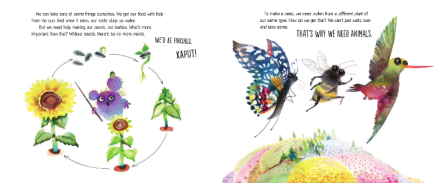
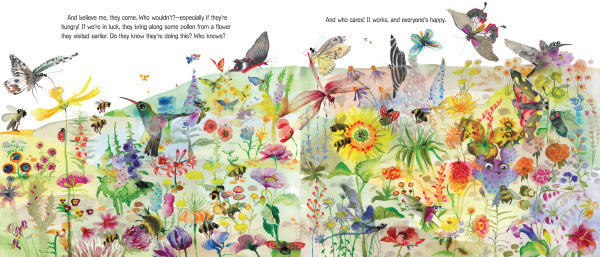
He then continues to reveal “we use our flowers to talk to the animals” so that we can make seeds and more plants. To do that each plant needs pollen from another plant of the same kind. Flowers are like big ads, the prickly pear explains, that attract just the right birds, bees, or butterflies to help them out. Often, if they’re hungry, they fly from flower to flower and bring pollen along with them.
celebrate-picture-books-picture-book-review-flower-talk-insects

Image copyright Masha D’yans, 2019, text copyright Sara Levine, 2019. Courtesy of Millbrook Press.

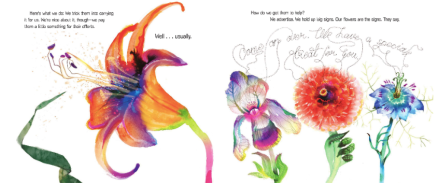
But how does each bird, butterfly, or bee know which flowers to pollinate? That’s where a flower’s colors come in, the prickly pear says. “A flower’s color invites specific animals to visit.” Then he lets children in on their conversations. Hear the red flowers talking? They’re calling out to birds, offering hummingbirds a bit of nectar in exchange for carrying pollen. Insects can’t see the color red. Blue and other vibrant flowers whisper sweet nothings to bees, inviting them to take along some pollen – to their hives and also to other flowers, thanks! White flowers are perfectly hued to attract pollinators at a particular time of day. Brown flowers may not be showy, but they appeal to certain insects too. And green flowers? Well they don’t need to talk at all. The prickly pear encourages kids to guess why.
celebrate-picture-books-picture-book-review-Flower-talk-ads

Image copyright Masha D’yans, 2019, text copyright Sara Levine, 2019. Courtesy of Millbrook Press

Colors aren’t the only trick that flowers have either. Most emit a scent and some are just the right shape. But now, the prickly pear excuses himself with an abrupt “Go take a hike.” Why the brush off? It seems he’s making a new flower and is just about done with it. When you see it, you’ll think it’s the bee’s knees!

Back matter includes an illustrated step-by-step look at how pollination works, information on how to protect pollinators, and a list of other books for further reading.
celebrate-picture-books-picture-book-review-flower-talk-field

Image copyright Masha D’yans, 2019, text copyright Sara Levine, 2019. Courtesy of Millbrook Press.

With an impish attitude, Sara Levine’s hilarious and knowledgeable prickly pear narrator engages kids in witty banter while taking them on a colorful garden tour. As the cactus explains a plant’s growing cycle and the need for pollinators, the information it imparts is eye-opening for children and adults. Why and how each flower’s color and scent attract just the right pollinator is clearly described in conversational language that kids will laugh along with and learn from. Every page contains an “ah-ha” moment that will spark discussion and an excitement to plant a colorful garden and watch nature at work.

Like a riotous field of wildflowers, Masha D’yan’s dazzling illustrations put colors on glorious display as the flowers lure insects and animals to them. D’yan’s detailed images provide a great place for young naturalists to start researching the various plants introduced. Depictions of the prickly pear, birds, and bees match the humor of Levine’s text. Kids will love lingering over the two-page spreads to point out the various animals and insects and how they interact with the plants. They’ll also like following the growth of the prickly pear’s bud as it grows bigger and blossoms.

A superb book for teaching children about this fascinating feature of flowers and plants as well as providing a guide for gardeners interested in attracting a variety of pollinators, Flower Talk: How Plants Use Color to Communicate would be an outstanding addition to home, classroom, and public libraries.

Ages 7 – 11

Millbrook Press, 2019 | ISBN 978-1541519282

Discover more about Sara Levine and her books on her website.

To learn more about Masha D’yans, her books, and her art, visit her website.

National Plant a Flower Day Activity

celebrate-picture-books-picture-book-review-flower-pot-stake-craft

Flower Garden Stakes


It’s fun to start a garden from seeds, but how do you remember what you’ve planted where? With these easy to make garden stakes, you can mark your pots with style! 

Supplies

  • Wide craft sticks
  • Chalkboard paint in various colors
  • Colorful chalk
  • Paint brush

Directions

  1. Paint the stakes with the chalkboard paint, let dry
  2. With the chalk, write the name of the different flowers or plants
  3. After planting your seeds, stick the stake in the pot 
  4. Wait for your seeds to grow!

celebrate-picture-books-picture-book-review-flower-talk-cover

You can find Flower Talk: How Plants Use Color to Communicate at these booksellers

Amazon | Barnes & Noble | Books-a-Million | IndieBound

Picture Book Review

April 14 – National Gardening Day

celebrate-picture-books-picture-book-review-in-the-garden-cover

About the Holiday

For many of us, spring means gardening. Today’s holiday encourages avid gardeners and those new to this rewarding activity to turn over some dirt, plant seeds, and prepare to tend the little sprouts on their way through the season. While this year may pose challenges to regular gardening routines, ordering options, creative solutions

In the Garden

By Emma Giuliani


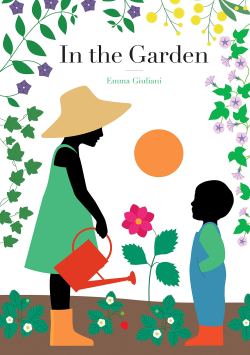
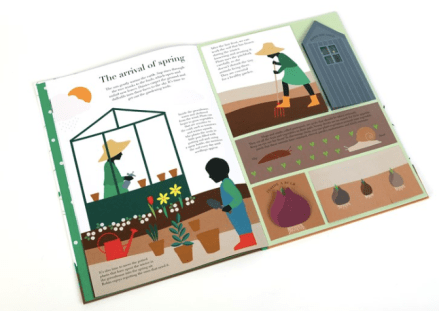
In her stunningly illustrated interactive guide through the seasons, Emma Giuliani introduces Plum and her little brother, Robin, and invites readers to join them as they tend to their garden and all the plants, animals, and birds that call it home. Plum and Robin begin at winter’s end. “This morning it’s cold. It’s not yet spring, but, in the garden, Plum and her brother Robin see the first catkins appearing on the branches of the willows and hazels. The blossoming mimosa makes the gardeners impatient for spring to come.” As Robin counts the long, drooping catkins, Plum rakes a layer of compost over the ground. On the facing page, children get a close-up view of the fuzzy catkins, can peek inside a bud, burrow underground with earthworms just waking from hibernation, and view a few early bloomers. They also learn about what makes up the earth’s soil and get a recipe for compost.

celebrate-picture-books-picture-book-review-in-the-garden-shed

Copyright Emma Giuliani, 2020, courtesy of Princeton Architectural Press.

With the arrival of spring, Plum is in her little greenhouse, planting vegetable seeds and spritzing the soil with water to keep it moist while Robin repots some plants who have spent the winter in the greenhouse. Outside, Plum aerates the garden bed with a pitchfork, careful of any tiny creatures below. Children can open the door to Plum’s well-stocked shed to see all the tools tidily stored there and lift the flaps to look inside a bulb and help a hyacinth, a daffodil, and a tulip grow.

celebrate-picture-books-picture-book-review-in-the-garden-open-shed

Copyright Emma Giuliani, 2020, courtesy of Princeton Architectural Press.

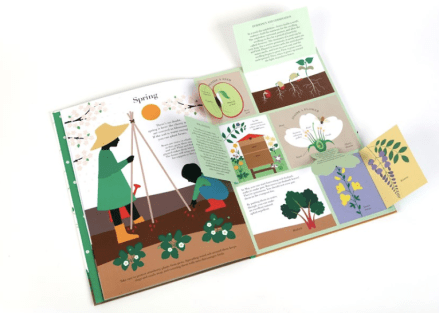
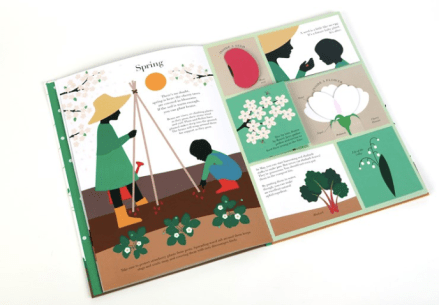
At last the warm weather of spring has arrived. The cherry trees are blossoming, and Plum and Robin are setting stakes and planting bean seeds. Next, they provide protection for the tender strawberry plants that are beginning to bloom. Young gardeners will enjoy opening a bean seed to learn what’s inside and then following its growing process. The bees are visiting the cherry blossoms, pollinating the flowers and making honey. What does a bee see as it hovers around the flower? Pull down the flap to see for yourself and learn all the parts of a flower. What other plants are flowering now? Open the flap to see!

celebrate-picture-books-picture-book-review-in-the-garden-spring

Copyright Emma Giuliani, 2020, courtesy of Princeton Architectural Press.

Summer begins and “what a joy to be in the garden in June! The gentle breeze, the smell of cut grass, and the tangy taste of strawberries and cherries make the gardeners smile.” While Plum waters the tomato plants, “Robin looks for ripe strawberries under the leaves.” Join him! Robin is also picking cherries before the birds eat them. How do those bright red, round fruits grow? Lift the flap to learn and see how they develop from flower to fruit. Plum is getting help with the aphids on the bean plants from industrious—and hungry—ladybugs. “Dragonfly larvae are transforming into graceful flying insects….Their presence is a sign of a healthy garden.”

celebrate-picture-books-picture-book-review-in-the-garden-open-spring

Copyright Emma Giuliani, 2020, courtesy of Princeton Architectural Press.

It’s high summer and the garden is glorious. Bean pods hang from the vines, and Plum contemplates whether they are ready to pick. She may leave some “husks dry out on the plant before picking them.” Dried completely indoors, they can be stored and eaten during the fall and winter. Take a look inside a pod to see the seven red beans there. Flowers greet you too: an orange marigold with petals like a pinwheel, a brilliant pink and purple fuchsia, and a perky mignon dahlia. Robin took cuttings of these plants and potted them to grow some more. Learn how you can do that with your plants too!

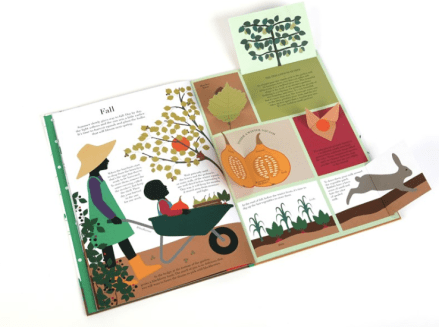
The summer heat is waning and the days are growing shorter. Fall is here. The catkins of early spring have become hazelnuts that are ready to be harvested. Even the squirrel approves! Plum and Robin teach you how to store them—and when to pick the winter squash and keep them for months as well. Can you count the number of seeds inside the winter squash? Plum’s beautiful trellised pear tree is bearing sweet fruit. Yum! But look out—a crafty rabbit is after the last leafy vegetables in the garden. No need for a fence, though. Milk will do the trick of shooing him away.

celebrate-picture-books-picture-book-review-in-the-garden-open-fall

Copyright Emma Giuliani, 2020, courtesy of Princeton Architectural Press.

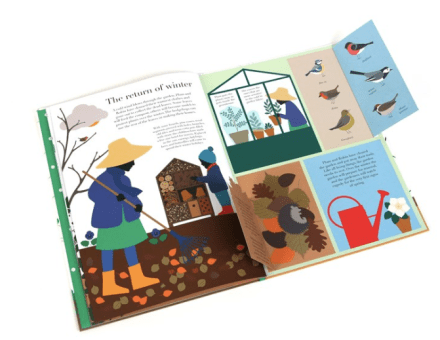
The air is chilly again and winter is on the horizon. “Plum and Robin have donned their warmest clothes and gone out to collect the dead leaves. Some leaves will feed the compost, others will become mulch to protect plants over the winter. The hedgehogs can use the rest of the leaves in making their homes.” Do you see the pile of crunchy leaves? Lift them gently…shhh! A hedgehog is snoozing underneath. Robin and Plum have built an insect hotel to keep the bugs cozy during the winter and have filled the greenhouse again. For the colorful birds who stay awhile or all winter, Robin and Plum put out a bird feeder and fill it with locally produced seeds.

After putting all of their tools back in the shed, Plum and Robin head indoors to plan next year’s garden and “watch eagerly for the very first signs of spring.”

celebrate-picture-books-picture-book-review-in-the-garden-open-winter

Copyright Emma Giuliani, 2020, courtesy of Princeton Architectural Press.

If your family tends a garden or is thinking of starting one, Emma Guiliani’s superb book is a must. At 16 inches tall, In the Garden provides fascinating facts about plants, insects, and animals; helpful tips on when and how to plant a variety of fruit, vegetables, and flowers, information on natural ways to ward off pests; and how to recognize when fruit and vegetables are ready for picking and how to store them. Through copious flaps, children get inside views of flowers, seeds, buds, and vegetables to learn the names of each part and how they contribute to the growth of the plant. Along the way, young and adult gardeners discover how early gardening can begin, directions on how to create and use compost, when bushes can be planted, information on pollination; and how to winter over the garden for the coming spring.

Giuliani’s crisp, lush illustrations are marvels, combining intricate paper cuts that replicate the shapes of delicate bulbs and buds, flowers and seeds, smooth and serrated leaves, the long bean pod, and even Plum’s garden shed with a window in the door. Her extraordinarily beautiful color palette immerses readers in the garden experience; you can almost smell the rich earth, hear the bees buzzing at the blossoms, and feel the air changing season to season.

A brilliant resource and a joy to peruse, In the Garden is a book that adults and children—both gardeners or nature lovers—will share throughout the seasons and from year to year. The book is most highly recommended for home, school, and public library collections.

Ages 7 – 12

Princeton Architectural Press, 2020 | ISBN 978-1616898939

You can connect with Emma Giuliani on Instagram.

National Gardening Day Activity

celebrate-picture-books-picture-book-review-flower-garden-game

Plant a Flower Garden Game


With this fun game you and your family and friends can grow gardens inside! Roll the dice to see whose garden will fully blossom first!

Supplies

Directions

Object: The object of the game is for each player to fill their garden or garden rows with flowers. Depending on the ages of the players, the game can be adjusted to fill all of the rows, some or all rows, or just one.           

  1. Print one Game Board for each player
  2. Print one or more sets of Flower Playing Cards for each player, depending on how  (for sturdier playing items, print on card stock)
  3. Cut the flowers into their individual playing cards
  4. Print one Flower Playing Die and assemble it (for a sturdier die, print on card stock)
  5. Color the “dirt” on the Garden Plot with the crayon (optional)
  6. Choose a player to go first
  7. The player rolls the die and then “plants” the flower rolled in a row on the game board
  8. Play moves to the person on the right
  9. Players continue rolling the die and “planting” flowers until each of the number of determined rows have been filled with flowers or one row has been filled with all six flowers.
  10. The first person to “grow” all of their flowers wins!

To play a printable Vegetable Garden Board Game, click here.

celebrate-picture-books-picture-book-review-in-the-garden-cover

You can find In the Garden at these booksellers

Amazon | Barnes & Noble | Books-a-Million | IndieBound | Princeton Architectural Press

Picture Book Review

March 30 – National Women’s History Month

celebrate-picture-books-picture-book-review-blast-off-into-space-like-mae-jemison-cover

About the Holiday

Women have been inventing, discovering, questioning, challenging, and changing the world in the same ways and for just as long as men have—but often without recognition, the ability to take jobs in their fields of expertise, or equal (or even any) pay. This month’s observance serves to educate people on the amazing women who have blazed trails in the past and those who are continuing that tradition today. As we close out National Women’s History Month, we take a look at a book about one woman who has broken many barriers throughout her life and continues to inspire children and adults.

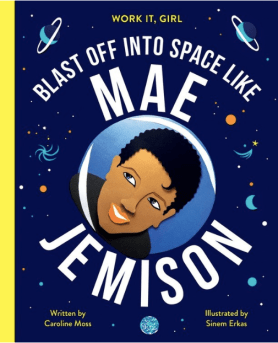
Blast off into Space Like Mae Jemison (Work It, Girl! series)

Written by Caroline Moss | Illustrated by Sinem Erkas

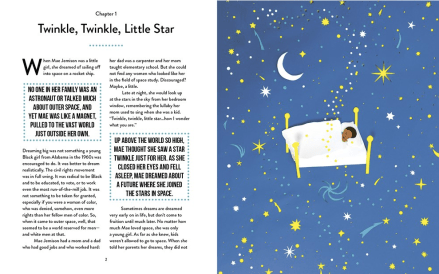
Focused, intelligent, courageous, and giving, astronaut Mae Jemison is an inspiration to millions of kids and adults around the world. Through her captivating biography, Caroline Moss introduces readers to this accomplished woman in ten engrossing chapters that, through pivotal events, dialogue, and thoughts, reveal Mae’s dreams, motivations, and triumphs. Paced in short, impactful chapters, this biography reads like a novel yet imparts factual information that will entice readers to learn more about Mae Jemison and careers in science.

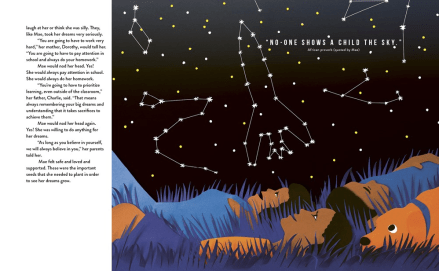
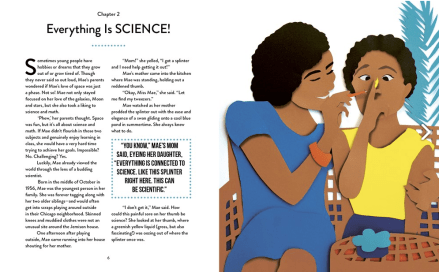
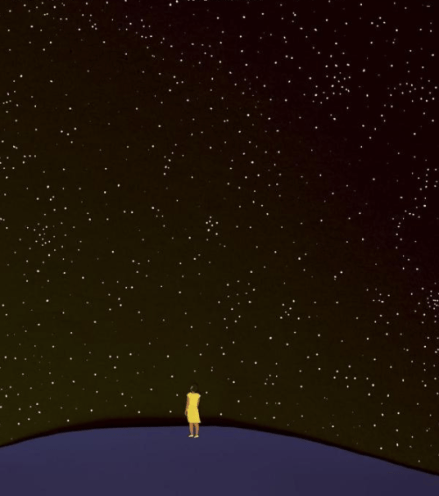
Sinem Erkas punctuates this personal narrative with her stirring 3-D cut paper artwork. Vivid colors and  action-packed imagery, take readers along on Mae’s journey from childhood dreams of “sailing off into space on a rocket ship” to the day she fulfills that dream and beyond. Images of Mae completing experiments in college and medical school as well as detailed depictions of Mae inside the space shuttle working and interacting with other astronauts will have children lingering over the pages.

celebrate-picture-books-picture-book-review-blast-off-into-space-like-mae-jemison-star

Image copyright Sinem Erkes, 2020, text copyright Caroline Moss, 2020. Courtesy of Frances Lincoln Children’s Books.

In the first chapter, children meet Mae as a young girl and her parents who took her dreams seriously, instilled in her a strong work ethic, and guided her on her way to the stars. Is a splinter science? In Chapter 2, readers learn how an infected injury led Mae and her mom to “do a science experiment with the infection” that taught her “so much about doctors and science and health…. Mae was also excited to realize this was something that truly interested her.” Excited to share her research and discovery at school, Mae instead felt those first feelings of doubt when her teacher discouraged her goal of becoming a scientist.

In Chapter 3, children sit in on this class, but also follow 9-year-old Mae home, where her mom tells her “‘It does not matter what anyone thinks…. What matters is that you work hard, set goals, and do your best to achieve them. What matters is that you believe in yourself.” It’s also at this time that Mae watched the Apollo moon landing and thought that maybe someday she go into space too.

When she was 11, Mae discovered dance. She not only discovered it, she discovered she loved it and was good at it. Would Mae decide to become a dancer instead of a scientist? Or, Mae wondered, could she do both? Her mom gave her a bit of perspective that made sense to Mae and “helped her to prioritize her goals and dreams.” What was that advice? You can read about it in Chapter 4.

celebrate-picture-books-picture-book-review-blast-off-into-space-like-mae-jemison-constellations

Image copyright Sinem Erkes, 2020, text copyright Caroline Moss, 2020. Courtesy of Frances Lincoln Children’s Books.

In Chapters 5 and 6, Mae is getting closer to her goal as she goes off to Stanford University at age 16 and then on to medical school at Cornell University, from which she graduated as a Doctor of Medicine in 1981. After grad school, Mae spent a few years in the Peace Corps overseas. When she came back, she learned that “NASA was accepting applications for astronauts. She thought of Sally Ride, a trailblazer; the first American woman in space. She was inspired.” The application was long, and so was the wait to hear back. When she finally got the letter and tore it open, she learned that “out of 2,000 people, she had been accepted to the NASA astronaut program!” She also “realized quickly that out of the fifteen people selected for the 1987 NASA program, she was both the only Black person and the only Black woman.” After her training, she was given a job in the Cape Canaveral, Florida, Kennedy Space Center, “using her math and science knowledge to work with software for shuttles.”

You know that Mae Jemison did go into space, so when does she blast off? In Chapter 7! Young future astronauts will discover what she did before that momentous trip, and in Chapter 8, they’ll read about microgravity, what experiments Mae worked on, how she slept strapped to the wall, what she ate, and other details of her eight days in space.

celebrate-picture-books-picture-book-review-blast-off-into-space-like-mae-jemison-science

Image copyright Sinem Erkes, 2020, text copyright Caroline Moss, 2020. Courtesy of Frances Lincoln Children’s Books.

Chapter 9 relates what Mae has done after leaving NASA. Her teaching career and the Dorothy Jemison Foundation she began were fostered by “a pull inside her to get in front of young people to impart this wisdom. She wanted to create a better world than the one she lived in as a little girl. She wanted kids, especially girls, to know that the world needed them, and the world of science definitely needed them.” As the leader of NASA’s 100 Year Starship Program, Mae’s doing just that. Read about it and be inspired to shoot for your own stars in Chapter 10.

Quotes by Mae Jemison and motivational snapshots are highlighted throughout the text. Back matter includes ten key lessons from Mae Jemison’s life on becoming a leader, questions to prompt kids to think about science, their passions, staying motivated, making a difference, and what they want their legacy to be. There is also a list of books, websites, and organizations for further reading and exploration.

celebrate-picture-books-picture-book-review-blast-off-into-space-like-mae-jemison-night-sky

Image copyright Sinem Erkes, 2020, text copyright Caroline Moss, 2020. Courtesy of Frances Lincoln Children’s Books.

Compelling and personal, Blast off into Space Like Mae Jemison is a biography young readers won’t be able to put down. The book is highly recommended for homeschooling and home libraries as well as for school and public library collections.

Ages 8 – 12

Frances Lincoln Children’s Books, 2020 | ISBN 978-0711245150

Discover more abouCaroline Moss and her books on her website.

To learn more about Sinem Erkas, her books, and her art, visit her website.

National Women’s History Month Activity

celebrate-picture-books-picture-book-review-rocket-to-the-moon-tic-tac-toe-game

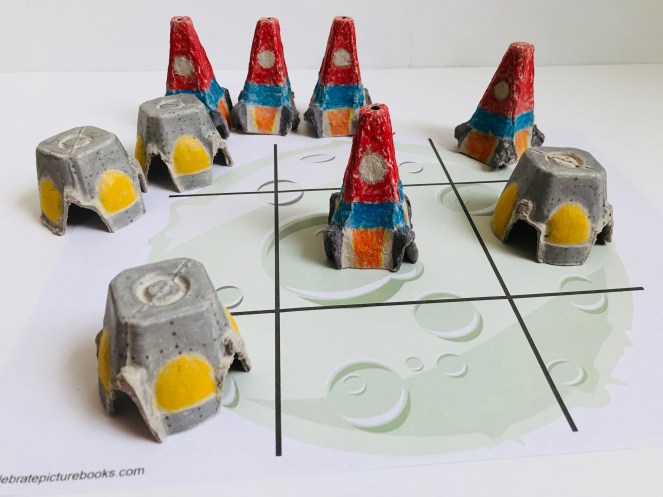
Out-of-this-World Tic-Tac-Toe Game


You can launch your own Tic-Tac-Toe Game with this set you make yourself! With just a couple of egg cartons, some crayons, and a printable game board, you’ll be off to the moon for some fun! Opposing players can be designated by rockets and capsules. Each player will need 5 playing pieces. 

SUPPLIES

  • Printable Moon Tic-Tac-Toe Game Board
  • 2 cardboard egg cartons
  • Heavy stock paper or regular printer paper
  • Crayons
  • Black or gray fine-tip marker

DIRECTIONS

To Make the Rockets

  1. Cut the tall center cones from the egg carton
  2. Trim the bottoms of each form so they stand steadily, leaving the arched corners intact
  3. Pencil in a circular window on one side near the top of the cone
  4. Color the rocket body any colors you like, going around the window and stopping where the arched corners begin
  5. With the marker color the arched corners of the form to make legs
  6. On the cardboard between the legs, color flames for blast off

To Make the Capsule

  1. Cut the egg cups from an egg carton
  2. Color the sides silver, leaving the curved section uncolored. (If your egg cup has no pre-pressed curve on the sides of the cup, draw one on each side.)
  3. Color the curved section yellow to make windows
  4. With the marker, dot “rivets” across the capsule

Print the Moon Game Board and play!

celebrate-picture-books-picture-book-review-blast-off-into-space-like-mae-jemison-cover

You can find Blast off into Space Like Mae Jemison at these booksellers

Amazon | Barnes & Noble | Books-a-Million | IndieBound

Picture Book Review
March 26 – It’s Rising Star Month

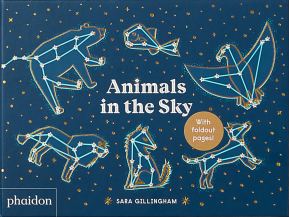
celebrate-picture-books-picture-book-review-animals-in-the-sky-cover

About the Holiday

Are you a rising star? Of course, you are! What is a rising star? It’s someone who shows great promise for the future. That sounds like you, right? Today, celebrate all of your special talents and knowledge that will take you far as you grow up. How far? Well, why not shoot for the stars? Get started on a new learning journey about those stars with today’s book.

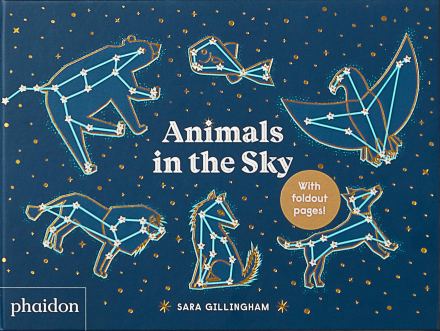
Animals in the Sky

By Sara Gillingham


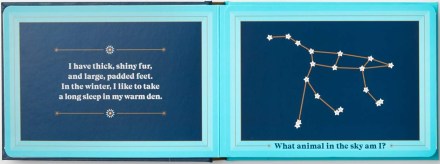
The weather’s warmer and the sky is dark. From your window or in backyard you can look up and find… what? Little ones know the sky is “filled with twinkling stars.” But do they “know that it’s full of pictures too?” Just like a dot-to-dot puzzle, “if you draw lines between some of the brightest stars, you can find animals.” These animals and other pictures made from stars have a special name: constellations. Youngest astronomers will shine while putting their scientific minds to work on the riddles that accompany each constellation and discovering the answer. Let’s take a look at a couple of them.

Riddle: “I have thick, shiny fur, and large, padded feet. I the winter, I like to take a long sleep in my warm den. What animal in the sky am I?”

If your little one guesses “a bear,” they’ll be grr-atified to learn that they’re right! In reward they learn about another well-known constellation that is part of the Big Bear.

celebrate-picture-books-picture-book-review-animals-in-the-sky-bear

Copyright Sara Gillingham, 2020, courtesy of Phaidon Press.

Ready to try another one? Terrific! Riddle: “I have a tail that wags when I’m happy, a big wet nose, and a loud bark. What animal in the sky am I?” Anyone lucky to have one of these for a pet will know right away that connecting these stars makes the Big Dog. But readers will also discover the name of the that right where his dog tag would be is “the brightest star in the whole sky”––Sirius.

Five more clever riddles and facts about the Rabbit, the Lion, the Southern Fish, the Eagle, and the Wolf also await star-struck kids. A fold-out page at the back depicts ten more constellations named for favorite animals.

celebrate-picture-books-picture-book-review-animals-in-the-sky-bear-gate-fold

Copyright Sara Gillingham, 2020, courtesy of Phaidon Press.

Sara Gillingham introduces the youngest stargazers to twenty animal constellations that will pique their interest in astronomy and all things space related. Her lyrical riddles for seven constellations give kids clues to their names with evocative descriptions that not only lead readers to the right answer but reveal facts about the real animals in nature. Her stylish presentation of connected stars on a navy-blue background, as crystal clear as a cloudless night, allows little ones to easily see the basic formation of the constellation. The page then folds out, and the outline is superimposed with an image of the animal inspired by the shape. The third page goes on to show the two floating in a star-sprinkled sky along with another interesting tidbit of information.

With a gold-embossed cover and sturdy pages, Animals in the Sky is fun to share for nighttime star gazing and as a spark for lessons on astronomy, science, space, history, and mythology. The book would make a beautiful gift for new babies, baby showers, new little siblings as well as a go-to favorite for home, school, and public library collections.

Ages 2 – 5

Phaidon Press, 2020 | ISBN 978-1838660246

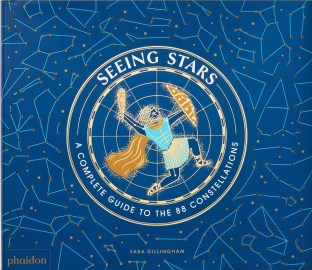
Older children will enjoy the stunning Seeing Stars: A Complete Guide to the 88 Constellations, also by Sara Gillingham. You can read my review here.

celebrate-picture-books-picture-book-review-seeing-stars-cover-2

You can find Seeing Stars: A Complete Guide to the 88 Constellations at these booksellers

Amazon | Barnes & Noble | Books-a-Million | IndieBound

Phaidon Press, 2018 | ISBN 978-0714877723

To learn more about Sara Gillingham, her books, and her art, visit her website.

Rising Star Month Activity

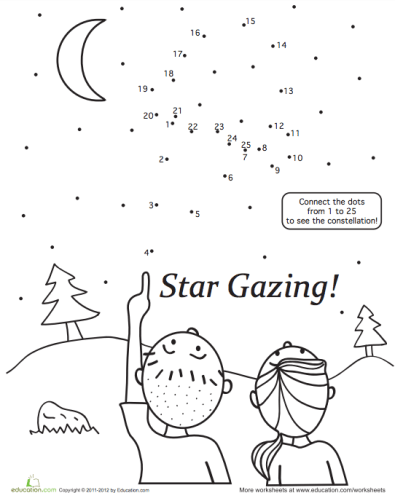
celebrate-picture-books-picture-book-review-constellation-dot-to-dot-page

Courtesy of education.com

Star Gazing Dot-to-Dot


What constellation do these kids see in the sky? Print and follow the dots to find out. Then color the picture! Then enjoy another page filled with star-studded fun!

Star Gazing Dot-to-Dot | Constellations Dot-to-Dot

celebrate-picture-books-picture-book-review-read-the-stars-word-search

Older children will enjoy this printable Read the Stars Constellations Word Search

Read the Stars Word Search Puzzle | Read the Stars Word Search Solution

celebrate-picture-books-picture-book-review-animals-in-the-sky-cover

You can find Animals in the Sky at these booksellers

Amazon | Barnes & Noble | Books-a-Million | IndieBound

Picture Book Review
March 19 – The Spring Equinox

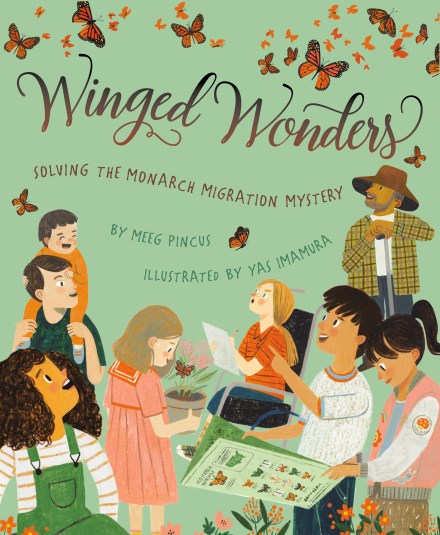
celebrate-picture-books-picture-book-review-winged-wonders-cover

About the Holiday

Today, we celebrate the first day of spring! What makes the equinox so special? On this date, day and night are equally long around the globe. With longer days and warmer weather, thoughts turn to nature and renewal. For many this means gardening for ourselves and for the returning bees and butterflies. Today’s book takes a look at one of nature’s most inspiring creatures – the monarch butterfly. 

I received a copy of Winged Wonders from Sleeping Bear Press for review of consideration. All opinions about the book are my own.

Winged Wonders: Solving the Migration Mystery

Written by Meeg Pincus | Illustrated by Yas Imamura


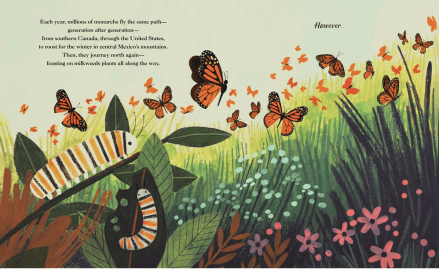
For centuries people pondered the mystery of the monarch butterflies that “swooped in for a spell, like clockwork” from who-knew-where and fluttered off to some unseen destination. People all along their route, “from southern Canada…through the middle of the United States…and all the way to central Mexico” wondered about this annual event. The mystery was finally solved in 1976. What was it that set these butterflies soaring? The newspapers called it “The Great Monarch Migration.”

celebrate-picture-books-picture-book-review-winged-wonders-citizen-scientists

Image copyright Yas Imamura, 2020, text copyright Meeg Pincus, 2020. Courtesy of Sleeping Bear Press.

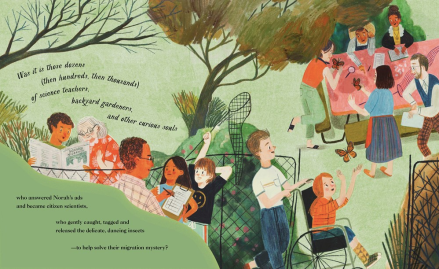
You might wonder who the person was who “tracked these winged wonders from one end of the continent to the other” and “found their secret roosting place, a marvel of nature.” Perhaps it was Fred, a scientist from Canada, who spent thirty years studying the monarchs and tagging their wings. Or maybe it was his wife, Norah, who sought help in tagging monarchs’ wings from volunteers across the country and “logged and mapped every tidbit of information they sent in to the lab.”

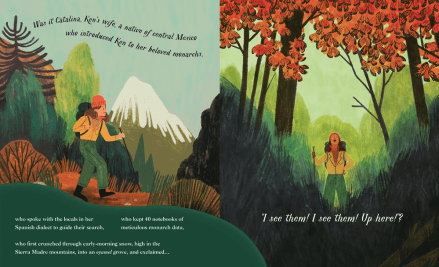
Could it have been the thousands of “science teachers, backyard gardeners, and other curious souls” who answered Norah’s plea? Or you might want to consider Ken and Catalina, a couple in Mexico who spent two years “trying to track the butterflies’ twisting trail” with the help of villagers and farmers. You might even say that it was Jim, a science teacher in Minnesota, who caught and tagged a very particular one-among-millions monarch.

celebrate-picture-books-picture-book-review-winged-wonders-catalina

Image copyright Yas Imamura, 2020, text copyright Meeg Pincus, 2020. Courtesy of Sleeping Bear Press.

So who was it? Who made that 1976 discovery? If you say all of them, you’re right! Communities across the North American countries of Canada, America, and Mexico came together to solve the mystery of one of nature’s most astounding phenomena. But now, another question concerning monarchs looms: “How will they survive?” Since that first discovery, the monarch population has dropped from “at least a billion to millions—a handful now to each hundred then” due to pesticides, pollution, and habitat destruction. Who do you think can help solve this monarch question? “The answer is really no mystery at all.”

An extensive Author’s Note following the text offers more information about the monarch migration discovery as well as ideas and projects for helping the monarch population grow and thrive.

celebrate-picture-books-picture-book-review-winged-wonders-caterpillars

Image copyright Yas Imamura, 2020, text copyright Meeg Pincus, 2020. Courtesy of Sleeping Bear Press.

Mirroring the flight of the monarchs, Meeg Pincus entices readers along the route of her story with fascinating facts about the personalities and eager citizen scientists who dedicated their lives and contributed their time to catching, tagging, and tracking these beautiful butterflies. Surprising details reveal the commitment in time and effort of so many people who enthusiastically answered Norah’s call for help. Her questioning format builds this same feel of excitement and community as page-by-page more people are added for readers to learn about and consider. Pincus’s lyrical storytelling is as buoyant and lovely as her subject while providing readers with a depth of knowledge about the process and experiences of the people along the way.

Yas Imamura’s delicate butterflies flutter above multi-hued green hills, busy downtown shops, and a golden desert before congregating like autumn leaves on a solitary tree as a deer looks on. Readers then begin to meet the scientists & participants: Fred and Norah in their well-packed car awed at spotting a monarch along their route, experimenting with wing tags, and mapping monarch sightings; a diverse group of kids and adults catching, tagging, and releasing butterflies; Ken and Catalina and the people of central Mexico, who share their colorful Día de los Muertos celebrations with these winged visitors; and finally Jim and his students.

Imamura’s glorious color palette complements the orange monarchs with soft pinks, corals, yellows, and reds while dramatically highlighting them against dark green backgrounds. Show-stopping scenes of the monarchs gathered on tree trunks and branches and the final spread of a butterfly garden are awe-inspiring and will spark children’s interest in helping to protect and help these unique creatures.

Winged Wonders: Solving the Monarch Migration Mystery is a must for home, school, and public library collections for nature lovers, citizen scientists, and any child who is a budding environmentalist as well as for lessons on science and community engagement.

Ages 7 – 10

Sleeping Bear Press, 2020 | ISBN 978-1534110403

Discover more about Meeg Pincus and her books on her website.

To learn more about Yas Imamura, her books, and her art, visit her website.

You can download an Educational Guide with activities for Winged Wonders on the Sleeping Bear Press website.

Spring Equinox Activity

celebrate-picture-books-picture-book-review-flower-garden-game

Plant a Flower Garden Game


With this fun game you and your family and friends can grow gardens inside! Roll the dice to see whose garden will fully blossom first!

Supplies

Directions

Object: The object of the game is for each player to fill their garden or garden row with flowers. Depending on the ages of the players, the game can be adjusted to fill all of the rows, some or all rows, or just one. 

Options:

  • Players can “plant” each of the six rows with multiple flowers of the same type
  • Each player can be assigned a single row and “plant” one each of the six types of flowers 
  1. Print number of Game Boards needed 
  2. Print one or more sets of Flower Playing Cards for each player, depending on how many of each flower the players want to put in each row (For example: fewer for younger children, more for older). For sturdier playing items, print on card stock.
  3. Cut the playing cards apart
  4. Print one Flower Playing Die and assemble (for a sturdier die, print on card stock)
  5. Color the “dirt” on the Garden Plot (optional)
  6. Choose a player to go first
  7. The player rolls the die and then “plants” the flower rolled in a row on the game board
  8. Play moves to the person on the right
  9. Players continue rolling the die and “planting” flowers until each of the number of determined rows have been filled with flowers or one row has been filled with all six flowers.
  10. The first person to “grow” all of their flowers wins!

celebrate-picture-books-picture-book-review-winged-wonders-cover

You can find Winged Wonders: Solving the Monarch Migration Mystery at these booksellers

Amazon | Barnes & Noble | Books-a-Million | IndieBound

Picture Book Review

March 12 – It’s Women’s History Month

celebrate-picture-books-picture-book-review-shark-lady-cover

About the Holiday

National Women’s History Month is all about celebrating women who broke barriers with their intelligence, creativity, courage, persistence, and unwavering confidence in their abilities. In every discipline, women have brought and continue to bring new perspectives, experiences, and talents to make contributions toward a better world. Celebrate this month-long holiday by reading about some women pioneers in all areas. Today’s book is a great place to start!

By Jakki Licare

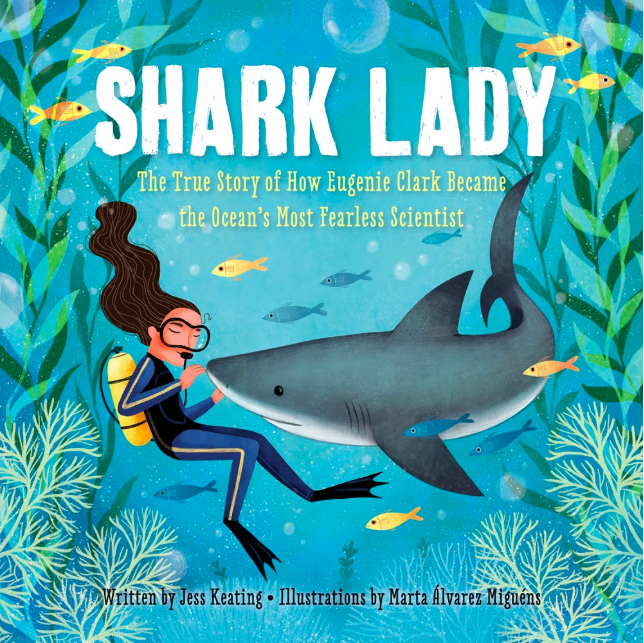
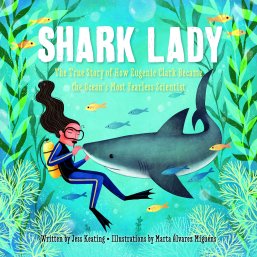
Shark Lady: The True Story of How Eugenie Clark Became the Ocean’s Most Fearless Scientist

Written by Jess Keating | Illustrated by Marta Álvarez Miguéns


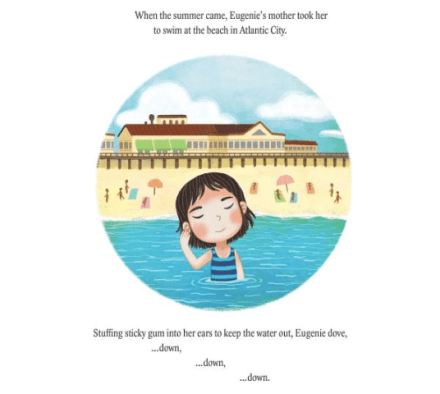
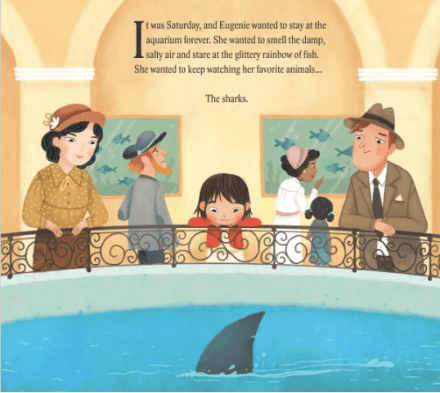
Eugenie’s favorite place was the aquarium. She loved the smell, the colors of the fish, but most of all she loved the sharks. Eugenie wondered what it would be like to live underwater and swim with the sharks. She had to find out. In the summer, Eugenie’s mother took her to Atlantic City. “Stuffing sticky gum into her ears to keep the water out, Eugenie dove, … down, …down, …down.” She pretended to be a shark swimming strong through water. 

celebrate-picture-books-picture-book-review-shark-lady-aquarium

Image copyright Marta Álvarez Miguéns, 2017, text copyright Jess Keating, 2017. Courtesy of Sourcebooks Explore.

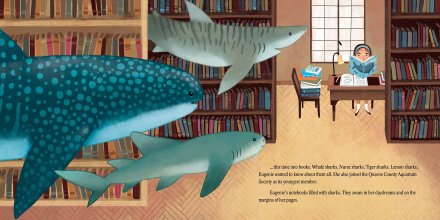
Most people were scared of sharks, but Eugenie thought they were magnificent.  She was determined to learn more about them. “So she dove…this time into books.” At the library she learned about every shark she could find. She also became Queens County Aquarium Society’s youngest member. While Eugenie’s mother couldn’t give her a pet shark, she did surprise Eugenie with a fifteen gallon fish tank. Eugenie bought guppies, clown fish and snails. 

As Eugenie grew older she decided to become a zoologist, but many professors didn’t encourage her. Most thought women couldn’t and shouldn’t be scientists. “Eugenie knew better. Her dream was as big as a whale shark. So again, Eugenie dove.” She studied hard and rose to the top of her field. 

celebrate-picture-books-picture-book-review-shark-lady-diving

Image copyright Marta Álvarez Miguéns, 2017, text copyright Jess Keating, 2017. Courtesy of Sourcebooks Explore.

Eugenie was ready to finally dive into the ocean. In the red sea, she discovered three new species. In the Palau Islands, Eugenie finally saw her first wild shark. It was beautiful. At the time many believed sharks had to always be moving to stay alive, but Eugenie discovered caves with sharks resting together. “Eugenie had proven she was smart enough to be a scientist and brave enough to explore the oceans.”

Still most of the world believed sharks to be dangerous and hunting sharks was very common. Eugenie wanted to prove to the world that sharks weren’t ‘mindless killers.’ Eugenie created an experiment where she would train a shark to push a target. It was a success! Sharks even remembered their training two months later. Eugenie proved that sharks were smart and deserved to be protected. 

Facts about sharks, a detailed timeline of Eugenie Clark’s life, and an Author’s Note follow the text.

celebrate-picture-books-picture-book-review-shark-lady-library

Image copyright Marta Álvarez Miguéns, 2017, text copyright Jess Keating, 2017. Courtesy of Sourcebooks Explore.

Jess Keating’s straightforward manner of writing really homes in on the  struggles and successes of Eugenie Clark. Keating adds in splashes of nautical language,  making this a fun and engaging read. Eugenie’s fight for gender equality was a strong theme that ties in nicely with the world’s misunderstanding of the sharks that Eugenie loved. In Eugenie’s college years, Keating writes how people tried to convince Clark to be a secretary or housewife and poignantly points out that even after she earned her degree many still doubted her ability. Young readers can see how Eugenie didn’t let that stop her from doing what she was meant to do.

Keating emphasizes not only Clark’s passion, but her hard work and courage in a variety of situations as well. The picture book begins with Clark’s passion for sharks and then transitions to the brave girl trying to deep dive with bubble gum in her ears. Later, Keating shows the reader how hard Eugenie worked to earn her degree and how brave she was to deep dive alone. The conclusion of the book  circles back to her passion to protect her beloved sharks’ through scientific experiments. Kids with any passion can see how hard work and perseverance can create a huge impact on the world.  

celebrate-picture-books-picture-book-review-shark-lady-ear-plugs

Image copyright Marta Álvarez Miguéns, 2017, text copyright Jess Keating, 2017. Courtesy of Sourcebooks Explore.

Marta Álvarez Miguéns’ illustrations are beautiful and whimsical. Bright blues and greens invite you to dive right in.  Sharks swim through the library aisles while Eugenie reads and tag along with her through her aquarium trip. The illustrations do a great job of reinforcing Clark’s determination and courage. In the college classrooms Miguéns depicts Eugenie as the only girl in the lecture hall. She depicts her with squinty eyed determination; taking notes while the rest of her classmates look bored. Eugenie is also illustrated bravely diving alone with sharks.

The sharks’ large eyes make the sharks feel friendly and encourages the readers to give them a chance as well. In the conclusion of the book, Miguéns shows Eugenie standing next to a little girl who looks happily at the sharks. This illustration emphasizes the fact that Clark’s scientific achievements have given younger generations the chance to enjoy sharks as well.  The end pages are covered with realistic depictions of different types of sharks and nautical sea creatures, allowing those less familiar with these animals to analyze and compare.

Shark Lady is not just for shark enthusiast. This wonderful book shows us  that any dream is possible with hard work and perseverance. It would make an inspiring addition to home, school, and public library collections.

 Ages 4 – 8 and up

Sourcebooks Explore, 2017 | ISBN 978-1492642046 (Hardcover) | Scholastic, 2018 ISBN 978-1338271478 (Paperback)

Discover more about Jess Keating and her books and illustrations on her website.

To learn more about Marta Álvarez Miguéns, her books, and her art, visit her website.

Women’s History Month Activity

celebrate-picture-books-picture-book-review-shark-fin-craft

Fintastic Shark Fun


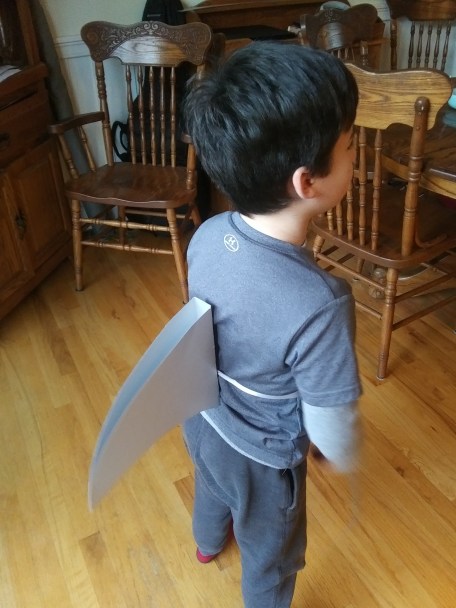
Eugenie wanted to swim with the sharks and now you can too! Follow the directions below and to make your own shark fin. 

Supplies

  • 2 pieces of 8.5 x 11 gray cardstock paper
  • Ribbon
  • Tape
  • Scissors
  • Pencil

fin outline white

celebrate-picture-books-picture-book-review-shark-fin

Directions

  1. Tape the top of the two pieces of paper together
  2. Fold them back together
  3. Measure an inch up from the bottom of the papers (the un-taped side) and trace a straight line across both papers
  4. Trace a shark fin outline onto your paper. The shark outline should stop an inch above the bottom
  5. Cut out the fin on both pieces of paper. If you should cut through the tape, re-tape the tops together
  6. Fold along the lines of both papers so the folds face towards each other.
  7. Tape the folds so the fin becomes a triangle
  8. Cut two slits parallel to the folded lines
  9. Thread ribbon through slits

celebrate-picture-books-picture-book-review-shark-lady-cover

You can find Shark Lady at these booksellers

Amazon | Barnes & Noble | Books-a-Million | IndieBound

Picture Book Review
 

March 3 – World Wildlife Day

celebrate-picture-books-picture-book-review-extinct-cover

About the Holiday

This United Nations-sponsored holiday was established in 2013 to celebrate the world’s wild animals and plants and to raise awareness of the perils they face. Since that time, World Wildlife Day has grown to be the most important global event dedicated to wildlife. Each year, the organizers adopt a theme addressing a pressing wildlife issue. This year’s theme is Sustaining All Life on Earth and encompasses raising awareness of the importance of biodiversity to the environment and to humans as well. The world relies on its biodiversity for clean air and water, food, energy, and materials of all types. But our biodiversity is in danger through unsustainable human activities. It is up to us to decide and act now for the future. Today’s book gives readers a good place to start in seeing species we’ve recently lost and how we can help. To learn more visit the World Wildlife Day website.

I received a copy of Extinct from Phaidon Press for review consideration. All opinions of the book are my own.
Extinct: An Illustrated Exploration of Animals That Have Disappeared

Written by Lucas Riera | Illustrated by Jack Tite


When most people hear the word extinct, they picture T-rex, brontosaurus, or maybe a mastodon. Images of bones long buried and museum exhibits of fossils come to mind. But Extinct: An Illustrated Exploration of Animals That Have Disappeared introduces young readers to the fact that “species become extinct all the time—in fact, it’s happening right now.” Lucas Riera and Jack Tite focus on 90 species that have been lost recently, specifically from the 20th century to today. These animals from all habitats are familiar to children and provide examples of how and why certain species are disappearing. For young conservationists, the stories and facts included offer a roadmap to future action and protective measures while honoring these beautiful animals.

celebrate-picture-books-picture-book-review-extinct-predators

Image copyright Jack Tite, 2019, text copyright Lucas Riera, 2019. Courtesy of Phaidon Press.

Turning to the first page, readers meet six big cats that have disappeared from their homelands due to habitat destruction or hunting. The Formosan clouded leopard, a great climber native to Taiwan and named for the “distinctive shape of their spots,” succumbed to the loss of their natural habitat through logging. “The species was declared extinct in 2013. However, in 2019, two unconfirmed sightings have given hope that they may still be out there.” Also on this page, children are introduced to Tibbles—a house cat (or lighthouse cat, to be more precise) that single-pawedly wiped out the population of New Zealand’s Stephens Island wrens.

Next, children learn about the Thylacine (aka Tasmanian tiger or Tasmanian wolf). Striped like a tiger, carnivorous like a wolf, and the size of a large dog, Thylacines were actually marsupials, capable of hoping on their back legs. Their population dwindled to one by 1933 because of hunting by settlers and through their dogs, which killed the Thylacine’s prey and introduced diseases. “The last specimen was captured in 1933 and lived out its lonely life in an Australian zoo until September 7, 1936.

celebrate-picture-books-picture-book-review-extinct-athletes

Image copyright Jack Tite, 2019, text copyright Lucas Riera, 2019. Courtesy of Phaidon Press.

Speaking of marsupials, Riera highlights seven of these distinctive creatures, ranging from mouse-sized to about three feet tall, that once hopped their way across grasslands and deserts. Many fell victim to foxes, other predators, and habitat change. These include the crescent nail-tail wallaby, the yallara, and the pig-footed bandicoot, which was the size of a cat, had the streamlined face of a bird and whose front feet resembled pigs’ hooves while their back feet were more like horses’ hooves.

Twelve species of reptiles, including three types of giant tortoise, a turtle, skinks, lizards, and snakes, as well as nine species of amphibians, including toads, newts, salamanders, and frogs will fascinate kids. One of these—the gastric brooding frog—may have been one of the most unusual creatures in the forest. What made them unique? “The females swallowed their eggs during gestation. The eggs grew inside her belly! After six weeks, her developed babies would emerge from her mouth. Sadly, these wonderful weirdos have been extinct since 2002.”

celebrate-picture-books-picture-book-review-extinct-the-swimmers

Image copyright Jack Tite, 2019, text copyright Lucas Riera, 2019. Courtesy of Phaidon Press.

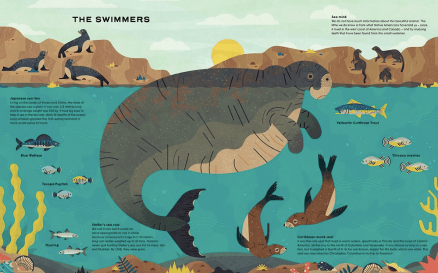
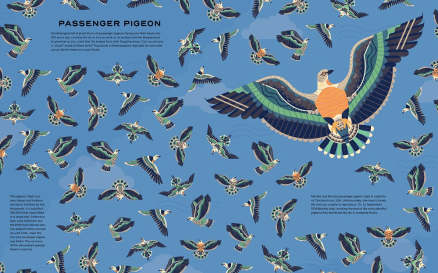
Two-page spreads are also dedicated to Amazing Athletes, Superb Swimmers, Big and Beautiful rhinos and hippo, Powerful Pack wolves, Birds, Primates, and Fantastic Foragers, including the Caucasian wisent, a bison that once thrived in the cold mountains of Eastern Europe. “In the 19th century, their population numbered in the thousands, but then humans settled in the mountains and hunting ensued. In 1927, poachers killed the last three individuals that lived in the wild.” In addition to the Thylacine, Riera highlights three other individual animals—the passenger pigeon, the great auk, and the California Grizzly.

celebrate-picture-books-picture-book-review-extinct-big-and-beautiful

Image copyright Jack Tite, 2019, text copyright Lucas Riera, 2019. Courtesy of Phaidon Press.

Following the species profiles, Riera presents an extensive discussion of extinction today, including the fact that currently “the rate of extinction is estimated to be much faster than the natural rate—by as much as 1,000 times”—and that “it’s the sixth time in billions of years that levels of extinction have been extremely high.” He also reveals causes of extinction, wildlife organizations and examples of positive results, and summaries of work to protect three critically endangered animals. On the next page, Jack Tite depicts more critically endangered animals being tracked by the International Union for Conservation of Nature. Finally, concerned children and adults will find resources for getting involved on local and international levels as well as tips for being more environmentally conscious.

celebrate-picture-books-picture-book-review-extinct-passenger-pigeon

Image copyright Jack Tite, 2019, text copyright Lucas Riera, 2019. Courtesy of Phaidon Press.

Lucas Riera introduces readers to this wide variety of animals through fascinating, conversational, and descriptive paragraphs that reveal tidbits about their distinctive features, where they lived, and how they became extinct. Dates of extinction are eye-opening, especially those for creatures that have disappeared within the lifetime of many young readers. Pages packed with reptiles, birds, amphibians and more, invite children to explore these animals further and present jumping off points for nature and environmental science classes for a wide age range of students.

In this stunning oversized book, Jack Tite accompanies the text with vibrant, eye-catching imagery of animals prowling, leaping, swimming, running, and otherwise on the move that gives readers an up-close view of their beautiful markings and distinguishing traits. Textured backgrounds place the animals in their natural environments from sun-drenched deserts to deep seas to tropical forests and beyond. In what may be a plea for the future, most of the animals gaze out from the page directly at readers, seeming to invite them to learn more and engage them in conservation efforts.

Full of information about environmental science, extinction, and animals that once roamed our planet, Extinct: An Illustrated Exploration of Animals That Have Disappeared is a lush and deep resource for young nature lovers and conservationists at home, in schools, and for public libraries.

Ages 5 and up

Phaidon Press, 2019 | ISBN 978-1838660376

To learn more about Jack Tite, his books, and his art, visit his website.

National Wildlife Day Activity

celebrate-picture-books-picture-book-review-wonderful-wildlife-board-game

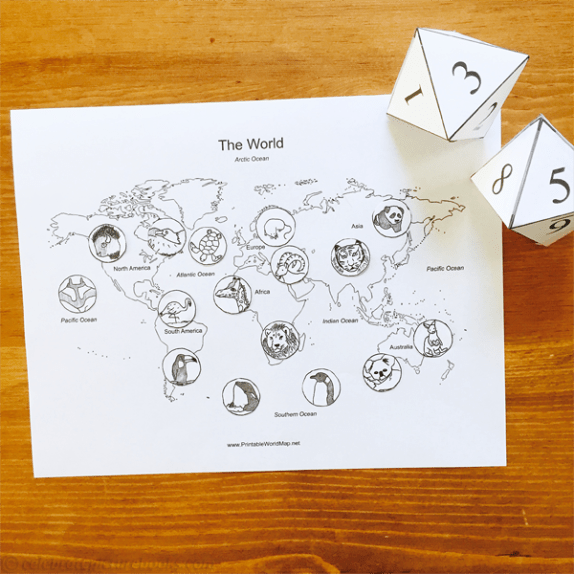
Fascinating animals are found in every part of the world. Play this fun printable Wonderful Wildlife Board Game to match each animal to the area where it lives.

Supplies

Directions

  1. Print a World Map for each player
  2. Print one set of 16 Wildlife Tokens for each player
  3. Print two copies of the 8-sided die, fold, and tape together
  4. If you would like, color the map and tokens
  5. Choose a player to go first
  6. Each player rolls both dice and places an animal on their map according to these corresponding sums of the dice as shown on printable guide
  7. The first player to fill their map is the winner!

celebrate-picture-books-picture-book-review-extinct-cover

You can find Extinct: An Illustrated Exploration of Animals That Have Disappeared at these booksellers

Amazon | Barnes & Noble | Books-a-Million | IndieBound

Picture Book Review