August 31 – It’s Happiness Happens Month

celebrate-picture-books-picture-book-review-Double Happiness by Nancy Tupper Ling Picture Book Review

About the Holiday

Summer is coming to a close and school is starting again. It’s a great time to reflect on the fun you’ve had in the warmer weather and all the memories that are about to be made as another year of activities, education, new friendships, and excitement unfolds. Happiness really does happen if you let it!

Double Happiness

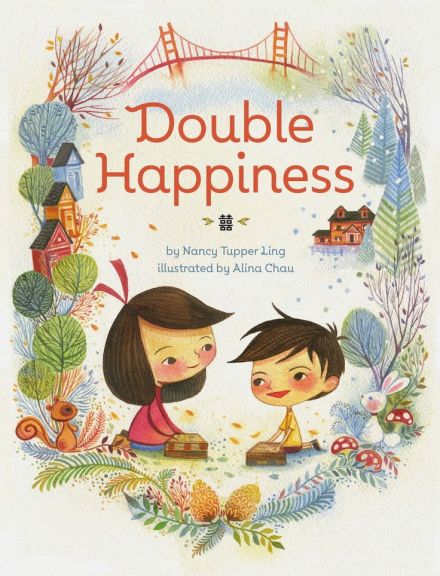
Written by Nancy Tupper Ling | Illustrated by Alina Chau


This quiet, thoughtful picture book tells the story of a family’s move from China to America in a series of unrhymed verses that reveal the experience honestly from alternating viewpoints of a brother, Jake, and his sister, Gracie. Each page is dedicated to one sibling or the other with the Jake’s poems written in blue and Gracie’s in purple. In several poems the children interact with each other, the blue and purple lines acting as dialog tags.

In the first poem, The Move, Gracie stands on her doorstep surrounded by boxes and suitcases and thinks, “I won’t go! / I won’t move / away / from our city house / by the trolley tracks….” But Jake is more adventurous and in the second poem, Train, is already imagining his new room. After considering different décor, he decides what he really wants is something familiar, something outside—“just one long train / that rocks and wobbles / my bed each night. / I can’t fall asleep until the train passes by.”
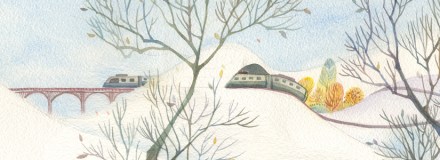
celebrate-picture-books-picture-book-review-double-happiness-train

Image copyright Alina Chau, 2015, courtesy of Chronicle Books

In Grandmother, the siblings are each given a happiness box by their Nai Nai, who wisely challenges her grandchildren to “Find four treasures each, / leading from this home / to your new.” Gracie takes this to heart, and readers see in Panda that even before leaving Nai Nai’s Gracie has added a favorite keepsake to her box: “Nai Nai’s panda sits / by the window / like always. / “I’ll miss you,” I say. / Nai Nai leans over me. / She places Panda / inside my box. / “He has a new home / now.”

Too soon moving day comes, and in Goodbye Gracie and Jake give hugs and kisses to beloved relatives. The search for items to fill Nai Nai’s boxes is taken up in the next three poems. In Treasure, Jake becomes a dragon keeping his “dragon eyes / wide open for stuff / along the way.” He is rewarded in Lucky, in which he discovers an old penny on the bus ride to the airport. In Leaf Gracie receives a surprising gift for her happiness box: “One stray leaf / flutters down / onto my box— / Eucalyptus! / If I had a koala I’d feed / her this minty meal all / day long— / the perfect treasure / to remind me of home.” 

In keeping with the long hours of travel from China to the United States, the next six poems chronicle the brother and sister’s experiences in the airport, waiting for their plane, and during the flight. Airport sees the children running, hopping, waiting, and navigating their way through the crowds of people to their gate. Dad is already tuckered out in Quiet, but Jake is wrangling to look for treasure: “’Huff puff. Puff huff.’” / Dragon blows fire. / Dragon stomps his feet. / “’Ssshhh, you’ll wake Daddy. / I giggle. / Gracie giggles. / “’Daddy can sleep / anywhere.’” Jake finally discovers gum in his backpack and creates a treasure. “I stretch it / and roll it / and ooze it / into one slinky snake / Sssssee, his penny pillow. / Sssssee, he’s kai xin— / so happy—in his brown box. / I’m tied with Gracie now— / two treasures each.”
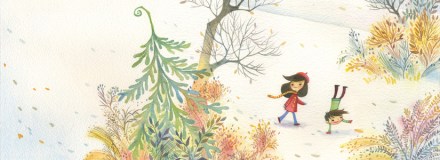
celebrate-picture-books-picture-book-review-double-happiness-discovering-the-woods

Image copyright Alina Chau, 2015, courtesy of Chronicle Books

Adventures at the airport continue in Cat and Wings, and as the plane takes off Gracie draws pictures of the day’s events in Picture. In Here the children wake up to see their new city far below them and wonder, “can I find our house / from the sky?” Marble and Sadness juxtapose Jake’s happiness at finding another treasure for his box with the apprehension of Gracie as the plane lands and the family makes its way into their new country.

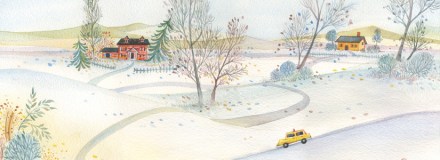
At last in Home the family reaches their new house by taxi. Gracie seems only to see the “piles of snow,” but Jake likes the “windy roads, lots of trees, and the curvy driveway.” In Explore Gracie and Jake walk around the countryside, and while Gracie still determines that she won’t like it, Jake hears a train and is happy. My Room and Dinner see the kids settling in, with a photograph of the family they’ve left behind accompanying them on the table while they eat. In A Surprise, Gracie finds that her grandmother is still with her through a special scarf, and in Paints Jake and Gracie accept the move as they paint their happiness boxes: Jake decorates his with a dragon and a train, while Gracie depicts herself and her brother walking in the snow and “they look very, / very / happy.”
celebrate-picture-books-picture-book-review-double-happiness-coming-to-new-house

Image copyright Alina Chau, 2015, courtesy of Chronicle Books

While Double Happiness tells the story of a family’s distant move, Nancy Tupper Ling’s gentle verses are appropriate for any situation involving change or uncertainty. She reminds children that happiness can be found wherever they are and all around them if they look for it. The poems flow as freely as thoughts, fears, and unguarded moments. As Gracie and Jake resolve their feeling, readers or listeners will also see that feelings of apprehension are common, and that happiness is waiting for them.

Alina Chau’s soft, lovely watercolor illustrations are beautiful representations of Gracie and Jake’s move from the familiar surroundings of their home in China to a new home in a snowy countryside.  The children’s emotions resonate as they alternate between sadness and happiness and between the concrete places of Nai Nai’s house, the airport, and their new city and their own imaginations of dragons, drawings, and dreams.

Ages 5 – 8

Chronicle Books, 2015 | ISBN 978-1452129181

Discover more books for children and adults by Nancy Tupper Ling on her website!

View a gallery of artwork by Alina Chau and more on her website!

Happiness Happens Activity

CPB - Happiness typography

Happiness Is…Game


Happiness is all around you! Grab one or more friends to play a game that reveals what things make you happy. Here are two ways to play:

  1. Like the “Geography” game: the first player names something that makes them happy, the next player must think of something that starts with the last letter of the word the previous player said. The game continues with each player continuing the pattern. Players drop out as they cannot think of a word. The last player left is the winner.
  2. Using a time limit (depending on age): players must think of something that makes them happy. Players drop out if they cannot think of a word within the time limit. The last player left is the winner.

Picture Book Review

August 21 – Poet’s Day

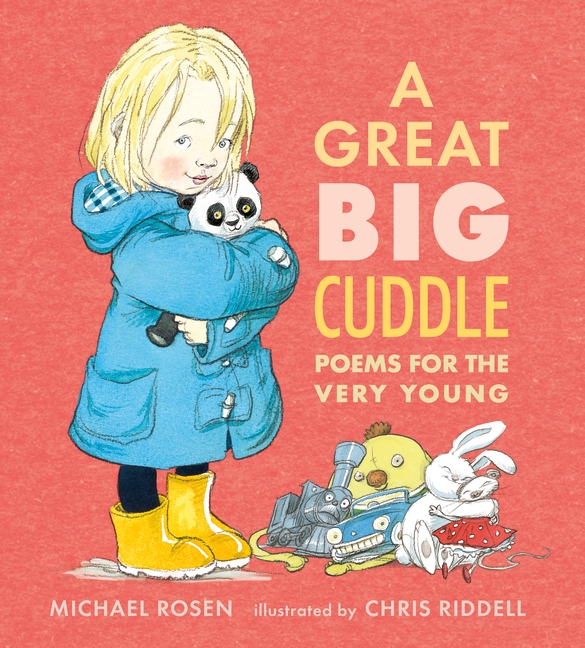
celebrate-picture-books-picture-book-review-a-great-big-cuddle-poems-for-the-Very-Young-cover

About the Holiday

Today celebrates the poet—that special person who looks at the world and transforms it into lines of rhyme, rhythm, metaphor, and meaning that make readers experience life and sometimes even the most common occurrence in a whole new way. Some poetry is poignant, some evocative, and some silly, but it all provides different perspectives and enriches our lives—even the youngest among us!

A Great Big Cuddle: Poems for the Very Young

Written by Michael Rosen | Illustrated by Chris Riddell


Before children learn to speak and in order for them to become literate and proficient readers, they discover the sounds of language. The poems in A Great Big Cuddle: Poems for the Very Young are all about those snappy, rhyming, musical syllables that make up speech and text. The collection’s 35 poems replicate the progression of language learning from the first offering—Tippy-Tappy, with its staccato repetition of “ippy, appy, eppy, oppy, uppy sounds—to Gruff and Dave and The Slow Train that provide longer, more detailed storytelling.

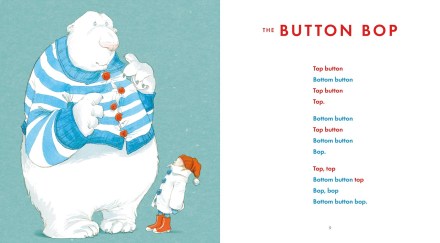
celebrate-picture-books-picture-book-review-a-great-big-cuddle-poems-for-the-Very-Young-button-bop

Image copyright Chris Riddell, courtesy of Candlewick Press

The subjects are familiar to even tiny children whose worlds include the buttons, parties, pets, music, and other topics treated with innovation in this collection. The juxtaposition of words, concepts, questions, and nonsense, will keep kids laughing even as they are (probably) unconsciously soaking in the rich learning.

I Went is an example in which multiple concepts combine to create a funny travelogue with double meaning twists:

“I went to Lapland / I saw a reindeer on the loose. / I went to Canada / I saw a chocolate mousse.  I went to the river / I saw a big green frog. / I went to New York / I saw a hot dog.”

Bendy Man describes a rather unique fellow with special talents that kids would love to get to know. It starts like this:

“Bendy Man, Bendy Man / He’s a long leggy man. / Bendy Man, Bendy Man / In a baked-bean can. Bendy Man, Bendy Man / Wraps round trees / Bendy Man, Bendy Man / Can’t find his knees.”

Along the way there are also poems to validate kids’ emotions, which come in shades of happiness, bounciness, anger, satisfaction, and frustration among others, as well as to comfort them when they get hurt or scared as in the poem Mo: “Mo’s in a muddle / She slipped in a puddle / Mommy gives Mo / A great big cuddle.”

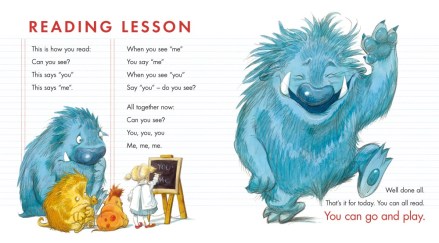
celebrate-picture-books-picture-book-review-a-great-big-cuddle-poems-for-the-Very-Young-reading-lesson

Image copyright Chris Riddell, courtesy of Candlewick Press

Let Me Do It is an exuberant tribute to a child’s eagerness to help: “Let me do it, let me do it / Let me blow up the balloon / Let me do it, let me do it / Let me go to the moon.                 Let me cook the beans / Let me lick the jar / Let me kick the ball / Let me drive the car.” But as often happens with inexperience, the tasks become a bit confused later in the poem: “Let me drive the beans / Let me kick the jar / Let me lick the ball / Let me cook the car.”

Michael Rosen’s love of language and quirky, kid-like personality are on full display in A Great Big Cuddle, much to the benefit of his young fans. Rosen is able to tap into and capture those fleeting ideas and “wouldn’t it be cool if…” moments that fuel kids’ imaginations and actions. Life is much too long and much too short not to spend some of it in absurd hilarity, and Rosen provides a book full of that respite here.

Chris Riddell infuses each of the poems with the personalities of enthusiastic children, adorable monsters, familiar animals, and high-spirited action. The large, full-bleed pages allow for full-size fun and a variety of typography. The bold colors will attract even the smallest reader and keep them riveted to the sounds and sights of this excellent poetry collection for young children.

celebrate-picture-books-picture-book-review-a-great-big-cuddle-poems-for-the-Very-Young-i-am-hungry

Image copyright Chris Riddell, courtesy of Candlewick Press

Older kids will also find much to enjoy in the humorous spirals taken by the lines in A Great Big Cuddle. Some poems, such as  I Am Hungry, in which a bear in a bib states everything he will eat, would make a great teaching tool about what can and cannot logically be consumed.

Because A Great Big Cuddle: Poems for the Very Young is perfect for dipping into again and again, you’ll be happy to have it close it hand on your shelves.

Ages Birth – 6

Candlewick, 2015 | ISBN 978-0763681166

Visit Michael Rosen’s website to see his amazing range of books, poems, events, TV and radio programs and more!

Follow the Cycling Fish through a tour of Chris Riddell’s artwork!

Poet’s Day Activity

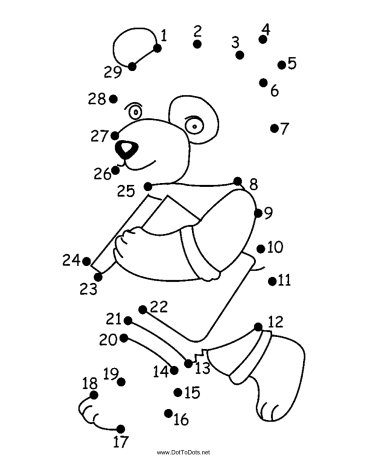
celebrate-picture-books-picture-book-review-bear-in-clothes-dot-to-dot

A Pair of Bears (Pear of Bears? Pair of Bairs?) Coloring Pages and Poem Prompts


The two bears in these coloring pages are having different days—one is grumpy while the other is happy. Color the printable A Pair of Bears Coloring Pages and then write one or two poems about them!

Bear 1

Bear 2

Picture Book Review
August 5 – It’s National Peach Month

celebrate-picture-books-picture-book-review-each-peach-pear-plum-cover

About the Holiday

Is there anything as delicious as a perfectly ripe peach? Native to China and classified with the almond, the peach is peachy in pies, tarts, fruit salads, and just on its own. To celebrate today pick some peaches from a local farm, farmer’s market, or grocery store and enjoy!

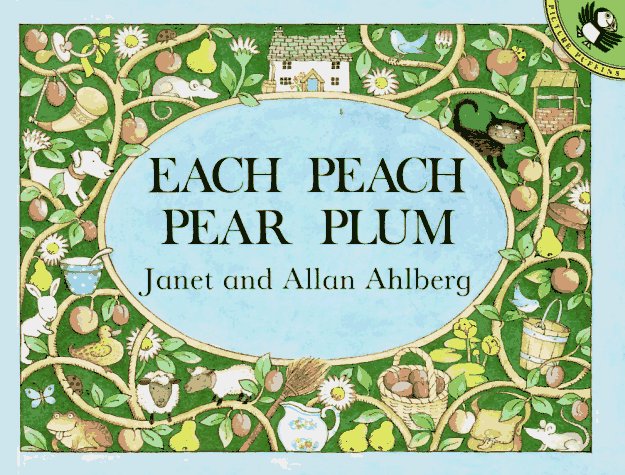
Each Peach Pear Plum

By Janet and Allan Ahlberg


This perennial children’s favorite “I spy” nursery rhyme book is a perfect read any time, but especially during the summer when it can be tucked away in a travel bag or picnic basket and enjoyed on the go. After the first introduction of “Each peach pear plum / I spy Tom Thumb,” in which readers are invited to find Tom who is happily reading high in a peach tree nearly hidden by leaves and fruit, every page offers another double challenge.

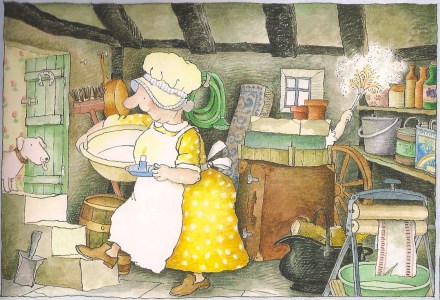
Building on the discovery in the preceding page, kids are given a hint as to the current whereabouts of the previous character and are also urged to find another nursery rhyme or literary favorite: “Tom Thumb in the cupboard / I spy Mother Hubbard” followed by “Mother Hubbard down the cellar / I spy Cinderella.”  This structure creates anticipation in even the youngest readers as they begin to recognize the pattern and wonder who is coming next.

celebrate-picture-books-picture-book-review-each-peach-pear-plum-interior-art-mother-hubbard

Copyright Janet and Allan Ahlberg, 1999, courtesy of Viking Books for Young Readers

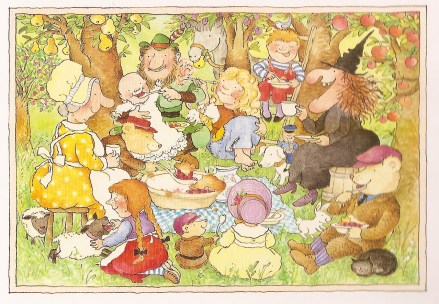
Besides Tom Thumb, Old Mother Hubbard, and Cinderella, the Three Bears, Baby Bunting, Little Bo-Peep, Jack and Jill, the Wicked Witch, Robin Hood, and a deliciously plump Plum Pie are hidden in the book. What makes Each Peach Pear Plum a classic is the Ahlberg’s artistic magic, which is on gorgeous display in every illustration. The vivid, fine-line drawings spare no details in bringing the short text fully to life.

Humor abounds, especially in the depiction of the “hidden” character or characters, whose only appearance is an arm dusting a shelf, faces at a window, feet sticking out of tall grass, a camouflaged archer, and more. And perhaps the clumsy baby bear could use a bit of assistance! Kids will love pointing out the birds and bunnies, dog, cat, and other animals that also follow from page to page.

celebrate-picture-books-picture-book-review-each-peach-pear-plum-interior-art-picnic

Copyright Janet and Allan Ahlberg, 1999, courtesy Viking Books for Young Readers

Each Peach Pear Plum is also a wonderful introduction to the literature alluded to and will entice kids to hear all the stories contained in this forever favorite. Each Peach Pear Plum makes a fantastic gift for new babies or young readers and belongs on every child’s bookshelf.

Ages Birth – 5 and up

Viking Books for Young Readers, Penguin, 1999 | ISBN 978-0670882786 (Board Book Edition)

It’s National Peach Month Activity

celebrate-picture-books-picture-book-review-picnic-find-the-differences

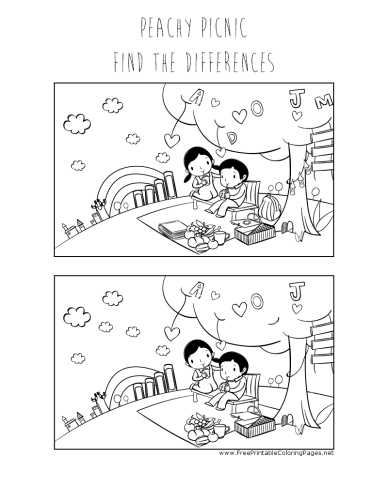
Peachy Picnic Find the Differences Puzzle


These two friends are enjoying a picnic and took two selfies. Can you spot the 12 differences between the two pictures in this printable Peachy Picnic Find the Differences Puzzle?

August 2 – It’s Water Quality Month

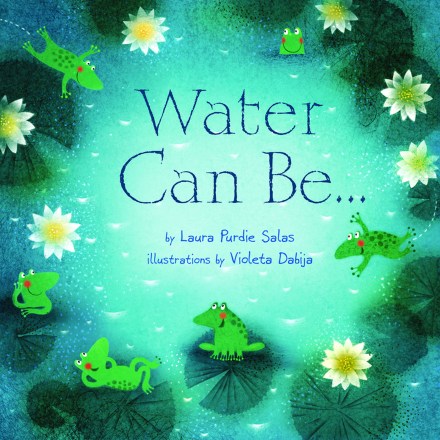
celebrate-picture-books-picture-book-review-water-can-be-cover

About the Holiday

Water Quality is a crucial world-wide issue. In fact, 2015 closed out a decade-long United Nations initiative “Water for Life” to promote awareness of the importance of water quality as it relates to sanitation, geography, human rights, urbanization, and sustainability. The Audobon Society emphasizes the interconnectedness of all water systems and urges people to be mindful of the dangers that can lurk in runoff from construction, forestry, factories, agriculture, and personal yards as it combines in rivers, lakes, or the ocean. To observe this month be conscious of what is in your water. Limit the use of anti-bacterial soaps that contain a certain pesticide harmful to marine life, don’t flush unused medications, choose nontoxic household cleaners, avoid using fertilizers and pesticides, and clean up leaks from cars and other machinery. Protecting our water sources protects us.

Water Can Be…

Written by Laura Purdie Salas | Illustrated by Violeta Dabija


“Water is water— / it’s puddle, pond, sea. / When springtime comes splashing, / the water flows free.” So begins an inventive journey through the ways that water enriches our lives. With four-word rhyming couplets Laura Purdie Salas illuminates specific moments or circumstances to reveal water’s important role from season to season. From filling ponds, lakes, oceans, and even puddles to roaring down hillsides to floating in misty fogs and forming snowflakes, water sustains us and makes the world a more beautiful place.

During spring and summer when ponds nurture new life and rain puddles reflect, “Water can be…a tadpole hatcher / Picture catcher.” In hot weather water refreshes as a “Thirst quencher / Kid drencher.” And the seas, at times calm and at others roiling, can be both “Home maker / Ship breaker.”

As the air cools in autumn, water can be found in alternate forms. It squirts from fountains for the “school drink-er” and hardens to ice for a “Bruise shrinker.” A river’s winding trail becomes a “Salmon highway / Eagle flyway.” Winter brings water in a more solid form. Whipped by wind snow swirls as a “Storm creator” or gently sticks to surfaces as a “Decorator.” Outside, both animals and people enjoy the frozen precipitation. Snow serves as a “Woodchuck warmer / Snowman former.”

On the final pages as ice sculptors carve castles and dragons, moon beams and rabbits, Laura Purdie Salas encourages readers: “Water is water— / it’s ice, snow, and sea. / Now go and discover / what else it can be.”

Fascinating facts concerning the subject of each rhyme, a glossary, and a bibliography for further reading follow the text. Laura Purdie Salas donates a portion of the royalties from Water Can Be… to WaterAid, an international non-profit organization that transforms lives by improving and providing access to safe water, hygiene, and sanitation.

Laura Purdie Salas always surprises with her selection of examples and clever rhymes leading readers to more fully appreciate the world around them. Water doesn’t just flow, it feeds, speeds, cloaks and soaks, it decorates and bejewels, fluffs and snuffs. After reading Sala’s poetic tribute, readers will never experience water the same way and will be on the lookout for how they can interpret water’s gifts.

Violeta Dabija has created gorgeous, ethereal interpretations of each two-word rhyme. The nourishing blues and aquas of the sea, gauzy whites of fog and clouds, and brilliant whites of snow and ice are subtly crosshatched giving each illustration depth and movement. While the words on each page are short, kids will want to spend a long time taking in the beauty of Dabija’s paintings.

Ages 3 – 8

Millbrook Press, Lerner Books, 2014 | ISBN 978-1467705912

Check out the book trailer for Water Can Be…. It really makes a splash!

There’s so much to see and do on Laura Purdie Salas’s website!

View more beautiful art by Violeta Dabija on her website!

Water Quality Month Activity

celebrate-picture-books-picture-book-review-angel-fish-coloring-page

Angel Fish Coloring Page


Clean water is important for all fish to survive! You can make the ocean sparkling clear by adding a bit of glitter to your printable Angel Fish Coloring Page!

July 22 – National Hammock Day

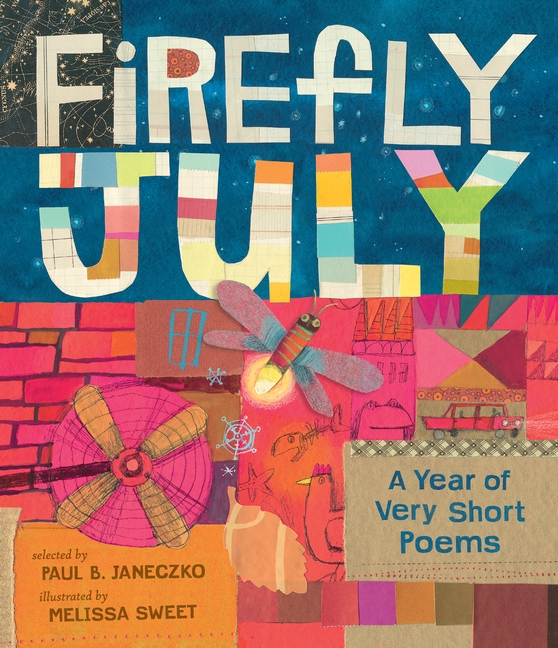
celebrate-picture-books-picture-book-review-firefly-july-cover

About the Holiday

Holidays don’t get more leisurely than this one! Perhaps invented by the Ancient Greeks, perhaps created by people in South America according to Christopher Columbus’s journals, hammocks are the epitome of relaxation. What better time is there to kick back and lounge than during the hot, hazy days of July? So enjoy—and read a book, like today’s collection of poetry!

Firefly July: A Year of Very Short Poems

Selected by Paul B. Janeczko | Illustrated by Melissa Sweet


Firefly July is perfect for lazy summer days when light, but still meaningful reading enjoyed in a hammock or under a shady tree is relaxation at its best. Paul B. Janeczko has collected 36 short (none are over eight lines long) poems from some of the best poets of today and yesterday. Haiku, free form, and rhyming verses illuminate the seasons of the year and encapsulate unforgettable sights, sounds, and feelings.

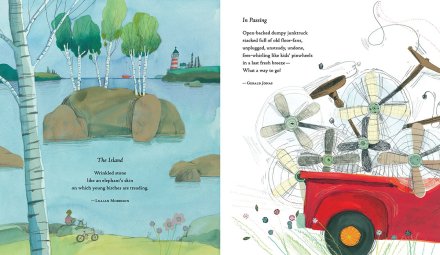
A girl’s spring’s respite spent gazing into the bay from shore is depicted in Lillian Morrison’s The Island:

“Wrinkled stone / like an elephant’s skin / on which young birches are treading.”

celebrate-picture-books-picture-book-review-firefly-july-interior-art

Image copyright Melissa Sweet, courtesy of amazon.com

A nighttime train trip provides mystery and ongoing changes in Carl Sandburg’s Window:

“Night from a railroad car window / Is a great, dark, soft thing / Broken across with slashes of light.”

Joyce Sidman’s A Happy Meeting likens a summer rain to romance and life:

“Rain meets dust: / soft, cinnamon kisses. / Quick noisy courtship, / then marriage: mud.”

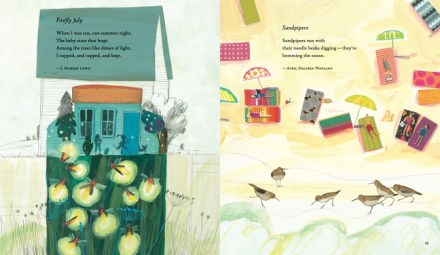
At the seashore, beach birds are industrious in April Halprin Wayland’s Sandpipers:

“Sandpipers run with / their needle beaks digging—they’re / hemming the ocean.”

celebrate-picture-books-picture-book-review-firefly-july-interior-art

Image copyright Melissa Sweet, courtesy of amazon.com

Jim Harrison and Ted Kooser ask such a beguiling question for autumn:

“What is it the wind has lost / that she keeps looking for / under each leaf?”

And the rising giants of city life inspired Susan Nichols Pulsifer in Tall City:

“Here houses rise so straight and tall / That I am not surprised at all / To see them simply walk away / Into the clouds—this misty day.”

Along the way readers will encounter a pickup truck loaded with old rotary fans and another rusting in a field; fog that decorates and creeps; animals and insects that share our space; our past, our present, and our future. And when it’s time to close the book, Jim Harrison and Ted Kooser reveal:

“A welcome mat of moonlight / on the floor. Wipe your feet / before getting into bed.”

celebrate-picture-books-picture-book-review-firefly-july-interior-art

image copyright Melissa Sweet, courtesy of melissasweet.net

I can only wish I’d been able to visit Melissa Sweet’s studio while she created the illustrations for this book! Each painting is as unique in style, beauty, and emotional effect as the poems they interpret. Her renditions of each poem help readers—especially children unfamiliar with metaphor and abstract imaging—to fully understand and appreciate each poem while also leaving room for personal reflection.

The first thing that strikes a reader when opening Firefly July is the gorgeous juxtaposition and mixture of vibrant color. Her illustrations take readers on a journey from an aqua farm house with a patchwork garden to a serene elephantine rock island to the deep turquoise ocean traversed by ships while the full moon beams down upon them. Readers ride crowded subways, gaze out moving train windows, and visit cities bright in daylight and glowing at night. They frolic through fields of delicate grasses and vibrant flowers, quietly walk snowy paths, and take their place among the stars.

Firefly July is as stunning as any coffee table book and is a must for a young reader’s—or any poetry lover’s—library.

Ages 4 and up

Candlewick Press, 2014 | ISBN 978-0763648428

Take a look at more books and artwork by Melissa Sweet on her website!

National Hammock Day Activity

celebrate-picture-books-picture-book-review-hammock-coloring-page

Lazy Days Coloring Page


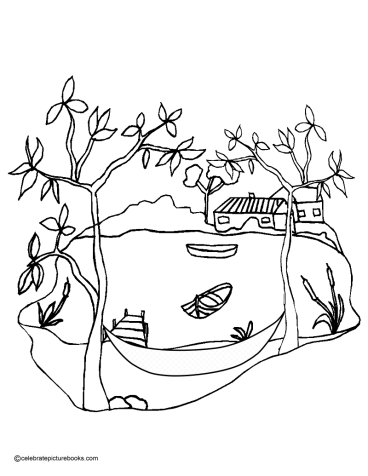
Coloring can be so relaxing—perfect for a day dedicated to kicking back! Color this printable Lazy Days Coloring Page and dream of lounging beside the lake, with the gentle breeze gently rocking the hammock, while you drift off to sleee….zzzz…..

June 9 – It’s National Fresh Fruit and Vegetables Month

celebrate-picture-books-picture-book-review-bananas-in-my-ears

About the Holiday

With all the scrumptious fresh fruit and vegetables available at your local farmers market or grocery store, how can you help but enjoy good nutrition? Those red, red strawberries and midnight blue blueberries make perfect smoothies, and the brilliant orange carrots and peppers look good enough to eat! Oh, wait! You can eat them! So grab your bag or basket and head to the store—or plant or pick your own!

Bananas in My Ears: A Collection of Nonsense Stories, Poems, Riddles, and Rhymes

Written by Michael Rosen | Illustrated by Quentin Blake


Things may go from the ridiculous to the sublime or from the sublime to the ridiculous, but the rhymes, stories, poems, and jokes in this collection are both ridiculous and sublime. Divided into four sections—The Breakfast Book, The Seaside Book, The Doctor Book, and The Bedtime Book—these bite-sized tales will nibble at your funny bone.

Each book includes six to seven short pieces that humorously reveal the inner workings of familial and community relationships. Recurring titles “What if…,” “Things We Say,” and “Nat and Anna” siblings stories tie the books together. The tone for Bananas in My Ears is set with aplomb in the very first offering, “Breakfast Time,” which reveals the chaos of early morning with its spilled milk, banging trash cans, pets on the table, school clothes ruined, and “I think I’m going crazy!” shenanigans. 

“What If…” (Breakfast Book) combines kids’ natural penchant for thyming with their unbounded imagination and a bit of stream-of-consciousness to boot. Just as a little boy is to bite into a piece of toast, he has this thought: “What if / a piece of toast turned into a piece of ghost / just as you were eating it / and you thought you were going to sink your / teeth into a lovely crunchy piece of hot toast / and butter and instead this cold wet feeling / jumps into your mouth / going, / ‘Whoooooooooooooooooooo!’ / right down into your stomach…”

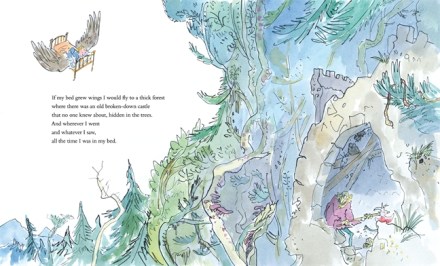
celebrate-picture-books-picture-book-review-bananas-in-my-ears-internal-art-cave

Adding speech bubbles and expressive art to commonly used phrases in “Things We Say” transforms throw-off lines like “My hair’s a mess,” “Look what I found,” “You can’t lie there all morning,” and “Now what seems to be the trouble?” into self-deprecating humor all can relate to.

Four stories of Nat and his older sister Anna zero in on particular moments that illuminate the sibling relationship, At once opposed and in sync, Nat and Anna negotiate moments in which Anna is put in charge of watching Nat at breakfast with topsy-turvy results; a fearful story Anna tells Nat about jellyfish that somehow backfires; a trip to the doctor that turns into a competition about future professions; and a “who’s-on-first” type banter that allows Anna to enjoy some alone time.

“Three Girls” is a clever take on outwitting-an-ogre tales. Three girls walking on the beach come across a cave. One girl goes in and “sees a pile of gold sitting on the rocks, so she thinks, ‘Yippee, gold, all for me!’ And she steps forward to pick it up and a great big voice booms out ‘I’m the ghost of Captain Cox. All that gold stays on the rocks.’” Afraid, she runs out of the cave. The second girl is braver. She enters the cave, sees the gold, hears the same booming voice and is also chased away. Undeterred, the third girl walks into the cave, sees the gold, and hears the booming voice of Captain Cox. Instead of running away, however, she says, “‘I don’t care. I’m the ghost of Davy Crocket, and all that gold goes in my pocket.’” With her treasure secured she hightails it out to join her friends.

Among other fun stories in this volume are: “These Two Children,” with a lively recitation of familiar bedtime routines; “Fooling Around,” that offers light rhymes on children’s names; and another “What If” (the Breakfast Book) that will have kids not only laughing, but cracking up at a sassy leg—“What if / hard-boiled eggs turned into hard-boiled legs / just when your dad was eating his egg / and he says, / ‘Hey, what’s this?’…”

celebrate-picture-books-picture-book-review-bananas-in-my-ears-internal-art-what-happens-next

Michael Rosen understands, as kids do, that sometimes nonsense makes perfect sense and that even the commonplace is quite absurd when you think about it. This collection of witticisms is sure to resonate with children. Just hand a child this book and get ready for giggles—and, oh yes, adults will chuckle too.

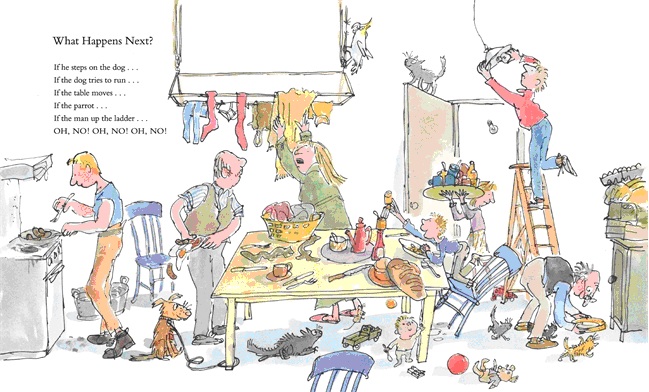
In his colorful pen and ink drawings the inimitable Quentin Blake enlivens each piece with rakish kids, wide-eyed parents, sloppy messes, bouncing, jumping joy, and all the silliness that contributes to having a great day. “An accident waiting to happen” doesn’t begin to describe the bedlam ensuing in “What Happens Next?” as each character and object is set up to play their part in an oh-so-human game of dominoes. Kids will love seeing themselves and the world around them so candidly drawn, and adults will appreciate the whimsical sophistication of the same.

Ages 5 and up

Candlewick Press, 2012 | ISBN 978-0763662486

National Fresh Fruit and Vegetables Month Activity

celebrate-picture-books-picture-book-review-fruit-bowl-coloring-page

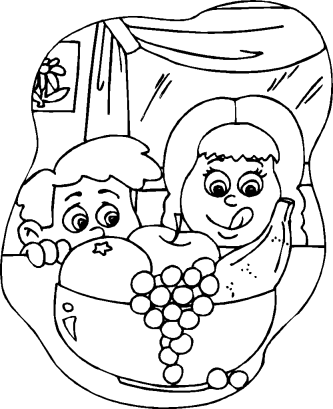
Fruit Snack Coloring Page


Grab a nutritious snack to munch on while you color this printable Fruit Snack Coloring Page that offers up all your favorites!

Picture Book Review

June 4 – Hug Your Cat Day

celebrate-picture-books-picture-book-review-the-white-cat-and-the-monk

About the Holiday

Just as it sounds, this holiday celebrates all the benefits of snuggling with your cat. While some cats may be cuddlier than others, today gives cat owners the opportunity to show just how much they love their feline friends. If you don’t happen to have a cat, why not consider visiting an animal shelter and showing some love to homeless kittens—you may even want to bring one home!

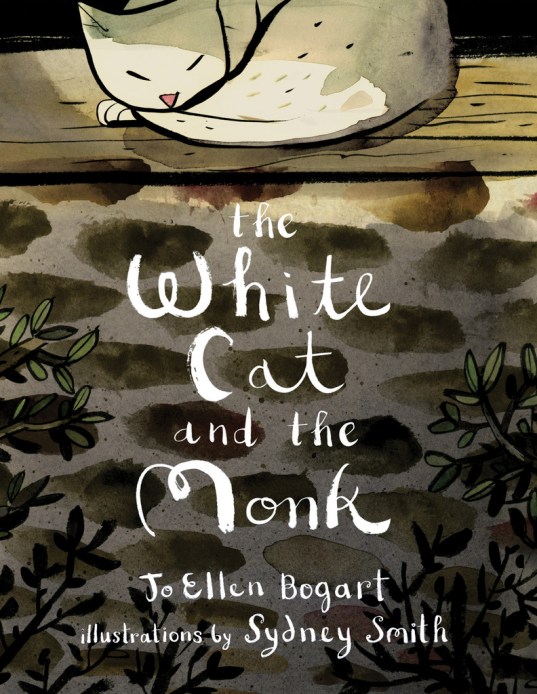
The White Cat and the Monk

Retold by Jo Ellen Bogart | Illustrated by Sydney Smith


In the nighttime a white cat approaches a monastery. He slips through a window and pads along a darkened corridor and down stone steps. He creeps behind a barrel, vase, and pitcher standing in a row and adds his shadow to the black mosaic on the floor. He leaps the last few steps and hurries along to the doorway, leaking light.

His secret signal alerts the occupant of the room, who opens the door to this playful feline. “I, monk and scholar, share my room with my white cat, Pangur,” the old man explains. He lifts Pangur into his arms and strokes him then releases him to pursue his “special trade.” The monk also returns to his trade—studying ancient manuscripts to understand their meaning.

A dedicated scholar, the monk reveals, “Far more than any fame, I enjoy the peaceful pursuit of knowledge. I treasure the wealth to be found in my books.” Pangur is a dedicated scholar of another kind, studying “the hole that leads to the mouse’s home.” In that moment both man and cat become hunters—one for meaning and the other for prey.

The two do not disturb each other for each is content in his pursuit. Pangur at last “finds his mouse” as the monk finds “light in the darkness.”

Jo Ellen Bogart’s quiet and graceful retelling of Pangur Bán, a beloved Irish poem from the 9th century is a welcome respite in this age of multitasking and mega-activity. With sparse, but compelling and lyrical language, Bogart uncovers the companionable relationship between the monk and his cat as each follows their heart together.

The fine textured pages of Sydney Smith’s illustrations recall the beauty of parchment as the smooth gray and gold line drawings of the monastery’s architecture and characters give way to the vibrant colors of ancient manuscripts and the natural environment. The contentment and friendship of the monk and the cat are sweetly drawn in the characters’ mirrored actions as well as the depictions of a long-held affection between man and beast in the panels of the manuscript the monk studies. As the monk states, “Ours is a happy tale.”

Reassuring and reaffirming, The White Cat and the Monk honors the individual challenges and quests that make us who we are, and would be a wonderful addition to regular quiet-time reading.

Ages 4 and up (this book will be enjoyed by both children and adults)

Groundwood Books, House of Anansi Press, 2016 | ISBN 978-1554987801

Hug Your Cat Activity

celebrate-picture-books-picture-book-review-cat-toy

Fishing for Playtime Cat Toy


Cats love to chase after bouncing, sliding objects, and they love fish. While this toy may not taste as good as fish, it sure smells better and doesn’t require worms or hooks to attain!

Supplies

  • Old or new child’s sock
  • Fiber Fill
  • Yarn or string
  • Fabric paint or markers
  • Small bell (optional)
  • Catnip (optional)

Directions

  1. Paint or draw fins and eyes on the sock
  2. Fill the sock with fiber fill
  3. Add a teaspoon of catnip (optional)
  4. Add a small bell (optional)
  5. Use the yarn or string to close the opening with a strong knot
  6. Leave a long section of yarn or string to pull or dangle the toy