December 26 – Kwanzaa

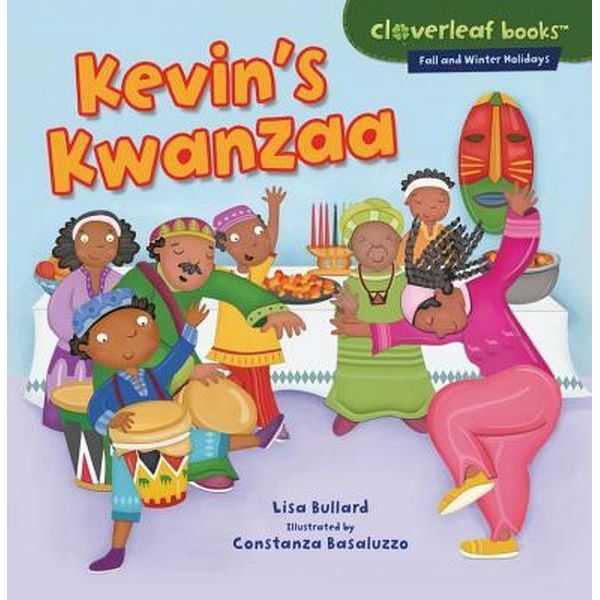
celebrate-picture-books-picture-book-review-kevin's-kwanzaa-cover

About the Holiday

Today’s holiday is celebrating it’s 50th anniversary this year. Kwanzaa was established in 1966 by Dr. Maulana Karenga, professor and chairman of Black Studies at California State University, Long Beach as a way to unite African-Americans as a community. Derived from the Swahili phrase matunda ya kwanza, which translates as “first fruits,” Kwanzaa incorporates aspects of several African harvest celebrations. The seven-day holiday is observed from December 26 through January 1, and as the little boy in today’s book relates, offers excitement, togetherness, and meaningful reflection.

Kevin’s Kwanzaa

Written by Lisa Bullard | Illustrated by Constanza Basaluzzo


Surrounded by red, green, yellow, and black paper and his craft supplies, Kevin is excited to be making decorations for his family’s Kwanzaa celebration. “Mom says it celebrates our African American culture,” Kevin says. Together, Kevin and his mom set the table. First, his mom lays down a mat. Then Kevin adds the candleholder and the special Kwanzaa candles while his mom adds a bowl of fruit and vegetables. “There’s an ear of corn for each kid,” Kevin explains. “Next comes the unity cup. Didn’t I do a great job decorating it? We put out presents too! Now we’re ready for Kwanzaa,” he adds with pride.

On the first night of Kwanzaa, Kevin’s family gathers at the table as Kevin’s grandfather lights the first candle—the black candle in the center of the candleholder. Each night another candle will be lit. Kevin can’t wait for his turn on the last night. After the candle lighting, “Grandpa explains the Kwanzaa word for the first day. Every day has a special word in Swahili,” Kevin says. The first word is Umoja, which means unity, or “sticking together as a group.”

Grandpa explains that “sticking together is why Kwanzaa began.” The holiday was created by Dr. Maulana Karenga in 1966, who wanted African Americans to “feel proud of their shared African background.”  Each night another family member lights candles, so Kevin watches closely to be ready for his turn. On the third night, Kevin’s mom lights the candles, and the principle word is Ujima or “collective work and responsibility.” The family talks “about helping one another solve problems”—like Kevin’s “messy bedroom problem.” The fifth night belongs to Kevin’s brother, and the family discusses their goals to help the community. Kevin says that he has two goals: to become a teacher and to light the Kwanzaa candles.

The sixth night is Kevin’s favorite. His family attends a big party, and because the day’s word is Kuumba, which means “creativity,” there will be homemade decorations, presents, and drums. Kevin loves to “boom, boom with the drummers” and “stomp, stomp with the dancers” and “eat and eat!” At last, it is the seventh day of Kwanzaa! Kevin is excited to open his presents, but he says he “likes lighting the candles even more!” Grandpa tells Kevin his special word Imani means “faith,” and that he “should believe in our people every day.” Kevin agrees, thinking “that will be like living Kwanzaa all year long!”

Each two-page spread of Kevin’s Kwanzaa also presents facts about the holiday. Readers learn how the holiday began, where it is celebrated, and that it incorporates parts of African harvest festivals. They discover that the one black candle, three red candles, and three green candles are lit in a special order and learn the Nguzo Saba or “Seven Principles” of Kwanzaa. Shared activities, such as drinking from the unity cup, are also discussed.

Lisa Bullard’s story, told by a young boy proud to be celebrating Kwanzaa and lighting the candles for the first time, is an engaging introduction to the holiday. Through the narrator’s enthusiasm as he prepares for and takes part in the family celebrations, Bullard reveals the principles and traditions that make Kwanzaa so meaningful. Kids will also appreciate the sentiments expressed in the gentle bits of humor. Divided into short chapters, Kevin’s Kwanzaa allows young readers to feel more grown up—just as Kevin does as he joins the family in lighting the candles.

Through her vibrant illustrations, Constanza Basaluzzo brings the traditions and ceremonies of Kwanzaa to life for children. As the family gathers each night, the joy and pride they feel is clearly depicted. Images of the decorations, clothing, and homemade items as well as portrayals of the seven principles and the founding of Kwanzaa make the concepts easily understood.

Ages 4 – 7

Millbrook Press, Lerner Books, 2013 | ISBN 978-0761385882

Discover more about Lisa Bullard and her books as well as fun activities on her website!

Kwanzaa Activity
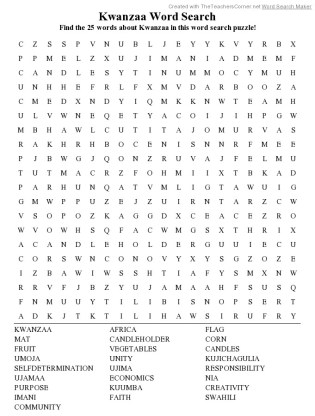
celebrate-picture-books-picture-book-review-kwanzaa-word-search

Kwanzaa Word Search


Kwanzaa is a holiday of fun as well as family and community togetherness. Discover 25 words related to the holiday in this Kwanzaa Word Search puzzle! Here’s the Solution!

Picture Book Review

December 25 – Christmas

celebrate-picture-books-picture-book-review-christmas-in-the-barn-cover

About the Holiday

Christmas is anticipated all year round for the joy of giving, the fun of receiving, and the message of hope the holiday gives. Honoring the birth of Jesus, it is a religious observation celebrated with hymns, special services, prayers, and remembrance of others. Incorporating long-held traditions from around the world, the holiday also welcomes Santa Claus, also known as Father Christmas, Saint Nicholas, Papá Noel, Ded Moroz (“Grandfather Frost” in Russian), Julenissen (“Christmas Gnome” in Norway), and many other names, who brings gifts to children on Christmas Eve. The day inspires family dinners, home baking, parties with friends, and togetherness.

Christmas in the Barn

Written by Margaret Wise Brown | Illustrated by Anna Dewdney


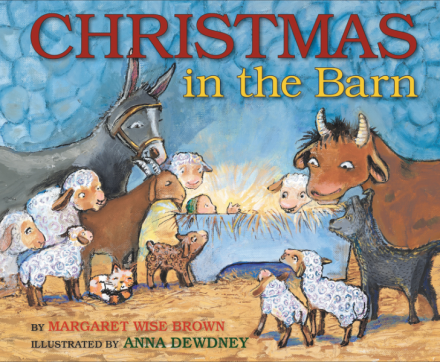
“In a big warm barn in an ancient field / The oxen lowed, the donkey squealed, / The horses stomped, the cattle signed, / And quietly the daylight died / In the sunset of the west.” As the animals in the barn gathered for a meal of hay in the waning light, a star shining brighter than all the others rose in the sky. A couple and their donkey approach the barn, led there by the innkeeper who has no more rooms to give.

Welcomed by the farmyard animals, “…they were all safe and warm / All together in that ancient barn. / When hail—the first wail of a newborn babe reached the night / Where one great star was burning bright….” Shepherds tending their flocks come to watch the baby sleeping, and three wise men from far away travel to give him precious gifts. “What child is this who is born here / Where the oxen stomp and peer, / Away in a manger, no crib for his bed / What child is this who lays down his sweet head?”

With the dawning Christmas Day, the wise men rejoice while the special child still sleeps watched over by his mother and father, the sheep and the goats, the ox and the dog, the cat and the doves. “And there they were / All safe and warm / All together / In that ancient barn.”

From the first line of Christmas in the Barn, readers will delight in this Margaret Wise Brown picture book for little ones. Her distinctive rhythm and rhyme scheme brings the story of Mary and Joseph and baby Jesus close to the heart of listeners. Wise Brown describes the events of that first Christmas Eve night and dawning Christmas day with simple, lilting sentences that emphasize the tenderness and togetherness in that “ancient barn.” Children will respond to Wise Brown’s gentle animals and the recognition of lines from familiar carols. The openness of the text allows for personal discussion of the story, making this a wonderful choice that will become a favorite with young—and even older—children.

Originally published in 1952, Christmas in the Barn is given a new and stunning look by Anna Dewdney. Her mixed-media illustrations glow with the mystery and splendor of the story. As the couple travels to the little inn, they are portrayed in silhouette, tiny against the vast peach-colored desert. The animals eat their dinner, unaware of what will soon happen in their home. Their sweet faces welcome the two people to share their space, and when the baby is born, the midnight blue sky lightens with the onset of the guiding star. Dewdney’s depictions of the barn’s interior focuses on the newborn baby, while the reverence shown him are moving and beautifully portrayed.

Christmas in the Barn is sure to become an often-read Christmas tradition, and would make an excellent selection for holiday collections.

Ages 3 – 8

HarperCollins, 2016 | ISBN 978-0062379863

Christmas Day Activity

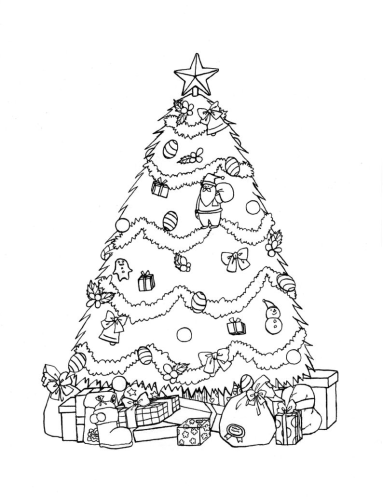
celebrate-picture-books-picture-book-review-christmas-coloring-page

Christmas Tree Coloring Page


Brightly wrapped presents under a pine tree decorated with traditional ornaments is a favorite sight at Christmas! Grab some pencils or crayons and color this printable Christmas Tree Coloring Page!

Picture Book Review

December 7 – Letter Writing Day

celebrate-picture-books-book-review-exclamation-mark-cover

About the Holiday

With all the letter writing going on during December by young wishers, it should be no surprise that a letter-writing day be included in this month’s calendar. Today’s holiday celebrates all forms of personal communication written by hand and remembers the correspondence of the past that has given us such insight into our favorite poets, novelists, historical figures, and more. Sure email might be faster, but there’s a certain luxury in taking the time to write your thoughts and an unexplainable excitement in holding a heartfelt letter in your hands. The punctuation marks in today’s reviewed book not only help correspondents write more dramatically, but they remind us that we all have unique things to say!

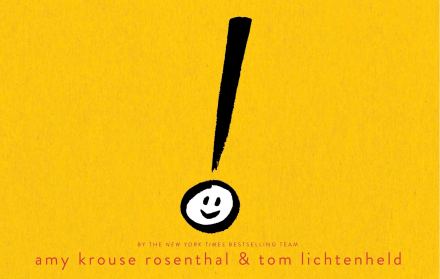
Exclamation Mark

Written by Amy Krouse Rosenthal | Illustrated by Tom Lichtenheld


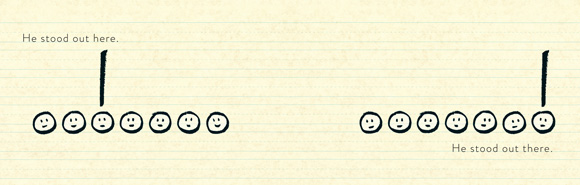
! “stood out from the very beginning.” When he was standing in a row of ……, it didn’t matter if he was in the middle or at the end—he still stuck out. The only time he wasn’t so noticeable was when he laid down to go to sleep. Sometimes he twisted himself into coils and did somersaults to be like the others, but nothing worked. “He just wasn’t like everyone else. Period.” This left him feeling “confused, flummoxed, and deflated.”

celebrate-picture-books-book-review-exclamation-mark-stands-out

Image copyright Tom Lichtenheld, text copyright Amy Krouse Rosenthal. Courtesy of Scholastic Press

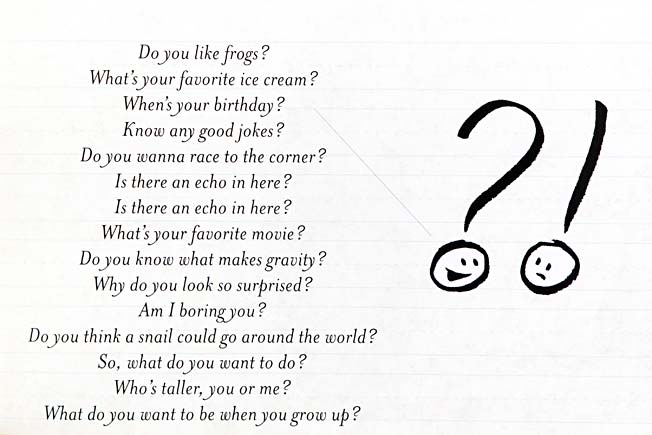
He was just about to run away from all his problems when he met ?. ? rushed right up to him and wanted to know everything. “Who are you?…What’s your favorite color? Do you like frogs?…Do you wanna race to the corner? Is there an echo in here? Is there an echo in here?…Why do you look so surprised?….” The list went on and on.

celebrate-picture-books-book-review-exclamation-mark-lots-of-questions

Image copyright Tom Lichtenheld, text copyright Amy Krouse Rosenthal. Courtesy of Scholastic Press

“STOP!” ! shouted. The sound stunned him. ? smiled and wanted him to do it again. ! didn’t know if he could, so he tried a small “Hi!” “That felt right, so he tried something bigger. Howdy!” And then he said, “Wow!” After that there was no stopping him: “You’re it!…Home run!…Yum!…Look out!…Thanks!…Boo!…Go!”

He rushed off to show everyone what he could do. The …… were delighted and “there was much exclaiming.” Now feeling happy and confident, ! “went off to make his mark.”

celebrate-picture-books-book-review-exclamation-mark-yippee

Image copyright Tom Lichtenheld, text copyright Amy Krouse Rosenthal. Courtesy of Scholastic Press

Amy Krouse Rosenthal’s clever story of an exclamation point searching for self expression is as moving as it is original. Kids will recognize his feelings of sticking out in a crowd and uncertainty of purpose and applaude when ? comes on the scene to befriend !. Readers will giggle knowingly at the barrage of questions, and feel emboldened themselves as ! finds his voice and his own unique contribution.

Tom Lichtenheld’s adorable punctuation marks hanging out on kid-ruled paper demonstrate all the expression and expressions of this well-crafted story. With simple dot eyes and small streak mouths, Lichtenheld animates the various emotions of the periods, exclamation mark, and question mark as they discover !’s special talent with individuality for each. The unbridled exuberance of ?‘s and !’s meeting makes this a terrific book about friendship as well.

! deftly points out “What would we do without exclamation points?” Likewise it asks, “What would we do without each one of us?” The positive message, creatively and humorously presented, makes this book a terrific addition to any child’s library.

Scholastic Press, 2013 | ISBN 978-054543679

You’ll find more about Amy Krouse Rosenthal, her books for children and adults, videos, other projects, and so much more on her website!

Discover a portfolio of books by Tom Lichtenheld as well as fun book-related activities and resources for teachers on his website!

!!!! for this ! book trailer!

National Letter Writing Day Activity

celebrate-picture-books-picture-book-review-pencil-riding-kids-find-the-differencesLetter-Writing Kids Find the Differences Puzzle


Sometimes writing a letter is a flight of fancy through the thoughts and stories you want to tell someone else. Can you find the 12 differences in this printable Letter-Writing Kids Find the Differences Puzzle?

Picture Book Review 

November 24 -Thanksgiving Day

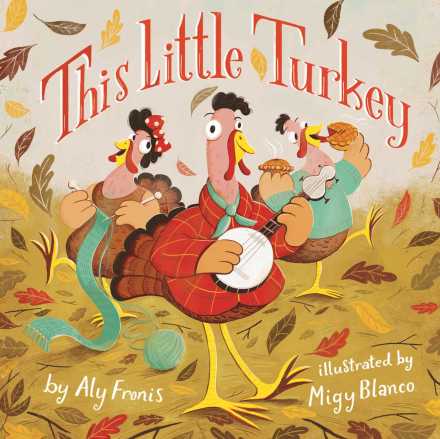
celebrate-picture-books-picture-book-review-this-little-turkey-cover

About the Holiday

The American holiday of Thanksgiving dates back to 1621 and a harvest feast shared by a group of colonists, who had sailed from England in 1620 to “the new world” seeking freedoms and prosperity, and the Wampanoag tribe, who had helped the settlers survive the harsh conditions of their new home. The feast, organized by Governor William Bradford, was held to give thanks for the success of the colonist’s first crops and their settlement. During America’s early years, days of thanksgiving were proclaimed periodically by Congress and Presidents to celebrate particular important events.

In 1817 New York became the first state to proclaim an official day of thanks. Other states followed. In 1827 Sarah Josepha Hale began a 36-year campaign to make Thanksgiving a national holiday. Abraham Lincoln finally signed a proclamation in 1863, making the forth Thursday in November the official holiday. Today, the holiday is celebrated by families with a traditional dinner of turkey, stuffing, potatoes, vegetables, and other goodies, and is finished off with pumpkin pie, apple pie or other favorite sweets.

This Little Turkey

Written by Aly Fronis | Illustrated by Migy Blanco


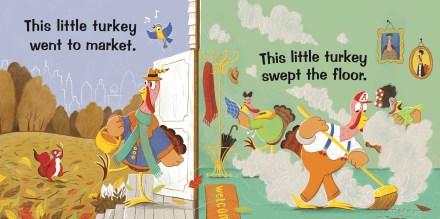
Perhaps you know about “this little piggy” and his cohorts and the way they spend a day, but have you heard of “this little turkey” and his friends and their shenanigans on Thanksgiving Day? Well, let me tell you! “This little turkey went to market”… Wait? Isn’t that what the first little piggie did? Do you think they might have met there? What do you think they bought? Oh, right, I’m getting off track. What about the second little turkey?

celebrate-picture-books-picture-book-review-this-little-turkey-market

Image copyright Migy Blanco, text copyright Aly Fronis. Courtesy of little bee books

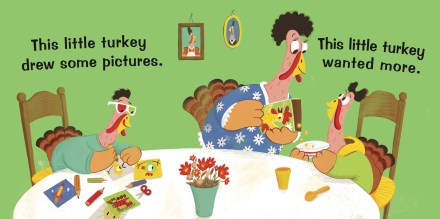
“This little turkey swept the floor.” And did it need it! Wow! So much dust! And the sneezing! Maybe it’s best to see what the third little turkey’s up to. Awww!—“This little turkey drew some pictures” while a little snacking turkey “wanted more.” Elsewhere, a creative turkey is preparing for cold weather, and a sneaky turkey is up to a little mischief!

At home the dinner table is being set in a most entertaining way, but will there be enough plates left for all the little turkeys? You’ll have to read on to see…. Finally, a little turkey calls, “‘Let’s eat!’” and all the turkeys come running to say, “we…we…we…wish you a happy Thanksgiving!’”

celebrate-picture-books-picture-book-review-this-little-turkey-drawing

Image copyright Migy Blanco, text copyright Aly Fronis. Courtesy of little bee books

Little ones love the excitement of a holiday! Special planning and traditions mingle with delicious, sometimes once-a-year aromas, and relatives and friends gather to have fun and swap stories. Aly Fronis’s sweet take on the familiar “This Little Piggie” rhyme invites the youngest children to take part in the preparations and enjoyment of Thanksgiving with phrases that are joyful to read and easy to memorize for read alongs. Young readers will giggle at the foibles and tricks of these little turkeys and recognize common activities they partake in themselves during the holiday weekend.

Migy Blanco’s vibrant pages, populated with an array of cute turkeys and their squirrel and bird friends, are whimsically eye-catching, perfect for the book’s young audience. Depicting the traditions of the holiday—from cleaning and cooking by older family members to drawing and table setting by younger members—each scene is both cozy and playful. Kids will love the small details, such as family portraits hinting at the family’s history, and the tiny plates for the bird and squirrel on the festive dinner table.

Young children will love repeating the holiday-themed verse in This Little Turkey. Drawing turkey faces on children’s fingertips could also turn this book into a fun game that kids will gobble up!

Ages 2 – 5

little bee books, 2016 | ISBN 978-1499803020

Discover more books and illustration for children as well as for adults by Migy Blanco on her website!

Thanksgiving Day Activity

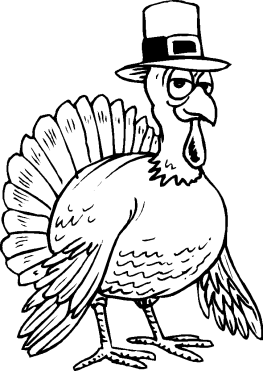
celebrate-picture-books-picture-book-review-turkey-coloring-page

Hats Off for Thanksgiving! Fun Pages


Here are two holiday activity sheets to have fun with on Thanksgiving!

Pilgrim Maze | Turkey Coloring Page

Picture Book Review

October 25 – International Artist Day

celebrate-picture-books-picture-book-review-the-noisy-paint-box

About the Holiday

Instituted in 2004 by Chris MacClure, a Canadian artist who specializes in Romantic Realism, National Artist Day celebrates the various forms of art, the artist, and the unique vision each one brings to their work and the world. Whether you like classic or abstract styles, watercolors or oils, sculpture or installations, why not take some time today to visit an art museum or gallery—or page through a collection of prints or a biography like today’s book!

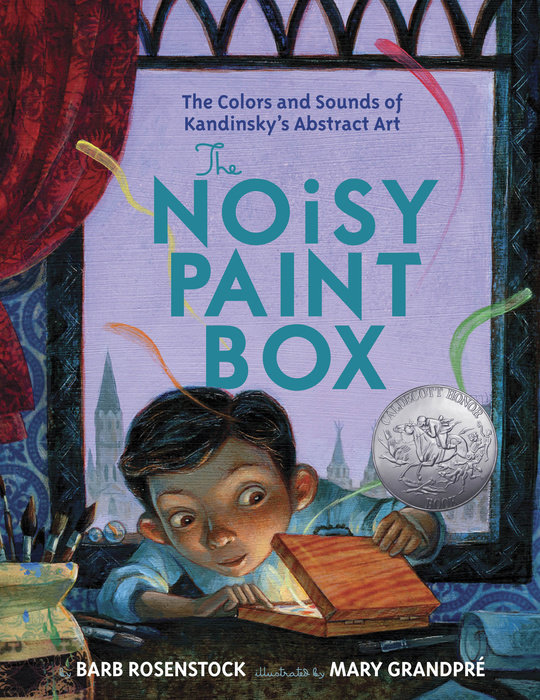
The Noisy Paint Box: The Colors and Sounds of Kandinsky’s Abstract Art

Written by Barb Rosenstock | Illustrated by Mary GrandPré


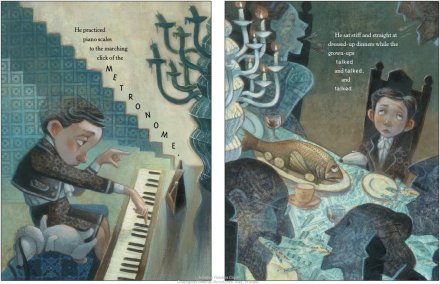
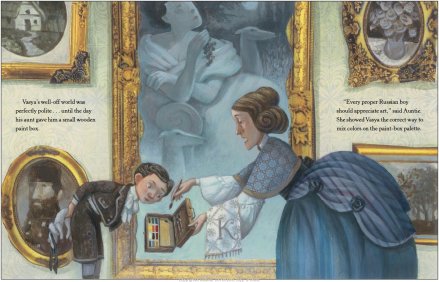
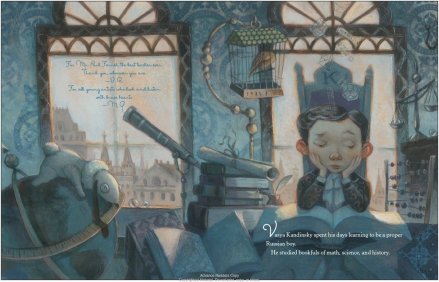
As a Russian child Vasya Kandinsky spends his days absorbed in learning math, science, and history. He takes piano lessons and attends formal dinners where the adults drone on and on. His life is polite, stiff, and colorless until the day his aunt gives him a small wooden paint box. “Every proper Russian boy should appreciate art,” Vasya’s aunt tells him while explaining how to mix colors.

celebrate-picture-books-picture-book-review-the-noisy-paintbox-piano-lessons

Image copyright Mary Grandpré, text copyright Barb Rosenstock. Courtesy of randomhouse.com

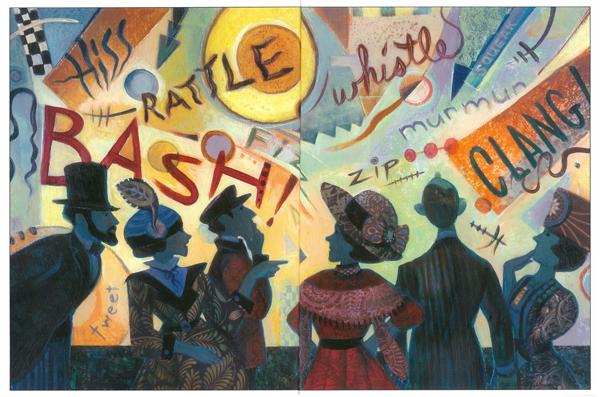
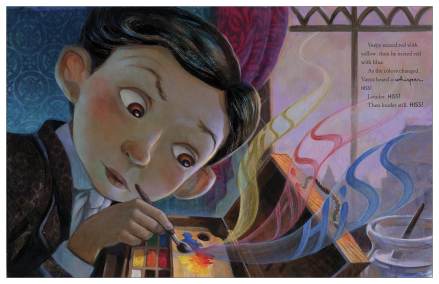
Vasya takes up the brush and combines red with yellow then red with blue. As the colors change to orange and purple, Vasya hears a whisper that grows into a noisy hiss. “‘What is that sound?’” he asks, but no one else hears anything. “The swirling colors trilled like an orchestra tuning up for a magical symphony,” and “Vasya painted the sound of the colors.” A lemon yellow “clinked like the highest notes on the keyboard; a navy blue “vibrated deeply like the lowest cello strings.” Crimsons “blared” and greens “burbled.”

celebrate-picture-books-picture-book-review-the-noisy-paintbox-colors-kandinsky-gets-his-first-paints

Image copyright Mary Grandpré, text copyright Barb Rosenstock. Courtesy of randomhouse.com

Vasya runs downstairs to show his family what he has created. His mother, father, and Auntie look at the canvas with its swoops, shapes, and angles. “What is it supposed to be?” they ask, and send him off to art school to learn how “to draw houses and flowers—just like everyone else.” Vasya finishes school and becomes a lawyer. He leaves his paint box untouched and lives the way he is expected, but the sounds of the colors are always with him.

One evening as he listens to an opera, the music surrounds him with color—“stomping lines of vermilion and coral; caroling triangles in pistachio and garnet; thundering arches of aqua and ebony…” Vasya can hear the colors and see the music. He knows then what he must do. He quits his job teaching law and moves to Germany to be a painter. He surrounds himself with artists and takes classes with famous teachers, and yet people still look at his canvases and asked, “What is it supposed to be?”

celebrate-picture-books-picture-book-review-the-noisy-paintbox-colors-have-sounds

Image copyright Mary Grandpré, text copyright Barb Rosenstock. Courtesy of randomhouse.com

Once again he paints what is expected. His teachers love his houses and flowers, but Vasya does not. His friends understand. They too want to expand the meaning of art. They agree with Vasya when he says, “‘Art should make you feel.’” In his studio Vasya continues to paint the sounds he hears, to give music color and color sound. Bravely, he invites the public to view his paintings, which are named after musical terms—Composition, Accompaniment, Fugue, and more.

This is a new kind of art—abstract art—and it takes a long time before people understand. They look and still ask, “What is it supposed to be?” “It is my art,” Kandinsky replies “How does it make you feel?” 

celebrate-picture-books-picture-book-review-the-noisy-paintbox-colors-kandinsky-at-a-concert

Image copyright Mary Grandpré, courtesy of randomhouse.com

An author’s note telling more about Kandinsky’s life and synesthesia, a genetic condition in which one sense triggers another, follows the story.

In the spirit of full disclosure, Kandinsky is one of my favorite artists, so I was excited to read this biography—I was not disappointed! With so many great artists, their work speaks for itself, but viewers wonder: How did it come about? What influenced the artist? Barb Rosenstock, with lyrical language and beautifully chosen descriptions, reveals the emotions and passion that fueled Kandinsky’s art from his earliest ages: as he walks through Moscow he can’t ignore “the canary-colored mailbox whistling as he rode to work. The scarlet sunset haze ringing above the ancient Kremlin walls.” Rosenstock’s inclusion of the conflicts and opposition Kandinsky faced and overcame will inspire children to listen to their inner voice and makes readers and lovers of his abstract art glad he never gave up.

Mary GrandPré’s unique style brilliantly depicts Kandinsky’s singular vision, allowing readers to experience the way he wielded his paint brush like a conductor’s baton. Vasya’s early life is painted in muted blues and grays, and the boredom on his face as he studies his schoolwork is obvious. Kids will appreciate his one-finger plinking at the piano and the rolled-eyed drowsiness of the formal dinner. Once Vasya is introduced to the paint box, however, GrandPré’s illustrations become vibrant, with swirling colors overlaid with the musical notes that Kandinsky associated with them. His uninhibited painting is gloriously shown as the young boy’s shirt comes untucked and the colors burst from the canvas upon his first painting.

celebrate-picture-books-picture-book-review-kandinsky-studying

Image copyright Mary Grandpré, text copyright Barb Rosenstock. Courtesy of randomhouse.com

As the adults look at his work, the room is again swathed in somber colors. The text revealing that Vasya attended regular art classes to learn to draw houses and flowers is set above a single wilting flower in a vase. The personal tug-of-war Kandinsky experienced even into adulthood is wonderfully rendered: Colors flow into his ears at the opera; he studies his own landscape and still life paintings with misgiving in a hazy studio, and the joy and freedom of his abstract art is demonstrated with wild abandon while a dove escapes its cage. The final image of a child sitting in front of a Kandinsky painting reinforces the idea that his art lives for all and for all time.

Ages 4 – 9

Alfred Knopf, Random House Children’s Books, 2014 | ISBN 978-0307978486

International Artists Day Activity

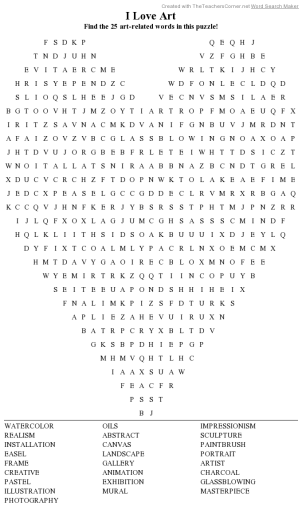
celebrate-picture-books-picture-book-review-i-love-art-word-search

I Love Art! Word Search 


There are twenty-five art-related words for everyone to love in this printable I Love Art! word search puzzle! Here’s the Solution!

Picture Book Review
October 2 – It’s National Chili Month

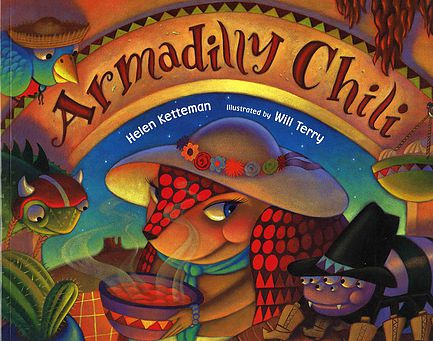
Armadilly Chili picture book review

About the Holiday

What could be more satisfying during a cool autumn month than a spicy bowl of chili?  Whether made with meat or veggies, combined with macaroni, or served in potato skins, the simmered flavors make for a scrumptious meal. Although the origins of chili are lost to history, it’s believed that the dish is a southwestern, specifically Texan, concoction. It began to attract attention in the early 1800s, and by the 1880s”Chili Queens” were selling “bowls o’red” at chili stands throughout San Antonio. In 1893 the San Antonio Chili Stand made an appearance at the Chicago World’s Fair. It’s popularity took off across Texas and throughout the west by the 1920s. When the Great Depression hit, chili became one of the only affordable meals for the hungry population. Today chili is a favorite dish of people all over the world. To celebrate this month’s observation why not whip up a batch of your favorite chili or discover some new recipes!

Armadilly Chili

Written by Helen Ketteman | Illustrated by Will Terry

What a hoot! The knee-slappin’, root-a-tootin’ phrasing in Hellen Ketteman’s Armadilly Chili is shor ‘nuf gonna make this a favorite on any child’s bookshelf. While the plot may be familiar, the southwest setting and Miss Billie Armadilly put a fresh, funny twist on it.

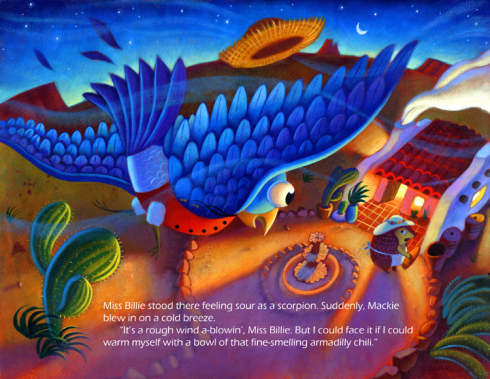
“Miss Billie Armadilly skit-skat-skittered down the lane. A blue-norther’s a-blowin’ and my old, cold bones are rattling for a pot of hot armadilly chili,” she says. She’s gathering ingredients when her friend Tex, a many eyed tarantula, tip taps by. Hey, Tex, she calls, how about tapping your toes this way and helping me gather a boxful of beetles?” But Tex just “wiggles his long jiggly legs and says, ‘Shucks, Miss Billie, I’m going dancing today.’” Miss Billie harrumphs and collects the beetles herself.

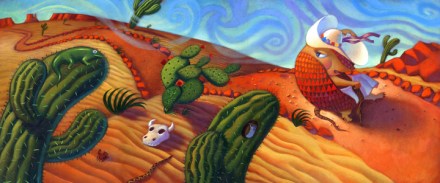
Next Miss Billie is picking peppers, and when Mackie the bluebird flies in she thinks she has an assistant. “‘How ‘bout whistlin’ up a tune and helping me pick a peck o’ peppers for my armadilly chili?’” Once again, though, she’s left on her own since Mackie says he is “‘shakin’ my tail feathers to the movies.’” When Miss Billie “scurries to the prickly pear cactus and begins chippity-chop-chopin,’” her friend Taffy, the horned toad, complains about the noise and then begs off from helping, saying she’s got plans to go skating.

celebrate-picture-books-picture-book-review-armadilly-chili

Image copyright Will Terry, courtesy of Albert Whitman & Company

At home, Miss Billie stirs her chili to a scrumptious bubble. The aroma entices first Tex, then Mackie, and finally Taffy to come a’knockin’ at her door looking for a bowlful, but Billie has something to say about that—specifically, “no workin’ with Billie, no sharin’ the chili!”

Billie’s friends hurry away sorry that she feels that way, and Billie sits down to her feast. But after all that work, the chili tastes as “flat as a Texas prairie.” What’s wrong? She realizes what the missing ingredient is just as the doorbell rings. She opens the door to find her friends standing there with bags in their hands. What’s in those sacks? Apologies! As well as hot apple cider, jalapeno biscuits, and homemade chocolate fudge. Now that the friends are all together, the chili tastes just right, and “they talked and laughed into the cold, blustery night.”

celebrate-picture-books-picture-book-review-armadilly-chili-mackie-visits

Image copyright Will Terry, text copyright Helen Ketteman, courtesy of Albert Whitman & Company

What a hoot! Helen Ketteman’s fast-paced Armadilly Chili is a spicy take on the little red hen story  and what it means to be a good friend. Miss Billie is a sassy, no-nonsense heroine who values her work and talents and makes sure others do too. When anger and frustration bubble over, however, the four friends find a way to apologize and make up. The lesson, humorously conveyed as well as Ketteman’s knee-slappin’, root-a-tootin’ phrasing is shor ‘nuf gonna make this a favorite on any child’s bookshelf. 

Will Terry’s vivid illustrations washed with a palette of deep reds, oranges, greens, and yellows bring the Southwest setting to life. Miss Billie and her friends are enchanting versions of their natural counterparts, and kids will love the environmental and homey details on each page, where even the cacti display personalities. Billie’s facial expressions as each of her friends abandon her to her chores are priceless, and their final camaraderie is highly satisfying.

Ages 4 – 8

Albert Whitman & Company, Illinois, 2008 | ISBN 978-0807504581

Discover more about Helen Kellerman and her books plus fun accompanying activities on her website!

View a portfolio of Will Terry‘s books and artwork on his website!

While I take a few personal days, I am reposting earlier reviews updated with new links and interior art.

National Chili Month Activity

CPB - Chili Pepper Game

Hot, Hot, Hot! Chili Pepper Chili Game

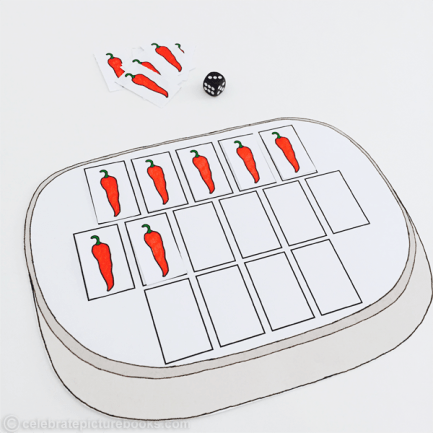
Chili just isn’t chili without a little heat! But can you take 15 chili peppers in your bowl? If you want to win the Hot, Hot, Hot! Chili Pepper Chili Game you’ll have to!

Object of the Game

The object of the game is to collect 15 chili peppers in your bowl before any other player.

Supplies

Rules

  1. Any number of players can play at one time. Print 1 Chili Bowl game board and 1 set of 15 Chili Pepper cards for each player
  2. Give 1 Chili Bowl Game Board to each player
  3. Place the Chili Pepper Cards in a pile or in a bowl
  4. Roll the die to see who goes first. The person with the highest roll goes first
  5. To begin play, the first player must roll a 1, 2, or 3. They should roll until they get one of these numbers.
  6. Players roll the die and collect or lose chili pepper cards by the number of dots on the die. If you roll a:
  • 1 – Pick up 1 chili pepper card and place it on your chili bowl game board
  • 2 – Pick up 2 chili pepper cards and place them on your chili bowl game board
  • 3 – Pick up 3 chili pepper cards and place them on your chili bowl game board
  • 4 – Get a chili pepper card from the player on your left
  • 5 – Give a chili pepper card to the player on your left
  • 6 – Lose a turn

     7. If a player does not have chili pepper cards to give to another player or if the player on           their left has no cards to give, the player rolls again.

    8. Continue play until one player has filled their Chili Bowl with chili peppers!

Picture Book Review
October 1 – International Coffee Day

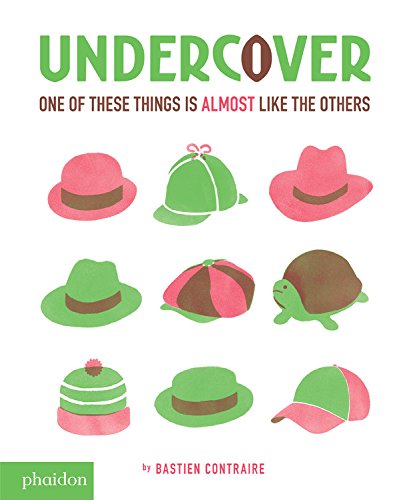
celebrate-picture-books-picture-book-review-undercover-one-of-these-things-is-almost-like-the-others-cover

About the Holiday

Is there anything better than sitting down with a steaming cup of coffee for a little break during the day? Today’s holiday lets people all over the world do just that. Whether you like your coffee strong and hot, with lots of milk, or flavored with tastes of the season, there are versions of this delicious drink just for you. With an ancient and storied history, coffee is one food that unites us all. To celebrate why not grab a cup of joe for yourself, stir up a foamy hot chocolate for your kids, and sit down with a good book – like today’s brain teaser!

Undercover: One of These Things Is Almost Like the Others

By Bastien Contraire


Undercover agents complete successful missions by blending in with their surroundings and the people they encounter, but’s impossible for them to actually become the people they are investigating. In the same vein Undercover: One of These Things Is Almost Like the Others cleverly inserts a closely shaped item onto a two page spread that contains a family of objects (for instance a soccer ball among fruit).

celebrate-picture-books-picture-book-review-undercover-one-of-these-things-is-almost-like-the-others-beetles

Image copyright Bastien Contraire, courtesy of phaidon.com

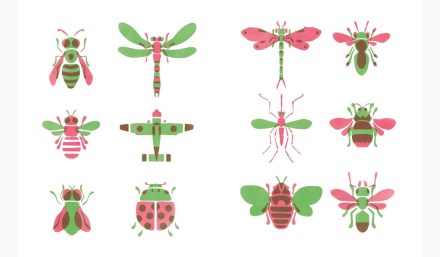
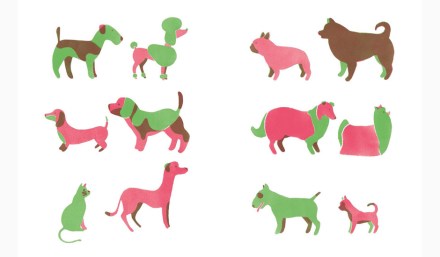
The pink, green, and brown stenciled illustrations boldly placed on a white background offer stimulating visuals while also making the task of discovering the interloper surprisingly tricky as out perceptions and even preconceived notions are tested. Many of the match-ups provide not only a challenge but sly humor as well, riffing on the shapes, purpose, relationship, and even history of the items on the page. 

Picking out the imposter is only the beginning of the fun readers can have with Undercover. Each page can start a discussion of how the odd item is different and how it is similar to the others; the similar objects can be categorized into smaller sets; industrious kids may like to design their own pages giving the “almost” image some companions; and wordsmiths may want to invent stories involving the groupings and how they came to be.

celebrate-picture-books-picture-book-review-undercover-one-of-these-things-is-almost-like-the-others-ice-cream

Image copyright Bastien Contraire, courtesy of phaidon.com

Fans of “I Spy” types of books and games will love testing their knowledge and observational skills against the pod of whales, city modes of transportation, insects and fish, sea-worthy craft, various types of food, office equipment, and a host of birds and animals in this 64-page wordless picture book. Perfect for classrooms and home bookshelves, Undercover: One of These Things is Almost Like the Others is sure to be asked for again and again on any day when fun, quiet entertainment is just what’s called for.

celebrate-picture-books-picture-book-review-undercover-one-of-these-things-is-almost-like-the-others-dogs

Image copyright Bastien Contraire, courtesy of phaidon.com

Bastien Contraire’s stylized stencil-print illustrations of long-antennae beetles; flat and spiny fish; friendly dinos; ice cream treats; farm, forest and antlered animals; musical instruments; and more will delight kids and spur them to discover the names of each. The rounded edges, sleek lines, and delineated details of the images may even inspire budding artists to try their own hand at stenciling.

Ages 4 and up

Phaidon Press, 2016 | ISBN 978-0714872506

International Coffee Day Activity

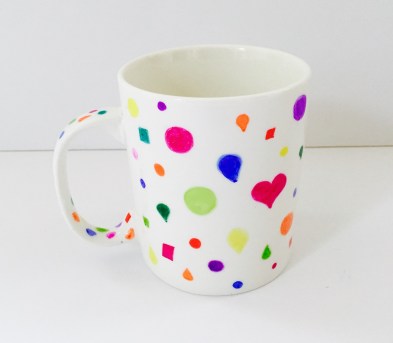
celebrate-picture-books-picture-book-review-ceramic-mug-craft

Mug Masterpiece


Somehow drinks taste better in a mug you’ve decorated yourself! With this easy craft you can design a mug for your hot chocolate, tea, juice, or any favorite drink!

Supplies

  • Ceramic mug, available at craft stores
  • Paint included with mug decorating kit
  • OR
  • Bakeable ceramic markers
  • Paint brush

Directions

  1. Design and decorate your mug
  2. Follow the directions on the mug kit to bake on the paint OR
  3. Follow the directions of the ceramic markers to finish your mug