June 26 – National Canoe Day

celebrate-picture-books-picture-book-review-can-you-canoe?

About the Holiday

June is the perfect month to explore the great outdoors up close through camping. Whether you enjoy pitching a tent or renting a cabin, all the enjoyment of hiking, fishing, swimming, and of course toasting marshmallows and singing around the campfire await!

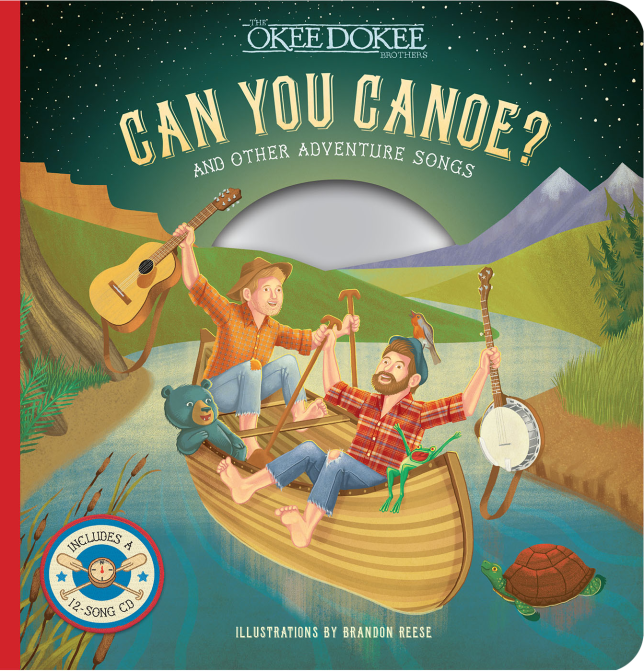
Can You Canoe? And Other Adventure Songs

Written by The Okee Dokee Brothers—Joe Mailander and Justin Lansing Illustrated by Brandon Reese


Is it possible to sing a picture book? It is when the book is Can You Canoe?! These twelve humorous, rip-roaring tunes take readers and singers deep into the fun of what it means to spend time enjoying nature. Wild animals, tall tales, legendary characters, and all the sounds and flavors of country livin’ are represented in these catchy original songs that will have you singing and laughing along in no time.

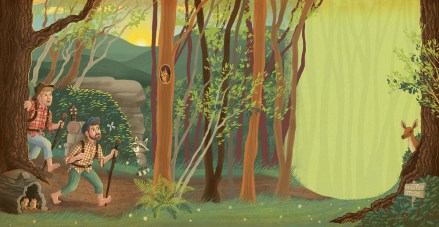
Through the Woods introduces the line-up with an apt question: “I’m wondering if you’d go wandering with me / Through the wilderness and woods / To where the winds are blowin’ free…” But even the speaker realizes there might be doubts—“You’re wondering if I go wandering with you / what kind of trouble we’ll get ourselves into. / Would it be wrong to tag along / With a band of vagabonds?”—and assuages them in the end.
celebrate-picture-books-picture-book-review-can-you-canoe?

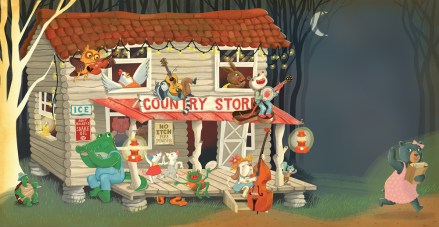
Jamboree takes readers to a country store where there’s dancing every Friday night to a song called “Jamboree” that’s played with abandon and just a little off key. But all you need is to “grab you a partner / And hold on tight / ‘Cause we ain’t stoppin’ / Until we see the light.”

In Black Bear Mama a couple learns there’s no arguing with a mother bear on the lookout for food for her cubs, and Echo Echoooo reassures that nothing, not even the widest valley, can keep true love apart. Can You Canoe? is a celebration of the simple life out on the water without distractions: “Can you canoe on a little boat built for two? Can You Canoe?…I wanna float down a river with you.”

Mr. & Mrs. Sippy can take you by surprise as this isn’t a tune about straws or baby cups. Instead, this is a rambling life story that starts like this: “Mr. and Mrs. Sippy / Got married in the fall. / They left the church that very same day / For their honeymoon in St. Paul, / Singin’ M-I-double-S-double-S-I-P-P-I / M-I-double-S-double-S-I-P-P-I. The couple roams on down to St. Louis to make themselves a home, then raises children in ‘good old Memphis Town.” When they have no place left to go, “they drift down past New Orleans / To the Gulf of Mexico.” Then you’re invited to sing the chorus backwards and forwards once again!

The Legend of Tall Talkin’ Sam echoes some of the great legends of the American West, such as Paul Bunyan and Babe the Blue Ox. Samantha Rosie-Anna, aka Sam, was “born to a pioneer woman and a Rocky Mountain mountain man” and “come out ridin’ a panther and ropin’ a twister outta the sky.” Sam’s so big that when she sleeps under a blanket of snow, she lays her “hat down in Montana and my boots in Colorado.” But even though this girl is “half horse, half mountain lion and half grizzly bear,” she admits there are things she doesn’t know—“like how some little stream / Carved out one big ol’ canyon, / Or how a fire’s angry flame / Can be your best companion.”
celebrate-picture-books-picture-book-review-can-you-canoe?

Can You Canoe? images courtesy of Brandon Reese (www.brandonreese.com)

Jackalope addresses one of the greatest American myths—that of a creature of mixed jack rabbit and antelope blood that roams the plains of the West. With tongue in cheek, the mysterious whereabouts of the Jackalope is exposed in the chorus: “Well I’ve seen ‘em in books and in taxidermy shops. / I’ve seen ‘em hangin’ on the wall. / But I ain’t never seen one in the livin’ light of day— / It’s almost like they don’t exist at all.” But the last verse reveals that perhaps this odd apparition has a purpose after all: “So when you’re searchin’ for the truth / And you’re at the end of your rope, / You might find you don’t need no proof / To believe in the thing that gives you hope— / And for me that’s the jackalope.”

These and a few other rollicking, gold-nugget songs will make any camp out—or even camp in—a knee-slappin’ good time. Can You Canoe comes with a CD so you can sing along to all your favorites—and I have no doubt each song will become a favorite in no time!

Joe Mailander and Justin Lansing have known each other all their lives and know a thing or two about adventures and how to make them more fun for friends and families. This Grammy-winning duo conjure up catchy tunes and compelling stories to make their songs unforgettable. These poems/songs have as much heart and wonder as a new frontier and invite readers and singers to explore!

Brandon Reese lends his distinctive talent to each song, creating animated scenes loaded with the kinds of details and drama kids love. Barefoot travelers with their packs on their backs and strong walking sticks in hand pad through woods populated with friendly wildlife. The country store is alive with animal musicians and dancers on the porch, on the roof, and hanging out every window while broadsides for Aunt Malady’s Snake Oil and No Itch Flea Powder hang on the walls. A cozier camping tent you’ll never find, and canoe paddlers are accompanied by a raccoon poling a crocodile boat while a rabbit floats along on the belly of a turtle. Each picture invokes the great outdoors in all its glory.

Can You Canoe is a must for any trip, whether you’re traveling far or just down the road!

Ages 4 and up

Sterling Children’s Books, 2016 | ISBN 978-1454918035

National Canoe Day Activity

celebrate-picture-books-picture-book-review-canoe-maze

Come Canoeing With Us Maze


These friends want to canoe together but first they must pick up little deer at the center of the lake. They need your help navigating their way in this printable Come Canoeing With Us maze! Here’s the Solution!

June 21 – World Music Day

celebrate-picture-books-picture-book-review-hey-charleston

About the Holiday

Celebrated every year on the summer solstice, World Music Day, also known as the Fête de la Musique, brings together professional and amateur musicians to ply their trade and entertain audiences for a day full of sound. The day was first conceived in 1982 by French Minister of Culture Jack Lang, who elicited the help of Maurice Fleuret, the Director of Music and Dance. When Fleuret discovered that half of the nation’s children played a musical instrument, he devised a way to bring people out into the streets for a music festival. Since then, the event has become an international phenomenon, celebrated in more than 700 cities in 120 countries worldwide. To participate consider organizing or attending a  free concert or enjoying music in your favorite way.

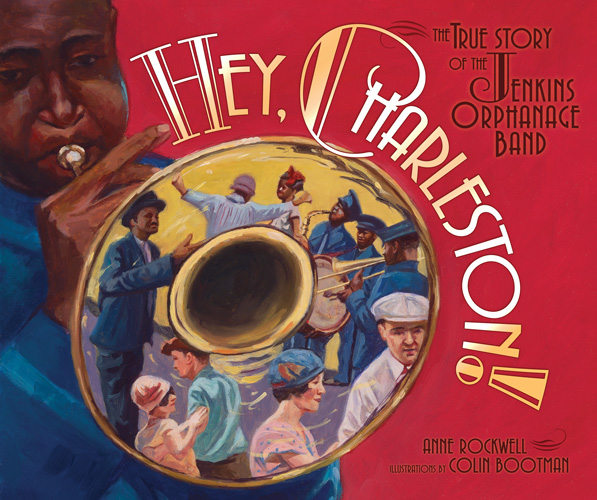
Hey, Charleston! The True Story of the Jenkins Orphanage Band

Written by Anne Rockwell | Illustrated by Colin Bootman


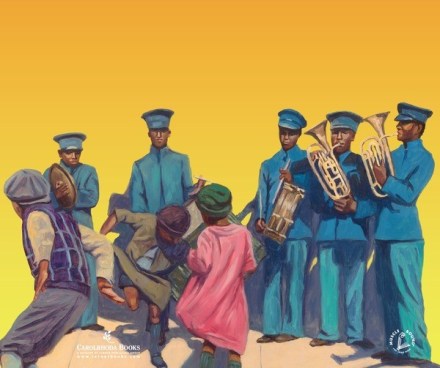
“Have you ever known someone who was always trying to turn bad into good, always seeing hope where others saw despair?” This question, which begins the biography of Reverend Daniel Joseph Jenkins and the orphans he loved is as relevant today as it was in the early 1900s, when this story takes place. Reverend Jenkins was the pastor of a small church in Charleston, South Carolina. One night while collecting scrap wood at a railroad yard, he discovered a group of boys huddled and sobbing inside a freight car. Reverend Jenkins took them to his church, fed them, and gave them a warm place to sleep. He knew what it was like to be an orphan because he had been one too.

Soon more orphans showed up at the church door, and Reverend Jenkins accepted them all. Room grew tight so he convinced the city officials to give him an abandoned warehouse for his orphanage. There was just one drawback: the warehouse was next to a prison, where less-than-desirable sounds emanated from the walls. Reverend Jenkins figured out a way to drown out the noise, however. He gathered the orphans and led them in song outside the orphanage door. The kids were good singers, and that gave the reverend an idea.

He had grown up during the Civil War and remembered the marching bands that led the soldiers into battle. He remembered the instruments these musicians carried and asked for any that were now unused to be donated to the children. Instruments poured in! They were polished and tuned and the children learned to play under the direction of the best teachers in Charleston. With the money Reverend Jenkins thought they could make entertaining people, he planned to buy a farm for the orphans.

Soon the Jenkins Orphanage Band was playing on street corners and in other venues. Many of the kids were descended from the Geechee or Gullah people who lived on islands off the coast of South Carolina, and they played the old band music with their own special rhythm, called “rag.” “A couple of Geechee boys would lead the band by doing a dance—twisting and twirling and tapping their toes, knocking their knees, and flapping their arms.” People loved the music, but most South Carolinians were poor and couldn’t donate much to the orphans. Reverend Jenkins decided to take his band to New York City. The band took the city by storm! People loved when the kids played their raggedy music and soon were imitating the Geechee boys’ dance. “Hey, Charleston,” they’d shout, “Give us some rag!” They called the dance “the Charleston,” and soon everyone was doing it.

celebrate-picture-books-picture-book-review-hey-charleston-interior-art

The orphans made so much money they were able to buy a new house, and the music instruction became so renowned that families began paying to have their children taught along with the orphans. The band continued to travel around the United States, and they were even invited to perform in the inaugural parade for President Theodore Roosevelt. Finally, they were able to buy the farm Reverend Jenkins had dreamed of.

In 1914 the Jenkins Orphanage Band was even invited to play for Britain’s King George V at the Anglo-American Exposition in London. While they were there, however, Britain entered World War I. The British government ensured that the band had safe passage back home, but many other Americans were stranded in England. Reverend Jenkins offered to lend these citizens the money needed for them to return home as well.

The ship sailed silently through the dangerous Atlantic Ocean until it reached an American port. Once safe the passengers shouted, “‘Hey, Charleston! Give us some rag!’” Happy to be home, the band tuned up their instruments and played loudly and enthusiastically for the shipboard audience. As the passengers disembarked in New York Harbor, crowds greeted them with a hearty welcome. Back home “as they lay down to sleep that night, those band players knew they had done what Reverend Jenkins always taught them. They had turned bad into good.”

Anne Rockwell succinctly and clearly relays the story of the Jenkins Orphanage Band while also retaining all the heart and soul of this fascinating group of children and their dedicated caregiver. The true-life tale is mesmerizing, not only for the historical details of the growth of ragtime music and the Charleston dance but for the accomplishments of the orphans once given love, acceptance, and education. Rockwell’s conversational tone contributes to the story’s smooth, flowing pace, which will keep listeners or readers rapt from beginning to end.

Colin Bootman’s bold two-page spreads illuminate the sights and sounds of the early 1900s for readers. Emphasizing the personal connections between Reverend Jenkins and the orphans as well as the band and their audiences, Bootman’s vibrant paintings are full of people watching, dancing, marching, and celebrating these boys’ awesome gifts.

Ages 6 – 10

Carolrhoda Books, 2013 | ISBN 978-0761355656

World Music Day Activity

celebrate-picture-books-picture-book-review-musical-instruments-word-search


It’s Instrumental Word Search


Triangles may not get a lot of play in an orchestra, but there’s plenty of play in this printable It’s Instrumental Word Search that contains the names of 20 instruments! 

June 6 – Russian Language Day

celebrate-picture-books-picture-book-review-mussorgsky's-pictures-at-an-exhibition

About the Holiday

Established in 2010 by the United Nations Educational, Scientific, and Cultural Organization, Russian Language Day honors the music, art, and other unique aspects of this intriguing country. The observance coincides with the 1799 birthday of Alexander Pushkin, a Russian poet who is considered the father of Russian literature. Celebrations include concerts, readings, and other cultural events. Today, listen to the music of a Russian composer, read a novel or short story, or learn a few Russian words!

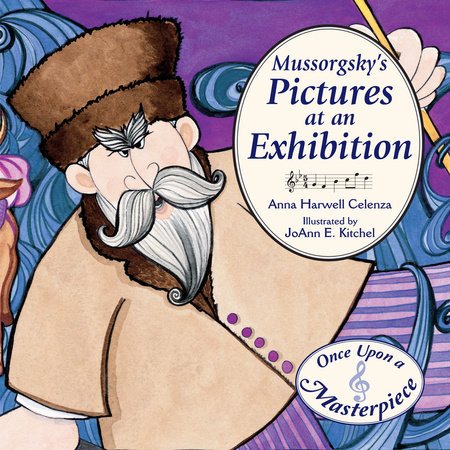
Mussorgsky’s Pictures at an Exhibition (Once Upon a Masterpiece Series)

Written by Anna Harwell Celenza | Illustrated by JoAnn E. Kitchel


It’s the 1870s and Russian culture is enjoying a resurgence. Young musicians and artists are excited to be recognized by the world. Three friends—Modest Mussorgsky, a musician; Victor Hartmann, an artist and architect; and Vladimir Stasov, an art critic—have big plans for their work. Victor, especially, has dreams of designing the new City Gate in Kiev. But on July 23, 1873 Victor suffers an aneurysm and dies. Modest is devastated. He feels that Victor’s death is his fault because he had dismissed Victor’s complaints about a headache only days before. Although Vladimir tries to comfort his friend, Modest pushes him away.

Modest stops going out, he stops being happy, and he stops writing music. Meanwhile Vladimir organizes an exhibition of Victor’s art so everyone will remember him. Vladimir and other friends think that seeing Victor’s work displayed will help Modest come to terms with his friend’s death. When the exhibit is ready, Vladimir visits Modest to invite him to come. When Modest refuses, Vladimir locks the door, puts the key in his pocket, and tells Modest he had two choices: either go to the exhibition or have a new roommate in Vladimir. Modest reluctantly agrees to go.

When they reach the gallery, Modest reluctantly enters. He is awestruck. “Every inch was filled with Victor’s hopes and dreams, his fears, and his greatest triumphs.” Slowly Modest wanders through each room, gazing at the paintings that bring back such vivid memories. He sees familiar faces, costume designs, children, couples, peasants, even Baba-Yaga, a witch from Victor’s favorite fairy tale.

Modest stops in front of Victor’s picture “The Great Gate of Kiev.” Tears fill his eyes and he thinks, “This was to be your greatest achievement…now it will never be more than a dream. If only I could build it for you.” He studies the picture for a long time, and suddenly an idea comes to him—“Maybe I can build it for you!” He dashes from the gallery straight to his piano.

As Modest thinks about Victor’s art, “one by one the spirit of each picture filled the room.” The images rise from the piano and Modest follows them from one theme to another, note by note. Some passages he plays are slow and sad, others clear and quick, while still others flutter or whisper. Even Baba-Yaga makes an appearance. With each chord special parts of Victor came to life until the last majestic strains built the Great Gate of Kiev in music. Modest calls his composition Pictures at an Exhibition.

With the spirit of his friend Victor in his heart. Modest Mussorgsky goes on to compose operas and visit with friends. Vladimir Stasov also follows his dreams to travel far and wide, and wherever he goes he tells people about Victor and Modest’s Pictures at an Exhibition

Anna Harmann Celenza relates the heartfelt story of the origins of Modest Mussorgsky’s great work with sensitivity and honors the emotional origins and effect of his Pictures at an Exhibition. The hopes of the three friends as well as the details of Victor’s artwork are evocatively described, allowing children to easily picture the feelings and objects that influenced Mussorgsky’s music.

Both the colorful architecture of Russia and the soaring notes of Mussorgsky’s music are beautifully depicted in JoAnn E Kitchel’s illustrations. Each one-and-a-half-page spread depicting scenes of St. Petersburg, Modest’s apartment, the art gallery, musical imagery, and the theater is framed in lovely floral borders, tying together the themes of art and music. Rich purples, regal blues, fiery reds, and glowing yellows makes this book a feast for the eye as well as the mind.

The book is accompanied by a CD of Mussorgsky’s work, making Pictures at an Exhibition a must have for music lovers of all ages.

Ages 6 – 10 and up

Charlesbridge, 2016 | ISBN 978-1580895286

Russian Language Day Activity

celebrate-picture-books-picture-book-review-russia-word-search

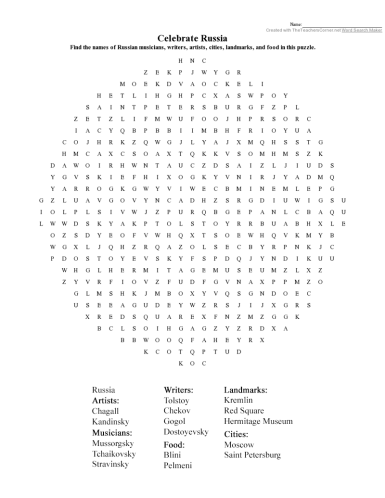
Celebrate Russia Word Search


Find the names of Russian musicians, artists, writers, cities, and more in this circular word search. Print your Celebrate Russia Word Search here! And here’s the Solution!

Picture Book Review

April 20 – It’s Jazz Appreciation Month

How Jelly Roll Morton Invented Jazz by Jonah Winter and Keith Mallett picture book review

About the Holiday

Jazz Appreciation Month, nicknamed JAM, was initiated by the Smithsonian National Museum of American History in 2002 to celebrate the heritage and history of jazz and to inspire people to embrace this musical form by attending concerts, listening to recordings, reading about jazz, and playing your own jazz music. The theme for JAM 2016 is an exploration of how jazz is a form of democracy in itself. Jazz works as a method of communication, brings people together, and can be enjoyed individually or in a group. This year’s events also remember the legacy of bandleader Benny Carter.

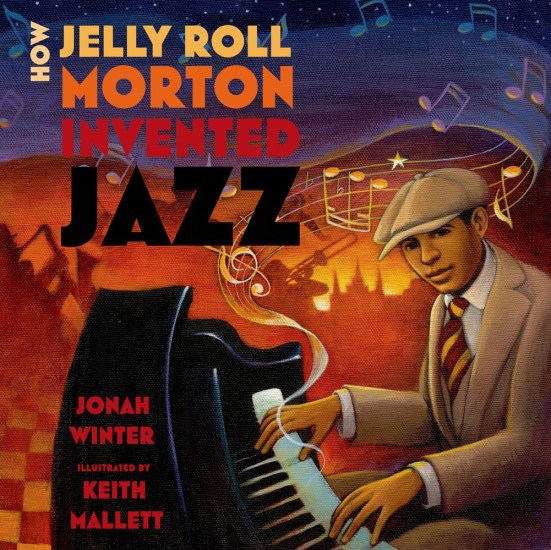
How Jelly Roll Morton Invented Jazz

Written by Jonah Winter | Illustrated by Keith Mallett


So “here’s what could’ve happened” if you were the baby born to grow up and become one of the best, most innovative talents—maybe even the inventor—of jazz music: Living in New Orleans in the 1890s you might have been put under the spell of music by your godmother, who was a voodoo queen. This same godmother might have taken you with her to a saloon, and later that night you may have accompanied her to jail when trouble broke out at the bar. In jail you may have cried and cried until the other people in your cell “commenced to singing—‘cause music was the only thing that calmed you down.”

When you were still a little child, it might have happened that you sat down at a piano and without training “commenced to play.” With that kind of talent you might have snuck out at night to play for adults who loved to hear your music and paid you well. But one morning your great-grandmother who was raising you may have seen you sneaking back home. She’d ask where you’ve been and how you got such a fancy suit.

When you tell her, she says “she wouldn’t have no LOWLIFE MUSICIAN livin’ under her respectable roof.” But music is who you are, and so still a child, you have nowhere to live and must make your way in the world. This is how and why in 1902 “a thing called JAZZ got invented by a man named Jelly Roll Morton.” At least that’s how the story goes.

Jelly Roll Morton knew the only way to escape his life and show people who’s the best is by playing the music inside him “one piano note at a time.” He had a recipe for jazz as spicy as a pot of Creole gumbo combining the rhythms of New Orleans, the beat of Africa, a dash of Spanish melodies and a pinch of Calypso syncopation. Stir in the Blues and add a bit of “messin’ around” and the tones of laughter. Throw in a teaspoon of symphony, with its flavorful instruments, and you’ve got a ragtime band that produces “high-steppin’, low-down, horn-blowin’ spectacularamicus!”

Jelly Roll Morton took his unique style to Mobile, Alabama and Chicago, Illinois and to every place in between, showing people how music should be played. And while Jelly Roll Morton might not have invented jazz all by himself, he “sure did spread it around the towns,” waving that magic spell everywhere he went.

The final pages give more information about the life of Ferdinand Joseph La Menthe, nicknamed Jelly Roll, as well as further reading and listening resources.

Immersing yourself in Jonah Winter’s biography of Jelly Roll Morton is akin to sitting at the knee of the most captivating storyteller. With mesmerizing rhythms Winter weaves the events of Morton’s life into a tale as enthralling as jazz music itself. Passages of the text are infused with the flavor of New Orleans: “I thought I heard Mister Jelly Roll too / Sayin’ ‘I invented jazz in 1902, / It was me who invented jazz—‘cause it sure wasn’t you.’”

Complimenting Winter’s story, Mallett paints Jelly Roll Morton’s environment in dark washes of night illuminated by the glow of music. The bayou of New Orleans, the dance halls, and city streets glimmer in golden hues from lamp light, the dawning sun, and the radiance of Jelly Roll’s piano keyboard. Notes fly away from Morton’s piano, becoming birds as they soar over the wakening city, and the recipe for “Jazz Gumbo” is stunningly illustrated.

How Jelly Roll Morton Invented Jazz is a unique, fascinating true-life tale that will entice music lovers and all readers.

Ages 5 – 9

Roaring Brook Press, 2015 | ISBN 978-1596439634

Jazz Appreciation Day Activity

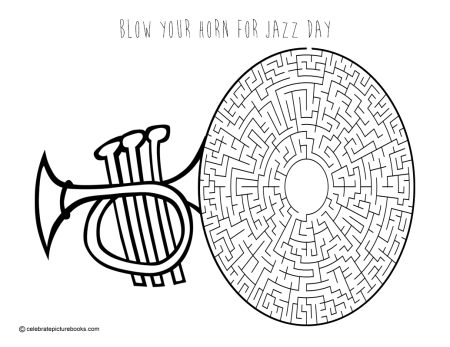
CPB - Trumpet maze

Blow Your Horn for Jazz Day! Maze


Jazz music is amazing in so many ways! Enjoy this riff on the usual maze and trumpet your success to your friends! Print the Blow Your Horn for Jazz Day! maze here. And here’s the Solution.

April 16 – Record Store Day

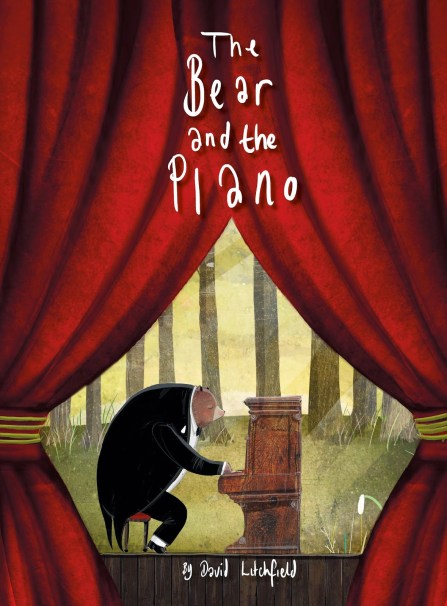
The Bear and the Piano by David Litchfield picture book review

About the Holiday

Vinyl has made a resurgence—and why not?! Records have so much to offer music lovers, from the awesome album art to extras like posters, lyrics, photos and more. Those special packages are all about the relationship between the artists and their fans. All over the world Record Store Day celebrates this art form and the shops—both large and small—where you can find albums by your favorite musicians. Entering a record store is an adventure in itself. Flipping through the bins you might discover a new artist, an old album you don’t have, or an intriguing concept you just have to experience for yourself. Today, visit a record store near you and see how what once seemed old is new again!

The Bear and the Piano

By David Litchfield


One day a bear cub happens upon a piano in a clearing in the middle of the forest. Wondering what it could be, he approaches and lays his paw on the keys. The strange thing goes PLONK!—such an awful sound. The bear cub leaves, but is drawn back again and again for days, months, and years. Over time the bear grows up and learns to play the piano. The music is beautiful and transports him to strange and wonderful places.

Other bears soon gather in the clearing to hear the “magical melodies” the bear plays. The bear is happy entertaining his friends. One night a girl and her father hiking in the forest come to the clearing. They listen and then tell the bear what his strange instrument is. They invite him to move to the city with them, where he will be able to play grand pianos for hundreds of people. The music he will play and hear “will make your fur stand on end,” they tell him.

The bear is conflicted. One on paw he knows that leaving the forest will make the other bears sad; on the other he longs to explore the world, to play the piano better, and master more intricate music. He decides to go with the girl and her father.

In the city the bear is a sensation! He quickly becomes a celebrity with his name on marquees and playing to sold-out crowds. The bear records albums that go platinum, he appears on the covers of magazines, and wins awards. His experience is everything he could ever wish for. But deep in his heart there is another longing. He misses the forest and his friends there.

He decides to leave the city and rows a boat across the expanse of water to his old home. Excitedly he runs to the clearing, but when he arrives everything has changed. His piano is gone and there are no friends to greet him. The bear worries that everyone is angry at him for leaving, or worse—that they have forgotten him.

Suddenly an old friend peeks around the trunk of a tree. The bear hails him with a hearty “Hello!”, but the other bear remains silent then turns and runs into the trees. The bear follows plunging deeper and deeper into the forest. Suddenly he stops. In front of him is a sight that makes his fur stand on end.

There, protected in the shade of a tree and surrounded by the albums, magazines, t-shirts, and other mementos of the bear’s success sits the old piano. The bear’s friends have not forgotten him and they are not angry. They are proud and welcoming. The bear tells them all about his adventures, and then he sits down to play again—for the most important audience of all.

David Litchfield’s very original and moving story is such a wonderfully conceived microcosm of the changes life brings. Stumbling upon a talent, cause, or inspiration; opening up to other influences; and acting on hard decisions are all part of growing up. These concepts are honestly and sensitively presented, and the reassuring ending brings comfort as well as a tear to the eye.

Litchfield’s touching illustrations—rendered in gorgeous hues of browns, greens, yellows, and blues—brim with yearning and mystery. The piano sits in a misty glow, silent and draped with vines, when the cub discovers it. While the bear grows and learns to play, the air clears and the colors become brighter. As the bear moves to the city, the pages glint and swirl with his enormous achievements. But as the bear sits on a rooftop one night looking out toward his old home, the lights around him are the elements of normal life—lamps, stars, the moon glimmering on the water. His nostalgia to be home will resonate with both kids and adults. The Bear and the Piano makes a wonderful gift for any age—especially as a graduation or new-job gift—and is a must-have for anyone’s personal library.

Clarion Books, Houghton Mifflin Harcourt, 2016 | ISBN 978-0544674547

Record Store Day Activity

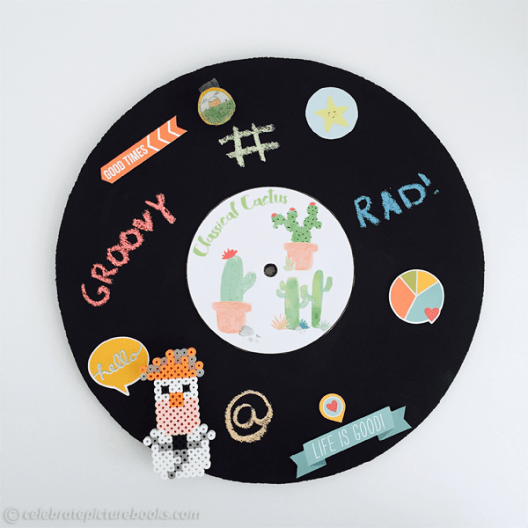
CPB - Record Bulletin Board

Make a Record Chalkboard Bulletin Board


Would you love to make a record some day? Why wait? In this fun craft you can create your own record bulletin board—and even create your own label art! While this record may not spin on turntables around the world, it will drop in a more important place—your very own room!

Supplies

  • Printable Record Label for you to design
  • Foam board, or a corkboard at least 12-inches x 12-inches square
  • Adhesive cork
  • A 12-inch round plate, record, or other round object to trace OR a compass
  • Chalkboard paint, black
  • X-acto knife
  • Paint brush or foam paint brush
  • Mounting squares

Directions

  1. Cut a section from the adhesive cork a little larger than 12 inches by 12 inches
  2. Affix the cork to the foam board
  3. Trace the 12-inch round object onto the cork/foam board OR use the compass to make a 12-inch circle
  4. With the x-acto knife, carefully cut out the circle (adult help needed for children)
  5. Cut out a ¼ -inch circle in the center of the record bulletin board
  6. Paint the cork, sides and inside the spindle hole with the black chalkboard paint. Let dry
  7. Print the label template and design your own record label
  8. When the paint is dry, glue your label to the center of the bulletin board
  9. Hang your bulletin board with the mounting squares
  10. Decorate!

March 28 – Music in Our Schools Day

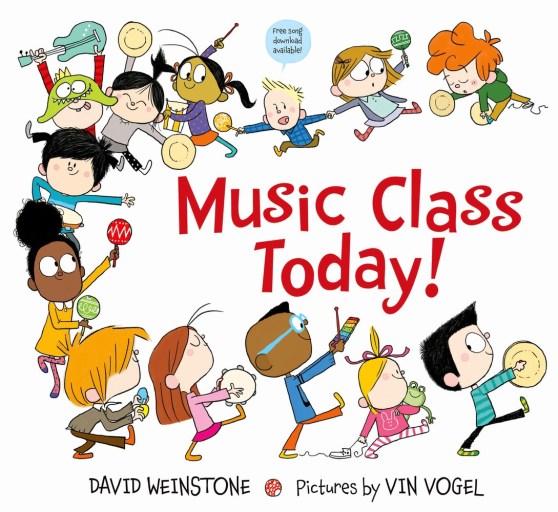
Music Class Today by David Weinstone and Vin Vogel

About the Holiday

The National Association for Music Education sponsors Music in Our Schools Month each March to promote greater awareness of the benefits and enjoyment high-quality music education brings to students and the community. Beginning in 1973 as a single Advocacy Day in New York, this celebration grew to include the entire month in 1985.

During the month special music programs, education, concerts, and classes take place to get kids and adults excited about the joys of music in schools.

Music Class Today

Written by David Weinstone | Illustrated by Vin Vogel


A little boy and his froggy toy join a music class full of other boys and girls led by a guitar-strumming teacher. The class starts with a song welcoming everyone by name and a verse inviting all to shake their musical eggs high and shake the eggs low. “One rolls away—where did it go?”

The new boy peeks around his mom’s back to watch the action, and when it’s time for a song he says, “I think I’ll just watch…But I’m listening!” The teacher gently sings, “That’s all right, that’s okay. / Whenever you’re ready, / come on over and play. / That’s all right, there’s no rush. / Whenever you’re ready, / come play with us!” These verses become a chorus repeated throughout the book, reassuring the little boy that he’s welcome, but that his own speed of acclimation is okay too.

The class continues with the kids kicking up their feet, drumming, and moving around the room in time with the music. The little boy comes out from behind his mom to sit on her lap and watches the fun. The teacher’s chorus brings the boy a little closer—to the edge of his mom’s feet—while clinging tightly to his froggy. He giggles as the kids swirl with scarves, getting dizzy, and falling down.

Now everyone’s dancing, being silly, and having a ball. Froggy joins in, dangling and wiggling at the ends of the boy’s hands. As dancing evolves into free-play time, the little boy accepts the teacher’s invitation to “come join the fun,” and leaves froggy at his mom’s feet with one more request for assurance—“Wait here till I’m done!”

“Good for you, that’s the way. / Everybody’s in the band!” the teacher sings as the little boy takes up the cymbals and leads the parade behind him. All too soon it’s clean-up time and class ends with a good-bye song. The boy is having so much fun that he tells the teacher he and froggy want to stay. The instructor knows just what to say to his happy, excited student: “That’s all right, that’s okay. / We’ll see you soon another day!”

In this cross-genre picture book, David Weinstone brings the musicality and movement of a toddler and preschool music class to the page. His song, also available as a free download, serves as the text of the story about a reluctant joiner who overcomes his apprehension to become a member of the group. The repeated chorus, that calmly and sincerely explains that it is okay for children to wait and watch until they feel comfortable, can be used for many situations and is a welcome message.

Vin Vogel’s sweet illustrations of a wide mix of kids kicking up their heels (literally, as a flying shoe bonks the instructor on the head in one giggle-inducing scene) and having fun are inspired in their focus on the children. The kids play instruments, dance, and cavort across the pages, filling the white space with joy. The view of the classroom changes from page to page to show other mother-child pairs, which helps emphasize that hesitant children are common, as well as baby siblings, toys, instruments, storage bins, and other sights familiar to children.

Ages 1 – 4

Farrar, Straus and Giroux, 2015 | ISBN 978-0374351311

Music in Our Schools Day Activity

CPB - Music in Schools Day game

It’s Instrumental! Game


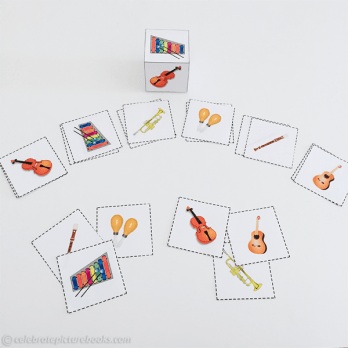
Play this fun game to gather all the instruments you need to create a music group. The first person to collect all 6 instrument cards is the winner!

Supplies

Directions

  1. Print the Paper Cube Template, cut it out and assemble the cube die.
  2. Print the Musical Instruments cards, cut out cards, and separate the instruments into piles
  3. Players take turns rolling the die cube to collect musical instrument cards
  4. The first player to collect all 6 instrument cards is the winner


February 8 – Opera Day

celebrate-picture-books-picture-book-review-father's-chinese-opera-cover

About the Holiday

Today celebrates a musical art form that began in the 1500s in Italy. An opera is a play that is entirely sung by the actors. Operas can be funny, romantic, or tragic. The actors must have amazing voices that can fill the whole opera house because they do not use microphones. The actors get to sing solos, called arias, that reveal their emotions about particular moments in the story. Because of its grand history in countries such as Italy, Germany, and France, operas are still more popular in Europe than in the U.S. In America we’re more familiar with musicals, like Frozen orAladdin, where some dialogue is spoken and songs tell more about the plot of the story than about the characters’ feelings. If you’d like to listen to a little bit of an opera for children, check out this video of parts of Little Red Riding Hood performed by the BCOpera.

Father’s Chinese Opera

By Rich Lo


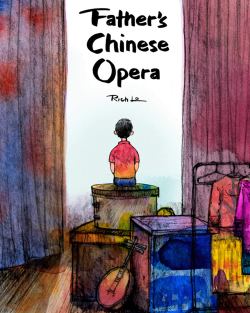
Recalling personal experience, author-illustrator Rich Lo writes a unique tale set within the Chinese opera. Revolving around themes pertinent to life, the Chinese opera employs actors as well as acrobats and flag carriers who add action and meaning to the play.

celebrate-picture-books-picture-book-review-father's-chinese-opera-acrobats

Copyright Rich Lo, 2014, courtesy of Sky Pony Press.

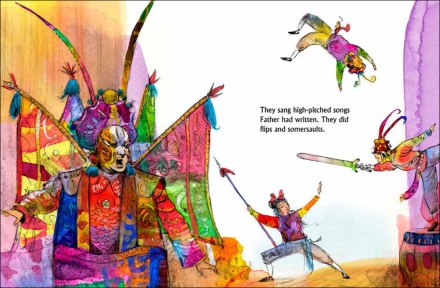
In Father’s Chinese Opera, the son of the band leader and composer for the Hong Kong opera watches the actors flip and somersault across the stage and dreams of joining them. He approaches Gai Chui, the best acrobat in the troupe and asks to be taught the martial arts. Gai Chui agrees and the little boy begins to learn the moves—Praying Mantis, Crouching Tiger, Striking Leopard, and more. The little boy practices hard and believes he is ready to join the other actors, but when he tells Gai Chui he is ready, the master acrobat laughs and tells him it’s not quite that easy.

celebrate-picture-books-picture-book-review-father's-chinese-opera-backstage

Copyright Rich Lo, 2014, courtesy of Sky Pony Press.

Dejected, the boy goes home. His father tells him about how hard he worked to become the leader of an opera troupe, and the boy takes the lesson to heart. The next day he goes back to the opera house and instead of watching the actors, he takes note of the flag carriers—the lowest position in the troupe. He asks if he can be a flag carrier, to which his father agrees—but only for the summer.

As a flag carrier, the boy makes new friends, becomes a better acrobat, and impresses Gai Chui, who tells him that with more practice he will be able to achieve his dreams.

celebrate-picture-books-picture-book-review-father's-chinese-opera-band-leader

Copyright Rich Lo, 2014, courtesy of Sky Pony Press.

Rich Lo’s story is full of truths about hard work and the benefits of developing a deep understanding of all aspects of one’s skills. Children may find a conversation like this seemingly unfair, but Lo reveals that such teaching on the part of a parent or other adult is one of the ultimate demonstrations of love. 

Lo’s watercolor illustrations are vibrant and dreamy, perfectly reflecting the beauty and action of the Chinese opera that so captivates the story’s young narrator. His father and the orchestra, dressed in their conservative blue and tan suits and sitting at the corner of the stage, contrast starkly with the bold, riotous mosaic of the actors’ costumes and the swirling moves of the acrobats. It’s easy to see why the boy is attracted to this art. It is back home—where the colors once again become muted and quiet—however, that the boy learns his greatest lesson.

Sharing Father’s Chinese Opera with children is an excellent way to discuss the idea that while a talent may be inborn, practice and patience are also needed to see it come to its full fruition. The book would be a valuable addition to home, classroom, and library collecions.

Ages: 3 – 7

Sky Pony Press, 2014 | ISBN 978-1628736106

Opera Day Activity

CPB - Opera Day word search

Opera Word Search


Today’s activity is a Word Search puzzle loaded with words about the Chinese opera. Just print out the puzzle and start looking! The Solution is also included.

celebrate-picture-books-picture-book-review-father's-chinese-opera-cover

You can find Father’s Chinese Opera at these booksellers

Amazon | Barnes & Noble | Books-a-Million | IndieBound