March 18 – National Awkward Moments Day

About the Holiday

If you have kids or have ever been a kid, you know that awkward moments abound, especially when you least expect—or want—them. Things like pratfalls, forgetting someone’s name, and falling for practical jokes may make us feel like sinking into the floor, but today’s holiday actually celebrates all of those moments. Why? Because cringe-worthy faux pas happen to everyone; they’re just part of being human. So today, celebrate and even share those small embarrassments—and enjoy a laugh. 

Thank you to Orchard Books for sharing a digital copy of this book with me!

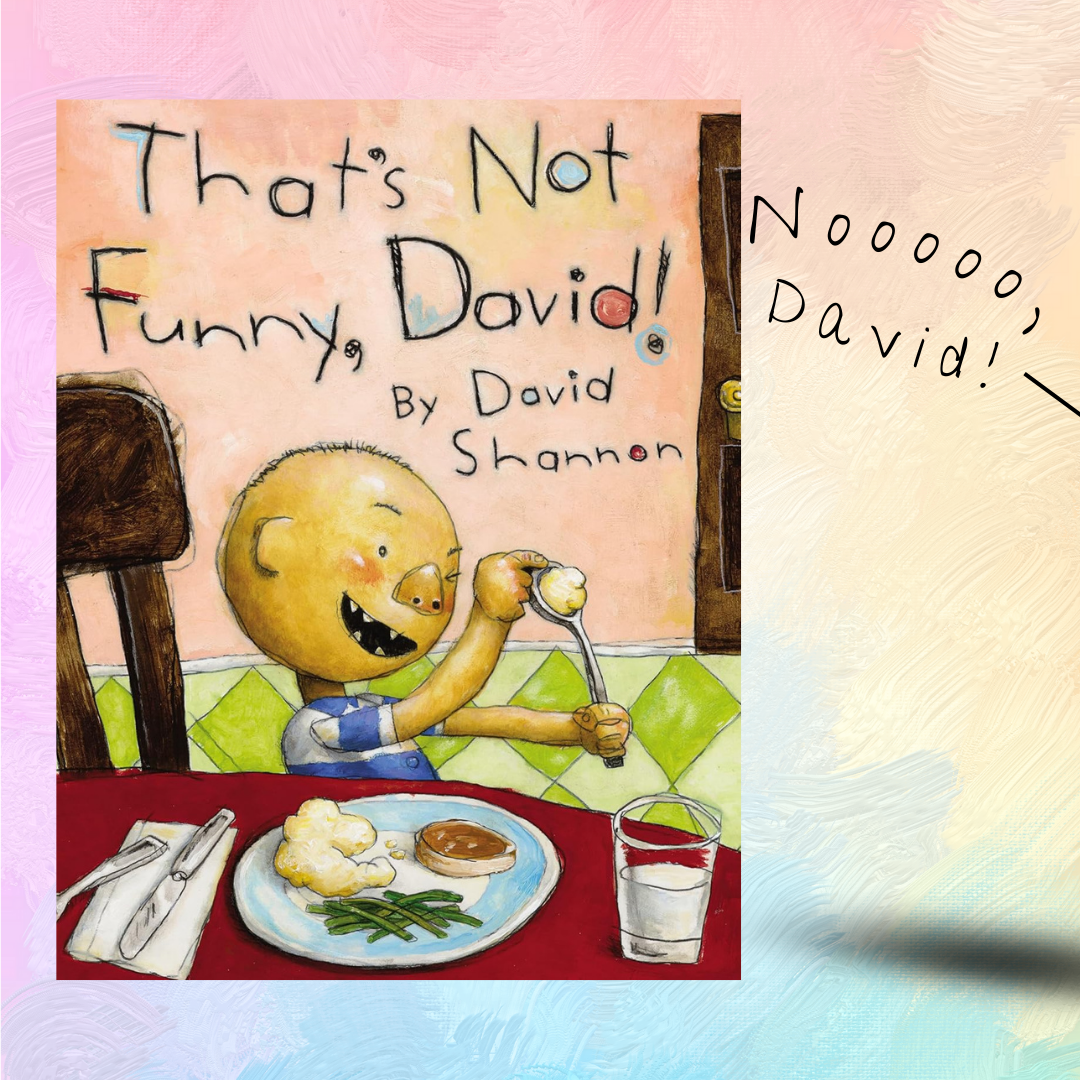
That’s Not Funny, David!

By David Shannon 


David (and without even looking at the cover above, I bet you know who I’m talking about) is back! He may be 5 books older, but the years have not mellowed his rambunctious nature. Whether he’s blowing a volcano of bubbles in his drink at a restaurant or grocery cart surfing into the mountainous fruit display, David just can’t quell his mischievous impulses.

Illustration and text © 2025 by David Shannon. Courtesy of Orchard Books/Scholastic.

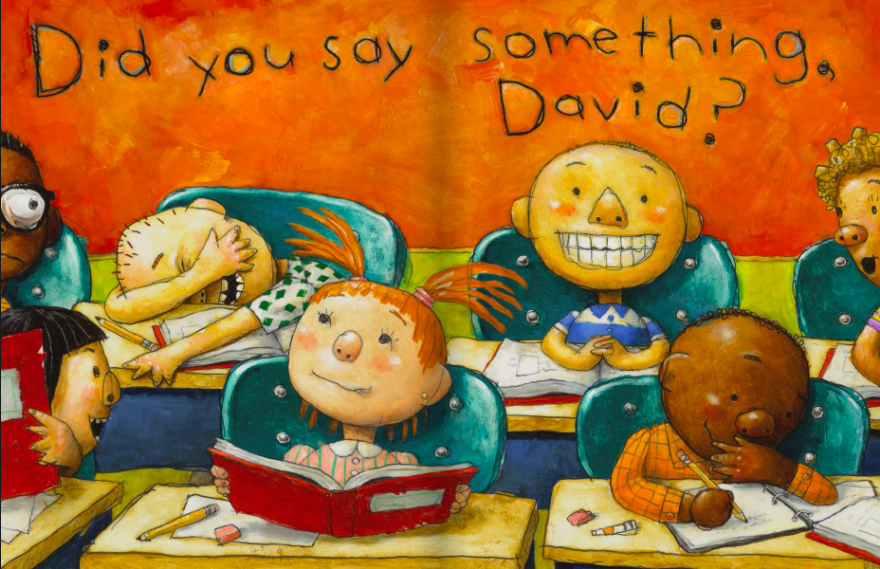
The adults aren’t laughing. In fact, they’re telling him, “Not funny, David,” and in response to a drawing on the classroom whiteboard: “We are not amused, David.” But the kids? They’re very amused. And even though he ends up in the principal’s office, at home he’s still got enough . . . shall we call it . . .spunk? . . . to be tip-toe tempted by the fully decorated birthday cake on the counter and to need a peanut extracted from his nose (“How on earth did this happen?”).

As the day progresses, his parents have to stay on their guard. But when one last silly bedtime antic finally brings a laugh instead of a scolding, hearts soften, and there’s just one thing left to say: “What am I going to do with you?”

Illustration and text © 2025 by David Shannon. Courtesy of Orchard Books/Scholastic.

Fans of young David’s hijinks will find lots to giggle at in David Shannon’s latest foray into David’s madcap misadventures. In his bright, rollicking illustrations, Shannon’s monster-toothed hero (except when he’s trying to look innocent) sends pool water splashing, fruit airborne, and popcorn flying. David’s expressive face tells readers all they need to know about David’s feelings and the impact he wants to make, even if it’s not the reaction he gets.

A worthy addition to a series that’s a proven winner for silly story times, when relaxing and laughing together are just what’s needed, That’s Not Funny, David! is sure to tickle funny bones of all ages.

Ages 4 – 8

Orchard Books/Scholastic, 2025 | ISBN 978-1546123187

About the Author/Illustrator

David Shannon is the internationally acclaimed creator of more than 40 picture books, including No, David!, a Caldecott Honor Book, and his second New York Times Best Illustrated Book of the Year, and four more David picture books. Shannon’s bestsellers include A Bad Case of StripesDuck on a Bike, and Too Many Toys. He lives in Southern California with his family and Roy, their West Highland white terrier.

National Awkward Moments Day Activity

Illustration and text © 2025 by David Shannon. Courtesy of Orchard Books/Scholastic.

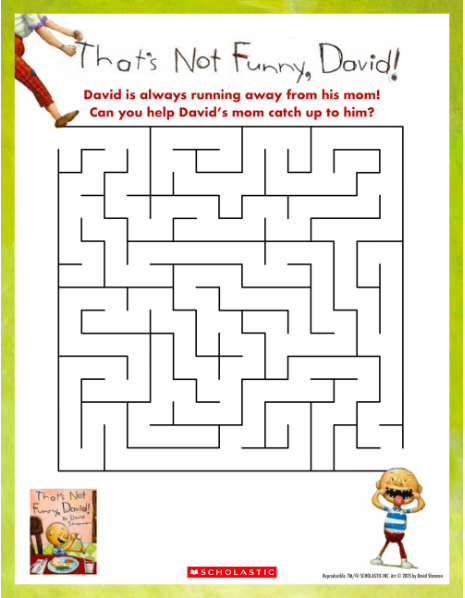
That’s Not Funny, David! Activities


Go ahead and have some fun with David and these book-inspired That’s Not Funny David! Activities!

You can purchase That’s Not Funny, David! at these booksellers

Amazon | Barnes & Noble | Bookshop (to support your local independent bookstore)

Picture Book Review

March 7 – National Cereal Day

About the Holiday

Did you know that breakfast in a bowl actually began with an experiment that went wrong? Or just maybe it was right! John Harvey Kellogg and his brother Will Keith Kellogg were experimenting with boiled wheat in 1877 when they left some out overnight. In the morning the wheat was stale. The brothers decided to roll it out instead of throwing it away, and they found that each wheat berry created a flake. Boiled corn worked the same way, and from this process the Kellogg brothers invented Corn Flakes, the first dry cereal!

Today’s holiday celebrates all the varieties of your favorite cereal—whether it’s made of corn, wheat, bran, rice, or a mixture of flakes, fruit, and nuts. So pour yourself a big bowlful and enjoy!

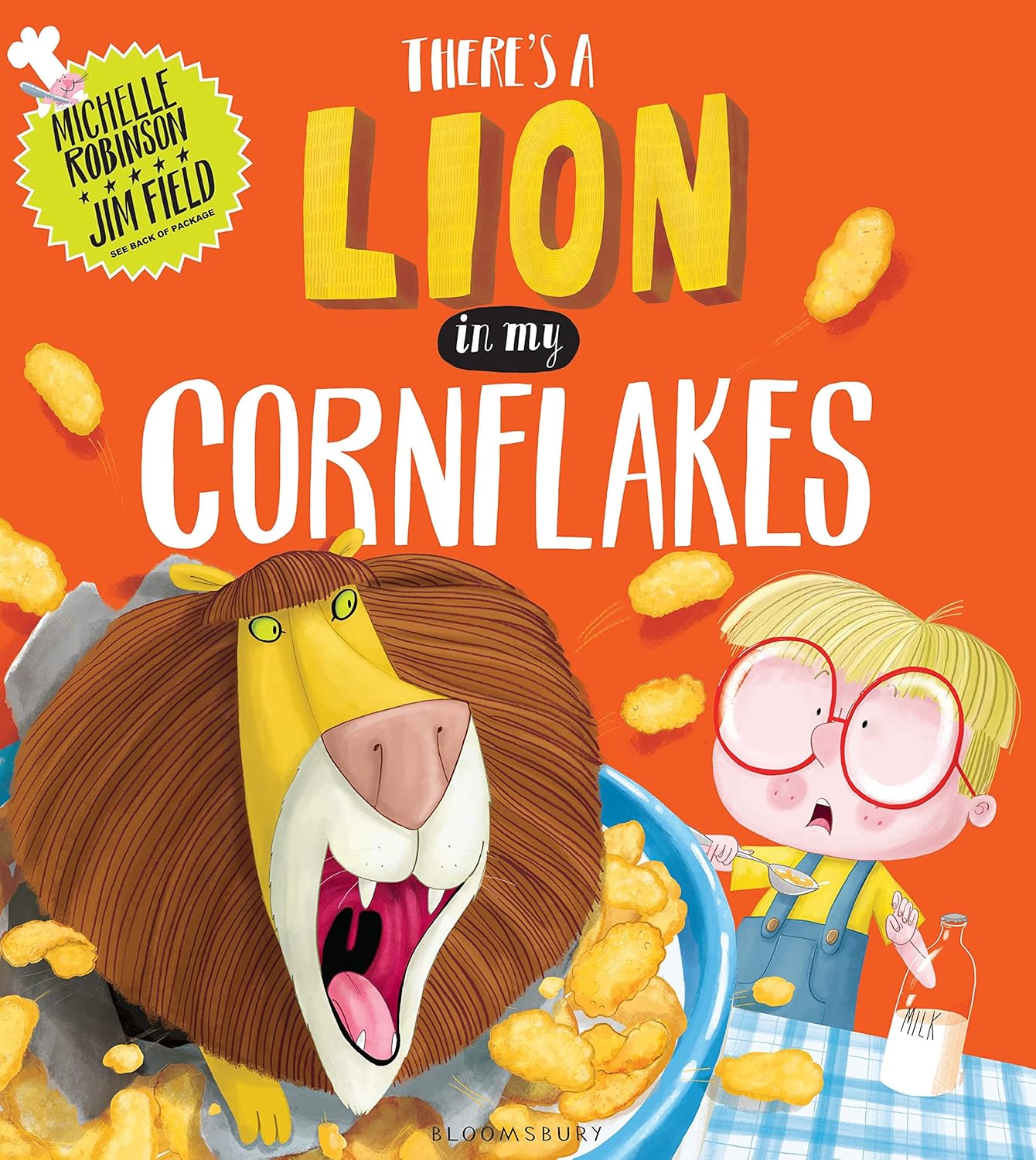
There’s a Lion in my Cornflakes

Written by Michelle Robinson | Illustrated by Jim Field

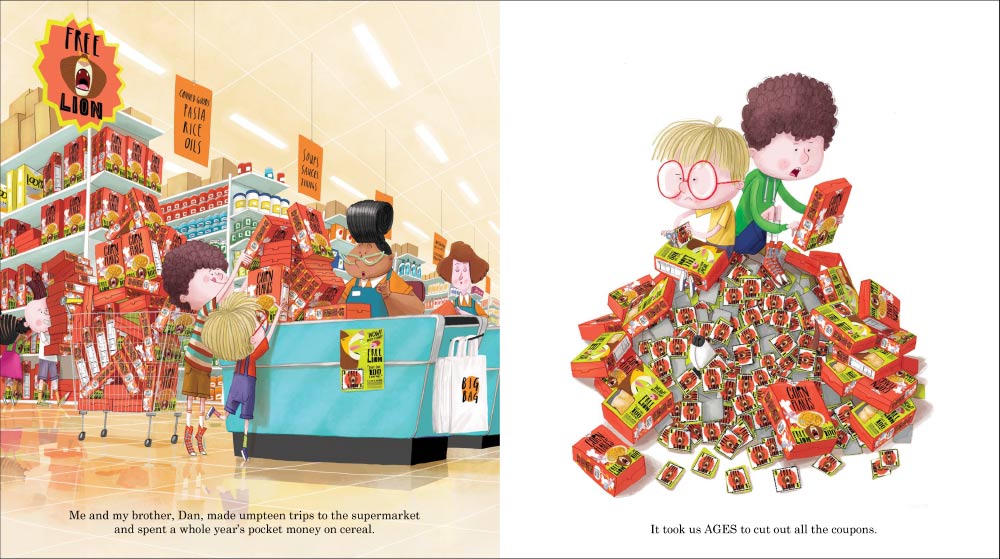
Who could resist clipping coupons to receive a free lion? Nobody, that’s who! I mean, it would be so cool, right? A lion to take on walks, ride to school, and open tin cans—awesome! So a little boy and his brother Dan take a year’s worth of their allowance, make “a million” trips to the grocery store, and start cutting.

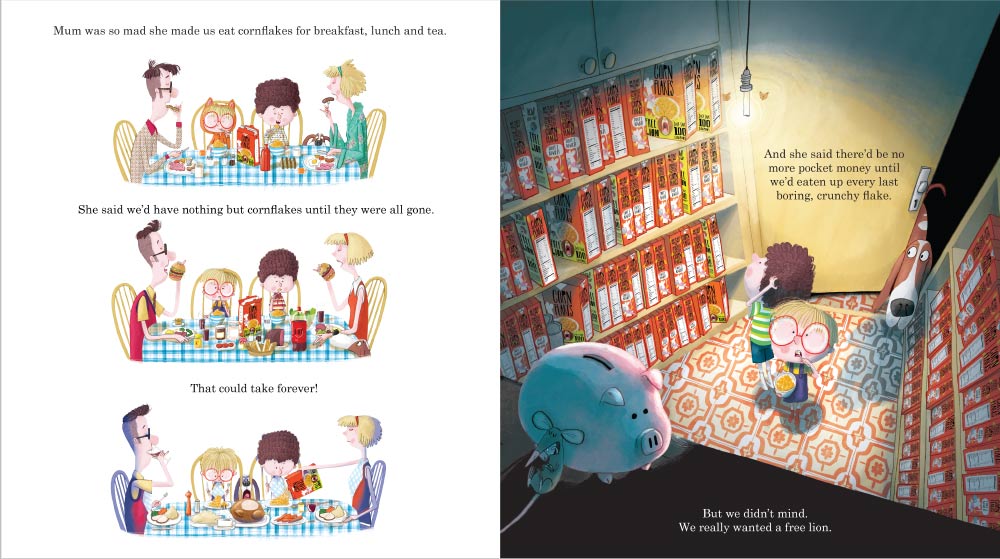
But all those boxes of cereal squeeze out the other food on the pantry shelves, so Mom says the boys have to eat cornflakes for breakfast, lunch, and dinner until it’s gone—and, oh yeah, they don’t get an allowance until then either. It’s all worth it, though, because they’re going to get a real live lion.

Illustration © 2015 Jim Field, text © 2015 Michelle Robinson. Courtesy of Jim Field and Bloomsbury Children’s Books.

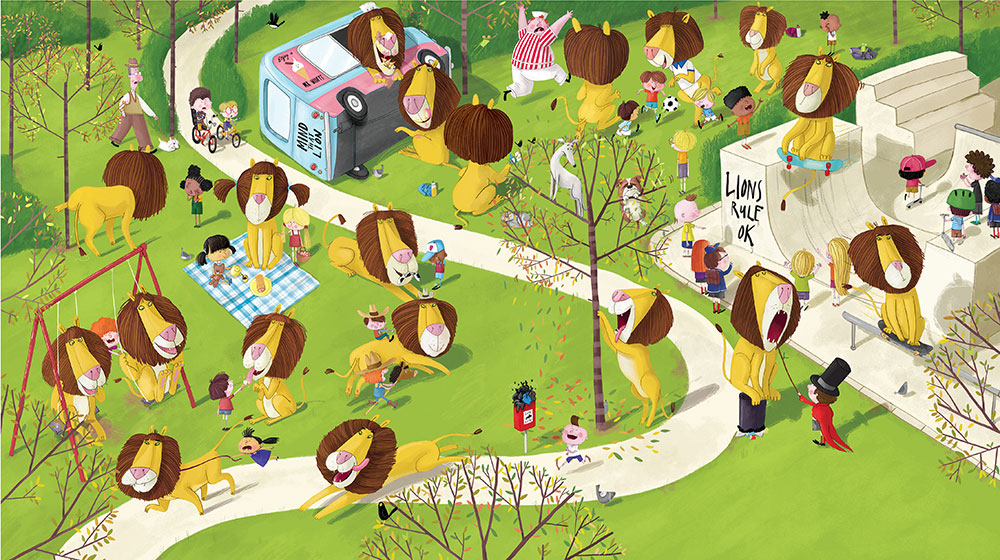
There’s just one hitch—every other kid in town has the same idea, and while the brothers wait for their lion to arrive, everyone else is out playing with their new pet. Finally, the delivery truck pulls up in front of the house, and out walks . . . a grizzly bear?! That’s not right, and it’s even delivered to the wrong house. Well, the bear’s not too crazy about the situation either. 

A letter of complaint to the cereal company brings resolution in the form of . . . a crocodile?! The crocodile spends all its time in the bathroom, and the grizzly bear is still causing havoc. Dad calls the cereal company and to make up for their mistake they send . . . a gorilla?! The gorilla stomps on Dad’s car and rips the door off. Still, the whole crew piles in so Dad can “give those cereal people a piece of my mind.”

Illustration © 2015 Jim Field, text © 2015 Michelle Robinson. Courtesy of Jim Field and Bloomsbury Children’s Books.

The cereal people sure are sorry for the mix-up. They make amends by letting the family keep the grizzly bear, the crocodile, and the gorilla, AND the company gives them…a lifetime’s supply of cornflakes! But really, what good are cornflakes? The boys can’t walk them or ride them or even open cans with them.

You know what, though? Mom’s discovered the crocodile has some pretty sharp, can-opening chompers. The grizzly bear can walk forever and even wear a fanny pack. And the gorilla makes a very cool chauffeur. Why bother having a lion when everyone else has one?

But what are those cereal people offering now—a free tiger?! Hmmm . . . .

Illustration © 2015 Jim Field, text © 2015 Michelle Robinson. Courtesy of Jim Field and Bloomsbury Children’s Books.

Michelle Robinson has taken the lure of free stuff to its ridiculous best. With comical flair she aptly portrays the consternation on all sides, from the earnest kids to the flummoxed parents, that grounds this story in the recognizable while also providing hilarious suspense. The silly, over-the-top scenario of There’s a Lion in My Cornflakes serves up the benefits of individuality and drawbacks of consumerism that will have kids laughing at every page and escalation of the brothers’ problem.

Jim Field’s bold, vibrant illustrations are the perfect accompaniment to this boisterous tale. The boxes of cornflakes and clipped coupons are piled high, the boys are excited, nonplussed, shocked, and finally accepting as day after day brings new and unexpected results of their actions, and the parents are perfectly perplexed. Kids will love the funny details on every page that highlight the story.

Ages 3 – 7

Bloomsbury Children’s, 2015 | ISBN 978-0802738363

About the Author

Michelle Robinson’s many picture books include bestsellers, The World Made a Rainbow and the Goodnight Tractor series. Her books are popular in homes and classrooms all over the world, and include Ten Fat Sausages, winner of the Laugh Out Loud Book Awards, and There’s a Lion in my Cornflakes, winner of the Sainsbury’s Children’s Book Award.

Her YouTube channel, MICHELLE ROBINSON – CHILDREN’S AUTHOR, is full of ideas to encourage young children to read, write and have fun. You can also download free teacher’s notes and activity sheets at: www.michellerobinson.co.uk.

About the Illustrator

Jim Field is an illustrator, character designer and animation director. He has won multiple awards for the children’s books he has illustrated; including the Lollies, The Roald Dahl Funny Prize, The Evening Standards Oscars Prize and The Sainsbury’s Award. He was the 4th bestselling children’s book illustrator of 2021. Jim now lives in Paris with his wife, daughter and a small grumpy cat. Visit him at jimfield.me.

There’s a Book Trailer in this Review!

National Cereal Day Activity

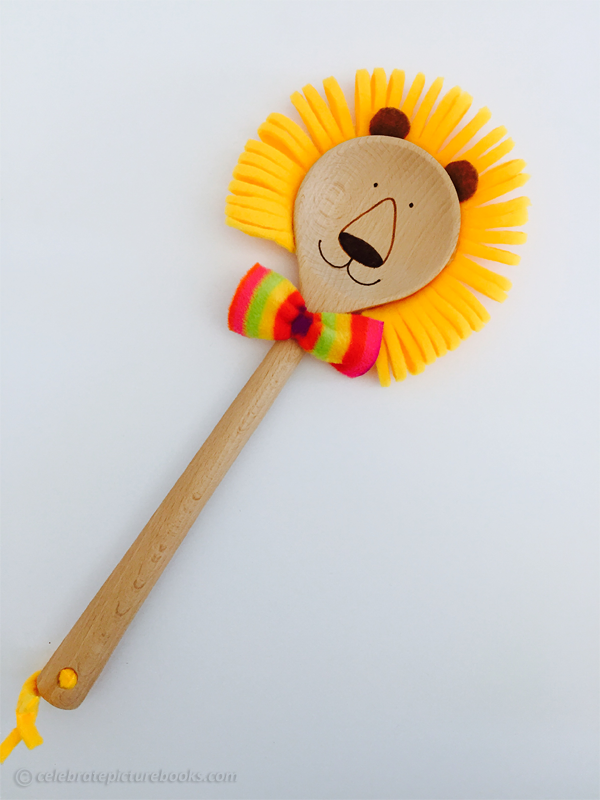
celebrate-picture-books-picture-book-review-wooden-spoon-lion-craft

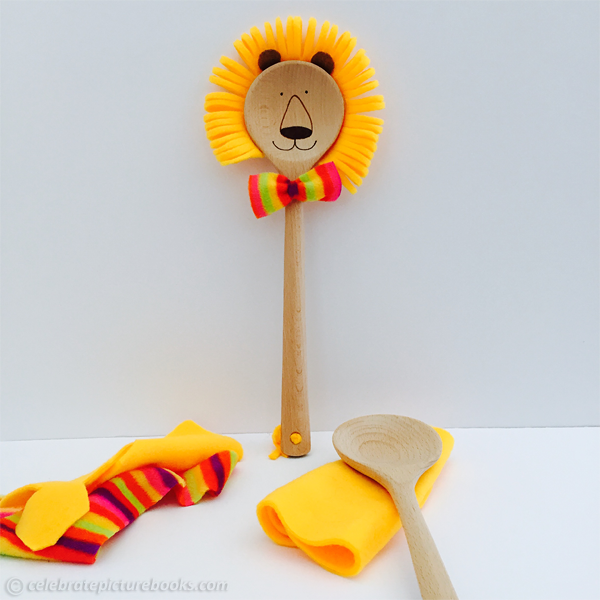
Spoon Lion Puppet

Spoons are just the thing for eating cereal! But with this craft you can make a ROARingly cute lion puppet!

Supplies

  • Wooden mixing spoon
  • Yellow Fleece
  • Brown felt
  • Colorful Fleece or felt
  • Fabric glue
  • Light brown marker
  • Dark brown marker
  • Hot glue gun or super glue

CPB - Spoon Lion with stuff

Directions

To make the lion’s face

  1. Draw a nose, mouth, and eyes on the front/bowl of the spoon

To make the mane

  1. Measure the rim of the spoon from one side of the handle to the other
  2. Cut a strip of yellow fleece as long as rim measurement and 4 inches wide
  3. Fold the piece of fleece in half long-ways
  4. Glue the open edges of the fleece together
  5. Along the folded side cut a fringe, leaving the loops intact

To make the ears

  1. Cut round ears from the brown felt.

Assembling the lion

  1. Glue the ears to the back of the spoon
  2. Glue the mane to the back of the spoon

To make the bow

  1. Cut a 3-inch x 1 ½-inch piece of colorful fleece or felt
  2. Cut a long thin strip of fleece or felt
  3. Pinch the bow in the middle and tie with the longer piece of cloth. Trim as necessary
  4. Glue the bow to the handle

To make the tail

  1. Cut three thin 4-inch-long strips of yellow fleece
  2. With fabric glue, glue the tops of the strips together
  3. Braid the strips
  4. At the bottom, glue the strips together, leaving the ends free
  5. Fold the top of the tail and push it into the hole in the handle of the spoon

You can purchase There’s a Lion in My Cornflakes at Amazon Picture Book ReviewPicture Book Review

March 6 – It’s Read Across America Week

About the Holiday

Today’s holiday, established by the National Education Association in 1997, encourages children across the country to celebrate reading and all of its joys and benefits. A love of reading is one of life’s greatest pleasures and begun early can be a powerful force for future success. Celebrate today by reading with a child or on your own. There are fabulous worlds and stories waiting to be discovered!

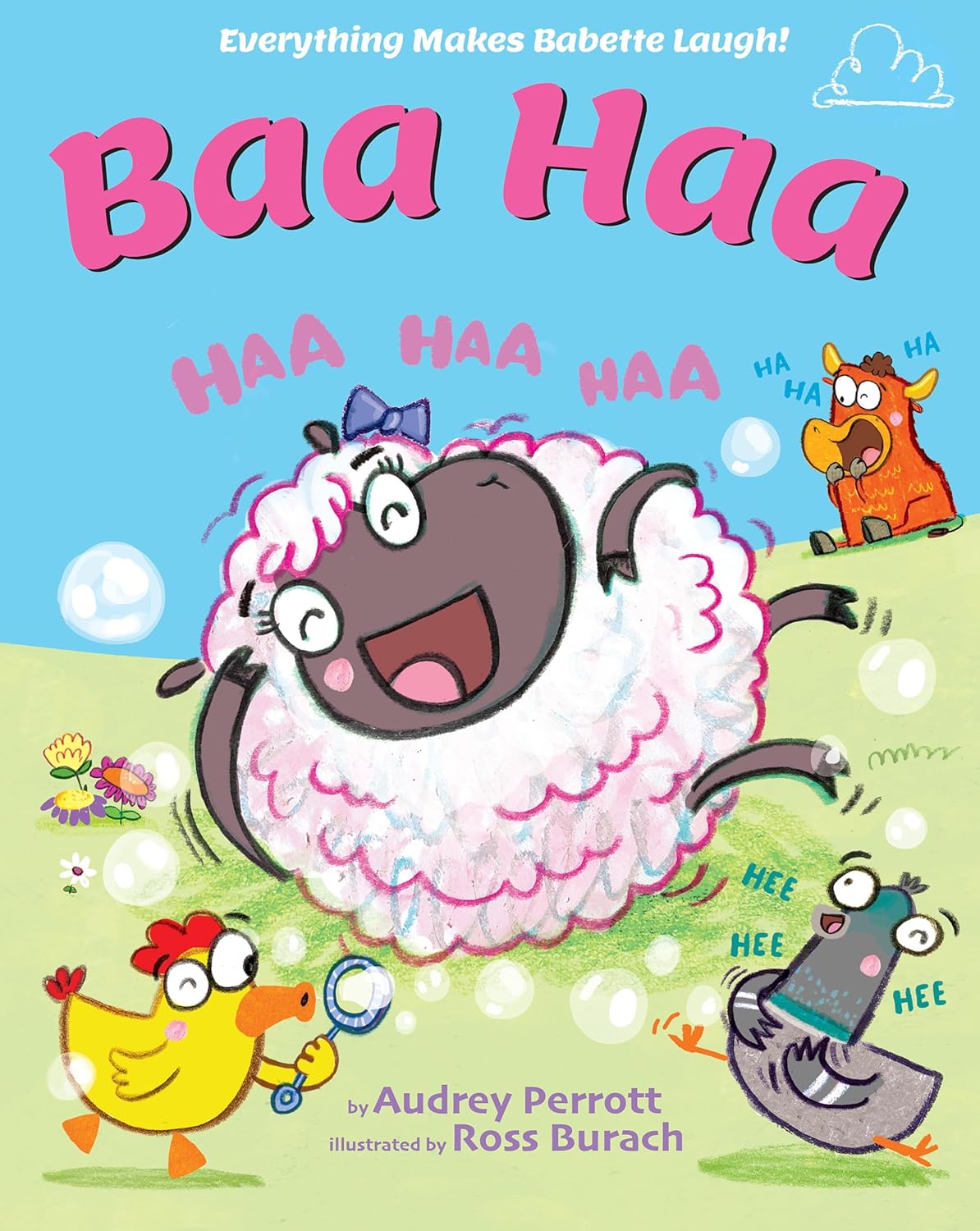
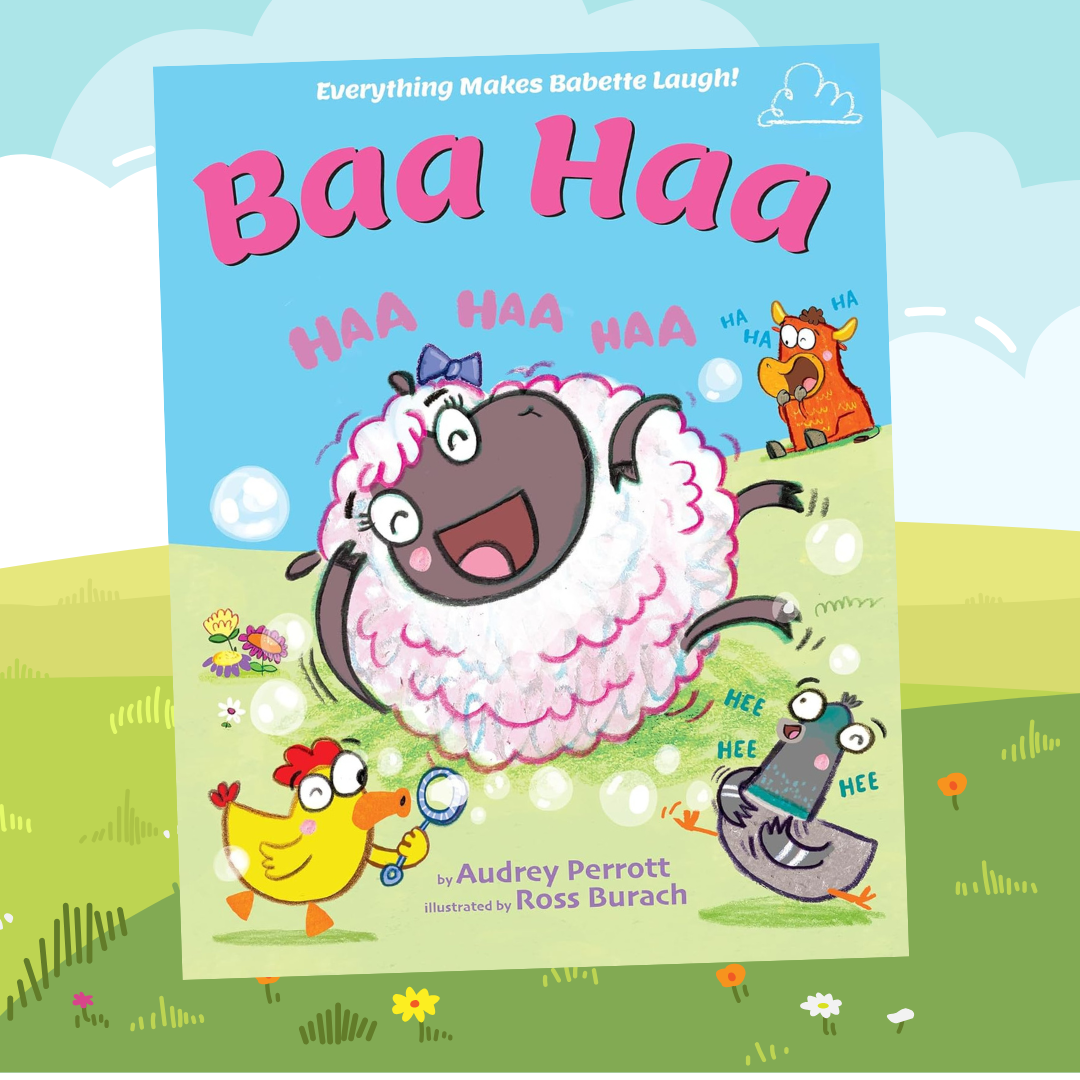
Baa Haa

Written by Audrey Perrott | Illustrated by Ross Burach

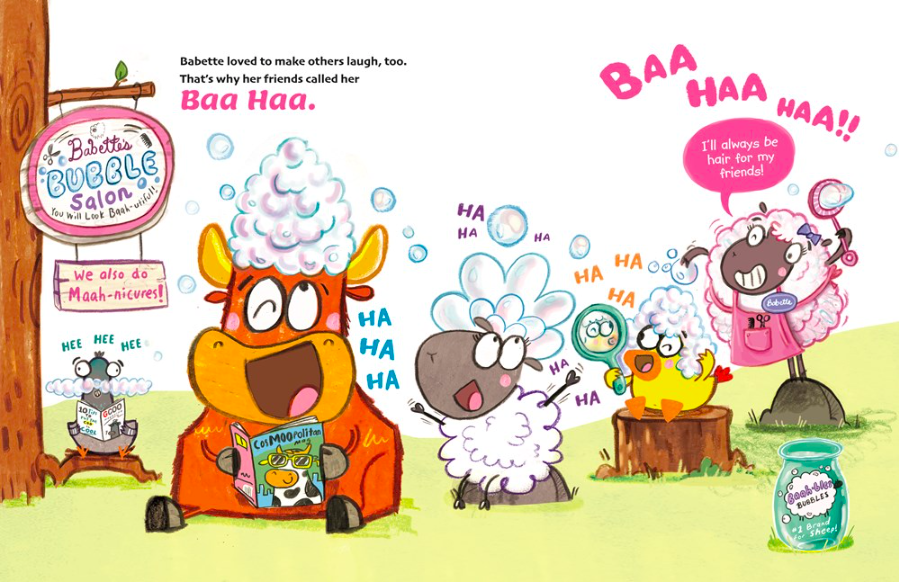
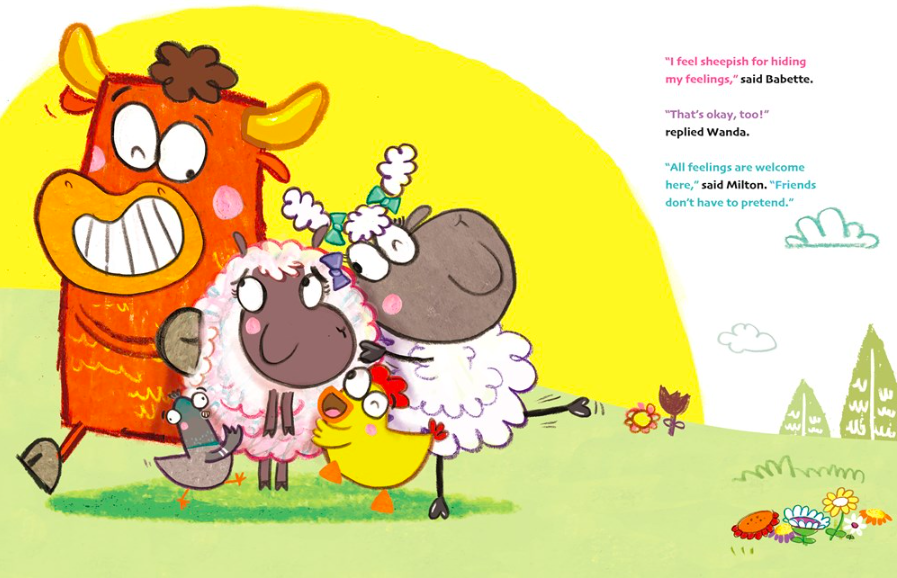
Babette was a happy sheep. Anyone on the farm and beyond could tell you, since “her laughter could be heard across the pasture for miles.” In fact, Babette’s friends all called her “Baa Haa” because she made them hee hee and ha ha, and even guffaw with all of her jokes and antics.

Yes, Babette loved to laugh, and her bubbly personality burst out no matter what she was doing or feeling. When she was surprised, she laughed. When she was “glaaaaad,” she laughed. She even laughed when things didn’t quite go her way. Wait a minute . . . really?

Illustration © 2025 Ross Burach, text © 2025 Audrey Perrott. Courtesy of Scholastic Press.

Really. Babette didn’t like feeling nervous or scared or disappointed, so whenever she felt “baaaaad,” the giggles let her escape. But all this laughter and hiding her real feelings was “tangling her insides into a knot,” and the problem was getting worse. Nothing she tried helped her to feel better. Then one day she couldn’t keep her tears from welling up and spilling out. She tried putting “on a big fake smile” for her friends, but she couldn’t keep the tears from falling.

The other animals assured her that “It’s okay if you’re not okay,” and that she should feel free to show her real feelings. “‘We love ewe for ewe,'” her friend Wanda said. Babette began to feel better and was even able to acknowledge that sometimes she did feel sad or mad or nervous. From then on, Babette “let all her feelings show” and shared them with her friends. “Because that’s what true friends do.”

Illustration © 2025 Ross Burach, text © 2025 Audrey Perrott. Courtesy of Scholastic Press.

Audrey Perrott’s follow up to Moo Hoo gently and with plenty of humor reassures children that they don’t have to be happy all the time, and that expressing their true emotions is better than bottling them up. Filled with puns, jokes, and word play, Perrott’s story will have kids giggling as they embrace her message that everyone shares the same feelings and that showing them can bring support, understanding, and quicker recovery.  

Kids will love Ross Burach’s goofy and kind-hearted farmyard animals. His animated illustrations effectively demonstrate the disconnect between Babette’s mirthful reactions and disappointing or nerve-wracking events. As Babette’s true emotions begin to emerge, Burach’s characters clearly show their empathy and understanding. Throughout the story, readers will have fun finding all of the visual puns Burach has added to his illustrations.

An engaging read aloud with an essential, heartening message, Baa Haa is highly recommended for home and library collections.

Ages 4 – 8

Scholastic Press, 2025 | ISBN 978-1546134039

About the Author

Audrey Perrott is the author of Moo Hoo, her debut picture book, as well as nine nonfiction and board book projects with Tangerine Press/Scholastic, including her most recent, Five Buzzy Bees, and A Hat for House with Putnam. An SCBWI Rising Kite Honorable Mention recipient, she lives with her family in North Carolina. You can visit her online at audreyperrott.com.

About the Illustrator

Ross Burach is the creator of the riotously funny Very Impatient Caterpillar series that includes The Very Impatient Caterpillar; The Little Butterfly That Could; Goodnight, Butterfly; and Make Way for Butterfly. All the books combine humor with curriculum-friendly science topics and relatable social-emotional themes. Ross’s other acclaimed books include the picture book Truck Full of Ducksthe board books I Love My Tutu Too!, Potty All-Star, Hi-Five Farm!, and Hi-Five Animals!—named the best board book of the year by Parents Magazine—and the Acorn early reader series Bumble and Bee. He also illustrated Audrey Perrott’s Moo Hoo and Baa Haa. Ross lives with his family in Brooklyn, New York. You can visit him online at rossburach.com.

Read Across America Week Activity

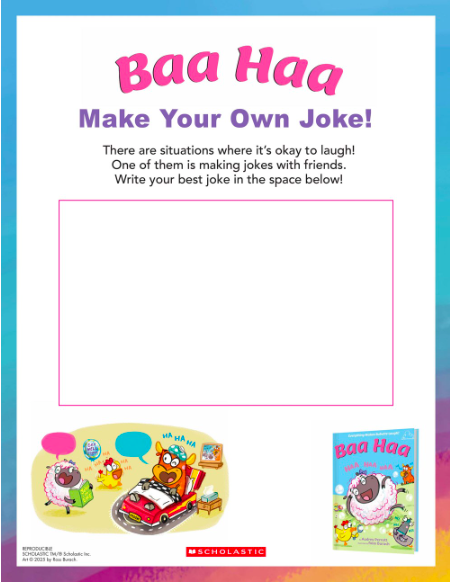
Baa Haa Fun Sheets

Kids will have fun giggling through these Baa Haa Make a Joke and Word Search Activity Sheets!

You can purchase Baa Haa at these booksellers

Amazon | Barnes & Noble | Bookshop (to support your local independent bookseller)

Picture Book Review

February 27 – It’s National Laugh-Friendly Month

About the Holiday

National Laugh-Friendly Month began in 2008 as a way to focus on friendly, positive humor that lifts your spirit and brings smiles. Humor is a universal language that helps people connect, understand each other, and improve our daily life. To celebrate this month and all year round share friendly jokes, watch funny movies and comedy shows , and read hilarious stories like today’s featured book!

Thanks to Orchard Books/Scholastic for sharing a digital copy of Duckie & Snaps: We Cannot Be Friends with me!

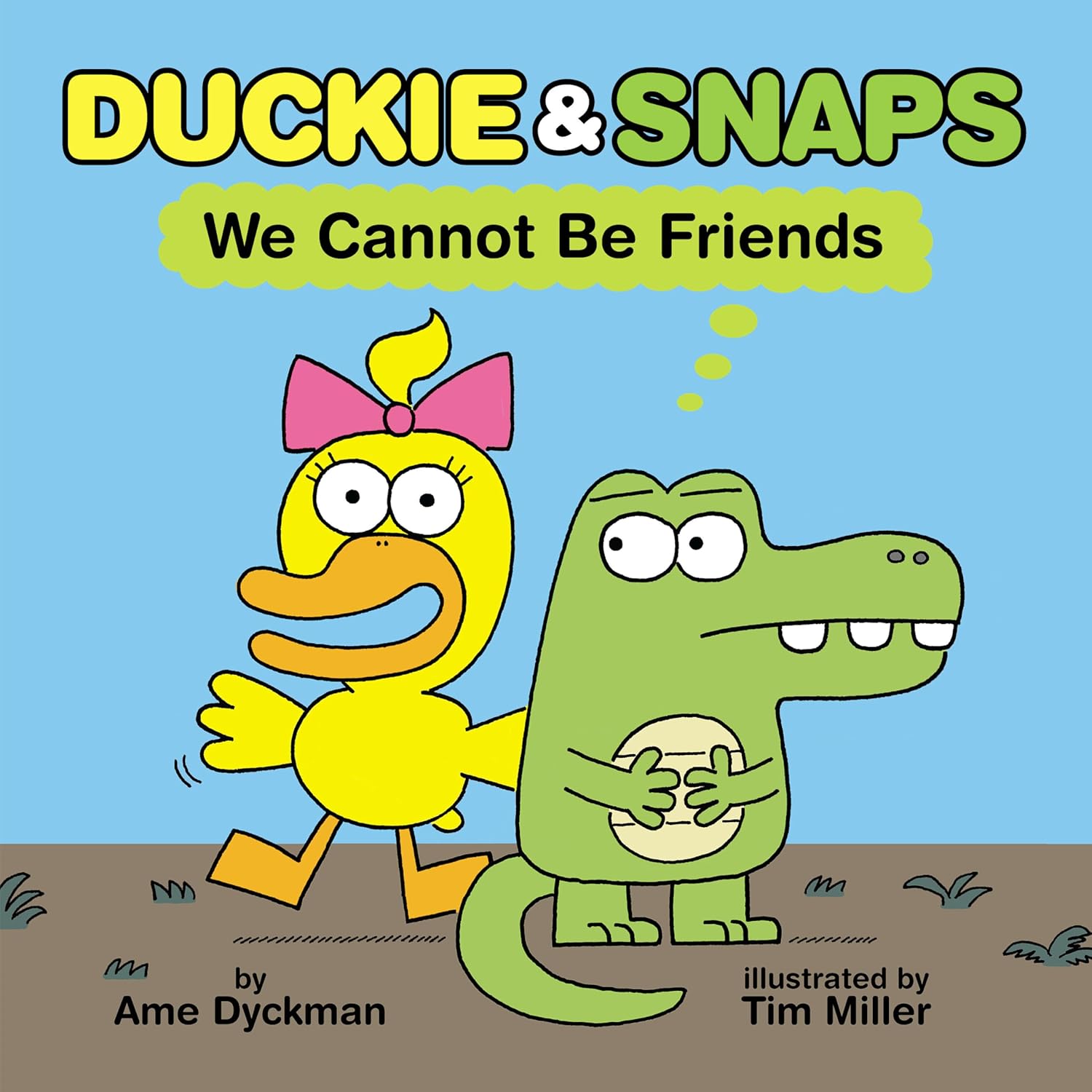
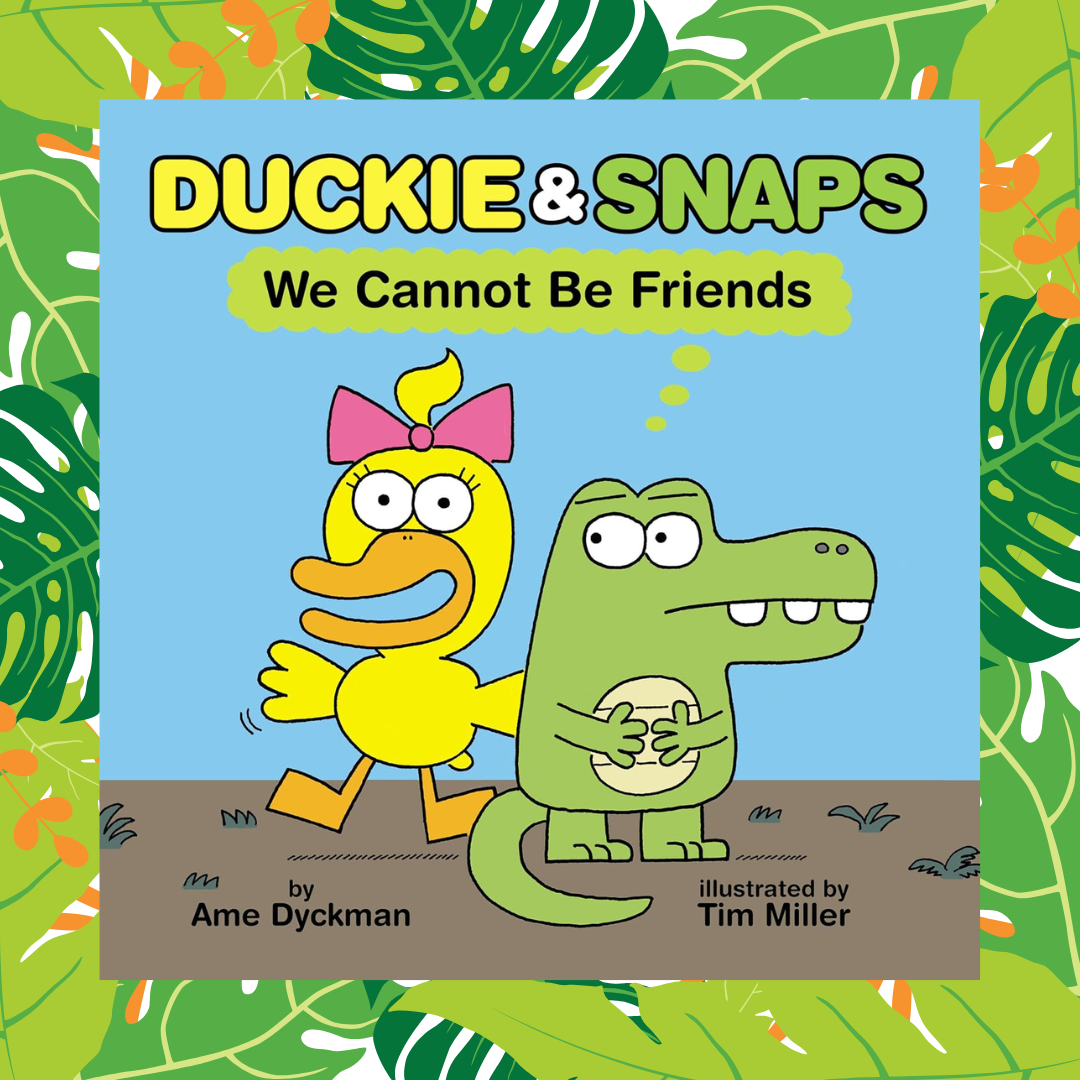
Duckie & Snaps: We Cannot Be Friends

Written by Ame Dyckman | Illustrated by Tim Miller

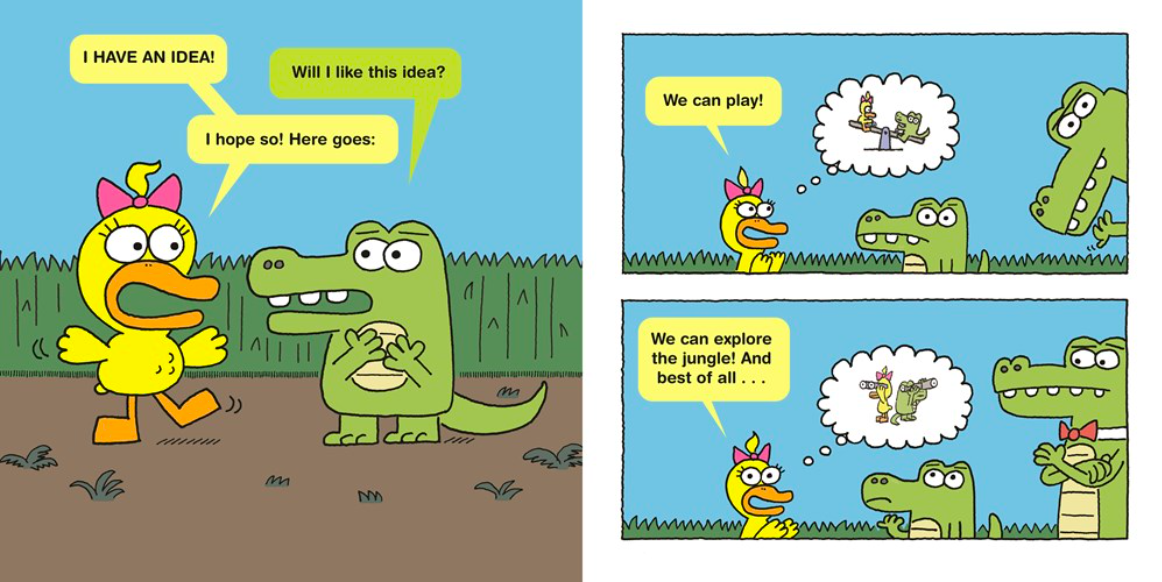
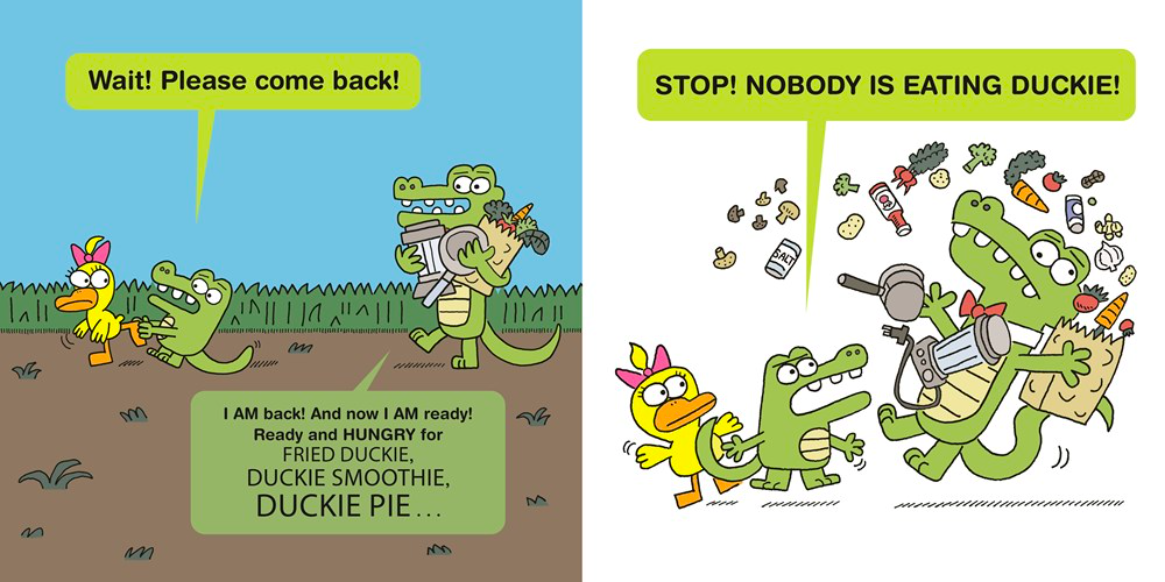
Even before kids get into the story, from somewhere over the mountains, an egg bounces boing-boing-boing from banana treetop to banana treetop and lands on a boulder where another egg is just cracking open. Out of the newcomer egg pops a duck, fully coifed with a pink bow, and a decisive “I’m HERE!” The other egg shakes a bit before a crocodile pops out. “And YOU’RE here!” Duckie exclaims. It’s all coming together for Duckie that the two are “here TOGETHER!”

Brushing off remnant eggshells, the crocodile is ready to say goodbye, but Duckie pulls him back, calls him Snaps, and imagines all the fun they’re going to have being friends. Snaps’ dad, however, has a bold truth to deliver, one that dissolves Duckie into a puddle of tears. Snaps can’t believe crocodiles eat duckies. Duckie can’t believe she is a duckie. “Nobody told me!” she says. But Snaps’ dad lists off a menu: Fried duckie, duckie smoothy, duckie pie. Fortunately, Snaps’ dad isn’t ready to eat just then.

Illustration © 2025 Tim Miller, text © 2025 Ame Dyckman. Courtesy of Orchard Books/Scholastic.

Unfortunately, Duckie has to put a big NO on all her imagined fun, and she flounces off only to be caught up by Snaps, who declares he doesn’t want to eat her and never will. In fact, when his dad returns with all the supplies for a duckie roast, Snaps lets him and a couple of innocent bystanders know that “nobody is eating Duckie!”

At last, Duckie and Snaps CAN be friends. “We ARE friends!” Snaps assures her. But what is that growl? Snaps is hungry! And suddenly little-yellow-TASTY Duckie sounds pretty enticing. Just then Duckie has an idea, but will Snaps accept her appealing alternative to Duckie Pie?

Illustration © 2025 Tim Miller, text © 2025 Ame Dyckman. Courtesy of Orchard Books/Scholastic.

Loaded with laugh-out-loud dialogue and turn-the-tables antics, Duckie & Snaps Cannot Be Friends will have kids giggling and in suspense with every page turn. Ame Dyckman’s natural talent for humor and acceptance infuses her story with sweetness and gentle lessons in getting along with others and sticking up for friends. Her dialogue-driven storytelling dishes up a perfect read aloud that adults and kids will have a blast sharing as well as a rewarding experience for beginning and independent readers.

Tim Miller’s goofy cartoon illustrations are equal parts droll and action-packed. His minimalist backgrounds paired with slapstick-type zaniness amplifies the humor, and strategically placed details may allow alert readers to be in on the final, funny resolution.

Featuring good-natured hijinks and embraceable characters, Duckie & Snaps: We Cannot Be Friends is a vivacious early reader book with plenty of read-again appeal and is a top choice for family, school, and library story times.

Ages 4 – 8

Orchard Books, 2025 | ISBN 978-1338837872

About the Author

Ame Dyckman is an award-winning author of many bestselling picture books, including Duckie & Snaps: We Cannot Be Friends, illustrated by Tim Miller; Don’t Blow Your Top!, illustrated by Abhi Alwar; Wolfie the Bunny, illustrated by Zachariah OHora; and the Misunderstood Shark series, illustrated by Scott Magoon. Ame lives in beautiful central New Jersey with her husband and daughter. For book news and fun, follow Ame on Twitter: @AmeDyckman.

About the Illustrator

Tim Miller is the author-illustrator of Moo Moo in a TutuWhat’s Cooking, Moo Moo?, and Izzy Paints. He is also the illustrator of The Chronicles of Lizard Nobody by Patrick Ness, Horse Meets Dog by Elliott Kalan, and other books including the middle-grade series Hamstersaurus Rex by Tom O’Donnell. Tim lives in New Jersey with his wife and three rescue cats. Visit Tim at timmillerillustration.com.

National Laugh Friendly Month Activity

celebrate-picture-books-picture-book-review-silly-balloons

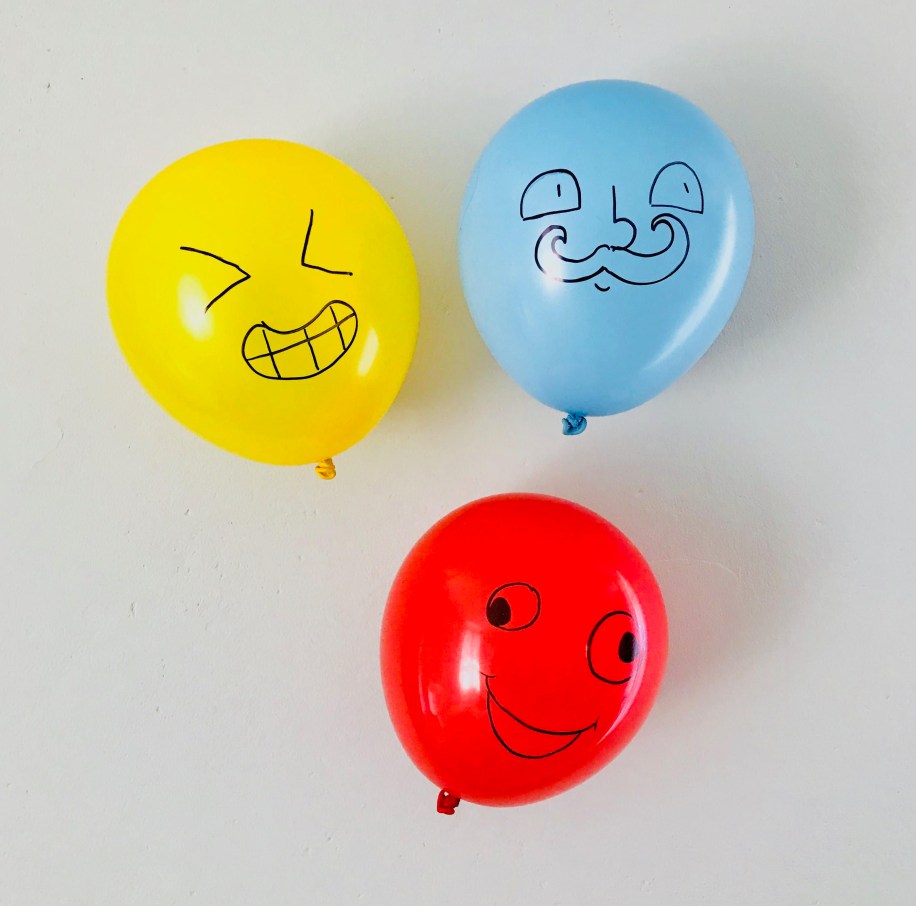
Silly Balloons

You can have lots of silly fun with balloons! Try some of these ideas—they’re sure to make you laugh!

Goofy Faces

Blow up a balloon and draw a funny face on it. Rub the balloon on your shirt or a blanket and stick it to the wall, your shirt, or even your mom or dad!

Crazy Hair

Rub a blown-up balloon on your shirt or a blanket (fleece works well) then hold it near your hair and watch it go a little crazy!

Bend Water

This bit of balloon magic will amaze you! Rub a blown-up balloon on a blanket (fleece works well). Turn on a faucet to a thin stream of water. Hold the balloon near the stream of water and watch it bend toward the balloon. 

Volleyballoon

This is a fun game for two or more people played like volleyball—but with balloons! All you need is a balloon and a line on the floor. Players form teams and bat the balloon back and forth over the line, keeping it in the air.as long as possible. A team wins a point when the opposing team can’t return the balloon.

You can purchase Duckie & Snaps: We Cannot Be Friends at these booksellers

Amazon | Barnes & Noble | Bookshop (to support your local independent bookstore)

Picture Book Review
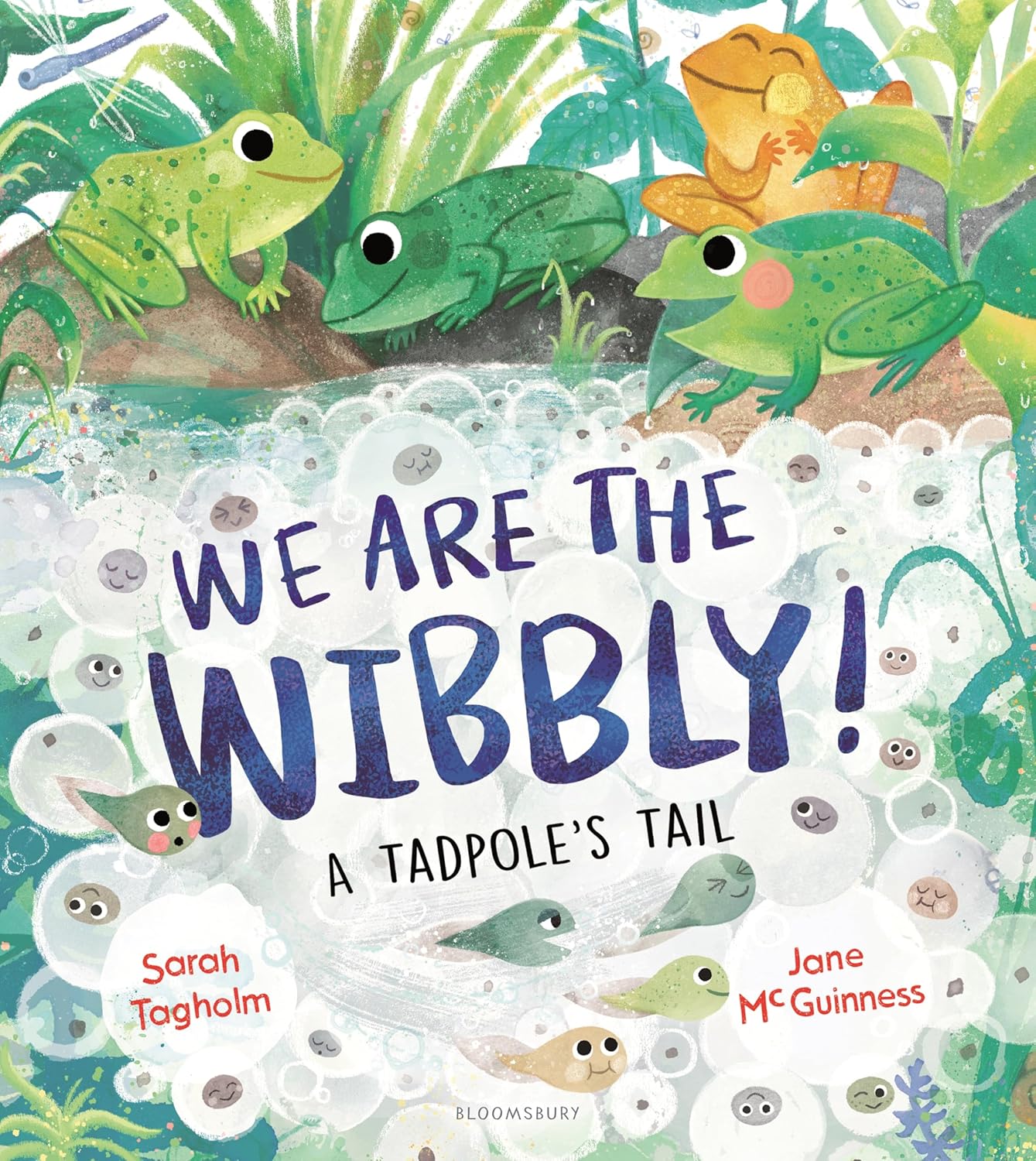
February 10 – National Poop Day

celebrate-picture-books-picture-book-review-poop-for-breakfast-cover

About the Holiday

Who knew poop could inspire such a thoughtful and health-conscious holiday? But it has! Initiated in 2016 by the Madison Children’s Museum in Wisconsin to celebrate and educate the public on digestion and excretion, the day has become a fun, educational way to encourage people to be more aware of their digestive health and hygiene as well as that of their pets. By normalizing conversations about poop, the holiday aims to improve overall health practices and increase understanding of how our bodies work. The topic is no less fascinating in the world of wildlife, as today’s book shows.

Thank you to Sara Levine and Millbrook Press for sharing a copy of Poop for Breakfast: Why Some Animals Eat It with me!

Poop for Breakfast: Why Some Animals Eat It 

Written by Sara Levine | Illustrated by Florence Weiser


So, you wake up starving for a delicious meal. You’ve been dreaming of pancakes, maybe, or a plate of eggs and bacon. But when you get to the table, there’s a bowl of poop waiting for you?! What’s going on?! While you might sulk (and probably hold your nose), there are plenty of creatures who’d be thinking “Bring it on!” Who are these critters? They’re animals that practice coprophagy, and they do it “for a number of surprisingly good reasons,” as Sara Levine reveals.

celebrate-picture-books-picture-book-review-poop-for-breakfast-coprophagy

Image copyright Florence Weiser, 2023, text copyright Sara Levine, 2023. Courtesy of Millbrook Press.

For some animals eating poop is just part of being a Number 1 (or maybe Number 2 is better in this case) parent. Butterflies, cats, and dogs as well as robins and other birds all have specific reasons for dining on doo-doo, from making eggs strong to protecting their babies from predators to keeping “a nest clean and tidy.” 

While these animals eat poop for external or aesthetic reasons, others engage in coprophagy to keep their digestive system working well. Still others, because of the length or shape of their digestive tract, require that food travels through their body twice to extract all of the nutrients. If you have a rabbit, hamster, guinea pig, or other small rodent as a pet, you know that their poop looks like little round balls or small pellets. As Levine tells readers, “this is the poop that has been through their digestive tract a second time. These animals’ first poop comes out soft, sticky, and full of nutrients. It’s called a cecotrope (SEE-ca-trope).” They then “gobble it up at night when it comes out. That’s why you don’t see it” in the cage.

celebrate-picture-books-picture-book-review-poop-for-breakfast-butterflies

Image copyright Florence Weiser, 2023, text copyright Sara Levine, 2023. Courtesy of Millbrook Press.

Since there are so many creatures who do eat poop, why don’t humans? Levine has included a whole list of reasons for why we don’t—and don’t need to. She also provides back matter that includes “The Scoop on Poop”—an explanation of what poop and pee are, how they’re created in the body, and how they’re eliminated. Kids will also have fun becoming “poop detectives” with the help of the illustrated poop identification guide for common pets and wildlife and also by playing a synonym game.

celebrate-picture-books-picture-book-review-poop-for-breakfast-robins

Image copyright Florence Weiser, 2023, text copyright Sara Levine, 2023. Courtesy of Millbrook Press.

Sara Levine is exceptional at presenting fascinating nature science topics in humorous and accessible ways for young audiences, and her latest book is no exception, Leaning into the “Ewww!” factor, Levine dishes up short, take-away reasons certain animals, birds, and insects practice coprophagy followed up with longer passages that explain the science and/or behavior behind them in easy-to-understand language sprinkled with humor that will keep readers riveted to this already high-interest subject.

Florence Weiser’s colorful illustrations perfectly bridge the humorous and the scientific nature of Levine’s text. Readers’ skeptical view of this “gross” habit is amusingly juxtaposed with creatures’ excited anticipation of a delicious meal through the characters’ facial expressions while the anatomical reasons for or against coprophagy are clearly depicted in images of human and various animals’ digestive systems.

Anatomy and nature science education at its best, Poop for Breakfast: Why Some Animals Eat It will keep kids enthralled as each page turn brings on a new round of giggles and avid learning. The book would enhance any home STEM collection and is a must for classroom, school, and public library bookshelves.

Ages 5 – 10

Millbrook Press, 2023 | ISBN 978-1728457963

About the Author

Sara Levine is an author, educator, and veterinarian. Her science books for children include the Animal by Animal series, Germs Up Close, and A Peek at Beaks: Tools Birds Use. Her books have received a number of awards including AAAS/Subaru SB&F Prize, Utah Beehive Book Award, Cook Prize finalist, Monarch Award master list, and Bank Street College Best Children’s Book of the Year. Visit her at saralevine.com and on Instagram at saralevinebooks.

About the Illustrator

Florence Weiser is a French illustrator currently based in beautiful, rainy Belgium. While growing up in Luxembourg, she always knew she wanted to draw and draw. She lives and works surrounded by nature, from which she gathers most of her inspiration. Visit her at florenceweiser.com and on Instagram at florence_weiser_illustration

You can find Poop for Breakfast: Why Some Animals Eat It at these booksellers

Amazon | Barnes & Noble | Bookshop (to support your local independent bookstore)

Picture Book Review
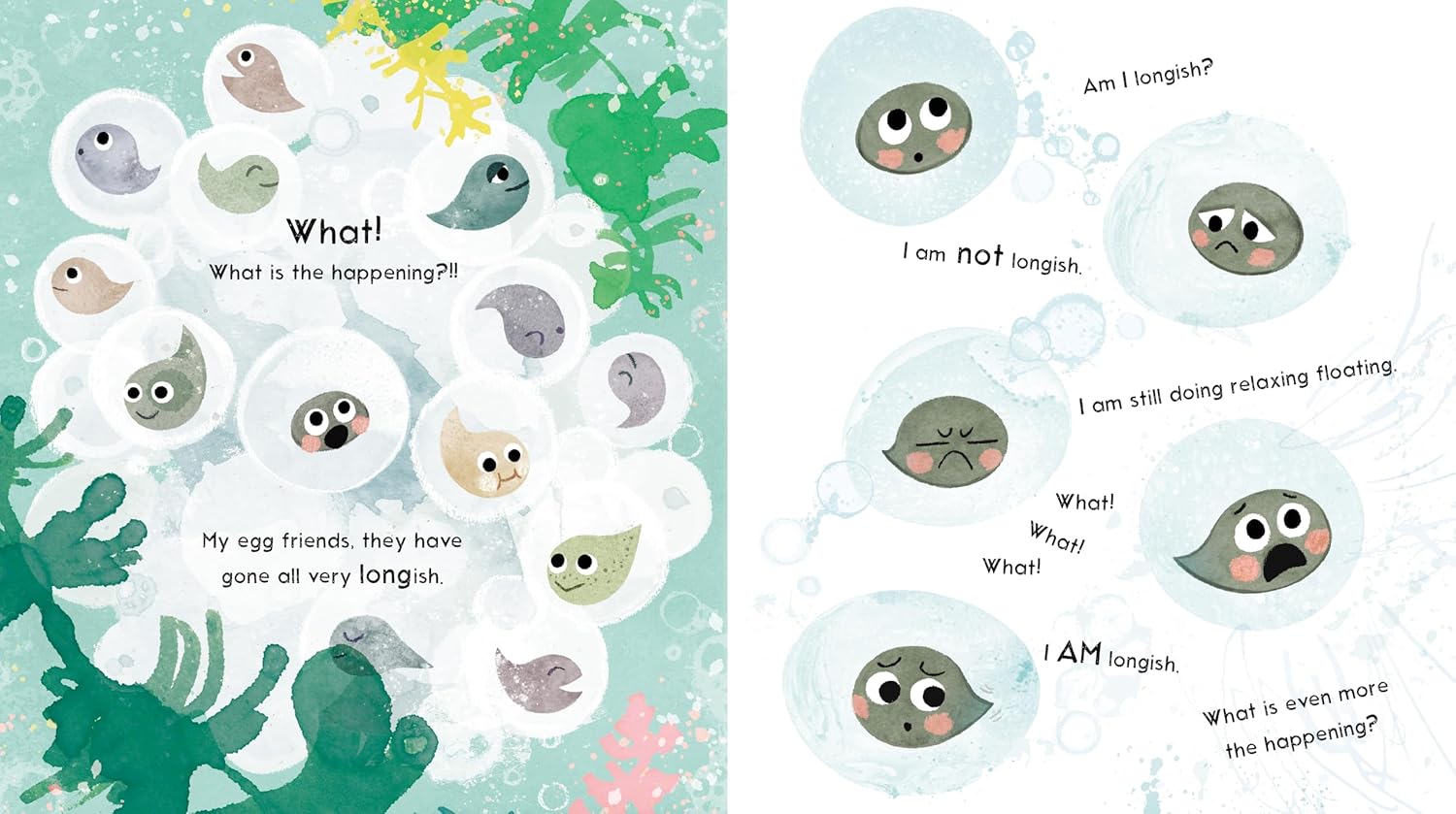
January 31 – It’s National Mentoring Month

celebrate-picture-books-picture-book-review-professor-goose-debunks-the-three-little-pigs-cover

About the Holiday

Learning—and the success that comes with it—can be easier and more fun when it’s shared with a mentor. Teachers, instructors, coaches, crafters, family members, and other adults like passing on their knowledge to younger generations, and while kids gain valuable skills, they also benefit from the bonds that form between them and their mentor. If you’re interested in becoming a mentor check out the resources at mentoring.org. National Mentoring Month is also a terrific time to thank a mentor in your life and tell them what a difference they made. 

Thanks to Tundra Books for sharing a copy of Professor Goose Debunks the Three Little Pigs with me for review consideration. All opinions on the book are my own.

Professor Goose Debunks the Three Little Pigs

Written by Paulette Bourgeoise | Illustrated by Alex G. Griffiths 

Professor Marie Curious Goose—”renowned and distinguished scientist”—is on a mission to correct the science in her great-aunt Mother Goose’s stories. This time, she’s tackling The Three Little Pigs. The story starts off in the familiar way: “Once upon a time, there were three little pigs.” The first pig liked to eat and play. The second little pig liked to laze in the mud. And the third little pig worked hard and sweated every day. One day their mother sends them off into the world with the admonition to “‘Save your own bacon!'” Sounds about right, right?

Image copyright Alex G. Griffiths, 2024, text copyright Paulette Bourgeois, 2024. Courtesy of Tundra Books.

But wait! Before you move on in the story, Professor Goose reveals that even these brief profiles are full of erroneous myths! To clear things up, the professor imparts zoologist-approved information, including such facts as pigs don’t gorge themselves, they lay in mud to lower “their body temperature on hot days,” and, because pigs have few sweat glands, they always stay fresh and dry. 

Finally on their own, the siblings get down to the business of living their best lives. The first little pig builds himself a house of straw then goes off to play basketball. Here, Professor Goose takes a moment to imaprt a lesson on the states of Matter and what Matter is made of. By now the wolf has caught up with the first little pig, who rebuffs him with the familiar “‘Not by the hair of my chinny-chin-chin.'” Despite this the wolf does his huffing and puffing—you know the drill—and the pig runs off to his sister’s house. But waaaiit . . .. The prof takes exception to a few tidbits here, too, such as the chinny-chin-chin line and the house destruction method.

Image copyright Alex G. Griffiths, 2024, text copyright Paulette Bourgeois, 2024. Courtesy of Tundra Books.

Soon, while the wolf is menacing the second little pig, Professor Goose works herself into a lather over the “lone wolf” attack and the story’s depiction of wolves in general. To calm herself down, she instructs readers in details about structures and construction. 

Undeterred, the wolf high tails it to the third little pig’s house of bricks, where she and her siblings are cozily ensconced. The wolf huffs and puffs, can’t blow the brick house down, and the pigs are triumphant. But is this where the story ends? No! The prof explains how many fairy tales—just like this one—use a pattern of three and that patterns are found in everything, including nature, music, and math. Finally, Professor Goose concludes with her own version of what became of these three pig siblings—and the story even turns out well for the wolf!

Image copyright Alex G. Griffiths, 2024, text copyright Paulette Bourgeois, 2024. Courtesy of Tundra Books.

Paulette Bourgeouis’s clever take on the familiar tale of The Three Little Pigs will have kids captivated and laughing from beginning to end as Professor Goose points out foibles in the story and connects the setting, the wolf’s powerful breath, the pigs’ houses, the pigs themselves, and the story’s structure to a wide range of scientific principles. Through Professor Goose’s Fact Checks, kids learn surprising and educational facts about zoology, matter, weather, architecture, patterns, and even coding. 

Alex G. Griffith’s engaging illustrations make for a fun and funny learning experience that will have kids in stitches and their eyes glued to every page. Griffith’s tiny details, facial expressions, and slap-stick humor give a fresh, comic-style look to this well-known story and enhance the science-based facts this fractured fairytale is built on for today’s kids.

A unique retelling of a favorite classic that takes superb advantage of all a fractured fairy tale can offer, Professor Goose Debunks The Three Little Pigs is sure to be asked for again and again…and again. The STEM-related connections make this book a terrific and educational introduction to a variety of units for science educators.

Ages 3 – 8 and up

Tundra Books, 2024 | ISBN 978-0735267329

About the Author

Paulette Bourgeouis is best known for creating Franklin the Turtle, the character who appears in the bestselling picture books illustrated by Brenda Clark. The series has been translated into thirty-eight languages and adapted into an animated television series, merchandise, and feature-length films. She is also the author of award-winning books for children including Oma’s Quilt, which was developed as a short film by the National Film Board of Canada, and more than two dozen non-fiction science books. She is a member of the Order of Canada, received an honorary doctorate degree from Western University, an award of merit from the Canadian Association of Occupational Therapists and most recently graduated with an M.F.A. in Creative Writing from the University of British Columbia. Paulette frequently teaches and she has been the writer-in-residence at UBC, Whistler, BC, and Terra Nova National Park, Newfoundland.

About the Illustrator

Alex G. Griffiths is a children’s book illustrator originally from London, UK. The majority of his work is done by hand, using a combination of pen and ink line work and brush textures in a messy way to create an unusual illustration style. He now lives in Canada with his wife and two children. Visit him at alexgfriffiths.com.

National Mentoring Month Activity

CPB - Playhouse craft

Cardboard Playhouse

Kids love pretending with their toys and playhouses. With this craft you and your child can make a playhouse with recycled items and lots of imagination. While you and your child make the house, talk about the building process and ask questions that get them thinking about how various parts of a house work. Once the house is finished, kids can make up their own stories with it—or create their own fractured tale of The Three Little Pigs

Supplies

  1. Cardboard box

     2. Recycled items, such as:

  • Bottle caps for door knobs,
  • Small boxes for a chimney
  • Use the cardboard cut from the windows to make shutters
  • Scraps of cloth for curtains

    3. Craft paint

    4. Markers

    5. Glue

You can purchase Professor Goose Debunks the Three Little Pigs at these booksellers

Amazon | Barnes & NobleBookshop (to support your local independent bookstore)

Picture Book Review
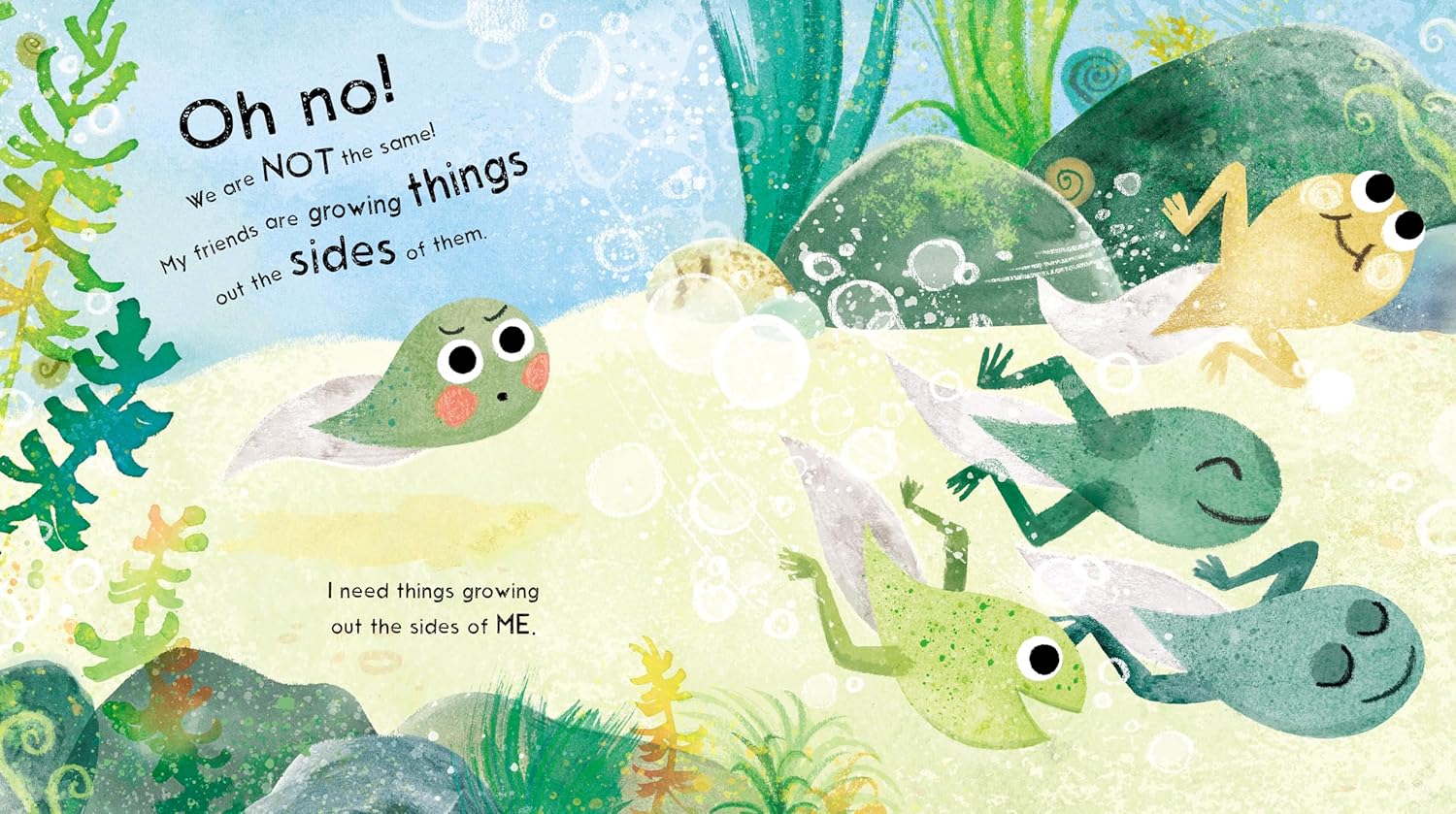
December 13 – Lost and Found Day

celebrate-picture-books-picture-book-review-lost-cover

About the Holiday

Don’t you hate when you lose something? You know . . . you just had it and now it’s nowhere to be seen. Where do eventually find it? The last place you look, of course! But what if you never find it? Perhaps someone else found it and turned it in to a lost and found department. Oh, it’s all very disconcerting. Don’t give up hope! Today’s holiday was established just to give people an opportunity to really stop what they’re doing and look for that long-lost object. Did you know that Napoleon Bonaparte was the mastermind behind the idea of a Lost and Found? In 1805 he opened the world’s first Lost and Found Office in Paris and encouraged people to bring in items they found in the street. From there the idea spread! So if you’ve lost something, take a bit of time today to find it!

Thank you to Ann Schwartz Books for sharing a copy of Lost with me for review consideration. All opinions on the book are my own.
Lost

By Bob Staake


Opening the cover of the nearly wordless Lost, you encounter a sea of white, gray-tone, and blue-tone triangles that dazzle the eyes until they are drawn to a small red curlicue near the bottom right corner, and you wonder . . .. The title page drops you into the middle of a neighborhood, where the mystery isn’t solved, but only seems to grow as four people, sporting puzzled frowns are on the move.

Eager to know what’s up? Turn the page yet again and you’re inside a little girl’s house, where something is definitely amiss. Kitty hasn’t eaten her food. She’s not playing with her yarn or toy mouse, either, so the girl goes in search. Paneled pages show her peeking around a wall, calling up the staircase, checking room to room. But then . . . Eureka! . . . the back door is open. When the girl runs out to the backyard, though, Kitty isn’t there either. 

celebrate-picture-books-picture-book-review-lost-calling-kitty

Copyright Bob Staake, 2024. Courtesy of Anne Schwartz Books.

With a stack of homemade LOST posters in hand, she begins papering the neighborhood and handing out copies to passersby. One of these is the mail carrier, who hasn’t seen Kitty but has, in fact, lost his own pet. He pulls a picture his green bird from his wallet and demonstrates how he flew from its cage and out the window. 
In the park, she meets an elderly woman who has lost her dog. She takes a picture from her purse, explaining how it scampered under the gate and was gone. The woman still has a tear in her eye when the two wave goodbye. At the Village Market, a businessman notices one of the girl’s LOST posters and extracts from his wallet a picture of his pet giraffe that simply stepped over the wall around his house one day and disappeared. After commiserating, they smile as they bid each other goodbye. Hungry now, the girl returns to the park for a hotdog and happily carries it to the bench where she had met the woman earlier.
celebrate-picture-books-picture-book-review-lost-signs

Copyright Bob Staake, 2024. Courtesy of Anne Schwartz Books.

She’s just about to take a glorious bite when she spies her own lost kitty poster and sinks into sadness. But what’s this? The delicious aroma has attracted the attention of a little blue nose, and from behind a wall appears the woman’s lost dog! The girl begins luring it home with her hotdog when she spots a familiar shadow on the sidewalk. She looks up expecting to find Kitty, but finds the bird, instead. Keeping the bird in tow with a bit of bun, she takes her finds home to make found posters and spread the good news.

celebrate-picture-books-picture-book-review-lost-giraffe-lost

Copyright Bob Staake, 2024. Courtesy of Anne Schwartz Books.

Back out in the neighborhood, a passing boy lets slip his balloon, redirecting the girl’s gaze upward toward a tall tree from where the girl hears a sound. She, the bird, and the dog race into the yard to find Kitty atop the tree. But how to get her down? There’s one lost pet who would know just how to do it—and this delightful story doesn’t disappoint. Just in the knick of time, the giraffe steps over the fence, offers his nose to climb on and bows his long neck to the girl’s outstretched arms.

Meanwhile, the found posters have alerted the mail carrier and the elderly woman, and they take off running toward the girl. The businessman, sad not to see a found poster for his giraffe, at last sees his pet towering into the sky and joins the parade and the joyous reunions full of hugs that follow.

celebrate-picture-books-picture-book-review-lost-kitty-found

Copyright Bob Staake, 2024. Courtesy of Anne Schwartz Books.

Clever and charming from beginning to end, Bob Staake’s Lost is a treasure trove of visual humor, emotion, and surprises. So much ingenious storytelling is infused into every panel for readers of all ages to discover, and Staake’s use of facial expressions and gestures makes it easy for readers to follow the action. The hiding places of the pets turn out to be sweet reminders that our loved ones are never far away.

Lost would appeal to both those who love picture books and fans of graphic novels. The book invites multiple readings and makes a terrific canvas for inventing backstories for all of the characters and pets in this enchanting town. If you’re looking for a gift for a child or even an adult who loves comics, cartoon, and whimsical tales, you’ll find Lost to be the perfect present. Lost is also a must for public and school libraries.

Ages 3 – 7

Anne Schwartz Books, 2024 | ISBN 978-0593707029

About the Author-Illustrator

Bob Staake is the prolific illustrator and creator of many books for children, including Bluebird, My Pet Book, The Red Lemon (a New York Times Best Illustrated Book), and The Donut Chef (a Children’s Choice Book Award finalist). He illustrated Jonah Winter’s Welcome to Bobville which Booklist praised as “embracing differences” in a starred review. His most recent book, The Pathwas called “extremely inspiring” by School Library Journal in a starred review. Bob’s highly acclaimed commercial illustrations have appeared in the New Yorker, Time, the Washington Post, and The New York TimesHe lives in Massachusetts. Visit Bob at bobstaake.com.

Lost and Found Day Activity

celebrate-picture-books-picture-book-review-find-my-pet-maze

Find the Lost Pets Puzzle


The kids in this puzzle have lost their pets. Unscramble the paths and help them reunite!

Find the Lost Pets Puzzle

celebrate-picture-books-picture-book-review-lost-cover

You can purchase Lost at these booksellers

Amazon | Barnes & Noble | Bookshop

Picture Book Review