February 21 – International Mother Language Day

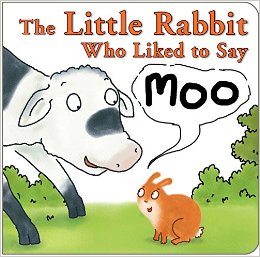
CPB - The Little Rabbit Who Liked to Say Moo

About the Holiday

Established in 1999 by UNESCO, Mother Language Day celebrates cultural diversity and promotes the protection of endangered languages. Events include multicultural festivals where all voices are heard and social cohesion, cultural awareness, and tolerance are honored.

The Little Rabbit Who Liked to Say Moo

By Jonathan Allen


Little Rabbit sits in the farmer’s field listening to the animals talk and learning their languages. “Moo,” Little Rabbit repeats, “Moo.” A calf responds and questions Little Rabbit. It turns out that Little Rabbit knows and likes many languages. Calf joins Rabbit in the fun. “Baa,” they say together, which summons Lamb. The three friends decide to try “Oink.” With each new noise, the group expands and enthusiastically continues their linguistic experiment. Finally, after a rousing chorus of “Quack,” Duckling asks if quack is their favorite animal sound. Each animal then reveals with pride that, while they like other noises, they prefer their own. But what about Little Rabbit, who doesn’t “have a big noise?” Will Rabbit’s answer begin the game again?

The wide-eyed, smiling animals in this adorable picture book by author-illustrator Jonathan Allen perfectly captures the joyous camaraderie of good friends discovering the world together. The book is a wonderful introduction for young children to the ideas of inclusiveness and self-esteem. Kids will love the repetition as each new animal joins the group, and will have as much fun saying each sound as Little Rabbit and the other farmyard friends.

Ages 2 – 6

Boxer Books Limited, 2008  ISBN 978-1910126257

International Mother Language Day Activity
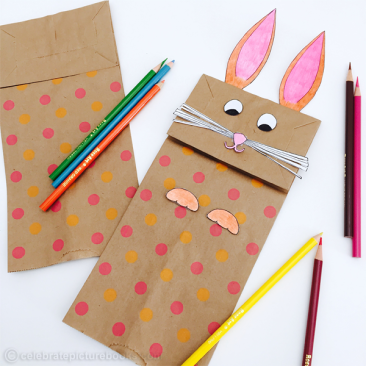
CPB - Rabbit Puppet made

Make a Rabbit Puppet

Supplies

  • Rabbit Puppet Template
  • A paper lunch bag
  • Markers, crayons, or colored pencils
  • Cotton Ball
  • Scissors
  • Glue or tape

Directions

  1. Print the Rabbit Puppet template.
  2. Color the parts of the rabbit and cut them out.
  3. Place the flat paper bag on a table with the bottom flap facing you. Glue or tape the eyes, and the nose and whiskers to the bottom flap. Attach the ears, placing the tabs behind the top of the bottom flap. Attach the paws to the body below the bottom flap. Attach the cotton ball tail to the opposite side of the bag.  
  4. When it’s dry, use your puppet to read The Little Rabbit Who Liked to Say Moo again and play along. Let your Little Rabbit try saying “Hi” in the languages below.

Learn to Say “Hello” in Other Languages

  • Spanish: Hola (oh-la)
  • French: Bonjour (bon zhur)
  • German: Hallo (hă-lo)
  • Chinese: Nin Hao (nee hah)
  • Filipino: Kamusta (ka-muh-stah)
  • Italian: Ciao (chi-ow)
  • Japanese: Kon’nichiwa (ko-nee-chee-wah)
  • Turkish: Merhaba (mĕr-hah-bah)


February 17 – Random Acts of Kindness Day

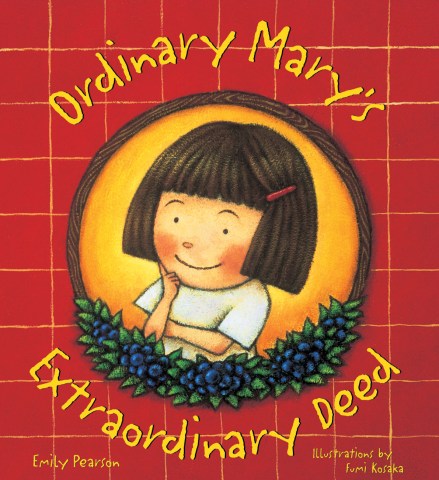
celebrate-picture-books-picture-book-review-ordinary-mary's-extraordinary-deed-covers

About the Holiday

Random Acts of Kindness Day originated in New Zealand, where the holiday is celebrated nation wide every September 1st. In the U.S. the popularity of this day continues to grow, as people discover the pleasure of doing nice things for friends and strangers alike. Connecting with others and paying forward kind deeds can be infectious, making the world a better place for all!

Ordinary Mary’s Extraordinary Deed

Written by Emily Pearson | Illustrated by Fumi Kosaka

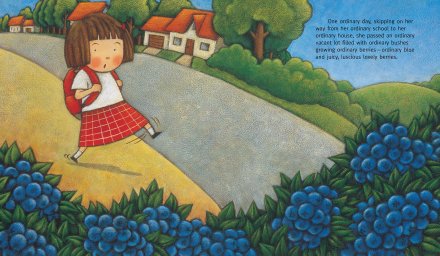
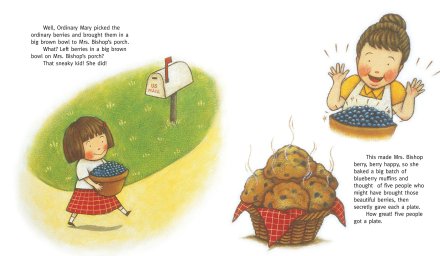
One day an ordinary girl named Mary begins her ordinary day. On her way home she spies ordinary blueberries in a field and picks them. She knows Mrs. Bishop would like them, so Mary leaves them in an ordinary bowl on her porch. Mrs. Bishop is so happy with the berries that she uses them to make blueberry muffins. But who gave her the blueberries? Mrs. Bishop can think of five people who might have, and she divides the muffins between them.

celebrate-picture-books-picture-book-review-Ordinary-Mary's-Extraordinary-Day-blueberries

Image copyright Fumi Kosaka, 2002, text copyright Emily Pearson, 2002. Courtesy of Gibbs Smith.

One of the five is Mrs. Bishop’s paperboy. He is so delighted with the muffins that he kindly hand delivers the newspapers to the next five people on his route. One of these is Mr. Stevens, who is so happy he spends the next 10 hours smiling on an airplane and helps five people lift heavy bags.

celebrate-picture-books-picture-book-review-Ordinary-Mary's-Extraordinary-Day-mrs-bishop

Image copyright Fumi Kosaka, 2002, text copyright Emily Pearson, 2002. Courtesy of Gibbs Smith.

One of these is Maria, who later does nice things for five other people. One of these cheers up the next five people she sees, who in turn brightens the day of five people. By now these random acts of kindness have spread through town and farther. People everywhere are watching out for others, being generous, smiling, becoming friends, and more! And in a surprising happenchance, ordinary Mary’s original act of kindness comes back to her!

celebrate-picture-books-picture-book-review-Ordinary-Mary's-Extraordinary-Day-joseph

Image copyright Fumi Kosaka, 2002, text copyright Emily Pearson, 2002. Courtesy of Gibbs Smith.

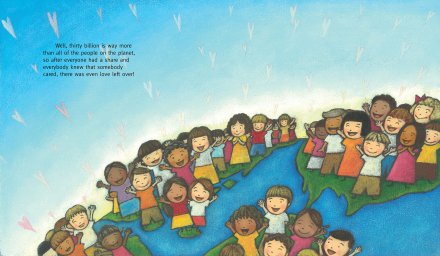
What Mary doesn’t know, though, is that her extraordinary deed actually changes the whole world for the better—because each person touched by kindness shares it with five others, who share it with five more until the one act of leaving blueberries on Mrs. Bishop’s porch multiplies to 6 billion other people!

celebrate-picture-books-picture-book-review-Ordinary-Mary's-Extraordinary-Day-world

Image copyright Fumi Kosaka, 2002, text copyright Emily Pearson, 2002. Courtesy of Gibbs Smith.

Emily Pearson’s story is a delightful tale of how one person can make a positive difference in the lives of others. The thread of simple deeds shared from one character to the next demonstrates to young and old alike how just a smile, a compliment, or an unexpected act can transform another person’s day and even the way they view themselves and the world. This is a perfect book for spurring random acts of kindness, and its straightforward treatment of the way random acts build on each other makes it a great reminder for all ages.

Fumi Kosaka has populated Mary’s world and beyond with people whose wide smiles and twinkling eyes make you want to share the excitement of giving right along with them. Her simple, colorful drawings focus on the people affected and highlight the simple acts that bring them so much pleasure.

Ages 4 and up

Gibbs Smith Publishers, Reprint edition, 2017 | ISBN 978-1423648871 Paperback

Random Acts of Kindness Day Activity

CPB - Random Acts of Kindness cards

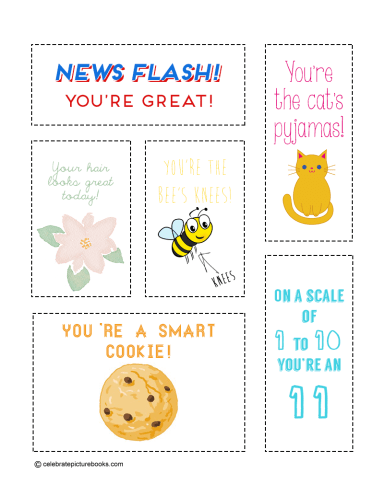
Random Acts of Kindness Cards to Share

It’s fun to surprise someone with an unexpected gift or compliment! It makes the other person and you feel happier! Here are some printable Random Acts of Kindness Cards that you can give to anyone you meet today—or any day. If you’d like to write your own, here is a set of Blank Cards. You can give one to your teacher, librarian, favorite store clerk, your postal worker, your neighbors and friends, the person next to you on the bus or train. Or why not brighten someone’s day by leaving a note where they might find it—in a book at the library or bookstore, in a friend’s lunchbox, in your mailbox, on a store shelf, or anywhere you go!

Picture Book Review

February 13 – World Radio Day

CPB - Radio Man

About the Holiday

The radio has provided entertainment, news, comfort, and information and has united people both near and far ever since Guglielmo Marconi invented  it in 1895. Today, radio continues to be an important part of people’s lives around the world. February 13 was established as World Radio Day “to celebrate radio as a medium, improve international cooperation among broadcasters, and to encourage both major networks and community radio to promote access to information, freedom of expression and gender equality across the airwaves.” This year’s UNESCO theme is “Radio in times of emergency and disaster” and highlights the crucial role of radio and its journalists in times of crisis.

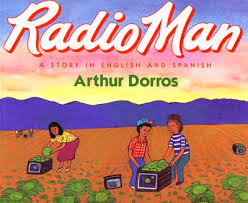
Radio Man

By Arthur Dorros | Translated by Sandra Marulanda Dorros


“Radio man” is Diego, a boy in a family of migrant workers who pick fruit and vegetables from the Southwest to as far north as Washington state. Although his family moves frequently, Diego has close relationships with his parents, sister, grandparents, cousins, and especially a friend named David.

Throughout the story, as his family moves from town to town searching for work, Diego listens to the radio. Stations broadcasting in both English and Spanish keep the family company, and Diego measures the distance of upcoming towns along their route by the clarity of the DJs’ voices. The radio also provides entertainment for end-of-picking season parties among the workers and serves as a catalyst for the grandfather’s stories of growing up in Mexico.

While Diego’s family is close-knit, their nomadic lifestyle separates Diego from his best friend, David, who is also the son of migrant workers. As the story begins Diego and David are leaving Texas and know they won’t see each other for a while. As Diego travels to different towns, going to school during the day and picking crops in the afternoon, he meets up with his cousins and other friends, but he never finds David. Finally, in Sunnyside, Washington Station KMPO allows people to send messages to others. Diego calls in and sends a message: “Hello, David! This is Diego. Are you here?”

And David, listening to his own radio, is there! Seeing David’s smile, children will identify with the pleasure that communicating with friends brings.

Each page of Radio Man is presented in English and Spanish, translated by Sandra Marulanda Dorros. The landscape and farms of the American southwest, the festive celebrations, the reality of driving from town to town, and the tight relationships among family members are all vividly illustrated by Arthur Dorros, giving children a glimpse into the life of migrant workers as well as the heart of friendship.

Ages 4 – 8

Trophy Picture Books, 1997 | ISBN 978-0064434829

World Radio Day Activity

CPB - Radio Man box radios from side

Box Radio Desk Organizer

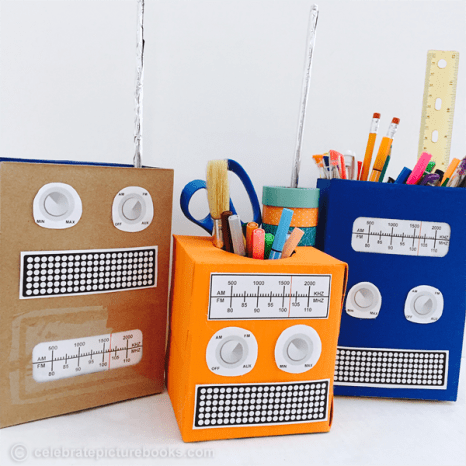
With a recycled box and the provided printable templates  you can make a desk organizer that looks like a radio with this fun craft!

Supplies

  • Cardboard box – Use an empty cube-shaped tissue box, pasta box, or any small box
  • Wooden chopstick
  • Printable Radio Face Template
  • Aluminum foil
  • Glue – a hot-glue gun works well on the cardboard; regular glue for the buttons and tape for the station tuner window
  • Paint – any color you like
  • Paint brush
  • Scissors

Directions

1. Prepare the box:

  • Choose a box to be your radio. In the pictures I used a cube-shaped tissue box and a penne pasta box with a cellophane window in it.
  • If you are using a box without an opening in the top, cut the top or bottom flaps off of one end of the box, depending on where you want the station tuner window to go.

2. Paint the box:

  • You can paint the printed front, back and sides of the box.
  • OR if you want a plain box to use “as-is” or to paint: take the recycled box apart at the seams and turn it “inside out.”
  • If you are using a pasta box with a window in it, tape the stations tuner template to the cellophane window before gluing the seams
  • Glue the original seam and flaps (a hot-glue gun works well). Let the glue dry. Then paint.

3. Let the box dry

4. Cut out the radio dials, speaker, and stations tuner window

5. Glue the parts of the radio to the box 

6. To make the antenna, wrap the wooden chopstick in a strip of aluminum foil: lay the stick on the foil and fold a foil flap (about 1 inch long) over each end of the stick. Roll the foil around the stick and press gently to close seam.

7. Attach the antenna to your box:

  • For pasta boxes tape the antenna to the inside corner of the box
  • For cube tissue boxes, make a hole in the right hand corner and push antenna in

8. Use your Radio Desk Organizer to hold pencils, rulers, bookmarks, anything!

February 11 – Make a Friend Day

celebrate-picture-books-picture-book-review-stick-and-stone-cover

About the Holiday

Whether you spend today with an old friend or make a new one, it’s a perfect time to remember those people who know our secrets, make us laugh, lend an ear, do silly things with us, and generally make life better! Today give an old friend a hug, a thank-you, or tell them how much they mean to you. Look around and see if there’s someone new you’d like to meet. They may be wanting to meet you too! Walk up and say “hi”—it may be the beginning of a new friendship!

Stick and Stone

Written by Beth Ferry | Illustrated by Tom Lichtenheld


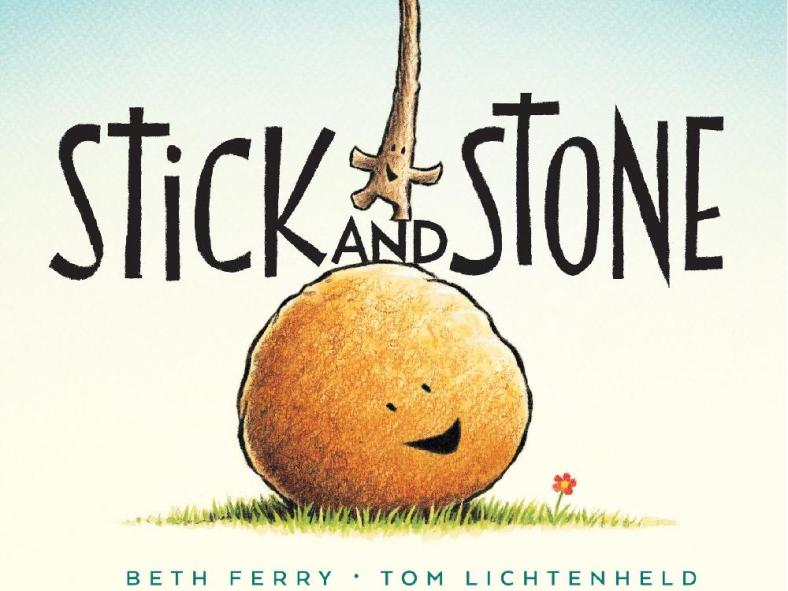
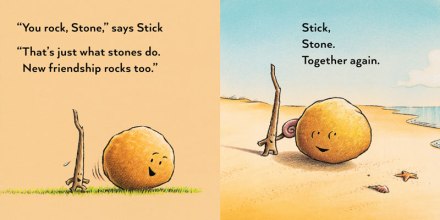
A stick and a stone live lonely lives until one day when they meet at the playground. As they playing on the swings together, a prickly pinecone comes along and makes fun of Stone for falling off the swing. Stone’s new friend “sticks” up for him, and Pinecone leaves them alone. Stick’s and Stone’s friendship grows as they explore new places, help each other complete fun activities, and relax together.

celebrate-picture-books-picture-book-review-stick-and-stone-at-the-beach

Image copyright Tom Lichtenheld, text copyright Beth Ferry, Courtesy of tomlichtenheld.com

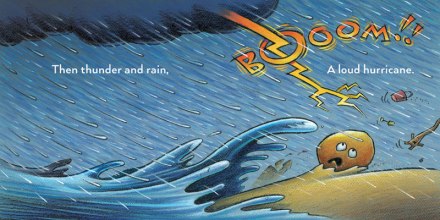
When a windstorm strikes, Stick and Pinecone are blown away, leaving Stone alone again. Stone searches everywhere and finally finds Stick upside down in a puddle. With ingenious creativity, Stone rescues Stick, proving that together they are a perfect 10.

celebrate-picture-books-picture-book-review-stick-and-stone-hurricane

Image copyright Tom Lichtenheld, text copyright Beth Ferry, Courtesy of tomlichtenheld.com

Using rhyme, puns, and perfect pacing, Beth Ferry infuses her spare text with just the right emotional tone for her young readers. A little conflict, a little suspense, and a little cleverness, add up to a big-hearted story.  

Tom Lichtenheld’s Stick and Stone are simply adorable. Kids will immediately identify with this whimsical duo and wish they could join them on their adventures. Clever pairings of text and illustrations enhance the meaningful relationship of these new friends.

Ages 3 – 7

Houghton Mifflin Harcourt, New York, 2015 | ISBN 978-0544032569

Discover more about Beth Ferry and her books – plus extra goodies – on her website!

You’ll love exploring the gallery of illustration and books on Tom Lichtenheld‘s website!

Stick around and watch this Stick and Stone book trailer!

Bake for Family Fun Month Activity

CPB - Hot Chocolate trio (2)

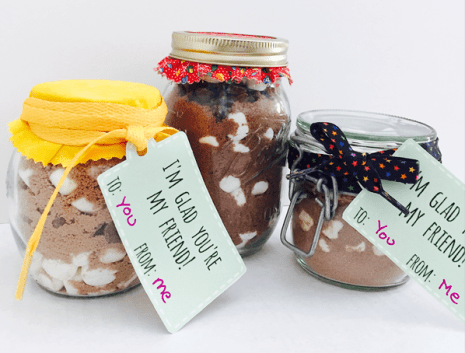
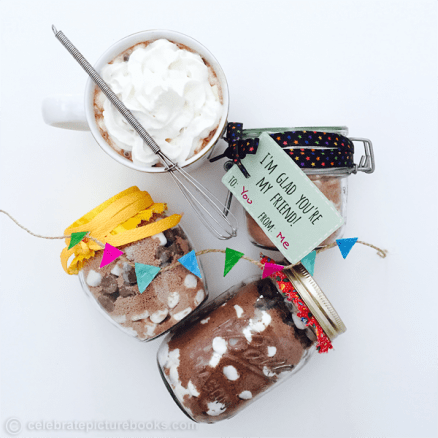
Special Friendship Hot Chocolate Jar 


There’s nothing better than sipping hot chocolate with a friend – either old or new! Snitching a couple of marshmallows when you load up your mug and wearing that stylish foamy mustache are all sure to make you and your friend giggle! And the rich chocolate flavor is guaranteed to make you happy!

Here’s an easy way to make a special gift to give to an old friend or to introduce you to a new one!

CPB - Hot Chocolate from above with whisk

Supplies

  • Mason jar, canning jar, or any recycled jar from home
  • Canister of your favorite hot chocolate mix
  • Bag of mini marshmallows
  • Bag of chocolate chips
  • Measuring cup
  • Spoon
  • Piece of cloth
  • Shoelace, string, elastic, or ribbon
  • Paper or card stock to make a Friendship Tag
  • Hole punch
  • Scissor

Directions for Filling the Jar

  1. Wash and completely dry the jar
  2. Drop a handful of mini marshmallows into the bottom of the jar. With the spoon push some of the marshmallows tight against the glass so they will show up when you add the hot chocolate mix.
  3. Measure 1/3 cup of hot chocolate mix and sprinkle it on top of the marshmallows. With the spoon gently spread the mix over the marshmallows.
  4. If you wish, add a layer of chocolate chips.
  5. Continue layering marshmallows and hot chocolate mix until you get to the top of the jar.
  6. At the top add another layer of chocolate chips and marshmallows.
  7. Put the lid on the jar and secure it tightly.

Directions for Decorating the Lid and Adding the Tag

  1. Cut a 6-inch circle from the cloth. To make the edges decorative, use a pinking sheers or other specialty scissor.
  2. Cover the lid of the jar with the cloth and secure with an elastic or rubber band.
  3. Tie the string, shoelace, or other tie around the rim of the lid.
  4. If using a Mason jar, place the cloth between the disk and the screw top
  5. Create a Friendship Tag and add your name and the name of your friend.
  6. Use a hole punch to make a hole in the Friendship Tag, slide it onto the tie, and knot it.

Directions for Making the Hot Chocolate

  1. With a spoon measure 1/2 cup of the hot chocolate, marshmallow, chocolate chip mix into a mug
  2. Fill the mug with boiling water, hot milk, or a combination of both
  3. Enjoy!

Picture Book Review