February, the month of love, is a perfect time to think up creative ways to surprise that special person in your life with a romantic gesture, exciting date night, or fun adventure that will add spice and fun to your relationship. With a little imagination you can find unique ways to show all the love that’s in your heart.
I’d like to thank Bloomsbury Children’s Books for sharing Bear Meets Bear with me for review consideration. All opinions on the book are my own.
Bear Meets Bear
By Jacob Grant
Bear was waiting for the teapot he and Spider had ordered to arrive. It was exciting to think of getting something new delivered. At last the doorbell rang. When Bear opened the door, he found Panda, a delivery person he’d never seen before. She asked him to sign for his package, but Bear was smitten. “His heart beat fast…. He wanted to say something clever, or funny, or anything at all,” but he couldn’t.
Copyright Jacob Grant, 2020, courtesy of Bloomsbury Children’s Books.
The delivery woman asked for his signature again, and finally he was able to sign the sheet. He watched Panda peddle away on her delivery bike. Spider thought Bear’s predicament was quite funny. Bear rushed to his computer and ordered another teapot. Bear waited and waited. He watched out the window, hoping to see Panda’s delivery bike roll up.
Copyright Jacob Grant, 2020, courtesy of Bloomsbury Children’s Books.
Bear was just considering ordering another tea pot when he saw Panda coming up the walk. But when she handed him the box and asked him to sign, Bear just stood silently again. “Spider felt sorry for his friend.” Bear ordered another teapot and another and another. Never could he summon the courage to talk to Panda, even though Spider encouraged him. Standing among all of the boxes of teapots, Spider told him he should “invite her to tea” or “at least remember to breathe” when Panda came to the door.
Bear agreed. He would order one more teapot and talk to Panda when it arrived. Bear waited with anticipation. But when the doorbell rang, it wasn’t Panda standing there, but a “gruff raccoon.” “Bear’s heart hurt.” He bemoaned the missed opportunities and regretted all the teapots. Spider wanted to help. He wrote a note and headed out to find Panda. He went from door to door asking if anyone had seen her. Finally, he found her at Duck’s house.
Copyright Jacob Grant, 2020, courtesy of Bloomsbury Children’s Books.
The next day Panda was excited to see Panda on his doorstep. She thanked him for his invitation to a tea party. Bear felt himself freeze, but then he told her he would be just a minute. He cleaned up the scattered teapots and welcomed her in. Soon Bear and Panda were chatting and laughing like old friends.
After Panda said goodbye, Bear thanked Spider and said that Panda was very nice but that they would “not be meeting for tea again.” It turned out that Panda didn’t like tea! Bear was nonplussed, but thought it was “all rather funny.” The next time he and Panda met, Bear served lemonade. And what about all those teapots? Bear held a yard sale!
Copyright Jacob Grant, 2020, courtesy of Bloomsbury Children’s Books.
Fans of Jacob Grant’s Bear and Spider series know that Bear is often hesitant to put himself out there, to try something new, or even, sometimes, to leave the house. It might be because his feelings are so strong or he doubts himself – or a little of both. Fortunately, Bear has his good friend Spider who supports him and gives him a nudge when he needs it. When Bear meets Panda and is smitten, he, like many people, can’t find the exact right words among all those feelings; a simple “hello” doesn’t seem like enough. Grant understands. Enter Spider, who offers a gentle dose of honesty and provides always-polite Bear with an opportunity to shine. When Bear discovers that Panda doesn’t like tea, Grant also shows readers that conditions don’t have to be perfect to make a new friend and that a little humor goes a long way toward smoothing things over.
Grant’s tranquil color palette and simple shapes make it easy for readers to immerse themselves in Bear’s feelings, empathizing with his all-too-human predicament while enjoying the comical collection of all those tea pots. When Bear watches out the window day after day, willing Panda to return only to be filled with fear and anxiety when she does, Grant perfectly captures that “oh no, now what?” emotion as Bear’s paws fly to his face and his eyes widen. Likewise, Bear’s regrets are palpable as, surrounded by boxes, he buries his head in the chair. Throughout, Spider is there, weaving his web, strumming his banjo, and watching out for Bear. Wordless images of Bear and Panda enjoying lemonade together and Bear’s yard sale let kids know it has all turned out all right.
A charming, poignant, and reassuring addition to the Bear and Spider series, Bear Meets Bear, a story about overcoming emotions that hold us back, is highly recommended for home, school, and public library bookshelves.
Ages 3 – 6
Bloomsbury Children’s Books, 2020 | ISBN 978-1547604241
Discover more about Jacob Grant, his books, and his art on his website.
Creative Romance Month Activity
Create a Mug
If you’re kids are looking for a gift to make for a family member or a friend for Valentine’s Day or any time, a personalized mug makes a creative way to share a little love every time it’s used.
Supplies
Plain ceramic mug
Bakeable markers or paint
Directions
Design and color your mug
Follow directions on the markers or paint to properly bake on your decoration and make it permanent.
Sponsored by global non-profit LitWorld and Scholastic, World Read Aloud Day encourages reading aloud to children not only today but every day. Reading aloud to children from birth is one of the best ways to promote language development, improve literacy, and enjoy bonding time together. Millions of people celebrate today’s holiday all across the United States and in more than one hundred countries around the world. Typically, special events are held in schools, libraries, bookstores, homes, and communities, and authors and illustrators hold readings and visit classrooms. This year, you can find virtual read alouds, live events on Instagram, Facebook, and Youtube, printable games, and book lists as well stickers, bookmarks, posters, and a reading crown to decorate, when you visit LitWorld.
Thanks go to Bloomsbury Children’s Books for sending me a copy of Wolfboy for review consideration. All opinions of the book are my own. I’m also thrilled to be teaming with Bloomsbury in a giveaway of the book. See details below.
Wolfboy
By Andy Harkness
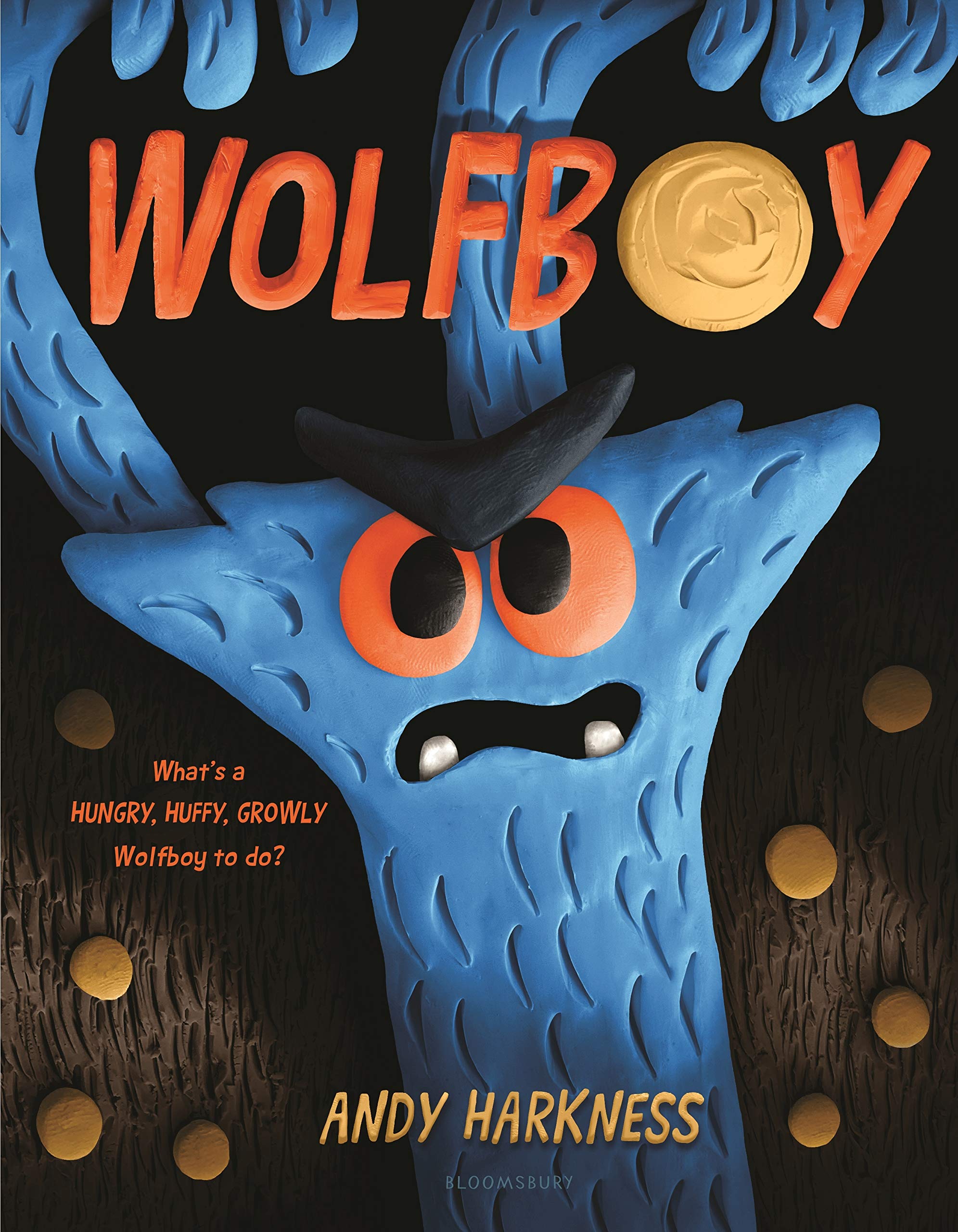
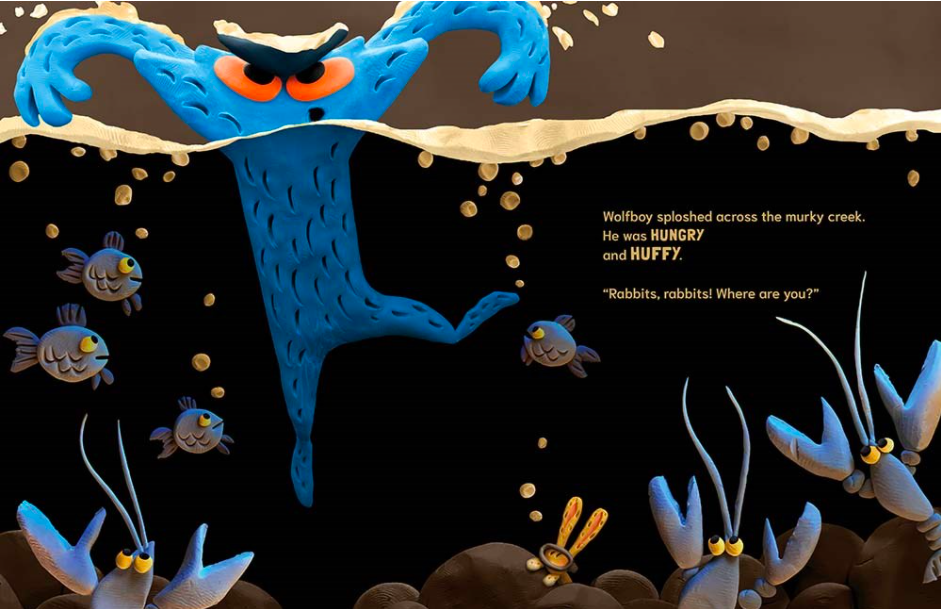
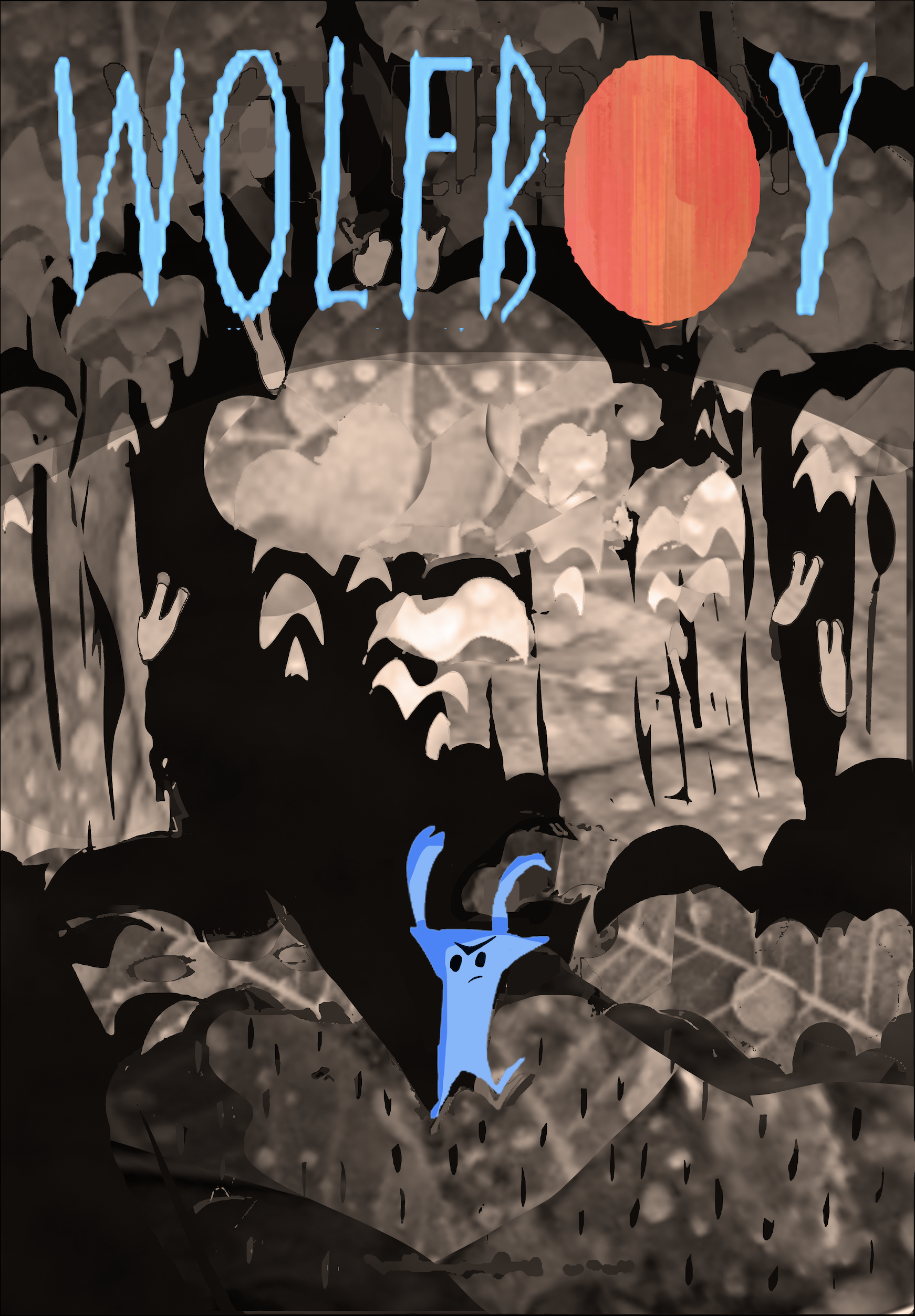
The full moon hung in the sky like a golden, frosted cupcake. Down below in the darkened forest Wolfboy was on the prowl. “He was HUNGRY. ‘Rabbits, rabbits! Where are you?’ he howled.” But he could find no rabbits. He “sploshed” into the creek, but no rabbits answered his calls. Not only was he “HUNGRY,” now he was also “HUFFY.” He climbed to the top of a very tall oak tree and scoured the ground far and wide. No rabbits. In addition to being “HUNGRY” and “HUFFY,” Wolfboy had become “DROOLY. He needed rabbits.”
Copyright Andy Harkness, 2021, courtesy of Bloomsbury Children’s Books.
Perhaps they were hiding in the bog, but there he only saw three crocodiles swimming his way. It made Wolfboy feel “GROWLY.” He made a daring leap into Moonberry Meadow. Surely, the rabbits were here. But no. Wolfboy could hardly contain himself. “he was HUNGRY and HUFFY and DROOLY and GROWLY and FUSSY.” He stomped and thrashed and leaped and menaced. He was done with rabbits, and he let the world (and those skittish rabbits) know it.
Copyright Andy Harkness, 2021, courtesy of Bloomsbury Children’s Books.
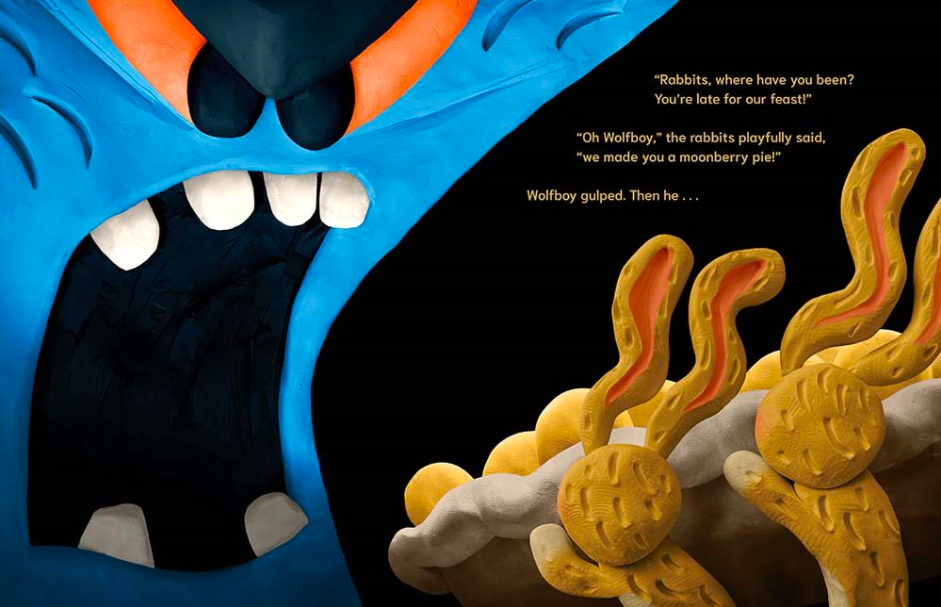
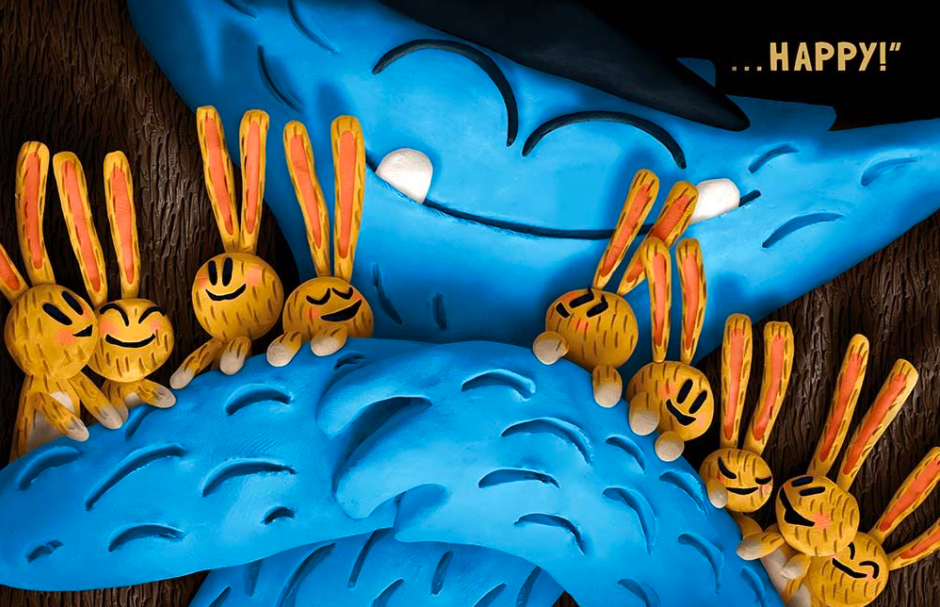
But then he heard a rustle and a snap. He focused his attention and saw some tell-tail signs. “Wolfboy crouched low” just as a warren-full of little bunnies emerged into the clearing. Wolfboy showed his teeth. His roar shook the forest. “‘Rabbits, where have you been? You’re late for our feast!’” But the rabbits just giggled and brought out the moonberry pie they’d made him. In a frenzy Wolfboy “CRUNCHED and MUNCHED and GOBBLED and GULPED!” When the pie was gone, Wolfboy explained that he had just been so, well… HUNGRY. But now he felt better and there was one huge happy rabbit hug for dessert.
Copyright Andy Harkness, 2021, courtesy of Bloomsbury Children’s Books.
Andy Harkness’s cumulative tale will get kids, who well-know that ravenously hungry feeling, up and growling along as Wolfboy goes from Hungry to Happy with all the personality-changing gastronomical feelings in between. Harness’s dialogue-rich storytelling is a delight, ripe for dramatic read alouds. The forest setting, with its creek, bog, oak, and ravine, inspires evocative vocabulary that enhances the suspense. What could this sharp-toothed, famished Wolfboy want with the rabbits? There could only be one thing… or could there? The endearing ending reaffirms that those Hangry wolves in our homes need only a little (or a big) treat to return to their true puppy natures.
Visually stunning, Harkness’s illustrations, built with clay and then photographed, immerse readers in extraordinary textured, intricate, and shadowy landscapes that beg close study. Neon blue Wolfboy, with his furrowed unibrow, rows of chicklet teeth, and long arms that waggle in hilariously menacing poses will have kids laughing out loud. And where are those rabbits? On every page! The little animal cracker-sized bunnies pop up in the most surprising places, and you can bet that you’ll hear plenty of “there’s one!” “I see two!” and “Let’s count them!” as you turn the pages.
For kids who love raucous, laugh-out-loud story times, those who appreciate exceptional art and the wonders of claymation, and readers who prefer their beasts to be big softies, Wolfboy is a must for home, school, and public library collections.
Ages 3 – 6
Bloomsbury Children’s Books, 2021 | ISBN 978-1547604425
Discover more about Andy Harkness, his books, movie work, and art on his website.
Meet Andy Harkness
Andy Harkness is an award-winning art director who has worked on Moana, Frozen, and Wreck-it-Ralph, among other movies. After twenty-five years at Disney, he recently moved to Sony Pictures Animation. Andy’s first book, Bug Zoo, was published by Disney as an Artist Showcase Book in 2016. He lives in California with his family. You can connect with Andy on His Website | Instagram | Twitter
I’m thrilled to be talking with Andy Harkness about his inspiration for Wolfboy, his process in creating the incredible illustrations, one of his biggest challenges, and more!
I think everyone can empathize with ravenously hungry Wolfboy! Where did the idea for your story come from?
I have always loved scary stories. In particular, werewolf stories. It’s the transformation that intrigues me. In 2005, I took a first pass at a story but it really didn’t go anywhere until my wife and I had children. We noticed an incredible transformation when they were hungry. Our little angels became little monsters. And the story of Wolfboy was born!
The shape of Wolfboy is so perfectly funny and menacing. Did his look undergo many revisions? How did you decide on the final design?
He went through so many revisions! Initially, he had a red striped shirt and blue jeans. Then he was a very detailed brooding character with huge hands and feet. When I was working on the rough design for the cover, I quickly drew him in blue. I wasn’t trying to design him at that moment but suddenly, there he was. He looked fierce but really funny. His final design is almost exactly like that quick sketch. One thing he always had was big pointy ears. I wanted him to be a very recognizable shape when he was small on the page.
Which brings us to your stunning pages, which are all entirely made from clay. Can you take readers through your process of making the pages? How long did it take you to carve all the settings and characters?
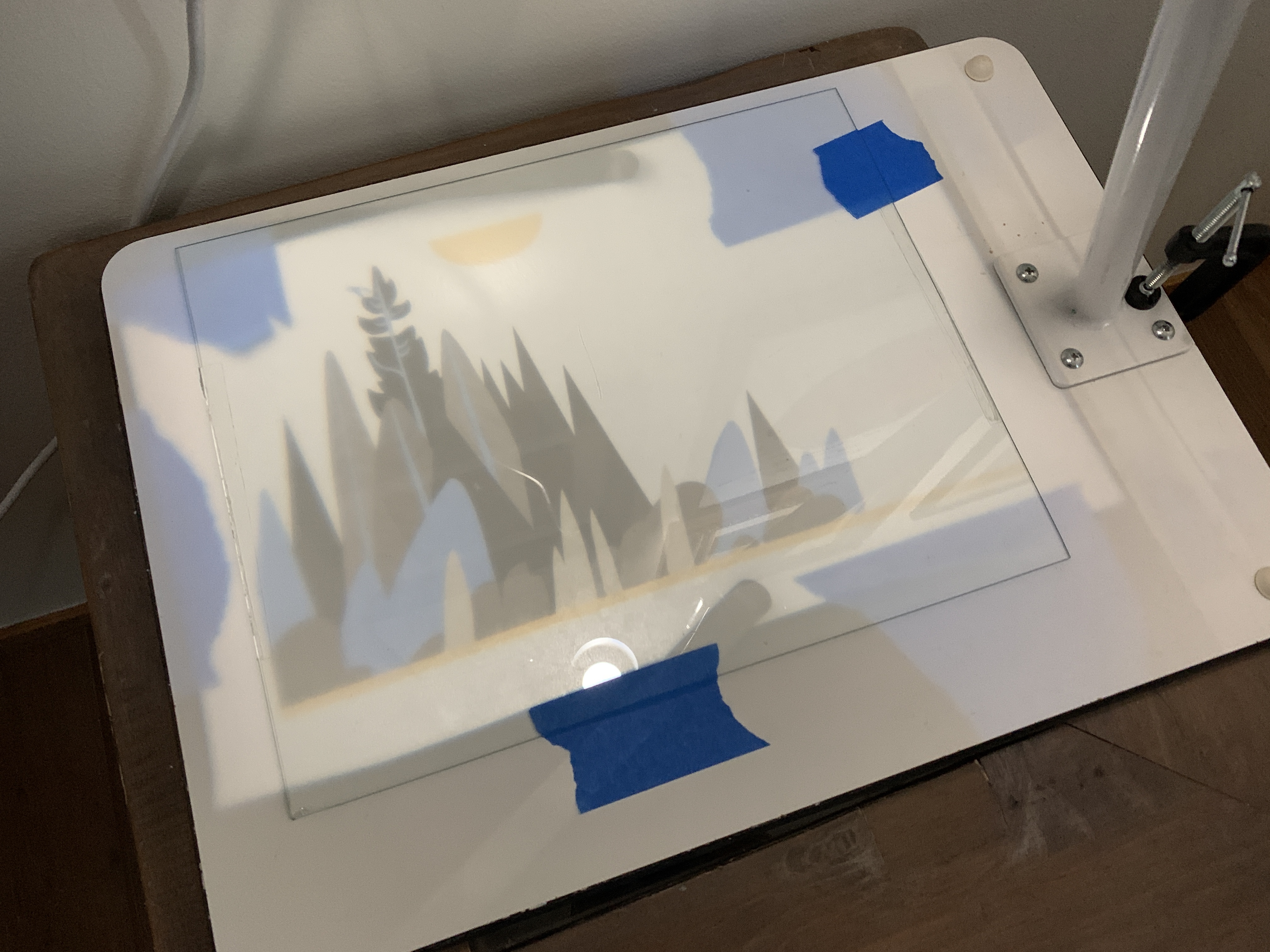
I start with a loose drawing that is projected onto a piece of glass, or is taped beneath the glass.
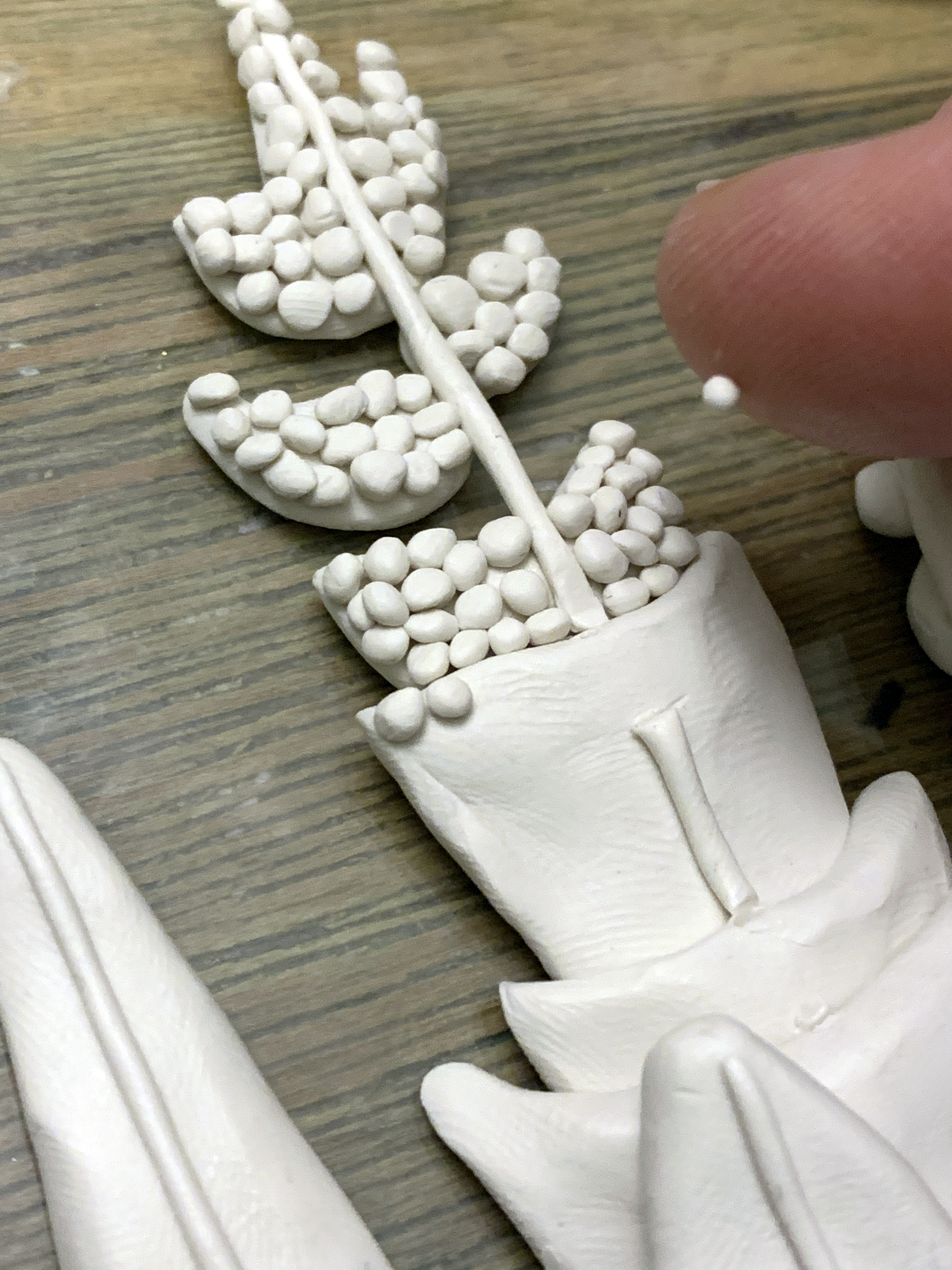
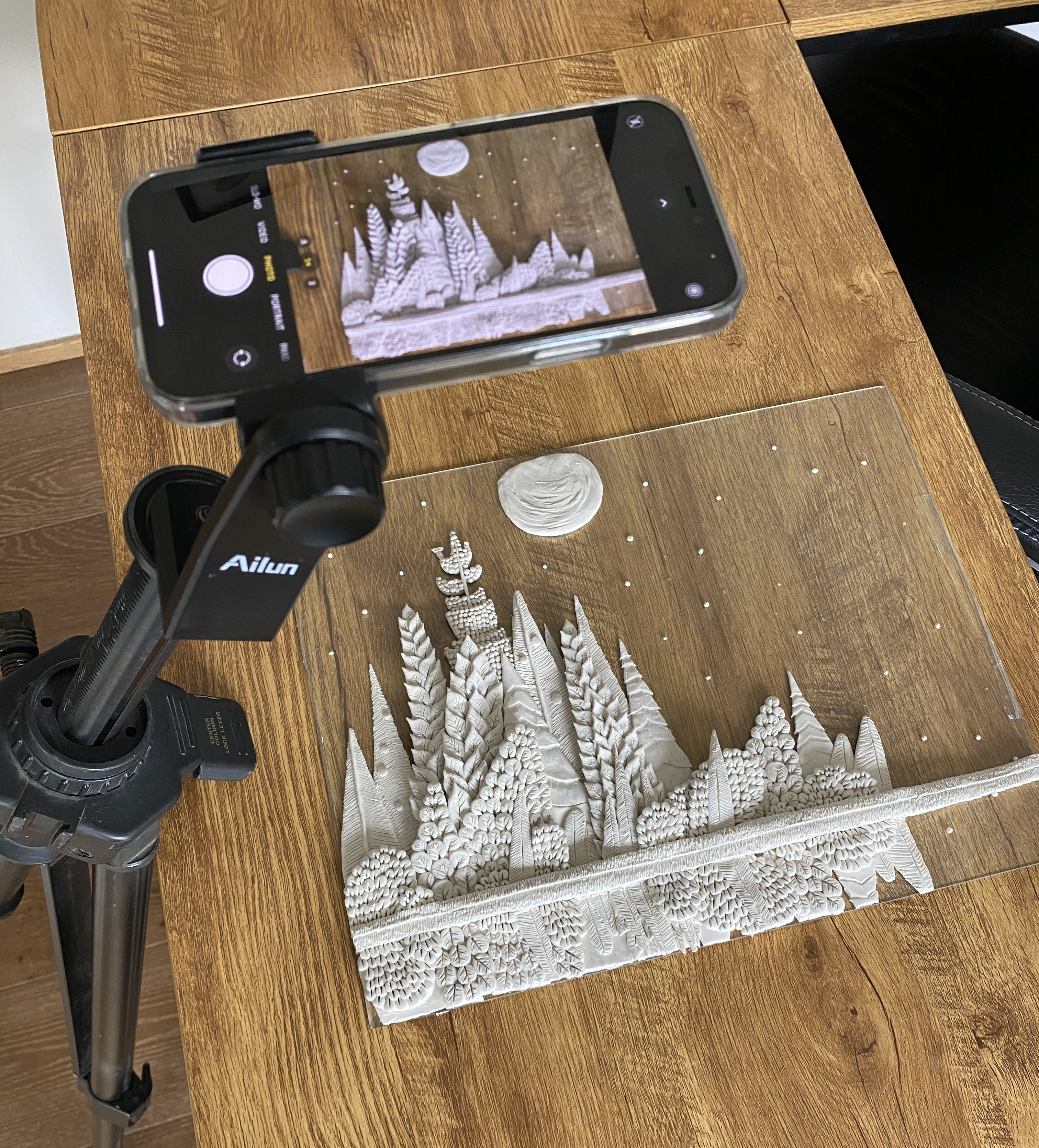
Using super sculpey polymer clay, I sculpt as much as possible by hand and use a few tools for the smallest details. When the sculpt is done, it is positioned near a window to get interesting natural light and shadow on the surface.
Then it’s photographed and the colors painted in layers in photoshop. The trick is to do as little touch up to the clay as possible. My fingerprints are literally all over this book! Each sculpt was redone at least two times. The first attempt was really for working out the problems so that the second attempt went smoothly. From start to finish, the sculpts that are in the book were done over the course of a year. Some took a day or two, others weeks, one took a whole year! I usually worked on several at the same time.
Readers might be interested in this behind-the-scenes video I made showing how I created the shadowy tree illustration near the beginning of the book.
The colors and shadowing you achieve is amazing and really immerses readers in the suspense of the story and their own hunt for rabbits on each page. Do you have a favorite spread? Was there one that was the most difficult?
Great question and thank you! I am inspired by old black and white horror movies and really wanted to bring that dramatic lighting into the book. My favorite spread is when Wolfboy leaps over the steep ravine. I think the symmetry and how it’s lit from beneath make it feel like a stage. Very theatrical. The hardest spread by far was the “creaky old oak” spread. That sculpt was redone 6 times before I was happy. And the reflection in the water is sculpted as well. I worked on that one on and off for about a year.
You’re currently working as the Art Director on Vivo, coming from Sony Animation Pictures later this year and you’ve previously worked for Disney. In these positions you’ve helped create many kid-favorite blockbusters, such as Moana, Frozen, Tangled, and Wreck-it-Ralph among many others. Can you briefly describe for kids (and maybe future animation artists) the steps as an animated feature is conceptualized, designed, and ultimately put together? What was one of the biggest challenges you’ve faced on a movie you’ve worked on? One of the best surprises?
It starts with a great idea. Early concept paintings are done to get everyone excited about the project. As the story develops, a visual style and color palette is created to support it. A character designer develops the characters while working closely with the production designer to make sure the shape language is consistent with the backgrounds. Then a literal army of talented modelers, riggers, animators, special effects artists, layout artists and lighters begin to build the world we see on screen. It’s an incredible undertaking actually. If it’s done right, it’s like a finely tuned orchestra.
The biggest challenge I’ve ever faced was designing Motu Nui, Moana’s home island. Everything was researched and done with the utmost respect for the culture. We had South Pacific advisors with us the whole time. Every plant and tree was what would have been there 3000 years ago. A botanist helped us make sure of that. From the positioning of the village in the valley, to the various fales (homes and other structures), everything was as accurate as we could make it. Armed with all that knowledge, I sculpted that island in clay. That fragile sculpt is sitting in the Disney Archives today. The head of layout, head of environments, head of modeling, and myself won a VFX award for Outstanding Created Environment in an Animated Feature.
The biggest surprise happened on my current show, VIVO. I had the opportunity to collaborate with one of my heroes, Sir Roger Deakins, on the lighting and color for the movie. Still can’t believe it!
In addition to writing and illustrating Wolfboy, you’ve also illustrated Bug Zoo and The Ballad of Nessie. What do you like best about being a writer and illustrator for kids?
I think for me it really boils down to hearing that a kid loves one of my books so much the cover has fallen off. It’s how I felt about certain books as a kid. They sparked magic in my mind and I hope to give that back now through my own books.
What’s up next for you?
Well first up, I hope to do another Wolfboy book! After that I have several more children’s book ideas bouncing around in my head.
I will probably be working on a few more animated films, but one day I really hope to focus solely on writing and illustrating children’s books.
Thanks so much for this wonderful chat! Your work is amazing, and I’m sure readers are thrilled to learn more about it. I wish you all the best with Wolfboy – I really hope there will be a second Wolfboy adventure!
World Read Aloud Day Activity
I Love Reading Bookmarks
If you love to read then you know that sometimes you want to mark a favorite page or remember where you left off. With these special World Read Aloud Day bookmarks, you can do it in style!
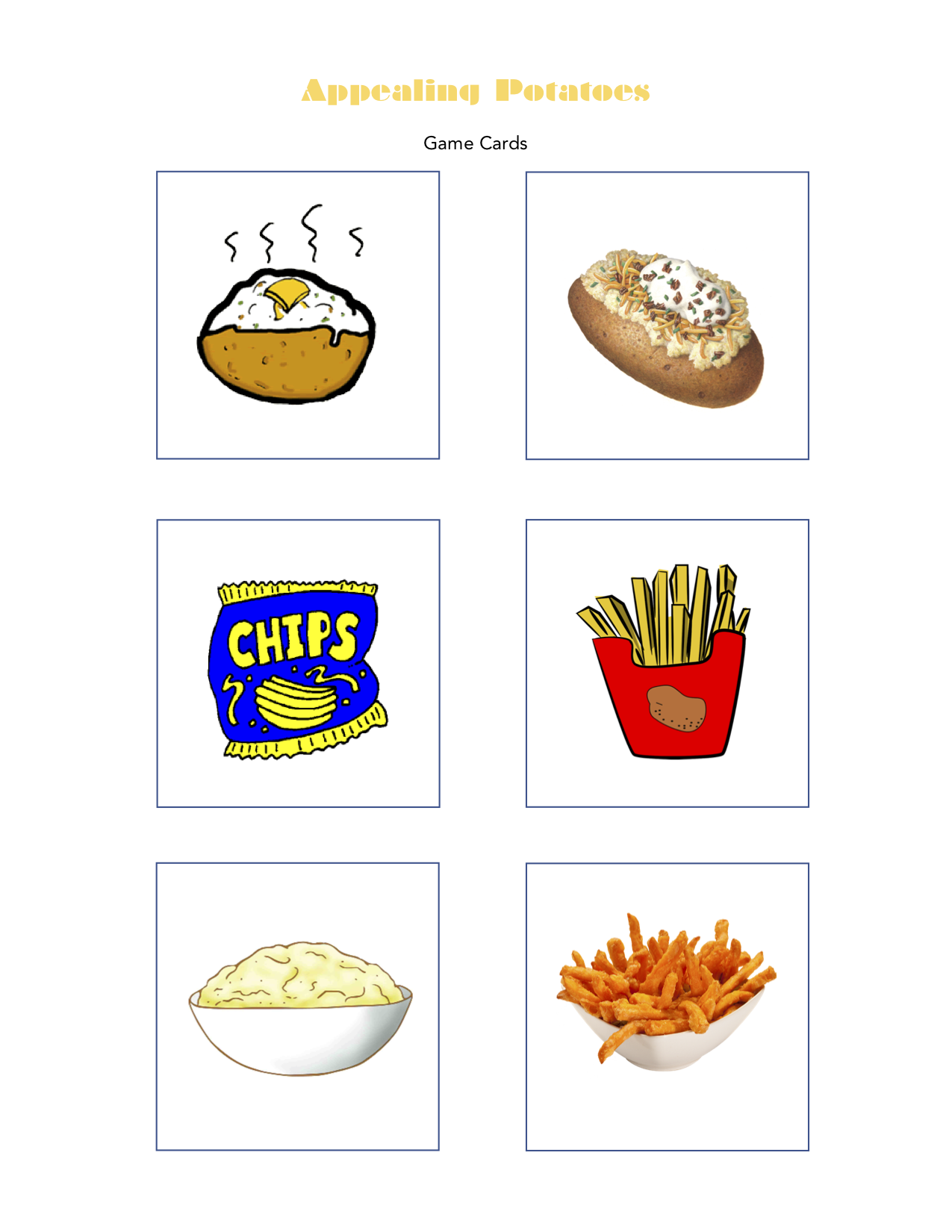
Frozen potatoes come in all shapes and sizes – from shoestring fries to smiley fries to today’s celebrated favorite, tater tots. How beloved are tater tots? Every year approximately 3.5 billion of these little barrel-shaped nuggets are sold in the United States. Tater tots are created from the shredded leftovers from the process of making French fries and were the invention of Nephi and Golden Grigg, the brothers behind Ore-Ida who began their business in 1934. A fact author Cathy Breisacher makes clever use of in her fry-tastic story. The Grigg’s ingenuity is our delicious treat, so celebrate today by grabbing a bag of tater tots and enjoying them plain or in a family-favorite recipe!
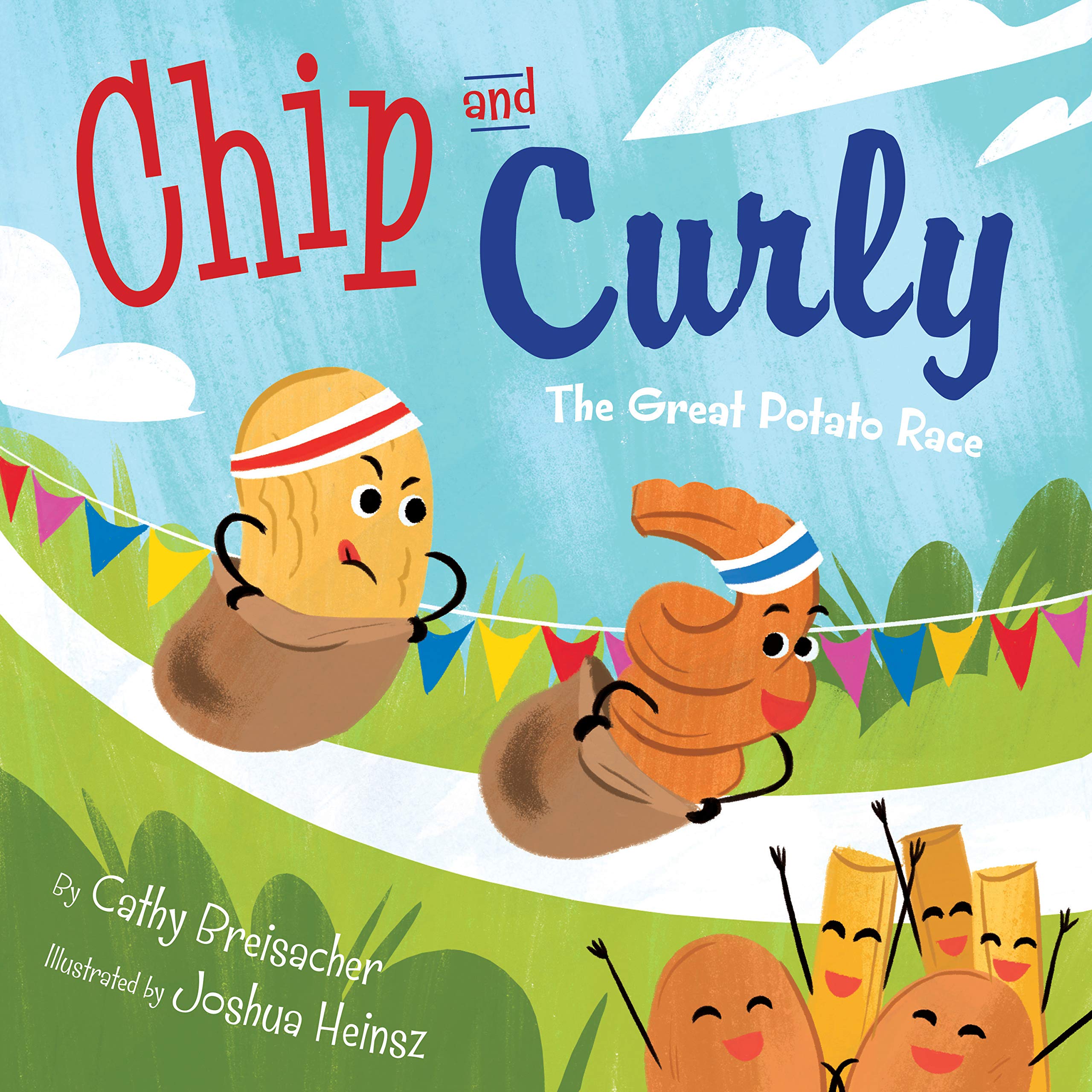
Chip and Curly, The Great Potato Race
Written by Cathy Breisacher | Illustrated by Joshua Heinsz
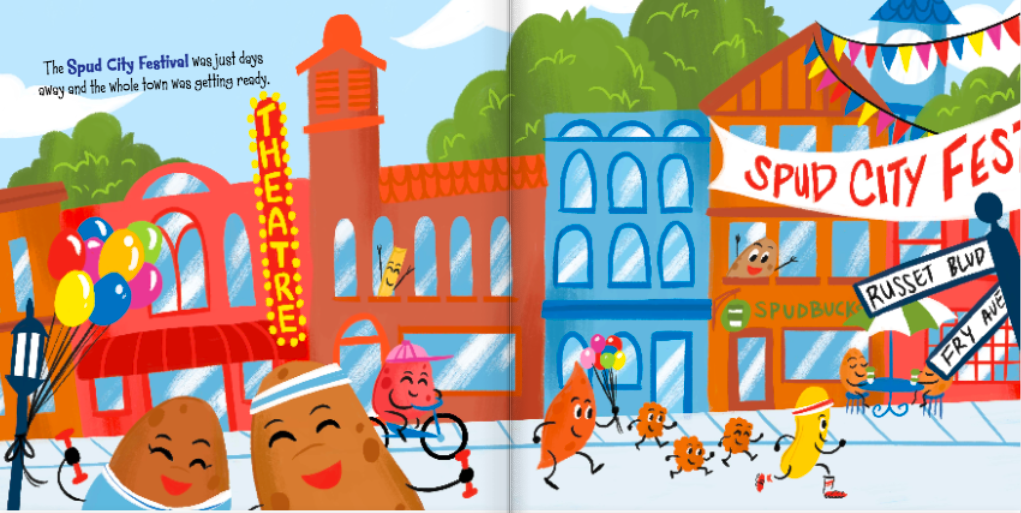
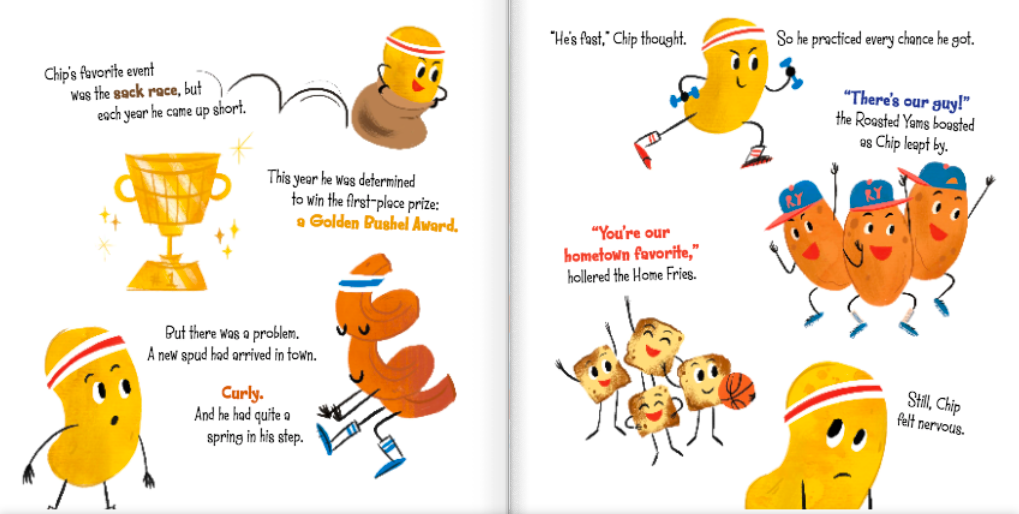
Spud City was about to hold its annual festival, and everyone was excited. Chip was practicing for the sack race. This year “he was determined to win the first-place prize: a Golden Bushel Award.” But a new spud in town—Curly—had a “spring in his step” and seemed to be real competition. Even though the other potatoes cheered him on, Chip was nervous.
On the day of the festival, the race route was lined with spectators. The couch potatoes lounged near the path while “the French Fries stood with their Tater Tots.” Even the sweet potato cheerleaders were waving pompoms and shouting. Just before the race began, Curly took a place next to Chip at the starting line.
Image copyright Joshua Heinsz, 2019, text copyright Cathy Breisacher, 2019. Courtesy of Sleeping Bear Press.
When the whistle blew, Chip took off. He was in the lead until he heard someone behind him. “‘Look out!’ the BBQ Chips shouted. ‘Here comes a hot potato!’” Chip raced on, but then Curly bounced in front of him and even though Chip gave it his all, he couldn’t catch up. A moment later, though, Curly tripped and fell, leaving the path—and the race—wide open for Chip.
Chip hopped past Curly and was in clear sight of the finish line when he realized “he felt rotten.” He glanced back and “hashed it over in his mind.” He decided the only right thing to do was to go back. He offered Curly a hand up, and together they bounded down the route and past the other racers. But Curly was too quick for Chip, and he broke through the tape first. “In an instant, Chip’s dreams of winning were mashed.”
Chip was just about to leave when Curly asked him to be his partner in the relay race. Curly thought they made a great team. They practiced until they found their groove. Everything was looking good until a new team showed up….
Image copyright Joshua Heinsz, 2019, text copyright Cathy Breisacher, 2019. Courtesy of Sleeping Bear Press.
Kids will devour Cathy Breisacher’s pun-filled romp that takes them to Spud City’s annual festival, where Chip and Curly face off to win a Golden Bushel Award in the sack race. While Chip pulls out to an early lead, Curly bounces back and threatens Chip’s years-long dream to win. A misstep by Curly gives Chip the opportunity to achieve his goal, but in his decision, Breisacher shows readers true sportsmanship and integrity. Curly also displays the qualities of a gracious winner, and as the two work together to perfect their relay skills, a friendship sprouts. The final scene offers a funny “oh, no!” moment while also reminding readers that winning can be fleeting, but friendship and staying true to oneself endure.
Joshua Heinsz populates Spud City with a wide array of taters—from tots to waffle fries, sweet potatoes to twice-bakeds, French fries to home fries, and more. Heinsz adds plenty of visual humor to the mix with clever street sign and shop names, and the couch potatoes are, ingeniously, those impossible-to-peel curved ones that lurk in many a 5-pound bag. Kids will love picking out their favorite kind of potato, and the expressive spuds will have readers captivated from the very first page.
For rollicking story times that also offer opportunities to discuss the nature of competition and friendship, Chip and Curly, The Great Potato Race is one to add to your home, classroom, or library shelf.
To learn more about Joshua Heinsz, his books, and his art on his website.
A Chat with Cathy Breisacher
It’s so great to be talking with you again! This must be a really exciting—and busy!—time for you, so I’m thrilled to have you stop by!
You’ve mentioned that the inspiration for this story was a local potato festival. Can you describe that event a bit and tell what sparked the idea for Chip and Curly?
Every year, on the last Saturday in September, a town not far from where I live holds a Potato Fest. The county where it is located is the second-largest supplier of potatoes in the state. People come from all around and a good portion of the downtown area is closed off for the event. There are tons and tons of vendors selling a variety of crafts, and the food vendors whip up all kinds of potato treats: sweet potato fries, potato candy, baked potatoes, pierogi, potato soup, French fries, potato bread, etc. There is live music as well as games for the kids. I love the fall season, and this is a great kick-off to the fall. I try to attend every year. So, in 2016 when I wrote this story, I thought about the potato festival and all of the kinds of potatoes that are sold at the event. The names CHIP AND CURLY came to me and the idea for the story just flowed from there.
Of course, I have to ask—what’s your favorite kind of potato? Do you have a favorite recipe? Would you like to share it?
I love twice baked potatoes. They are probably my favorite. But, there really isn’t a potato I don’t like. I also love perogies and sweet potato fries. Oh my goodness…it’s hard to choose just one.
I’ll share a recipe for Cheesy Hash Brown potatoes that are gobbled up at many family events. They are so easy to make.
CHEESY HASH BROWN POTATOES
26 oz.
Bag of frozen shredded hash brown potatoes (thawed)
2 cups
Sharp cheddar cheese (shredded)
16 ounces
sour cream
1 (10 1/2 ounce) can
cream of mushroom soup
1 ½ sticks
butter
3 cups
Crushed corn flakes
1 teaspoon
garlic salt and pepper to taste
Thaw the hash browns. Melt 1 stick of butter and mix it with the hash browns. Pour into 9 x13 pan. Mix the sour cream, soup and cheese in a bowl. Spread over the potatoes. Melt ½ stick of butter and mix it with the crushed corn flakes. Sprinkle over the potatoes. Bake at 350 degrees for an hour.
Being competitive can take so many forms. Do you consider yourself competitive? If so, in what way?
Yes, I’m definitely competitive. I always want to put 110% into things that I do. If there is a challenge of some sort, I am in it to win it. J In the past couple of years, I’ve been intrigued with Escape Rooms and trying to solve all of the clues before the time runs out. Recently, I heard of an Escape Room that no one has “broke out of” yet. I want to be the first! J
Chip and Curly is loaded with puns and really clever word play! The story must have been a blast, but also challenging to write. Can you talk a little about how you put it all together?
Chip and Curly was definitely a fun story to write. I just pulled out my first version of this story, and it has so few puns in it. I didn’t initially write this story to be punny. But, as I was doing my first set of revisions, a pun popped in my head. More puns came to me as I continued to revise. It wasn’t long before I knew this had to be a story that centered on potato puns. I scoured the Internet to find words associated with potatoes. I must have looked at every list that exists online. The tricky part was to include those words and phrases that fit nicely with the story. I didn’t want to include something just to include it if the word or phrase really didn’t flow with the storyline. My amazing editor, Sarah Rockett, had excellent suggestions for tweaking the story a bit more after she acquired it. And I was delighted with the fun, playful, colorful art provided by the illustrator, Joshua Heinsz.
After practicing for a year to win a Golden Bushel Award for the sack race, Chip makes a surprising decision part way through the race. What would you like kids to take away from the story?
This is the crucial part of the story. I want kids to know that competing can be a lot of fun. And it can feel good to win at something, too. However, practicing good sportsmanship is important and helps build character. When we show respect toward our opponents, we can still have fun and compete, but it helps us to keep our focus on what’s most important—treating one another the way we want to be treated.
Since CaveKid Birthday was released in March, what’s been the best part of being a published author? The most surprising? As a librarian, how does it feel to see your own book on your library’s shelf?
Gosh, there is so much I am enjoying about being a published author. I love meeting new people (kids and adults) at book events and talking with them about stories. It has also been a treat to see friends and family who I haven’t seen for a while. Being a school librarian, I get an extra treat when kids ask to check out my book. That has truly meant the world to me. When my students tell me they love my books, my heart just completely melts.
During our first interview for CaveKid Birthday how did I miss that you’re from Hollidaysburg, Pennsylvania? Does the town live up to its celebratory name? Do you have a favorite town celebration or spot to write or visit?
Hmmm…very good question. The town where I live is a true community. People really get behind and support the schools, sports teams, agencies, fundraising events, etc. So I guess you can say that the people who live in Hollidaysburg celebrate one another’s aspirations and accomplishments. I am proud to live in this town. I do have a few favorite spots that I like to visit. There are a couple of parks that are so beautiful and serene. They are a great place to spend timejyeither alone or with family and friends. As for a favorite town celebration, I would have to say the Winterfest Light-Up Night that is held at the end of November each year. There are festivities in the downtown area and everything is decorated for Christmas. Local restaurants hold soup samplings and people vote on their favorite. Santa arrives and a giant tree is lit up that evening. There are ice carvings, too. It’s such a fun night and everyone is in the holiday spirit.
Thanks, Cathy! I can’t wait to try those delish-sounding potatoes! I know you’ll have lots of fun with Chip and Curly, and I wish you all the best with all of your books!
Love is in the air! Love for family, friends, and our special valentines. Begun as a religious feast day, Valentine’s Day became a day of romance with the bloom of courtly love during the 14th century. In England during the 18th century, those in love began showing their affections by giving flowers and candy and making valentine’s cards. Now, Valentine’s Day is one of the biggest holidays on the calendar and a favorite of adults and kids alike.
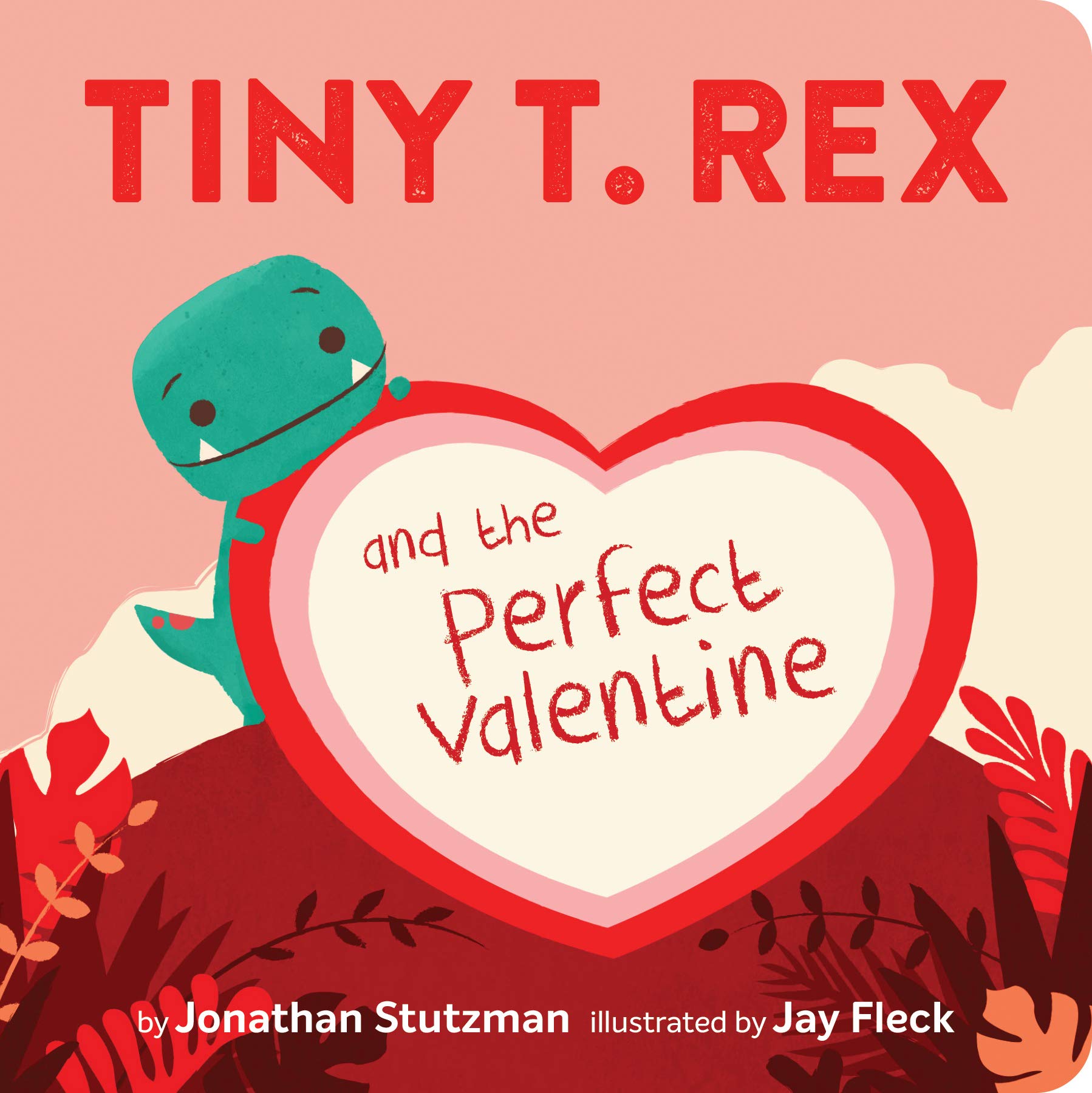
Tiny T. Rex and the Perfect Valentine
Written by Jonathan Stutzman | Illustrated by Jay Fleck
Anyone who knows Tiny T. Rex knows that his best friend is Pointy. And if you know that Pointy is Tiny’s best friend, then you know how much Tiny likes to show his affection for him. So you can imagine that for Valentine’s Day, Tiny wants to make Pointy a perfect card. In his mind, Tiny pictures a big shiny heart with four heart balloons on top. On the front there will be a bow and two hearts that will pop out on springs. Fireworks will also shoot into the sky. “It is going to be perfect,” Tiny thinks. He wheels a big can of red paint over to where his huge white paper heart lies on the floor. But “Oh dear,” the wagon overturns spilling the paint on Tiny, but nowhere near the heart.
Image copyright Jay Fleck, 2020, text copyright Jonathan Stutzman, 2020. Courtesy of Chronicle Books.
At least, Tiny thinks, he can “make it extra fancy” with some glitter. He climbs to the top of a ladder and tips the jar to get some glitter. But “Oh my,” Tiny and the tall jar tumble, and Tiny gets covered in gold, red, and pink flakes. “It will take many tries to make this perfect,” says Tiny. Next, he tries to make the smaller hearts, but the scissors are so unwieldy, and the hearts turn out not quite perfect. Then when he writes Pointy’s name on the Valentine, it doesn’t look quite right.
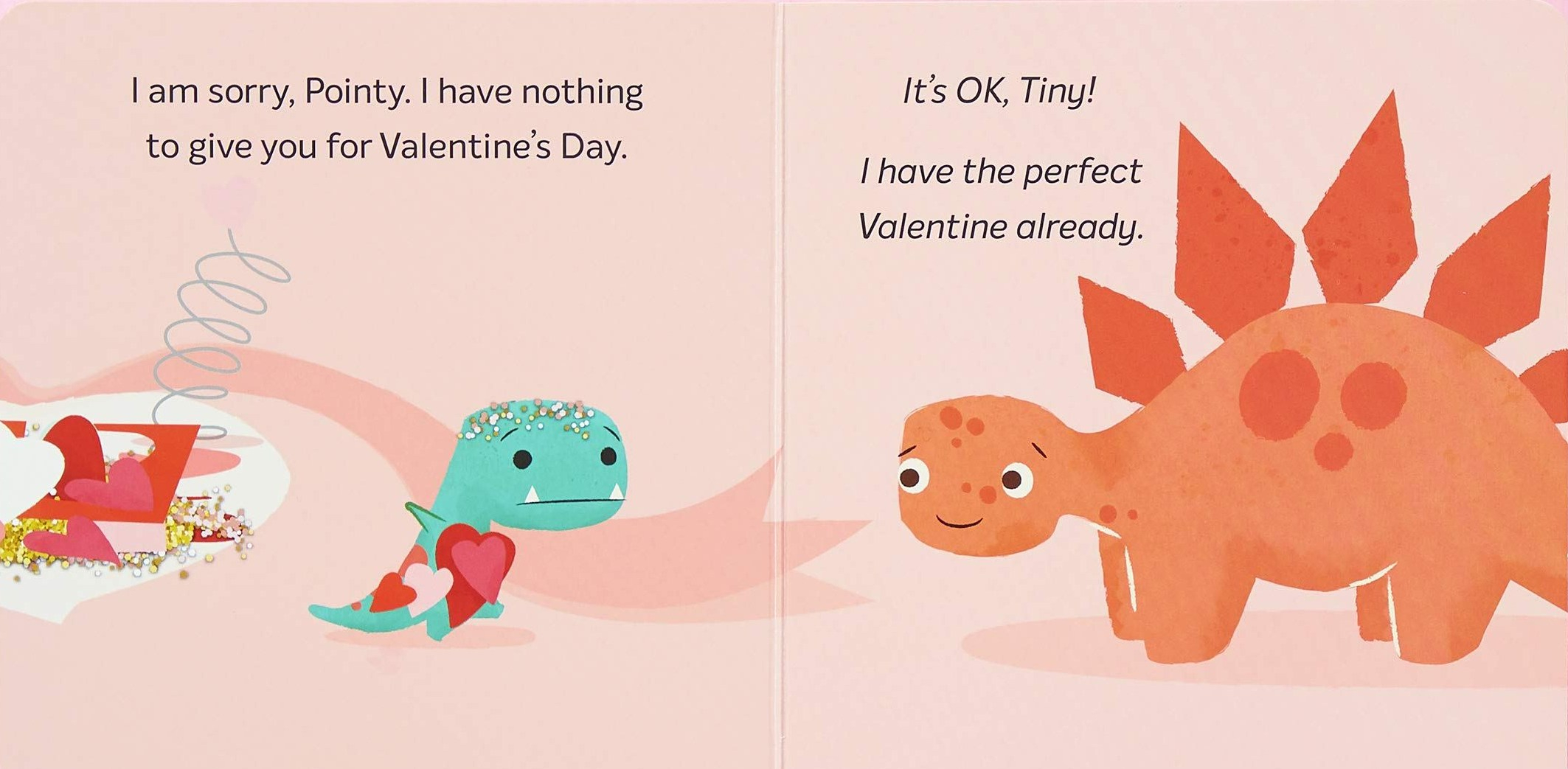
Tiny tries again “and again and again,” but something always goes awry, and Tiny becomes festooned with hearts. Finally, all Tiny has “…for Pointy is a very big, very messy…mess.” When Pointy arrives, Tiny has to apologize for not having a Valentine for him. But Pointy says that’s okay because he already has the perfect Valentine. Can you guess who?
Image copyright Jay Fleck, 2020, text copyright Jonathan Stutzman, 2020. Courtesy of Chronicle Books.
Jonathan Stutzman’s endearing dinos are back with a message about love and friendship in this adorable Valentine’s Day board book. As Tiny T. Rex suffers little mishaps while making Pointy’s Valentines, little ones will “Oh no” and “Oh my” along with him, but also find themselves giggling as Tiny becomes covered in paint, glitter, and hearts. Tiny’s declarative statements echo the way children think and speak, and with each unexpected tip or snip, kids will eagerly want to see what happens next. Stutzman’s sweet ending provides the snuggly reassurance that every Valentine wants on this special day.
Jay Fleck’s beloved itty-bitty green dinosaur and his red friend, Pointy are as cute as ever. Tiny’s chalk drawing is, like many children’s imagined projects, elaborate but full of love. Images of Tiny falling into the paint and glitter, cutting up the small hearts, and misspelling Pointy’s name will make readers’ heart’s swell. Tiny’s determination to try again and again is charming, and kids on the upper range of the target audience may like to predict what will happen in the end. Pointy’s heartfelt assurance that Tiny is the perfect Valentine turns his disappointment into a warm grin.
Heartwarming and adorable, Tiny T. Rex and the Perfect Valentine will make any little one’s holiday perfect. For fans of these dino best friends or newcomers to the three-book series, the book will make an often-asked-for addition to home bookshelves and libraries.
Today’s holiday was established by Food for Health International to encourage people to take a holistic approach to taking care of themselves, benefitting not only their bodies but their emotional health as well. Celebrating all that life has to offer and taking time out from work to enjoy time with family and friends goes a long way towards greater happiness and health. The events of this past year have prompted all of us to find new ways to spend time together, help each other, find comfort, and celebrate successes and good times. Today I’m celebrating the Book Birthday of a moving reminder that there are always better days ahead.
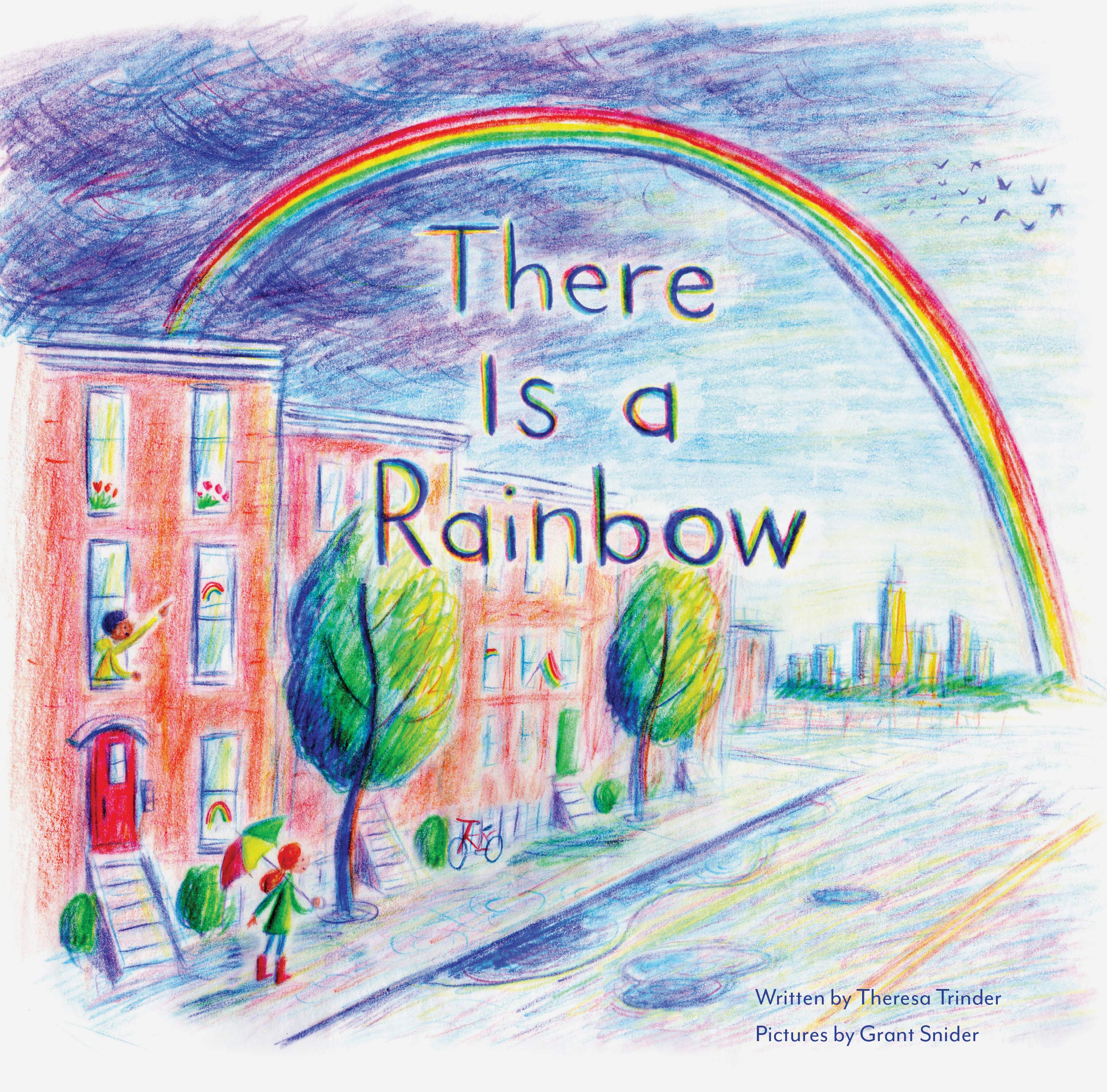
There Is a Rainbow
Written by Theresa Trinder | Illustrated by Grant Snider
As two children add the finishing touches to their rainbow chalk drawing—clouds at both ends—Theresa Trinder’s tender story opens with “A story has a beginning and an end.” And just like the ends of a rainbow, every story has “something in between.” The girl and boy say goodbye, and the boy heads down the block to his house.
Image copyright Grant Snider, 2021, text copyright Theresa Trinder, 2021. Courtesy of Chronicle Books.
The girl sits on her front stoop and watches the rain fall and the colors of their rainbow flow into each other on the wet sidewalk. She goes inside and picks up her computer, where “on the other side of [her] screen” are her classmates. She waves at them and smiles while she does her work. At home, the boy begins painting stripes on the windows—stripes that form another rainbow for all the neighbors to share.
Image copyright Grant Snider, 2021, text copyright Theresa Trinder, 2021. Courtesy of Chronicle Books.
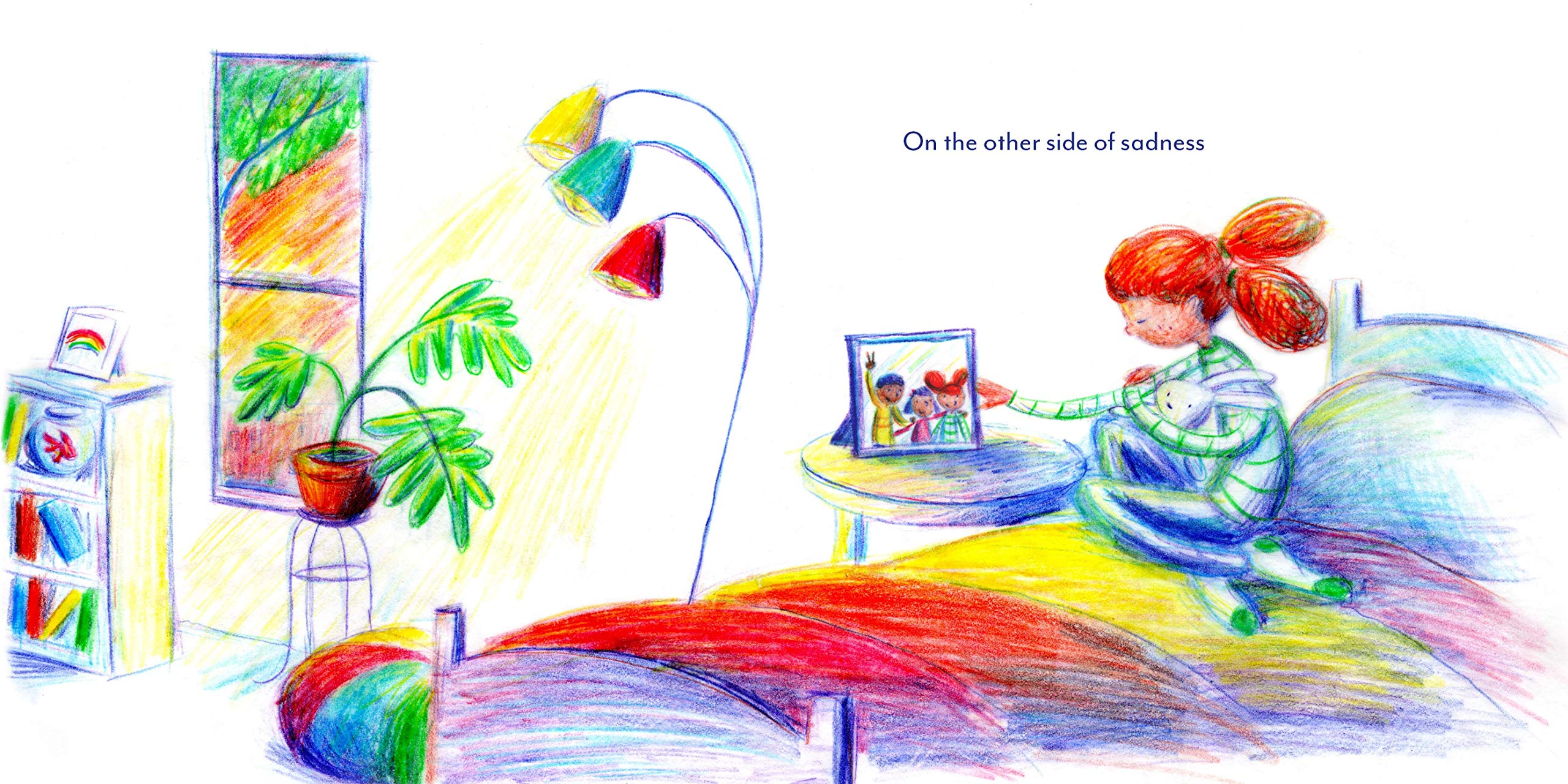
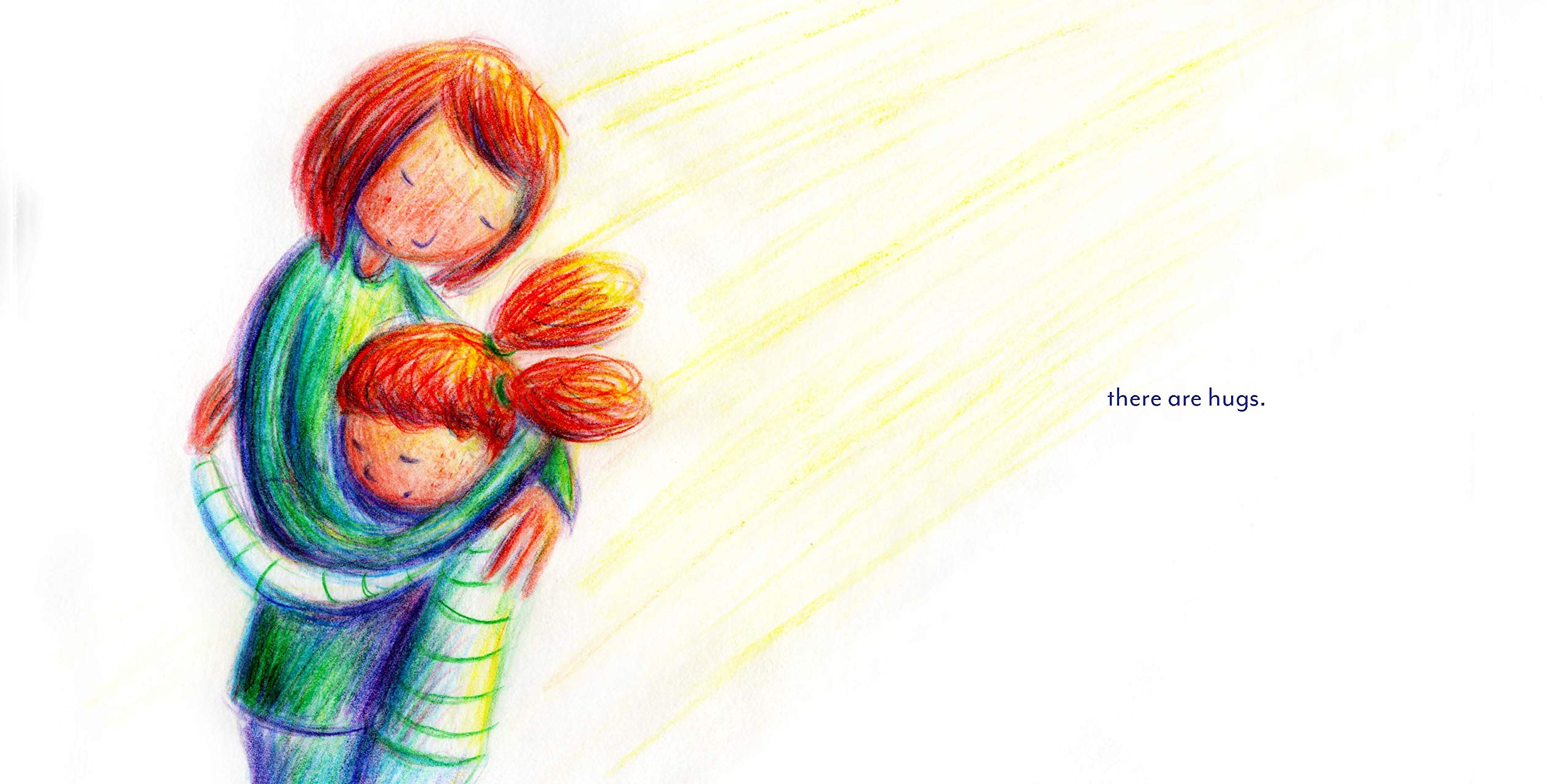
Later the boy crosses the street to put a letter into the mailbox—a letter that connects him to his grandma across town. Night falls, and the girl cuddles a stuffed rabbit as she looks at a photo of the friends she misses. But “on the other side of sadness,” the girl knows as she seeks out her mom, “there are hugs.” A rainy day brings the boy and girl together again as they race down the sidewalk toward each other and stop to see that in a puddle “there is a rainbow.”
Image copyright Grant Snider, 2021, text copyright Theresa Trinder, 2021. Courtesy of Chronicle Books.
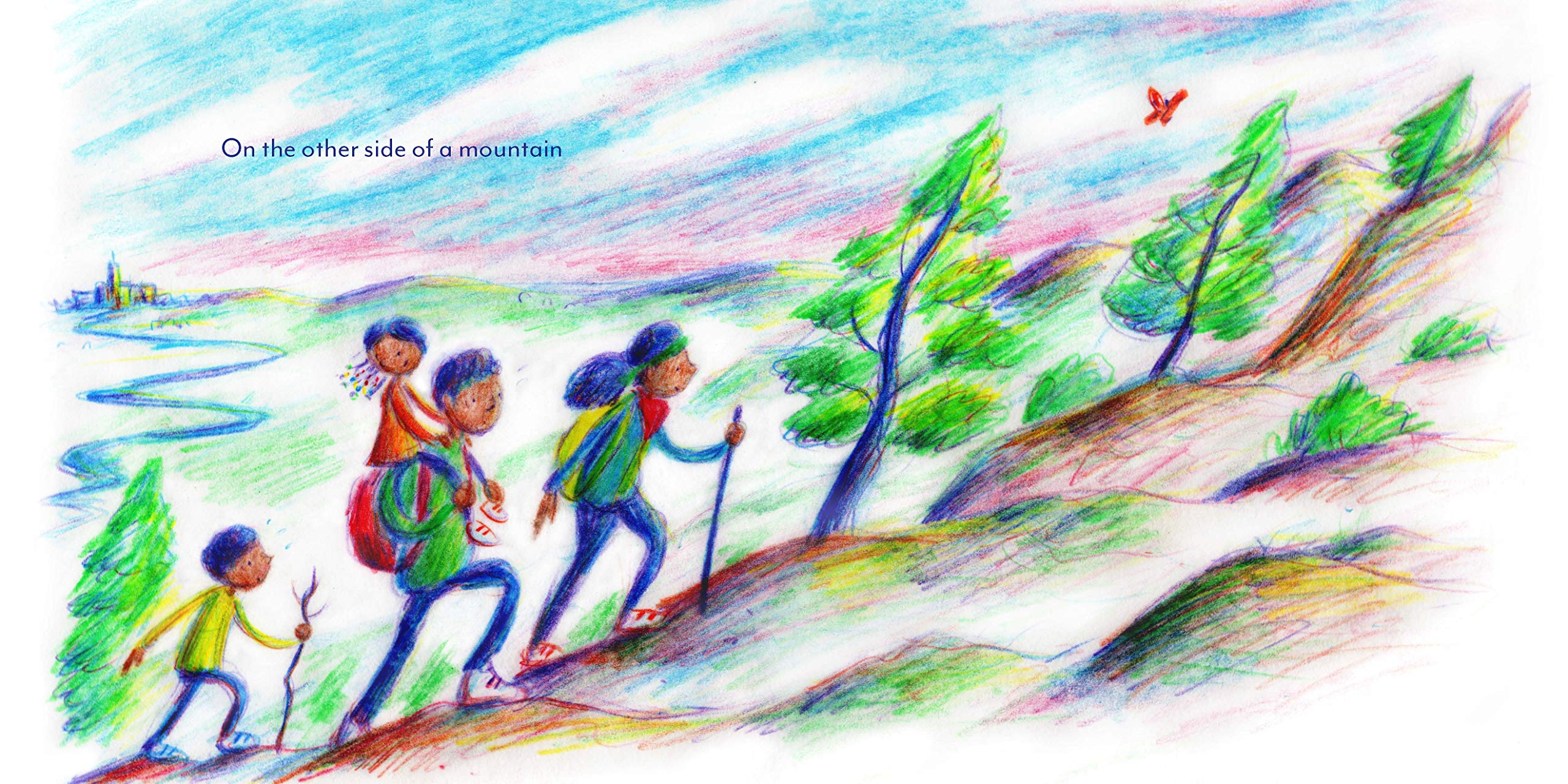
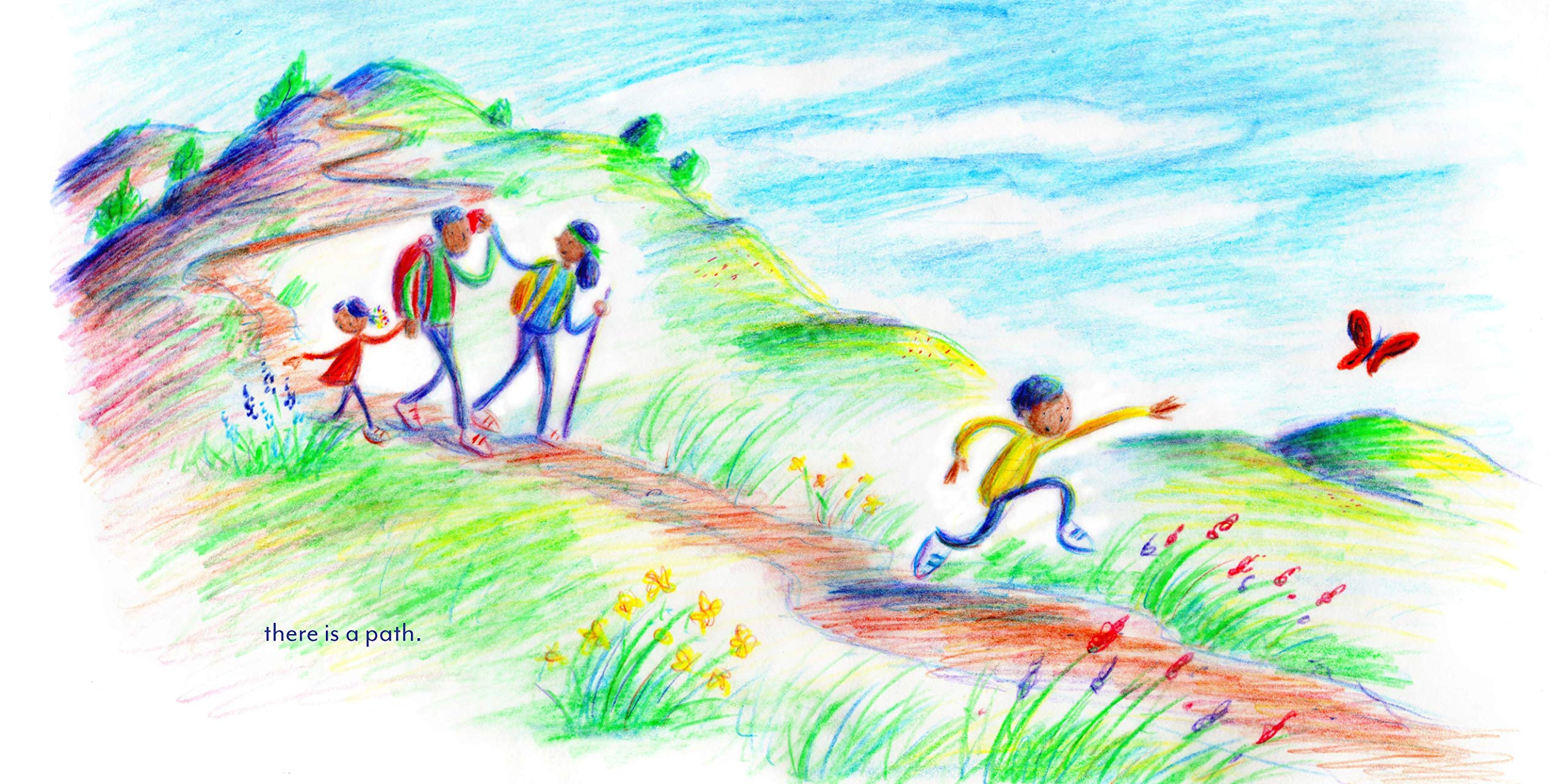
Theresa Trinder’s lovely book, written at the beginning of the COVID-19 pandemic that altered the way we interact with others, is a reassuring reminder for children, and adults as well, that they are not alone and that better days do lie ahead. Through her spare text, Trinder allows even very young children to make the clear connection between a barrier and a bond or a challenge and a solution. Trinder’s inspirational storytelling includes concrete concepts that will resonate with kids, such as using a computer or looking out of a window to embrace their world of neighbors, friends, and the familiar, as well as more abstract ideas that will broaden their understanding of the promise that exists. She includes both a river and a mountain, two objects that can seem mysterious or insurmountable, and reveals that even these lead to hopeful possibilities. A poignant and meaningful book to share during these times, Trinder’s story also promises uplifting assurance any time it is needed.
Image copyright Grant Snider, 2021, text copyright Theresa Trinder, 2021. Courtesy of Chronicle Books.
Grant Snider’s scribbled childlike illustrations are moving reflections of the lead kids took in responding to the pandemic lockdowns as well as their seemingly infinite capacity for optimism and resilience. Readers will respond to Snider’s vivid rainbow hues and images that are as current as distance learning and rainbows in windows and as comforting as playing with friends, talking with loved ones, and helping neighbors. Kids will like pointing out all of the actual rainbows and messages of hope in the illustrations as well as discovering how the promise of rainbows can be found in the colors all around them.
A superb and timely book to read and discuss with children, There is a Rainbow offers comfort, understanding, and hope when it’s needed most. The book is highly recommended for home, classroom, and public library collections.
Ages 4 – 7
Chronicle Books, 2021 | ISBN 978-1797211664
Discover more about Theresa Trinder and her books on her website.
To learn more about Grant Snider, his books, and his art visit his website.
Meet Theresa Trinder
Theresa Trinder spent a decade at Hallmark Cards, where she wrote and edited children’s books. She has also developed literacy curricula and has an MFA in Poetry. She was inspired to write this book by the rainbows made by her family during the COVID-19 Shelter in Place in Greenlawn, New York.
Hi Theresa! Congratulation on your Book Birthday today! I’m excited to get a chance to talk with you today about your beautiful book.
There Is a Rainbow is an especially comforting story for all that kids are going through right now as well as being reassuring for any time. Can you talk a little about how this story came to be?
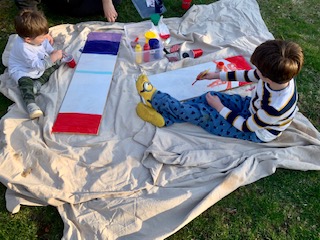
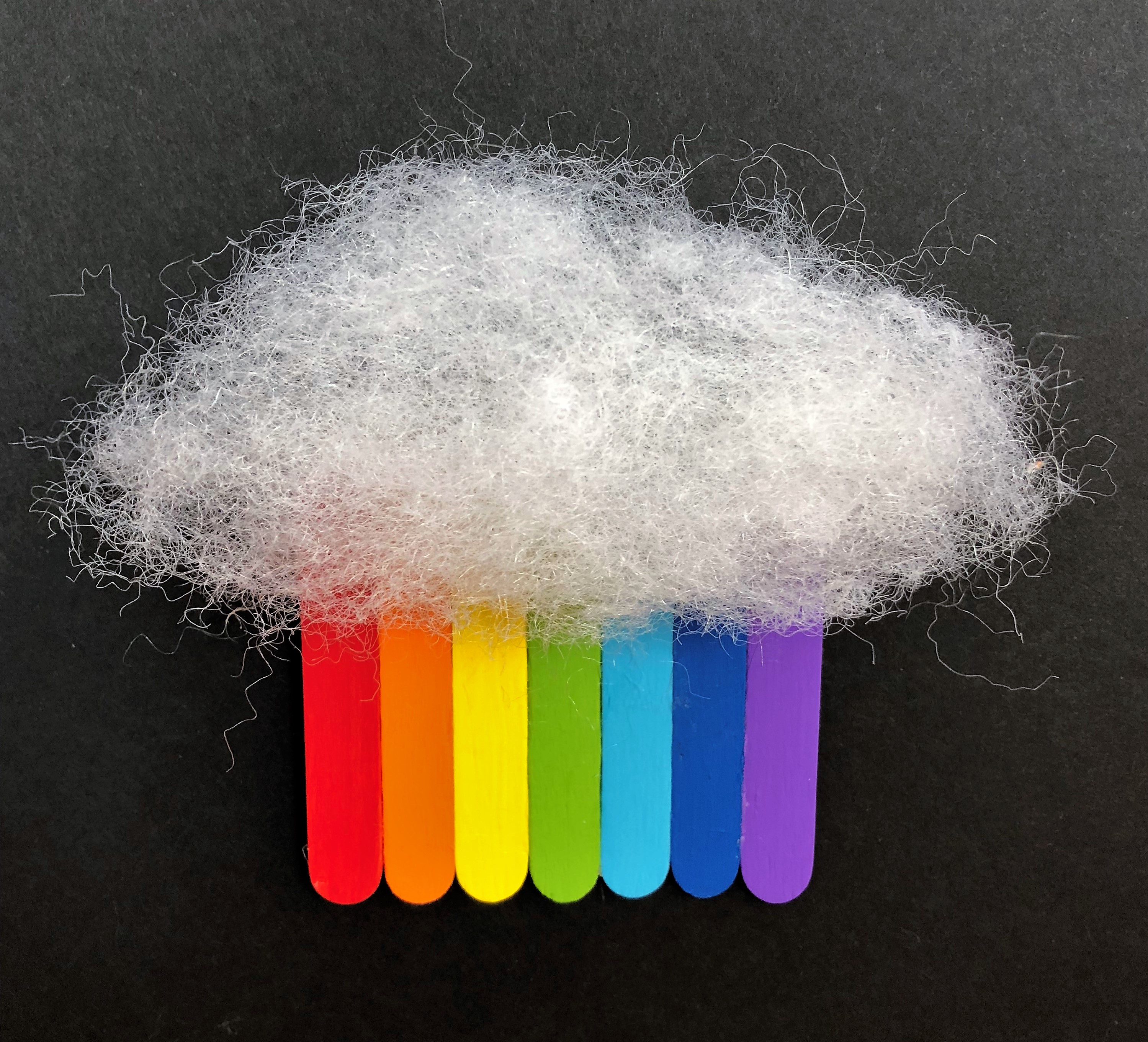
In short—the rainbows. When I started writing, New York was in a bad place. Everyone was either suffering or afraid. Or both. We’d just said goodbye to my mom and dad, not sure when we were going to see them again, and my kids didn’t get it. They were so incredibly sad. And there were (and still are) so many families going through so much worse. But then, these beautiful rainbows started popping up everywhere. A neighbor friend drew a message for my son on our driveway. And kids everywhere were making signs for health care and essential workers, thanking them and cheering them on. With all our kids were going through themselves, they just kept lifting everyone else up. To me, kids are the heroes of this moment, and, to me, that’s what the book is really about.
Theresa’ children painting rainbows
As someone who writes in various genres and who has achieved the goal of becoming a published author, can you briefly describe your journey? Did you write as a child and always want to have a career in writing, or did your interest in writing come later?
I’ve always loved books, and I’ve always loved writing. I’ve always had to earn a living, though, too—so my path to publication was a little winding. But I’ve somehow managed to always have books in my life. I started as an intern in the Scholastic book clubs, then moved on to educational publishing, then into the Books division at Hallmark Cards. Over the years I’ve gotten to make all kinds of books for all kinds of readers. But I stopped working full time when my second child was born, and I realized: if I want to make books now, I’m going to have to write them myself. Which was sort of freeing—and sort of terrifying. But here we are!
What does it mean for you as an author to give families a way to share their love and encouragement not only in There Is a Rainbow but also in the books you wrote for Hallmark Books—All the Ways I Love You, I’m Thankful for You, and interactive board books Hello, Baby!, Look, Baby! and Peekaboo, Baby!
I don’t know about There Is a Rainbow yet. When it’s out there in the world, I hope it does give families a way to connect—and a way to feel hopeful about what’s to come. And it’s my first trade publication, so it’s very exciting. And the board books are fun. It’s so amazing to see tiny baby fingers try to figure things out. But All the Ways I Love You was a one-of-a-kind experience. Hallmark developed a technology that allowed someone to record their own voice reading, then play it back as a child turned the pages. And we got so many letters from so many people, telling us things like “My husband is deployed overseas but now he ‘reads’ to our daughter every night” and “My mom recently lost her battle with cancer but left her grandson this book, and it’s helping to keep her memory alive.” You can’t really get much closer to people than that. To me, that’s everything.
It’s so true that those cozy moments with a book are unforgettable bonding experiences.Can you talk a little about how important it is for children to be read to often?
What does the data say? Kids need to hear something like 20,000 words per day? And they can’t all be “No,” “Shh,” “Get off the table,” “Please don’t eat that,” etc? So, yes, books are an excellent way to fill the gap, especially on days when you just…can’t. Which I think all parents are feeling right now.
Grant Snider’s illustrations for There Is a Rainbow are so wonderfully distinctive. Can you share a little about Grant was chosen to illustrate the book? What were your first thoughts when you began to see his illustrations? Did they undergo many changes? How was the cover chosen?
I’m not privy to the whole process but Grant literally brought all the color to this book. The text is purposely pretty spare, and he created the visual story arc. I don’t want to spoil anything, so I’ll just say it was really neat to see his thought process—how he created these characters and brought them full circle at the end.
The books you’ve written give families an opportunity to share fun and thoughtful moments together. How has your own family supported you in your writing career?
I had—and still do have—the kind of parents who always said you can be whatever you want to be. Though I do remember my mom telling me to “Stop reading and go outside” every now and then, which was annoying at the time but is actually pretty good advice. My husband and kids are the same way. We’re just…really busy at home these days. It’s hard to carve out the time, but I think everyone reading this right now can probably say the same. (Though I’m super grateful they’re spending their precious little time reading this interview!)
In your bio, you say two of your favorite things is hearing a funny joke and making weird faces. It sounds as if you have an ear and eye for humor. Does your sense of humor influence your writing? Would you like to share a favorite joke?
Ha! I’m quite deadpan, actually. But my kids have been practicing telling jokes, so we have been laughing a lot—but mostly because they tend to botch them a bit. For example, “How do you make a tissue dance?” (Long pause) “You put a little burger in it!” Hahaha, see what I mean?
HaHa! That’s so great! I miss those days in my own house!
What’s the best thing about being a children’s writer?
For me, it’s being able to do the thing I love. So few people actually do, so I know how rare and amazing it actually is. I feel grateful every day.
What’s up next for you?
Piles of laundry, probably. But after that I hope to get back to a picture book I’m working on. I recently scrapped the latest and started from scratch—which I needed to do, but then I needed to walk away from it for a few weeks. I think it’s safe to go back now.
Thanks, Theresa for talking with me today—it’s been a joy! I wish you all the best with There Is a Rainbow and all of your books.
As the cold and snowy weather keeps kids inside more and more, what are they to do? Why not create?! Whether your kids like writing, drawing, cooking, building, music, gardening, dancing, or other pursuits, January’s celebration of creativity makes it the perfect time to begin a new project. And with Valentine’s Day right around the corner, why not stock up on supplies and make some sweet treats – like in today’s book!
Thanks to Tara Knudson for sending me a copy of Valentine’s Day Treats for review consideration. All opinions on the book are my own.
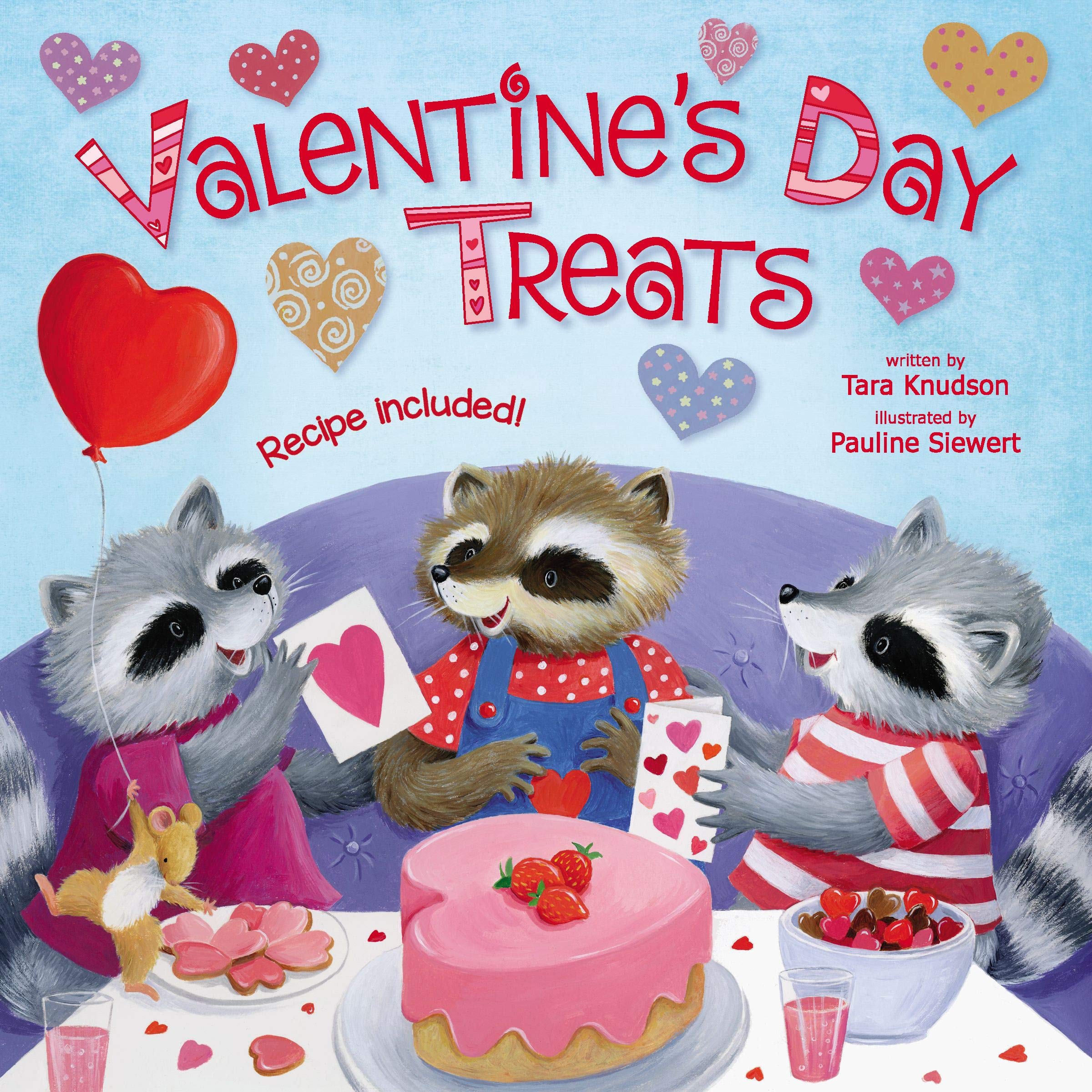
Valentine’s Day Treats
Written by Tara Knudson | Illustrated by Pauline Siewert
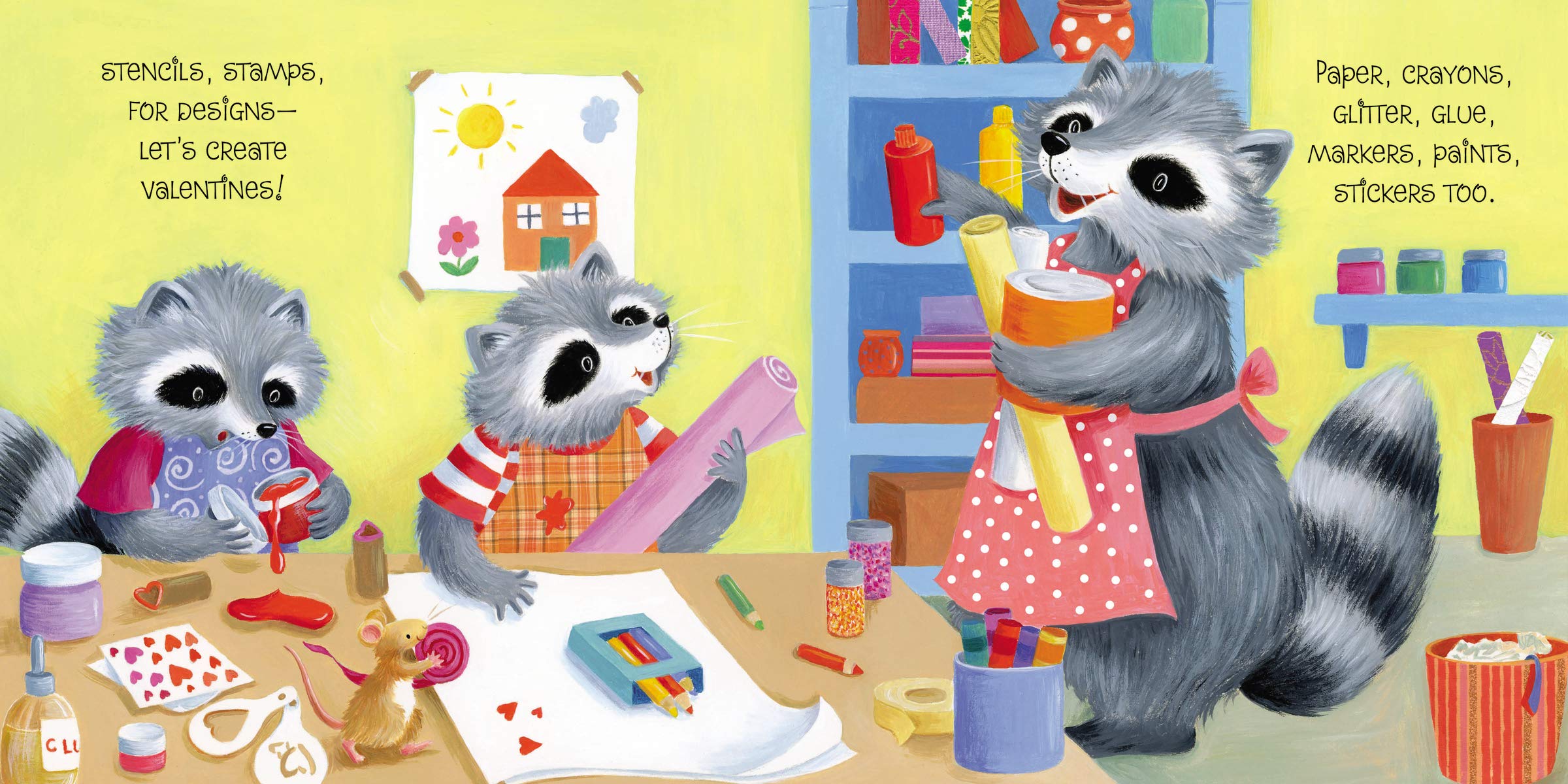
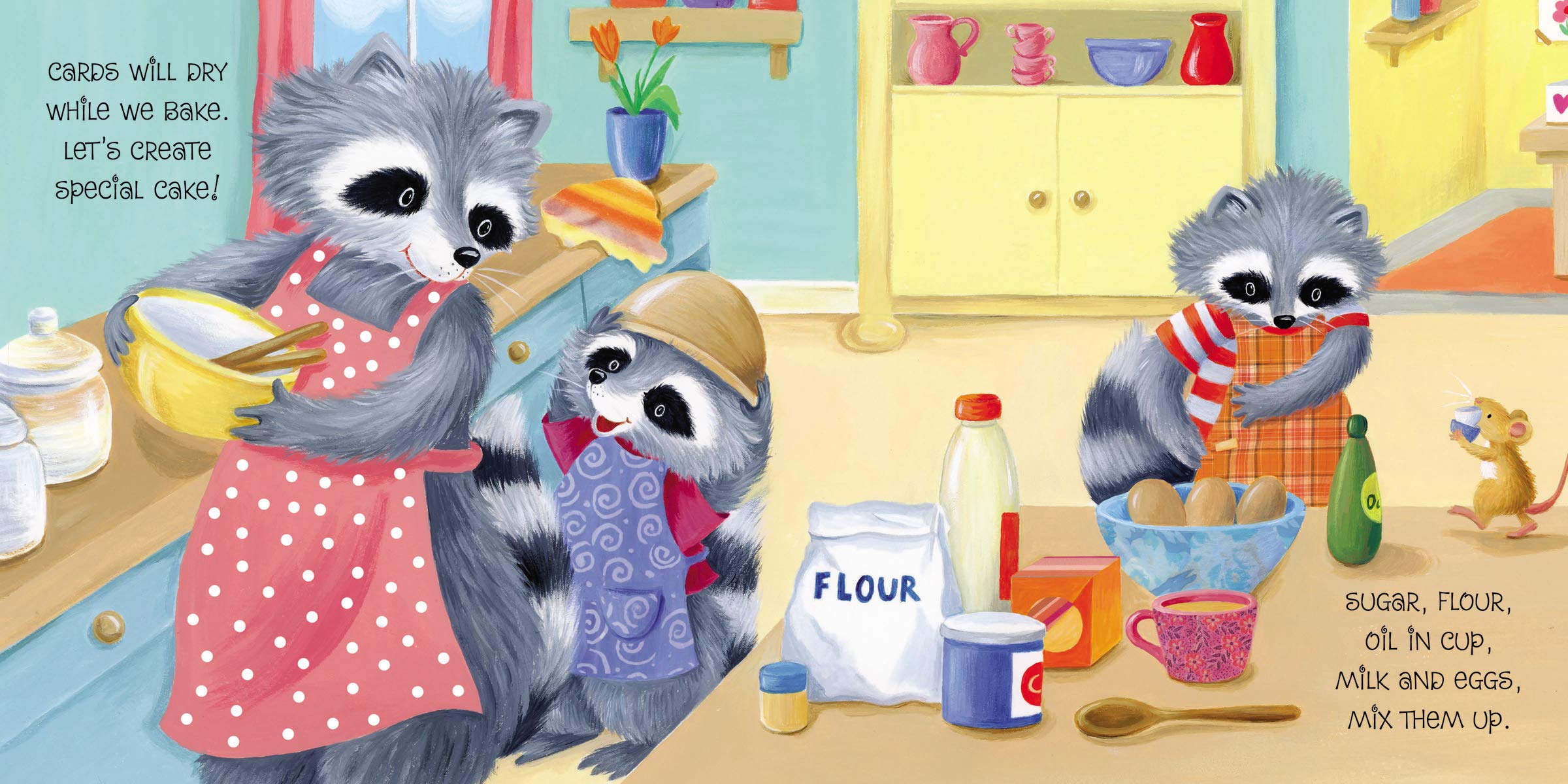
Mother Raccoon is gathering all the supplies her littles need to make Valentines. She helps them cut out red and pink hearts, then they add glue and paint and sparkly glitter, bows and butterflies, and lots more hearts. While the cards dry, Mama and her little ones head for the kitchen, where they get out bowls and pans to make a special cake.
Image copyright Pauline Siewert, 2020, text copyright Tara Knudson, 2020. Courtesy of Zonderkidz.
They measure out “Sugar, flour, / Oil in cup, / Milk and eggs, / Mix them up.” They pour the batter into two pans—one square and one round—put the pans in the oven and wait. “Brrrring, they’re done— / Perfect cakes!” When the cakes have cooled, Mama Raccoon slides the two cakes onto plates and cuts the circle in half.
The little raccoons put the shapes together just right to make a heart. They spread on frosting to make it whole and then comes the fun: “Sprinkles on, / Decorate. / Can’t eat yet! / Have to wait.” Finally, it’s time to walk down the street to their friends’ house for a Valentine’s Day feast, complete with heart-shaped cakes to share. Afterwards, the kids hand out their cards. They all laugh and smile as they read them. “Each a gift, / Fun designs, / Made with love— / Valentines.”
A recipe for the raccoon family’s special Valentine’s Day cake follows the story.
Image copyright Pauline Siewert, 2020, text copyright Tara Knudson, 2020. Courtesy of Zonderkidz.
When my son was very little, he LOVED Valentine’s Day. He couldn’t make enough Valentine’s cards and crafts it seemed to express all of his sweet feelings. Tara Knudson captures that joy and enthusiasm for the holiday in her warm rhymes that transport kids into the middle of exciting Valentine’s Day preparations. As the little raccoons cut and paste, color and paint, and add stickers and lots of glitter, kids will be eager to get out their own supplies to make homemade cards for those they love. And just one look at Knudson’s clever cake will have them running to the kitchen to make that too. But Valentines are to share and just as the young racoons in the story, readers will have to wait… a page turn… to see who gets the special treats.
Pauline Siewert’s adorable raccoons craft and cook their way through Valentine’s Day to make special cards and snacks for their friends. Her vivid images are cheerful and lively and charmingly include the little spatters and splashes that are all part of the fun. Little ones will enjoy soaking up all the details in the craft room, the kitchen, and the friends’ house and pointing out the ones they know. When adults point out these details while reading, kids will find it easy to read along too, as Knudson uses them to make her bubbly rhymes and flowing rhythm. Kids will also like keeping their eye on the tiny house mouse who is also making itty-bitty Valentine’s Day treats.
A sparkly and cuddly board book little ones will want to hear again and again for Valentine’s Day and throughout the year, Valentine’s Day Treats would make a sweet gift for grandchildren or other littles on your list as well as favorite addition to home, preschool, and public library bookshelves.
Ages Baby – 4
Zonderkidz, 2020 | ISBN 978-0310768395
Discover more about Tara Knudson and her books as well as Valentine’s Day Treats coloring pages and on her website.
There’s nothing cozier during the month of January than enjoying a steaming cup of your favorite, flavorful tea as the temperature dips and the snow swirls. To celebrate this month’s holiday, why not try a new kind of tea, or you could even try a virtual tea party! Many teas have health benefits and can help you relax and get a good night’s sleep. This drink has been around for thousands of years and is enjoyed the world over. So boil up some water, grab the honey or sugar, add a splash of milk if you like, and enjoy!
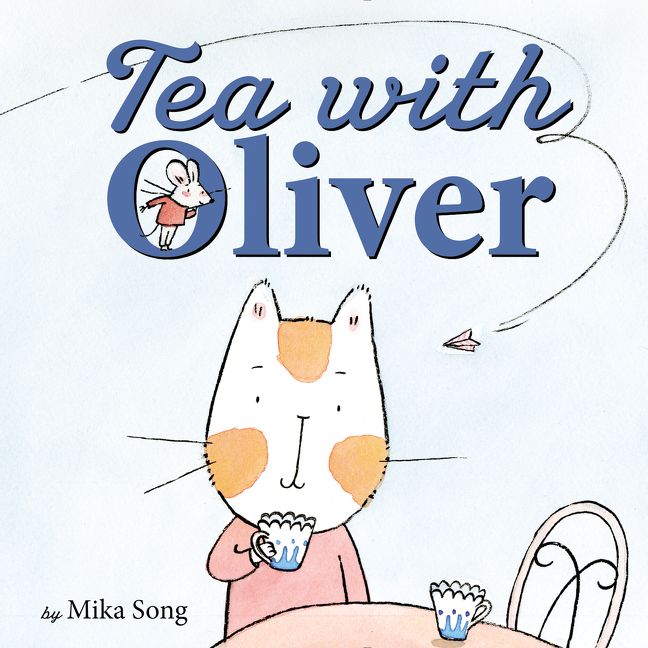
Tea with Oliver
By Mika Song
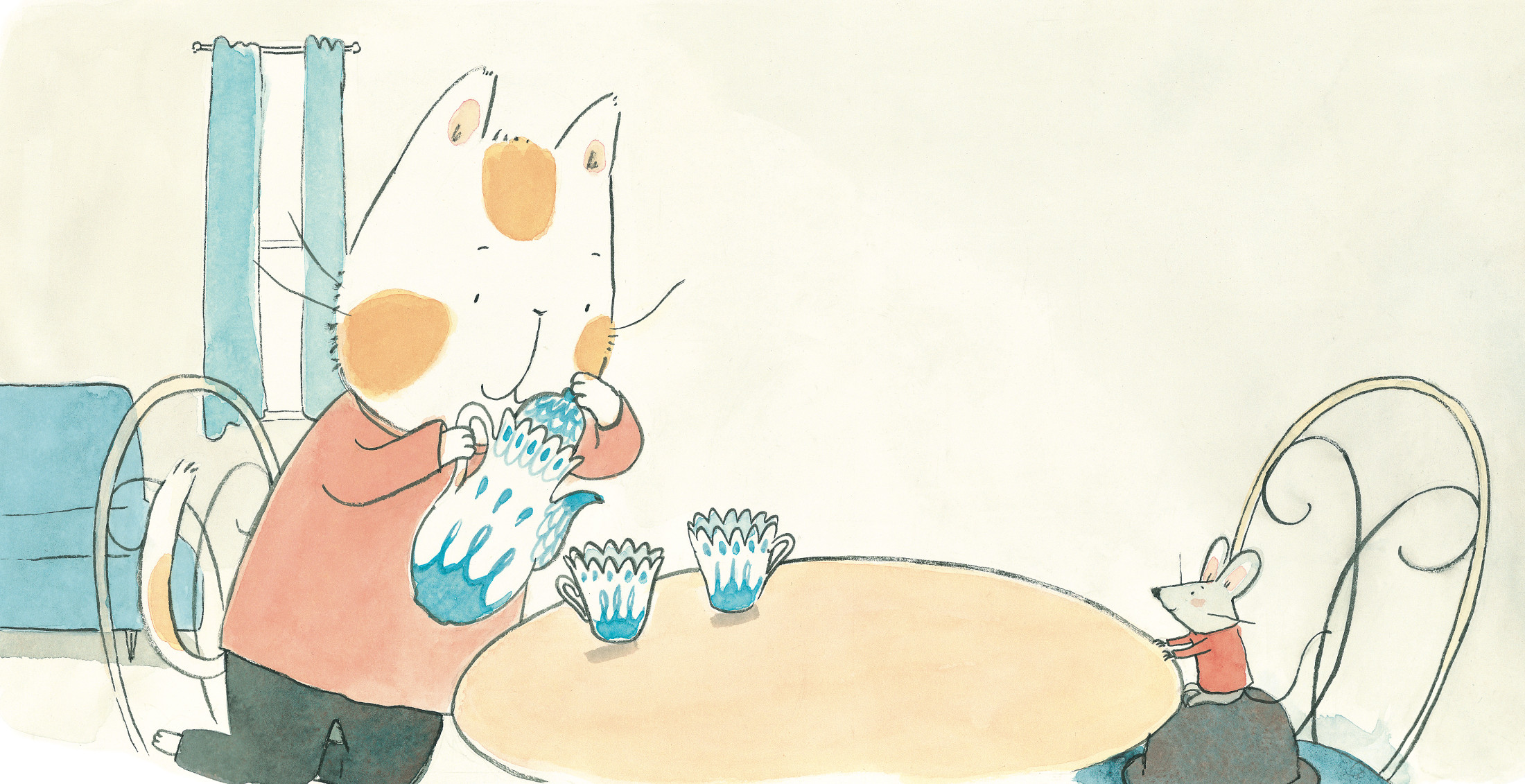
Oliver the cat sits at his kitchen table, holding a conversation with himself. It’s something he does “a lot.” He’d like to have a cup of tea, but wonders who will join him. Philbert, the little mouse under the couch calls up that he would be happy to drink tea with Oliver, but Oliver doesn’t hear him and Philbert is “too shy to come out.” Meanwhile, Oliver is having a tea party with his teddy bear.
Copyright Mika Song, 2017, courtesy of mikasongdraws.com.
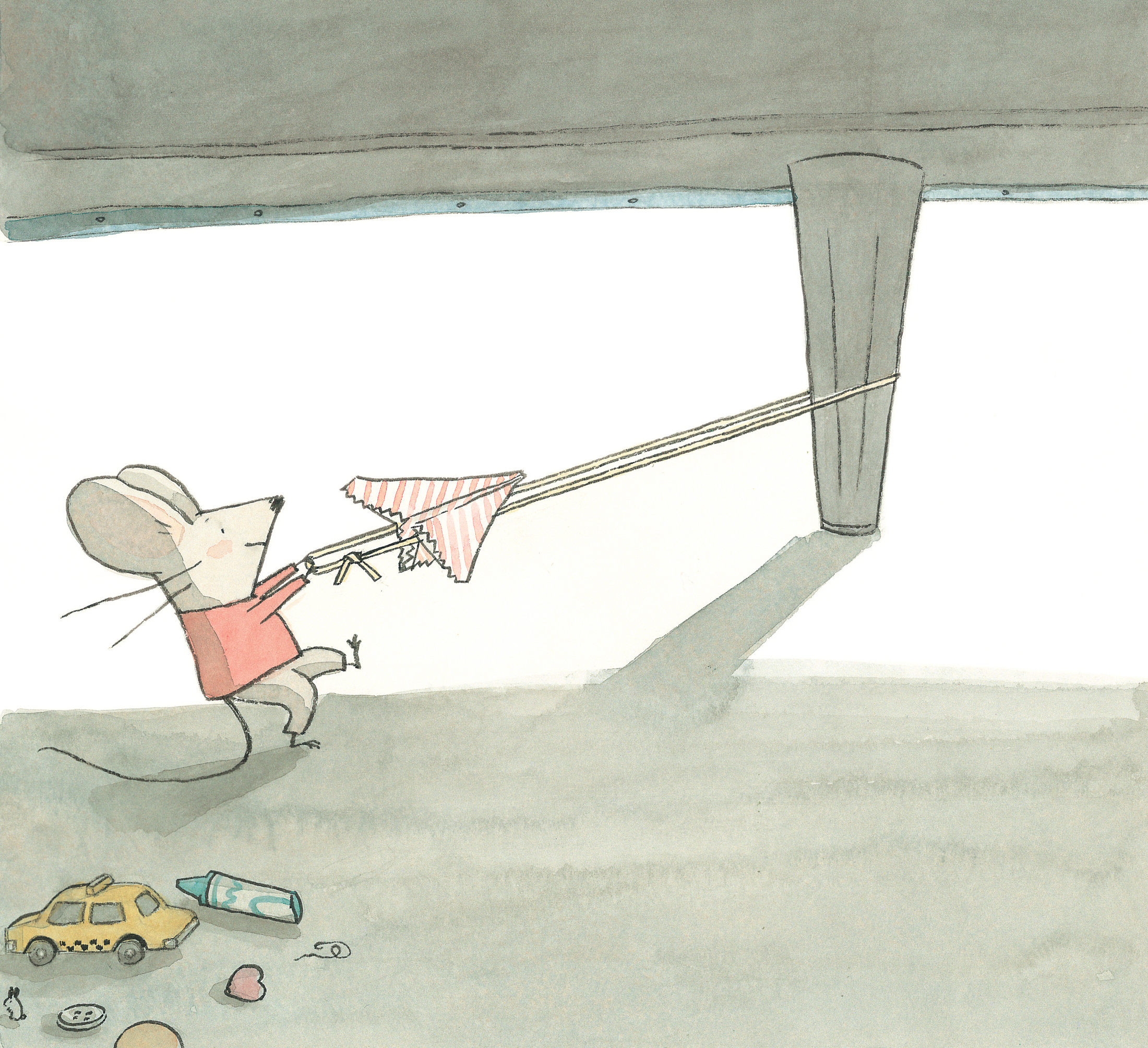
“Philbert decides to write Oliver a letter. ‘Dear Oliver, Let’s have tea,’” it reads. Philbert secretly hopes they have cookies too. Now, though, Oliver is cleaning the floor, and Philbert’s letter gets swept back under the couch. While he sweeps, Oliver sings about his lonesomeness, and Philbert tries another tactic. He folds his note into an airplane and shoots it into the air. Instead of floating into Oliver’s field of view, however, it hits him in the back. “Eek! A flea!” Oliver cries. He dances around, scratching and itching and completely misses the note.
Copyright Mika Song, 2017, courtesy of mikasongdraws.com.
Philbert is just imagining what to do next when someone knocks on the door. When Oliver opens it, his wild cousin Lester leaps in playing his banjo. Oliver invites him for tea. “I’m throwing a party,” Lester says, “but I guess there could be tea.” Philbert’s ears perk up. He wants to go to this tea party. Feeling brave, Philbert decides to deliver his note to Oliver personally.
It seems Lester’s party is at Oliver’s house, and before Philbert can deliver his letter, the guests start arriving. The guests are too boisterous and bouncy to want tea, and Philbert, wanting to stay out of the way, flattens himself against the floor. “I don’t like this party one bit,” he tells himself. Oliver tries to serve tea to some other guests, but they’re dancing and too busy for tea. From far below, Philbert shouts, “Me! I want tea!” But Oliver doesn’t hear him. Then one guest bumps into Oliver, and his tray of teacups goes flying.
Copyright Mika Song, 2017, courtesy of mikasongdraws.com.
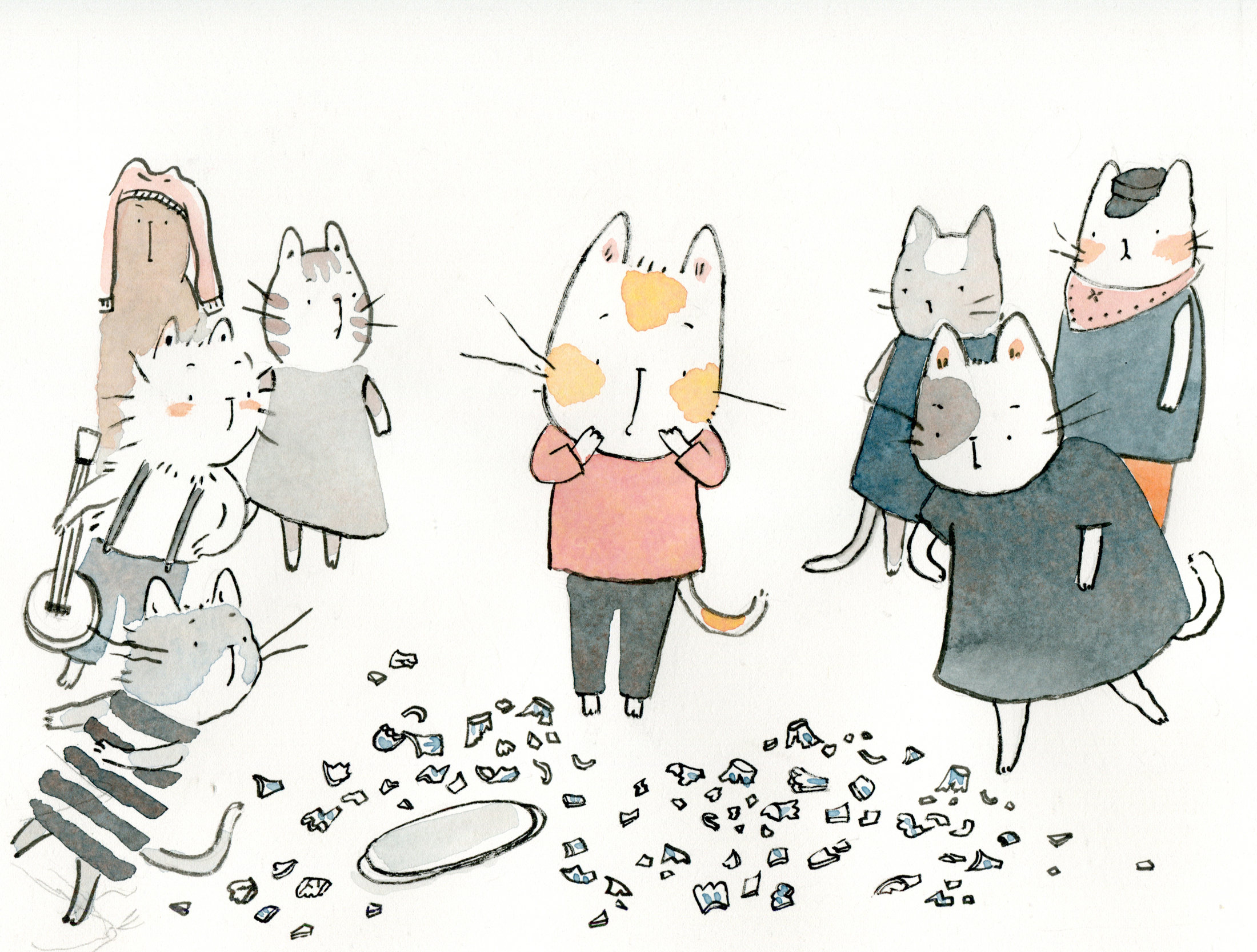
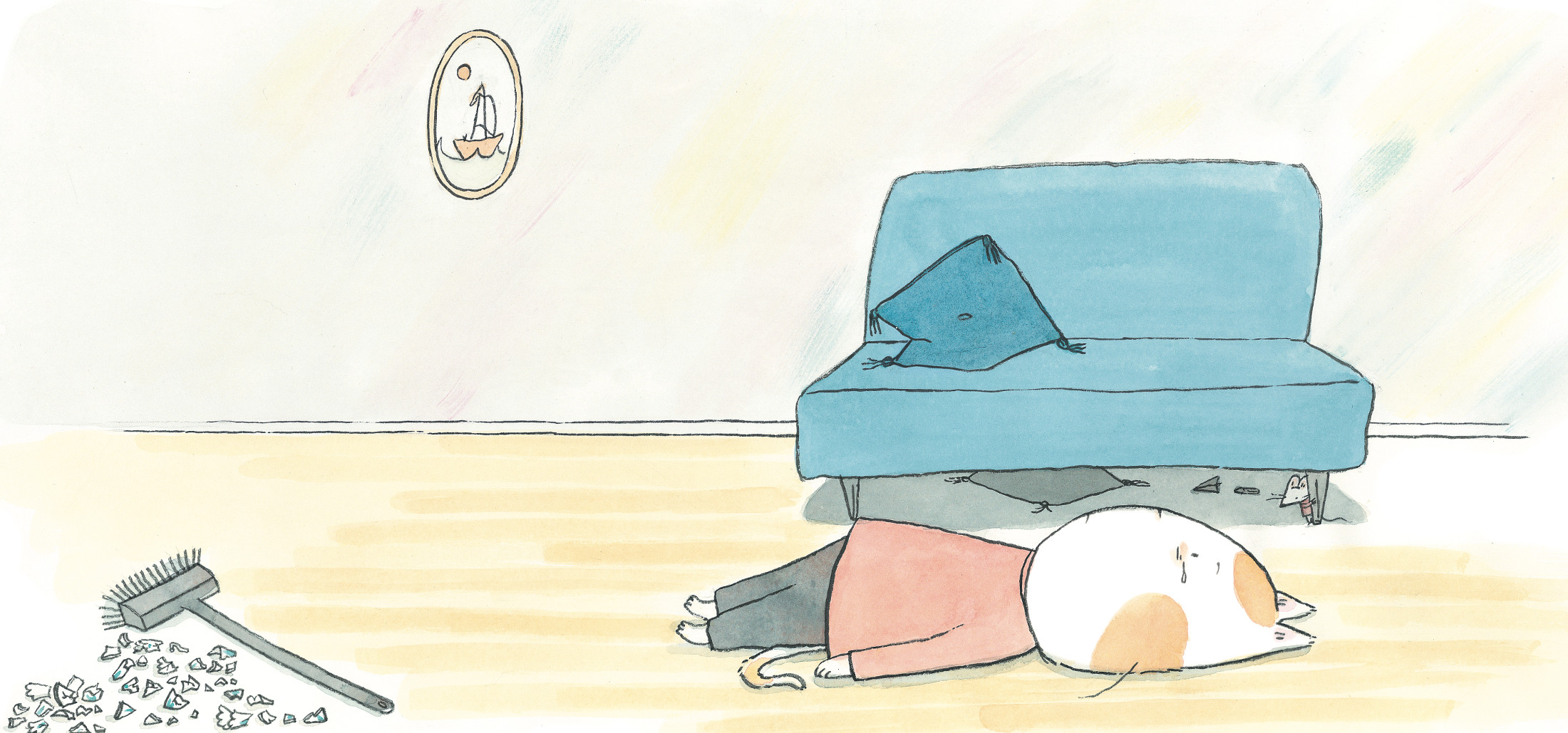
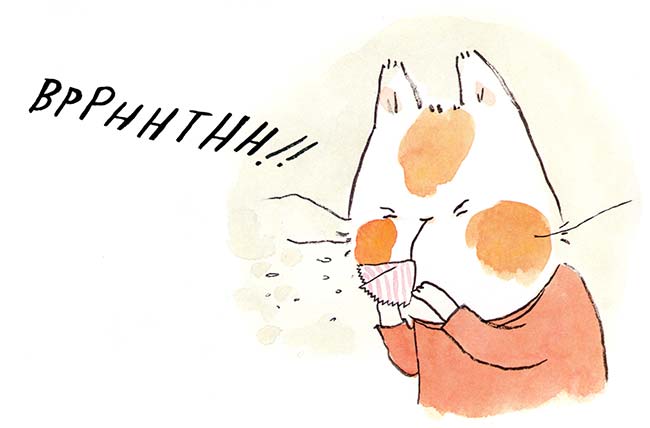
“The party ends as quickly as it began” as Lester and the other guests depart, leaving Oliver to clean up the shards of china. Oliver lays on the floor, despairing that he’ll “never have tea with anyone now.” He rolls over to see Philbert under the couch. Philbert introduces himself and hands Oliver his letter. Mistaking it for a tissue, Oliver blows his nose in Philbert’s note.
Copyright Mika Song, 2017, courtesy of mikasongdraws.com.
Philbert alerts Oliver to his error, and contritely Oliver opens the note and reads it. He’s surprised and excited to find that Philbert wants to have tea with him, but then remembers that he has no more cups. Now it’s Philbert’s turn to be excited – and surprising.”Yes you do!” He runs away and returns pulling a soft cushion holding two of Oliver’s tea cups. “I saved these for you!” Philbert exclaims. “Hooray!” Oliver cheers. “And the new friends sat down to a nice cup of tea.” With cookies.
Copyright Mika Song, 2017, courtesy of mikasongdraws.com.
Mika Song’s sweet story will have little ones giggling as one thing after another goes just a little bit wrong. Many will empathize with Philbert’s predicament as he tries to attract Oliver’s attention and will cheer along with Oliver when he saves two of Oliver’s beloved tea cups and the day. Song’s straightforward tale offers gentle lessons on the true nature of friendship as Philbert watches out for Oliver when others don’t, and the two discover they have a lot in common despite the traditional differences between cats and mice.
Through her delicate ink and watercolor illustrations, Song brings out the adorable natures of Oliver and Philbert, the subtly humorous and slapstick events of the afternoon, the moments of disappointment, and Philbert’s happy surprise that lead to the friend’s cozy tea party.
Tea with Oliver will charm young readers and would be a cute, often-asked-for addition to home, school, and public libraries.
Ages 4 – 8
HarperCollins, 2017 | ISBN 978-0062429483
Discover more about Mika Song and her books on her website.
National Hot Tea Month Activity
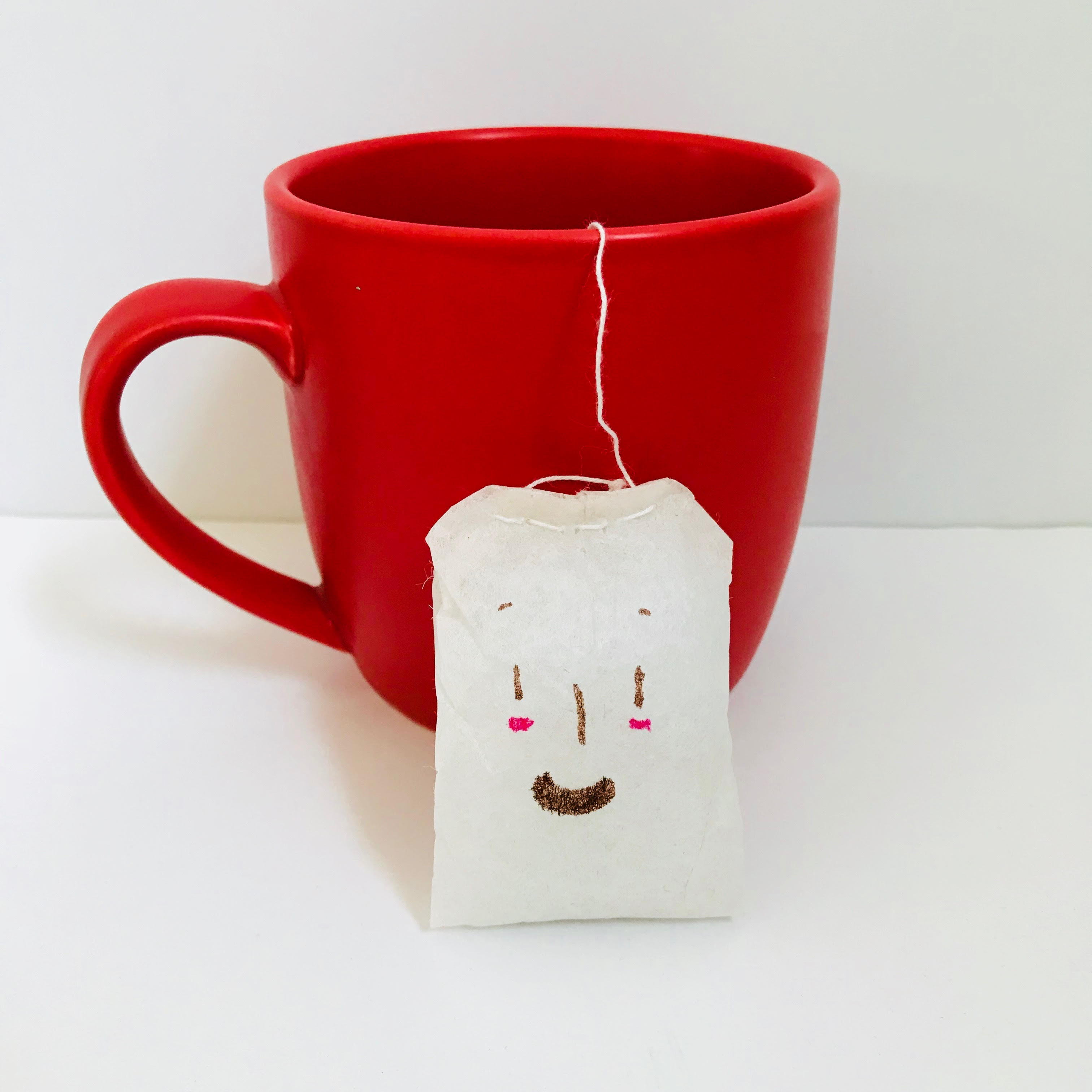
Tea Bag Buddy
It’s fun to have a tea party with a friend, and this little tea bag buddy is ready to hang out with you!
Supplies
Tea bags
Poly-fill
Permanent markers
Needle
Directions
Gently open a tea bag, unfold it, and discard the tea
Remove the string with the tag and set aside
Fill the tea bag with a bit of poly-fill
Thread the string of the tag through the needle
Fold the tea bag back up
Fold the ends of the bag under and sew them closed with the tag string, leaving the tag dangling
With the permanent markers, draw a face on the front of the tea bag













 celebratepicturebooks.com