January 15 – It’s International Creativity Month


celebrate-picture-books-picture-book-review-bear's-big-idea-cover

About the Holiday

Are you an artist, a writer, a decorator, a chef? How about a floral arranger, a woodworker, a fashion designer, or a gardener? Inside almost every heart lies a desire to create. Whether you use your ingenuity in your job or as an escape from the routine, this month celebrates all that is innovative. Sometimes this comes not in something you can see or touch but in a new thought or novel way of solving a problem—as seen in today’s book!

Thanks to Carolrhoda Books and Barb Fisch at Blue Slip Media for sharing a copy of Bear’s Big Idea with me! All opinions on the book are my own.

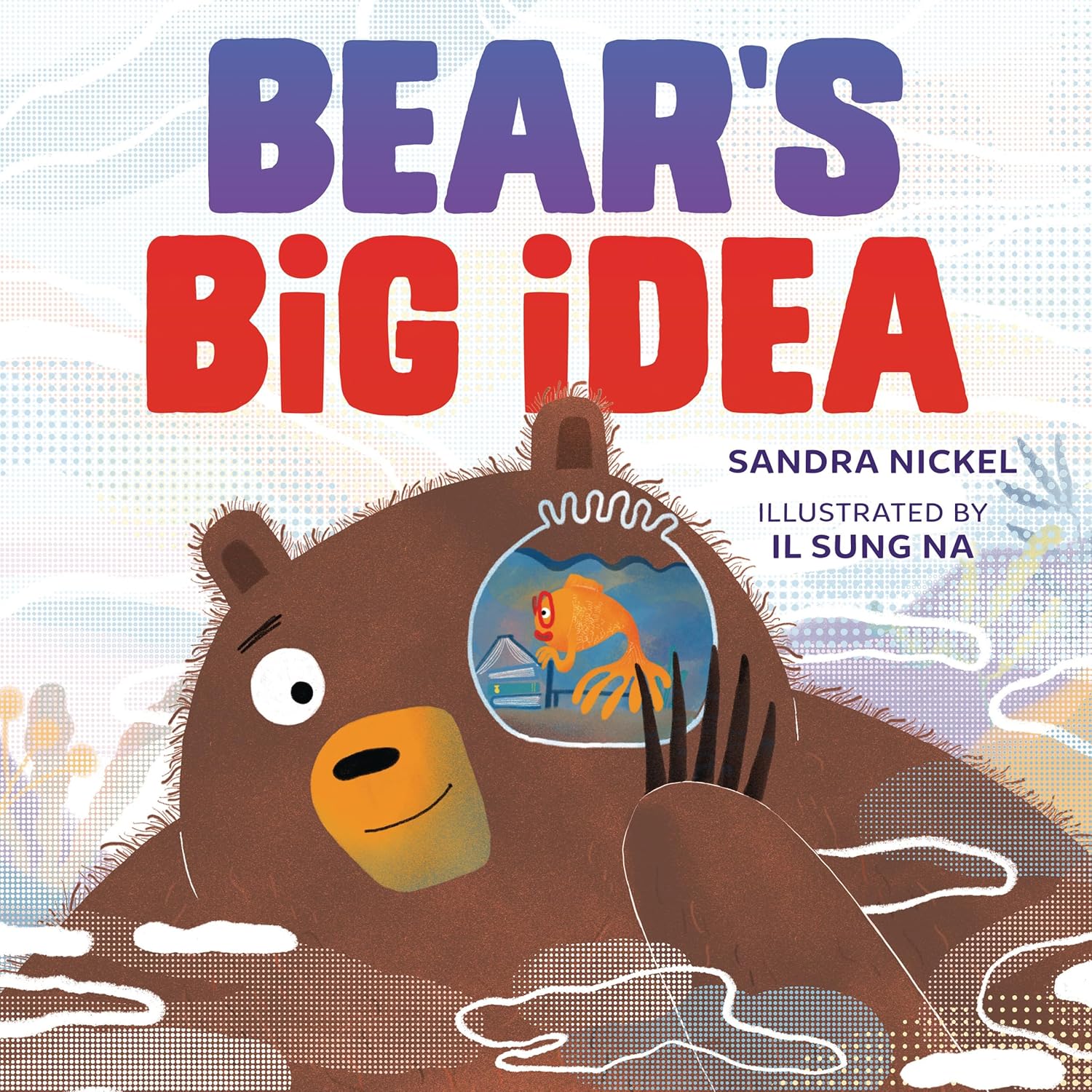
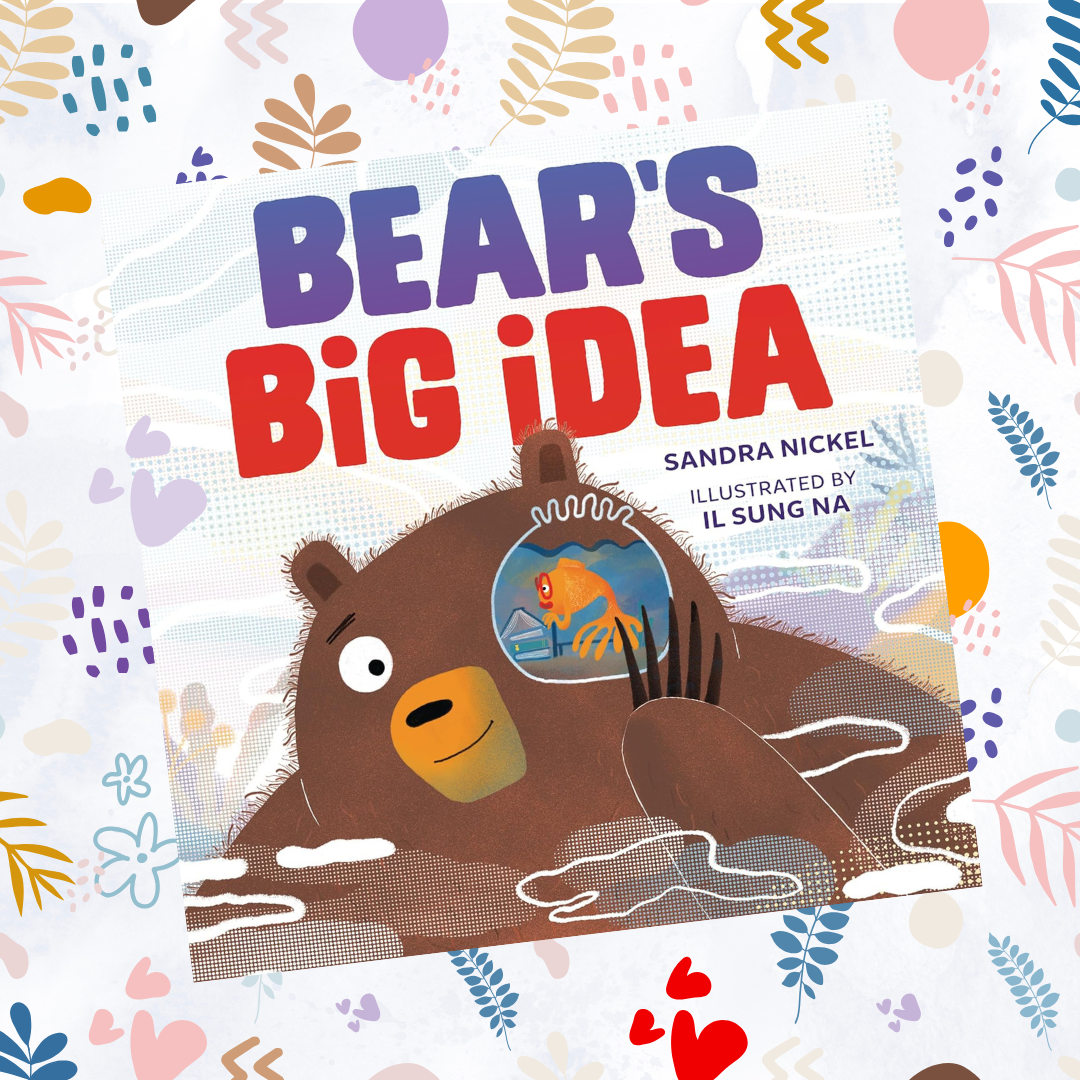
Bear’s Big Idea

Written by Sandra Nickel | Illustrated by Il Sung Na


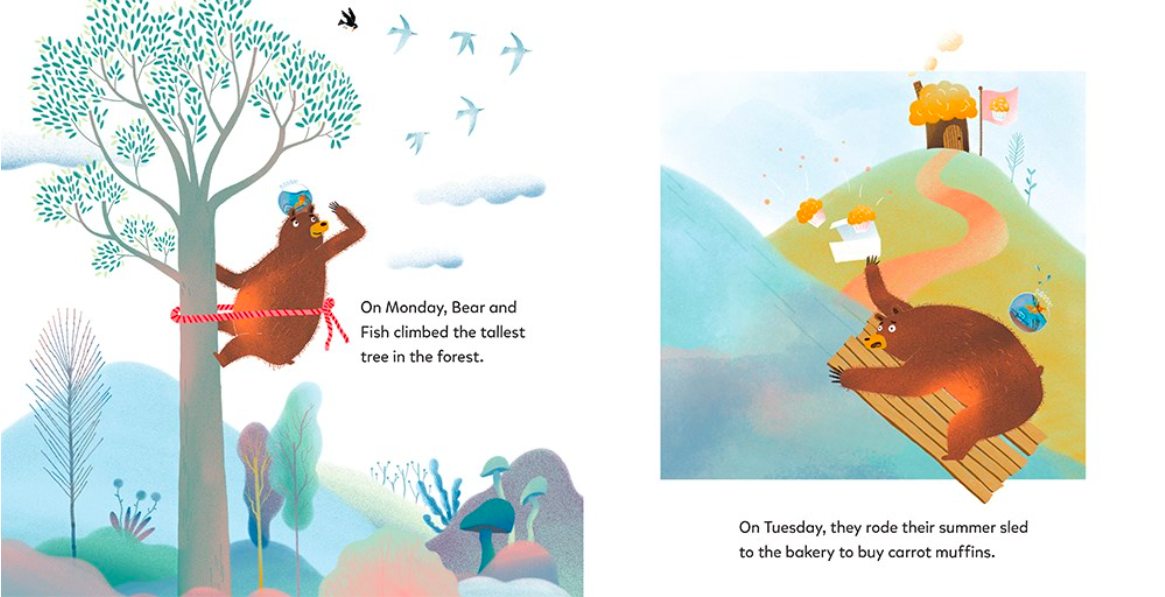
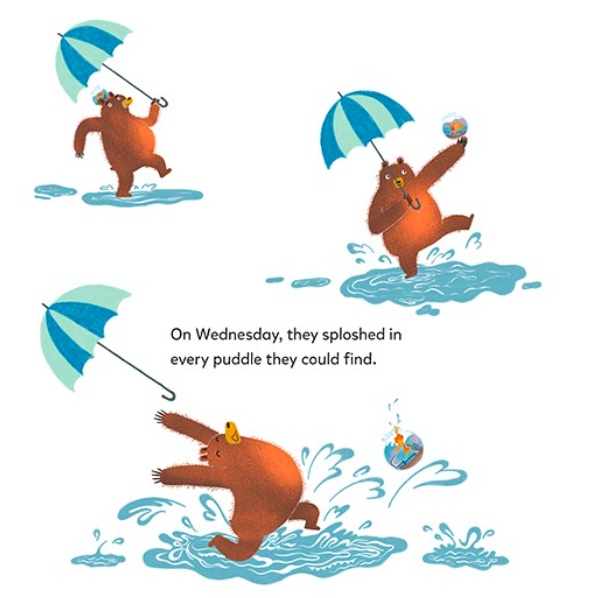
Fish and Bear were best friends. They did everything together, and usually—well, always—Fish was the one with the ideas. “Every morning, Fish would wake up, put on her glasses, and just like that, she would know the perfect thing to do.” Every day of the week, Fish found something—a rope, a sled, an umbrella, and a blanket—and dreamed up an innovative way to have fun with it.

celebrate-picture-books-picture-book-review-bear's-big-idea-Monday

Image copyright Il Sung Na, 2024, text copyright Sandra Nickel, 2024. Courtesy of Carolrhoda Books.

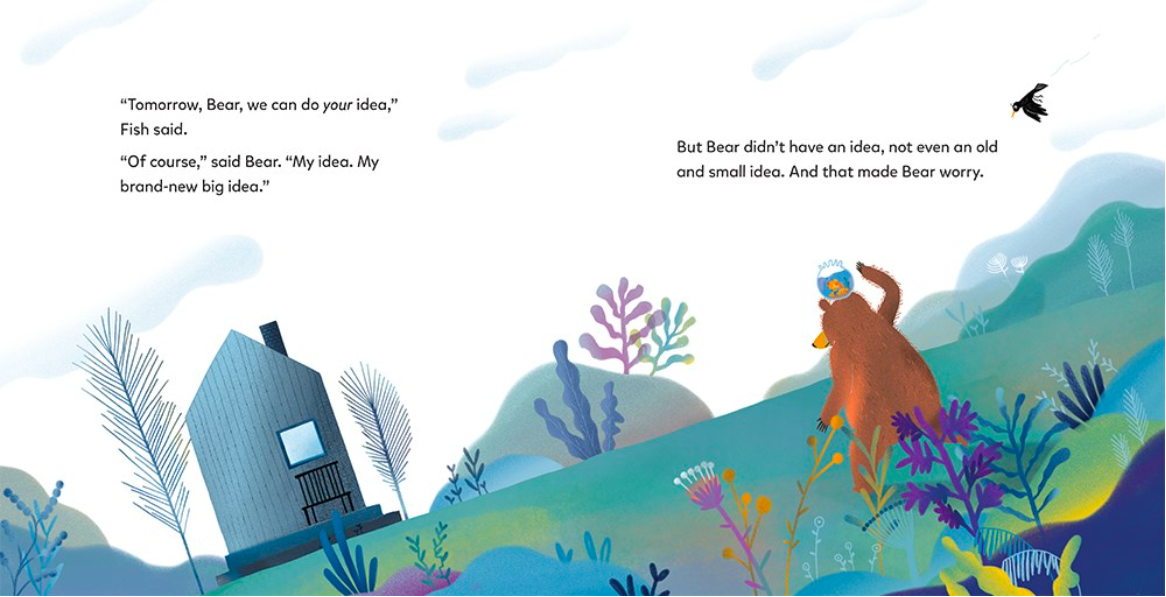
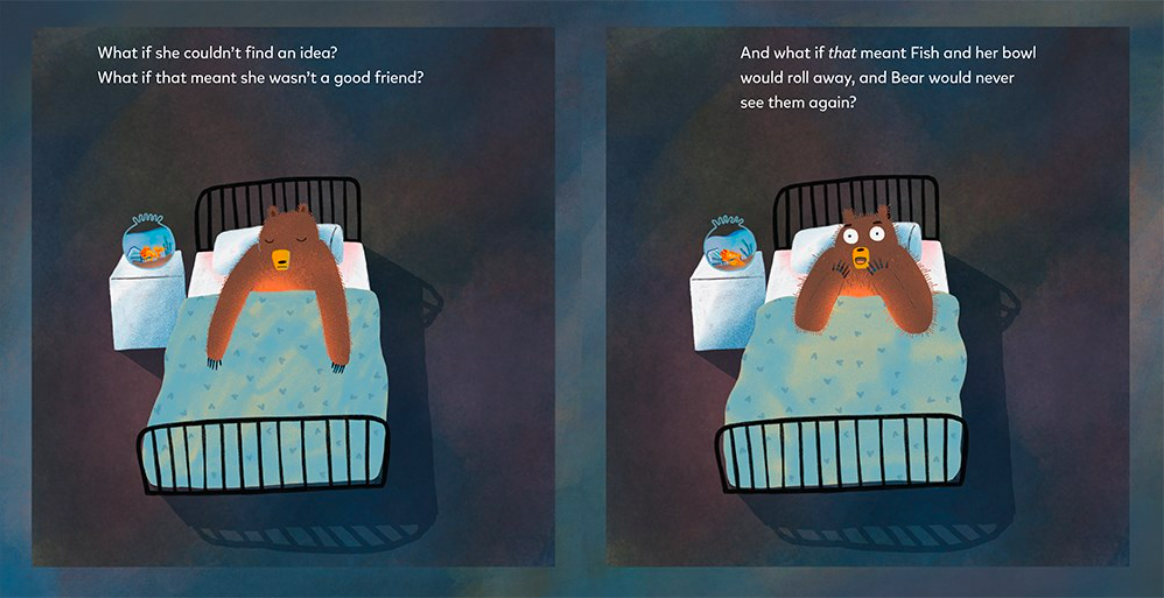
But Fish didn’t want Bear to feel left out, so on Thursday she said that the next day they could do Bear’s idea, “‘Of course, said Bear. ‘My brand-new big idea.'” But Bear was worried. She “didn’t have an idea, not even an old and small idea.” Bear tried to sleep that night, but she was afraid that not having an idea meant she wasn’t a good friend. Would Fish take her bowl and leave? Anxiety muddled Bear’s brain, and all she could think of were now-old ideas.

celebrate-picture-books-picture-book-review-bear's-big-idea-Wednesday

Image copyright Il Sung Na, 2024, text copyright Sandra Nickel, 2024. Courtesy of Carolrhoda Books.

The next morning it was the same. Bear looked everywhere for a brand-new big idea but found nothing. She kept checking in with Fish, asking if she was still there. “‘Always and forever,’ said Fish” with added reassurance. At last, Bear confessed that she couldn’t see an idea anywhere. “‘Don’t worry,’ Fish said. ‘Just because you can’t see something, doesn’t mean it’s not there.'”

celebrate-picture-books-picture-book-review-bear's-big-idea-no-idea

Image copyright Il Sung Na, 2024, text copyright Sandra Nickel, 2024. Courtesy of Carolrhoda Books.

So Bear thought some more, she listened, and she felt the wind whipping up. Suddenly, the air was filled with all of the old things from the past week. As Bear watched the things flying by, she saw it! Her brand-new big idea! She quickly gathered the items together and grabbed Fish’s bowl then rode the sled down to the beach, where she turned those individual items into an ingenious brand-new big idea that even impressed Fish! As pleased as Bear was with her idea, though, she was even happier to discover that good friends were “always and forever there.”

celebrate-picture-books-picture-book-review-bear's-big-idea-sleepless-night

Image copyright Il Sung Na, 2024, text copyright Sandra Nickel, 2024. Courtesy of Carolrhoda Books.

The second book in Sandra Nickel’s Bear and Fish series is a charming story that gently addresses children’s common fears about performance and pressure as well as the nature of friendship itself. Throughout the story, Nickel presents Bear’s conundrum realistically as she first alludes to having a big idea and then worries through the night and part of the next day that she will let down and maybe even lose her bestie because she has no idea at all.

Nickel—through Fish’s encouraging comments and confidence in Bear’s abilities—is always right there, though, with reassurance that children will find comforting in their own life. Nickel’s excellent pacing as well as her metaphorical dark and fog that stymies Bear until her approaching idea clears it away adds depth to the story and shows kids that things such as ideas, learning, self-confidence, and growth come to each person in their own time.

Children will be happy to see Il Sung Na’s fast friends back again in a new adventure. Il Sung’s soft-hued illustrations place Bear and Fish in a whimsically surreal mashup of vegetation from Bear’s forest and Fish’s underwater worlds. Bespectacled, ever-faithful Fish regales Bear with reassuring philosophy from her bowl, but also enjoys a madcap experience of her own thanks to Bear’s big idea. Through Il Sung’s clear depictions of Bear’s emotions, children can empathize with and cheer on Bear while gaining their own sense of self-confidence.

An uplifting, reassuring, and confidence boosting story, Bear’s Big Idea is sure to prompt requests for multiple readings and can spark discussions about feelings of fear, external and internal pressure, true friendship, and using one’s imagination. Bear’s Big Idea would make a valuable addition to home, library, and classroom collections.

Ages 4 – 8

Carolrhoda Books, 2024 | ISBN 979-8765610176

About the Author

Sandra Nickel is a writer of nonfiction picture books for children. Her work includes The Stuff Between Stars, Nacho’s Nachos, and Breaking Through the Clouds. She is the winner of a Christopher Award and holds an MFA in Writing for Children and Young Adults from Vermont College of Fine Arts. When at home in Switzerland, Sandra loves ambling and rambling and eating carrot muffins just as much as Bear and Fish do.

About the Illustrator

Il Sung Na was born in Seoul, South Korea. In 2001, he moved to London to pursue a BFA in Illustration and Animation at Kingston University, where he discovered a passion for children’s books. He completed his MFA Illustration Practice at MICA (Maryland Institute College of Art) in 2015. Il Sung has illustrated several books including Wild Peace, My Tree, and ZZZZ: A Book of Sleep. Currently based in Kansas City, Il Sung teaches illustration courses at KCAI (Kansas City Art Institute) and works on new books.

International Creativity Month Activity

celebrate-picture-books-picture-book-review-bear-craft

Expressive Bear


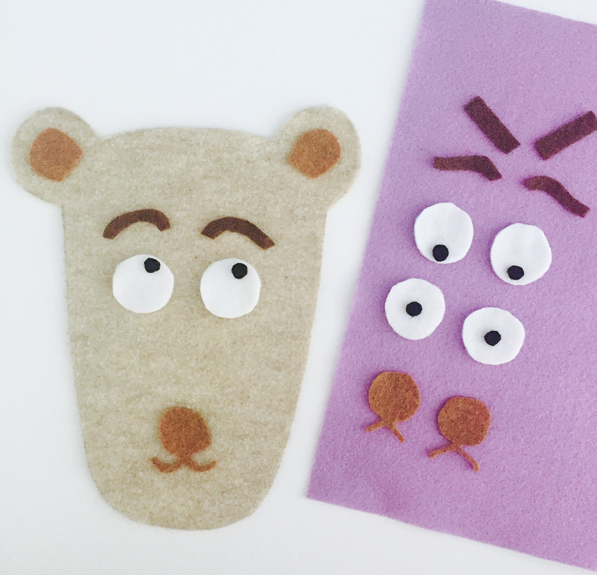
You can talk about different emotions and feelings or make up your own stories with this Expressive Bear Craft! Use the templates and/or make your own expressive eyes, eyebrows, and nose and mouths. You can also play a game in which the first person to collect all the parts of the bear’s face is the winner.

Supplies

  • Printable Bear Head Template
  • Printable Eyes and Noses Template
  • Printable Eyebrows  and Ears Template
  • Light brown felt or fleece (or color of your choice), 8 ½ x 11 inch piece
  • Dark brown felt or fleece(or color of your choice), 8 ½ x 11 inch piece
  • White felt or fleece, 8 ½ x 11 inch piece
  • Black felt or fleece, for pupils
  • Scissors
  • Glue
  • 1 playing die (optional)

Directions

  1. Print templates
  2. Cut bear head from light felt or fleece
  3. Cut eyes from white felt or fleece
  4. Cut nose and inner ears from dark brown felt or fleece
  5. Cut pupils from black felt or fleece
  6. Glue pupils onto white eyes

Alternatively: Color and play with the paper set

For a Fun Story Time

Give the bear different faces and make up stories of why he looks that way!

To Play a Game

Supplies

  • 1 plastic playing die. Or print this playing die template and draw one of the six facial features on each side.
  • Pencil, pen, or markers (if using printed die template)
  • Cut out, fold, and tape the die together

Directions

  1. Roll the die and follow the instructions below to collect parts of the bear’s face.
  2. The first player to create a full face is the winner.
  • Die dots correspond to:
  • 1—one eyebrow
  • 2—second eyebrow
  • 3—one eye
  • 4—second eye
  • 5—nose
  • 6—inner ears

celebrate-picture-books-picture-book-review-bear's-big-idea-cover

You can purchase Bear’s Big Idea from these booksellers

Amazon | Barnes & Noble | Bookshop (to support your local independent bookstore)

Picture Book Review

January 8 – National JoyGerm Day

celebrate-picture-books-picture-book-review-how-to-cheer-up-a-friend-cover

About the Holiday

Believing that joy can spread from person to person on the strength of simple smiles and greetings, acts of kindness, upbeat moods, and general positivity, Joan E. White of Syracuse, New York, founded JoyGerm Day in 1981. The day officially became a national holiday in 1985, and is now celebrated around the world. The holiday inspires people to find ways today and every day to positively impact the lives around us at home, work, school, or even while shopping or going about one’s daily business.

To honor the day and the idea, find ways to start each morning with a positive attitude for the day to come. Need ideas for how to get started? Say “Hello” to those you meet, listen to and encourage others, happily help out where needed, share a special moment with your kids at home, or send a surprise letter, card, or text to a friend or family member far away. And, of course, don’t forget to treat yourself too! When you feel good, those around you will respond in kind. Happiness really is contagious!  

Thanks so much to Beach Lane Books for sharing a copy of How to Cheer Up a Friend with me for review consideration!

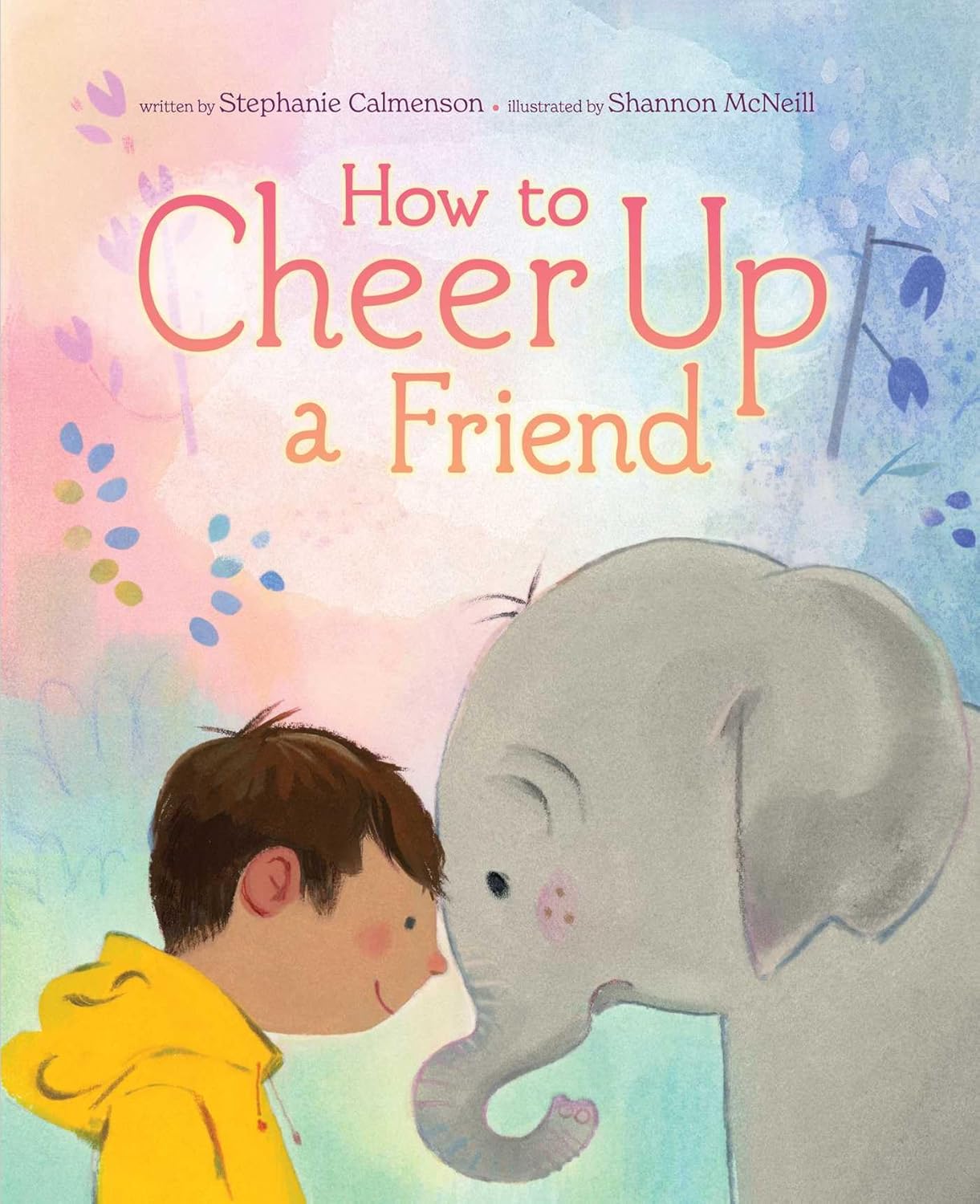
How to Cheer Up a Friend

Written by Stephanie Calmenson | Illustrated by Shannon McNeill


Little ones have big feelings and even bigger hearts. When they see a friend or family member feeling down, they want to help. But “What do you do / when your friend feels blue?” In her sweet book in which the protagonist attempts to cheer up their elephant friend, Stephanie Calmenson offers refreshingly practical advice on how a child (or an adult) can really approach someone experiencing sadness or anger and help them find happiness again. 

Screen Shot 2024-12-31 at 4.50.06 PM

Image copyright Shannon McNeill, 2024, text copyright Stephanie Calmenson, 2024. Courtesy of Beach Lane Books.

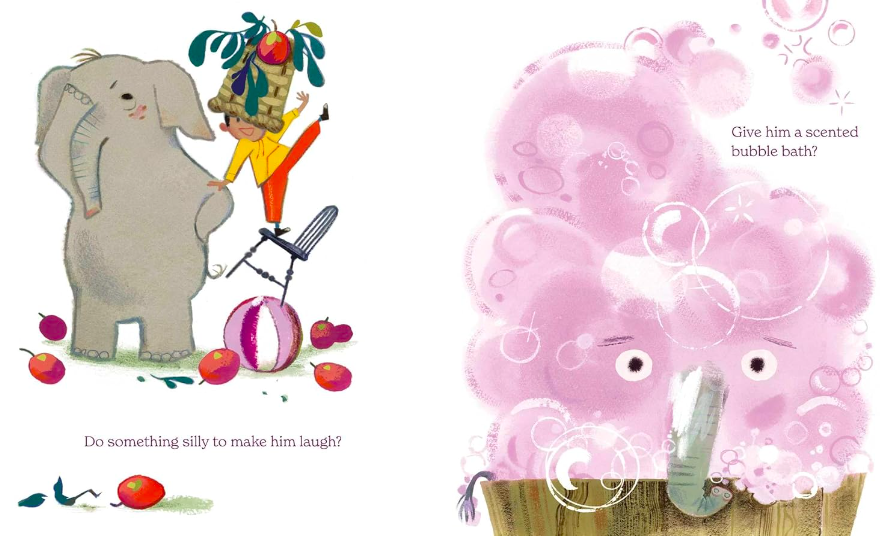
Writing in rhyming couplets, Calmenson starts out by suggesting a few ideas that will get readers giggling and invested in the story, such as “Do you tickle his trunk / to get him out of his funk?” and “Do something silly to make him laugh? / Give him a scented bubble bath?” Soon, the child opens his arms wide, offering a hug—but ready to happily accept either a “yes” or “no” answer.

Quieter ideas follow, including taking a walk or simply listening if he wants to “talk . . . and talk . . . and talk.” Then—only after all his feelings have been vented does the protagonist offer treats—or that hug, which now feels juuust right.

Screen Shot 2024-12-31 at 4.51.18 PM

Image copyright Shannon McNeill, 2024, text copyright Stephanie Calmenson, 2024. Courtesy of Beach Lane Books.

Stephanie Calmenson’s thoughtful look at the underpinnings of sadness or other strong emotions and how friends or family members can best help a loved one shines for its brevity and straightforward take on the issue. This approach will appeal to kids while giving them concrete examples of what to do and say (or not say) to elicit healing time or talk from friends, siblings, or others.

How to Cheer Up a Friend would be equally effective for adults looking for a book to help their own child through periods of sadness or anger as the story validates these emotions and provides a constructive solution for expressing them. The length of the story and its bookended format makes the book a perfect choice for parents, teachers, or other adults to reach for during those times when emotions may be running high or attention spans are short.

Screen Shot 2024-12-31 at 4.51.51 PM

Image copyright Shannon McNeill, 2024, text copyright Stephanie Calmenson, 2024. Courtesy of Beach Lane Books.

Shannon McNeill’s adorable elephant and empathetic child immediately win over readers’ hearts with their connection that is clearly based on mutual love and trust. In her soft-hued gouache, pencil, and cut paper illustrations, McNeill’s droopy, sad-eyed elephant is the picture of sadness, stubbornness, and even laugh-inducing perseverance as his friend tries various silly solutions to restore happiness. The image of the elephant hunkered down in its wash tub as it hides from a hug is an effective portrayal for children who prefer body autonomy or for the barrier some people present when experiencing strong emotions.

As the elephant begins to talk, his words and feelings fill the page as colorful shapes, and he begins to gesticulate, He cries, stomps, and flops down in a tirade to demonstrate those emotions he may not have words for. But as the storm abates, he feels better and can happily accept that big hug in a two-page spread that will delight young readers.

An endearing story that provides satisfying help with an emotion we all experience, How to Cheer Up a Friend is a valuable book for families and teachers to have on hand for those times when feelings are strong. The book is highly recommended for home, library, and classroom collections.

Ages 4 – 8

Beach Lane Books, 2024 | ISBN 978-1665910248

About the Author

Stephanie Calmenson is the acclaimed author of many popular books for young readers including Dinner at the Panda Palace; May I Pet Your Dog?; and the Ready, Set, Dogs! and Allie and Amy series written with Magic School Bus author Joanna Cole. A former early childhood teacher and children’s book editor, Stephanie feels fortunate to be able to teach, entertain, and encourage kids through her books. To read more, please visit StephanieCalmenson.com.

About the Illustrator

Shannon McNeill is a Canadian-born, San Diego-based illustrator whose books include Are We There Yet? by Dandi Daley Mackall, Wild & Wooly by Mary Jessie Parker, How to Cheer Up a Friend by Stephanie Calmenson, and her own Wheels, No Wheels. Her work is influenced by local nature, loitering in coffee shops, old books, child art, and long walks around the block. Learn more at LittleDrawings.com.

National JoyGerm Day Activity

celebrate-picture-books-picture-book-review-you're-groovy-happiness-card

Spread Happiness Cards

Kids can spread happiness to their friends, family, teachers, and other people in their lives with these cute Happiness Cards! Just print, cut, and give!

Spread Happiness Cards

celebrate-picture-books-picture-book-review-how-to-cheer-up-a-friend-cover

You can purchase How to Cheer Up a Friend at these booksellers

Amazon | Barnes & Noble | Bookshop

Picture Book Review

December 17 – National Say It Now Day

celebrate-picture-books-picture-book-review-I'm-always-loving-you-cover

About the Holiday

This brand new holiday, established by National Day Calendar and Legacy+, a branding company, in honor of Walter Green, who was born on December 17 and on his 70th birthday decided to travel for a year to visit those who had been important to him and express his gratitude. For Walter, the result was a book—This is the Moment. For the rest of us, this holiday can inspire us to tell friends and loved ones how important they are and thanking them for all the ways they’ve impacted our lives.

Thank you to Bloomsbury Children’s Books for sharing a copy of I’m Always Loving You with me for review consideration. All opinions on the book are my own.

I’m Always Loving You

Written by Kathy Wolff | Illustrated by Acamy Schleikorn


When you tell your child “I love you,” tousle their hair and say, “love ya, kiddo,” or kiss them on the forehead and whisper, “Goodnight, sweet love,” the “always” of that feeling is understood. But there are times when—struck by a memory, catching sight of a flash of playfulness, or even sharing a struggle over a task or disappointment—you feel an extra squeeze of love come over your heart.

Often these moments go unexpressed; but they shouldn’t! Inherent in times like these is spontaneity, shared experiences, and the details of life. Kids love details, and in I’m Always Loving You Kathy Wolff gives parents and other adults a heartwarming way to share the particulars of those times when their heart bursts with love—from the seemingly mundane to the extra-special. 

celebrate-picture-books-picture-book-review-I'm-always-loving-you-rise-and-shine

Image copyright Acamy Schleikorn, 2024, text copyright Kathy Wolff, 2024. Courtesy of Bloomsbury Children’s Books.

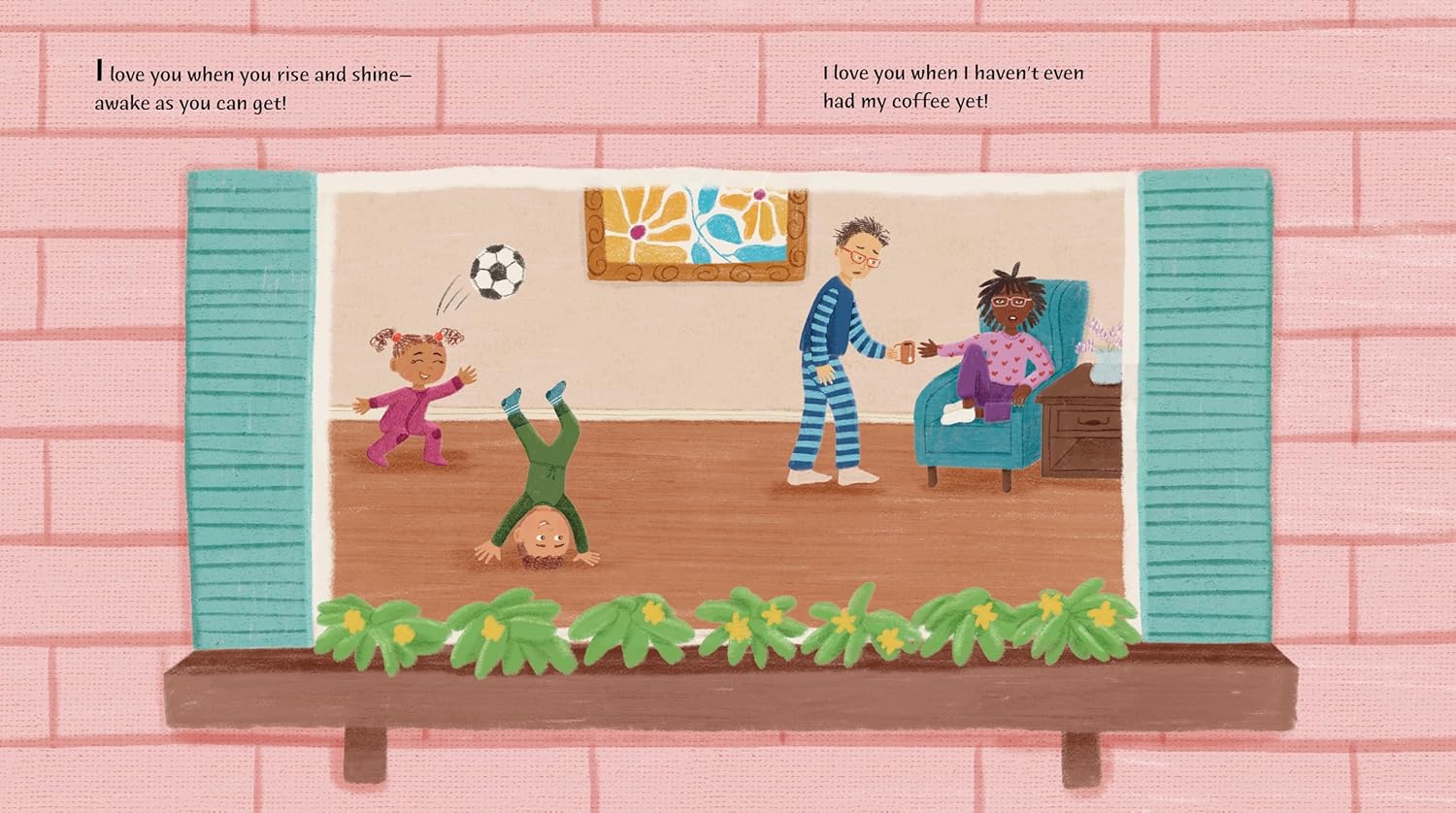
Wolff begins as the day starts: “I love you when you rise and shine—awake as you can get!” but includes a bit of humor with the adult’s perspective on morning—”I love you when I haven’t even had my coffee yet!” She highlights times of frivolity at home while also reassuring kids that parents, grandparents, and other caregivers are always thinking about and loving them when they’re out in the world—in the car, at the park, at the store, and even “in the longest line we’ve ever seen before!”

celebrate-picture-books-picture-book-review-I'm-always-loving-you-when-helping

Image copyright Acamy Schleikorn, 2024, text copyright Kathy Wolff, 2024. Courtesy of Bloomsbury Children’s Books.

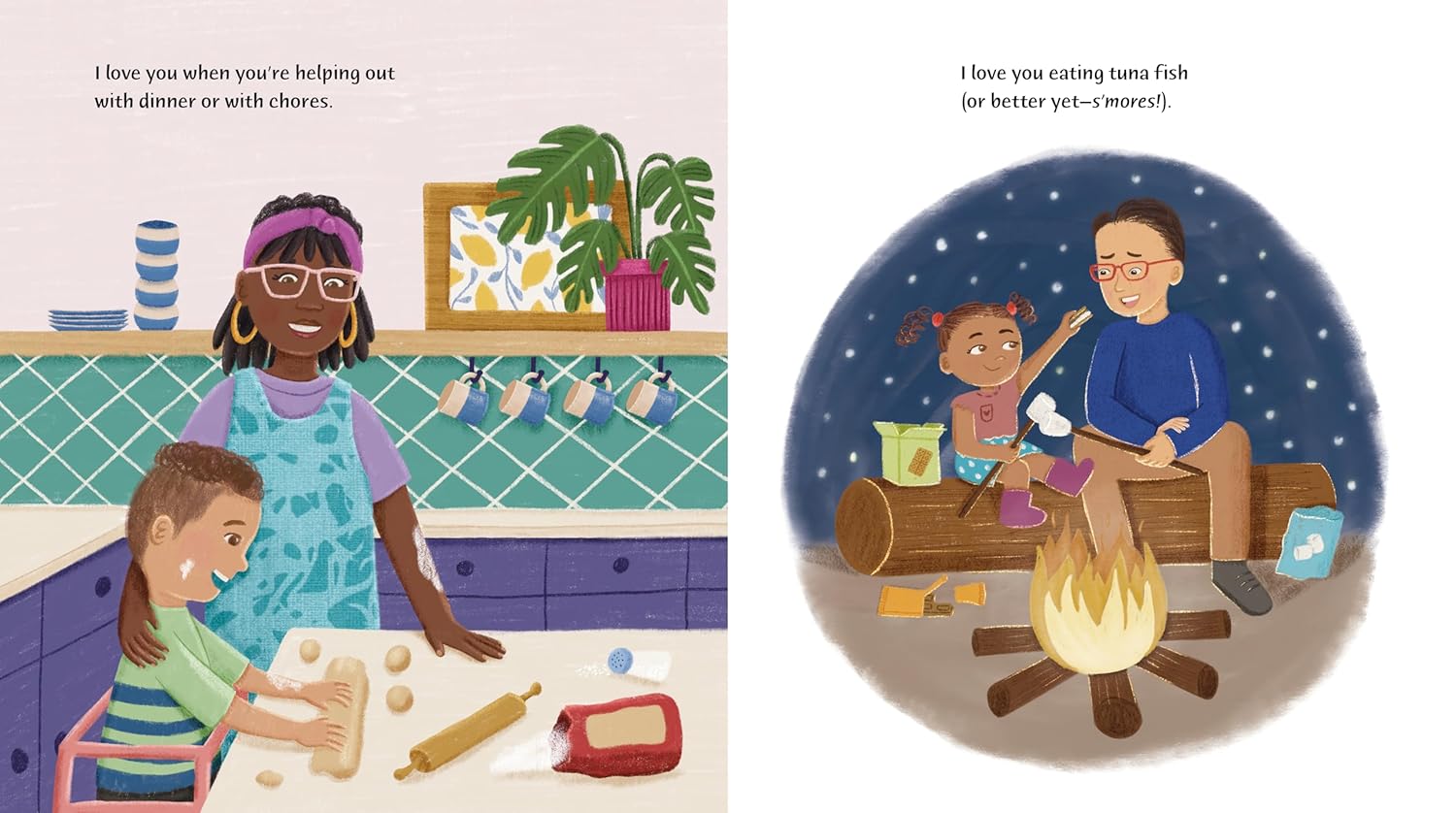
Children who are apprehensive about separation will find comfort in the words “I love you when you’re close to me, and also when you’re not, / and no matter what I’m doing, I sure think of you a lot!” Importantly, kids also hear that adults’ love extend to those times when their child is helping out around the house or doing chores, and—maybe more surprising—when the adult must tell them “no.”

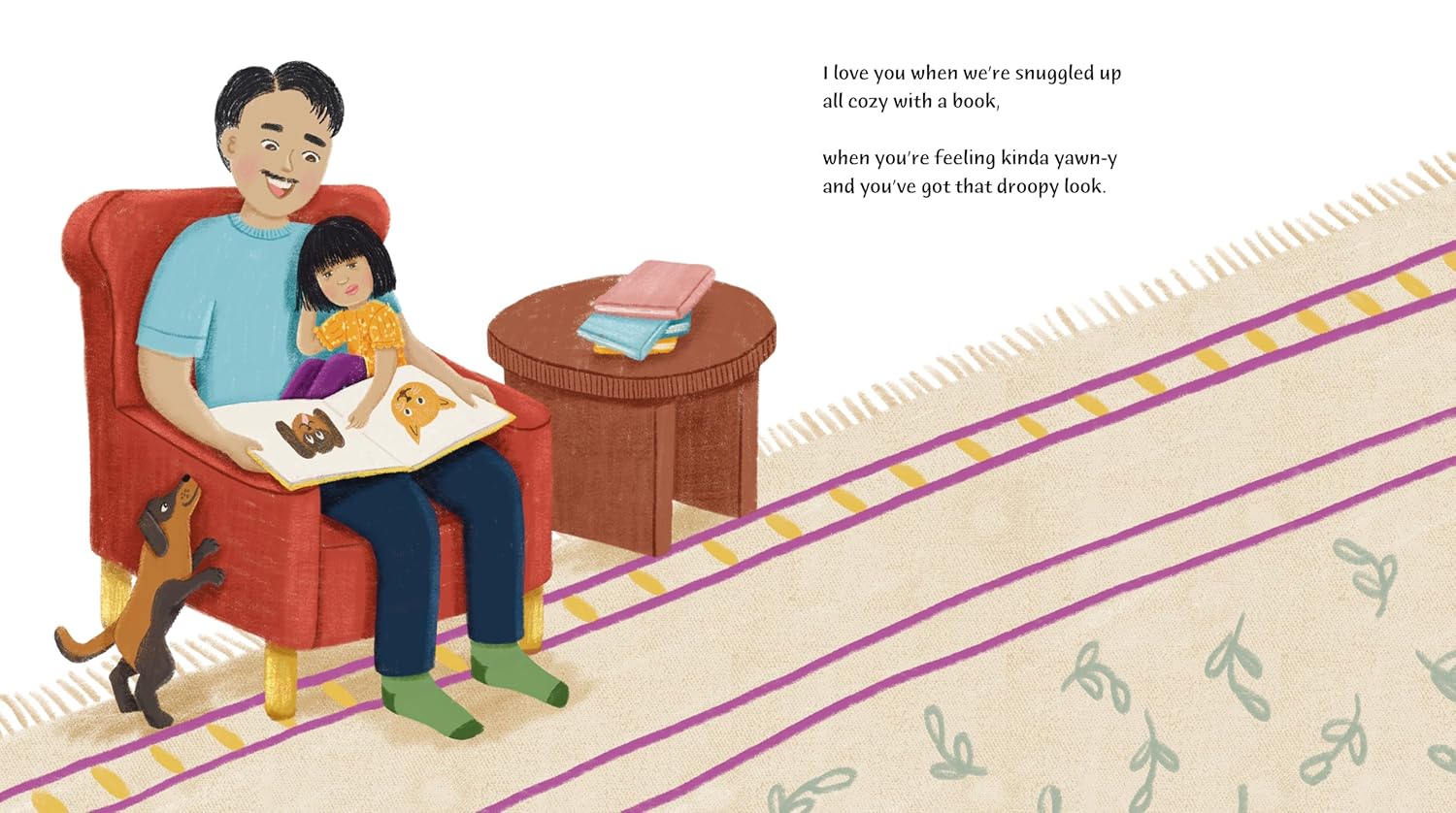
Just as adults love their kids at the beginning of the day, as the day wanes a dad reveals, “I love you when we’re snuggled up all cozy with a book, / when you’re feeling kinda yawn-y and you’ve got that droopy look.” Through changing into pajamas, goodnight kisses, and turning out the light, love prevails, allowing children to sleep soundly and awake to another day full of love.

celebrate-picture-books-picture-book-review-I'm-always-loving-you-snuggling-wth-book

Image copyright Acamy Schleikorn, 2024, text copyright Kathy Wolff, 2024. Courtesy of Bloomsbury Children’s Books.

Kathy Wolff’s jaunty rhymes that encapsulate so many parts of a child’s and parents’ or caregivers’ day are a joy to read aloud and are sure to lead to fun discussions about specifics in the readers’ lives. Many of the examples Wolff includes are equally applicable for children to say to the adults or siblings in their lives, from getting up in the morning to sharing silly, busy, or quiet moments to when they are near or far away.

Acamy Schleikorn’s bright, active illustrations allow kids to clearly see and recognize experiences and places as well as emotions, such as happy, silly, and serious, that are part of their everyday lives, reinforcing the idea that no matter where, when, or what’s happening they are always loved.

A perfect and reassuring book to snuggle up with, bring out when times are a little more challenging, and talk about all the times your family feels that glow of love, I’m Always Loving You would be an often-asked-for book on home bookshelves and a meaningful addition to school and library collections.

Ages 3 – 6

Bloomsbury Children’s Books, 2024 | ISBN 978-1547614202

About the Author

Kathy Wolff lives in Overland Park, Kansas with her husband and her two funny kids. She attempts to balance writing, mom-ing, and greeting-card making . . . all while trying to remember not to forget anything. Visit Kathy at kathywolffbooks.com.

About the Illustrator

Acamy Schleikorn is an illustrator from Las Vegas. She began drawing at a very young age and was encouraged by her grandma to keep going. As an adult, she discovered the magical world of children’s books, and became passionate about creating stories that make a difference in a child’s life and reflect the diverse world that we live in. Anytime she creates art, she wants it to bring some kind of good into a world filled with a lot of hurt. She is inspired by her two children to create work that they will love, enjoy, and see themselves in. Visit Acamy at acamydesigns.com.

National Say It Now Day Activity

CPB - Heart Jar

Jar of Love


With this craft, kids can say “I love you” to parents, siblings, family members, friends, and anyone who fills their heart with joy by giving them a felt heart to express their feelings.

Supplies

  • A clear jar with a lid—you can up a jar from home, buy a mason jar, or find a decorative jar at a craft store
  • Red felt
  • Scissors

Directions

1. Cut red hearts from the felt and add them to the jar.

2. Whenever you feel that special burst of love toward someone, give them a heart to show it!

celebrate-picture-books-picture-book-review-I'm-always-loving-you-cover

You can purchase I’m Always Loving You at these booksellers

Amazon | Barnes & Noble | Bookshop

Picture Book Review

November 16 – It’s Picture Book Month

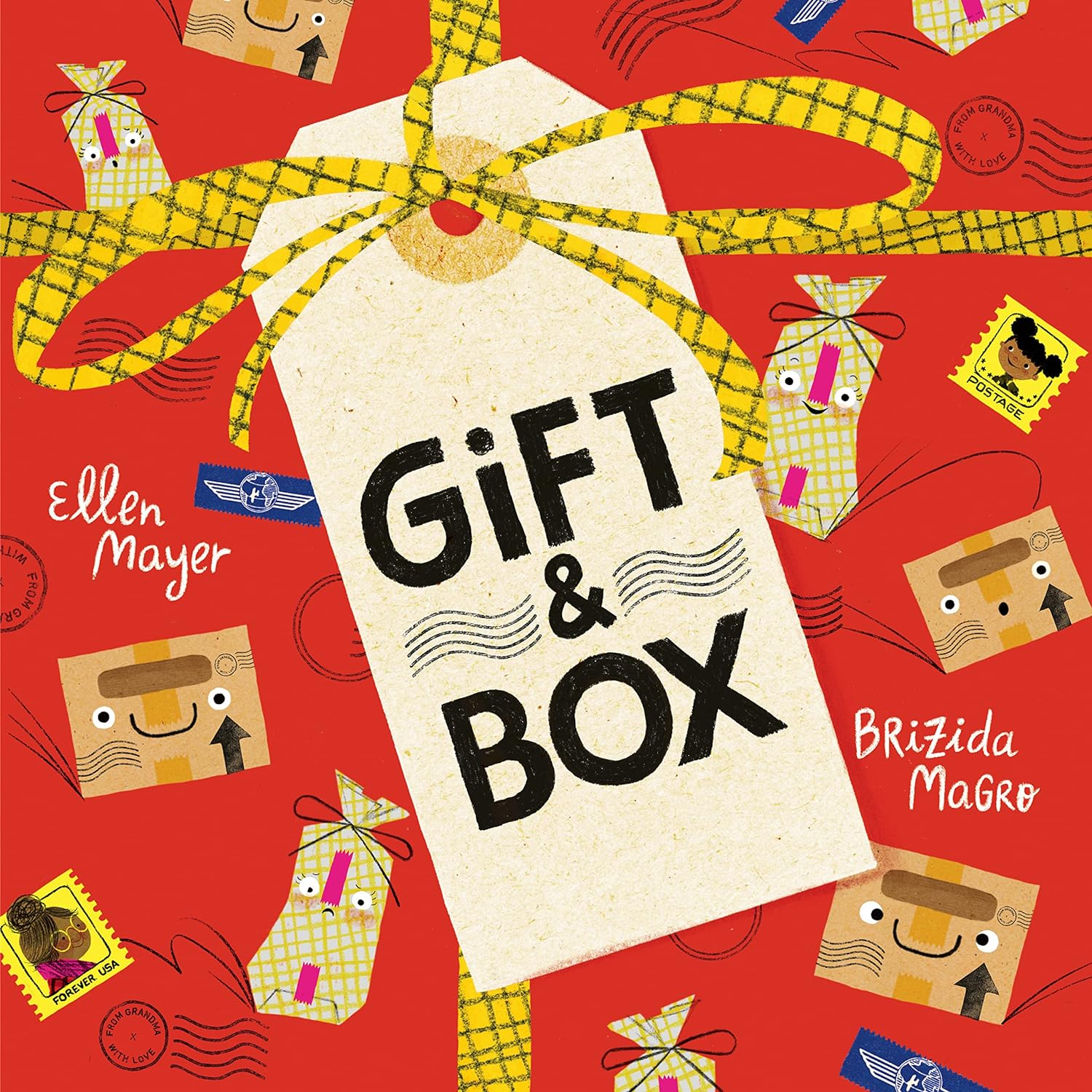
celebrate-picture-books-picture-book-review-gift-and-box-cover

About the Holiday

If you love picture books, you know the thrill of holding a new or a new-to-you book in your hands and opening up to that very first page. The children’s sections of bookstores and libraries draw you in with humor, fairy tales, poetry, biographies, science, and so much more—a whole universe of creativity, thought, knowledge, and imagination—that enlightens and entertains. This month take time to indulge your passion for picture books!

I’d like to thank Knopf Books for Young Readers for sending me a copy of Gift & Box for review consideration. All opinions on the book are my own.

Gift & Box

Written by Ellen Mayer | Illustrated by Brizida Magro

“Gift was a gift. Box was a box,” and when Grandma lovingly placed Gift inside Box, they became “a package.” Gift couldn’t wait to delight. Box was ready to protect. Grandma took the package to the post office, and Gift and Box “were on their way.”

celebrate-picture-books-picture-book-review-gift-and-box-wrapping-gift

Illustration copyright Brizida Magro, 2023, text copyright Ellen Mayer, 2023. Courtesy of Knopf Books for Young Readers.

“They were not Priority Mail,” making the journey long and with many ups and downs. ‘”When will we be there?’ asked Gift.” Sometimes they waited and waited; sometimes they were tossed this way and that. Gift had lots of questions, a few complaints, and a moment of disappointment when the wrapping tore a bit. But Box always answered and comforted even though it could be “challenging.”

Being a package could be fun—like when they rode the conveyor belt. But the fun could turn scary, too—like when the big shipping container they were in was transferred to another ship. ‘”Don’t worry!'” shouted Box” when Gift was afraid. ‘”I’ve got you!'” As they got closer to their destination, each admitted they would miss one another. And then with a “Thunk!” they landed on a door step. Mama opened the door. Sofia rushed to see what had come.

celebrate-picture-books-picture-book-review-gift-and-box-conveyor-belt

Illustration copyright Brizida Magro, 2023, text copyright Ellen Mayer, 2023. Courtesy of Knopf Books for Young Readers.

Sofia opened Box and lovingly lifted Gift out. “Gift and Box were no longer a package.” Sofia unwrapped Gift and was delighted. Box was happy to have protected Gift, but now their time together had ended. Mama came over to flatten Box for recycling. Sofia, however, had other ideas—lots of ideas. Sofia got out tape and scissors; crayons, markers, and glue. When she was finished creating, Sofia and Gift and Box were ready for another adventure—together!

celebrate-picture-books-picture-book-review-gift-and-box-package-delivered

Illustration copyright Brizida Magro, 2023, text copyright Ellen Mayer, 2023. Courtesy of Knopf Books for Young Readers.

What child doesn’t love getting a package in the mail? But who is it come from? How does it get to them? And Oh, the joy when the gift is revealed! Rooted in objects, emotions, ideas, and questions familiar to kids, Ellen Mayer’s story will delight readers of all ages with its fresh and innovative twists and turns. Together Gift and Box mirror the most appealing kinds of relationships—best friends; parent or caregiver and child; teacher and student. Children will love learning how a package navigates its way through the postal system, and adults and kids may even like to speculate on where Grandma and Sofia live since Gift and Box cross an ocean.

Mayer’s realistic dialogue creates a wonderful read-aloud story that can give adults and kids a fun way to interact while reading. The story also could easily be staged as a play in classrooms or libraries. The details of their journey make perfect prompts to discuss patience, fear, anxiety, and disappointment as well as new experiences, teamwork, excitement, growing friendships, and imaginative, creative play. Young readers will be delighted by the sweet and surprising ending.

On the very first page, kids will fall in love with Brizida Magro’s adorable Gift and Box. Their bright eyes, sweet, simple smiles (which cleverly register a full range of emotions) and creatively placed tape make them expressive and beloved characters to root for. Magro’s vivid collage-style illustrations play with repeating patterns, colors, and textures to create a charming and cohesive sense of movement as Gift and Box (and readers) follow the story’s journey. Magro’s final illustration is sure to inspire a child’s own creativity.

A Special Note: Readers will be well-rewarded by unwrapping the book from it’s jacket to meet Gift and Box in person!

An exciting, multi-layered story that kids will ask for again and again, Gift & Box makes a perfect addition to anyone’s gift list for holidays, birthdays, and “just because” days. Public and school libraries can be sure Gift & Box, with it’s bright, enticing cover and “read again!” appeal, will be a welcome addition to their collection and enjoy continuous rotation.

Ages 3 – 7

Knopf Books for Young Readers, 2023 | ISBN 978-0593377611

About the Author

Ellen Mayer is an award-winning author of lively children’s books that help build language and math skills. She has a background in early childhood education, as a researcher and early literacy home visitor. Ellen lives with her husband in Cambridge, Massachusetts. And while her grandchildren all live close by, she still mails them gifts in boxes they can open with delight.

Visit Ellen on Her Website | Instagram | Twitter

About the Illustrator

Brizida Magro is an illustrator and educator based in Boulder, Colorado, who grew up in Portugal. She teaches illustration at Rocky Mountain College of Art and Design. Brizida is also the illustrator of Saturday at the Food Pantry by Diane O’Neill and Let Me Call You Sweetheart by Mary Lee Donovan. She is passionate about rock climbing and wandering the world. She enjoys simplicity, wee characters, collecting vintage papers, and bringing stories to life.

Visit Brizida on Her Website | Instagram

Picture Book Month Activity

celebrate-picture-books-picture-book-review-shaving-cream-wrapping-paper-newer-best-2

Shaving Cream Wrapping Paper

Kids will love wrapping any birthday, holiday, or even surprise gift in unique wrapping paper they’ve made themselves! This simple creative craft is fun for the whole family! 

Supplies

  • 1 can of shaving cream
  • Food coloring
  • Shallow baking tray
  • Frosting spatula or regular spatula
  • Toothpicks or skewer for swirling food coloring
  • White paper, computer paper works well

celebrate-picture-books-picture-book-review-shaving-cream

celebrate-picture-books-picture-book-review-shaving-cream-colors

celebrate-picture-books-picture-book-review-shaving-cream-wrapping-paper-drying

Directions

  1. Squirt the shaving cream onto the tray in small amounts and spread into a thin layer with the spatula
  2. Squeeze a few drops of different colored food coloring onto the shaving cream
  3. With the toothpick or skewer gently swirl the colors. Alternately, gently smooth the colors around and together with the icing spatula.
  4. Lay a piece of white paper on top of the shaving cream
  5. Gently pat the paper all over. Do not submerge the paper in the shaving cream.
  6. Lift the paper up and place on the table
  7. Let sit for a few minutes
  8. Scrape the shaving cream off the paper and let the paper dry

celebrate-picture-books-picture-book-review-gift-and-box-cover

Order from Bookshop to support your local independent bookstore.


You can also find Gift & Box at these booksellers

Amazon | Barnes & Noble | Books-a-Million

Picture Book Review

January 30 – It’s International Quality of Life Month

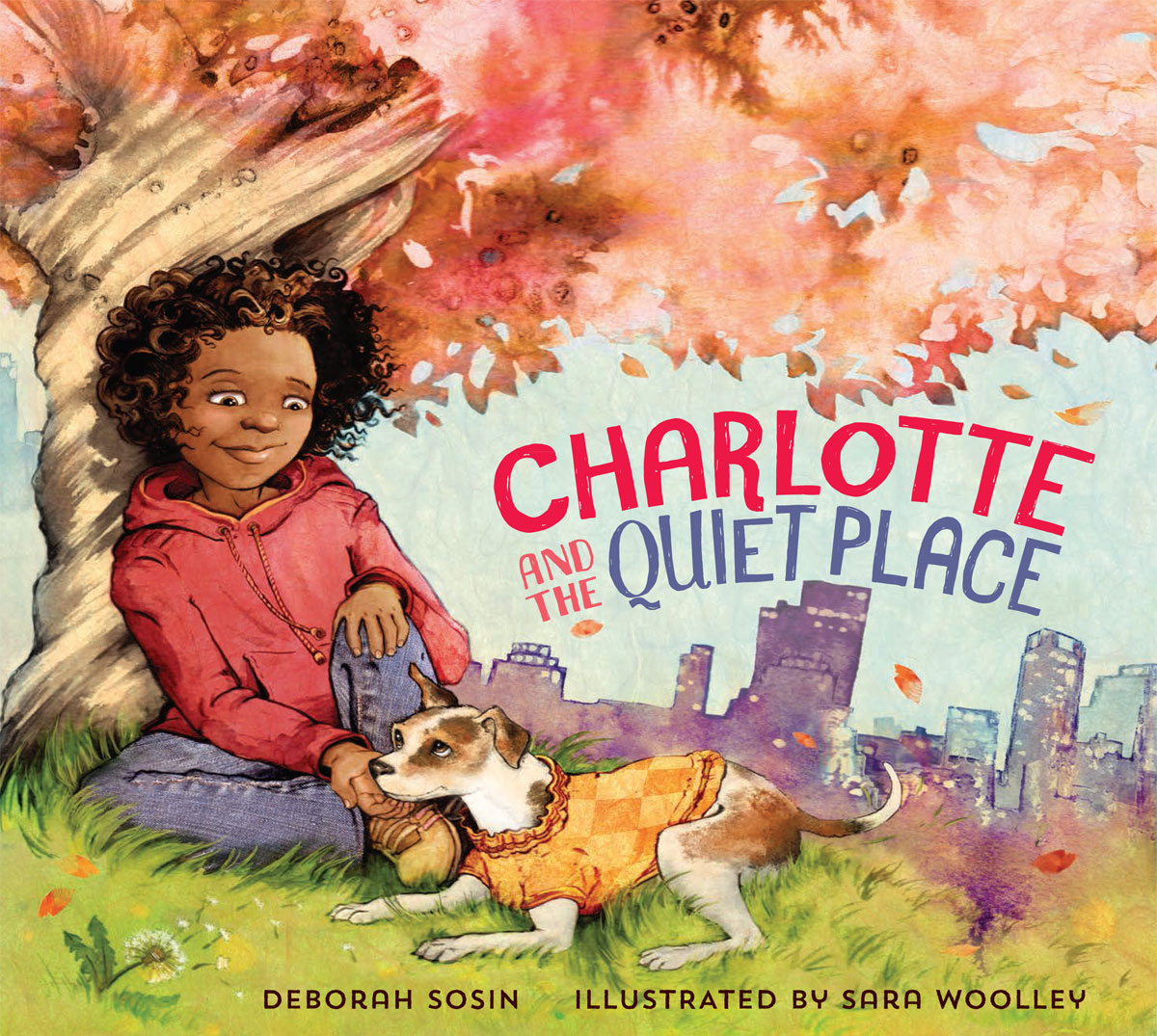
celebrate-picture-books-picture-book-review-charlotte-and-the-quiet-place-noisy-neighborhood

About the Holiday

How one achieves their definition of a good quality of life may differ for every person, but in general it encompasses being happy and satisfied with one’s relationships, work, living conditions, and self. Whether you find happiness and quality of life in outdoor or indoor pursuits, with others or alone, at work or at home, this month’s holiday gives you time to get in touch with your inner quiet place and reflect on changes or improvements to bring you more peace and happiness in life.

Charlotte and the Quiet Place

Written by Deborah Sosin | Illustrated by Sara Woolley


Charlotte is a girl who likes quiet who lives in a noisy world. Everywhere she goes, it seems, it’s impossible to escape from sounds that disturb her peace. At home the hallway creaks where “the floorboards groan,” the living room is like an arcade where the “TV bellows and blares,” and the kitchen is filled with Otto’s barks for his dinner. Even in Charlotte’s bedroom, “which is supposed to be a quiet place, the old steam radiator hisses, whistles, and whines. Where can Charlotte find a quiet place?”

celebrate-picture-books-picture-book-review-charlotte-and-the-quiet-place-noisy-home

Image copyright Sara Woolley, 2015, text copyright Deborah Sosin, 2015. Courtesy of sarawoolley.com

When Charlotte goes to school, things are no better. In the classroom kids are boisterous and bells ring; the lunchroom echoes with clattering trays and scuffing chairs; and the playground blares with big voices and stomping feet but also with the little squeaks and rattle of the swings. “Even in the library, which is supposed to be a quiet place, the children giggle, yammer, and yell. Where can Charlotte find a quiet place?”
celebrate-picture-books-picture-book-review-charlotte-and-the-quiet-place-noisy-subway

Image copyright Sara Woolley, 2015, text copyright Deborah Sosin, 2015. Courtesy of sarawoolley.com

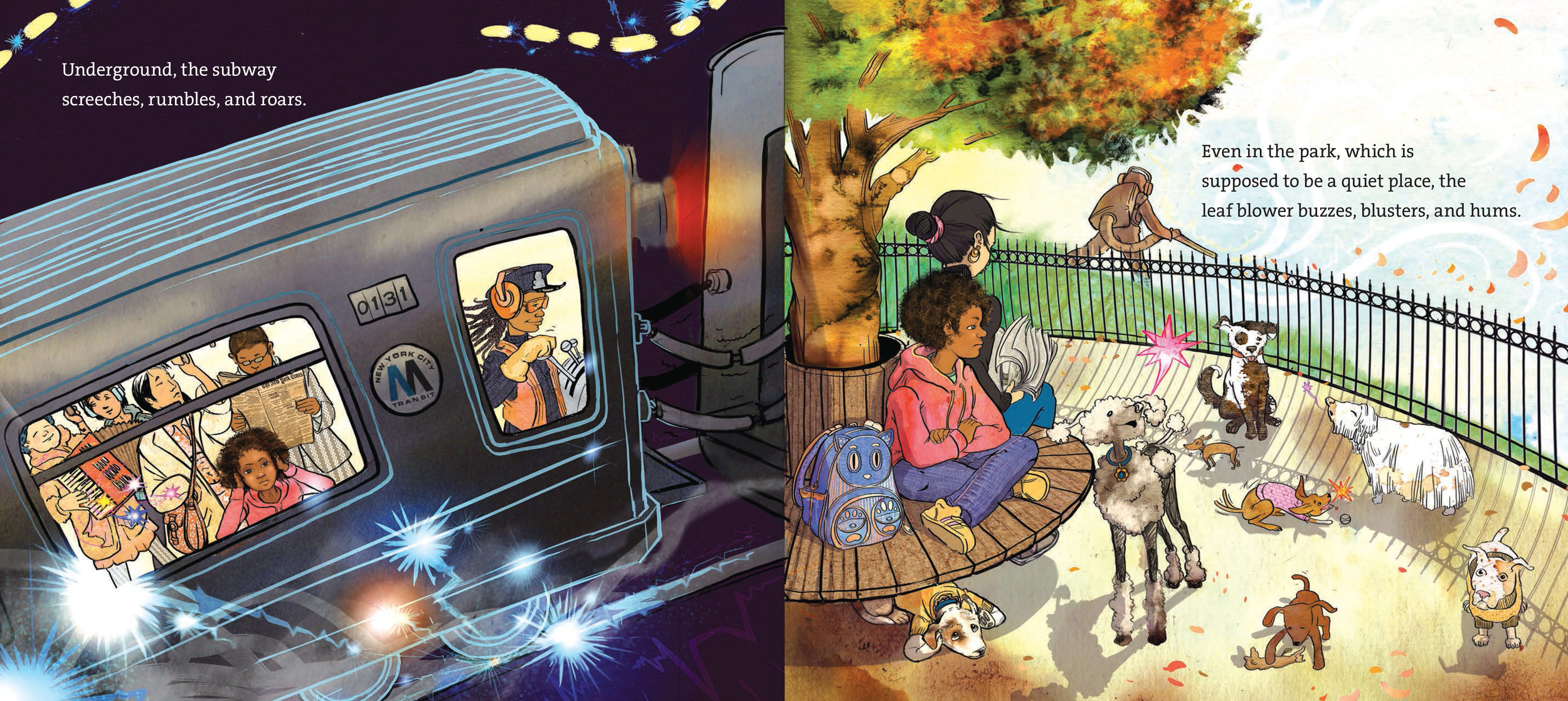
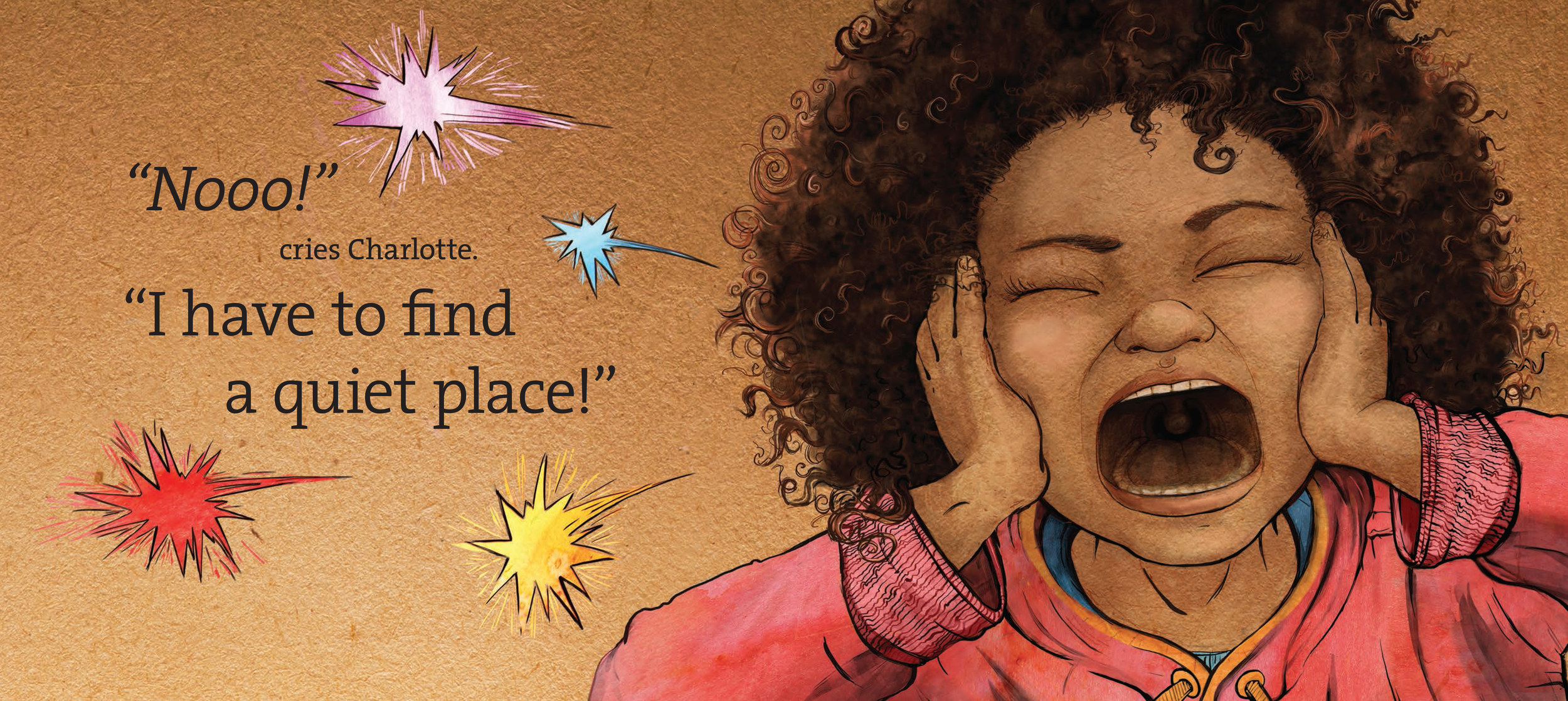
The outside world resounds with the din of jackhammers, horns, sirens, shouts, cars, music, and the “screeches, rumbles, and roars” of the subway. “Even in the park, which is supposed to be a quiet place, the leaf blower buzzes, blusters, and hums.” Charlotte puts her hands to her ears. “‘Nooo!’” she cries, “‘I have to find a quiet place!’”
celebrate-picture-books-picture-book-review-charlotte-and-the-quiet-place-nooo!-charlotte-cries

Image copyright Sara Woolley 2015, text copyright Deborah Sosin, 2015. Courtesy of sarawoolley.com

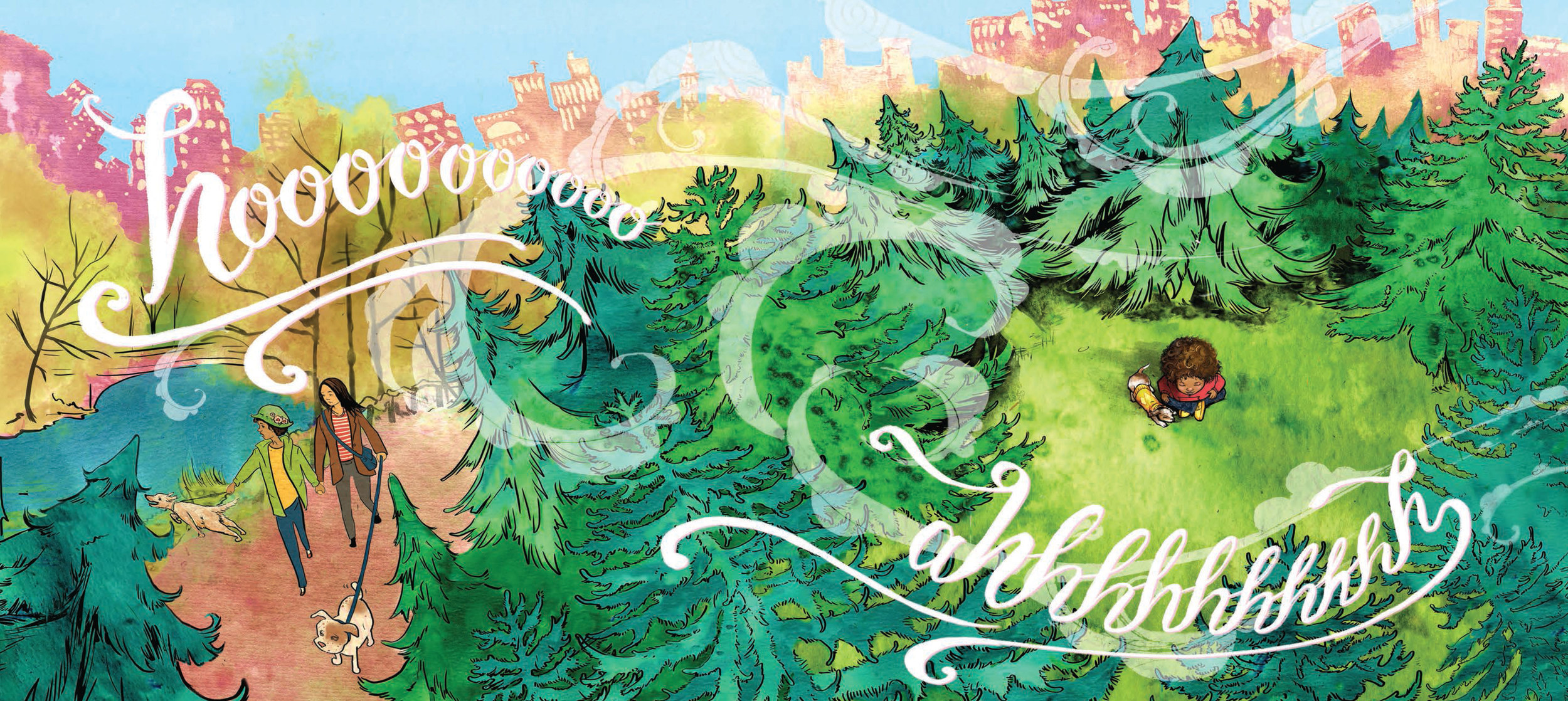
On Saturday Charlotte takes her dog for a walk in the park. Suddenly, Otto spies a squirrel and takes off running, wrenching his leash out of Charlotte’s hand. She chases after him down a hill, over a bridge, into the middle of a grove of trees. Out of breath, Charlotte and Otto sit beneath a tree. Gasping, Charlotte’s “belly rises up and down, up and down. Her breath goes in and out, in and out. Hooooo ahhhhh. Hooo ahhh.”

Slowly, Charlotte’s breath comes easier and “her mind slows down.” In this state, she discovers another, even quieter place. It is a place deep inside where her breath is soft and her “thoughts are hushed and low.” It is “a place as quiet as the small silence on the very last page of her favorite book, the silence right after ‘The End.’”
celebrate-picture-books-picture-book-review-charlotte-and-the-quiet-place-quiet-woods

Image copyright Sara Woolley, 2015, text copyright Deborah Sosin, 2015. Courtesy of sarawoolley.com

In a little while, Charlotte and Otto leave the grove, but now whenever home or school or the neighborhood is too loud, Charlotte remembers where she can find a quiet place. She simply closes her eyes and pays attention to that place deep in her belly and deep in her mind—“that quiet place inside.”

For so many children the world is a blaring, clattering place where their thoughts are drowned out by the noises around them. Deborah Sosin’s award-winning Charlotte and the Quiet Place validates these feelings and offers children a way to discover inner peace wherever they are. As a tonic to today’s hyper-stimulated environment, kids and adults alike will benefit from the method of mindful reflection Sosin presents. Sosin’s combination of evocative verbs and repetition makes the story fresh and an excellent read-aloud while also mirroring the sounds that are a part of our everyday life.

celebrate-picture-books-picture-book-review-charlotte-and-the-quiet-place-noisy-neighborhood

Image copyright Sara Woolley, 2015, text copyright Deborah Sosin, 2015. Courtesy of sarawoolley.com

Sara Woolley’s beautiful watercolor illustrations vividly depict not only Charlotte’s world but the sounds that disturb her peace. Amid the fully realized home, school, and neighborhood environments, complete with realistic details kids will recognize, sharp cracks of equipment, blaring bells and whistles, high-pitched voices, and other noises spark the page. Portrayals of Charlotte, her hands over her ears and her eyes sad, express her distress in a way kids will understand. When Charlotte finds the grove of trees in which she first experiences inner peace, Woolley’s color palette turns softer, with peaceful tones of green, blue, and yellow where, previously, “louder” purples, reds, and golds predominated.

Charlotte and the Quiet Place is a very welcomed book for those times when peace seems elusive and will give comfort to children who prefer quiet places and have more introverted natures. The book would make a wonderful addition to all children’s book shelves as well as to school and public library collections.

Ages 4 – 8

Parallax Press, 2015 | ISBN 978-1941529027

Visit Charlotte and the Quiet Place on her own website! You’ll find resources, images and videos, and more!

View a gallery of artwork for books, comics, and other illustration work by Sara Woolley on her website!

Meet Deborah Sosin

celebrate-picture-books-picture-book-review-interview-with-author-deborah-sosinDeborah Sosin is a writer, editor, and clinical social worker specializing in mindfulness-based psychotherapy. She holds an MSW from Smith College School for Social Work and an MFA from Lesley University. Debbie’s picture book, Charlotte and the Quiet Place, illustrated by Sara Woolley, was published by Parallax Press in 2015 and has won multiple awards including the 2015 INDIEFAB Book of the Year Gold Award, the 2016 Independent Publisher Book Awards Silver Medal, and the 2015 National Parenting Publications Bronze Award. Debbie’s essays and op-eds have appeared in the New York Times, Boston Globe Magazine, Salon, CognoscentiBrevity Blog, The Writer’s Chronicle, Journal News, Writer’s Digest, Zone 3 Literary Journal, JMWW Journal, The Manifest-Station, and elsewhere. Her essays also appear in the anthologies Chicken Soup for the Soul: The Cat Did What? and The Apollo 11 Moon Landing (Perspectives on Modern World History). (Photo by Kevin Day Photography)

You can connect with Deborah Sosin on: Her Website | Facebook | Twitter

Hi Debbie! I’m really thrilled to have you join me today to talk about your work. In your career you write for adults and children, work within the publishing industry, provide publicity services, and teach. How did you get started? Did you always want to write?

I kept a diary starting at around age ten and always loved writing for school or for fun. I started getting more serious about writing for publication in the past ten years, studied at GrubStreet, attended the Kenyon Review Writers Workshop, and eventually went back to school to get an MFA in Creative Writing. I wish I had started earlier, but it’s been rewarding to finally follow my true passion.

What influenced you to write Charlotte and the Quiet Place?

I wrote the book as an independent project as part of my MFA studies at Lesley University. They say “write what you know,” so I thought about my childhood growing up in kind of a noisy house, where my brother played the piano, my father had a radio and TV on simultaneously, and my mother was on the phone a lot. And then I thought about my longtime meditation practice and how tuning in to my breathing has helped me find a quiet place inside. So I wanted to write a story about children finding their own quiet place inside themselves.

You give school presentations on mindfulness and your picture book Charlotte and the Quiet Place for various ages. Is there an experience from any of these that you would like to share?

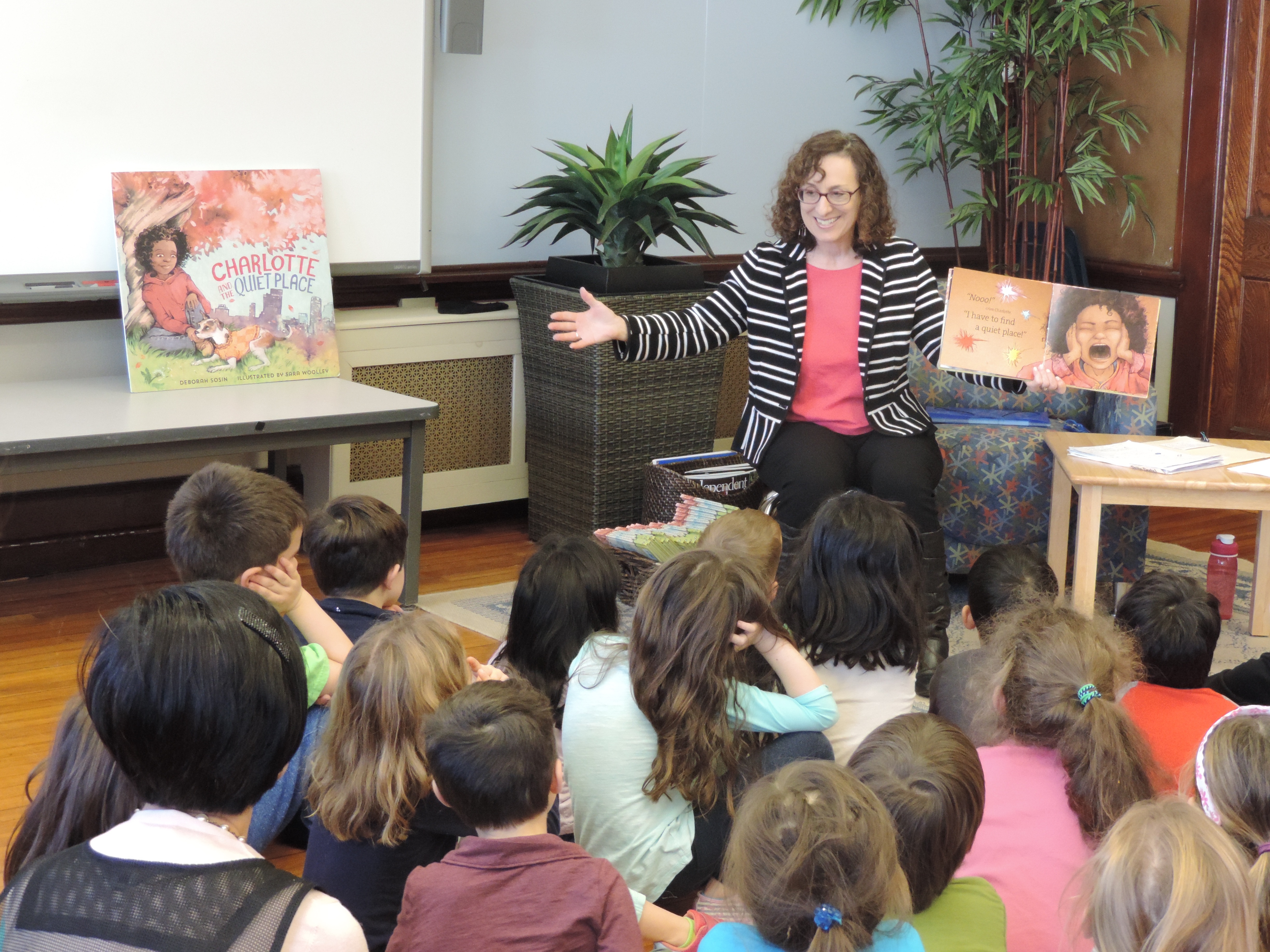
School visits are my favorite part of being an author! No matter what age the students are, they love to help me tell the story by repeating the “noisy” sounds and the “hoo ahh” breathing sounds. We usually do a few calming/breathing exercises together and, without fail, even the squirmiest group will settle into a beautiful, shared, often profound silence. Once, when asked where Charlotte finds her quiet place, one kindergarten girl said, “In her belly and in her brain, where it’s calm.” Many kids get that idea. What could be better? I also love showing them my early scribbles and illustrator Sara Woolley’s wonderful sketches and storyboards, and sharing the step-by-step process of publishing the book, from concept to completion.
celebrate-picture-books-picture-book-review-author-deborah-sosin-visits-Newton-Monetssori-School

Deborah Sosin reads Charlotte and the Quiet Place to students at Newton Montessori School. Photo courtesy of Newton Montessori School.

Can you talk a little about mindfulness and how it can benefit children?

Mindfulness has become a catchword these days, but my favorite definition is from Dr. Amy Saltzman: “Noticing what’s happening right here and now, with a friendly, curious attitude, then choosing what to do next.” Many top-notch scientific studies show that mindfulness can help kids with concentration, attention, self-soothing, anxiety, depression, sleep, mood, compassion, confidence…I could go on. Compared with adults, most kids are naturally mindful, that is “in the moment,” but kids do get stressed out and worried about the past or the future, so mindfulness helps. I sometimes worry that parents and teachers might use it for disciplinary reasons (“Enough! Go be mindful in the corner!”), which is not the point. It’s a whole-life practice, not a technique or intervention. And, as the book shows, mindfulness can lead us to a quiet place inside that we can access whenever we want.
celebrate-picture-books-picture-book-review-interview-with-deborah-sosin-debbie-at-cottage-montessori-school

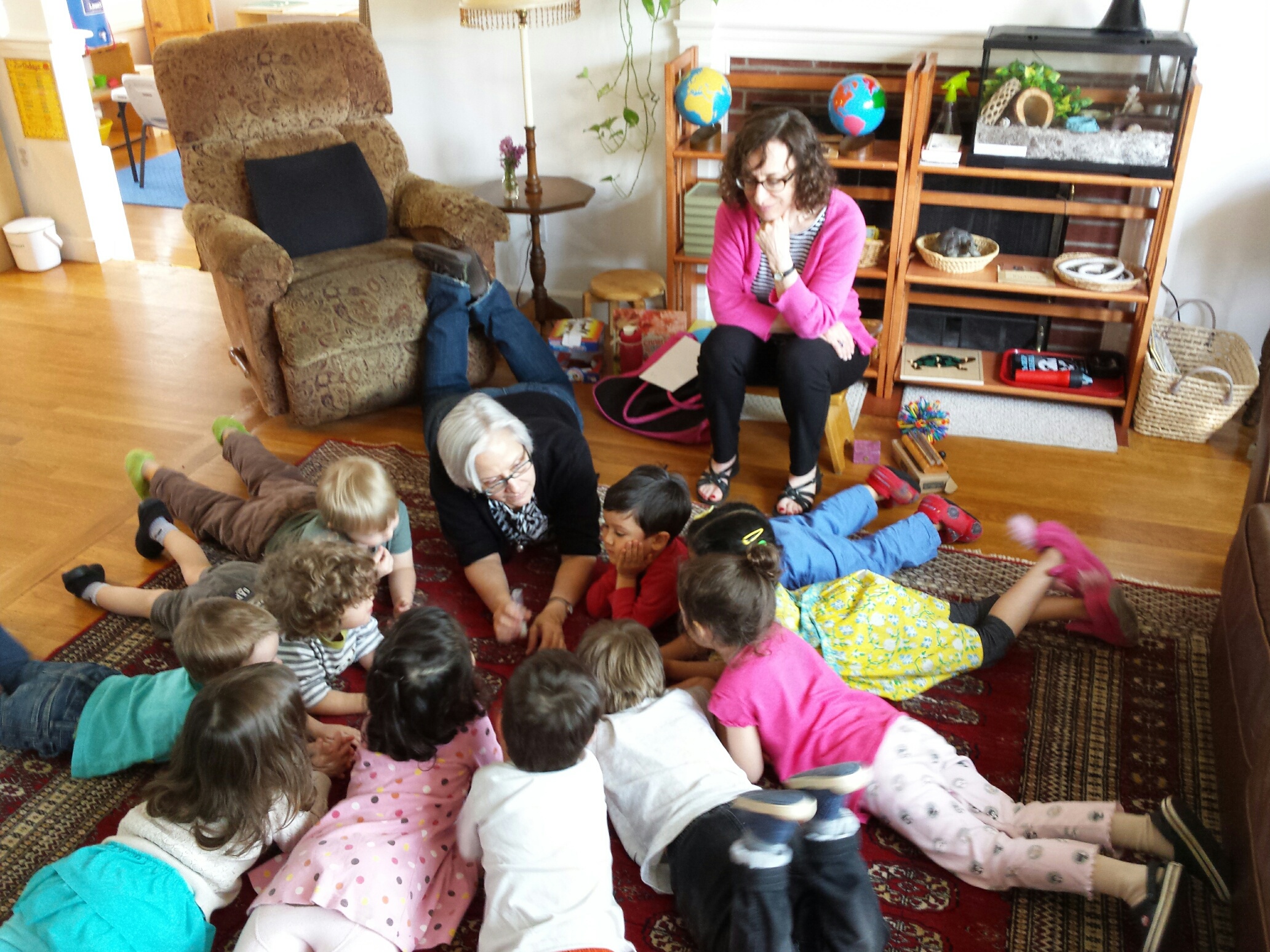
Students at the Cottage Montessori School in Arlington, Massachusetts play the Silence Game with director Karen Wagner, watching the sand in the hourglass. Photo courtesy of Stacey Moriarty.

Can you tell me a little about your work with Grub Street, a creative writing center in Boston?

I started taking classes at GrubStreet in 2008; my first class was “Six Weeks, Six Essays,” and from that class, I helped form a longtime regular writing group. I started blogging soon after and then submitted personal essays for publication, with some good luck. GrubStreet is a fantastic, inclusive community, with excellent faculty and a huge range of motivated, smart, and enthusiastic students, from beginners to veterans. After a few years, I applied to teach classes there and am proud to be on their instructor and consultant rosters now.

You are an accomplished choral singer, having performed at Lincoln Center, the United Nations, Boston’s Symphony Hall, and on an international tour. When did you begin choral singing? Do you have an anecdote you’d like to share from any of your experiences?

I’ve been singing my whole life and have been in choruses since elementary school. Singing with other people is extremely gratifying and, after all the “verbal”-type things I do, including my work as a psychotherapist, it’s a lovely change of pace. I spent about 15 years in the Zamir Chorale of Boston, which specializes in Jewish choral music. Our tours to Eastern Europe, Italy, and Israel were extraordinary. In 1999, when we sang at Auschwitz and Terezin, the sites of former concentration camps, it was hard to keep our emotions in check, but it felt important to revive the voices of the Jewish people that the Nazis had attempted to quell. A PBS documentary film, “Zamir: Jewish Voices Return to Poland,” chronicled our tour that summer. I think it’s still available through the Zamir Chorale website.

What’s the best part about writing for children?
celebrate-picture-books-picture-book-review-interview-with-deborah-sosin-debbie-at-The-Oblong-Bookstore-event

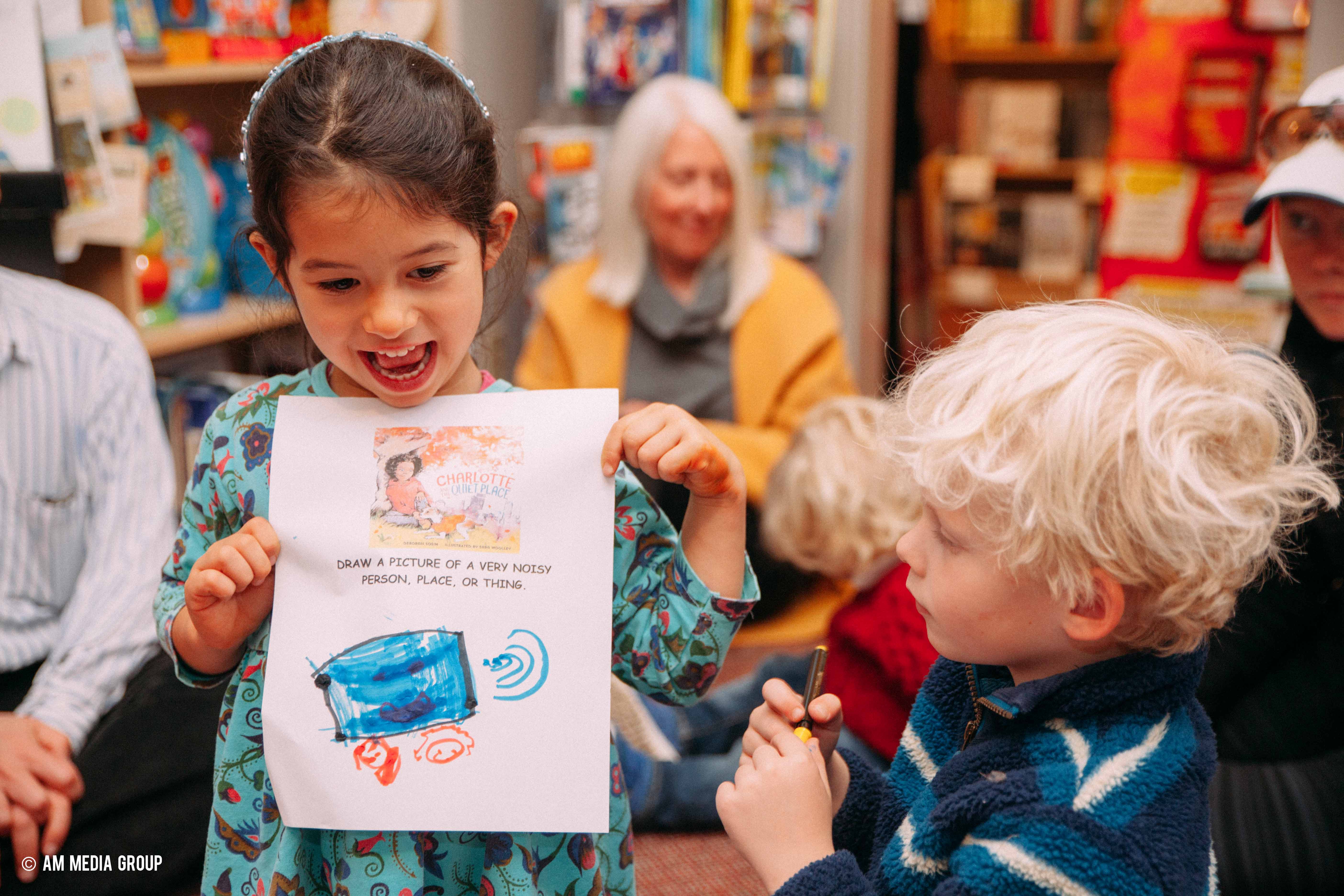
Children enjoy drawing their noisy and quiet places at an Oblong Bookstore event in NY. Photo courtesy of AM Media Group

After having focused almost exclusively on nonfiction for most of my writing career, it’s been wonderful to work in the very precise and rich world of picture-book writing with so many lovely, funny, imaginative, and supportive fellow writers I’ve met through SCBWI and the amazing Writers’ Loft in Sherborn, Mass.

Thanks, Debbie, for stopping by and chatting! I wish you all the best with Charlotte and the Quiet Place and all of your future endeavors!

International Quality of Life Activity
celebrate-picture-books-picture-book-review-smile-cards-craft

Share a Smile Cards


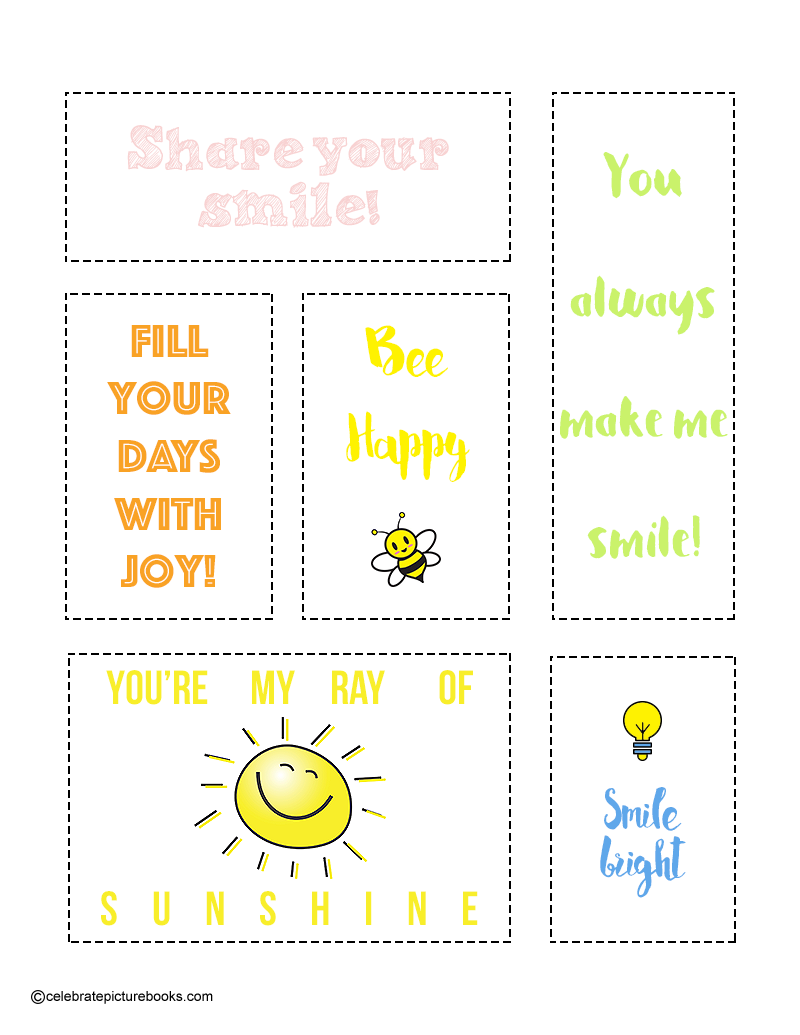
Life is better when you share smiles with those you know—and those you don’t! Try it! When you’re out today at school or other places, look someone in the eye and smile. You’ll probably get a smile back—and you can be sure that you will have made the other person’s and your day better!

Here are some Smile Cards that you can share. Why not slip one into your dad’s pocket or your mom’s purse, put one in your friend’s backpack, or sneak one onto your teacher’s desk? You can even leave one somewhere for a stranger to find! Have fun sharing your smiles, and see how much better you and the others around you feel!

Click here to print your Share a Smile Cards.

celebrate-picture-books-picture-book-review-charlotte-and-the-quiet-place-noisy-neighborhood

You can find Charlotte and the Quiet Place at these booksellers

Amazon | Barnes & NobleIndieBound | Parallax Press 

Picture Book Review


January 27 – It’s Celebration of Life Month

celebrate-picture-books-picture-book-review-a-beginners-guide-to-being-human-cover

About the Holiday

Today’s holiday was established by Food for Health International to encourage people to take a holistic approach to taking care of themselves, not only their physical health but their emotional health as well. Celebrating all that life has to offer while taking time to enjoy family and friends and be mindful of others through mutual respect, inclusion, empathy, and gratitude goes a long way towards greater happiness and health. Sharing today’s book with your kids is a wonderful way to celebrate this month-long holiday all year around.

A Beginner’s Guide to Being Human

Written by Matt Forrest Esenwine | Illustrated by André Ceolin


“Welcome to Humanity! You’re really going to enjoy it.” With this expansive greeting, Matt Forrest Esenwine invites kids in to learn what they need to know “… to get the most out of [their] human experience….” First up is family—that group of people who spend so much time with you and “care about you the most.” But what does a family do? “Families love each other, disappoint each other, support each other, and get angry with each other, over and over—sometimes all in the same day. Weird, right?” But you can be sure that the “…whole ‘caring about you’ part never stops.

celebrate-picture-books-picture-book-review-a-beginners-guide-to-being-human-sidewalk

Image copyright André Ceolin, 2022, text copyright Matt Forrest Esenwine, 2022. Courtesy of Beaming Books.

So what do you do with all of that caring that comes your way? You can share it! How? Well, by being kind. Sure, we hear that word all the time, but what does “being kind” really look like? Esenwine and André Ceolin give some easy-to-emulate examples that don’t take any money or super strength or extra time. In fact, everybody carries one of the easiest—maybe even the most meaningful—way to show kindness right on their face: their smile.

celebrate-picture-books-picture-book-review-a-beginners-guide-to-being-human-school-bus

Image copyright André Ceolin, 2022, text copyright Matt Forrest Esenwine, 2022. Courtesy of Beaming Books.

Once kids have kindness down, Esenwine moves on to empathy and urges kids to imagine why others may act the way they do, to think about what else may be going on with someone at home, in school, or elsewhere. Using empathy leads to compassion. What does compassion mean and how does it work? Esenwine and Ceolin show readers a few examples as well as reminding them that “we humans are quite good at ending up in the same situations again and again. Whatever another person is feeling, chances are, you’ll feel the same way at some point too” with a gallery of portraits of kids depicting emotions we all experience from time to time—and, often, every day.

One way of thinking about and reacting to situations that “has produced excellent results for over two thousand years,” Esenwine reveals, is the Golden Rule. He then shows kids how to apply this thoughtful idea to a range of situations to create better communication and understanding than getting angry or pushy or impatient.

celebrate-picture-books-picture-book-review-a-beginners-guide-to-being-human-school-locker

Image copyright André Ceolin, 2022, text copyright Matt Forrest Esenwine, 2022. Courtesy of Beaming Books.

Esenwine acknowledges that there will be bad days among the good, but these too can be handled with honesty, apologies, and forgiveness. Yes, “being human can sometimes be messy,” but that’s where family and friends can help. And, of course, they’re there to celebrate the good times too. So what does all of this kindness and compassion and empathy come down to? The thing that connects us all: Love. “So, welcome to Humanity!” Esenwine emphasizes, “We hope you enjoy your humanness. And we love that you’re here.”

Sprinkled throughout the text are brief “Pro Tips” that in one sentence expand on an idea and give kids confidence in understanding and/or applying the values in their own life.

celebrate-picture-books-picture-book-review-a-beginners-guide-to-being-human-love

Image copyright André Ceolin, 2022, text copyright Matt Forrest Esenwine, 2022. Courtesy of Beaming Books.

Matt Forrest Esenwine has created a book about treating others according to the Golden Rule that goes to the heart not only of how to do that but, so importantly, when and why. Sometimes the need for kindness and empathy can be apparent, as when a child or adult is sad, alone, or has a disappointment or obvious mishap. But what about when someone’s behavior seems to be a personal slight, disrespectful, or just going against the rules?

That’s were Esenwine’s gentle, straightforward, and honest storytelling invites readers to stop and really consider every person and situation individually, to dig deep into one’s own memory and experiences for better understanding and supportive responses. He also addresses the importance of apologizing and forgiveness. And he does all of this with humor and examples that will resonate with kids. Moreover, these elements provide a spark for further conversations among children and adults about specific incidents in a child’s life, possible reasons behind them, and how the child can respond in a kind, empathetic, and compassionate way.

From the first spread, which shows a sidewalk busy with people all thinking their own thoughts (some of whom reappear elsewhere), André Ceolin engages readers in looking closely and thinking about how the people may be feeling, what they are doing, and why they might be behaving in a certain way. He depicts the characters in detailed places and situations familiar to kids that will spark recognition and lead to meaningful discussions and understanding. Ceolin’s images on each page, as well as a portrait gallery of universal emotions, provide excellent social emotional learning tools for adults to share with children when talking about recognizing and reading others’ feelings through facial expressions. Bookending the text, Ceolin emphasizes the support and enduring love of family and good friends.

A well-conceived, heartfelt, and impactful book you’ll want to share again and again, A Beginner’s Guide to Being Human reminds readers that we’re all in this—school, work, sports, clubs: life—together and is a timely must-have addition to home, school, classroom, and public library collections.

Ages 4 – 8

Beaming Books, 2022 | ISBN 978-1506481739

About the Author

Matt Forrest Esenwine is an author and poet from Warner, New Hampshire. His debut picture book, Flashlight Night (Boyds Mills Press, 2017), was selected by the New York Public Library as one of the Best Picture Books for Kids of 2017. His poetry can be found in numerous anthologies, including The National Geographic Book of Nature Poetry (National Geographic Children’s Books, 2015), I Am Someone Else (Charlesbridge, 2019), and Highlights for Children. You can visit him at mattforrest.com and connect with him on Facebook | Instagram | Twitter | YouTube.

About the Illustrator

André Ceolin studied at the School of Visual Arts in New York City. He has illustrated over twenty books for children. André lives in Brazil with his family. You can visit him at andreceolin.com and on Instagram.

Celebration of Life Month Activity

CPB - Random Acts of Kindness cards

Kindness Cards


Here are some cheery cards that are sure to make the recipient’s day happier! Give them to a friend, a family member, your teacher, or your bus driver to show them that you care and that they mean a lot to you!

Random Acts of Kindness Cards Sheet 1 |  Sheet 2 | Sheet 3

celebrate-picture-books-picture-book-review-a-beginners-guide-to-being-human-cover

You can find A Beginner’s Guide to Being Human at these booksellers

Amazon | Barnes & Noble | Books-a-Million

To support your local independent bookstore, order from

Bookshop | IndieBound

Picture Book Review

January 17 – It’s National Skating Month

celebrate-picture-books-picture-book-review-the-three-canadian-pigs-cover

About the Holiday

National Skating Month was established by U.S. Figure Skating as a week-long celebration in March 2002 following the Olympic Winter Games in Salt Lake City. The holiday gives ice-skating rinks, clubs, and programs an opportunity to invite new families to the ice by offering free lessons and skating demonstrations. If figure skating isn’t your thing, you might like to take your skills to the hockey rink or just to a local pond for some free-style skating. However you choose to enjoy the ice, skating is fun and for everyone! To learn more about the holiday and find resources for bigger groups, visit the US Figure Skating website. To download and print fun skating-inspired puzzles and coloring pages from US Figure Skating, click here

The Three Canadian Pigs: A Hockey Story

Written by Jocelyn Watkinson | Illustrated by Marcus Cutler


Three pigs were just finishing their hockey scrimmage when a wolf sprang from behind some bushes, fangs sharp and claws at the ready to satisfy his hunger since they looked so delicious. But as they quickly took off their skates and packed up their gear, they said, “‘I’m soorry there, Wolf, you are soorely mistaken—'” To which the wolf replied, “‘Oh no! But I’m not! You’re Canadian bacon!'” The pigs jumped on their snowmobile and hurried home to their snow fort in town. 

celebrate-picture-books-picture-book-review-the-three-canadian-pigs-fight-back

Image copyright Marcus Cutler, 2022, text copyright Jocelyn Watkinson, 2022. Courtesy of Sleeping Bear Press.

It didn’t take long for the wolf to catch up with them, and from outside their door, he shouted, “‘Little pigs! Little pigs! Let me come in!'” But they just replied, “‘Not by the pads on our shinny-shin-shins!'” The wolf threatened to blow the fort down, but this was no flimsy home built of sticks or straw. In fact, they told him, “‘there’s not one single flaw!'” The wolf wasn’t going to give up easily and he collected Moose and Bear to help him break in.

celebrate-picture-books-picture-book-review-the-three-canadian-pigs-snow-fort

Image copyright Marcus Cutler, 2022, text copyright Jocelyn Watkinson, 2022. Courtesy of Sleeping Bear Press.

When the three pigs had just enough of the wolf’s team’s attack, they came out and challenged them to “‘settle this fight the Canadian way'” with “‘a hockey game showdown.'” With a Canada goose as a ref, they took to the ice, attracting a crowd of spectators. The wolf and his team thought they’d win with ease, but the pigs “deked and they cut: / the pigs couldn’t be caught,” and when they scored, the wolf took to underhanded measures to stop them. 

But the pigs were too quick and too nimble, and they ran up the score. When the ref blew her whistle ending the game, the pigs celebrated saving their home, but the wolf “… full of frustration and hunger and spite, / … threw down his gloves and dove in for a bite.” It looked like the pigs were goners for sure, but Bear and Moose called him out on his poor sportsmanship. Wolf dropped the three pigs, feeling ashamed but still hungry. 

celebrate-picture-books-picture-book-review-the-three-canadian-pigs-wolf

Image copyright Marcus Cutler, 2022, text copyright Jocelyn Watkinson, 2022. Courtesy of Sleeping Bear Press.

Dragging his stick and hanging his head, the wolf trudged off the ice, but one pig called out to him, inviting him to join them in a feast back at the fort. When the wolf saw their spread of poutine, tourtière, beaver tails, butter tarts, and so many other mouthwatering delicacies, he apologized: “‘Pigs, I’m so sorry that I was a brute.'” / “‘There’s nothing for you to be soorry a-boot.'” a pig graciously told him. The pigs, Wolf, Bear, and Moose all made amends and piled up their plates. Then they settled in to watch a game on TV. And as “they put up their feet,” the wolf had to agree that “‘being friends with Canadian bacon is sweet!'”

celebrate-picture-books-picture-book-review-the-three-canadian-pigs-hockey-game

Image copyright Marcus Cutler, 2022, text copyright Jocelyn Watkinson, 2022. Courtesy of Sleeping Bear Press.

Full of clever rhymes, puns, valuable lessons, and dialogue that winks at Canadian pronunciations, Jocelyn Watkinson’s story flows as smoothly as a hockey puck on ice. Her regional take on the traditional Three Little Pigs story is fast-paced and suspenseful while touching on themes of sportsmanship, remorse and forgiveness, and friendship all framed with high-energy hockey action and plenty of humor. Especially welcome is Watkinson’s depiction of Bear and Moose confronting Wolf when he reneges on his agreement to let the pigs go if they win the game. Standing up to a friend or for what’s right can be hard, but Watkinson shows readers that having the courage of your convictions is honorable, honest, and can often turn a negative situation into a positive experience.

Marcus Cutler scores with his funny, emotion-packed illustrations that will have kids laughing and cheering for the pigs from page to page. Winter sports fans will love all the hockey action and will want to linger over the pigs’ hard-won trophy, on which Cutler had fun hamming it up with the names of some of hockey’s greats, The spread of favorite Canadian foods is sure to inspire game-night treat feasts. Cutler also highlights the important role of Bear and Moose, who ultimately appeal to Wolf’s better nature.

celebrate-picture-books-picture-book-review-the-three-canadian-pigs-snow-mobile

Image copyright Marcus Cutler, 2022. Courtesy of Sleeping Bear Press.

In a humorous and foreshadowing scene, Bear halfheartedly scratches at the pigs’ snow fort with one paw while holding a steaming mug in the other as Wolf exhorts his friends to “ram and claw and maul” their way inside. When Bear and Moose finally challenge Wolf to live up to his deal, their disapproval is clearly visible to readers. Wolf’s resulting feelings, as well as their cause, are also evident, giving kids and adults openings for meaningful discussions on behavior.

Whether your kids wait all year for hockey season, are fans of fractured fairy tales, or simply love a great story, The Three Canadian Pigs is a funny and impactful read aloud that’s sure to become a story time favorite all year long and a book you’ll be glad you added to your home, classroom, school, or public library.

Ages 4 – 7

Sleeping Bear Press, 2022  ISBN 978-1534111608

Discover more about Jocelyn Watkinson and her books on her website.

To learn more about Marcus Cutler, his books, and his art, visit his website.

Skating Month Activity

celebrate-picture-books-picture-book-review-the-three-canadian-pigs-maze


The Three Canadian Pigs Activity Kit


The game’s on with the two puzzles and two coloring pages inspired by today’s book! Just download and print them from the Sleeping Bear Press site here:

The Three Canadian Pigs Activity Kit

celebrate-picture-books-picture-book-review-the-three-canadian-pigs-cover

You can find The Three Canadian Pigs: A Hockey Story at these booksellers

Amazon | Barnes & Noble | Books-a-Million

To support your local independent bookstore, order from

Bookshop | IndieBound

Picture Book Review