December 30 – Bacon Day

celebrate-picture-books-picture-book-review-everyone-loves-bacon

About the Holiday

Bacon has been around since ancient times. In early French it was known as Bako, in German as Bakko, and in Teutonic as Backe. In Middle English it was called Bacoun, but all these words simply meant “back,” as in the back meat of pigs. Preserved and flavored, bacon is a favorite the world over and has seen an explosion of uses in the past few years, from enhancing cupcakes, apple pie, and chocolate chip cookies to spicing up peanut butter sandwiches, lasagna, and French toast. There’s nothing like waking up to the sizzling aroma of bacon, and today’s holiday gives you the okay to indulge!

Everyone Loves Bacon

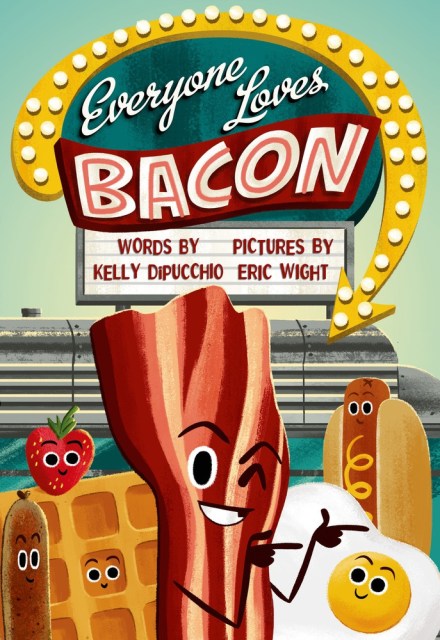
Written by Kelly Dipucchio | Illustrated by Eric Wight


From Egg to Waffle to Pancake, there was no one who didn’t love Bacon—even Bacon himself. Well…maybe French Toast was an exception, but he “doesn’t like anyone.” Bacon loved all the attention the other foods gave him. Jalapeño wanted to sit next to him, and Garlic thought he smelled so good! He made the fruit and vegetables laugh with his “charming stories and funny jokes,” and, boy, could he play the ukulele!
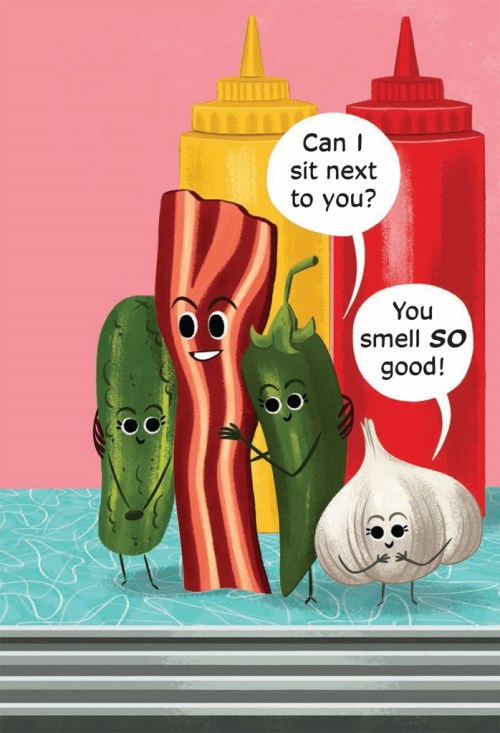
celebrate-picture-books-picture-book-review-everyone-loves-bacon-taking-picture

Image copyright Eric Wight, courtesy of us.macmillan.com

Ham, sausage link, and sausage patty were jealous, “but Bacon didn’t care about them. Not one bit.” After all, “He was becoming a real celebrity. His picture appeared on t-shirts. And billboards. And buses.” Bacon was so enthralled with himself that he began to forget his friends. Sometimes he even “pretended not to know some of his old friends.” Bacon had fans, and that was enough for him.

Bacon began to live the high life of sports cars, designer clothes, and the latest fads. He was even the star of the breakfast pastry parade. “Indeed Bacon was the toast of the town. Until….” Well…we did warn you that “everyone loves Bacon.”

celebrate-picture-books-picture-book-review-everyone-loves-bacon-umbrellas

Image copyright Eric Wight, courtesy of us.macmillan.com

Kelly Dipucchio’s witty cautionary tale about a piece of bacon that gets too big for his broiler sizzles with snappy sentences and the perils of celebrity. She chooses words and experiences that are recognizable to any child navigating the world of school, siblings, and friends, and with sly winks to popular culture shows that mistaking fans for friends ends badly and that there is always someone “bigger” than you.
celebrate-picture-books-picture-book-review-everyone-loves-bacon-spoon-mirror

Image copyright Eric Wight, courtesy of us.macmillan.com

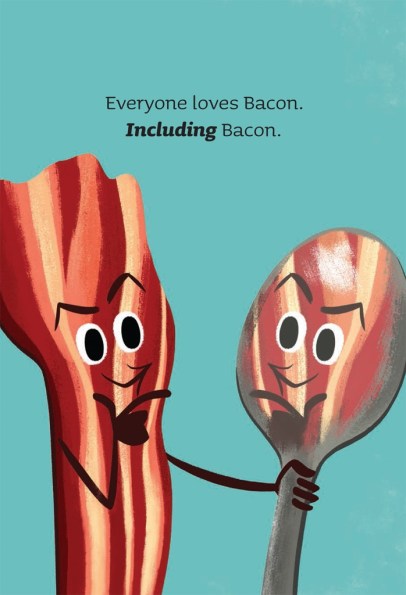
Even if readers don’t like the taste of bacon, they won’t be able to resist Eric Wight’s adorable slice who becomes the star of a 1950s-era diner. From the first page where Bacon admires himself in the back of a spoon, kids will giggle as Bacon takes pictures with equally cute Hotdog, Chicken Leg, Pickle, Garlic, and Jalapeño, leads a citrus parade complete with paper cocktail umbrellas, and plays the ukulele for swooning tater tots, French fries, and curly fries. But as the other foods grow sad and disgruntled with Bacon’s attitude—even brandishing fancy toothpicks—kids will understand and empathize with these forgotten friends. When Bacon meets his fate on the last page, readers are sure to fork over a howl of surprise.

Ages 3 – 6

Farrar, Straus & Giroux, 2015 | ISBN 978-0374300524

To learn more about Kelly Dipucchio and her books, visit her website!

Bacon Day Activity

celebrate-picture-books-picture-book-review-amazin'-bacon-maze

Amazin’ Bacon Maze


There’s some tasty bacon sizzling in the center of this frying pan-shaped maze. Can you find your way through this printable Amazin’ Bacon Maze to eat it up? Here’s the Solution!

Picture Book Review

December 23 – Roots Day

celebrate-picture-books-picture-book-review-mango-abuela-and-me

About the Holiday

Roots Day was established to inspire us to look into our family background and learn about our heritage. It’s fascinating to discover facts about our ancestors’s lives and the stories that have come down from generation to generation. If you will be with family this weekend, talk about your collective history and get to know each other in a whole new way!

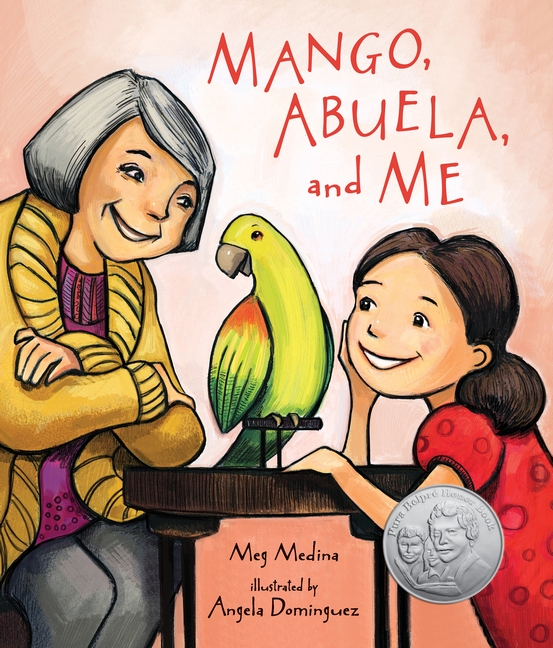
Mango, Abuela, and Me

Written by Meg Medina | Illustrated by Angel Dominguez


During the winter Mia’s Abuela moves from her house far away to live with her family. Mia feels shy around her unfamiliar grandmother, but quickly adapts, sharing her room and her drawer space. The one thing they cannot share is language. Abuela “can’t unlock the English words” in Mia’s book, and Mia knows only a little Spanish.

celebrate-picture-books-picture-book-review-mango-abuela-and-me-letter

Image copyright Angela Domingues, text copyright Meg Medina. Courtesy of Candlewick Press

On the first night Abuela shows Mia two things she has carefully brought with her—a feather from a wild parrot that roosted in her mango trees and a photograph of her late husband. “Tu Abuelo,” she explains to Mia.

For the rest of the winter, Mia spends time with her grandmother, but regrets that she can never tell her important things about her life. Abuela does’t know that Mia’s good at art or can beat the boys in a race. Likewise, Abuela can’t tell Mia about her life or answer Mia’s many questions. 

celebrate-picture-books-picture-book-review-mango-abuela-and-me-language-barrier

Image copyright Angela Domingues, text copyright Meg Medina. Courtesy of Candlewick Press

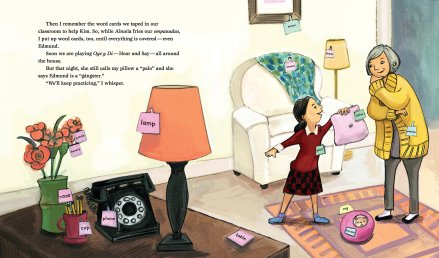
When Mia confides in her mother, her mom reminds her of how she helped her best friend, Kim, learn English when she was new at school. One day while Mia and her grandma bake meat pies, Mia pretends to be her teacher, naming each ingredient in English. Abuela reciprocates with the Spanish word. Mia suddenly has an idea. She tags everything in the house with its English name and the pair practices.

celebrate-picture-books-picture-book-review-mango-abuela-and-me-word-tags

Image copyright Angela Domingues, text copyright Meg Medina. Courtesy of Candlewick Press

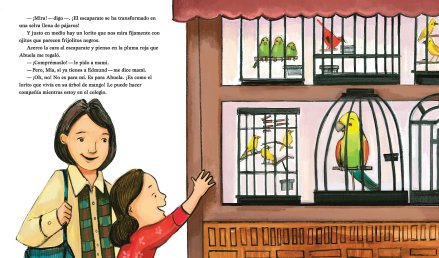
The next day on a trip to the pet shop to buy hamster food, Mia sees something in the window that gives her another exciting idea. Right in the middle of the display sits a colorful parrot. “Let’s buy him,” Mia exclaims. “For Abuela.” The parrot can keep Abuela company while she is in school, Mia thinks.

Abuela is thrilled with the gift, and they name the parrot Mango because he is the color of the tropical fruit. Abuela teaches him to say Buenos tardes. Good afternoon, Mia teaches him. “Buenos tardes, good afternoon,” Mango repeats. Abuela, Mia, and Mango spend the days practicing new English and Spanish words, learning the days of the week, the months, and the names of coins. Encouraged by her success, Abuela asks to learn more and harder words so she can meet people in the neighborhood.

celebrate-picture-books-picture-book-review-mango-abuela-and-me-pet-store

Image copyright Angela Domingues, text copyright Meg Medina. Courtesy of Candlewick Press

Best of all, Mia and Abuela can now talk about everything. Their “mouths are full of things to say,” and they tell each other about their day and their lives. From his perch Mango watches and listens. Night falls and as the light is turned off, Mia says “Hasta mañana, Abuela.” “Good night, Mia,” Abuela whispers.

celebrate-picture-books-picture-book-review-mango-abuela-and-me-baking-together

Image copyright Angela Domingues, text copyright Meg Medina. Courtesy of Candlewick Press

Meg Medina beautifully represents the relationship between a little girl and her grandmother who are unfamiliar with each other but bound by familial love. The little girl’s acceptance of her grandmother and desire to communicate is strongly depicted in the activities they do together. Mia’s clever ideas to promote the mutual learning of each other’s language shows the kind of inclusiveness that builds friendships. 

Angela Dominguez depicts the developing friendship between Mia and her Abuela in bright paintings that mirror the reds, blues, greens, and yellows of the tropics. The pair’s closeness grows organically from page to page as Mia first shies away from the grandmother who is a stranger to her to attempts at communication to deep feelings of love as they bridge the language barrier through dedication, hard work, and the help of a unique friend.

Ages 5 – 8

Candlewick Press, 2015 | ISBN 978-0763669003 (English) / 978-0763680992 (Spanish)

Learn more about Meg Medina and her books on her website

Discover more about Angela Dominguez and her books on her website!

Watch the Mango, Abuela, and Me book trailer!

Roots Day Activity

celebrate-picture-books-picture-book-review-recipe-card


Family Recipe Card


Every family has at least one favorite recipe. Maybe it’s a recipe handed down through the generations or maybe it’s a brand new treat! Print this Family Recipe Card on card stock or glue it to a 4″ x 6″ index card. Write down your recipe and save it. Why not start your own box of special recipes that you can pass down?

Picture Book Review

December 19 – Look for an Evergreen Day

celebrate-picture-books-picture-book-review-arturo-and-the-navidad-birds-cover

About the Holiday

Today’s holiday was established by the National Arborist Association to remind people to appreciate the beauty of evergreens that got that name because they stay green year round, These majestic trees add color to the doldrums of winter and remind us that summer will come again. To celebrate, why not take a walk and rediscover the evergreens in your neighborhood!

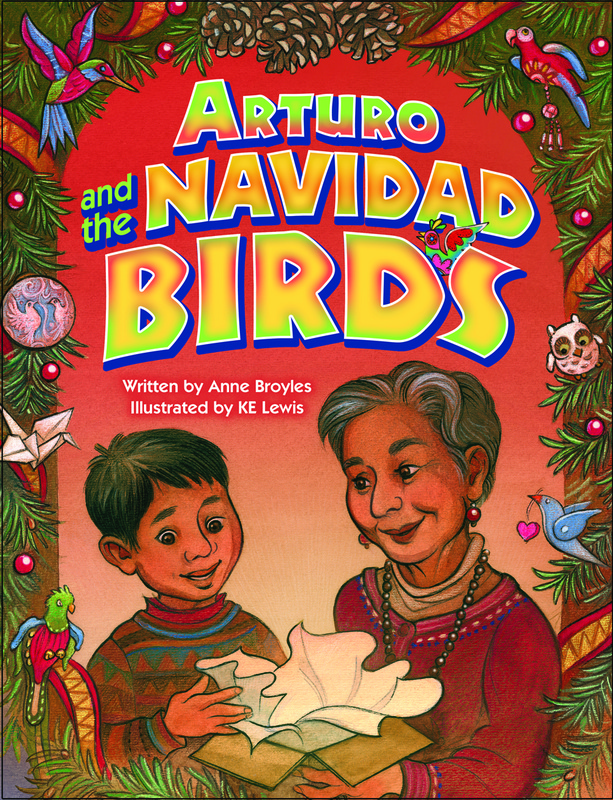
Arturo and the Navidad Birds / Arturo y los Pájaros de Navidad

Written by Anne Broyles | Illustrated by KE Lewis

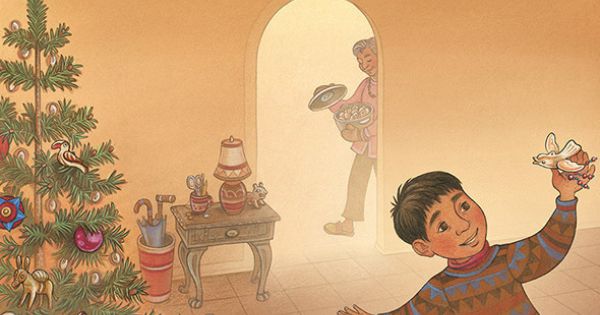
The day for decorating the Christmas tree had arrived, and Arturo “bounced up and down in front of the pine tree. ‘Hurry, Abue!’” he exclaimed. The tree looked so empty, but Arturo’s grandmother brought out the box of ornaments, and soon the two were admiring the little treasures. A tiny mouse nestled into a walnut shell bed had been made by Abue Rosa’s mother when she was a little girl. Although it was hard for Arturo to imagine his grandmother as a little girl, he loved hearing the story of how she carried the mouse in her pocket. “‘I called him Hermanito—my little brother! Find a good home on our tree!’” Abue Rosa said. Arturo placed the ornament on a low branch.

celebrate-picture-books-picture-book-review-arturo-and-the-navidad-birds-flying-bird-ornament

Image copyright Karen Lewis, courtesy of karenlewis.com

The next ornament out of the box was a square piece of “cardboard decorated with mahogany-colored beans.” This had been made by his mother. Arturo hung it in the middle of the tree because his mother “was the middle child between Tío Hernan and Tía Ines.” A donkey ornament that Arturo’s abuelo bought when he and Rosa were first married went high up on the árbol de Navidad. The pair added ornament after ornament on the tree and it “began to shine with Abue Rosa’s stories.” Then Abue Rosa went into the kitchen to fix dinner. While she was gone Arturo rummaged through the box and found a “tiny, blown-glass bird. ‘Fly, bird. Like a plane. Vroom, vroom!’”

The little bird hit the wall and fell to the floor, its wings broken. “Horrified, Arturo covered the pieces with newspaper just before Abue came back.” As they finished decorating the tree, Abue Rosa looked through the box and asked Arturo, “Have you seen the glass pajarito that my dearest friend, Sofie, game me? It’s all I have left from her.” Arturo couldn’t look at his grandmother, instead asking to take a break.

celebrate-picture-books-picture-book-review-arturo-and-the-navidad-hug

Image copyright Karen Lewis, courtesy of karenlewis.com

Arturo ran to his room and grabbed the glue, but he couldn’t make the wings stick. As he looked at the broken bird, tears filled his eyes. He wondered if his grandmother could forgive him. Then he had an idea. In the basement he found a pinecone and some craft materials. When he finished making his pinecone bird, he gazed at it in disappointment. It didn’t look like any bird he had ever seen and certainly not like the glass bird.

“‘Donde estas, mi’jo?’” Grandma Rosa called from the top of the stairs. Arturo slowly climbed the stairs, carrying both birds. “Arturo took a deep breath. He held out the homemade bird. ‘I made this for our tree.’” “‘Qué bonita!’” How beautiful, Abue Rosa exclaimed. Arturo continued to tell his grandmother that he made it because….He held out his other hand with the broken bird inside. Abue Rosa gasped, and Arturo felt a sob filling him. “‘I didn’t mean to,’” he said.

celebrate-picture-books-picture-book-review-arturo-and-the-navidad-hot-chocolate

Image copyright Karen Lewis, courtesy of karenlewis.com

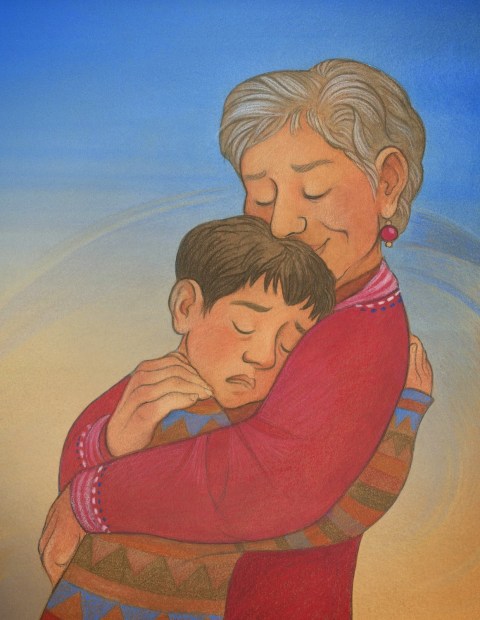
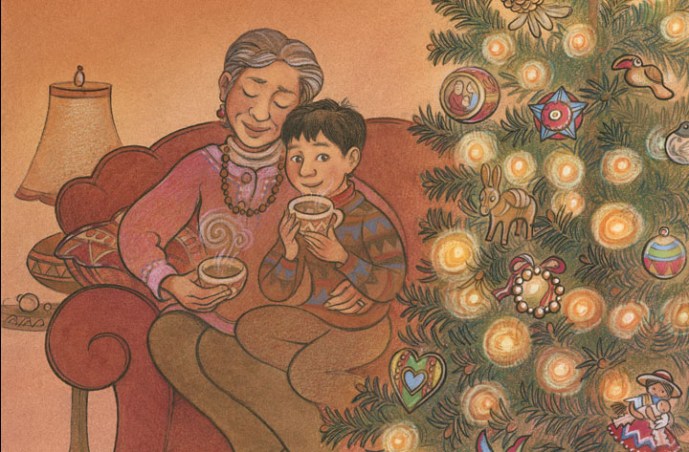
Abue Rosa hugged Arturo and told him that even without the bird she still remembered Sofia. “‘Now when I look at this bird you made, I will think of you and Sofia.’” Together they placed the pinecone ornament on the tree and turned on the lights. Afterward, they enjoyed cups of hot chocolate together. “‘The tree is full now,’ Abue said as Arturo snuggled against her, ‘of memories.’ He nodded. ‘And love.’”

Anne Broyles’ story of a boy and his grandmother who share the true meaning of love and memories is a touching holiday read. Through an incident which many children experience in one way or another, Broyles reassures young readers that—as Arturo’s grandmother states—people are more important than things. Her realistic portrayal of Arturo’s and his grandmother’s actions and emotions will resonate with readers, and the close bond between the two is a highlight of the story. Kids will enjoy the details in the stories of the ornaments as well as in Abue Rosa’s home.

Karen Lewis enhances the cozy tone of the story with her sepia-toned illustrations of Abue Rosa’s home and the personal memories surrounding her Christmas tree ornaments. Kids will recognize and empathize with Arturo’s and his grandmother’s feelings, which are genuine and clearly depicted. Kids will also like seeing the homemade and favorite ornaments that Arturo hangs on the tree as well as the loving relationship between Arturo and his Abue Rosa, which is beautifully revealed throughout the story.

Each page is told in both English and Spanish, making Arturo and the Navidad Birds a wonderful holiday choice for English-speaking, Spanish-speaking, and bilingual families.

Ages 4 – 8

Pelican Publishing, 2013 | ISBN 978-1455618019

To learn more about Anne Broyles and her books, as well as to find book-related activities, visit her website!

Discover a portfolio of illustration work, animation, and picture books on Karen Lewis’s website!

Enjoy this Arturo and the Navidad Birds book trailer!

Look for an Evergreen Day Activity

celebrate-picture-books-picture-book-review-evergreen-tree-maze

Puzzling Pine Tree Maze

The branches of a tall evergreen tree can form a kind of maze for the birds and squirrels who call them home. Can you find your way through this printable Puzzling Pine Tree Maze?

Picture Book Review

December 14 – It’s Human Rights Month

celebrate-picture-books-picture-book-review-emmanuel's-dream

About the Holiday

December is Human Rights Month, an observance established by the United Nations in order to raise awareness of, promote, and protect the equality of the world’s citizens. It takes vigilence, compassion, dedication, and determination, but achieving the goal of equal human rights is a responsibility we all share.

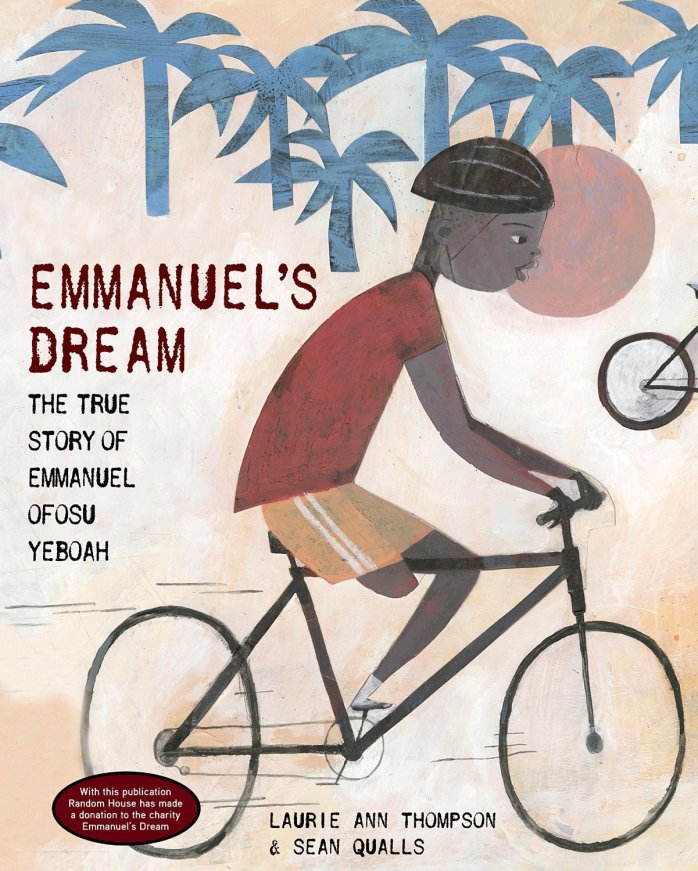
Emmanuel’s Dream: The True Story of Emmanuel Ofosu Yeboah

Written by Laurie Ann Thompson | Illustrated by Sean Qualls


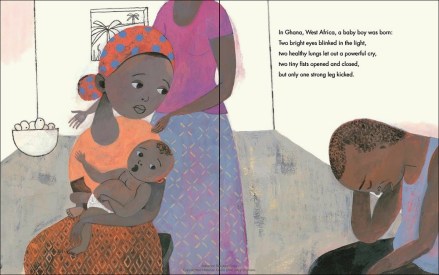
A baby is born in Ghana, West Africa with bright eyes, healthy lungs, and tiny, clasping fingers—but with only one strong leg. Most people think the baby will grow up to be a burden or worse—a curse. His father leaves the family, but his mother keeps the faith. Her name is Comfort and she names her child Emmanuel, which means “God is with us.”

celebrate-picture-books-picture-book-review-emmanuel's-dream-baby

Image copyright Sean Qualls, text copyright Laurie Ann Thompson. Courtesy of Schwartz & Wade

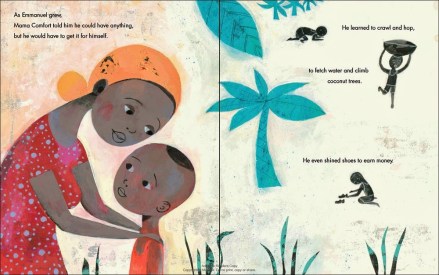
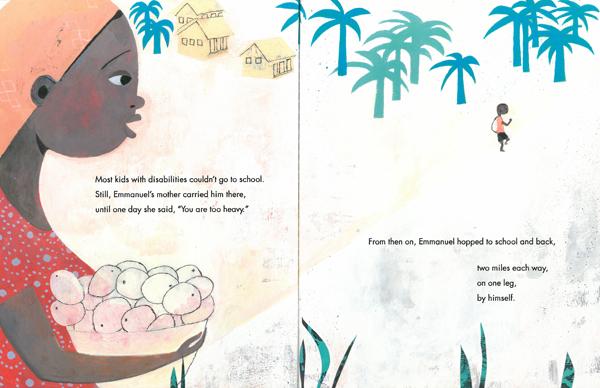
As Emmanuel grows, his mother encourages his independence. He learns how to crawl and hop to complete his daily work all with one leg. Most kids with disabilities don’t go to school, but Comfort carries her son back and forth until he becomes too heavy. From then on Emmanuel hops the two miles each way all by himself. At first the other kids won’t play with him, but Emmanuel is clever. He buys a soccer ball with the money he earns shining shoes and when he offers to share it, the kids include him. On crutches he is a fierce competitor and earns his classmates’ respect. Riding bikes is another favorite activity. Can Emmanuel pump those pedals with only one leg? He practices and falls, practices and falls some more until he masters the technique.

celebrate-picture-books-picture-book-review-emmanuel's-dream-growing-up

Image copyright Sean Qualls, text copyright Laurie Ann Thompson. Courtesy of Schwartz & Wade

When Emmanuel is 13 years old, his mother becomes ill. As the only family member capable of working, Emmanuel takes a train to a city 150 miles away to find a job. He doesn’t see his family again for two years. Because of his disability it is hard for him to find work. Finally, a food stand owner hires him and gives him a place to live. Over time Comfort grows sicker. When Emmanuel goes to be with her, she tells him to never beg and never give up. He takes these words to heart.

Emmanuel has an idea to show the world that “disabled does not mean unable”—all he needs is a bike. When the Challenged Athletes Foundation learns of his plan to bike around Ghana, they give him a bike, a helmet, and clothing. He trains and receives a blessing from the king of his region. Then accompanied by people who will document his trip, he takes off. “He pedaled through rain forests, over rolling hills, and across wide, muddy rivers….He pedaled as trucks roared past on the narrow highways and wild animals stalked his thoughts….He rode up, down, across, and around his country, proudly wearing the colors of its flag on a shirt printed with the words “The Pozo” or “the disabled person.”

celebrate-picture-books-picture-book-review-emmanuel's-dream-going-to-school

Image copyright Sean Qualls, text copyright Laurie Ann Thompson. Courtesy of Schwartz & Wade

Emmanuel talks to others with physical challenges and to those without. He meets farmers, landowners, government officials, and reporters. He wants everyone to learn of his message. People begin to pay attention—they ride and run alongside him; people with disabilities come out of their houses to see him (some leaving home for the first time ever). Emmanuel is becoming a national hero! Emmanuel completes his journey—nearly 400 miles—in only 10 days. In that short amount of time he proves that anyone can do great things and that one person is enough to change the world.

An Author’s Note expanding on Emmanuel Ofosu Yeboah’s life since his bike ride follows the text.

Laurie Ann Thompson tells this story of courage and achievement in straightforward language that highlights the difficulties and prejudices Emmanuel overcame to live the full life his mother envisioned for him. The details Thompson reveals—both within the school setting and in the world beyond—will inspire anyone who reads this special and moving true story.

Sean Qualls renders the story of Emmanuel Ofosu Yeboah in the vibrant colors and patterns of his native West Africa, giving energy and spirit to the fire that burned inside the young boy who rose above his disability and the expectations of his community. His relationship with his strong, supportive mother is drawn with obvious love and compassion. The use of a folk-art style combined with scenes of African markets, landscapes, and traditional tableaus, effectively sets the story for children. One particularly touching illustration shows a tiny Emmanuel hopping off to school as his mother, shown larger in the foreground, watches.

Ages 4 – 9

Schwartz & Wade, Random House, 2015 | ISBN 978-0449817445

Discover more about Laurie Ann Thompson and her books on her website!

To view a gallery of picture book illustration by Sean Qualls, visit his website!

Human Rights Month Activity

celebrate-picture-books-picture-book-review-change-your-world-coloring-page

Change Your World Coloring Page


You can make a difference in your school, your town, and the world around you. Here’s a printable Change Your World message that you can color and hang in your room or locker to remember how much power you have.

Picture Book Review
December 13 – National Day of the Horse

celebrate-picture

About the Holiday

Established in 2004, today’s observance encourages people to remember the importance of horses to American history, culture, and character. Both wild and domesticated horses need our care and compassion. To celebrate consider volunteering at a facility that cares for horses, for an organization that uses horses in therapy programs for children or adults, or donating to the protection of wild horses.

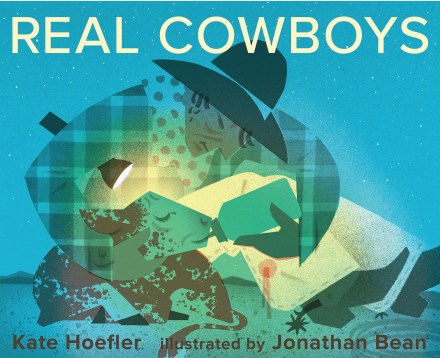
Real Cowboys

Written by Kate Hoefler | Illustrated by Jonathan Bean


Real cowboys wake with the dawn’s light and are careful not to make too much noise for the people still sleeping in the “little houses in the hollow, and up the mountains, and at the edge of fields in the distance.” It is natural for the cowboys to think of others. Their job is to care for the herd; to help a stranded calf and their dog who is trying to lure it to safety; to soothe the herd when thunder rumbles overhead.

celebrate-picture-books-picture-book-review-real-cowboys-dawn

Image copyright Jonathan Bean, courtesy of Houghton Mifflin Harcourt

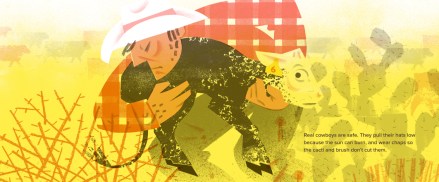
Real cowboys sing soft, slow songs to their cows to encourage them to continue moving when the path is narrow and dangerous and to sleep when coyotes howl in the night. Cowboys are good listeners—heeding the advice and warnings of the trail boss and other cowhands. “Sometimes they listen for trucks, and wolves, and rushing water. And sometimes they just listen to the big wide world and its grass song.” Along the way cowboys keep themselves safe with their wide-brimmed hats and leather chaps.

celebrate-picture-books-picture-book-review-real-cowboys-saving-calf

Image copyright Jonathan Bean, text copyright Kate Hoefler. Courtesy of Houghton Mifflin Harcourt

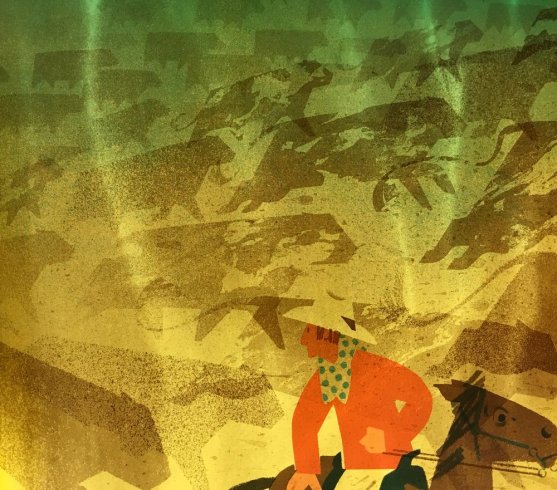
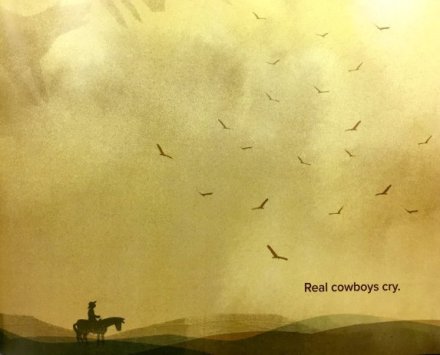
Because the cattle drive is long—lasting “for hours, or days, or weeks”—cowboys learn to be patient. “Even on a fast horse, they have to move with the slow rhythm of a herd….” When they need help, real cowboys don’t hesitate to ask, using hand and hat signals to alert other cowhands. “Real cowboys want peace. They don’t want stampedes, where all the cattle spook, and thunder over the earth, and scatter in dust storms.” Sometimes, however, this happens, and sometimes a few cattle and dogs are lost. Thinking of them when times are quiet, “real cowboys cry.”

celebrate-picture-books-picture-book-review-real-cowboys-cowboys-cry

Image copyright Jonathan Bean, text copyright Kate Hoefler. Courtesy of Houghton Mifflin Harcourt

At night cowboys take turns eating and sleeping so there is always someone to watch over the herd. When they pack up camp and move on, real cowboys are mindful of the earth, and when they are far from home, inside themselves they can feel homesick, even if they look tough on the outside. “Real cowboys are as many different colors as the earth. Real cowboys are girls too.” In their hearts “real cowboys are artists,” creating stories that are bigger than the wide open prairie. “They wonder what’s past the horizon. And one day, when their work is done, real cowboys find out.”

Kate Hoefler’s moving tribute to cowboys and cowgirls demonstrates the qualities of kindness, thoughtfulness, and mindfulness that we want to share with our children. With lyrical language she follows cowboys on a cattle drive, where they experience the joys and sorrows that life entails for all. Hoefler’s pacing echoes the day-to-day movement of the herd as well as readers’ daily life. Delving into the responsibilities and characteristics of these men and women is a unique way to open the world to children and promote discussions about the traits of caring individuals.

celebrate-picture-books-picture-book-review-real-cowboys-stampede

Image copyright Jonathan Bean, courtesy of Houghton Mifflin Harcourt

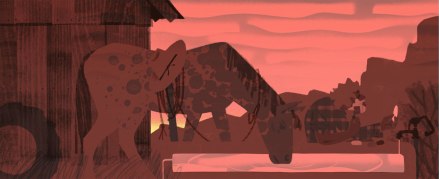
Jonathan Bean’s hand-stenciled illustrations printed in four Pantone colors are particularly effective in portraying the life of the cowboys and cowgirls entrusted with herds of cattle. Early morning dawns to rose skies that color even the horses and reflect in the drinking trough. Cattle, obscured by dust raised on the trail, form the backdrop to a cowboy worriedly watching his dog coax a calf from a cliff, and afternoon turns to night in a two-page spread where a cow nuzzles her calf as it sleeps. Depictions of the enormity of the herd traveling from one place to another amid sweltering days, rain storms, and blizzards are beautifully rendered, and the emotions of the cowboys are clearly discernable and touching.

Real Cowboys is stunning in both language and illustrations. For quiet story times, bedtime, or times for reflection and inspiration, this book would make an excellent addition to children’s bookshelves.

Ages 4 – 7

Houghton Mifflin Harcourt, 2016 | ISBN 978-0544148925

To view a gallery of illustration by Jonathan Bean, visit his website!

National Day of the Horse Activity

celebrate-picture-books-picture-book-review-galloping-horse-coloring-page


Galloping Horse Coloring Page


A horse running at top speed is a beautiful sight! Enjoy this printable Galloping Horse Coloring Page—would you be riding?

Picture Book Review
October 24 – United Nations Day

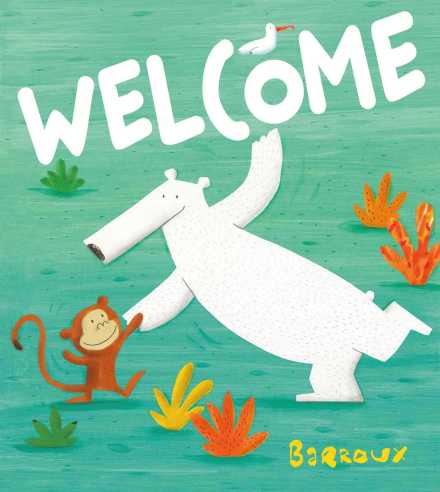
celebrate-picture-books-picture-book-review-welcome-barroux-cover

About the Holiday

Founded in the aftermath of World War II to promote cooperation among all nations and prevent another devastating conflict, the United Nations is an intergovernmental organization whose purpose has grown to include encouraging social and economic development, protecting human rights, and providing aid in times of natural disasters, famine, and war. Today’s holiday commemorates the establishment of the UN and advocates the remembrance and implementation of its principles for this and future generations.

Welcome

By Barroux


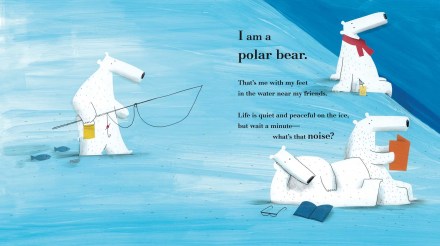
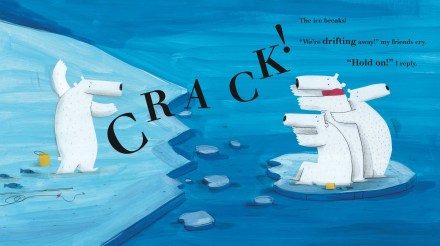
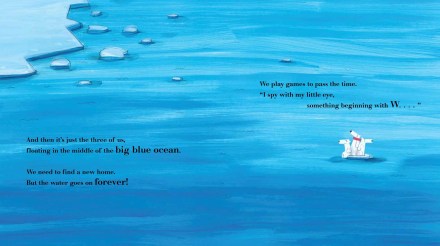
A polar bear sits on the edge of an ice floe enjoying some relaxing time with his friends when he hears an ominous noise. “CRACK! The ice breaks! ‘We’re drifting away!’” his friends cry. In no time at all the three polar bears are adrift in the middle of the sea in need of a new home. They float and float, but “the water goes on forever!” To pass the time the friends play games: “‘I spy with my little eye, something beginning with W…’”

celebrate-picture-books-picture-book-review-welcome-barroux-polar-bears-relaxing

Copyright Barroux, courtesy of little bee books and simonandschuster.com

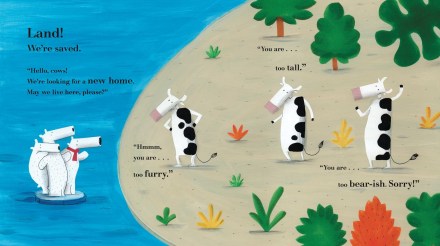
Perhaps days go by. The bears ride out a storm with dark skies and huge waves that threaten to sink them. It’s scary and the trio wants “to find a new home right now!” At last their ice floe—smaller now—approaches a sandy shore. “Land! We’re saved,” cheer the polar bears. They ask the cows on the beach if they can live there, but the cows take exception. The bears are “too furry…too tall…and too bear-ish.” And with a “Sorry!” the cows turn the weary travelers away.

celebrate-picture-books-picture-book-review-welcome-barroux-ice-breaks-away

Copyright Barroux, courtesy of little bee books and simonandschuster.com

Once again on their own, the bears have no choice but to let the current steer them. With standing room for only one their icy raft, they near another beach where a single panda relaxes on pillows in the midst of expansive land. “Yes! This could be our new home,” the polar bears shout. The panda ponders the situation for only a moment before stating, “‘…you are too many. Look around, there’s just not enough room! You can’t live here.’”

celebrate-picture-books-picture-book-review-welcome-barroux-polar-bears-meet-cows

Copyright Barroux, courtesy of little bee books and simonandschuster.com

As the polar bears continue on their journey, their “little ice boat has almost melted” and they are running out of time. They bob next to a tall sea wall. “‘Help us!’” they plead. Behind the wall two giraffes lounge on the beach, too lazy to investigate the noise they hear. The ice floe has melted to a thin disk, with room for only one. The bears are hanging on and about to give up hope when they find an empty island. They jump to shore just in the nick of time and begin enjoying their new home.

celebrate-picture-books-picture-book-review-welcome-barroux-polar-bears-adrift

Copyright Barroux, courtesy of little bee books and simonandschuster.com

It’s not long before a dinghy floats into view with three monkeys on board. “‘Excuse me, we’re looking for a new home. Can you help us please?’” The polar bears stop their game of badminton and step forward. “‘Hmmm,’” they think. “‘You are…

Welcome!’”

With vibrant blue, full-bleed pages as wide open as the sea itself and three endearing long-nosed polar bears, Barroux has crafted a poignant tale with depth and far-reaching applications for readers of all ages. Inspired by the Syrian refugee crisis, Welcome stands on its own as an uplifting story of friendship and inclusiveness, but also offers an excellent means for beginning a discussion on the world events that children see and have questions about. Employing a bear’s first person point of view and incorporating a child-centric perspective on travel—from the humor of the I Spy game to the perseverance of the bears—Barroux sets just the right tone for his audience.

With sparse text and repetition of the bears’ simple request, the subject matter is handled with sensitivity, not fright, which allows children to understand that the theme of the story is relevant on many levels. Whether the “traveler” comes from near or far, is a classmate, teammate or neighbor, or is even the reader or someone else feeling adrift in a certain situation, children will see that all deserve welcome.

Ages 4 – 8

little bee books, 2916 | ISBN 978-1499804447

United Nations Day Activity

celebrate-picture-books-picture-book-review-UN-day-puzzle

Give Me Your Hand! Puzzle


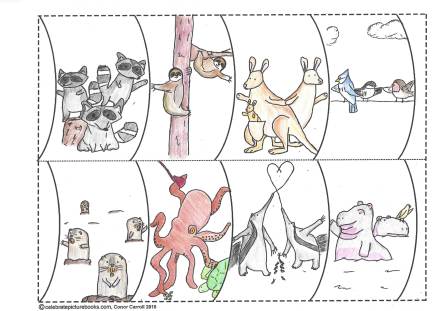
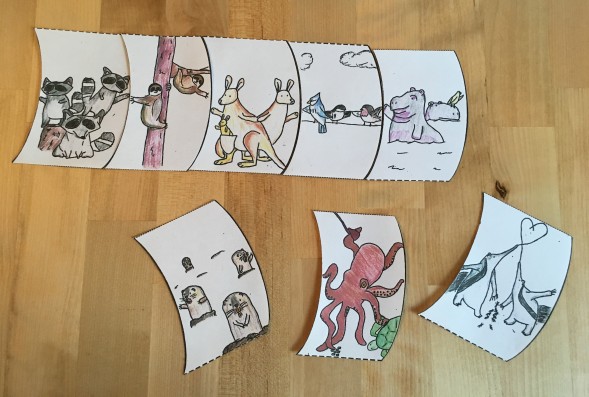
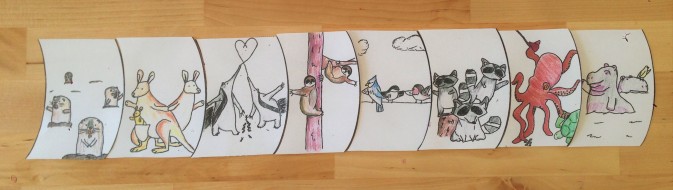
In this printable Give Me Your Hand! Puzzle, everyone is welcomed with a handshake. Offering friendship to all, the interchangeable pieces can be mixed and matched as the animals become buddies with one another.

Supplies

celebrate-picture-books-picture-book-review-UN-day-puzzle

Copyright Conor Carroll, courtesy of celebratepicturebooks.com

Directions

  1. Print the puzzle: to make the puzzle sturdier: Print on heavy stock paper or glue the page to poster board
  2. Color the pictures with colored pencils or crayons
  3. Cut the pieces apart
  4. Switch the pieces around to make many alternate pictures
celebrate-picture-books-picture-book-review-UN-day-puzzle

Copyright Conor Carroll, courtesy of celebratepicturebooks.com

Picture Book Review
Picture Book Review
October 23 – Mole Day

celebrate-picture-books-picture-book-review-a-friend-for-mole-cover

About the Holiday

From 6:02 a.m. to 6:02 p.m. on 10/23 chemists, scientists, students, and others who love numbers celebrate Mole Day to commemorate Avogadro’s Number, which is a basic weight measuring unit in chemistry. Defined by the equation 6.02 x 10²³, Avogadro’s number finds that for any given molecule one mole of that substance has a weight in grams equal to its atomic number. The name of this scientific constant naturally led to an association with the furry underground burrowers, and the mole and mascot moles can be found working in tandem to promote a better understanding and enjoyment of chemistry. As today’s book proves there is no better mixture than the chemistry between friends.

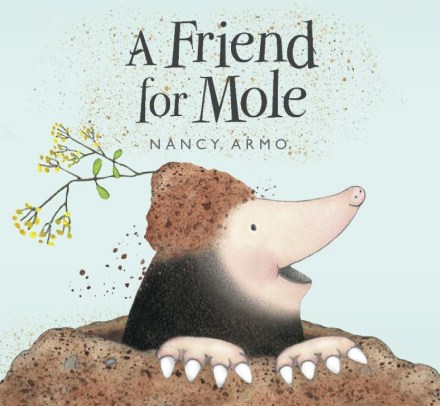
A Friend for Mole

By Nancy Armo

Mole loves his cozy burrow. “He liked his soft bed of leaves, the warm smell of the earth, and the quiet darkness all around.” He can imagine the world above him by all the distinct sounds he hears. But one day those sounds become louder. Instead of gentle tapping and buzzing, he hears stomping, shouting, and laughing. He decides to go up above and see what all the ruckus is about.

“The bright light, loud noises and new smells were overwhelming,” and Mole thinks it was a very bad idea to have left his burrow. He tries to find his way home, but he can no longer see the hole. In a panic he starts to run. He trips over a tree root and rolls under a bush. The soft leaves and darkness remind Mole of his burrow and soon he is fast asleep.
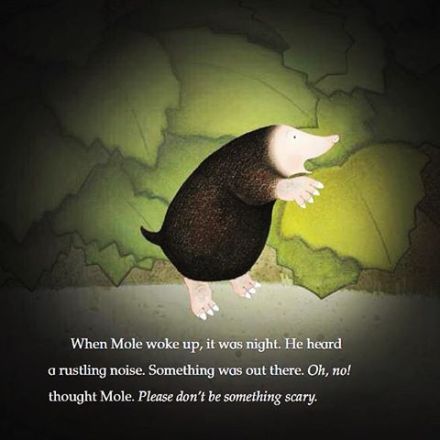
Mole wakes up during the night. He hears rustling and sees two shiny eyes staring at him. “‘Oh no!’” thinks Mole. “‘Please don’t be something scary.’” Mole closes his eyes, hoping to hide. But then he hears a small whimper. “‘Are you afraid of the dark too?’” When Mole takes a peek, he sees a wolf. “‘No,’” Mole answers. “‘I’m afraid of the light.’” Wolf tells Mole that he is lost after being chased by the other animals and that he is scared.

celebrate-picture-book-review-a-friend-for-mole-rustling-sound

Copyright Nancy Armo, courtesy of Peachtree Publshers

Mole and Wolf think about what they can do and devise a clever plan. Mole says he will stay with Wolf in the dark, and Wolf agrees to help Mole find his burrow when the sun comes up. To make the time go faster, Mole and Wolf play games, such as hunting “imaginary slithering creatures,” stomping on “pretend scampering bugs,” and “chasing away scary monsters. It was all so much fun they forgot about being lost and scared.”

As daylight breaks, Mole begins to think about home. Wolf also feels homesick. As they search for the entrance to Mole’s burrow, Wolf shields Mole’s eyes from the sun with his tail, and Mole giggles at the tickly softness of Wolf’s fur. Soon they discover Mole’s burrow, and Wolf realizes that he lives nearby. Although Mole is happy to be home, he also feels sad to say goodbye to Wolf.

He asks if Wolf would like to play again sometime. Wolf shouts, “Yes! That was so much fun! I was scared but having you there made everything okay.” As Mole settles back into his leafy bed, he knows “exactly what Wolf meant.”

In her sweet story of friendship found, Nancy Armo relates that most comforting feeling—the knowledge that friends always stand by you even when times are hard or scary. Her characters Mole and Wolf are perfectly chosen foils with opposite strengths that, combined, help solve their immediate problem and form a strong friendship. Armo’s straightforward storytelling is enriched by the endearing personalities of Mole and Wolf as well as their honest sharing of feelings.

In vivid two-page spreads Armo superbly depicts the daytime and nighttime scenes, transporting readers into the heart of her story. Above the “quiet darkness” of Mole’s burrow, cute mice scamper in the rain while an earthworm, a snail, and a bee take shelter. When his roof rings with noise and curiosity gets the better of Mole, he emerges into an open field, and his tumbling trip over the tree root is nimbly portrayed with a series of flips rendered with a filmy transparency. As nightime falls the Mole’s and Wolf’s adventure plays out on pages with a solid black background. Wolf’s eyes shining on a completely darkened page offers just the right amount of suspense for little readers, and a careful look at the expression in his eyes is reassuring. Kids will enjoy the games the two friends enjoy, and will cheer when the sun dawns on their new friendship.

A Friend for Mole is a great book for young readers navigating the world of meeting new classmates, teammates, and other children who may see the world differently but would make good friends.

Ages 3 – 7

Peachtree Publishers, 2016 | ISBN 978-1561458653

You’ll find fun A Friend for Mole activity sheets, a portfolio of artwork, and more on Nancy Armo’s website!

Mole Day Activity

celebrate-picture-books-picture-book-review-mole-mazeMole Tunnels Maze

Dig into this printable Mole Tunnels Maze that has as many twists and turns as a mole’s home!

Picture Book Review