Instituted in 2007 by the Encouragement Foundation at Harding University in Searcy, Arkansas, today’s holiday entreats us to cheer on our friends, coworkers, and even those we don’t know as they attempt to reach goals or start new endeavors. A pat on the back, a simple “you can do it!,” or a reassuring “great job!” boosts people’s self-confidence and makes the world a happier place.
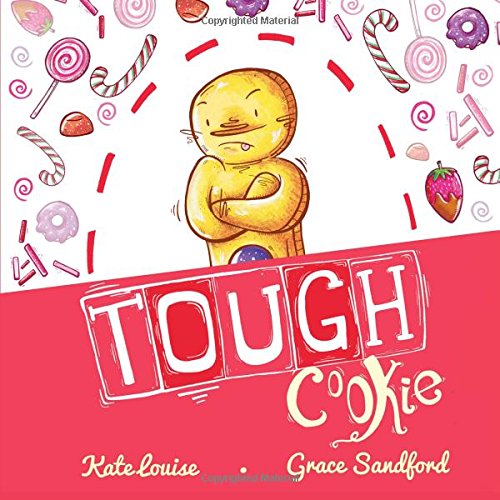
Tough Cookie
Written by Kate Louise | Illustrated by Grace Sandford
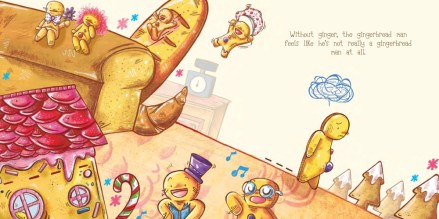
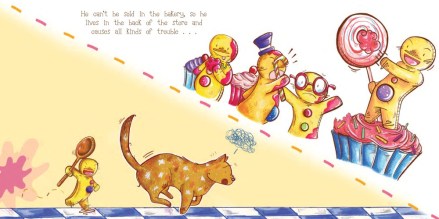
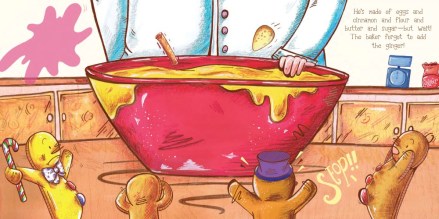
Although one gingerbread man in the bakery looks like all the others, there is one important difference. Yes, the batter had “eggs and cinnamon and flour and butter and sugar—but wait! The baker forgot to add the ginger!” Without this signature ingredient the gingerbread man just doesn’t feel like a gingerbread man at all. In fact his whole life has been turned upside down. He’s different from his friends, and what’s worse, he can’t be sold. Instead, he lives in the back of the bakery and in his sadness makes all kinds of mischief.
Image copyright Grace Sandford, text copyright Kate Louise, courtesy of Sky Pony Press
The gingerbread man chases the cat, splatters icing on other cookies, and squirts icing on the walls. “‘I need that for my cupcakes!’” the baker yells, but the gingerbread man just laughs. He moves on to the decorative candies, stuffing them in his mouth as fast as he can even though the baker needs them for his other treats and stands by tapping his foot. Next the gingerbread man scatters sprinkles all over the counter and slips and slides along on his belly—“‘woohoo!’” But the baker is not amused. “‘I need those for the donuts!’” he shouts.
Image copyright Grace Sandford, text copyright Kate Louise, courtesy of Sky Pony Press
Finally, the baker has had enough. Not only is the gingerbread man upsetting the other gingerbread men and women, he is ruining the business. The baker orders the gingerbread man to leave the store. But this is one gingerbread man that does not want to run away. “‘I don’t want to leave!’” he cries. The baker relents. He takes the little cookie in hand and teaches him that even though he is missing an ingredient he can still be kind. The baker shows him by being nice he can become one of the group.
Now, the little gingerbread man is happy. Instead of gobbling up all the candy, he helps create the other cookies. He no longer shoots icing on the walls or flings sprinkles around the kitchen. Rather, he helps the baker decorate the cupcakes and the donuts. He’s even learned how to sift flour and roll out dough, and he uses the cookie cutter to make new friends. And he never forgets to add the ginger!
Image copyright Grace Sandford, text copyright Kate Louise, courtesy of Sky Pony Press
Grace Sandford’s bakery gleams with the golden hues of fresh-baked bread, the festive colors of sprinkles and icing, and the sparkle of sugar. Kids will love the vibrant pictures of cupcakes; lollypops; stacks of cakes, donuts, and candy; and decorated gingerbread houses surrounded by cookie forests. Her expressive gingerbread men and women register dismay at the wayward gingerbread man’s shenanigans and joy at his kindness. And the hero of the story? When he leaves behind his impish pranks he becomes a charming baker’s companion, sifting clouds of flour, running on the rolling pin to flatten dough, and passing out sugar-shiny gumdrop buttons to his new friends.
Young children will ask for this fun and funny read over and over. Tough Cookie makes an especially delicious accompaniment to an afternoon of baking or decorating gingerbread houses!
Way back in the past when gingerbread was new it was creatively iced and used to decorate windows. You can make decorations for your home or room with this easy craft!
With all the letter writing going on during December by young wishers, it should be no surprise that a letter-writing day be included in this month’s calendar. Today’s holiday celebrates all forms of personal communication written by hand and remembers the correspondence of the past that has given us such insight into our favorite poets, novelists, historical figures, and more. Sure email might be faster, but there’s a certain luxury in taking the time to write your thoughts and an unexplainable excitement in holding a heartfelt letter in your hands. The punctuation marks in today’s reviewed book not only help correspondents write more dramatically, but they remind us that we all have unique things to say!
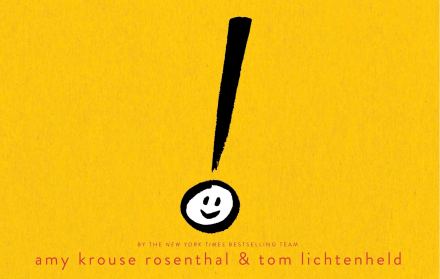
Exclamation Mark
Written by Amy Krouse Rosenthal | Illustrated by Tom Lichtenheld
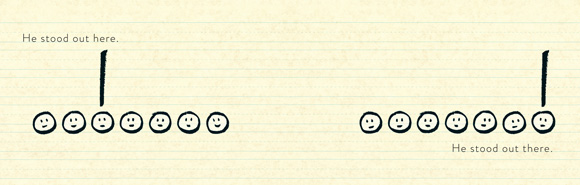
! “stood out from the very beginning.” When he was standing in a row of ……, it didn’t matter if he was in the middle or at the end—he still stuck out. The only time he wasn’t so noticeable was when he laid down to go to sleep. Sometimes he twisted himself into coils and did somersaults to be like the others, but nothing worked. “He just wasn’t like everyone else. Period.” This left him feeling “confused, flummoxed, and deflated.”
Image copyright Tom Lichtenheld, text copyright Amy Krouse Rosenthal. Courtesy of Scholastic Press
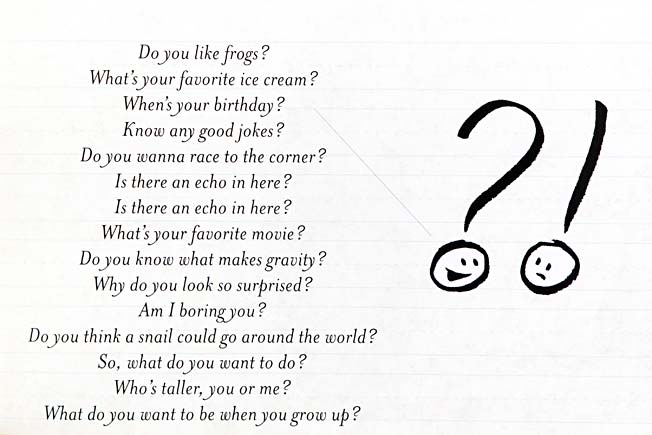
He was just about to run away from all his problems when he met ?. ? rushed right up to him and wanted to know everything. “Who are you?…What’s your favorite color? Do you like frogs?…Do you wanna race to the corner? Is there an echo in here? Is there an echo in here?…Why do you look so surprised?….” The list went on and on.
Image copyright Tom Lichtenheld, text copyright Amy Krouse Rosenthal. Courtesy of Scholastic Press
“STOP!” ! shouted. The sound stunned him. ? smiled and wanted him to do it again. ! didn’t know if he could, so he tried a small “Hi!” “That felt right, so he tried something bigger. Howdy!” And then he said, “Wow!” After that there was no stopping him: “You’re it!…Home run!…Yum!…Look out!…Thanks!…Boo!…Go!”
He rushed off to show everyone what he could do. The …… were delighted and “there was much exclaiming.” Now feeling happy and confident, ! “went off to make his mark.”
Image copyright Tom Lichtenheld, text copyright Amy Krouse Rosenthal. Courtesy of Scholastic Press
Amy Krouse Rosenthal’s clever story of an exclamation point searching for self expression is as moving as it is original. Kids will recognize his feelings of sticking out in a crowd and uncertainty of purpose and applaude when ? comes on the scene to befriend !. Readers will giggle knowingly at the barrage of questions, and feel emboldened themselves as ! finds his voice and his own unique contribution.
Tom Lichtenheld’s adorable punctuation marks hanging out on kid-ruled paper demonstrate all the expression and expressions of this well-crafted story. With simple dot eyes and small streak mouths, Lichtenheld animates the various emotions of the periods, exclamation mark, and question mark as they discover !’s special talent with individuality for each. The unbridled exuberance of ?‘s and !’s meeting makes this a terrific book about friendship as well.
! deftly points out “What would we do without exclamation points?” Likewise it asks, “What would we do without each one of us?” The positive message, creatively and humorously presented, makes this book a terrific addition to any child’s library.
Scholastic Press, 2013 | ISBN 978-054543679
You’ll find more about Amy Krouse Rosenthal, her books for children and adults, videos, other projects, and so much more on her website!
Discover a portfolio of books by Tom Lichtenheld as well as fun book-related activities and resources for teachers on his website!
!!!! for this ! book trailer!
National Letter Writing Day Activity
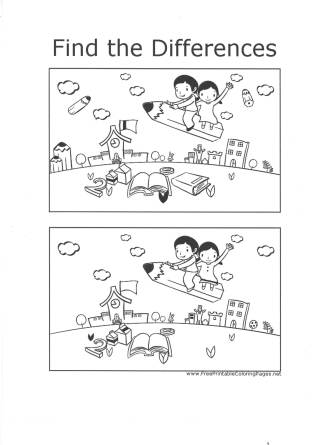
Letter-Writing Kids Find the Differences Puzzle
Sometimes writing a letter is a flight of fancy through the thoughts and stories you want to tell someone else. Can you find the 12 differences in this printable Letter-Writing Kids Find the Differences Puzzle?
In the aftermath of World War II the Four Freedoms that had guided the Allies—Freedom of Speech, Freedom of Religion, Freedom from Want, and Freedom from Fear—did not go far enough in defining the areas that need to be covered. In December 1948 the United Nations General Assembly put forth 30 articles to further delineate the freedoms and rights of the world’s citizens, including the freedom of education, thought, health, opinion, and expression as well as the right to take part in government, have a free choice of employment, and more. To honor today’s observance, speak out when you see inequality and work to bring freedom in all it’s forms to everyone.
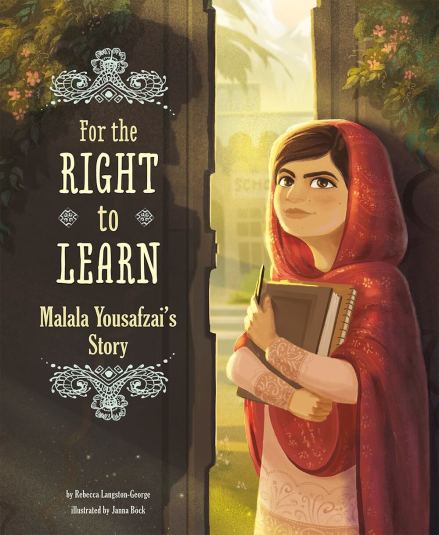
For the Right to Learn: Malala Yousafzai’s Story
Written by Rebecca Langston-George | Illustrated by Janna Bock
Malala Yousafzai lived in the Swat Valley of Pakistan, where her father, Ziauddin, ran a school in the town of Mingora. Malala loved school and even when she was tiny visited classes with her father often. Not all Pakistani children could go to school—some families couldn’t afford it and some believed girls should stay home to clean, cook, and keep house. But Malala’s father believed his daughter had the same right to an education as his sons. Malala thrived at school. She learned multiple languages and won many academic awards.
“But Taliban leaders who controlled the area were against letting girls go to school. They declared that females should be separated from males. They wanted to outlaw education for girls.” The Taliban leaders even tried to intimidate Malala’s father. “One ordered Ziauddin to close his school because girls and boys used the same entrance.” Ziauddin refused.
Image copyright Janna Bock, courtesy of Capstone Press
While her father was worried, Malala’s determination grew stronger. She studied harder at school, and during the school holidays instead of covering her hands with henna flowers and vines as most Pakistani women did, Malala painted science formulas on hers. The Taliban continued to exert a tight grip on the Swat Valley, and instituted new rules: men could not shave, women had to cover their faces, movies were banned. And the radio “crackled with the sound of the Taliban preaching: No education for girls! Girls who attend school bring shame to their families!”
The Taliban frightened many, and empty seats in school classrooms began to be more frequent. Ziauddan and Malala appeared on TV to express the importance of education. In response the Taliban threatened Ziauddan and his school. Despite the threats Malala and her father continued to speak and write, “demanding equal education for girls.” The Taliban began patrolling the streets, perpetrating violence and destruction on anyone who didn’t obey their rules.
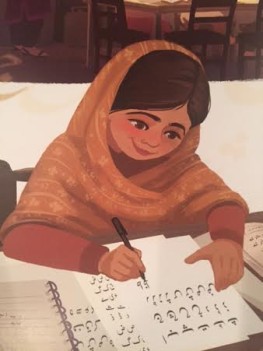
In December 2008, the Taliban announced that all girls’ schools would close by January 15. “Even before the deadline, bombs started to rain down on nearby schools as warnings.” The British Broadcasting Corporation wanted to reveal to the world what was happening. They wanted a girl to write a blog about her experience and “how it felt to be denied an education. Malala volunteered.
Image copyright Janna Bock, courtesy of Capstone Press
She took the pen name Gul Makai and related her blog by phone to a reporter who typed and published her words for two months. The first post appeared on January 3, 2009. On January 14 Malala wrote: “‘They can stop us from going to school, but they can’t stop us learning!’” Because activists were growing angry, the Taliban let girls ages 10 and younger go to school. Malala and her friends were 11. They began dressing to look younger and hid school books in their clothes. If they had been caught lying about their ages, they and their teachers could have been beaten or executed.
In May 2009 the Pakistani army began battling the Taliban and ordered everyone to evacuate. Malala and her family had to pack their belongings and leave. Malala wanted to take her books along, but there wasn’t room. She could only hope that they—and her home—would survive the fighting. Three months later, the people of Mingora were allowed to come home, but the town was not the same as they had left it. Shops and buildings were destroyed, burned frames of cars were strewn across the roads. The school’s walls were riddle with bullet holes. But the Taliban was gone. Ziauddin reopened his school for boys and girls.
While Malala returned to school, her life was not the same. Because of her blog, speeches, and interviews, she was internationally famous. Everyone wanted to hear what she had to say—everyone but the Taliban. “Talban leaders began to threaten her on the Internet. Saying she was working for the West, they announced Malala was on their hit list. The police warned the Yousafzai family to leave, but Malala refused to hide. She refused to be silenced.”
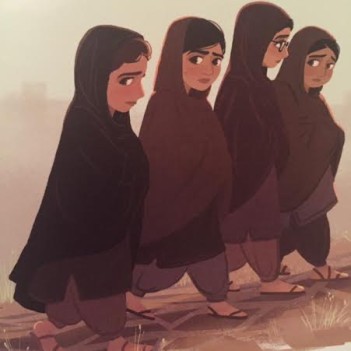
Because of the danger, Malala’s mother wanted her to ride the bus to school instead of walk. On October 9, 2012 as Malala and her classmates rode the bus home after school, the bus was stopped and a man boarded, demanding to know which girl was Malala. While no one spoke, the girls couldn’t stop their eyes from flashing quickly toward Malala. That was all the man needed. He “pointed a gun at Malala. Three shots shattered the silence.”
The bus driver rushed Malala and two of her friends to the hospital. Word spread quickly about the shooting through the town and around the world. Malala lay unconscious for days as the Taliban threatened her again should she live. As determinedly as Malala fought for equal education, she fought for survival. Finally, she was flown to a hospital in England for more surgery and to keep her safe. Gifts and wished poured in from all over the world. Malala stayed in the hospital for three months and underwent many procedures to correct the damage done by the Taliban’s bullets.
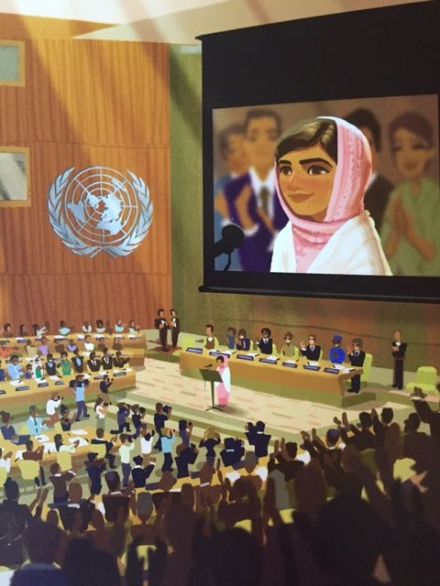
When she had recovered, Malala returned to her family and to her place on the world stage where she continues to speak out for the rights of all. On July 12, 2013 in a speech at the United Nations, Malala “declared, ‘One child, one teacher, one book, and one pen can change the world.’” On December 10, 2014 Malala became the youngest recipient of the Nobel Peace Prize for her “strength, power, and courage” to “lift her voice for children everywhere.”
Image copyright Janna Bock, courtesy of Capstone Press
Malala. Those three syllables have become synonymous with bravery, freedom, and education. Rebecca Langston-George tells Malala’s remarkable story with the same unstinting vision that fuels Malala’s mission. Told sensitively, but candidly, this compelling biography reveals the harrowing evolution of the Taliban’s reach that, far from intimidating young Malala, only served to make her more determined. Langston-George’s excellent command over her well-chosen details and gripping pacing enhances the power of this important true story. Readers should come away inspired—not only by Malala’s life, but the fact that they too can make a difference.
Janna Bock depicts the changing landscape of Malala’s hometown both physically and philosophically with illustrations that help readers clearly envision and understand Malala’s life and environment. The faces of the townspeople and the Yousefzai family register distress and fear, but also determination, courage, and optimism as schools close, Mingora comes under fire, and the citizens become refugees. Malala’s shooting, and recovery are portrayed with thoughtful consideration of the readers, and the ending takes children inside the United Nations to witness Malala’s ultimate triumph.
An Author’s Note detailing more about Malala’s story then and now as well as a glossary and index follow the text.
For the Right to Learn: Malala Yousafzai’s Story is an important biography of current events and people shaping the world and our children’s future and is a must read for all.
Today’s observance was established in 1994 to promote family and community involvement in teaching and supporting children to read more. Family members can make reading a priority at home by sitting down together every day with a wide range of books and other reading material. By taking trips to the library and bookstores, children will also naturally pick up a love of reading. But families can’t do it alone. Kids acquire a drive to read when they see connections between books and their wider world. Fun book-related activities at schools, libraries, science centers, museums, and other places capture children’s attention and make them curious about reading more. Whether children are attracted by fiction or nonfiction, picture books or chapter books, novels or graphic novels, they should be encouraged to read. Universal literacy is a goal that can be accomplished.
About Small Talk Books®
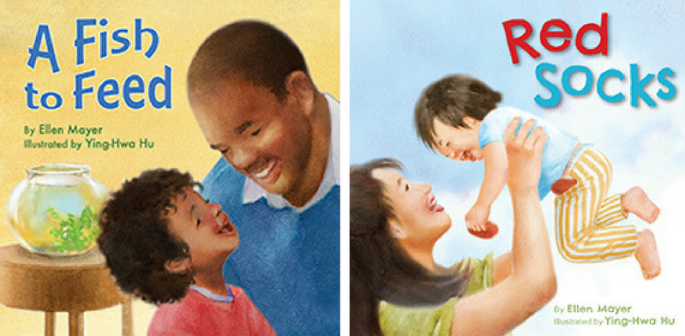
Ellen Mayer’s Small Talk Books® feature young children and adults conversing (or adults speaking to children who are not talking yet) while they have fun, do chores, shop, and bake together. Their conversations demonstrate the kind of excitement and close relationships that encourage learning and language advancement. Each Small Talk Book® includes an accompanying note from Dr. Betty Bardige, an expert on young children’s language and literacy development and the author of Talk to Me, Baby! How You Can Support Young Children’s Language Development. The introduction discusses how children connect actions, words, and meaning as adults speak to them while doing particular jobs or actions.
Other titles in the Small Talk Books® series include Cake Day and Rosa’s Very Big Job. Each book makes a wonderful gift for baby showers, new parents, or anyone with young children in the family. They would be a welcome addition to any young child’s bookshelf as well as libraries and preschool classrooms.
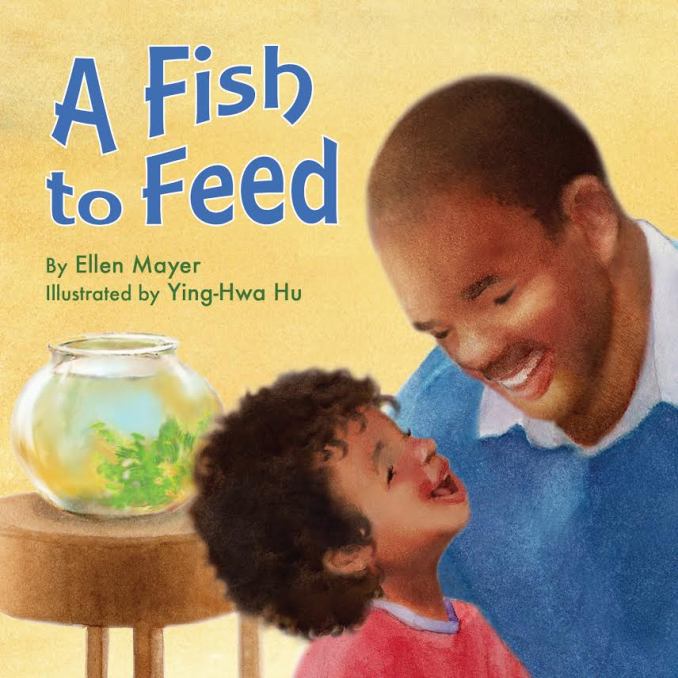
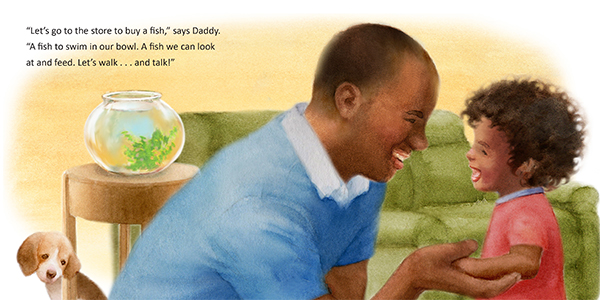
A Fish to Feed
Written by Ellen Mayer | Illustrated by Ying-Hwa Hu
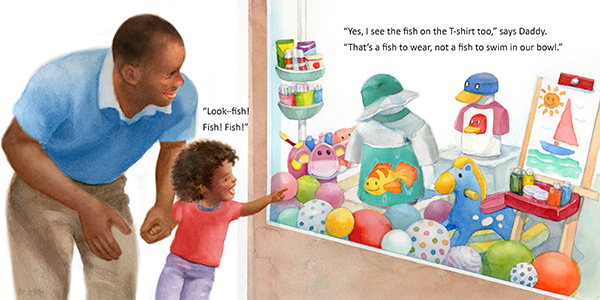
Dad plans a fun trip into town with his young child to buy a pet fish. He says, we will get “a fish to swim in our bowl. A fish we can look at and feed.” The pair are excited to go together and have time to “walk…and talk.” The two head out and soon pass a store. In the window the child sees a T-shirt with the picture of a fish on it and points. “Look—fish! Fish! Fish!” Dad reinforces the observation—“Yes, I see the fish on the T-shirt too.”—and further explains: “That’s a fish to wear, not a fish to swim in our bowl.”
Image copyright Ying-Hwa Hu, text copyright Ellen Mayer. Courtesy of starbrightbooks.com
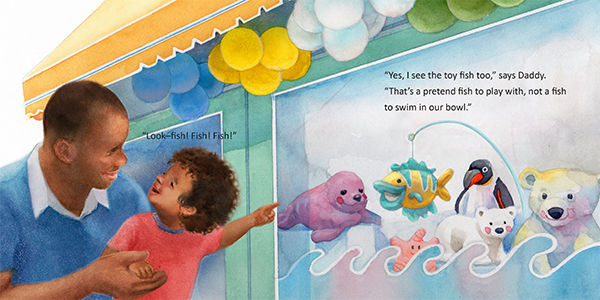
Going into the store, Dad and his youngster find another item with a fish on it. On a shelf is a backpack with a picture of a gold-and-yellow fish on the front pocket. This is a “fish to wear on your back,” Dad says, before going in search of a “fish to feed.” Next, the two come to a toy store. The child points to another fish—a fish on a mobile. “Look—fish! Fish! Fish!” the toddler exclaims. Dad affirms his child’s remark and expands on it using complete sentences that model conversation and increase vocabulary. They linger in the shop, finding other examples of fish.
Image copyright Ying-Hwa Hu, text copyright Ellen Mayer. Courtesy of starbrightbooks.com
“‘Now let’s go find a fish to feed,’ says Daddy.” They head out of the store and continue down the street. As they come to the Pet Shop, the little one shouts, “‘Look—fish! Fish swim!” Daddy echoes the excitement while praising his child. “‘You found a fish that swims!’” They take the goldfish home, where it swims happily in their bowl—a pet they “can love and feed.”
A Fish to Feed contains die-cut holes in the pages that kids will love peering through as they shop along on this adventure to find a special pet.
Image copyright Ying-Hwa Hu, text copyright Ellen Mayer. Courtesy of starbrightbooks.com
Ellen Mayer’s story of a dad and his child out for an afternoon together as they look for a pet to love offers adults and children such a sweet way to spend time with one another. The story, set in the familiar environments of home and stores and revolving around a close parent-child relationship, will engage even the youngest readers. The back-and-forth conversation between Dad and his child as they shop models ways in which adults can follow a child’s lead while providing language and literacy development. The abscence of gender-specific pronouns makes this a universal story.
Ying-Hwa Hu’s illustrations are vibrant and joyful. When Dad bends down to be at eye-level with his toddler as they talk, the close bond between them is obvious in their smiling and laughing faces. The shops are full of colorful toys, clothes, backpacks, and other items that will capture kids’ attention. Spending time looking at each page allows adults and children to point at the various items, name them, and talk about them.
Ages Birth – 5
Star Bright Books, 2015 | ISBN 978-1595727077
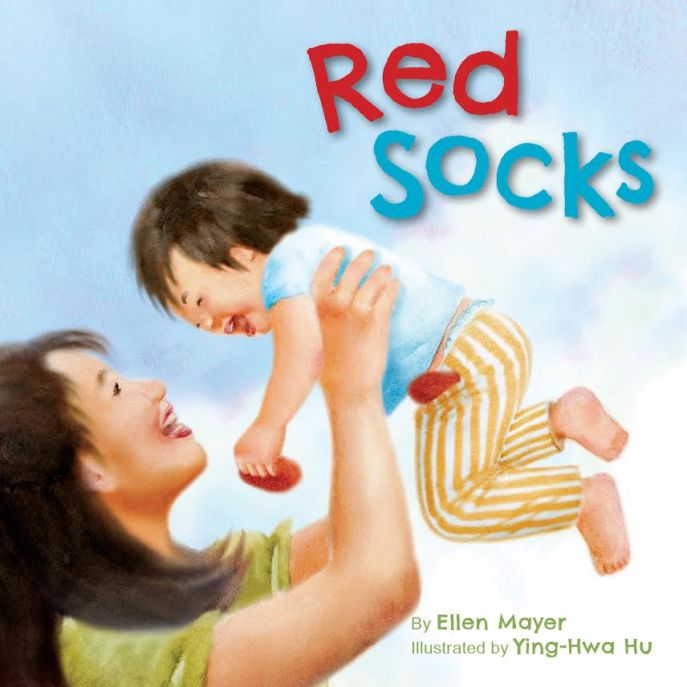
Red Socks
Written by Ellen Mayer | Illustrated by Ying-Hwa Hu
It’s laundry day and the clothes are all dried and soft and ready to wear. “‘Here is your blue shirt, with the goldfish on it,’” Mama says, pulling the top out of the basket and bending down to eye level to show it to her baby. Next, Mama describes the “yellow and white striped pants” she puts on her child. “‘Let’s see what else is in the laundry basket,’” she says.
Image copyright Ying-Hwa Hu, text copyright Ellen Mayer. Courtesy of starbrightbooks.com
Mama pulls a tiny red sock from the basket, but—“UH-OH!—where is the other red sock?’” Now it’s the baby’s turn to help. With a look down, the toddler shows Mama where the sock is. “‘You found the other red sock. Yay!’” she says, giving words to the baby’s action. She continues explaining while pointing to the sock poking out of the baby’s pocket: “‘It was hiding in your pants pocket!” Once the laundry is folded, Mama tells her child exactly what they will do next while she playfully slips the other red sock on the baby’s wiggling feet. “‘Let’s put that other sock on your foot. Then we can go play outside.’” As the baby flies in the swing outside, the red socks are brilliant dots against the blue sky.
Image copyright Ying-Hwa Hu, text copyright Ellen Mayer. Courtesy of starbrightbooks.com
Ellen Mayer’s simple and charming story of a particular moment in a mother and child’s day will immediately appeal to even the youngest reader. Familiar words coupled with clear, vivid illustrations will engage toddlers who are pre-talking and just learning language and concept development. The mother’s use of complete sentences as well as step-by-step descriptions of the activities the child sees and is involved in demonstrates how adults can converse with their babies and young children to encourage strong language and literacy skills. Free of gender-specific pronouns, Red Socks is a universal story.
Ying-Hwa Hu’s illustrations show a mother and child interacting on a typical day while they complete common chores and go outside to play. The mother and child portray a range of emotions and gestures, giving further depth to the understanding of the ideas and conversation presented. Kids will giggle at the adorable puppy who causes a bit of mischief on each page.
Ages Birth – 5
Star Bright Books, 2015 | ISBN 978-1595727060
To learn more about Ellen Mayer and her Small Talk Books® (including other titles: Cake Day and Rosa’s Very Big Job) as well as to find activities to accompany each book, visit her website!
Discover more about Ying-Hwa Hu and view a portfolio of her illustration work on her website!
Red Socks and Too Small to Fail
Red Socks was chosen by Too Small to Fail, an early literacy initiative of The Clinton Foundation to feature in their Wash Time is Talk Time project. Wash Time is Talk Time serves underserved communities and provides resources to turn time spent at the laundromat into an opportunity for families to talk together, read together, and learn together. Language-rich literacy resources will be delivered to more than 5,000 laundromats across the country.
Here’s a video from one fun afternoon with families, Ellen Mayer, and Ying-Hwa Hu during wash time!
National Family Literacy Month Activity
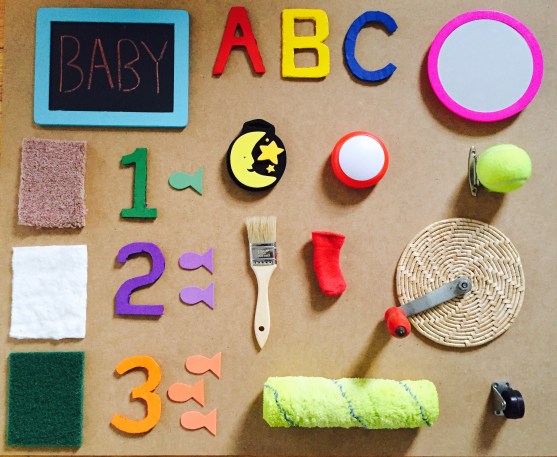
Child’s Sensory Board
Toys or objects that provide many opportunities for sensory experimentation and observation stimulate a baby and young child to learn while having fun. You can make a sensory board for your own child using household items and that have a variety of textures, sizes, shapes, and movement. When you create your own sensory board, you can personalize it for your child by adding their name, pictures of family members, and other special items. While you play with your child, take time to talk about all of the objects on the board, what they do, and how they work. Count the objects. If you include words or your child’s name, spell them outloud and say them. There are so many ways to use a sensory board. Even if children can’t yet talk, they are listening and soaking in the rich language learning you are providing!
**When making your board always ensure that you use items that are not a choking hazard or can catch tiny fingers. Make sure that items are firmly attached to the board. Never leave a baby unattended while playing.**
Supplies
A board large enough to hold the items you want to attach. Boards that can be used include: those found at hardware stores or craft stores; large cutting boards; shelves; old table tops; etc.
Sample items for your sensory board can be age appropriate and include:
Large swatches of various textured material. (I used fur, a scrubbing sheet, and a piece of carpeting)
Wooden or thick cardboard letters and numbers, painted in a variety of colors. Letters can be used to add a child’s name to the board.
Figures cut from sheets of foam or wooden figures found at craft stores in a variety of numbers that you can count with your child (I used sets of 1, 2, and 3 fish cut from foam to go along with the numbers 1, 2, and 3)
Mirror
Push button light
Chalk board to write on
Castor or other wheel
Door latches
Door knockers
Mop heads
Paint rollers
Cranks
Drawer handles
Hinges (I attached a tennis ball to a hinge that children can push back and forth)
Pulleys
Paint in various bright colors
Paint brushes
Scissors
Screws
Nuts and bolts
Velcro
Super glue
Directions
Assemble your items
Paint wooden or cardboard items
Arrange item on the board so that your baby or child can easily reach or manipulate each one
Attach items with screws, nuts and bolts, or super glue
Push button lights or other objects that take batteries can be attached with strong Velcro. Ensure items attached with Velcro are large and not a choking hazard.
Set up board where you and your baby or child can enjoy playing with it together
Today’s holiday is dedicated to the man—Leonardo of Pisa, today known as Fibonacci—who promoted awareness throughtout Europe of the number sequence that now bears his name. First appearing in Indian mathematics and linked to the golden triangle and the golden ratio, the number pattern states that each consecutive number in the series is the sum of the two preceding numbers: 1, 2, 3, 5, 8, 13, 21, 34…. This sequence is found again and again in nature in such arrangements as leaves on a flower stem, seeds in a sunflower, the tapering of a pinecone, the swirl of a seashell, and manys. These precise compositions allow each leaf to get enough sunlight, make room for the correct number of petals, or squeeze in as many seeds as possible. To celebrate, learn more about this sequence and then observe patterns in nature. A good place to start is with today’s book!
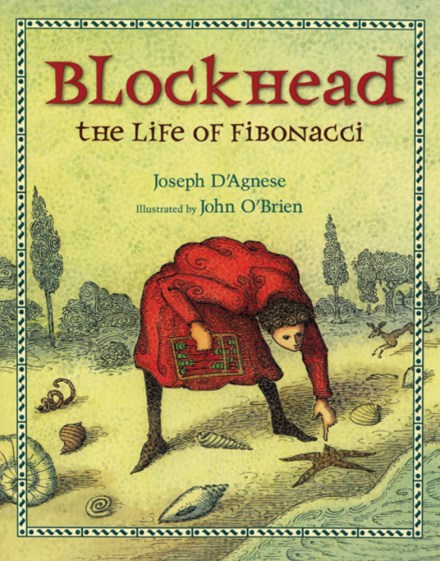
Blockhead: The Life of Fibonacci
Written by Joseph D’Agnese | Illustrated by John O’Brien
Leonardo Fibonacci introduces himself this way: “You can call be blockhead. Everyone else does.” He goes on to reveal that he acquired that nickname because he loved to think about numbers. Once when his teacher gave the class ten minutes to solve a math problem, he knew the answer in two seconds. At home he counted everything he saw. When he was bored his mind pondered the patterns he saw. For instance, on that school day while his classmates worked on the problem, Leonardo spent the time gazing out the window. H e noticed 12 birds sitting in a tree. How many eyes was that? How many legs? “And if each bird sang for two seconds, one bird after the other, how long would it take all of them to sing?” He was counting these answers in his head when his teacher yelled, “‘How dare you daydream in my class!’” He told Leonardo there would “‘be no thinking in this classroom—only working! You’re nothing but an absent-minded, lazy dreamer, you…you BLOCKHEAD!’”
Image copyright John O’Brien, courtesy of Henry Holt and Company
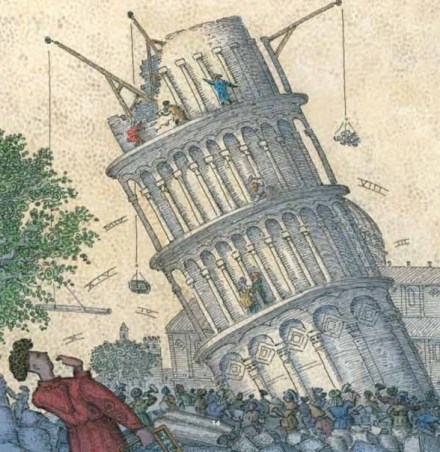
Leonardo ran from the room into the city he loved—Pisa, one of the greatest cities in 1178 Italy. A new tower was being constructed—although the builders were having trouble with their math and the tower stood at an angle. He was so enthralled with the math he saw all around him that he nearly walked into danger. “‘What are you, a blockhead?’” a woman shouted. Leonardo’s father was angry and embarrassed by his son’s reputation in town. He wanted Leonardo to become a merchant, and took him to northern Africa to learn the business.
Image copyright John O’Brien, courtesy of Henry Holt and Company
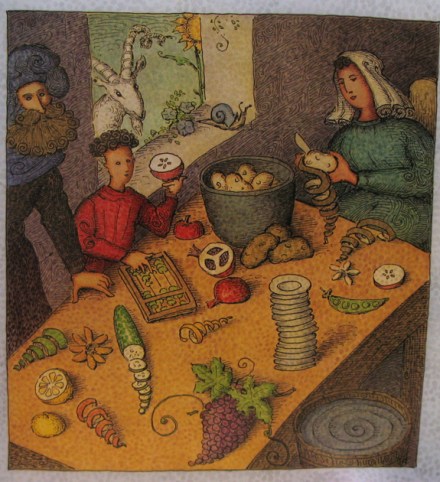
In Africa Leonardo learned a new number system. Instead of Roman numerals, the people used numbers “they had borrowed from the Hindu people of India.” In this system XVIII became the much easier 18. During the day Leonardo handled his father’s business accounts, but at night Alfredo, his father’s advisor and Leonardo’s champion, accompanied him as he learned the new number system. As Leonardo grew older, his father sent him on trips to other countries to conduct business. In each Leonardo learned new mathematics concepts. In Egypt he learned about fractions. In Turkey and Syria he discovered methods of measurement. In Greece he learned geometry, and in Sicily he used division and subtraction.
Image copyright John O’Brien, courtesy of Henry Holt and Company
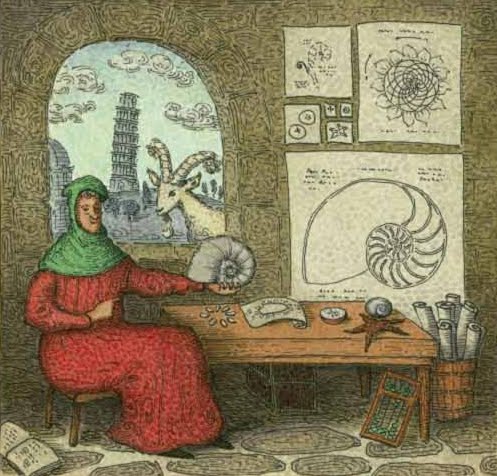
One day Leonardo “began to write a book about Hindu-Arabic numerals” and included riddles to demonstrate the ideas. One was about a pair of rabbits. Leonardo asked Alfredo to tell him how many baby rabbits would be born within one year if it took a baby one month to grow old enough to have babies of its own and one more month to have a pair of babies. Alfredo tried to solve it but couldn’t. As Leonardo explained the sequence of adult pairs and baby pairs of rabbits to Alfredo, he noticed a pattern. At the end of month two, there would be 1 grown-up pair of rabbits and 1 baby pair; at the end of month three there would be 2 grown-up pairs and 1 baby pair; at the end of month 4 there would be 3 grown-up pairs and 2 baby pairs…. Leonardo saw that by adding “any two consecutive numbers in the pattern,” you’d get the next correct number. This discovery made solving the problem even easier.
Image copyright John O’Brien, courtesy of Henry Holt and Company
Leonardo’s work with math soon spread across Europe. Frederick II, the ruler of the Holy Roman Empire invited Leonardo to visit. There Frederick’s wise men challenged him with math problems that were no match for Leonardo’s quick brain. Frederick II didn’t call Leonardo a blockhead, instead he said he was “‘one smart cookie.’” When Leonardo went home, however, the people of Pisa grumbled and complained. They thought the old Roman numerals were good enough.
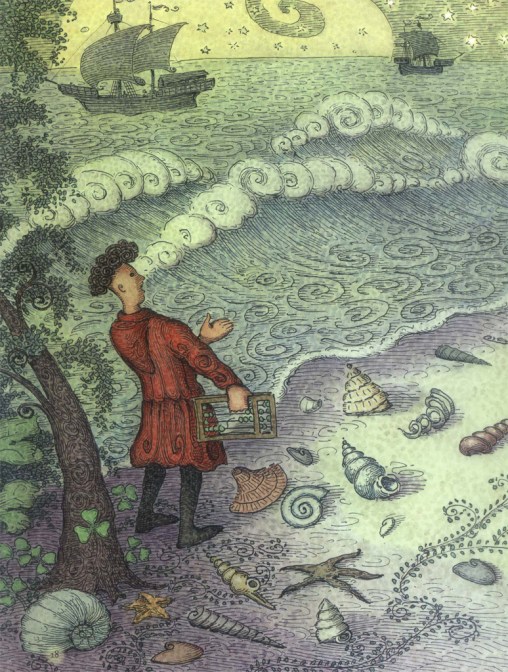
Leonardo set out to prove how valuable Hindu-Arabic numerals were. He began observing nature, and everywhere, from the petals of a flower to the arms of a starfish to the seeds in an apple, Leonardo discovered the same numbers—the sequence he had discovered in the rabbit riddle. He realized that these numbers could be used in different ways—to draw a spiral; the same type of spiral found within pinecones and the center of a sunflower.
Image copyright John O’Brien, courtesy of Henry Holt and Company
Leonardo finishes his story by relating that even though he is now old, numbers still delight him, as does the secret Mother Nature cleverly uses to organize the world and even the universe. He invites readers to look again through his story and find the places where his Fibonacci sequence appears.
More biographical information about Leonardo of Pisa plus a discussion of where readers can find Fibonacci number patterns in nature and a scavenger hunt through the book follow the text.
Blockhead: The Life of Fibonacci is an engaging, accessible biography that describes this mathematical scholar’s life and theory in a clear and entertaining way, whether their thing is math and science or English, history, and art. Joseph D’Agnese immediately entices kids into the story with the revelation of how Leonardo acquired the nickname that gives the book its title. Using anecdotes such as the birds in the trees and the rabbit riddle, he invites readers to think like Fibonacci, leading to a better understanding and enjoyment of his life story and the mathematical concept. The idea of using your talents and passions wherever you are—as Leonardo does in his work for his father—is a valuable lesson on its own.
John O’Brien’s wonderfully detailed illustrations take children back to early Italy and the Mediterranean with his depictions of Leonardo’s school and town, as well as the under-construction Tower of Pisa and the influential cultures of other countries he visited. Cleverly inserted into each page are examples of the Fibonacci sequence at work—in whorls of wood grain, the spirals of women’s hats, the web of a spider and horns on a passing goat, and so many more. The rabbit riddle is neatly portrayed for a visual representation of the math involved, and the way nature uses the pattern is also organically portrayed. Children will love searching for and counting the various ways Fibonacci’s seuqence is used throughout the illustrations.
Blockhead: The Life of Fibonacci is a fantastic book to share with all children, especially as they begin to learn mathematical problem solving, the value of math, how it is used, and how it occurs naturally in the world. The book makes a marvelous teaching resource and addition to classroom libraries and also a great addition to home bookshelves.
Ages 5 – 9
Henry Holt and Company, 2010 | ISBN 978-0805063059
To discover more books by Joseph D’Agnese for children and adults visit his website!
Find a vast portfolio of cartoon and illustration work by John O’Brien for kids and adults on his website!
Watch the Blockhead: The Life of Fibonacci book trailer!
Fibonacci Day Activity
Spiral Coloring Page
Have fun coloring this printable Spiral Coloring Page that is inspired by Leonardo Fibonacci’s work.
Today’s holiday recognizes the spirit of girls and encourages girls and young women to pursue their dreams, talents, and abilities with the slogan “She Can Do Anything.” Around the world young women have a long way to go to overcome the stereotypes, conditions, and pressures in the media and other organizations that keep them from receiving an equal education and from both attempting and succeeding in their desired profession. Today, celebrate the uniqueness of the girls and women in your life, listen to what they really want and want to accomplish, and support them.
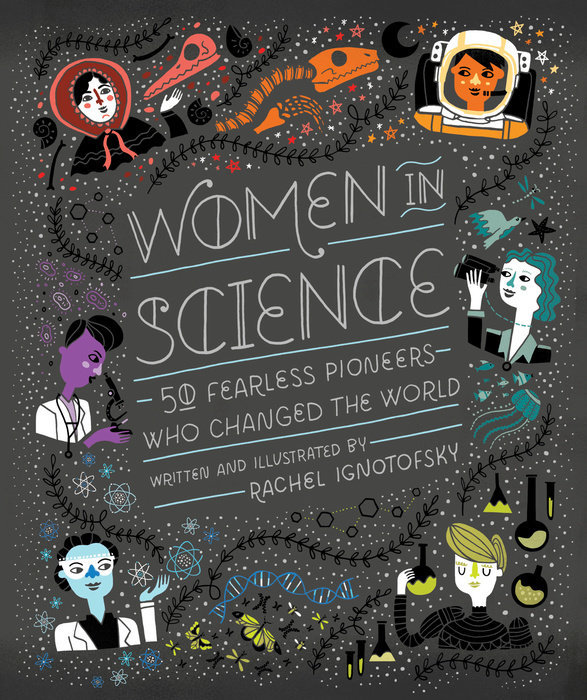
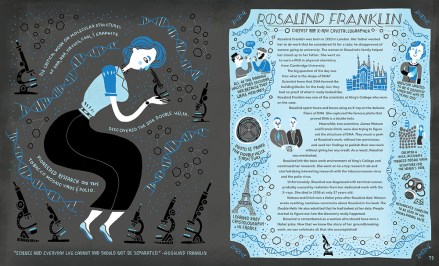
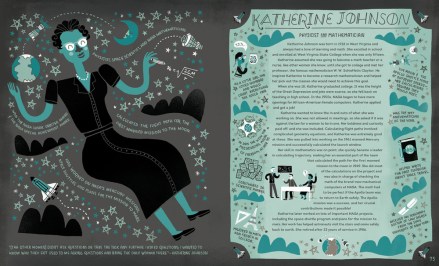
Women in Science: 50 Fearless Pioneers Who Changed the World
By Rachel Ignotofsky
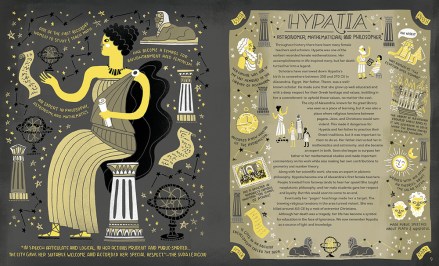
“Nothing says trouble like a woman in pants.” With this revealing attitude from the 1930s, Rachel Ignotofsky introduces her scintillating biographies of 50 intelligent, self-confident, persevering, and inspiring women working in engineering, math, medicine, psychology, geology, physics, astronomy, and more sciences from ancient history through today. The book begins with Hypatia who lived in Greece in the late 300s to early 400s CE and became an expert in astronomy, philosophy,and mathematics, making “contributions to geometry and number theory.” She became one of Alexandria’s first female teachers, “invented a new version of the hydrometer,” and can be found among the intellects in Raphael’s painting “The School of Athens.”
Image and text copyright Rachel Ignotofsky, courtesy of rachelignotofskydesign.com
Zipping ahead to 1647 readers find Maria Sibylla Merian, considered one of the “greatest scientific illustrators of all time.” Her specialty was entomology. By carefully documenting the lifespan of butterflies, she taught people about the science of metamorphosis, publishing a book on the subject filled with notes and illustrations in 1679. Later she scoured the rainforests of South America, gathering information on never-before-seen insects from that region. Her book, The Metamorphosis of the Insects of Suriname “was published in 1705 and became a hit all over Europe.” Maria was so famous, her picture appeared on German money and stamps.
Image and text copyright Rachel Ignotofsky, courtesy of rachelignotofskydesign.com
Other women in the nature sciences include Mary Anning, who as a child discovered the first complete ichthyosaur skeleton and went on to become a paleontologist; Mary Agnes Chase, a botanist and expert on grasses; Marjorie Stoneman Douglas, who as a conservationist helped save the Florida Everglades; and Joan Beauchamp Procter, a zoologist specializing in reptiles who discovered the Peninsula Dragon Lizard in 1923; and more.
Image and text copyright Rachel Ignotofsky, courtesy of rachelignotofskydesign.com
One of the earliest women astronomers and mathematicians was Wang Zhenyi, born in China in 1768. Creating her own eclipse model, she proved her advanced “theories about how the moon blocks our view of the sun—or the earth blocks the sun’s light from reaching the moon—during an eclipse.” She also measured the stars and explained the rotation of the solar system. At the age of 24 she published the 5-volume Simple Principles of Calculation. Zhenyi died at the age of 29, but in her short life she published many books on math and astronomy as well as books of poetry.
Image and text copyright Rachel Ignotofsky, courtesy of rachelignotofskydesign.com
Women in Science includes many other women who have looked to the stars and mathematics for their careers. Some of these are: Ada Lovelace, the first person to write a computer program; Emmy Noether, who helped Albert Einstein develop his theory relativity, created the field of abstract algebra, and “made new connections between energy and time, and angular momentum”; Cecilia Payne-Gaposchkin a quantum physicist in 1900s England who “discovered that the sun is made mostly of hydrogen and helium gas” and in 1956 became Harvard University’s first astronomy professor; Mae Jemison, who in 1992 became the first African-American woman in space and later started her own technology consulting firm as well as founding BioSentient Corporation, and a science camp for kids; plus many others.
Image and text copyright Rachel Ignotofsky, courtesy of rachelignotofskydesign.com
The book also features Engineers, such as Hertha Ayrton who improved electric lights by inventing “a new rod that made a clean and quiet bright light” and the Ayrton fan that blew away mustard gas during World War I; and Lillian Gilbreth, who used her theories of “organizational psychology” in inventing the foot pedal for garbage cans, shelving for refrigerators, and even the “work triangle” for kitchens “that determines the distance from the sink to the stove” and saves time. There are Geneticists such as Nettie Stevens who discovered the “X” and “Y” chromosomes, and Barbara McClintock—the pants wearer from the beginning of the post—and the first person “to make a complete genetic map of corn” and discover jumping genes, or “transposons.”
The field of Medicine has benefited from women such as Elizabeth Blackwell, the first woman doctor; Alice Ball, a chemist and the first African-American woman to graduate from the University of Hawaii, who helped cure leprosy with her chemical work; and Gerty Cori who discovered how our bodies covert glucose, helping us better understand diabetes. In 1947 she became the first American woman to win a Nobel Prize.
Image and text copyright Rachel Ignotofsky, courtesy of rachelignotofskydesign.com
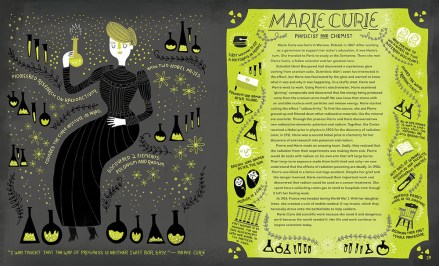
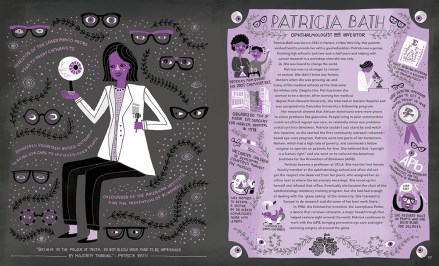
And this list only begins to scratch the surface of all the fascinating stories of women who overcame social, political, and personal obstacles to follow where their intelligence took them. Inspirational, entertaining, and undeniably eye-catching Rachel Ignotofsky’s Women in Science presents expertly written, one-page biographies that hit all the high (and sometimes unfortunate low) points in these scientist’s lives. The striking layout of both the text and illustrations keep readers riveted to the page, The left-hand side contains a representational drawing of the scientist surrounded by the subjects and materials of her work as well as trivia about her and a quotation. On the right-hand page, small illustrated facts frame the woman’s life story.
Interspersed between the biographies are pages offering a timeline of women’s milestones, depicting lab tools, and graphing statistics of women in STEM. The back matter is impressive, with two more pages presenting 15 more scientists, a four-page, illustrated glossary, resources including films, websites, and books, and an index. Rachel Ignotofsky concludes her book by saying, “Let us celebrate these trailblazers so we can inspire the next generation. Together, we can pick up where they left off and continue the search for knowledge. So go out and tackle new problems, find your answers and learn everything you can to make your own discoveries!”
Perhaps now—more than we’ve seen in a long time—the world needs a day of kindness. Today’s holiday was initiated in 1997 when a number of humanitarian groups made a Declaration of Kindness and dedicated themselves to paying goodness forward and sharing positivity. With so many ways to help our friends, neighbors, even strangers living both near and far away, it’s within each person’s grasp to make the world a better place for all. To learn more about World Kindness Day and ways that you can make a difference, visit Random Acts of Kindness.
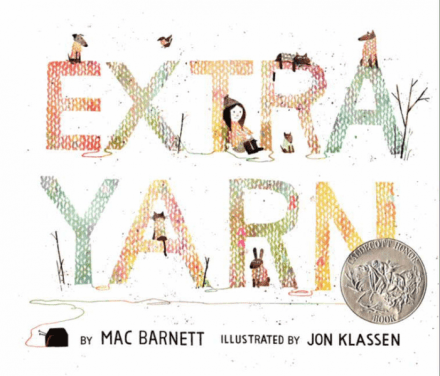
Extra Yarn
Written by Mac Barnett | Illustrated by Jon Klassen
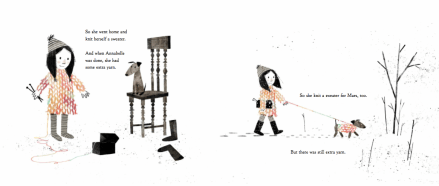
In the dulled world of winter, “Annabelle found a box filled with yarn of every color.” With it she knit herself a sweater, and because she had not run out of yarn, she knit a sweater for her dog, Mars, too. Afterwards, the two went for a walk, and Annabelle carried her box of yarn with her. They happened on Nate and his dog—dreary smudges against the monochrome landscape. “‘You two look ridiculous,’” Nate taunted. “‘You’re just jealous,’ said Annabelle.” Nate denied it, but after Annabelle knit him and his dog their own sweaters, they discovered she was right.
Image copyright Jon Klassen, text copyright Mac Barnett. Courtesy of harpercollinschildrens.com
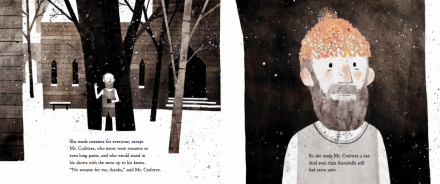
These four sweaters hardly put a dent in the yarn in the box, so Annabelle took it to school. There, the kids in their dark, winter clothes couldn’t stop staring at and whispering about Annabelle. Their teacher, Mr. Norman, shouted for quiet. “‘Annabelle, that sweater of yours is a terrible distraction. I cannot teach with everyone turning around to look at you!’” Annabelle knew just what to do. The class—and even Mr. Norman—looked brighter with their new sweaters. “And when she was done, Annabelle still had extra yarn.”
Image copyright Jon Klassen, text copyright Mac Barnett. Courtesy of harpercollinschildrens.com
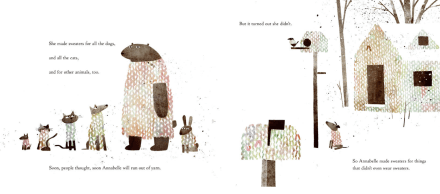
She began knitting sweaters for everyone in town. Mr. Crabtree was the only exception. Since he wore shorts and a t-shirt in even the snowiest weather, Annabelle knit him a cap to keep his bald head warm. When all the people were snug, Annabelle fashioned sweaters for all the animals—from the tiniest birds to the biggest bears. “Soon, people thought, soon Annabelle will run out of yarn. But she didn’t. So Annabelle made sweaters for things that didn’t even wear sweaters.” Suddenly, the town was no longer drab and lifeless.
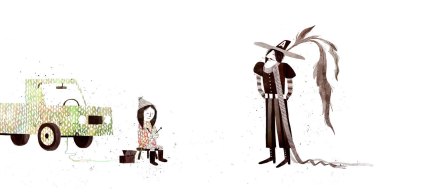
Word spread about Annabelle and her endless box of yarn. People came from all over to meet her and see her sweaters. The news even reached a clotheshorse of an archduke, who sailed his ship into port and demanded to see Annabelle. He offered her one million dollars for her box of yarn, but Annabelle turned him down. He raised his offer to two million, but Annabelle shook her head. “‘Ten million!’ shouted the archduke. ‘Take it or leave it!’” “‘Leave it,’ said Annabelle. ‘I won’t sell the yarn.’”
That night the archduke sent robbers to steal Annabelle’s box of yarn, and when they had it, the archduke sailed away under the dark cover of night. In his shadowy castle, the shady archduke opened the box. It was empty. In a fit of rage, he flung the box out the window into the sea, cursing Annabelle with eternal unhappiness. But the box found its way onto an ice floe, and it rode the current back to Annabelle, who was forever after happy.
Image copyright Jon Klassen, text copyright Mac Barnett. Courtesy of harpercollinschildrens.com
Mac Barnett’s extraordinary story of a box of yarn and a little girl that keeps giving despite teasing, challenges, and attempts to strip her of her gift is an uplifting reminder that even the simplest of gestures can create profound change. With the lilt of a fairy tale but the anchors of reality, Barnett’s tale offers a universal lesson that children and adults can use their individual talents to improve their own lives and those of others. The title of the book may be Extra Yarn, but the question remains: is it the yarn or Annabelle who is special? The final scene proves that goodness and kindness always win out and will find its way back to the giver.
Jon Klassen’s brown, stolid town seems poised to suck readers in to its close, silent emptiness until Annabelle discovers the box of yarn and knits herself a rainbow to wear. With Mars similarly outfitted, they return to the somber outside. Annabelle, at first the only bright spot in the town and school, quickly transforms her classmates and neighbors into colorful individuals with sweaters as unique as they are. After the homes, buildings, mailboxes, and birdhouses acquire their own cozies, the town looks open and inviting. Once the archduke arrives on the scene, the pages turn dusky and gray, but there is one point of light: in the black, nighttime sea the little box floats on an icy raft that shines in the full moonlight.
Image copyright Jon Klassen, courtesy of macbarnett.com
Klassen adds plenty of visual humor here too, as when Mars tangles his yarn leash around a grove of trees, and the archduke demonstrates a penchant for monogramming all of his possessions. Kids will be delighted to see some of their favorite Klassen characters so dandily dressed, and the images of the students and townspeople connected by a leading thread of yarn may help them see that Annabelle not only knit them sweaters but made them a much closer-knit community as well.
Want to see what other books Mac Barnett has written? Visit his website and find out!
You can find a gallery of picture books and other artwork by Jon Klassen on tumblr!
World Kindness Day Activity
Kindness Cards to Share
It’s fun to surprise someone with an unexpected compliment! It makes the other person and you feel happier! Here are some printableKindness Cardsthat you can give to anyone you meet today—or any day. If you’d like to write your own, here is a set ofBlank Cards. You can give one to your teacher, librarian, favorite store clerk, your postal worker, your neighbors and friends, the person next to you on the bus or train. Or why not brighten someone’s day by leaving a note where they might find it—in a book at the library or bookstore, in a friend’s lunchbox, in your mailbox, on a store shelf, or anywhere you go!

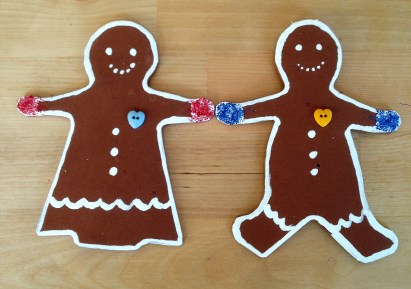 Gingerbread Kids Decorations