March 26 – National Science Appreciation Day

About the Holiday

Launched in 2022 by Todd Stiefel, the founder and chair of ScienceSaves, Science Appreciation Day celebrates the power of science and scientific achievements. The holiday also raises awareness for the importance of critical thinking, thanks workers in the fields of science and medicine, and promotes the inclusion of science in public policy throughout the United States—and maybe even all over the world.” An appreciation for science begins early in life as children learn about their world and Earth’s long history through books like today’s stunning look at prehistoric times. To learn more about ScienceSaves and find resources for teachers and other educators from kindergarten through high school, visit ScienceSaves.org

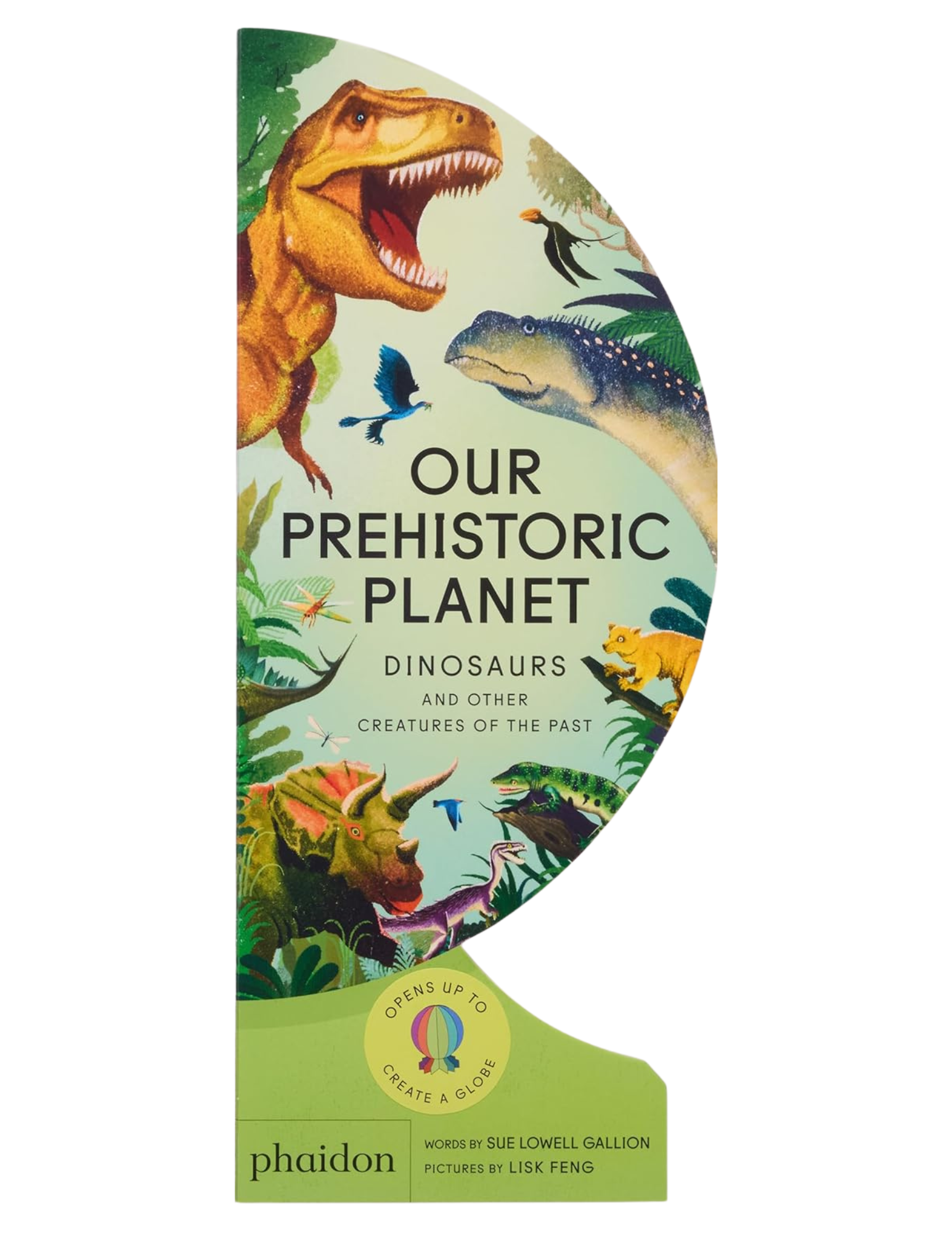
Our Prehistoric Planet: Dinosaurs and Other Creatures of the Past

Written by Sue Lowell Gallion | Illustrated by Lisk Feng


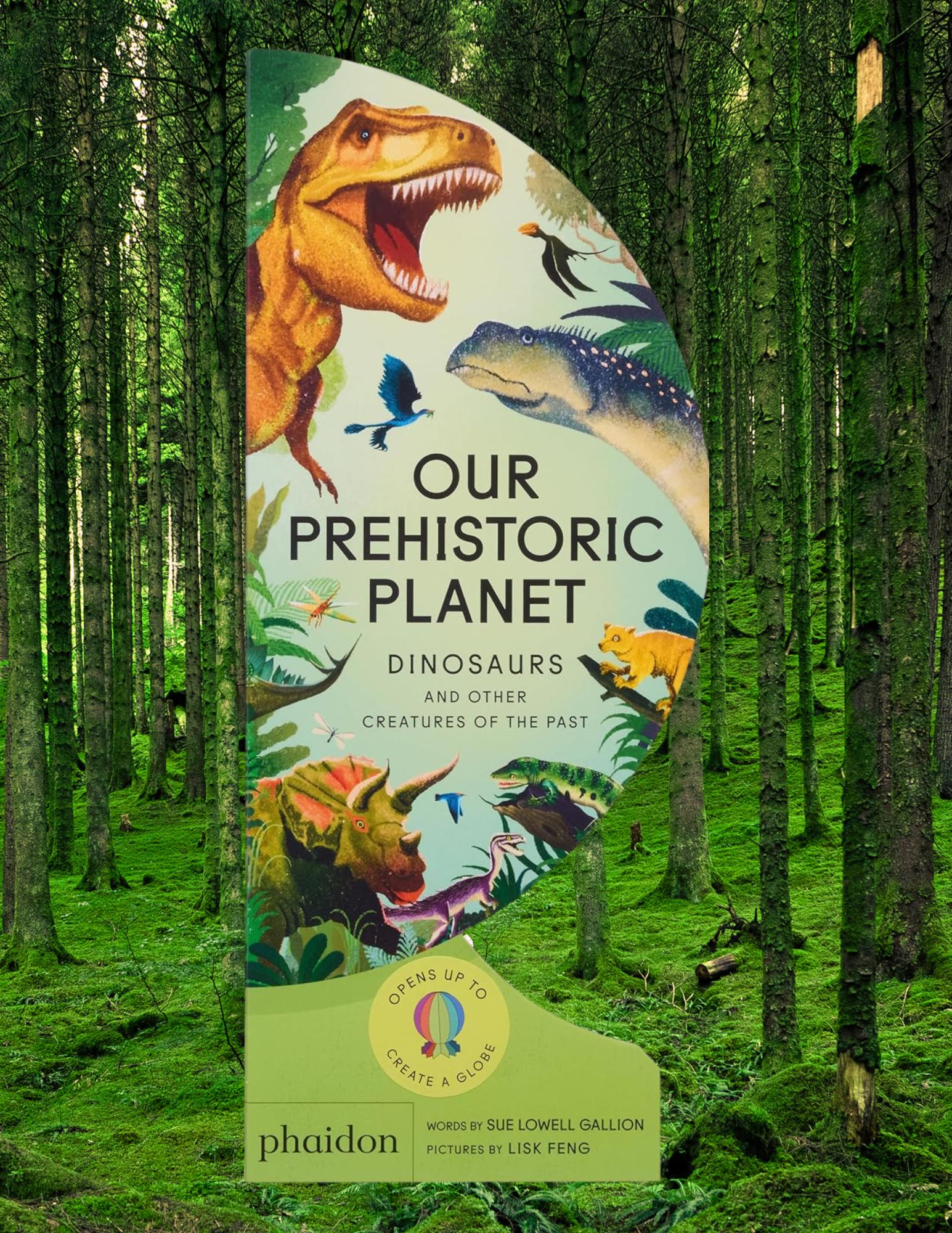
If you’re already a fan of Sue Lowell Gallion and Lisk Feng’s Our World collection of astounding books, you’re going to be excited about their newest one. If you’re new to this series of books, get ready to be amazed! Our Prehistoric Planet: Dinosaurs and Other Creatures of the Past not only takes us to a world we never knew yet are endlessly fascinated with, but opens to create a free-standing globe!
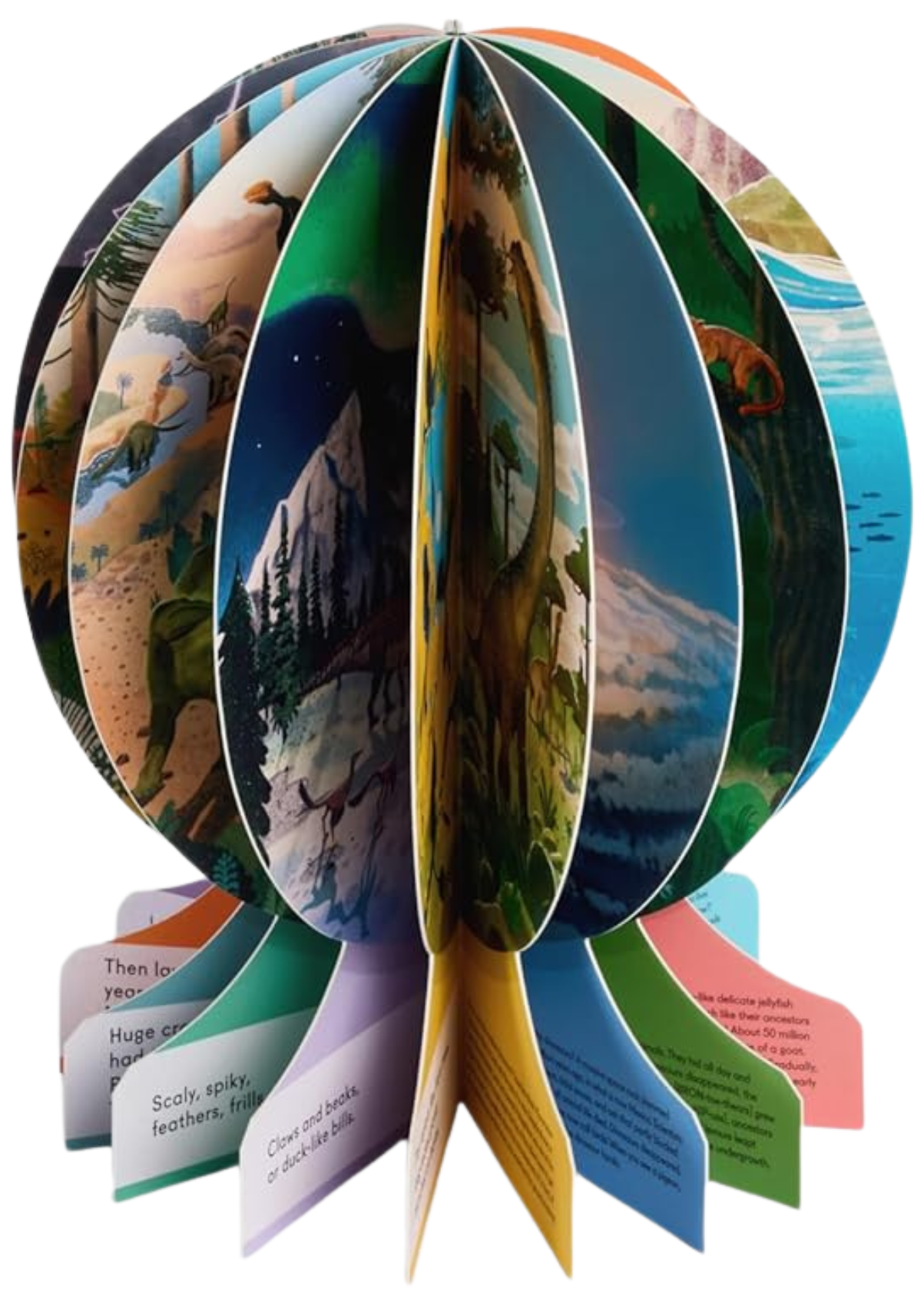
Illustration copyright © 2026 by Lisk Feng. Text copyright © 2026 by Sue Lowell Gallion. Courtesy of Phaidon.

With this invitation: “Let’s tour the world of long ago, / so different from the Earth we know,” kids are transported through the chronological changes our planet has undergone from it’s “wet and squishy” beginnings billions of years ago to today. Transformations include the appearance of land animals and insects, including a “dragonfly-like bug the size of a chicken” and the rise of Rauisuchians—giant ancestors of our crocodiles that “were almost as big as a bus” and snacked on “the first dinosaurs, which were little!” 
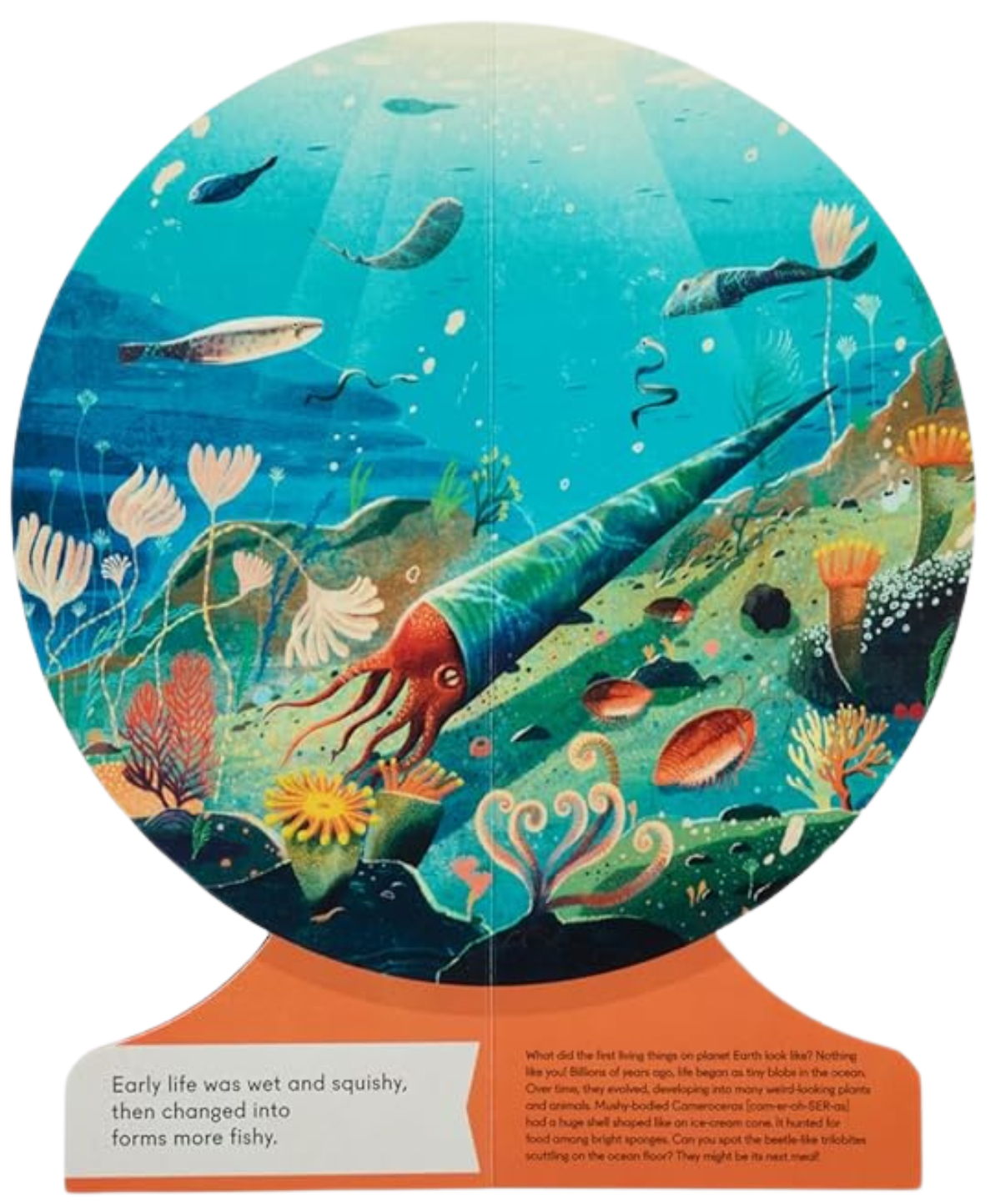
Illustration copyright © 2026 by Lisk Feng. Text copyright © 2026 by Sue Lowell Gallion. Courtesy of Phaidon.

Kids will learn how these bite-sized dinos evolved into the monstrous-sized Stegosaurus, Triceratops, and T-Rex as well as the heavy-weight Patagotitan. Following the end of the age of dinosaurs, readers meet the first mammals and discover how different animals are now from their ancestors. Along the way children witness the cataclysmic events that ushered in each new era of evolution, resulting in the astounding changes in the types of animals, birds, and plants that populated Earth in prehistoric ages. A final page talks about fossils and provides a world map that shows where certain dinosaurs and other prehistoric creatures lived.
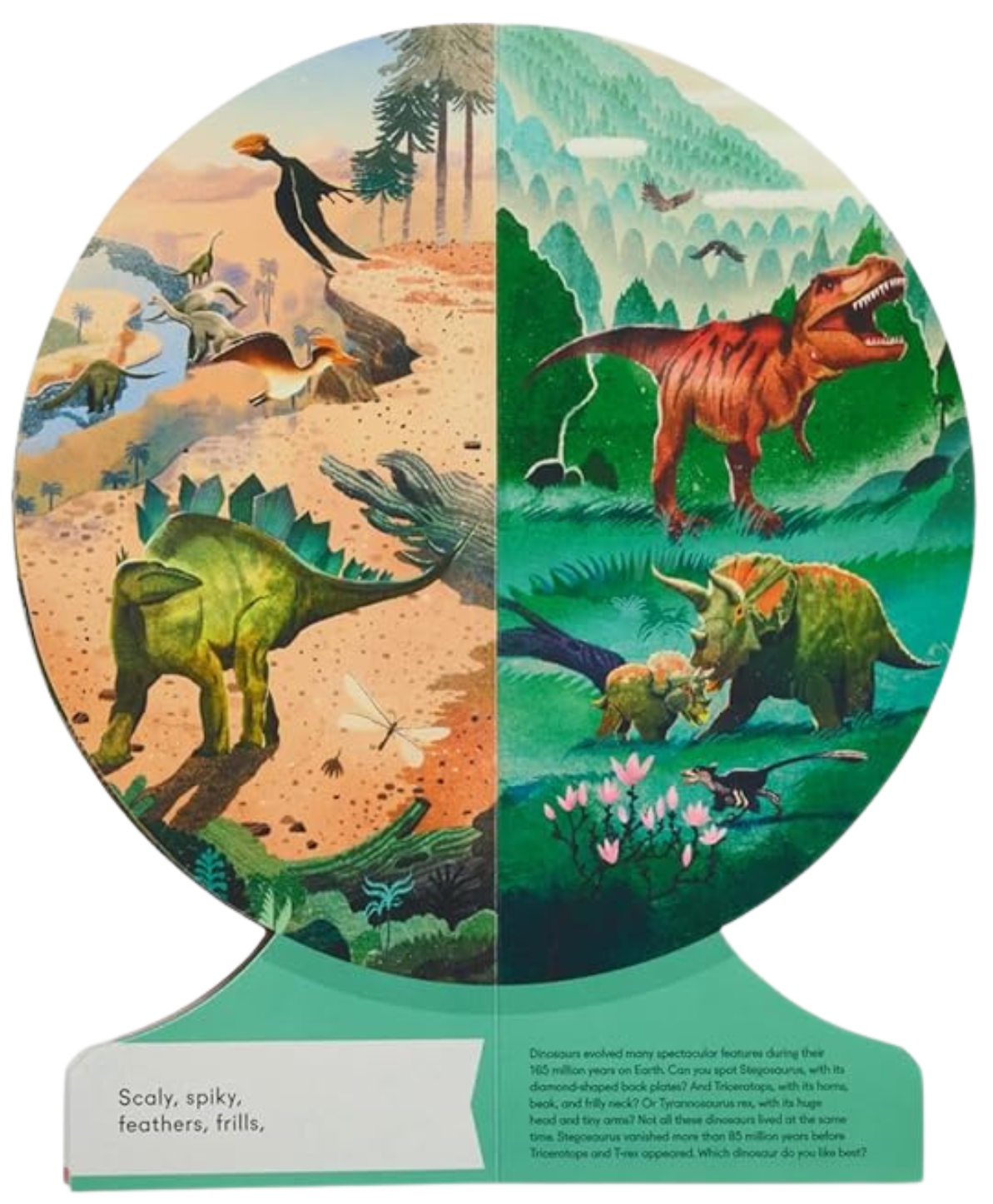
Illustration copyright © 2026 by Lisk Feng. Text copyright © 2026 by Sue Lowell Gallion. Courtesy of Phaidon.

On each two-page spread, Sue Lowell Gallion first captures readers attention with a short, rhyming verse that distills the scientific concepts into one easily grasped sentence. She then provides more information about the creatures’ traits, diet and size, the climate, scientists’ theories on extinction events, fossils, and more in a paragraph that combines detailed facts, kid-tantalizing language, pronunciation guides, and thought-provoking prompts.

Young readers get awe-inspiring views of our prehistoric past in Lisk Feng’s spectacular illustrations that provide realistic depictions of the animals, birds, insects, plants, and overall environments that thrived for millions of years. You can almost hear the buzz of enormous insects’ wings and feel the heat of bubbling lava. Children will love studying every fascinating page.

Open and display Our Prehistoric Planet: Dinosaurs and Other Creatures of the Past and watch kids gather ’round with exclamations of “Wow!” and eager excitement to learn. This book is a must addition to all classroom, school, and public library collections and would be a treasured favorite on home bookshelves for for dinosaur and prehistory buffs.

Ages 2+

Phaidon, 2026 | ISBN 978-1837290390

You can find an in-depth cross-curricular Our Prehistoric Planet Educator’s Guide on Sue Lowell Gallion’s website here.

About the Author

Sue Lowell Gallion is an award-winning children’s book author based in Kansas City. She is the author of Phaidon’s Our World: A First Book of GeographyOur Seasons: The World in Winter, Spring, Summer, and AutumnOur Underwater World: A First Dive into Oceans, Lakes, and Rivers and Our Galaxy: A First Adventure in Space among others. Visit her at suegallion.com.

About the Illustrator

Lisk Feng is an award-winning illustrator from China. She graduated from the Maryland Institute College of Art in 2014 with an MFA in Illustration and has since worked as a commercial illustrator for clients such as the New YorkerNew York Times, and Chanel. Follow her on Instagram.

National Science Appreciation Day Activity
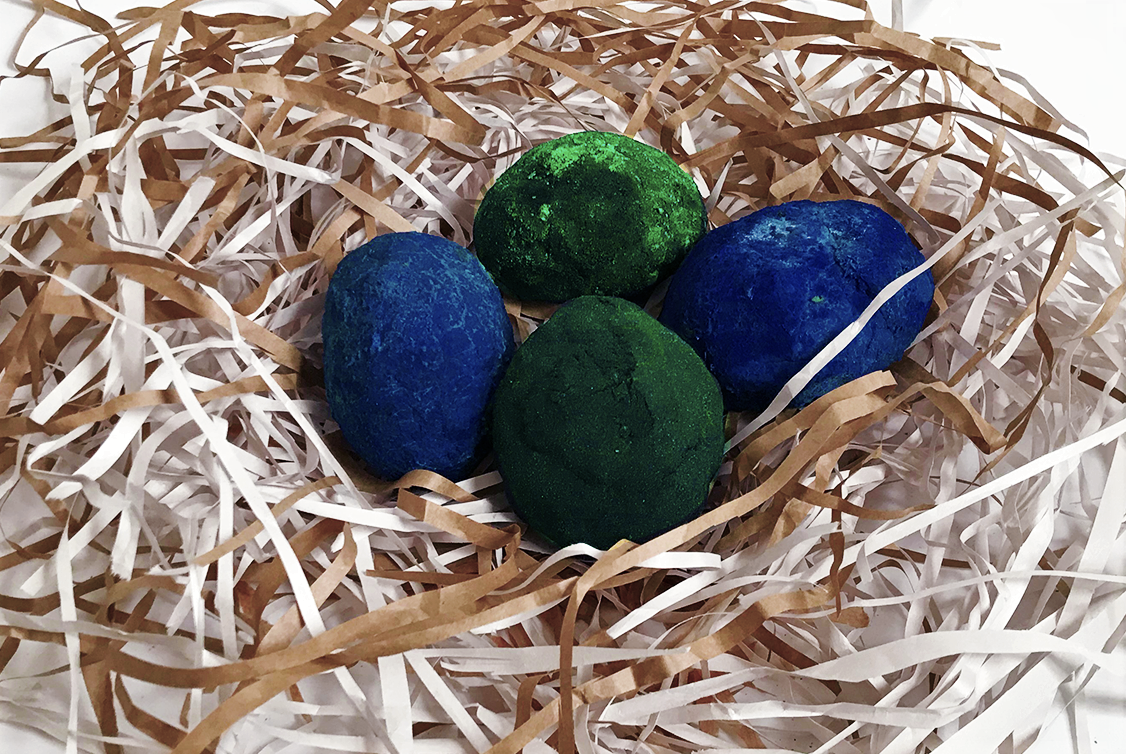
celebrate-picture-books-picture-book-review-dinosaur-eggs-craft-nest

Hatch Your Own Dinosaur Eggs


Think there are no more dinosaur eggs to be found? Think again! You can make your own with this easy craft that will have you hatching some T.-rex-size fun! All you need are a few simple ingredients!
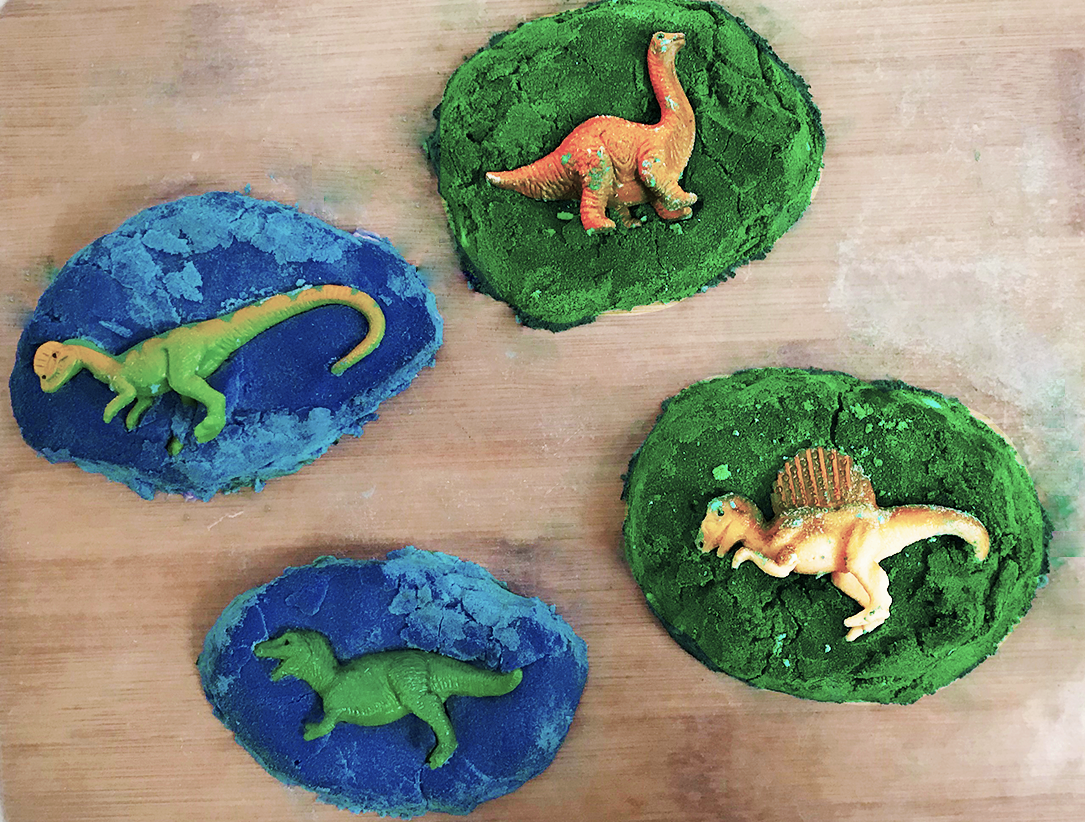
celebrate-picture-books-picture-book-review-dinosaur-eggs-craft-open-eggs

Supplies

  • Old clothes or apron
  • Large box of baking soda (makes between 6 and 8 eggs)
  • Food coloring
  • Water
  • Plastic dinosaur toys
  • Bowl
  • Fork
  • Spoon
  • Wax paper
  • Baking sheet
  • Foil
  • Vinegar
  • Spray bottle (optional)
  • Plastic or metal spoon, stick, popsicle stick, or other implement to chisel with
celebrate-picture-books-picture-book-review-dinosaur-eggs-craft-vinegar-egg-open-darker

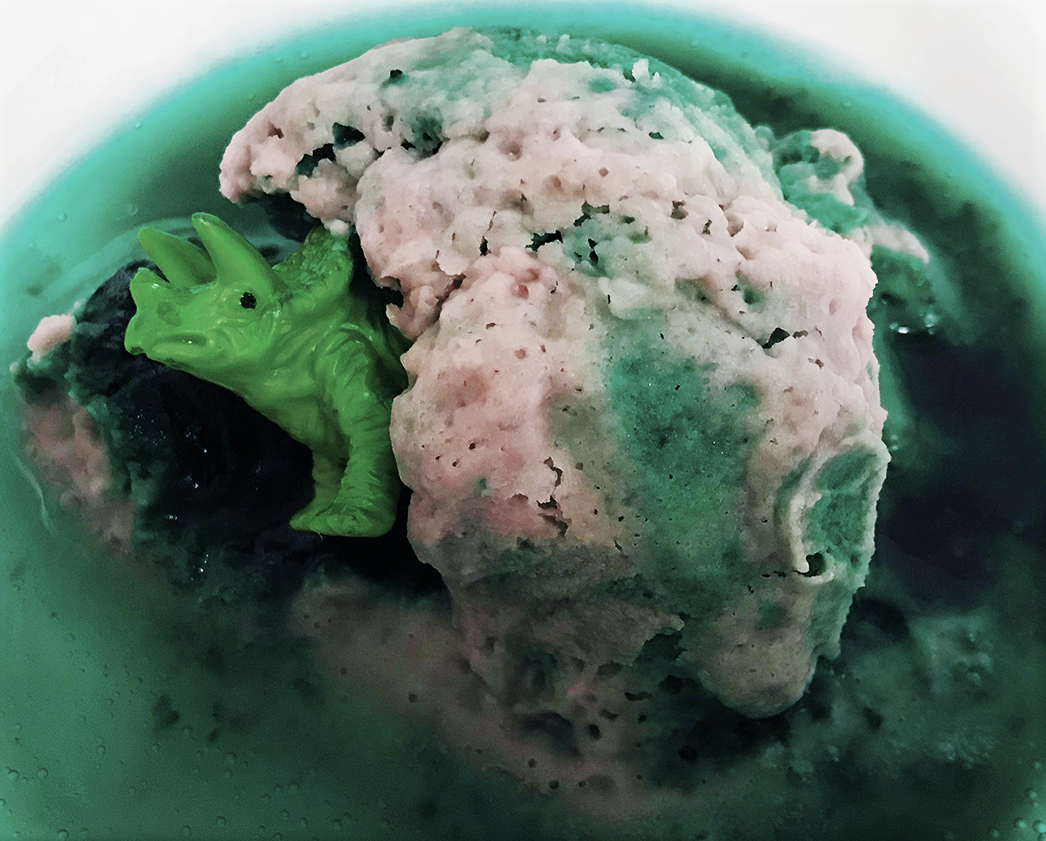
Spray the egg with vinegar to hatch your dinosaur

Directions

  1. Wear old clothes or an apron
  2. Cover work surface with wax paper, parchment paper, newspaper, or other protection. Food coloring can stain some surfaces
  3. Pour baking soda into the bowl
  4. Add drops of food coloring in whatever color you’d like your eggs to be. The eggs will darken when baked.
  5. Mix in the food coloring with the fork. You may want to use your hands, too
  6. When the baking soda is the color you want it, begin adding water a little at a time
  7. Add water until the baking soda holds together when you squeeze it in your hand
  8. When the baking soda is the right consistency, spoon some out into your hand or onto wax paper
  9. Push one plastic dinosaur into the middle
  10. Cover the dinosaur with more of the baking soda mixture
  11. Carefully form it into an egg shape
  12. Repeat with other dinosaurs
celebrate-picture-books-picture-book-review-dinosaur-eggs-craft-chiseled -darker

Chisel the egg open to hatch your dinosaur

To Bake the Eggs

  1. Set the oven or toaster oven to 200 to 225 degrees
  2. Set the eggs on a baking sheet lined with foil
  3. Bake the eggs for 15 minutes, check
  4. Turn the eggs over and bake for 10 to 15 more minutes
  5. Remove from oven and let cool

To Hatch the Eggs

  1. Eggs can be hatched by chiseling them with a spoon, stick, or other implement
  2. Eggs can also be hatched by spraying or sprinkling them with vinegar
You can purchase Our Prehistoric Planet: Dinosaurs and Other Creatures of the Past from these booksellers

Amazon | Barnes & Noble | Bookshop

Picture Book Review

March 6 – National Women’s History Month

About the Holiday

Women have been inventing, discovering, questioning, challenging, and changing the world just as long as men have—but often without recognition, the ability to take jobs in their fields of expertise, or equal (or even any) pay. Established by the United States Congress in 1987, National Women’s History Month serves to educate people on the amazing women who have blazed trails in the past and those who are continuing that tradition today.

This year’s theme is Leading the Change: Women Shaping a Sustainable Future and encompasses a wide understanding of sustainability, including climate change, economic and financial sustainability, community resilience, healthcare disparities, leadership succession, intergenerational equity, and threats to democratic participation. In all these areas, women are at the forefront of sustainable transformation that will carry us into a supportive future for all. To learn more visit the National Women’s History Alliance website.

Thanks to Beach Lane Books and Barbara Fisch at Blue Slip Media for sending me this book!

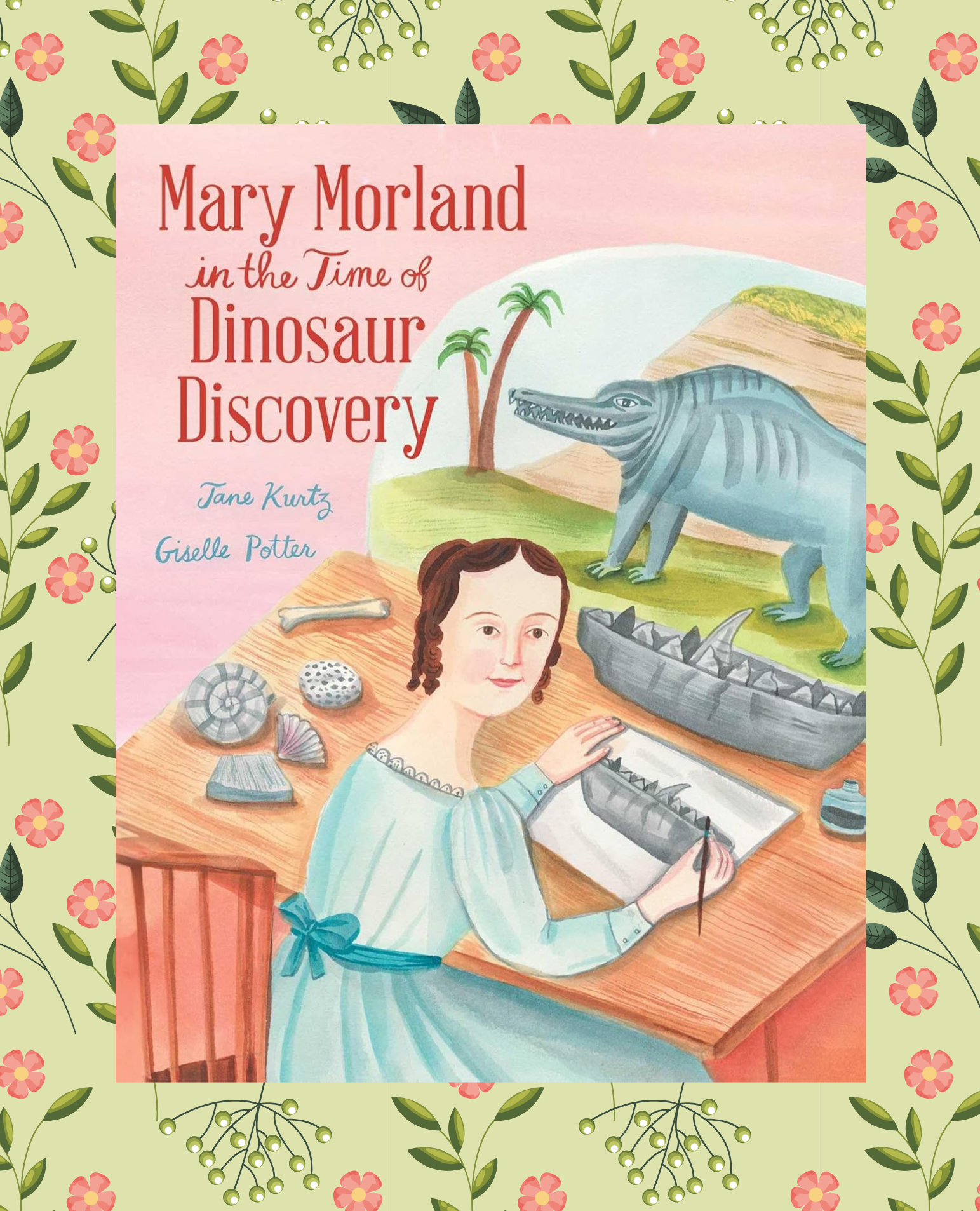
Mary Morland in the Time of Dinosaur Discovery

Written by Jane Kurtz | Illustrated by Giselle Potter


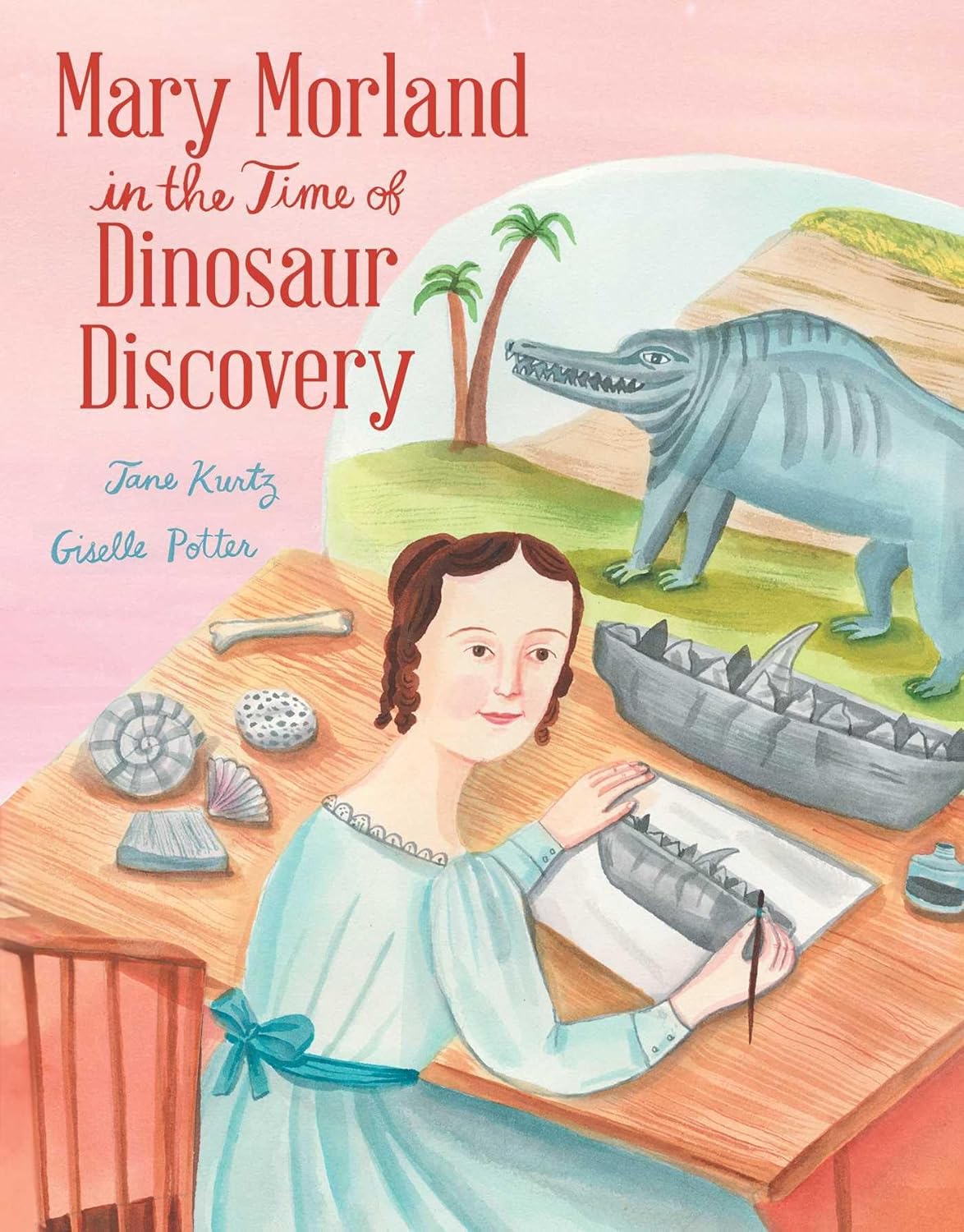
In the early 1800s, when Mary Morland was a child, girls were seen as “dainty, delicate decorations” who embroidered, arranged flowers, and played with dolls. Mary Morland had other ideas. From the first page, Jane Kurtz allies readers with the spirited Mary through cleverly posed questions that contrast the stifling conventions of her time with the freedoms of today: “Did [Mary] perch on her chair like a prim little miss?” Kurtz posits. “Well what would you do if the whole world was waiting outside? Mary tromped around, exploring. Wouldn’t you?”

Illustration © 2026 by Giselle Potter. Text © 2026 by Jane Kurtz. Courtesy of Beach Lane Books.

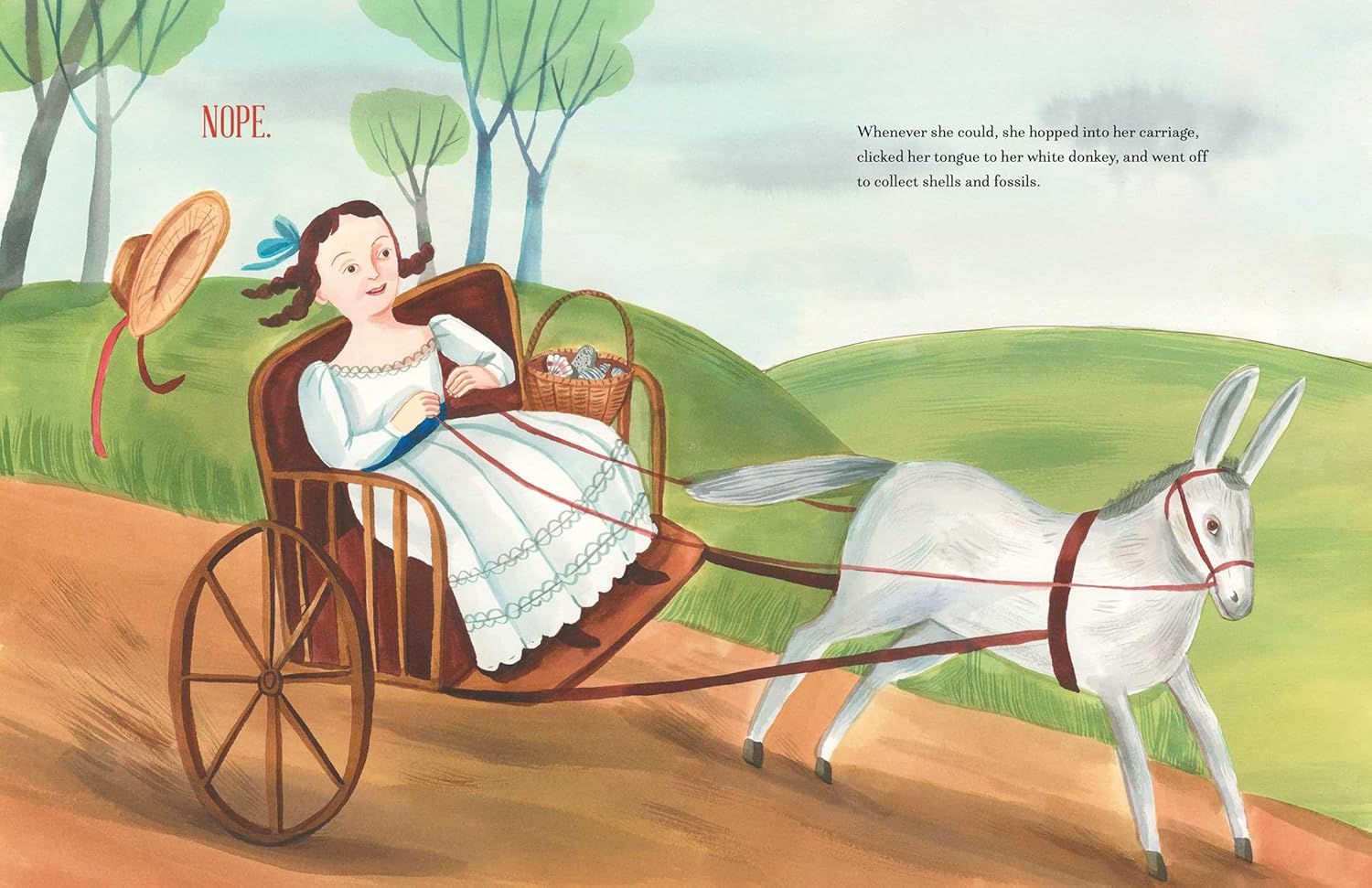
“Of course!” kids will say, and off they go, following Mary as, following the death of her mother, her father sends her to live with family friends who encourage her curiosity and teach her to study nature and fossils. From there readers view her drawings of “everything that fascinated her,” and discover that instead of calling herself a “cork-brain” and spending mannerly afternoons sipping tea in a fancy hat, Mary tooled around in her donkey-pulled carriage to “collect shells and fossils.”

Illustration © 2026 by Giselle Potter. Text © 2026 by Jane Kurtz. Courtesy of Beach Lane Books.

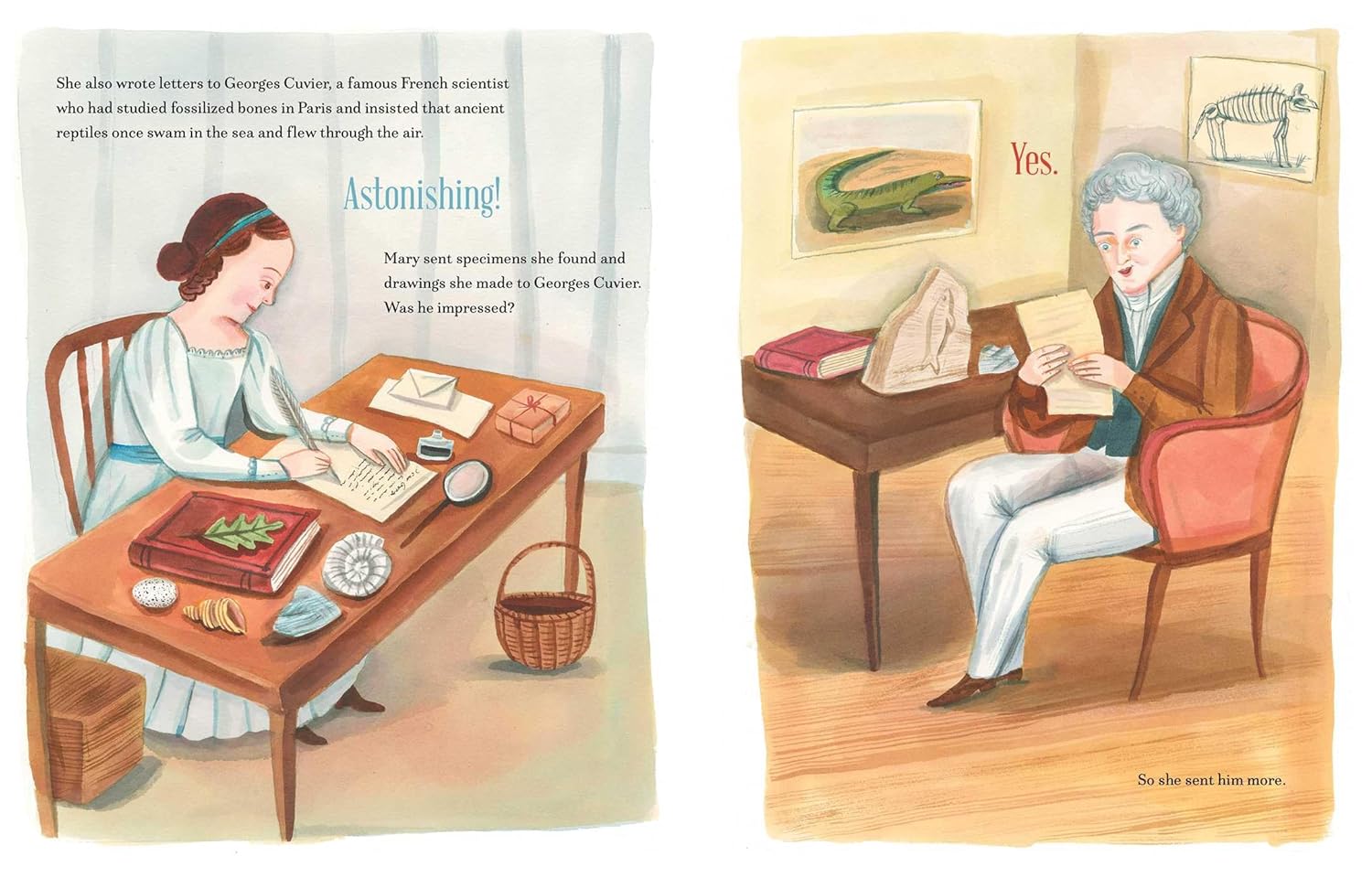
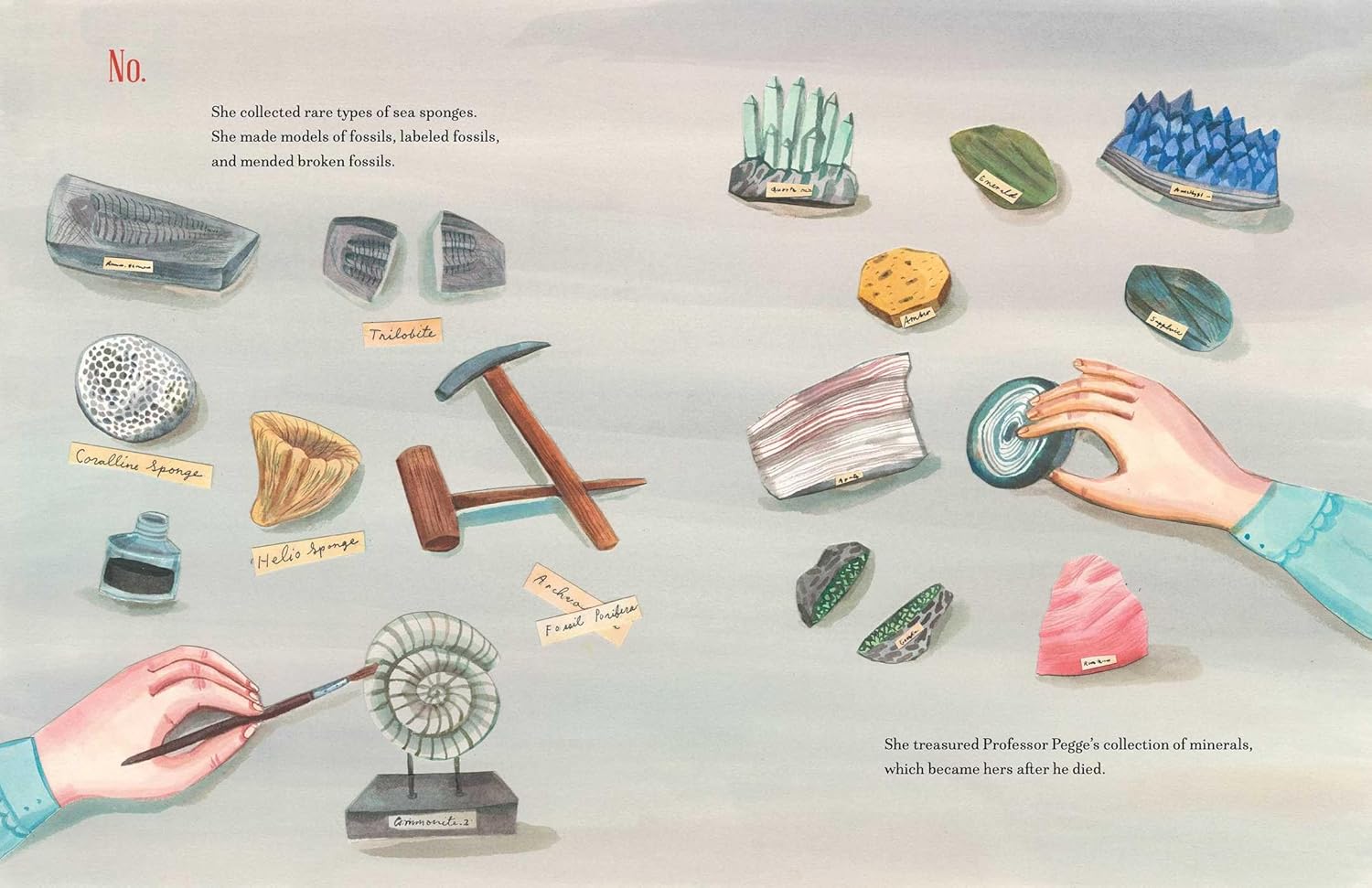
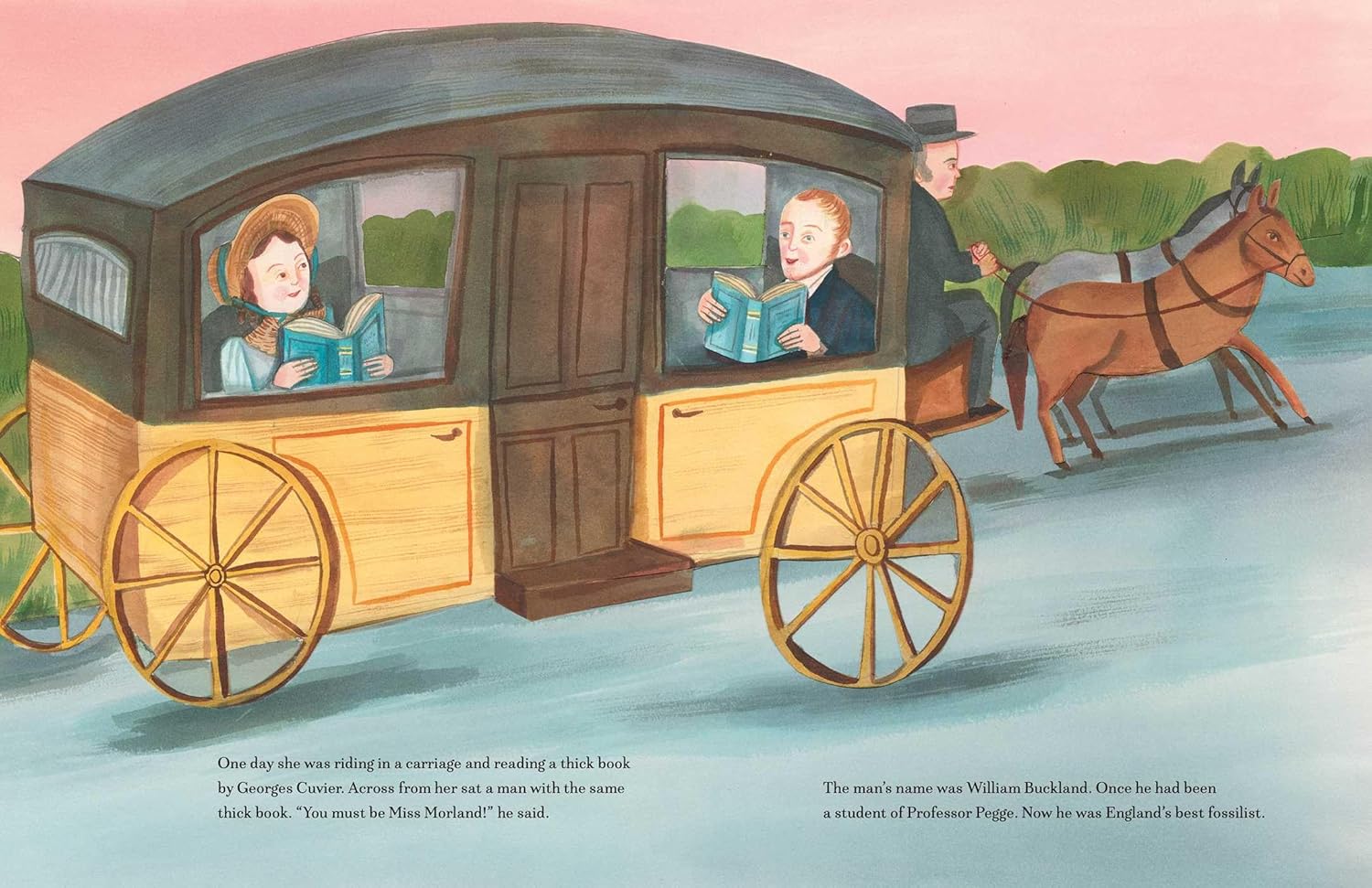
Did teenage Mary keep her discoveries to herself? No! She corresponded with Georges Cuvier, a famous French scientist, impressing him with the drawings and specimens she sent. And instead of trying to find a husband, Mary spent her time with old fossils, labeling and mending them. Then one day, she did meet the man she would marry: William Buckland, England’s best fossilist. In fact, it was he who had theorized that a collection of bones had come from a “giant land reptile,” named it Megalosaurus (before the word dinosaur was even created), and asked Mary to draw them for an important meeting of England’s geologists.

Illustration © 2026 by Giselle Potter. Text © 2026 by Jane Kurtz. Courtesy of Beach Lane Books.

After Mary and William were married, did she give up drawing and studying to keep a tidy house? Not at all! She kept exploring, writing, and drawing. She helped William turn his work into books—with her illustrations—and served as a curator for his collections of fossils. And, oh yes! She raised and taught their nine children and welcomed a menagerie of creatures—including a pony her the kids rode around the dining room—into their home! You might wonder: after all this, “did William say, ‘I am so fortunate that my wife is not a cork-brain?'” or acknowledge her contributions on his papers? Well, this was a time when women could not vote, own property, or go to college. So, what do you think? But that didn’t stop Mary from learning and using her gifts wherever she could throughout her life.

Back matter includes an Author’s Note highlighting other women intrinsic to the discovery and understanding of dinosaurs as well as how scientists came to accept that dinosaurs once existed, further resources for young readers, and a selection of resources.

Illustration © 2026 by Giselle Potter. Text © 2026 by Jane Kurtz. Courtesy of Beach Lane Books.

Jane Kurtz combines pluck, humor, and illuminating cultural mores of the past to weave an absorbing biography of Mary Morland, a brilliant paleontologist, writer, and illustrator with whom children will immediately connect. Mary’s personality and intelligence shine from each page, drawing children not only into her life, but into this incredible time of scientific discovery. Readers will be inspired by Mary’s example of self-confidence to set their own path, buck the norm, and prevail over obstacles on their way to success.

Giselle Potter’s illustrations are always a delight, and here she perfectly captures Mary Morland’s singular affinity for exploration, scientific thought, and illustration. In her folk art, watercolor paintings, Potter recreates the fashions, transportation, and traditions of the 1800s as well as Morland’s and her husband’s work. Readers will envy Mary’s children when they get a glimpse of the rambunctious Buckland home. In several instances, Mary’s and William’s facial expressions eloquently (and comically) reveal their innermost thoughts. 

Biographical storytelling at its best, Mary Morland in the Time of Dinosaur Discovery will captivate children with its verve and beauty. The book is a must for classroom, school, and public libraries and will become a favorite on home bookshelves as well.

Ages 4 – 8

Beach Lane Books, 2026 | ISBN 978-1665955546

Jane Kurtz was born in Portland, Oregon, but spent most of her childhood in Ethiopia. Jane speaks about being an author at schools and conferences and helped start Ethiopia Reads (EthiopiaReads.org), a nonprofit that has opened the first libraries for children in Ethiopia. She is the author of many books for children, including The Bone Wars, illustrated by Alexander Vidal; What Do They Do with All that Poo?, illustrated by Allison Black; Do Kangaroos Wear Seat Belts?, illustrated by Jane Manning; Anna Was Here; Clara the Triumphant Rhinoceros, illustrated by Claire Messer; and the American Girl book Lanie. You can visit her to learn more at janekurtz.com.

Giselle Potter has illustrated many books, including Once Upon a Fairy Tale House by Mary Lyn Ray, Try It! by Mara Rockliff, All by Himself? by Elana K. Arnold, and Kate and the Beanstalk by Mary Pope Osborne, as well as her own Tell Me What to Dream AboutThis Is My Dollhouse, and The Year I Didn’t Go to School, about traveling through Italy with her parents’ puppet troupe when she was eight. She lives in Rosendale, New York, with her husband and two daughters. Visit her at gisellepotter.com.

National Women’s History Month Activity

Women’s History Month Coloring Page


Celebrate Women’s History Month with this coloring page! In the letters write the names of women from history and today that you admire!

Women’s History Month Coloring Page

You can purchase Mary Morland in the Time of Dinosaur Discovery from these booksellers

Amazon | Barnes & Noble | Bookshop

Picture Book Review
December 3 – Read a New Book Month

celebrate-picture-books-picture-book-review-a-dinosaur-a-day-cover

About the Holiday

Yesterday for Read a New Book Month, I shared the amazing encyclopedic An Animal a Day, which introduces children to the vast diversity of animals that populate our always-astonishing Earth. Today I’m highlighting another book in this series that takes readers back millions of years to meet dinosaurs both small and mammoth. These books—one or both—make perfect gifts that will keep on giving throughout the year for kids to dip into by themselves or to share with adults.  

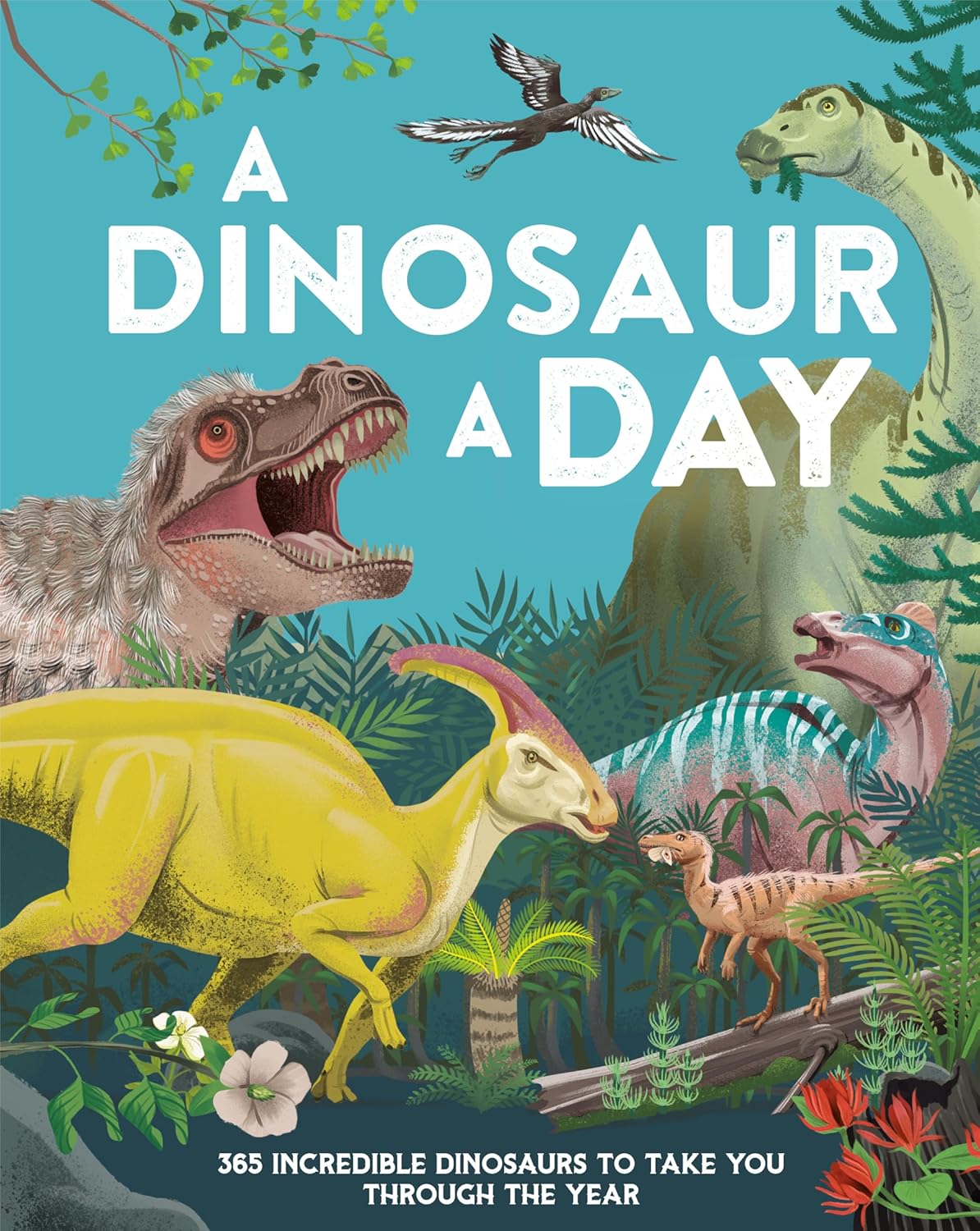
A Dinosaur a Day: 365 Incredible Dinosaurs to Take You through the Year

Written by Miranda Smith

Illustrated by Jenny Wren, Juan Calle, Xuan Le, Max Rambaldi, and Olga Baumert


What kid wouldn’t like to share their birthday date with a dinosaur? Or learn about the “tyrannosaur tyrants” whose descendants included the fearsome favorite Tyrannosaurus Rex? Or be able to impress their friends and teachers by rattling off the names and details of such dinos as the Huehuecanauhtlus, the Aepyornithomimus, or the Eustreptospondylus? All of these are easily—and enjoyably—accomplished with this day-by-day walk through prehistoric times.

celebrate-picture-books-picture-book-review-a-dinosaur-a-day-march

Image copyright Jenny Wren, Juan Calle, Xuan Le, Max Rambaldi, and Olga Baumert. Text copyright Miranda Smith. Courtesy of Bright Matter Books.

Before kids dive into the year, they can learn a bit about early life on Earth, events leading to the rise of the dinosaurs, and the three time periods that ushered in (and out) the wide variety of dinosaurs and other reptiles the earth has hosted. Readers also get a quick primer on fossils and discover other creatures, including lizards, insects, and mammals who coexisted with the dinosaurs.

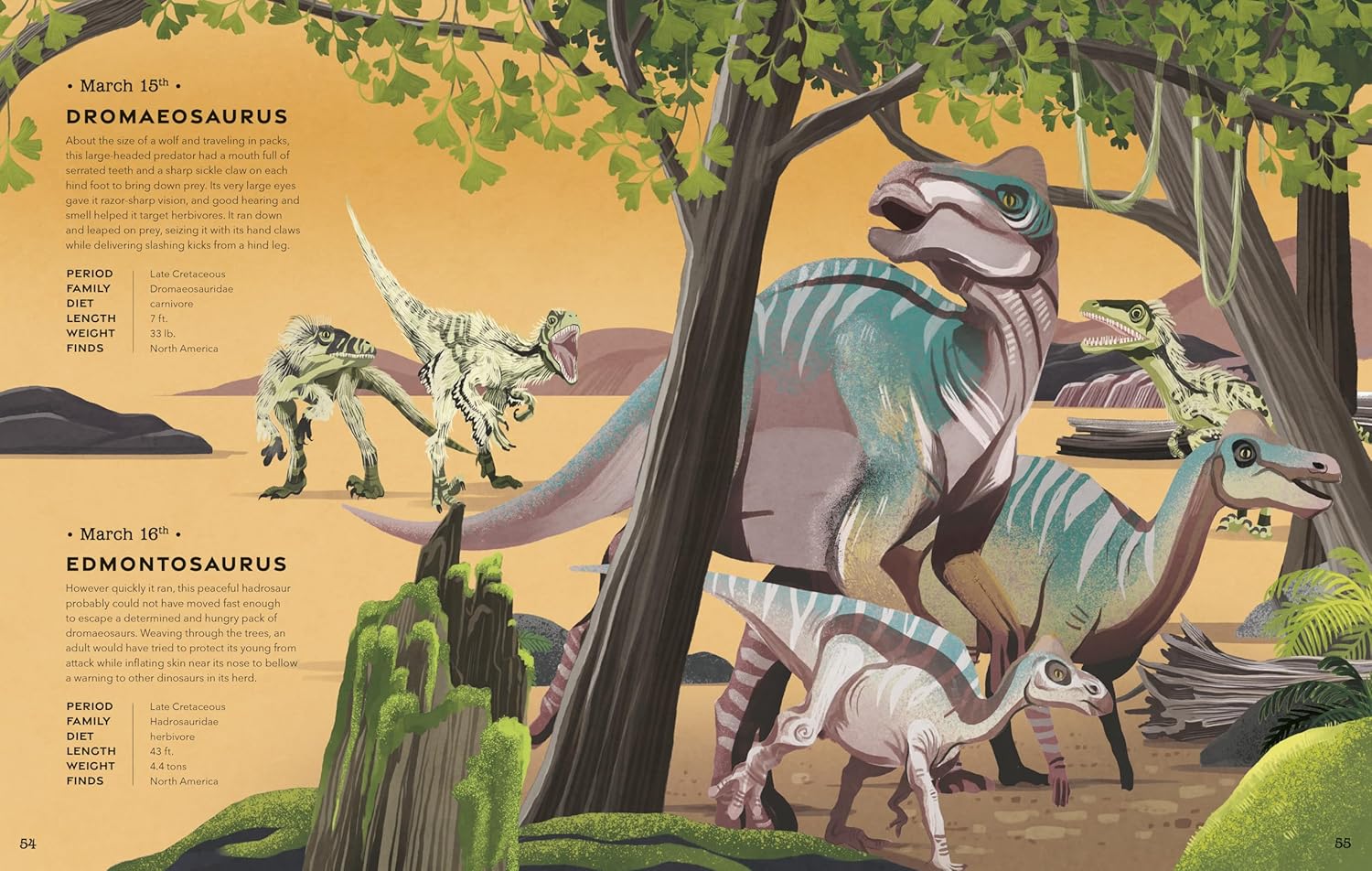
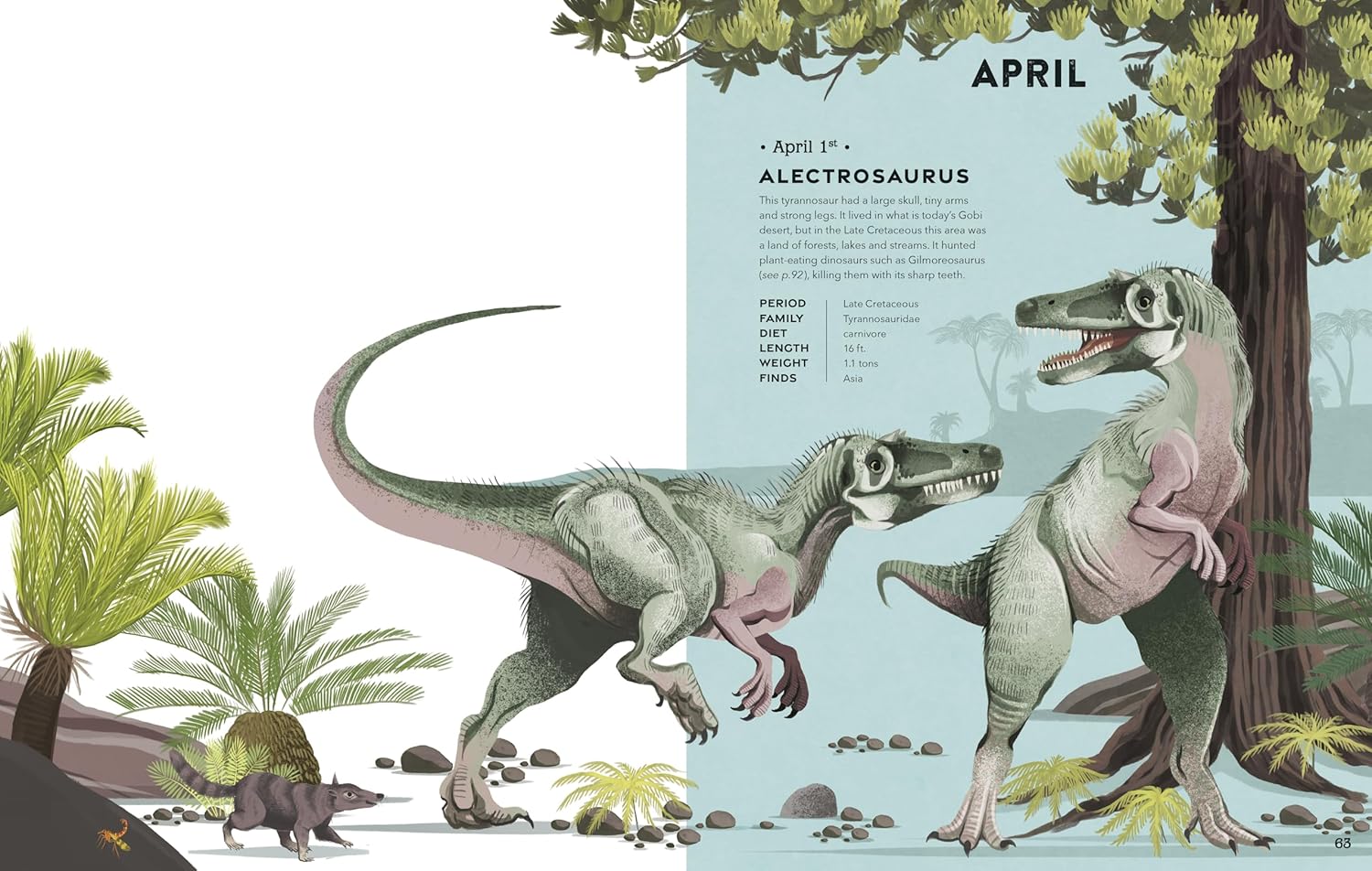
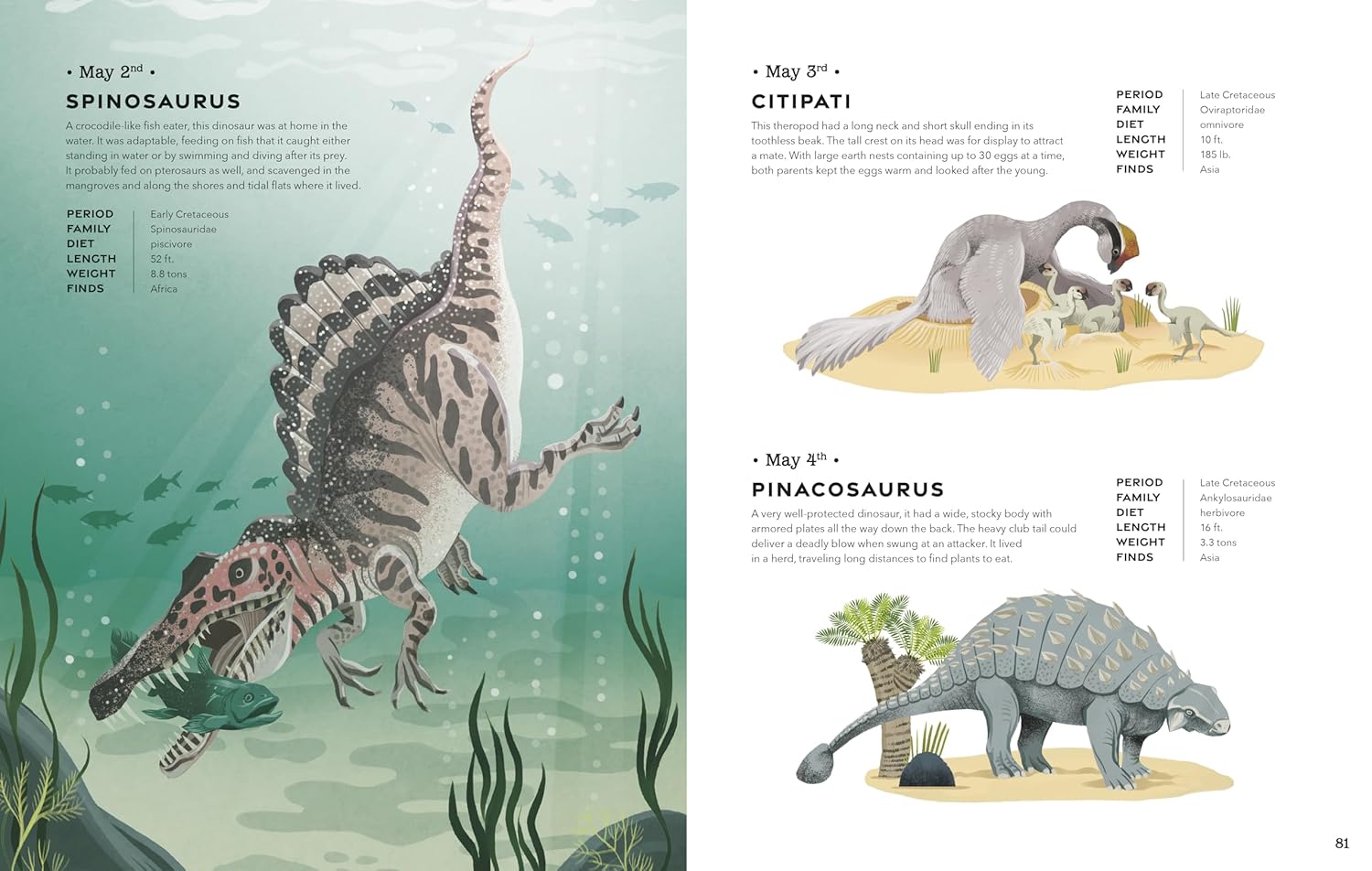
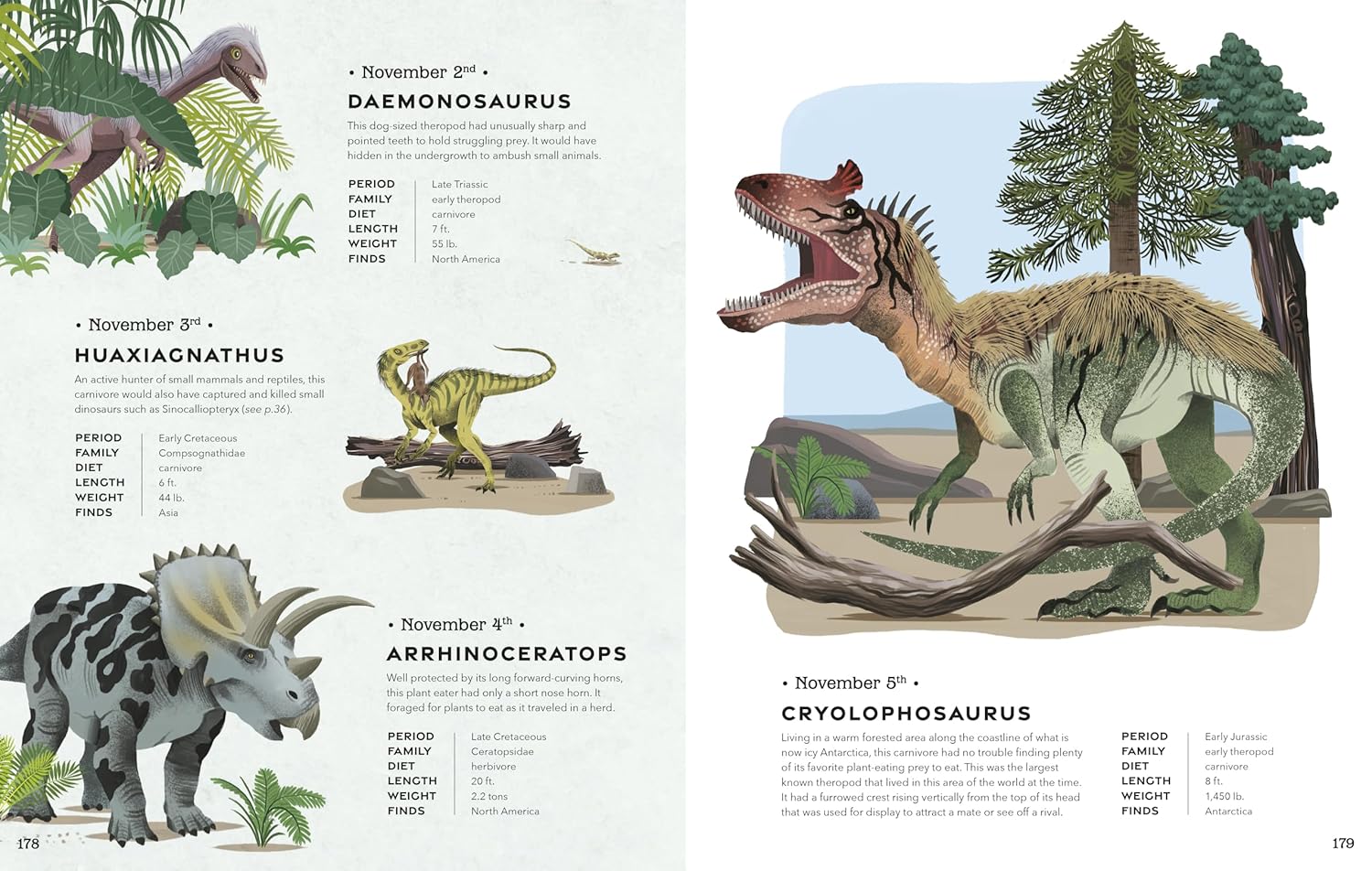
Getting to the meat of the book, readers find short, info-packed paragraphs about each dinosaur along with the particulars of its period, family, diet, length, weight, and where fossils have been found. Children can also see what these dinosaurs looked like with the lifelike drawings accompanying each entry.

celebrate-picture-books-picture-book-review-a-dinosaur-a-day-april

Image copyright Jenny Wren, Juan Calle, Xuan Le, Max Rambaldi, and Olga Baumert. Text copyright Miranda Smith. Courtesy of Bright Matter Books.

Fittingly, on January 1 when the year is new, dino-dreamers are introduced to “one of the earliest and smallest dinosaurs”—the Eoraptor, a carnivorous beast that weighed only 22 pounds and measured three feet tail to snout. A special two-page spread spanning January 10th through the 15th describes six more of the smallest, including the feathered and gliding Microraptor at just two pounds and two feet long, the Saltopus, which hopped to nab insects from the air, and the Wannanosaurus that defended itself with its “hard, flat-topped skull.”

celebrate-picture-books-picture-book-review-a-dinosaur-a-day-may

Image copyright Jenny Wren, Juan Calle, Xuan Le, Max Rambaldi, and Olga Baumert. Text copyright Miranda Smith. Courtesy of Bright Matter Books.

Jumping from the beginning of the year to December 31, readers meet the Ruyangosaurus, which “moved through the floodplains and forests of what is today’s China” in herds, “their long necks swaying as they reached for and snipped off the leaves and branches of the trees and shrubs at all levels.” In between kids encounter all of their well-known favorites as well as some truly unusual multi-horned and -spiked specimens; mammoth long-necked herbivores; underwater beauties; those with features that seem to mirror future animals, such as the Concavenator, which has humps along its back similar to a camel; and almost comical-looking dinos like the Nomingia, whose feathered body and peacock-like fan at the end of its tail looked almost Dr. Seussian. 

celebrate-picture-books-picture-book-review-a-dinosaur-a-day-roof-lizards

Image copyright Jenny Wren, Juan Calle, Xuan Le, Max Rambaldi, and Olga Baumert. Text copyright Miranda Smith. Courtesy of Bright Matter Books.

Following the year’s end, Miranda Smith discusses what brought about the end of the reign of the dinosaurs, the survivors of this disastrous event, and the relatives of those once-dominating creatures: today’s birds. Each month also includes two two-page spreads that group together some dinosaurs according to a shared trait—duck-billed dinosaurs, sea reptiles, dinosaur weaponry, and Tyrannosaur tyrants—for example. A pronunciation guide to dinosaur names, a glossary, and an index wrap up this comprehensive encyclopedic look at the world of dinosaurs.

celebrate-picture-books-picture-book-review-a-dinosaur-a-day-november

Image copyright Jenny Wren, Juan Calle, Xuan Le, Max Rambaldi, and Olga Baumert. Text copyright Miranda Smith. Courtesy of Bright Matter Books.

Miranda Smith presents each of these 365 dinosaurs with scientific facts and fascinating tidbits about the behavior, appearance, environment, defenses, and eating habits, among other things that will satisfy kids’ curiosity and perhaps send them digging to learn more. Her text is clear, comprehensible, and a pleasure to read for a wide age range, from the youngest dinosaur aficionados to the adults who share this book with them.

Show-stopping illustrations from Jenny Wren, Juan Calle, Xuan Le, Max Rambaldi, and Olga Baumert will wow readers with their careful attention to details and dynamic poses. Horns, feathers, spikes, teeth, claws and other features are clearly delineated. You can almost hear these dinosaurs roar at rivals, thrash through underlying vegetation while on the hunt, or call to their herd mates. Full-page illustrations place dinosaurs in their natural environments, where they drink from clean water, butt heads over territorial disputes, raise their young, or ply the depths of oceans in search of food.

Any dinosaur buff would be thrilled to add to their knowledge of these endlessly fascinating creatures with A Dinosaur a Day. The book is sure to be a favorite go-to read on home bookshelves and for public and school libraries.

Ages 6 – 9 and up

Bright Matter Books, 2024 | ISBN 978-0593903339

Read a New Book Month Activity

celebrate-picture-books-picture-book-review-dinosaur-eggs-craft-nest

Hatch Your Own Dinosaur Eggs


Think there are no more dinosaur eggs to be found? Think again! You can make your own with this easy craft that will have you hatching some T.-rex-size fun! All you need are a few simple ingredients – and don’t forget to wear an apron or old clothes!

celebrate-picture-books-picture-book-review-dinosaur-eggs-craft-open-eggs

Supplies

  • Old clothes or apron
  • Large box of baking soda (makes between 6 and 8 eggs)
  • Food coloring
  • Water
  • Plastic dinosaur toys
  • Bowl
  • Fork
  • Spoon
  • Wax paper
  • Baking sheet
  • Foil
  • Vinegar
  • Spray bottle (optional)
  • Plastic or metal spoon, stick, popsicle stick, or other implement to chisel with
celebrate-picture-books-picture-book-review-dinosaur-eggs-craft-vinegar-egg-open-darker

Spray the egg with vinegar to hatch your dinosaur

Directions

  1. Wear old clothes or an apron
  2. Cover work surface with wax paper, parchment paper, newspaper, or other protection. Food coloring can stain some surfaces
  3. Pour baking soda into the bowl
  4. Add drops of food coloring in whatever color you’d like your eggs to be. The eggs will darken when baked.
  5. Mix in the food coloring with the fork. You may want to use your hands, too
  6. When the baking soda is the color you want it, begin adding water a little at a time
  7. Add water until the baking soda holds together when you squeeze it in your hand
  8. When the baking soda is the right consistency, spoon some out into your hand or onto wax paper
  9. Push one plastic dinosaur into the middle
  10. Cover the dinosaur with more of the baking soda mixture
  11. Carefully form it into an egg shape
  12. Repeat with other dinosaurs
celebrate-picture-books-picture-book-review-dinosaur-eggs-craft-chiseled -darker

Chisel the egg open to hatch your dinosaur

To Bake the Eggs

  1. Set the oven or toaster oven to 200 to 225 degrees
  2. Set the eggs on a baking sheet lined with foil
  3. Bake the eggs for 15 minutes, check
  4. Turn the eggs over and bake for 10 to 15 more minutes
  5. Remove from oven and let cool

To Hatch the Eggs

  1. Eggs can be hatched by chiseling them with a spoon, stick, or other implement
  2. Eggs can also be hatched by spraying or sprinkling them with vinegar

celebrate-picture-books-picture-book-review-a-dinosaur-a-day-cover

You can purchase A Dinosaur a Day at these booksellers

Amazon | Barnes & Noble | Bookshop (to support your local independent bookstore)

Picture Book Review
December 12 – It’s Read a New Book Month

celebrate-picture-books-picture-book-review-dinosaurs-and-other-prehistoric-creatures-cover

About the Holiday

Read a New Book Month couldn’t come at a better time than during the gift-giving season. Books make gifts that have long-lasting appeal and can seem “new” with every reading or provide comfort, laughs, and joy that never gets old. Today I review two pop-up books for the younger set that adults will enjoy sharing as much as the kids will love hearing—and seeing—them.

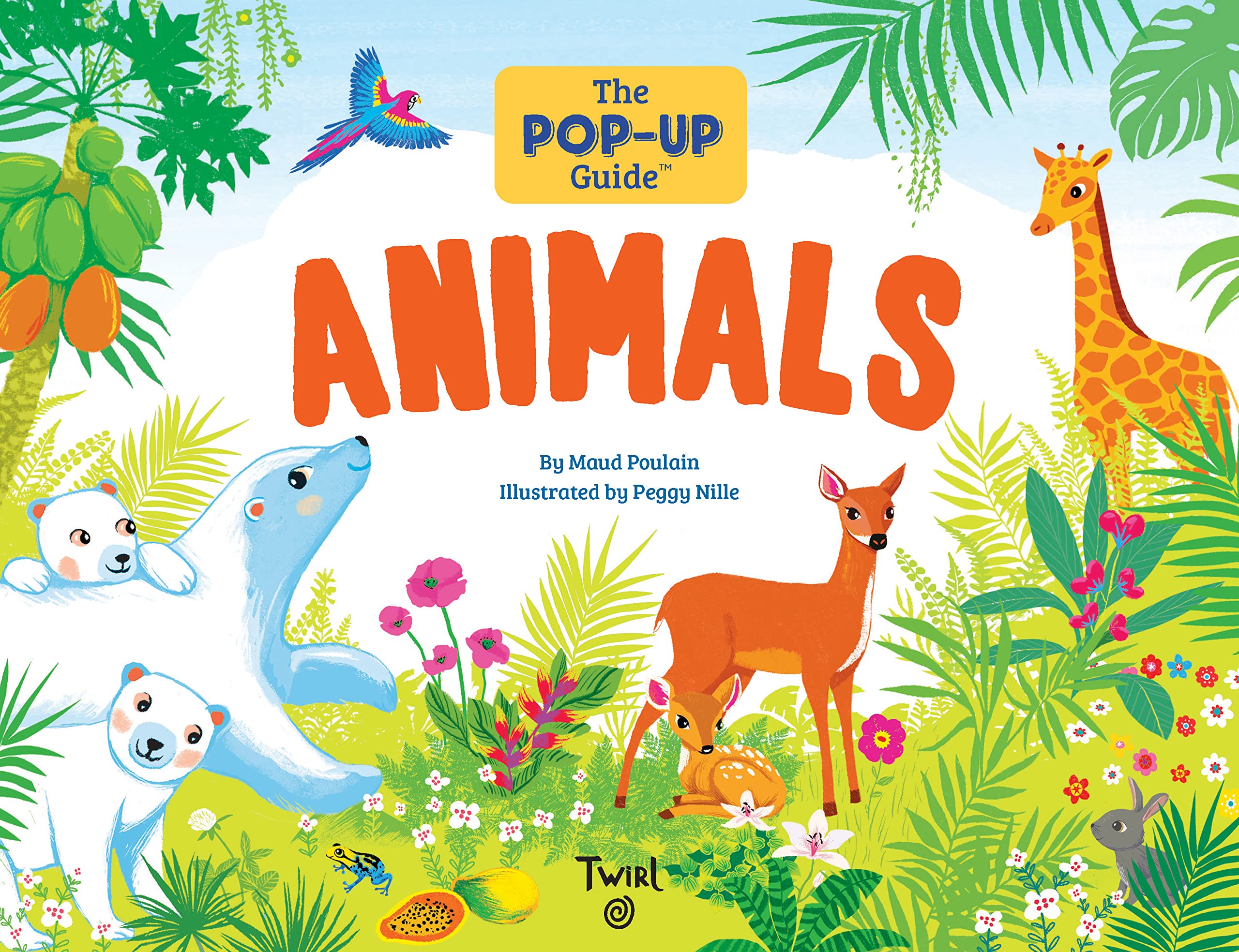
I’d like to thank Twirl Books and Barbara Fisch at Blue Slip Media for sharing Dinosaurs and Other Prehistoric Creatures and The Pop-Up Guide: Animals with me for review consideration. All opinions on the books are my own.

Dinosaurs and Other Prehistoric Creatures

Written by Arnaud Roi | Illustrated by Charlotte Molas


If you’d like to see your child’s eyes pop open in delight each time they open a particular book and you have a child who loves dinosaurs, then Dinosaurs and Other Prehistoric Creatures is the book for them! This easy-to-hold book opens upward to provide “Wow!”-inducing reactions to seven awesome dinosaurs three reptiles that kids may recognize as early ancestors to some of today’s land and ocean-dwelling animals—fierce and not so. 

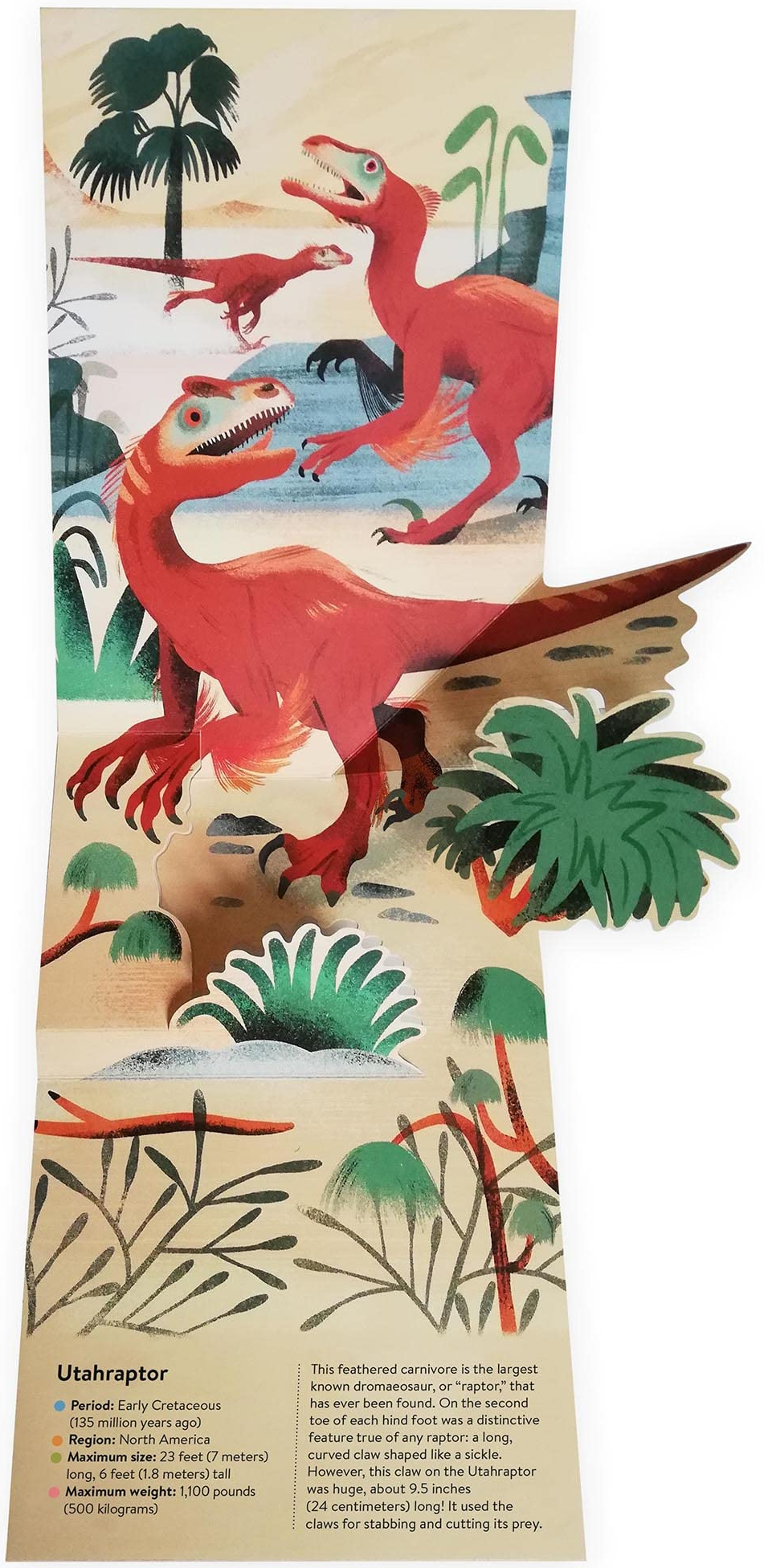
With the lift of the first page, kids come face to face with a giant Argentinosaurus who’s foraging among the foliage to satisfy its daily 880-pound dietary requirement. How did these herbivores digest all of those leaves, ferns, grasses, and other plants? They “also swallowed rocks, which helped grind up the food in its stomach.” Readers also discover the period during which these dinosaurs lived, the region they were found in, their maximum size and their maximum weight. All measurements are given in feet and pounds as well as meters and kilograms.

celebrate-picture-books-picture-book-review-dinosaurs-and-other-prehistoric-creatures-utahraptor

Image copyright Charlotte Molas, 2022, text copyright Arnaud Roi, 2022. Courtesy of Twirl.

Other dinosaurs that come out to meet young paleontologists include the Spinosaurus—who, at “over 49 feet (15 meters) long and 13 feet (4 meters) tall” with a maximum weight of 20,000 pounds (9,000 kilograms) “was the largest known carnivore on land. The most distinctive feature of this popular dino was the sail on its back, which measured “almost 7 feet (2.1 meters) tall” in itself! Kids will also enjoy saying hello to the baby Triceratops that appears to be walking right off the page! Standing nearby is a watchful mom or dad ready to protect their little one. Readers will learn that “Triceratops lived in herds” and when threatened “they would form a circle around their young and face the predator with their horns.”

Of course, the Tyrannosaurus pops up to eat and greet with his fierce “banana-shaped teeth that could grow up to 12 inches (30 centimeters) long.” This 20,000-pound behemoth may have roamed North America 68 million years ago, but it had a surprising connection to today’s crocodiles. Kids will also learn about two herbivores— one with claws more than 3 feet (1 meter) long, and one with a very tiny brain but very intimidating spikes to keep predators at bay—and the largest raptor ever found. The prehistoric reptiles represented here plied the land, sea, and air and were no less impressive than the dinosaurs they shared the earth with.

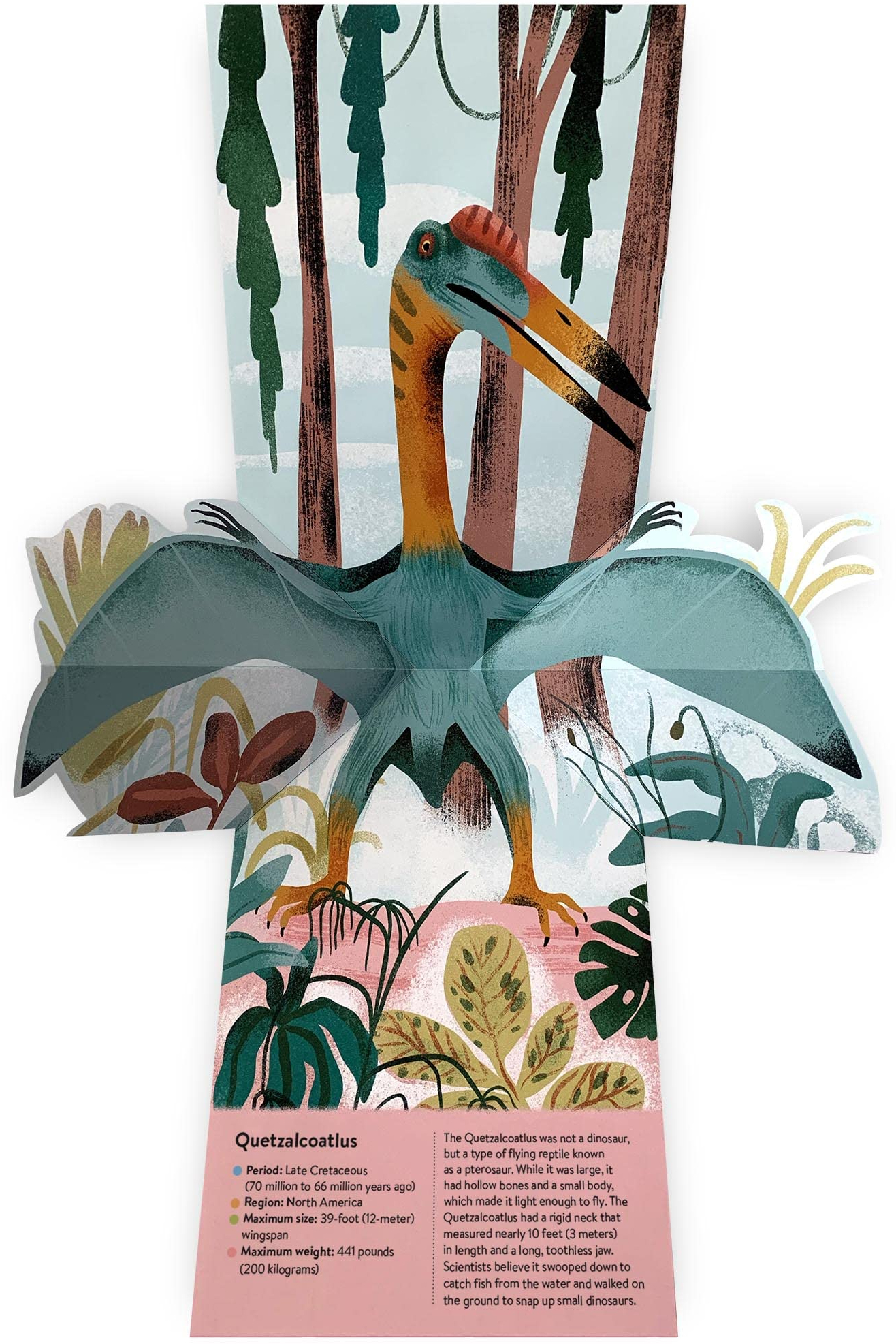
celebrate-picture-books-picture-book-review-dinosaurs-and-other-prehistoric-creatures-quetzalcoatius

Image copyright Charlotte Molas, 2022, text copyright Arnaud Roi, 2022. Courtesy of Twirl.

Arnaud Roi describes each dinosaur and prehistoric creature in engaging language accessible for even the youngest reader and sprinkles in the kinds of facts about the animals’ anatomy, preferred habitat, diet, and physical prowess that make kids’ eyes widen and spur them to learn more. Roi brings the same enthusiasm and feeling of amazement to his subject that kids feel themselves, making this a book readers will really connect with.

In her three-dimensional illustrations, Charlotte Molas puts the dinosaurs front and center while including images of the environments they called home. You can bet kids will love opening, closing, and reopening the pages to interact with the dinosaurs and prehistoric creatures, complete with roars, stomps, chomps, and shrieks.

With a thick padded board cover and sturdy pages, plus eye-popping illustrations and text that’s just right for young learners, Dinosaurs and Other Prehistoric Creatures is a top choice for dinosaur and science lovers. The book would make a terrific gift and take-along and is highly recommended for home, school, and public library collections.

Ages 3 – 5

Twirl, 2022 | ISBN 978-2408037512

celebrate-picture-books-picture-book-review-dinosaurs-and-other-prehistoric-creatures-cover

You can find Dinosaurs and Other Prehistoric Creatures at these booksellers

Amazon | Barnes & Noble | Books-a-Million

To support your local independent bookstore, order from

Bookshop | IndieBound

celebrate-picture-books-picture-book-review-pop-up-guide-animals-cover

The Pop-Up Guide: Animals

Written by Maud Poulain | Illustrated by Peggy Nille


The fourth book in this well-conceived series that includes Pop-Up Guides to Space, Vehicles, and Natural Wonders takes children around the world to meet the animals that live in ten different environments. Upon opening the book kids find themselves in the African Savanna, where a hippopotamus, three flamingos, and three lions have gathered for a drink. A crocodile suns itself on the bank, while another pokes its head above the water. A cheetah, lounging on a tree branch, also pops out to say hello. Behind them, a zebra, giraffes, gazelle, and mother and baby elephants roam and find food.

In her short paragraph, Maud Poulain tells readers about the African Savanna while also setting up talking points about the illustration: “It stays warm all year round here, with just two seasons: wet and dry. During the wet season, the animals have fresh grass and plenty of water to drink at the watering holes. In the dry season, many creatures may have to travel in search of food and water.” In addition to enjoying the vibrant illustration, adults and kids can talk about which time of year it is and how they know to identifying all of the animals and their particular attributes. Each animal is also labeled on the page.

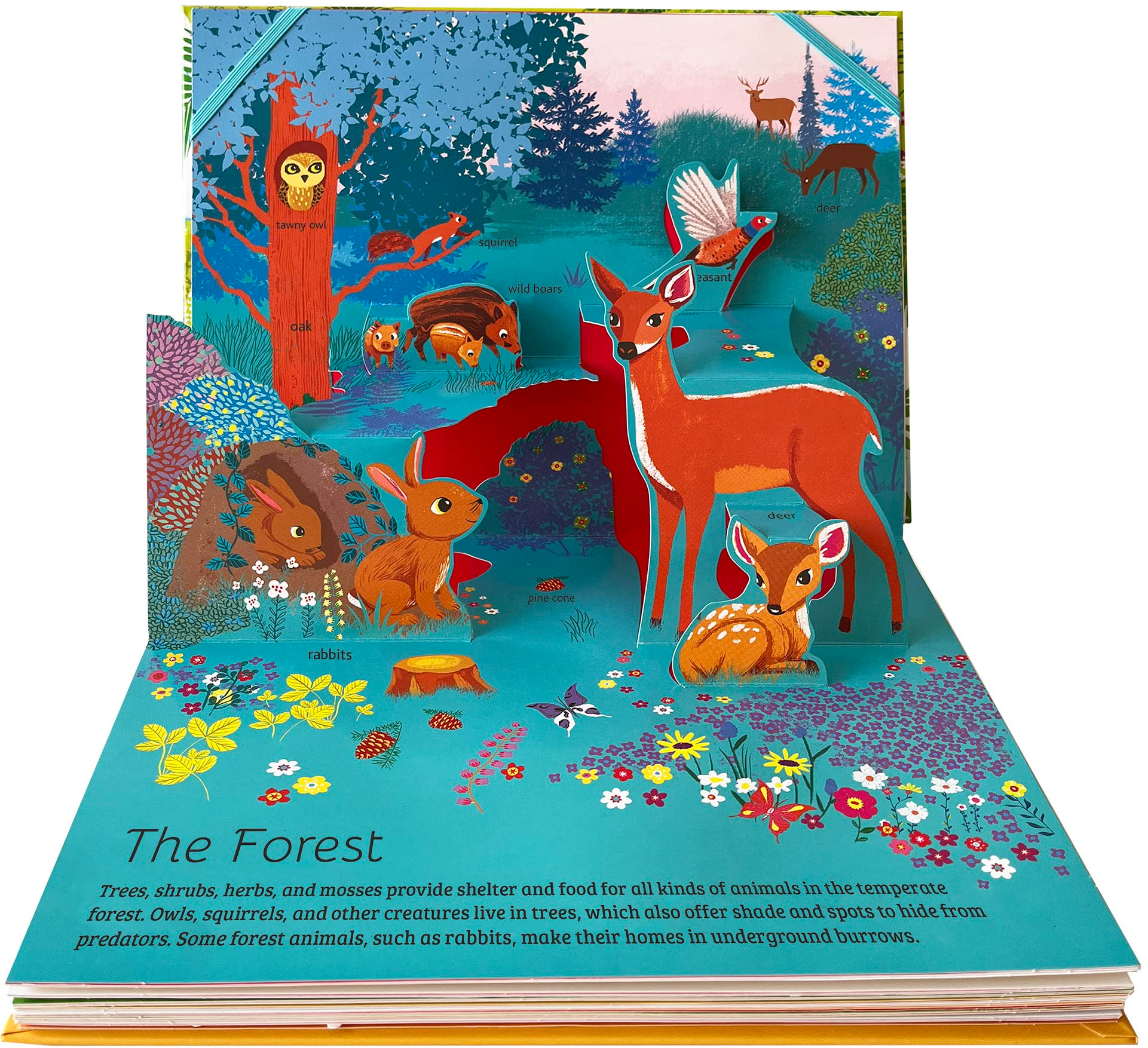
celebrate-picture-books-picture-book-review-pop-up-guide-animals-forest

Image copyright Peggy Nille, 2022, text copyright Maud Poulain, 2022. Courtesy of Twirl.

With the lift of the page, children then enter the temperate Forest, where “trees, shrubs, herbs, and mosses provide shelter and food for all kinds of animals.” Little ones will be “aww!” struck by the cute rabbits, fawn and mother deer, and baby wild boars greet them. A pheasant takes to the air, while a tawny owl and a squirrel hang out in an oak tree. Colorful butterflies flit among flowers, and a pinecone lies hidden, just waiting to be discovered.

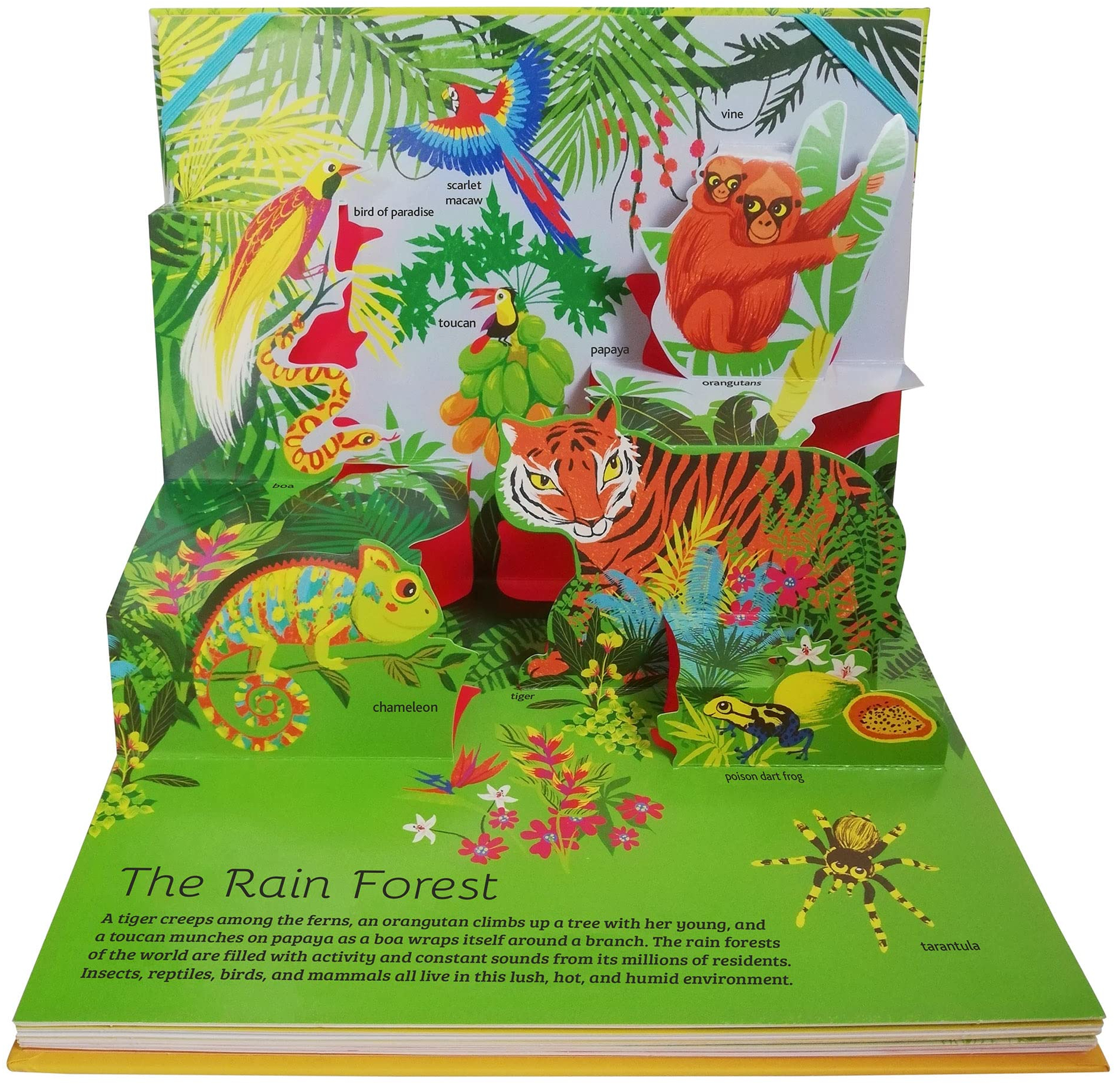
The vast expanse of snowy white meets readers next, along with the polar bears, little auks, ringed seals, caribou, orcas, and snowy owls that live in the Far North. There’s even someone riding a sled pulled by sled dogs making their way over the hills. Leaving the glittering snow, readers enter the eye-popping lushness of the Rain Forest, where vivid blues, oranges, greens, yellows, and reds are on display on the birds, chameleon, poison dart frog, tiger, boa, orangutans, and the thick vegetation will wow kids.

celebrate-picture-books-picture-book-review-pop-up-guide-animals-rain-forest

Image copyright Peggy Nille, 2022, text copyright Maud Poulain, 2022. Courtesy of Twirl.

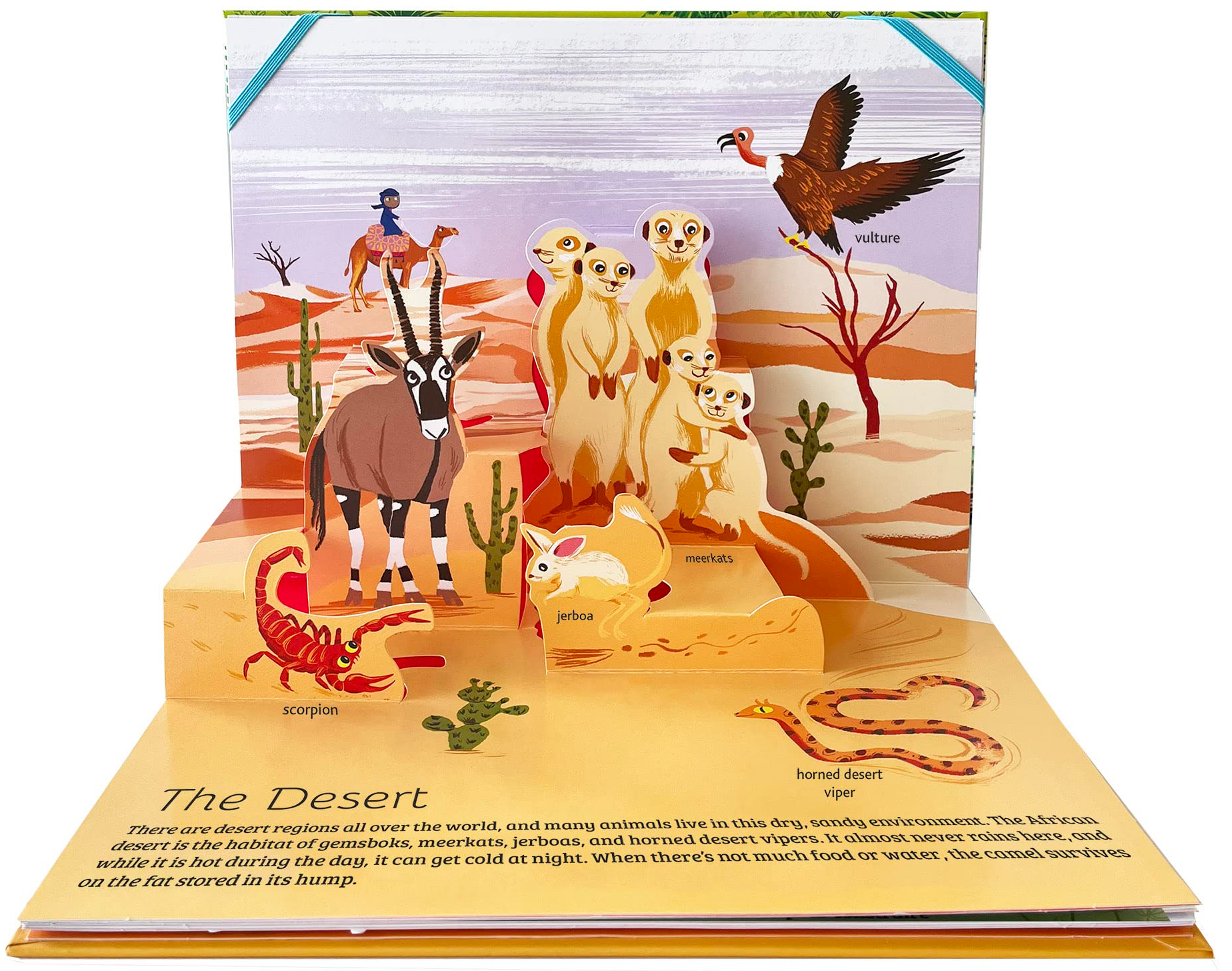
The fish, rays, mammals, and coral of the Ocean swim by up close for kids, and then it’s off to the driest areas of the world—the Desert. In the African desert, “it almost never rains…and while it is hot during the day, it can get cold at night. From there, readers get to know the birds, animals, and amphibians that call Freshwater Rivers home, then it’s back up into the mountains, which are warm and welcoming during spring and summer but can be snow-covered in late fall and winter. How do the animals and birds survive these opposing environments? Readers witness the ptarmigan, “whose fur and feathers change from brown to white” in snowy conditions in transition, while the snowshoe hare nearby has already become fully white. 

Readers finish their tour of the world’s various environments with a dive into the Tropical Seas, where they can see a large array of creatures—from a clown fish, seahorse, and sea turtle to a porcupine fish, sea urchin, sea star, and more—all in bright colors and on the move in their warm-water paradise. But nature’s bounty is not reserved just for these magnificent habitats. The simple backyard also teems with life, and kids get to spend some time with a little girl and her cat as they sit on the porch as life hums around her.

celebrate-picture-books-picture-book-review-pop-up-guide-animals-desert

Image copyright Peggy Nille, 2022, text copyright Maud Poulain, 2022. Courtesy of Twirl.

In her informative paragraphs—which are written in easy-to-understand language and are the perfect length for young children—Maud Poulain introduces readers to an impressive array of the world’s animals while also imparting facts and tidbits about their habits, anatomy, diet, and other attributes that make them well-adapted to their environment. She also reveals details about the plants and weather conditions of each unique region. Every animal is labeled on the page, allowing kids to play and “I-spy” game as the adult reads the text. 

Peggy Nille realistically depicts each animal while giving them personalities that will charm young readers and draw them into learning about their lives and habitats. Eye-catching colors and beautifully detailed dioramas make each pop-out page one that kids will want to linger over. Their time will be rewarded with enchanting finds tucked here and there and plenty of nature’s gifts to talk about. 

This well-constructed book has a thick cardboard cover with elastic bands on the top corners that can be placed around each page as the book is read to keep it upright for easy viewing or wrapped around the back cover to keep the book closed. The pop-ups, made from sturdy card stock, provide a depth of perspective that enhances the reading experience.

For young readers who are just learning about animals and for those who are ready to discover more about the world’s habitats and the animals that live in each, The Pop-Up Guide: Animals is a book they’ll want to read again and again. It would enhance any child’s home library and is highly recommended for school and public library collections.

Ages 3 – 5

Twirl, 2022 | ISBN 979-1036345166

celebrate-picture-books-picture-book-review-pop-up-guide-animals-cover

You can find The Pop-Up Guide: Animals at these booksellers

Amazon | Barnes & Noble | Books-a-Million

To support your local independent bookstore, order from

Bookshop | IndieBound

Picture Book Review
June 1 – National Dinosaur Day

celebrate-picture-books-picture-book-review-jack-horner-dinosaur-hunter-cover

About the Holiday

Today, we celebrate dinosaurs—those beasts that, although they are of a distant past, remain ever present in our hearts. Their size, diversity, and shear awesomeness make them a favorite of kids, and ongoing discoveries continue to fascinate adults as well. To celebrate, visit a national history museum, watch your favorite dinosaur movies or TV shows, join your kids in playing with their dinos (you know you want to!), and pick up today’s book!

Jack Horner, Dinosaur Hunter!

Written by Sophia Gholz | Illustrated by Dave Shephard


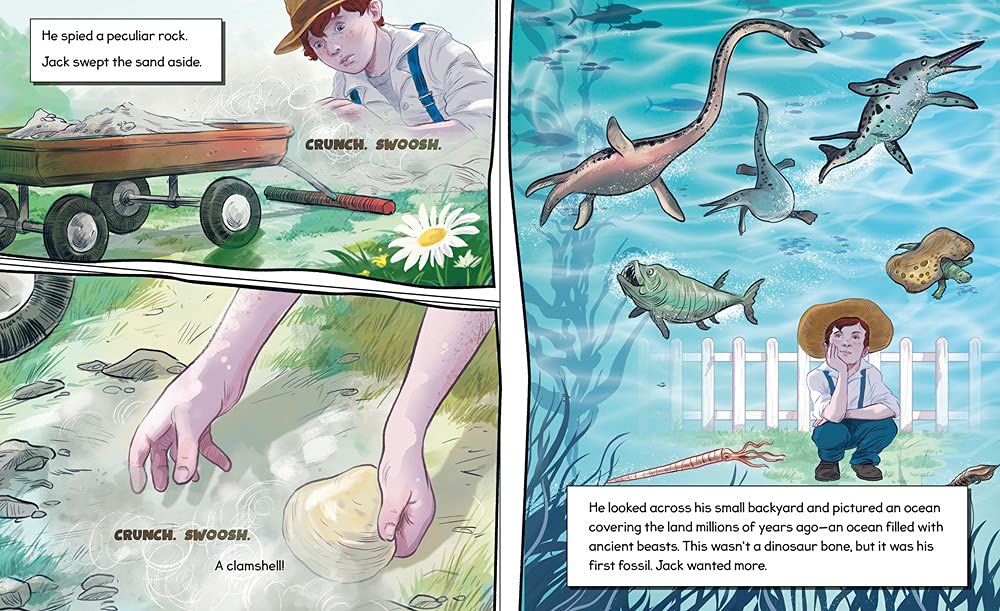
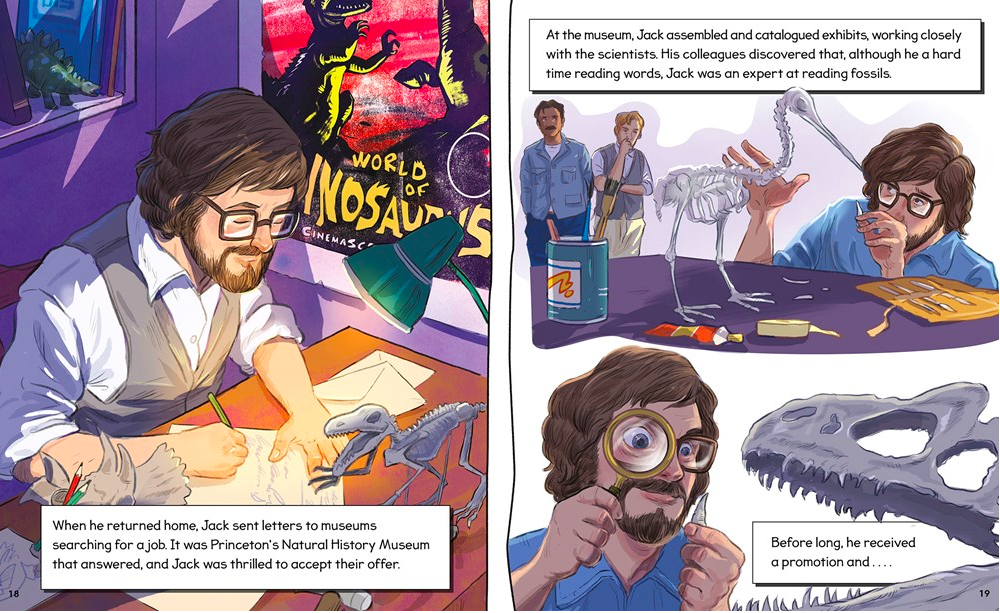
Growing up in Montana, Jack Horner was lulled to sleep by the “crunch, swoosh. Crunch, swoosh” of his father’s gravel business, and as soon as he was big enough to hold a shovel, he began digging. He loved being outdoors, searching for dinosaur bones. He dreamed of being a paleontologist when he grew up. His digging usually only produced rocks, sticks, and dirt, but once he “spied a peculiar rock” and when he had carefully swept the sand aside, he discovered a clamshell. His first fossil find made him look at his backyard differently – as “an ocean covering the land millions of years ago–an ocean filled with ancient beasts.” Jack wanted to find more fossils.

celebrate-picture-books-picture-book-review-jack-horner-dinosaur-hunter-clamshell

Image copyright Dave Shephard, 2021, text copyright Sophia Gholz, 2021. Courtesy of Sleeping Bear Press.

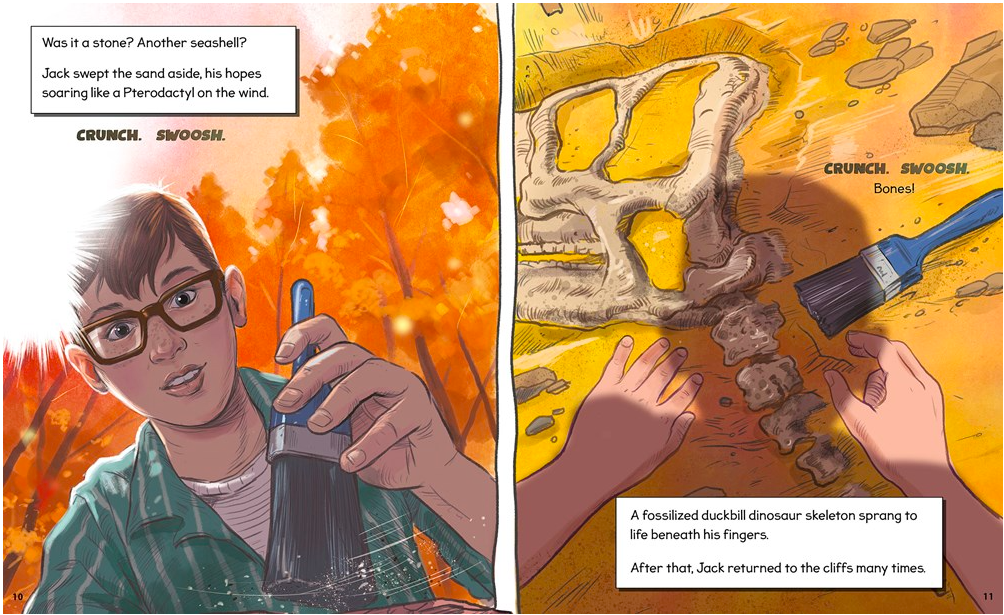
Jack taught himself how to “search for clues among the rocks: irregular textures, colors, and shapes.” He found lots of fossilized shells, but he really wanted to find a dinosaur. He went fossil hunting “in the woods and near the mountains.” Then one day while hiking up a cliff, Jack saw “an odd rock nestled in the ground.” With his tools he brushed the sand aside and uncovered the skeleton of a duck-billed dinosaur. 

celebrate-picture-books-picture-book-review-jack-horner-dinosaur-hunter-duckbill-fossil

Image copyright Dave Shephard, 2021, text copyright Sophia Gholz, 2021. Courtesy of Sleeping Bear Press.

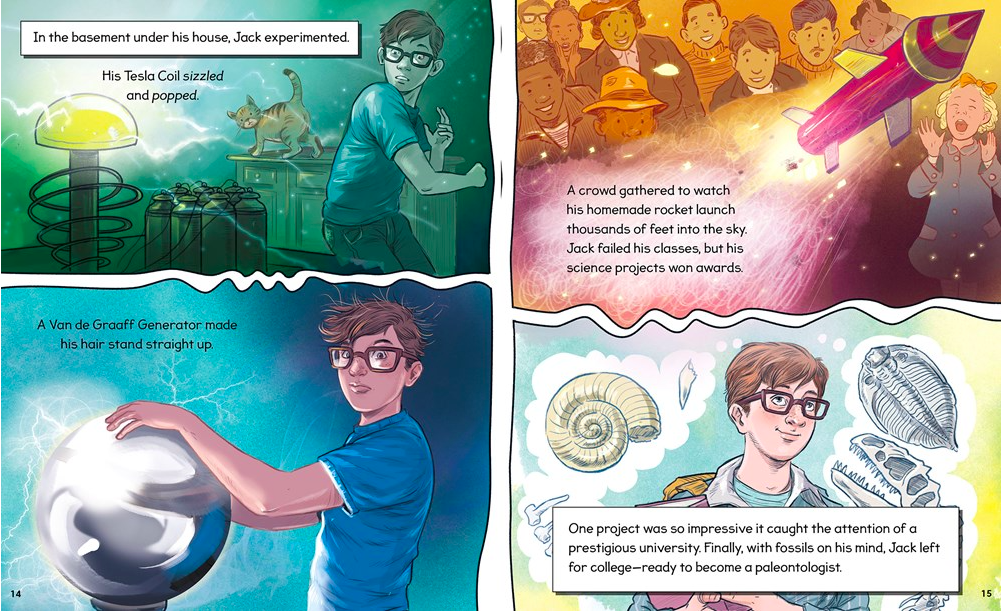
While Jack was quickly becoming an expert on fossils and the landscapes that hid them, he struggled with reading in school.  His teachers told him that if his grades didn’t improve, he’d never be able to become a paleontologist. He took to experimenting in his basement, winning awards for his science projects even as he was failing his classes. One prestigious university, however, did admit Jack on the strength of one impressive project, but just as before Jack was unable to keep up in class. He dropped out and was drafted soon after to join the Vietnam War. 

celebrate-picture-books-picture-book-review-jack-horner-dinosaur-hunter-science-projects

Image copyright Dave Shephard, 2021, text copyright Sophia Gholz, 2021. Courtesy of Sleeping Bear Press.

Here, he decided that when he got home, he would try to work closely with paleontologists, if he couldn’t actually be one himself. He was hired by Princeton University’s natural history museum, where he “assembled and cataloged exhibit, working closely with scientists.” His colleagues recognized that Jack was an “expert at reading fossils.” He got a promotion that allowed him to work in the field. 

celebrate-picture-books-picture-book-review-jack-horner-dinosaur-hunter-museum-job

Image copyright Dave Shephard, 2021, text copyright Sophia Gholz, 2021. Courtesy of Sleeping Bear Press.

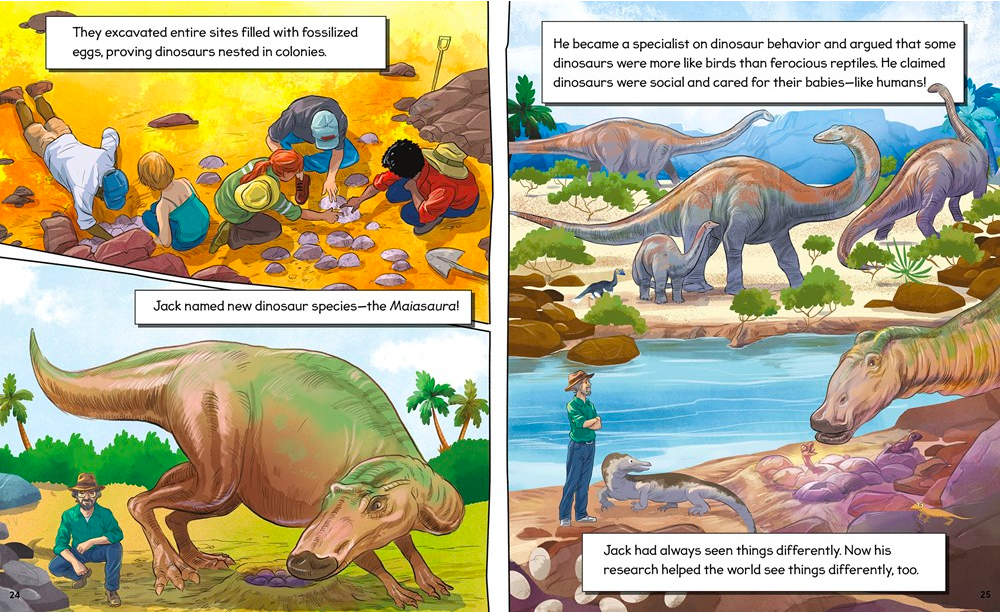
It was during one of these trips into cliffs that Jack “spied something odd. Heart thumping like the tail of an Ankylosaurus, he leapt into action.” When Jack swept the sand away, he and his team discovered a nest of fossilized dinosaur eggs – the first such find in North America. Jack went on to find more fossilized eggs, “proving dinosaurs nested in colonies;” name a new dinosaur species; and become an expert on dinosaur behavior and social structure. He even shared his special expertise when a famous movie producer filmed one of his great blockbusters. Jack had succeeded in his dream to be a “world-famous paleontologist.”

Back matter includes an Author’s Note, more about Jack Horner’s life, and a Dino Lab, that invites readers to design their own dinosaur and provides mix-and-match Greek and Latin words to help kids name their dino.

celebrate-picture-books-picture-book-review-jack-horner-dinosaur-hunter-specialist

Image copyright Dave Shephard, 2021, text copyright Sophia Gholz, 2021. Courtesy of Sleeping Bear Press.

Dinosaur lovers and anyone with dino-sized dreams will be instantly hooked by Sophia Gholz’s immersive biography of Jack Horner, who forged his own path to becoming one of the world’s most influential paleontologists. His self-confidence, unstoppable drive, and ultimate success will inspire all readers to define themselves by what they can do – not by what they may struggle with – and to trust their instincts on the way to achieving their goals. Gholz tells Jack’s story clearly and with the kind of repeated phrasing that builds suspense while also replicating the types of life experiences that create expertise. 

Dave Shephard’s bold illustrations will enthrall kids as they join Jack in the cliffs of Montana to brush away the sand from a duck-billed dinosaur fossil, see the underground strata where fossils lurk, and discover the nest of fossilized eggs. Shephard also depicts Jack’s struggles in school, where his undiagnosed dyslexia causes words and equations to become a jumbled stumbling block to his education. The vibrant format with clear typography will appeal to fans of graphic novels as well as to reluctant readers.

Jack Horner, Dinosaur Hunter! is an exceptional biography of a boy and man who never gave up on finding a way to accomplish his goal. The book will captivate children on its own or as an introduction to a wide range of classroom lessons and is highly recommended for all home, classroom, and public library collections.

Ages 6 – 9

Sleeping Bear Press, 2021 | ISBN 978-1534111196

Discover more about Sophia Gholz and her books on her website.

To learn more about Dave Shephard, his books, and his art, visit his website.

National Dinosaur Day Activity

celebrate-picture-books-picture-book-review-dinosaur-word-search-puzzle

Searching for Dinosaurs Puzzle


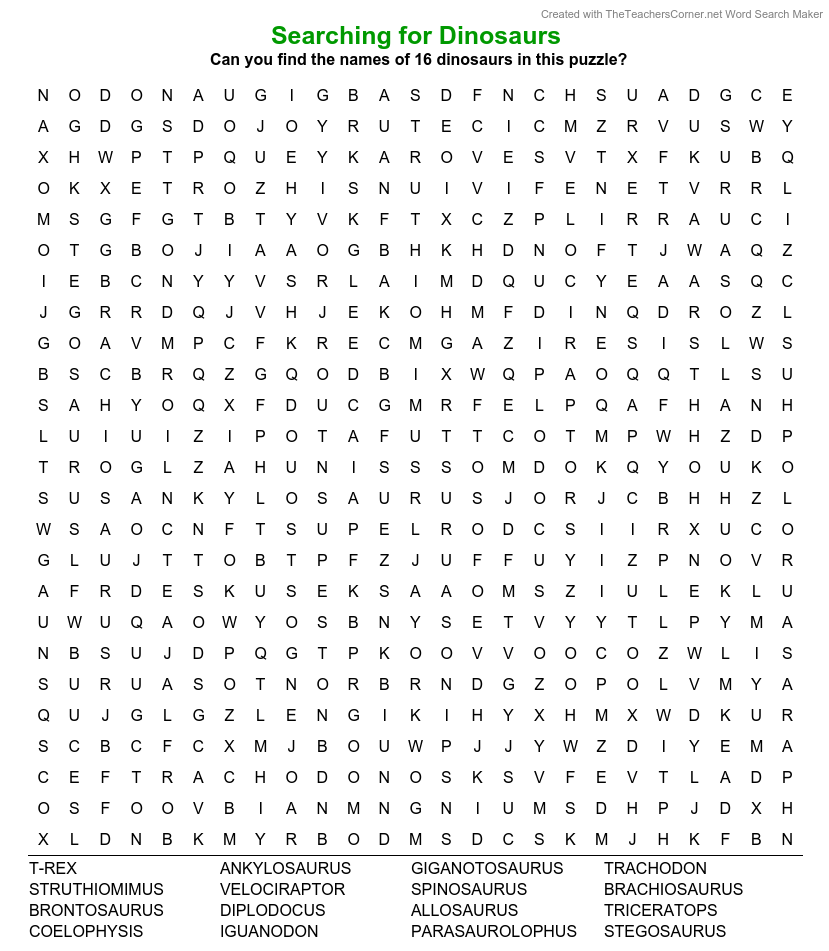
Hunt for 16 types of dinosaurs in this printable puzzle!

Searching for Dinosaurs Puzzle | Searching for Dinosaurs Solution

celebrate-picture-books-picture-book-review-jack-horner-dinosaur-hunter-cover

You can find Jack Horner, Dinosaur Hunter! at these booksellers

Amazon | Barnes & Noble | Books-a-Million

To support your local independent bookstore, order from

Bookshop | IndieBound

Picture Book Review
June 1 – National Dinosaur Day

celebrate-picture-books-picture-book-review-everything-awesome-about-dinosaurs-cover

About the Holiday

Today, we celebrate dinosaurs—those beasts that, even though they are from the distant past, remain ever present in our hearts. Their size, diversity, and shear awesomeness make them a favorite of kids, and ongoing discoveries continue to fascinate adults as well. Dinosaurs, in fact, are so huge that Dinosaur Day takes place twice—today and on June 1. To celebrate, visit a national history museum, watch your favorite dinosaur movies or TV shows, join your kids in playing with their dinos (you know you want to!), and pick up today’s book!

Everything Awesome about Dinosaurs and Other Prehistoric Beasts!

By Mike Lowery


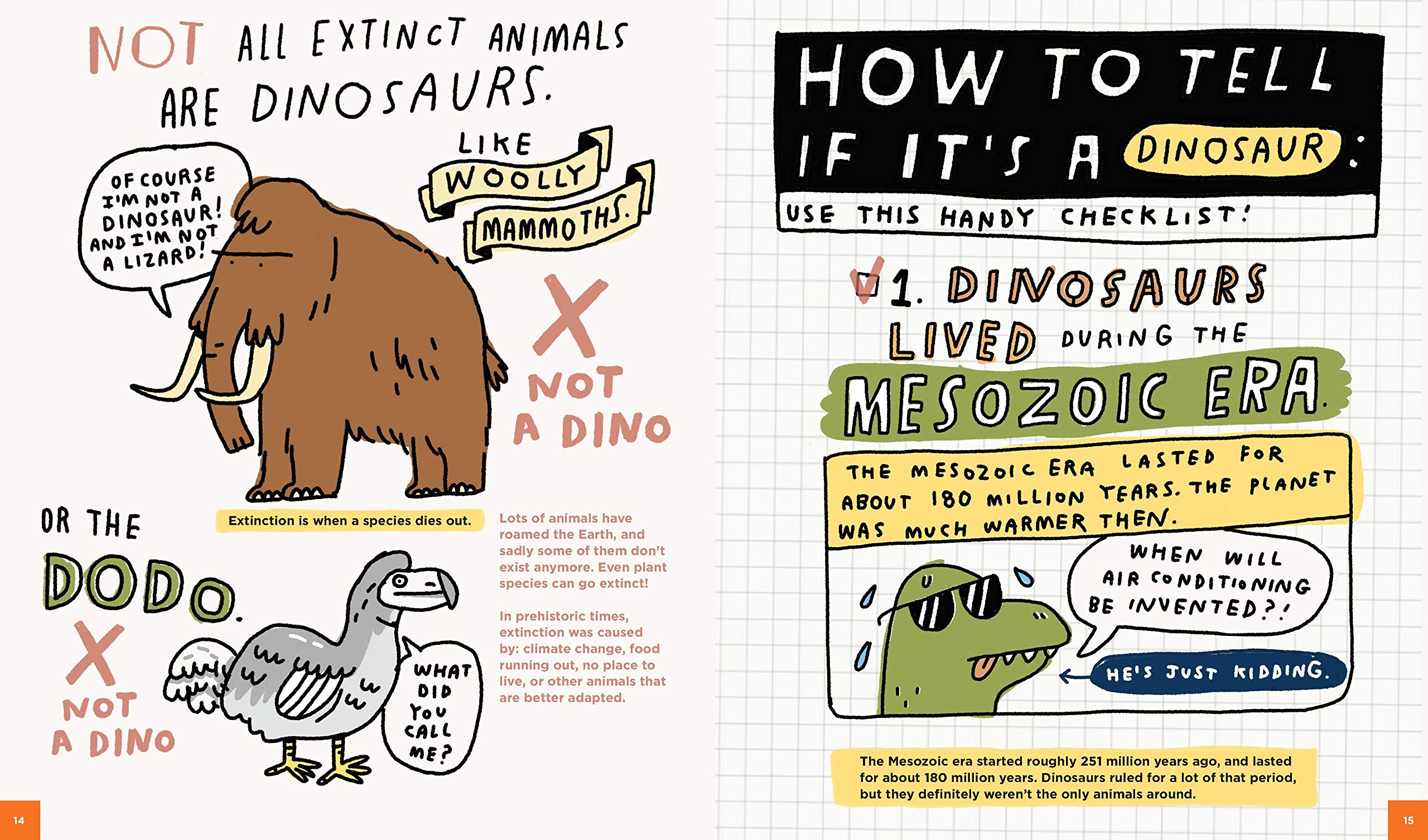
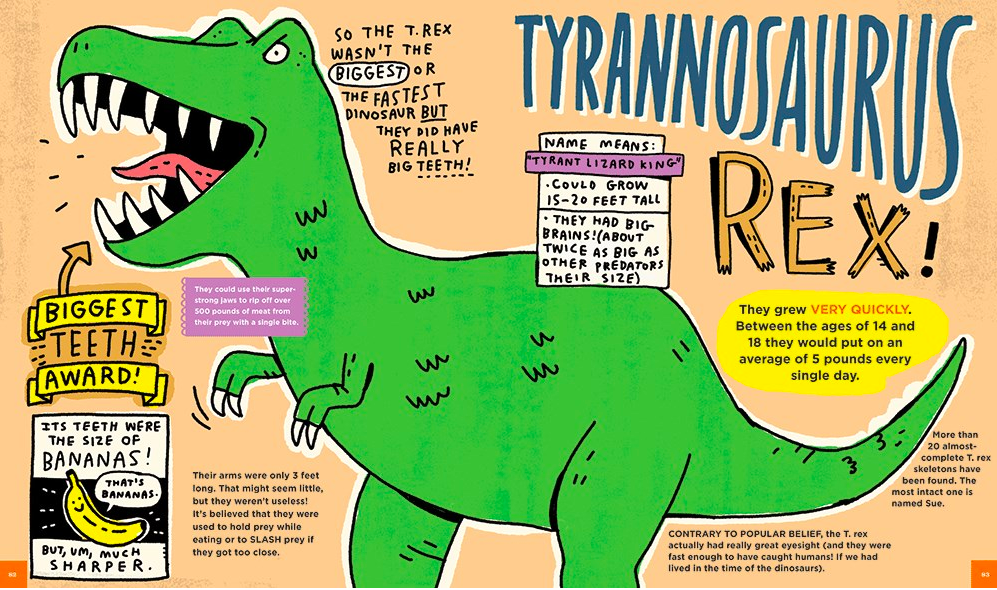
If there’s one thing kids can’t get enough of, it’s dinosaurs. And if there’s one thing Mike Lowery knows, it’s how to wow kids. The mash-up of the two has resulted in a wild and wacky book “that’s totally loaded with info, weird facts, and jokes that you will dig!” There are even dinos at the ready to point out these awesome puns. And these facts aren’t just presented like some old, dried-up report, the whole book—every page—is full of eye-popping illustrations and cool typography that will keep kids reading and reading and learning (and, oh yeah, having T-rex size fun).

celebrate-picture-books-picture-book-review-everything-awesome-about-dinosaurs-mammoth

Copyright Mike Lowery, 2019, courtesy of Orchard Books.

What kinds of things will kids learn? First, there’s a completely captivating prehistoric timeline that lays out the different eras and depicts some of the creatures and vegetation that existed in each. Like jellyfish during the Paleozoic Era, horsetails plants and dicynodonts during the Triassic, stegosaurus and cycads in the Jurassic; bees, birds, and flowering plants along with velociraptors in the Cretaceous; and finally, woolly mammoths and us during the Age of Mammals. Along the way there were also several extinction events. And this all comes even before the Table of Contents!

While kids chew on the fact that “some giant dinos ate up to 12,000 pounds a day,” they can dip into Part One—What Is a Dinosaur? Here, they’ll learn stuff like where the word “dinosaur” came, who coined it, what “prehistoric” means, and who “were some of the first people to keep written records.” They’ll also get to know some animals that weren’t dinosaurs and how dinosaurs are defined. Of course, there are some dino jokes to keep kids chuckling while they read.

celebrate-picture-books-picture-book-review-everything-awesome-about-dinosaurs-backbones

Copyright Mike Lowery, 2019, courtesy of Orchard Books.

Part Two reveals a short history of the earth as well as lots and lots about each era and representative creatures. After learning just how old Earth is, kids will be interested in a Quick Fact about one Jeremy Harper who counted to one million live on the internet. How long did it take him? Longer than you might think. Have you ever tried smooshing the whole history of the earth into just 24 hours? Mike Lowery did and it’s fascinating! Kids will also discover how Earth formed and about early signs of life.

What was going on in the Paleozoic Era? The haikouichthys (one of the first animals to have a skull), tiktaalik (a land and sea creature), and the meganeura (a giant dragonfly) can tell them. It was also the time of the Permian Period, when some pretty weird reptiles roamed the earth and some way-unusual marine life swam the seas. Then came “the Great Permian Extinction” that led into the Mesozoic Era, “aka the age of reptiles.”

celebrate-picture-books-picture-book-review-everything-awesome-about-dinosaurs-sauropods

Copyright Mike Lowery, 2019, courtesy of Orchard Books.

Here, kids learn about the development of dinosaurs, non-dino animals, and bugs. If you think a few stormy days are bad, imagine living during the Triassic Period, when “it once rained for two million years.” What do you wear in weather like that? A “Jurassic parka,” of course. Next up is the Jurassic and then the Cretaceous periods and their gigantic creatures of the land, ocean, and sky.

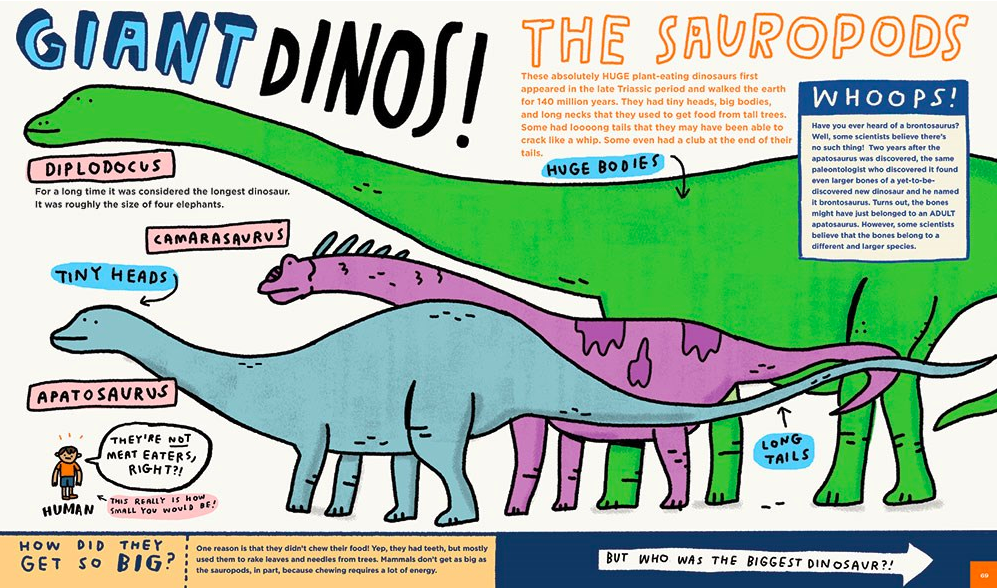
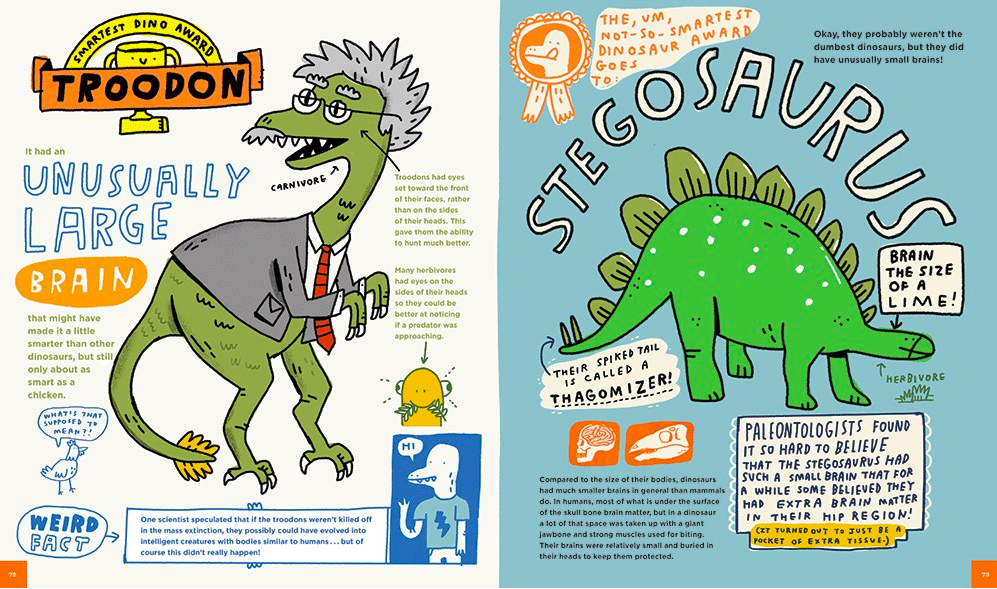
In Part Three readers get to meet the dinosaurs up close and personal (well, not too close). They’ll learn what dinos really ate, how they really sounded, and this delectable fact: “More time passed between stegosaurus and T. rex than the time between velociraptor and microwavable pizza!” And while kids are digesting that, they’ll want to watch out for the gigantic sauropods (who grew that big partly because “they didn’t chew their food…. Mammals don’t get as big as the sauropods, in part, because chewing requires a lot of energy.” Kids will see who won the “smartest dino award” and who was unfortunate enough to win “the, um, not-so-smartest dinosaur award.” They’ll also learn about horned dinos, armored dinos, fast dinos, and “the weirdest lookin’ dino.”

celebrate-picture-books-picture-book-review-everything-awesome-about-dinosaurs-troodon

Copyright Mike Lowery, 2019, courtesy of Orchard Books.

Part Four talks about the Cretaceous-Paleogene extinction event and various theories that have been floated throughout the years. Part Five takes kids on a hunt for bones and other fossils and reveals how paleontologists study them. Part Six offers a tour of post-dinosaur beasts, and Part Seven invites kids to learn how to draw dinosaurs. That’s followed up by a Dino Field Guide, an illustrated list of dinos organized by time periods, and to round it all up, Lowery includes a few more irresistible dinosaur jokes.

celebrate-picture-books-picture-book-review-everything-awesome-about-dinosaurs-t-rex

Copyright Mike Lowery, 2019, courtesy of Orchard Books.

Mike Lowery’s free-wheeling sense of humor, on exhibit in both his text and illustrations, will have kids laughing and learning billions of years’ worth of scientific facts. Funny asides by dinosaurs who just want in on the action put a spotlight on major events and conditions on Earth. Boxed and highlighted facts reveal the science of paleontology and provide explanations of dinosaur and prehistoric animal behavior and comparisons on size that will resonate with kids. Lowery imbues each of his creatures with personality while staying true to their nature and body type. Simply said, if there’s something you want to know about prehistoric creatures, dinosaurs, and the times they lived in, it’s in this book.

A must for home, classroom, and public library collections, you’ll want to put Everything Awesome about Dinosaurs and Other Prehistoric Beasts! on your shopping list for kids, teachers, and anyone who loves science, dinosaurs, and entertaining ways to learn or teach.

Ages 7 – 10 and up

Orchard Books, 2019 | ISBN 978-1338359725

Discover more about Mike Lowery, his books, and his art on his website.

National Dinosaur Day Activity

celebrate-picture-books-picture-book-review-dinosaur-eggs-craft-nest

Hatch Your Own Dinosaur Eggs


Think there are no more dinosaur eggs to be found? Think again! You can make your own with this easy craft that will have you hatching some T.-rex-size fun! All you need are a few simple ingredients – and don’t forget to wear an apron or old clothes!

celebrate-picture-books-picture-book-review-dinosaur-eggs-craft-open-eggs

Supplies

  • Old clothes or apron
  • Large box of baking soda (makes between 6 and 8 eggs)
  • Food coloring
  • Water
  • Plastic dinosaur toys
  • Bowl
  • Fork
  • Spoon
  • Wax paper
  • Baking sheet
  • Foil
  • Vinegar
  • Spray bottle (optional)
  • Plastic or metal spoon, stick, popsicle stick, or other implement to chisel with
celebrate-picture-books-picture-book-review-dinosaur-eggs-craft-vinegar-egg-open-darker

Spray the egg with vinegar to hatch your dinosaur

Directions

  1. Wear old clothes or an apron
  2. Cover work surface with wax paper, parchment paper, newspaper, or other protection. Food coloring can stain some surfaces
  3. Pour baking soda into the bowl
  4. Add drops of food coloring in whatever color you’d like your eggs to be. The eggs will darken when baked.
  5. Mix in the food coloring with the fork. You may want to use your hands, too
  6. When the baking soda is the color you want it, begin adding water a little at a time
  7. Add water until the baking soda holds together when you squeeze it in your hand
  8. When the baking soda is the right consistency, spoon some out into your hand or onto wax paper
  9. Push one plastic dinosaur into the middle
  10. Cover the dinosaur with more of the baking soda mixture
  11. Carefully form it into an egg shape
  12. Repeat with other dinosaurs
celebrate-picture-books-picture-book-review-dinosaur-eggs-craft-chiseled -darker

Chisel the egg open to hatch your dinosaur

To Bake the Eggs

  1. Set the oven or toaster oven to 200 to 225 degrees
  2. Set the eggs on a baking sheet lined with foil
  3. Bake the eggs for 15 minutes, check
  4. Turn the eggs over and bake for 10 to 15 more minutes
  5. Remove from oven and let cool

To Hatch the Eggs

  1. Eggs can be hatched by chiseling them with a spoon, stick, or other implement
  2. Eggs can also be hatched by spraying or sprinkling them with vinegar

celebrate-picture-books-picture-book-review-everything-awesome-about-dinosaurs-cover

You can find Everything Awesome about Dinosaurs and Other Prehistoric Beasts! at these booksellers

Amazon | Barnes & Noble | Books-a-Million

To support your local independent bookstore, order from

Bookshop | IndieBound

Picture Book Review
October 13 – National Fossil Day

celebrate-picture-books-picture-book-review-chicken-frank-dinosaur-cover

About the Holiday

Did you know that some fossils date back to 4.1 BILLION years ago? Just think of that the next time you’re feeling a little bit old (or so recommends the website National Today). Today we celebrate National Fossil Day to recognize the importance (and, well, awesomeness) of paleontologists, geologists, and fossils in providing us with information on the history of our earth and those who have inhabited it before us. ​National Today provides some further information, with a timeline of fossil history, and fun facts like this one: The highest amount ever paid for a dinosaur fossil was $8.3 million (they named it “Sue”).

To celebrate National Fossil Day, check out National parks near you, learn more about fossils, do something to help protect the earth, read some books about evolution—like Chicken Frank, Dinosaur!—or visit the National Parks page for more information and resources on how to celebrate our geologic heritage.

Thanks to Albert Whitman & Company for sharing a copy of Chicken Frank, Dinosaur! with me for review consideration. All opinions on the book are my own.

Review by Dorothy Levine

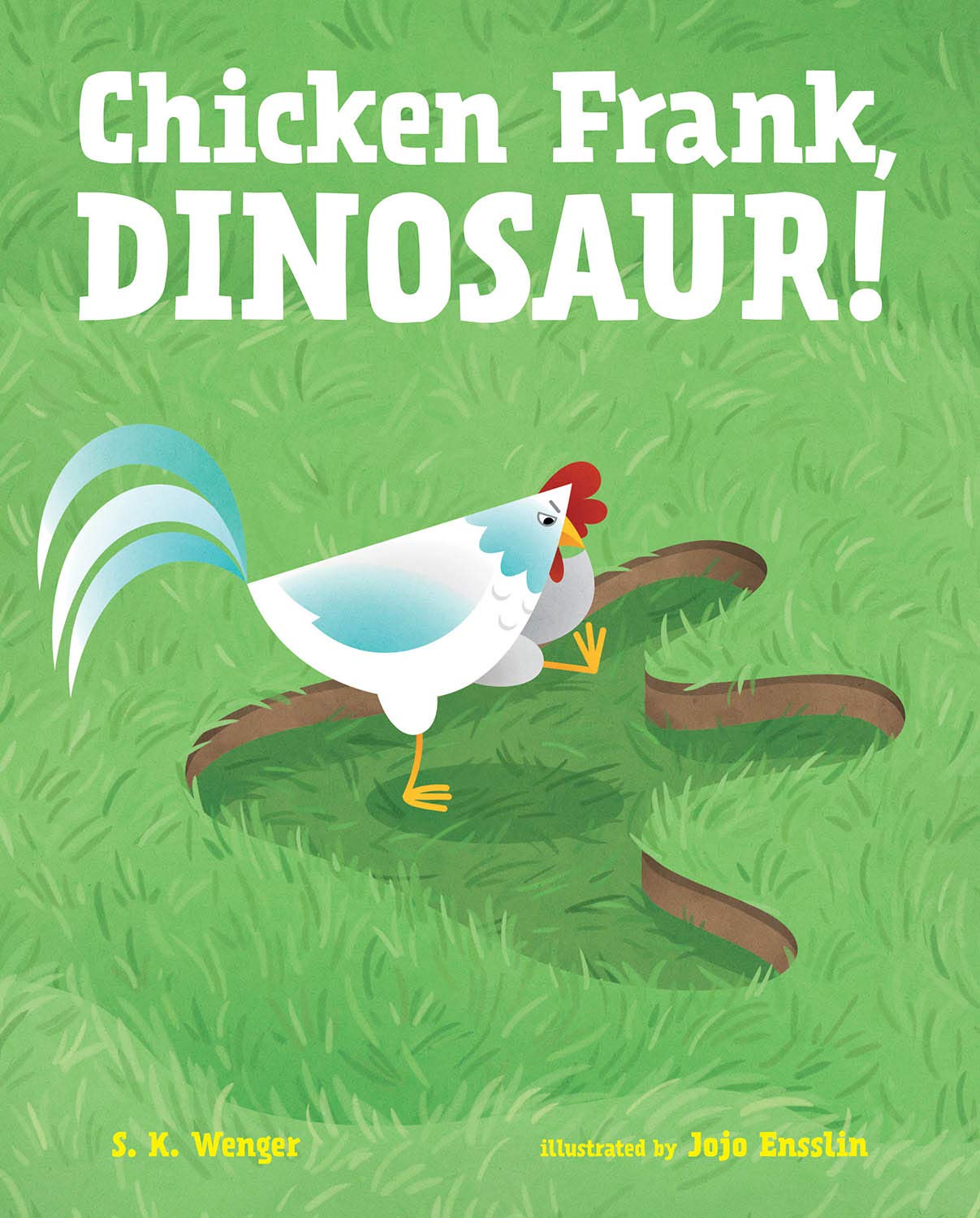
Chicken Frank, Dinosaur!

Written by S.K. Wenger | Illustrated by Jojo Ensslin


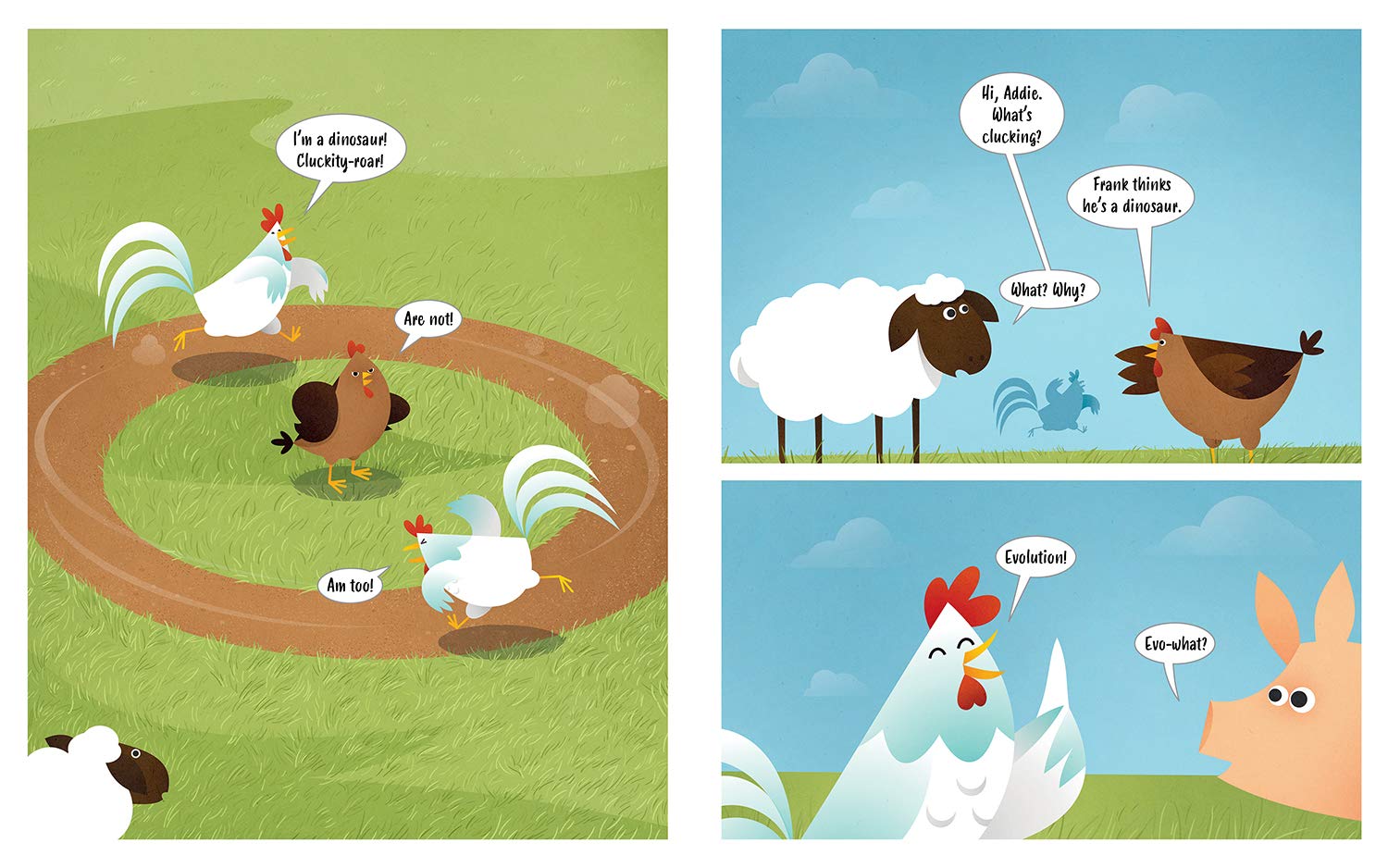
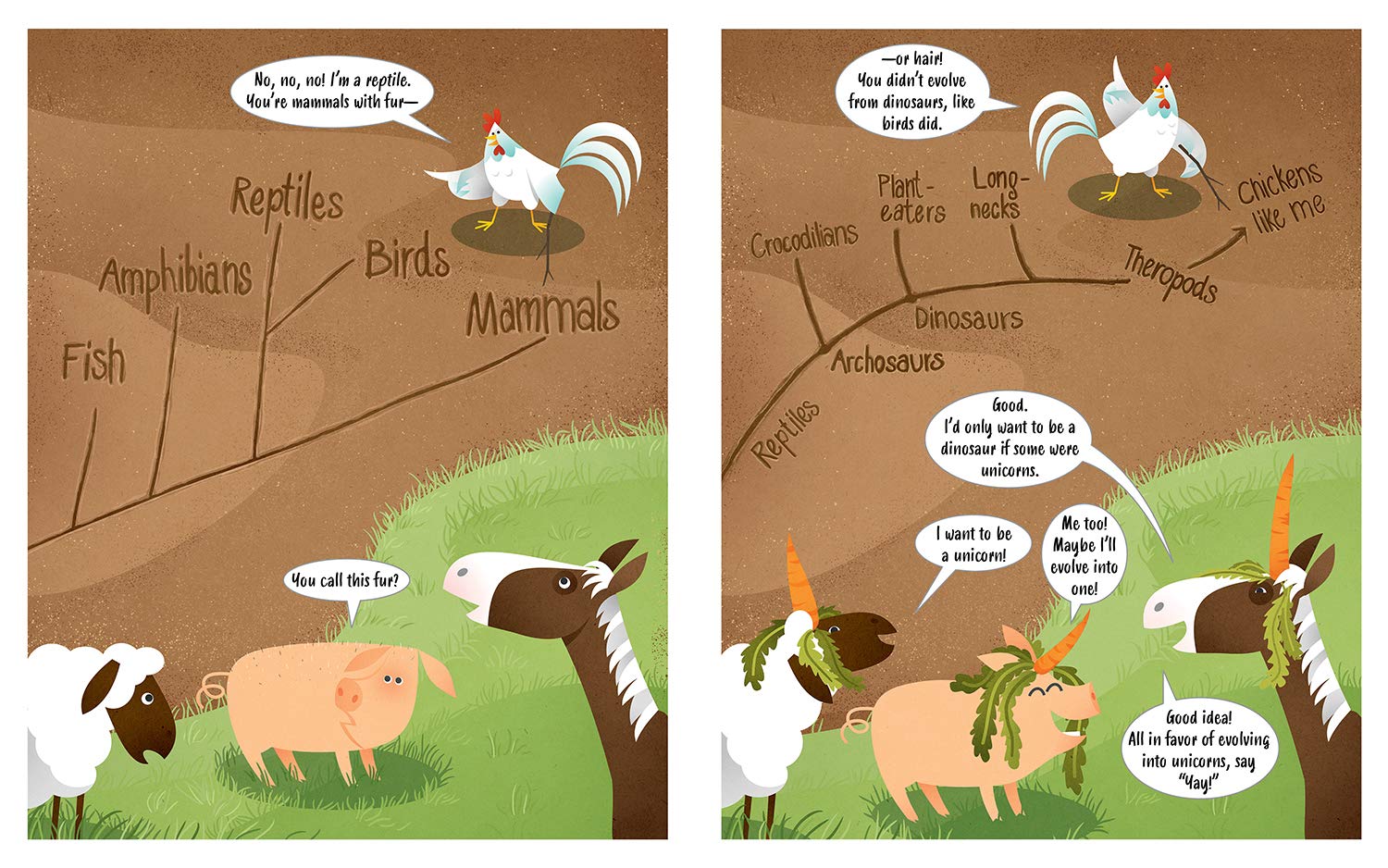
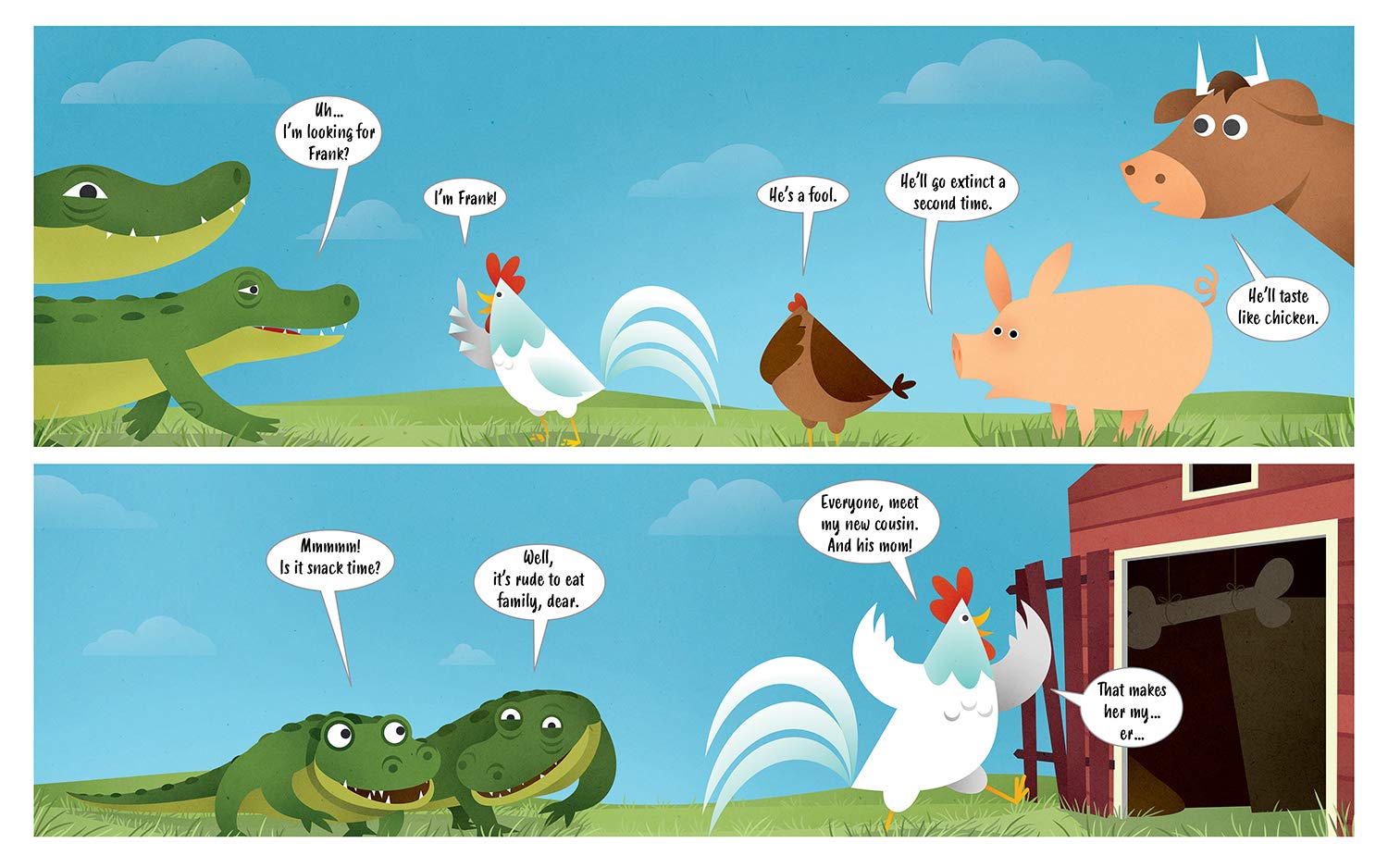
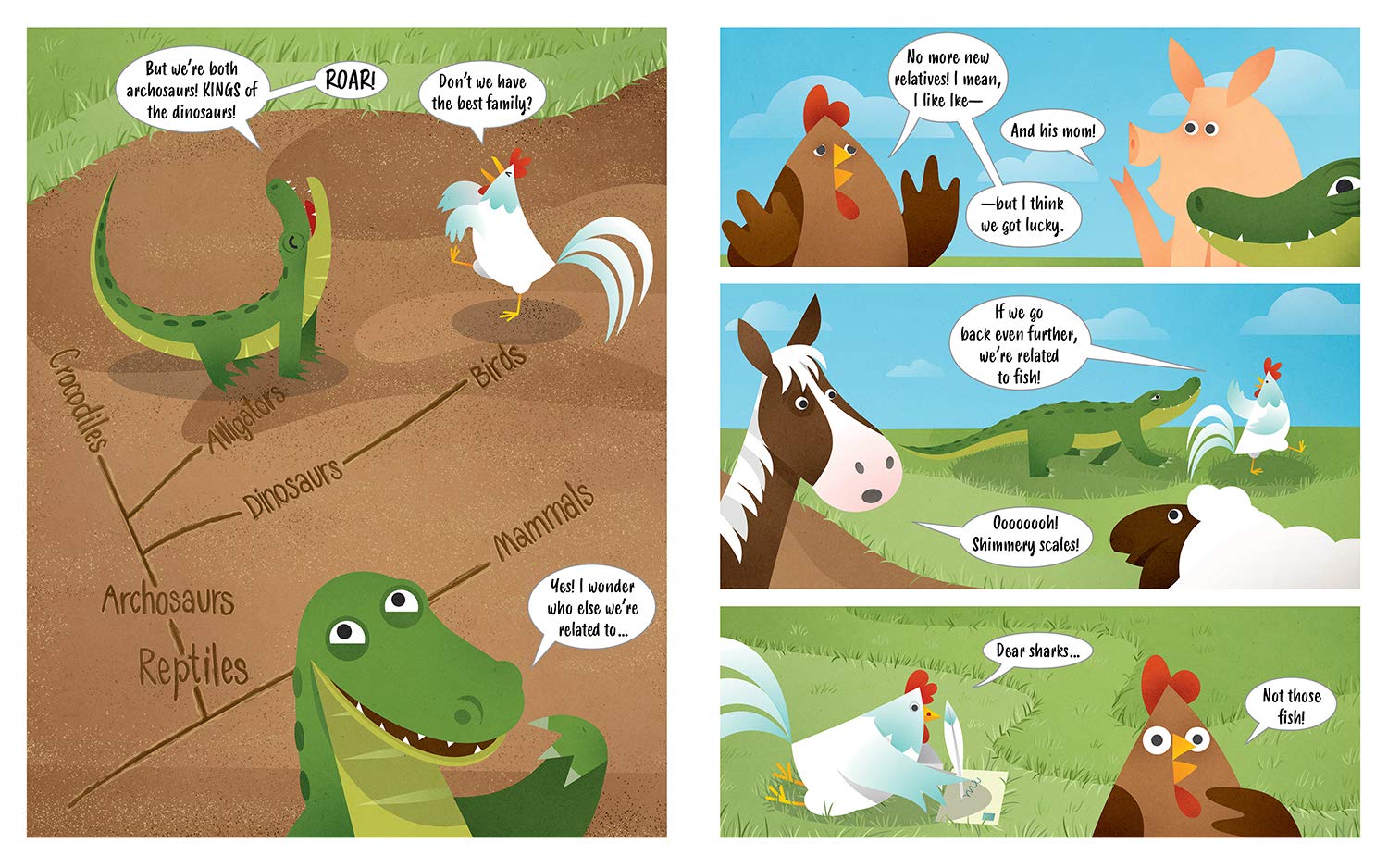
If you ask Chicken Frank he’ll tell you, “I’m a dinosaur! Cluckity-roar!” But the other barnyard animals aren’t so sure. Everyone is puzzled by this evolution thing Frank keeps talking about (“Evo-what?”). Chicken Frank tries to explain, “Evolution! Change! Change happens over time so we can survive.” He takes a stick and draws lines of lineage, connecting crocodiles to plant-eating dinosaurs and eventually birds. “From a dinosaur. See?” But the other animals don’t see it: “I see a chicken who was a chicken five minutes ago,” a sheep says. “I see a chicken who’s been a chicken since he hatched,” a pig chimes in.

celebrate-picture-books-picture-book-review-chicken-frank-dinosaur-evolution

Image copyright Jojo Ensslin, 2021, text copyright S. K. Wenger, 2021. Courtesy of Albert Whitman & Company.

Chicken Frank then presents different types of evidence to try to convince the farm that birds evolved from dinosaurs. He points out his feet look like those of T. rexes, to which another chicken looks at the readers and says, “More like T. crazy.” Frank explains that feathers evolved from dinosaur scales, and that both dinos and chickens had little tails when they were embryos. Other animals start wondering if they come from dinosaurs, since they have tails too. So, in a last straw attempt, Chicken Frank returns to his mud lineage map once more.

He shows how fish, amphibians, reptiles and mammals come from different branches in the evolutionary tree. Birds, however, branch off from reptiles. Nobody is convinced, and pig, sheep, and horse turn their attention to pretending to be unicorns with carrot horns instead. But then, the results from Frank’s DNA test arrive. The data shows Chicken Frank has a reptilian cousin: Crocodile Ike.

celebrate-picture-books-picture-book-review-chicken-frank-dinosaur-timeline

Image copyright Jojo Ensslin, 2021, text copyright S. K. Wenger, 2021. Courtesy of Albert Whitman & Company.

Chicken Frank decides to send a post card to his cousin Ike inviting him to come for a family reunion, much to the dismay of everyone. A crocodile and a chicken in the same place? Seems like a recipe for disaster…and maybe some chicken franks too. And while Crocodile Ike and his mom are first tempted to gobble Frank up, they take some time and study his charts. And, to everyone’s surprise, they get it! “One of us isn’t a dinosaur… But we’re both Archosaurs! KINGS of the dinosaurs! Roar!” Ike tells Frank. Ike’s mom wonders who else they may be related to, so Frank starts a letter to an even further distant cousin—the sharks!

celebrate-picture-books-picture-book-review-chicken-frank-dinosaur-ike

Image copyright Jojo Ensslin, 2021, text copyright S. K. Wenger, 2021. Courtesy of Albert Whitman & Company.

They all decide to take a trip to the aquarium, where the pig, sheep, and horse are delighted to find “a swimming unicorn!” (a narwhal), and Crocodile Ike exclaims, “family!” Chicken Frank happily agrees and adds, “Ours is the very best.”

The story is followed by five informational sections: “What Is DNA?”, “What Is Evolution?”, “Is Chicken Frank Really Related to T. rex?” “Similarities Between Dinosaurs, Chickens, and Alligators”, and “Frank’s Glossary of Favorite Animal Groups” Each of these sections provide in-depth scientific explanations for those who want to know a bit more about how it all works. S. K. Wenger masterfully explains each of these concepts at an advanced level that is clear to read and understand for readers of a wide range of age and abilities.

celebrate-picture-books-picture-book-review-chicken-frank-dinosaur-archosaurs

Image copyright Jojo Ensslin, 2021, text copyright S. K. Wenger, 2021. Courtesy of Albert Whitman & Company.

A joyous read, with important concepts about evolution scattered in with the fun. This comic-style picture book will have kids laughing out loud at the farm animals’ speech bubble puns and jokes. S. K. Wenger (and Chicken Frank) explain concepts of evolution in easily digestible terms for readers of all ages. The story is quick-paced and intriguing, with distinct characters and a quirky humor. A must-read for all kids, especially those with a fondness for dinosaurs.

The story would not be nearly as fun or educational without Jojo Ensslin’s colorful, cartoon-like drawings. As Chicken Frank explains his evolutionary reasoning, Ensslin depicts the ideas clearly and closely juxtaposed. For example, when Frank talks about how his feet match those of a T. rex, kids see both feet on the same page. Likewise, a scaled dinosaur and an ancient bird are portrayed on the same blackboard.

Later, when Ike receives the postcard from Frank in a muddy swamp, swarming with crocodiles, and calls out, “Does anyone know a cousin named Frank?” little speech bubbles with “Nope!” scatter the swamp, prompting kids to join in. In a carved-out corner, a close-up view of Ike and his mom show their evil plans to crash the reunion with some chompers. The facial expressions of each of the animals add to their characters and the humor of the story. Many carefully placed illustrative details add to the plot in meaningful and silly ways, such as, the DNA Test Kit shown the page before the story begins and the large bone Chicken Frank stores in his coop; the illustrations and text come together to create a read-aloud that is enjoyable to all.
Creative nonfiction at its best, Chicken Frank, Dinosaur! is both a hilarious story and a highly engaging way to explain evolutionary science in a way kids will respond to and remember. Sure to spark an interest in further science learning, the book is highly recommended for home bookshelves and a must for school and public library collections.

Ages 4 – 7

Albert Whitman & Company, 2021 | ISBN 978-0807511411

Discover more about S. K. Wenger and her books on her website.

To learn more about Jojo Ensslin and view a portfolio of his illustration, animation, and woodcout work, visit his website.
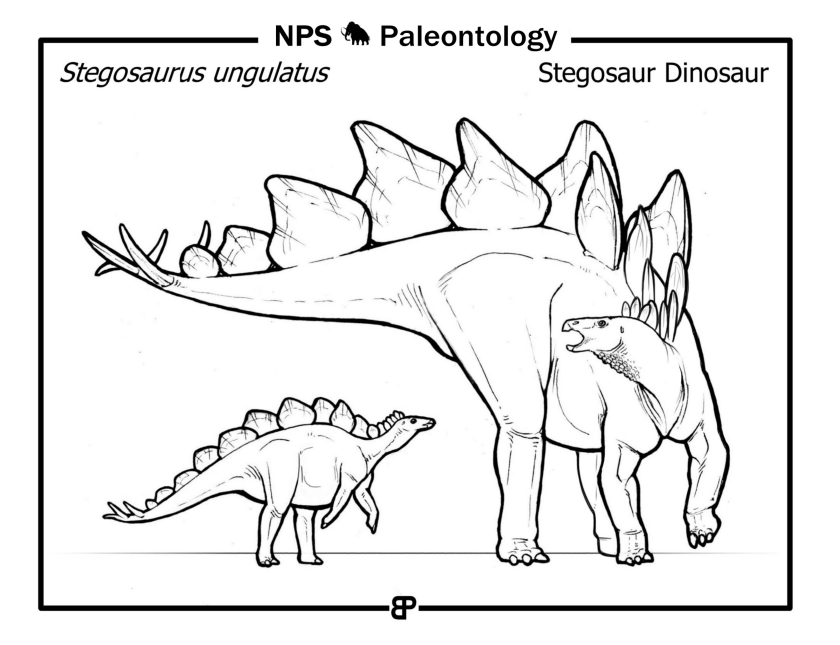
National Fossil Day Activitycelebrate-picture-books-picture-book-review-chicken-frank-dinosaur-national-park-service-dinosaur-coloring-pageDinosaur Coloring Pages


Enjoy these four dinosaur coloring pages from the National Park Service’s free prehistoric coloring book in honor of National Fossil Day!

Dinosaur Coloring Pages

For more, you can download the whole coloring book from the National Park Service here.

celebrate-picture-books-picture-book-review-chicken-frank-dinosaur-cover

You can find Chicken Frank, Dinosaur! at these booksellers

Amazon | Barnes & Noble | Books-a-Million

To support your local independent bookstore, order from

Bookshop | IndieBound

Picture Book Review