July 24 – Amelia Earhart Day

celebrate-picture-books-picture-book-review-i-am-amelia-earhart-cover

About the Holiday

On July 24, 1897 Amelia Mary Earhart was born. With astounding bravery and perseverance, Earhart became the first woman to fly solo across the Atlantic Ocean. She was an author; a founder of the Ninety-Nines, an organization for women pilots; an instructor and career counselor; and she broke many aviation records. Her disappearance over the Pacific Ocean in 1937 remains one of the most baffling historical mysteries.

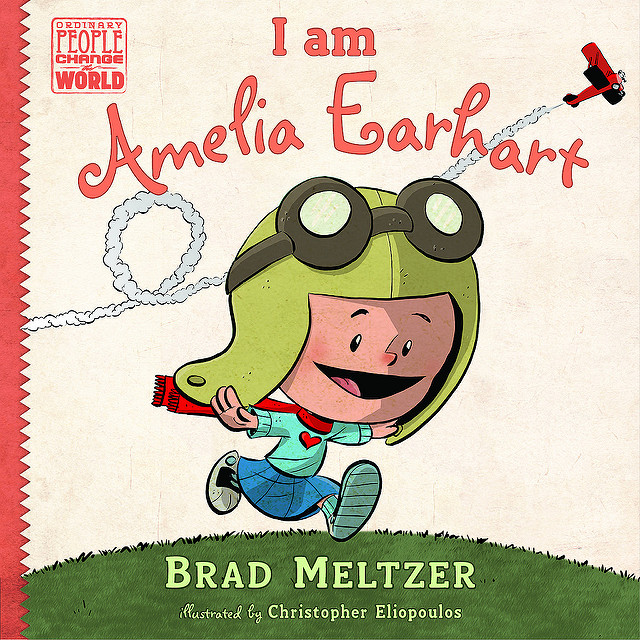
I am Amelia Earhart

Written by Brad Meltzer | Illustrated by Christopher Eliopoulos


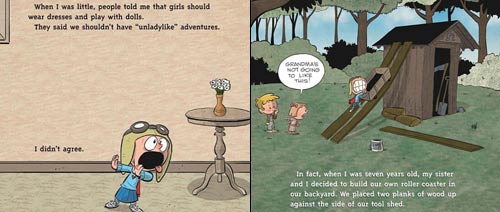
Even as a child Amelia Earhart chafed at the idea that girls could only wear dresses, play with dolls, and have “unladylike” adventures. At the age of seven Amelia and her sister built a roller coaster in their backyard by placing two planks against a shed and making a car from a packing crate with roller skate wheels on the bottom. They even greased the wood to make it “super-fast.”

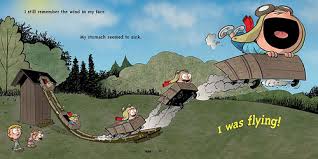
Amelia took the first ride. With the wind in her face she launched off the end of the ramp, catching air and her first feeling of flight. She crash landed a minute later, but declared the experience, “awesome!”
celebrate-picture-books-picture-book-review-i-am-amelia-earhart-interior-art-no-girl-stuff

Image copyright Christopher Eliopoulos

When Amelia was 23 she met Frank Hawks, who took her on her very first flight for ten dollars. It only took her ten minutes to realize that “she had to fly.” To save money for flying lessons Amelia took on many jobs. She worked as a truck driver, a stenographer, and a photographer. In time she learned to fly and within six months of becoming a pilot, she bought a bright yellow biplane that she named Canary.

Amelia admitted that she wasn’t a natural or even the best pilot, but she worked hard to learn the skills she needed. She also bravely dared to do what others wouldn’t or couldn’t. Because of her determination she became the first woman to fly across the Atlantic and then the first woman to fly solo across the Atlantic. At a time when people still traveled from America to Europe by boat, no one thought a woman would be able to fly that far.

To make the flight required the kind of grit that Amelia possessed. The trip took 14 hours and 56 minutes with no stops and no breaks, and when Amelia landed she broke the record for the fastest Atlantic flight ever. She broke other records too, including the woman’s altitude record and a speed record. Despite her success, whenever she set a new goal there were always people who told her she couldn’t do it. But she never let that stop her.
celebrate-picture-books-picture-book-review-i-am-amelia-earhart-interior-art-roller-coaster

Image copyright Christopher Eliopoulos

Her life and achievements serve as inspiration to all who aspire to great heights. Amelia’s advice? “Whatever your dream is, chase it. Work hard for it. You will find it. It is the best lesson I can give you.” And she added this reminder: “I hope you’ll remember that the greatest flight you’ll ever take, is the one no one has tried before.”

Part of Brad Meltzer’s I am… series of biographies, this portrait of Amelia Earhart highlights the traits of bravery and individualism—evident from her youngest years—that fueled her passion for adventure and breaking barriers. Perfectly suited for its audience, the text is conversational and includes funny asides from young Amelia to her readers. The repeated repartee between those who doubted her and Amelia (“you sure this is a good idea?” and “This isn’t a good idea. It’s the best idea!”) emphasizes Amelia’s determination and self-belief that will inspire kids to think likewise about their own dreams. The book follows Amelia from her childhood through her young adulthood and into her record-breaking years with well-chosen facts that illuminate but do not overwhelm. As this is a book to inspire children to reach for their dreams, the book makes no mention of Amelia’s eventual disappearance over the Pacific Ocean, instead leaving kids with wise words from this most iconic and fascinating adventurer.

Children love the accessibility of Christopher Eliopoulos’ I am… series illustrations! Enthusiasm and joy radiate from Amelia Earhart’s face as she races to meet the world head-on. Her dismay with typical “girl stuff” as well as her excitement when flying is evident in her very kid-like expressions. The scenes of Amelia building and riding her homemade roller coaster will make kids’ eyes widen in delight. Amelia’s various flights and planes are beautifully rendered in both up-close views of her aircraft as well as panoramic spreads showing her flying through clouds, over fields, and across the ocean. The full-bleed, vibrant and action-packed pictures will rivet kids’ attention to Amelia’s life and her inspiring message

Ages 5 – 9

Dial Books for Young Readers, 2014 | ISBN 978-0803740822

Keep up with what Brad Meltzer is writing and doing next by visiting his website!

Discover the cartoon world of Christopher Eliopoulos on his website!

Amelia Earhart Day Activity

celebrate-picture-books-picture-book-review-biplane-craft

Soar Toward Your Dreams Box Biplane


If you love airplanes and flying—or if you just have sky-high aspirations—you’ll have fun making your own plane from recycled materials! You can use your own creativity to decorate it or make Amelia Earhart’s Canary while you imagine yourself flying through the clouds on a beautiful day. This is a fun activity to share with an adult or older sibling too!

Supplies

  • Travel-size toothpaste box
  • 3 Long, wide craft sticks
  • 2 Short “popsicle” sticks
  • 5 Round toothpicks, with points cut off
  • Paint in whatever colors you like for your design
  • 4 small buttons or flat beads
  • Paint brushes
  • Strong glue or glue gun

Directions

  1. Empty toothpaste box
  2. Paint toothpaste box and decorate it
  3. Paint the craft sticks and 5 toothpicks
  4. Paint one small craft stick to be the propeller
  5. Let all objects dry

To assemble the biplane

  1. For the Bottom Wing – Glue one long, wide craft stick to the bottom of the plane about 1 inch from the end of the box that will be the front of the plane
  2. For the Top Wing – Glue the other long, wide craft stick to the top of the plane about 1 inch from the front of the plane
  3. For the Tail – Glue one short craft stick to the bottom of the box about ¾ inches from the end that is the back of the plane
  4. For the Vertical Rudder – Cut the end from one of the painted wide craft sticks, glue this to the back of the box, placing it half-way between each side

To assemble the wheels

  1. Cut 4 painted toothpicks ¾-inches long
  2. Cut one painted toothpick 1-inch long
  3. Glue 2 of the short toothpicks to the back of 1 button, the ends of the toothpicks on the button should be touching and the other end apart so the toothpicks form a V
  4. Repeat the above step for the other wheel
  5. Let the glue dry
  6. Glue the 1-inch long toothpick to the center of each wheel to keep them together and give them stability. Let dry

To make the back wheel

  1. Cut two ¼-inch lengths of painted toothpick and glue them together. Let dry
  2. Glue two mini buttons together to form the back wheel. Let dry
  3. Glue the ¼-inch toothpicks to the mini buttons. Let dry
  4. Glue these to the bottom of the plane in the center of the box directly in front of and touching the tail

July 13 – National Culinary Arts Month

celebrate-picture-books-picture-book-review-the-hole-story-of-the-doughnut-cover

About the Holiday

July is a great month for celebrating culinary arts. With kids home from school it’s fun to spend time together in the kitchen learning new skills and making experimental or favorite recipes. On-the-go meals or vacations can also take you to new and enticing restaurants, where you may try regional cuisine and discover exciting flavors.

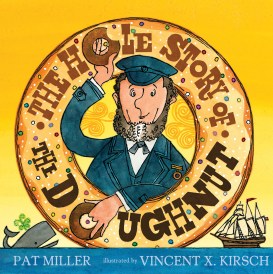
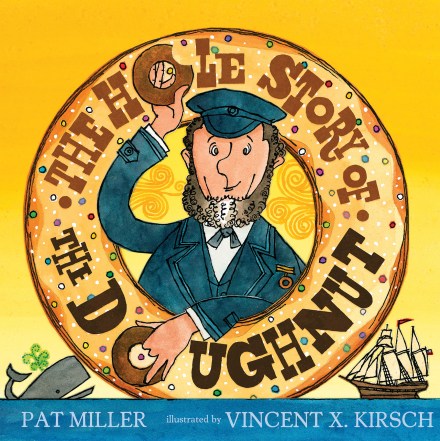
The Hole Story of the Doughnut

Written by Pat Miller | Illustrated by Vincent X. Kirsch


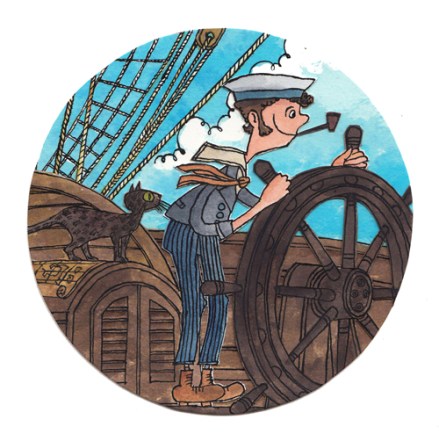
In 1844 at the tender age of 13, Hanson Gregory left the family farm and went to sea as a cabin boy on the schooner Isaac Achorn. He quickly became the cook’s assistant and also learned how to rig the sails and “steer a ship over trackless waves by sun and stars.” By the age of 19 Gregory had become the captain of the schooner Hardscrabble, and within a few more years was racing “his cargo from Maine to California as commander of a clipper, the fastest ship on any ocean.”

celebrate-picture-books-picture-book-review-hole-story-of-the-doughnut

Image copyright Vincent X. Kirsch, courtesy of vincentxkirsch.com

Hanson Gregory may have been one of the best captains to sail the seas—once awarded a medal for heroism for rescuing seven shipwrecked Spanish sailors even though his own ship and crew were endangered. But his greatest achievement was not attained because of his seafaring skills—it was his ingenuity in the galley that people remember.

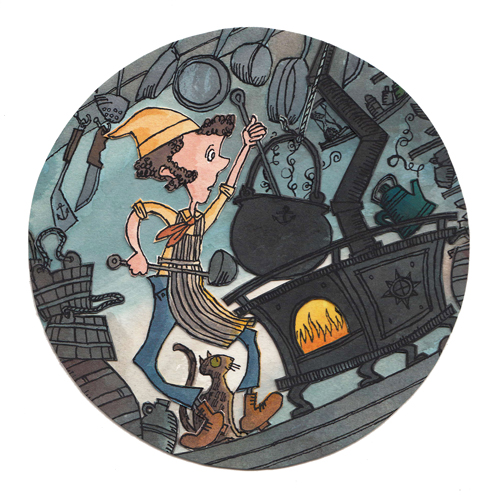
On June 22, 1847 as a 16-year-old cook’s assistant, Hanson was rustling up the crew’s breakfast—coffee and fried cakes, the same as every morning. While the pot of lard bubbled on the stove, Gregory formed balls of sweetened dough and dropped them in. They sizzled and crisped—at least around the edges. The centers were raw, heavy with grease, and they dropped like cannonballs in the stomach. “Sailors called them Sinkers.” But this morning Gregory had an idea. He removed the lid from the pepper can and cut out the center of the balls. “Then he tossed the rings into the bubbling lard.”

celebrate-picture-books-picture-book-review-hole-story-of-the-doughnut

Image copyright Vincent X. Kirsch, courtesy of vincentxkirsch.com

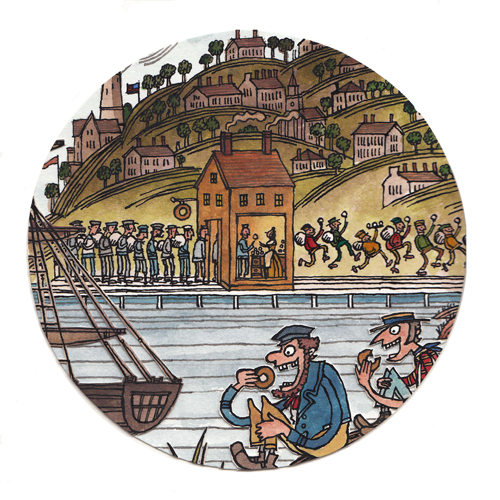
The cook and the sailors took one look at this odd concoction and…ate them up! “The cakes were brown, and sweet, and fully cooked. Sighs of delight rose above the noisy sea. A new breakfast tradition was born.” Gregory told his mom about his invention, and she fried up large batches of these ‘holey cakes’ that were a sensation at a friend’s store and on the docks.

You might think this is a pretty interesting tale in itself, “but sailors like their stories bold” and so they “spun legends worthy of such a delicious treat.” One tale had Captain Gregory inventing the doughnut while he saved his ship from disaster. Another told how Gregory, distraught over the drowning of five sailors pulled to the ocean floor by of their “sinker” breakfast, punched holes in every cake to make them look like life rings and vowed, “‘Never again!’”

Captain Gregory had a sense of humor about his accomplishment. During an interview he once stated that “he had invented ‘the first hole ever seen by mortal eyes.’” Gregory lived to be 89 and is buried “overlooking the sea where stormy weather can be spotted as readily as it once was from the quarterdeck of the Hardscrabble.”

An author’s note expanding on the story of Captain Gregory, the doughnut, doughnut shops, a timeline, and a selected bibliography follow the text.

celebrate-picture-books-picture-book-review-hole-story-of-the-doughnut

Image copyright Vincent X. Kirsch, courtesy of vincentxkirsch.com

Doughnuts have never been so evocative! In Pat Miller’s humorous, informative history of this favorite pastry treat, readers can smell the salt air, feel the ocean swell and roll under their feet, and even ache a little for those poor sailors forced to eat “sinkers.” Seamlessly interwoven into this foodography is a fascinating look at the early days of sail. Miller’s language is immediately stirring: the Ivanhoe bucks and plunges, the sea becomes a monster, and Captain Gregory spears a sinker on the wheel spoke. Kids will marvel at a 13-year-old going off to sea and becoming an inventor at 16.

Vincent X. Kirsch provides just the right touch to this captivating true story with his cartoon-inspired watercolor and cut paper artwork. Ingeniously incorporating Hanson Gregory’s innovation of removing the center of the fried cakes, Kirsch’s illustrations are “cored” to allow for text, while the extracted section appears on the facing page as a glimpse through a porthole. The maritime atmosphere—from ship to shore—of the mid-1800s is beautifully represented in the folk-style sketches, and the humor that is so intrinsic to this story is wonderfully embraced.

The Hole Story of the Doughnut will delight foodies and history buffs alike and would make a fun gift and a delectable addition to personal libraries for all ages.

Ages 5 – 12

Houghton Mifflin Harcourt, 2016 | ISBN 978-0544319615

Vincent X. Kirsch’s website is full of illustrations from his books for children—take a look at his portfolio!

Spend some time with Pat Miller on her website that offers activities, tips, resources and many more books!

Culinary Arts Month Activity

celebrate-picture-books-picture-book-review-cd-doughnut-craft

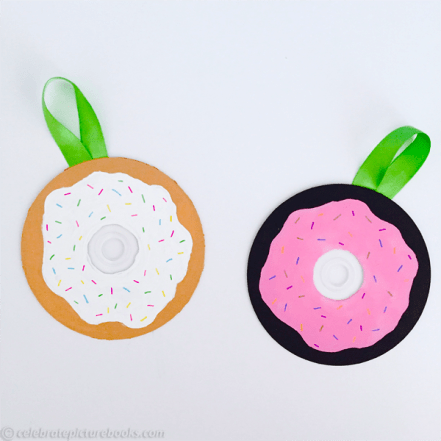
CD (Compact Doughnuts) Decoration


Are some of  your CDs a little passé? Not if you can turn them into cute décor like this doughnut hanging.

Supplies

  • Unused CDs
  • Craft paint in tan, black, pink, yellow, white (or any colors you want for the doughnut and the icing)
  • Ribbon, any color and length you want
  • Fine-tip markers in bright colors
  • Glue
  • Glue dots (optional)
  • Paint brush

Directions

  1. Paint a wavy edge around the CD, let dry
  2. Paint the center of the CD, leaving the clear circle unpainted
  3. When the icing paint is dry, draw sprinkles on the icing with the markers
  4. With the ribbon make a loop hanger and attach it to the back of the CD with glue or glue dots
  5. Hang your decoration

celebrate-picture-books-picture-book-review-the-hole-story-of-the-doughnut-cover

You can find The Hole Story of the Doughnut at these booksellers

Amazon | Barnes & Noble | Books-a-Million | IndieBound


June 8 – National Best Friends Day

celebrate-picture-books-picture-book-review-painting-pepette

About the Holiday

What would we do without our best friends? They’re the ones we go on adventures with, laugh with, commiserate with, even cry with. And no matter what, we know they’ll always be there for us. Best friends can be people we’ve known all our lives or ones we’ve just met; they can live far away or in our own home. Best friends don’t even have to be people—beloved pets or favorite toys are sometimes just what we need. Today is the perfect time to celebrate your best buddy. Get together with them, call, or text. Relive some favorite memories or make some new ones!

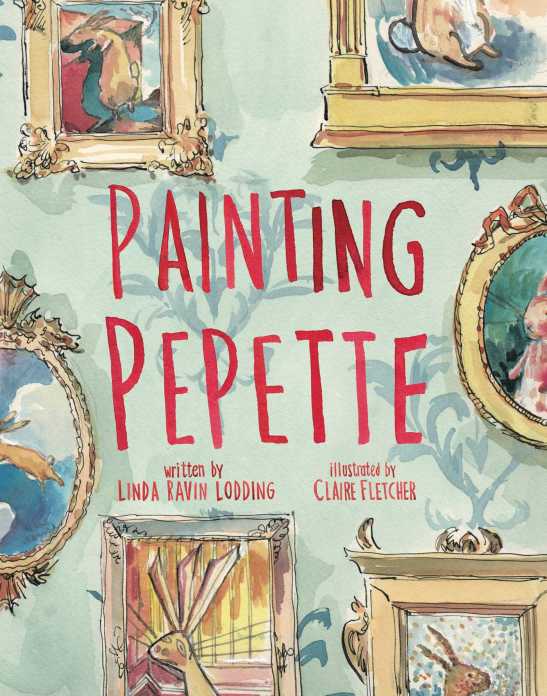
Painting Pepette

Written by Linda Ravin Lodding | Illustrated by Claire Fletcher


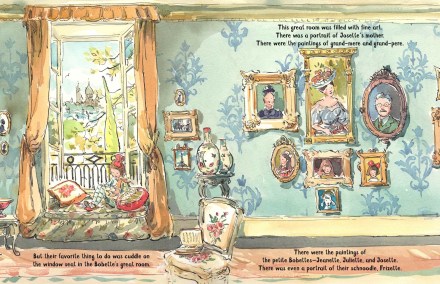
If you peek in the great room window of the grand yellow house at #9 Rue Laffette in Paris, you will most likely see cuddled on the comfortable seat Josette Bobette and her beloved stuffed rabbit Pepette. It’s their favorite place. Looking past them you will see that the great room is filled with fine art. On the walls hang portraits of the family—Josette’s mother is there as well as grand-mère and grand-père, the three Bobette sisters, and even their schnoodle Frizette.

celebrate-picture-books-picture-book-review-painting-pepette-great-room

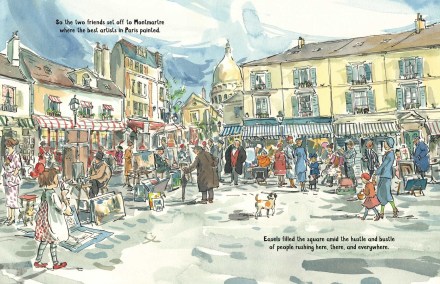
“One day Josette noticed something strange. There was no portrait of Pepette!” Josette determines to find an artist to paint a special portrait of her best friend. The pair heads out to Montmartre, where the all the best artists set up their easels to paint and sell their work. It doesn’t take long for a man in a striped shirt to stop them.

“‘Those ears!’” he cries. “‘Never have I seen such majestic ears. I must paint this rabbit’s portrait!’” Pepette blushes at such an effusive compliment, and Josette exclaims, “‘Magnifique!’” It appears Josette has found just the artist to create Pepette’s portrait. The painter waves his brush with a flourish, declares his painting a “masterpiece,” and holds it up for inspection. Josette gazes at a Pepette with two noses and three ears. Diplomatically, she proclaims the picture “nice” but not quite Pepette. Her best friend agrees.

Just then a man with a thin, curved handlebar mustache spies the pair. Admiring Pepette’s whiskers, the artist begs to capture “the very essence of her rabbitness!” He immediately sets to work, and in no time a most unusual portrait emerges. Pepette seems to melt from a tall red wall. Josette considers it and her reaction carefully. “‘It’s imaginative,’” she says. “‘But you’ve painted Pepette quite, well, droopy.’” Pepette agrees.

As Josette and Pepette enjoy a Parisian snack on the curb of Montmartre, a rakish young man happens along. He is arrested by Pepette’s nose, which he likens “‘a faint star twinkling in a misty, velvet night.’” Josette has a good feeling about this artist and follows him across the square to his easel. Pepette poses on a red tufted stool as the artist paints a rabbit soaring through the clouds. He proclaims the finished portrait “‘one of my best works’” as he displays it to the crowd. Josette likes the clouds but tells the painter that Pepette is afraid of heights and not fond of flying. Pepette agrees.

By now Pepette is the most sought-after model in Paris, and another artist rushes up, captivated by her beauty. The balding man in a dapper suit and round spectacles peers at Pepette. “‘What a colorful lady—balloon blue, pansy pink, and radish red!’” A little suspicious of his vision, Josette allows him to paint Pepette. “‘Ta da!’” the man exclaims, revealing the magic of his brush. Josette studies the canvas with its vibrant dots, dashes, and splashes. While she admires the colors, she reminds the artist that Pepette isn’t pink.

“‘Ah, yes,’” nods the painter. “‘But through art we can see the world any way we want.’”

celebrate-picture-books-picture-book-review-painting-pepette-montmartre

With the sun setting low in the sky, Josette politely says thank-you and goodbye to the artists. She and Pepette have enjoyed their day, but it’s time to go home. Curled up once more on the window seat, Josette sighs. She had so hoped to have the perfect portrait of Pepette—one that showed her velvety grey listening ears, her heart-shaped nose, and her soft arms that give tight hugs. Suddenly, Josette has an idea! Gathering all her art supplies, she creates the perfect likeness—as special as Pepette herself!

An author’s note on the last page describes the creative atmosphere of 1920s Paris, home to writers, artists, musicians, and fashion designers, that gives a frame to her story. The artists that Josette meets are inspired by Pablo Picasso, Salvador Dalí, Marc Chagall, and Henri Matisse.

In Painting Pepette Linda Ravin Lodding has written a multi-layered story of love, friendship, and unique vision. Through the sweet relationship between Josette and Pepette and with a sprinkling of humorous self-congratulation on the part of the artists, Lodding nudges readers to appreciate that while art can reveal and obscure, reflect and transcend reality, ultimately the success of a piece—complex or simple—lies within the viewer’s heart. Lodding’s lyrical language trips off the tongue and is a joy to read—it’s like following Josette as she skips happily through Paris.

Claire Fletcher’s striking pen and ink illustrations pay delicate homage to cityscapes of a bygone Paris. Adorable Josette in her white pinafore over red-dotted dress, red shoes, and big red bow along with her enchanting rabbit are the perfect tour guides through crowded Montmartre and an introduction of art history. Soft tones of yellow, rose, and green illuminate the apartments and cafes of the square where colorful shoppers and artists mingle. Fletcher’s renderings of Pepette’s various portraits will not only make kids giggle, but entice them to learn more about each artistic style. The final endpapers reveal that the four fine-art portraits now hang in the Muse of Paris, while readers already know that Josette’s perfectly perfect portrait of her well-loved friend has taken its rightful place on the wall in the Bobette great room!

Painting Pepette is a beautiful addition to any child’s bookshelf and a lovely way for teachers to initiate a discussion of art history and get kids excited about artists and different art styles.

Ages 4 – 9

little bee books, 2016 | ISBN 978-1499801361

Follow Josette through Paris as she searches for just the right artist to paint a portrait of her best friend Pepette and comes to a surprising discovery in this beautiful trailer:

Discover more books by author Linda Ravin Lodding on her website.

Illustrator Clair Fletcher invites you to find more of her artwork by visiting her online gallery.

Best Friends Day Activities

celebrate-picture-books-picture-book-review-painting-pepette-activity-guide

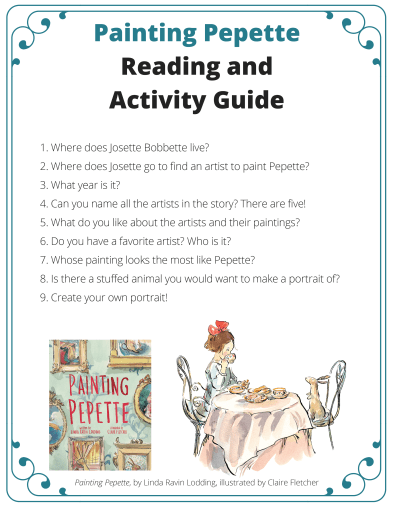
Painting Pepette Reading and Activity Guide


little bee books has created an interactive activity so you can continue exploring Josette’s world and your own artistic talent! Just click here—Painting Pepette Reading and Activity Guide—to start having fun!

Stuck on You Magnets or Picture Hanger


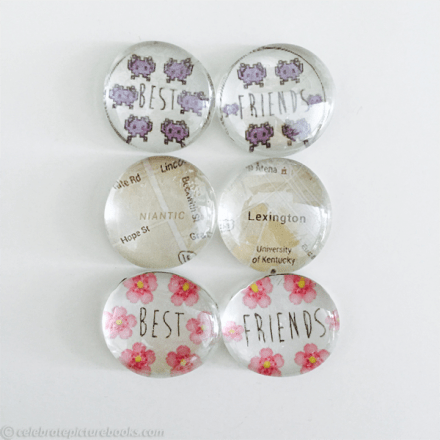
Best friends stick together whether they’re near or far, right? Here’s a fun craft that you and your friends can make to show how magnetic personalities attract each other! If your best friend or friends are far away, why not make them one too? Or make the alternate picture hanger! Be creative—use inside jokes, favorite characters, or shared experiences to make these  crafts personal!

celebrate-picture-books-picture-book-review-friends-magnets-craft

For Magnets

Supplies

  • To get you started, here are two printable Best Friends Templates! Template 1 Template 2
  • Poster board
  • Large, 1 ½-inch clear glass stones (decorative fillers), available in craft stores
  • Markers or colored pencils OR find images online to print out
  • Medium to large flexible magnets, available in craft stores
  • Super glue
  • Toothpicks
  • Scissors

Directions

  • Place the glass stone on the poster board and trace around it
  • Draw your design in the circle on the poster board
  • Cut out the circle
  • With the toothpick, apply glue around the very edge of the design side of the circle
  • Attach the circle to the flat side of the stone, let dry
  • Trim the cardboard circle if needed
  • Attach the magnet to the back of the cardboard with glue

celebrate-picture-books-picture-book-review-friends-picture-hanger-craft

For Map Picture Holder

Supplies

  • Use a mapping program to find a map of your town and your friend’s town
  • Poster board
  • Large, 1 ½-inch clear glass stones (decorative fillers), available in craft stores
  • Twine
  • Super Glue
  • Toothpicks
  • Scissors
  • Heavy duty mounting squares

Directions

  1. Find maps of your and your friend’s towns
  2. Zoom in so the name of your and your friend’s towns are displayed well. You will be using about a 1-inch area around the towns’ names.
  3. Take a screen shot of the maps
  4. Print the maps
  5. Place the glass stone on the map and trace around it
  6. Place the glass stone on the poster board and trace around it
  7. Cut out the circles on the map and poster board
  8. With the toothpick, glue the map to the poster board, let dry
  9. With the toothpick, apply glue around the very edge of the map side of the circle
  10. Attach the circle to the flat side of the glass stone, let dry
  11. Trim the cardboard circle if needed
  12. Repeat with the other map
  13. Attach a length of twine to the back of each glass stone
  14. Attach heavy duty mounting squares to the back of each glass stone
  15. Attach stones to the wall and hang pictures on the twine

June 1 – Global Running Day

celebrate-picture-books-picture-book-review-the-wildest-race-ever

About the Holiday

On your mark, get set, run! More than 2 million people in 160 countries have pledged to run on today’s holiday. Global Running Day is the evolution of National Running Day in the United States, which was started in 2009 by leading running organizations and races throughout the nation. It has been held annually on the first Wednesday of June ever since. This year will mark the first-ever Million Kid Run that aims to have a million kids around the world pledge to run with the hope that they will discover the joys of running and will be inspired to continue the sport through life. Participating is as easy as running in your neighborhood, gathering with friends to run, or even playing tag with your kids.

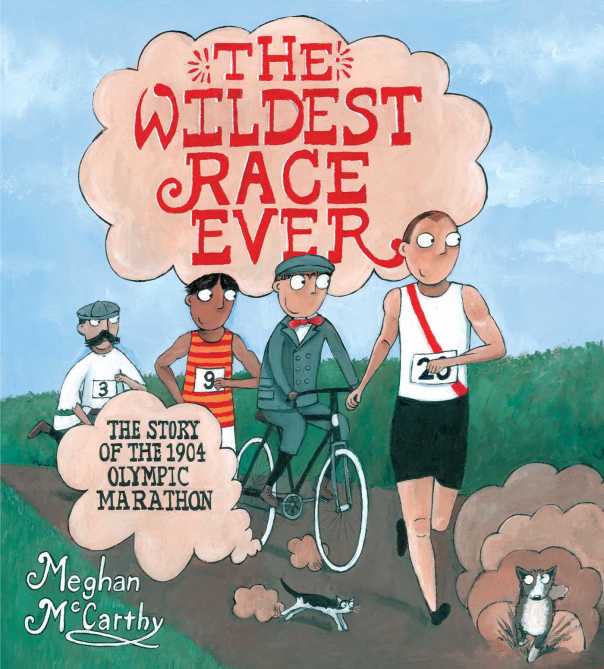
The Wildest Race Ever: The Story of the 1904 Olympic Marathon

By Meghan McCarthy


On August 30, 1904 the first United States Olympic Marathon took place at the World’s Fair in St. Louis, Missouri. Torrential rainstorms in the days before the race had washed away the original route, so a new, more difficult route was mapped out. Some of the 32 racers were:

Fred Lorz, a Boston bricklayer; John Lorden, the winner of the 1903 Boston Marathon; Sam Mellor from New York and the winner of two major marathons; Felix Carvajal, a mailman from Cuba; Arthur Newton; Albert Corey;  Len Tau, a long-distance running messenger from South Africa; William Garcia, the “greatest long-distance runner on the Pacific Coast”; and Thomas Hicks, who had only trained on flat terrain and was not ready for hilly St. Louis. There were also racers from countries all over the world.

At the starting line the racers waited in 90-degree heat for the signal. When the pistol shot rang out, they took off. The early leader was Fred Lorz. As the racers took to the hills outside the stadium so did cars full of reporters, judges, and doctors. Some spectators rode along side them on bicycles. All these vehicles stirred up so much dust that the runners choked on it.

At mile two, Sam Mellor and Fred Lorz were in the lead with Thomas Hicks only a little behind, but at mile 9 Lorz suffered terrible cramps and was driven away in a car. Now Albert Corey and William Garcia were neck and neck, and Hicks was catching up!

And what about Felix Carvajal? He ran and ran—but he also stopped and stopped. He loved talking to the spectators that cheered him on. It gave him an opportunity to practice his English! Arthur Newton, Sam Mellor, and Thomas Hicks exchanged the lead several times. No one knew who would win!

Where was Len Tau? Unfortunately, an angry dog chased him until he was a mile off course. Felix Carvajal also got distracted—not by a dog, but by an apple orchard! He settled down under a tree to satisfy his hunger. Soon, Mellor began suffering cramps and was suddenly out of the race.

Hicks suffering unbearable thirst in the staggering heat, began begging his trainers for water. They refused, instead giving him a concoction of strychnine and egg white. Another name for strychnine is rat poison! What would happen to Hicks after he drank it?Meanwhile who should appear out of the dust? Fred Lorz! He ran through the tape at the finish line and was declared the winner! Cheers erupted from the crowd. But wait! Someone said that Lorz had cheated. The cheers turned to boos, and even though Lorz said it was all a joke, the race committee banned Lorz from racing for life.

Hicks, somehow, kept running, buoyed by the cheering crowds. His trainers gave him more of the “health” drink, which made Hicks sluggish and confused. Nevertheless, he struggled on. When he came to the top of the last hill, seeing and hearing the crowds energized him. He pushed himself to run harder and harder until he broke through the tape. He collapsed on the ground just as he was declared the winner. He was rushed to the hospital, but was well enough to accept his award an hour later.

What happened to the other runners? All, except William Garcia who was overtaken by the clouds of dust, crossed the finish line at various times and with unique comments on their performance. These racers may have been very different, but they all had one thing in common. Each one accomplished an astounding feat: They competed side by side in the “killer marathon” of 1904 while upholding the Olympic spirit.

Meghan McCarthy with wit and suspense brings the story of the 1904 marathon to life for kids used to paved, well-marked routes, energizing sports drinks, supportive running shoes, and comfortable running clothes. Perhaps the only similarities to today’s races and yesteryear’s are the start and finish line and the cheering crowds! McCarthy’s inclusion of the humorous and the near-disastrous will keep readers’ hearts racing until the very end, when the topsy-turvy finish is revealed!

McCarthy illustrates The Wildest Race Ever with verve and comic flourishes that well-represent this extraordinary Olympics event. Kids will giggle and gasp to see what happens to the racers – and even a couple of spectators – during the race.

The Wildest Race Ever is a must-read for sports and history enthusiasts alike! 

Ages 4 – 9

Simon & Schuster, 2016 | ISBN 978-1481406390

Global Running Day Activity

celebrate-picture-books-picture-book-review-shoe-lace-craft

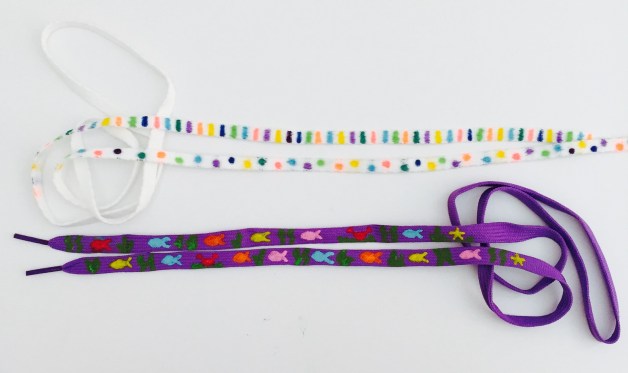
Sassy Shoe Laces


Did you know that having cool shoelaces makes you run faster? Well…that might not be exactly true, but you will definitely look good no matter what you’re doing if you make some unique laces for your shoes.

Supplies

  • Shoelaces in any color
  • Fabric paint or markers

Directions

  1. With the fabric paint or markers make dots, stripes, or any designs you like. You can even paint fish or flowers!
  2. Enjoy them on your run!

May 27 – It’s National Family Month

celebrate-picture-books-picture-book-review-brothers-at-bat

About the Holiday

National Family Month was established by KidsPeace and is observed in the weeks between Mother’s Day and Father’s Day to encourage families to spend time together. Now that the school year is coming to a close, it’s the perfect time to plan some fun activities!

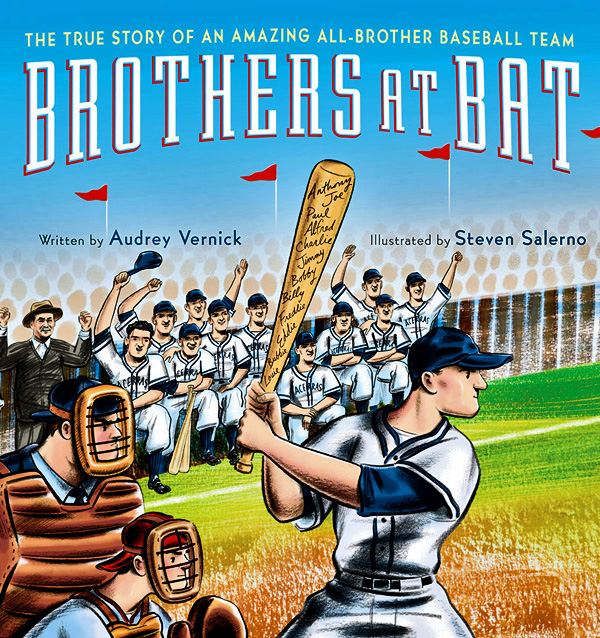
Brothers at Bat: The True Story of an Amazing All-Brother Baseball Team

Written by Audrey Vernick | Illustrated by Steven Salerno


When the weather warms and kids’ thoughts turn to sports, the afternoon air rings with the sounds of slamming doors as players race from home to the baseball diamond. Back in the 1920s and ‘30s, the same door slammed not once or twice, not three or four times, not even eight or nine! The door shut behind 12 brothers! Anthony, Joe, Paul, Alfred, Charlie, Jimmy, Bobby, Billy, Freddie, Eddie, Bubbie, and Louie Acerra. These 12 boys also had 4 sisters—but this is a story about baseball, and back then girls didn’t play ball.

It could be said that “baseball set the rhythm of their lives.” Neighbors couldn’t remember a time when Acerra boys weren’t throwing or hitting a ball or running the bases at the local park. And there was an Acerra on the high school baseball team for 22 years in a row!

In 1938 the nine oldest brothers formed a semi-pro team and competed against other New Jersey teams and teams from New York and Connecticut. Their dad was their coach. The brothers all had different skills—Anthony could hit homeruns, and even hit a couple into the Atlantic Ocean from a seaside park; Charlie was a slow runner; and Jimmy had a knuckleball that was unhittable and uncatchable.

But playing had its dangers too. In one game Alfred was going to bunt, but the ball bounced badly off the bat and hit him in the face. He was rushed to the hospital, but the accident caused him to lose an eye. Everyone thought he would never play again. But after he healed, his brothers helped him recover his skills and his courage.

During World War II six of the brothers joined the war effort and spent years apart. Far from home they dreamed of the days when they played together on warm afternoons. When the war ended all the Acerra boys came home to their very happy mother. The brothers got back to what they loved doing best. Now Anthony was their coach, and from 1946 to 1952 they won the Long Branch City Twilight Baseball League championship four times—much to the pleasure of the crowds that came out to watch the Acerras play.

As time went on the Acerras got jobs, married, and had families of their own. In 1952 the brothers played their last game as a team, having made history as the longest-playing, all-brother baseball team ever. Even though the Acerras played many, years ago, people have not forgotten them. In 1997 they were honored by the Baseball Hall of Fame. The surviving seven brothers made the trip along with one sister and more than a hundred relatives. Now Jimmy Acerra’s uniform and glove are on display alongside exhibits about Babe Ruth, Ty Cobb, and Willie Mays. If you visit the Baseball Hall of Fame, you can see them too!

Interesting and personal author’s and artist’s notes follow the text.

Baseball fans will love Audrey Vernick’s exciting, true story of this most unusual team. Her focus on the close relationship of the Acerra brothers elevates the tale from merely a sports story to one that reveals deep affection and support during difficult times. The different personalities of the brothers shine through in Vernick’s easy, conversational tone, and the inclusion of the Acerra brothers’ induction into the Baseball Hall of Fame shows that this story lives on for all generations.

Steven Salerno’s evocative illustrations will transport readers into a past where neighborhood leagues enjoyed the same level of loyalty as the majors. Capturing the brushed style, colors, and portraiture of pictures of the period, Salerno shows kids not only what it meant to be a baseball player in the 1930s and 40s, but what it meant to be a family.

Ages 4 – 9

Clarion Books, 2012 | ISBN 978-0547385570

National Family Month Activity

celebrate-picture-books-picture-book-review-we-are-all-family-word-search

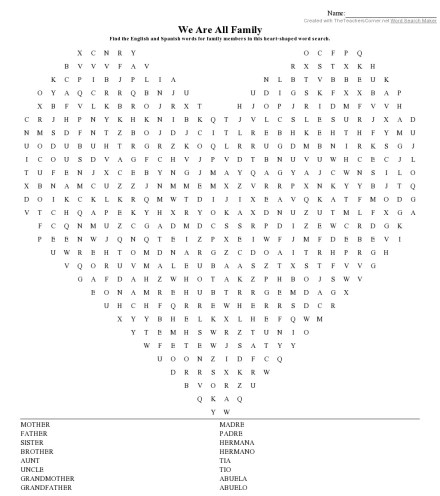
We Are All Family English – Spanish Word Search


This month is all about family! Find the words for special relatives in this English – Spanish dual language word search! Print the We Are All Family word search puzzle here! And here’s the Solution!

May 16 -National Biographer’s Day

celebrate-picture-books-picture-book-review-the-noisy-paint-box

About the Holiday

On this day in 1763 James Boswell walked into a London bookshop and met Samuel Johnson—poet, critic, journalist, and writer of the first dictionary. They became friends, and 30 years later Boswell wrote a spirited biography of his companion that fully described Johnson’s feelings, quirks, opinions, and details of his life in a warm, conversational, unstinting way. The Life of Samuel Johnson changed forever the way biographies were written and is still popularly read today. Why not spend some time today with that fascinating biography or one on a favorite personality—or start writing the story of your own life!

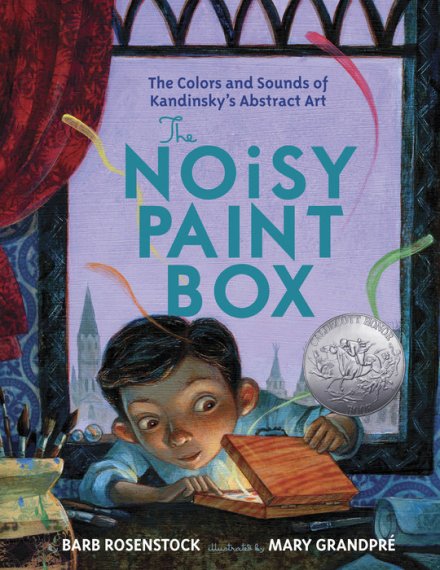
The Noisy Paint Box: The Colors and Sounds of Kandinsky’s Abstract Art

Written by Barb Rosenstock | Illustrated by Mary Grandpré


As a Russian child Vasya Kandinsky spends his days absorbed in learning math, science, and history. He takes piano lessons and attends formal dinners where the adults drone on and on. His life is polite, stiff, and colorless until the day his aunt gives him a small wooden paint box. “Every proper Russian boy should appreciate art,” Vasya’s aunt tells him while explaining how to mix colors.

Vasya takes up the brush and combines red with yellow then red with blue. As the colors change to orange and purple, Vasya hears a whisper that grows into a noisy hiss. “‘What is that sound?’” he asks, but no one else hears anything. “The swirling colors trilled like an orchestra tuning up for a magical symphony,” and “Vasya painted the sound of the colors.” A lemon yellow “clinked like the highest notes on the keyboard; a navy blue “vibrated deeply like the lowest cello strings.” Crimsons “blared” and greens “burbled.”

Vasya runs downstairs to show his family what he has created. His mother, father, and Auntie look at the canvas with its swoops, shapes, and angles. “What is it supposed to be?” they ask, and send him off to art school to learn how “to draw houses and flowers—just like everyone else.” Vasya finishes school and becomes a lawyer. He leaves his paint box untouched and lives the way he is expected, but the sounds of the colors are always with him.

One evening as he listens to an opera, the music surrounds him with color—“stomping lines of vermilion and coral; caroling triangles in pistachio and garnet; thundering arches of aqua and ebony…” Vasya can hear the colors and see the music. He knows then what he must do. He quits his job teaching law and moves to Germany to be a painter. He surrounds himself with artists and takes classes with famous teachers, and yet people still look at his canvases and asked, “What is it supposed to be?”

Once again he paints what is expected. His teachers love his houses and flowers, but Vasya does not. His friends understand. They too want to expand the meaning of art. They agree with Vasya when he says, “‘Art should make you feel.’” In his studio Vasya continues to paint the sounds he hears, to give music color and color sound. Bravely, he invites the public to view his paintings, which are named after musical terms—Composition, Accompaniment, Fugue, and more.

This is a new kind of art—abstract art—and it takes a long time before people understand. They look and still ask, “What is it supposed to be?” “It is my art,” Kandinsky replies “How does it make you feel?” 

An author’s note telling more about Kandinsky’s life and synesthesia, a genetic condition in which one sense triggers another, follows the story.

In the spirit of full disclosure, Kandinsky is one of my favorite artists, so I was excited to read this biography—I was not disappointed! With so many great artists, their work speaks for itself, but viewers wonder, “How did it come about?” “What influenced the artist?” Barb Rosenstock, with lyrical language and beautifully chosen descriptions, reveals the emotions and passion that fueled Kandinsky’s art from his earliest ages: as he walks through Moscow he can’t ignore “the canary-colored mailbox whistling as he rode to work. The scarlet sunset haze ringing above the ancient Kremlin walls.” Rosenstock’s inclusion of the conflicts and opposition Kandinsky faced and overcame will inspire children to listen to their inner voice and makes readers and lovers of his abstract art glad he never gave up.

Mary Grandpré’s unique style brilliantly depicts Kandinsky’s singular vision, allowing readers to experience the way he wielded his paint brush like a conductor’s baton. Vasya’s early life is painted in muted blues and grays, and the boredom on his face as he studies his schoolwork is obvious. Kids will appreciate his one-finger plinking at the piano and the rolled-eyed drowsiness of the formal dinner. Once Vasya is introduced to the paint box, however, Grandpré’s illustrations become vibrant, with swirling colors overlaid with the musical notes that Kandinsky associated with them. His uninhibited painting is gloriously shown as the young boy’s shirt comes untucked and the colors burst from the canvas upon his first painting.

As the adults look at his work, the room is again swathed in somber colors. The text revealing that Vasya attended regular art classes to learn to draw houses and flowers is set above a single wilting flower in a vase. The personal tug-of-war Kandinsky experienced even into adulthood is wonderfully rendered: Colors flow into his ears at the opera; he studies his own landscape and still life paintings with misgiving in a hazy studio, and the joy and freedom of his abstract art is demonstrated with wild abandon while a dove escapes its cage. The final image of a child sitting in front of a Kandinsky painting reinforces the idea that his art lives for all and for all time.

Ages 4 – 9

Alfred Knopf, Random House Children’s Books, 2014 | ISBN 978-0307978486

National Biographer’s Day Activity

celebrate-picture-books-picture-book-review-recipe-box-label

Recipe Box Label and Recipe Cards


People’s stories are written in all different ways: in the objects they surround themselves with, their activities, and the talents they exhibit. Today’s activity will help you tell your stories in the foods you bake! Or try this Recipe Card Writing Idea: Create a very short story and write it on one of the recipe cards! Read it to your family or teacher.

Supplies

celebrate-picture-books-picture-book-review-recipe-cards

Directions

  1. Glue the My Family’s Recipes label to the box you made
  2. Print out the recipe cards. Use them for your favorite dish and prepare for tomorrow’s treat to bake!

Picture Book Review

May 14 – International Astronomy Day

celebrate-picture-books-picture-book-review-star-stuff

About the Holiday

Instituted by Doug Berger in 1973, International Astronomy Day is held twice a year—in spring and fall—to raise awareness of the benefits and wonder of studying the stars. Museums, observatories, universities and astronomy clubs around the world provide public access to astronomical instruments and hold special programs about this interesting and ancient science. To celebrate, attend an International Astronomy Day event, take time tonight to gaze at the sky and pick out the constellations you recognize, or read about the stars and their importance to history and the future.

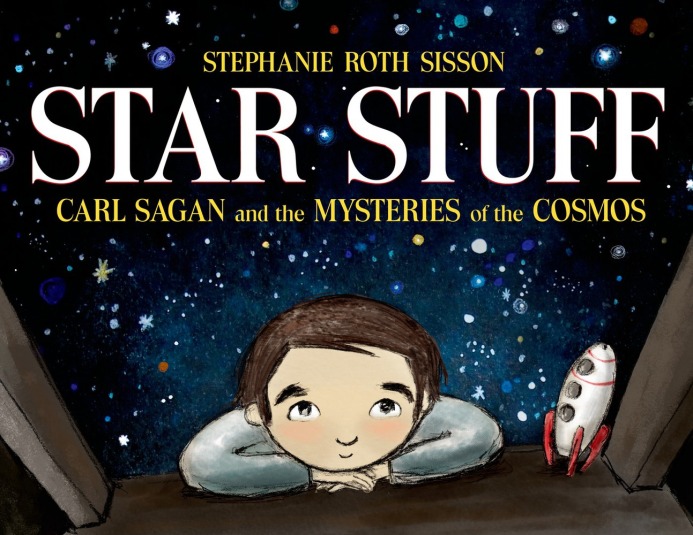
Star Stuff: Carl Sagan and the Mysteries of the Cosmos

By Stephanie Roth Sisson


A boy named Carl Sagan may have lived in a small apartment in Brooklyn, New York, but he was part of so much more—a large city on the third planet from the sun in a “neighborhood of stars” which are part of the Milky Way galaxy. Growing up, Carl marveled at the connections. He had an innate curiosity and was astonished by everything he saw; his imagination was out of this world!

When he attended the 1939 World’s Fair as a young child, he experienced things he had never seen before; he saw a robot, new inventions, and a time capsule filled with messages for the future. At night he looked up at the stars and wondered; he thought they looked like lightbulbs on long black wires. He went to the library to read about the stars.At first the librarian thought he meant movie stars, but soon he got the book he wanted. Reading it made his heart beat fast.

Carl imagined what kinds of creatures and sights he might discover if he were able to travel through space. He tried standing with his arms outstretched and wishing he was on Mars like his favorite science fiction character, John Carter, but nothing happened. He decided he would have to make his “life in space” a reality himself so he went to college and became an astronomer, cosmologist, astrophysicist, astrobiologist, and so much more.

Dr. Carl Sagan then worked with other scientists to develop the exploratory crafts Mariner 2, Mariner 9, and Pioneer 10 that have gone into space to investigate Mars, Venus, and Jupiter. When they sent back pictures, Carl analyzed them and learned more about our solar system

Carl wanted everyone to know and understand Space. He created a television program that explained in easy terms what the stars, planets, and other celestial bodies are made of, how they came to be, and how we are connected to them. The Earth and every living thing are made of star stuff, Carl told his audience. The show – Cosmos: A Personal Voyage – was a hit, watched by millions of people.

Scientists have long wanted to know if life exists on other planets, and as time went on they had the technology to explore the possibilities. Carl worked with other engineers to create Voyager 1 and Voyager 2 to tour the outer solar system and beyond. Remembering that time capsule he saw so long ago at the World’s Fair, Carl had a marvelous idea! He recorded messages and sounds from Earth and made a Golden Record that was carried on each Voyager mission.

Carl Sagan, that boy made of star stuff who grew up to be so many things—astrophysicist, explorer, educator, philosopher, writer, and more—changed the world through the power of his imagination.

Stephanie Roth Sisson’s biography of Carl Sagan wonderfully honors the dreamer and scientist whose imagination went into Space and brought it down to Earth for others to understand and enjoy. The story begins in Sagan’s neighborhood and home, where illustrations depict the curiosity that fueled his passion. Just as the mysteries of Space quickly captured his attention, the pages fill with the night sky and its twinkling lights and celestial bodies. A most ingenious page takes advantage of a two-page vertical spread that transforms Carl’s bedroom window into a space capsule that blasts him into the cosmos as he ponders the stuff of stars.

His work as an adult collaborating with scientists and engineers to develop deep space exploration craft is clearly drawn with pages containing multiple panels of his job and accomplishments up close and from the distance of outer space. A particularly arresting three-page fold-out spread reveals the moment Carl discovered his love of the stars and Earth’s sun (holding a flashlight behind the depiction of the fiery sun would be a show-stopper, especially during a night-time read).

Kids familiar with today’s space travel and the awe-inspiring images sent back to Earth will love this book. To quote Carl Sagan, Star Stuff will definitely elicit a “Wowie!” from readers.

Ages 4 – 8

Roaring Brook Press, 2014 | ISBN 978-1596439603

International Astronomy Day Activity

celebrate-picture-books-picture-book-glow-stars

Make a Room Observatory


If you like gazing at the stars before going to sleep, why not bring them inside? With adhesive glow-in-the-dark stars, available at craft and toy stores, you can create a night sky full of celestial bodies that stay lit long after you’ve said goodnight. You can add planets, rocket ships—even your favorite constellation! This can be a nice alternative to a night light or transition children from a full night light to a gentle, comforting glow in their room.

Picture Book Review