May 3 – It’s Get Caught Reading Month and Interview with Author Jody Jensen Shaffer

celebrate-picture-books-picture-book-review-a-chip-off-the-old-block-cover

About the Holiday

Launched in 1999 by the Association of American Publishers and managed by Every Child a Reader, Get Caught Reading Month hopes to instill a love of reading in every child and encourages people of all ages to read more. Celebrities, authors, illustrators, and others participate by sharing pictures of themselves reading an old favorite or new book on social media. Special materials are available for and programs held in schools, libraries, bookstores, and community venues all month long. Why not join in by finding a new book to lovelike today’s book?! For more information and to find resources, visit the Get Caught Reading website.

Penguin Random House sent me a copy of A Chip Off the Old Block to check out. All opinions are my own. I’m partnering with Penguin Random House in a giving away a copy of A Chip Off the Old Block. See details below.

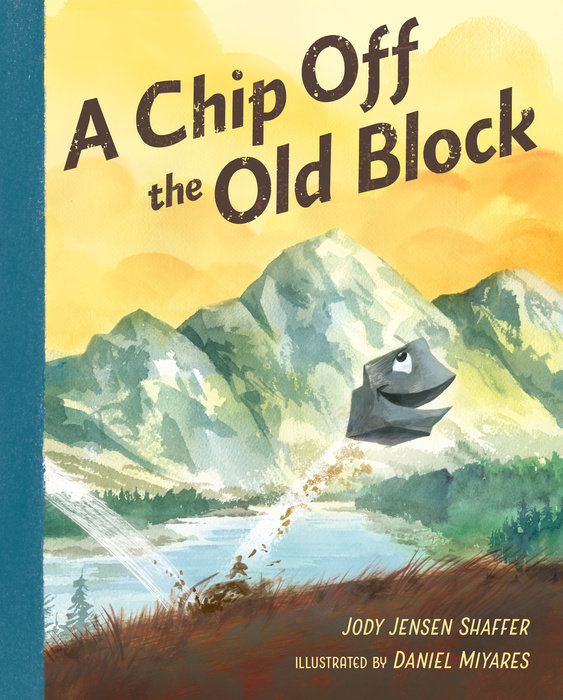
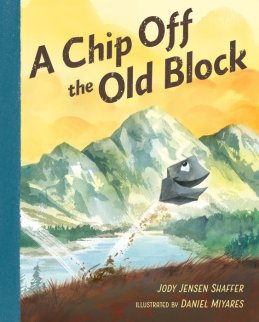
A Chip Off the Old Block

Written by Jody Jensen Shaffer | Illustrated by Daniel Miyares


Rocky had an impressive family. There was Aunt Etna, Uncle Gibraltar, and his Great-Grandma Half Dome. His cousins were pretty well-known too. In fact, “tons of his relatives were rock stars.” Rocky loved hearing his parents’ stories about his family. Rocky wanted to be important too, but his parents thought he was too little. He may have been “just a chip off the old block” like his dad said, “but inside, Rocky was a boulder!”
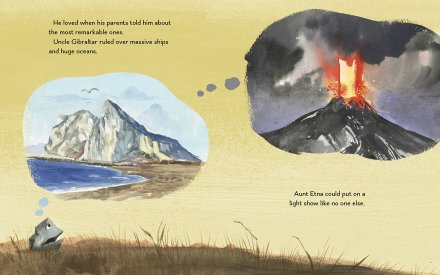
celebrate-picture-books-picture-book-review-a-chip-off-the-old-block-aunt-etna

Image copyright Daniel Miyares, 2018. text copyright Jody Jensen Shaffer, 2018. Courtesy of Penguin Random House.

Rocky made a plan, and in the morning he hopped on a pickup truck headed for Arizona to join his cousin The Wave. As soon as he got there, though, a gust of wind blew him away. He landed hard and “noticed that a piece of him had broken off.” Undeterred, he caught a flight with an eagle out to Wyoming and another cousin, The Tower. Rocky was almost settled in when a rainstorm washed him over the side.

At the bottom of the long slide down, Rocky hitched a ride on a car bound for Texas. There, he thought he could watch over the sauropod tracks at Dinosaur Valley State Park. But it didn’t take long for an armadillo to dig him out and send him back on the road again. this time he was determined to go to South Dakota. When he arrived, tinier than when he’d begun his trip, he decided that he’d make a terrific souvenir of his cousin Rushmore.
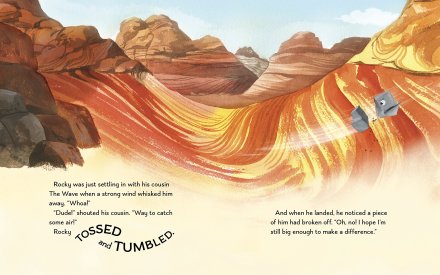
celebrate-picture-books-picture-book-review-a-chip-off-the-old-block-the-wave

Image copyright Daniel Miyares, 2018. text copyright Jody Jensen Shaffer, 2018. Courtesy of Penguin Random House.

Just then he heard the news. The park was closing because a crack had been discovered in Abraham Lincoln’s nose. “Rocky was crushed.” His dreams of being important would never come true now. But looking up at his cousin, he realized that maybe he could help. A passing lizard gave him a ride to the top, and Rocky jumped. He tumbled down, down and right into the crack in Lincoln’s nose. “He was a perfect fit! I did it! I did something important! I saved Abraham Lincoln!” Rocky exaulted, excited and proud.

Down below, visitors and park employees cheered. Reporters relayed the news, and photographers took pictures. The park was saved, and it was “all thanks to Rocky, the little pebble that wouldn’t be taken for granite.”

A guide to igneous, metamorphic, and sedimentary rocks, illustrated descriptions of some of the world’s most majestic rock formations, and an Author’s Note about Mount Rushmore follow the story.
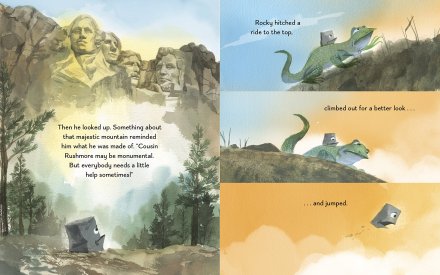
celebrate-picture-books-picture-book-review-a-chip-off-the-old-block-mount-rushmore

Image copyright Daniel Miyares, 2018. text copyright Jody Jensen Shaffer, 2018. Courtesy of Penguin Random House.

There’s so much to love about Jody Jensen Shaffer’s A Chip Off the Old Block! Part adventure, part educational travelogue, and completely inspirational—with lots of funny wordplay to boot—Shaffer’s story will charm kids. Little Rocky is a sweetie of a go-getter who has big dreams and sets out to achieve them. He overcomes obstacles, setbacks, and disappointments and adjusts to changes with optimism while never losing heart and building up his self-confidence. Kids will cheer when Rocky finally finds the place where he can make the most monumental difference.
celebrate-picture-books-picture-book-review-a-chip-off-the-old-block-rocky

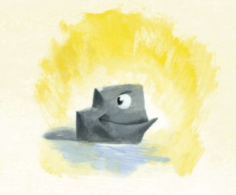
Daniel Miyares’ gorgeous illustrations depict the splendor of Rocky’s magnificent cousins and the landscape they dominate while cleverly tracing his journey from state to state, carried along by a truck and a car, in a backpack, and with the help of some animal friends. Rocky is full of personality and childlike expressions that will endear him to readers. Miyares’ full-color, full-bleed pages will get kids excited to learn more about geology and each rock formation, and will no doubt inspire some vacation wish lists.

A Chip Off the Old Block is a smart and witty book that will excite a child’s imagination. It would be a terrific addition to home bookshelves and should be included in classroom libraries to accompany STEM, STEAM, and English Language Arts lessons and well as fun story times.

Ages 5 – 8

Nancy Paulsen Books, Penguin Random House, 2018 | ISBN 978-0399173882

Discover more about Jody Jensen Shaffer and her books and find teachers’ resources and activities on her website.

To learn more about Daniel Miyares, his books and his art, visit his website.

Meet Jody Jensen Shaffer

celebrate-picture-books-picture-book-review-Jody-Jensen-Shaffer-author-photo

I’m excited to talk with Jody Jensen Shaffer today about what she loves about writing poetry, fiction, and nonfiction, her favorite childhood memories, and her rescue dog, Sophie.

What was the spark for A Chip off the Old Block?

Hi Kathy! Thanks for having me on your blog. The spark for A Chip off the Old Block was the phrase, “Rocky loved his rock star relatives.” It came to me as I was brainstorming picture book ideas, and it felt like the first line of a story. I loved the word play of the line, so I created a story around it. I just had to discover who Rocky was and what his story would be.

A Chip off the Old Block combines terrific storytelling with science and history. What would you like for readers to take away from the book? How have children reacted to Chip?

Thanks! It was lots of fun to write. I hope readers take away from the book the idea that you’re never too small to matter and to never give up on your dreams. Bonus points if they learn a little about rocks, US landmarks, maps, and natural formations! I’ve been really happy with how Chip has been received by children and adults! One class even did a Google maps tour of the places Rocky visits in his travels.

You write across the spectrum of children’s literature from poetry to nonfiction to fiction. Can you briefly describe what you like about each?

I love writing poetry because of the challenge of the form. It’s like putting a puzzle together, and the pieces are brevity, beauty, meaning, and joy.

I love writing fiction because I can choose any characters I want, put them in any situations I want, and have fun with the language, voice, and story.

I love writing nonfiction because I love learning new things! And my interest in science comes to me naturally because of my dad’s influence. He was a college professor of biological sciences (and a great wordsmith).

You’ve said that you loved being a kid. What’s one of your favorite memories? How does being able to tap into that feeling of childhood influence your work?

I have so many great memories of my childhood: fishing with my family at local ponds, riding bikes to the swimming pool, visiting my dad’s lab at the college, even working our huge garden with my siblings (before we were allowed to ride our bikes to the swimming pool). I feel so blessed to have had the parents I had and the childhood they gave me. It’s easy to recall feelings of being loved and valued. I hope to send that same message to my readers through my writing.

You say you can remember the exact moment you learned to read. Can you talk about that a little?

It’s a very brief memory. I was reading an early chapter book and laboriously sounding out each syllable, index finger on page, when it occurred to me that if I just read “lighter,” the words might come to me more easily. I relaxed, I guess, and the words came. It was like a light switch turned on. From then on, I read fluently.

What’s the best part about being a children’s author? Do you have an anecdote from an author event that you’d like to share?

There are so many great things about writing for children, and I feel really blessed to be able to do it, but if I have to choose the best thing, I’d say it’s being able to play with words for a living. In terms of an anecdote, I was Skyping with a class for World Read Aloud Day recently, and a little guy stepped up to the screen and told me how much he liked one of my less well-known books. I felt his sincerity, and I appreciated him telling me.

In 2017, your book Prudence the Part-Time Cow was chosen to represent Missouri in the National Book Festival in Washington DC that is hosted by the Library of Congress. Can you talk about this honor a little? How was Prudence chosen and what did it mean for you as an author and for the book?

I was super excited to learn that the Missouri Center for the Book chose Prudence for that honor! At the National Book Festival, each state chooses a book to represent it. All the states’ books are displayed together in one room for festival-goers. I didn’t attend the event, but several people who did told me Prudence sold out several times!

You’re a dog lover and have a rescue dog named Sophie. I’d love to hear more about her!

How much time do you have? Just kidding. She’s part long-haired dachshund, part chihuahua, we think. Very friendly, a good walking companion, pretty, and a real cuddler. She sleeps under the sheets with us.

What’s up next for you?

In July 2018, just in time for back-to-school, Beach Lane will publish It’s Your First Day of School, Busy Bus! about a school bus’s first day of school. In 2019, Grosset & Dunlap will release my bobble-head biography, Who Is Jackie Chan? I’ve got more projects coming that have yet to be announced, so I better stop there. I’ll continue to publish poetry in great children’s magazines, too.

What’s your favorite holiday? Do you have an anecdote from any holiday you’d like to share?

I really like Earth Day and Arbor Day. I love helping take care of the earth.

Thanks, Jody! It’s been so great chatting with you! I wish you all the best with A Chip Off the Old Block and all of your books and projects!
celebrate-picture-books-picture-book-review-a-chip-off-the-old-block-cover

You can find A Chip Off the Old Block at these booksellers

Amazon | Barnes & Noble | Books-a-Million | IndieBound | Penguin Random House

(Leaving a review is one of the best ways to support authors and illustrators!)

You can connect with Jody Jensen Shaffer on

Her website | Twitter

Get Caught Reading Month Activity

celebrate-picture-books-picture-book-review-reading-bug-book-plate

Catch the Reading Bug Bookmark and Bookplate


If you love to read, show it with these printable Reading Bug book bling!

I’ve Got the Reading Bug Bookmark | I’ve Got the Reading Bug Bookplate

Picture Book Review

March 10 – It’s National Women’s History Month

celebrate-picture-books-picture-book-review-maya-lin-artist-architect-of-light-and-lines-cover

 About the Holiday

This month we celebrate the accomplishments of women in the past who have broken barriers and forged paths for today’s women and who still inspire the leaders of tomorrow. To honor women this month, learn more about the influential woman in your own field or in areas you enjoy as hobbies and teach your children about the women who made incredible contributions to the world long ago and those who are changing the way we live today.

Maya Lin: Artist-Architect of Light and Lines

Written by Jeanne Walker Harvey | Illustrated by Dow Phumiruk


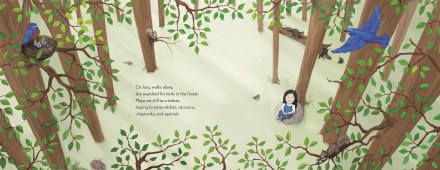
As a child, Maya Lin loved playing and interacting with nature near her home. She and her brother liked to run over what Maya had named “the Lizard’s Back”—a hill behind her house—and into the woods. Sometimes Maya went into the woods alone and “sat as still as a statue, hoping to tame rabbits, raccoons, chipmunks, and squirrels.” She liked to play chess with her brother and build towns from scraps of paper, boxes, books, and other things she found around the house.

celebrate-picture-books-picture-book-review-maya-lin-artist-architect-of-light-and-lines-in-forest

Image copyright Dow Phumiruk, 2017, text copyright Jeanne Walker Harvey, 2017. Courtesy of us.macmillan.com.

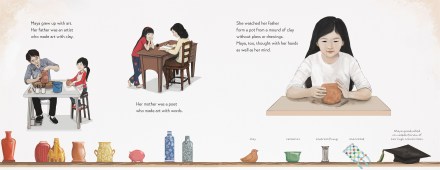
Maya’s “parents had fled China at a time when people were told what to be and how to think.” They did not want the same for their children and always encouraged Maya to be and think what she wanted. Maya grew up surrounded by art. Her father worked with clay, and her mother was a poet. Maya also liked to make things with her hands. The beautiful library where she went to college inspired Maya to become an architect.

To learn about different buildings, Maya traveled all over the world. When she was only a senior in college, “Maya entered a contest to design a memorial to honor soldiers who died during the Vietnam War.” The contest stated two rules: the memorial had to fit in with a park-like setting, and it had to include the 58,000 names of the soldiers who had died in the war. These rules resonated with Maya. She “believed that a name brings back all the memories of a person, more than a photo of a moment in time.”

celebrate-picture-books-picture-book-review-maya-lin-artist-architect-of-light-and-lines-as-young-girl

Image copyright Dow Phumiruk, 2017, text copyright Jeanne Walker Harvey, 2017. Courtesy of us.macmillan.com.

Maya visited the site where the memorial would be built. As she looked at the gently rolling hill, she envisioned a simple cut in the earth that would support a polished wall covered in names. Not only would the wall reflect those who died, but also those who came to visit and the surrounding nature. At school, Maya worked with mashed potatoes and then with clay to help her create the perfect monument. When she had finished her drawings and plans, she wrote an essay to accompany them. She wrote that her monument would be “a place to be experienced by walking down, then up past names that seemed to go on forever.”

celebrate-picture-books-picture-book-review-maya-lin-artist-architect-of-light-and-lines-with-parents

Image copyright Dow Phumiruk, 2017, text copyright Jeanne Walker Harvey, 2017. Courtesy of us.macmillan.com.

More than 1,400 artists and architects—many of them famous—entered the contest. The designs were hung in an airplane hangar anonymously for judging. Finally, the day came for the announcement of the winner. When the judges called out Maya Lin’s name and she came forward, they were surprised to find that she was so young. Maya was excited to have won, but then some people began to object to her design. Some said her “design looked like a bat, a boomerang, a black gash of shame.”

celebrate-picture-books-picture-book-review-maya-lin-artist-architect-of-light-and-lines-library

Image copyright Dow Phumiruk, 2017, text copyright Jeanne Walker Harvey, 2017. Courtesy of us.macmillan.com.

Maya was hurt by these comments, but she defended her design and, finally, it was approved. Maya worked with the architects and engineers who excavated the land and built the wall. As each granite panel was polished, engraved with the soldiers’ names, and set in place, Maya looked on. The memorial opened on Veterans Day in 1982. Thousands of people came to see it and to find the names of loved ones they had lost. As Maya approached the wall, “she searched for the name of the father of a friend. When she touched the name, she cried, just as she knew others would.” Every day since then visitors come to the wall to remember.

Maya Lin has gone on to design many more works of art and architecture that can be seen inside and outside. Each piece has a name and a particular vision. Maya wants people to interact with her art—to touch it; read, walk, or sit near it; or think about it. After each piece is finished, Maya thinks about her next work and how she can inspire the people who will see it.

celebrate-picture-books-picture-book-review-maya-lin-artist-architect-of-light-and-lines-Vietnam-War-Memorial

Image copyright Dow Phumiruk, 2017, text copyright Jeanne Walker Harvey, 2017. Courtesy of us.macmillan.com.

An Author’s Note about Maya Lin and the Vietnam War Memorial follows the text.

Jeanne Walker Harvey has written an inspiring biography of Maya Lin that reveals not only her creativity but the importance of creative freedom for children. Lin’s confidence that led her to enter the contest and then defend her winning design will encourage readers to pursue their dreams. Harvey’s lyrical storytelling reflects Maya Lin’s quiet, introspective nature, the influences that nurtured her creative spirit, and her dedication to inviting others to be part of her art.

Dow Phumiruk’s graceful, soft-hued illustrations allow children to follow Maya Lin as she grows from a girl discovering nature, constructing cardboard cities, and learning the arts from her parents to a young woman who draws inspiration from the world’s buildings and relies on her own sensitivity to guide her. Back-to-back pages of the landscape of Vietnam and the site of the memorial connect the two places for children’s better understanding. Phumiruk’s depictions of the Vietnam War Memorial also give children an excellent view of this moving monument. Her images of Lin’s other architectural work will entice young readers to learn more about her and to explore where each of these pieces can be found.

Ages 4 – 8

Henry Holt & Company Books for Young Readers, 2017 | ISBN 978-1250112491

Discover more about Jeanne Walker Harvey and her books on her website!

Learn more about Dow Phumiruk, her art, and her books on her website!

National Women’s History Month Activity

 celebrate-picture-books-picture-book-review-maya-lin-coloring-page

Maya Lin Coloring Page

Maya Lin’s accomplishments are inspirational for all children! Here’s a printable coloring page that you can personalize and hang in your room or locker to remind you that you can reach your goals too!

Maya Lin Coloring Page

Picture Book Review

November 24 -Thanksgiving Day

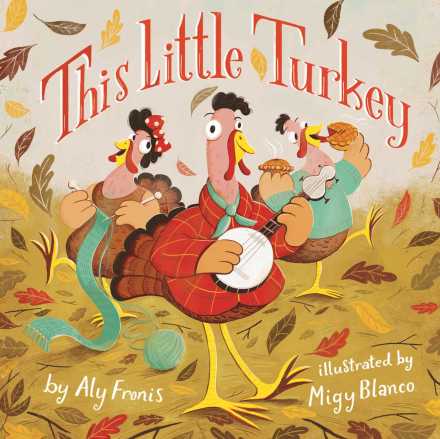
celebrate-picture-books-picture-book-review-this-little-turkey-cover

About the Holiday

The American holiday of Thanksgiving dates back to 1621 and a harvest feast shared by a group of colonists, who had sailed from England in 1620 to “the new world” seeking freedoms and prosperity, and the Wampanoag tribe, who had helped the settlers survive the harsh conditions of their new home. The feast, organized by Governor William Bradford, was held to give thanks for the success of the colonist’s first crops and their settlement. During America’s early years, days of thanksgiving were proclaimed periodically by Congress and Presidents to celebrate particular important events.

In 1817 New York became the first state to proclaim an official day of thanks. Other states followed. In 1827 Sarah Josepha Hale began a 36-year campaign to make Thanksgiving a national holiday. Abraham Lincoln finally signed a proclamation in 1863, making the forth Thursday in November the official holiday. Today, the holiday is celebrated by families with a traditional dinner of turkey, stuffing, potatoes, vegetables, and other goodies, and is finished off with pumpkin pie, apple pie or other favorite sweets.

This Little Turkey

Written by Aly Fronis | Illustrated by Migy Blanco


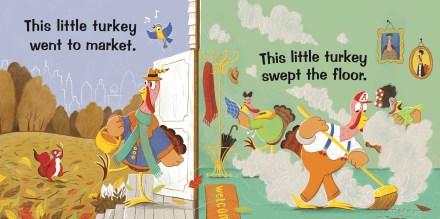
Perhaps you know about “this little piggy” and his cohorts and the way they spend a day, but have you heard of “this little turkey” and his friends and their shenanigans on Thanksgiving Day? Well, let me tell you! “This little turkey went to market”… Wait? Isn’t that what the first little piggie did? Do you think they might have met there? What do you think they bought? Oh, right, I’m getting off track. What about the second little turkey?

celebrate-picture-books-picture-book-review-this-little-turkey-market

Image copyright Migy Blanco, text copyright Aly Fronis. Courtesy of little bee books

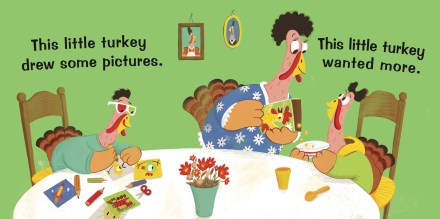
“This little turkey swept the floor.” And did it need it! Wow! So much dust! And the sneezing! Maybe it’s best to see what the third little turkey’s up to. Awww!—“This little turkey drew some pictures” while a little snacking turkey “wanted more.” Elsewhere, a creative turkey is preparing for cold weather, and a sneaky turkey is up to a little mischief!

At home the dinner table is being set in a most entertaining way, but will there be enough plates left for all the little turkeys? You’ll have to read on to see…. Finally, a little turkey calls, “‘Let’s eat!’” and all the turkeys come running to say, “we…we…we…wish you a happy Thanksgiving!’”

celebrate-picture-books-picture-book-review-this-little-turkey-drawing

Image copyright Migy Blanco, text copyright Aly Fronis. Courtesy of little bee books

Little ones love the excitement of a holiday! Special planning and traditions mingle with delicious, sometimes once-a-year aromas, and relatives and friends gather to have fun and swap stories. Aly Fronis’s sweet take on the familiar “This Little Piggie” rhyme invites the youngest children to take part in the preparations and enjoyment of Thanksgiving with phrases that are joyful to read and easy to memorize for read alongs. Young readers will giggle at the foibles and tricks of these little turkeys and recognize common activities they partake in themselves during the holiday weekend.

Migy Blanco’s vibrant pages, populated with an array of cute turkeys and their squirrel and bird friends, are whimsically eye-catching, perfect for the book’s young audience. Depicting the traditions of the holiday—from cleaning and cooking by older family members to drawing and table setting by younger members—each scene is both cozy and playful. Kids will love the small details, such as family portraits hinting at the family’s history, and the tiny plates for the bird and squirrel on the festive dinner table.

Young children will love repeating the holiday-themed verse in This Little Turkey. Drawing turkey faces on children’s fingertips could also turn this book into a fun game that kids will gobble up!

Ages 2 – 5

little bee books, 2016 | ISBN 978-1499803020

Discover more books and illustration for children as well as for adults by Migy Blanco on her website!

Thanksgiving Day Activity

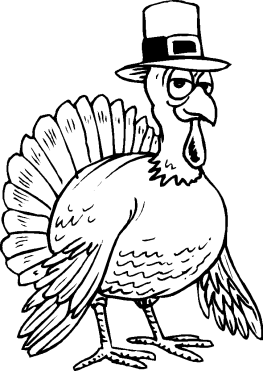
celebrate-picture-books-picture-book-review-turkey-coloring-page

Hats Off for Thanksgiving! Fun Pages


Here are two holiday activity sheets to have fun with on Thanksgiving!

Pilgrim Maze | Turkey Coloring Page

Picture Book Review
November 11 – Veterans Day

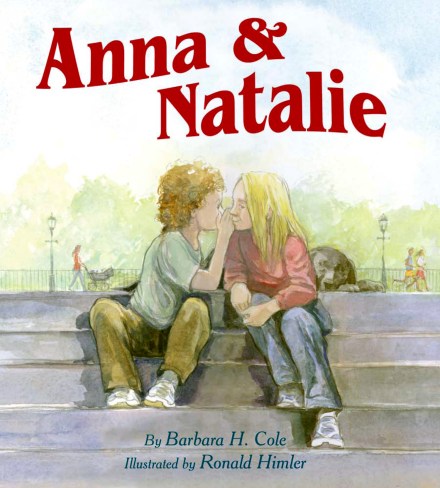
celebrate-picture-books-picture-book-review-anna-and-natalie-cover

About the Holiday

Veterans Day is observed each year on this date to honor and thank all members of the military who are currently serving or have served in the United States Armed Forces. The official ceremony begins at 11:00 a.m. with a wreath laying at the Tomb of the Unknowns and then continues inside the Memorial Amphitheater with a parade of colors by veterans’ organizations and comments by dignitaries. While an official government holiday, some schools remain in session, holding special ceremonies of their own and inviting veterans to relate their experiences.

Anna & Natalie

Written by Barbara H. Cole | Illustrated by Ronald Himler


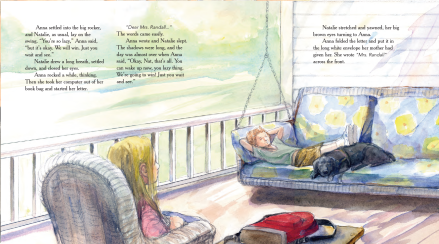
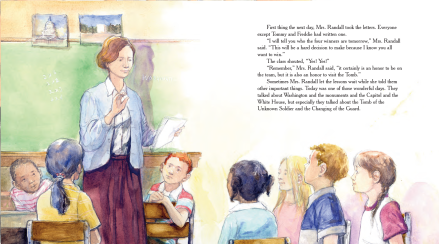
Every year Mrs. Randall’s third-grade class attends the Wreath-laying ceremony at the Tomb of the Unknown Soldier at Arlington National Cemetery. What’s more every year four students are chosen from her class to carry the wreath. This year everyone wonders who those lucky four will be. Students who want to be in the running to be selected, Mrs. Randall, says, must write a letter telling her why they should be chosen. Hearing that Freddie and Tommy drop out immediately, while Nancy says her letter will be the best.

Anna dreams of being chosen too, but experience tells her she will not. She’s never chosen for the basketball or softball team, the cheerleading squad, or the lines of Red Rover. “Sure, someone always chose her for the spelling team, but the others—the fun ones—never.” But this time seems different. All day—even though Mrs. Randall’s eagle eyes catch it—Anna daydreams and makes plans. When the bus drops her and her sister off, they hurry home to start work.

celebrate-picture-books-picture-book-review-anna-and-natalie-school-bus

Image copyright Ronald Himler, text copyright Barbara H. Cole. Courtesy of Star Bright Books

There Anna makes a secret call to her grandpa and then she and Natalie go to the front porch, and while Nat naps on the swing Anna pulls out her computer and begins writing her letter to Mrs. Randall. The next day Mrs. Randall collects the letters with the promise to choose the team by tomorrow and a reminder for those who will not be picked: “‘Remember,’” she says, “‘it certainly is an honor to be on the team, but it is also an honor to visit the Tomb.’” Then “they talked about Washington and the monuments and the Capitol and the White House, but especially they talked about the Tomb of the Unknown Soldier and the Changing of the Guard.”

celebrate-picture-books-picture-book-review-anna-and-natalie-on-the-porch

Image copyright Ronald Himler, text copyright Barbara H. Cole. Courtesy of Star Bright Books

At school the next day, Mrs. Randall says that while she received four excellent letters, one stood out. She begins to read it to the class: “‘I want to be on the team, not for myself, but for many others who have not been honored or remembered….They worked long and hard and saved many lives….And sometimes they were heroes bigger than the strongest men around. Sometimes they carried medicine and food to dangerous places to save the wounded soldiers. My own great-great-grandfather was in this special service and saved lives. I would like to be on the team to say thank you to those forgotten heroes of World War II. Yours truly…’ Mrs. Randall’s voice cracked and choked, and then she read, ‘From Natalie (with help from Anna)’”

The class starts whooping and cheering, but Mrs. Randall interrupts their celebration to read one more line: “P.S.—Would you please let Anna walk with me so I will not be alone and she won’t be either?” The class begins chanting “Yeah, Anna! Yeah, Anna!,” and Anna can’t believe that her dream of being on the team has come true. When Anna gets home from school and tells her family, they proudly make plans to travel with their “two girls” to the ceremony.

celebrate-picture-books-picture-book-review-anna-and-natalie-anna-and-natalie

Image copyright Ronald Himler, text copyright Barbara H. Cole. Courtesy of Star Bright Books

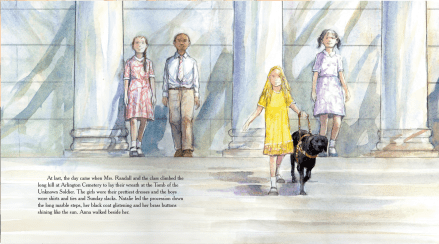
Finally, the day of the Wreath-Laying Ceremony arrives. The students are dressed in their best clothes, and as the four team members prepare to accept the wreath, “Natalie led the procession down the long marble steps, her black coat glistening and her brass buttons shining like the sun. Anna walked beside her.” As the soldier hands the children the wreath fashioned from “dogwood flowers, magnolias, and decorative red birds,” he loudly announces, “The students of Willow Run School and Natalie, a seeing-eye dog, will lay this wreath to honor the men who served in World War II and the dogs who helped them. ATTENTION!”

celebrate-picture-books-picture-book-review-anna-and-natalie-tomb-of-the-unknowns

Image copyright Ronald Himler, text copyright Barbara H. Cole. Courtesy of Star Bright Books

The clear notes of Taps rang across Arlington National Cemetery as Anna and the three other children lay the wreath in front of the Tomb of the Unknown Soldier. Afterward, Anna’s grandfather and parents took pictures of Anna and Natalie to remember “this shining moment of Anna, and of Natalie, who saw the world that Anna could not see.”

An Author’s Note revealing the use of dogs during wartime—from ancient history to today—follows the text.

Barbara H. Cole’s story of Anna and Natalie is compelling in many ways. First, it presents a look at what Veterans Day means to children from their point of view. Second, the story honors not only the brave soldiers who protect our country but also the canine corps which has served our military from our country’s earliest history. Third, in Anna, Cole has created a character who is part of a military family through her great-great-grandfather and also has a personal connection to service dogs through Natalie, her seeing-eye dog. The portrayal of Anna as a child with a disability is honest and inclusive, and while the fact of Anna’s blindness is contained in a surprise ending, this serves to present Anna as just another student in the class—a girl who is an excellent writer, enthusiastic about her dreams to be part of the team, and a good friend.

celebrate-picture-books-picture-book-review-anna-and-natalie-classroom

Image copyright Ronald Himler, text copyright Barbara H. Cole. Courtesy of Star Bright Books

Cole’s straight narration of a school day and a special assignment—complete with asides from students—as well as Anna’s family life creates an environment that will be familiar to readers and carries the story in a natural arc.

Ronald Himler’s realistic illustrations of Anna’s Willow Run School, her home, and Arlington Cemetery beautifully represent this moving story. His pages are full of diverse, real kids, smiling, laughing, getting off the school bus, enjoying a family dinner, and solemnly performing their job at the Tomb of the Unknown Soldier. A hint to Natalie’s true identity is subtly inserted into various scenes, making the final reveal a satisfying moment.

Anna & Natalie is a wonderful choice for all kids observing Veterans Day, Memorial Day, and other patriotic holidays.

Ages 5 – 10

Star Bright Books, 2010 | ISBN 978-1595722119

To learn more about Anna & Natalie and download a Curriculum Guide, visit Star Bright Books!

To view a gallery of artwork and picturebook illustration by Ronald Himler, visit his website!

Veterans Day Activity

celebrate-picture-books-picture-book-review-american-flag-and-wreath

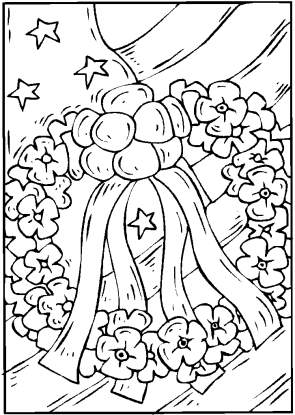
Wreath and American Flag Coloring Page


Remember everything our members of the Armed Forces do to keep our country safe as you color this printable Wreath and American Flag.

Picture Book Review
August 16 – National Airborne Day

celebrate-picture-books-picture-book-review-brave-like-me-cover

About the Holiday

National Airborne Day was established in 1997 as a time to remember and thank the airborne members of the Armed Forces for their service and sacrifices. August 16 was chosen for this observance because it marks the first official United States Army parachute jump that took place in Georgia in 1940 by 48 volunteer members of the Parachute Test Platoon. The successful jump led the way for hundreds of thousands of paratroopers to follow in their footsteps. The day is commemorated by a ceremony at Fort Bragg in North Carolina, home to the 82nd Airborne Division. Other services are held around the country.

Brave Like Me

By Barbara Kerley


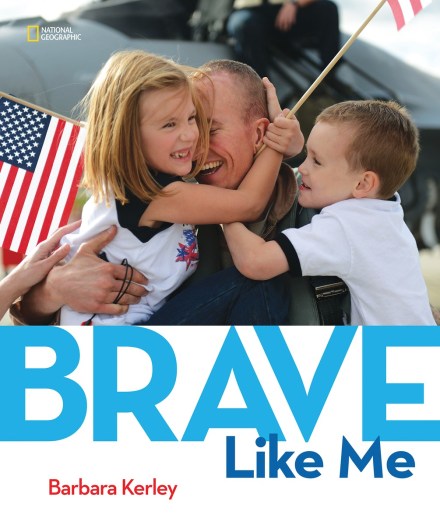
“When someone is serving their country, far from home, they have to be brave. Their families have to be brave. Even their kids have to be brave. Like me.” These lines from a child who has a parent serving their country opens this tribute to military families and the relatives, friends, and neighbors who support them. The child narrator reveals that parents about to be deployed spend a lot of time with their kids “until the day we have to say goodbye.” On that day the family shares kisses and hugs “big enough to last the whole time” parents are away.

Once parents are gone, the house seems empty and children wonder who will take care of them. They look at maps to discover where their parents are and what their day is like. The narrator describes children’s honest emotions, such as sadness and anger at the events parents miss or fear for their safety. But the kids understand that their parents are trained to stay safe.

The children are able to communicate with their parents on the phone and on the computer, where they share the details of their days. They also write letters and draw pictures that they send through the mail. Just as parents have responsibilities, the children know they have jobs to do too. They go to school, do their homework, and help around the house. The family bands together to cook meals, clean, read bedtime stories and tuck younger children into bed.

Friends and neighbors show they care by taking the kids on outings to the park, the movies, the pool, and to special events. Even though parents are far away from home, the child says, they think about their family all the time and want them to be happy playing with friends and pets and even when they are alone. The kids stay busy and enjoy their time with friends and family waiting for the day when they come home. On that day, the narrator says, “I’ll have lots of things to talk about and a million hugs and kisses to share.”

Through full-color photographic spreads and pages alternating between mothers and fathers serving in the military, Barbara Kerley presents an honest and uplifting account of what life is like for children of military families. The photographs of children playing with their parents and kissing and hugging them goodbye as well as pictures of both adults and kids doing their jobs while apart demonstrate the shared love and commitment military families have to their country and their relationships. Brave Like Me is a stirring nonfiction title for school and local libraries to help children understand the sacrifices some families make for their country. It would also be a comforting book for children facing a separation from a service member parent, other relative, or friend or for anyone who wants to better understand the life of service members.

A world map showing the location of each photograph in the book, a variety of children’s definitions of the meaning of “brave” and a discussion on the various branches of foreign service follow the text. There are also pages on how to deal with separation as well as advice and resources for caregivers.

Ages 4 – 8

National Geographic Children’s Books, 2016 | ISBN 978-1426323607

To learn more about Barbara Kerley and her wide range of books, visit her website!

National Airborne Day Activity

celebrate-picture-books-picture-book-review-military-plane-coloring-page

Military Plane Coloring Page


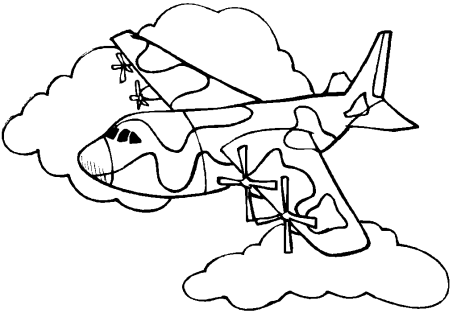
The Airforce uses many different types of planes in their missions. Here’s a printable Military Plane Coloring Page for you to enjoy!

July 26 – It’s Park and Recreation Month

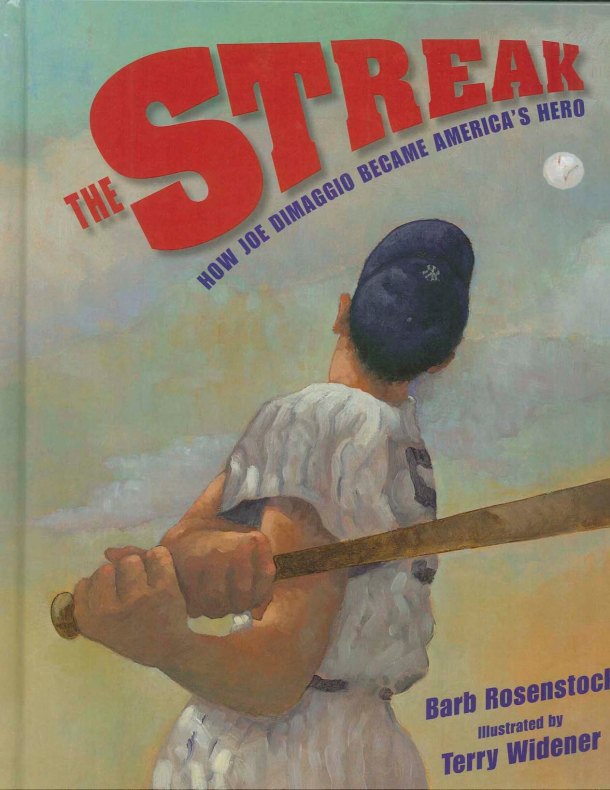
celebrate-picture-books-picture-book-review-the-streak-how-joe-dimaggio-became-america's-hero-cover

About the Holiday

This month we recognize all the parks—national, state, local, and more—that provide fun and recreation for those who love the great outdoors. There is perhaps no sport that combines the physical aspects of “park” with the spirit of “recreation” quite like baseball. The crack of the bat connecting with the ball for a home run, the thwack of an outfield catch, the collective cheers, and the aroma of ballpark snacks all mix to create a perfect outing—whether your team wins or not!

The Streak: How Joe DiMaggio Became America’s Hero

Written by Barb Rosenstock | Illustrated by Terry Widener


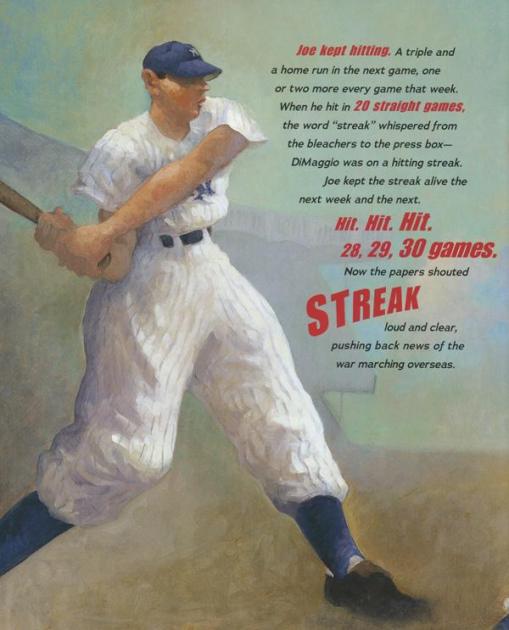
With a single hit to left field, Joe DiMaggio turned a pre-World War II summer into something that cheered and united all Americans. It was May 15, 1941 when the New York Yankees sent Joe to the plate. He hit a single—not much to help them overcome their 13 to 1 loss, but it was in the next game and the next and the next…that people started to take notice. In every game Joe made a hit. Some were home runs, some triples or doubles, and when “he hit in 20 straight games, the word ‘streak’ whispered from the bleachers to the press box—DiMaggio was on a hitting streak.”When Joe reached 30 straight games with a hit, the newspapers printed bold headlines and articles that temporarily pushed “back news of the war marching overseas.”

Joe DiMaggio wasn’t like other well-known players. He was the son of immigrants and grew up in San Francisco with eight brothers and sisters, working in the family fishing business and selling newspapers to make extra money. He was used to hard work, and this ethic served him well as a baseball player.

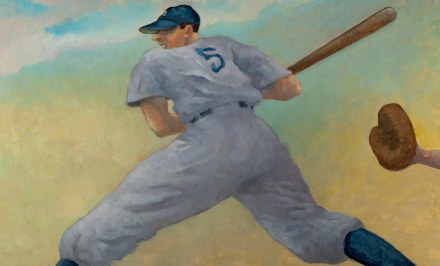
Everyone knew about Joe’s bat “Betsy Ann” and the care he gave her. He had treated her wood and sanded her handle, shaving off “fractions of an ounce until she fit his hands alone. Betsy Ann was his treasured ‘ball bat,’ used for games only.” When Joe faced the pitcher at the plate, he didn’t go through an elaborate routine. His wide-legged stance was well recognized by fans who knew he would get the job done. And that summer in 1941 he did.

celebrate-picture-books-picture-book-review-the-streak-how-joe-dimaggio-became-america's-hero-joe-hitting

Image copyright Terry Widener, courtesy of terrywidenerart.com

He and Betsy Ann “whipped around, smashing fastballs, knuckleballs, screwballs, and curves. DiMaggio could hit off anyone, any pitch, anywhere.” Soon he was in sight of the record—41 games. Every pitcher wanted to be the one to end Joe’s streak, and with each game America was on the edge of its seat. Joe felt the responsibility. He didn’t show it on the field, but in his off time he hardly slept, his stomach hurt, and he couldn’t eat.

The streak continued—38…39…40. Tying the record at 41 and breaking it would come in a doubleheader against the Washington Senators. The bleachers were packed that hot 29th of June. In the first game Joe tied the record. The second game would test Joe’s mettle. When his turn at bat came, he reached for Betsy Ann. She wasn’t in the dugout. He saw right fielder Tommy Henrich taking practice swings and yelled to him that he had Betsy Ann. But he didn’t. All the Yankees players searched the dugout for Joe’s bat, but Betsy Ann was nowhere to be seen. Someone has stolen her.

Joe grabbed another bat, but with three times up and three times out, it looked as if Joe’s streak was over. Then Tommy held out his own bat with the reassurance that “there’s some hits in here.” Joe took Tommy’s bat and went to the mound. He took his wide-legged stance and went to work. On the second pitch “Joe whacked a line drive past the left fielder’s glove. Stomping screams shook the stands. No one could stop DiMaggio. No one.”

celebrate-picture-books-picture-book-review-the-streak-how-joe-dimaggio-became-america's-hero-joe-hitting

Image copyright Terry Widener

Joe focused on the game, rounding first on his way to second base. But suddenly with the cheers of the fans ringing in his ears, his accomplishment settled in. “He tipped his cap, flickered a smile, and trotted weak-kneed back to first.” He got a pat on the back from the first base coach, a handshake from the Senators’ first baseman, and adoration from the kids and adults in the stands. With one hit—and 41 more—Joe was America’s hero.

A week later Betsy Ann was found in New Jersey and given back to Joe. His streak continued to 56 games, and he helped the Yankees win the 1941 World Series. When America became involved in World War II, people could remember “watching sureness and strength win against impossible odds. The country learned to pull together and celebrate together. It was ready to go to work” the way Joe DiMaggio had.

Barb Rosenstock sets this poignant biography of one of baseball’s greats firmly within the atmosphere that made Joe DiMaggio’s achievement about much more than baseball. With prose that echoes DiMaggio’s gentle strength, Rosenstock recreates the excitement, growing suspense, and mystery surrounding his phenomenal streak. With lovely, flowing description Rosenstock deftly sprinkles in DiMaggio’s working-class immigrant background, his emotions, and historical events, giving The Streak depth and resonance for today’s readers.

Accompanying the text are Terry Widener’s dramatic paintings. Opening the pages is akin to strolling through an art gallery exhibition. The depictions of the players swing, twist, slide, and throw with realistic action. As an infielder fumbles DiMaggio’s hit in one foreground illustration, Joe can be seen in the background dropping Betsy Ann and taking off for first base. DiMaggio’s signature stance, the frantic search for Betsy Ann, DiMaggio’s weariness, and the press that followed his every swing are all gorgeously rendered in muted tones of green, gold, and brown. Sports fans will love the pictures of the baseball stadiums and the close-up view of Betsy Ann.

An extensive Author’s Note, DiMaggio’s career statistics, and resources follow the text.

The Streak: How Joe DiMaggio Became America’s Hero would be a welcome addition to any library.

Ages 6 and up

Calkins Creek Books, Boyds Mills Press, 2014 | ISBN 978-1590789926

To see more books by Barb Rosenstock as well as extensive educational guides for The Streak and other books, visit her website!

Learn more about Terry Widener, his books, and his art on his website!

Take a look at the trailer for The Streak—it’s a home run!

Park and Recreation Day Activity

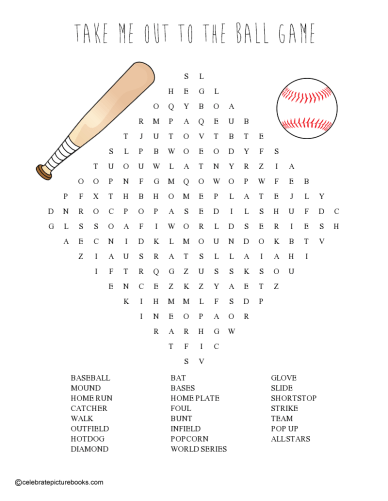
celebrate-picture-books-picture-book-review-baseball-word-search

Take Me Out to the Ballgame Word Search


Diamonds aren’t just for playing baseball—they make great word search puzzles too! Take a run at this printable Take Me Out to the Ball Game word search! 

July 4 – Independence Day

celebrate-picture-books-picture-book-review-lady-liberty's-holiday

About the Holiday

On July 4, 1776, the thirteen colonies that then made up America claimed their independence from England. After much debate and with a majority—but not unanimous—vote, delegates to the Continental Congress adopted the Declaration of Independence. While the vote may not have been unanimous, delegates from all 13 colonies signed the document penned by Thomas Jefferson. John Hancock, who was President of the Continental Congress, signed his name “‘with a great flourish’ so England’s ‘King George can read that without spectacles!’” The action led to the Revolutionary War and ultimately to a break with England.

On this United States national holiday most cities host parades, fireworks displays, and other special events.

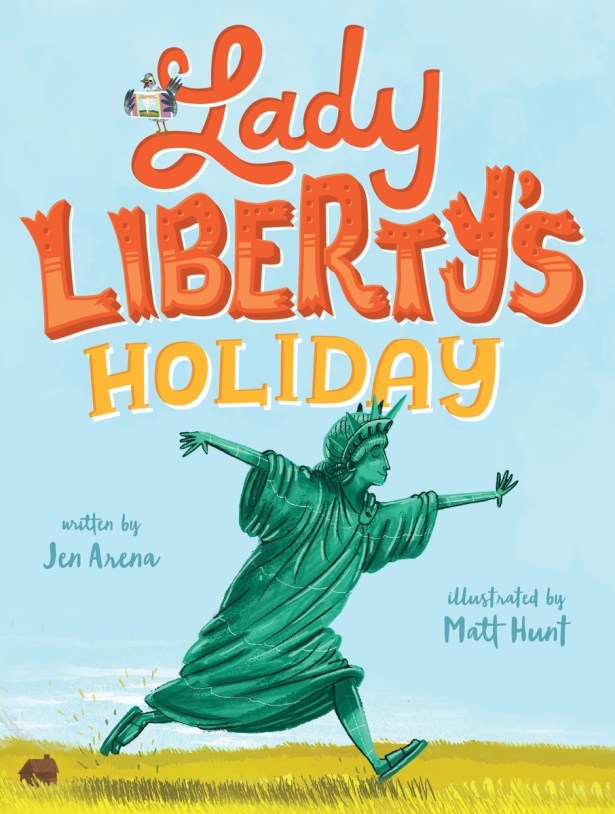
Lady Liberty’s Holiday

Written by Jen Arena | Illustrated by Matt Hunt


Shortly before the Fourth of July Lady Liberty is feeling down. Year after year she has stood in the same place holding aloft a torch in one hand and cradling a tablet in the other. She turns to her friend Moe, the pigeon on her shoulder, and expresses her dissatisfaction. Moe has a suggestion: “‘Lady, you need a getaway!’” Lady Liberty thinks about it and about the vastness of America. She has only seen a small corner of it. That night Lady Liberty pries herself from her pedestal and sneaks away.

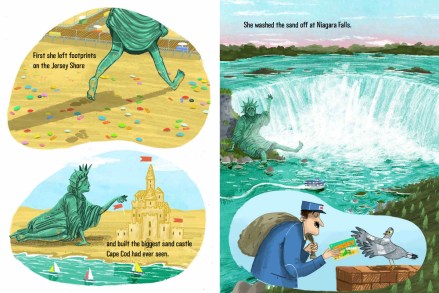
She walks the wide beaches of New Jersey, builds a huge sandcastle on Massachusetts’ Cape Cod, and dips her feet in Niagara Falls. With her long strides it doesn’t take her long to reach the Mississippi River. She finds a seat atop the Gateway Arch in St. Louis, Missouri and watches the Ol’ Man river slip past. In Kansas she plays in wheat fields that “tickle her feet” and are as good for making angels as snow. In South Dakota she photo bombs at Mount Rushmore, and she takes a quick hike over the Rocky Mountains. After all this fun Lady Liberty needs a rest, so she takes a nap on San Francisco’s Golden Gate Bridge.

But the people in New York have noticed the Lady’s absence. The Fourth of July is only three days away and no one is in the mood to celebrate without her. “Tourists were gloomy. Cops were cross. Even the stock market was down.” The mayor is even considering cancelling the holiday! Moe is worried Liberty might not come back.

celebrate-picture-books-picture-book-review-lady-liberty's-holiday

Image copyright Matt Hunt, courtesy of Jen Arena (jenarenabooks.com)

And Moe is right! Lady Liberty is enjoying herself too much to think about returning. The grandeur of the Grand Canyon makes her feel small—it’s a nice change, she thinks. She drinks water from a geyser in Yellowstone Park and sleeps under the stars in Texas. With a hop and a skip she’s dancing in New Orleans, and the Florida Keys make excellent “stepping stones” to her next adventure. She doesn’t even mind schlepping through swamps in the deep south, and an alligator that latches onto her toe is dispatched with a shake.

Lady Liberty suddenly hears the familiar flap of Moe’s wings. Moe tells Liberty how things are in New York. When she hears that they are thinking of cancelling the Fourth of July, she “bolts up as if she’d been struck by lightning.” Yes, says, Moe. “‘Nobody feels like celebrating without you.’” But after her cross-country tour, Lady Liberty knows that “‘the Fourth of July isn’t about me. It’s about America!’” Without another thought Liberty is racing north.

As New Yorkers wake at dawn, they see Lady Liberty happy to be back overlooking the Harbor, “where she had stood for over a hundred years.” Her copper dress shines in the early morning sun. Later that night she glows again in the colors of fireworks and enjoys a very Happy Fourth of July!

The final two pages tell the story of Lady Liberty’s creation, installation, and meaning. Tantalizing tidbits about the statue of Liberty are also revealed.

Jen Arena’s Lady Liberty’s Holiday is an engaging introduction to the story of the Statue of Liberty and American geography. A road trip across America was once a staple of childhood, and Arena replicates the excitement and wonder of viewing the country’s monuments and splendor through Lady Liberty’s walking tour. As each page brings readers to another awe-inspiring landmark, kids will want to learn more about the parks, states, and history of America.

Matt Hunt’s vibrant, full-bleed spreads are as expansive as the American landscape. The blue waters of Niagara Falls roar over the edge, creating white mist; the rock-hewn faces of George Washington, Thomas Jefferson, Teddy Roosevelt, and Abraham Lincoln gaze out from the peak of Mount Rushmore; and the spume of water from a Yellowstone geyser dwarfs the tourists below. As Liberty towers over cruise boats and trees, lounges across the Golden Gate Bridge, and flicks away a pesky alligator, kids gain an excellent perspective on the size of the Statue of Liberty as well as the monuments and natural landmarks she visits.

Like the postcards that Liberty sends to her friend Moe from stops on her journey, Lady Liberty’s Holiday is a welcome snapshot of America any time of year.

Ages 4 – 8

Knopf Books for Young People, Random House Kids, 2016 | ISBN 978-0553520675

To learn more about Jen Arena and view the books she’s written , visit her website!

A gallery of Matt Hunt‘s work can be seen on his website!

Independence Day Activity

celebrate-picture-books-picture-book-review-fourth-of-july-coloring-page

Fourth of July Coloring Page


The 4th of July celebrations mean flags, fireworks, and fun! Here’s a printable Fourth of July Coloring Page for you to make your own holiday festivities. You can even make it sparkle with a dash of glitter!