October 15 -Bridge Day

celebrate-picture-books-picture-book-review-this-bridge-will-not-be-gray-cover

About the Holiday

Today’s holiday hosts the largest formalized jumping event in the world and celebrates BASE jumpers, those intrepid souls who test their mettle against the highest points, including buildings, antennas, cliffs, and bridges. Recognized since 1980 Bridge Day is a world-wide event, and while it may not officially be about the bridges, it brings attention to these beautiful architectural marvels while extreme sports aficionados and their fans gather on spans across the globe to have fun.

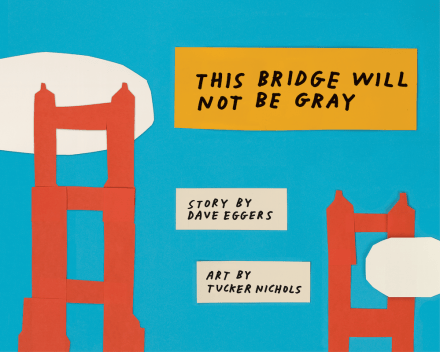
This Bridge Will Not Be Gray

Written by Dave Eggers | Illustrated by Tucker Nichols


“In the beginning there was a bridge.” Well, to back up a bit there was a bay that led to the Pacific Ocean. The opening between the two shores that enclosed the bay was called the Golden Gate. “On one side of the Golden Gate was the Presidio, a military base at the top of the city of San Francisco. On the other side there were only hills, green and yellow, rising high above the sea.” Beyond these hills towns dotted the coastline.

People traveled between these shores by boat or by driving way out of their way. Many times people had thought about building a bridge across the bay, but they were afraid it would ruin the beauty of the land. At last it was decided that a bridge should be built. The year was 1928 and Joseph Strauss, an expert on bridges, was hired to design it. What he came up with looked more like the skeleton of a roller coaster, and while it would be strong, it would also be ugly.

celebrate-picture-books-picture-book-review-this-bridge-will-not-be-gray-people

Image copyright Tucker Nichols, courtesy of mcsweeneys.net

People agreed that for such a beautiful spot, a beautiful bridge was needed. Joseph Strauss then asked for help in developing a plan for the bridge. Leon Moisseiff, known for designing the Manhattan Bridge in New York, came on board. Leon’s idea was for “a suspension bridge, one with swooping lines and tall towers.” The drawings were light and airy and…beautiful. People liked it very much.

“But still the bridge appeared a bit stern in style. So Joseph and Leon asked another person, named Irving Morrow, to help out.” Irving and his wife Gertrude had a different idea about what the bridge could be. With vertical fluting, “art deco flourishes,” pedestrian walkways, and curved lamps lighting the way, “the bridge could be both a bridge and something like art.”

Steelworkers in Maryland, Pennsylvania, and New Jersey built the pieces of the bridge. They were shipped to California by train and by boat. Finally, it was time to construct the bridge. Men had to dive deep into the icy waters of the Pacific Ocean and climb high into the sky while constructing it. It was estimated that it would take 4 years and thousands of workers to finish it.

celebrate-picture-books-picture-book-review-this-bridge-will-not-be-gray-irving-morrow

Image copyright Tucker Nichols, courtesy of mcsweeneys.net

First the tall towers were constructed. The day they were finished was one of “jubilation” and awe as“sometimes the things humans make baffle even the humans who make them. One aspect of the bridge that had not been decided was the color, and many people had opinions on that. “The Navy thought it should be yellow and black so that ships and planes could easily see it.”

“The Army wanted it to look like a candy cane for the same reason the Navy wanted it to look like a tiger with jaundice: so that it would be easily seen by planes and ships.” Most people, though, thought the bridge should be painted black, white, or gray like most other monuments, towers, and buildings. Right now, the bridge was orange—coated with a special anti-rust paint. As Irving Morrow watched the bridge go up, he thought this orange was a beautiful color.

He suggested that the bridge be allowed to stay this color. Others thought he was “nuts.” Never had there been an orange bridge before, “and for a good portion of the human race, because something has not already been, that is a good reason to fear it coming to be.” But the people of San Francisco began to see things Irving’s way. Still, gray seemed to be the safe choice.

celebrate-picture-books-picture-book-review-this-bridge-will-not-be-gray-people-talking

Image copyright Tucker Nichols, courtesy of mcsweeneys.net

Irving, who was usually a shy and quiet sort, began to get vocal about his color preference as the completion date of the bridge came closer. Other’s began to echo his thoughts and arguments. “This bridge will not be gray!” they said. At last “the powers that be” agreed with Irving. The bridge remained orange: International Orange, in fact.

But because the wind, rain, and sun are harsh on the orange bridge, it needs to be repainted every year. Every day some part of it is being painted by dedicated workers. Is that crazy? Maybe, “But people love to paint it, and people love to look at it. The Golden Gate Bridge, which is orange, is the best-known and best-loved bridge in the world” because it is “bold and courageous and unusual and even strange.”

celebrate-picture-books-picture-book-review-this-bridge-will-not-be-gray-golden-gate-bridge

Image copyright Tucker Nichols, courtesy of mcsweeneys.net

San Francisco resident Dave Eggers has written a loving tribute not only about the very distinctive Golden Gate Bridge but to the equally distinctive, quirky, and even courageous Irving Morrow, other architects, and people of the Bay area who saw and championed art where others may only have seen function. Passages of straightforward narration are joined by rivets of whimsically inserted dialogue, soaring description, and moving insight to construct a lyrical story of vision and inspiration that both kids and adults will find fascinating.  

Tucker Nichols’ paper cut illustrations are as playful and full of imagination as a kindergarten classroom. Using simple shapes and a gorgeous palette Nichols crafts portraits, collages, and landscapes that are movingly effective in depicting the San Francisco Bay area, the rising Golden Gate Bridge, and the personalities involved in this fun history of a beloved monument.

This Bridge Will Not Be Gray is a must for school and public libraries, a wonderfully inspiring addition to children’s bookshelves, and a colorful coffee table book for any home.

Ages 4 – 10 and up

McSweeney’s, 2015 | ISBN 978-1940450476

Click here to learn more about Tucker Nichols and his work.

Bridge Day Activity

celebrate-picture-books-picture-book-review-golden-gate-bridge-coloring-page

Golden Gate Bridge Coloring Page


Get out your markers, colored pencils, or crayons and color this printable Golden Gate Bridge Coloring Page!

Picture Book Review

August 28 – Pony Express Day

celebrate-picture-books-picture-book-review-you-wouldn't-want'to-be-a-pony-express-rider-cover

About the Holiday

Today’s holiday commemorates the intrepid souls who risked life and limb to bring our ancestors important letters in a timely manner. Towns across America hold special, fun events to remember the riders who took to heart the postal carrier’s motto: “Neither snow, nor rain, nor heat nor gloom of night, stays these couriers from the swift completion of their appointed rounds.” Find a local festival or maybe reenactment and have a little Old West fun!

You Wouldn’t Want to be a Pony Express Rider! A Dusty, Thankless Job You’d Rather Not Do

Written by Tom Ratliff | Illustrated by Mark Bergin


So, you’re 16 years old and lookin’ for a job. There’s not much out there, and the pay stinks. Then you see a broadside advertising jobs with a newfangled technology. The description seems pretty good, exciting even—just up your alley. “WANTED: Young, skinny, wiry fellows not over eighteen. Must be expert riders, willing to risk death daily. Orphans preferred.” And here’s the kicker—you make $25 per week! Heck most people only make $25 a month!

You decide to apply for this Pony Express position, and your life takes off in a whole new direction—to California, to be exact! William Russell, Alexander Majors, and William Waddell own the company. It’s real name is the Central Overland California and Pike’s Peak Express Company, but that’s quite a mouthful, so the enterprise is fondly known as The Pony Express. It’s a rapid mail-delivery system that promises letters and packages will go from St. Joseph, Missouri to Sacramento, California (2,000 miles/3,200 km) in only 10 days. Can you imagine?!

Planning begins in January of 1860 and is completed in less than four months. Hundreds of horses are bought and about just as many riders are trained (they have to learn how to change horses in two minutes or less). Along the route 157 relay stations are also constructed. All this is to supply communication for the many pioneers who are steering their Conestoga Wagons out West, battling floods, snow, disease, and those pesky obstacles called the Rocky Mountains to find a better life for themselves and their families. 

You’re young, enthusiastic, and want to be part of this new landscape. You strap on your company-given “two revolvers, rifle, and Bowie knife,” have your horse shod, and take the Rider’s Oath: “While in the employ of A. Majors, I agree not to use profane language, get drunk, gamble, treat animals cruelly, or do anything else that is incompatible with the conduct of a gentleman.” Well, Dang! (Oops!)

The route West is fraught with danger, so forts and trading posts pop up along the way to protect and supply Pony Express riders. The pioneers also keep an eye out for you, so it’s handy to get to know them. While you ride you can be assured that you have the latest in mail-carrying gear. A special saddle modeled on those used by Spanish vaqueros (cowboys) is more comfortable for the long miles, and a mochila (a leather pouch that fits over the saddle) is stuffed full of the mail.

celebrate-picture-books-picture-book-review-you-wouldn't-want'to-be-a-pony-express-rider-interior-art

Image copyright Mark Bergin, courtesy Scholastic

You were right about the job being exciting! Every day brings a new experience: dehydration, heat exhaustion, blizzards, frostbite, floods, 6-to-10-hour hard rides, plus you’re a target for outlaws and bandits. It’s worth it all, though, to bring a smile to someone’s face when they open a letter from their far-away sweetheart—and all for only $5.00 a letter (that’ll be about $120 in 2016). Just be thankful it’s not a business letter—that’ll set ya back $30, which is…uh…umm…well, a heck of a lot (oops!).

In 1844 some upstart named Samuel F. B. Morse invented the telegraph that uses a code of electrical signals to deliver messages. It only takes 5 years for all the major cities to be connected, and as more people move west, so do the poles and electrical wires.”In June 1860, congress authorizes construction of a telegraph line to California. If the telegraph ever reaches the West Coast, you will most likely be out of a job.” One thing about this Morse Code, though. Because “messages sent long distances have to be copied and recopied several times, mistakes are common.” Betcha in the future, though, there will be some kinda automatic correction system, and errors will be left back here in the past.

It’s 1860—a presidential election year—and the campaign has been ugly and hard fought. The country is divided, and fast delivery of the election results is crucial to keeping the United States together. You are part of saving the country, as the news of Abraham Lincoln’s victory reaches California from Washington in only 7 days and 17 hours—a cross-country delivery record! Within a year, the U.S. is at war and danger looms for the Pony Express riders. To protect the riders and the mail, the Overland Stage Company (soon to be known as Wells Fargo) and their enclosed stagecoaches take over.

And the Pony Express? Well, as you probably know, it’s losing money and limping along, what with the competition and the war and all. In October 1861 the transcontinental telegraph is completed and the Pony Express stables its horses. And you? You’ll be fine. With all the experience you’ve gained, you can easily find a job as a scout to guide folks over the trails to their new Western homes.

These “You Wouldn’t Want to Be…” series of books brings history to life by revealing the seamy side of events—and aren’t those really the most fascinating? Tom Ratliff corrals a heap o’ info on the Pony Express and the pivotal changes the United States experienced during the 1860s. While the text trots out fun sidebars, the short chapters are loaded with concrete facts about the development of the American West as it grappled with the need for faster and better communication.

Mark Bergin depicts the concepts presented with bold, vivid cartoon-inspired illustrations of the pioneers, riders, inventors, and townspeople who made up the Pony Express system. The people’s faces register well-earned skepticism, fright, and weariness, but also pride and excitement to be on the cutting edge of technology. Maps portray the 2,000-mile route from America’s middle to its western sea.

The Pony Express may be long gone, but as this book affirms, the more things change the more they stay the same. Teachers, researchers, and anyone interested in history will want to hoof it to add You Wouldn’t Want to Be a Pony Express Rider! to their collection.

Ages 7 – 10

Scholastic, Inc., 2012 | ISBN 978-0531209479

Pony Express Day Activity

celebrate-picture-books-picture-book-review-pony-express-coloring-page

Pony Express Mail Carrier Coloring Page


Can you color this printable Pony Express Mail Carrier Coloring Page as quickly as a rider could deliver the post? You’ve got 10 days—so don’t rush!

Picture Book Review
August 15 – National Relaxation Day

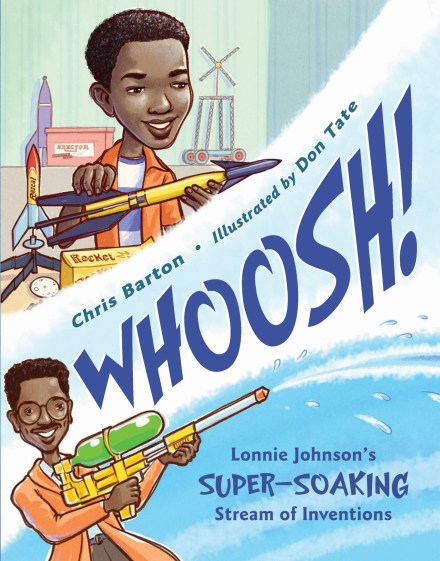
celebrate-picture-books-picture-book-review-whoosh!-lonnie-johnson's-super-soaking-stream-of-inventions-cover

About the Holiday

Relaxation Day was founded in 1985 by then fourth-grader Sean Moeller, who already knew a thing or two about balance in life when he suggested that “cleaning and real work are not part of relaxation.” Today’s holiday gives you permission to kick back and enjoy yourself. The subject of today’s book invented a great way to take advantage of a day off—and also demonstrates that sometimes work and relaxation go hand-in-hand!

WHOOSH! Lonnie Johnson’s Super-Soaking Stream of Inventions

Written by Chris Barton | Illustrated by Don Tate


Lonnie Johnson had a way with stuff. In his hands bolts and screws, gears and springs, spools, clothespins, “spare parts his dad let him bring in from the shed, and various other things he’d hauled back from the junkyard” fueled Lonnie’s ideas for inventions and rocket ships. The kids at school loved to watch him launch the rockets he’d devised on the playground. Lonnie wanted to have a career as an engineer. Getting there took a lot of determination and courage. Once, the results of a standardized test said that he would not make a good engineer. Lonnie felt discouraged, but he knew that the person who had graded his test didn’t know him—or Linex.

celebrate-picture-books-picture-book-review-whoosh!-lonnie-johnson's-super-soaking-stream-of-inventions-young-lonnie-inventing

Image copyright Don Tate, courtesy of charlesbridge.com

Linex was the robot Lonnie had built from scrap metal. “Compressed –air cylinders and valves allowed Linex’s body to turn and its arms to move. The switches came from an old, broken jukebox. Lonnie used a tape recorder to program Linex, and as a bonus the reels looked like eyes.” Lonnie’s goal was to enter Linex in a science fair, but first he wanted to be able to program it. It took several years before he discovered how. Using his little sister’s walkie-talkie, Lonnie took Linex to the “1968 science fair at the University of Alabama—where only five years earlier, African American students hadn’t even been allowed.” Lonnie’s team won first place.

Lonnie went to college at Tuskegee Institute, where he realized his dream of becoming an engineer. His career “took him beyond Alabama—way beyond.”  He went to work for NASA. Before the orbiter Galileo could be sent to Jupiter, Lonnie developed a system that would ensure the craft would have a constant supply of power for its computer memory in case the main power was lost. Some fellow scientists doubted his idea would work, but it did. “As it photographed Jupiter and its moons, Galileo was supported by the power package that Lonnie designed.”

celebrate-picture-books-picture-book-review-whoosh!-lonnie-johnson's-super-soaking-stream-of-inventions-linex

Image copyright Don Tate, courtesy of charlesbridge.com

Even though Lonnie worked for NASA, he continued tinkering with his own ideas—in his own workshop. One problem he was trying to solve involved the need for the world’s refrigerators and air conditioners to have a cooling system that didn’t use the damaging chemical R-12. “He had an idea for using water and air pressure instead.” He built a prototype and experimented with it in his bathroom sink. When he turned his pump and nozzle on, a stream of water blasted across the room.

Suddenly, Lonnie saw another use for his invention—as a water gun. He created a design small enough for children’s hands, and tested it at a picnic, where it was a hit. Lonnie took his idea to a toy company…and another…and another. Finally one company agreed to make his water gun. Spurred on by this success, Lonnie found investors to help him build other original inventions: “a water-propelled toy airplane, two kinds of engines, and his cooling system” that had led to the water gun. He even quit his day job to devote his time to inventing.

But things don’t always work out. Each project fell through—even the water gun. It was a scary time as he and his family had to move out of their house and into an apartment. But Lonnie believed in himself. He took his water gun to another toy company. In 1989 he found a toy company willing to take a look. Lonnie made the trip to Philadelphia and wowed the executives with his invention.

celebrate-picture-books-picture-book-review-whoosh!-lonnie-johnson's-super-soaking-stream-of-inventions-water-powered-nozzle

Image copyright Don Tate, courtesy of charlesbridge.com

Now kids everywhere enjoy the fun of the Super Soaker. Today, Lonnie can be found in his workshop doing what he loves: “facing challenges, solving problems and building things” because “his ideas just keep on flowing.”

Chris Barton’s biography of Lonnie Johnson is a fascinating look at a man who succeeds in turning “No” into “Yes” by the power of his intelligence, ideas, and determination. Kids will love hearing about how one of their favorite toys came to be and will be inspired to chase their own dreams despite challenges and setbacks. Barton’s detailed narration provides a full picture of Lonnie Johnson and his times, specifics that attract and inform like-minded kids. Including the results of Lonnie’s exam should encourage kids who think differently. The story is enhanced by the conversational tone that makes it accessible to kids of all ages.

Don Tate illuminates Lonnie Johnson’s life story with his bold, full-bleed paintings that follow Lonnie from his being a child with big ideas to becoming a man who has seen these ideas through to success. With an eyebrow raised in concentration, young Lonnie demonstrates confidence and skill as he works on an invention, and kids will love seeing the tools of his trade laid out on the kitchen table. With his eyes narrowed in frustration and disappointment, Lonnie reads the results of his childhood exam. As Lonnie grows older and designs systems for NASA, the illustrations depict the schematics of the Galileo power package and Lonnie’s surprise at the strength of the water stream in his prototype cooling design. As all kids know, the spurt of a Super Soaker is awesome, and this fact is demonstrated in a “Wowing” fold-out page.

WHOOSH! Lonnie Johnson’s Super-Soaking Stream of Inventions is a welcome biography of the man who designs systems for the greater world but has never lost his youthful enthusiasm to invent.

Ages 5 – 10

Charlesbridge, 2016 | ISBN 978-1580892971

Check out more fiction and nonfiction books by Chris Barton on his website!

Discover more books written and illustrated by Don Tate as well as a portfolio of his work and book-related activity guides on his website!

National Relaxation Day Activity

celebrate-picture-books-picture-book-review-kids-in-pool-coloring-page

Dive In! Coloring Page


The Super Soaker is a great way to cool off! Another relaxing water activity is swimming in a pool! So dive in to this printable cool pool Dive In! Coloring Page!

August 7 – National Lighthouse Day

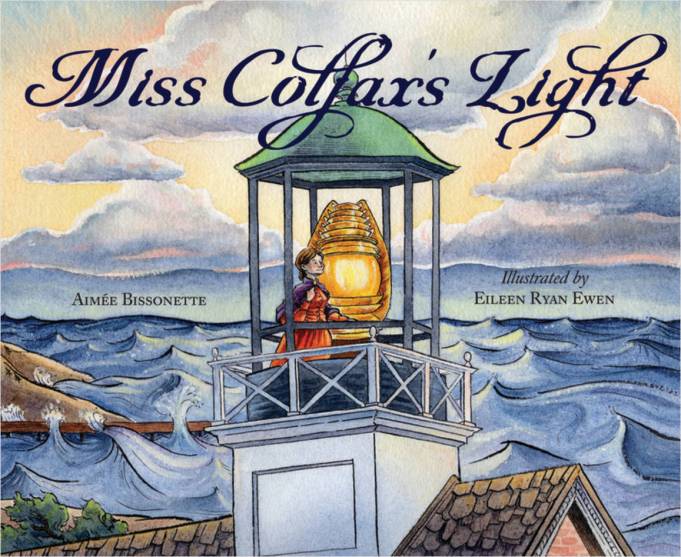
celebrate-picture-books-picture-book-review-miss-colfax's-light-cover

About the Holiday

Lighthouses have been in use since the earliest days of sea-going vessels. Built to warn sailors of dangerous and damaging rocks and reefs, these sentinels are a picturesque and fascinating part of history. From man—and woman—tended lights to today’s automated systems, lighthouses are a beacon of inspiration and imagination.

Miss Colfax’s Light

Written by Aimée Bissonette | Illustrated by Eileen Ryan Ewen


In 1861 when Harriet Colfax’s brother fell ill and decided to leave Indiana, Harriet had two options: she could leave with him—after all she had come to Indiana with him and worked with him at their newspaper—or she could stay on as the lighthouse keeper of the Michigan City Lighthouse, making $350 a year. Most women might have chosen to leave, but Harriet did not want to give up her independence or leave her best friend, Ann. She took the job as lighthouse keeper even though many in town thought she was too weak or too inexperienced to do the work.

celebrate-picture-books-picture-book-review-miss-colfax's-light-Michigan-city-lighthouse

Image copyright Eileen Ryan Ewen, courtesy of sleepingbearpress.com

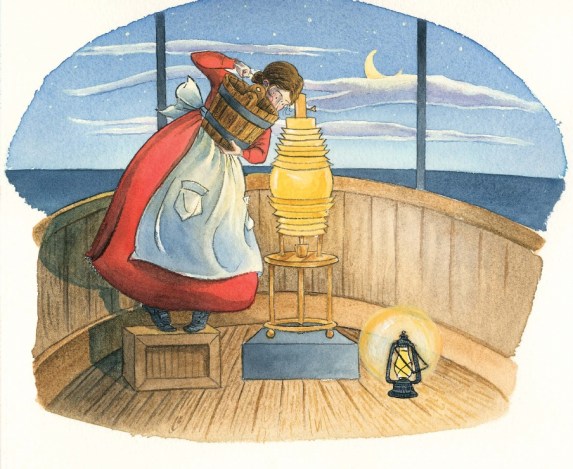
Harriet knew the ships on the sometimes wild waters of Lake Michigan—one of the northern United States’ Great Lakes—relied on the lighthouse to keep them from danger. Twice every night she had to carry “whale oil in a bucket up narrow stairs to the top of the lantern tower” to refill the light and then polish the Fresnel lens. During the day, she “cleaned and painted…varnished the woodwork and shined the brass…and wrote notes in her log.”

It didn’t matter if Harriet was tired or sick or if winter storms rocked the shore, Harriet’s work went on. In 1871 a beacon light was installed at the end of the Michigan City east pier. Now in addition to the main lighthouse, Harriet had to keep this signal lit too. To do so required a long walk down a wooden catwalk that jutted far out into the lake. At times the freezing water roiled and splashed over the catwalk, making the walk tricky and dangerous. By this time lard had replaced whale oil as fuel. While it was cheaper and easier to get, it also had to be heated to pour. Sometimes on frigid winter nights “the lard oil hardened in the cold and Harriet had to fight back through the wind to reheat the oil” on her stove.

celebrate-picture-books-picture-book-review-miss-colfax's-light-harriet-adding-oil

Image copyright Eileen Ryan Ewen, courtesy of sleepingbearpress.com

In 1874 the beacon light was moved to the west pier—farther away. Instead of being within walking distance, Harriet now had to “row a small boat across a creek, hike the far shore, and cross a longer catwalk to light the beacon light.” One night in 1886 storms raged as Harriet made her way down the west pier. “Driving sleet covered her coat with ice. Sand from the dunes along the lake pelted Harriet’s face, stinging her cheeks. Her boots slipped and slid on the catwalk.” Only moments after she finished filling the beacon light and stepped off the catwalk, “a deafening screech filled the air” as the beacon tower “ripped from its moorings and crashed into the lake.”

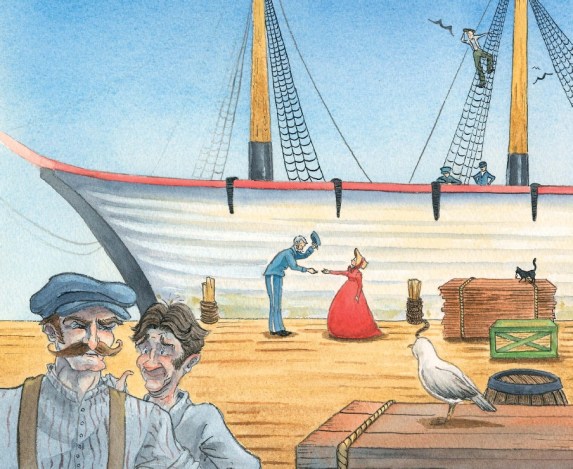
Harriet’s dedication to the Michigan City Lighthouse continued every day and every night for 43 years. People in town came to call the landmark “Miss Colfax’s Light,” and ship captains named it “Old Faithful.” Over the years her vantage point on the tip of the shore allowed Harriet to experience more than stormy seas. She also saw “brilliant sunsets, lunar eclipses, and silent, dancing northern lights. She saw tall-masted schooners with white sails give way to steamships of iron and steel.”

celebrate-picture-books-picture-book-review-miss-colfax's-light-meeting-a-ship-captain

Image copyright Eileen Ryan Ewen, courtesy of sleepingbearpress.com

In 1904, when Harriet was 80 years old, the Michigan City Lighthouse underwent a renovation. It acquired a fog signal, and the oil-burning mechanism was replaced with a steam engine and boilers with huge coal-fired furnaces that required several keepers. Although Harriet was sad to leave her life as a lighthouse keeper behind, she understood. With the same bravery that had brought her to the lighthouse, she opened the door and stepped out to what came next.

The life of Harriet Colfax needs no embellishment to reveal the kind of determination and dedication it took to keep the Michigan City Lighthouse shining. Aimée Bissonette tells this brave woman’s story straightforwardly, focusing on particular moments when her duties were increased or her resolve challenged. Harriet’s personal motto that kept her going: “I can do this” is repeated throughout the book, echoing the revolving beacon that shines continuously on the shore of Lake Michigan. Actual entries from Harriet’s log punctuate the text, lending authenticity and Harriet’s voice to the story.Children will be fascinated by this snapshot of American (and world) history.

celebrate-picture-books-picture-book-review-miss-colfax's-light-harriet

Image copyright Eileen Ryan Ewen, courtesy of sleepingbearpress.com

Eileen Ryan Ewen’s action-filled paintings of Harriet and her work beautifully demonstrate to readers Harriet’s incredible will and perseverance under the most difficult circumstances. The narrow stairs of the lighthouse pose daunting in the middle of the night; the seas of Lake Michigan surge and lap at Harriet and the winds buffet her as she navigates the catwalk; and an exhausted Harriet stands at the stove melting lard to light the lens. Children interested in ships and the sea will find much here to excite their imaginations.

An author’s note about Harriet Colfax follows the text along with a glossary of terms used in the book.

Ages 6 – 9

Sleeping Bear Press, 2016 | ISBN 978-1585369553

Meet Aimée Bissonette and learn more about her books and work on her website!

To view Eileen Ryan Ewen‘s portfolio, sketchbook, and other books, visit her website!

National Lighthouse Day Activity

celebrate-picture-books-picture-book-review-lighthouse-coloring-sheet

Lighthouse Coloring Page


Lighthouses are a striking part of any seashore landscape. Here is a printable Lighthouse Coloring Page for you to decorate!

July 26 – It’s Park and Recreation Month

celebrate-picture-books-picture-book-review-the-streak-how-joe-dimaggio-became-america's-hero-cover

About the Holiday

This month we recognize all the parks—national, state, local, and more—that provide fun and recreation for those who love the great outdoors. There is perhaps no sport that combines the physical aspects of “park” with the spirit of “recreation” quite like baseball. The crack of the bat connecting with the ball for a home run, the thwack of an outfield catch, the collective cheers, and the aroma of ballpark snacks all mix to create a perfect outing—whether your team wins or not!

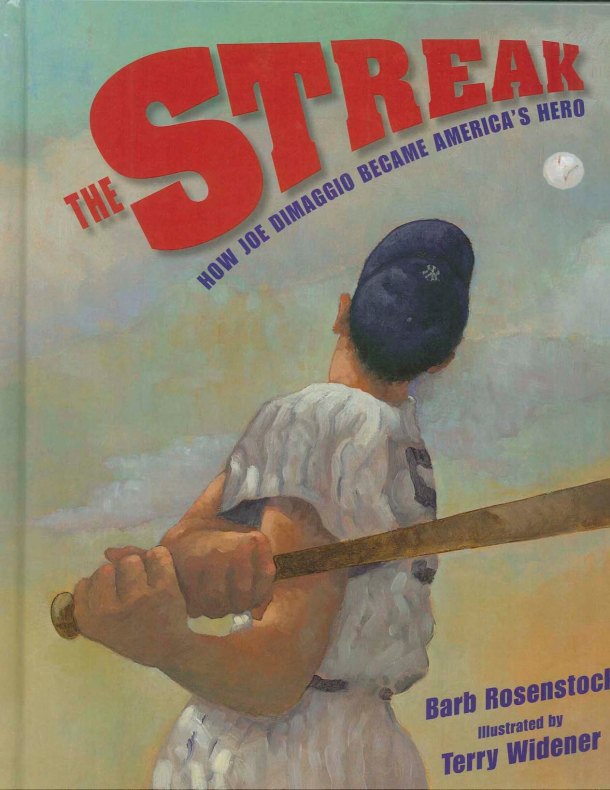
The Streak: How Joe DiMaggio Became America’s Hero

Written by Barb Rosenstock | Illustrated by Terry Widener


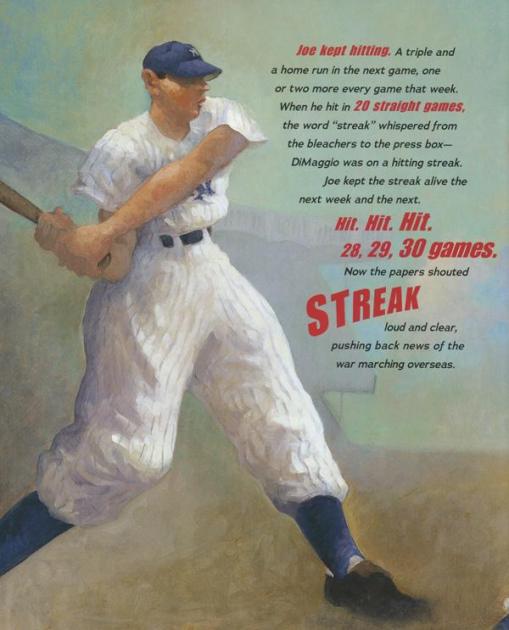
With a single hit to left field, Joe DiMaggio turned a pre-World War II summer into something that cheered and united all Americans. It was May 15, 1941 when the New York Yankees sent Joe to the plate. He hit a single—not much to help them overcome their 13 to 1 loss, but it was in the next game and the next and the next…that people started to take notice. In every game Joe made a hit. Some were home runs, some triples or doubles, and when “he hit in 20 straight games, the word ‘streak’ whispered from the bleachers to the press box—DiMaggio was on a hitting streak.”When Joe reached 30 straight games with a hit, the newspapers printed bold headlines and articles that temporarily pushed “back news of the war marching overseas.”

Joe DiMaggio wasn’t like other well-known players. He was the son of immigrants and grew up in San Francisco with eight brothers and sisters, working in the family fishing business and selling newspapers to make extra money. He was used to hard work, and this ethic served him well as a baseball player.

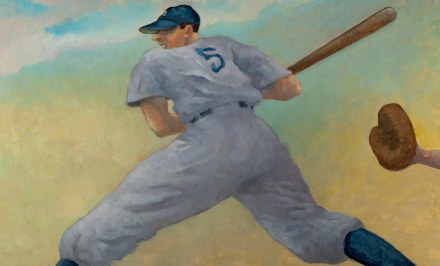
Everyone knew about Joe’s bat “Betsy Ann” and the care he gave her. He had treated her wood and sanded her handle, shaving off “fractions of an ounce until she fit his hands alone. Betsy Ann was his treasured ‘ball bat,’ used for games only.” When Joe faced the pitcher at the plate, he didn’t go through an elaborate routine. His wide-legged stance was well recognized by fans who knew he would get the job done. And that summer in 1941 he did.

celebrate-picture-books-picture-book-review-the-streak-how-joe-dimaggio-became-america's-hero-joe-hitting

Image copyright Terry Widener, courtesy of terrywidenerart.com

He and Betsy Ann “whipped around, smashing fastballs, knuckleballs, screwballs, and curves. DiMaggio could hit off anyone, any pitch, anywhere.” Soon he was in sight of the record—41 games. Every pitcher wanted to be the one to end Joe’s streak, and with each game America was on the edge of its seat. Joe felt the responsibility. He didn’t show it on the field, but in his off time he hardly slept, his stomach hurt, and he couldn’t eat.

The streak continued—38…39…40. Tying the record at 41 and breaking it would come in a doubleheader against the Washington Senators. The bleachers were packed that hot 29th of June. In the first game Joe tied the record. The second game would test Joe’s mettle. When his turn at bat came, he reached for Betsy Ann. She wasn’t in the dugout. He saw right fielder Tommy Henrich taking practice swings and yelled to him that he had Betsy Ann. But he didn’t. All the Yankees players searched the dugout for Joe’s bat, but Betsy Ann was nowhere to be seen. Someone has stolen her.

Joe grabbed another bat, but with three times up and three times out, it looked as if Joe’s streak was over. Then Tommy held out his own bat with the reassurance that “there’s some hits in here.” Joe took Tommy’s bat and went to the mound. He took his wide-legged stance and went to work. On the second pitch “Joe whacked a line drive past the left fielder’s glove. Stomping screams shook the stands. No one could stop DiMaggio. No one.”

celebrate-picture-books-picture-book-review-the-streak-how-joe-dimaggio-became-america's-hero-joe-hitting

Image copyright Terry Widener

Joe focused on the game, rounding first on his way to second base. But suddenly with the cheers of the fans ringing in his ears, his accomplishment settled in. “He tipped his cap, flickered a smile, and trotted weak-kneed back to first.” He got a pat on the back from the first base coach, a handshake from the Senators’ first baseman, and adoration from the kids and adults in the stands. With one hit—and 41 more—Joe was America’s hero.

A week later Betsy Ann was found in New Jersey and given back to Joe. His streak continued to 56 games, and he helped the Yankees win the 1941 World Series. When America became involved in World War II, people could remember “watching sureness and strength win against impossible odds. The country learned to pull together and celebrate together. It was ready to go to work” the way Joe DiMaggio had.

Barb Rosenstock sets this poignant biography of one of baseball’s greats firmly within the atmosphere that made Joe DiMaggio’s achievement about much more than baseball. With prose that echoes DiMaggio’s gentle strength, Rosenstock recreates the excitement, growing suspense, and mystery surrounding his phenomenal streak. With lovely, flowing description Rosenstock deftly sprinkles in DiMaggio’s working-class immigrant background, his emotions, and historical events, giving The Streak depth and resonance for today’s readers.

Accompanying the text are Terry Widener’s dramatic paintings. Opening the pages is akin to strolling through an art gallery exhibition. The depictions of the players swing, twist, slide, and throw with realistic action. As an infielder fumbles DiMaggio’s hit in one foreground illustration, Joe can be seen in the background dropping Betsy Ann and taking off for first base. DiMaggio’s signature stance, the frantic search for Betsy Ann, DiMaggio’s weariness, and the press that followed his every swing are all gorgeously rendered in muted tones of green, gold, and brown. Sports fans will love the pictures of the baseball stadiums and the close-up view of Betsy Ann.

An extensive Author’s Note, DiMaggio’s career statistics, and resources follow the text.

The Streak: How Joe DiMaggio Became America’s Hero would be a welcome addition to any library.

Ages 6 and up

Calkins Creek Books, Boyds Mills Press, 2014 | ISBN 978-1590789926

To see more books by Barb Rosenstock as well as extensive educational guides for The Streak and other books, visit her website!

Learn more about Terry Widener, his books, and his art on his website!

Take a look at the trailer for The Streak—it’s a home run!

Park and Recreation Day Activity

celebrate-picture-books-picture-book-review-baseball-word-search

Take Me Out to the Ballgame Word Search


Diamonds aren’t just for playing baseball—they make great word search puzzles too! Take a run at this printable Take Me Out to the Ball Game word search! 

July 24 – Amelia Earhart Day

celebrate-picture-books-picture-book-review-i-am-amelia-earhart-cover

About the Holiday

On July 24, 1897 Amelia Mary Earhart was born. With astounding bravery and perseverance, Earhart became the first woman to fly solo across the Atlantic Ocean. She was an author; a founder of the Ninety-Nines, an organization for women pilots; an instructor and career counselor; and she broke many aviation records. Her disappearance over the Pacific Ocean in 1937 remains one of the most baffling historical mysteries.

I am Amelia Earhart

Written by Brad Meltzer | Illustrated by Christopher Eliopoulos


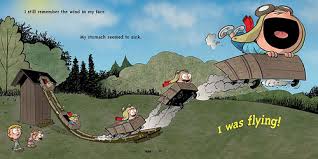
Even as a child Amelia Earhart chafed at the idea that girls could only wear dresses, play with dolls, and have “unladylike” adventures. At the age of seven Amelia and her sister built a roller coaster in their backyard by placing two planks against a shed and making a car from a packing crate with roller skate wheels on the bottom. They even greased the wood to make it “super-fast.”

Amelia took the first ride. With the wind in her face she launched off the end of the ramp, catching air and her first feeling of flight. She crash landed a minute later, but declared the experience, “awesome!”

celebrate-picture-books-picture-book-review-i-am-amelia-earhart-interior-art-no-girl-stuff

Image copyright Christopher Eliopoulos

When Amelia was 23 she met Frank Hawks, who took her on her very first flight for ten dollars. It only took her ten minutes to realize that “she had to fly.” To save money for flying lessons Amelia took on many jobs. She worked as a truck driver, a stenographer, and a photographer. In time she learned to fly and within six months of becoming a pilot, she bought a bright yellow biplane that she named Canary.

Amelia admitted that she wasn’t a natural or even the best pilot, but she worked hard to learn the skills she needed. She also bravely dared to do what others wouldn’t or couldn’t. Because of her determination she became the first woman to fly across the Atlantic and then the first woman to fly solo across the Atlantic. At a time when people still traveled from America to Europe by boat, no one thought a woman would be able to fly that far.

To make the flight required the kind of grit that Amelia possessed. The trip took 14 hours and 56 minutes with no stops and no breaks, and when Amelia landed she broke the record for the fastest Atlantic flight ever. She broke other records too, including the woman’s altitude record and a speed record. Despite her success, whenever she set a new goal there were always people who told her she couldn’t do it. But she never let that stop her.

celebrate-picture-books-picture-book-review-i-am-amelia-earhart-interior-art-roller-coaster

Image copyright Christopher Eliopoulos

Her life and achievements serve as inspiration to all who aspire to great heights. Amelia’s advice? “Whatever your dream is, chase it. Work hard for it. You will find it. It is the best lesson I can give you.” And she added this reminder: “I hope you’ll remember that the greatest flight you’ll ever take, is the one no one has tried before.”

Part of Brad Meltzer’s I am… series of biographies, this portrait of Amelia Earhart highlights the traits of bravery and individualism—evident from her youngest years—that fueled her passion for adventure and breaking barriers. Perfectly suited for its audience, the text is conversational and includes funny asides from young Amelia to her readers. The repeated repartee between those who doubted her and Amelia (“you sure this is a good idea?” and “This isn’t a good idea. It’s the best idea!”) emphasizes Amelia’s determination and self-belief that will inspire kids to think likewise about their own dreams. The book follows Amelia from her childhood through her young adulthood and into her record-breaking years with well-chosen facts that illuminate but do not overwhelm. As this is a book to inspire children to reach for their dreams, the book makes no mention of Amelia’s eventual disappearance over the Pacific Ocean, instead leaving kids with wise words from this most iconic and fascinating adventurer.

Children love the accessibility of Christopher Eliopoulos’ I am… series illustrations! Enthusiasm and joy radiate from Amelia Earhart’s face as she races to meet the world head-on. Her dismay with typical “girl stuff” as well as her excitement when flying is evident in her very kid-like expressions. The scenes of Amelia building and riding her homemade roller coaster will make kids’ eyes widen in delight. Amelia’s various flights and planes are beautifully rendered in both up-close views of her aircraft as well as panoramic spreads showing her flying through clouds, over fields, and across the ocean. The full-bleed, vibrant and action-packed pictures will rivet kids’ attention to Amelia’s life and her inspiring message

Ages 5 – 9

Dial Books for Young Readers, 2014 | ISBN 978-0803740822

Keep up with what Brad Meltzer is writing and doing next by visiting his website!

Discover the cartoon world of Christopher Eliopoulos on his website!

Amelia Earhart Day Activity

celebrate-picture-books-picture-book-review-biplane-craft

Soar Toward Your Dreams Box Biplane


If you love airplanes and flying—or if you just have sky-high aspirations—you’ll have fun making your own plane from recycled materials! You can use your own creativity to decorate it or make Amelia Earhart’s Canary while you imagine yourself flying through the clouds on a beautiful day. This is a fun activity to share with an adult or older sibling too!

Supplies

  • Travel-size toothpaste box
  • 3 Long, wide craft sticks
  • 2 Short “popsicle” sticks
  • 5 Round toothpicks, with points cut off
  • Paint in whatever colors you like for your design
  • 4 small buttons or flat beads
  • Paint brushes
  • Strong glue or glue gun

Directions

  1. Empty toothpaste box
  2. Paint toothpaste box and decorate it
  3. Paint the craft sticks and 5 toothpicks
  4. Paint one small craft stick to be the propeller
  5. Let all objects dry

To assemble the biplane

  1. For the Bottom Wing – Glue one long, wide craft stick to the bottom of the plane about 1 inch from the end of the box that will be the front of the plane
  2. For the Top Wing – Glue the other long, wide craft stick to the top of the plane about 1 inch from the front of the plane
  3. For the Tail – Glue one short craft stick to the bottom of the box about ¾ inches from the end that is the back of the plane
  4. For the Vertical Rudder – Cut the end from one of the painted wide craft sticks, glue this to the back of the box, placing it half-way between each side

To assemble the wheels

  1. Cut 4 painted toothpicks ¾-inches long
  2. Cut one painted toothpick 1-inch long
  3. Glue 2 of the short toothpicks to the back of 1 button, the ends of the toothpicks on the button should be touching and the other end apart so the toothpicks form a V
  4. Repeat the above step for the other wheel
  5. Let the glue dry
  6. Glue the 1-inch long toothpick to the center of each wheel to keep them together and give them stability. Let dry

To make the back wheel

  1. Cut two ¼-inch lengths of painted toothpick and glue them together. Let dry
  2. Glue two mini buttons together to form the back wheel. Let dry
  3. Glue the ¼-inch toothpicks to the mini buttons. Let dry
  4. Glue these to the bottom of the plane in the center of the box directly in front of and touching the tail

July 20 – National Moon Day

celebrate-picture-books-picture-book-review-to-the-stars-cover

About the Holiday

Today’s holiday celebrates the astounding technological achievement that saw men land—and walk—on the moon. On July 20, 1969 Apollo 11 with astronauts Neil Armstrong, Buzz Aldrin, and Michael Collins touched down on the moon. Six hours after landing, Armstrong made the first “small step for man, one giant leap for mankind” when he descended the ladder of the space craft to the moon’s surface. He spent two and a half hours exploring our nearest neighbor. Aldrin also made a lunar walk. Between them, the two astronauts brought 47.5 pounds of material back to Earth. Millions of people watched live coverage of the moon landing on television, cheering along with NASA at this amazing feat.

To the Stars! The First American Woman to Walk in Space

Written by Carmella Van Vleet and Dr. Kathy Sullivan | Illustrated by Nicole Wong


As a child Kathy Sullivan loved to explore. Her father designed airplanes, and when he brought home blueprints, she carefully studied every line and curve. When she saw airplanes in the sky she wished she were on them, flying to exciting locations all over the world. Maps and foreign languages fascinated her. “Their strange symbols, exotic tales, and musical sounds made her feel like the world was waiting for her.” Kathy wanted to see that whole world and thought maybe she’d like to be a spy or a diplomat, but her friends and other adults told her those weren’t jobs for women.

celebrate-picture-books-picture-book-review-to-the-stars-blueprints

Image copyright Nicole Wong, courtesy of nicole-wong.com

But Kathy always followed her heart. She loved going fishing with her dad and brother, finishing the day with a swim. She “delighted in how her arms and legs moved in slow motion underwater.” Kathy was still a teenager when she learned how to pilot a plane. At first the busy instrument panel made her nervous, but she quickly learned how to manage all the “dials, buttons, and numbers.”

Kathy got a taste for the thrill of space when she bravely jumped at the opportunity to ride in a Breezy—an open air framework plane. Sitting at the very tip of the airplane, in front of the pilot, Kathy had a bird’s eye view. “The wind rushed past her face so fast it pushed her cheeks back. Higher! Faster! Young Kathy looked at the ground below her feet. She felt like she could see the whole world.”

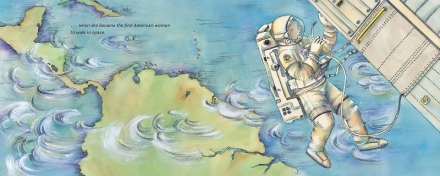
Later, as the first American woman to walk in space, she did!

celebrate-picture-books-picture-book-review-to-the-stars-spacewalk

Image copyright Nicole Wong, courtesy of charlesbridge.com

Carmella Van Vleet and Dr. Kathy Sullivan, have written a compelling biography of Dr. Sullivan that not only tells the story of her adult achievements, but also reveals the childhood and teenage motivations and influences that fostered her journey to the stars. As each event in Kathy’s young life is introduced, it is followed by an adult accomplishment: Kathy’s poring over her father’s aircraft blueprints leads to a spread of college-age Kathy studying charts in textbooks. Her enjoyment of swimming underwater is followed by an illustration showing her NASA training underwater. Her initial introduction to a plane’s instrument panel informs her later responsibilities inside the spacecraft. And the question she once asked herself as a child—what kind of job would allow her to see the whole world—is answered as the astronaut Kathy gazes down at Earth from space.

celebrate-picture-books-picture-book-review-to-the-stars-breezy

Image copyright Nicole Wong, courtesy of charlesbridge.com

Nicole Wong’s lovely, realistic watercolor and ink paintings clearly show readers Kathy Sullivan’s trajectory from curious girl to accomplished astronaut. The blueprints that Kathy studies are filled with schematics. The aqua water she swims in swirls and bubbles in the wake of her cannonball dive, the crisscrossing fields lay like a mottled green quilt under the Breezy. Especially stunning and effective are the illustrations of Dr. Sullivan’s work with NASA. Kids will love the up-close view of the spacecraft’s instrument panel with its myriad buttons and dials, and find the gorgeous two-page spreads of the space shuttle’s launch, the view from the cockpit, and Kathy’s spacewalk particularly thrilling.

Following the text are a personal note from Kathy Sullivan to her young readers, as well as more extensive biographical notes on how Dr. Sullivan discovered her love of science and the NASA missions she supported. Two more pages highlight the women of the first space-shuttle class, which included Kathy Sullivan, and other firsts by eight other women in space.

To the Stars is a wonderful book to teach children that following their own heart is the best path to future happiness and personal accomplishment. It’s a nice addition to any budding scientist’s or adventurer’s library!

Ages 5 – 9

Charlesbridge, 2016 | ISBN 978-1580896443

To find fun activities for To the Stars—including how to make space play dough—as well as other books by Carmella Van Vleet, visit her website!

To learn more about Nicole Wong and view a portfolio of her artwork, visit her website!

National Moon Day Activity

celebrate-picture-books-picture-book-review-moon-and-earth-coloring-page

Out of this World Coloring Page


The view of the Moon from Earth or of Earth from the Moon is spectacular! Have fun coloring this printable Out of this World Coloring Page!

Picture Book Review