August 30 – Toasted Marshmallow Day

celebrate-picture-books-picture-book-review-Hiro-Winter-and-Marshmallows-Cover

About the Holiday

It doesn’t matter if the weather is warm or cold, toasted marshmallows taste the same—scrumptious! Whether you like your marshmallows just lightly browned or blackened to a crisp, these ooey-gooey delights are fun to make and fun to eat! Why not make a campfire, get out the tabletop marshmallow toaster, or start up the fire pit or grill and toast up some marshmallows with your family or friends today?

Thank you to Eerdmans Books for Young Readers for sharing a digital copy of Hiro, Winter, and Marshmallows with me for review consideration. All opinions on the book are my own.

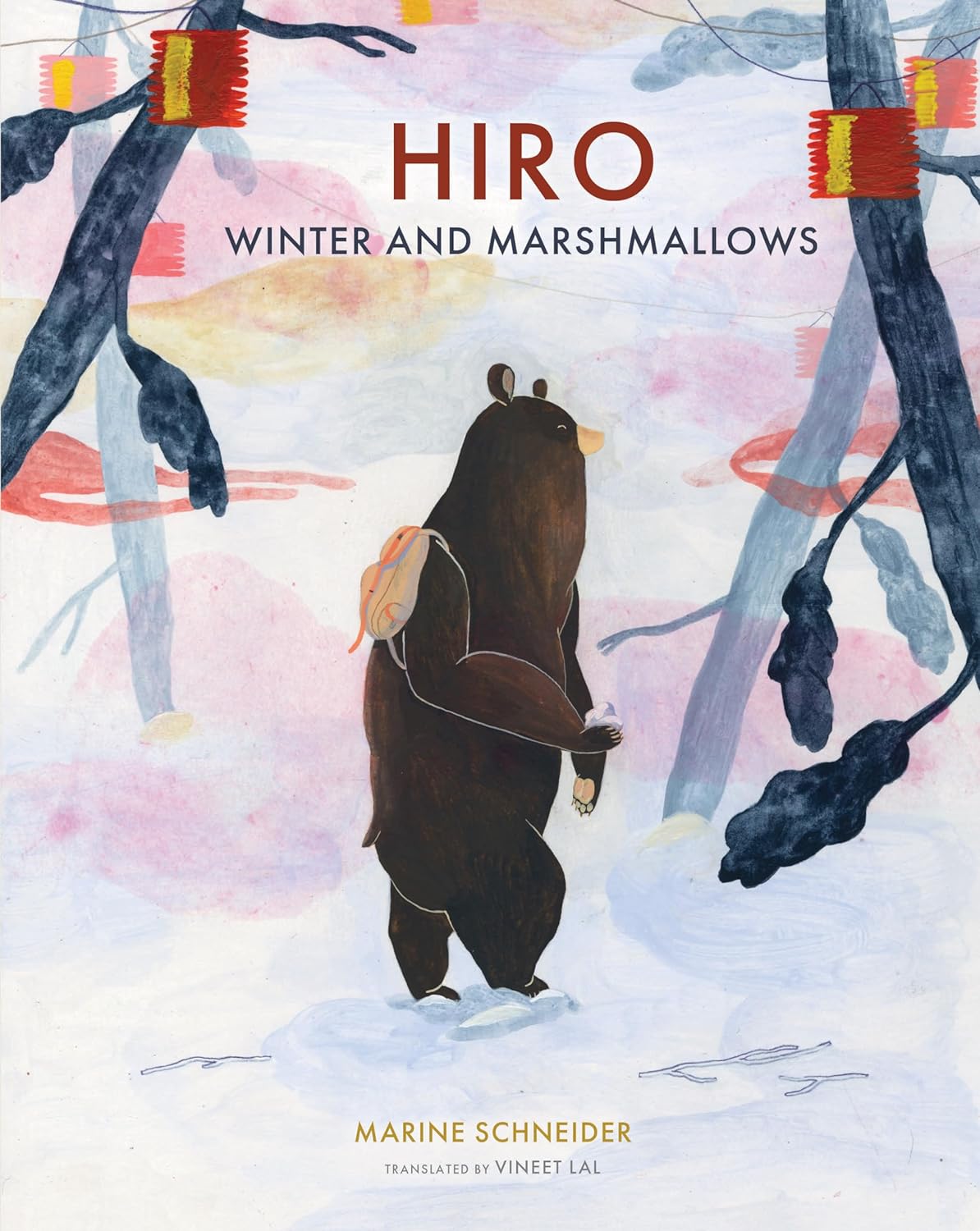
Hiro, Winter, and Marshmallows

By Marine Schneider | Translated by Vineet Lal


While the rest of her family dozes in quiet hibernation, Hiro lies awake, reading the cave wall in the glow of her flashlight. “Her stomach rumbles and her heart longs for adventure.” She decides to go for a walk. Her mother’s warning about how “‘winter can bite'” whispers in her mind as she packs up the things she wants to take along.
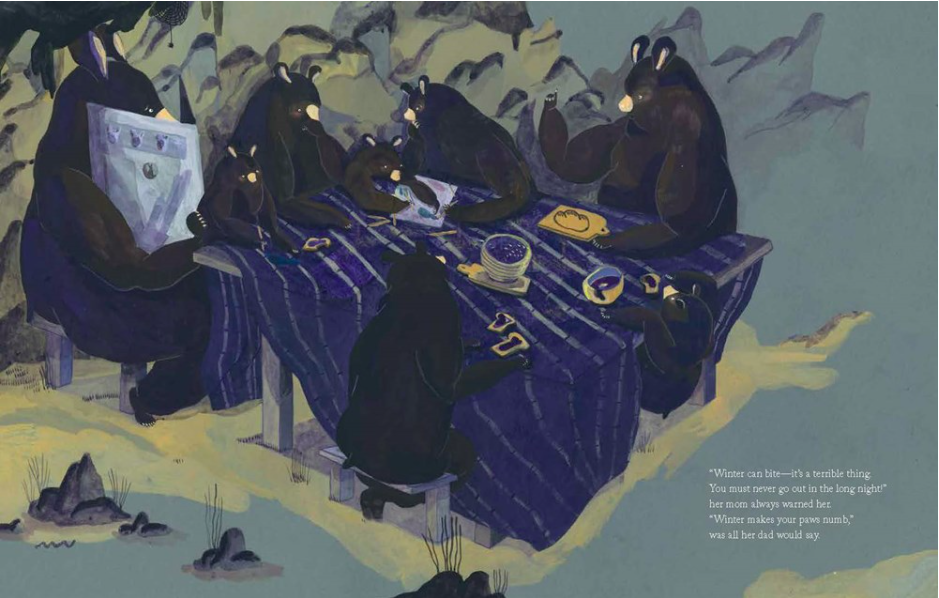
Hiro Winter and Marshmallows-around the table

Copyright Marine Scheider, 2024. Translation copyright Vineet Lal, 2024. Courtesy of Eerdmans Books for Young Readers.

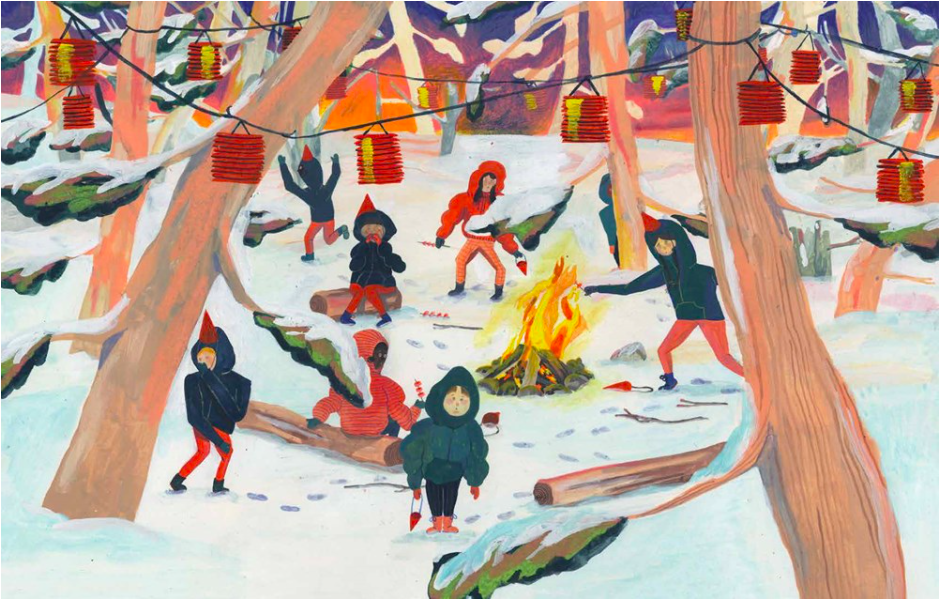
Hiro goes out into the white, icy world. “Tiny white confetti falls on her snout. She thinks it’s so beautiful.” Soon she finds tracks in the snow. She follows them until she hears unfamiliar noises and smells a wood fire burning and “the sweet, gooey scent of toasted marshmallows.” She thinks it is a party and runs toward it. 
Hiro Winter and Marshmallows-children around campfire

Copyright Marine Scheider, 2024. Translation copyright Vineet Lal, 2024. Courtesy of Eerdmans Books for Young Readers.

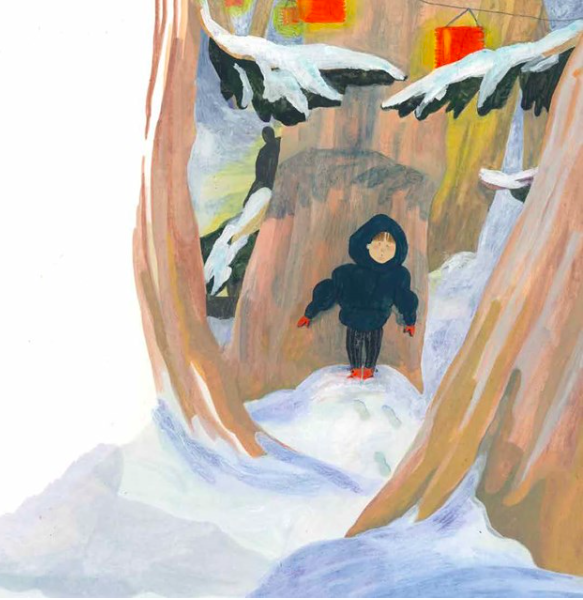
Seeing Hiro, the children around the campfire scatter. Now Hiro is alone again. “Her heart sinks a little. She feels so far from home.” She picks up one of the sticks of marshmallows abandoned by the children. She sighs, rekindling the fire. Her marshmallows begin to soften. One of the children—Émile—is hiding behind a tree, watching. He would like to talk to Hiro and whispers to her that her marshmallows are most likely ready. By way of explanation and introduction, he adds “‘I’m a marshmallow expert.'”
Hiro Winter and Marshmallows-emile

Copyright Marine Scheider, 2024. Translation copyright Vineet Lal, 2024. Courtesy of Eerdmans Books for Young Readers.

Gently, Hiro asks if the child is Winter. Giggling, Émile says no and slowly moves closer “until he joins Hiro on her tree trunk.” He asks, “‘What’s it like, being a bear?'” Hiro describes her feelings and ends with the conclusion that she likes being a bear. Hiro then asks, “‘What’s it like, being an Émile?'” They then share stories about eating and playing, running and hiding, and “making up scary tales.” Émile decides they are much the same. They toast marshmallows, and Hiro teaches Émile bear songs. They celebrate late into the night until “Émile hears his mom calling” and they both head home.

Each in their beds, the new friends think about each other, and as Hiro drifts off to sleep, she hears her mom murmur, “‘Goodness, it smells like marshmallows in here!'”

Hiro Winter and Marshmallows-hiro and emile around campfire

Copyright Marine Scheider, 2024. Translation copyright Vineet Lal, 2024. Courtesy of Eerdmans Books for Young Readers.

Marine Schneider’s gentle tale follows a simple storyline that reveals profound truths about the nature of discovery—both of the self and the world around us. Kids will appreciate Hiro’s restlessness at the thought of hibernation and her desire to see for herself what Winter is like. When Hiro comes upon evidence of a party, she’s eager to join in, but only brave Émile—his curiosity matching Hiro’s—remains to forge a new friendship. Through their conversation over shared toasted marshmallows, Hiro and Émile discover that despite their differences, they and their lives are very similar, giving them each new perspectives and understanding to ponder until, we hope, they meet again.

Schnieder’s soft illustrations radiate warmth and whimsy—from the bear family’s close-knit breakfast of blueberries and pastries around the table to Hiro and Émile’s marshmallow-roasting party around the roaring campfire. 

A cozy, comforting, and thought-provoking story, Hiro, Winter, and Marshmallows is the perfect antidote to a busy day. The book would be a welcome addition to any home, school, or library collection.

Ages 4 – 8

Eerdmans Books for Young Readers, 2024 | ISBN 978-0802856326

About the Author/Illustrator

Marine Schneider is a Belgian author and illustrator who lives in Brussels. Her works include the picture books Life and I, I Am Life, and The Path (all Little Gestalten) as well as the board books Little Bear, Baby Bear and Big Bear, Little Bear (both Abrams). A traveler at heart, she loves wandering through snowy landscapes—alone or with company. Visit Marine’s website at marine-schneider.com and follow her on Instagram @marineschneider.

About the Translator

Vineet Lal is a translator of books from French to English, including A Perfect Spot, A Head Full of Birds, The Brothers Zzli, and Home (all Eerdmans). He studied French at Princeton University and the University of Edinburgh. Vineet lives in Scotland. Follow him on Twitter @vineet_uk.

Toasted Marshmallow Day Activity
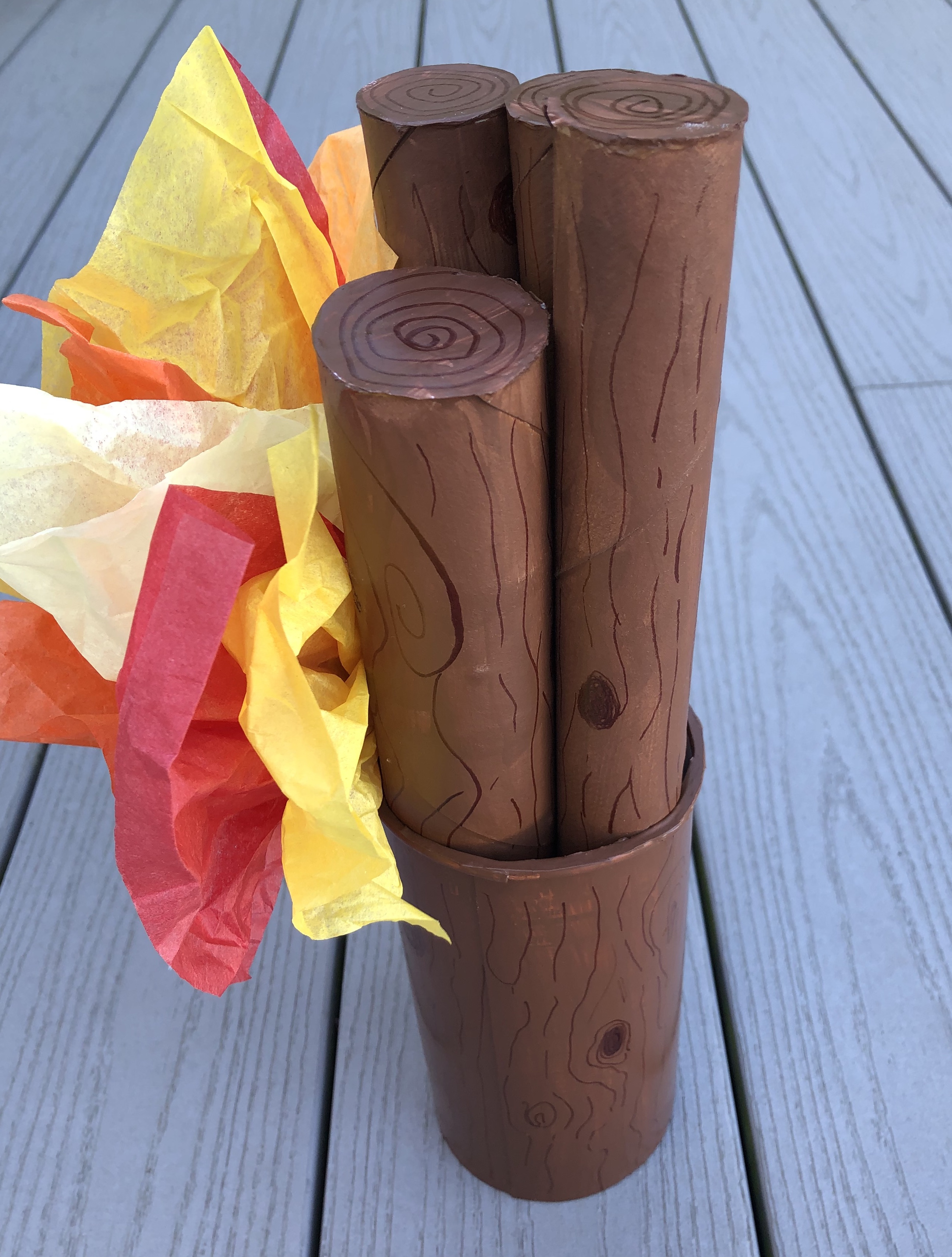
CPB - campfire craft 2

A Fun In-Home Campfire


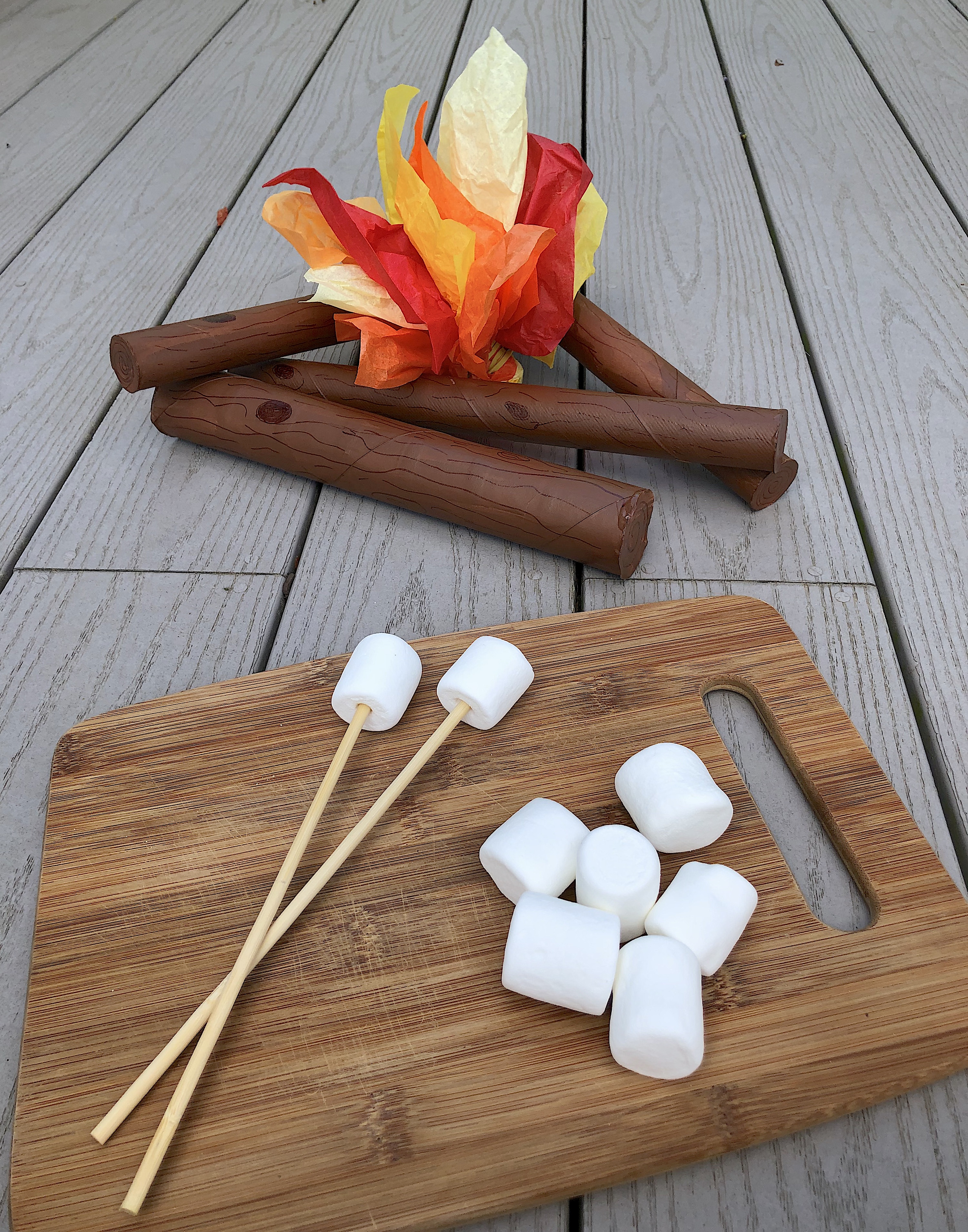
Kids and their friends and family can enjoy the cozy fun of a campfire in their own family room with this craft that’s easy to make from recycled materials. While the supplies might make the campfire artificial, kids will love it if the marshmallows are the real thing!

Supplies

  • Three or four paper or cardboard tubes
  • Cylindrical bread crumbs or oatmeal container
  • Tissue paper in red, orange, and yellow
  • Brown craft paint
  • Brown marker
  • Brown construction paper or white paper
  • Strong glue or hot glue gun
  • Chopsticks (one for each person)
  • Marshmallows

CPB - campfire craft container


Directions

To Make the Logs

  1. Cover the ends of the tubes with circles of brown construction paper or white paper and glue into place
  2. Paint the tubes and the ends if needed, let dry
  3. Paint the sides of the cylindrical container with the brown paint, let dry
  4. With the marker draw tree rings on the ends of the tubes. Decorate the sides with wavy lines, adding a few knot holes and swirls.

To Make the Fire

  1. Cut 9 squares from the tissue paper (3 in each color, about 8 to 6-inch square)
  2. Layer the colors and gather them together at one tip. Fold over and hold them together with a rubber band.
  3. To Assemble the Campfire
  4. Stack the tube logs
  5. Put the tissue paper fire in the middle of the logs

To “Roast” Marshmallows

  1. Stick marshmallows on chopsticks for “roasting” and eating!

You can keep your logs and fire in the cylindrical log until the next time!

celebrate-picture-books-picture-book-review-Hiro-Winter-and-Marshmallows-Cover

You can purchase Hiro, Winter, and Marshmallows at these booksellers

Amazon | Barnes & Noble | Bookshop (to support your local independent bookstore)

Picture Book Review


November 3 – It’s Picture Book Month

celebrate-picture-books-picture-book-review-a-head-full-of-birds-cover

About the Holiday

November is all about picture books thanks to Picture Book Month founder author and storyteller Dianne de Las Casas and co-founders author/illustrators Katie Davis, Elizabeth O. Dulemba, Wendy Martin, and author Tara Lazar. This month-long international literacy initiative celebrates print picture books and all that they offer to young (and even older) readers. With gorgeous artwork and compelling stories, picture books open the world to children in surprising ways as they entertain, explain, excite, and help children learn empathy and understanding.

I’d like to thank Eerdman’s Books for Young Readers for sending me a copy of A Head Full of Birds for review consideration. All opinions on the book are my own.

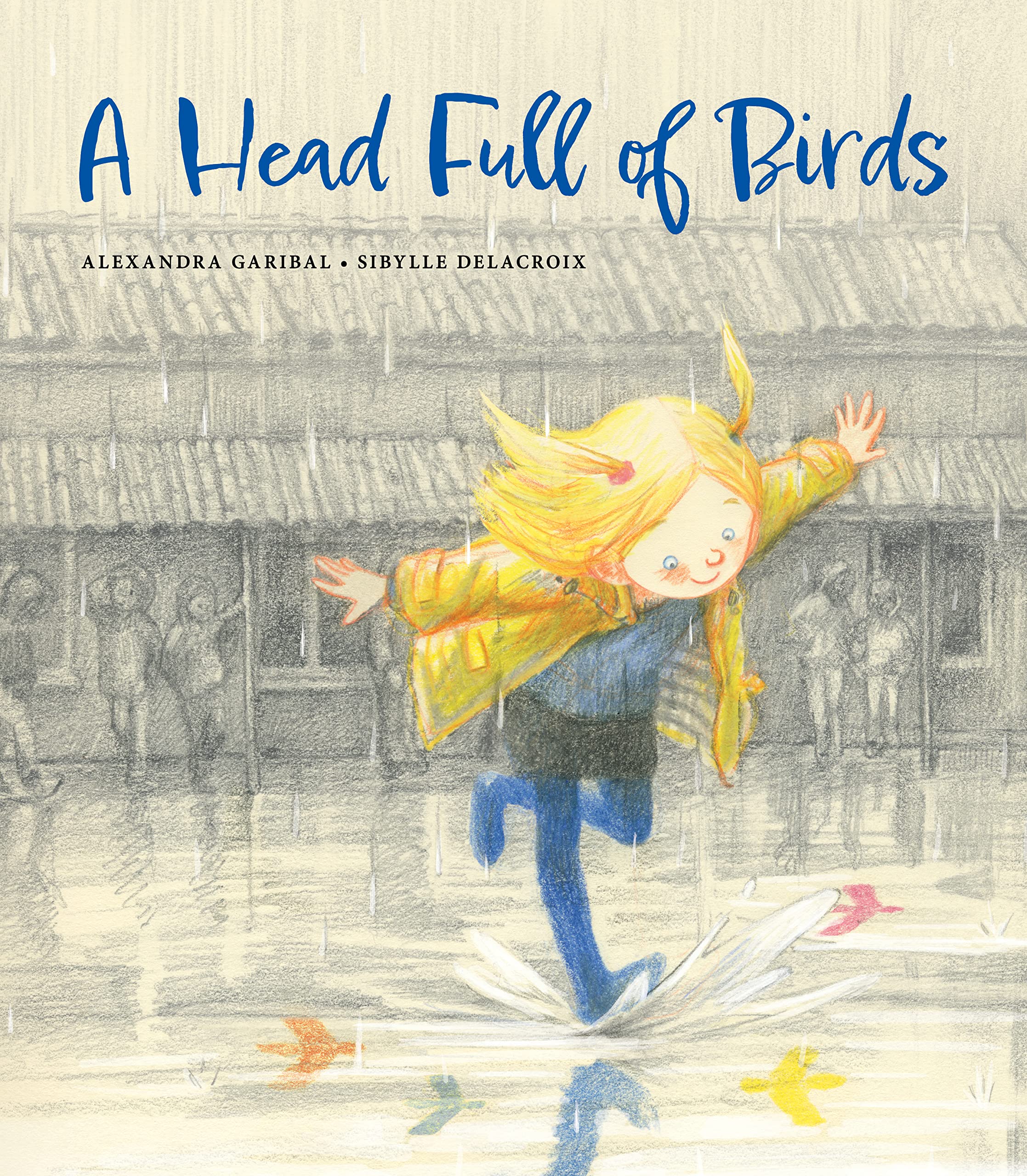
A Head Full of Birds

Written by Alexandra Garibal | Illustrated by Sibylle Delacroix | Translated from the French by Vineet Lal


Nanette is a little girl with “a head full of birds.” She mixed strange foods together, can spend hours looking at an empty spider’s web and “rocks back and forth, to and fro, fluttering her fingers like butterflies.” The kids at school taunt her, calling her “stupid” and treating her meanly. But Nanette doesn’t pay attention to them. One boy in her class, Noah, joins in. But one day while tossing paper airplanes during class, the teacher catches him and makes him sit up front.

celebrate-picture-books-picture-book-review-a-head-full-of-birds-butterflies

Image copyright Sibylle Delacroix, 2022, text copyright Alexandra Garibal, 2022. Courtesy of Eerdmans Books for Young Readers.

This means sharing a table with Nanette, which makes him angry. While pulling out his chair, “he pushes her out of irritation,” which causes her pencil to slide across her drawing of a bird. Nanette is disappointed, whispering “Oh. He won’t fly anymore.” Noah finds this ridiculous and tells her that drawings of birds can’t fly, but Nanette already knows. “‘The drawing doesn’t fly, the bird does,'” she answers.

That day after school, Noah watches as Nanette sets colorful little origami boats to sail down the rain-washed curb. He thinks it looks “so pretty.” The next day, it’s still raining, and during recess Noah sees Nanette standing in the middle of the school yard without her boots catching raindrops. His friends are calling him stupid, but he grabs her shoes and rushes out to bring her back in. But Nanette is happy. She takes her boots and fills them with water running off the roof. They both hide a boot in their coats and run back inside for class.

celebrate-picture-books-picture-book-review-a-head-full-of-birds-boats-on-curb

Image copyright Sibylle Delacroix, 2022, text copyright Alexandra Garibal, 2022. Courtesy of Eerdmans Books for Young Readers.

On the stairs, someone bumps into Noah, spilling his boot. Noah is angry that their plan is ruined, but Nanette tells him it’s okay, that one is enough. She passes him a tiny origami boat, and he drops it into her boot. “The boat twists and twirls, dancing merrily across the water. And it’s so pretty.” Now Noah and Nanette are friends, and “together, they look after the birds that nest in their heads.”

celebrate-picture-books-picture-book-review-a-head-full-of-birds-boot

Image copyright Sibylle Delacroix, 2022, text copyright Alexandra Garibal, 2022. Courtesy of Eerdmans Books for Young Readers.

While quietly straightforward, Alexandra Garibal’s story affects poignancy on multiple levels. Readers are first introduced to Nanette, a girl with neurodiversity who is happy in her observations and interactions with the world while also self-confident enough to ignore the comments of her classmates. Readers see Noah participating in the ridicule, but when he is moved to sit next to Nanette, readers begin to understand that it is he who needs to see the world differently, not Nanette. Children may feel that Noah already embodies this empathy as it doesn’t take long before he appreciates the beauty Nanette brings to their world. 

While he at first feels he must protect her, running out with her boots and aiming to take her back inside from the rain, he again learns that her actions have meaning, and when the boot he’s carrying spills on the way back to class, he now feels the same disappointment of a project ruined that Nanette felt with her bird drawing. With Nanette and Noah’s conspiratorial goofing off in class (and, bravely, in the front row!), Garibal brings the story full circle while infusing it with growth and joy for both characters as they go forward as friends.

celebrate-picture-books-picture-book-review-a-head-full-of-birds-filling-boot

Image copyright Sibylle Delacroix, 2022, text copyright Alexandra Garibal, 2022. Courtesy of Eerdmans Books for Young Readers.

Sibylle Delacroix’s lovely colored-pencil illustrations reveal Nanette as a shining light in the world and in her classroom. She is first shown gazing upward as if the sun is on her face, next with colorful butterflies, and then at school in a bright yellow raincoat, while the background is drawn in gray and the other kids in a single shade of red, all except Noah, who has brown hair and blue glasses, signifying to readers that perhaps he is a bit different as well. 

The two children’s growing friendship takes place against a gray-scale background, putting the focus on both their separation from their environment as well as their similarity to each other. Other visual clues in clothing and other elements also point to Nanette and Noah’s similarity, which can invite kids to find and talk about them. A particularly moving spread comes as the two children watch the little boat float in the boot, their two smiling faces reflected in the water. Turning the page, readers see the imagination Nanette and Noah share as they ride in an origami boat pointing out paper bird above.

This beautiful friendship story speaks not only to the acceptance and understanding of neurodiversity but of all the creative and different ways in which people see the world. A Head Full of Birds will fill your heart and resonate long after the story is over. The book invites multiple re-readings and will generate much thought and discussion. It is a must for all home, classroom, school, and public libraries.

Ages 4 – 8

Eerdmans Books for Young Readers, 2022 | ISBN 978-0802855961

About the Author

Alexandra Garibal is a French children’s author and editor. She has written over sixty picture books, novels, and magazine articles, and her titles have been translated for Chinese and Spanish readers. A Head Full of Birds is Alexandra’s English-language debut. Follow her on Instagram @alexandragaribal.

About the Illustrator

Sibylle Delacroix is the illustrator of Tears, Prickly Jenny, Grains of Sand, and Blanche Hates the Night (all Owlkids). She graduated from the ERG Saint-Luc School of Graphic Research in Brussels and worked for many years as a graphic designer before becoming a full-time illustrator. Sibylle lives in France. Follow Sibylle on Instagram @sibylledelacroix.

About the Translator

Vineet Lal is a literary translator of books from French to English, including A Perfect Spot (Eerdmans) and The Secret Life of Writers (Weidenfeld & Nicholson). He studied French at Princeton University and the University of Edinburgh. Vineet lives in Scotland. Follow him on Twitter @vineet_uk.

celebrate-picture-books-picture-book-review-a-head-full-of-birds-cover

You can find A Head Full of Birds at these booksellers

Amazon | Barnes & Noble | Books-a-Million

To support your local independent bookstore, order from

Bookshop | IndieBound

Picture Book Review